20+ Backyard Patio Designs That Transform Your Outdoor Space
Your backyard is more than just grass and fences — it’s untapped living space waiting to be discovered. Whether you’re working with a tiny urban plot or an expansive suburban yard, the right patio design can turn it into your favorite room in the house.
We’ve curated 22 Backyard patio Designs , each with a full styling guide, placement advice, and a pro tip from experienced outdoor designers. Everything you need to plan, visualize, and build your perfect outdoor space.
1. Mediterranean Courtyard Patio
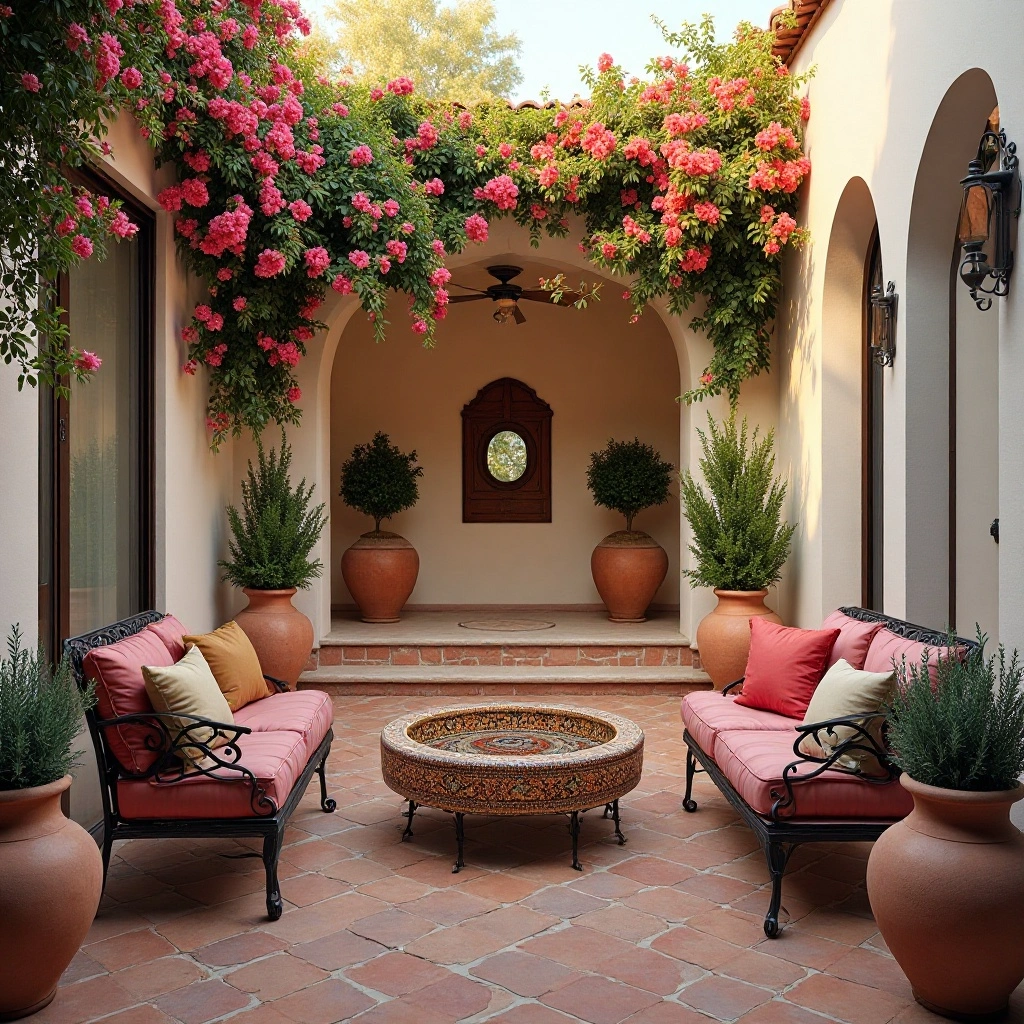
Transport yourself to the sun-soaked terraces of Santorini or Tuscany without leaving your backyard. This style is defined by warm earthy tones, handcrafted tiles, and lush fragrant plants. The layered textures — rough stucco, smooth terracotta, ornate ironwork — create a space that feels both ancient and utterly alive. It’s a design that rewards slow living. Shop on Amazon
How to Style It:
- Use terracotta, cream, cobalt blue, and sun-yellow as your core palette
- Mix patterned Talavera or mosaic tiles with natural stone pavers
- Add a central water feature — even a small tiered fountain anchors the courtyard feel
- Use wrought iron or painted wood furniture, never aluminum or plastic
- Layer with thick outdoor cushions in rich jewel tones and geometric prints
Where to Use It: Enclosed backyards · Side courtyards · Walled gardens · Pool surrounds
💡 Pro Tip: Plant fragrant herbs like lavender, thyme, and rosemary in terracotta pots near seating — the scent makes the Mediterranean experience feel completely authentic even in a northern climate.
2. Modern Minimalist Patio
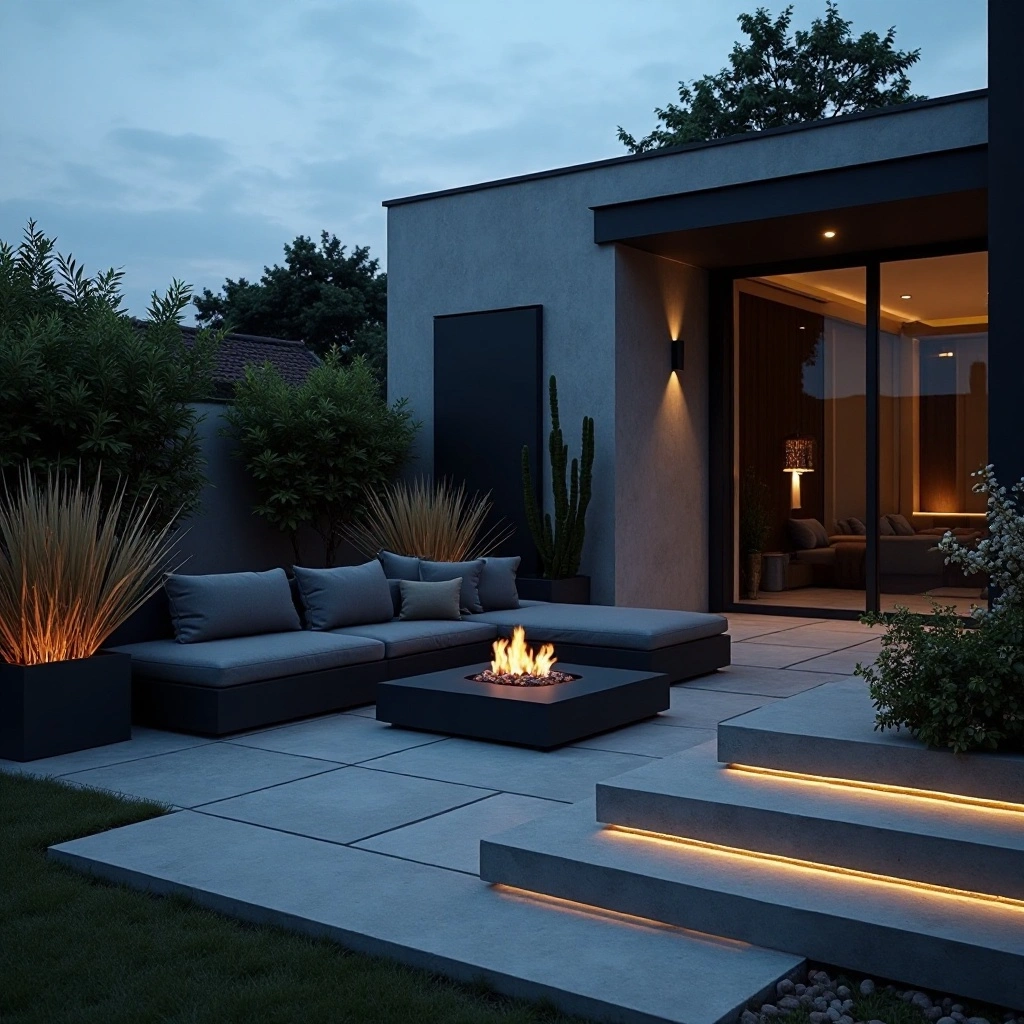
Less is emphatically more here. The modern minimalist patio is an exercise in restraint — every element earns its place. Wide concrete or porcelain pavers extend the indoor floor plane outside, furniture sits low and linear, and planting is architectural rather than romantic. The result is a space that photographs beautifully and feels effortlessly sophisticated. Shop on Amazon
How to Style It:
- Stick to a maximum of three materials — concrete, steel, and one natural accent (teak or stone)
- Choose large-format pavers (24″×24″ or larger) laid with tight joints
- Use hidden or recessed LED lighting rather than decorative lanterns
- Keep plants architectural: ornamental grass, agave, tall bamboo in matte black pots
- Invest in one statement piece — a fire table or sculptural water wall
Where to Use It: Contemporary homes · Narrow urban yards · Pool decks · Rooftops
💡 Pro Tip: Resist the urge to add more. The power of this style lives in empty space. If every surface has something on it, the design reads as cluttered, not curated.
3. Rustic Farmhouse Patio
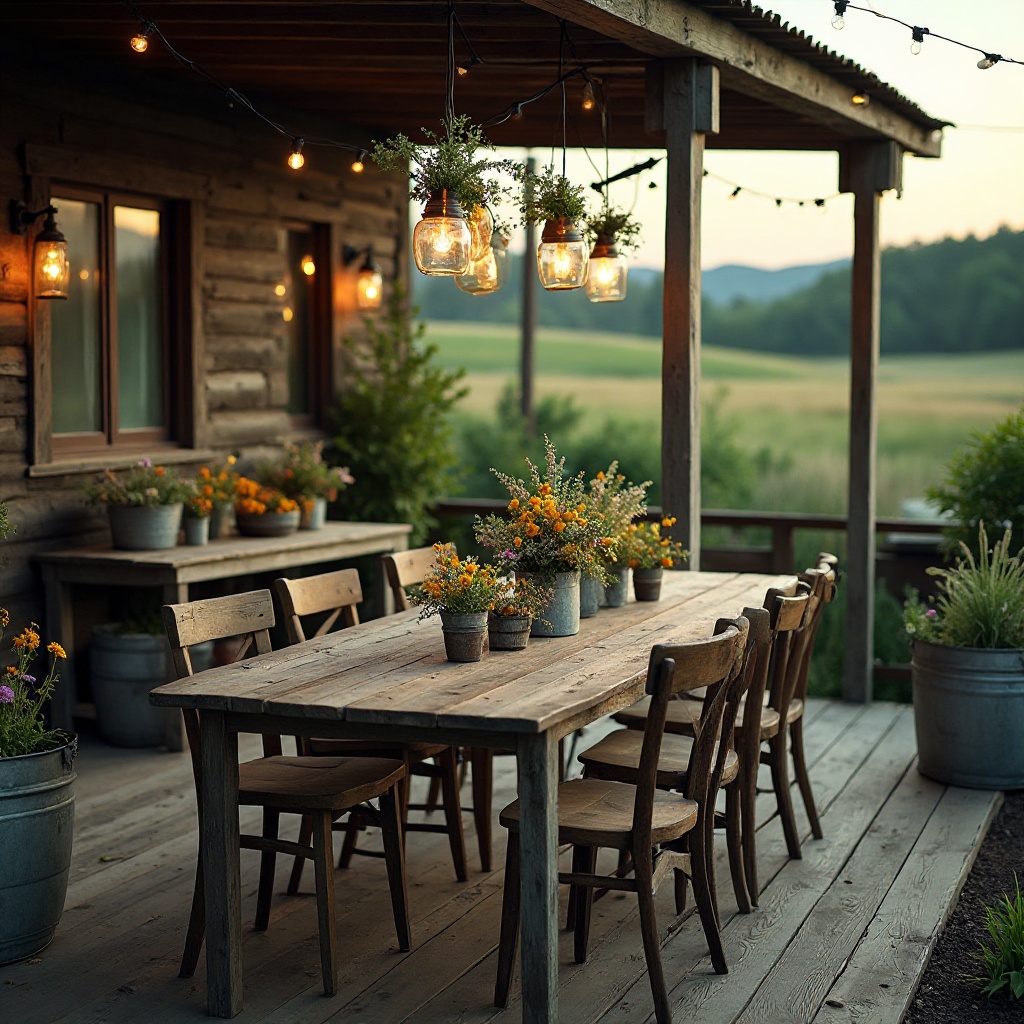
Scrubbed wood, galvanized metal, woven baskets, and the smell of wildflowers — the farmhouse patio is all heart. It’s designed for gathering: long communal tables, mismatched chairs that look collected over years, string lights that turn golden at dusk. This style forgives imperfection and actually improves with age as materials weather beautifully. Shop on Amazon
How to Style It:
- Source reclaimed or distressed wood for the main flooring or deck
- Mix metals: galvanized, wrought iron, and brushed brass in small doses
- Hang Edison bulb string lights at 7–8 ft height for the perfect warm glow
- Use cotton or burlap textiles — buffalo check, gingham, and grain-sack stripes
- Plant sunflowers, zinnias, and lavender in mismatched enamel or galvanized planters
Where to Use It: Rural properties · Large backyards · Barn homes · Traditional houses
💡 Pro Tip: Buy one oversized farmhouse dining table rather than a patio set — it becomes the undeniable focal point and seats twice as many people for summer dinner parties.
4. Tropical Paradise Patio
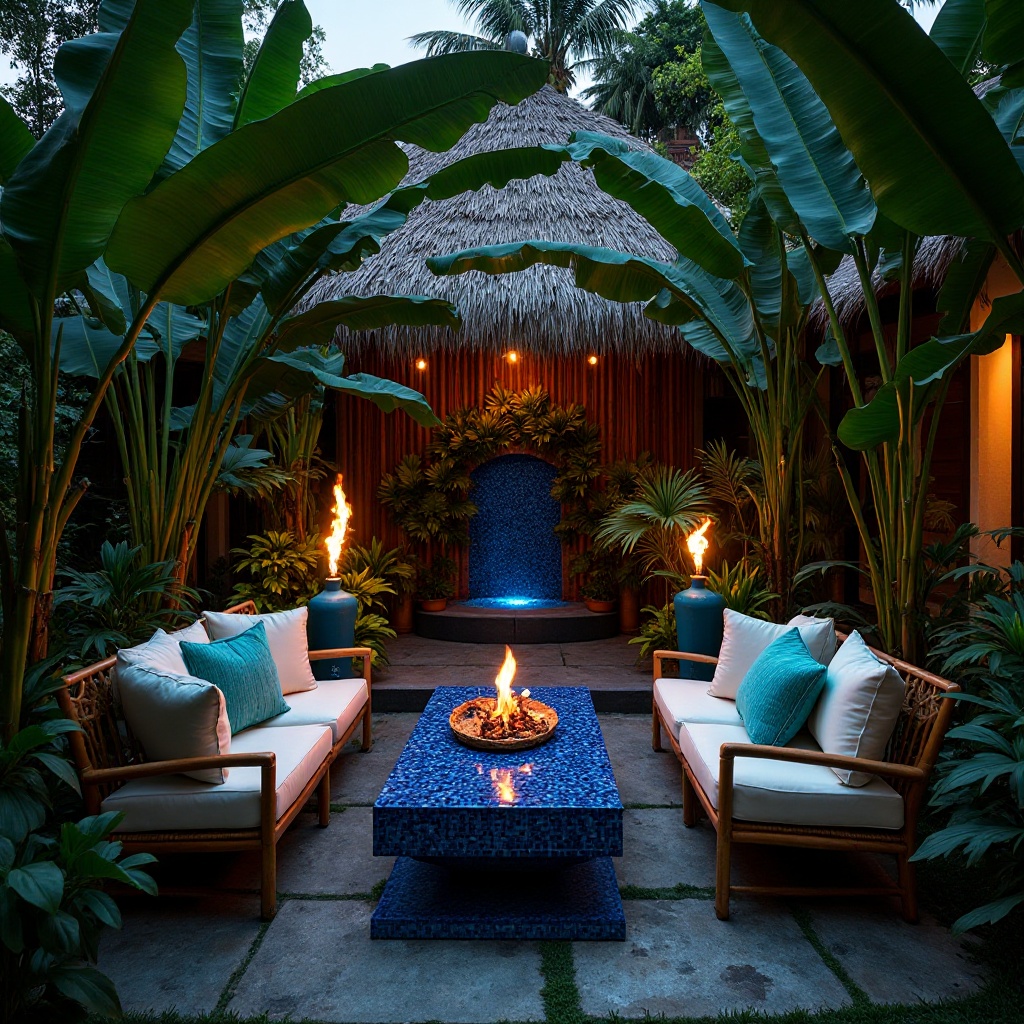
Close your eyes and hear the palm fronds rustling. The tropical patio is unapologetically lush — it overwhelms the senses with greenery, saturated colors, and the gentle sound of water.
It’s the design that makes you feel on vacation every single day. The secret is layering plants at multiple heights to create that dense canopy feeling of the tropics. Shop on Amazon
How to Style It:
- Plant in layers: tall palms or bamboo, mid-height banana plants, ground-level ferns
- Use teak, bamboo, or synthetic rattan furniture with bold turquoise, coral, or white cushions
- Add a water feature — a wall fountain or small pond amplifies the tropical atmosphere
- Incorporate a thatched or bamboo pergola for authentic shade structure
- Use tiki torches, lanterns, and colored string lights for evening ambiance
Where to Use It: Warm climates · Pool surrounds · Spa areas · Large gardens
💡 Pro Tip: In cooler climates, use tropical-looking hardy plants like hostas, canna lilies, and elephant ears — they give the look without the frost-kill heartbreak.
5. Zen Garden Retreat
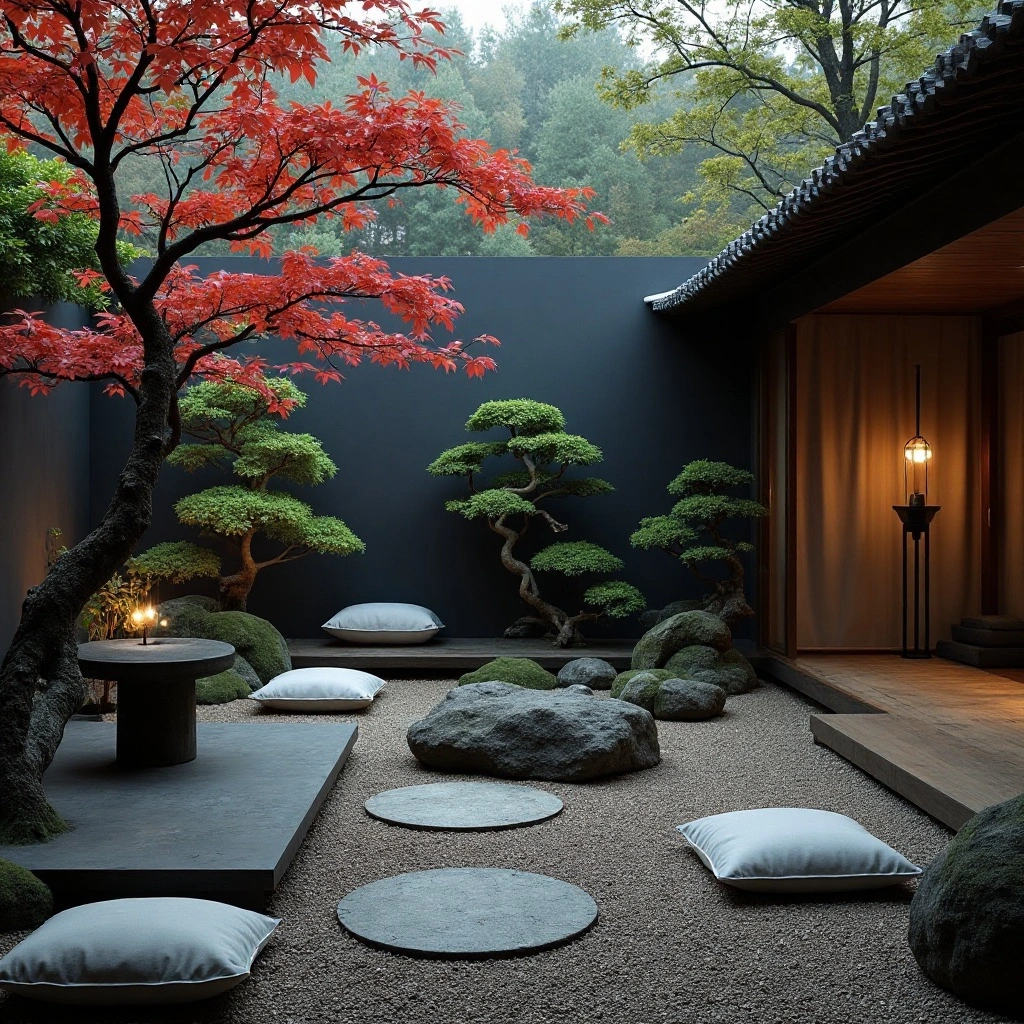
The zen patio is designed for the mind before the eye. Every element is deliberate, every sight line considered. Raked gravel, smooth river stones, and a bamboo water feature create a sensory experience that genuinely reduces stress.
This is a design philosophy as much as a style — wu wei, the art of effortless action, guides every placement decision. Shop on Amazon
How to Style It:
- Limit your palette: natural wood, dark stone, white gravel, and muted green plants only
- Add a tsukubai (stone water basin) or bamboo fountain as the meditative focal point
- Use a low wooden platform or deck for seating — traditional floor cushions in natural linen
- Plant Japanese maple, bonsai, moss, and bamboo for authentic texture
- Keep lighting minimal and warm — small stone lanterns rather than electrical fixtures
Where to Use It: Small urban yards · Meditation areas · Shaded corners · Spa retreats
💡 Pro Tip: Sound matters enormously in this style. A bamboo water feature that makes a soft “tock” sound as water drips is far more powerful than any visual element you can add.
6. Industrial Chic Patio
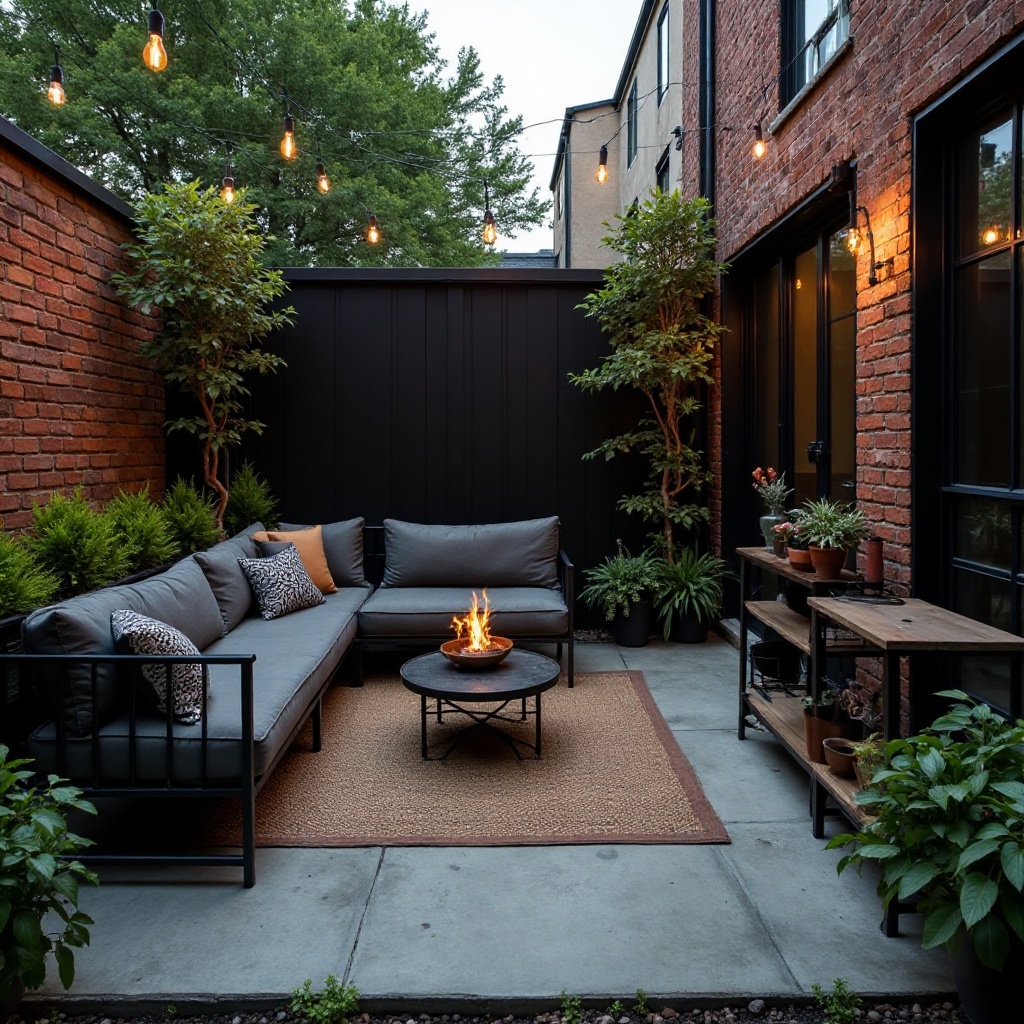
Concrete, steel, exposed brick, and raw wood — the industrial patio takes its cues from converted warehouses and Brooklyn rooftops. It’s edgy without being cold, and surprisingly cozy when you add the right textiles.
Corten steel planters rust beautifully over time, adding character you can’t buy. This style says “I’m not trying too hard” while clearly trying just the right amount. Shop on Amazon
How to Style It:
- Use polished or stamped concrete as your primary flooring material
- Incorporate exposed brick or raw concrete block walls as a backdrop
- Choose matte black powder-coated steel furniture with leather or canvas cushions
- Add Corten steel raised planters — they rust orange and look incredible with green plants
- Hang industrial cage pendant lights or gooseneck fixtures for after-dark drama
Where to Use It: Urban lofts · Rooftop patios · Modern townhomes · Converted spaces
💡 Pro Tip: Soften the industrial feel with unexpected plush elements — a chunky wool throw, a vintage Persian rug rated for outdoor use, or hanging macramé — so it feels lived-in rather than cold.
7. Bohemian Eclectic Patio
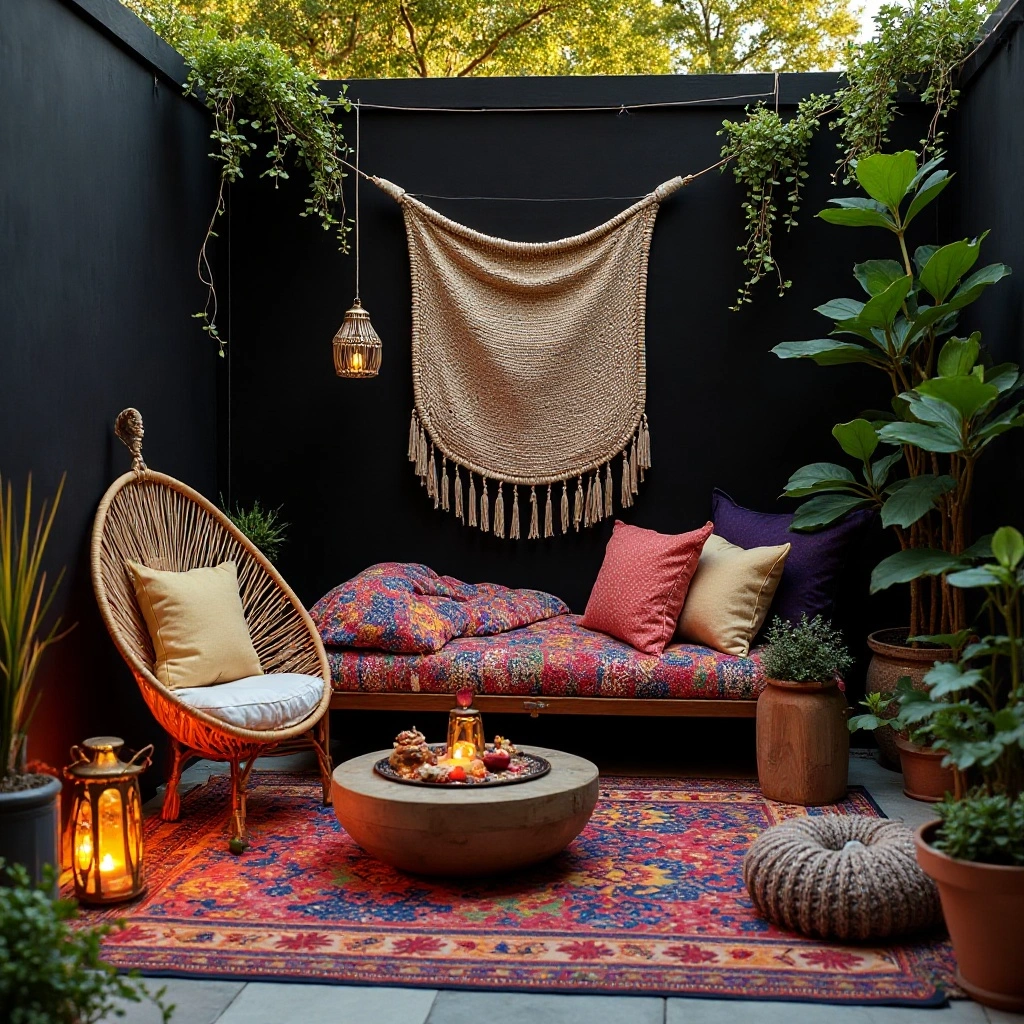
Rules? What rules? The bohemian patio is the most forgiving and most personal of all styles. It’s built around things you love rather than a design formula. Layered rugs, mismatched lanterns, a hammock swaying between two trees, macramé dripping from a pergola — it’s maximalism with soul.
The key is making sure the chaos is lovable rather than messy: color and texture must connect even when shapes don’t match. Shop on Amazon
How to Style It:
- Layer two or three outdoor-safe rugs of different patterns at angles
- Collect lanterns in different heights, materials, and colors — more is more here
- Add a hanging rattan swing chair or hammock as the crown jewel
- Hang macramé, woven art, or vintage tapestries on fences or pergola beams
- Mix plants freely: trailing pothos, tall cacti, lush ferns, flowering succulents
Where to Use It: Any backyard · Apartment balconies · Garden nooks · Festival spaces
💡 Pro Tip: Keep one element consistent — usually a repeated color — to tie the eclectic mix together. Without one unifying thread, “eclectic” tips into “chaotic.”
8. Coastal Hamptons Patio
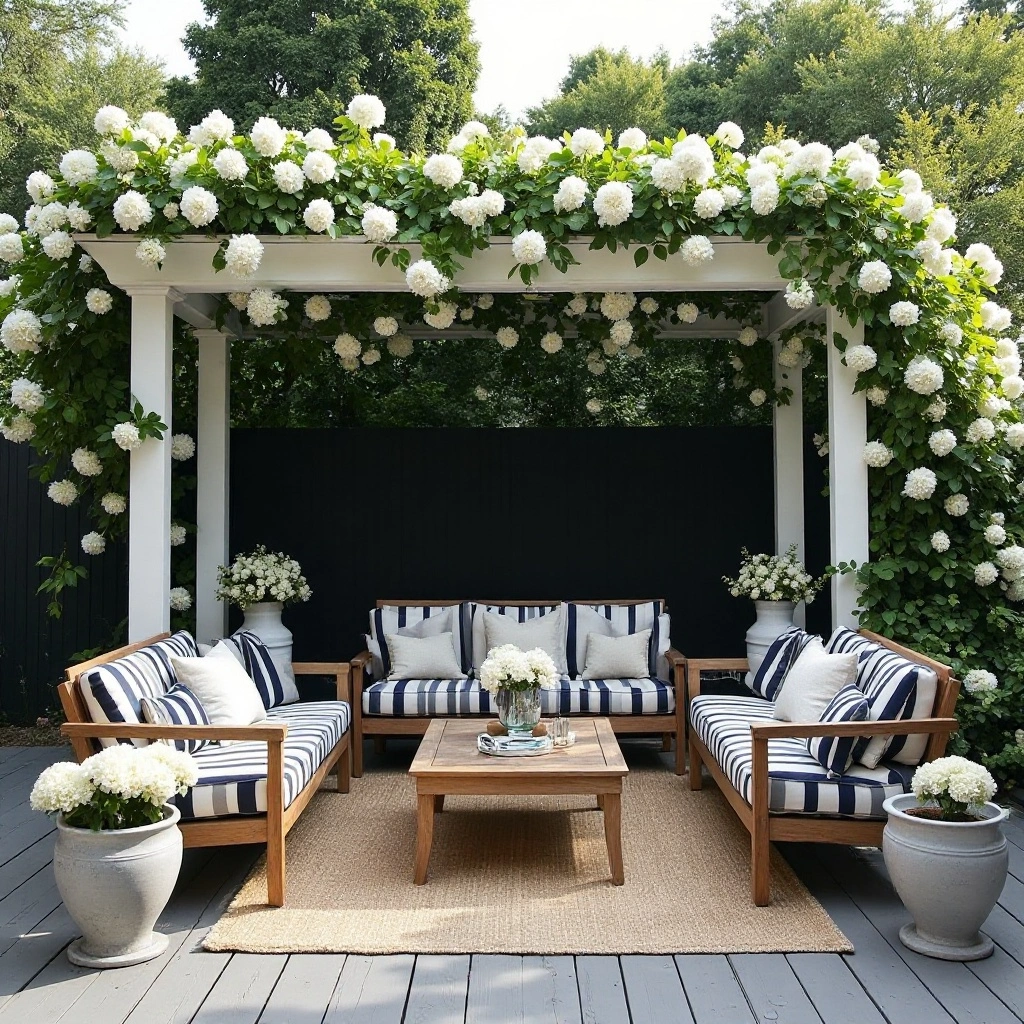
Crisp, airy, and quietly luxurious — the Hamptons patio channels the feeling of a sun-bleached shore home with manicured gardens. White painted wood, navy stripes, teak that weathers to silver,
and a profusion of white hydrangeas create a palette that feels expensive without trying. It’s coastal without the cliché seashells; refined without being stiff. Shop on Amazon
How to Style It:
- Use a navy, white, and sand palette — no tropical brights, no beige-heavy neutrals
- Plant white hydrangeas, white roses, and ornamental grasses exclusively
- Weathered or white-painted teak furniture with thick navy/white striped cushions
- Add a white pergola with a pitched roof and climbing roses up the posts
- Use natural sisal or seagrass outdoor rugs to ground the seating area
Where to Use It: Coastal homes · Traditional architecture · Pool surrounds · Garden parties
💡 Pro Tip: Hydrangeas are the single most powerful plant for this style. Fill every available planter with them — they bloom all summer and photograph magnificently.
9. Fire Pit Gathering Patio
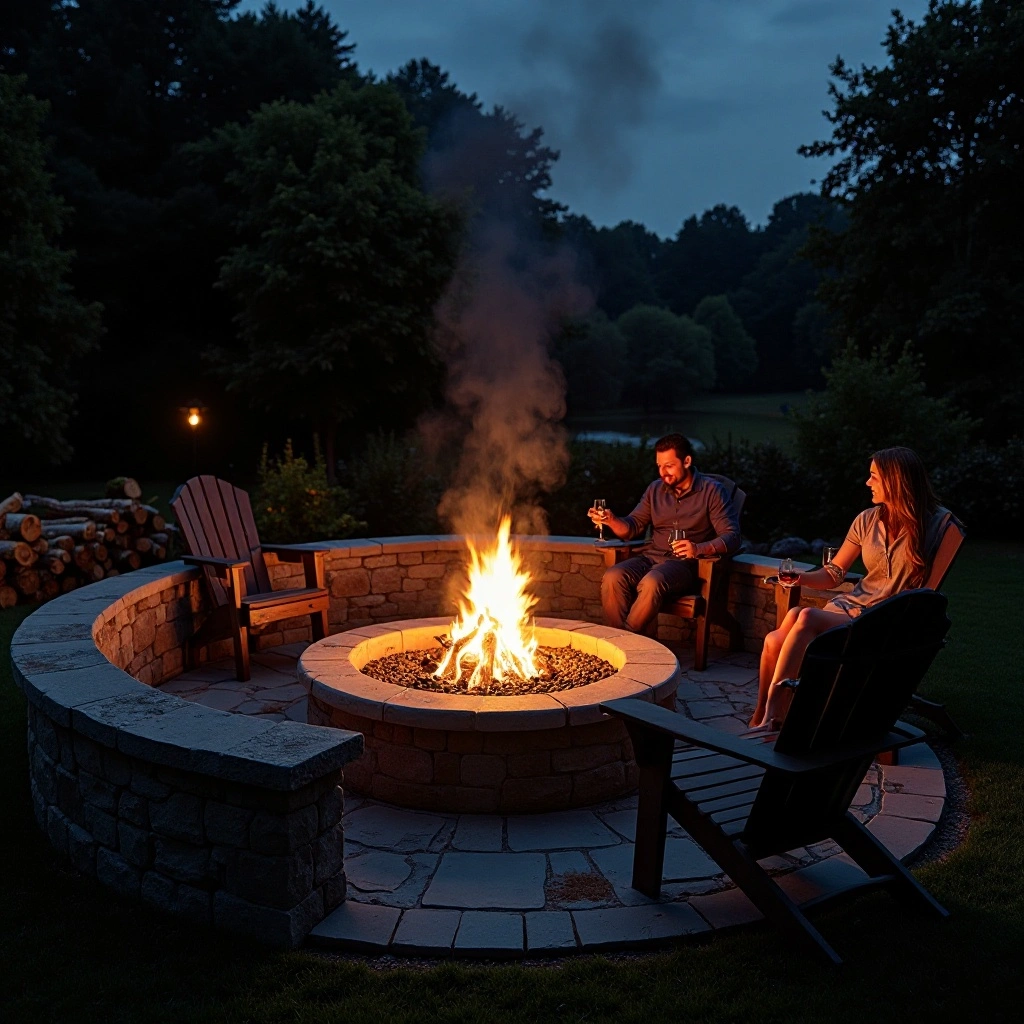
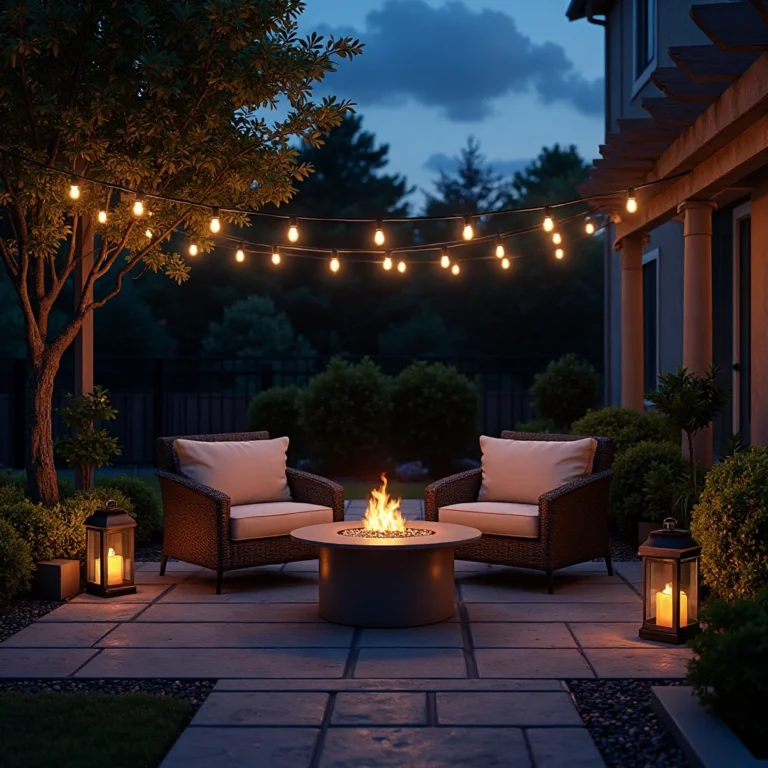
There’s something ancient and irresistible about gathering around fire. This patio design puts the fire pit at the absolute center — literally and socially. Everything radiates outward from the flame: curved built-in seating,
Adirondack chairs pulled close, soft rugs underfoot. It’s the patio that keeps people outside long after dinner, talking until midnight. Shop on Amazon
How to Style It:
- Size the fire pit circle generously — 12–15 ft diameter minimum for comfortable seating
- Use built-in curved stone or concrete benches for permanent seating around the pit
- Supplement with moveable Adirondack chairs or rocking chairs for flexibility
- Lay flagstone, decomposed granite, or concrete pavers — not wood near open flame
- Add a wood log storage rack nearby — it’s functional and looks great
Where to Use It: Large backyards · Rural properties · Entertaining homes · Cold climates
💡 Pro Tip: Keep a basket of blankets next to the seating — it extends fire pit season by months and becomes the most appreciated amenity you never expected to need.
10. Rooftop Urban Oasis
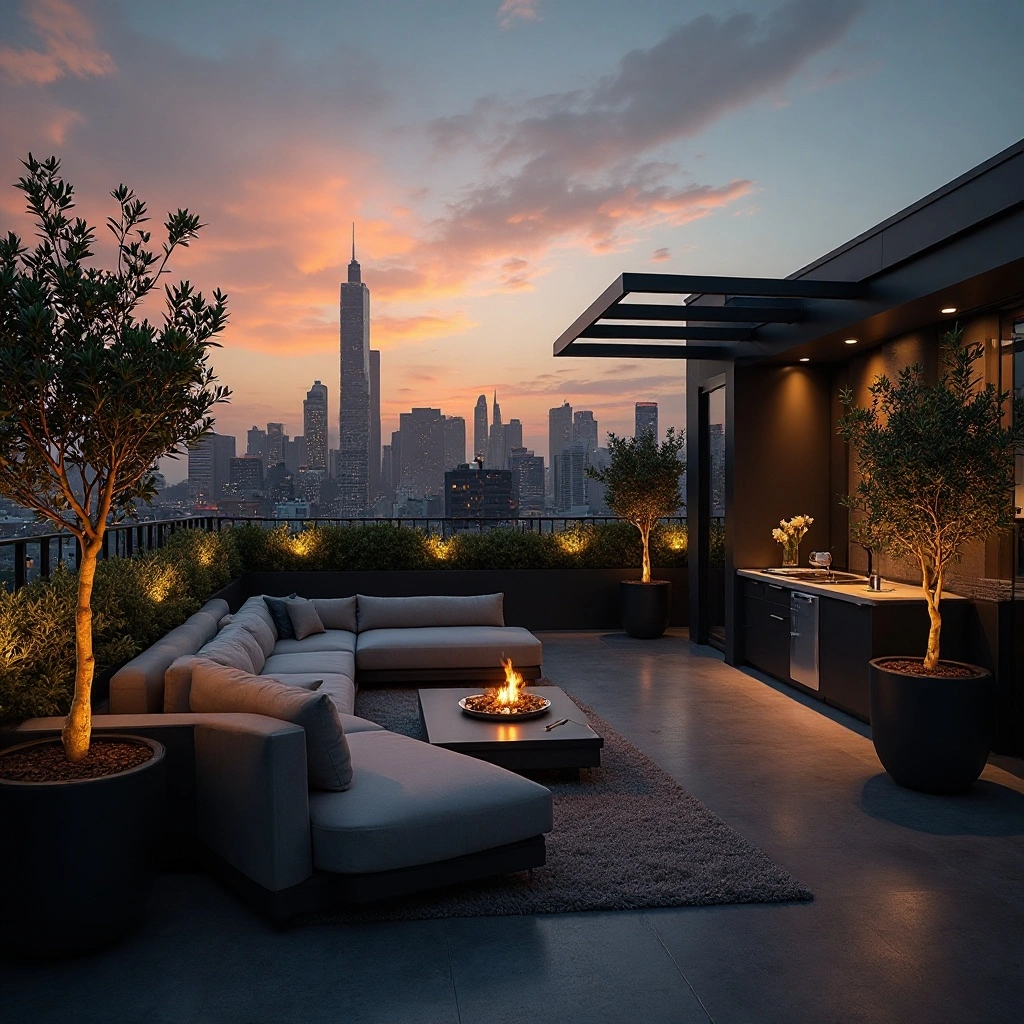
When you can’t go out, go up. The rooftop patio turns a forgotten concrete slab into the best view in the city. Every design decision must consider wind, weight, and the drama of the horizon.
Glass railings preserve sight lines. Lightweight modular furniture can be rearranged for parties. Potted trees create privacy without walls. It’s city living at its most aspirational. Shop on Amazon
How to Style It:
- Use glass or cable railings — never let barriers block the cityscape view
- Choose lightweight composite decking or rubber pavers for weight-safe flooring
- Plant tall columnar trees (olive, Italian cypress) in large planters to create privacy screens
- Install a motorized pergola or shade sail for wind and sun control
- Add an outdoor kitchen and bar — rooftop entertaining is a whole category of living
Where to Use It: Urban apartments · Townhouses · Commercial buildings · City lofts
💡 Pro Tip: Always consult a structural engineer before adding heavy planters, water features, or furniture to a rooftop. Most roofs can support 50–100 lbs/sq ft but you need confirmation before spending a dollar on design.
11. Pergola Garden Room
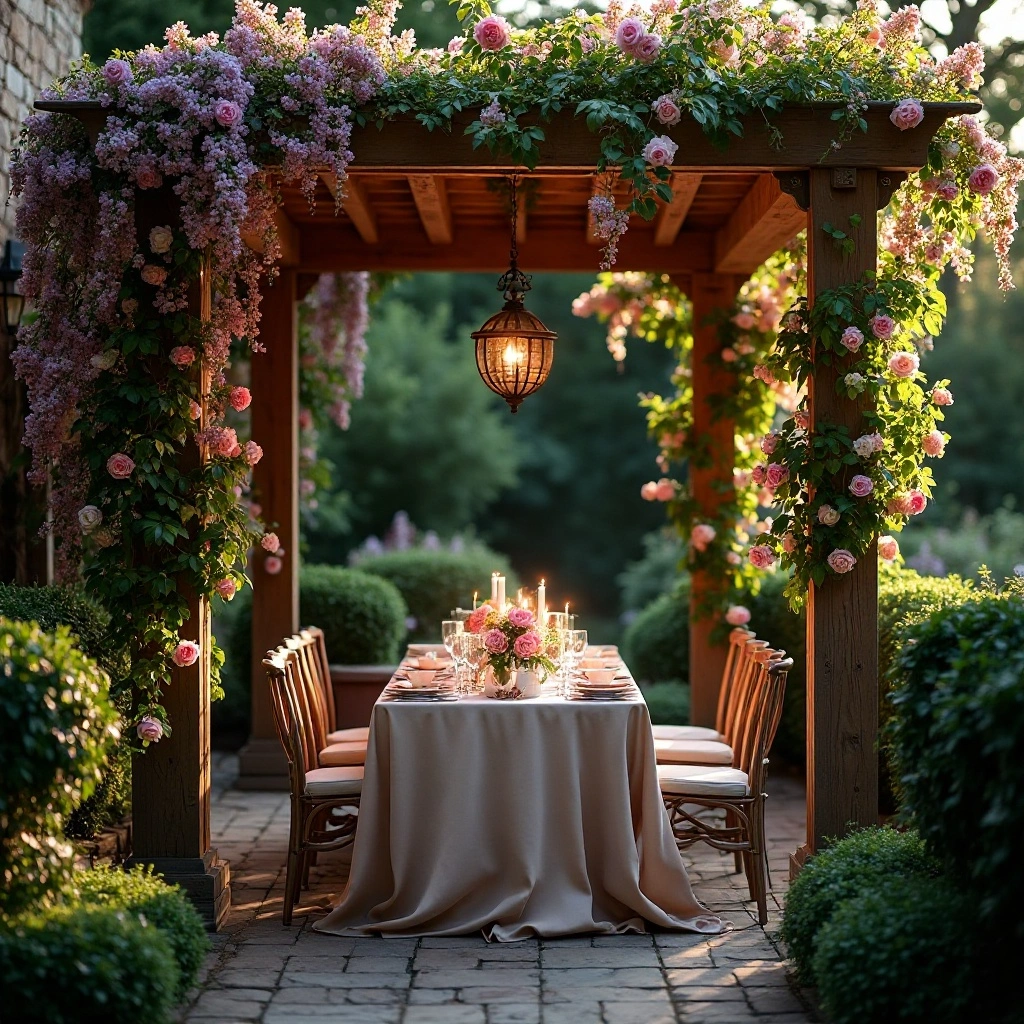
A pergola turns your patio into a room — a living, breathing room where the ceiling is wisteria and the walls are climbing roses. This design creates a sense of enclosure without feeling enclosed,
dappling sunlight through flowering vines to create the most flattering light in any garden. It’s the single most transformative structural addition you can make to a flat outdoor space. Shop on Amazon
How to Style It:
- Choose cedar, redwood, or powder-coated steel for the pergola structure
- Train wisteria, climbing roses, jasmine, or bougainvillea up the posts
- Hang an outdoor chandelier or pendant from the center beam for evening romance
- Define the floor with flagstone, brick, or herringbone pavers inside the pergola footprint
- Add side curtain panels for privacy and drama — outdoor linen in white or cream
Where to Use It: Dining areas · Garden centers · Spa corners · Entry gardens
💡 Pro Tip: Wisteria is stunning but incredibly aggressive — always plant it 6+ feet from any wall or foundation, and commit to annual pruning. Clematis is a beautiful lower-maintenance alternative that flowers repeatedly.
12. Scandinavian Hygge Patio
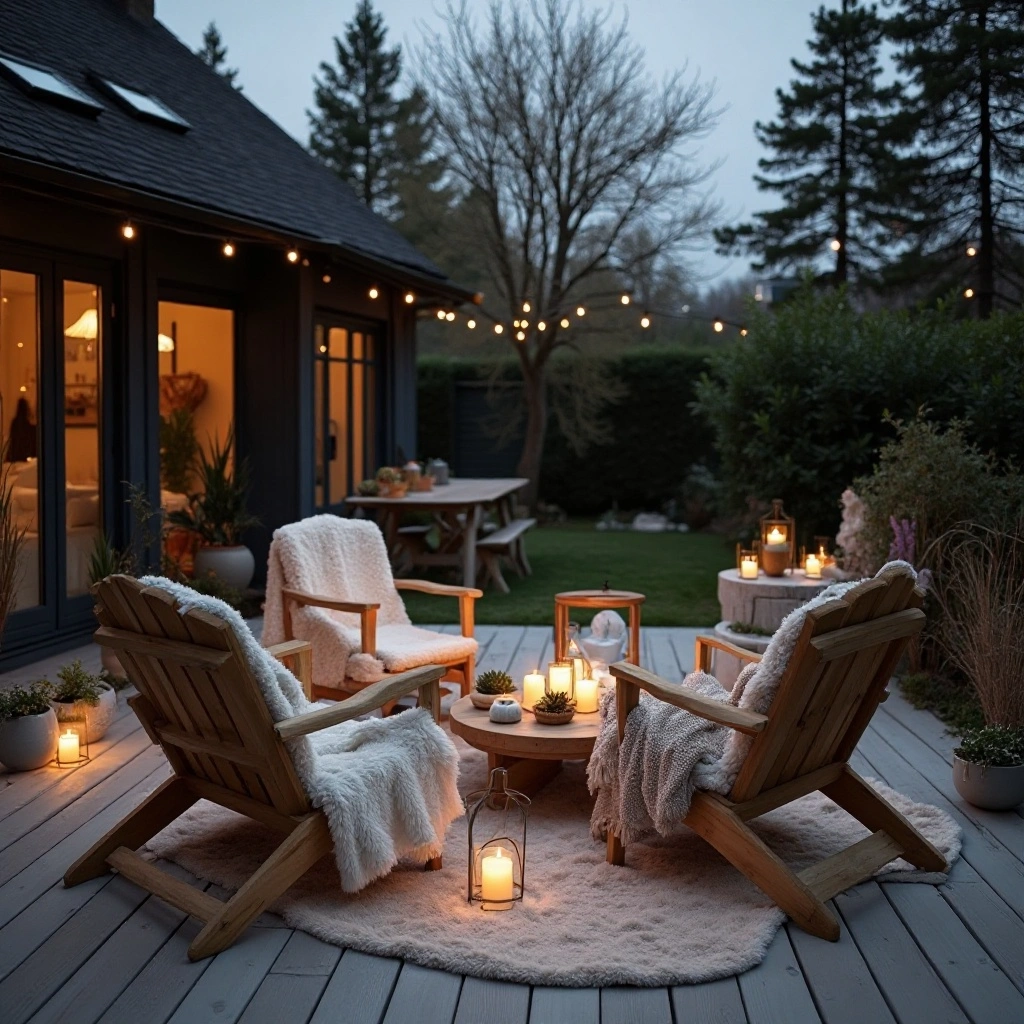
Hygge (pronounced “hoo-ga”) is the Danish concept of cozy contentment — warmth, simplicity, and the pleasure of the present moment. Applied to outdoor spaces, it creates a patio that feels like pulling on a warm sweater.
Pale wood, sheepskin throws, pillar candles, and simple honest materials. This design is deliberately un-showy, and that restraint is precisely its power. Shop on Amazon
How to Style It:
- Use pale blonde or whitewashed wood decking as the foundation
- Drape sheepskin throws and knit wool blankets over every chair
- Use pillar candles and lanterns rather than electrical lighting — the flicker is essential
- Keep the plant palette monochromatic: white flowers, gray-green succulents, silver foliage
- Add a small outdoor heater styled as a pillar or fire bowl for cold nights
Where to Use It: Northern climates · Small patios · Intimate balconies · Year-round spaces
💡 Pro Tip: Invest in an outdoor rug that looks like an indoor rug — it’s the trick that most elevates a Scandinavian patio from “outdoor space” to “outdoor room” by blurring the line between inside and outside comfort.
13. Sunken Lounge Pit
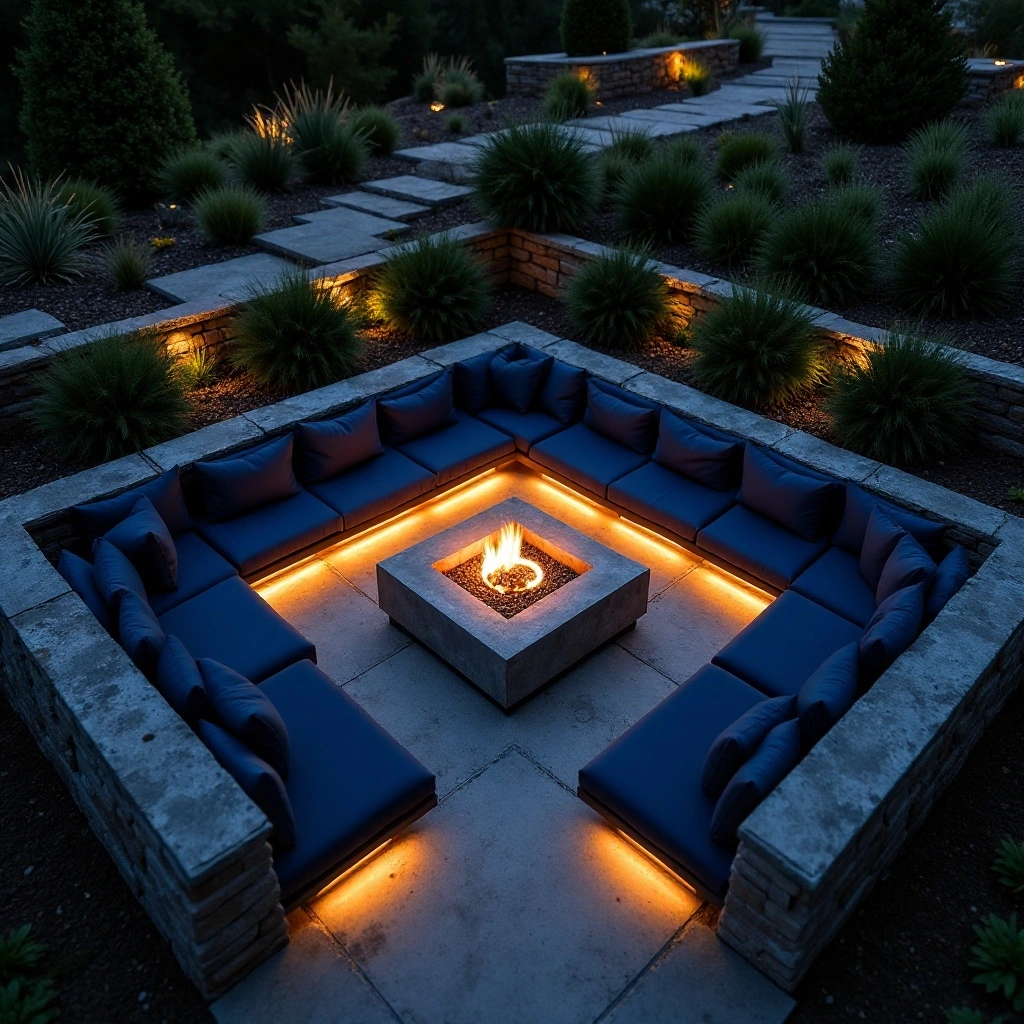
Borrowed from 1970s interior design and reimagined for the modern outdoor space, the sunken patio creates an intimate amphitheater effect that standard flat patios simply cannot replicate. Descending even one step below garden level creates a psychological separation from the yard — your own private hollow.
Built-in bench seating wraps around a central fire table, making it impossible to sit here and not feel like you’re at an exclusive gathering. Shop on Amazon
How to Style It:
- Excavate 18–24 inches for optimal “pit” effect without losing visibility from the garden
- Line the perimeter with poured concrete or stone retaining walls — these become the backrest
- Use thick, outdoor-rated foam cushions in a single bold color: navy, forest green, or charcoal
- Place a low rectangular or square fire table at the center — the geometry should mirror the pit
- Install recessed LED strip lighting under the bench ledge for ambient after-dark glow
Where to Use It: Large flat yards · Entertaining homes · Contemporary gardens · Pool areas
💡 Pro Tip: Plan proper drainage before you dig — a sunken pit without adequate drainage becomes a swimming pool after every rainstorm. A French drain or perforated pipe system is non-negotiable.
14. Desert Southwest Patio
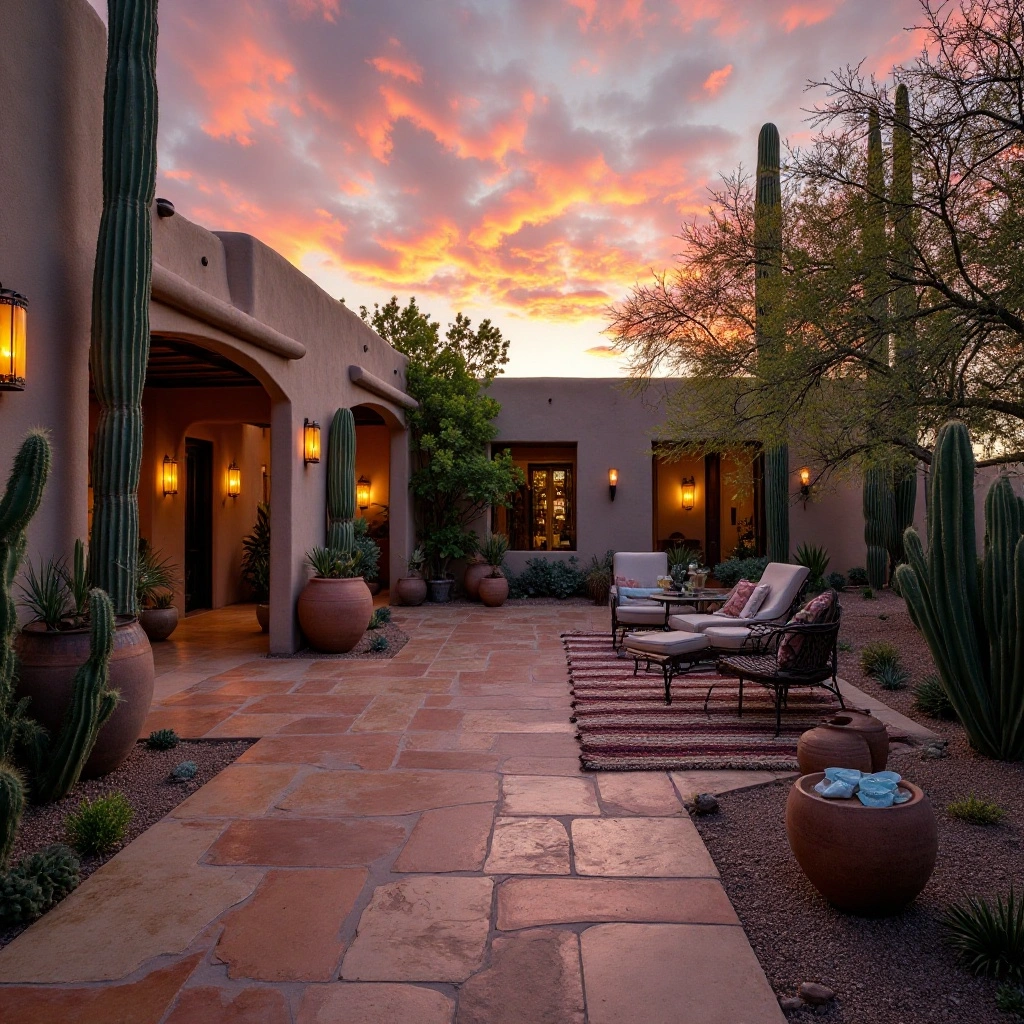
Earth tones that mirror the canyon walls, plants that thrive without pampering, and an architectural language drawn from centuries of Pueblo and Spanish Colonial tradition.
The Desert Southwest patio is low-maintenance, deeply beautiful, and getting more relevant as drought-conscious landscaping moves mainstream. It works in any hot, dry climate and brings a quiet, grounded energy unlike any other style. Shop on Amazon
How to Style It:
- Use Saltillo tile, flagstone, or decomposed granite — never wood in desert climates
- Build an adobe or stucco accent wall in warm white or sand, with turquoise details
- Plant native and drought-tolerant species: agave, prickly pear, ocotillo, desert marigold
- Use deep terracotta, turquoise, and burnt orange as your accent colors
- Add a ramada (post-and-beam shade structure) with exposed log vigas for authentic Southwest feel
Where to Use It: Hot dry climates · Xeriscape gardens · Southwestern homes · Pool areas
💡 Pro Tip: A shade structure is not optional in this climate — it’s survival infrastructure. Orient your ramada or sail shade to block the brutal western afternoon sun, not just overhead noon sun.
16. Cottage English Garden Patio
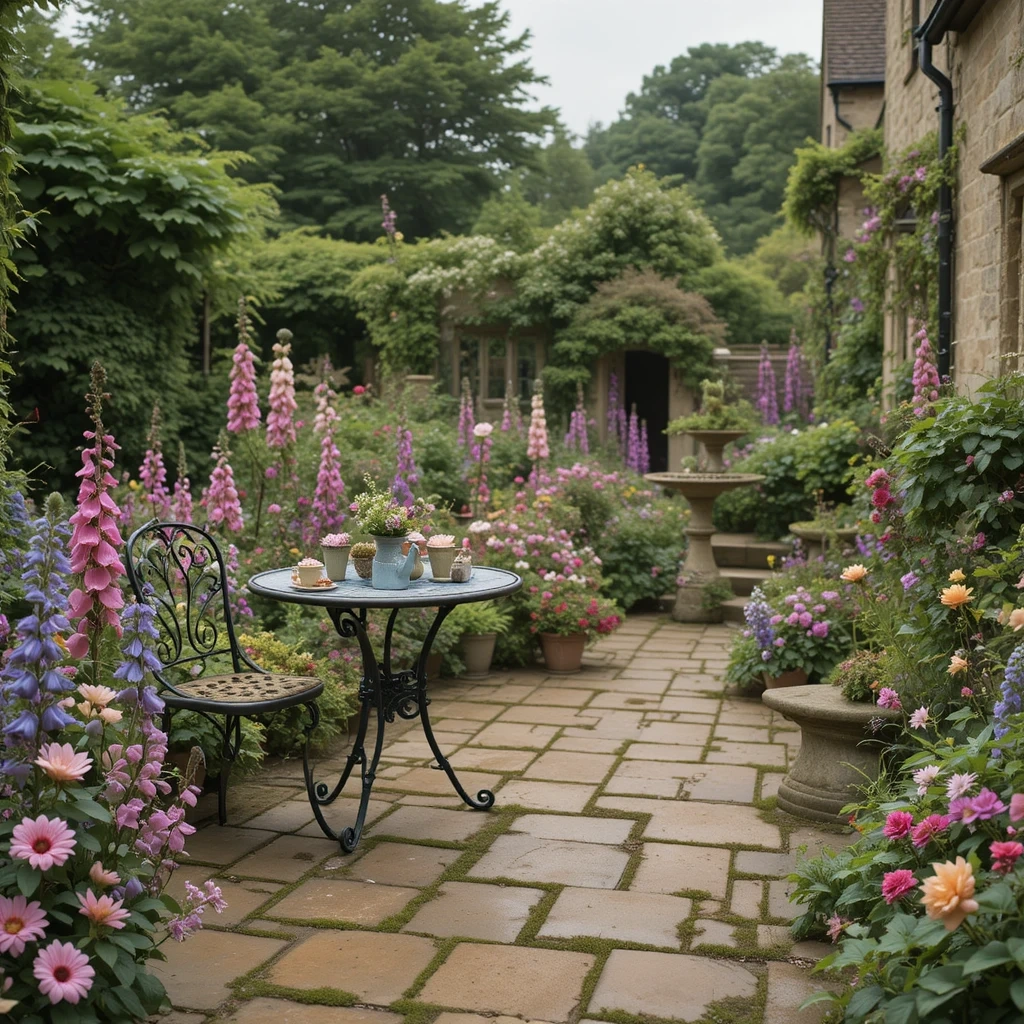
The English cottage patio is controlled wildness — it looks effortless but is the result of very deliberate planting choices. Flowers tumble over brick edges, moss softens hard angles, and the air is heavy with rose and honeysuckle.
A small bistro table tucked into the garden is all you need. This is the style that makes even the smallest garden feel like a discovery. Shop on Amazon
How to Style It:
- Use old brick or irregular natural stone pavers — never uniform modern tile
- Let plants overflow the borders: allow foxglove, alliums, and roses to lean into paths
- Add a moss-covered stone bird bath or sundial as the garden’s quiet focal point
- Choose vintage or antique metal furniture — it weathers beautifully and looks like it belongs
- Plant for seasonal succession so something is always blooming: bulbs, perennials, climbers
Where to Use It: Traditional homes · Small gardens · Reading nooks · Shaded corners
💡 Pro Tip: The “secret” to the cottage look is planting thickly and accepting some self-seeding volunteers. Resist the urge to weed everything — let nigella, forget-me-nots, and calendula find their own spots.
17. Multi-Level Deck Patio
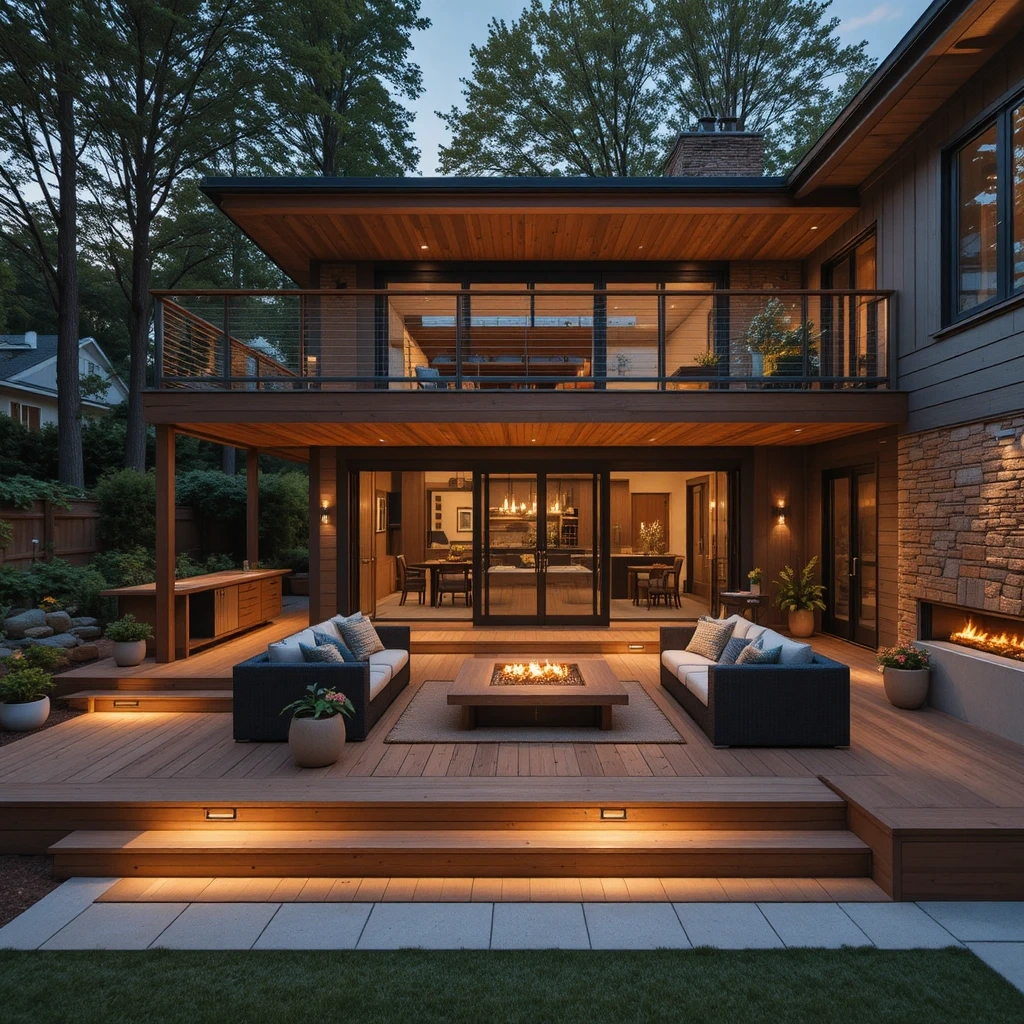
When a single flat patio can’t serve all the functions you want, go multi-level. Distinct zones for dining, lounging, and grilling each get their own defined space without feeling separated.
The level changes create natural traffic flow, visual interest, and the feeling of a much larger space even in modest backyards. Wide steps between levels double as casual seating overflow during parties. Shop on Amazon
How to Style It:
- Define each level’s purpose before building: one for dining, one for lounging, one for cooking
- Use horizontal cable or glass railings — they’re the most visually open option
- Make steps wide and shallow (at least 4 ft wide, 6-inch risers) so they read as architectural, not just functional
- Install LED lighting along step edges — it’s both a safety feature and stunning at night
- Use built-in benches along upper railings to maximize seating without cluttering the space
Where to Use It: Sloped yards · Large backyards · Pool areas · Entertaining homes
💡 Pro Tip: Sloped yards actually benefit most from multi-level decks — instead of expensive retaining walls to flatten the grade, use the natural slope to create level changes that feel intentional rather than forced.
18. Japanese Wabi-Sabi Patio
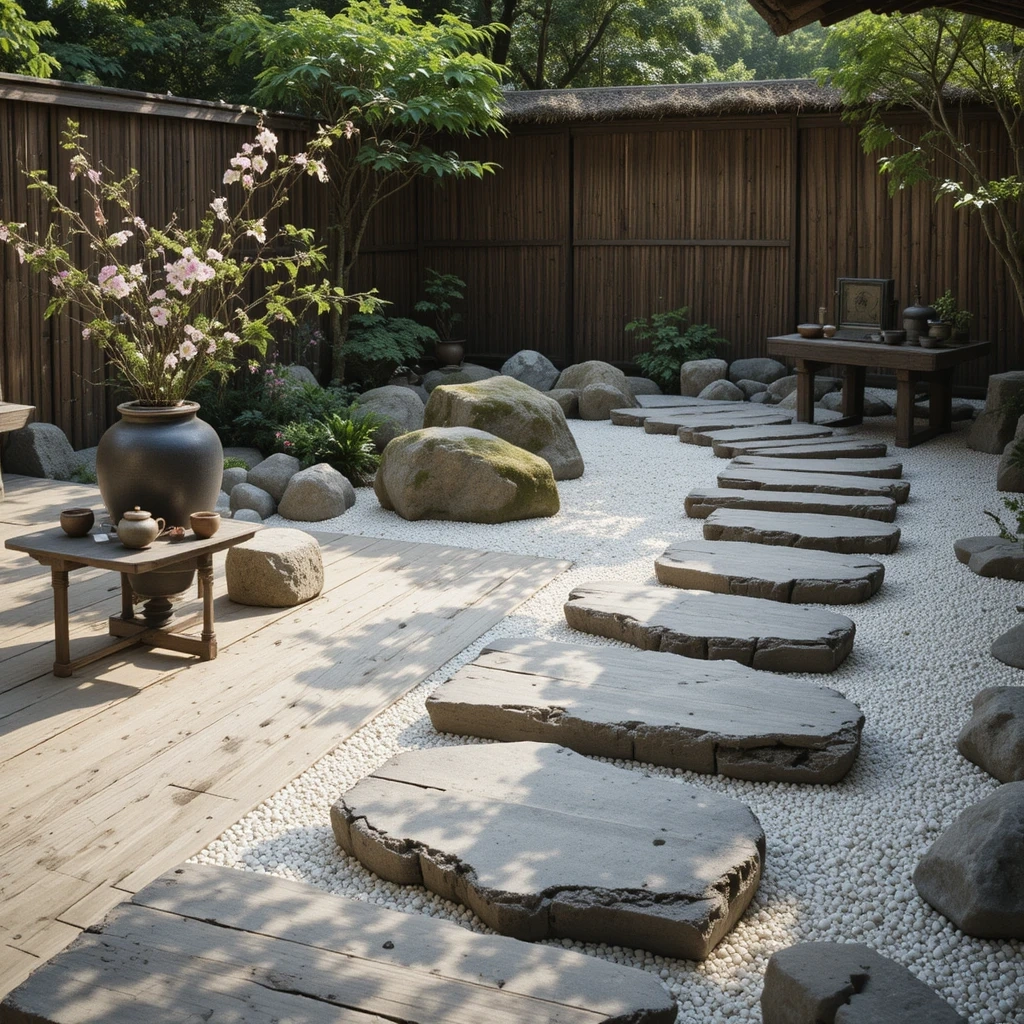
Wabi-sabi is the Japanese philosophy of finding beauty in imperfection, impermanence, and incompleteness. In patio design, this means celebrating the weathered wood, the mossy stone, the asymmetric rock arrangement. Nothing is new, nothing is uniform, and everything improves with age.
It’s the antidote to the perfectly manicured suburban patio and it requires a different kind of confidence: the confidence to leave things imperfect. Shop on Amazon
How to Style It:
- Let natural wood silver and weather without sealing or staining
- Collect rocks and stones that have natural character — moss, fossils, irregular shapes
- Use handmade ceramics exclusively: tea bowls, vases, platters with visible maker’s marks
- Place a single extraordinary object — a gnarled root, a moss rock — rather than multiple decorative items
- Allow moss to grow between pavers and along walls — it’s a feature, not a problem
Where to Use It: Tea gardens · Meditation spaces · Small enclosed yards · Shaded areas
💡 Pro Tip: Resist the urge to “complete” this garden. Wabi-sabi spaces always leave something unfinished, something implied. An empty corner with a single stone says more than a corner filled with plants.
19. Poolside Cabana Patio
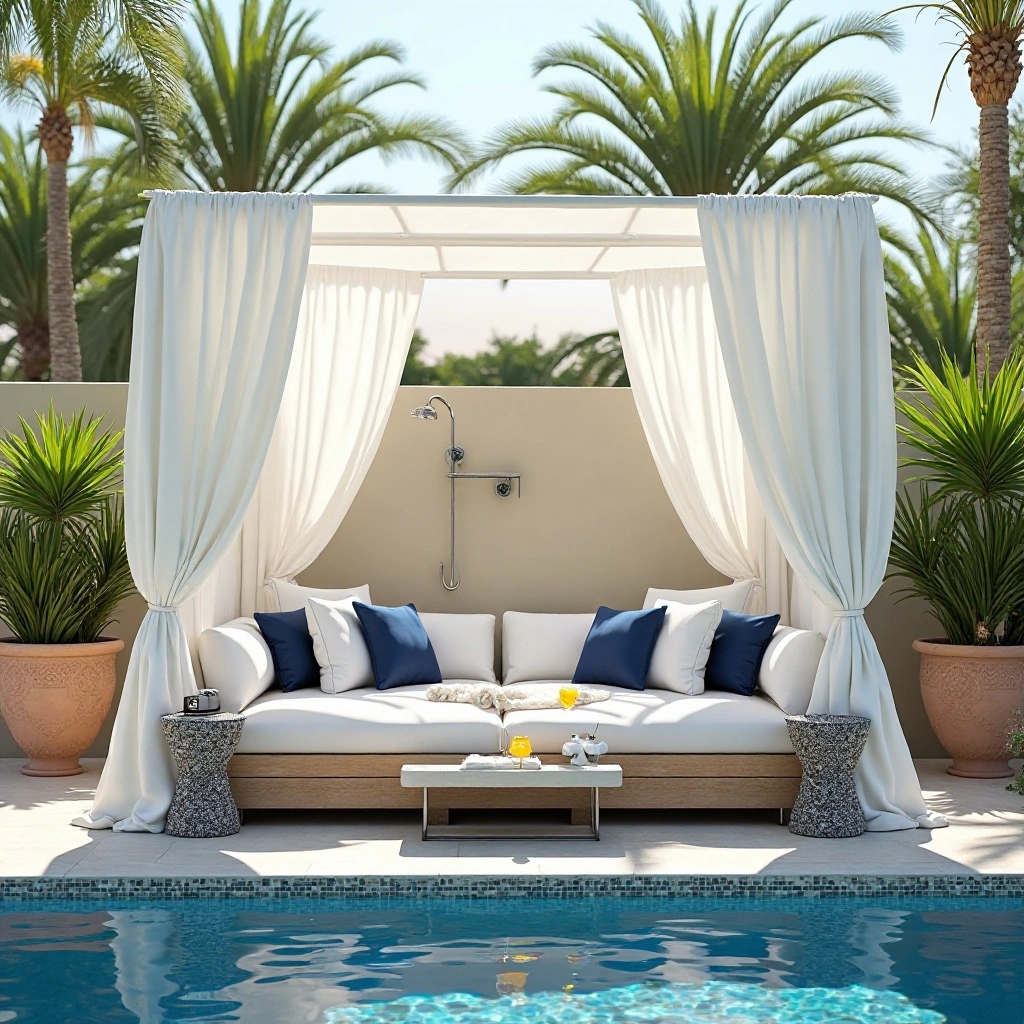
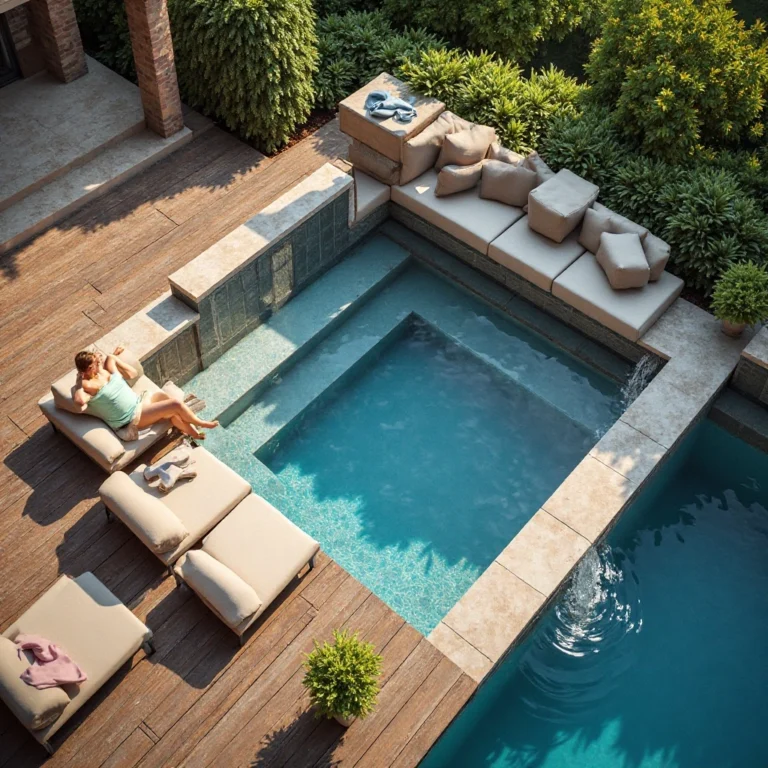
The cabana patio transforms a pool deck from a utilitarian wet zone into a five-star resort experience. A shaded daybed, flowing curtains, a cocktail table, a towel rack, and a small outdoor shower — these are the components of the perfect poolside retreat. It creates a destination within your own backyard, a specific place to be rather than just open space next to water. Shop on Amazon
How to Style It:
- Build or purchase a permanent canopy structure — 10×12 ft minimum for a proper daybed and two lounge chairs
- Use thick, weather-resistant cushions and replenish them every few seasons — they take the most wear
- Install an outdoor shower nearby — it’s the most-used amenity after the pool itself
- Add a small fridge or cooler station — cold drinks should be arm’s length away at poolside
- Use weather-resistant string lights or a small outdoor chandelier inside the canopy for evening swims
Where to Use It: Pool surrounds · Hot climates · Entertaining backyards · Spa areas
💡 Pro Tip: Position the cabana on the side of the pool that gets afternoon shade — you want sun in the morning and shelter from the brutal 2–5 PM heat. The orientation of your cabana matters more than any fabric or furniture choice.
20. Smart Technology Patio
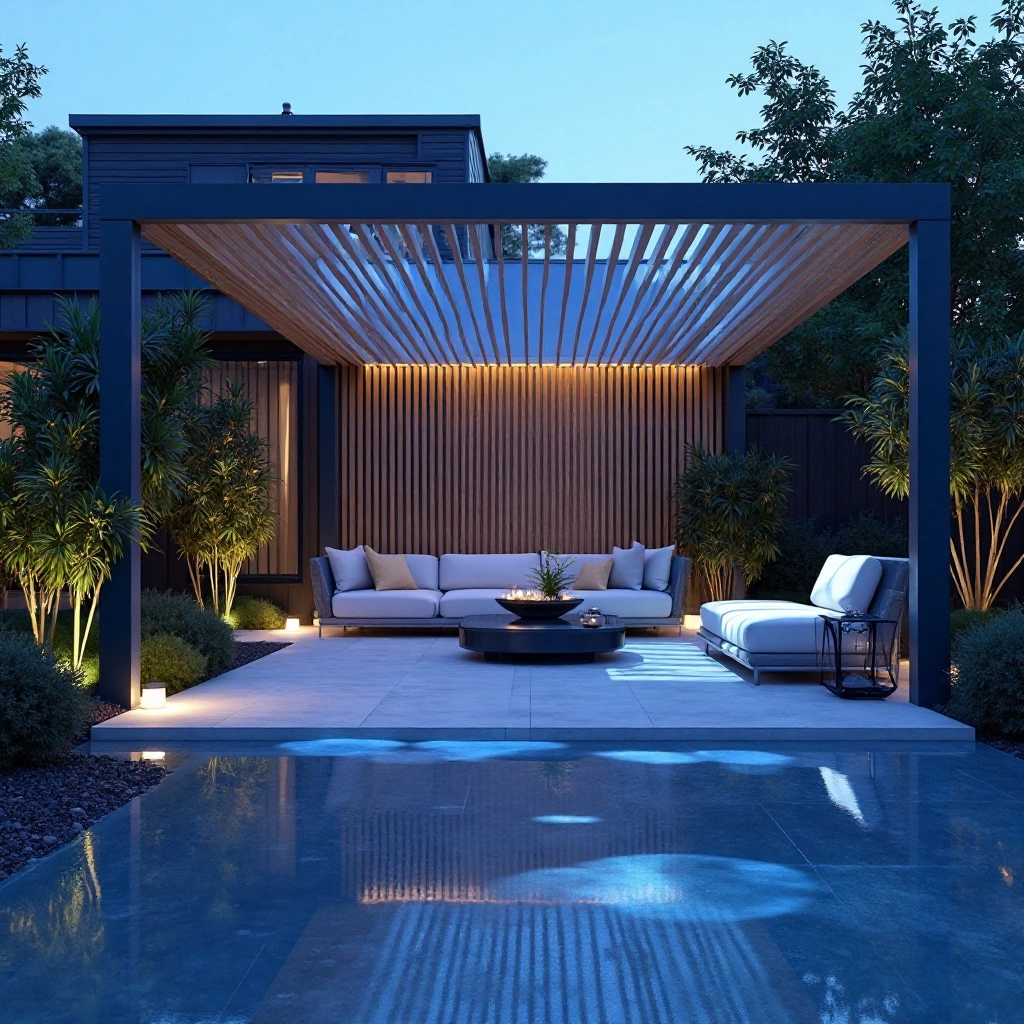
The smart patio responds to you. Motorized pergola louvers close automatically when rain is detected. App-controlled lighting shifts from cool white for morning coffee to warm amber for evening entertaining.
Heated tile floors extend the season. A hidden speaker system delivers audio without visible hardware. When technology disappears into the design, it genuinely transforms how a space feels and functions. Shop on Amazon
How to Style It:
- Start with a motorized pergola system (Louvretec, StruXure, or similar) — it’s the most impactful single upgrade
- Install landscape speakers in planters or rocks — invisibility is the aesthetic goal
- Use smart LED strip lighting in steps, under furniture, and along the perimeter for full control
- Add a misting system on a timer for hot climates — it drops temperature by 10–15°F
- Install an outdoor-rated Wi-Fi extender so smart devices work reliably outside
Where to Use It: Tech-forward homes · Modern architecture · Year-round patios · Luxury builds
💡 Pro Tip: Run conduit for future wiring during the initial build even if you’re not installing smart systems now. Retrofitting electrical and data lines through a finished patio costs 3–5x more than rough-in conduit during construction.
21. Romantic Canopy Garden Patio
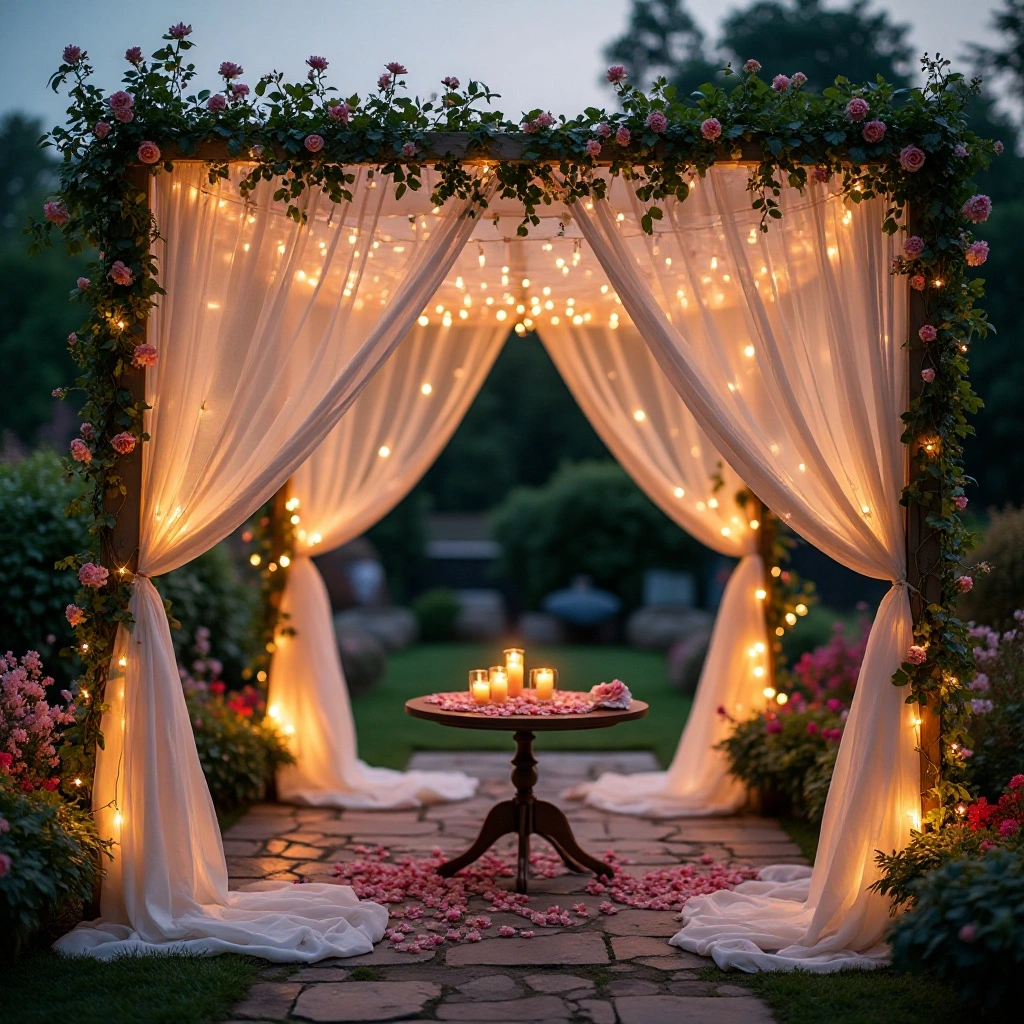
Draped fabric, a thousand fairy lights, cascading jasmine, and a small table set for two — the romantic canopy patio is unapologetically emotional. It’s not designed for large parties or morning coffee.
It exists for evenings: the kind that start with wine and end with the stars. The overhead fabric softens the boundary between inside and outside, creating a shelter that feels intimate regardless of yard size. Shop on Amazon
How to Style It:
- Drape sheer outdoor-safe fabric from a central hook point to surrounding posts in four directions
- Weave fairy lights through the fabric — you need more than you think (minimum 3 strands)
- Plant fragrant climbers on all support posts: jasmine, honeysuckle, sweet peas
- Keep furniture minimal: one round table, two chairs, one small side table for candles
- Use pillar candles and low votive holders on the ground around the seating area
Where to Use It: Garden corners · Anniversary dinners · Small patios · Wedding spaces
💡 Pro Tip: Scent is the most underused design element in this style. Plant night-blooming jasmine (Jasminum polyanthum) specifically — the fragrance intensifies as the evening progresses, turning the garden into a fully sensory experience.
22. Eco-Friendly Green Patio
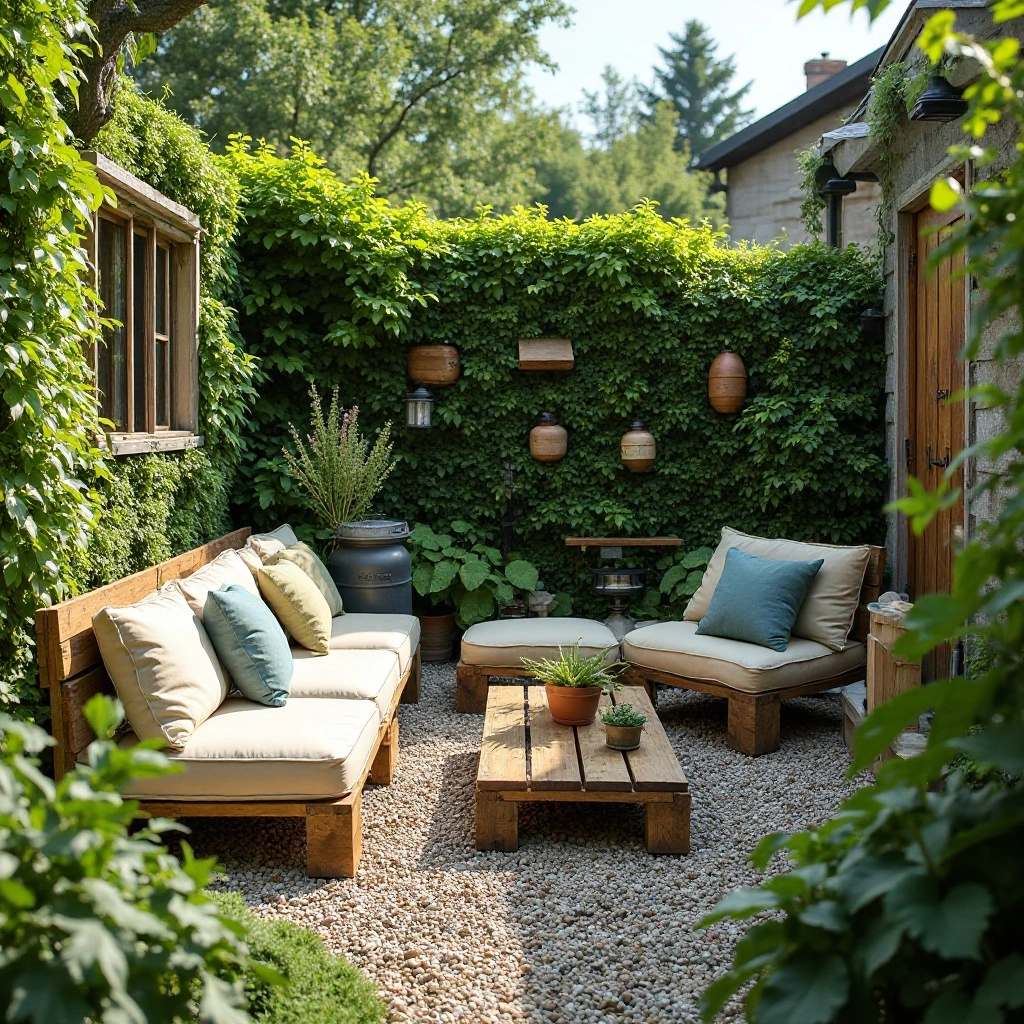
The most forward-thinking patio design isn’t about aesthetics — it’s about building a space that gives back more than it takes. Permeable paving lets rainwater recharge groundwater. A green wall purifies air and provides habitat. Solar lighting needs no grid power. Native plants support pollinators.
Reclaimed materials keep waste out of landfills. The beauty is that doing all the right ecological things also happens to look extraordinary. Shop on Amazon
How to Style It:
- Use permeable pavers, gravel, or decomposed granite — never impervious concrete over large areas
- Install a living green wall with native ferns, sedums, and succulents as a privacy screen
- Power all outdoor lighting with solar — today’s solar fixtures are genuinely beautiful
- Collect rainwater in a stylish painted barrel and use it for plants
- Build furniture from reclaimed wood, salvaged metal, or FSC-certified materials
Where to Use It: Eco-conscious homes · Urban gardens · Any backyard · Community spaces
💡 Pro Tip: A living wall (vertical garden) is the single highest-impact sustainability feature for a small patio — it provides insulation, absorbs carbon, cools the surrounding air by up to 5°F, and looks stunning year-round.
Common Mistakes to Avoid
Even beautiful patio designs can fail if the fundamentals aren’t right. Here are the eight most costly mistakes homeowners make — and how to avoid them.
1. Buying Furniture Before Measuring
The #1 mistake. Patio furniture looks much smaller in showrooms and product photos. Always measure your space, then tape out the furniture footprint before purchasing. A sectional that seats 6 comfortably needs a 15×15 ft area minimum to not feel cramped.
2. Ignoring Drainage From Day One
Water is the enemy of every patio surface, furniture, and foundation. A flat patio holds water. A 1–2% slope away from the house is essential. Plan drainage before you lay a single paver — retrofitting it is enormously expensive.
3. Choosing Style Over Durability
Beautiful wicker furniture left outside year-round looks terrible in 18 months. Match your materials to your climate and your maintenance habits. Teak, aluminum, and concrete are genuinely low-maintenance. Softwood and cheap wrought iron are not.
4. Underestimating Lighting Importance
Most people install one overhead fixture and wonder why their patio feels flat at night. Great outdoor lighting layers: overhead for general illumination, path lights for safety, uplights for drama, string lights for warmth. Aim for four distinct light sources minimum.
5. Planting Too Close to the Structure
Plants look small when you buy them. A tree planted 4 feet from your patio edge will be lifting your pavers in 10 years. Research mature plant size before purchasing and maintain the recommended clearance from all hard surfaces and foundations.
6. Forgetting About Privacy
You design a beautiful space and never use it because your neighbors can see everything. Privacy screening — fences, hedges, pergola curtains, planted screens — should be planned at the design stage, not added as an afterthought.
7. Choosing Cheap Outdoor Rugs
Inexpensive outdoor rugs fade in one season, curl at the edges within months, and look exhausted by mid-summer. Invest in a quality polypropylene or recycled plastic rug — they’re UV-stable, washable, and hold color for 5+ years.
8. Mixing Too Many Design Styles
One boho lantern, a Zen water feature, farmhouse Edison lights, and tropical cushions don’t add up to eclectic — they add up to confused. Pick a primary style and let accent pieces support it. If you want to mix styles, limit yourself to two that share common ground.
Frequently Asked Questions
How much does it typically cost to build a backyard patio?
Costs vary enormously by material and complexity. A basic concrete patio runs $8–$20 per square foot. Natural stone or brick pavers land at $20–$40/sq ft. High-end work with pergolas, lighting, and outdoor kitchens can reach $80–$150/sq ft. A 400 sq ft patio — enough for a dining set and lounging area — realistically costs $5,000–$25,000 depending on your material choices and region.
What is the best low-maintenance patio material?
For pure low maintenance, porcelain pavers win — they don’t stain, don’t need sealing, resist frost, and look great indefinitely. Composite decking (Trex, TimberTech) is the top choice for deck-style surfaces. Avoid natural wood unless you genuinely enjoy annual oiling, and avoid limestone or sandstone in freeze climates as they can crack and spall.
Do I need a permit to build a patio?
For a ground-level patio under a certain square footage (usually 200 sq ft), most jurisdictions require no permit. However, if you’re adding a pergola, electrical work, gas lines for an outdoor kitchen, or a roof of any kind, permits are almost certainly required. Always check with your local building department before starting — violations can require costly demolition.
What size should my patio be?
A dining table for 4–6 people needs a minimum 12×12 ft area. A full outdoor living room with sofa, coffee table, and two chairs needs 16×20 ft comfortably. Many people build their patio too small — always go slightly larger than you think you need. Leave at least 3 feet of clearance between furniture and any edge or wall.
How do I create privacy on my patio without building a fence?
The most effective no-fence privacy solutions are: tall planters with columnar trees (Italian cypress, bamboo, arborvitae), pergola curtain panels in outdoor fabric, privacy screens in cedar or powder-coated steel, living walls on existing fences, and strategic umbrella placement. A combination of two or three of these creates layered privacy that actually looks better than a fence.
Can I use indoor furniture outside?
Short answer: no. Indoor furniture exposed to outdoor conditions will warp, mold, rust, or fade within a single season. Even covered patios get humidity, morning dew, and temperature swings. Always use furniture explicitly rated for outdoor use — look for UV-stable fabrics, rust-resistant frames, and materials like teak, aluminum, HDPE, or Sunbrella-grade textiles.
How do I choose the right patio style for my home?
Start with your home’s architecture — the exterior sets the conversation. A modern flat-roof home looks disconnected next to a rustic farmhouse patio. Next, consider your climate: tropical styles need warm weather to sustain their defining plants. Finally, consider your lifestyle honestly: a fire pit patio serves gatherings; a Zen garden serves solitude. The best patio is the one you’ll actually use, not the most beautiful one on Pinterest.
How long does it take to build a patio?
A simple paver patio (200–400 sq ft) takes a professional crew 2–5 days. Add a pergola and that’s another 1–3 days. An outdoor kitchen with plumbing and gas adds 1–2 weeks. Factor in lead times for materials — pavers, furniture, plants — which can be 4–12 weeks for custom orders. Plan your full timeline starting with the longest lead-time item and work backward from your target completion date.