21+ Stunning Blue and White Kitchen Ideas You’ll Love
Transform your kitchen into a breathtaking culinary sanctuary with the classic pairing of blue and white—a color combination that never goes out of style. Whether you’re craving coastal serenity, farmhouse warmth, or contemporary sophistication, these design ideas will help you create a kitchen that’s both visually stunning and incredibly functional.
Get ready to discover Best Blue and White Kitchen Ideas and how this versatile palette can elevate your cooking space from ordinary to extraordinary.
This post may earn a small commission through affiliate links if you choose to buy, at no extra cost to you.
1. Classic Navy Cabinets with White Marble Countertops
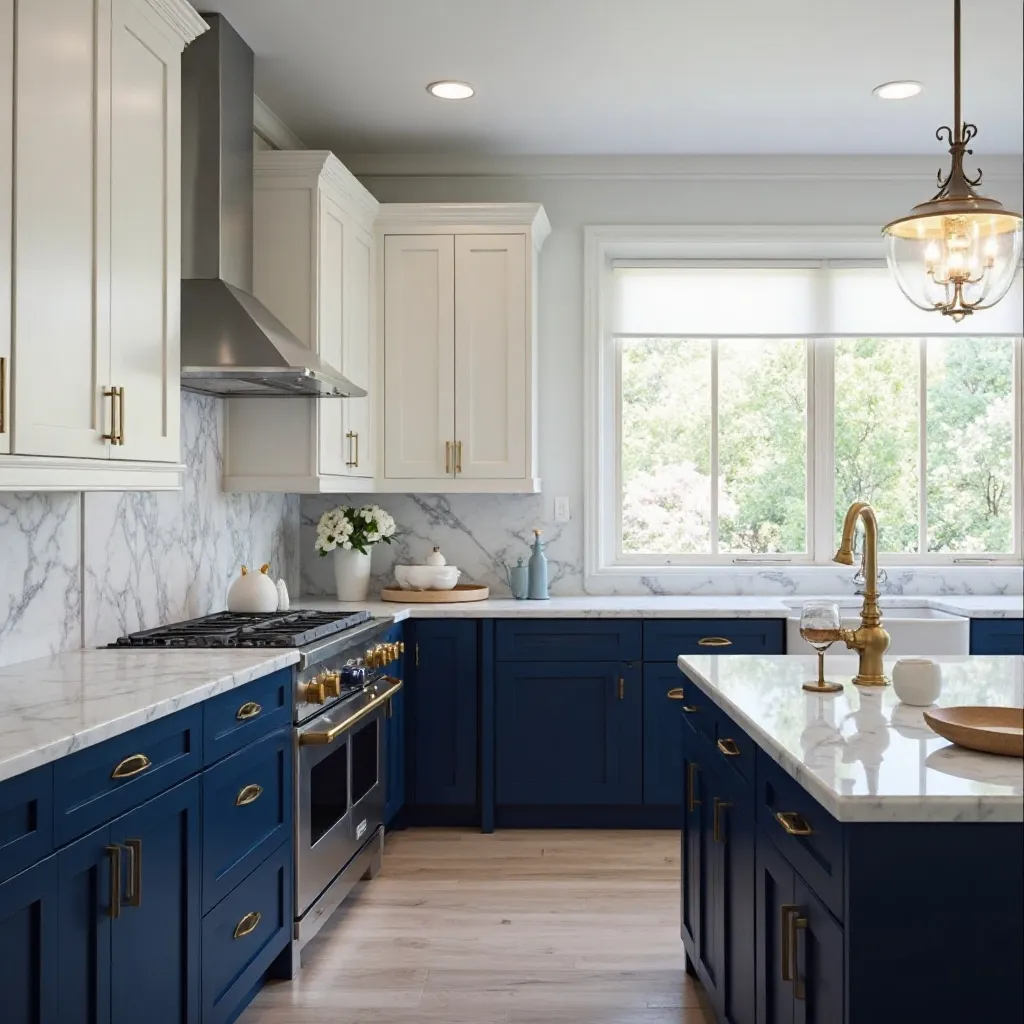
Picture deep navy blue lower cabinets anchoring your kitchen with sophisticated drama, while crisp white upper cabinets keep the space feeling open and airy. Gleaming white marble countertops with subtle gray veining bridge the two tones beautifully, creating a luxurious focal point that catches the light throughout the day. Shop on Amazon
Why It Works: This high-contrast combination delivers instant elegance while remaining incredibly practical. The dark lowers hide everyday wear and tear, while white uppers prevent the space from feeling too heavy or enclosed. It’s a design that works equally well in traditional and transitional kitchens, offering flexibility as your style evolves.
How to Style It:
- Choose navy with slight gray undertones (like Benjamin Moore Hale Navy) to avoid an overly nautical look
- Install white subway tile backsplash with navy grout for a subtle pattern connection
- Add brushed brass or aged brass hardware to warm up the cool palette and add dimension
- Incorporate open shelving on one wall to break up solid cabinetry and display white dishware
Where to Use It: Traditional kitchens, transitional spaces, galley kitchens, U-shaped layouts
Pro Tip: Paint just your island navy while keeping perimeter cabinets white if you’re hesitant about too much dark color—this gives you the drama without overwhelming a smaller space.
2. Two-Tone Shaker Cabinets in Powder Blue and White
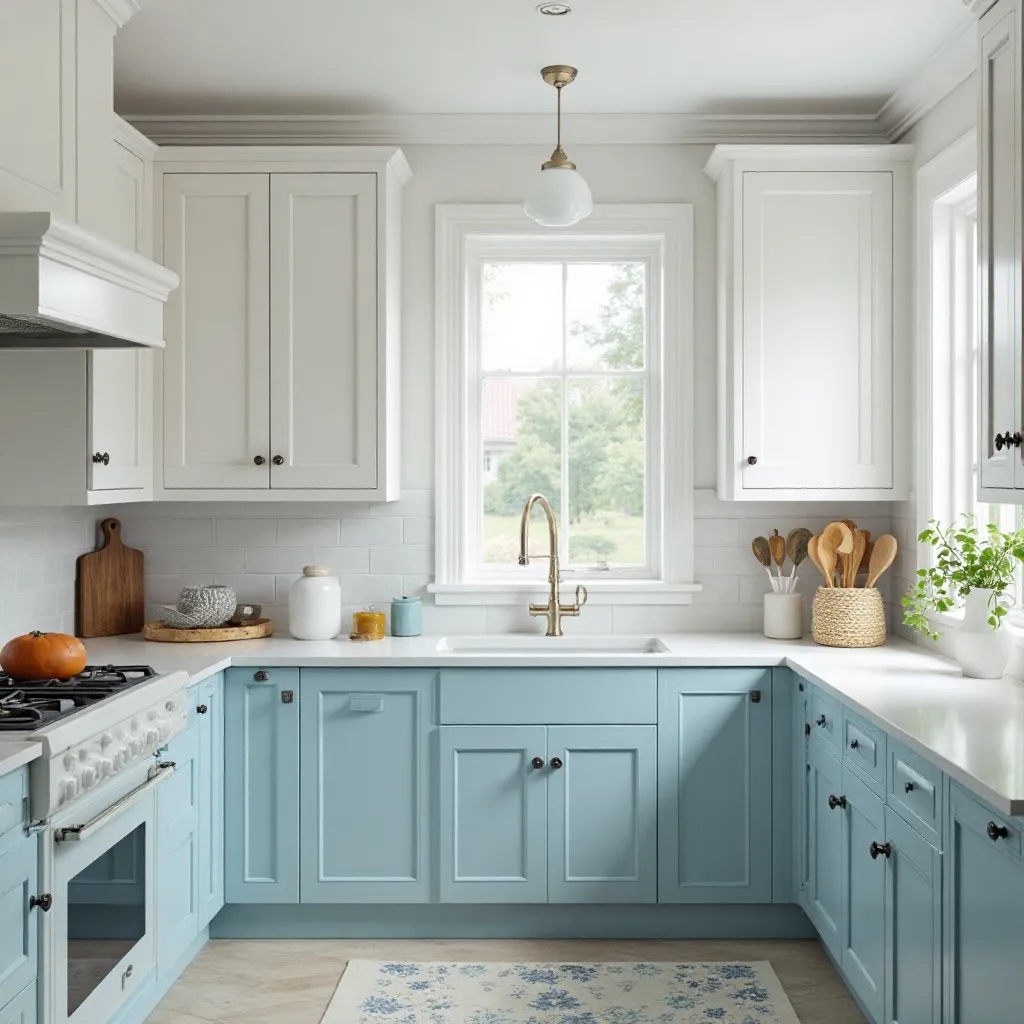
Imagine soft powder blue lower cabinets paired with bright white uppers, all in timeless Shaker style with their characteristic recessed panels and clean lines. This gentle approach to the blue and white palette creates a kitchen that feels fresh, approachable, and effortlessly charming without being overly sweet. Shop on Amazon
Why It Works: Powder blue is significantly more forgiving than bold navy—it hides fingerprints and minor imperfections while still providing gorgeous color. This softer approach makes the kitchen feel more casual and inviting, perfect for families who actually live in their space. The Shaker style ensures the design won’t feel dated in five years.
How to Style It:
- Select a blue with gray undertones (like Benjamin Moore Palladian Blue) for a sophisticated rather than baby-nursery feel
- Use white quartz countertops with minimal veining to keep the look clean and modern
- Install matte black hardware for contemporary contrast, or polished nickel for traditional warmth
- Add a white farmhouse sink to enhance the casual, welcoming vibe
Where to Use It: Farmhouse kitchens, cottage-style homes, family kitchens, eat-in kitchen spaces
Pro Tip: Sample your blue paint in both natural and artificial light before committing—powder blues can shift dramatically depending on your kitchen’s light exposure, sometimes reading green in north-facing rooms.
3. White Kitchen with Blue Tile Backsplash
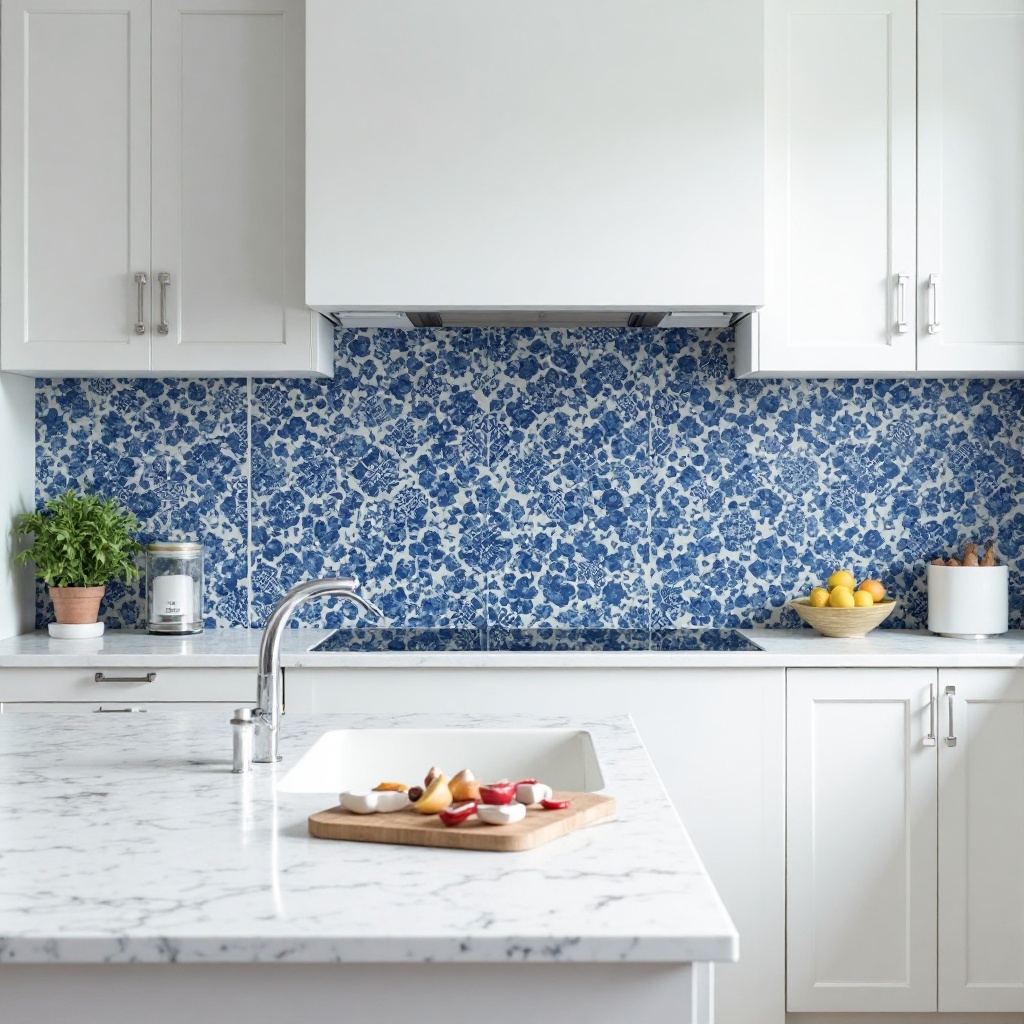
Envision an all-white kitchen foundation—white cabinets, white countertops, white walls—brought to life with a stunning blue tile backsplash that serves as functional art. Whether you choose patterned cement tiles, glossy subway tiles in cobalt, or intricate Mediterranean-inspired mosaics, this focal point approach lets you introduce color without overwhelming commitment. Shop on Amazon
Why It Works: This strategy is perfect for the commitment-phobic or budget-conscious renovator. You get the visual impact of the blue and white palette while keeping major elements neutral, making it easy to change your color scheme later by simply replacing tile. The backsplash area is also protected from splashes and stains, making decorative tile both beautiful and practical.
How to Style It:
- Choose handmade or artisan tiles for character and depth that mass-produced options can’t match
- Extend your backsplash to the ceiling if you have the budget—it creates dramatic height
- Balance ornate tile patterns with simple cabinet hardware and minimal accessories
- Consider blue tile in varying shades (ombré effect) for added visual interest and contemporary flair
Where to Use It: Minimalist kitchens, rental properties, budget renovations, small kitchens where color on large surfaces would overwhelm
Pro Tip: Order extra tiles and keep them stored away—ceramic tile batches vary, and having extras ensures you can replace damaged tiles years later with perfect matches.
4. Coastal-Inspired White Cabinets with Blue Island
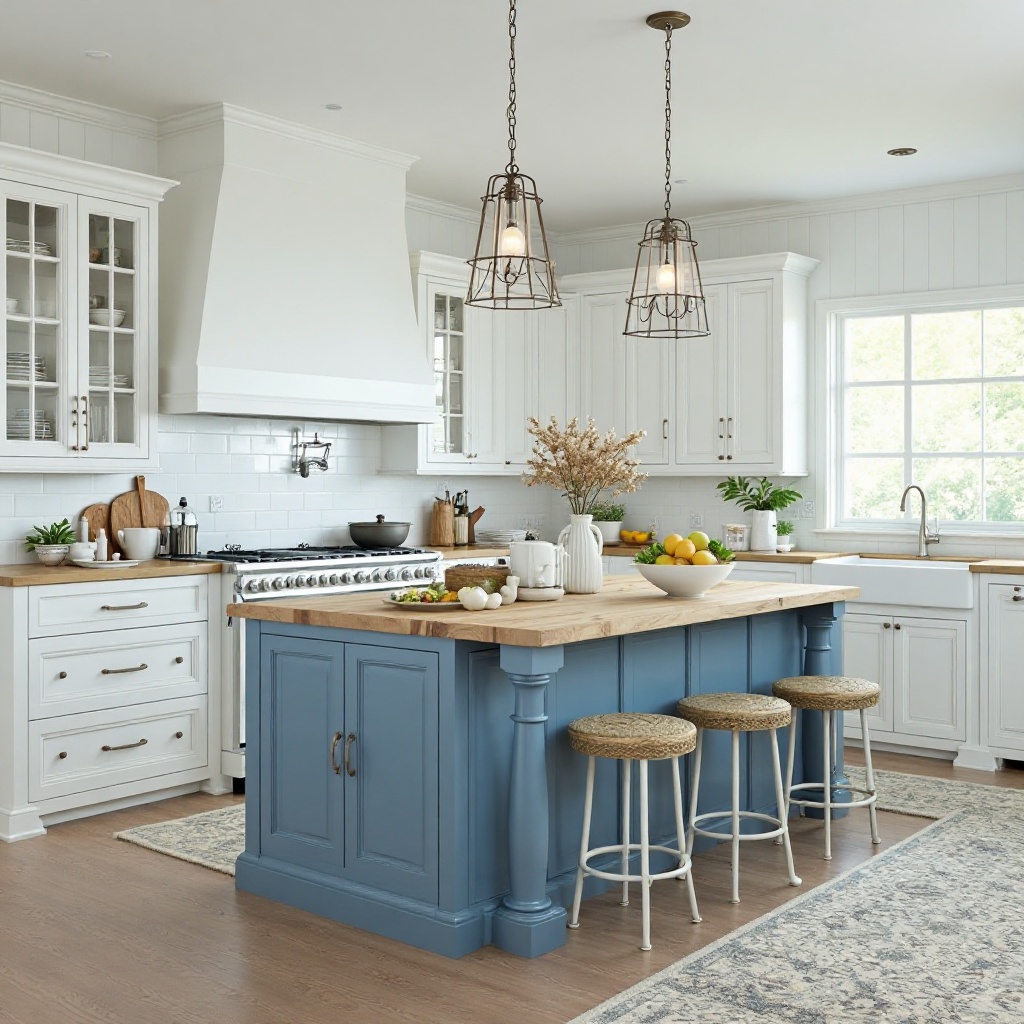
Picture a bright, airy kitchen with white perimeter cabinets that seem to float against the walls, anchored by a substantial island painted in a beautiful coastal blue—think the color of shallow tropical waters. Natural wood or butcher block countertops on the island add warmth, while white countertops on the perimeter keep everything light and cohesive. Shop on Amazon
Why It Works: The blue island becomes an instant focal point and gathering spot, defining the kitchen’s heart without requiring you to paint every cabinet. This approach is particularly clever in open-concept homes where the island is visible from living areas—it creates visual separation while maintaining flow. The concentrated color feels intentional rather than overwhelming.
How to Style It:
- Select a blue-green hybrid shade (like Sherwin Williams Watery) for authentic coastal vibes
- Top the island with warm walnut or maple butcher block to add organic texture
- Hang glass pendant lights over the island in clear or seeded glass to maintain the airy feel
- Incorporate natural fiber elements like jute rugs or woven bar stools to enhance the coastal aesthetic
Where to Use It: Beach houses, coastal-themed homes, open-concept spaces, kitchens with large islands
Pro Tip: If your island has seating, add comfortable upholstered bar stools in natural linen or light blue fabric—this makes the island feel like intentional furniture rather than just cabinetry.
5. Scandinavian White Kitchen with Pale Blue Accents
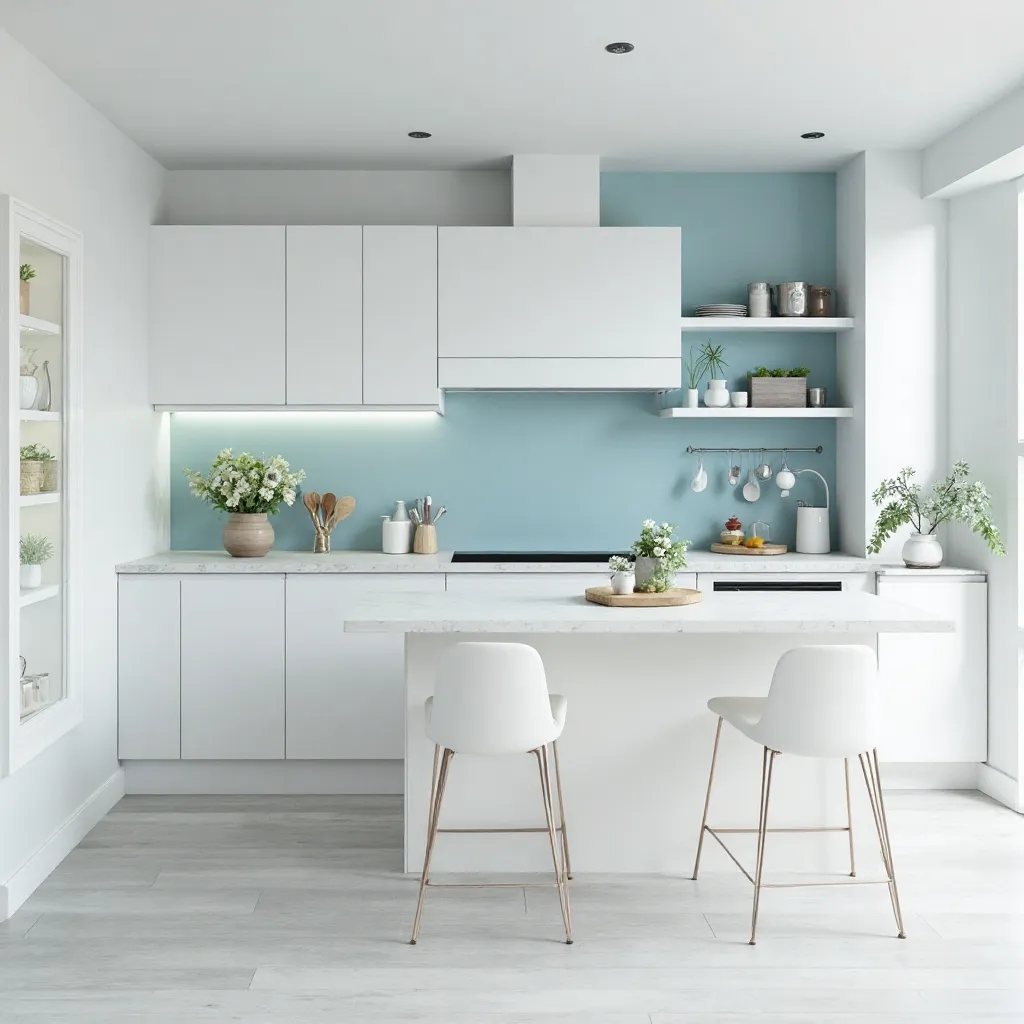
Imagine a minimalist Nordic-inspired kitchen dominated by pure white—white cabinets without hardware, white walls, white countertops—accented with the palest ice blue in strategic places: perhaps the interior of open shelving, a single accent wall, or bar stools around a white island. The effect is clean, calm, and incredibly sophisticated. Shop on Amazon
Why It Works: This whisper-soft approach to blue creates an atmosphere of serene simplicity that defines Scandinavian design. The minimal color doesn’t compete with natural light, making it ideal for smaller or darker kitchens that need to feel more spacious. It’s also incredibly versatile—easy to refresh by simply swapping out your blue accents as trends evolve.
How to Style It:
- Choose the palest possible blue (like Farrow & Ball Borrowed Light) that’s barely distinguishable from white
- Install handleless cabinets with push-to-open mechanisms for the cleanest possible lines
- Add light wood elements through floating shelves, cutting boards, or bar stools for Scandinavian warmth
- Keep countertops in white quartz or marble with minimal veining to maintain the serene aesthetic
Where to Use It: Small kitchens, modern apartments, minimalist homes, north-facing kitchens needing brightness
Pro Tip: In Scandinavian design, every item must earn its place—display only your most beautiful essentials on open shelving, using the pale blue backdrop to make white dishes and natural wood items pop.
6. Traditional White Kitchen with Blue and White China Display
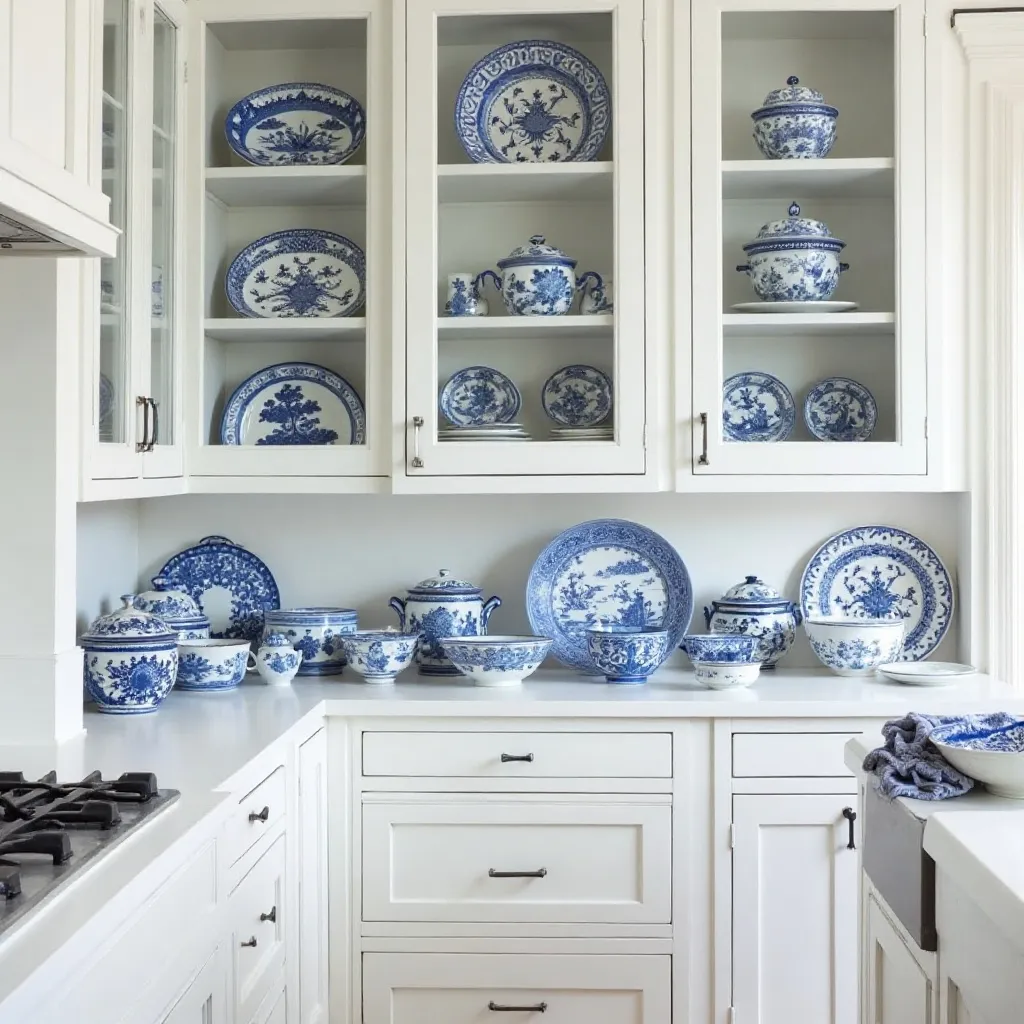
Envision gleaming white cabinets with glass-front uppers showcasing a carefully curated collection of blue and white porcelain—classic Delft patterns, Chinese ginger jars, or English transferware. The dishes themselves become your color story, creating visual interest without any permanent commitment to painted surfaces. Shop on Amazon
Why It Works: This approach is perfect for collectors and traditionalists who want personality in their kitchen. The blue appears as pattern and decoration rather than solid color, which feels softer and more layered. You can adjust the intensity of blue by how much china you display, and easily change the look by rotating your collection seasonally.
How to Style It:
- Install glass-front cabinets on upper walls flanking your range or sink for symmetrical display
- Add interior cabinet lighting to make your collection glow and create ambiance in the evening
- Mix different blue patterns rather than matching everything—varied patterns feel collected over time
- Include some white-only pieces to prevent the display from feeling too busy or overwhelming
Where to Use It: Traditional kitchens, colonial homes, farmhouse kitchens, dining kitchens where entertaining happens
Pro Tip: Arrange china by color intensity from light to dark as you move up the cabinet—this creates a gradient effect that’s more visually appealing than random placement.
7. Modern White Kitchen with Bold Blue Appliances
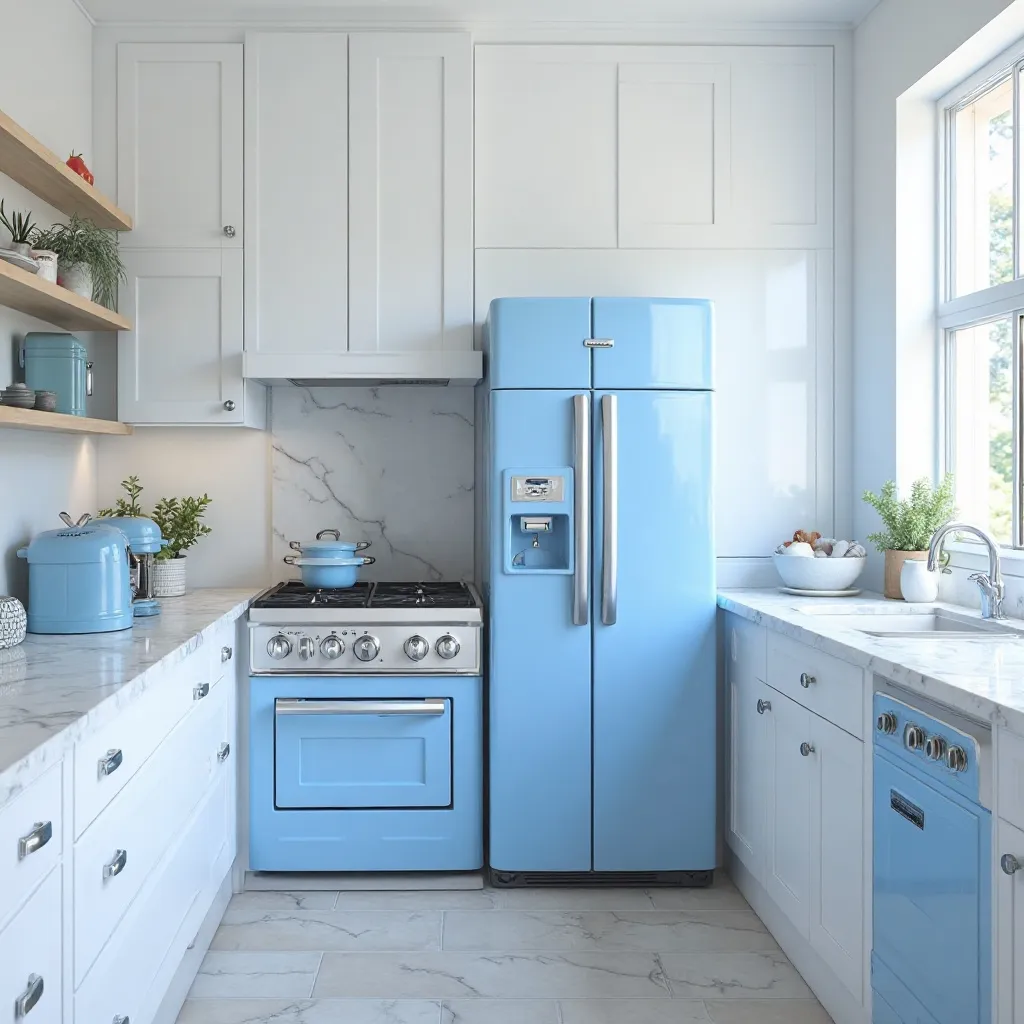
Picture a sleek, contemporary kitchen in pristine white—flat-panel cabinets, white quartz countertops, minimal hardware—punctuated by statement appliances in a vibrant blue. Think a cobalt blue professional-style range, a retro-inspired blue refrigerator, or even blue small appliances on white countertops. The effect is playful yet sophisticated, with a touch of personality. Shop on Amazon
Why It Works: Colored appliances are experiencing a major resurgence, offering a way to inject personality without paint or renovation. The white background makes bold blue appliances the undisputed stars of the space. This is also a renter-friendly option—you can take your appliances with you, and they’re easier to change than cabinets when you’re ready for something new.
How to Style It:
- Choose appliances in the same blue shade for a cohesive, intentional look rather than mismatched colors
- Select a sophisticated blue (like Smeg’s Union Jack Blue or Big Chill’s Azure Blue) rather than primary tones
- Keep all other finishes neutral—stainless steel or brass hardware, simple backsplash, minimal accessories
- Balance a large blue appliance (range or fridge) with smaller blue items like a kettle or toaster
Where to Use It: Modern kitchens, retro-inspired spaces, loft apartments, kitchens where you want changeable color
Pro Tip: If a fully colored appliance feels too bold, look for ranges with colored trim or control knobs—this gives you the pop of blue with more subtlety and sophistication.
8. Farmhouse White Kitchen with Distressed Blue Island
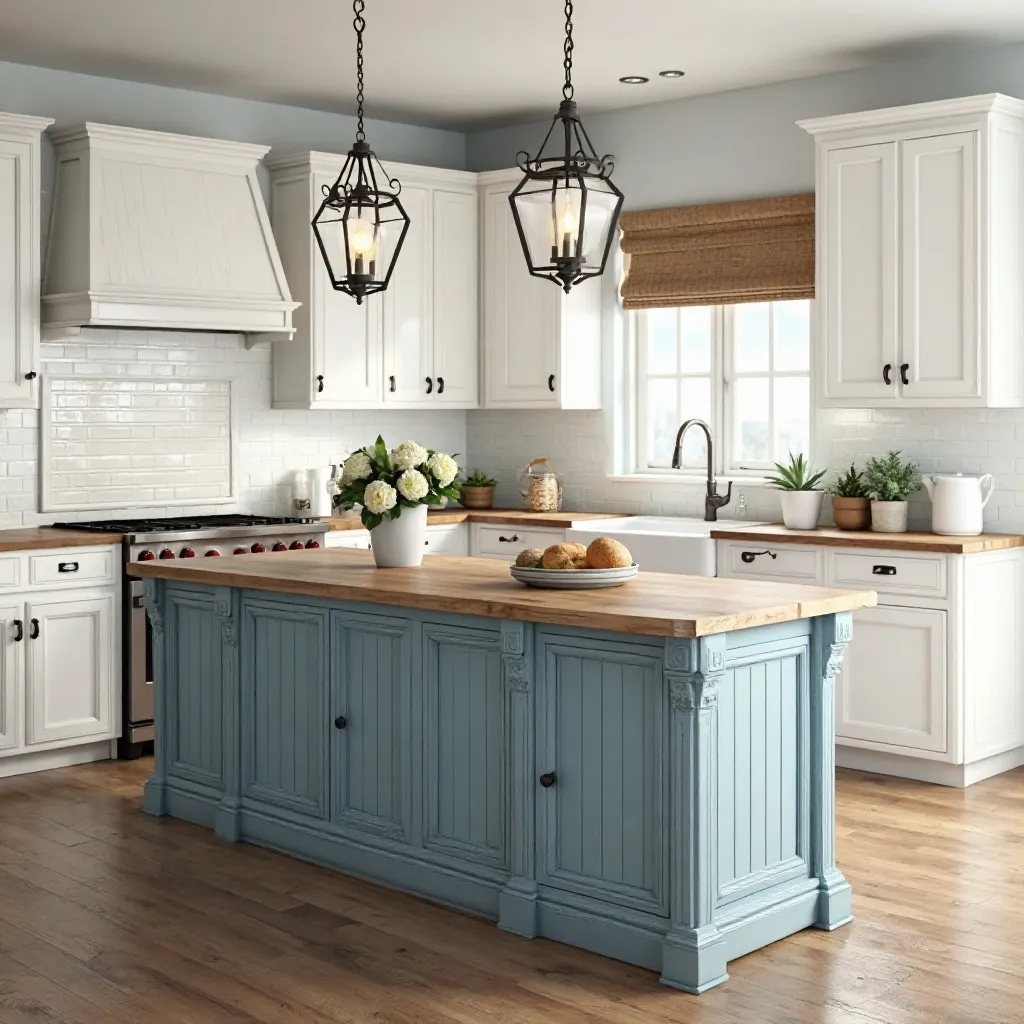
Imagine a warm, lived-in farmhouse kitchen with white shiplap walls, white beadboard cabinets, and a vintage-inspired island painted in a distressed blue finish that reveals layers of color underneath. The island looks like a treasured antique piece, perhaps with furniture-style legs and a thick butcher block top that invites prep work and casual gatherings. Shop on Amazon
Why It Works: The distressed finish adds instant character and history to new construction, making your kitchen feel like it’s evolved over generations. The imperfect, aged blue provides visual weight that grounds the lighter elements while maintaining the relaxed farmhouse vibe. It’s casual enough for daily family life but beautiful enough for entertaining.
How to Style It:
- Apply paint in multiple layers (consider navy base, medium blue top coat) then sand edges and high-wear areas
- Choose a blue with gray undertones (like Annie Sloan’s Aubusson Blue) that ages beautifully
- Top the island with thick butcher block (at least 1.5 inches) for authentic farmhouse appeal
- Add vintage-inspired bin pulls or cup pulls in oil-rubbed bronze or black iron
Where to Use It: Farmhouse kitchens, country homes, rustic spaces, kitchens in historic houses
Pro Tip: For authentic distressing, focus on areas that would naturally wear over time—edges, corners, around hardware—and use medium-grit sandpaper to reveal underlayers gradually rather than aggressively.
9. Contemporary White Kitchen with Geometric Blue Backsplash
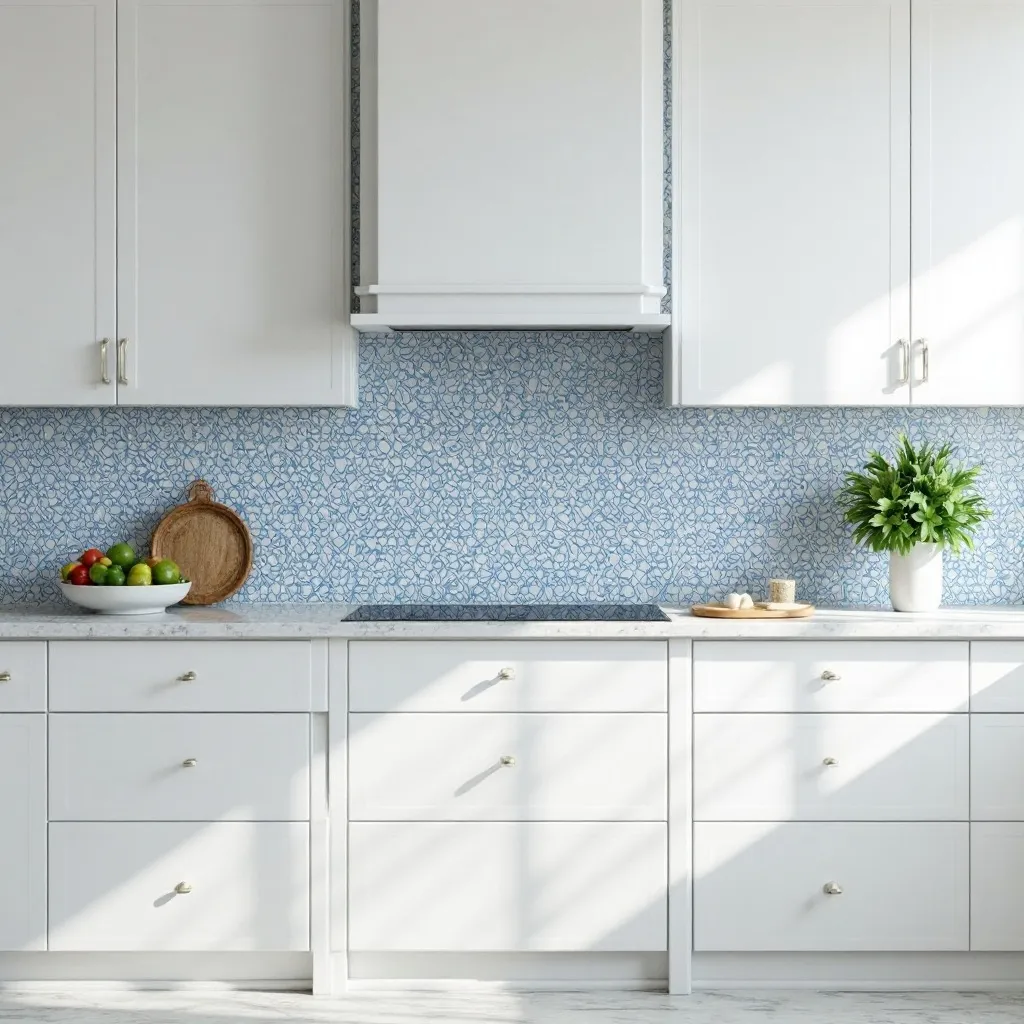
Envision a minimalist kitchen with flat-panel white cabinets and simple lines, dramatically transformed by a geometric tile backsplash in blue and white. Think hexagons, chevrons, Moroccan-inspired patterns, or modern tessellations that create movement and visual intrigue against the clean backdrop. The pattern provides all the personality this pared-down space needs. Shop on Amazon
Why It Works: Geometric patterns add energy and visual interest without requiring busy accessories or decorations—the tile does all the work. The repeating pattern creates rhythm and can make a small kitchen feel larger by drawing the eye across the space. It’s also incredibly photogenic, making your kitchen Instagram-worthy while remaining functional.
How to Style It:
- Choose large-scale geometric patterns for bigger kitchens, smaller patterns for compact spaces
- Ensure at least 60% white space in the tile pattern to prevent overwhelming the room
- Install the geometric tile only as a backsplash, keeping floors and counters simple for balance
- Add matching blue grout to intensify the pattern, or white grout for a softer, blended effect
Where to Use It: Modern kitchens, contemporary spaces, geometric-themed homes, kitchens needing a focal point
Pro Tip: Align your geometric pattern with your cabinet spacing and outlets—centered patterns look intentional, while off-center installations can look like mistakes.
10. Mediterranean-Style White Kitchen with Blue Accents
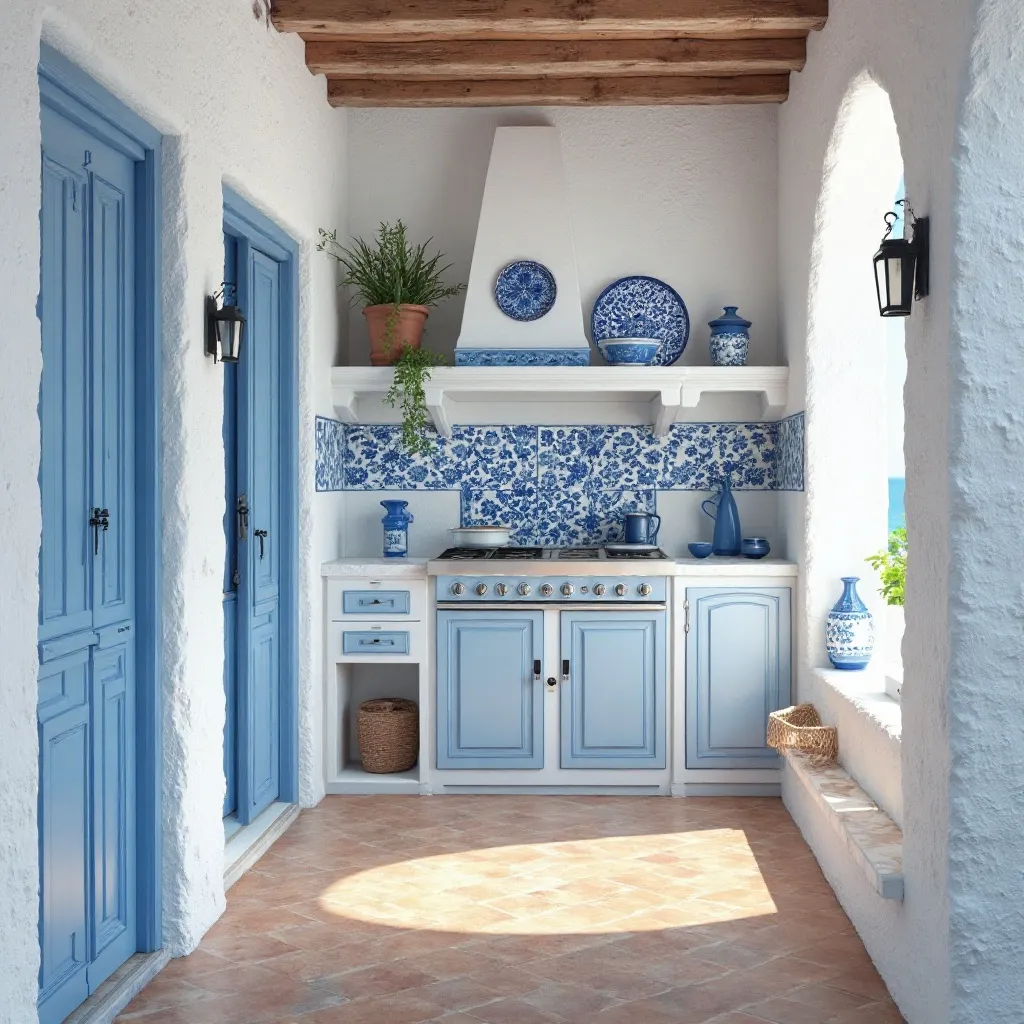
Picture a sun-drenched kitchen with rustic white plaster walls, simple white cabinets, and splashes of vibrant Mediterranean blue throughout—perhaps in hand-painted tile borders, a blue range hood, blue pottery displayed on open shelves, or blue interior cabinets visible through glass doors. Natural terracotta floor tiles add warmth, while the blue echoes the nearby sea. Shop on Amazon
Why It Works: Mediterranean blue has a different quality than other blues—it’s saturated and vibrant, evoking the Greek islands and Italian coast. Used as accent rather than dominant color, it creates a vacation-at-home feeling without being thematic or kitschy. The combination of rustic white and jewel-toned blue feels both casual and elegant, perfect for homes with architectural character.
How to Style It:
- Select a true Mediterranean blue (like Sherwin Williams Hyper Blue) that’s bright without being electric
- Incorporate handmade or hand-painted elements—nothing should look mass-produced
- Add terracotta, natural wood, or wrought iron accessories to enhance the Mediterranean feel
- Display lemons, olive oil bottles, or fresh herbs in blue pottery for authentic styling
Where to Use It: Mediterranean-style homes, Spanish colonial architecture, stucco houses, vacation homes
Pro Tip: Mediterranean style embraces imperfection—choose tiles with variation, paint with subtle texture, and display mismatched vintage blue pieces rather than coordinated new ones.
11. Blue Lower Cabinets with White Upper Cabinets and Brass Accents
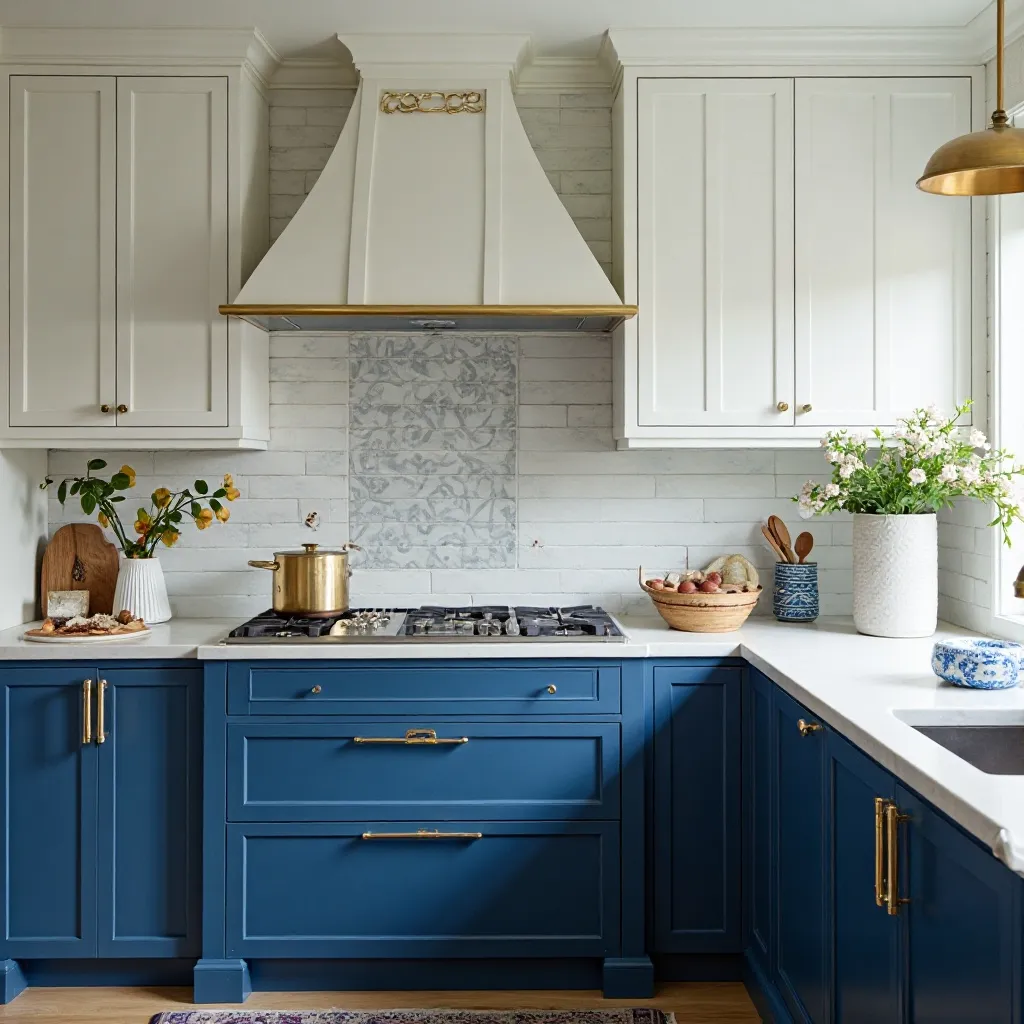
Imagine a balanced kitchen composition with saturated blue lower cabinets providing weight and grounding, white upper cabinets keeping sight lines open and airy, and warm brass hardware, fixtures, and lighting tying everything together with golden warmth. The metal finish prevents the blue and white from feeling cold while adding a layer of luxury. Shop on Amazon
Why It Works: This three-material combination (blue, white, brass) creates visual richness without feeling cluttered. The brass adds warmth that blue and white alone can’t provide, making the kitchen feel inviting rather than stark. It’s also on-trend but rooted in classic design principles, ensuring it won’t look dated quickly.
How to Style It:
- Choose mid-tone blue (like Benjamin Moore Van Deusen Blue) that shows off brass beautifully
- Install brass or unlacquered brass hardware that will patina and develop character over time
- Add brass light fixtures—pendants over an island, a brass chandelier, or under-cabinet brass strip lighting
- Include a brass faucet and pot filler if your budget allows for maximum cohesion
Where to Use It: Transitional kitchens, eclectic spaces, traditional kitchens being updated, open-concept homes
Pro Tip: Unlacquered brass develops a beautiful patina that looks intentional and luxe—embrace the aging rather than fighting it with constant polishing.
12. White Kitchen with Blue Vintage Rug
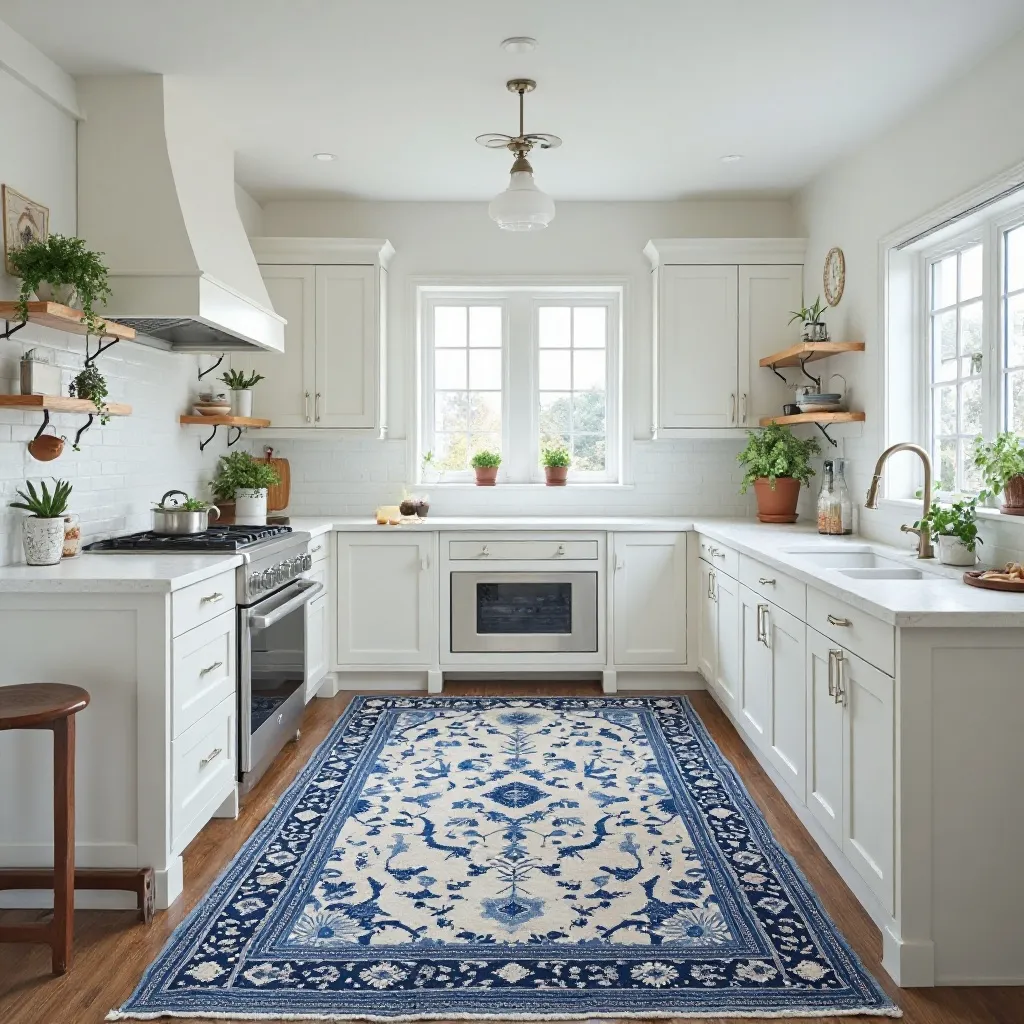
Envision an all-white kitchen given instant personality and warmth through a gorgeous vintage or vintage-inspired rug in blue and white patterns. Think Turkish kilims, Persian runners, or modern geometric designs that define zones, protect floors, and introduce pattern in a completely changeable way. The rug softens hard surfaces and adds comfort underfoot. Shop on Amazon
Why It Works: This is the easiest, most affordable way to test the blue and white palette—you can switch out a rug far more easily than paint or tile. Rugs also add crucial warmth and texture to kitchens dominated by hard, reflective surfaces. In open-concept homes, a rug helps define the kitchen zone while connecting it visually to adjacent living spaces.
How to Style It:
- Choose indoor-outdoor rugs or flatweave rugs that handle spills and frequent cleaning better than pile rugs
- Size appropriately—extend at least 18 inches beyond each side of your island, or run full length in galley kitchens
- Layer pattern strategically: if your rug is heavily patterned, keep walls and backsplash simple
- Anchor the rug with bar stools or dining chairs that touch it, creating connection and intention
Where to Use It: Open-concept kitchens, hardwood or tile floors, kitchen-dining combinations, spaces needing sound dampening
Pro Tip: Place a non-slip rug pad underneath—this isn’t optional in a kitchen where safety is paramount and liquid spills are inevitable.
13. Navy Shiplap Accent Wall with White Cabinets
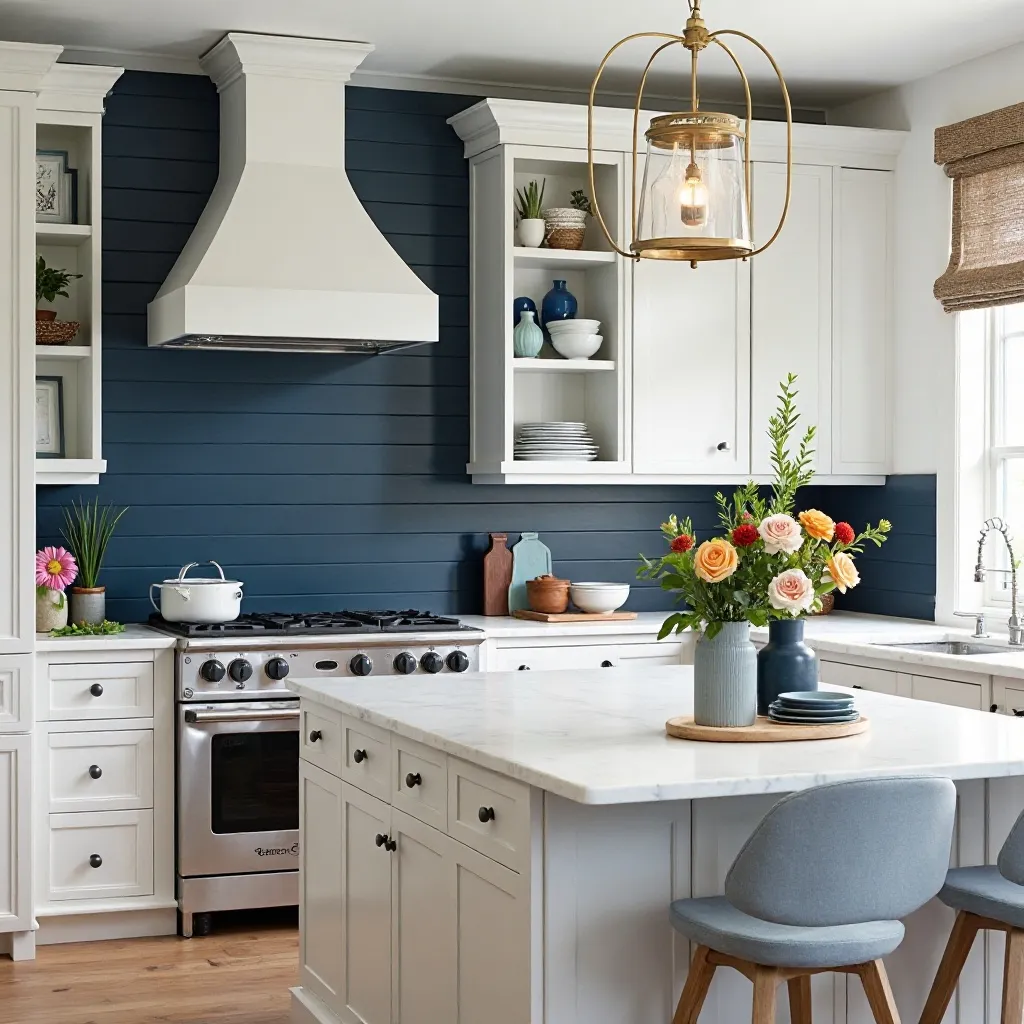
Picture white Shaker-style cabinets surrounding the kitchen, with one dramatic wall clad in horizontal navy shiplap—perhaps behind open shelving, framing the range, or defining the dining nook. The horizontal lines add visual width while the navy provides depth and architectural interest without requiring any cabinetry commitment. Shop on Amazon
Why It Works: Shiplap adds texture and shadow lines that create dimension, preventing flat walls of color. The navy accent wall provides dramatic contrast that makes white cabinets appear even crisper and brighter. This approach concentrates color in one area, creating a focal point that draws the eye and defines the kitchen’s character without overwhelming the entire space.
How to Style It:
- Install shiplap with consistent 1/8-inch gaps between boards for authentic shadow lines
- Paint the shiplap in a semi-gloss or satin finish that’s more durable and cleanable than matte
- Balance the dark wall with plenty of light—add sconces, ensure good overhead lighting, or place it near windows
- Float white shelves against the navy wall to display white dishware, plants, or cookbooks
Where to Use It: Farmhouse kitchens, coastal homes, transitional spaces, kitchens with awkward wall configurations
Pro Tip: Horizontal shiplap makes rooms feel wider, while vertical shiplap makes ceilings feel taller—choose your orientation based on your kitchen’s proportions and needs.
14. White Kitchen with Blue Glass Cabinet Inserts
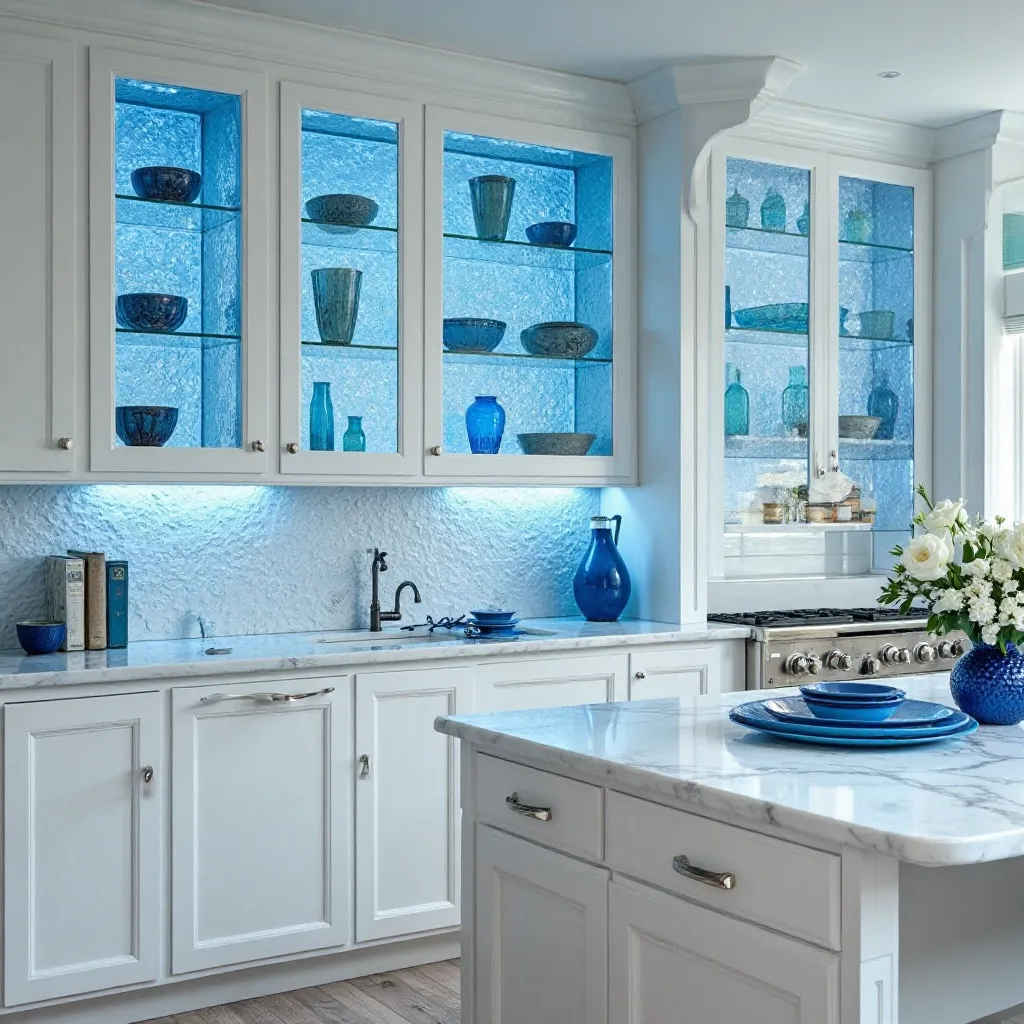
Imagine traditional white cabinets elevated with custom glass inserts in a gorgeous blue—perhaps seeded glass, rippled glass, or back-painted glass in cobalt or aqua. The glass adds visual lightness while the blue color creates depth and intrigue, especially when interior cabinet lighting illuminates the glass and creates a soft glow. Shop on Amazon
Why It Works: This sophisticated detail adds custom appeal without the cost of full cabinet replacement. The blue glass inserts break up expanses of solid white cabinetry while maintaining function—you can still see (somewhat) what’s stored inside. The translucent quality of glass keeps the kitchen feeling open while adding personality and color in an unexpected place.
How to Style It:
- Replace glass in upper cabinet doors flanking a window or over a peninsula for symmetry
- Add LED strip lighting inside cabinets to make the blue glass glow at night
- Choose glass texture based on how much you want contents visible—clear shows everything, seeded obscures more
- Organize cabinet interiors with matching white containers since they’ll be partially visible
Where to Use It: Traditional kitchens, craftsman homes, kitchens with detailed cabinet doors, spaces needing subtle color
Pro Tip: Work with a glass shop to create custom inserts rather than replacing entire cabinet doors—it’s significantly cheaper and you keep your existing frame and woodwork.
15. Contemporary White Kitchen with Blue Countertops
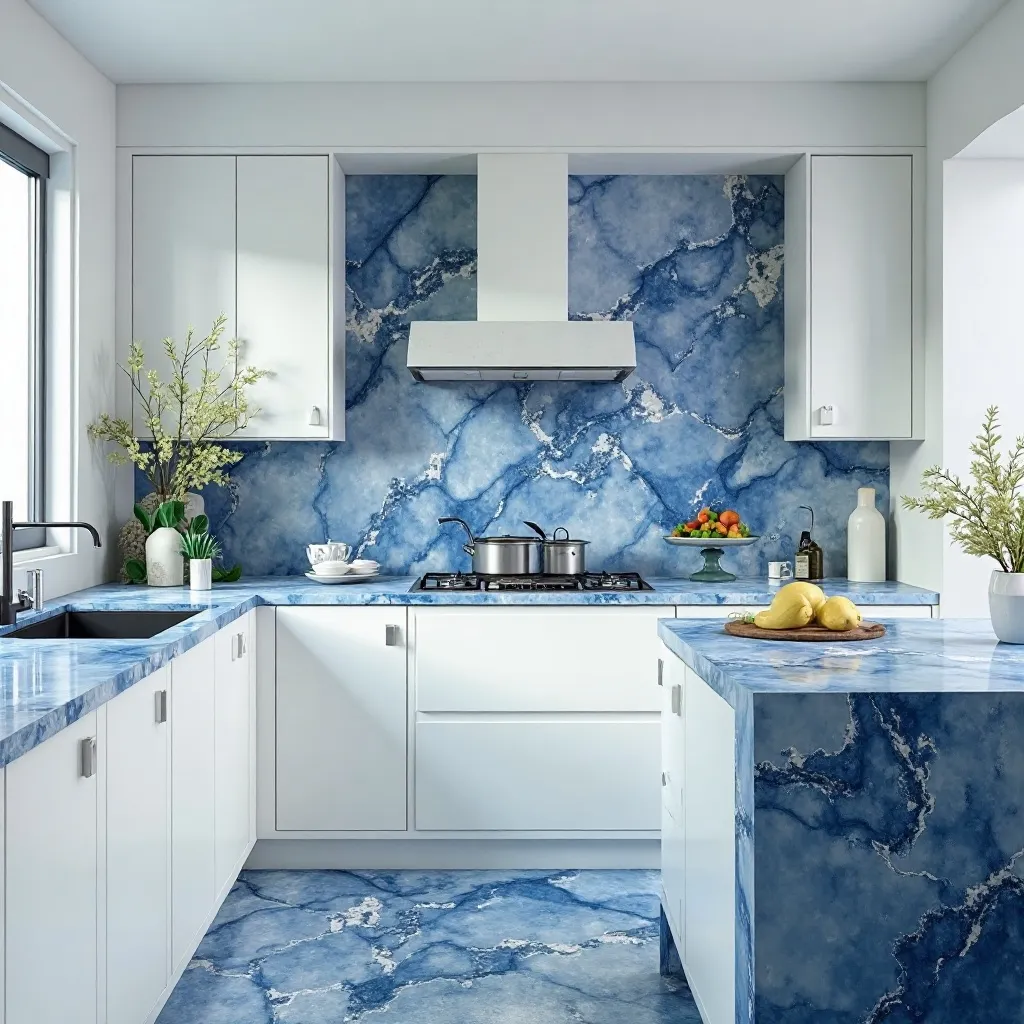
Envision a bold, modern kitchen with white cabinets and a stunning blue countertop—perhaps a dramatic blue quartzite with white veining, solid blue quartz, or even polished concrete in a custom blue. This unexpected choice flips the typical light-counter-dark-cabinet convention, creating a kitchen that’s memorable and uniquely yours. Shop on Amazon
Why It Works: Blue countertops are rare enough to feel special and personal, not trendy or derivative. The solid horizontal plane of color grounds the kitchen without the visual weight of dark cabinetry, making it perfect for smaller kitchens. Modern quartz manufacturers offer increasingly sophisticated blues that resist stains and scratches as well as their neutral counterparts.
How to Style It:
- Choose engineered quartz in blue for durability and consistency, or natural quartzite for unique veining
- Select a blue that’s saturated but not bright—think midnight, slate, or navy rather than royal blue
- Keep all other elements simple—white cabinets, minimal backsplash, simple hardware—to let countertops star
- Add waterfall edges on an island to showcase the blue material on vertical surfaces too
Where to Use It: Modern kitchens, contemporary homes, spaces where you want unexpected design choices
Pro Tip: Get large samples of any blue stone and view them in your actual kitchen light for at least a week—natural and artificial light will dramatically affect how the color reads.
16. White Kitchen with Blue Pendant Lighting
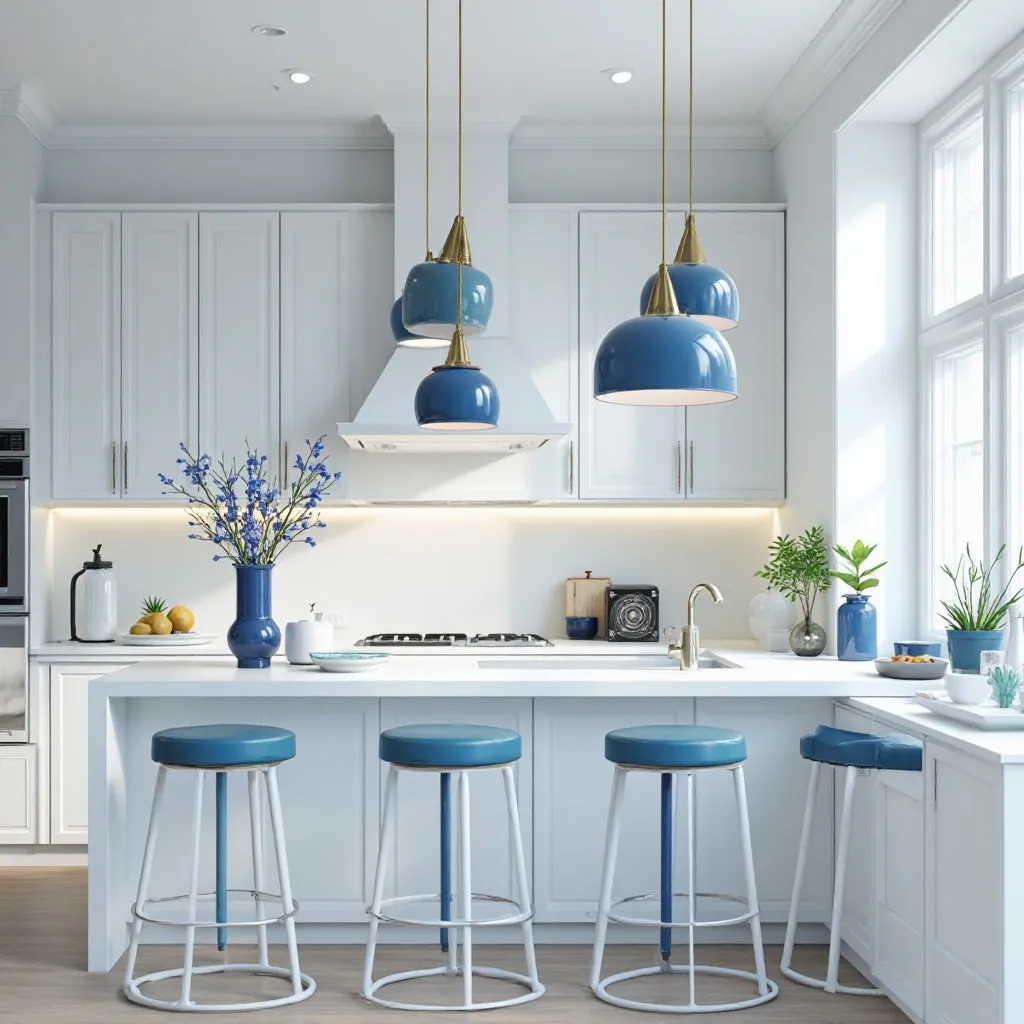
Picture a pristine white kitchen brought to life with statement pendant lights in various shades of blue—perhaps hand-blown glass globes in azure, ceramic pendants in navy, or modern metal shades powder-coated in blue. The lighting serves as functional art, adding color at eye level where it has maximum impact without requiring any permanent renovation. Shop on Amazon
Why It Works: Lighting is one of the most changeable elements in a kitchen, making it perfect for color experimentation. Pendants at eye level create visual interest in the often-neglected vertical space between counters and ceiling. Blue lighting adds personality without covering walls or cabinets, and you can adjust color intensity simply by how many pendants you install.
How to Style It:
- Hang pendants 30-36 inches above island countertops for optimal task lighting and conversation clearance
- Mix different shades of blue in the same finish (all glass, all ceramic) for sophisticated variation
- Choose glass pendants in blue to create ambient colored light, or opaque pendants for focused task lighting
- Install dimmers to control both light intensity and the visibility of the blue color
Where to Use It: Kitchens with islands, peninsula kitchens, breakfast bars, spaces needing personality without renovation
Pro Tip: Odd numbers look more intentional than even—three pendants work better visually than two or four, unless you have a very long island that warrants four or six evenly spaced.
17. Cottage White Kitchen with Blue Window Trim
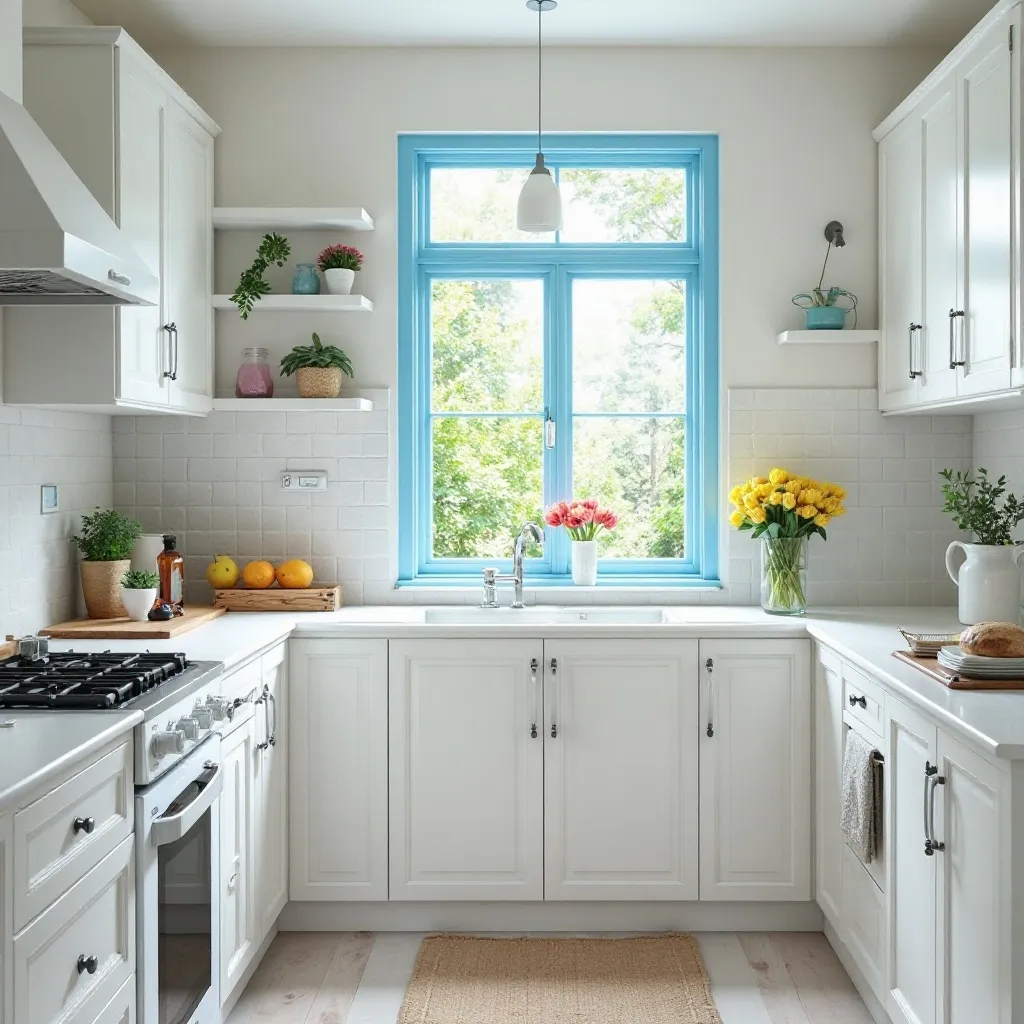
Imagine a charming cottage kitchen with white beadboard cabinets, white walls, and all your window and door trim painted in a cheerful blue—perhaps sky blue, periwinkle, or soft teal. This unexpected detail frames views to the outdoors, draws attention to architectural features, and adds whimsy without overwhelming the space with color. Shop on Amazon
Why It Works: Painted trim is a classic design technique that’s been largely abandoned for white-on-white, making this choice feel fresh and unexpected. The blue frames naturally draw the eye to windows, making them appear larger and connecting your indoor space to outdoor sky and water. It’s also an affordable DIY project that delivers big visual impact.
How to Style It:
- Choose a blue that complements your outdoor views—greener blues if you overlook gardens, true blues for water views
- Paint interior window sills and trim only, or extend to door frames and baseboards for full commitment
- Use semi-gloss or high-gloss paint on trim for durability and to create contrast with matte walls
- Add white cafe curtains or blue-and-white check fabric for additional cottage charm
Where to Use It: Cottage kitchens, small kitchens with lots of windows, farmhouse spaces, breakfast nooks
Pro Tip: Painter’s tape is your best friend—invest time in careful taping for crisp lines, as sloppy edges will ruin the intentional look you’re creating.
18. Modern White Kitchen with Blue Concrete Floors
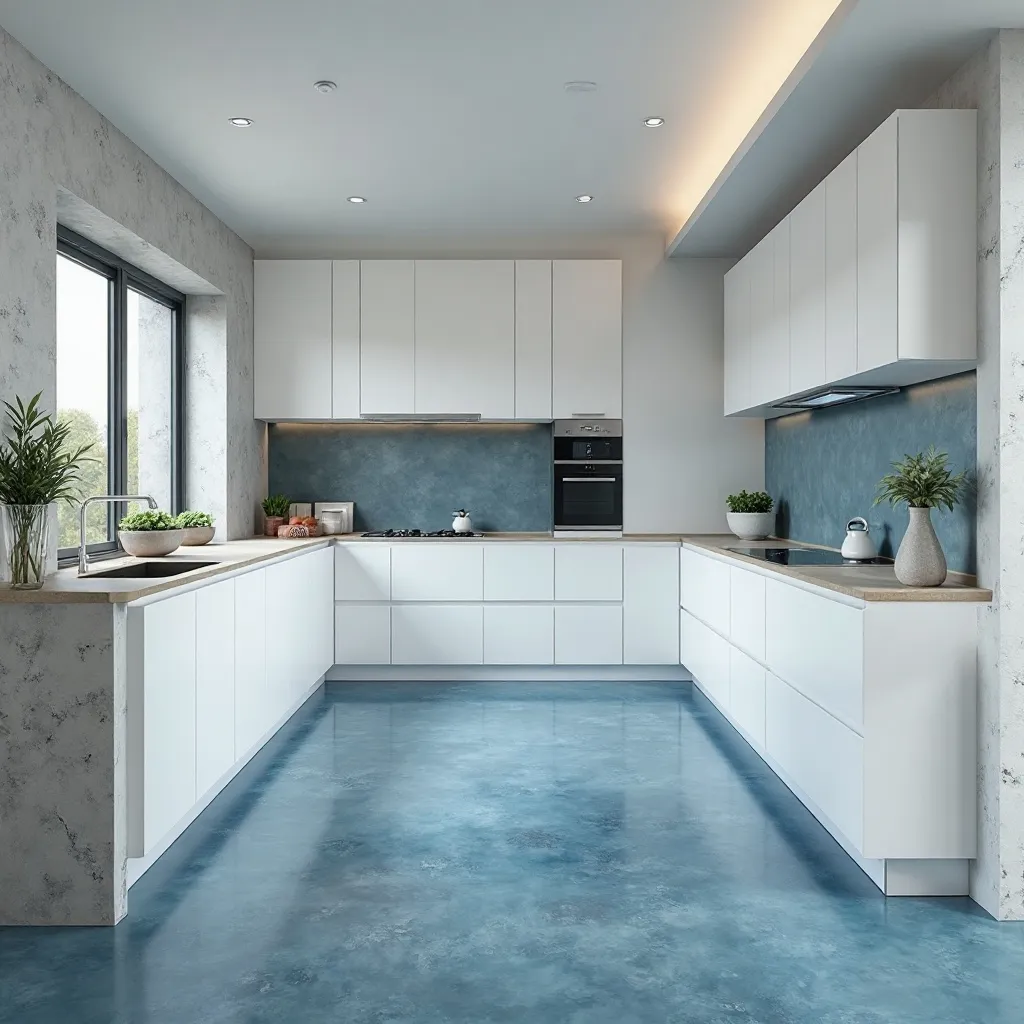
Envision a cutting-edge contemporary kitchen with sleek white cabinets, minimal hardware, and a polished concrete floor in a beautiful smoky blue. The floor grounds the entire space while the smooth, reflective finish bounces light around the room. The unexpected floor color makes white cabinets feel intentional rather than default. Shop on Amazon
Why It Works: Blue concrete floors are durable, easy to maintain, and increasingly popular in modern design. The cool tone is forgiving of spills and dirt while adding significant personality. Concrete also provides thermal mass that helps regulate temperature—cool in summer, warm in winter—making it both beautiful and functional.
How to Style It:
- Work with a concrete specialist to achieve the exact blue tone you want through integral color or stains
- Polish the concrete to a high sheen for light reflection and easier maintenance
- Install radiant heating underneath if your budget allows—it transforms concrete into the most comfortable flooring
- Add washable cotton rugs in high-traffic areas for comfort and safety, choosing patterns that complement your blue
Where to Use It: Modern kitchens, industrial-style lofts, radiant-heat homes, open-concept spaces
Pro Tip: Seal concrete floors properly with a high-quality penetrating sealer and maintain with periodic resealing—this prevents staining and makes the floor practically indestructible.
19. Traditional White Kitchen with Blue Granite Countertops
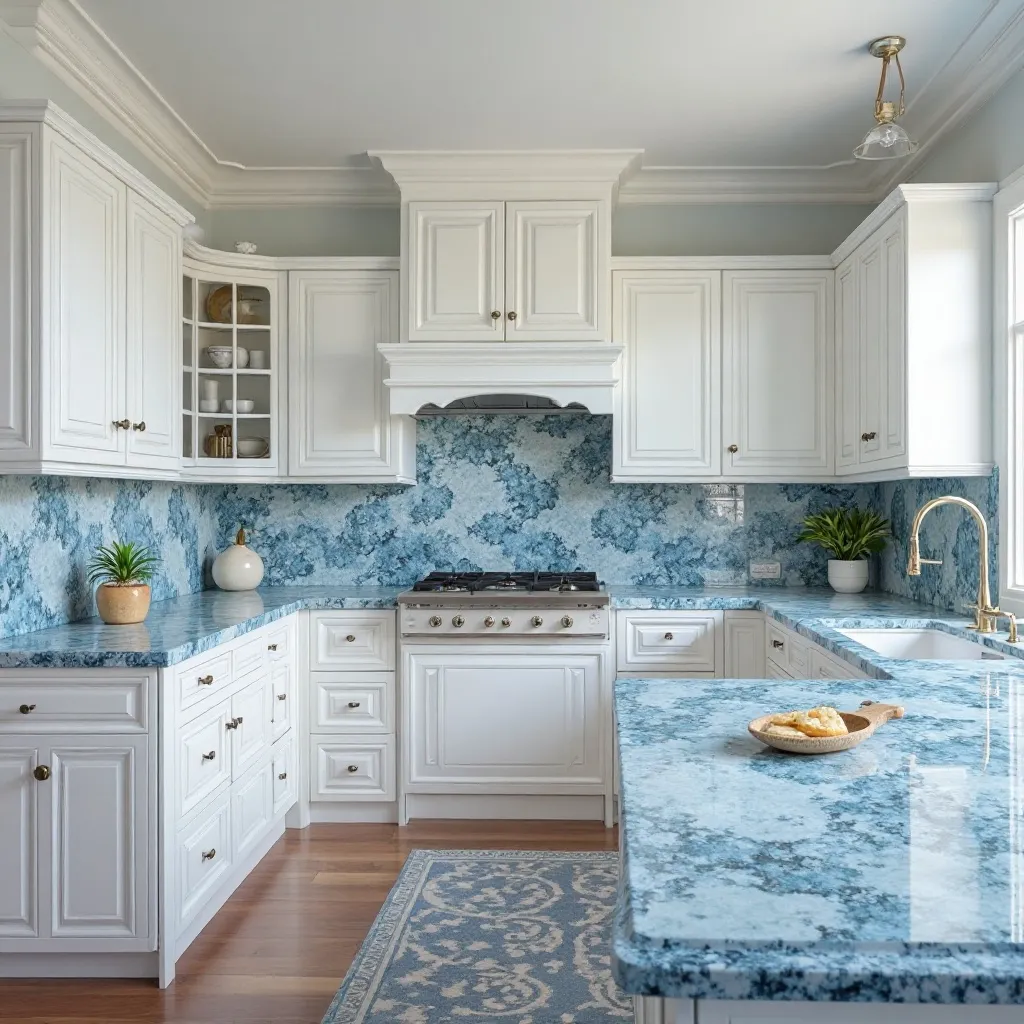
Picture a classic kitchen with white cabinets topped with stunning natural blue granite—perhaps Blue Pearl with its metallic flecks, Azul Aran with its dramatic blue and white swirls, or Volga Blue with its consistent medium-blue tone. The natural stone brings depth, pattern, and color in a way that feels organic and timeless rather than trendy. Shop on Amazon
Why It Works: Blue granite is a natural material that’s been used in luxury kitchens for decades, giving it staying power that manufactured blues might lack. The variation in natural stone means no two installations are identical—your kitchen becomes truly one-of-a-kind. Granite’s durability and heat resistance make it ideal for serious cooks who need counters that work as hard as they look beautiful.
How to Style It:
- Visit stone yards to select your exact slabs—photos don’t capture granite’s depth and variation
- Choose granite with white or silver veining to tie to white cabinets rather than yellow or brown tones
- Polish granite to a high shine for traditional spaces, or hone it for contemporary, matte sophistication
- Keep backsplash simple when using dramatic granite—let one element be the star
Where to Use It: Traditional kitchens, luxury renovations, homes with other natural stone, kitchens needing durable surfaces
Pro Tip: Ask your fabricator to show you the exact slab placement in your kitchen layout before cutting—you can orient dramatic veining exactly where you want it for maximum impact.
20. Scandinavian White Kitchen with Blue Textiles
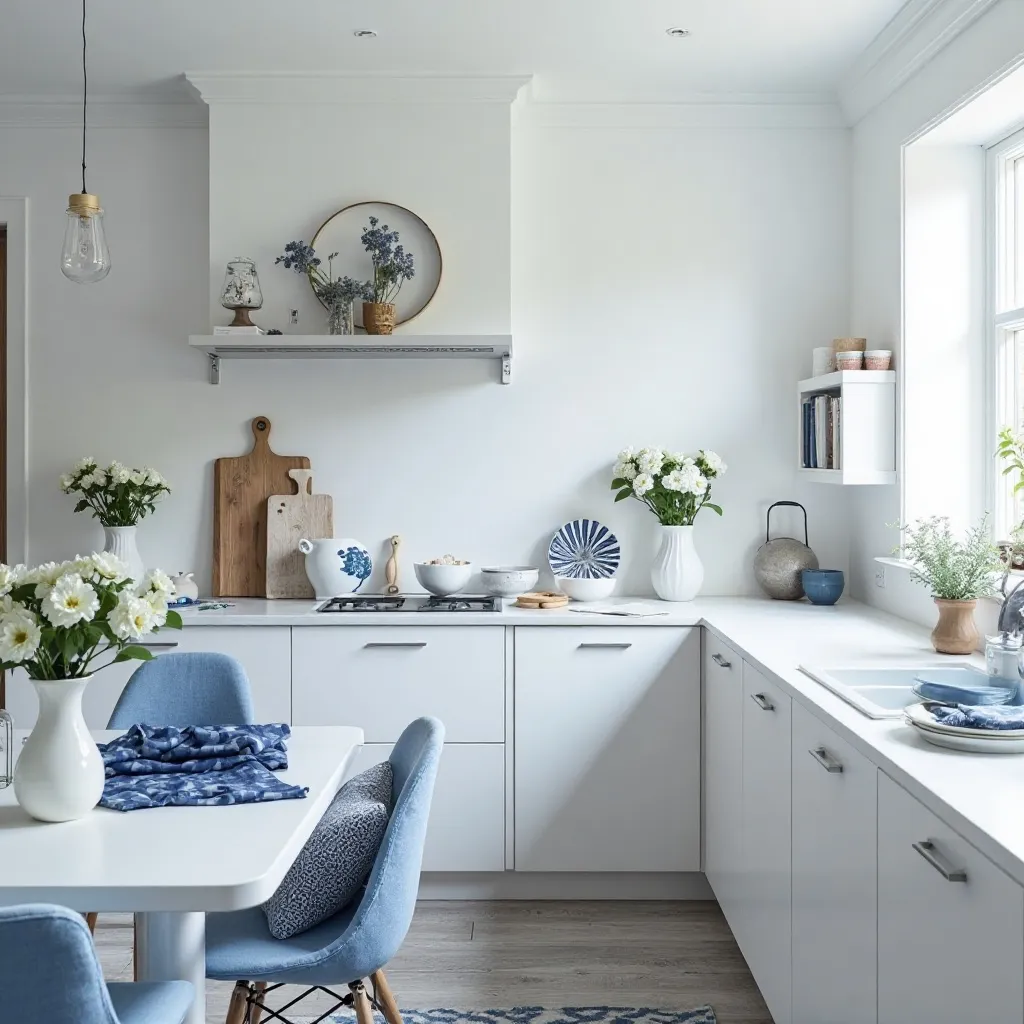
Imagine a minimalist kitchen in pure white with pops of blue introduced entirely through changeable textiles—dish towels, seat cushions, cafe curtains, or a table runner. The blue appears and disappears with the seasons, allowing you to adjust color intensity based on your mood while keeping the permanent elements neutral and serene. Shop on Amazon
Why It Works: This is the ultimate commitment-free approach to the blue and white palette—you can change your entire color story for under $200. It’s perfect for renters, the budget-conscious, or anyone who loves frequently refreshing their space. Textiles also add crucial softness and warmth to kitchens dominated by hard surfaces and clean lines.
How to Style It:
- Choose natural fabrics like linen or cotton in blue that can be washed frequently in hot water
- Layer different shades of blue—chambray blue towels, navy cushions, pale blue curtains—for depth
- Add textiles in unexpected places: cushions on bar stools, runners on open shelving, fabric-lined baskets
- Rotate textile colors seasonally: darker blues in winter for coziness, lighter blues in summer for freshness
Where to Use It: Rental kitchens, minimalist spaces, budgets under $500, kitchens where you change your mind frequently
Pro Tip: Buy multiples of your favorite blue textiles while you can find them—dye lots vary, and having matching backups means you can keep rotating clean items without visible wear.
21. Art Deco White Kitchen with Navy and Gold Accents
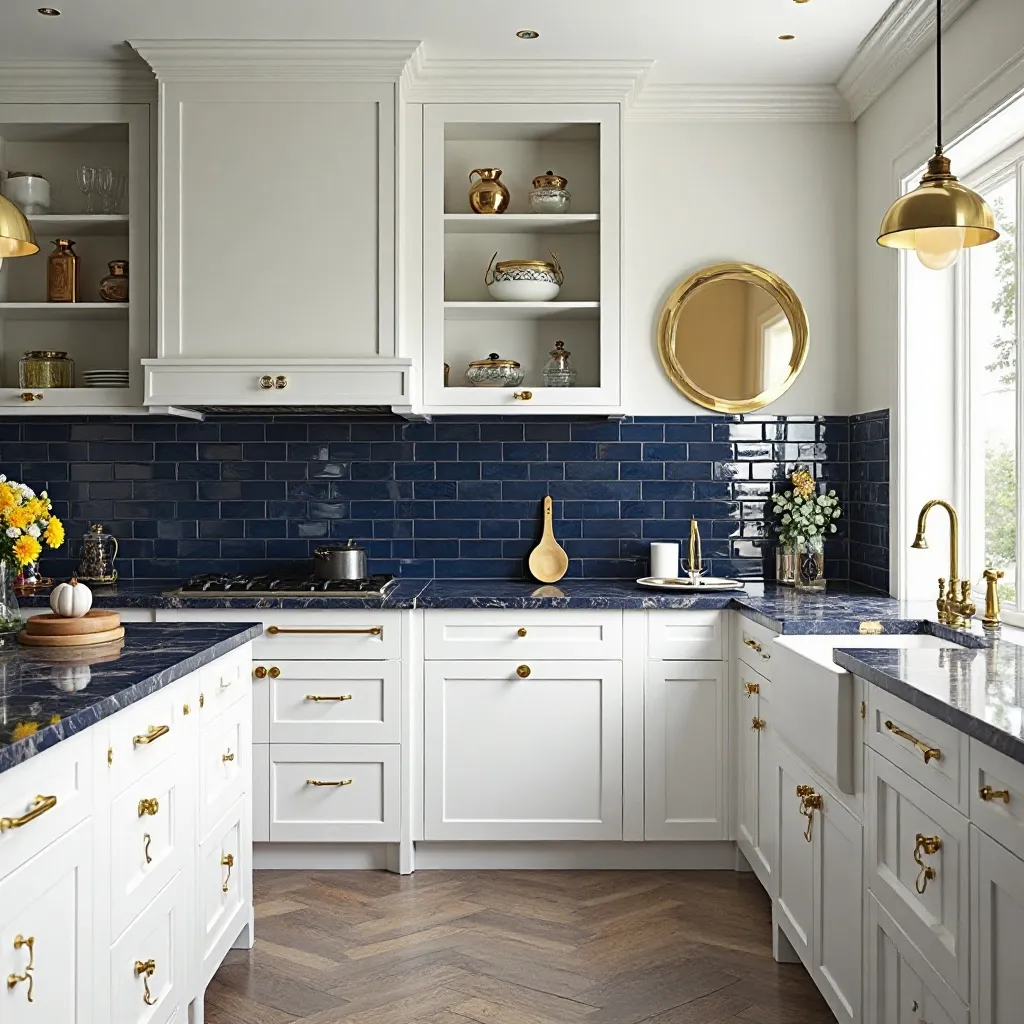
Picture a glamorous kitchen with glossy white cabinets featuring geometric Art Deco-inspired hardware in navy and gold. Think navy subway tiles in a herringbone pattern, brass fixtures with navy accents, gold-framed mirrors, and navy marble with gold veining on the island. The combination evokes 1920s luxury updated for contemporary living. Shop on Amazon
Why It Works: Art Deco is experiencing a major design resurgence, and the navy-white-gold combination is its signature palette. The style’s emphasis on geometry, symmetry, and luxury creates a kitchen that feels special and intentional. Navy reads more sophisticated than royal blue, while gold prevents the space from feeling cold or stark.
How It Works:
- Choose geometric tile patterns—herringbone, hexagons, or chevrons—to reinforce Art Deco style
- Install hardware with geometric shapes: hexagonal knobs, rectangular pulls, stepped designs
- Add gold-framed elements: a mirror above a bar area, artwork in gold frames, gold-trimmed glassware displays
- Include a statement light fixture in brass and navy—a geometric chandelier or streamlined pendants
Where to Use It: Period homes from the 1920s-1930s, glamorous apartments, kitchens where entertaining is priority
Pro Tip: Art Deco succeeds through symmetry—balance navy elements on both sides of your space, match hardware styles throughout, and create visual rhythm through repeated geometric patterns.
Common Mistakes to Avoid
1. Choosing the Wrong Blue Undertone for Your Lighting
Blue is incredibly sensitive to light conditions—a perfect blue in the paint store can turn green, purple, or gray in your home depending on your specific lighting. North-facing rooms make blues look cooler and grayer, while south-facing rooms intensify blue and can make it look more purple. Always test paint samples on multiple walls in your kitchen and observe them throughout the day and evening under both natural and artificial light. Live with samples for at least a week before committing to a full paint job—this small investment prevents costly mistakes.
2. Using Too Much High-Contrast in a Small Kitchen
While dramatic navy cabinets with white walls look stunning in spacious kitchens, the high contrast can make small kitchens feel choppy and even smaller by creating visual fragmentation. In compact spaces, opt for softer blues like powder blue, sky blue, or blue-gray that create less contrast with white elements. This allows the eye to flow smoothly through the space instead of stopping at every contrasting boundary, making your kitchen feel larger and more cohesive.
3. Neglecting Warm Elements in an All-Cool Palette
Blue and white is an inherently cool color combination, and without warm elements, your kitchen can feel sterile or unwelcoming. Always incorporate warmth through wood tones (butcher block counters, floating shelves, bar stools), warm metals (brass, copper, or gold hardware and fixtures), or warm neutrals (beige backsplash, terracotta accessories). Even a small amount of warmth—perhaps just brass cabinet pulls—can transform a cold kitchen into an inviting space.
4. Forgetting That Blue Cabinets Show Dust and Fingerprints
Dark blue cabinets, especially in high-gloss finishes, show every fingerprint, smudge, and dust particle far more than white cabinets do. This is particularly problematic in family kitchens with young children. If you’re drawn to navy or dark blue, choose matte or satin finishes rather than glossy, and consider limiting dark blue to lower cabinets where fingerprints are less visible. Alternatively, embrace the patina and understand that a lived-in look is part of the charm—perfection isn’t always the goal.
5. Ignoring the Importance of Proper Ventilation
When painting cabinets blue or installing blue tile, proper ventilation becomes even more critical because cooking grease and smoke residue shows more obviously on colored surfaces than white. Invest in a high-quality range hood with adequate CFM for your kitchen size and cooking style, and run it consistently while cooking. Regular cleaning with appropriate products for your specific finish prevents buildup that dulls color and creates a grimy appearance that undermines your beautiful design.
6. Mixing Too Many Different Blues Without a Plan
While layering shades of blue can create wonderful depth, using too many unrelated blues—powder blue cabinets, royal blue backsplash, navy blue appliances, turquoise accessories—creates chaos rather than cohesion. Choose a maximum of three blues that clearly relate to each other, such as a color and its lighter and darker tints, or blues with the same undertone (all blue-grays, or all true blues). Create a physical sample board with all your blues next to each other before purchasing to ensure they’re harmonious.
Frequently Asked Questions
What shade of blue works best in a small kitchen?
Light to medium blues with gray undertones work best in small kitchens because they provide color without overwhelming the space or making it feel cramped. Shades like Benjamin Moore Palladian Blue, Farrow & Ball Borrowed Light, or Sherwin Williams Rainwashed offer enough color to be interesting while maintaining the airy, spacious feel small kitchens need. Avoid very dark blues like navy or midnight blue on large surfaces in compact spaces—instead, use darker blues as accents through hardware, textiles, or small accessories. If you love dark blue, consider painting just the interior of cabinets or a single small wall rather than all cabinetry, which concentrates color without closing in your space.
Can I mix blue and white kitchen cabinets in a rental?
Yes, absolutely! Many landlords will allow cabinet painting if you use high-quality paint and proper technique, especially if you’re willing to return them to the original color before moving (keep extra paint). Get written permission first, and choose removable options like peel-and-stick backsplash tiles, temporary wallpaper, or changeable elements like hardware, rugs, and accessories for adding blue. Focus on changes that add value—fresh paint in attractive colors typically helps rather than hurts rental properties. Alternatively, invest in blue items you can take with you: pendant lights, bar stools, a kitchen cart or island, small appliances, or decorative items that introduce color without permanent changes.
How do I prevent a blue and white kitchen from looking too nautical or themed?
Avoid obvious nautical symbols like anchors, rope, ships, or maritime artwork—these push your kitchen from sophisticated color palette into literal theme. Instead of bright primary blue reminiscent of sailboats, choose sophisticated blues with gray or green undertones like slate blue, Prussian blue, or blue-gray. Skip the stripes, especially blue-and-white horizontal stripes which read immediately as nautical.
Incorporate elements from other design styles—farmhouse woods, modern metals, traditional patterns, or global textiles—that give your blue and white kitchen a different context and personality beyond coastal themes. The blue should feel like a color choice, not a vacation house theme.
What countertop colors work with blue cabinets?
White countertops (marble, quartz, or solid surface) are the classic choice and create stunning contrast while keeping the space bright. For warmth, butcher block or wood countertops pair beautifully with blue cabinets, especially in farmhouse or transitional styles. Light gray quartz offers a contemporary middle ground that’s less stark than pure white.
For drama, consider black or very dark gray counters, though these work best with lighter blue cabinets to avoid a cave-like feel. Some natural stones like white granite with gray veining or quartzite work beautifully because they bridge blue and white while adding organic pattern. Avoid beige or tan countertops which create unpleasant color temperature clashes with cool blues.
Should blue cabinets be matte or glossy?
Matte and satin finishes are generally more practical for blue cabinets because they hide fingerprints, dust, and minor imperfections far better than glossy finishes—this is particularly important for darker blues. Matte finishes also feel more contemporary and sophisticated, avoiding the somewhat dated look of very glossy cabinets.
However, high-gloss blue cabinets can look stunning in modern, minimalist kitchens where the reflective quality adds dimension and light, provided you’re committed to frequent cleaning. A good middle ground is satin or eggshell finish which offers subtle sheen and easier cleaning than true matte while avoiding the high-maintenance nature of full gloss. Consider your lifestyle—families with children should choose matte, while empty nesters who love to clean might enjoy gloss.
How can I add blue to my kitchen without painting cabinets?
There are numerous ways to incorporate blue without the commitment or cost of painting cabinets. Install a blue tile backsplash—this is the most popular option that provides significant visual impact as a focal point. Bring in blue through lighting fixtures like pendant lights or chandeliers above an island or dining table.
Add blue textiles including dish towels, seat cushions, cafe curtains, table runners, or kitchen rugs. Display blue and white dishes, pottery, or glassware on open shelving or inside glass-front cabinets. Paint a single accent wall, the ceiling, or just window and door trim in blue.
Choose blue small appliances like a mixer, kettle, or toaster, or if budget allows, invest in a blue statement appliance like a vintage-style refrigerator or range. All these approaches provide blue’s visual interest while remaining relatively easy to change as your tastes evolve.
Final Thoughts: Creating Your Perfect Blue and White Kitchen
The blue and white combination has endured for centuries across cultures and continents because it simply works—calming yet energizing, classic yet versatile, it adapts to virtually any style from ultra-modern to rustic farmhouse. Don’t feel pressured to follow every trend or create someone else’s vision of the perfect kitchen. Your space should reflect how you actually live, cook, and gather with loved ones, not just how it photographs.
This color palette isn’t just about aesthetics—it’s about creating a space that supports your daily rituals and brings you genuine joy. Whether you’re brewing morning coffee, preparing family dinners, or hosting friends for casual entertaining, your blue and white kitchen should be a sanctuary that energizes rather than exhausts you. The right shade of blue can lift your mood on gray days, while crisp white elements ensure the space always feels clean and welcoming.
Start small if you’re hesitant, experiment fearlessly with removable elements, and trust your instincts about what feels right in your specific space. Design rules are guidelines, not laws—if you love it and it works for your life, it’s the right choice. Your kitchen will evolve over time, just as your tastes and needs change, and that evolution is part of creating a home with genuine character and soul.
Your Next Step: Choose just one idea from this list that truly excites you and take one concrete action today—whether that’s ordering paint samples, measuring your backsplash area, or simply creating a Pinterest board to refine your vision and identify patterns in what you’re drawn to.
Remember: The most beautiful kitchens aren’t perfect—they’re personal, practical, and filled with the evidence of real life being lived within their walls.