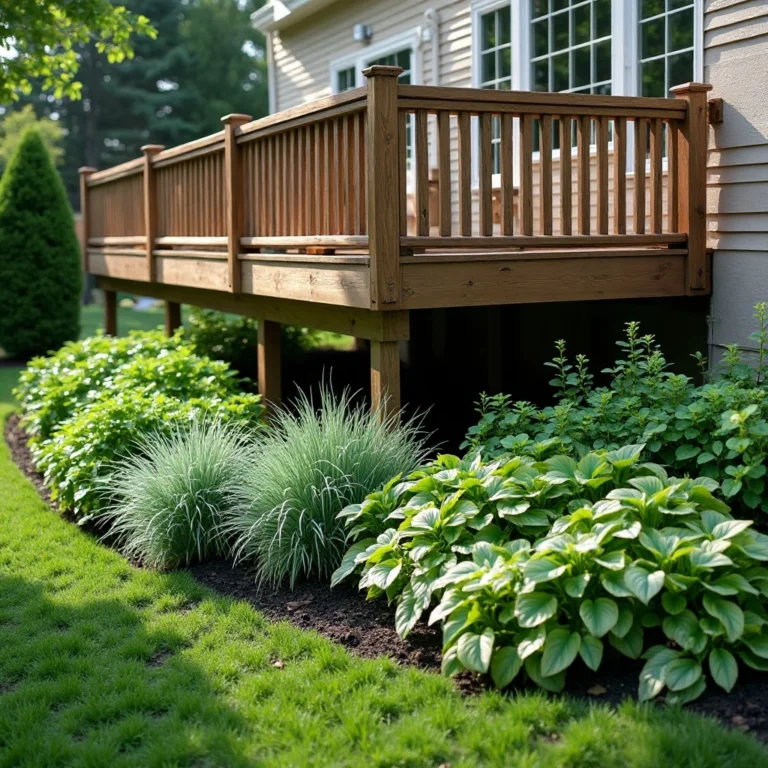
15 Concrete Patio Ideas for a Stylish Backyard Upgrade
If you’ve been dreaming of a backyard that feels like an extension of your home, a concrete patio might be exactly what you need. Concrete is one of the most versatile, durable, and cost-effective materials available for outdoor living — and today’s design options go far beyond the plain grey slab of the past.
Whether you’re starting from scratch or refreshing an existing patio, these 15 concrete patio ideas cover every style, budget, and backyard size. From stamped patterns that mimic natural stone to sleek modern finishes and cozy fire pit areas, you’ll find everything you need to make an informed and inspired decision.
Why Concrete Is the Smart Choice for Your Patio
Concrete patios have surged in popularity for good reason — they combine beauty with unmatched practicality. Unlike wood decks that rot and warp, or natural stone that can shift and crack, concrete offers a long-lasting surface that holds up against heavy foot traffic, weather extremes, and years of outdoor living.
With modern finishing techniques, stains, overlays, and stamping methods, concrete can realistically mimic brick, slate, flagstone, wood, and even tile — often at a fraction of the cost. It’s low-maintenance, eco-friendly (it can be poured over existing slabs), and adds genuine resale value to your home. The creative possibilities are virtually endless, and the 15 ideas below prove it.
15 Concrete Patio Ideas to Inspire Your Outdoor Upgrade
1. Stamped Concrete with a Cobblestone Pattern
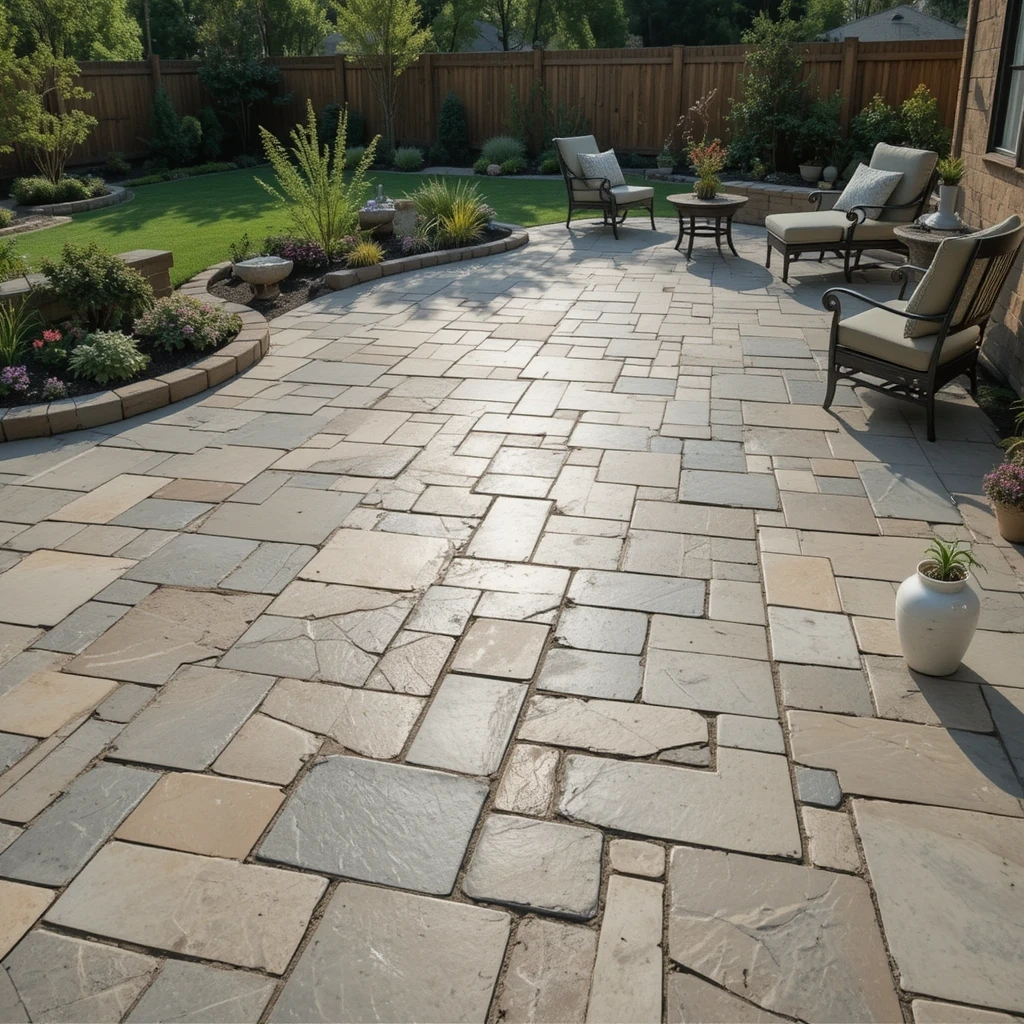
Stamped cobblestone concrete is a timeless choice that gives your patio the charm of an old European courtyard without the cost or complexity of real stone. The texture adds visual depth and a natural anti-slip surface, making it both beautiful and functional. Shop on Amazon
How to Style It:
- Pair with wrought iron or dark bronze furniture for a classic look
- Add terracotta pots with lavender or rosemary for a Mediterranean feel
- Use warm-toned string lights overhead for evening ambiance
- Frame the edges with low boxwood hedges or stone edging
Where to Use It: Ideal for front yard entry patios, side walkways connecting the driveway to the backyard, or large entertaining areas where visual texture adds character.
Pro Tip: Choose a two-tone color release agent (a lighter base color + a darker antiquing release) to create depth and make the cobblestone pattern look authentically aged.
2. Exposed Aggregate Concrete Patio
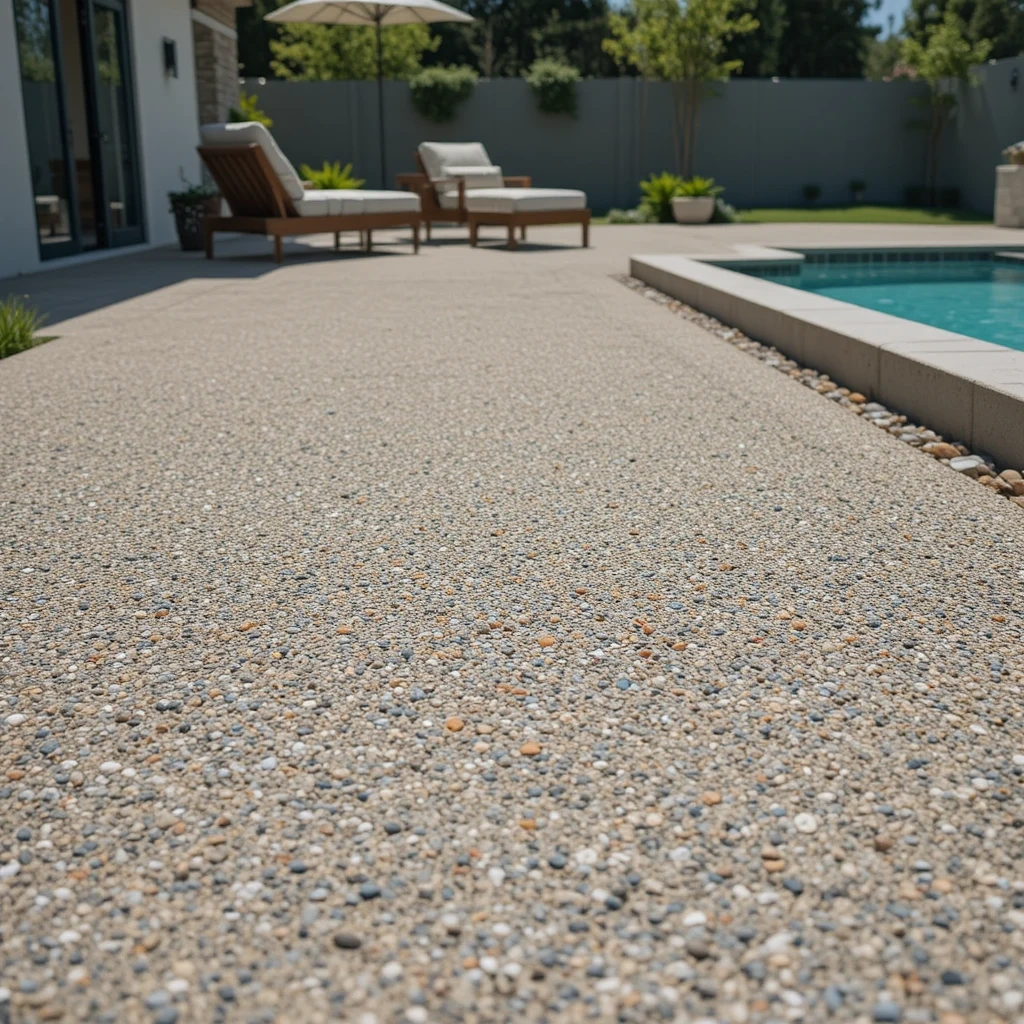
Exposed aggregate is created by washing away the top layer of concrete before it fully sets, revealing the natural stones, pebbles, or glass chips within. The result is a textured, naturally slip-resistant surface that looks organic and upscale. Shop on Amazon
How to Style It:
- Keep furniture simple and modern to let the texture shine
- Add a water feature nearby to complement the natural stone aesthetic
- Use neutral-toned cushions in grey, cream, or sage green
- Line the perimeter with ornamental grasses or river rocks
Where to Use It: Perfect around swimming pools, spa areas, or any space where slip-resistance and a natural look are both priorities.
Pro Tip: Seal exposed aggregate every 2–3 years with a penetrating sealer to protect the stones and enhance their natural color.
3. Stained Concrete Patio in Earthy Tones
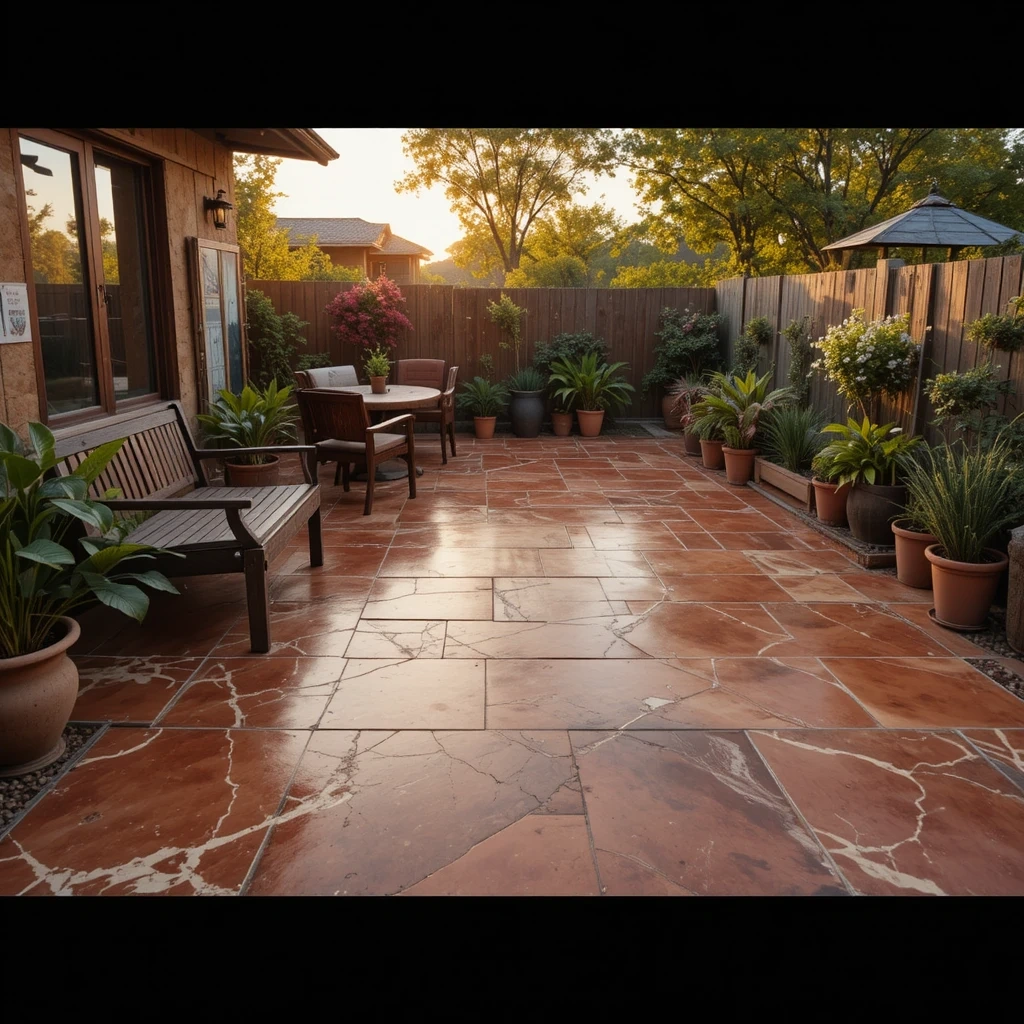
Acid staining transforms plain grey concrete into a rich, marbled surface with one-of-a-kind color variation. No two acid-stained patios look identical — each reacts differently based on the concrete’s mineral composition, giving you a truly unique floor. Shop on Amazon
How to Style It:
- Coordinate furniture in warm wood tones like teak or acacia
- Add area rugs in tribal or global-inspired prints
- Use copper or bronze accents in lanterns and planters
- Layer in amber string lights for a warm glow
Where to Use It: Works beautifully as a covered patio or sunroom-to-outdoor transition area where the floor is the centerpiece of the design.
Pro Tip: Acid staining is permanent — always test on a small, hidden section first, and hire a professional if you’re after consistent color coverage.
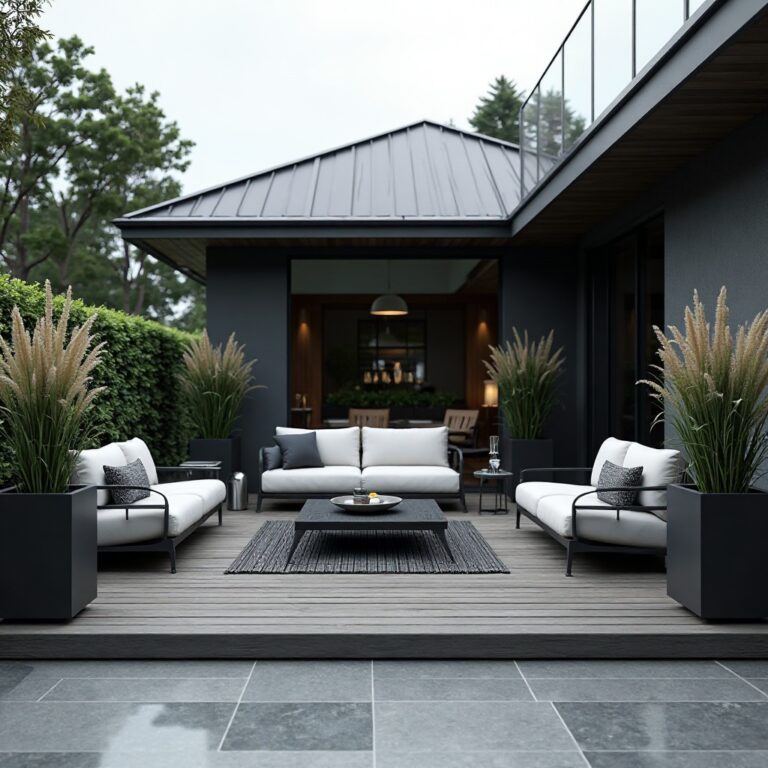
4. Modern Concrete Patio with Clean Lines and Geometric Design
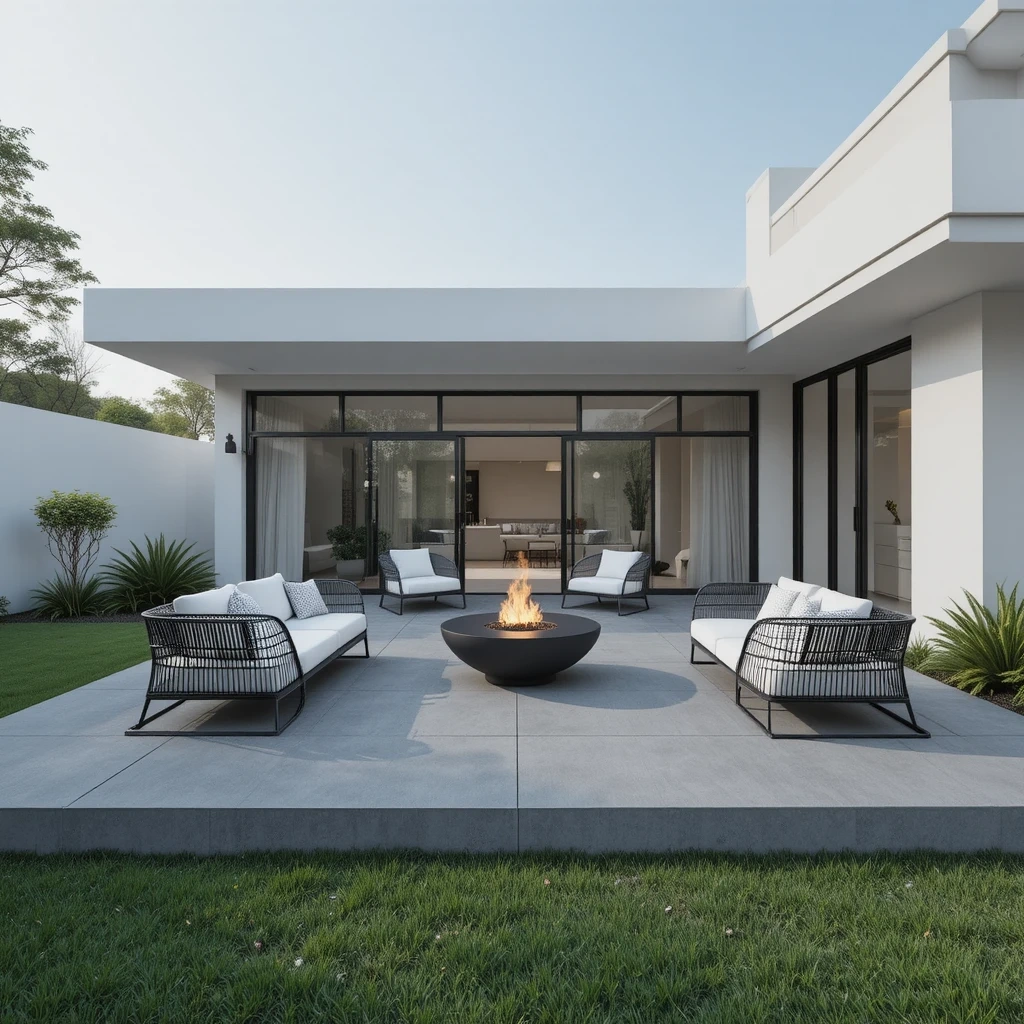
For lovers of contemporary design, a geometric concrete patio delivers a sleek, architectural look that complements modern homes perfectly. Large square or rectangular slabs with precise grout lines give the space a polished, intentional feel. Shop on Amazon
How to Style It:
- Choose low-profile modular furniture in black, white, or concrete grey
- Add a linear gas fire pit or fire table as the focal point
- Keep plantings minimal — ornamental grasses or sculptural agave work well
- Use recessed LED lighting in the slab edges for night-time drama
Where to Use It: Best suited for modern or contemporary homes, rooftop patios, or urban outdoor spaces where clean architecture is the priority.
Pro Tip: Use control joints intentionally as design elements — place them symmetrically to enhance the geometric pattern rather than trying to hide them.
5. Stamped Concrete That Looks Like Natural Flagstone
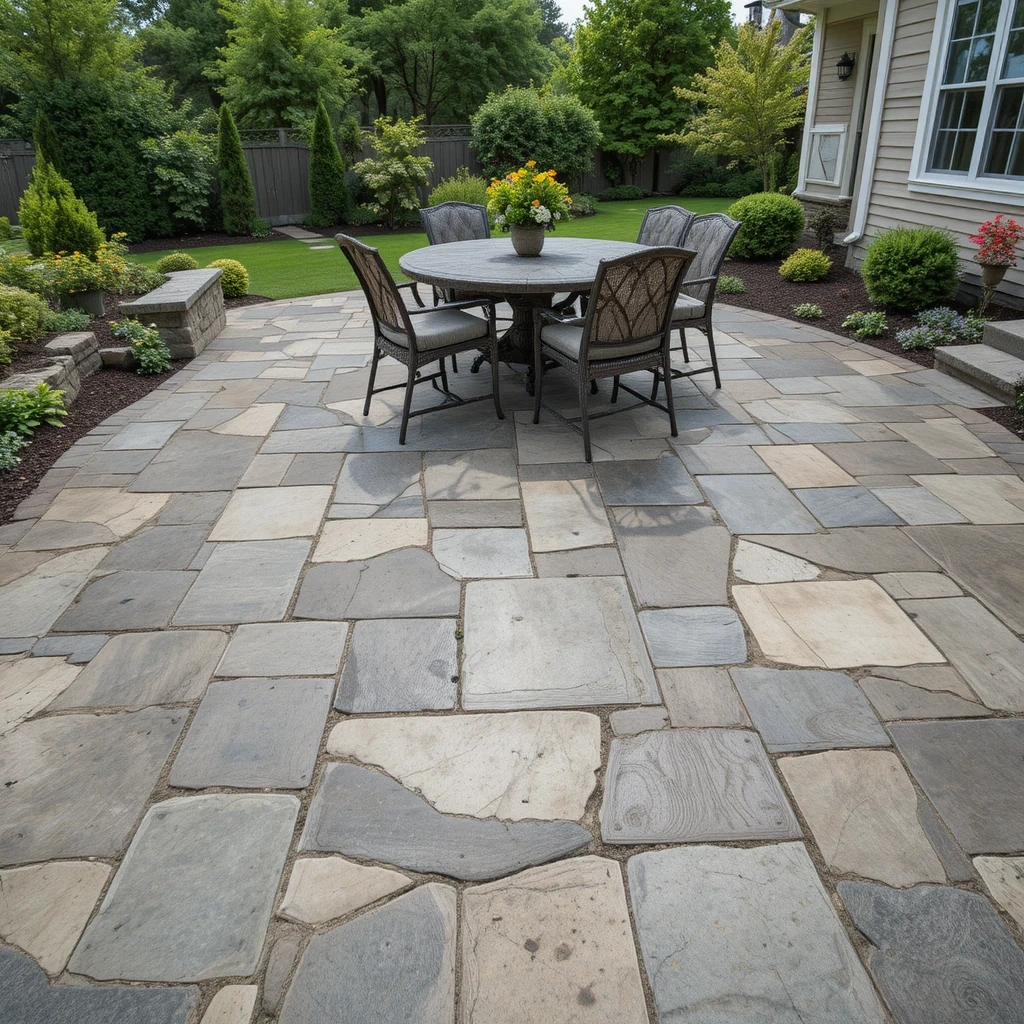
Stamped flagstone concrete captures the look of real stone — irregular shapes, natural texture, and earthy color — while offering the structural stability and lower cost of concrete. It’s one of the most popular stamped options for a reason. Shop on Amazon
How to Style It:
- Pair with a rustic wooden pergola overhead
- Use a mix of potted plants in natural clay or stone-look pots
- Add a fire pit with Adirondack chairs for a laid-back vibe
- Install landscape uplighting around the perimeter
Where to Use It: Great for large backyards, garden pathways, and pool surrounds where a natural, organic aesthetic is desired.
Pro Tip: Request a random flagstone stamp pattern rather than a repeating one — it looks far more realistic and avoids the “tiled” effect.
6. Concrete Patio with a Built-In Fire Pit
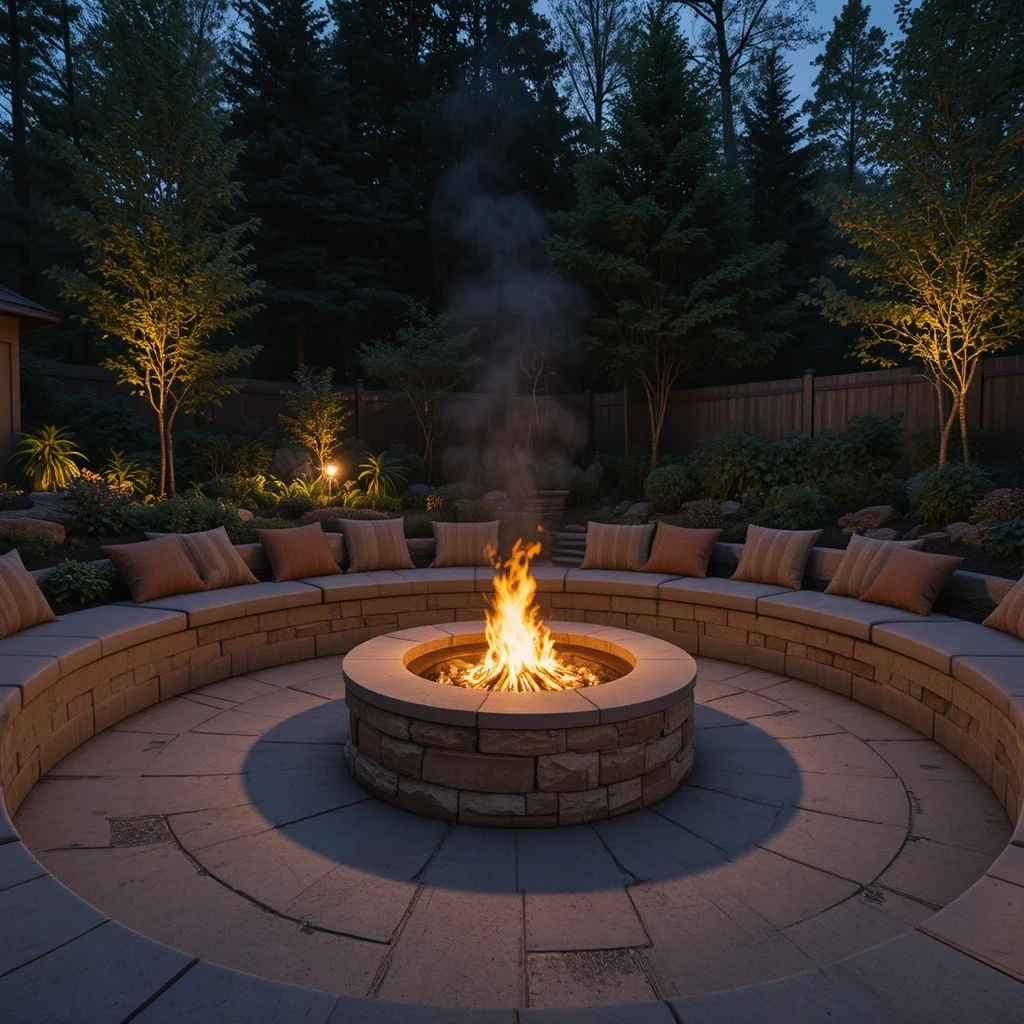
Building a fire pit directly into your concrete patio creates a permanent gathering point that’s both functional and stunning. Concrete can be shaped into circular seating walls, raised fire pit enclosures, and custom surrounds for a fully integrated look. Shop on Amazon
How to Style It:
- Design circular concrete bench seating around the pit
- Add outdoor throw pillows and blankets in earth tones
- Use stackable firewood storage built into the bench design
- Surround with drought-tolerant plants for a low-maintenance landscape
Where to Use It: Ideal for entertaining-focused backyards, families who spend evenings outdoors, or climates with cool nights where a fire extends outdoor season.
Pro Tip: Use heat-resistant concrete mix for any fire pit surround, and always check local fire codes before installing an open-flame feature.
7. Concrete Patio with Inlaid Pavers or Brick Borders
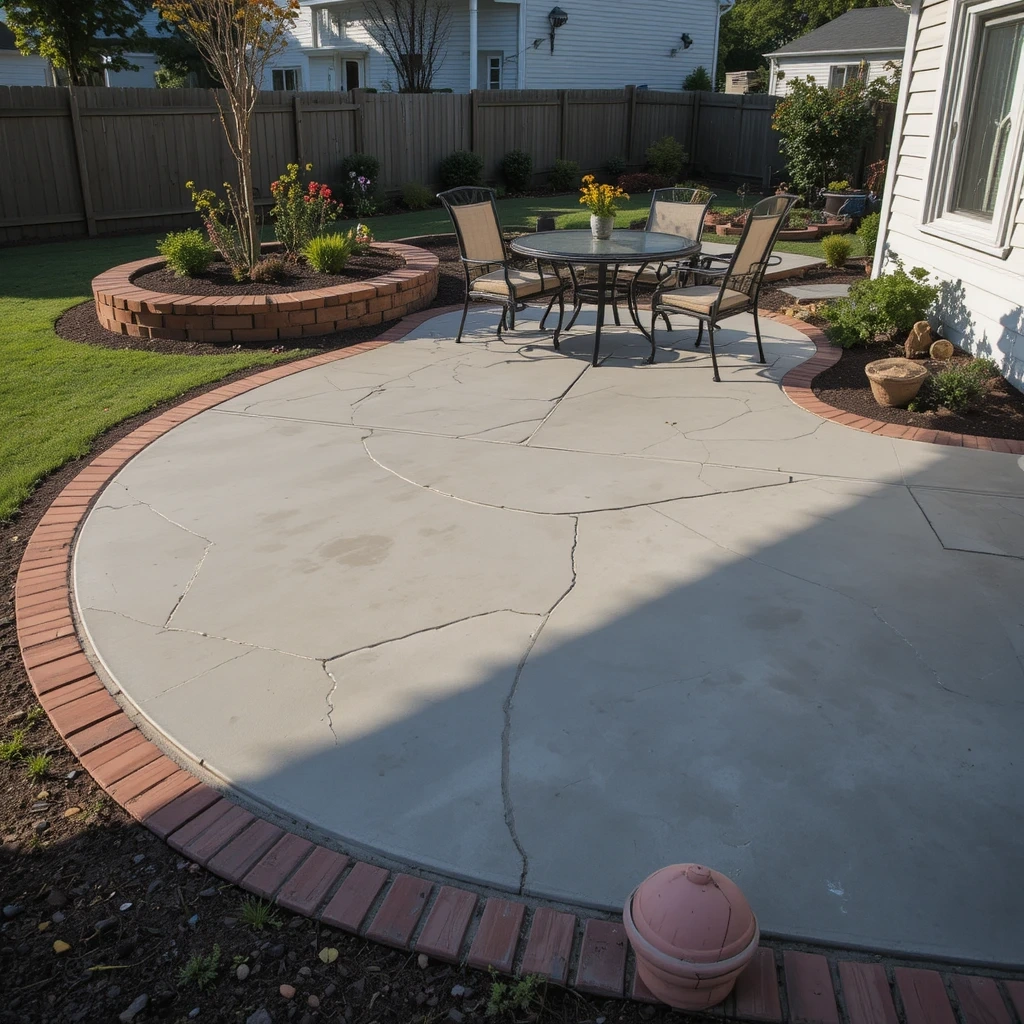
Combining concrete with inlaid pavers or brick borders creates a two-material look that adds visual interest and defines the space. This technique is also practical — the border helps contain the concrete pour and adds structural integrity. Shop on Amazon
How to Style It:
- Choose brick in warm terracotta to contrast cool grey concrete
- Frame outdoor dining or seating zones with the border pattern
- Use the same brick in garden bed edging for a cohesive look
- Add potted topiaries or standard roses at corners
Where to Use It: Perfect for traditional or craftsman-style homes, where the warmth of brick softens the industrial nature of concrete.
Pro Tip: Have the pavers or bricks set before the concrete pour so they’re flush with the surface — this prevents tripping hazards and gives a seamless appearance.
8. Polished Concrete Patio with a Glossy Finish
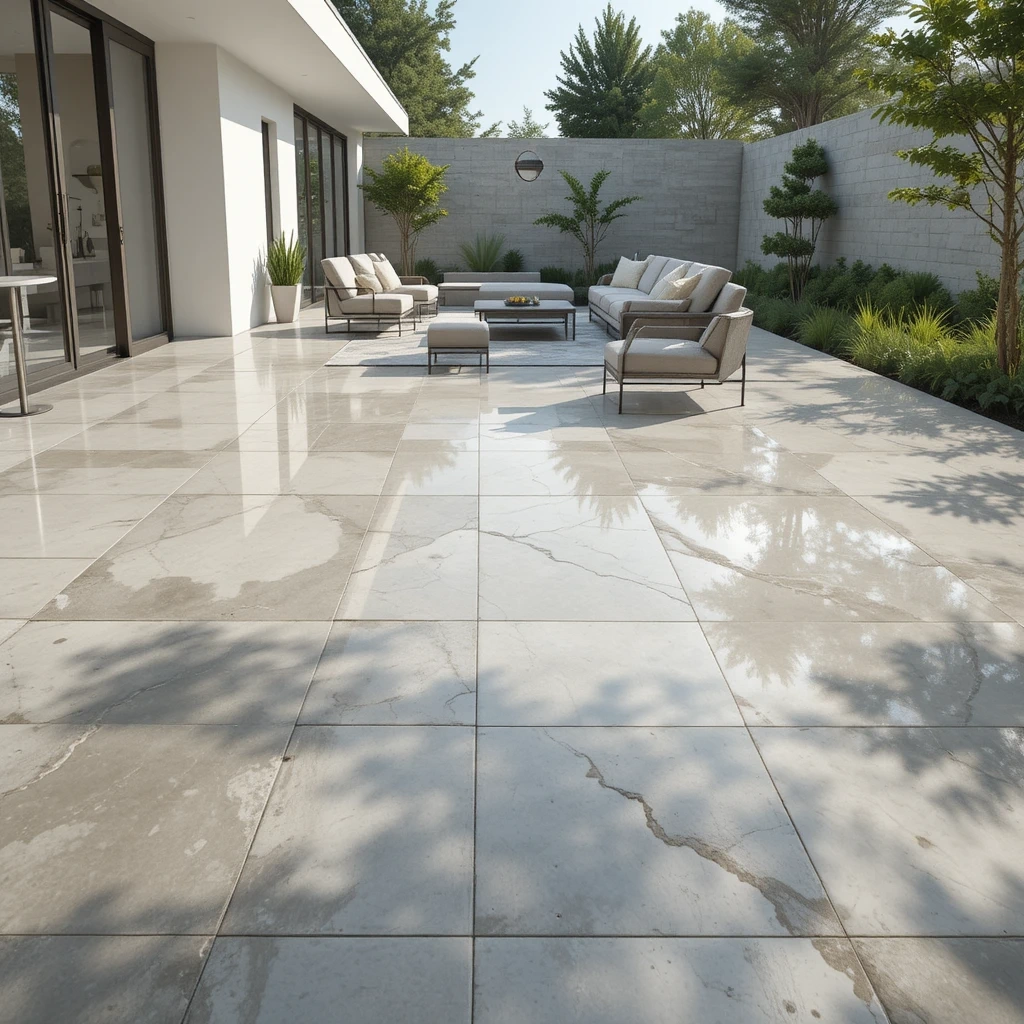
Polished concrete — the same style found in high-end restaurants and galleries — is making its way outdoors. Ground and buffed to a smooth, reflective surface, it creates a luxurious look that’s surprisingly easy to maintain. Shop on Amazon
How to Style It:
- Keep the palette minimal: white, grey, and black only
- Use statement furniture pieces — a single large sectional or dramatic dining table
- Add a vertical garden wall as a backdrop for greenery without ground clutter
- Use floor-level lighting to highlight the reflective surface at night
Where to Use It: Best for covered patios, outdoor rooms under pergolas, or attached patios that transition from interior polished floors.
Pro Tip: Polished concrete can be slippery when wet — use an anti-slip additive in the final sealer coat for outdoor use.
9. Concrete Patio with a Pool and Deck Combo
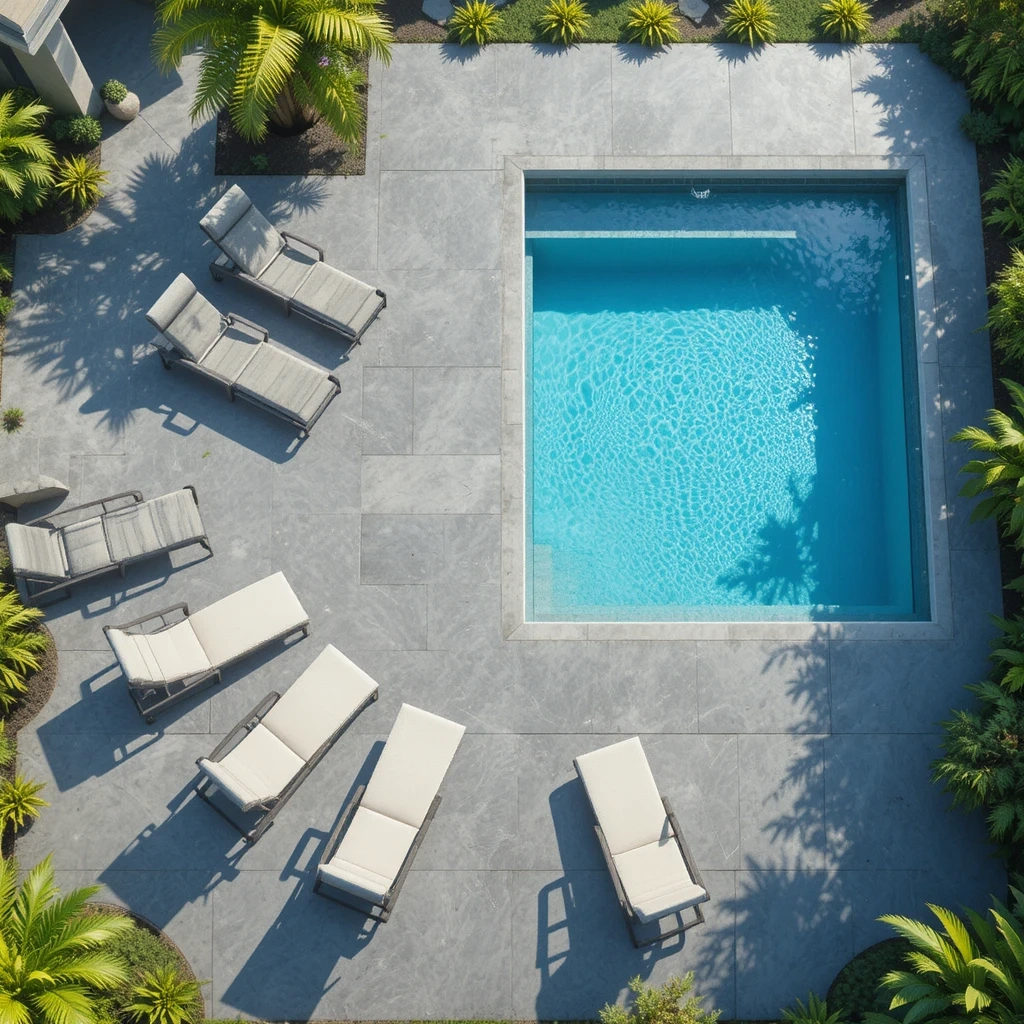
When concrete wraps around a swimming pool, it creates a unified outdoor living zone that’s both elegant and hardworking. A well-designed concrete pool deck can incorporate sun lounger areas, a spa surround, and a dining space all in one seamless pour. Shop on Amazon
How to Style It:
- Use a broom finish or exposed aggregate for a slip-resistant pool edge
- Add built-in concrete planters filled with tropical plants
- Include a shaded dining zone with a sail shade or pergola overhead
- Use blue and white accents in outdoor textiles to complement the water
Where to Use It: Any property with an in-ground pool — concrete is the most popular pool surround material because of its durability and design flexibility.
Pro Tip: Use a light-colored concrete or lighter stain around the pool — it stays cooler underfoot on hot summer days compared to dark finishes.
10. Concrete Patio with Outdoor Kitchen Integration
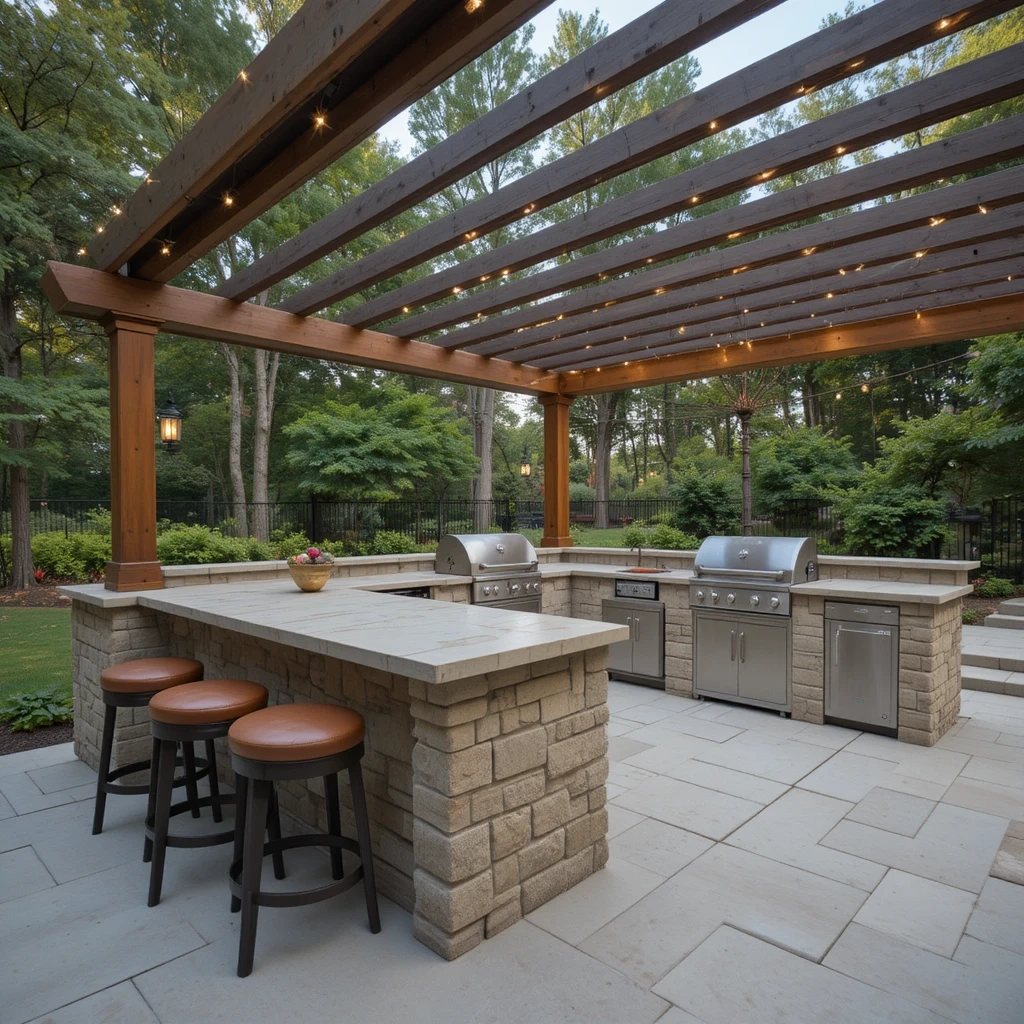
A concrete patio is the ideal foundation for an outdoor kitchen because the material can be shaped into countertops, bar seating, and appliance surrounds — all matching the floor for a truly unified look. This is the ultimate entertainer’s setup. Shop on Amazon
How to Style It:
- Use concrete countertops with a slight color variation from the floor
- Add bar-height stools in powder-coated metal or teak
- Install a pergola overhead with a ceiling fan for comfort
- Include open shelving for outdoor dishware and herb planters
Where to Use It: For serious outdoor entertainers or families who spend weekends hosting — pairs perfectly with a large flat backyard.
Pro Tip: Seal outdoor concrete countertops with a food-safe, UV-resistant sealer and reapply annually to prevent staining and moisture penetration.
11. Stamped Concrete Patio with Wood Plank Pattern
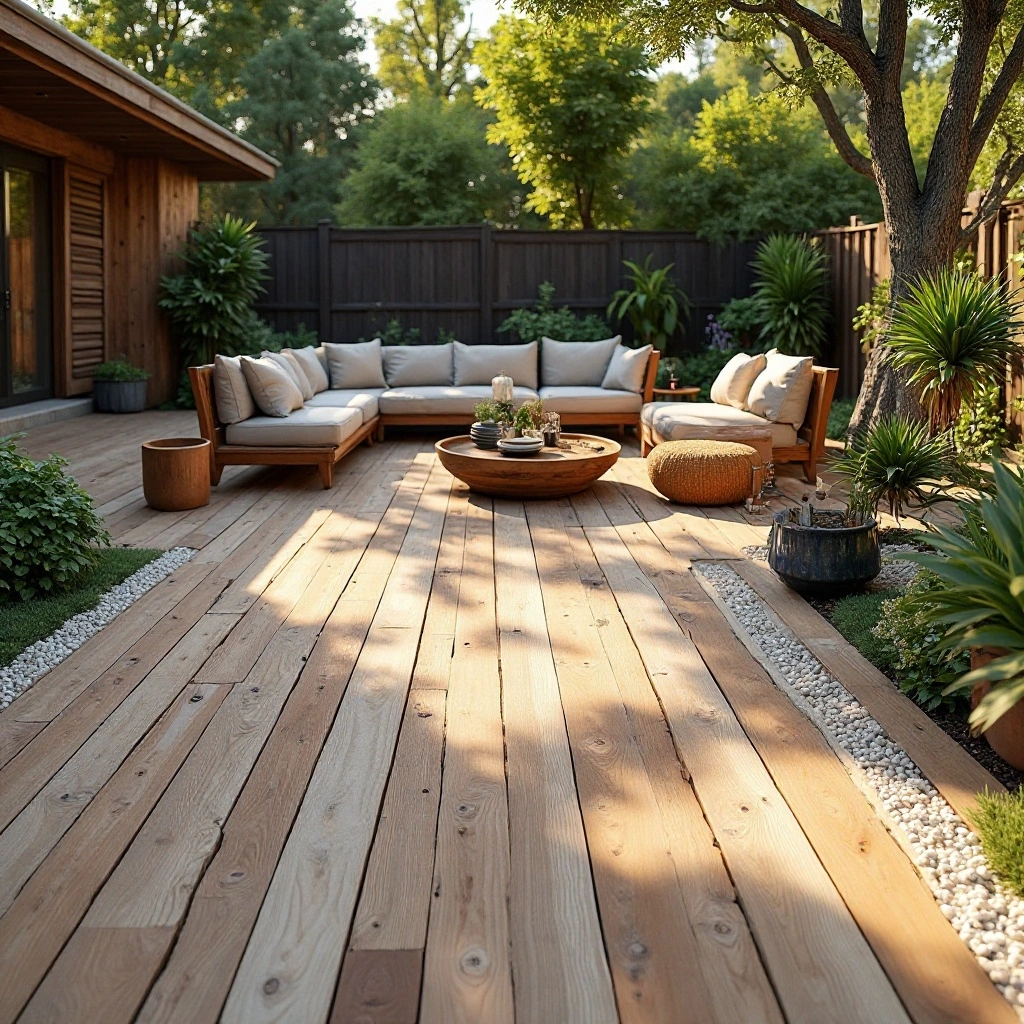
Wood-look stamped concrete delivers the warmth and texture of hardwood decking without the splinters, rot, or annual maintenance. The stamp creates realistic wood grain, while staining adds the color variation found in natural lumber. Shop on Amazon
How to Style It:
- Lean into the wood illusion with rattan or wicker furniture
- Add macramé wall hangings or outdoor curtains for a boho touch
- Use warm-toned Edison string lights strung from a pergola
- Place layered outdoor rugs in natural jute or sisal
Where to Use It: Ideal for homeowners who love the look of a wood deck but want the longevity of concrete — great for humid climates where wood rots quickly.
Pro Tip: Ask for a wood-grain stamp with both plank lines AND knot details — it dramatically increases the realism of the final product.
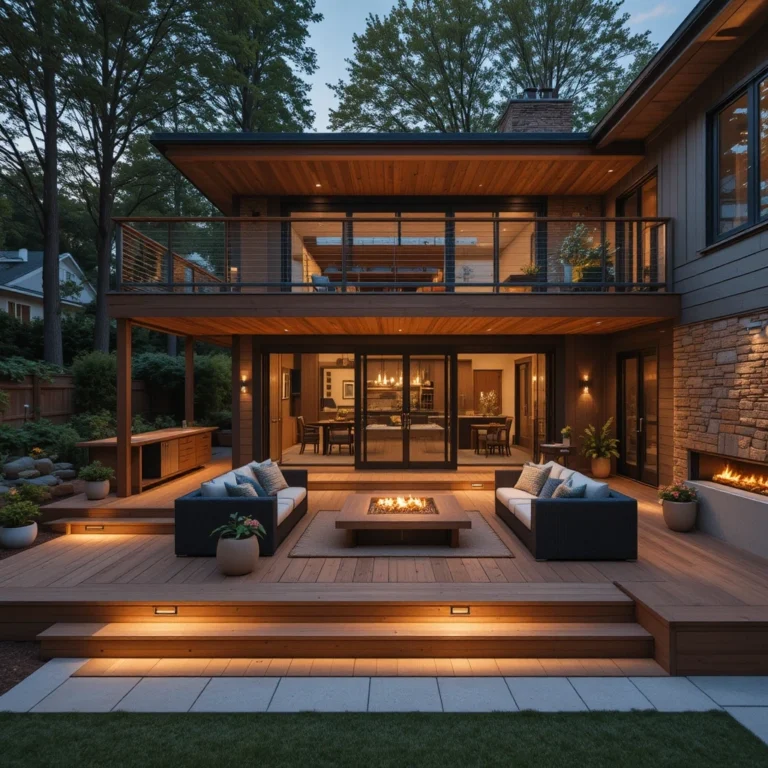
12. Multi-Level Concrete Patio with Steps
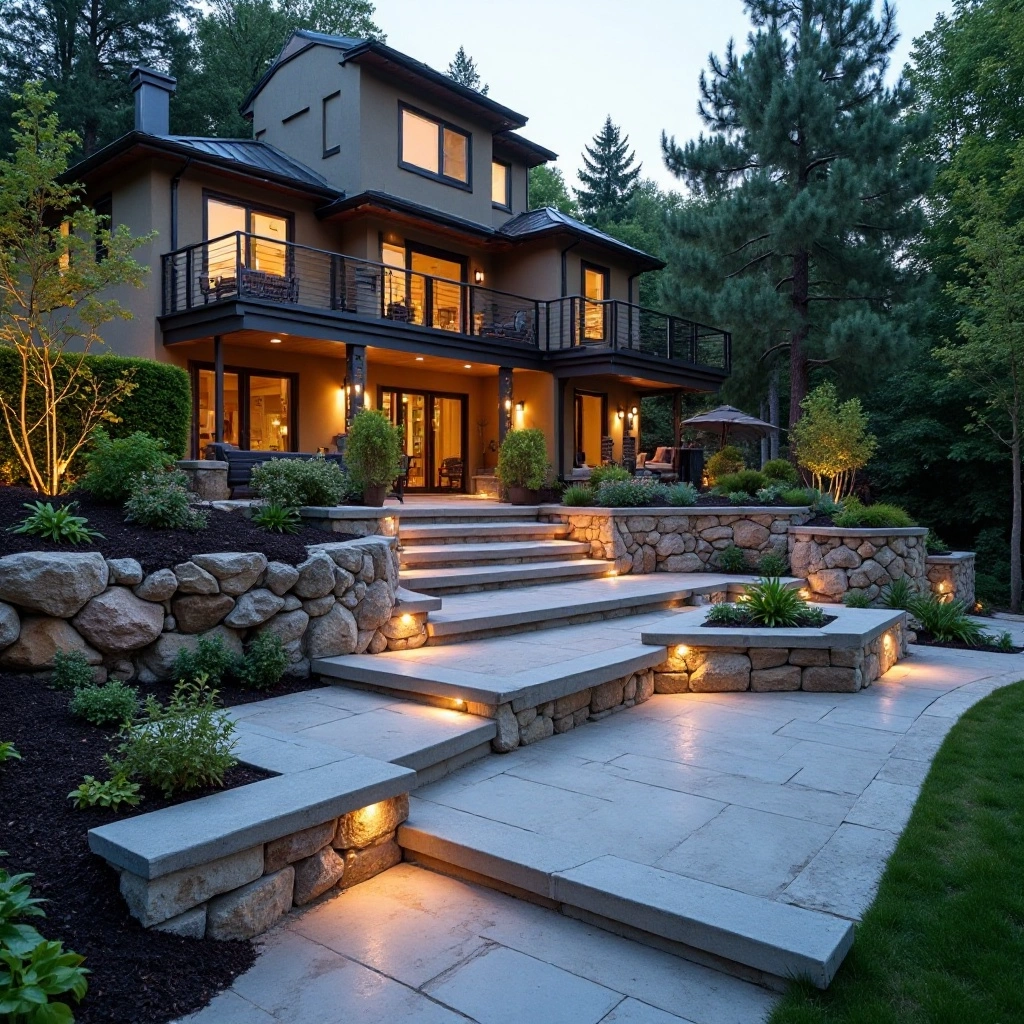
If your backyard has a slope, a multi-level concrete patio is the perfect solution. Instead of fighting the terrain, work with it — creating distinct zones for dining, lounging, and entertaining across different elevations connected by broad, shallow steps. Shop on Amazon
How to Style It:
- Use each level for a different function: dining up top, fire pit below
- Install landscape lighting along step edges for safety and drama
- Use uniform planters on each level for visual rhythm
- Consider a water feature on the upper level that flows down
Where to Use It: Perfect for hillside properties, sloped backyards, or homes where the yard drops away from the house — turns a challenging grade into a design feature.
Pro Tip: Make steps at least 4 feet wide (6 feet is even better) — generous steps feel gracious and safe, while narrow steps feel cramped and dangerous.
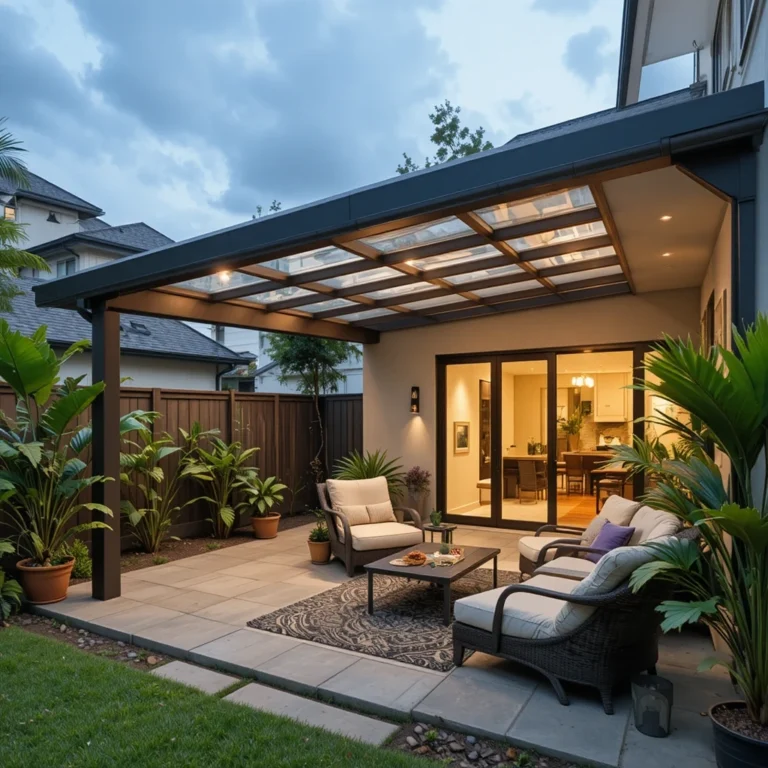
13. Concrete Patio with Pergola and String Lights
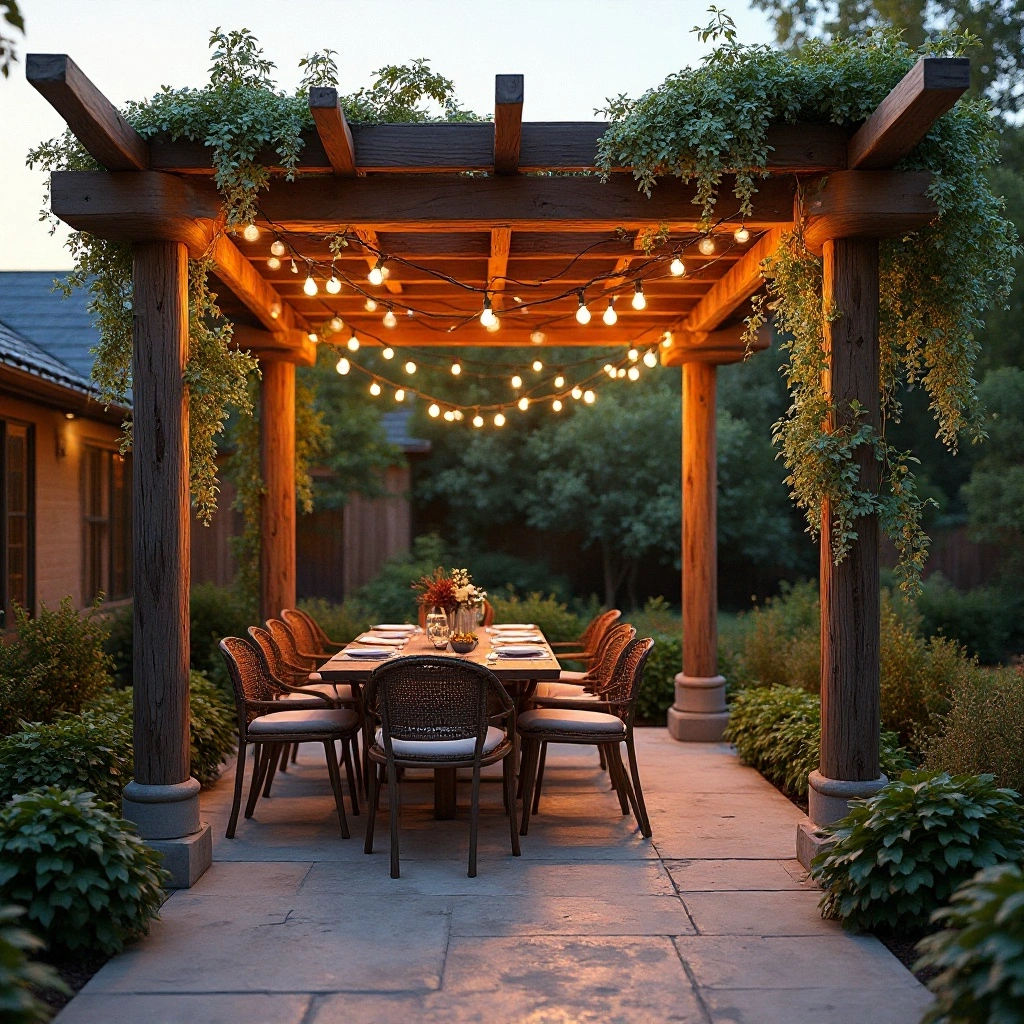
A concrete patio paired with a wooden or metal pergola creates an outdoor room with overhead definition. Adding string lights transforms the space into a magical evening retreat that’s perfect for dinner parties or quiet nights under the stars. Shop on Amazon
How to Style It:
- Train climbing vines like wisteria, jasmine, or roses up the pergola posts
- Use Edison bulb string lights in a zigzag pattern across the beams
- Add a large dining table with mismatched chairs for eclectic charm
- Include a sideboard or bar cart for easy outdoor entertaining
Where to Use It: Universal — this look works on patios of any size and complements virtually any architectural style.
Pro Tip: Anchor pergola posts in concrete footings set into the patio slab — this prevents shifting and keeps the structure true over time.
14. Small Concrete Patio Ideas for Compact Spaces
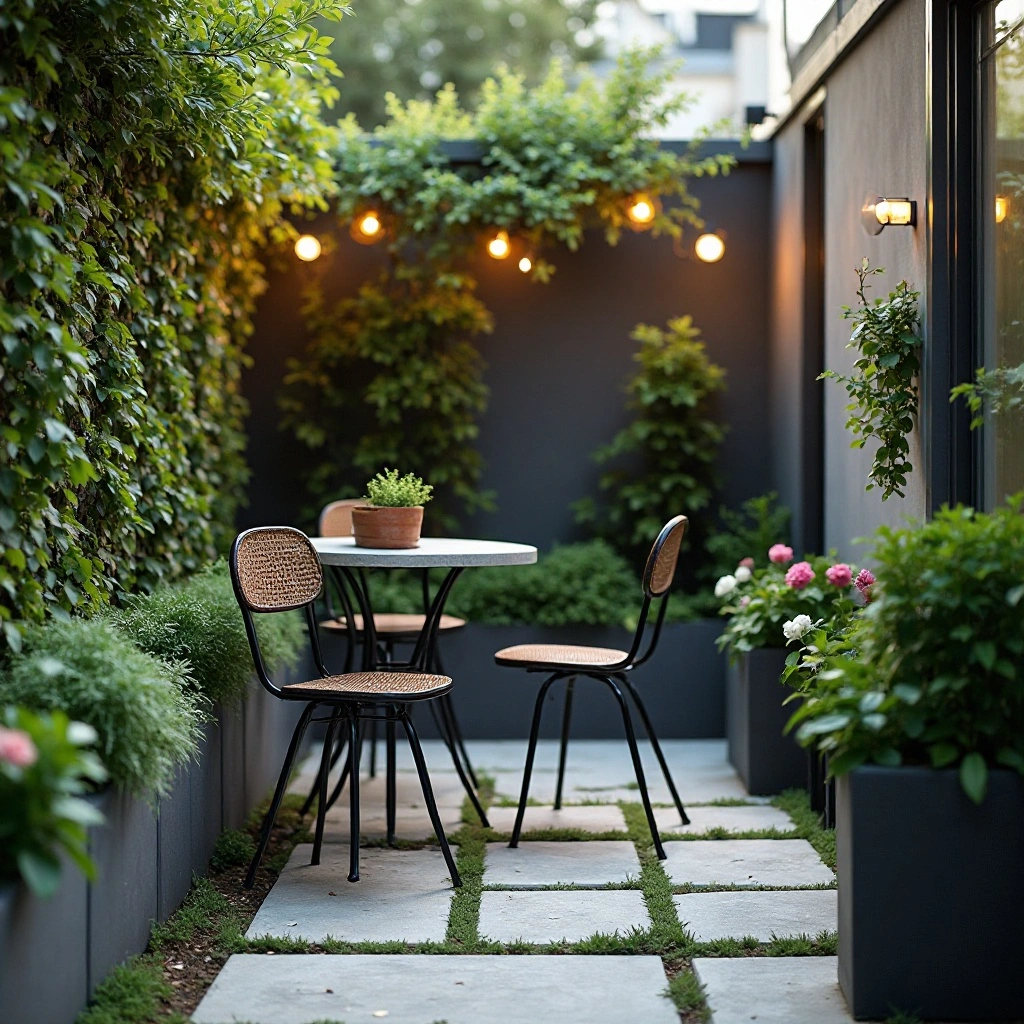
A small footprint doesn’t mean a small impact. With the right layout and a few smart design choices, even a modest 8×10 concrete patio can feel like a full outdoor room. Vertical elements, multi-functional furniture, and container gardening are your best friends here. Shop on Amazon
How to Style It:
- Use a bistro table and folding chairs to maximize flexibility
- Install a vertical garden wall or trellis with climbing plants
- Choose furniture in light colors to keep the space feeling open
- Use large-format tile-look stamping to make the area feel bigger
Where to Use It: Urban backyards, townhouse patios, courtyard spaces, or narrow side yards where every square foot counts.
Pro Tip: A single large concrete slab with no joints looks bigger in a small space — avoid breaking it into sections, which visually reduces the apparent square footage.
15. Rustic Concrete Patio with Natural Stone and Wood Accents
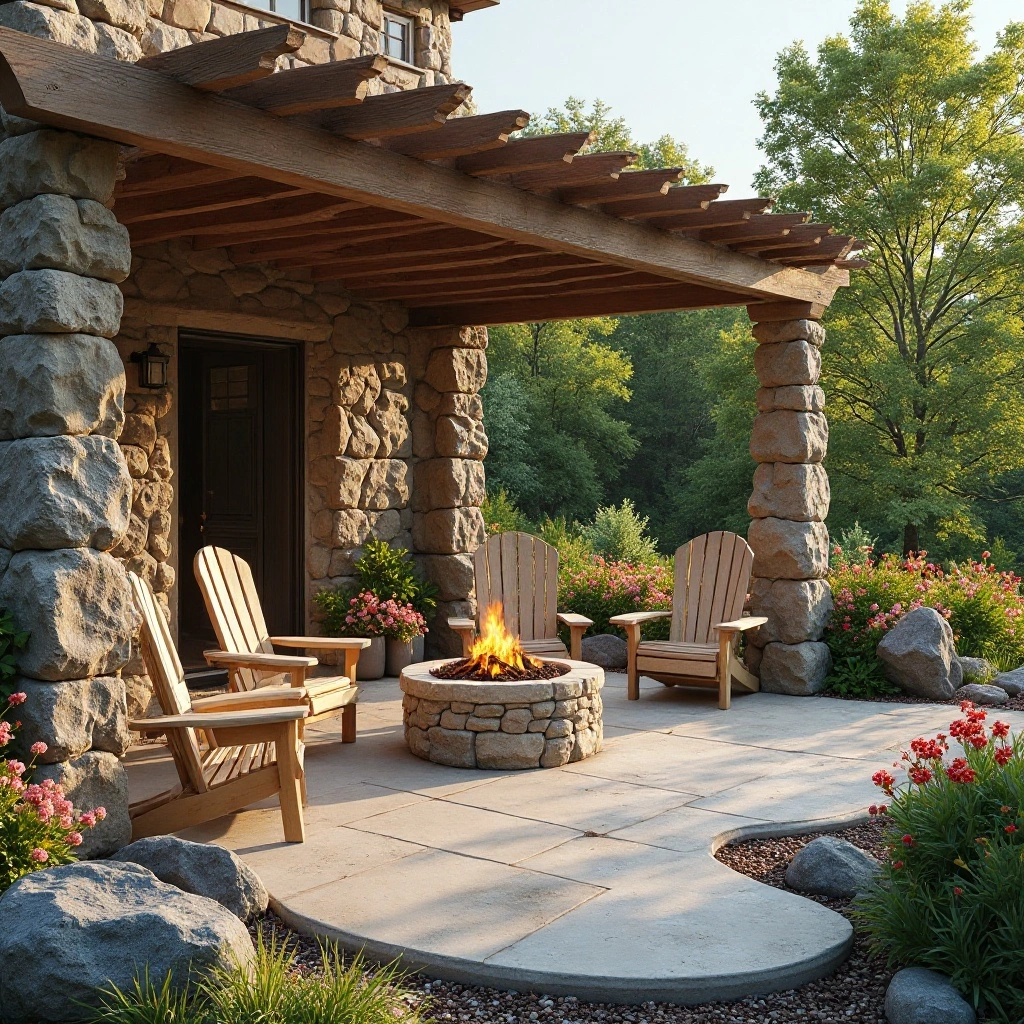
Mixing raw concrete with natural stone boulders, rough-hewn timber, and native plantings creates a patio that feels completely at one with its natural surroundings. This is the perfect design for nature lovers who want their outdoor space to feel like a woodland retreat. Shop on Amazon
How to Style It:
- Use large natural boulders as anchors in the landscape around the patio
- Choose reclaimed or rough-cut wood for any pergola or overhead structure
- Plant native wildflowers and grasses around the perimeter
- Use Adirondack chairs or log benches in natural wood finishes
Where to Use It: Rural properties, homes near wooded areas, or any backyard where the goal is to create a seamless transition between the built environment and nature.
Pro Tip: Choose a broom-finished or salt-finished concrete in a warm grey or tan tone — it blends far more naturally with organic materials than a smooth or polished surface.
How Much Does a Concrete Patio Cost?
Understanding cost helps you plan realistically. Here’s a general breakdown:
| Patio Type | Average Cost per Sq Ft |
|---|---|
| Basic broom-finish concrete | $6 – $10 |
| Stamped concrete | $12 – $22 |
| Stained or colored concrete | $10 – $18 |
| Exposed aggregate | $10 – $20 |
| Polished concrete | $15 – $30+ |
Prices vary by region, complexity, and contractor. Always get 3 quotes.
How to Choose the Right Concrete Patio Style for Your Home
Choosing the right design comes down to four key factors:
1. Your Home’s Architecture — A sleek polished patio clashes with a farmhouse cottage. Match the patio’s texture and tone to your home’s existing aesthetic.
2. Your Climate — In freeze-thaw climates, avoid smooth finishes that become slippery in winter. Exposed aggregate or broom finishes offer better traction.
3. How You’ll Use the Space — An entertainer needs a different layout than someone seeking a quiet reading nook. Define your primary use before choosing a design.
4. Your Maintenance Commitment — Stamped and stained concrete require periodic resealing. Basic finishes are lower maintenance but less decorative.
Common Mistakes to Avoid
❌ Skipping the sealer. Unsealed concrete absorbs moisture, stains from outdoor furniture, and fades in UV light. Always seal, and reseal every 2–3 years.
❌ Going too small. A 10×10 patio feels cramped once you add furniture. Plan for at least 16×16 for a functional outdoor dining area.
❌ Ignoring drainage. A flat concrete slab will pool water after rain. Ensure a slight slope (1/8″ per foot) away from the house.
❌ Choosing color in isolation. Always view concrete color samples outside, in the actual light of your yard, before committing — colors look very different indoors.
❌ Hiring the cheapest contractor. Concrete work is permanent. A poor pour or bad stamp job cannot easily be undone. Check reviews, portfolios, and references carefully.
❌ Forgetting permits. Many municipalities require a permit for patio additions. Failing to get one can create problems when you sell your home.
❌ Pouring in extreme weather. Concrete should not be poured when temperatures are below 40°F or above 90°F — it affects curing and long-term strength.
Frequently Asked Questions
Q: How long does a concrete patio last? A properly installed and maintained concrete patio lasts 25–50 years or more. Regular sealing and prompt crack repair extend its lifespan significantly.
Q: Can I install a concrete patio myself? Basic concrete pours are DIY-possible for small areas, but stamped, stained, or polished finishes require professional skill and specialized tools. Mistakes are costly and permanent.
Q: How do I clean a concrete patio? Regular sweeping plus occasional mopping with mild soap and water handles most maintenance. For stubborn stains, use a concrete-specific cleaner. Avoid harsh acids like bleach on colored or stamped surfaces.
Q: Will my concrete patio crack? All concrete eventually develops minor cracks due to ground movement and temperature changes. Control joints placed during installation guide where cracking occurs and minimize visible damage.
Q: Can I add a concrete patio over an existing one? Yes — concrete overlays can be applied over old slabs (minimum 1–1.5 inches thick). This is a cost-effective way to refresh a tired patio without demolition.
Q: What is the best time of year to pour a concrete patio? Spring and fall are ideal — mild temperatures between 50–75°F allow concrete to cure at the optimal rate. Avoid pouring during summer heat waves or winter cold snaps.
Q: How long before I can use my new concrete patio? You can walk on it after 24–48 hours. Wait 7 days before placing heavy furniture. Full curing strength is reached after 28 days.
Q: Does a concrete patio add value to my home? Yes — outdoor living improvements consistently rank among the highest-ROI home upgrades. A well-designed concrete patio can return 50–80% of its cost in added home value.
Final Thoughts
A concrete patio is one of the most impactful investments you can make in your outdoor living space. Whether you gravitate toward the rustic charm of stamped cobblestone, the urban sophistication of polished concrete, or the cozy warmth of a fire pit integration, there’s a concrete patio design that fits your style, budget, and backyard perfectly.
Use this guide as your starting point, gather inspiration from the ideas above, and work with a trusted local concrete contractor to bring your vision to life. The right patio won’t just look beautiful — it will become the heart of your outdoor home for decades to come.