15+ Corner Flower Bed Ideas That Will Transform Your Garden
Corners are the most underused spaces in any garden. They’re awkward, often ignored — yet they hold incredible potential. A well-designed corner flower bed can anchor your entire landscape, add depth, attract pollinators, and make your yard look professionally landscaped.
Whether you have a tiny urban yard or a sprawling country garden, these ideas work for every space and every skill level.
Let Discover The 15+ Corner Flower Bed Ideas
1. Cottage Wildflower Corner
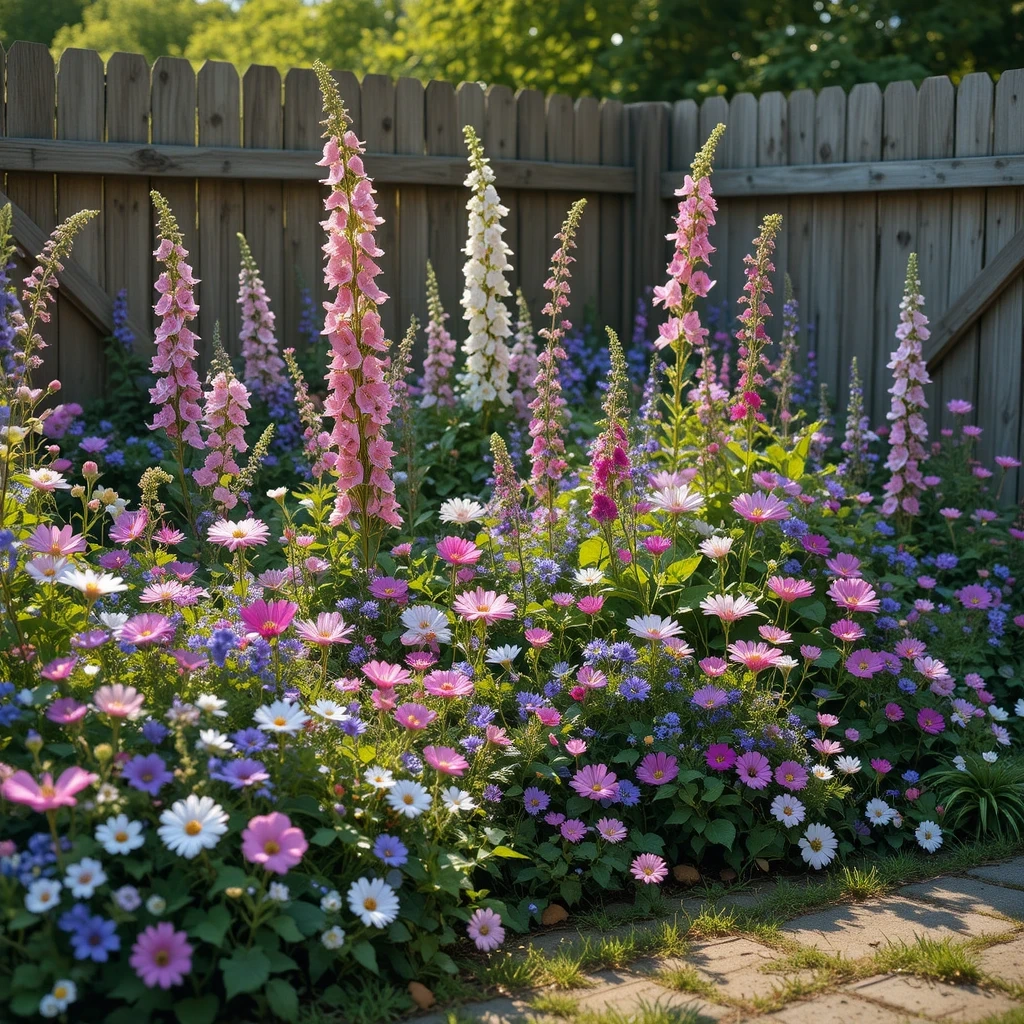
Embrace beautiful chaos with a cottage wildflower corner that looks like nature planted it herself. This style layers tall foxgloves and delphiniums at the back, mid-height cosmos and poppies in the middle, and low sweet alyssum spilling over the edges.
The result is an effortlessly romantic, ever-changing display that blooms from spring through fall. It’s low-maintenance by design — the more you let it grow, the better it looks.
Every buyer so far has been almost completely satisfied making this exceptional value. A great affordable option for country or cottage gardens wanting that beautiful effortlessly romantic wildflower corner that looks like nature planted it herself. Shop on Amazon
How to Style It:
- Plant in drifts of 3–5, not single stems, for a natural effect
- Allow self-seeding for new surprises each year
- Add a weathered wooden obelisk for climbing sweet peas
- Edge with a low picket fence or woven hazel for charm
Where to Use It: Perfect for corners near a garden gate, alongside a fence, or at the back of a country-style yard. Ideal for full sun to partial shade locations.
⭐ Pro Tip: Sow a mix of annual and perennial wildflower seeds together. Annuals bloom the first year while perennials establish — giving you gorgeous results immediately and even better results the following year.
2. Sculptural Ornamental Grasses
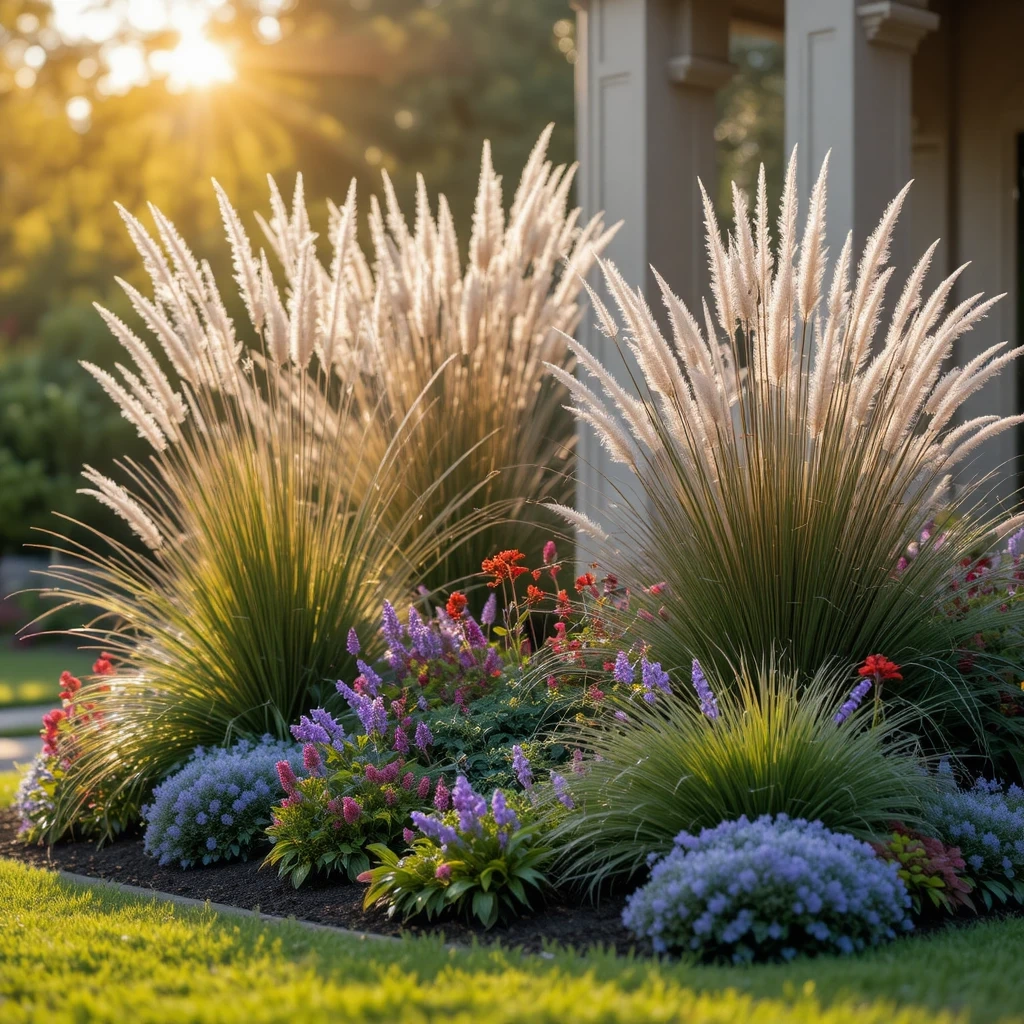
For a corner that commands attention year-round, ornamental grasses deliver unbeatable structure and movement. Tall Miscanthus anchors the back, catching every breeze and turning to burnished gold in fall. Blue fescue creates compact silver-blue mounds at the front.
Weave in bold flowering companions like Salvia, Crocosmia, or Rudbeckia for pops of color. In winter, the dried seed heads become sculptural works of art against frost and snow.
this is exceptional value for creating that beautiful year-round sculptural ornamental grass corner. A reliable pick for exposed or windy garden corners wanting dramatic movement, architectural presence, and stunning winter seedhead silhouettes. Shop on Amazon
How to Style It:
- Use odd numbers: 1 tall centerpiece + 3 medium + 5 small
- Place grasses where light will backlight them at golden hour
- Underplant with low Sedum or creeping thyme for ground cover
- Add large smooth river stones for a contemporary feel
Where to Use It: Excellent for exposed, windy corners. Works beautifully at the corner of a driveway, patio edge, or property boundary where height is needed.
⭐ Pro Tip: Don’t cut ornamental grasses back until late winter or early spring. The dried plumes provide shelter for beneficial insects and stunning winter silhouettes that look incredible against morning frost.
3. Tiered Terracotta Spiral
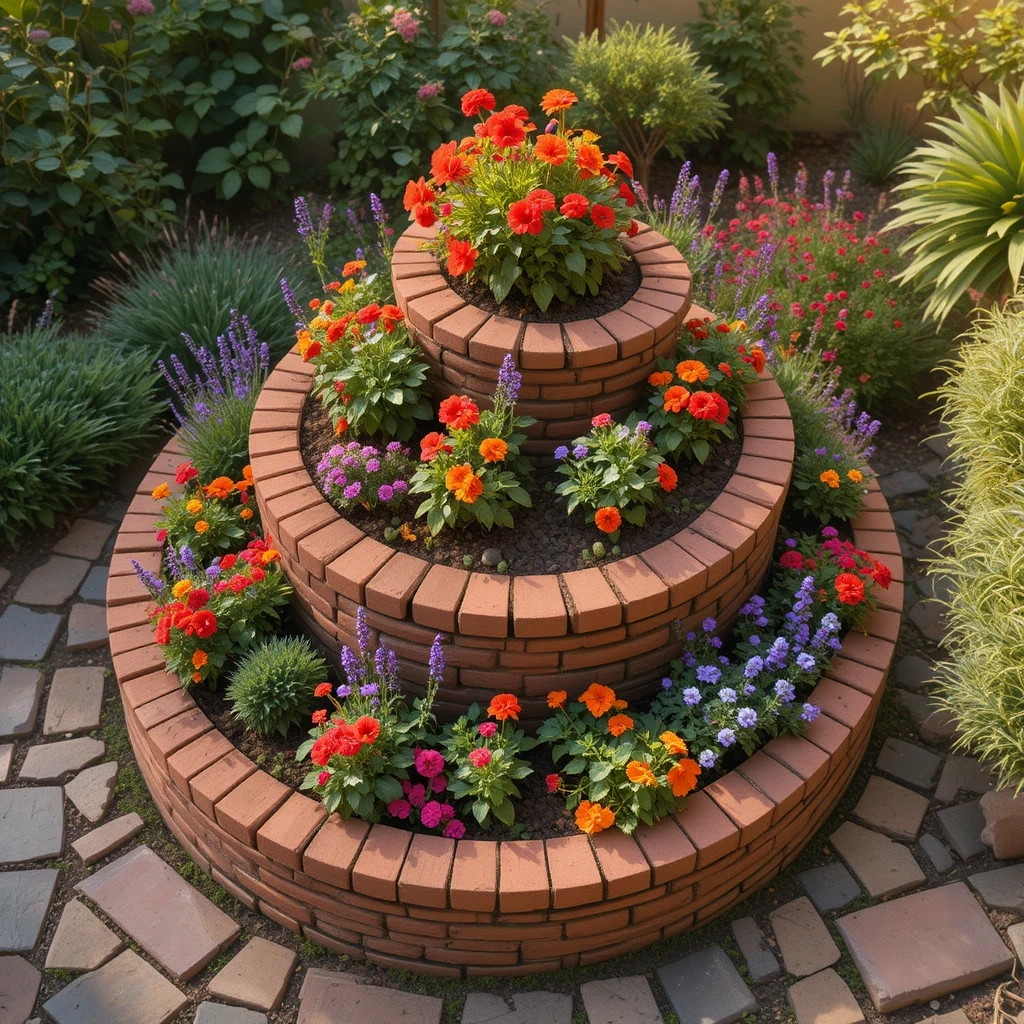
The spiral flower bed is one of the most visually striking ways to use a corner. Built from stacked bricks or stone in a rising spiral, it creates multiple planting pockets at different heights and exposures.
The tallest, driest zone at the top suits Mediterranean herbs and succulents, while the lower, moister areas welcome trailing flowers and ground covers. The spiral shape itself is a conversation piece, drawing visitors in to examine every level.
This is one of the best value picks on our entire list. A reliable pick for sunny Mediterranean-style or courtyard gardens wanting that beautiful conversation-starting spiral flower bed that creates multiple planting pockets and genuine micro-climates within a single corner structure. Shop on Amazon
How to Style It:
- Use warm-toned bricks or natural limestone for a Mediterranean feel
- Plant thyme and oregano at the top where heat reflects off stone
- Let trailing plants cascade down the outer spiral edge
- Add a small terracotta pot at the very top as a focal accent
Where to Use It: Ideal for a sunny corner with good drainage. Particularly striking in Mediterranean-style gardens, courtyard gardens, or as a feature near an outdoor dining area.
⭐ Pro Tip: Fill the spiral with different soil mixes at each level: gritty, free-draining mix at the top for herbs and succulents; standard compost blend at the bottom for flowering annuals. One structure, multiple micro-climates.
4. Evergreen + Bloom Combo
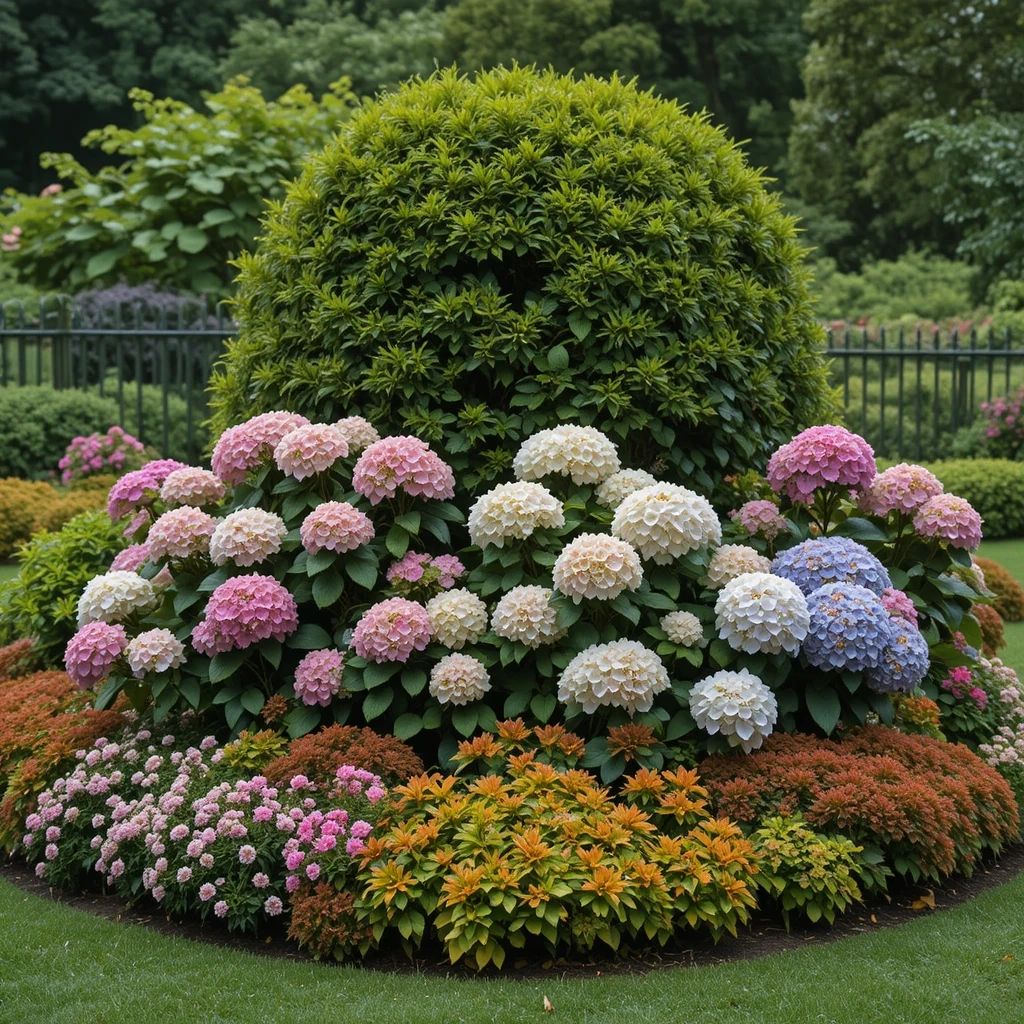
The smartest corner beds combine evergreen structure with seasonal blooms for color all 12 months. A backdrop of clipped evergreen shrubs — Box, Viburnum, or Holly — provides permanence and privacy while flowering perennials perform in rotation at the front.
Hellebores carry winter, tulips and alliums take spring, Hydrangeas dominate summer, and Sedum and Rudbeckia shine in autumn. The evergreen bones ensure the bed always looks intentional, even between flowering seasons.
buyers are clearly satisfied making this exceptional value. A reliable pick for any garden corner wanting that beautiful year-round evergreen and bloom combination that looks intentional and full in every single season without ever leaving a bare or dull gap. Shop on Amazon
How to Style It:
- Use 1/3 evergreens, 2/3 flowering plants by coverage
- Choose evergreens that can be lightly shaped for structure
- Layer blooms so something always overlaps in season
- Add spring bulbs underneath perennials for extra early color
Where to Use It: Works in any garden corner, especially where the bed is visible year-round from a window, patio, or main pathway. Great for front garden corners too.
⭐ Pro Tip: Map out your “bloom calendar” before planting. Write down which months each plant flowers, then check there are no gaps. A simple spreadsheet can save you from a dull corner in mid-winter.
5. Butterfly & Pollinator Garden
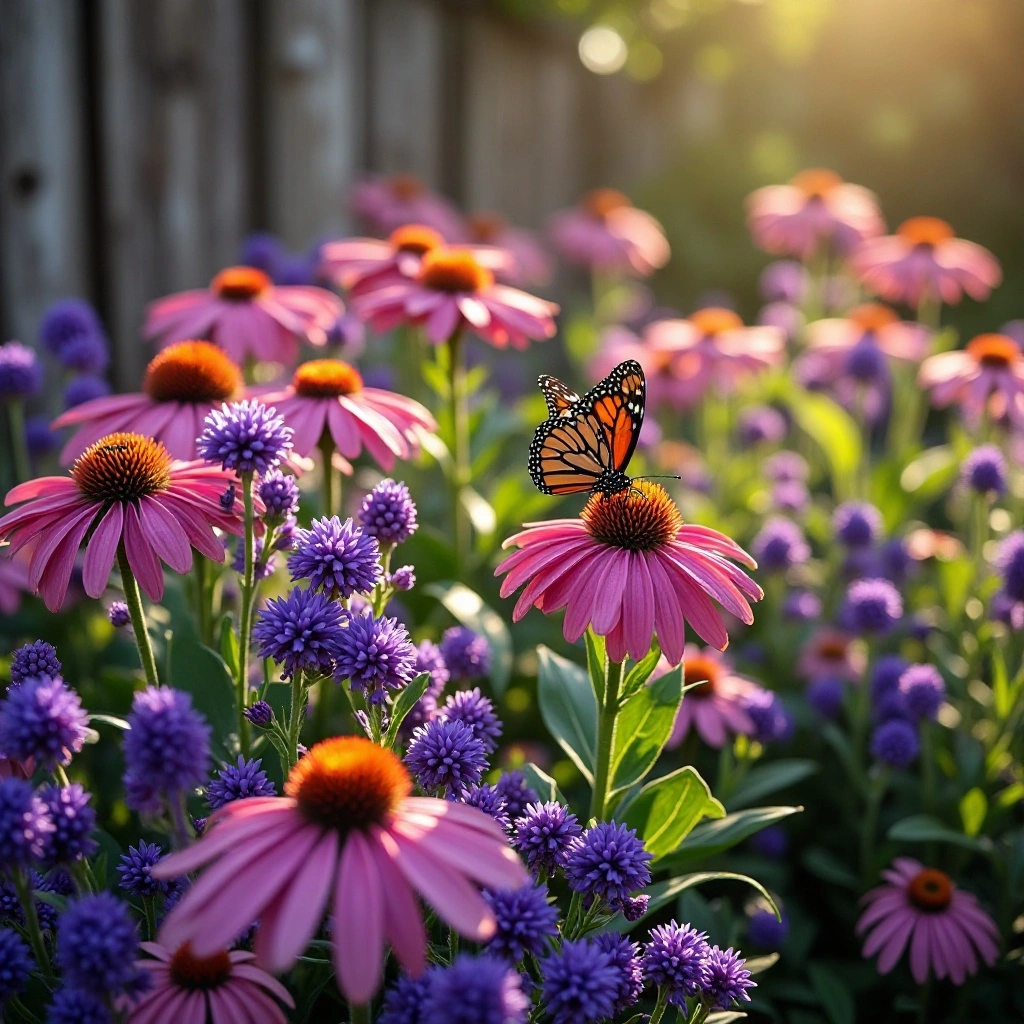
Design a corner that buzzes and flutters with life by focusing on nectar-rich plants that attract butterflies, bees, and hoverflies. Lavender, Echinacea, Agastache, and Verbena bonariensis are the cornerstones — they bloom in waves from early summer through fall, ensuring a constant food source for pollinators.
Beyond the environmental benefits, watching a corner alive with butterflies and bees is endlessly entertaining, making it ideal near a seating area.
this is excellent value for such a well proven product. A very reliable pick for wildlife-conscious gardeners wanting that beautiful buzzing pollinator corner filled with Lavender, Echinacea, and Agastache that rewards you with butterflies and bees all season long. Shop on Amazon
How to Style It:
- Plant in large clumps — pollinators prefer mass plantings
- Include flat-topped flowers (Yarrow, Fennel) for landing platforms
- Add a shallow water dish with pebbles for drinking
- Avoid double-flowered varieties — they often lack nectar
Where to Use It: Best in a sunny, sheltered corner. Position near a seating area or kitchen window so you can watch the wildlife. Avoid near paths where bee activity might cause concern.
⭐ Pro Tip: Leave a small patch of bare soil at the corner edge. Many ground-nesting solitary bees need access to bare earth to build their nests — this tiny gesture dramatically increases the wildlife value of your bed.
6. Japanese Zen Corner
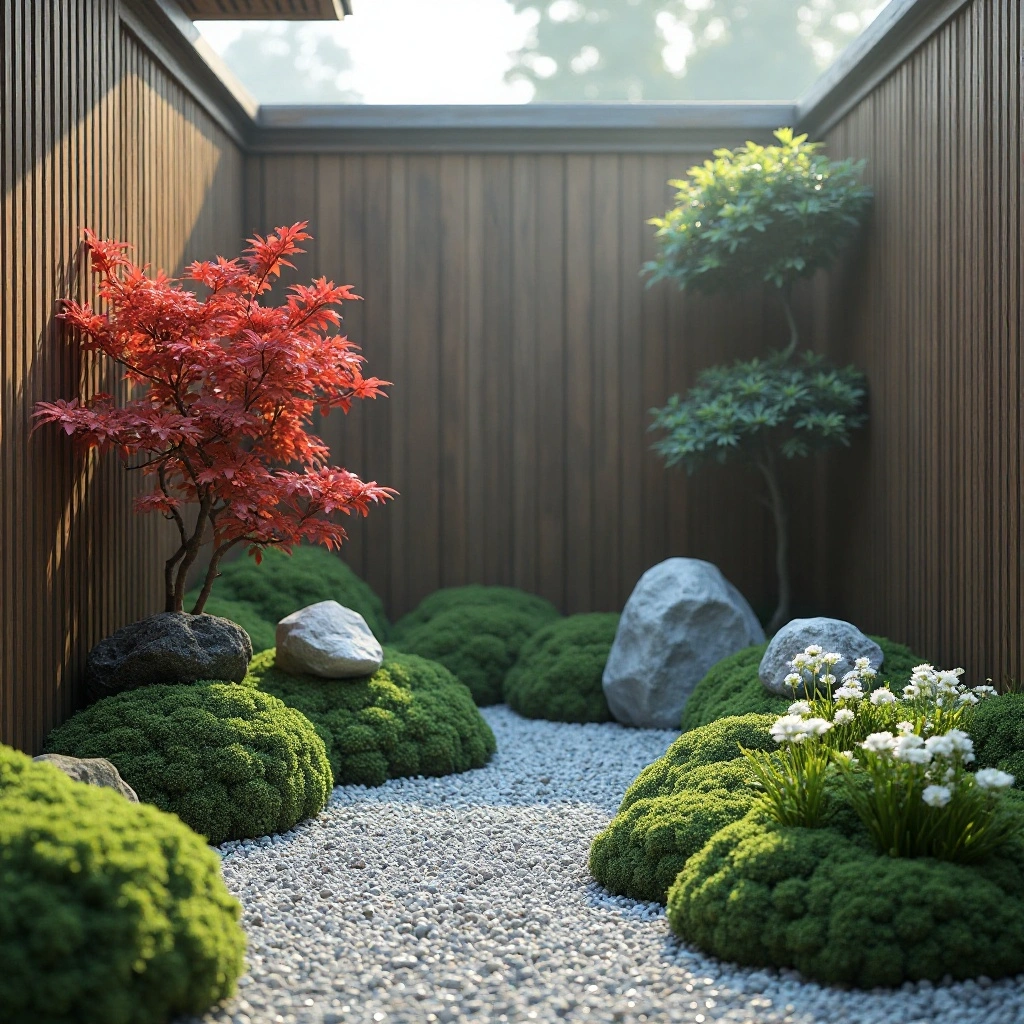
Channel the tranquil beauty of Japanese garden design by creating a corner that prioritizes simplicity, texture, and mindful composition. A single dwarf Japanese maple provides year-round drama — brilliant red in autumn, architectural bare branches in winter.
Surround it with gravel or fine stone, accented by large moss-covered rocks and low-growing mondo grass. White or pale pink Chrysanthemums and Hellebores add seasonal blooms without disturbing the calm palette.
Excellent value for such a well proven product. A reliable pick for shaded or partially shaded corners wanting that beautiful tranquil Japanese zen garden with a dwarf maple, raked gravel, and moss-covered rocks that brings genuine mindful calm to any outdoor space. Shop on Amazon
How to Style It:
- Use maximum 3 plant species — restraint is the style
- Place rocks in odd numbers and partially bury them for realism
- Rake gravel in gentle curves to suggest flowing water
- Choose plants with contrasting textures: feathery vs bold
Where to Use It: Perfect for a shaded or partially shaded corner. Excellent near a deck, meditation space, or as a calming contrast to a busy perennial garden elsewhere in the yard.
⭐ Pro Tip: Japanese maple roots are sensitive. Mulch the entire bed 3 inches deep with fine bark or pine needles to maintain consistent moisture and temperature. Never let the roots dry out in summer.
7. Bold Tropical Statement
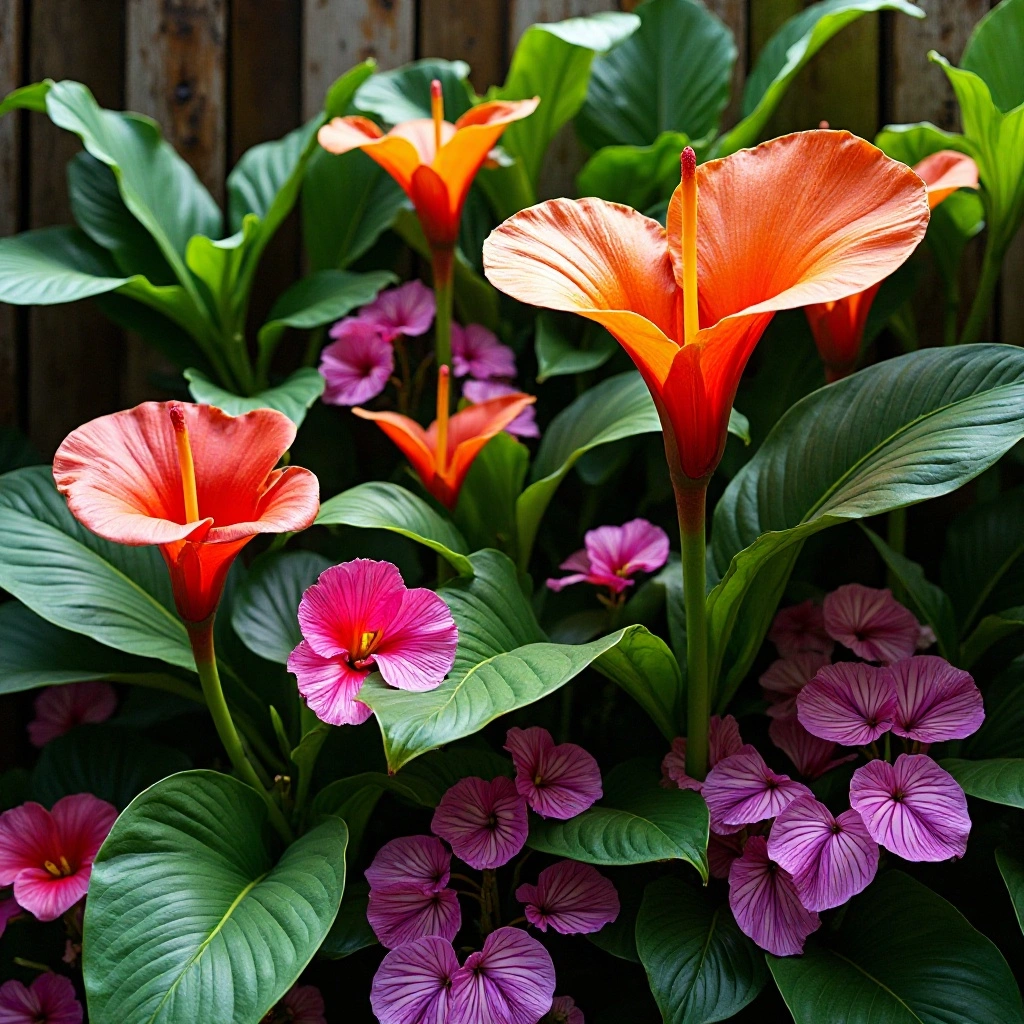
Transform a corner into a lush tropical escape with oversized, drama-filled plants that make a jaw-dropping statement. Giant Canna lilies shoot up to 6 feet tall with enormous paddle-shaped leaves and vivid flame-colored blooms. Colocasia (elephant ears) provide huge, architectural foliage in purple-black or lime green.
Bird of Paradise adds exotic sculptural form. The result is a corner that stops guests in their tracks and transports your garden to another continent entirely.
Every buyer so far has been almost completely satisfied making this incredible value. A great option for sheltered sunny corners near a pool or patio wanting that jaw-dropping tropical escape with giant Cannas and elephant ears that stops guests completely in their tracks. Shop on Amazon
How to Style It:
- Layer heights dramatically: 6ft+ at back, down to 1ft at front
- Mix bold leaf shapes: round, spiky, feathery for contrast
- Use deep jewel-toned colors: orange, scarlet, purple, lime
- Mulch heavily to retain the moisture tropical plants crave
Where to Use It: Perfect for a sheltered, sunny corner near a pool, patio, or outdoor bar. Creates a stunning backdrop for entertaining spaces. Works brilliantly in warm climate gardens.
⭐ Pro Tip: In cooler climates, grow Cannas and Colocasia in large buried pots rather than directly in the ground. In autumn, lift the pots whole and store in a frost-free garage — replanting next spring is effortless.
8. Rustic Raised Stone Bed
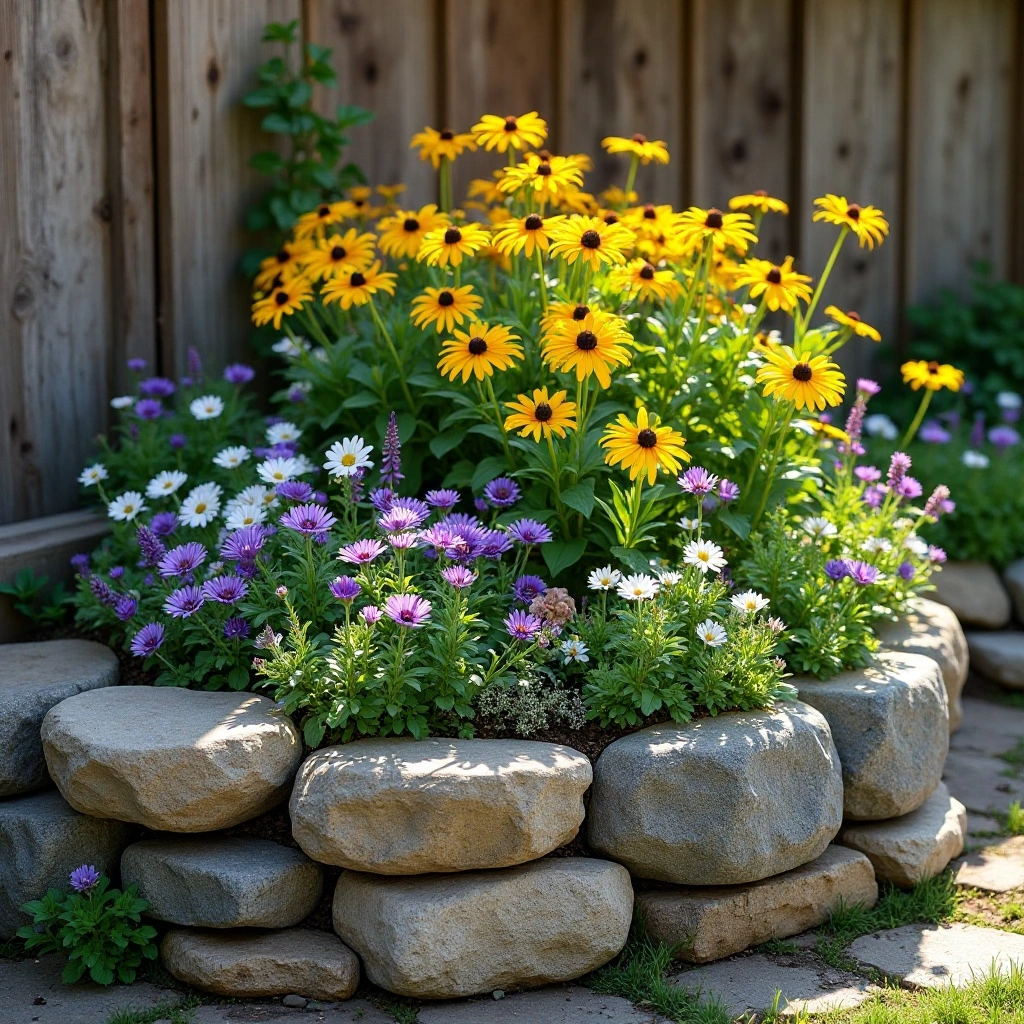
A raised corner bed built from natural dry-stacked stone or reclaimed brick solves multiple gardening problems at once — it improves drainage, warms the soil earlier in spring, provides easy access, and looks absolutely stunning. The natural stone walls themselves become habitats for beneficial insects and small lizards.
Fill with a rich, free-draining mix and plant with a mix of cheerful perennials and trailing plants that soften the hard edges of the stonework beautifully.
Generally satisfied making this exceptional value. A reliable pick for those wanting a beautiful dry-stacked stone raised corner bed that improves drainage, warms soil earlier in spring, provides easy planting access, and creates natural habitat for beneficial insects within the walls themselves. Shop on Amazon
How to Style It:
- Dry-stack (no mortar) so insects can use gaps as habitat
- Leave intentional gaps and plant Sempervivum in the wall itself
- Use trailing plants to soften the front stone edge
- Cap the top layer with flat coping stones for a neat finish
Where to Use It: Ideal where ground is compacted, sloped, or poorly drained. Great for the corner of a vegetable garden, front yard corner, or sloping terrain that needs terracing.
⭐ Pro Tip: Build your stone walls with a slight backward lean (batter) of about 1 inch per foot of height. This makes them structurally stronger and allows rainwater to run into the bed rather than off the face of the wall.
9. Monochromatic White Garden
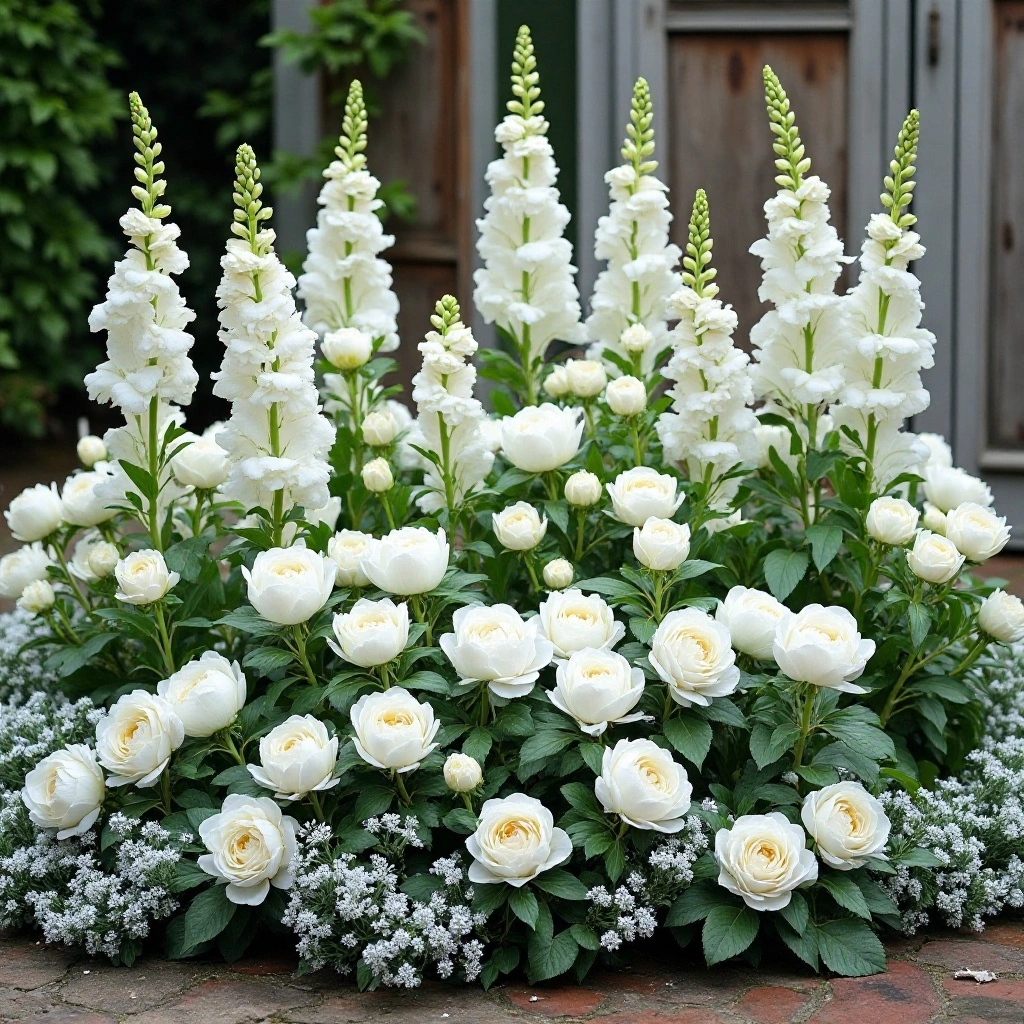
Inspired by Vita Sackville-West’s legendary White Garden at Sissinghurst, an all-white corner bed achieves a level of sophistication that no multi-colored planting can match. White Peonies, Foxgloves, Roses, and Astrantia create a luminous display that almost glows at dusk.
Silver-leaved Artemisia and Stachys byzantina (lamb’s ears) provide textural contrast and highlight the purity of the white blooms. The effect is breathtaking by moonlight.
Excellent value for such a well proven product. A very reliable pick for evening entertaining gardens or shaded corners wanting that breathtaking all-white garden with luminous Peonies, Roses, and Foxgloves that almost glows at dusk and by moonlight. Shop on Amazon
How to Style It:
- Vary textures obsessively — the lack of color demands it
- Include silver and grey foliage to prevent it looking washed out
- Add a white-painted metal obelisk or statue as focal point
- Include fragrant whites (Roses, Nicotiana) for evening enjoyment
Where to Use It: Stunning near a dark hedge backdrop (Yew or Box) that makes white pop. Ideal for evening entertaining areas. Particularly effective in shaded corners where color gardens struggle.
⭐ Pro Tip: “White” flowers vary enormously — some are cream, some blush pink, some cool ice-white. Buy or grow plants in bloom so you can verify the tone before planting. Mixing warm creams and cool whites can look muddy, not elegant.
10. Drought-Tolerant Succulent Corner
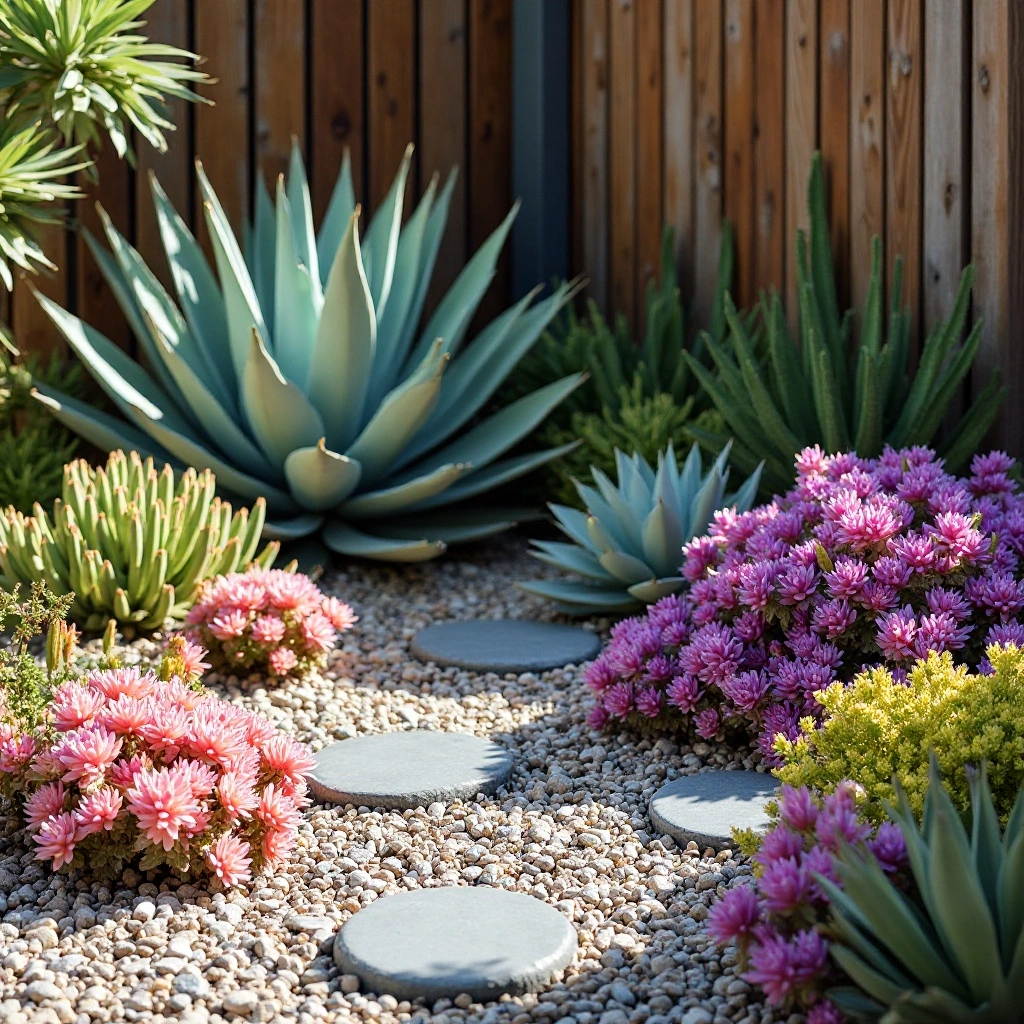
The ultimate low-effort, high-impact corner garden. Succulents and drought-tolerant plants thrive on neglect — perfect for gardeners who want beauty without constant watering. Architectural Agave provides a bold centerpiece, surrounded by Echeveria rosettes in jewel tones of pink, purple, and green.
Sedum covers the ground, and ornamental gravel mulch keeps weeds down. The colors and textures are so varied that the bed looks fascinating in every season without a single flower needing to bloom.
Worthwhile investment for such a massively trusted product. A reliable pick for hot sunny corners or awkward dry spots wanting that beautiful low-effort high-impact succulent garden that thrives on neglect and looks fascinating in every season without needing a single flower to bloom. Shop on Amazon
How to Style It:
- Prepare the bed with 50% grit or coarse sand for drainage
- Group by size: large architectural pieces centered, small rosettes around
- Use decorative gravel (not bark) as mulch — succulents hate moisture retention
- Bury half-embedded rocks for a desert landscape effect
Where to Use It: Best for hot, sunny, well-drained corners — particularly awkward dry spots under roof overhangs or beside south-facing walls where nothing else thrives.
⭐ Pro Tip: The most common mistake with succulents is overwatering. Water deeply but then wait until the soil is completely dry — sometimes 2–3 weeks in summer, and barely at all in winter. Root rot is the number one killer.
11. Seasonal Rotating Bed
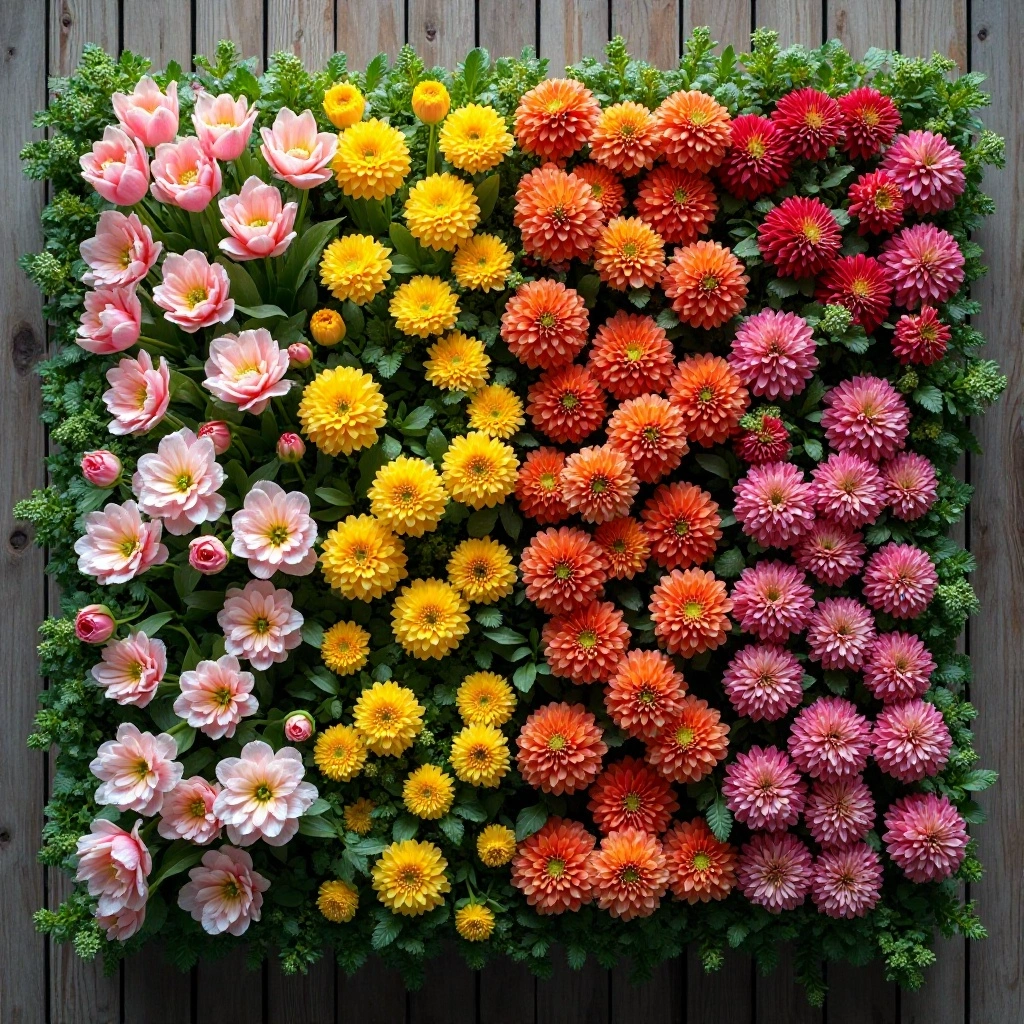
The most strategically designed corner beds are planned to offer something spectacular in every single season. Spring arrives with tulips, alliums, and Hellebores. Summer explodes with Dahlias, Phlox, and Salvia. Autumn glows with Rudbeckia, Asters, and Sedum.
Winter holds interest with evergreen structure, rose hips, and the sculptural seedheads of Eryngium. The key is overlapping — as one season fades, the next is already rising beneath it, ensuring no gaps, ever.
Outstanding value for such a massively trusted product. A very reliable pick for front garden corners or any bed visible from a main living space window wanting a beautiful strategically planned display that delivers something spectacular in every single season of the year. Shop on Amazon
How to Style It:
- Map a 12-month bloom calendar before buying a single plant
- Plant spring bulbs beneath summer perennials — they share space perfectly
- Use a repeated structural plant (like a clipped shrub) as the anchor
- Include seedheads and berries for winter and bird interest
Where to Use It: The best investment for a front garden corner or any bed visible from your main living space window. You’ll benefit from the display 365 days a year.
⭐ Pro Tip: Take a photo of your corner on the same date each year and compare. You’ll quickly see which seasons have gaps — and which plants are performing so well they deserve more space next year.
12. Romantic Rose Corner
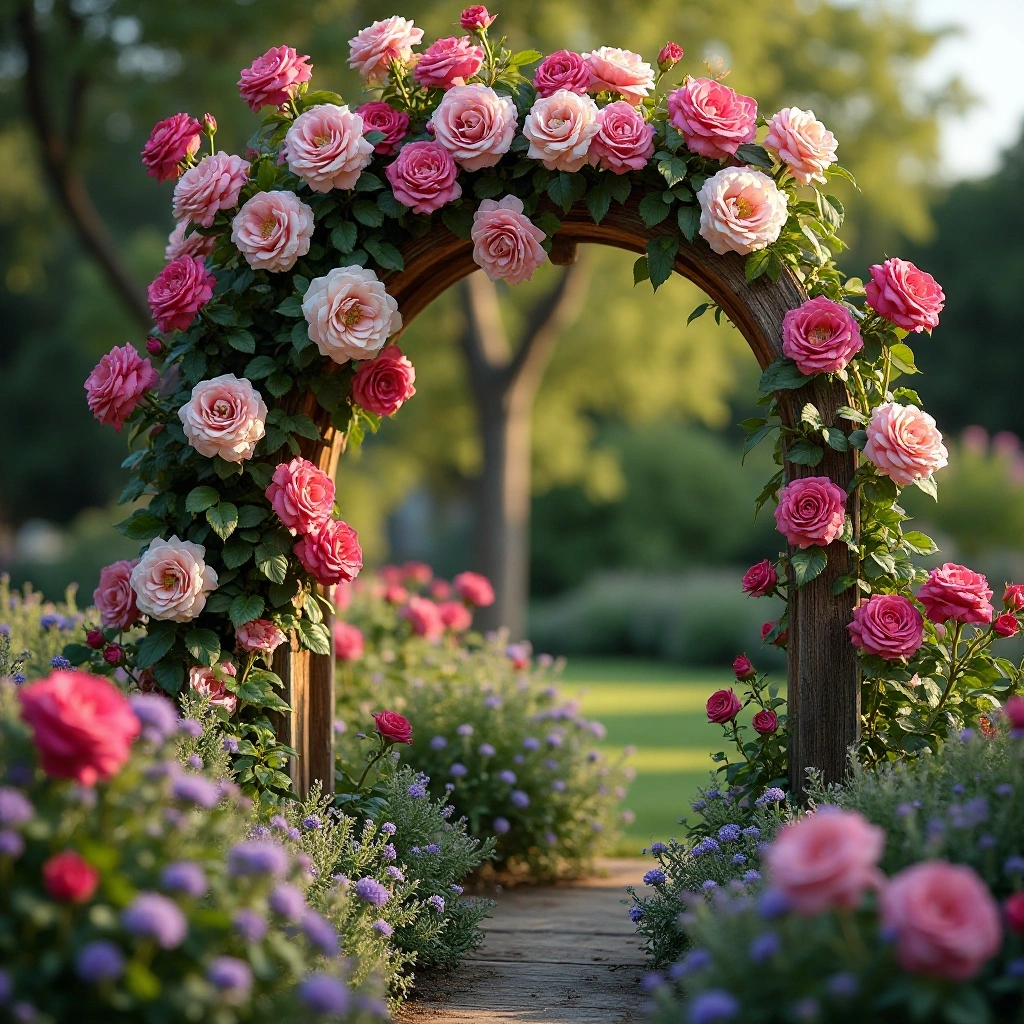
Nothing says garden romance like a dedicated rose corner. Choose David Austin English Roses for their old-fashioned cupped blooms, intoxicating fragrance, and disease resistance. Pair climbing roses on a trellis or obelisk with bush roses in the bed, then underplant with classic companions: Lavender,
Catmint (Nepeta), and Lady’s Mantle (Alchemilla mollis) whose frothy lime-green flowers disguise the bare rose legs beautifully. The result is an achingly beautiful corner that smells as good as it looks. Shop on Amazon
How to Style It:
- Always use bare-root roses planted in winter for best establishment
- Underplant with Catmint — it hides bare stems and repeat-flowers beautifully
- Add a timber trellis or obelisk for vertical climbing interest
- Mulch roses in spring with well-rotted manure — they’re hungry plants
Where to Use It: Best in a sunny, open corner with good air circulation — essential for disease-free roses. Ideal near a seating area or path where fragrance can be enjoyed up close.
⭐ Pro Tip: Deadhead spent roses regularly but stop in late August. Allowing late-season flowers to form hips provides winter food for birds and adds russet-orange color to the corner through the cold months.
13. Native Wildflower Prairie Corner
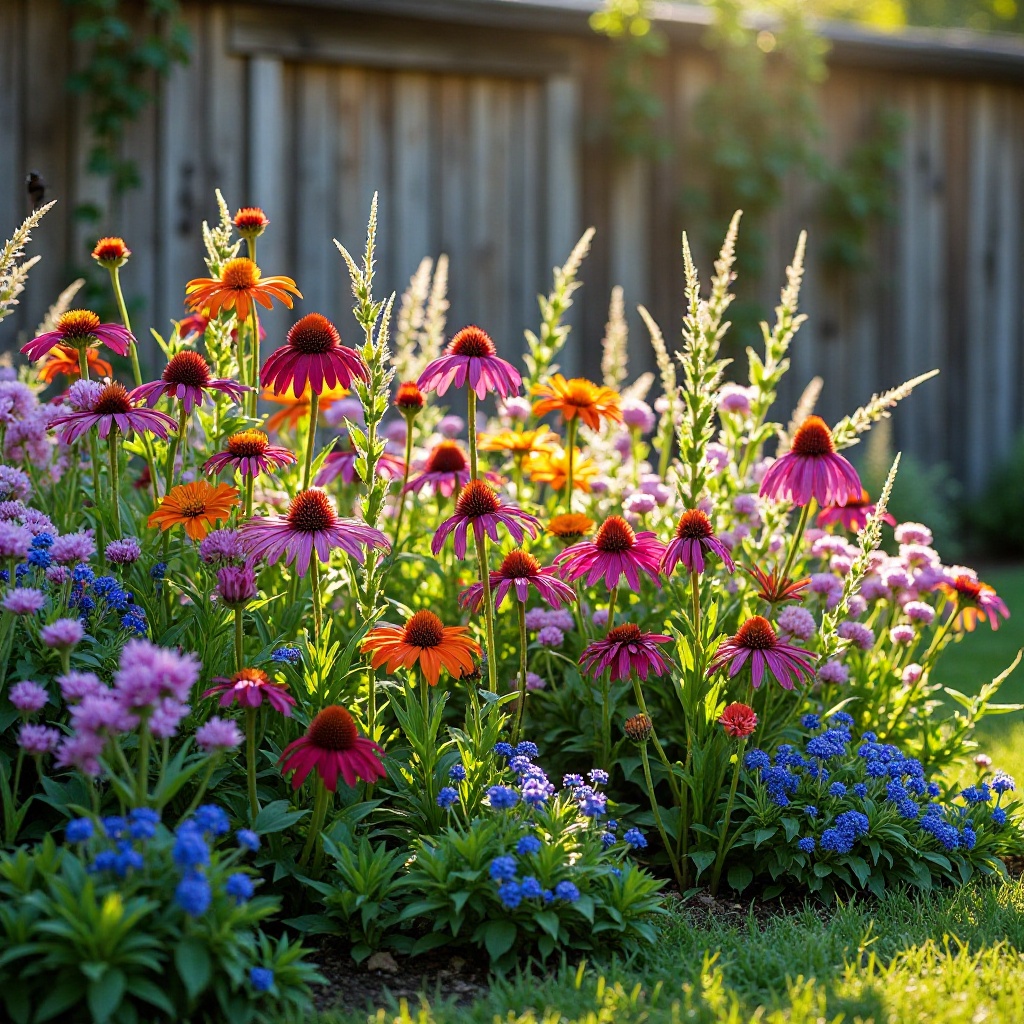
Going native is one of the most impactful gardening choices you can make. A native plant corner requires far less watering, no fertilizer, and minimal care — because these plants evolved perfectly for your local conditions.
Choose plants native to your region: in North America, that means Echinacea, Rudbeckia, Lobelia, and Little Bluestem grasses. The biodiversity benefits are extraordinary — native plants support 10–50 times more wildlife than exotic species.
Incredible value for such a massively trusted product. A very reliable pick for those wanting a beautiful low-maintenance native wildflower prairie corner with Echinacea, Rudbeckia, and Little Bluestem that supports extraordinary local wildlife while requiring virtually no watering or feeding. Shop on Amazon
How to Style It:
- Research your regional native plants before selecting species
- Allow plants to naturalize and self-seed for a true prairie feel
- Leave seedheads through winter for bird feeding opportunities
- Edge the bed crisply — a clear edge signals “intentional garden,” not neglect
Where to Use It: Ideal for larger garden corners where a naturalistic, flowing style fits the overall design. Works especially well in rural or semi-rural gardens. A perfect replacement for a grass corner.
⭐ Pro Tip: Put up a small sign: “Native Wildflower Corner — Supporting Local Wildlife.” Neighbors who initially question the wilder aesthetic become converts when they see the butterflies, bees, and birds it attracts within the first season.
14. Edible Flower & Herb Corner
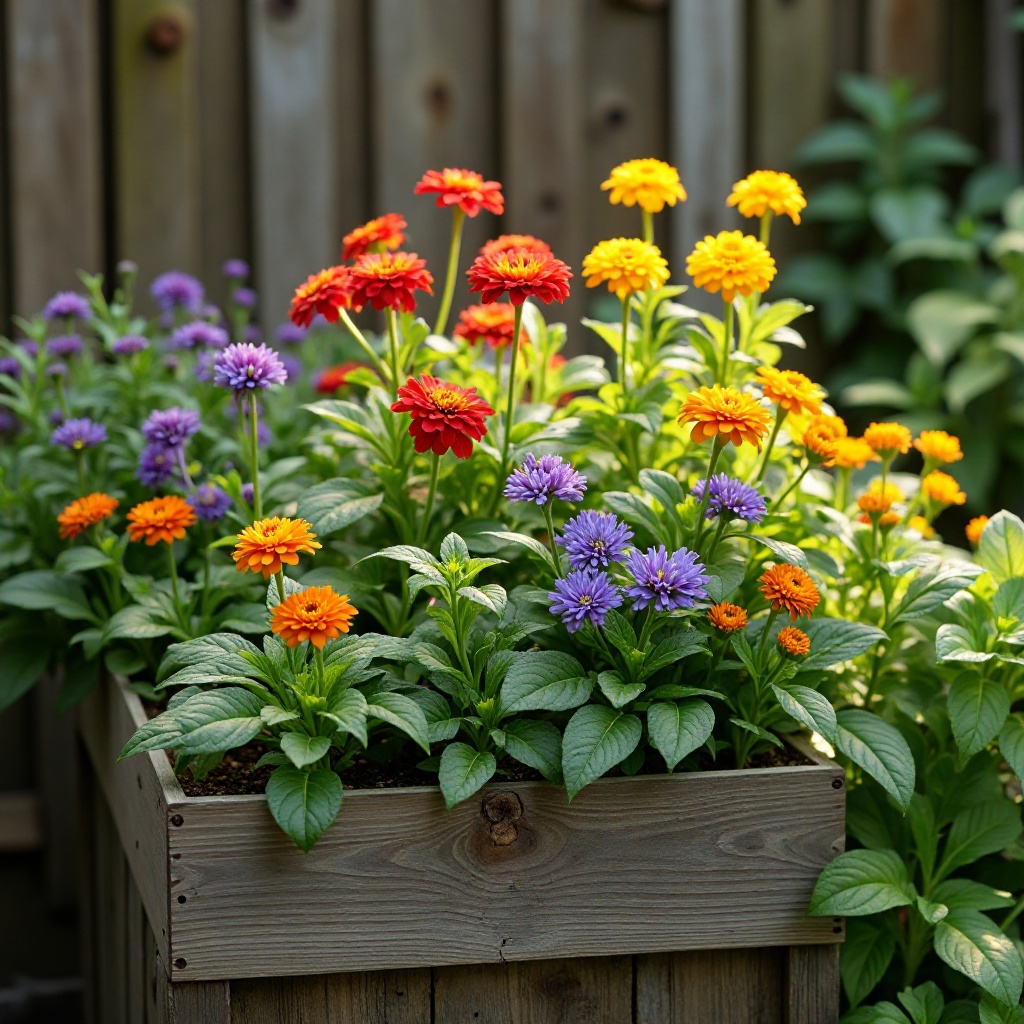
Who says a flower bed can’t also feed you? An edible corner bed combines the visual beauty of flowering plants with the practical joy of harvesting. Nasturtiums cascade in fiery orange and red — both leaves and flowers are peppery and edible. Calendula provides cheerful golden blooms used in teas and salves.
Chive flowers and Borage flowers are delicious in salads. Weave in aromatic Rosemary, Basil, and Thyme for a corner that smells incredible and earns its place in your kitchen.
Exceptional value for creating that beautiful practical edible flower and herb corner. A reliable pick for kitchen garden corners wanting a gorgeous bed of Nasturtiums, Calendula, and aromatic herbs that earns its place in your garden and your kitchen simultaneously. Shop on Amazon
How to Style It:
- Use a raised bed for clean aesthetics and easy harvesting
- Arrange taller herbs (Rosemary, Fennel) at the back corner
- Let Nasturtiums trail over the front edge for a lush, abundant spill
- Add terracotta pots within the bed for extra planted dimension
Where to Use It: Position near the kitchen door for easy harvesting. Ideal for corners of vegetable gardens, kitchen garden walls, or near an outdoor cooking area.
⭐ Pro Tip: Never use pesticides on an edible flower bed — even organic ones. Instead, hand-pick aphids, encourage ladybirds, and grow companion plants like Fennel and Dill that attract pest predators naturally.
15. Night-Blooming Moon Garden
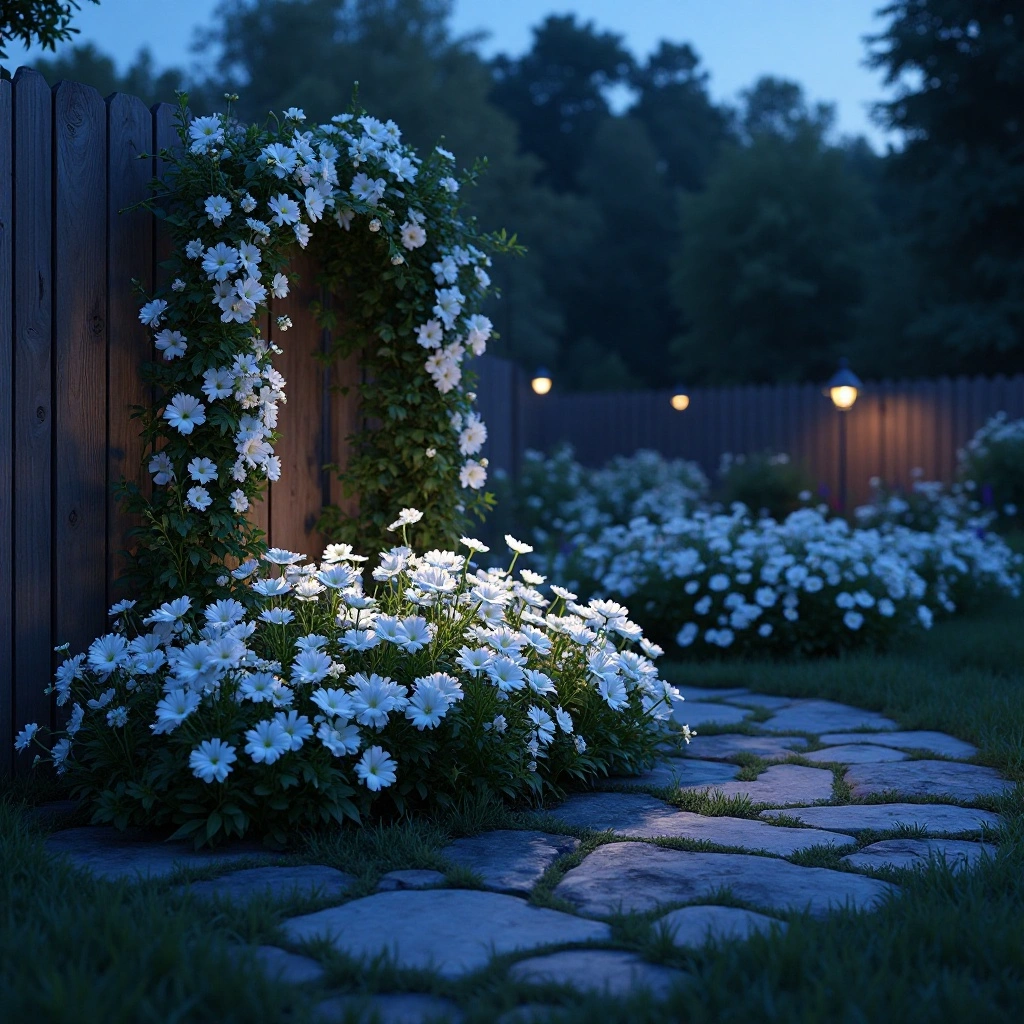
Design a corner that comes alive after sunset — perfect for those who enjoy their garden in the evening. White and silver plants reflect moonlight and artificial light beautifully. Evening Primrose and Moonflower vine actually open their blooms at dusk, releasing intoxicating fragrance.
Night-scented Stock and white Nicotiana fill the air with perfume. The silvery leaves of Artemisia and Stachys glow in low light. This is the most romantic corner garden you can create.
Excellent value for creating that beautiful romantic night-blooming moon garden corner. A reliable pick for evening entertaining spaces wanting an exclusively white and silver planting that glows in moonlight and fills the night air with intoxicating fragrance after sunset. Shop on Amazon
How to Style It:
- Use exclusively white, cream, and silver plants
- Add low solar-powered pathway lights at bed edges
- Include a white-painted trellis for climbing Moonflower vine
- Place a reflective mirror or gazing ball to bounce available light
Where to Use It: Position near outdoor seating used in evenings. Near a dining terrace, fire pit area, or hot tub corner. Best where it’s visible from inside through a large window.
⭐ Pro Tip: Plant Nicotiana sylvestris — it grows 4 feet tall and releases a powerful jasmine-like scent at night that can be smelled 20 feet away. One plant transforms the entire evening garden experience.
16. Children’s Fairy Garden Corner
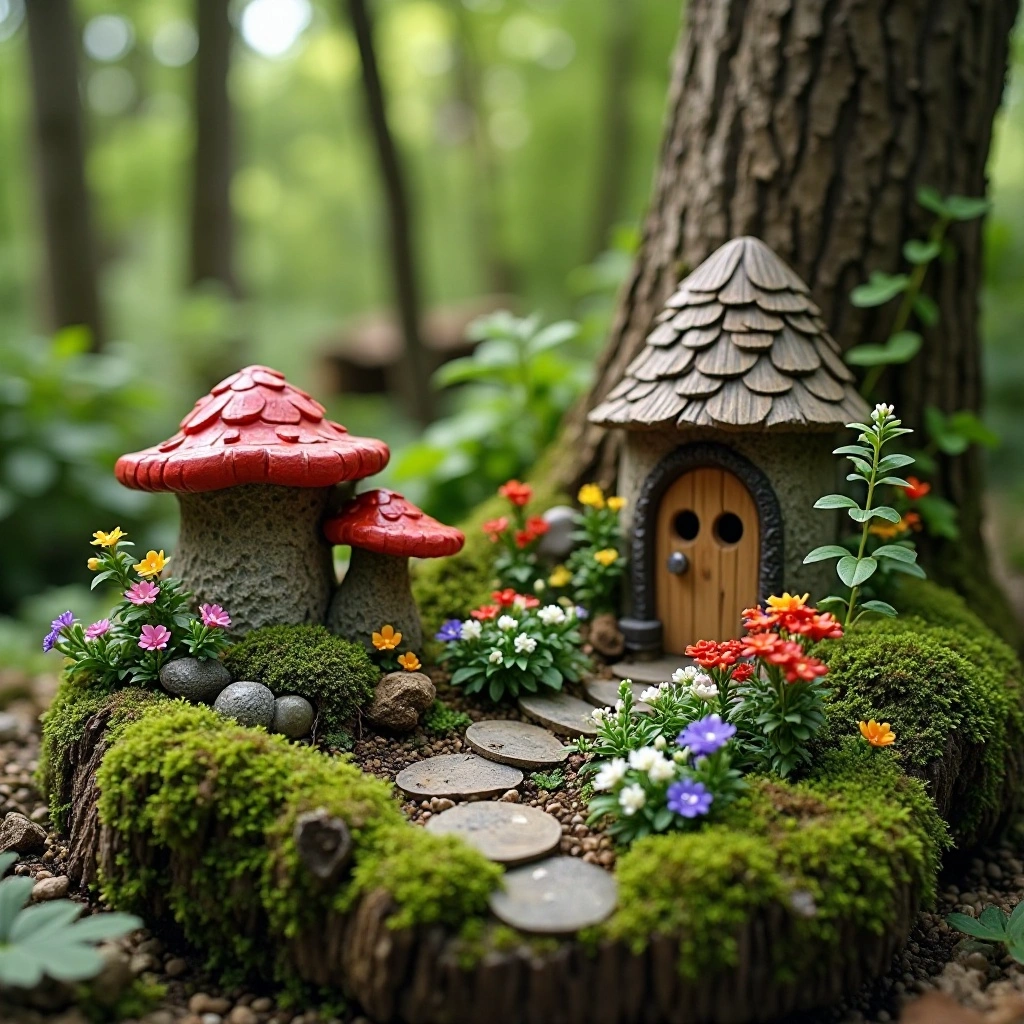
Create a corner that sparks imagination and gets children excited about gardening. A fairy garden corner uses miniature plants, tiny pathways, and whimsical accessories to build a magical world. Plant low-growing Thyme as a fairy lawn, add Forget-me-nots for a carpet of blue, and tuck in miniature Ferns and Hostas for fairy-scale trees.
A small fairy door set into a log, ceramic mushrooms, and tiny stone paths complete the fantasy. This corner will delight children and charming adults alike.
Clearly very satisfied. A reliable pick for family gardens wanting that beautiful whimsical fairy garden corner with miniature plants, tiny pathways, and magical accessories that delights children and enchanting adults equally throughout the growing season. Shop on Amazon
How to Style It:
- Use a low border of stones or miniature picket fence to define the space
- Add accessories gradually with your children as an ongoing project
- Plant fragrant herbs (Thyme, Mint) children can touch and smell
- Include a small bird bath scaled down to serve as a fairy pond
Where to Use It: Perfect for a shaded corner near the back door or play area. At the corner of a lawn where children play. In a partially shaded spot under a tree where the magical atmosphere feels natural.
⭐ Pro Tip: Let the children choose and plant at least one thing themselves. A child who plants a seed and watches it grow is a gardener for life. Make the fairy garden their creative ownership and it becomes something they’ll treasure for years.
Common Mistakes to Avoid
Even experienced gardeners make these corner bed errors. Learn from them before you start.
1. Ignoring Sunlight Conditions Planting sun-lovers in shade or shade plants in full sun is the #1 failure. Observe your corner at 9am, 12pm, and 4pm before buying a single plant. Track it across seasons — a summer corner can be deeply shaded in winter.
2. Underestimating Plant Size That cute 4-inch Viburnum pot will be 6 feet wide in 5 years. Always check the mature spread of every plant — not just the height. A crowded corner becomes an ugly battle of competing roots and canopies.
3. Poor Drainage Prep Most corner beds are at the meeting of two walls or fences — areas where water can pool. Always improve drainage before planting by incorporating grit or creating a raised element. Waterlogged roots are a silent killer.
4. Skipping the Edge Definition An undefined bed edge makes even the best planting look messy. Use steel edging, brick, stone, or a crisp soil cut to clearly separate bed from lawn or path. The edge is what makes the difference between “intentional garden” and “weedy corner.”
5. Too Many Colors, No Harmony Buying every colorful plant you love results in visual chaos. Limit your palette to 2–3 colors that work together and repeat them throughout the bed. A harmonious corner always looks more intentional than a rainbow scramble.
6. Planting for One Season Only Filling your corner with summer bedding creates a dead, bare space for 8 months of the year. Always plan for all four seasons — include evergreens, spring bulbs, autumn seedheads, and winter structure from the very beginning.
Frequently Asked Questions
What is the best shape for a corner flower bed? The classic corner bed shape is a triangle or curved arc that fills the corner space. A gentle curved front edge (rather than a hard straight line) looks more naturalistic and is easier to mow around. For formal gardens, geometric shapes — square, triangular, or semi-circular — work beautifully.
The key principle: whatever shape you choose, make it large enough to be impactful. Most corner beds are too small to make the visual statement the space deserves.
How do I prepare soil for a corner flower bed? Start by clearing the area of grass and weeds — either by digging out, smothering with cardboard for 3 months, or careful herbicide use. Then dig over the soil to a depth of 30cm (12 inches), removing all roots. Incorporate 2–3 inches of well-rotted garden compost or manure to improve drainage and fertility. Test your soil pH if possible (most flowers prefer 6.0–7.0). Finally, rake level and allow to settle before planting.
How tall should plants be in a corner flower bed? Use the classic “thriller, filler, spiller” rule scaled to your space. In a corner viewed from one direction: tallest plants (3–6ft) at the back, medium plants (1–3ft) in the middle, low plants (under 12 inches) at the front with some trailing over the edge. For a corner viewed from all sides, place the tallest plant in the center and graduate downward in all directions.
How do I stop weeds taking over my corner bed? Three strategies work together: first, suppress weeds before they emerge with a 3-inch layer of bark mulch applied every spring. Second, plant densely — a well-planted bed leaves no bare soil for weed seeds to germinate. Third, weed little and often (15 minutes per week beats a 3-hour annual session). Laying a permeable weed-suppressing membrane under gravel paths around the bed also dramatically reduces maintenance.
What corner flower beds work for deep shade? Deep shade corners are genuinely challenging but beautiful when planted correctly. Go for shade-heroes: Hostas (enormous variety of leaf color and texture), Astilbe (feathery plumes in pink, red, white), Hellebores (flowers January–April), Ferns (architectural elegance all year), Epimedium (tough, spreading ground cover), Bleeding Heart (Dicentra), and Lungwort (Pulmonaria, blue flowers in early spring). Focus on foliage over flowers in deep shade — texture, color, and leaf shape become your design palette.
How do I give a corner bed a professional look on a budget? Professional polish comes from edges, not expensive plants. A perfectly cut bed edge instantly elevates any planting. Buy perennials from garden swaps, plant sales, or divide existing plants from elsewhere in the garden. One well-chosen statement plant surrounded by budget-friendly companions always looks intentional. Repeat one or two key plants throughout the bed for cohesion. And mulch: fresh bark mulch costs very little and makes every bed look professionally finished immediately.
Can I create a corner flower bed ideas in a small yard? Absolutely — in fact, corner beds are even more impactful in small yards because they draw the eye into the corners, making the space feel larger. Focus on vertical interest (climbing plants on a trellis, tall narrow plants), keep the palette to 2–3 colors for a unified look, and choose plants that earn their place with multiple seasons of interest. Avoid overly large plants that will crowd the space within 2–3 years. Dwarf varieties exist for almost every plant category.
A beautifully planted corner can transform your entire garden. Start with one idea — and let it inspire the rest.