13+ Curb Appeal Landscape Ideas for a Beautiful Front Yard
Your home’s exterior is the first story it tells — and you want that story to be unforgettable. Whether you’re preparing to sell, trying to impress guests, or simply want to fall in love with your home every time you pull into the driveway, curb appeal Landscape is the single highest-return investment you can make. The right plants, pathways, and design choices can transform a forgettable facade into a showstopper.
The ideas in this guide go beyond generic advice. Each concept is built around real design principles, tested plant combinations, and practical styling tips you can actually use. From lush layered garden beds to dramatic lighting that makes your home glow at night — you’ll find everything you need to create a front yard that leaves a lasting impression.
Idea #1 — Layered Garden Beds with Mixed Heights
Overview
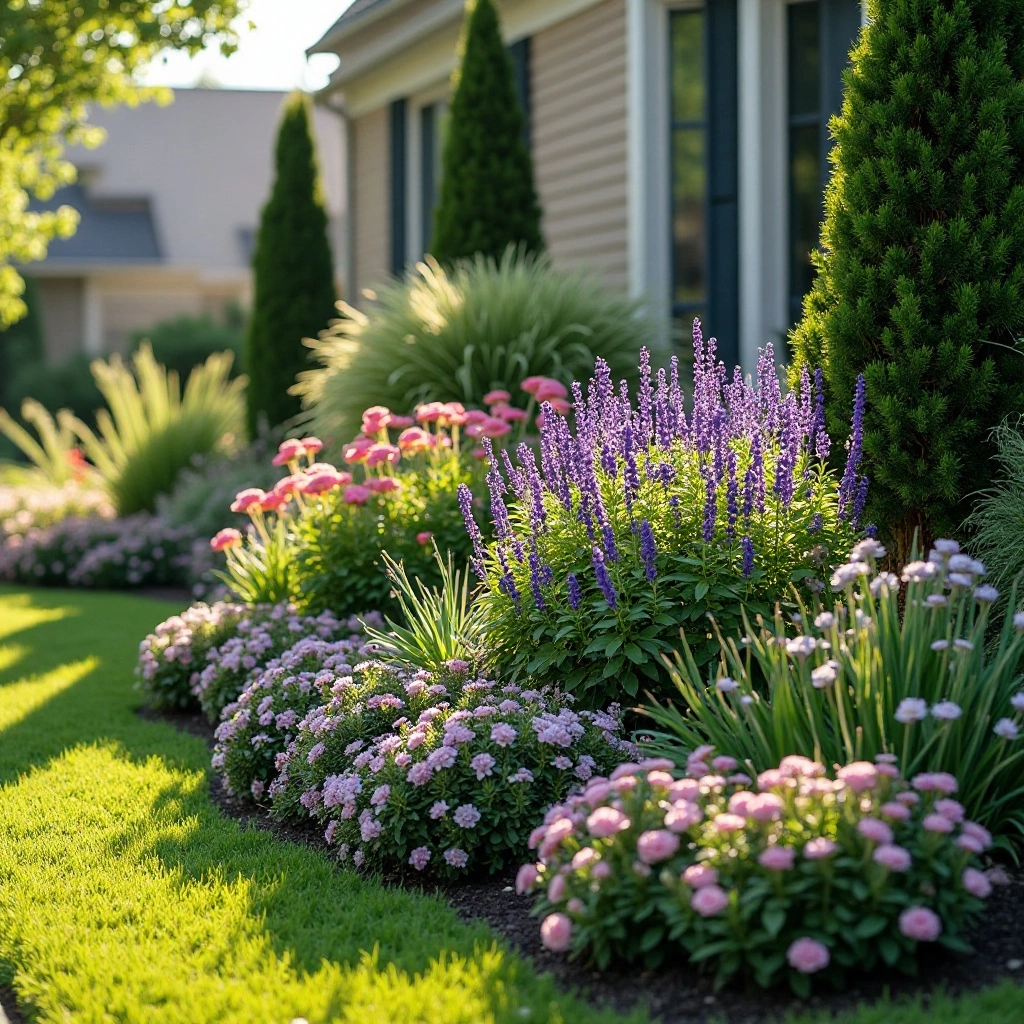
Layered garden beds are the cornerstone of professional-looking landscaping. By stacking plants of different heights — tall shrubs in the back, medium perennials in the middle, and low groundcovers at the front — you create depth, movement, and a lush, full appearance that looks intentional and polished.
This is the technique landscape designers use to make any yard look expensive without breaking the bank. Shop on Amazon
How to Style It:
- Place the tallest plants (3–6 ft) closest to the house foundation
- Use mid-height blooming plants (1–3 ft) as the visual centerpiece
- Finish the front edge with groundcovers or ornamental grasses under 12 inches
- Repeat plant varieties in groups of 3 or 5 for a cohesive, designer look
- Use contrasting textures — fine grasses next to broad-leafed plants
Where to Use It:
Foundation beds along the front of the house, flanking the front door, or bordering a driveway.
✅ Pro Tip:
Add a clean, dark-colored edging strip (steel or composite) between your lawn and garden bed. It separates the zones crisply and makes the whole landscape look 10× more polished with almost zero effort.
Idea #2 — A Statement Front Door Framed by Planters
Overview
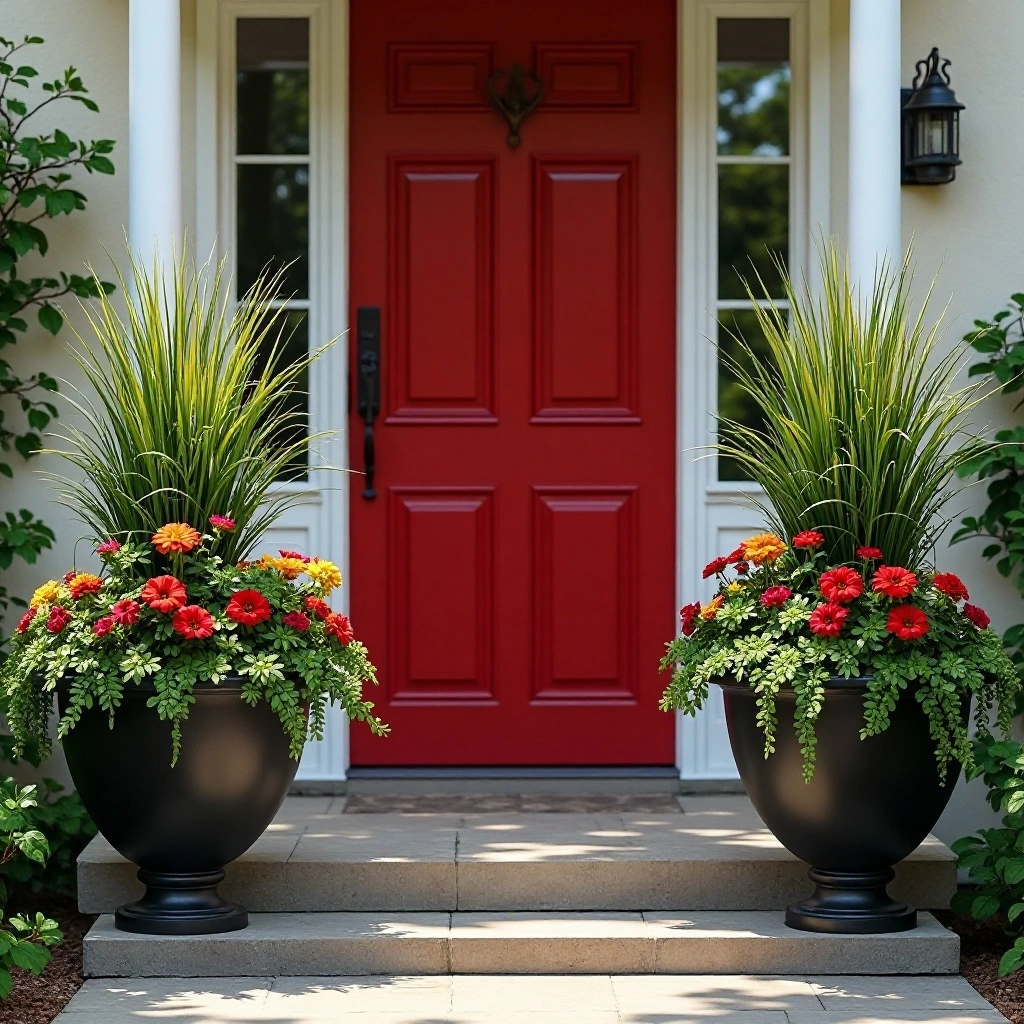
Your front door is the face of your home. Framing it with matching oversized planters instantly elevates the entire facade. This technique draws the eye directly to the entry, creates symmetry — one of the most powerful tools in design — and adds a seasonal, living element that can be refreshed throughout the year. Even a simple doorway becomes grand with the right planters and plants. Shop on Amazon
How to Style It:
- Use the thriller-filler-spiller formula: one tall focal plant, medium blooms to fill, and a trailing plant to spill over edges
- Choose matching planters for symmetry — black, white, terracotta, or dark green work universally
- Go bigger than you think — small planters look timid; large ones look intentional
- Match planter color to door hardware or shutters for a cohesive, pulled-together look
Where to Use It:
On either side of the front door, at the top of porch steps, or framing a garage entrance.
✅ Pro Tip:
Plant a fragrant herb or flower (like lavender or gardenias) in at least one planter. Guests who walk past will be pleasantly surprised — scent is a powerful, often overlooked element of curb appeal.
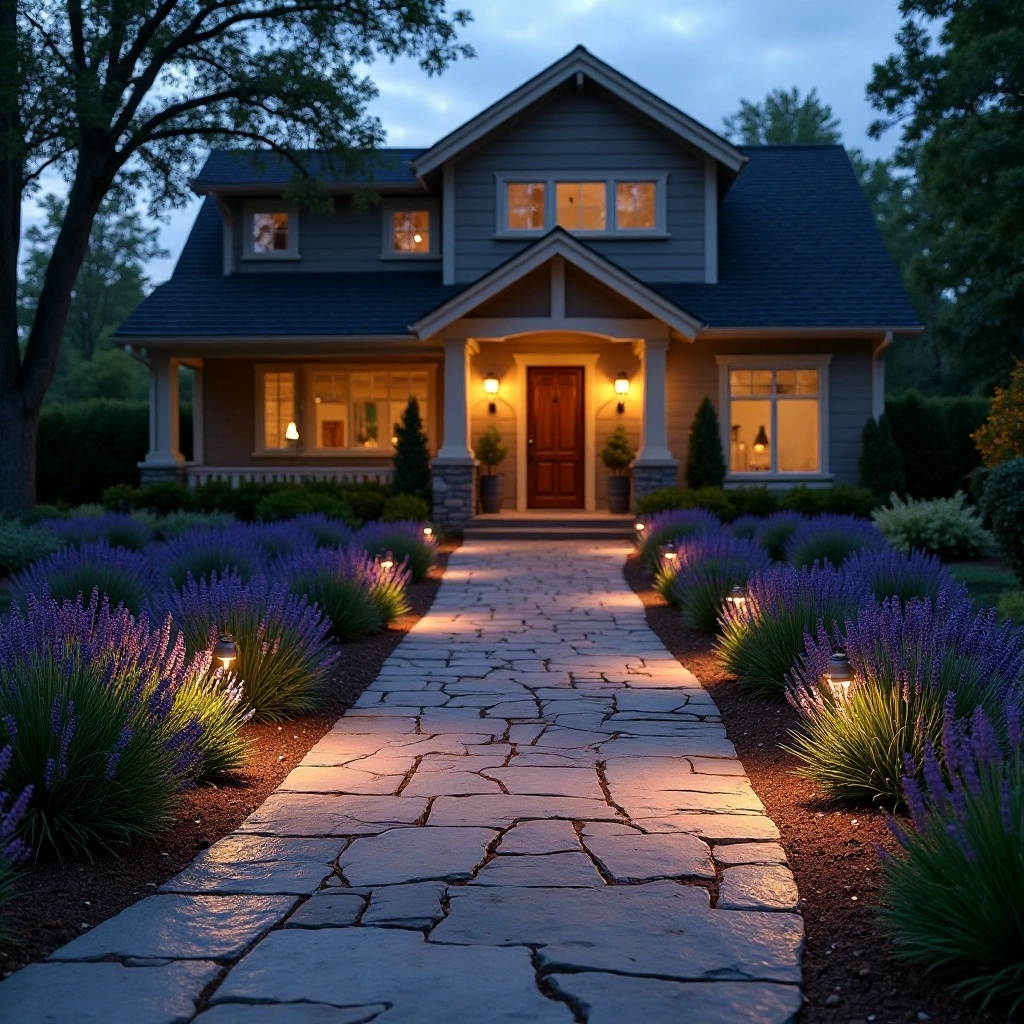
Idea #3 — A Defined Pathway with Landscape Lighting
Overview
A well-designed pathway does two jobs at once: it guides visitors to your front door and gives your property a sense of intentional structure. Add low-voltage landscape lighting along the path, and suddenly your home becomes dramatic and welcoming even after dark.
Lighted pathways are one of the most effective — and underused — curb appeal upgrades available to any homeowner. Shop on Amazon
How to Style It:
- Use natural flagstone, brick, or large pavers for a high-end look
- Space pathway lights every 6–8 feet on alternating sides for visual rhythm
- Edge the path with low-growing plants like lavender, boxwood, or liriope
- Opt for warm-toned bulbs (2700K–3000K) — they feel welcoming, not clinical
- Curve the path slightly rather than making it perfectly straight for a more organic feel
Where to Use It:
Any front yard walk from the driveway or sidewalk to the front door.
✅ Pro Tip:
Solar lights are convenient, but low-voltage wired lights are far brighter and more reliable. If you’re investing in a real pathway, invest in wired lighting — it makes an enormous difference in nighttime curb appeal.
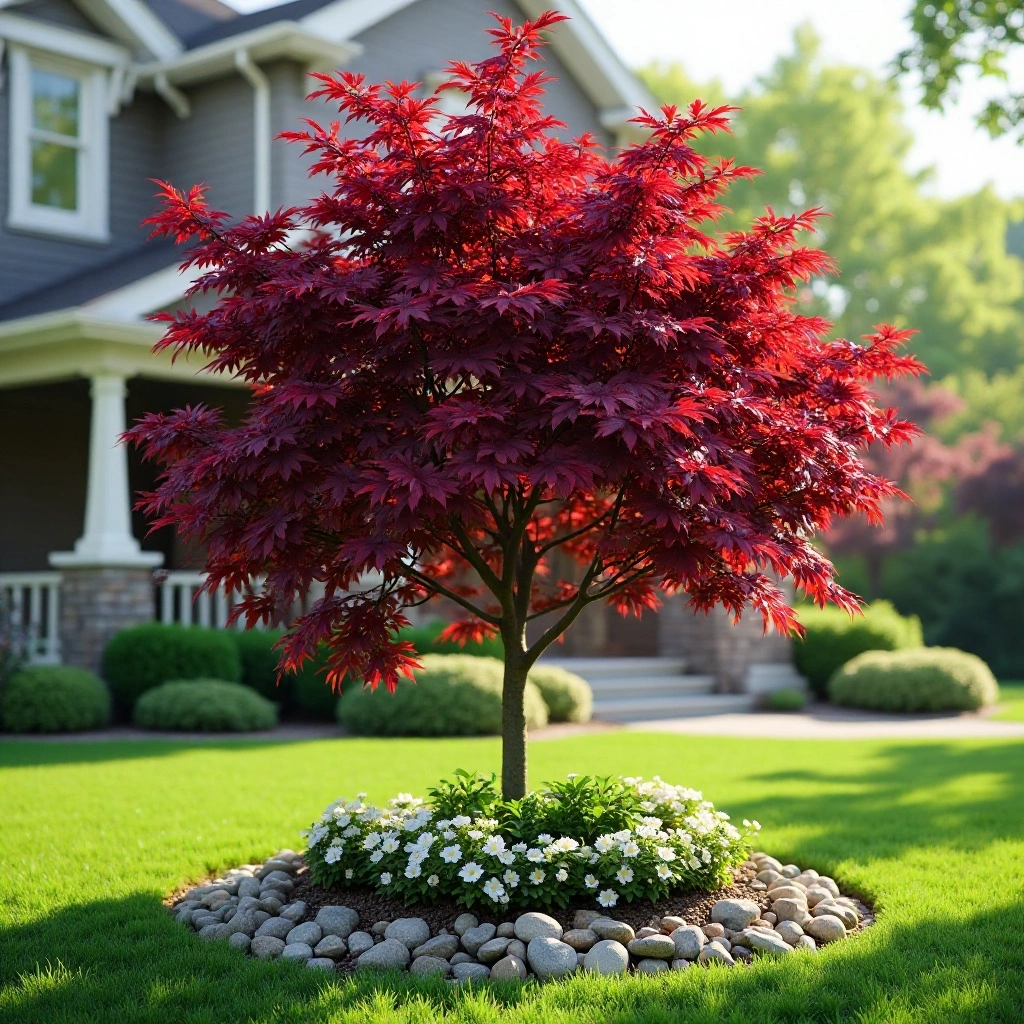
Idea #4 — A Focal Point Tree or Ornamental Specimen
Overview
Every great landscape needs an anchor — a single, standout plant that commands attention and gives the yard a sense of maturity and intentionality. An ornamental specimen tree like a Japanese maple, weeping cherry, or crape myrtle does exactly that.
It provides structure, seasonal interest, and visual weight that no arrangement of smaller plants can replicate. Think of it as the statement furniture piece of your outdoor space. Shop on Amazon
How to Style It:
- Choose a tree with multi-season interest — spring blooms, summer color, fall foliage, or interesting bark in winter
- Plant it off-center in the yard for a more natural, designed composition
- Create a mulch ring around the base (keep it 3 inches deep and away from the trunk)
- Underplant with shade-tolerant groundcovers or seasonal bulbs for layered interest
Where to Use It:
As a front yard centerpiece, anchoring a corner of the property, or flanking a driveway entrance.
✅ Pro Tip:
Avoid planting specimen trees directly in front of windows or too close to the foundation. A good rule: plant trees at least as far from the house as their mature canopy width at minimum.
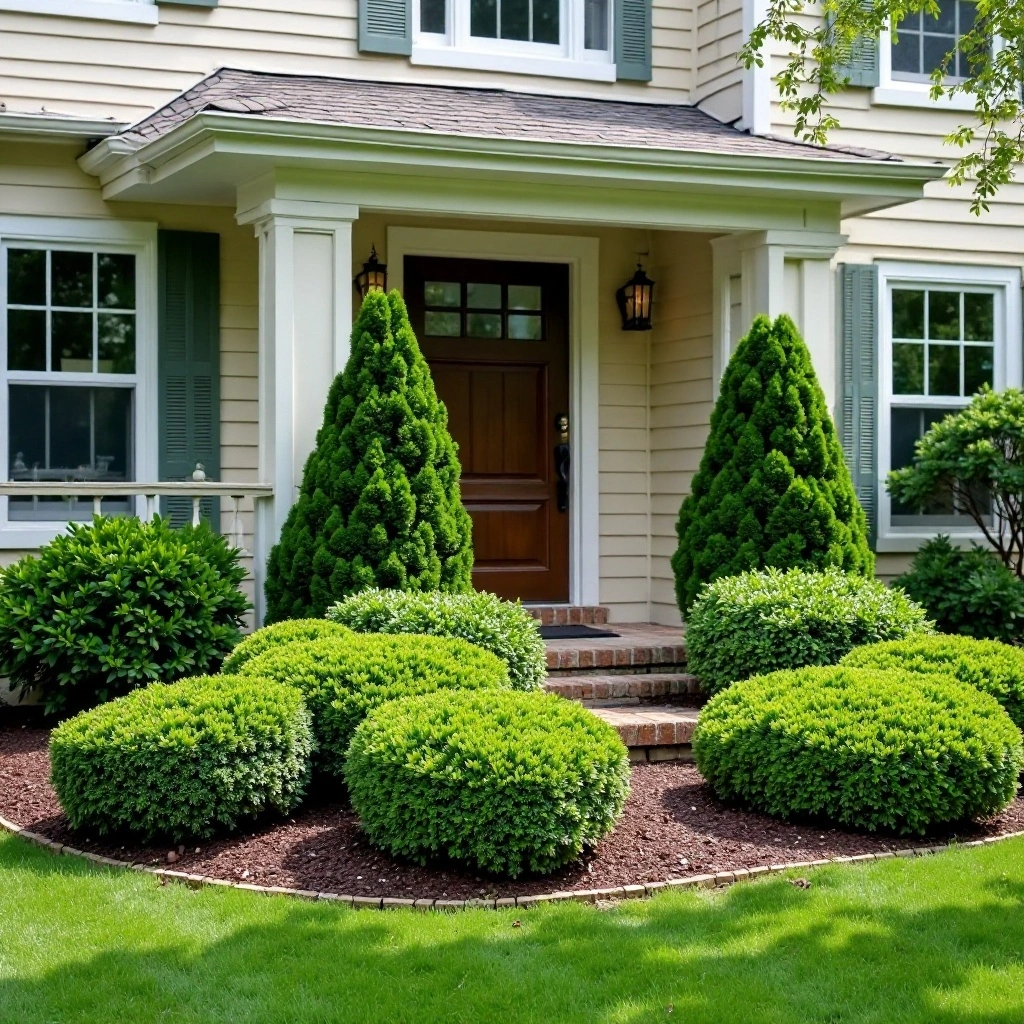
Idea #5 — Lush Evergreen Foundation Plantings
Overview
Foundation plantings — the shrubs and plants that grow along the base of your home — are the backbone of any curb appeal landscape. When done well with a mix of evergreens, they make your house look grounded, connected to the earth, and well cared for year-round.
Evergreens are especially valuable because they keep the yard looking full and intentional even in winter when other plants go dormant. Shop on Amazon
How to Style It:
- Use rounded forms (boxwood, yew) near doorways and upright forms (arborvitae, junipers) at corners
- Choose dwarf or slow-growing varieties to avoid constant pruning battles
- Alternate textures: fine-leafed vs. broad-leafed plants add visual richness
- Keep consistent mulch across all beds — fresh dark mulch makes everything look cleaner and sharper
Where to Use It:
Along the entire front foundation, with extra attention to corners and the doorway flanks.
✅ Pro Tip:
Don’t let foundation shrubs grow to cover windows or press against siding. Keep them trimmed 12–18 inches away from the home’s exterior for airflow, pest prevention, and visual clarity.
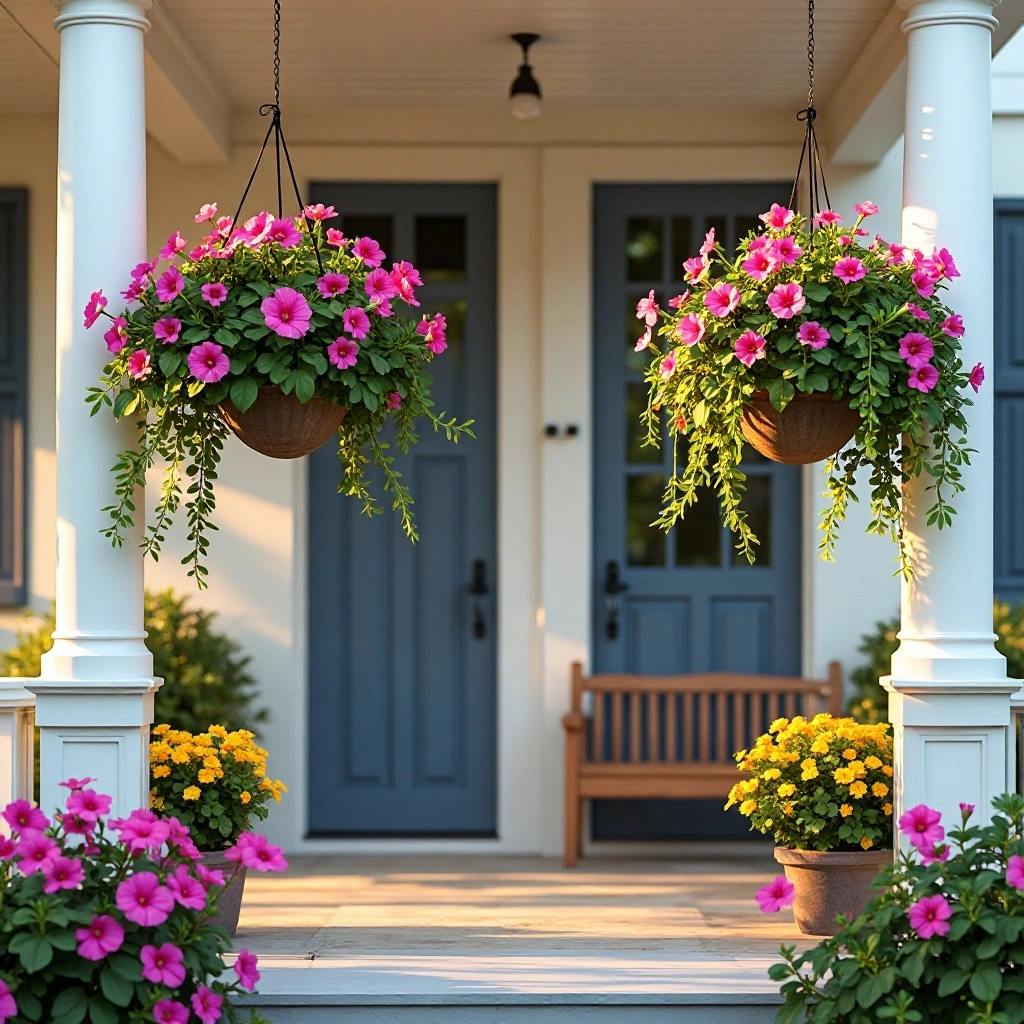
Idea #6 — A Welcoming Front Porch with Hanging Baskets
Overview
A front porch is one of the most powerful curb appeal assets a home can have — but only if it’s styled thoughtfully. Hanging baskets filled with cascading flowers transform a bare porch into a warm, lived-in space that signals hospitality and genuine care. They add color at eye level, soften architectural lines, and create a sense of abundance that photos simply cannot help but love. Shop on Amazon
How to Style It:
- Use large 14–16 inch baskets — smaller ones dry out fast and look sparse
- Choose trailing varieties (bacopa, lobelia, sweet potato vine) that cascade dramatically
- Hang baskets at eye level, roughly 6–7 feet from the floor
- Use two or three baskets evenly spaced for a balanced, intentional look
- Water daily in summer — porch baskets dry out faster than ground-level plantings
Where to Use It:
Covered front porches, pergolas, and porch overhangs with adequate beam strength for weight.
✅ Pro Tip:
Add a slow-release fertilizer to your basket potting mix at planting time. It feeds the plants for the entire season and keeps blooms fuller and longer without the chore of weekly fertilizing.
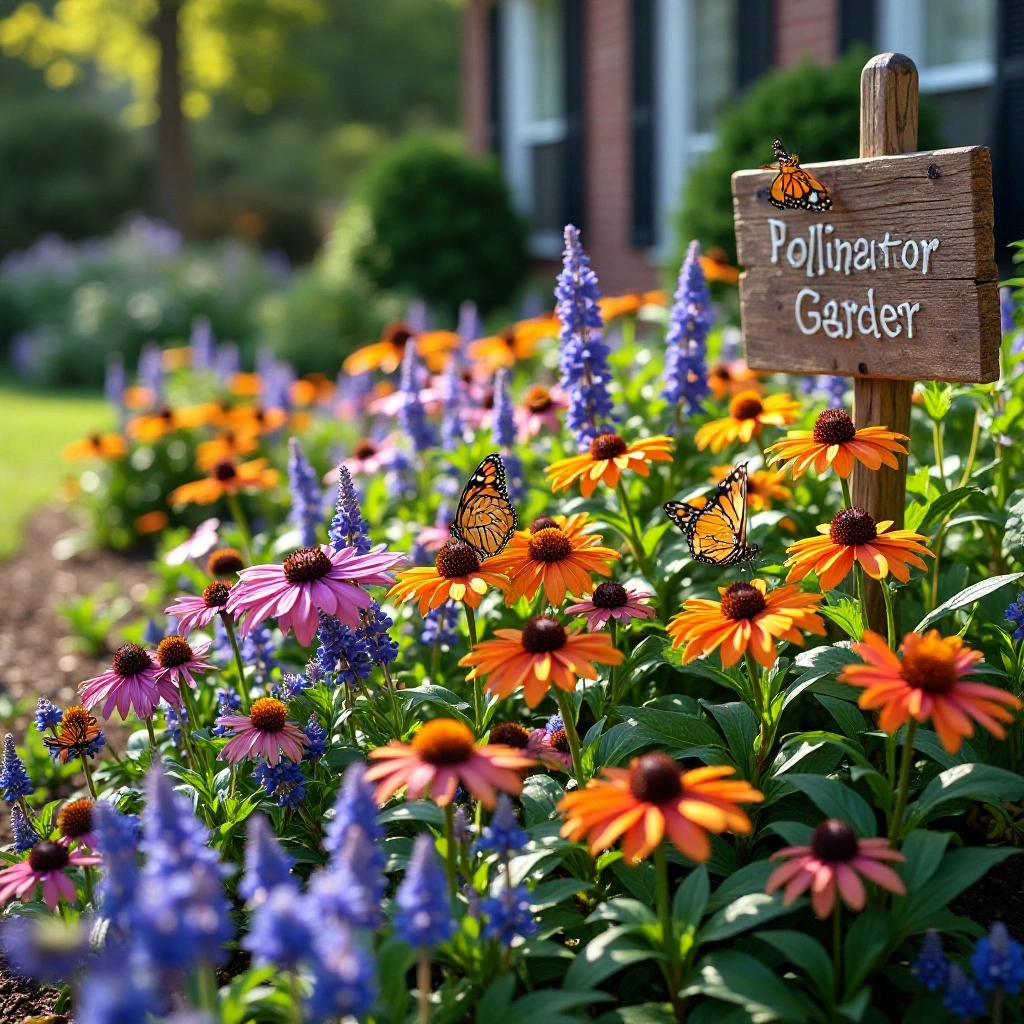
Idea #7 — A Pollinator Garden with Native Wildflowers
Overview
Native wildflower gardens are having a major moment in modern landscaping — and for very good reason. They’re stunning, low-maintenance, drought-tolerant, and they attract butterflies, bees, and hummingbirds that add living movement and energy to your front yard.
A well-designed pollinator garden looks like an artful meadow: intentionally wild, colorful, and deeply connected to the natural world around it. Shop on Amazon
How to Style It:
- Use at least 5–7 native species for visual diversity and ecological value
- Include plants that bloom in different seasons for year-round interest
- Add a simple garden marker or sign — it educates neighbors and adds a charming touch
- Keep a neat border edge around the bed so it reads as intentional, not neglected
- Place taller species at the back and let shorter ones fill the foreground naturally
Where to Use It:
Front yard garden beds, areas where traditional turf grass has been removed, or a sunny side yard.
✅ Pro Tip:
Check your local extension office for a list of regionally native plants. Native species thrive with far less water and fertilizer than exotic ornamentals — and they support your local ecosystem far more powerfully.
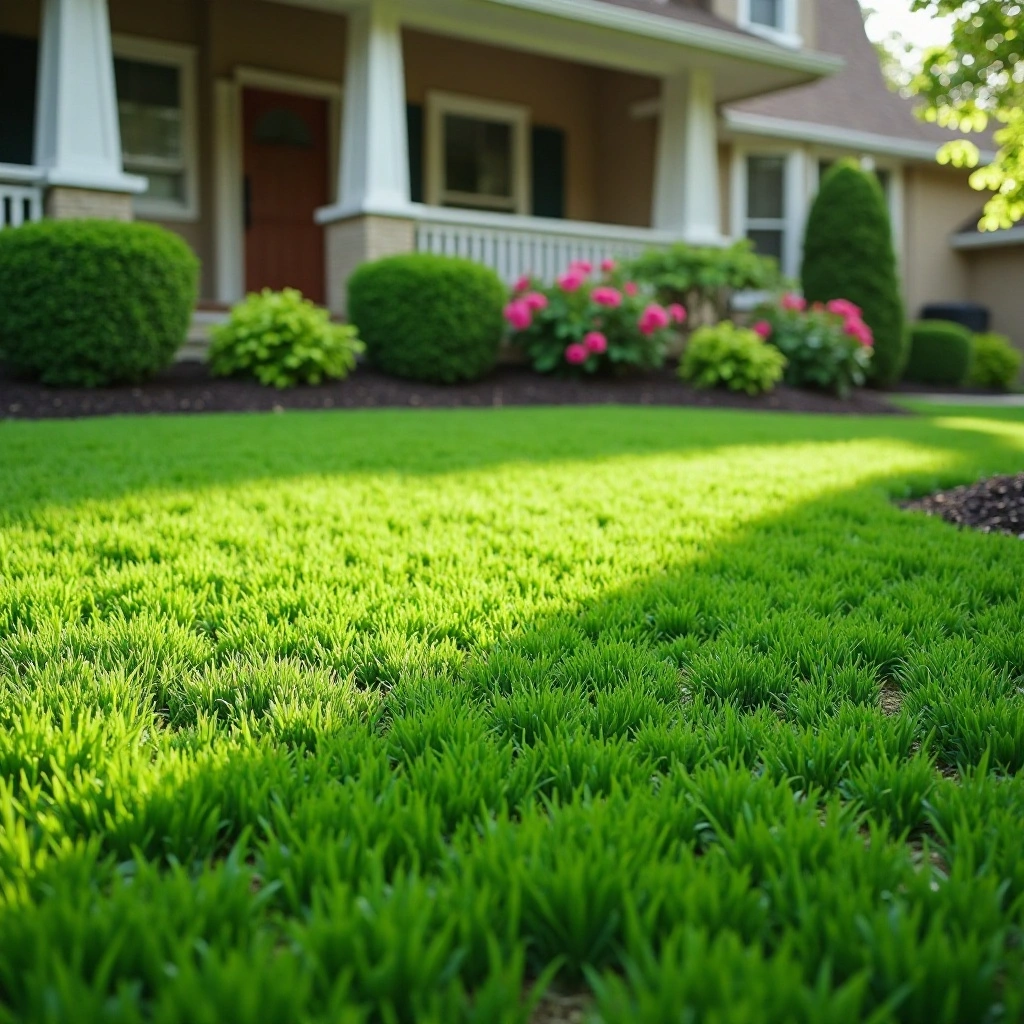
Idea #8 — A Clean, Defined Lawn Edge
Overview
This one is deceptively simple — and wildly effective. A clean, crisp edge where your lawn meets your garden beds is one of the most noticeable upgrades you can make to your curb appeal. It signals care and precision, makes beds look intentional, and creates a visual separation that makes everything around it look better. Professional landscapers know: the edge IS the design. Shop on Amazon
How to Style It:
- Use a half-moon edger or rotary edger for a clean, precise line
- Create a slight V-groove between lawn and bed — it keeps grass from creeping in
- Install steel, aluminum, or composite edging for a permanent, clean separation
- Re-edge every 4–6 weeks during the growing season to maintain crispness
Where to Use It:
Along all garden beds, walkway borders, driveway edges, and tree rings throughout the front yard.
✅ Pro Tip:
After edging, blow or sweep clippings away from the bed — loose clippings on dark mulch look sloppy and undo all your hard work instantly.
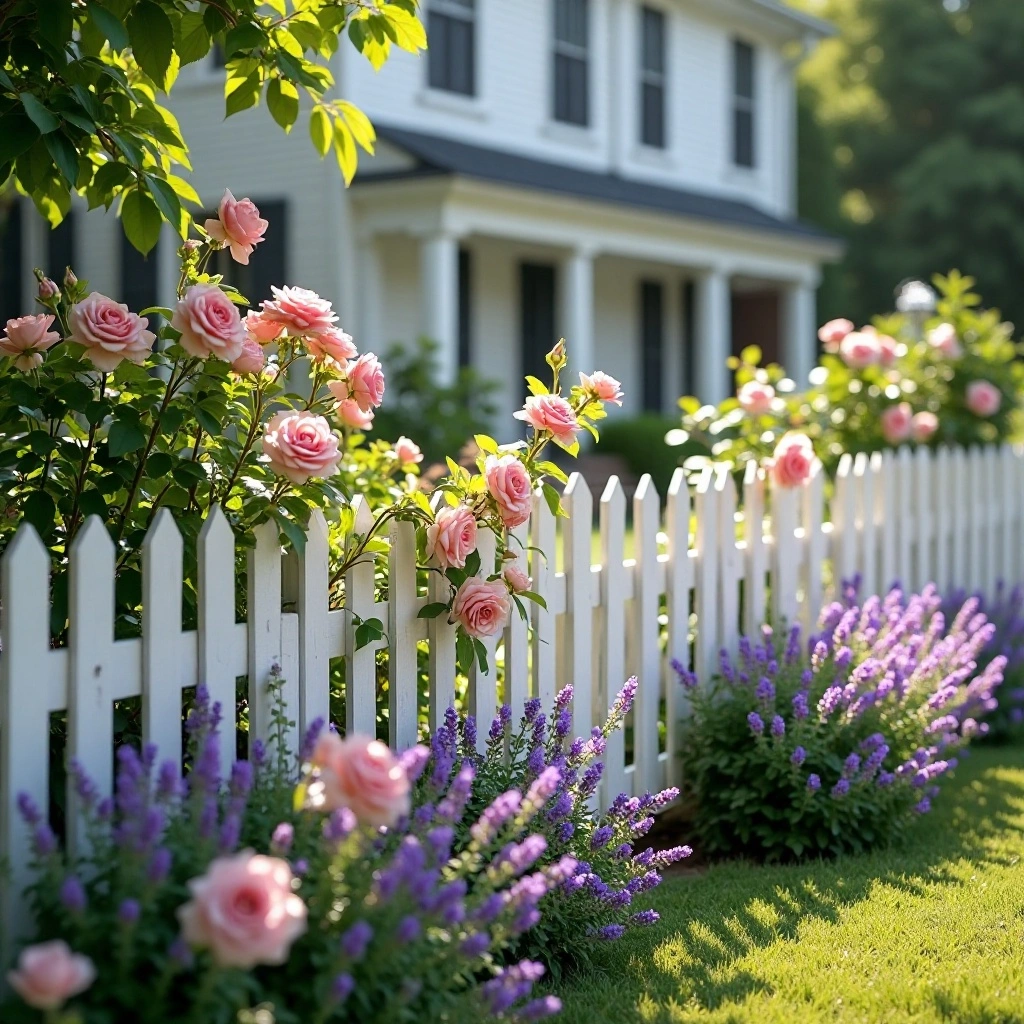
Idea #9 — A Classic Fence with a Garden Border
Overview
A well-chosen fence frames your property like a picture frame frames a painting. It creates a sense of enclosure, adds architectural interest, and gives climbing or trailing plants a beautiful structure to work with. A white picket fence with cottage garden plantings is timeless; a sleek black metal fence with clipped hedges reads as refined and modern. Either way, a fence elevates the entire landscape composition beautifully. Shop on Amazon
How to Style It:
- Choose fence height and style to match your home’s architecture (picket for cottage/colonial, metal for modern/craftsman)
- Plant climbers or ramblers (roses, clematis, honeysuckle) to soften and animate the fence over time
- Use low garden borders along the interior fence line to create depth
- Paint or stain fences in classic colors — white, black, or dark green rarely go out of style
Where to Use It:
Front yard perimeter, along the driveway, or as a graceful property line separator.
✅ Pro Tip:
A fence’s posts are often the first thing to rot or lean. Invest in pressure-treated lumber or metal post sleeves from the start — they add years to your fence’s life and save costly repairs down the road.
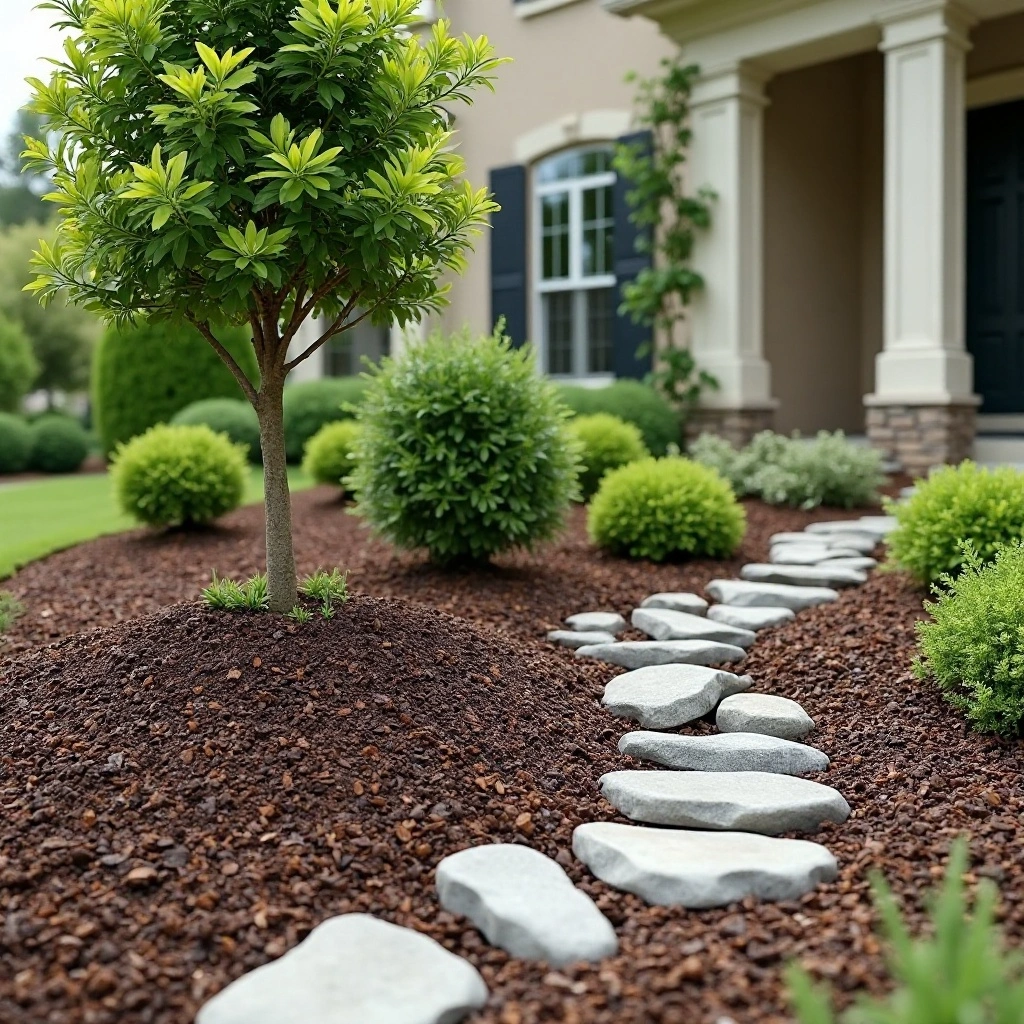
Idea #10 — Decorative Mulch and River Rock Accents
Overview
Fresh mulch is the single fastest way to make a front yard look professionally maintained. It refreshes tired beds, suppresses weeds, retains soil moisture, and creates a rich, dark contrast that makes plants pop. Adding strategic river rock accents — around trees, along pathways, or in dry creek beds — elevates the design further by adding texture, permanence, and low-maintenance beauty that looks great all year. Shop on Amazon
How to Style It:
- Apply mulch 2–3 inches deep — never more, which can suffocate plant roots
- Choose dark-colored mulch (dark brown, black) for maximum contrast against green plants
- Use river rock rings around tree bases instead of mulch for a cleaner, longer-lasting look
- Create dry creek beds with river rock in areas prone to erosion or poor drainage
Where to Use It:
All front yard garden beds, tree rings, pathways, and slope stabilization areas.
✅ Pro Tip:
Refresh mulch once a year (early spring is ideal). Old mulch doesn’t need to be removed — just top it up. A freshly mulched yard in early spring can completely transform winter’s dull, tired appearance practically overnight.
Idea #11 — Ornamental Grasses for Texture and Movement
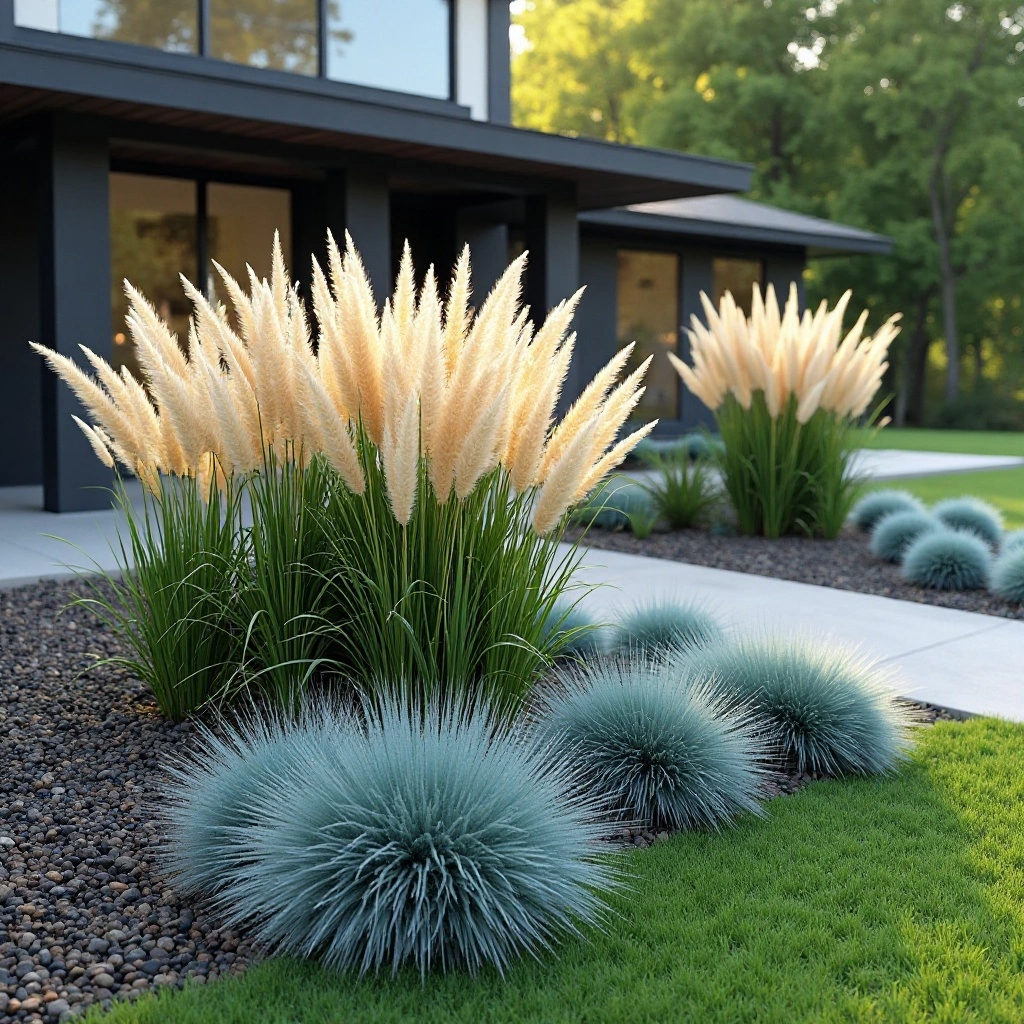
Overview
Ornamental grasses are one of the most underutilized tools in curb appeal landscaping. They offer something nearly no other plant category can: constant movement. Even on a still day, the slightest breeze sets ornamental grasses swaying elegantly.
They provide incredible texture, four-season interest including beautiful winter plumes, and structural mass that ties a landscape together. Modern and traditional yards alike benefit dramatically from their inclusion. Shop on Amazon
How to Style It:
- Use tall grasses (Karl Foerster, Miscanthus) as structural anchors at bed corners
- Use low or mid grasses (Blue Fescue, Blue Oat Grass) as textural groundcovers
- Plant grasses in odd-number clusters of 3 or 5 for a natural, designed look
- Leave winter plumes standing until early spring — they provide beauty and wildlife habitat
Where to Use It:
Foundation beds, driveway borders, as a privacy screen along property edges, or as a lawn alternative in sunny areas.
✅ Pro Tip:
Cut back ornamental grasses hard in late winter before new growth emerges — trim to about 4–6 inches from the ground. This keeps them healthy, prevents woody dead centers, and lets fresh growth emerge beautifully.
Idea #12 — Window Boxes Overflowing with Color
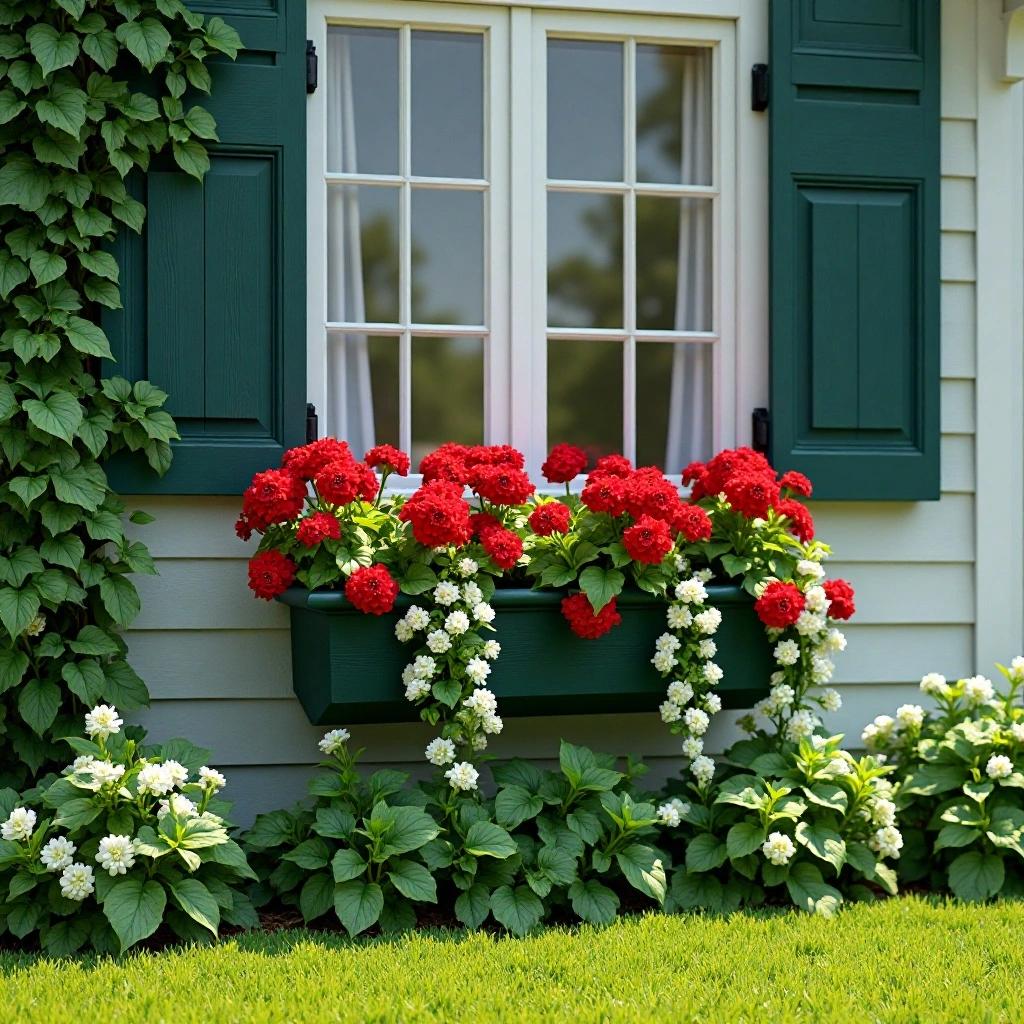
Overview
Window boxes are the secret weapon of European streetscapes — and they work just as powerfully on American homes. They add color directly to the facade, draw the eye to architectural details, and signal that someone genuinely loves and cares for their home. Even a modest house with plain windows is instantly transformed by well-planted window boxes bursting with seasonal blooms. Shop on Amazon
How to Style It:
- Choose boxes in dark, neutral colors (black, dark green, bronze) that complement the siding
- Use the thriller-filler-spiller formula just like container planters
- Coordinate colors with your front door or shutters for a cohesive, pulled-together look
- Choose lightweight plastic liners inside decorative boxes to make seasonal replanting easier
Where to Use It:
Front-facing windows, garage windows, and any exterior window visible from the street.
✅ Pro Tip:
Mount window boxes slightly below the windowsill rather than at the sill line — this allows plants to grow up and frame the window from below, creating a lush, European look that photographs beautifully.
Idea #13 — A Grand Driveway Entrance with Flanking Plantings
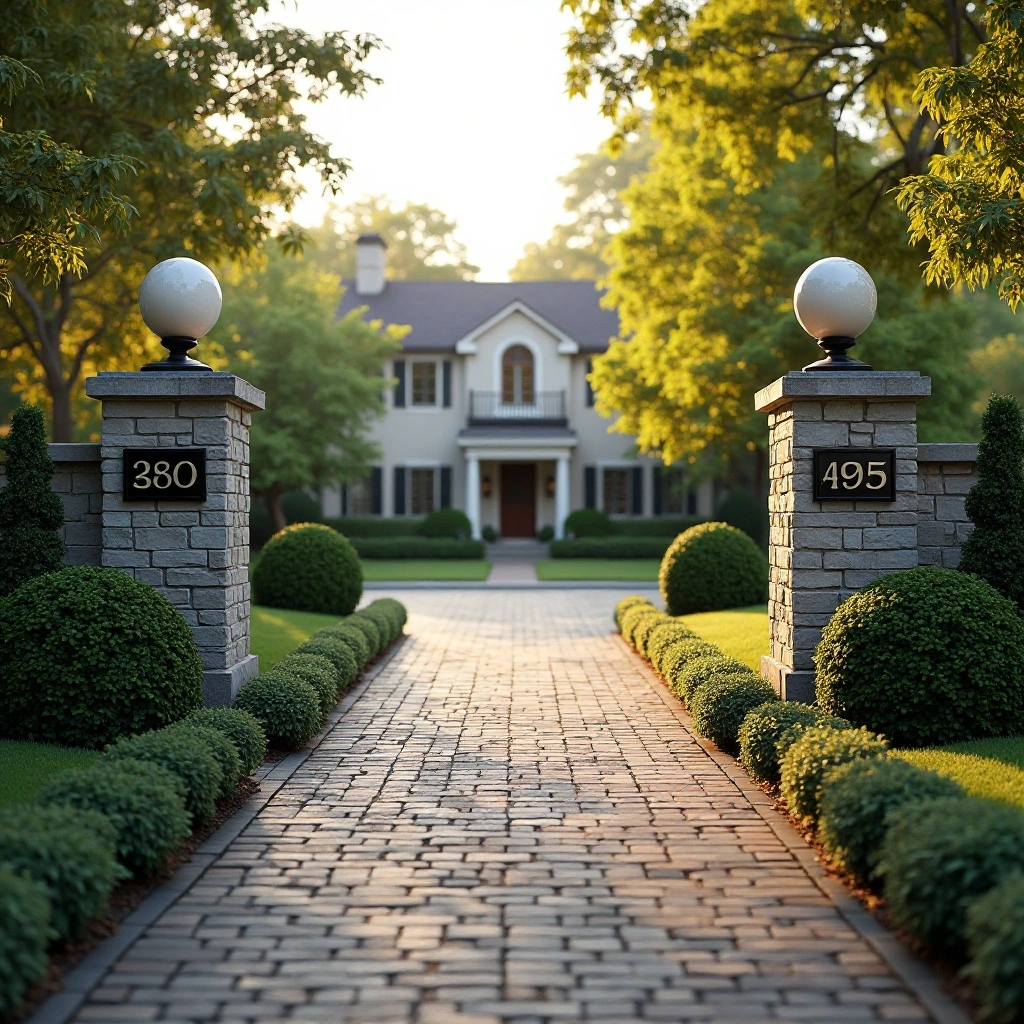
Overview
Your driveway entrance is the gateway to your entire property — and most homeowners completely ignore it. Flanking the driveway entrance with matching plantings, statement shrubs, or small ornamental trees creates an arrival sequence that makes pulling into your own home feel like an event.
This technique is used on every luxury estate and can be adapted beautifully for any property size or budget. Shop on Amazon
How to Style It:
- Use matching plantings on both sides for symmetry and a formal, intentional feel
- Consider low pillars or posts with address numbers to add architectural structure
- Line the driveway edges with low, tidy groundcovers (liriope, ajuga, creeping jenny)
- Plant specimen shrubs or small trees at the entrance corners for maximum visual impact
Where to Use It:
The street-to-driveway transition point, and along the driveway sides leading up to the home.
✅ Pro Tip:
If budget allows, add solar or wired pillar cap lights at the driveway entrance. Illuminated entry pillars look extraordinary at night and signal a level of care that dramatically boosts perceived home value.
BONUS — Idea #14: A Seasonal Color Rotation Strategy
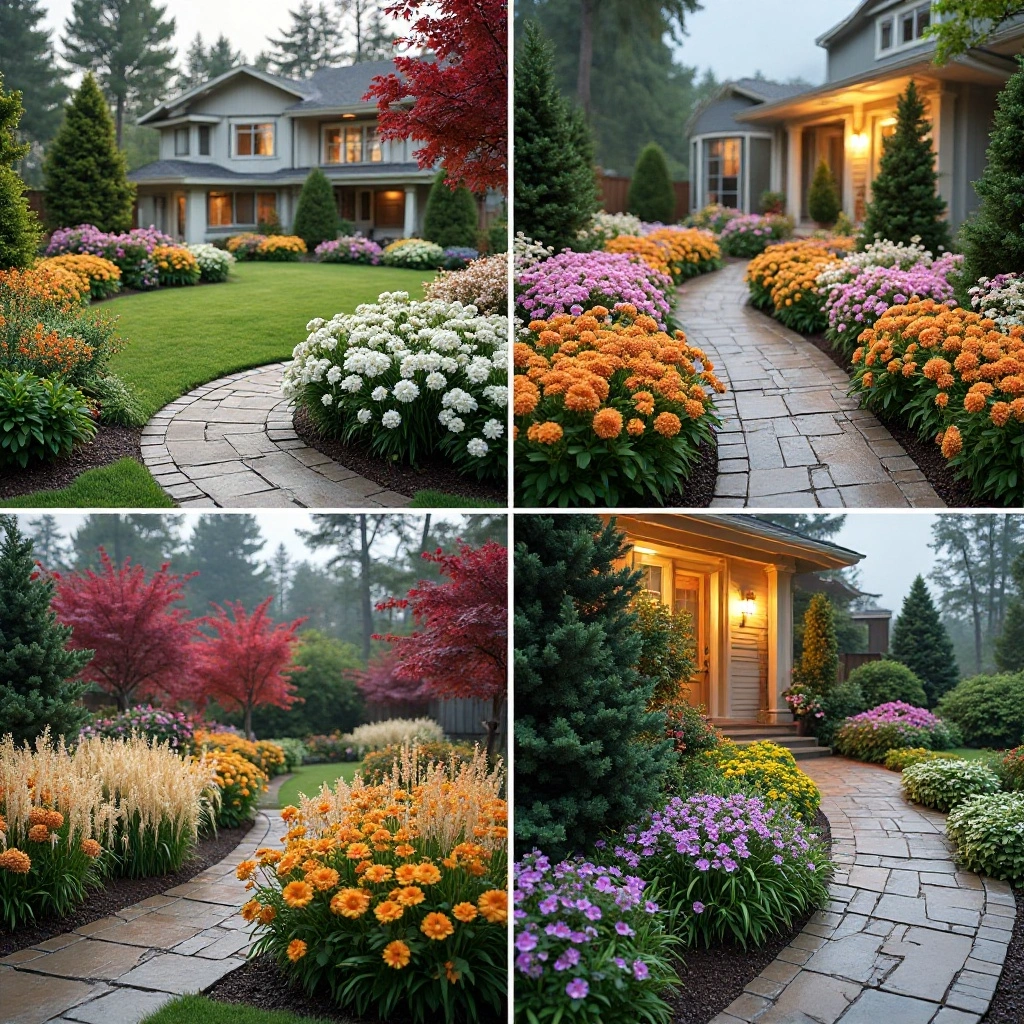
Overview
The most stunning front yards don’t just look great in summer — they look intentional in every season. A seasonal color rotation strategy means planning your plantings so something is always blooming, always colorful, always alive.
Spring tulips and pansies give way to summer perennials, which transition into fall mums and ornamental kale, which carry through winter alongside your evergreens. This is how you create a yard that neighbors admire 365 days a year. Shop on Amazon
How to Style It:
- Spring: bulbs (tulips, daffodils) + cool-season annuals (pansies, snapdragons)
- Summer: warm-season perennials + annuals (coneflowers, petunias, zinnias, salvia)
- Fall: ornamental grasses + late-season perennials + seasonal containers (mums, ornamental kale)
- Winter: evergreen structure + berry-producing shrubs + warm landscape lighting
Where to Use It:
Applied across all front yard beds and containers as an overarching planning strategy.
✅ Pro Tip:
Keep a simple planting calendar — even just a note on your phone — marking what to plant or replace each season. The homeowners with the most beautiful yards aren’t doing more work; they’re doing the right work at the right time.
Common Mistakes to Avoid
1. Planting too close to the foundation. Plants need space to grow, and so does your home. Shrubs and perennials pressed against siding trap moisture, invite pests, and require constant pruning. Always check the mature size of plants before installing.
2. Ignoring a plant’s mature size. The most common and costly landscape mistake. That cute little shrub from the nursery can become a 10-foot monster within 5 years. Research every plant’s ultimate height and width before committing.
3. Skipping irrigation planning. Beautiful plantings die without consistent water, especially in the first two growing seasons. Plan for irrigation — whether a drip system, soaker hoses, or a consistent watering schedule — from day one.
4. Volcano mulching. Piling mulch up against tree trunks and shrub stems causes rot, disease, and pest problems. Keep mulch 3 inches from the base of any plant and no deeper than 3 inches overall.
5. No clear focal point. A yard with equal attention on everything reads as chaotic. Every great landscape has a clear focal point — a statement tree, a bold front door, a dramatic planter — that draws the eye first.
6. Forgetting nighttime appeal. Without landscape lighting, even a stunning daytime yard disappears after dark. Add even a few well-placed lights and the transformation is remarkable — and often worth more than any daytime upgrade.
7. Seasonal gaps. Planning only summer color leaves your yard looking bare and abandoned in other seasons. Think in four seasons, not one.
Frequently Asked Questions
Q: How much should I budget for a curb appeal landscaping project? A: A basic refresh (fresh mulch, new edging, seasonal planters) can run $200–$500. A full landscape redesign with hardscaping and lighting can range from $3,000–$15,000+. Start with the highest-impact, lowest-cost upgrades first and build from there.
Q: What are the highest-ROI curb appeal upgrades? A: Studies consistently show that fresh mulch + clean edging, statement front planters, pathway lighting, and a freshly painted front door offer the best return — often recouping 100%+ of their cost in home value perception.
Q: How do I choose plants that work for my climate? A: Find your USDA Plant Hardiness Zone and check it against every plant tag before buying. Choosing zone-appropriate plants is the single biggest factor in whether your landscape thrives or struggles.
Q: Can I achieve great curb appeal in a small front yard? A: Absolutely. Small yards benefit enormously from intentional design — because every element is visible. Focus on a clean layered foundation bed, one bold statement plant, a defined pathway, and thoughtful lighting.
Q: When is the best time to plant for curb appeal? A: Spring and fall are universally the best planting seasons in most climates. Cooler temperatures reduce transplant stress and give plants time to establish before extreme heat or cold.
Q: How do I reduce maintenance while keeping the yard beautiful? A: Choose low-maintenance plants (native perennials, ornamental grasses, evergreen shrubs), invest in mulch and edging to suppress weeds, and install a simple drip or soaker hose irrigation system. The right plants in the right place take care of themselves.
Q: Does landscaping really add home value? A: Yes. According to multiple real estate studies, mature trees, professional foundation plantings, clean hardscaping, and outdoor lighting consistently contribute to appraised home value. Curb appeal has been shown to account for as much as 7% of a home’s sale price.
Final Thoughts
Great curb appeal landscaping isn’t about perfection — it’s about intention. Every idea in this guide can be scaled up or down to fit your space, budget, and personal style. Start with one or two high-impact changes — a freshly edged bed, a statement planter, some pathway lights — and build from there. Your home tells a story the moment someone sees it. With the right landscaping choices, make sure it’s a story worth reading.