15+ Deck Privacy Ideas – Upgrade Your Outdoor Space
Your deck should feel like an extension of your home — a place to relax, entertain, and breathe. But when neighbors, foot traffic, or street views constantly remind you that you’re being watched, it’s hard to truly unwind. The good news? Privacy doesn’t have to mean fences and frustration.
Whether you’re working with a small urban balcony or a sprawling backyard deck, the right privacy solution can completely change how you use your outdoor space. From lush living walls to sleek modern screens, today’s privacy ideas are as beautiful as they are functional.
The 15+ Best Deck Privacy Ideas
1. Tall Potted Plants & Privacy Hedges
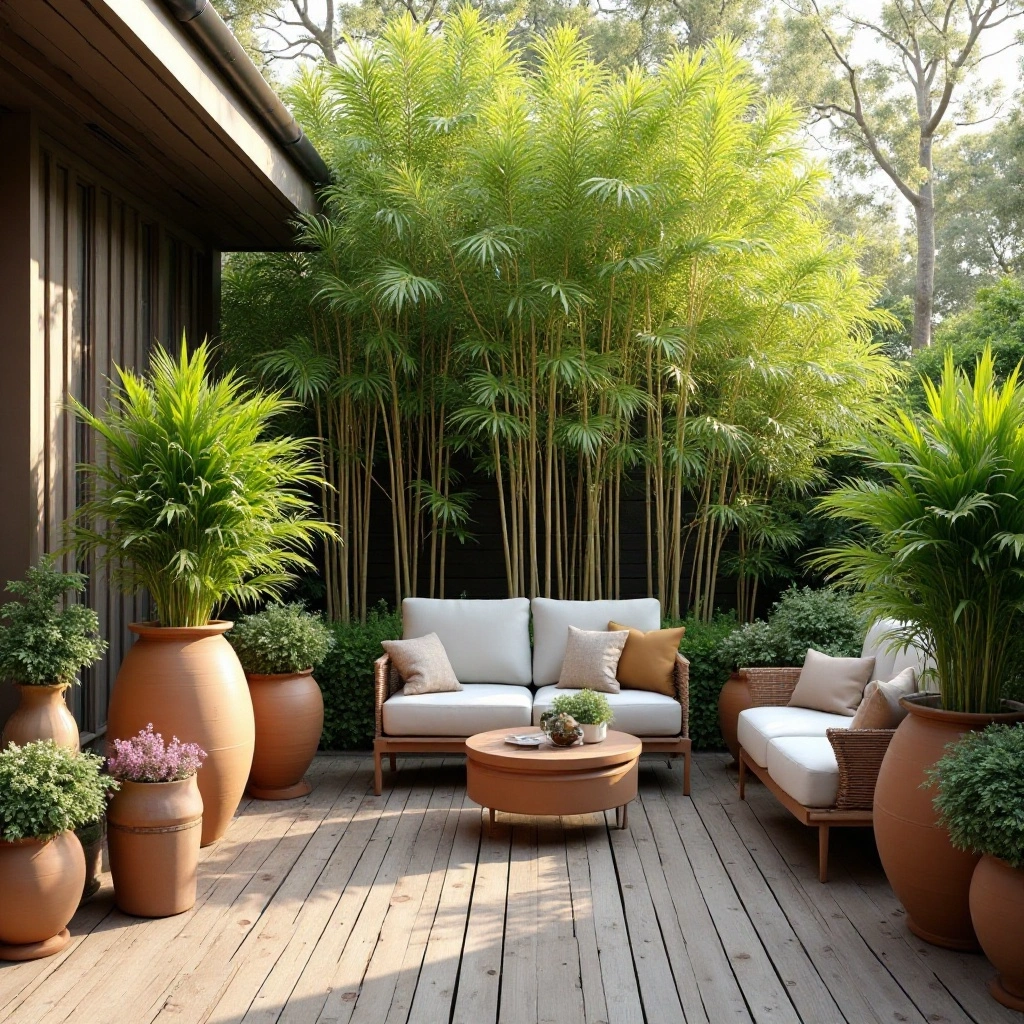
The natural privacy wall that grows with you.
Strategically placed tall planters filled with ornamental grasses, bamboo, or dense shrubs create a soft, living boundary between your deck and the outside world. Unlike hard structures, plants move gently in the breeze and add color, fragrance, and texture — making your deck feel like a private garden retreat rather than a walled-off space. Shop on Amazon
How to Style It:
- Use varying heights — mix 6-ft bamboo with mid-height grasses and low trailing plants for depth
- Choose planters that match your deck’s aesthetic (terracotta for rustic, concrete for modern)
- Line planters along the deck perimeter or cluster in corners for maximum coverage
- Add LED stake lights for evening ambiance
Where to Use It: Along deck railings, property lines, or in front of sightlines from neighboring windows
Pro Tip: Choose clumping bamboo (not running bamboo) to prevent invasive spreading. Phyllostachys and Fargesia varieties stay contained and grow beautifully in containers.
2. Wooden Privacy Screen Panels
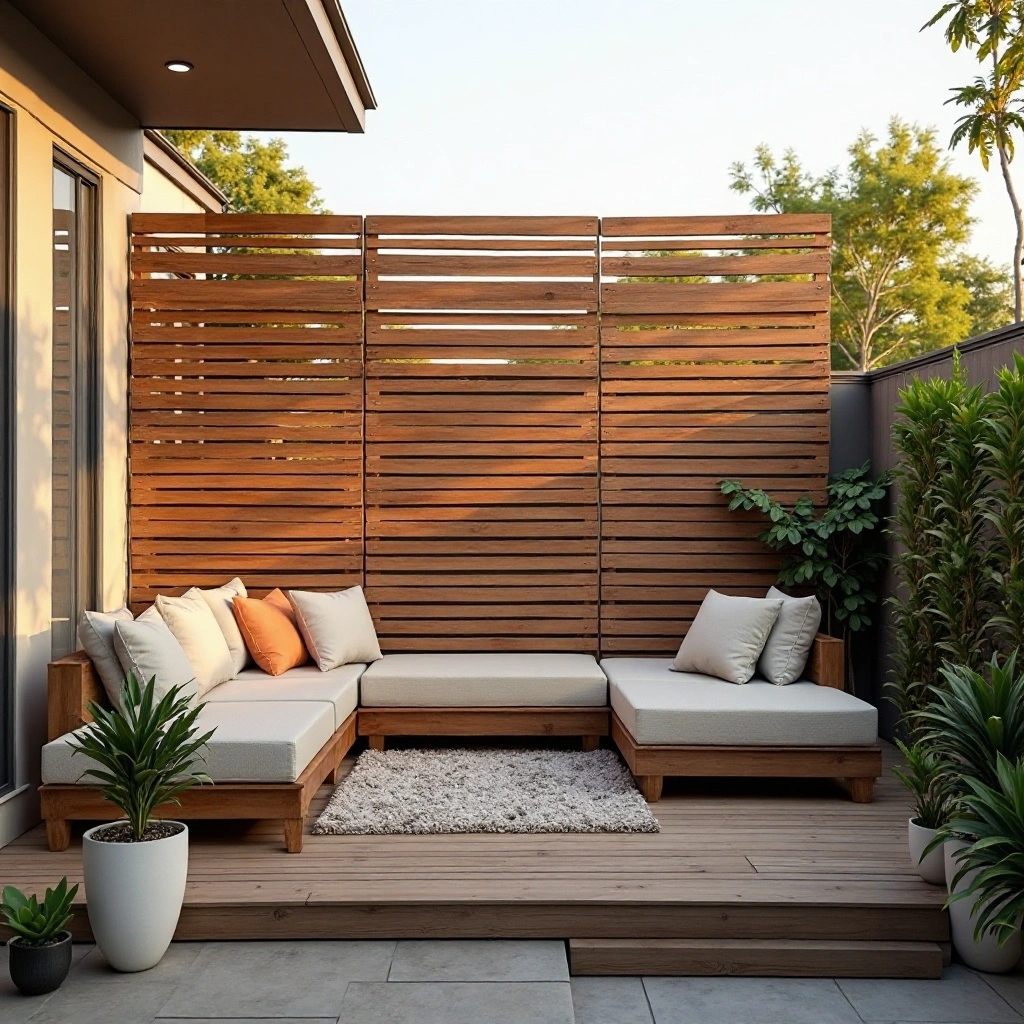
Modern structure meets natural warmth.
Slatted wooden panels are one of the most popular deck privacy ideas solutions — and for good reason. They offer adjustable visibility, excellent wind blocking, and a design-forward aesthetic that elevates the entire deck. Whether you go with a horizontal, vertical, or diagonal slat pattern, these panels make a bold visual statement while keeping your space private. Shop on Amazon
How to Style It:
- Space slats 1–2 inches apart to balance privacy with airflow and light
- Use cedar, teak, or pressure-treated pine for weather resistance
- Stain in natural tones (walnut, ebony) or paint to match your home exterior
- Mount in modular sections so panels can be repositioned or replaced
Where to Use It: Along one or two sides of the deck, behind seating areas, or as a partial divider between zones
Pro Tip: Angling slats slightly downward (about 5–10 degrees) blocks views from above while still allowing light and airflow — perfect for raised decks or two-story neighborhoods.
3. Living Green Wall (Vertical Garden)
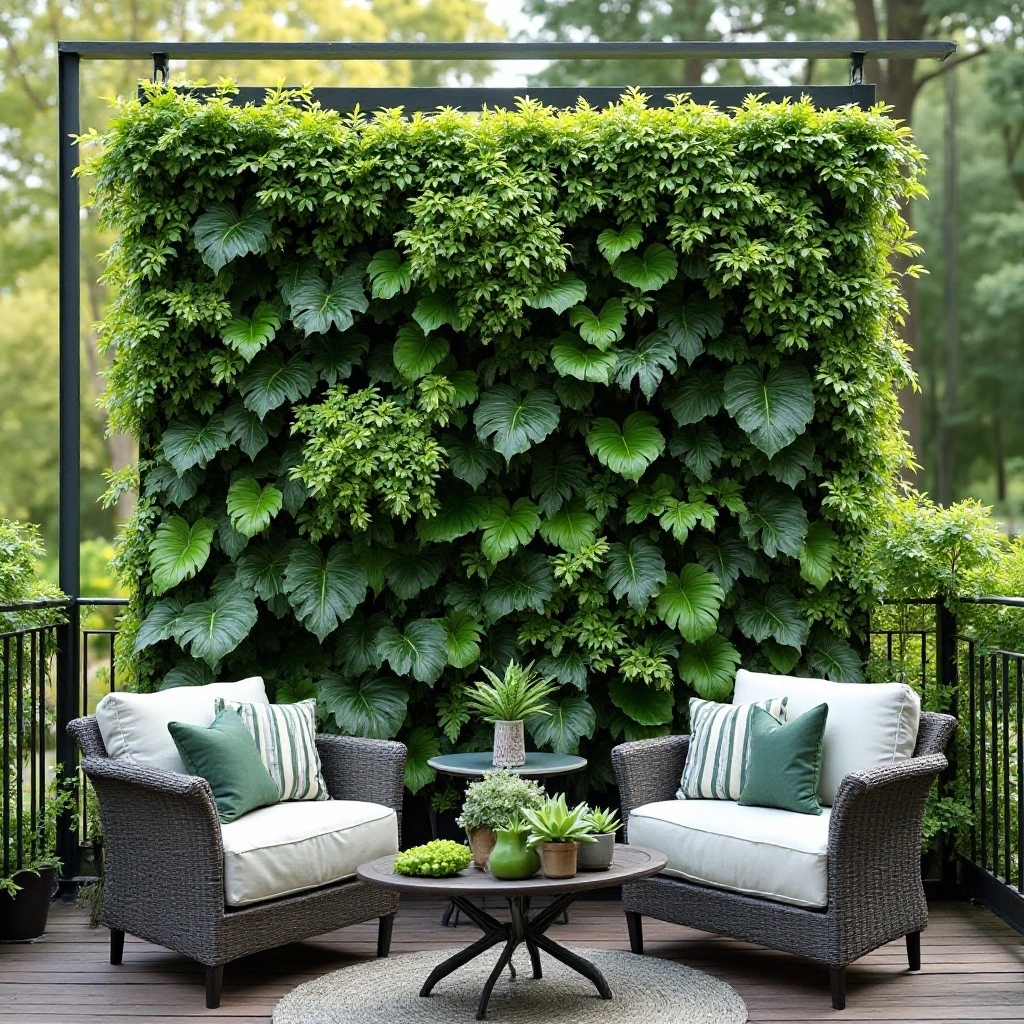
The showstopper that doubles as a privacy screen.
A vertical living wall brings dramatic visual impact while solving your privacy problem naturally. Mounted panels or trellis systems planted with ferns, succulents, ivy, or herbs create a lush, Instagram-worthy wall of green that insulates, cools, and screens your deck all at once. It’s the ultimate two-in-one upgrade. Shop on Amazon
How to Style It:
- Use modular felt pocket systems for easy planting and watering
- Mix textures: trailing ivy + upright ferns + flowering plants for visual richness
- Install a drip irrigation system to make maintenance effortless
- Frame with weather-resistant black steel for a high-end look
Where to Use It: As a full accent wall on one side of the deck, or across a fence-line for a dramatic boundary statement
Pro Tip: Choose plants rated for your climate zone. In hot climates, succulents and native grasses thrive with little water. In shade-heavy decks, ferns and hostas perform beautifully.
4. Pergola with Climbing Vines
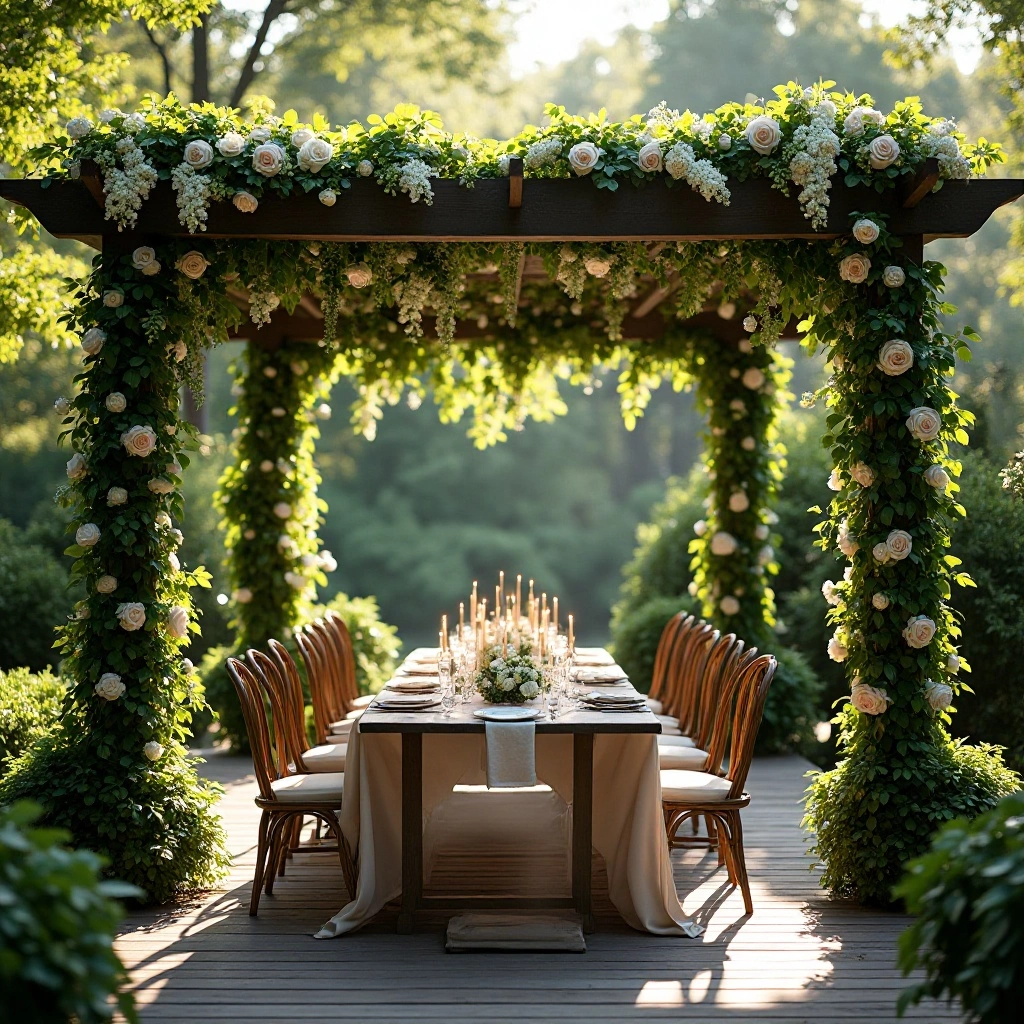
The romantic overhead canopy that blocks views from above.
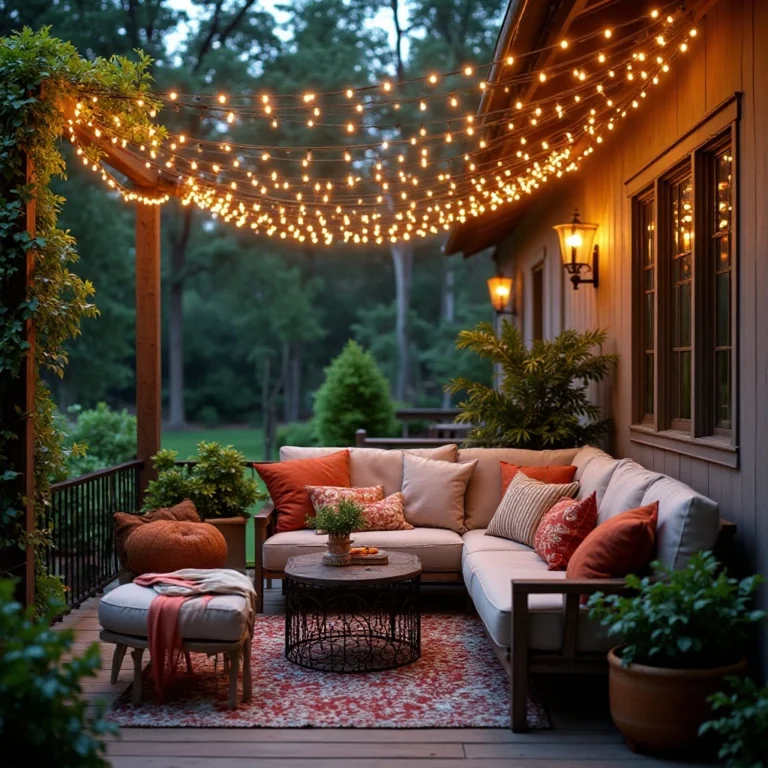
A pergola defines your deck space with architectural elegance while giving climbing plants — like wisteria, roses, or passion flower — a framework to create natural overhead privacy. Over time, the canopy fills in, creating a dappled shade retreat that feels like an outdoor room. Pair with string lights for evening magic. Shop on Amazon
How to Style It:
- Choose fast-growing climbers: Virginia creeper, clematis, or jasmine for quick coverage
- Add retractable shade cloth panels between rafters for extra sun/rain protection
- String bistro lights along beams for a warm evening atmosphere
- Use powder-coated black aluminum for a low-maintenance, modern look
Where to Use It: As a central overhead structure for dining or lounge areas; especially useful for blocking upper-floor neighbor views
Pro Tip: Plant climbers in large ground-level containers next to pergola posts — this allows you to remove or relocate them if needed, without committing to in-ground planting.
5. Bamboo Privacy Fencing Rolls
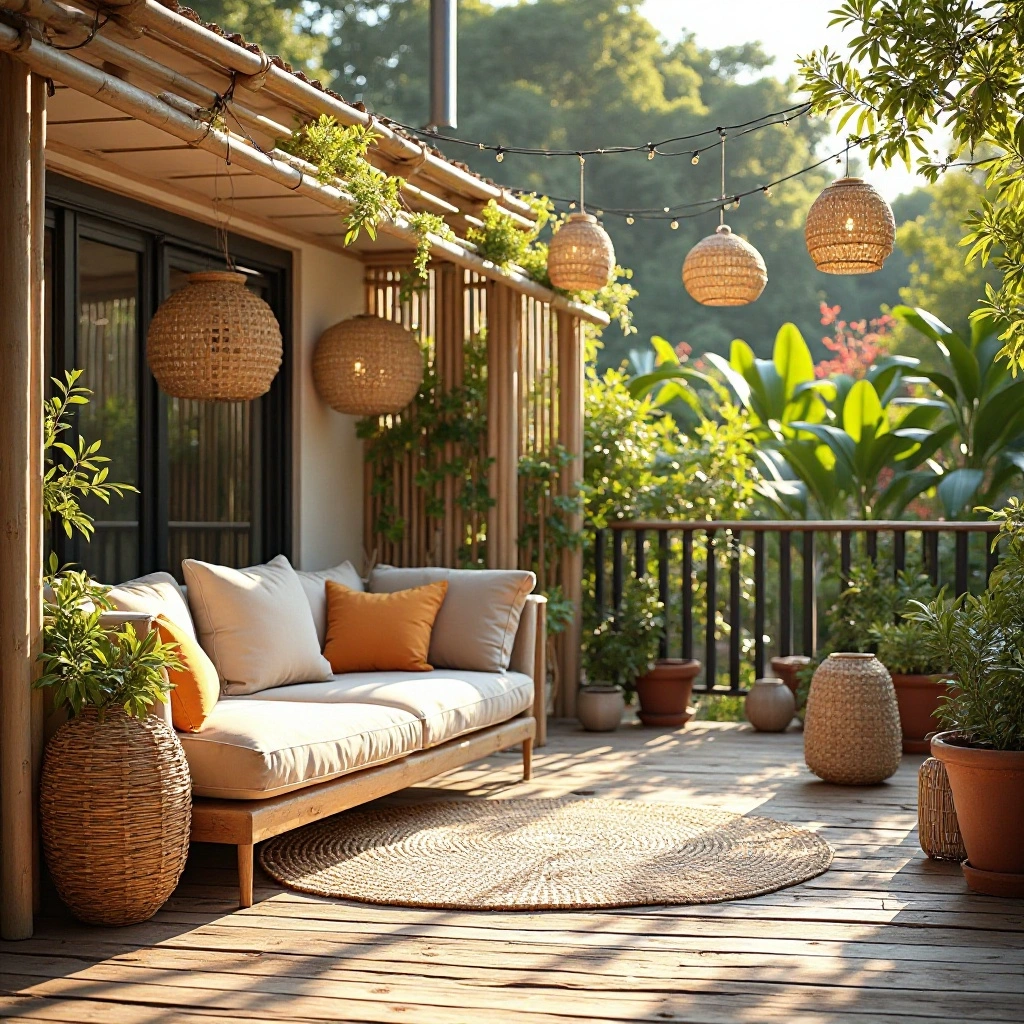
Fast, affordable, and surprisingly stylish.
Bamboo roll fencing is one of the easiest and most cost-effective privacy solutions on the market. Unrolled along an existing railing, fence, or new posts, bamboo creates an instant tropical screen with warm natural tones. It installs in under an hour, requires no special tools, and can be cut to any size — making it ideal for renters or those who want a quick refresh. Shop on Amazon
How to Style It:
- Layer two rolls offset by 6 inches for a denser, more opaque screen
- Seal with outdoor bamboo oil annually to prevent cracking and graying
- Pair with warm accent colors — terracotta, rust, deep green — for a cohesive look
- Add outdoor string lights along the top edge for evening warmth
Where to Use It: Along balcony railings, chain-link fences, or any perimeter that needs fast, temporary screening
Pro Tip: Zip-tie bamboo rolls to your existing railing frame rather than stapling — this makes removal and replacement far easier when it weathers out (typically every 3–5 years).
6. Outdoor Curtains & Drapes
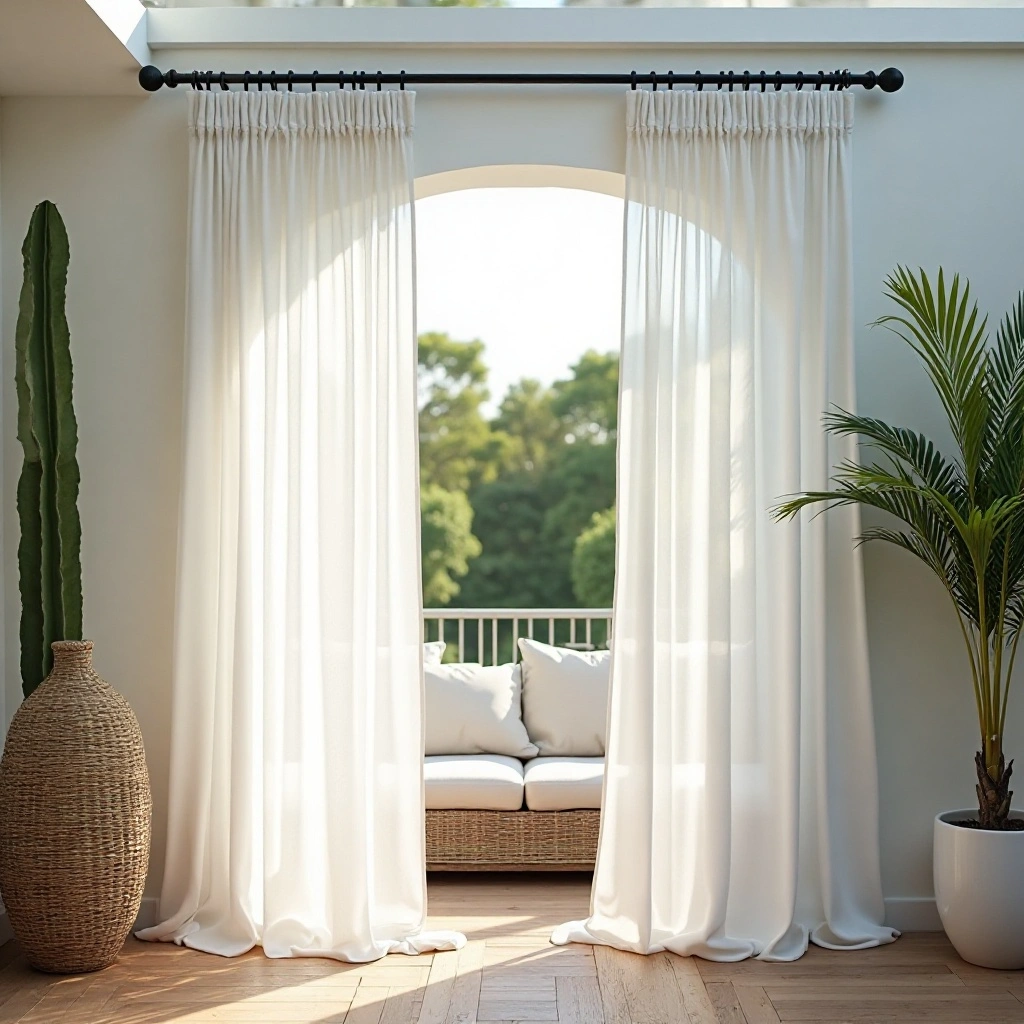
Soft, breezy, and endlessly stylish.
Outdoor curtains are the most flexible privacy solution on this list — they can be drawn for full screening, pushed aside for open-air entertaining, or styled to frame a view rather than block it. Available in weather-resistant fabrics from sheer linen to heavy canvas, they transform a plain deck into an elegant outdoor room in minutes. Shop on Amazon
How to Style It:
- Hang from a tension wire or sturdy outdoor curtain rod between pergola posts or wall anchors
- Choose curtains that are 1.5–2x the width of the opening for a full, gathered look
- Select Sunbrella or polyester outdoor fabric rated for UV and moisture resistance
- Layer sheer panels behind blackout panels for day/night versatility
Where to Use It: Between pergola or porch posts, along one open side of a covered deck, or framing a deck doorway
Pro Tip: Sew small grommets at the bottom hem and anchor to the deck with discrete stainless steel hooks — this prevents fabric from billowing wildly in wind while still allowing movement.
7. Lattice Privacy Panels
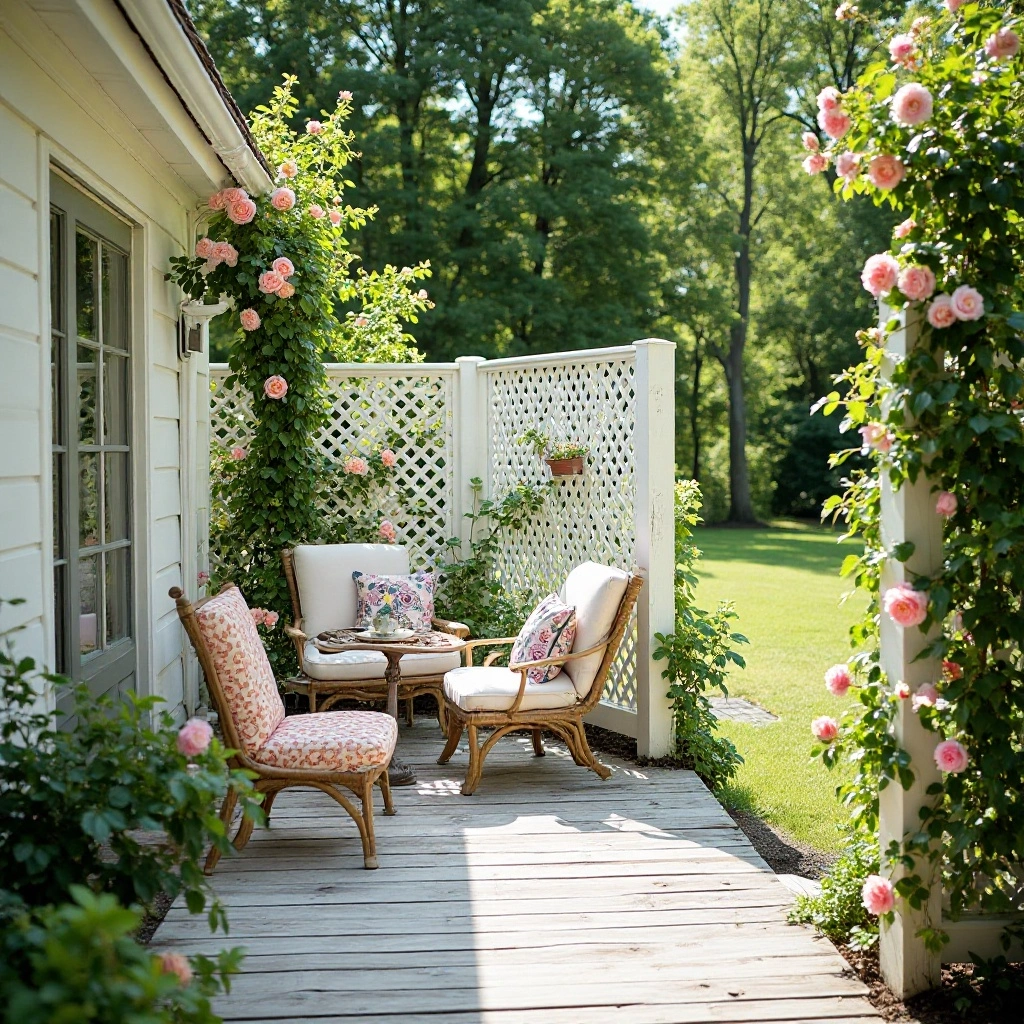
A classic choice with modern possibilities.
Lattice panels have been a go-to privacy solution for decades — and the design world has fully caught up. Today’s lattice comes in metal, vinyl, and composite materials with geometric patterns far beyond the classic diamond grid. Use it as a standalone screen, a trellis base, or a decorative frame for plants. It offers partial privacy while keeping the space light and open. Shop on Amazon
How to Style It:
- Paint white for a classic cottage look, or matte black for a contemporary feel
- Train climbing plants through the lattice to fill in coverage over time
- Use as a backdrop for hanging planters, lanterns, or wall art
- Combine with a solid lower panel for more privacy at sitting height
Where to Use It: Along the lower deck perimeter, as a mid-height partition between zones, or as a decorative backing for a garden feature
Pro Tip: Choose composite or PVC lattice over wood — it never rots, splinters, or needs painting, and looks just as elegant while lasting decades longer.
8. Outdoor Privacy Shades & Roll-Down Screens
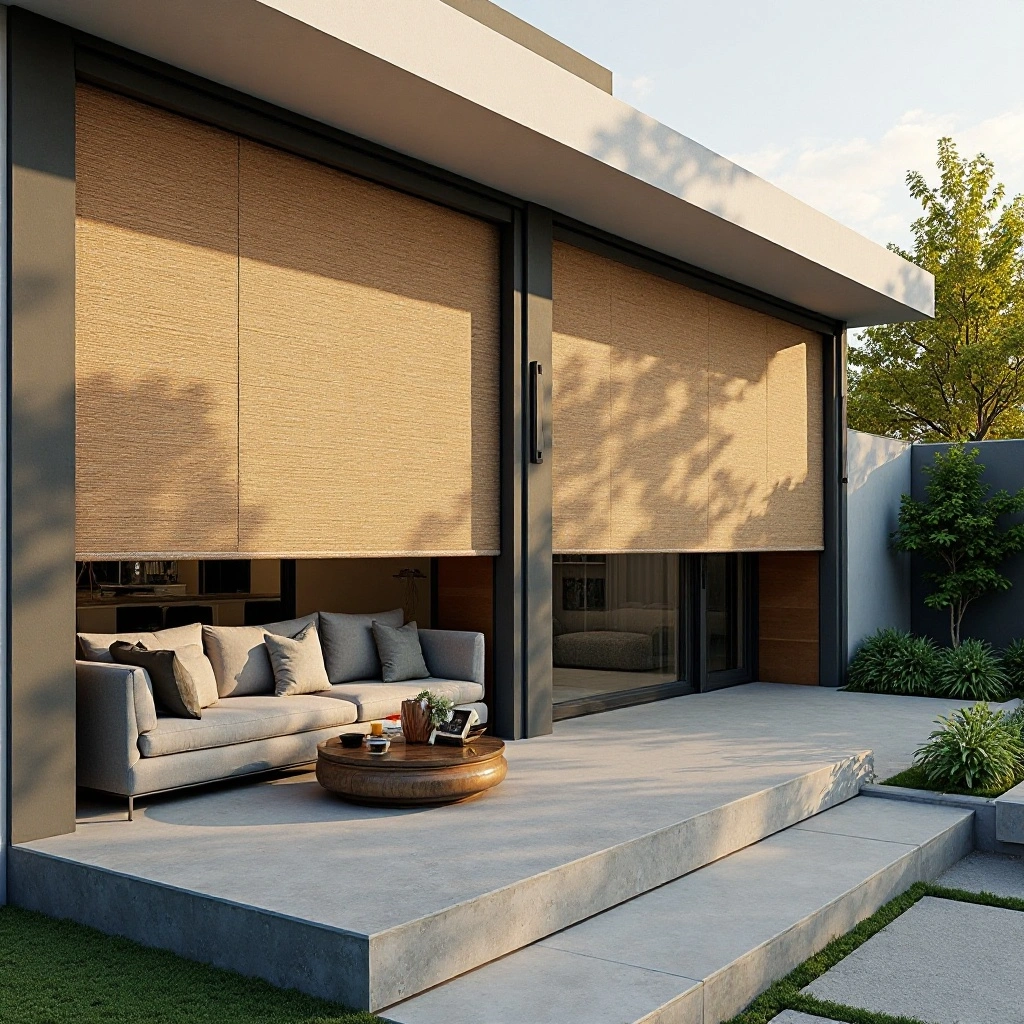
Total control at the pull of a cord.
Motorized or manual roll-down shades give you complete, instant privacy on demand. Mounted above the deck opening, they extend down to fully screen the space — and roll away completely when you want an open view. Available in mesh, woven wood, or solar screen materials, they offer varying levels of opacity and UV protection to suit your needs. Shop on Amazon
How to Style It:
- Choose solar mesh fabric to block views while maintaining some outward visibility
- Install motorized versions with a smart home remote or app control for maximum convenience
- Match hardware finish (black, bronze, or stainless) to your deck’s existing fixtures
- Add a valance box at the top for a custom, built-in appearance
Where to Use It: Under pergolas, on open deck sides, or across large openings between posts
Pro Tip: For coastal or high-wind areas, select shades with a wind-sensor auto-retract function to prevent damage — many motorized systems now include this as a standard feature.
9. Raised Planter Boxes with Trellis
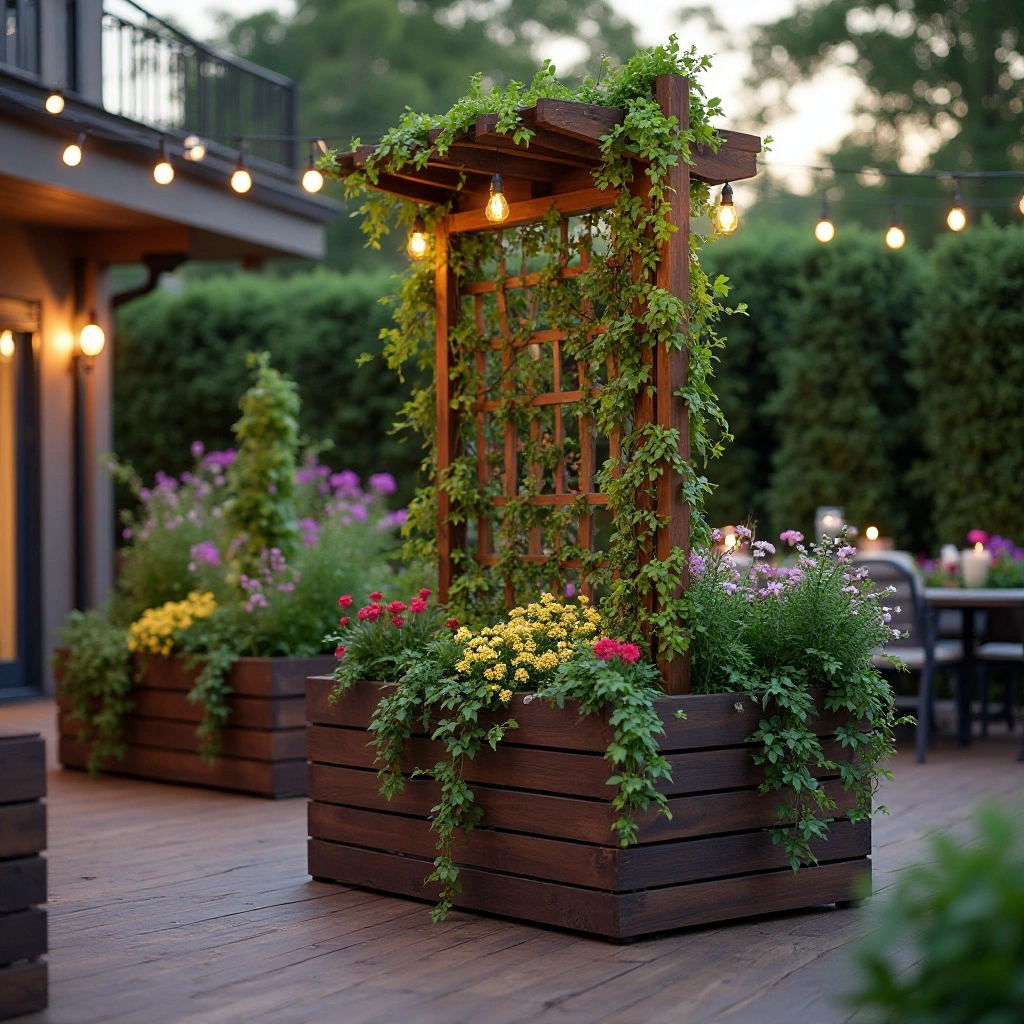
The built-in privacy wall that earns its keep.
Combining raised planter boxes with an attached trellis is one of the smartest privacy investments you can make. The planter anchors the structure to the deck, the trellis provides a framework for climbing plants, and the whole thing serves as a living, growing privacy wall. It’s functional, beautiful, and gets better every single year. Shop on Amazon
How to Style It:
- Build or buy planter boxes 18–24 inches deep to support larger plants
- Attach a 6-ft cedar or metal trellis panel directly to the back of the planter
- Plant fast-growing climbers: Black-eyed Susan vine, sweet pea, or climbing hydrangea
- Add LED strip lighting along the top edge for evening illumination
Where to Use It: Along deck edges, at corners, or as a freestanding room divider on a large deck
Pro Tip: Line the interior of wooden planter boxes with pond liner before filling — this dramatically extends the wood’s lifespan by preventing direct contact between wet soil and timber.
10. Metal Privacy Screen Panels
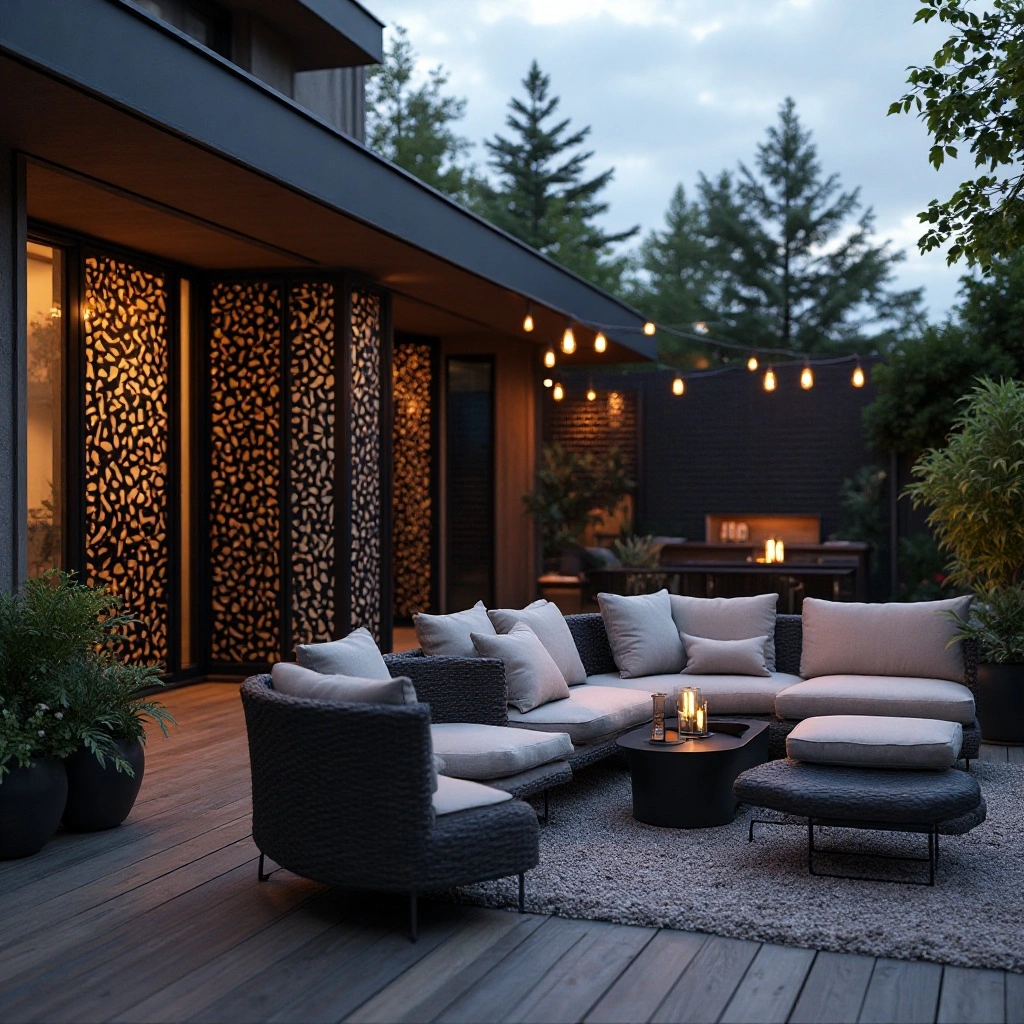
Industrial edge meets outdoor elegance.
Powder-coated steel or Corten weathering steel panels are having a massive moment in outdoor design. Laser-cut with geometric, floral, or abstract patterns, metal privacy screens offer partial screening with visual artistry. They’re incredibly durable, require zero maintenance, and function as permanent sculpture as much as privacy solution. Shop on Amazon
How to Style It:
- Choose a pattern that complements your home’s architecture (botanical for traditional, geometric for modern)
- Use Corten steel for an evolving rust patina that develops beautifully over time with no upkeep
- Mount with standoffs to create a shadow-gap detail and dramatic shadow play
- Pair with simple, neutral furniture to let the panels be the focal point
Where to Use It: As a feature wall on one side of the deck, a gate panel, or a mounted backdrop for an outdoor dining area
Pro Tip: Order your panels in modular 4×4 ft sections — this makes shipping, installation, and future replacement far more manageable than a single large panel.
11. Patio Umbrellas with Side Panels
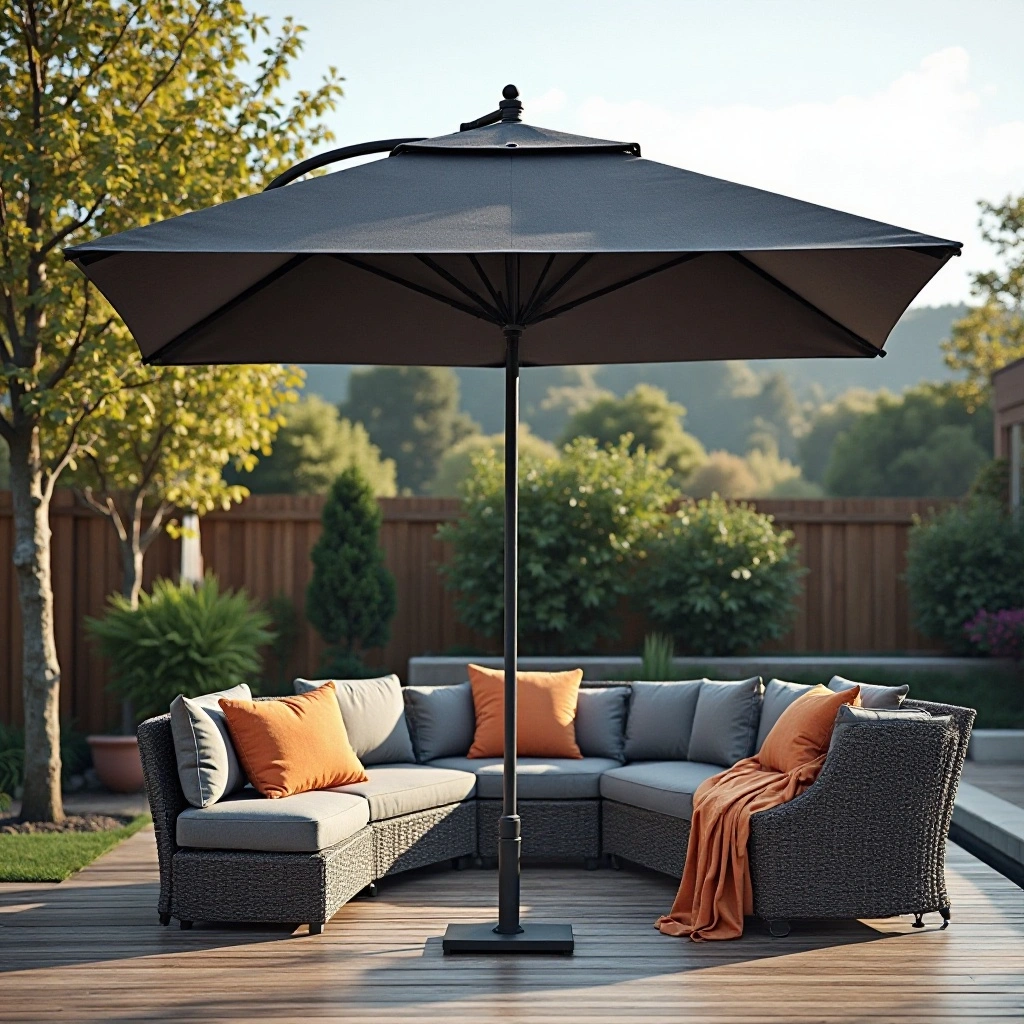
Instant shade and privacy in one.
A high-quality cantilever umbrella paired with removable side panels is the ultimate flexible privacy setup. It requires no permanent installation, works on any deck surface, and can be adjusted to block sun or eyes from any direction. New models come with side curtain attachments that zip on and off in minutes — perfect for renters or anyone who wants options. Shop on Amazon
How to Style It:
- Choose a weighted base of at least 50 lbs for stability in wind
- Select side panels in a color that ties into your outdoor cushion and rug palette
- Opt for cantilever (offset post) style for maximum positioning flexibility
- Pair with a side table and outdoor rug to complete the “outdoor room” feel
Where to Use It: Over any seating or dining area where you need privacy from above or the side
Pro Tip: When not using side panels, remove and store them in a weatherproof bag — UV and moisture exposure significantly shortens fabric life when left attached all season.
12. Privacy Stone or Concrete Block Wall
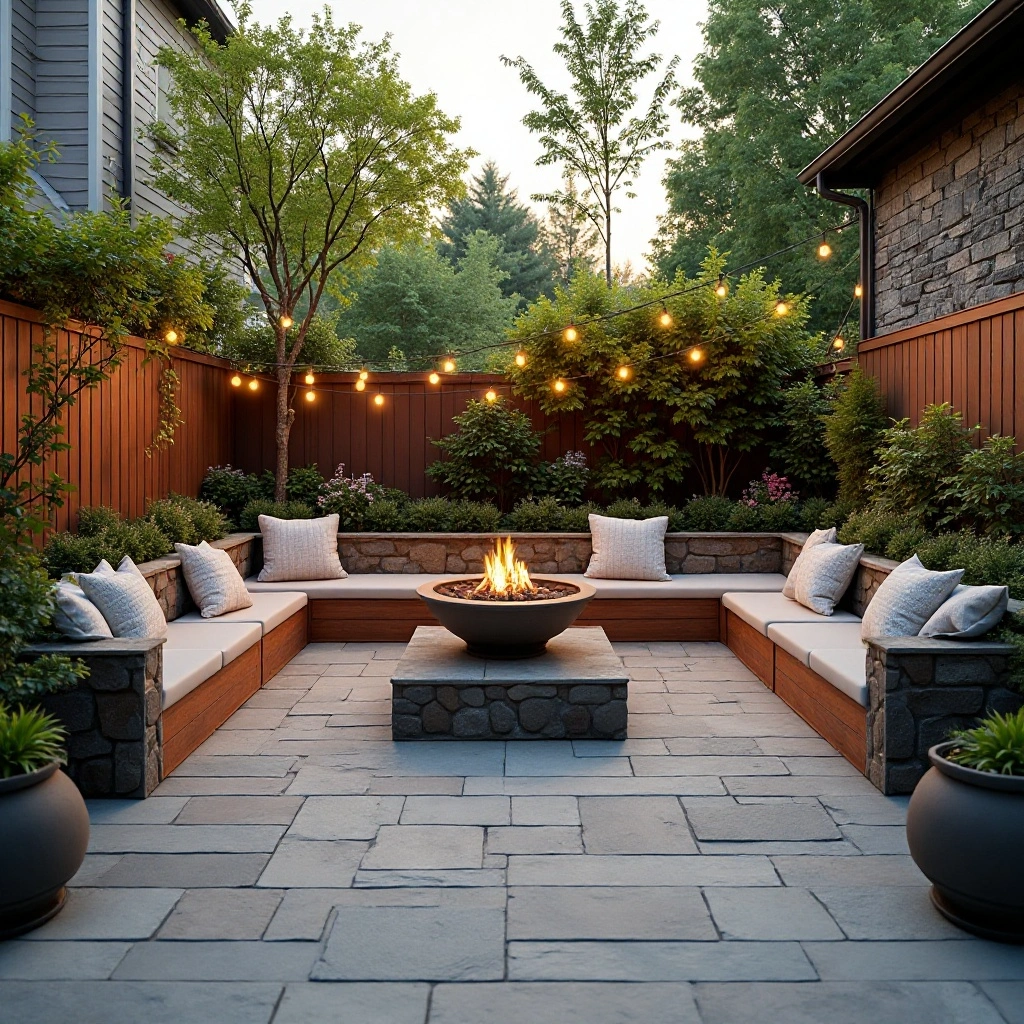
The permanent, architectural solution.
For those who want a true “outdoor room,” a partial privacy wall built from stone, brick, or concrete blocks creates a solid, permanent boundary that also adds incredible architectural value. At 4–5 feet high, a half-wall provides seated privacy without feeling like a bunker — and doubles as a planter base, seating ledge, or outdoor kitchen wall. Shop on Amazon
How to Style It:
- Cap the top with a wood or concrete ledge for seating and planting opportunities
- Integrate built-in planters or niches into the wall design at the planning stage
- Use natural stone or textured concrete block for warmth and texture
- Light from below with recessed ground-level fixtures for evening drama
Where to Use It: Along the primary exposed side of the deck, as a backdrop for an outdoor kitchen, or as a structural anchor for a pergola
Pro Tip: Hire a structural engineer if building above 4 feet — footing requirements increase significantly, and it’s worth doing once, correctly, for a permanent structure.
13. Hanging Planters & Overhead Plant Canopy
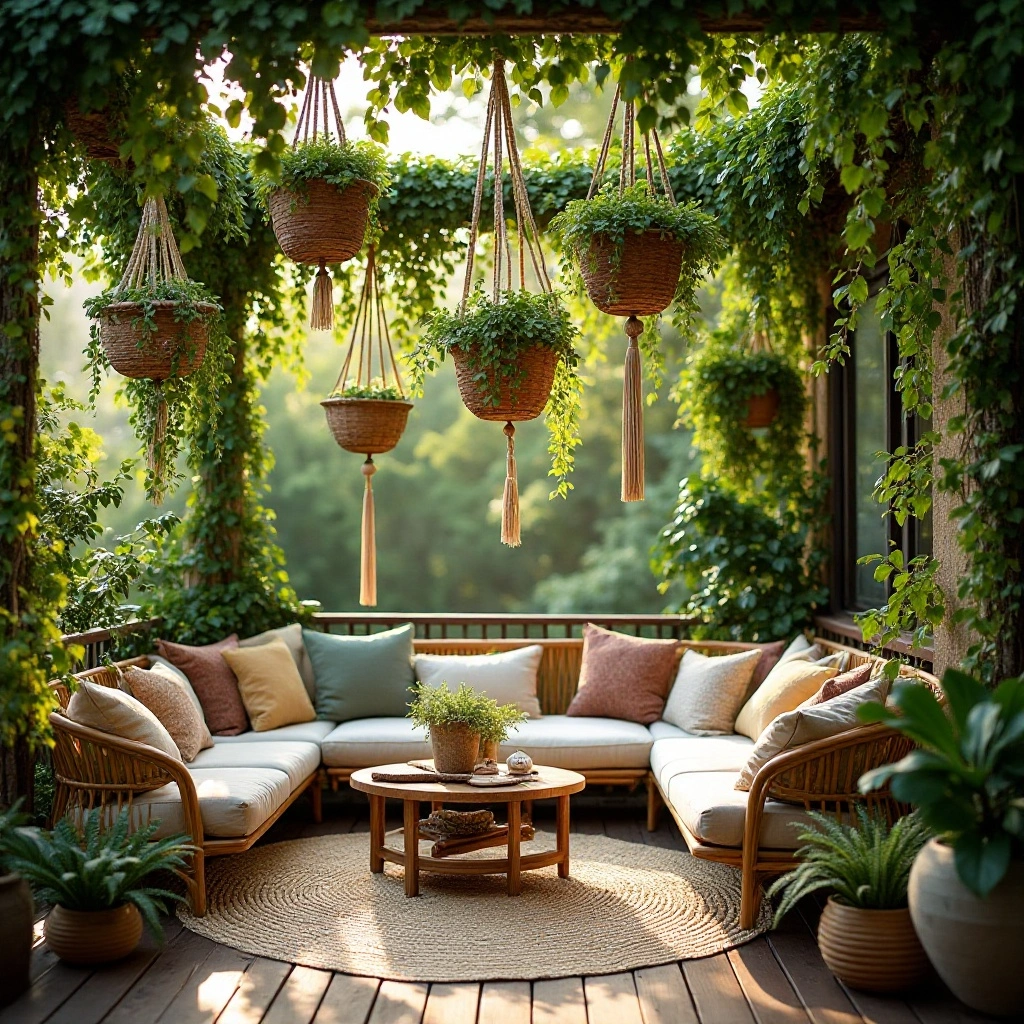
Privacy from above with a whimsical, boho touch.
Suspended planters, trailing vines, and hanging baskets mounted to a pergola or overhead structure create a stunning canopy effect that adds privacy from upper-floor views while making your deck feel like an enchanted garden. This approach works especially well on urban decks where neighbors above are the primary concern. Shop on Amazon
How to Style It:
- Use ceiling hooks or a grid wire system to hang planters at varying heights
- Choose trailing plants: string of pearls, tradescantia, pothos, or ivy for dense coverage
- Mix macrame hangers, ceramic pots, and wicker baskets for a curated, eclectic look
- Water daily in summer — hanging plants dry out faster than ground-level pots
Where to Use It: Under covered decks or pergolas, on balconies, or anywhere with an overhead structure to hang from
Pro Tip: Install a simple overhead drip irrigation system connected to hanging baskets — a $30 timer kit can automate watering and save your plants on hot days when you can’t tend them.
14. Ornamental Grass Privacy Border
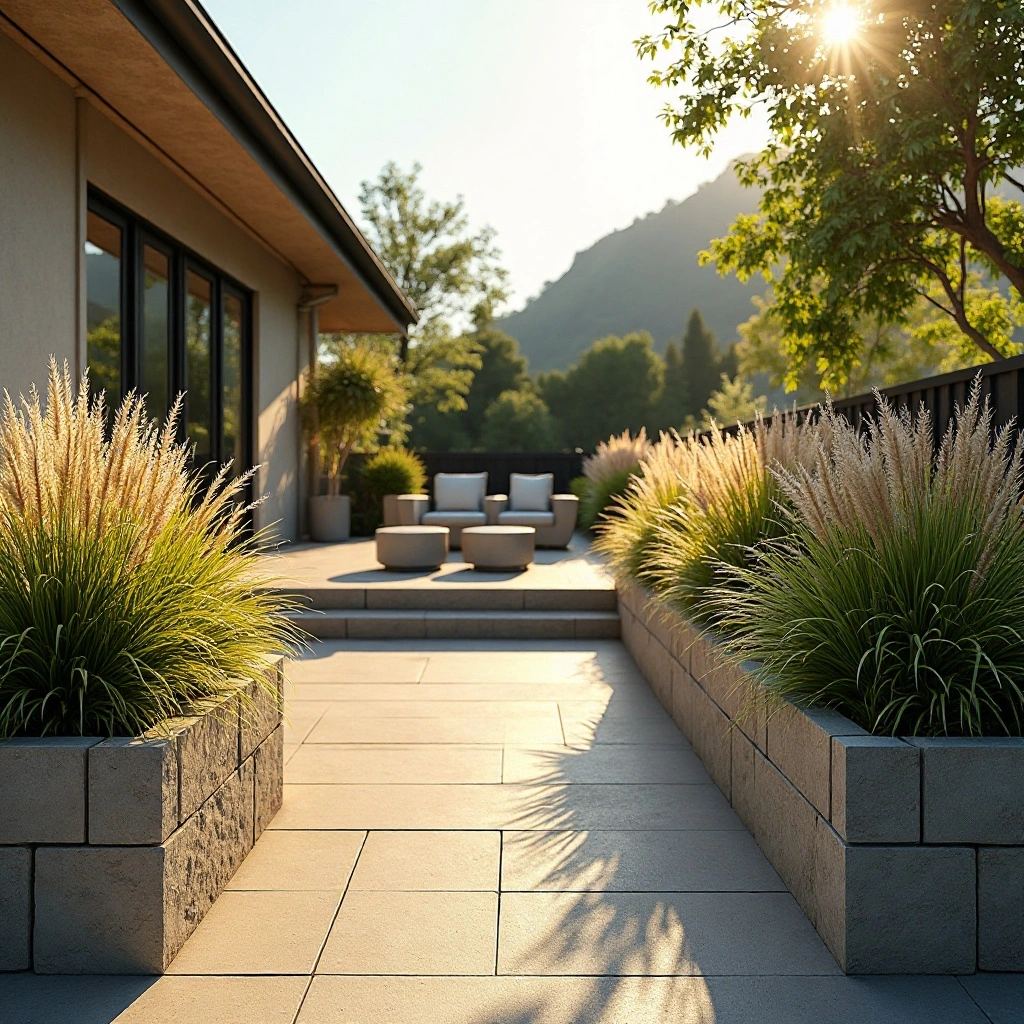
Movement, texture, and natural screening.
Tall ornamental grasses planted in ground beds or oversized containers along the deck perimeter create a softly swaying, organic privacy screen that’s both beautiful and low-maintenance. Varieties like Miscanthus (Maiden Grass) and Pennisetum (Fountain Grass) grow 5–7 feet tall and provide excellent coverage while adding dramatic movement and seasonal interest. Shop on Amazon
How to Style It:
- Plant in staggered rows (not one straight line) for a more natural, layered look
- Combine grasses with tall perennials: coneflowers, black-eyed Susans, or salvia
- Leave seed heads standing through winter for year-round structure and wildlife interest
- Use matching oversized planters in a row for a clean, intentional look
Where to Use It: Along the back or sides of ground-level decks, especially where a garden border is appropriate
Pro Tip: In containers, grasses become root-bound and need dividing every 2–3 years — do this in early spring before new growth emerges by splitting the root ball with a sharp spade.
15. Privacy Trellis with Shade Sail Combo
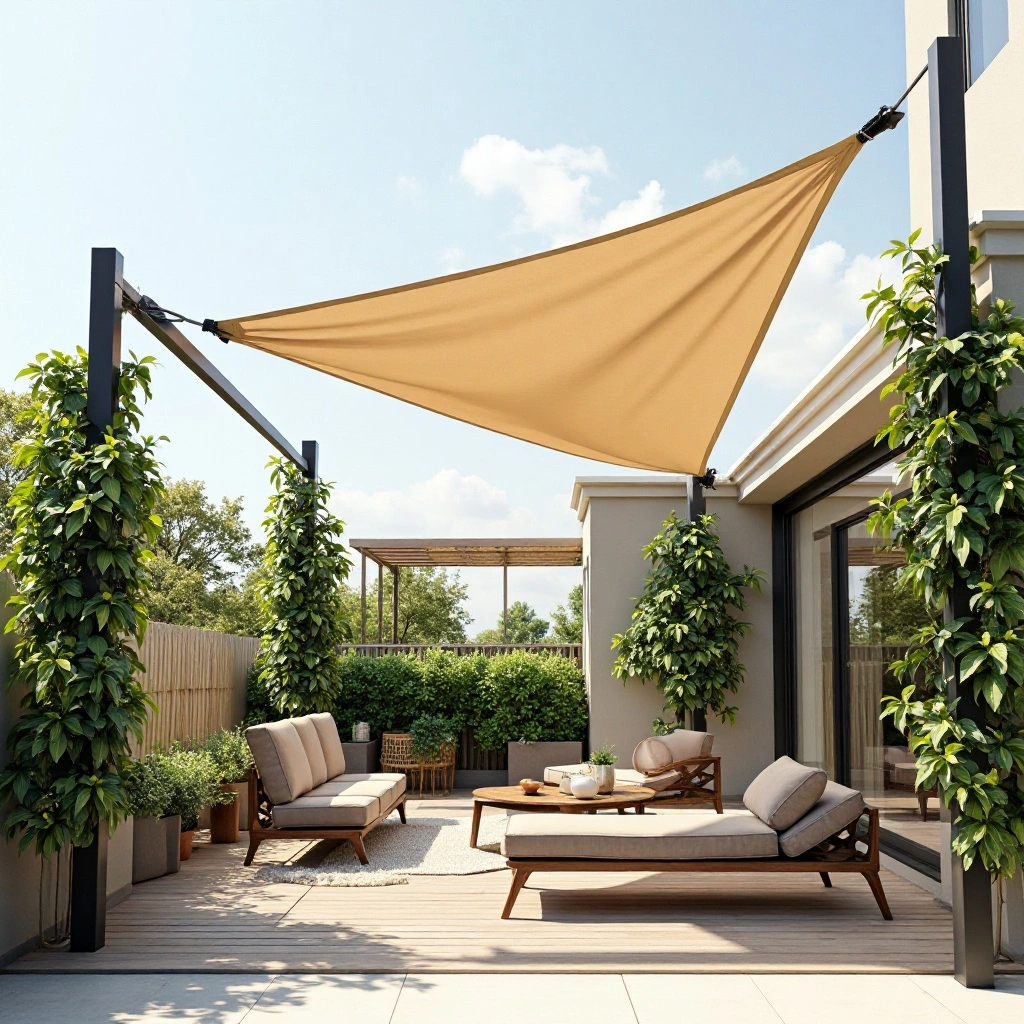
Double duty: screening and shade in one setup.
Combining a simple trellis structure with a triangular or square shade sail creates a two-layer privacy solution — the sail blocks overhead sun and sky views while the trellis handles side visibility. Together, they create a defined, shaded outdoor room that feels completely enclosed without being dark or claustrophobic. Shop on Amazon
How to Style It:
- Choose complementary colors: a warm sand or terracotta sail pairs beautifully with natural wood trellis
- Tension the sail tightly — a loose shade sail flaps in wind and degrades faster
- Angle one corner lower than the others for dramatic visual effect and rain runoff
- Mount trellis panels on the two most visible sides of the deck footprint
Where to Use It: On any deck that needs both sun protection and privacy, particularly in hot southern climates or urban spaces with overlooking windows
Pro Tip: Use stainless steel turnbuckles and marine-grade hardware for shade sail mounting — regular galvanized hardware will rust and fail within one to two seasons in humid climates.
16. Outdoor Room Divider Screens
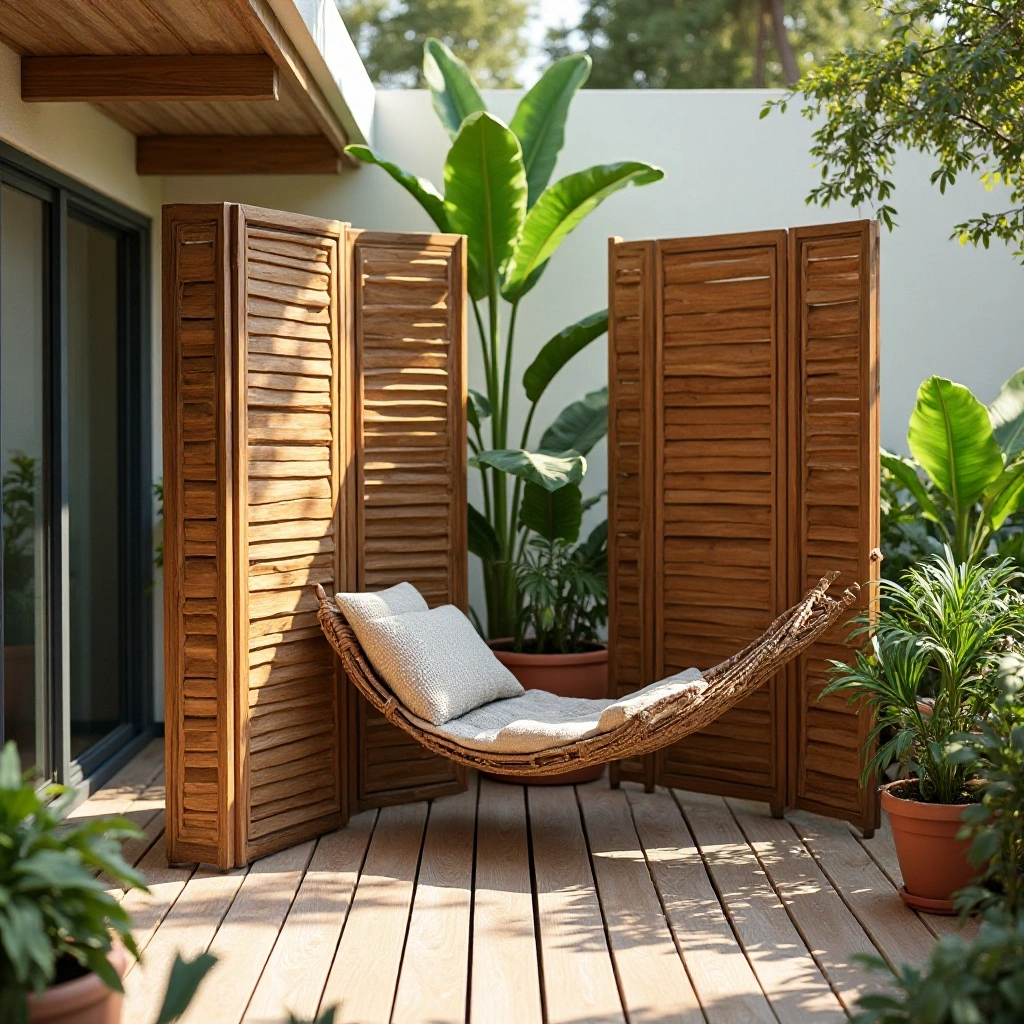
The portable privacy solution for every occasion.
Folding outdoor room dividers give you the ultimate flexibility — create a private corner for reading, section off a hot tub area for guests, or define a separate lounge zone at a party. Available in wood, rattan, metal, and frosted acrylic, they fold flat for storage and set up in seconds with no tools or installation required. Shop on Amazon
How to Style It:
- Choose 3–4 panel dividers for maximum flexibility in placement and angle
- Weight the base or anchor with planters on either side to prevent wind tipping
- Use frosted acrylic panels for a modern, translucent look that still allows light through
- Paint or stain to match your deck furniture for a cohesive, intentional design
Where to Use It: Around hot tubs, behind outdoor showers, sectioning off a small dining nook, or framing a hammock corner
Pro Tip: In windy areas, opt for metal-framed screens with heavy bases or drill mounting brackets — even heavy teak dividers can become a projectile in a strong gust.
Common Mistakes to Avoid
1. Choosing Function Over Aesthetics
Many homeowners install a privacy solution that works practically but clashes with their home’s exterior style. Always choose materials and colors that complement your existing architecture and landscaping — a solution that looks beautiful doubles as a design feature, not just a barrier.
2. Ignoring Wind & Weather
Privacy screens have a large surface area that catches wind like a sail. Failing to properly anchor, mount, or choose wind-rated materials results in damaged panels, toppled planters, and safety hazards. Always factor in your local wind conditions when selecting structure and hardware.
3. Planting Too Close to the Deck
Fast-growing plants are perfect for privacy — but planting climbing vines directly against wood decking can trap moisture and accelerate rot. Keep plants in containers or at least 12 inches from structural wood, and ensure adequate airflow around all wood surfaces.
4. Blocking Too Much Light
Full privacy often means full shade — which can make a deck feel dark and uninviting. Consider the sun path before installing solid screens. Use slatted, open-weave, or partial-height solutions on the south or east sides to preserve morning light.
5. Skipping Local Building Codes
Permanent privacy structures — walls, tall fencing, attached pergolas — often require permits. HOA communities may have restrictions on material types, heights, or colors. Always check with your local planning department or HOA before beginning any construction.
6. Choosing the Wrong Plants for Your Zone
A privacy hedge that can’t survive your winter climate will look beautiful for one season and become a dead, bare skeleton the next. Always verify USDA hardiness zone compatibility before purchasing plants intended as permanent privacy screens.
Frequently Asked Questions
Q: What is the cheapest way to add privacy to a deck? Bamboo roll fencing is one of the most affordable options, often costing $30–$80 for a 6×16 ft section. Outdoor curtains on a tension wire are also very budget-friendly. For the absolute lowest cost, dense potted plants from a local nursery can create meaningful screening for under $100.
Q: How do I add privacy to a deck without blocking light? Slatted wood or metal screens, lattice panels, and sheer outdoor curtains all provide privacy while allowing light to pass through. You can also use shorter screens (4 ft) that block sightlines at seated height without casting shade over the entire deck.
Q: What plants grow fast enough to use as a privacy screen? Bamboo (clumping varieties), Leyland cypress, privet hedges, and ornamental grasses are among the fastest growing options. Annual climbers like morning glory or hyacinth bean vine can cover a trellis in a single season.
Q: Can I add deck privacy to a rental property without making permanent changes? Yes. Freestanding planters, potted plants, portable room dividers, outdoor curtains on tension wires, and folding screens all require zero permanent installation and are ideal for renters. Always check your lease terms before installing anything structural.
Q: How tall should a deck privacy screen be? For seated privacy, 4 feet is typically sufficient. For full standing privacy, 6 feet is the standard. Check local regulations — many municipalities cap freestanding screens at 6 feet without a permit, and some HOAs have stricter rules.
Q: What is the most low-maintenance deck privacy solution? Metal panels (powder-coated steel or Corten) require virtually zero maintenance and last decades. PVC or composite lattice is another excellent choice — it never rots, fades minimally, and needs no painting or sealing.
Q: How do I keep outdoor curtains from blowing in the wind? Use bottom grommets with stainless steel anchor hooks screwed into the deck. Alternatively, attach curtain weights (available at fabric stores) to the hem, or choose heavier canvas or canvas-blend fabrics that resist billowing.
Final Thoughts
Privacy transforms a deck from a space you tolerate being seen on into a place you genuinely love spending time in. The best solution is the one that balances your privacy needs, your design taste, your budget, and your climate — and there’s no single right answer.
Whether you invest in a permanent statement wall, grow a living garden screen, or simply hang some beautiful curtains, the result is the same: a deck that finally feels like yours.
Ready to get started? Pick one idea from this list, measure your space, and take the first step this weekend. Your private outdoor sanctuary is closer than you think.