12 Stylish Deck Skirting Ideas for Modern Deck Design
Your deck might be the star of your backyard — but what about what’s underneath it? Deck skirting Ideas is the secret finishing touch that transforms a floating, unfinished structure into a polished, cohesive outdoor living space.
Without it, you’re leaving the raw bones of your deck exposed to the elements, pests, and the eyes of every guest who visits. — instead of creating a space that feels complete and comfortable for the whole family to enjoy.
Whether you’re building a brand-new deck or giving an existing one a facelift, choosing the right skirting can boost your home’s curb appeal, increase property value, and even create functional storage space beneath your deck — helping keep outdoor areas more organized for busy family life and everyday use with kids around.
The good news? There’s no one-size-fits-all solution — from classic lattice to sleek horizontal cedar planks, the options are as diverse as your personal style.
12 Creative Deck Skirting Ideas for a Polished Backyard Look
1. Classic Wood Lattice Skirting
Overview
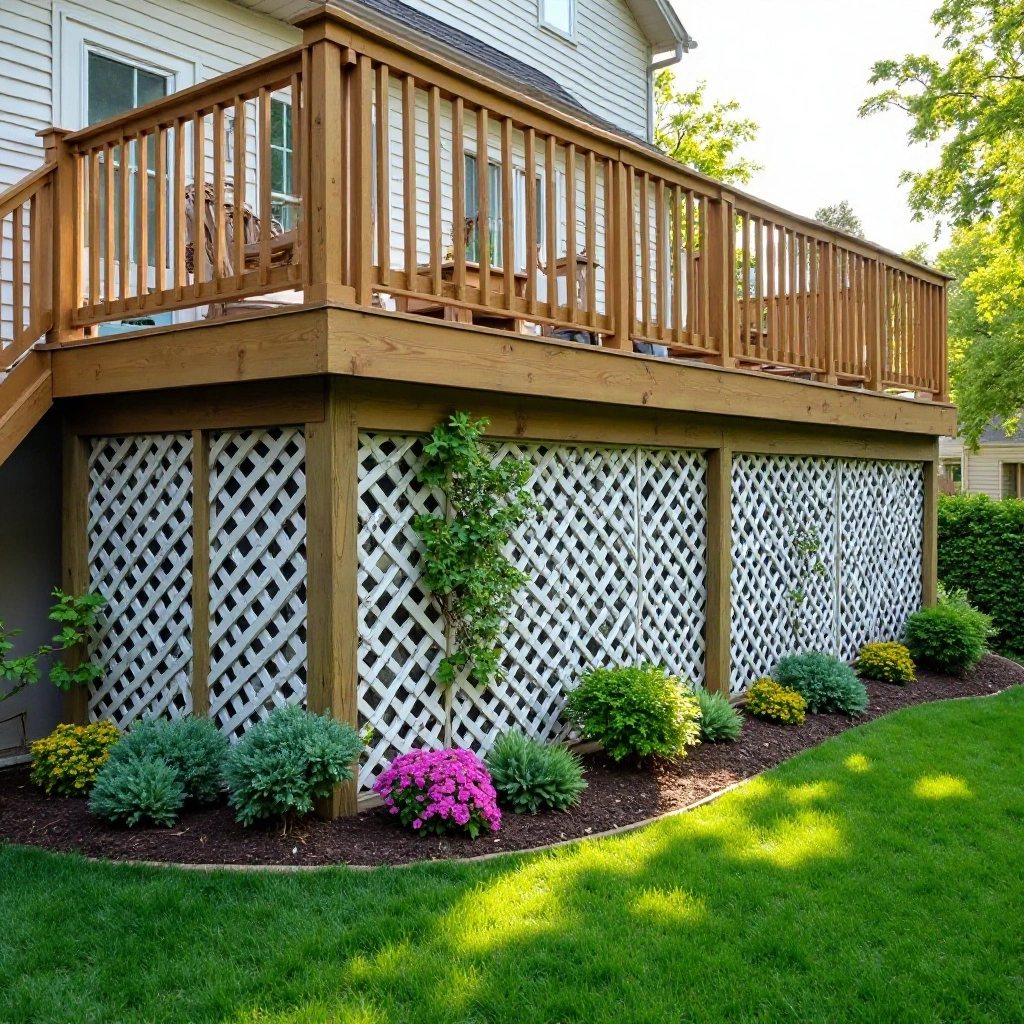
Wood lattice is one of the most timeless and beloved deck skirting ideas options available. It strikes a beautiful balance between openness and privacy, allowing airflow beneath the deck while softening the visual gap between your deck and the ground.
Its crisscross pattern adds a charming, cottage-like aesthetic that pairs naturally with lush landscaping and traditional home styles. Shop on Amazon
Wood lattice comes in various grid sizes — from fine diamond patterns to larger square grids — letting you customize the level of visibility and ventilation. Painted or stained in any color, it can blend seamlessly into almost any outdoor design scheme, from farmhouse white to rich walnut brown.
🎨 How to Style It:
- Paint it crisp white for a fresh, traditional look
- Stain it to match your deck boards for a cohesive, natural feel
- Train climbing plants like jasmine or morning glory through the lattice for a romantic garden touch
- Add LED strip lighting behind it for a warm nighttime glow
- Use a contrasting dark frame around the lattice panels for a finished, architectural look
📍 Where to Use It: Best suited for traditional, farmhouse, cottage, or Victorian-style homes. Works particularly well when paired with lush garden beds in front of the skirting.
💡 Pro Tip: Always use pressure-treated or cedar wood for your lattice, and apply a water-resistant sealant every 1–2 years. Untreated wood lattice can warp, rot, or splinter within a single season if left exposed to rain and humidity.
2. Horizontal Cedar Plank Skirting
Overview
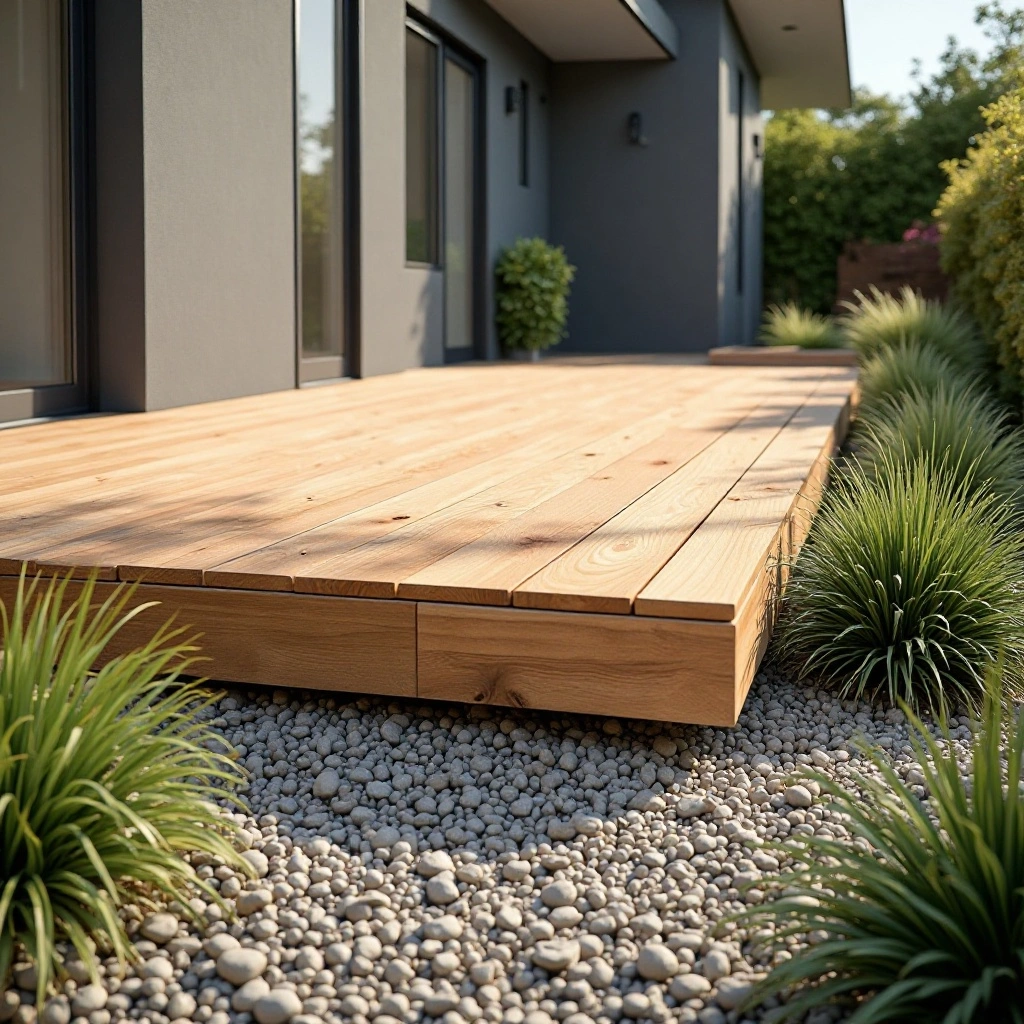
If you love the look of modern horizontal fencing, you’ll adore horizontal cedar plank deck skirting. This style features evenly spaced boards running parallel to the ground, creating a sleek, linear aesthetic that feels both contemporary and warm.
Cedar is naturally resistant to rot, insects, and moisture — making it one of the most durable natural wood options for outdoor applications. Shop on Amazon
The spacing between planks can be adjusted to control airflow and privacy. A tighter spacing creates a more solid, enclosed look, while wider gaps let light and air pass through freely. Whether left to weather naturally to a silvery-gray or finished with oil or stain, horizontal cedar skirting has an unmistakable, magazine-worthy appeal.
🎨 How to Style It:
- Leave the cedar to age naturally for a rustic, weathered silver-gray look
- Apply a rich teak or walnut oil stain to deepen the wood’s warm tones
- Install landscape lighting at the base to create a dramatic nighttime effect
- Plant ornamental grasses or boxwood shrubs in front for a modern landscaping contrast
- Combine with a matching horizontal cedar fence for a seamless, unified backyard design
📍 Where to Use It: Ideal for modern, contemporary, craftsman, and mid-century modern homes. Pairs exceptionally well with composite or hardwood decking in matching tones.
💡 Pro Tip: Install horizontal planks with a slight gap (about ½ inch) between each board — not just for aesthetics, but to prevent moisture from getting trapped between the wood, which accelerates rot and warping.
3. Vinyl Lattice Skirting
Overview
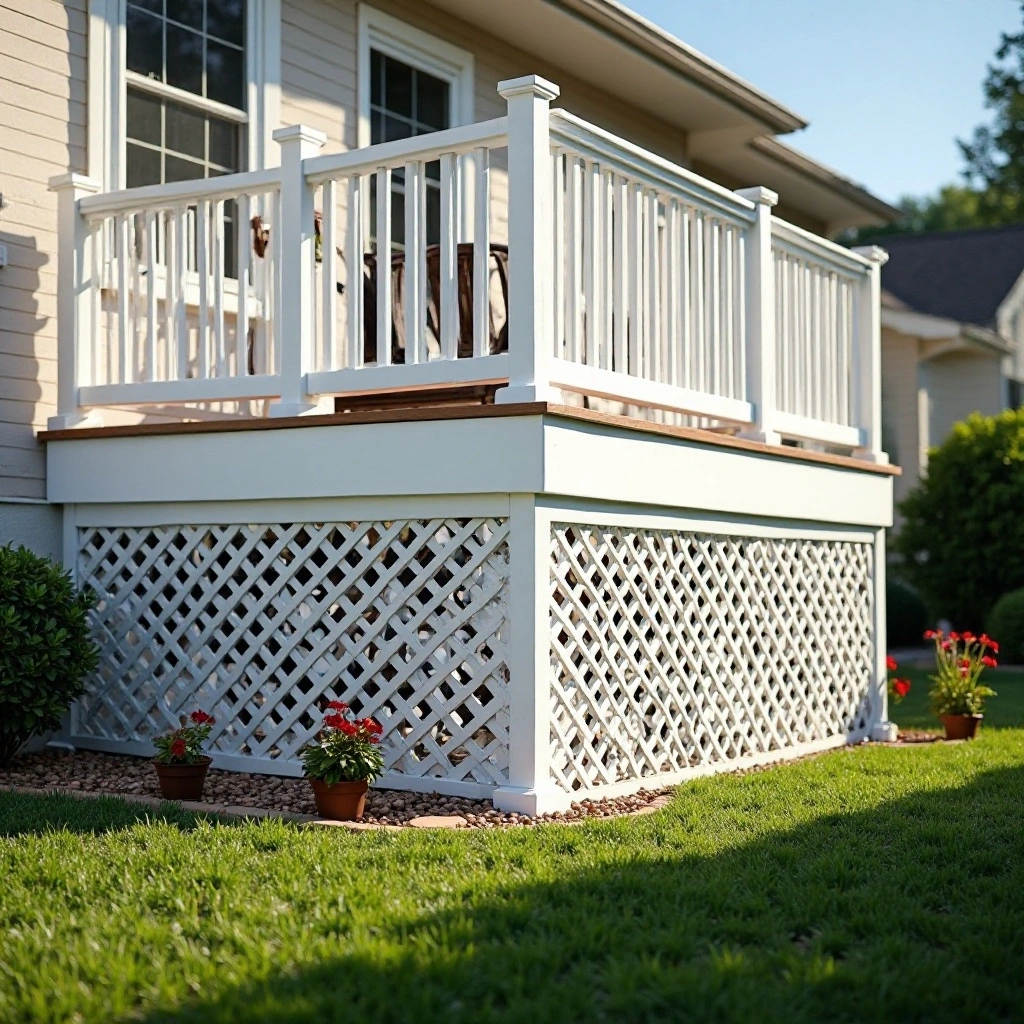
Vinyl lattice brings all the charm of traditional wood lattice — without any of the maintenance headaches. It won’t rot, splinter, fade, or require annual painting. For busy homeowners who want a beautiful skirting solution that essentially takes care of itself, vinyl lattice is a top-tier choice.
It’s available in a wide range of colors right from the manufacturer, most commonly white, tan, and gray. Shop on Amazon
Modern vinyl lattice has come a long way in terms of appearance. High-quality options closely mimic the look of painted wood lattice, and some even feature UV inhibitors to prevent the yellowing that cheaper vinyl products are notorious for. It’s also lightweight, easy to cut, and can be installed in a single weekend.
🎨 How to Style It:
- Choose a color that matches or complements your home’s trim or siding
- Frame each panel with PVC trim boards for a clean, professional finish
- Add a hinged access door panel for easy under-deck access
- Place potted plants or window boxes in front for a pop of color
- Use a dark-colored vinyl for a bold, modern statement
📍 Where to Use It: An excellent all-around option for any home style, especially great for humid climates, coastal regions, or anywhere with extreme seasonal temperature swings.
💡 Pro Tip: When purchasing vinyl lattice, always check the thickness. Panels under 3/8 inch thick can flex and rattle in strong winds. Opt for panels at least ½ inch thick for long-term durability and stability.
4. Stone Veneer Skirting
Overview
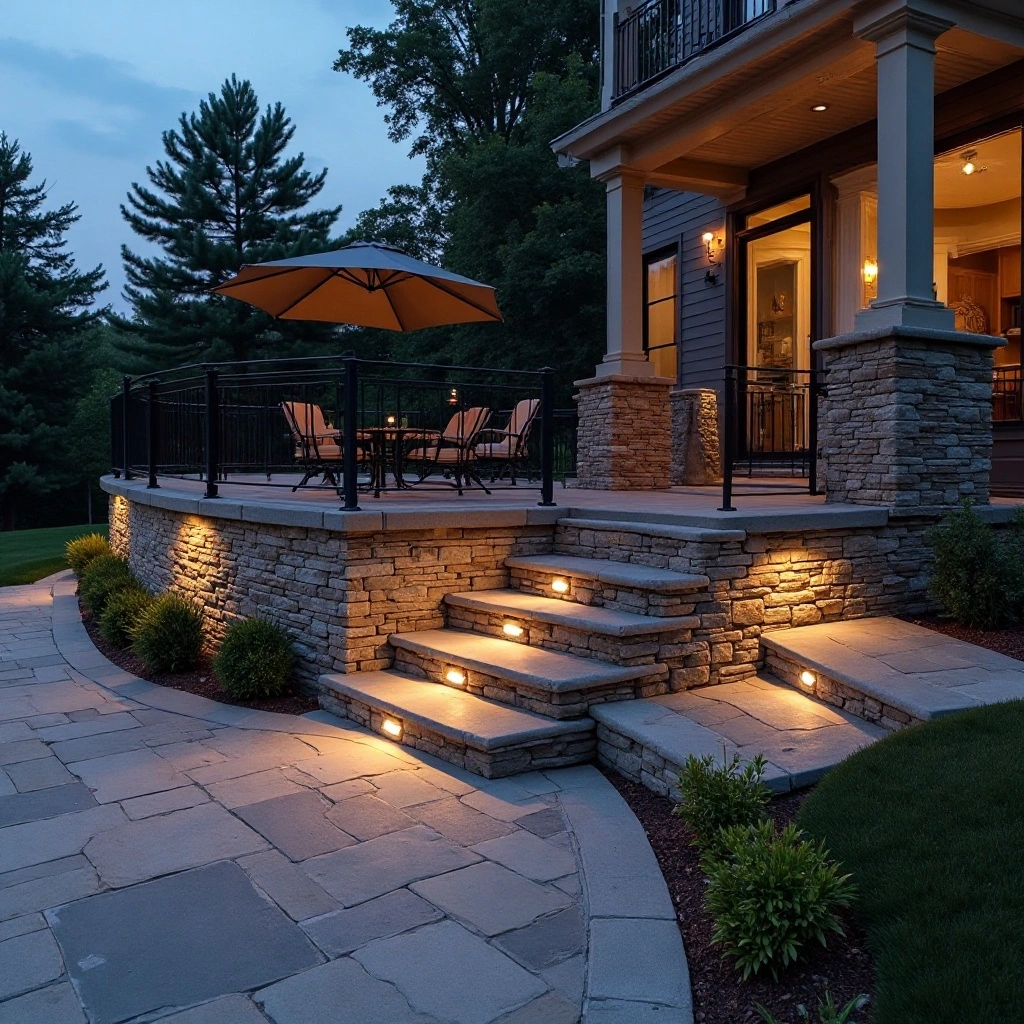
For a truly high-end, architectural look, stone veneer deck skirting ideas is in a class of its own. Using thin slices of natural or manufactured stone applied to a solid backing, this skirting option transforms the underside of your deck into something that looks like it was built into the landscape itself.
Stone veneer creates a sense of permanence, weight, and luxury that no other skirting material can replicate. Shop on Amazon
Unlike full stone construction, stone veneer is relatively lightweight and manageable for DIY installation — though professional installation ensures the best results. Available in dozens of styles (stacked stone, ledgestone, river rock, fieldstone), you can choose a texture and color palette that perfectly complements your home’s exterior.
🎨 How to Style It:
- Match the stone to your home’s exterior cladding or fireplace for design continuity
- Combine with timber-frame deck posts for a mountain lodge or craftsman aesthetic
- Install recessed exterior LED lights into the stone for a dramatic evening effect
- Use a dark, wet-look sealer on the stone to intensify color depth and add richness
- Add a stone cap along the top edge for a polished, finished look
📍 Where to Use It: Best for craftsman, mountain cabin, Mediterranean, or luxury contemporary homes. Particularly striking when the deck is at a lower elevation, making the skirting a prominent visual feature.
💡 Pro Tip: Always install stone veneer over a moisture barrier and metal lath adhered to a solid substrate like cement board. Applying stone veneer directly to wood sheathing without proper moisture protection will result in water damage within a few years.
5. Corrugated Metal Skirting
Overview
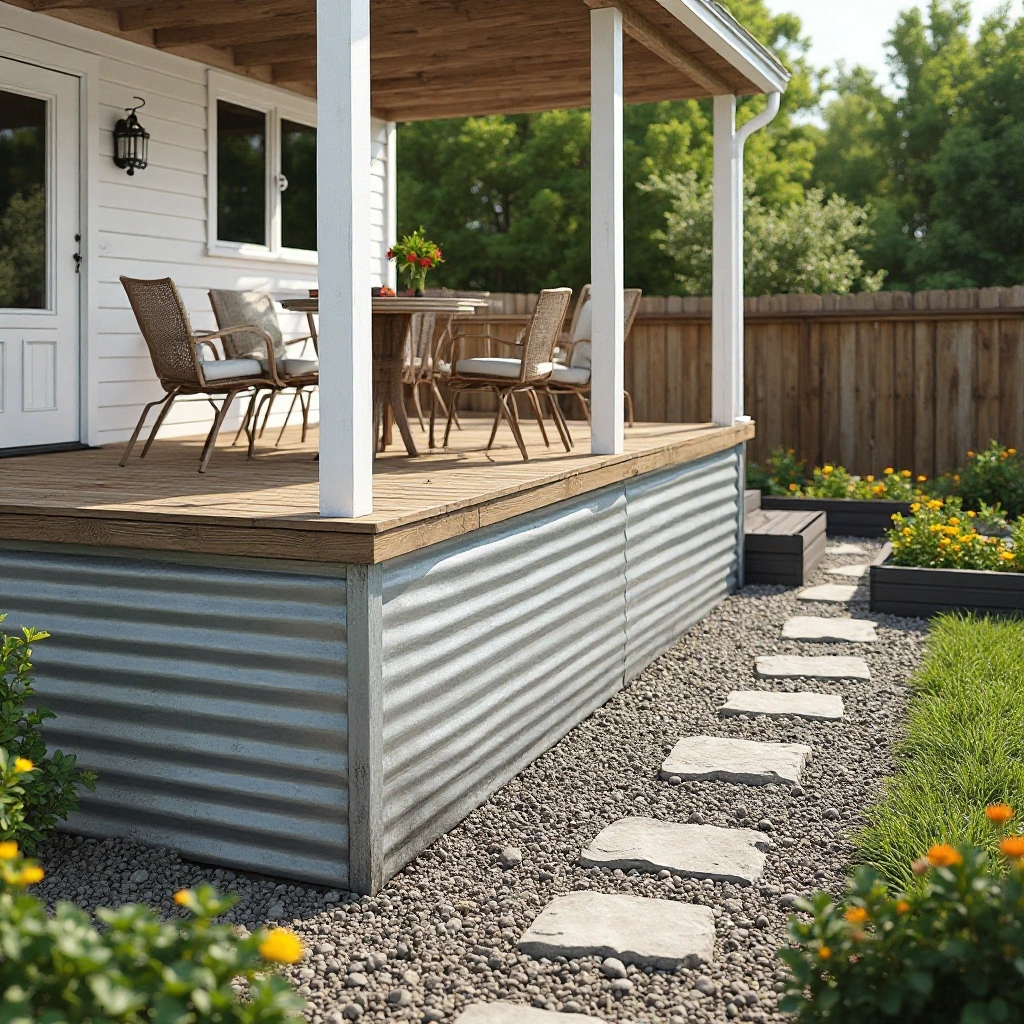
Corrugated metal skirting has made a bold entry into the world of outdoor design, fueled by the growing popularity of industrial, farmhouse, and modern rustic aesthetics. Its ridged, wavy profile adds texture and visual interest, while the material itself is incredibly durable, weather-resistant, and surprisingly affordable. It’s a material that works as hard as it looks cool. Shop on Amazon
Available in raw galvanized steel, pre-painted panels, and even Corten (weathering steel) that develops a rich, orange-brown patina over time, corrugated metal can read as edgy and urban or warm and pastoral depending on how you style it. Paired with the right elements, it can be the unexpected design detail that makes your outdoor space truly unforgettable.
🎨 How to Style It:
- Use raw galvanized panels for an industrial, urban loft vibe
- Paint the panels in matte black for a sleek, contemporary statement
- Let Corten steel panels weather naturally for a warm, organic rust patina
- Frame panels with black powder-coated steel channel for a crisp, finished edge
- Combine with reclaimed wood accents to soften the metal’s hardness
📍 Where to Use It: Perfect for industrial, farmhouse, modern rustic, and contemporary homes. Excellent choice for properties in dry or arid climates where moisture isn’t a primary concern.
💡 Pro Tip: Install corrugated metal panels with the ridges running vertically (not horizontally) to allow water to drain off the panels rather than pool in the ridges, which can accelerate corrosion in rainy climates.
6. Brick Skirting
Overview
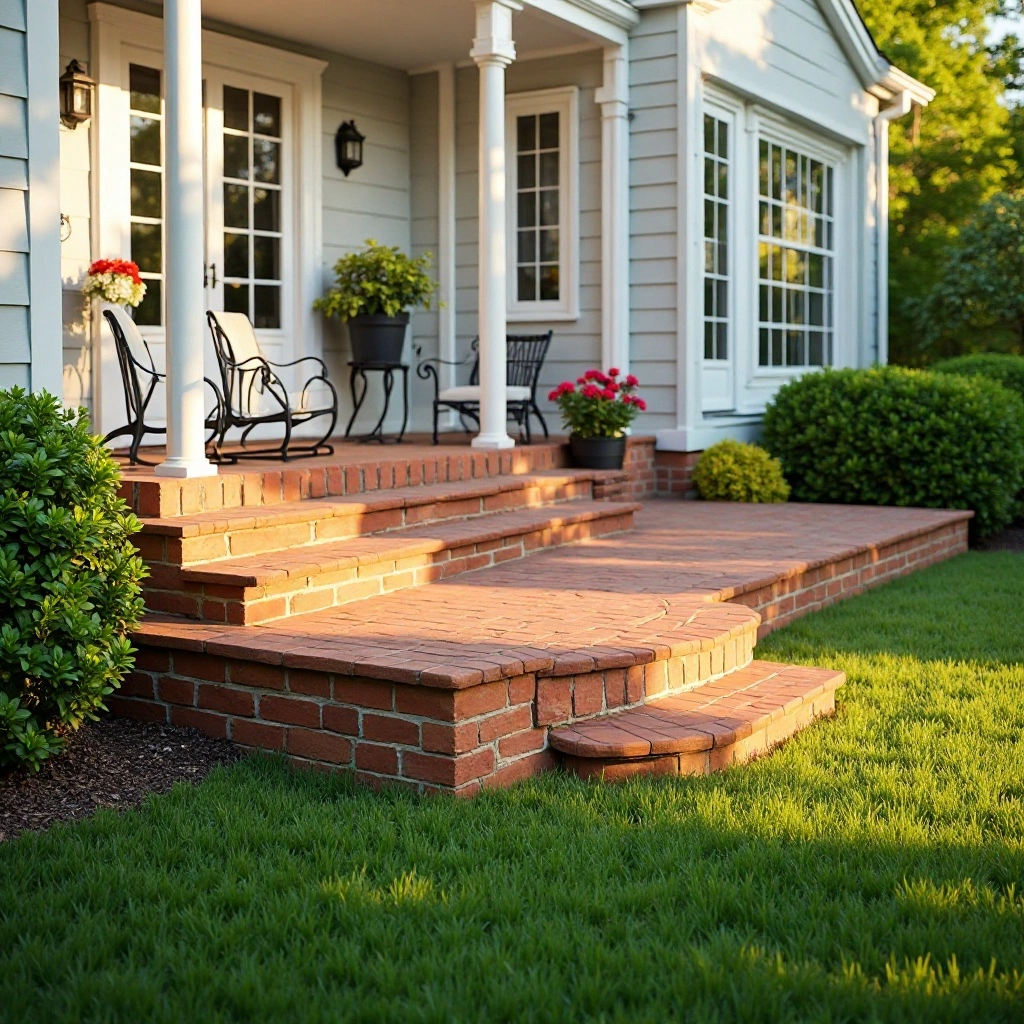
Brick skirting is the gold standard for permanence and curb appeal. When executed well, it makes your deck look like a permanent architectural extension of your home rather than an add-on structure. Brick is exceptionally durable, fire-resistant, pest-proof, and requires almost zero maintenance beyond occasional cleaning. For homeowners who want a forever solution, brick skirting delivers. Shop on Amazon
Brick skirting can be built with traditional clay bricks or with concrete masonry units (CMUs) and faced with a thin brick veneer, which reduces cost and complexity. Choose from a range of brick colors and laying patterns — running bond, herringbone, basket weave — to create a truly custom look that complements your home’s exterior.
🎨 How to Style It:
- Match the brick color and texture to your home’s existing brick exterior for seamless integration
- Use a recessed mortar joint finish for a more refined, architectural appearance
- Add a soldier course (bricks standing vertically) along the top edge as a cap detail
- Plant low-growing boxwoods or lavender in front of the brick base for softness
- Incorporate a small arched brick opening as an access point for a classic, elegant detail
📍 Where to Use It: Ideal for colonial, Georgian, Tudor, traditional, and classic craftsman homes — especially those that already feature brick as an exterior material.
💡 Pro Tip: If your deck posts are wood, build the brick skirting so it doesn’t make direct contact with the posts. Brick retains moisture, and contact between wet masonry and wood will accelerate post rot even with treated lumber.
7. Composite Board Skirting
Overview
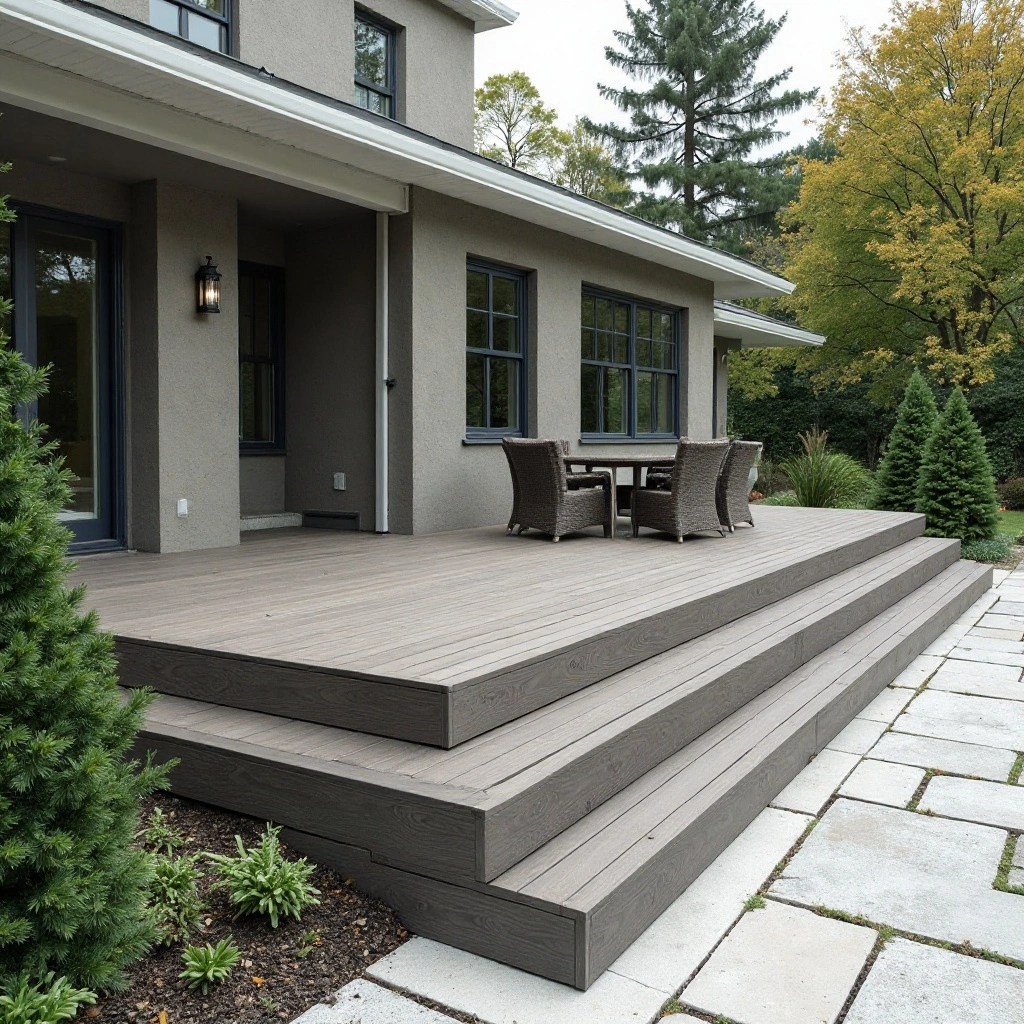
Composite decking has become the go-to choice for deck surfaces — so why not extend that same material to your skirting? Composite board skirting uses the same low-maintenance, high-performance material as your deck surface to create a unified, cohesive look from top to bottom. It resists rot, insects, fading, and staining, and it never needs painting or sealing. Shop on Amazon
Whether you orient the boards vertically, horizontally, or at an angle, composite skirting delivers a clean, modern aesthetic with practically zero upkeep. Most major composite manufacturers offer trim and fascia boards specifically designed for skirting applications, making installation straightforward and ensuring a perfect color match to your deck surface.
🎨 How to Style It:
- Install boards vertically for a tall, elegant look that draws the eye upward
- Mix two complementary composite colors — darker for skirting, lighter for the deck surface
- Add composite picture-frame trim around each skirting panel for a polished, furniture-like finish
- Use angled board placement (chevron or herringbone) for a feature-worthy accent
- Install integrated composite LED deck lights along the base for a modern nighttime glow
📍 Where to Use It: An ideal match for any home that already features composite decking. Works particularly well in modern, contemporary, and coastal-style homes where low-maintenance materials are prioritized.
💡 Pro Tip: Always leave a gap at the bottom of composite skirting panels (at least 1 inch from the ground) to allow for drainage and airflow. Moisture buildup between composite skirting and the soil can encourage mold growth on the underside of the panels.
8. Bamboo Skirting
Overview
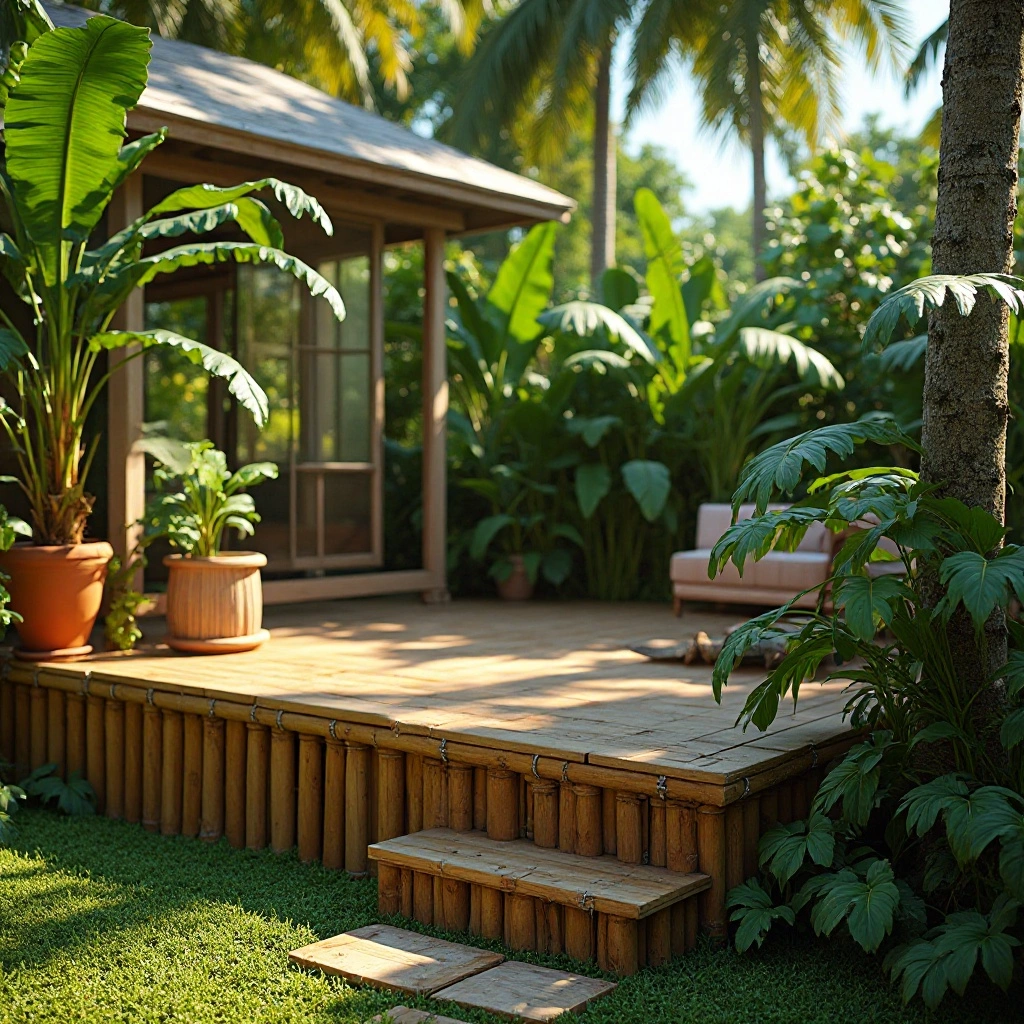
Bamboo skirting is the choice for the environmentally conscious homeowner who doesn’t want to sacrifice style. Bamboo is one of the fastest-growing plants on Earth, making it a highly renewable, eco-friendly alternative to traditional lumber. When used as deck skirting ideas, it brings a natural, tropical warmth that immediately transports you to a resort or garden oasis. Shop on Amazon
Bamboo poles can be installed vertically to create a fence-like privacy screen, or woven bamboo panels can be used for a more textured, artisanal look. Treated bamboo products designed for outdoor use have improved dramatically in durability and weather resistance, though they do require some maintenance to preserve their natural color in direct sunlight.
🎨 How to Style It:
- Bind vertical bamboo poles together with natural jute or black iron wire for an authentic, handcrafted look
- Apply a teak oil finish to preserve the bamboo’s golden color
- Pair with tropical plants like bird of paradise, elephant ears, or ornamental grasses
- Use woven bamboo panels for a more refined, uniform appearance
- Add tiki torches or string lights around the perimeter for an instant resort vibe
📍 Where to Use It: Perfect for tropical, coastal, bohemian, and zen-inspired outdoor spaces. A natural complement to thatched pergolas, tiki bars, or outdoor kitchens with natural material palettes.
💡 Pro Tip: For outdoor bamboo skirting, always choose “treated” or “carbonized” bamboo products and apply a UV-protective coating. Untreated bamboo will bleach, crack, and splinter within one full season of direct sun and rain exposure.
9. Horizontal Metal Slat Skirting
Overview
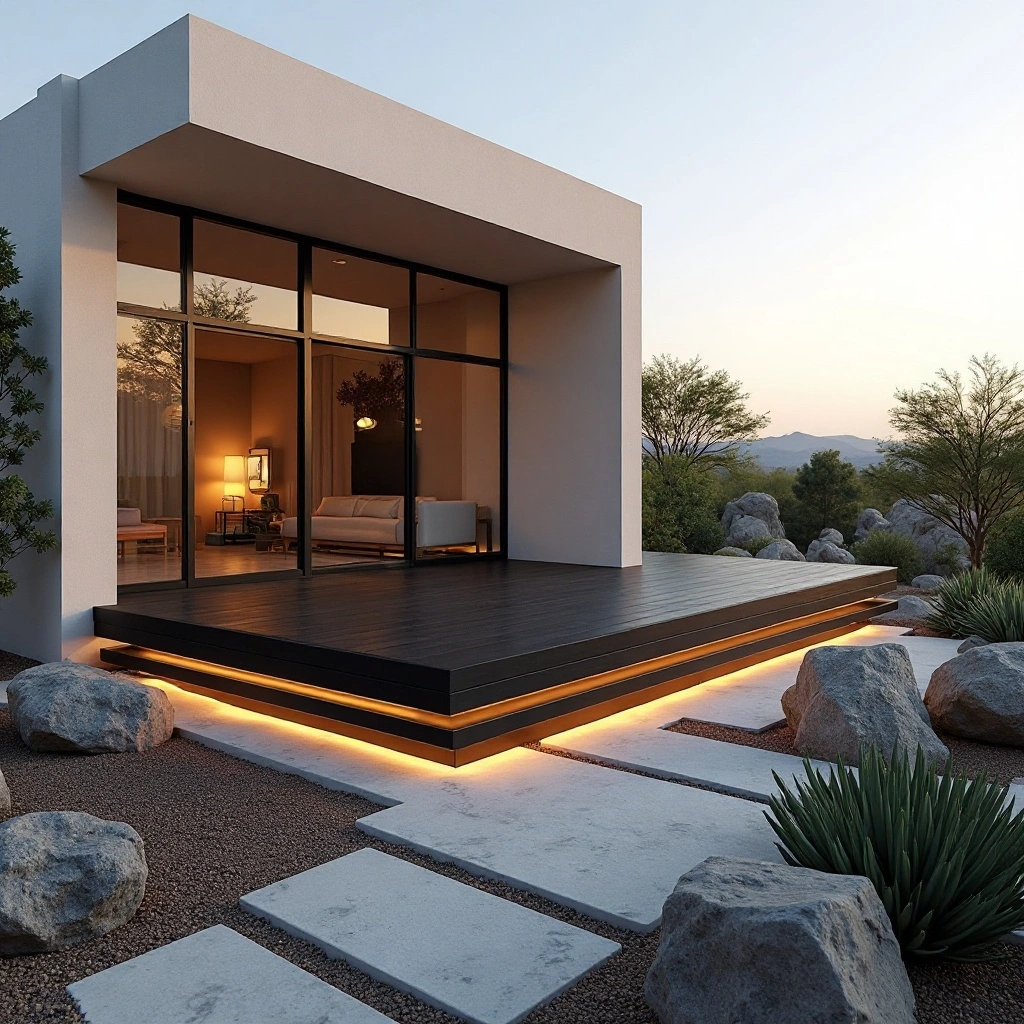
Horizontal metal slat skirting is the sleek, sophisticated cousin of corrugated metal — and it’s rapidly gaining popularity among modern and contemporary homeowners. Flat aluminum or steel slats are spaced evenly beneath the deck, creating a refined, louvered effect that allows airflow while maintaining a sense of privacy.
The result is something that looks more like high-end architectural detail than simple deck skirting. Shop on Amazon
Powder-coated aluminum is the top material choice for this style — it’s lightweight, rust-proof, and available in a wide range of colors from matte black to warm bronze to brushed silver. The precision and clean lines of horizontal metal slats pair naturally with minimalist landscaping and contemporary home architecture.
🎨 How to Style It:
- Choose matte black powder coating for a dramatic, high-contrast modern look
- Opt for champagne or bronze tones for a warmer, more inviting contemporary feel
- Space slats 1–1.5 inches apart for the perfect balance of ventilation and visual privacy
- Combine with concrete or large-format stone pavers at the base for an ultra-modern landscape
- Add integrated downward-facing LED fixtures above the slats for architectural nighttime lighting
📍 Where to Use It: The ideal choice for modern, contemporary, industrial, and desert-inspired homes. Excellent for elevated decks where the skirting is a prominent visual feature from the yard or street.
💡 Pro Tip: When installing horizontal metal slats, use stainless steel fasteners — not standard steel screws. Even “galvanized” screws can bleed rust stains onto the metal slats over time, ruining your crisp, clean aesthetic.
10. Reclaimed Wood Skirting
Overview
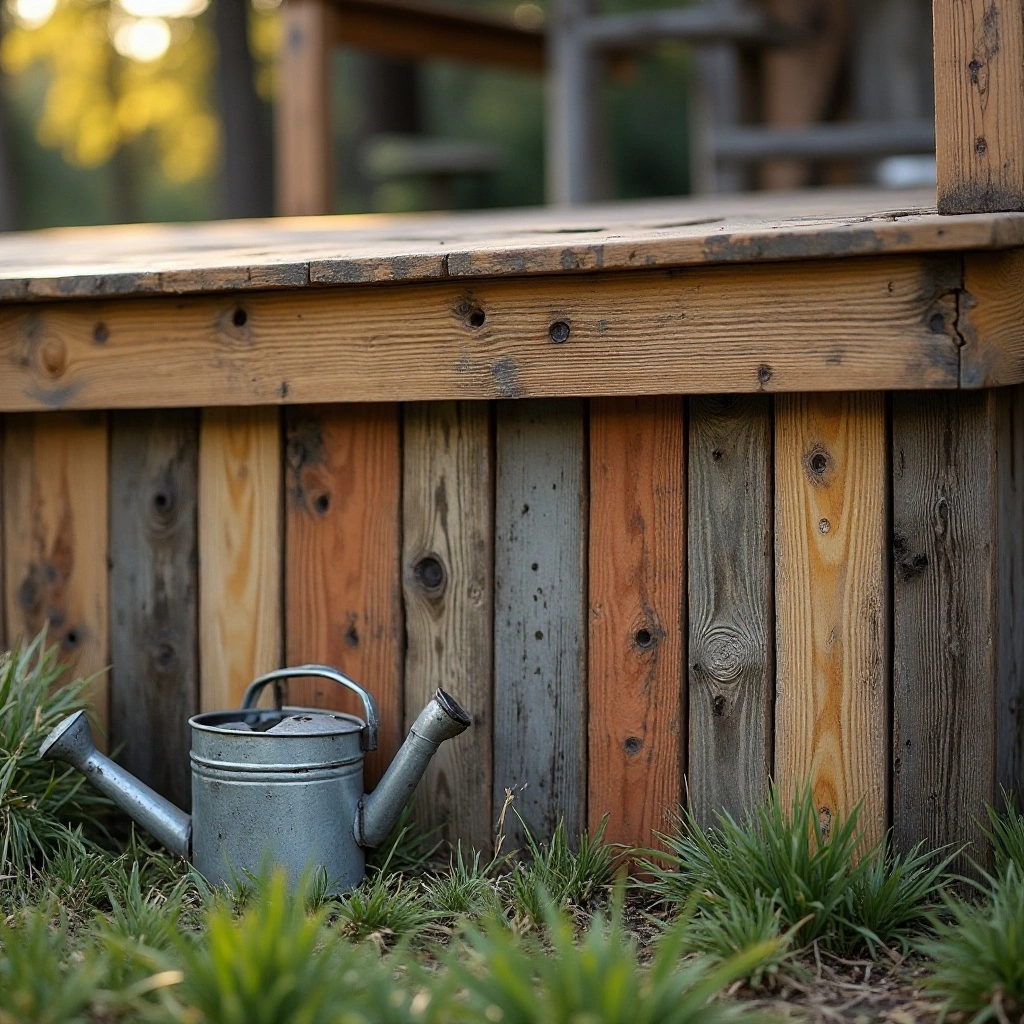
Reclaimed wood skirting tells a story. Each plank carries with it the history of its previous life — whether it came from an old barn, a factory floor, or a demolished farmhouse — and that history translates into character and authenticity that no new material can replicate.
The weathered grain, nail holes, patina, and natural color variation of reclaimed wood creates a skirting that’s genuinely one of a kind. Shop on Amazon
Beyond aesthetics, reclaimed wood is an eco-friendly choice that diverts material from landfills and reduces demand for newly harvested timber. Rustic, bohemian, farmhouse, and industrial design enthusiasts tend to be particularly drawn to reclaimed wood — but it can work in almost any setting when executed with intention and care.
🎨 How to Style It:
- Mix and match plank widths and tones for an authentic, collected-over-time look
- Leave the reclaimed wood unsealed to preserve its natural, weathered character
- Apply a clear exterior finish if you want to preserve the current color without further weathering
- Pair with antique or vintage outdoor furniture to reinforce the reclaimed aesthetic
- Use a mix of vertical and horizontal boards on different skirting panels for creative variety
📍 Where to Use It: A perfect match for farmhouse, rustic, bohemian, and industrial-chic outdoor spaces. Works especially well on properties with older homes, barns, or heritage buildings where the material feels architecturally appropriate.
💡 Pro Tip: Before installing reclaimed wood outdoors, inspect every board for old nails, staples, and embedded debris — and remove them all. Hidden metal in old lumber can cause rust staining and, more dangerously, damage saw blades during cutting.
11. Cinder Block & Concrete Skirting
Overview
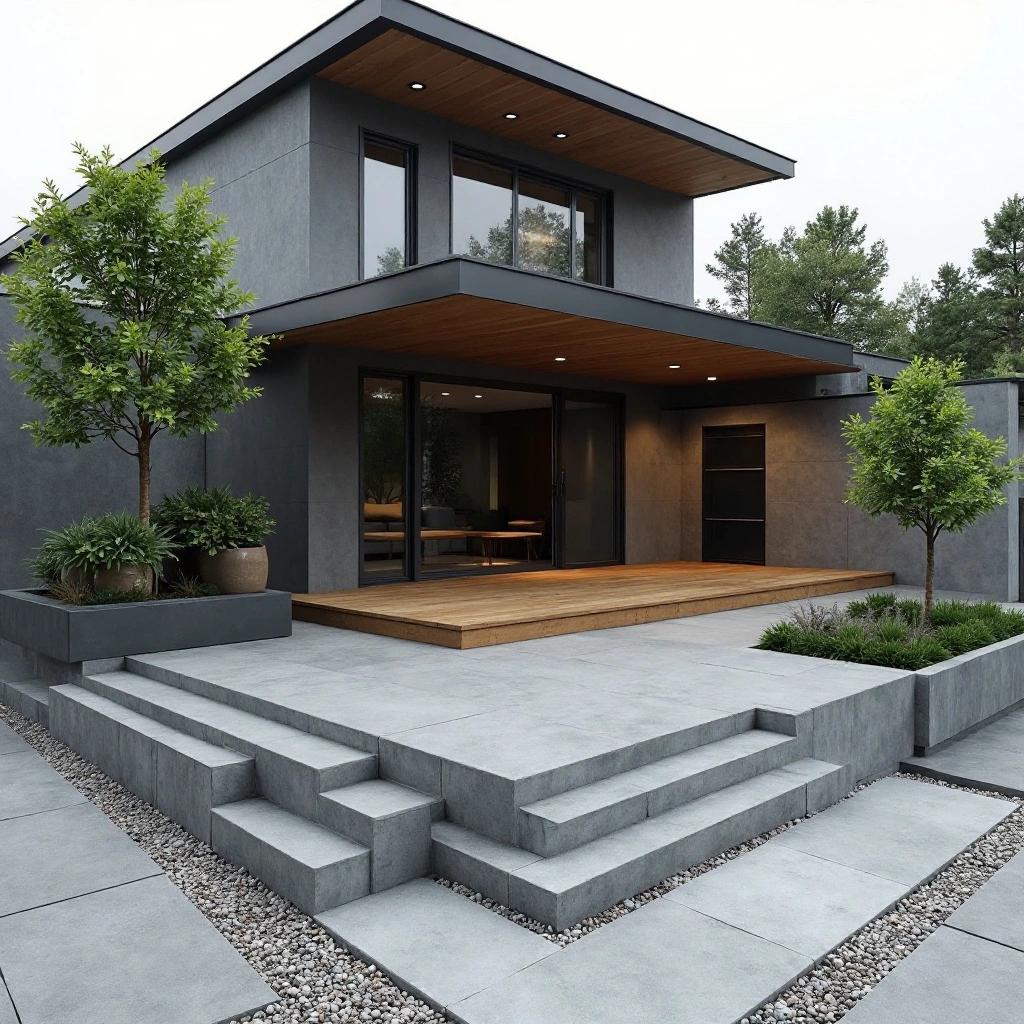
Cinder block and concrete skirting doesn’t get the design credit it deserves. When approached thoughtfully, this utilitarian material can produce a strikingly modern, brutalist-inspired aesthetic that’s impossible to achieve with any other material.
Smooth-faced concrete blocks, combined with a polished or painted finish, can make a bold architectural statement under your deck. Shop on Amazon
On the more practical side, concrete and cinder block skirting is virtually indestructible. It’s impervious to rot, insects, fire, and extreme weather events. It also creates a highly secure under-deck enclosure — useful in areas with wildlife or where you need serious under-deck storage protection. For those who prioritize longevity above all else, this is as close to a forever skirting solution as you can get.
🎨 How to Style It:
- Apply a masonry paint or stain in charcoal, warm white, or sage green for a polished finish
- Use smooth-faced CMU blocks rather than standard split-face block for a more refined look
- Stucco over cinder blocks for a seamless, plastered finish that can be any color you choose
- Embed glass block units in the skirting wall to allow natural light into the under-deck space
- Create planting pockets in the block wall for cascading succulents or trailing ground cover
📍 Where to Use It: Best for modern, industrial, Mediterranean, and adobe-inspired homes. Particularly practical in areas with active wildlife, extreme weather, or where the under-deck space is used for storage or mechanical equipment.
💡 Pro Tip: Always include weep holes (small drainage openings) at the base of a concrete block skirting wall to allow water that accumulates inside to drain out. Without them, you’ll end up with a chronic moisture problem underneath your deck.
12. Living Plant / Garden Skirting
Overview
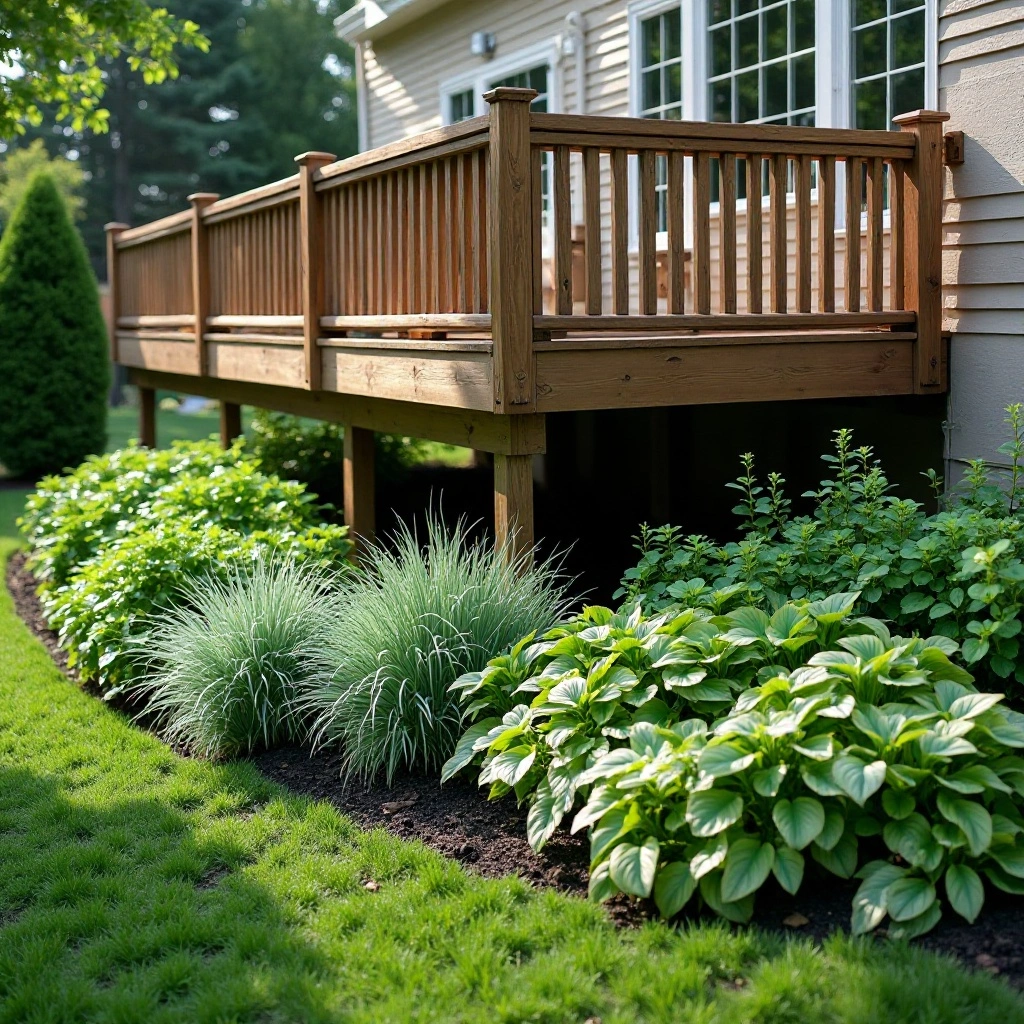
Why hide the space under your deck with a manufactured material when nature itself can do the job — and then some? Living plant skirting uses dense, strategic planting of shrubs, grasses, and perennials to visually fill the gap beneath your deck, transforming what would be dead, shadowy space into a lush garden border. It’s the most organic, ever-changing skirting solution available. Shop on Amazon
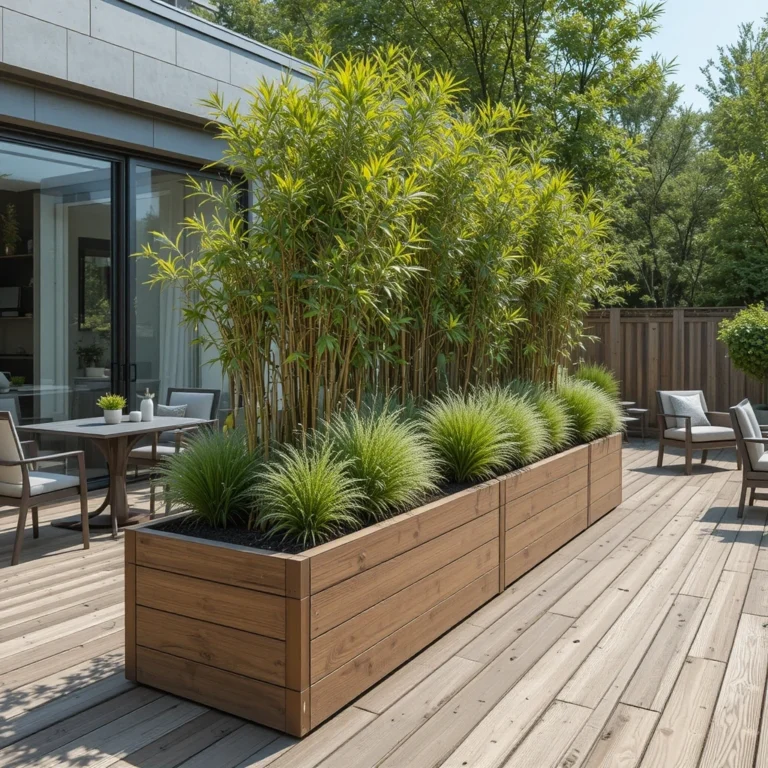
This approach works particularly well for ground-level or low-elevation decks where plants can realistically fill the under-deck space. The key is choosing the right plants — ones that thrive in the partially shaded, potentially dry conditions under a deck — and arranging them in dense enough groupings to create a full, cohesive look. Done well, living skirting makes the deck feel like it’s been naturally embraced by the garden.
🎨 How to Style It:
- Use a layered planting approach — tall ornamental grasses in the back, medium shrubs in the middle, ground cover in front
- Choose shade-tolerant plants (hostas, ferns, astilbe, liriope) for the deeper under-deck areas
- Add spring-flowering bulbs (daffodils, tulips) for seasonal color at the deck’s edge
- Include fragrant herbs like lavender or rosemary at the corners where guests will brush past them
- Use a defined edging material (cor-ten steel, stone, or wood) to give the planting beds clean, intentional borders
📍 Where to Use It: Ideal for cottage, English garden, Japanese garden, and naturalistic landscape styles. Works best on low-profile or on-grade decks in climates with reliable rainfall or irrigation.
💡 Pro Tip: Before planting under your deck, amend the soil with compost and install a drip irrigation system. Under-deck soil tends to be dry and lean because the deck canopy deflects rainfall. Without supplemental water and enriched soil, even shade-tolerant plants will struggle.
Common Mistakes to Avoid
No matter which deck skirting style you choose, avoid these frequent pitfalls that homeowners often discover only after the damage is done.
❌ Skipping ventilation Enclosing the under-deck space without adequate airflow creates a moisture trap that accelerates wood rot, encourages mold, and attracts insects. Always include ventilation gaps, screens, or dedicated vents — even in solid-material skirting styles.
❌ Forgetting an access panel You will need to access the under-deck space at some point — for plumbing inspections, pest control, stored items, or structural repairs. Build in a hinged or removable panel from day one, or you’ll be tearing out sections of skirting later.
❌ Direct ground contact Any skirting material that makes direct contact with soil — especially wood — will absorb moisture and begin to deteriorate rapidly. Always maintain a gap of at least 1–2 inches between the bottom of your skirting and the ground.
❌ Mismatching materials Skirting that has no visual relationship to the deck surface, home exterior, or surrounding landscape looks like an afterthought. Always choose materials, colors, and textures that have a deliberate connection to at least two other elements of your outdoor space.
❌ Choosing style over climate compatibility Beautiful bamboo might look perfect in your backyard — but if you live in a cold, wet climate with hard freezes, it’ll be warped and split by spring. Always verify that your chosen material is rated for your climate zone before committing.
❌ Neglecting drainage Water must have a clear path away from your home’s foundation. Poor skirting installation that redirects water toward the house can cause serious foundation issues over time. Always slope the grade away from the house and ensure skirting design doesn’t dam water flow.
Frequently Asked Questions
What is deck skirting ideas and why do I need it? Deck skirting is the material installed between the bottom edge of your deck and the ground, covering the structural framework underneath. It improves curb appeal, deters pests from nesting under the deck, helps regulate temperature by reducing drafts, and gives your deck a finished, intentional appearance. Without it, the raw lumber, concrete blocks, and soil beneath your deck are left fully exposed.
What is the cheapest deck skirting option? Vinyl lattice and pressure-treated wood lattice are consistently the most affordable deck skirting materials, often available at home improvement stores for under $1.50 per square foot. Corrugated metal panels from agricultural supply stores can also be very cost-effective.
How do I choose the best deck skirting for my home style? Start by identifying your home’s architectural style (traditional, modern, farmhouse, craftsman, etc.) and the primary exterior materials (brick, wood siding, stucco, stone). Then choose a skirting material that either matches or intentionally complements those existing elements. When in doubt, match the skirting to the deck fascia or the home’s trim color.
Can I install deck skirting ideas myself? Most deck skirting options — lattice, horizontal boards, vinyl, composite, and corrugated metal — are DIY-friendly and can be installed with basic carpentry tools over a weekend. Stone veneer, brick, and concrete block skirting require more skill and are typically best left to experienced DIYers or professionals.
How do I keep animals from getting under my deck? To prevent wildlife (raccoons, skunks, groundhogs) from nesting under your deck, bury a hardware cloth (welded wire mesh) barrier at least 12 inches deep around the perimeter of your skirting. Ensure the bottom of your skirting is flush to the ground or install a buried mesh apron to eliminate entry points.
How do I add ventilation to enclosed deck skirting? For solid skirting materials (boards, composite panels, metal), include dedicated foundation vents (available at hardware stores) spaced every 6–8 linear feet. For lattice-style skirting, the open weave naturally provides ventilation. As a rule of thumb, aim for at least 1 square foot of ventilation area for every 150 square feet of under-deck space.
How long does deck skirting last? Lifespan varies by material: vinyl and composite can last 20–30+ years with minimal care; pressure-treated wood typically lasts 10–15 years with proper maintenance; cedar and hardwoods last 15–25 years when sealed regularly; metal (aluminum, Corten) can last 30–50 years; brick, stone, and concrete are essentially permanent.
Do I need a permit to install deck skirting? In most jurisdictions, decorative deck skirting ideas does not require a building permit. However, if the skirting encloses a space intended for habitation or storage of fuel, if it significantly changes the drainage patterns on your property, or if your deck itself originally required permits, it’s worth a quick call to your local building department to confirm.
Ready to transform your deck? Start with the skirting idea that resonates most with your home’s style and your own personality — then use the image prompts above to visualize exactly how it will look before you lift a hammer. Your most beautiful backyard is just one great decision away.