15 Stunning DIY Fountain Ideas for Beautiful Outdoor Decor
There’s something almost magical about the sound of flowing water. Whether you have a sprawling backyard or a tiny balcony, a DIY fountain can turn any ordinary space into a peaceful retreat. The gentle trickle of water doesn’t just look beautiful — it drowns out street noise, attracts birds and pollinators, and adds an undeniable sense of calm that no piece of furniture ever could.
The best part? You don’t need a contractor, a massive budget, or years of landscaping experience. With the right inspiration and a weekend afternoon, you can build a water feature that looks like it cost thousands — for a fraction of the price. This guide covers 15 of the most popular, most searched, and most achievable DIY fountain ideas you can start planning today.
Who This Guide Is For
Whether you’re a first-time DIYer or a seasoned weekend warrior, this article is designed to give you everything in one place. Each fountain idea below comes with a vivid image generation prompt (so you can visualize it before you build it), honest styling tips, the best places to use it, and a pro tip to save you time or money. Read through all 15, bookmark your favorites, and turn your outdoor space into the sanctuary it deserves to be.
15 DIY Fountain Ideas (With Image Prompts, Styling Tips & Pro Advice)
1. Stacked Stone Waterfall Fountain
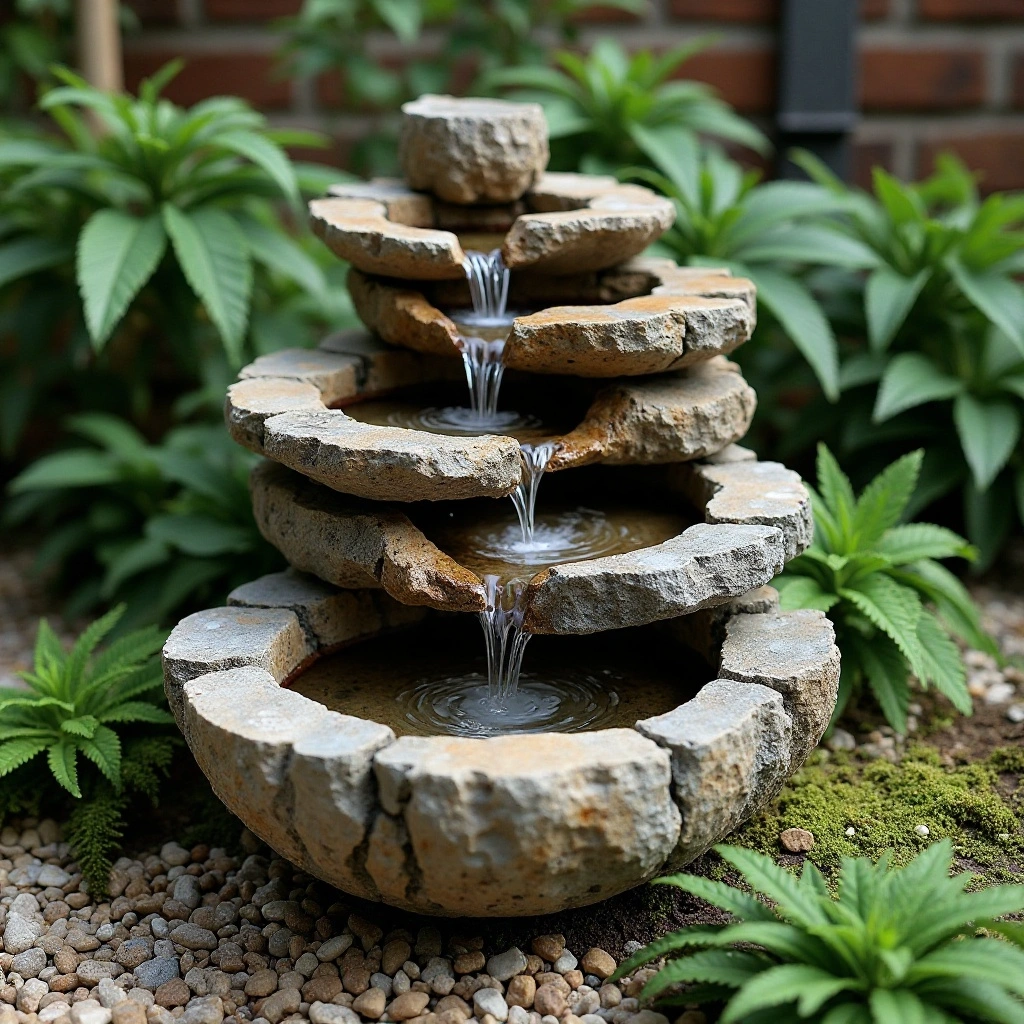
Stacked stone fountains are the gold standard of DIY water features — timeless, natural-looking, and surprisingly easy to build. By layering flat fieldstones or flagstones over a hidden submersible pump and reservoir, you create the illusion of a natural spring right in your yard.
The irregular shapes of the stones make every build unique, and the gurgling cascade creates that satisfying white-noise effect everyone loves. Shop on Amazon
How to Style It:
- Surround the base with river pebbles and creeping moss for a wild, organic look
- Add ferns and hostas nearby to reinforce the woodland feel
- Use dark-colored stones to make the water appear more reflective and dramatic
- Keep the height at 3–5 tiers for the most balanced visual proportion
Where to Use It: Along garden borders, shaded corners of a yard, woodland garden paths, or as a natural focal point in a rock garden.
Pro Tip: Use hydraulic cement or waterproof sealant between the bottom tiers to prevent water loss — this alone can cut your pump’s electricity use by up to 40%.
2. Terracotta Pot Fountain
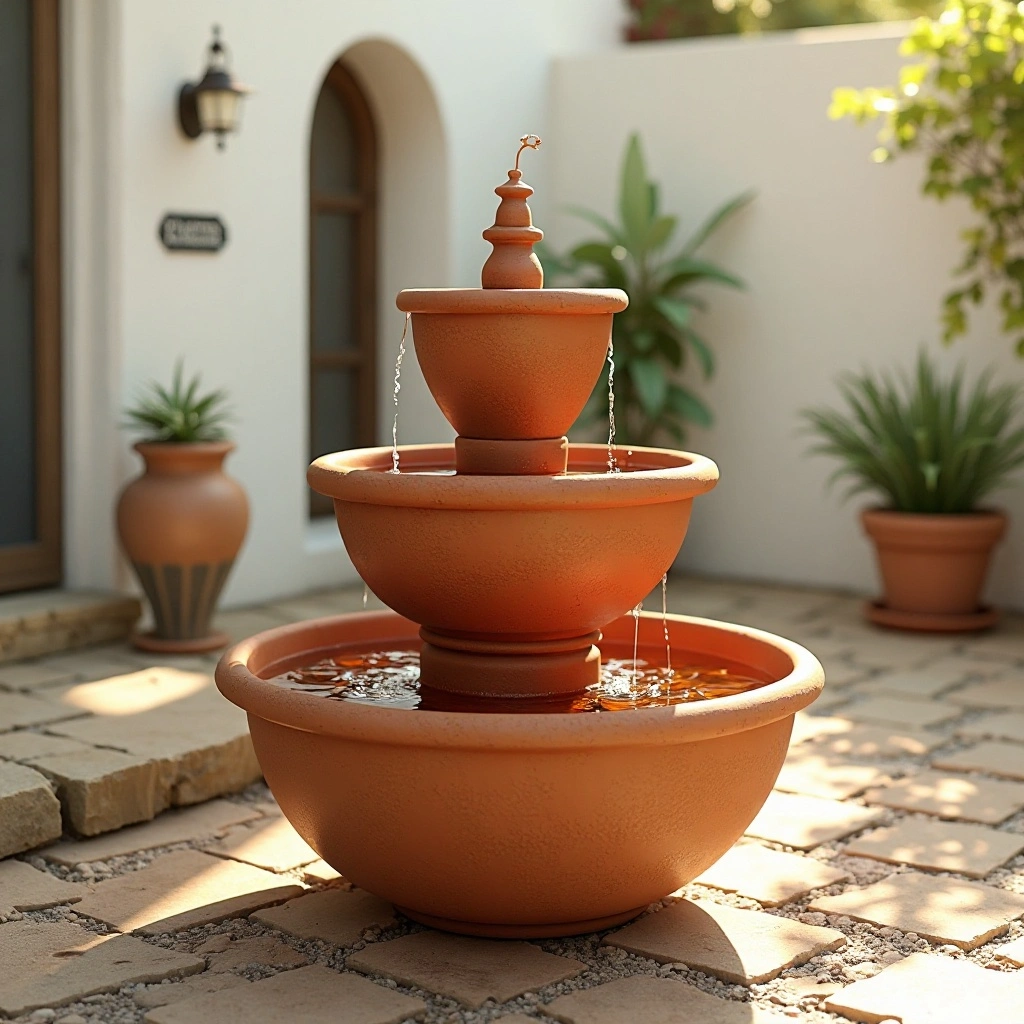
Few fountains are as beginner-friendly — or as charming — as the classic terracotta pot fountain. Using three or four matching clay pots drilled through the center with a simple submersible pump running up the middle, this build takes an afternoon and costs as little as $180–$200. The warm earthy tones of terracotta work with almost any outdoor color palette and age beautifully over time. Shop on Amazon
How to Style It:
- Group with lavender, rosemary, or other Mediterranean herbs for a cohesive theme
- Seal the inside of the pots with waterproof pot sealant to prevent cracking and leaching
- Paint the outer pot with a chalk-finish or whitewash for a French country look
- Place on a bed of decorative gravel to catch overflow
Where to Use It: Patios, courtyards, balconies, kitchen gardens, or tucked into herb borders.
Pro Tip: Thread the pump cord through the drainage hole before sealing — trying to do it afterward is the #1 beginner mistake with this build.
3. Galvanized Trough Fountain
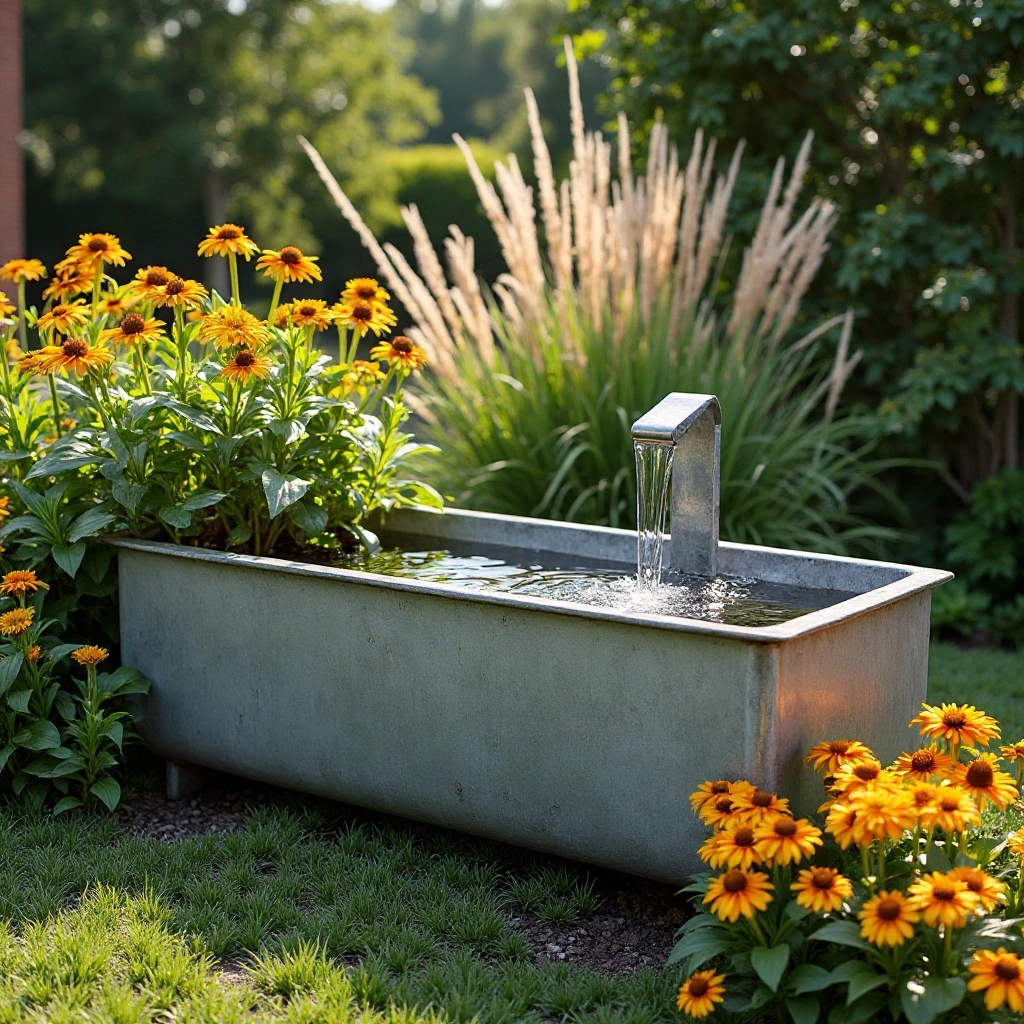
Industrial meets rustic in this effortlessly cool water feature. A simple galvanized stock tank or trough from a farm supply store becomes a sleek, modern fountain when fitted with a spout attachment and submersible pump. It’s durable, weatherproof, and gives off serious farmhouse-chic energy without trying too hard. Shop on Amazon
How to Style It:
- Plant ornamental grasses and native wildflowers around the base
- Add a few floating water plants like water hyacinth inside the trough
- Paint the exterior in matte black for a more contemporary, high-contrast look
- Use a wall-mount spout rather than a center spout for a cleaner silhouette
Where to Use It: Large patios, backyard entertaining areas, farmhouse gardens, or as a focal point on a lawn.
Pro Tip: Galvanized metal can leach zinc into the water, which harms fish. If you plan to add goldfish or koi, line the interior with a food-safe pond liner first.
4. Hypertufa Birdbath Fountain
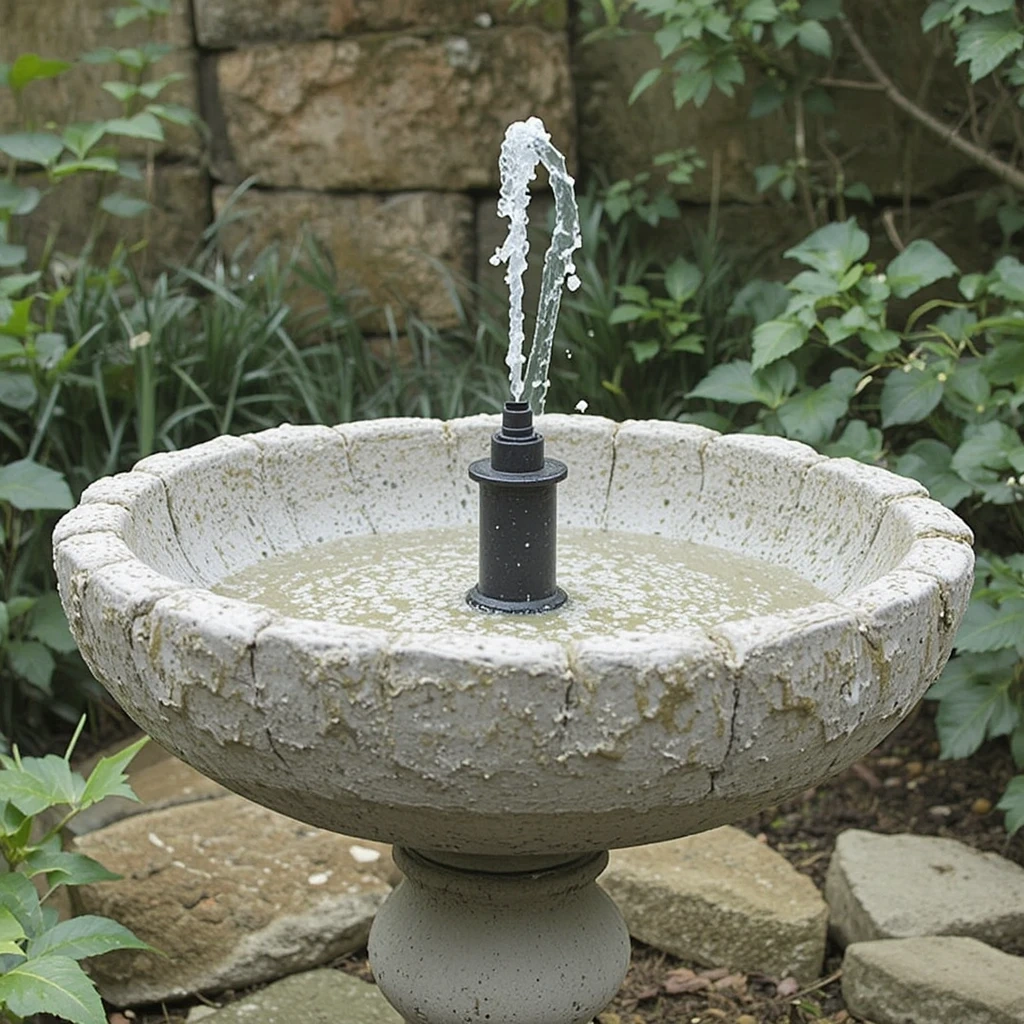
Hypertufa is a DIY material made from cement, peat moss, and perlite that mimics the look of aged stone at a fraction of the cost. Mold it into a birdbath basin, cure it, and fit a small bubbler pump in the center — and you’ve got a fountain that looks like it’s been in the garden for 100 years. Birds will love it. So will you. Shop on Amazon
How to Style It:
- Encourage moss growth by brushing the surface with diluted yogurt or buttermilk
- Keep the water movement gentle (bubbler style) so birds feel comfortable landing
- Plant creeping thyme or chamomile around the base pedestal
- Add smooth river pebbles inside the basin for visual interest and bird grip
Where to Use It: Cottage gardens, rose gardens, wildlife gardens, or as a quiet centerpiece in a perennial bed.
Pro Tip: Cure your hypertufa outside for at least 4 weeks and rinse it thoroughly before adding water — fresh cement is too alkaline for birds and plants.
5. Bamboo Spout Fountain (Shishi-Odoshi Style)
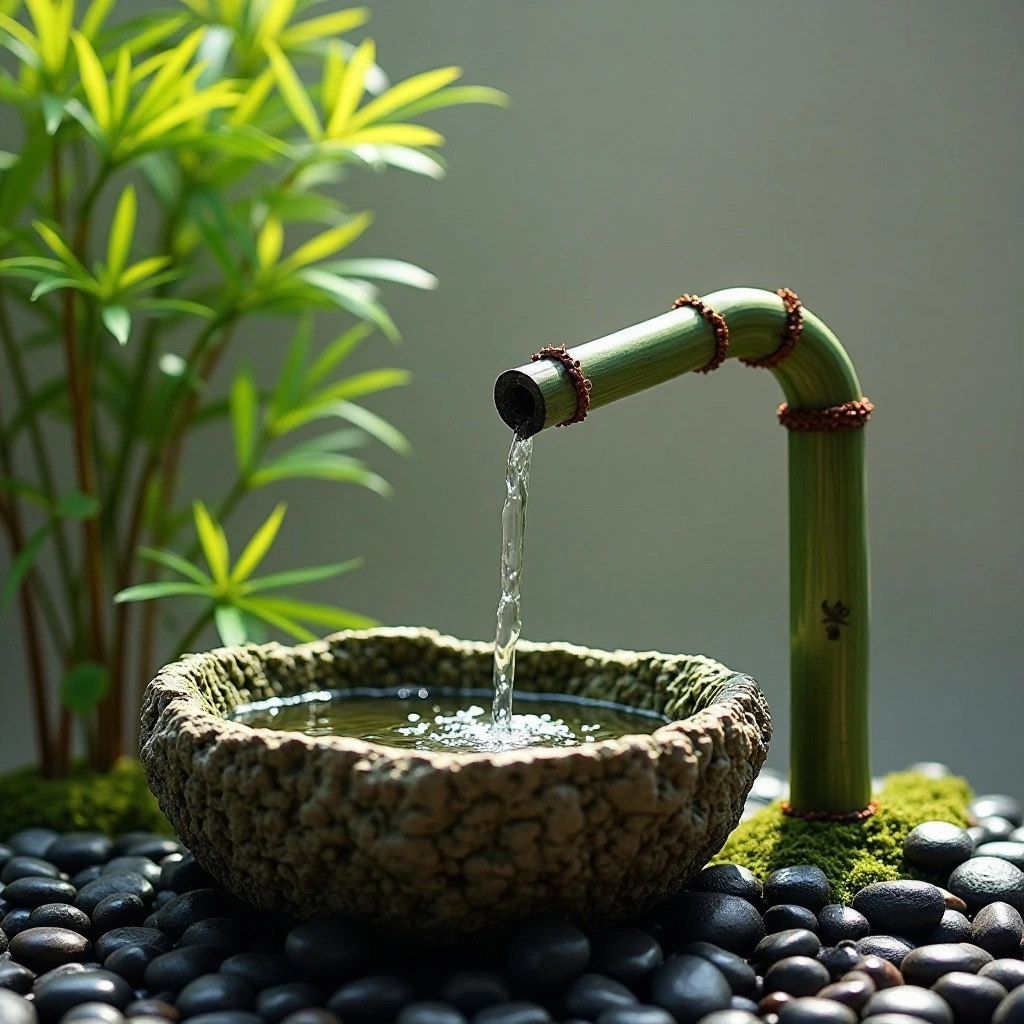
The shishi-odoshi — or “deer chaser” — is one of the most iconic water features in Japanese garden design, and it’s achievable as a DIY project with basic bamboo cane and a small pump. Water fills the bamboo spout, tips forward to pour into a stone basin below, then resets with a satisfying clack.
Even without the tipping mechanism, a simple bamboo spout pouring into a gravel-filled reservoir creates stunning Zen energy. Shop on Amazon
How to Style It:
- Keep the surrounding area minimal — gravel, moss, and one or two accent stones only
- Use black lava rock in the basin for a dramatic, high-contrast look
- Pair with a small Japanese maple or ornamental pine nearby
- Avoid colorful flowers — the beauty is in the restraint
Where to Use It: Zen gardens, meditation corners, small Japanese-inspired courtyards, or shaded side yards.
Pro Tip: Seal the interior of the bamboo with food-grade mineral oil to prevent it from splitting and cracking as it dries out between uses.
6. Concrete Block Fountain Wall
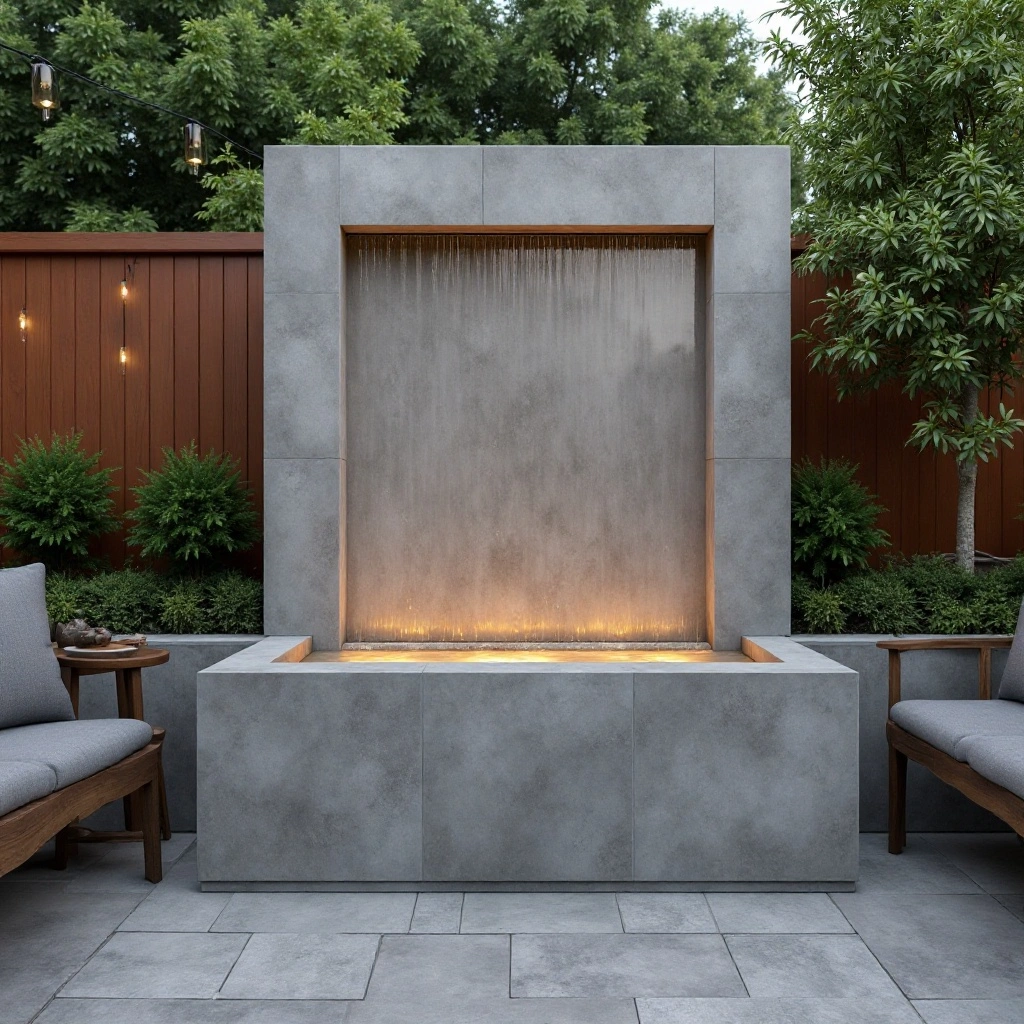
For a truly architectural statement, a concrete block wall fountain delivers drama in abundance. Stack standard cinder blocks or pour your own concrete panels, embed a pipe behind the wall face, and let water sheet down in a smooth, glassy curtain. This is the fountain version of a feature wall — bold, graphic, and completely custom. Shop on Amazon
How to Style It:
- Paint or stain the concrete in charcoal, warm white, or terracotta to match your palette
- Embed LED strip lighting along the top edge for dramatic evening effect
- Keep surrounding planting low and structural — ornamental grasses or agaves
- Use a long, shallow trough (rather than a deep basin) for a sleek, modern profile
Where to Use It: Modern backyards, poolside walls, outdoor dining areas, or as a privacy screen with a function.
Pro Tip: Apply two coats of concrete waterproofing sealer (like Drylok) to both the wall face and trough before running water — unsealed concrete is porous and will lose water quickly.
7. Whiskey Barrel Fountain
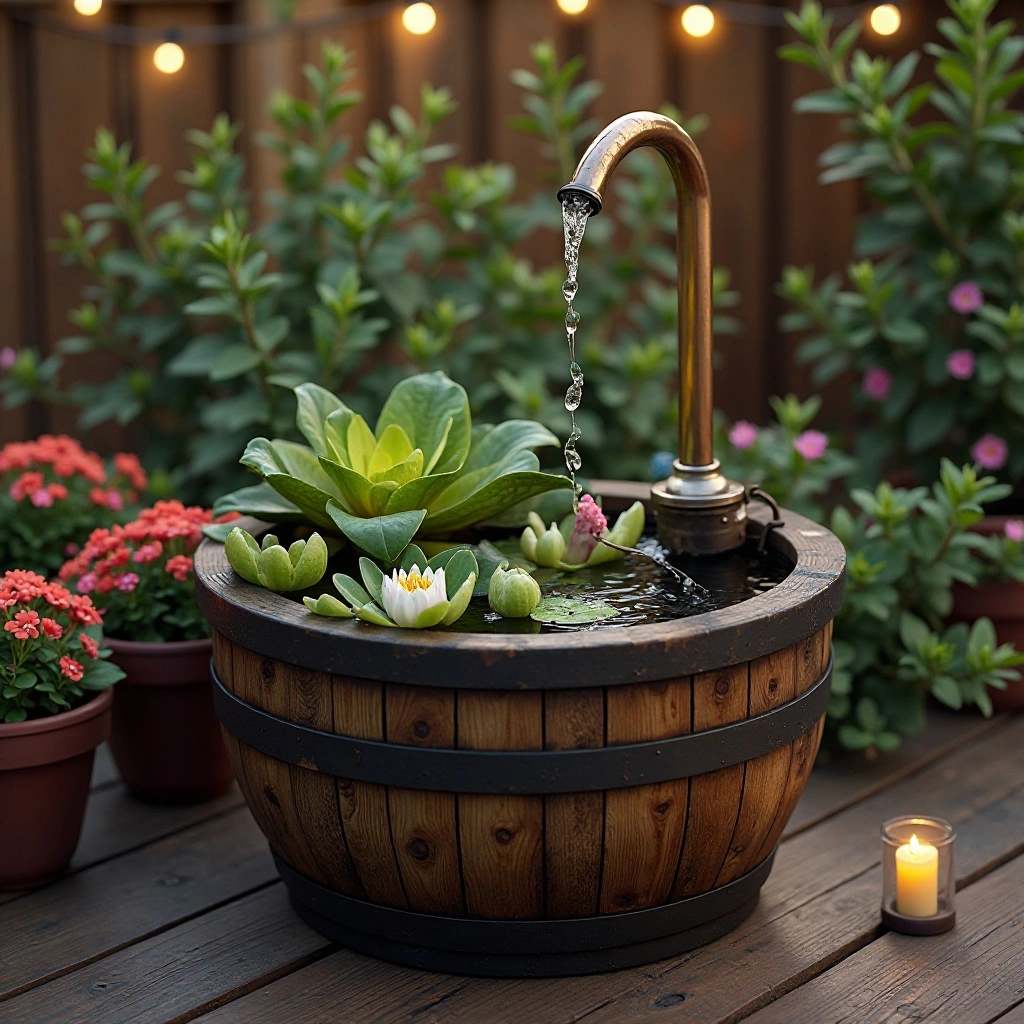
A half whiskey barrel is one of the most versatile DIY fountain containers around. It’s large enough to hold aquatic plants and even a few small fish, it has natural rustic charm, and it’s widely available at garden centers.
Fit a small spout or bubbler pump, add some floating plants, and you have an entire self-contained water garden in a barrel. Shop on Amazon
How to Style It:
- Float water lettuce and dwarf water lilies on the surface for a lush, layered look
- Add 2–3 small goldfish to control mosquito larvae naturally
- Wrap fairy lights around the barrel exterior for evening ambiance
- Elevate on wooden blocks or a platform to make it a true focal point
Where to Use It: Decks, patios, small yards, front porches, or cottage gardens.
Pro Tip: Line the interior with a food-safe pond liner before filling — old whiskey barrels can have gaps between staves that will slowly drain your fountain if unsealed.
8. Glass Ball Bubbler Fountain
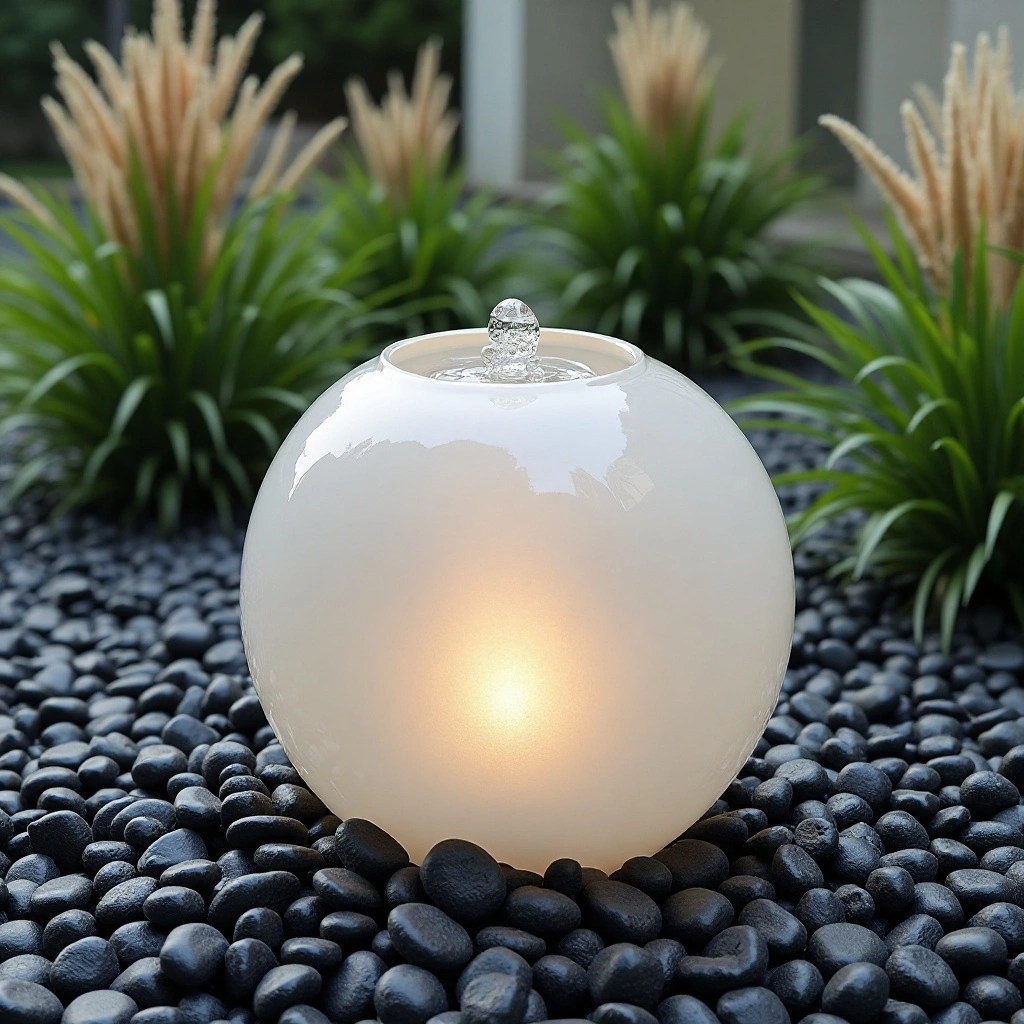
Glass sphere bubblers are the minimalist’s dream fountain. A large glass or resin orb, drilled through the center, sits over a hidden reservoir with a submersible pump beneath. Water bubbles up through the top of the sphere, catches the light as it rolls down the curves, and disappears back into the gravel below. Elegant, modern, and hypnotic. Shop on Amazon
How to Style It:
- Use a single sphere for maximum minimalist impact
- Choose frosted glass for softer light diffusion or clear glass for sparkle
- Surround with fine black basalt gravel and a single dramatic grass clump
- Add solar-powered spotlights at ground level to illuminate the sphere at night
Where to Use It: Contemporary gardens, entryways, courtyard gardens, or as a sculptural accent in a gravel garden.
Pro Tip: Pre-drill glass spheres using a diamond-tipped drill bit with constant water cooling — rushing this step is how expensive spheres crack.
9. Urn & Amphora Fountain
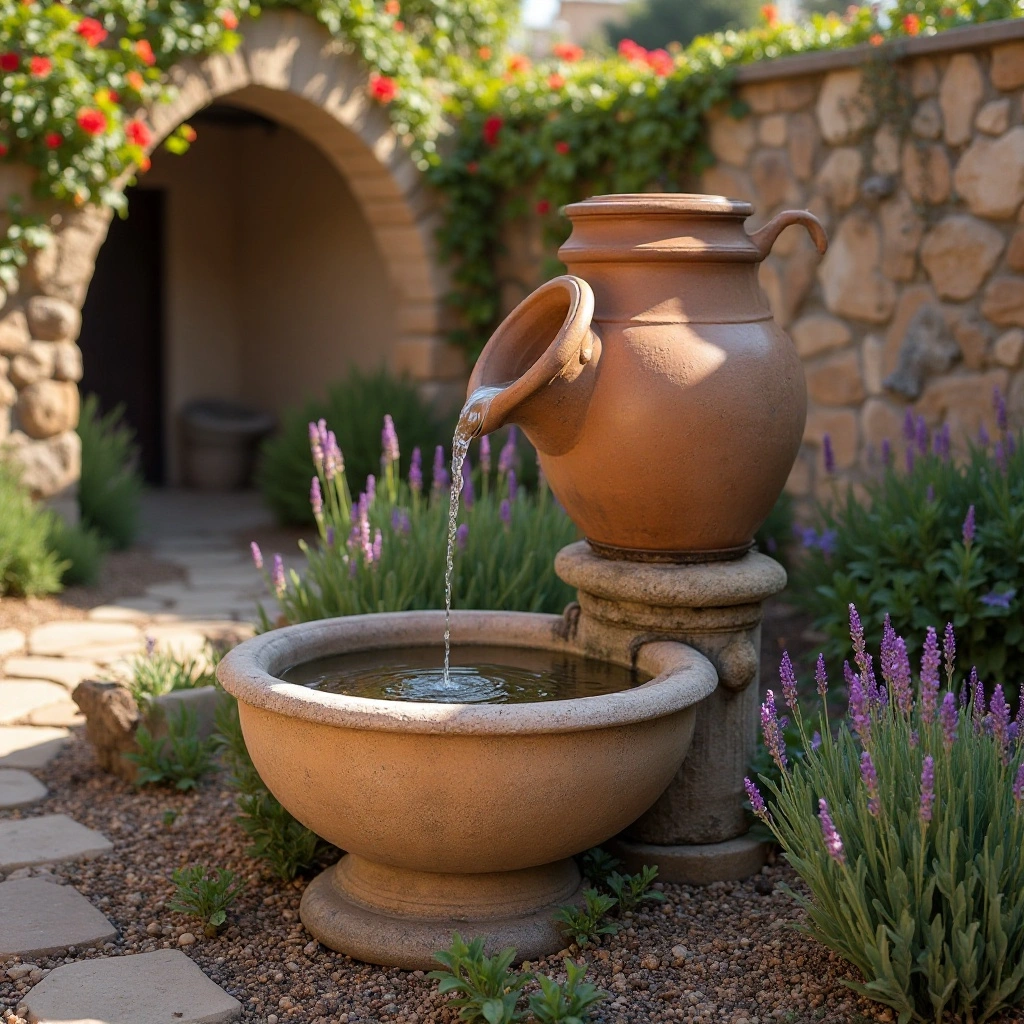
Few things evoke Mediterranean romance like a tipping urn fountain. An oversized decorative amphora or urn — real ceramic or lightweight faux-stone resin — is set at an angle over a concealed basin, with a pump cycling water up through the interior to spill continuously from the mouth. It looks timeless and artistic, and is actually one of the simpler builds on this list. Shop on Amazon
How to Style It:
- Choose urns in aged terracotta, verdigris bronze, or antique white for the most authentic look
- Plant bougainvillea or climbing roses on a nearby wall for a full Mediterranean scene
- Lay tumbled limestone or sandstone pavers around the base
- Use two or three urns of different sizes grouped together for a sculptural vignette
Where to Use It: Mediterranean gardens, walled courtyards, pool surrounds, or as an entryway focal point.
Pro Tip: If using a resin faux-stone urn, check that it’s UV-stabilized — cheaper resin fades and chalks within one season in direct sun.
10. Millstone Fountain
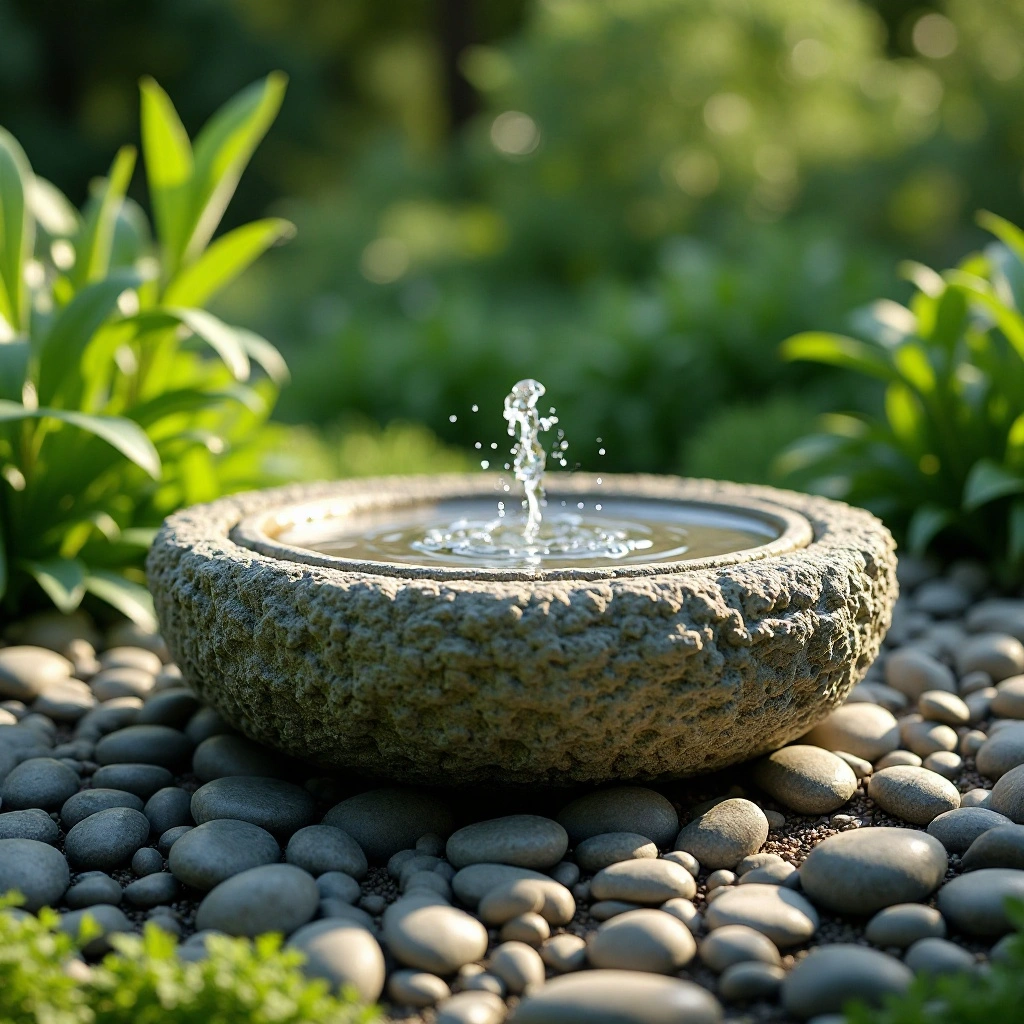
The millstone fountain is as classic as it gets. A genuine or reproduction millstone lies flat on the ground over a hidden reservoir, and water bubbles up through the central hole, sheets across the grooved surface, and disappears quietly into the pebbles below.
It’s low-profile, ultra-safe for children and pets, and has a sculptural quality that makes it look expensive even when it isn’t. Shop on Amazon
How to Style It:
- Surround with river pebbles graded from large (outer edge) to small (inner) for a natural look
- Plant low creeping groundcovers between the surrounding stones
- Add a second, smaller millstone nearby as an accent element
- Keep surrounding plants low so the stone remains the visual centerpiece
Where to Use It: Family gardens, pet-friendly yards, formal garden paths, or as a lawn centerpiece.
Pro Tip: Reproduction millstones made from cast concrete are widely available and much lighter than genuine stone — easier to install and reposition without equipment.
11. Tiered Planter Waterfall
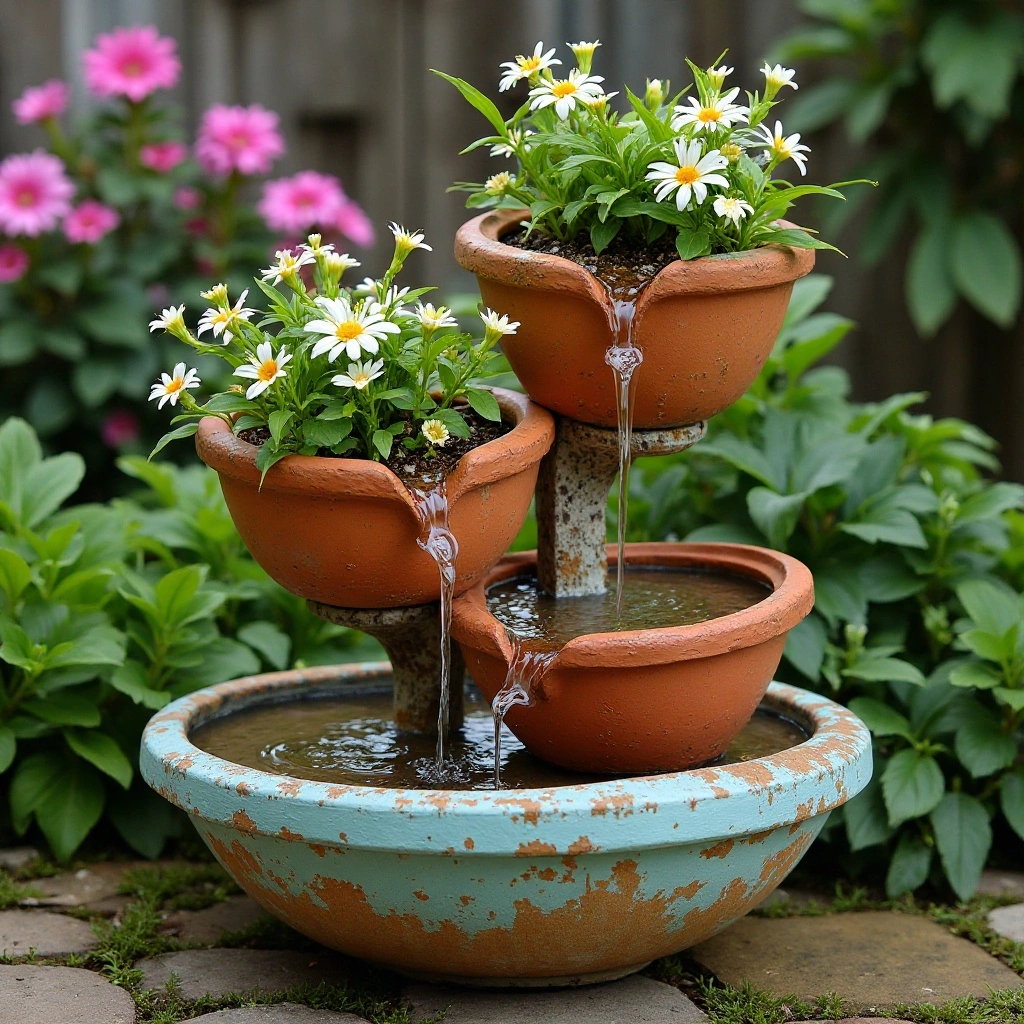
Why choose between a fountain and a planter when you can have both? The tiered planter waterfall stacks large planters at staggered heights, connects them with a recirculating pump, and fills them with blooming trailing plants.
Water cascades from planter to planter through overflow holes, creating a living, blooming fountain that changes with the seasons. Shop on Amazon
How to Style It:
- Choose trailing plants like lobelia, bacopa, million bells, or sweet potato vine
- Use planters in a cohesive color family — all terracotta, all white, or all cobalt blue
- Position the tallest planter at the back and step them forward for depth
- Change out annual plants seasonally to keep the look fresh year-round
Where to Use It: Patios, decks, balconies, courtyard gardens, or as a colorful entry feature.
Pro Tip: Drill your overflow holes slightly off-center rather than dead center — this creates a more organic, irregular spill pattern that looks more natural and less manufactured.
12. Solar-Powered Bird Bath Fountain
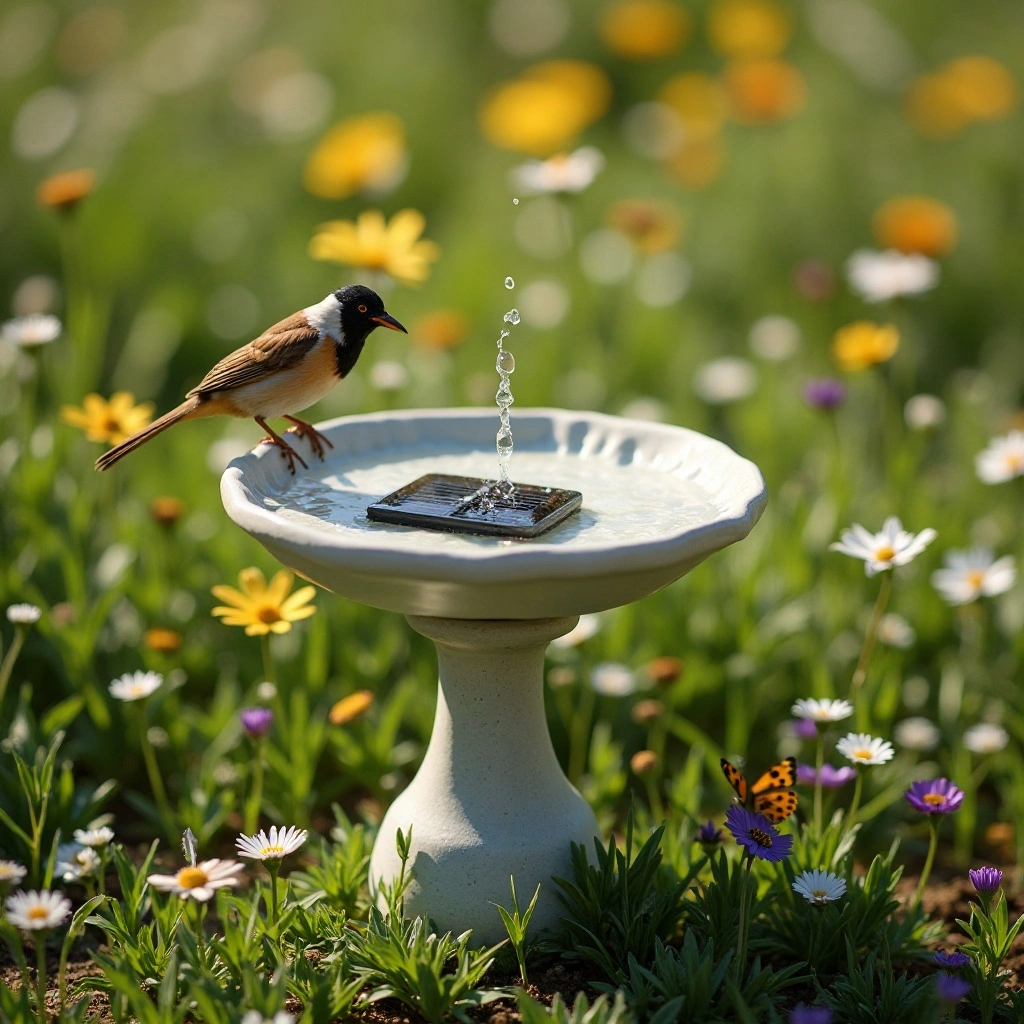
The solar-powered birdbath fountain is the ultimate low-maintenance, eco-friendly water feature. A standard birdbath gets upgraded with a floating solar pump — no wiring, no electricity costs, no complicated installation.
As long as there’s sunlight, the water moves, attracting birds and pollinators all day long. It’s the perfect entry-level fountain for beginners. Shop on Amazon
How to Style It:
- Place in a sunny spot for consistent pump operation (6+ hours direct sun is ideal)
- Keep the basin clean and topped up — moving water still evaporates
- Surround with native wildflowers and butterfly-attracting plants
- Add a few smooth pebbles inside the basin for birds to perch on while drinking
Where to Use It: Wildlife gardens, sunny borders, vegetable garden corners, or any spot far from an electrical outlet.
Pro Tip: Move the solar panel to the sunniest spot in your garden and run a thin wire to the birdbath if the bath itself is partially shaded — many kits have a separate panel and pump for this exact reason.
13. Driftwood & Rock Natural Fountain
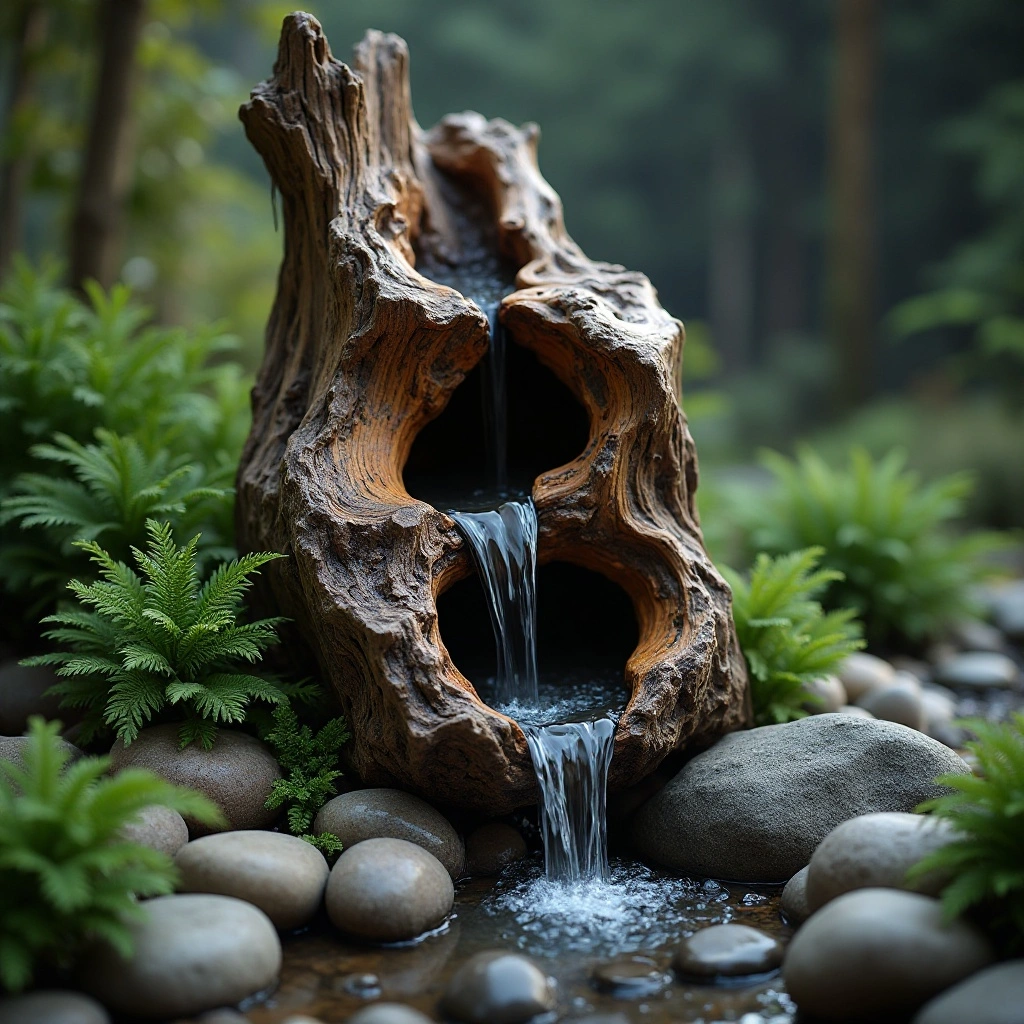
For a fountain that looks like it grew from the earth itself, nothing beats a driftwood and river rock build. A large, sculptural piece of weathered driftwood is fitted with a hidden tube running through its interior, and water emerges from a natural-looking crack or gap, trickling down into a stream bed of river stones below. It’s utterly unique because the driftwood itself is unique. Shop on Amazon
How to Style It:
- Choose driftwood with dramatic curves, texture, and character — not uniform pieces
- Plant hart’s tongue ferns, mosses, and shade-loving groundcovers around the base
- Use dark basalt river stones mixed with pale quartz for contrast in the stream bed
- Add a fog or mist machine near the base for a truly ethereal, atmospheric effect
Where to Use It: Woodland gardens, shaded corners, Pacific Northwest-inspired spaces, or any naturalistic garden setting.
Pro Tip: Soak and scrub driftwood thoroughly before use to remove salt, bacteria, and tannins that can discolor your water and harm plants nearby.
14. Wall-Mounted Spout Fountain
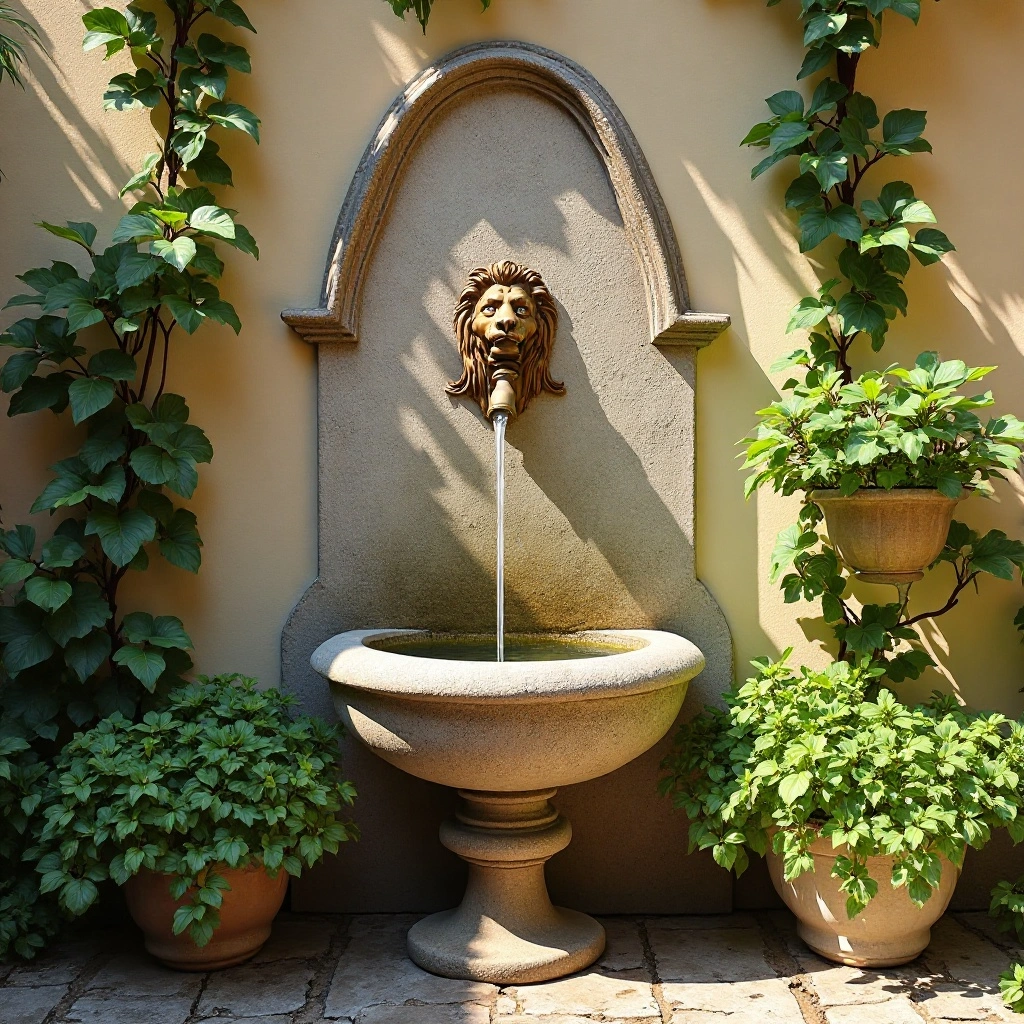
Wall-mounted fountains are the secret weapon of small-space garden design. They take up zero floor space, add enormous visual impact, and can transform a blank fence or garden wall into an architectural feature.
A decorative spout (lion head, gargoyle, fleur-de-lis) feeds into a half-round or square basin mounted below, with a hidden pump cycling the water back up. Shop on Amazon
How to Style It:
- Match the spout finish to other metal accents in your garden (bronze, iron, copper, or verdigris)
- Espalier a fig tree or climbing rose on either side of the spout for a formal look
- Use a stone or cast concrete basin for authenticity — avoid plastic if possible
- Illuminate the spout with a small directional spotlight for dramatic evening effect
Where to Use It: Courtyard walls, garden fences, exterior house walls, enclosed gardens, or narrow side passages.
Pro Tip: Run the pump tubing through PVC conduit inside the wall rather than on the surface — it’s more work upfront but makes the installation look professionally done and protects the tubing from UV damage.
15. Illuminated Pebble Fountain with LED
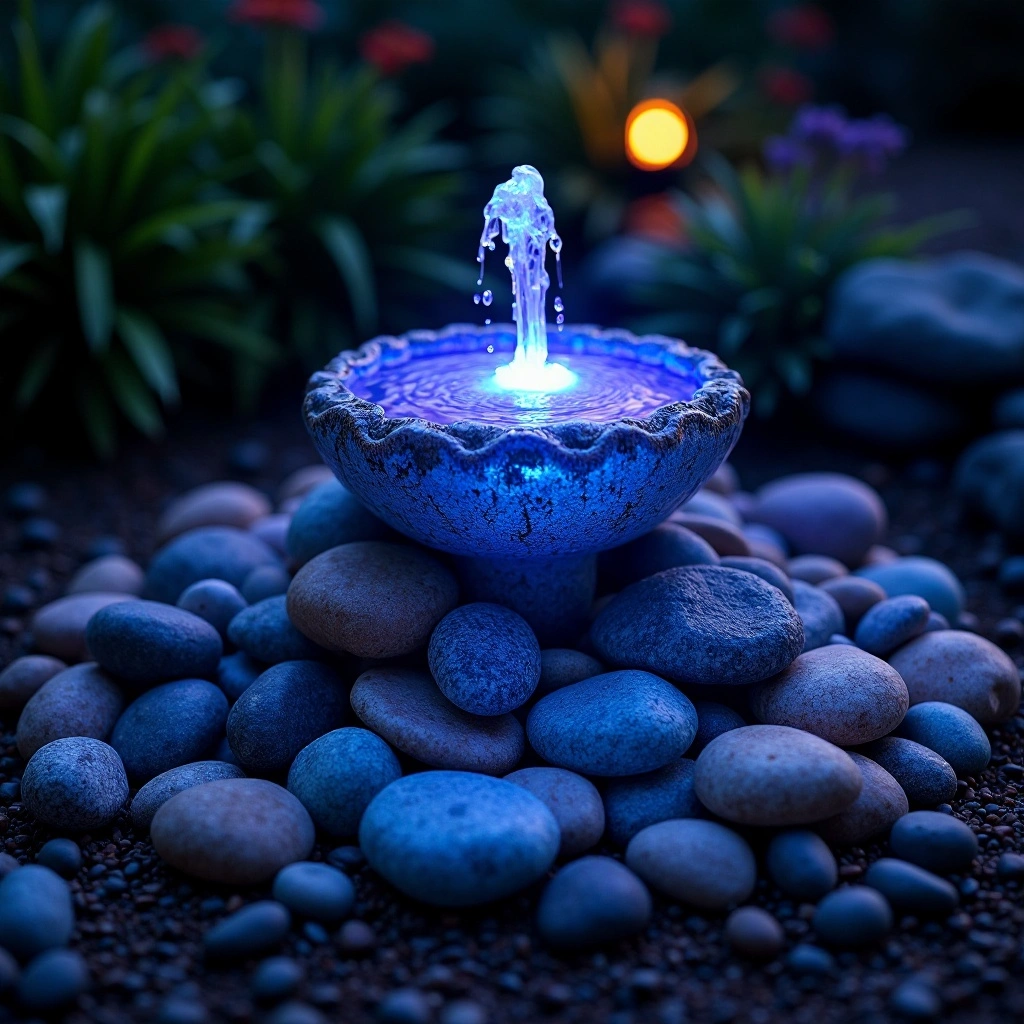
Save the most dramatic for last. The illuminated pebble fountain is a daytime water feature that truly comes alive at night. Submersible color-changing LED lights are placed inside the reservoir beneath the pebble grid, turning the entire water surface into a glowing, shifting light show. During the day it’s a clean, minimalist ground-level fountain. After dark, it’s pure magic. Shop on Amazon
How to Style It:
- Use color-changing RGB LEDs controlled by a remote or smart home device
- Keep surrounding plants dark and architectural (black mondo grass, dark-leafed heuchera)
- Add a timer so the fountain runs automatically from dusk to midnight
- Use larger, rounder pebbles to allow more light to filter through the gaps
Where to Use It: Entertainment areas, outdoor dining spaces, pool terraces, modern gardens, or any high-visibility evening gathering spot.
Pro Tip: Use only submersible-rated LED lights (IP68 waterproof rating) — regular garden lights placed near water will fail within weeks and can become a safety hazard.
Common Mistakes to Avoid
Even the most beautiful fountain ideas can go wrong without a little forethought. Here are the mistakes DIY fountain builders make most often — and how to avoid them:
1. Choosing the wrong pump size Your pump must be able to move the full volume of your reservoir at least once per hour. Under-powered pumps struggle, overheat, and die young. Always size up slightly — a pump that’s slightly too powerful is far easier to throttle down than one that’s too weak.
2. Forgetting to seal concrete and terracotta Unsealed porous materials act like sponges. Your reservoir will constantly lose water, your pump will run dry, and your electricity bill will quietly climb. Always seal any porous fountain component with waterproof pond-safe sealer before filling.
3. Placing the fountain away from a power source and hoping for the best If you don’t use solar, you need a GFCI outdoor outlet within reach. Running extension cords across your garden is a trip hazard and a code violation. Plan your power source before you pour the first stone.
4. Ignoring evaporation All fountains lose water to evaporation, especially in summer. If you don’t top it up regularly, the pump runs dry and burns out. Add an auto-fill valve to your reservoir, or commit to checking levels every 2–3 days.
5. Planting too close to the fountain Aggressive roots can crack basins and reservoirs over time. Keep large shrubs and trees at least 3–4 feet away, and stick to small ornamentals and groundcovers in the immediate fountain zone.
6. Skipping the GFCI outlet Water and electricity are a dangerous combination. Always plug your pump into a GFCI (Ground Fault Circuit Interrupter) outdoor outlet. This is non-negotiable — it’s a safety essential.
7. Buying the cheapest pump available Bargain pumps often have poor seals, short cords, and mediocre flow rates. They tend to fail within a season. Spend a little more on a reputable brand (Laguna, Aquascape, or Beckett) — it will pay for itself in longevity.
Frequently Asked Questions
How much does a DIY fountain cost to build? Costs range widely depending on the design. Simple solar birdbath fountains can cost as little as $25–$50. Mid-range pebble or pot fountains typically run $80–$200. More elaborate stone or concrete wall fountains can reach $300–$600+ depending on materials. In every case, DIY builds cost 50–70% less than professionally installed equivalents.
Do DIY fountains use a lot of electricity? Most small submersible fountain pumps use between 10–50 watts — comparable to a standard LED light bulb. Running 24/7, this works out to roughly $1–$5 per month in electricity. Solar-powered fountains use zero grid electricity when the sun is out.
How do I prevent mosquitoes in my fountain? Moving water is the enemy of mosquito larvae — they need still water to breed. Keep your pump running consistently. You can also add a Bti (Bacillus thuringiensis israelensis) dunk tablet to the water monthly — it kills larvae but is completely safe for birds, fish, pets, and people.
How do I clean my DIY fountain? Drain and scrub the basin with a 10:1 water-to-white-vinegar solution every 4–6 weeks. Clean the pump impeller with a soft brush at the same time. Rinse everything thoroughly before refilling. Avoid bleach — even diluted, it can harm birds, plants, and pond ecosystems.
Can I leave my fountain running in winter? In freezing climates, no. Water expands when it freezes and can crack basins, reservoirs, and ceramic components. Before the first freeze, drain the fountain completely, remove and store the pump indoors, and cover ceramic or terracotta elements with burlap or bubble wrap to prevent frost cracking.
Do I need planning permission to build a garden fountain? In most residential settings, small garden fountains require no permits. Larger water features over 30 inches deep, or any installation requiring new electrical work, may need a local permit. Always check with your local authority or HOA before beginning a large project.
What’s the easiest DIY fountain for a complete beginner? The solar-powered birdbath fountain (#12) or the terracotta pot fountain (#2) are both ideal for beginners. They require no hardwiring, minimal tools, and can be completed in a single afternoon with materials available at any garden center.
How do I keep my fountain water clear? Add a small amount of fountain water clarifier (available at garden centers) monthly. Keep the pump running continuously rather than turning it on and off — stagnant periods allow algae to bloom. Aquatic plants like water hyacinth also act as natural biofilters and will dramatically reduce algae growth.
Final Thoughts: Start Small, Dream Big
The hardest part of any DIY fountain project isn’t the building — it’s picking which one to start with. Use the image generation prompts in this guide to visualize each design in your own space, narrow it down to your top two or three, and let your site conditions (sun, shade, space, and proximity to power) make the final call.
A fountain doesn’t have to be grand to be transformative. Even the simplest bubbling birdbath can turn a forgotten corner of your garden into a place you actually want to spend time. Start with one, build your confidence, and before long you’ll be planning the next one.