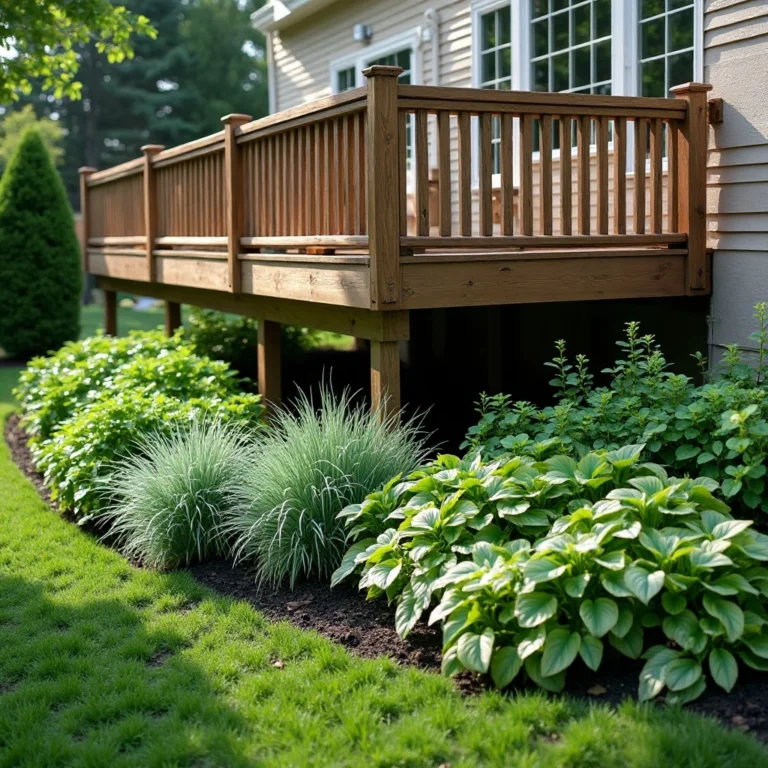
20 Fire Pit Ideas Backyard for Stunning Outdoor Design
Whether you’re looking to extend your evenings outdoors, add a dramatic focal point to your landscape, or simply create a cozy gathering spot for family and friends — a fire pit is one of the best investments you can make for your backyard. From rustic stone circles to sleek modern gas installations, the right fire pit can completely transform how you use and experience your outdoor space.
In this guide, we’ve rounded up 20 of the most beautiful, functional, and creative fire pit ideas Backyard available today. Each idea comes with everything you need — styling tips, placement advice, a pro tip from the experts, and a ready-to-use image generation prompt so you can visualize exactly how it would look in your space before you build it.
Why a Fire Pit Is the Ultimate Backyard Upgrade
A fire pit isn’t just about warmth — it’s about atmosphere. It’s the reason people pull up chairs, put down their phones, and actually talk. It creates a natural gathering point that no outdoor TV, string light arrangement, or garden feature can replicate. Done right, a fire pit adds value to your home, extends your outdoor season well into fall and winter, and makes your backyard a place people actually want to spend time.
Before we dive into the ideas, a quick note: the best fire pit for your backyard depends on your space, your style, your local fire codes, and whether you want wood-burning authenticity or gas-powered convenience. This list covers all of it.
The 20 Best Fire Pit Ideas for Every Backyard Style
1. Classic Stacked Stone Fire Pit
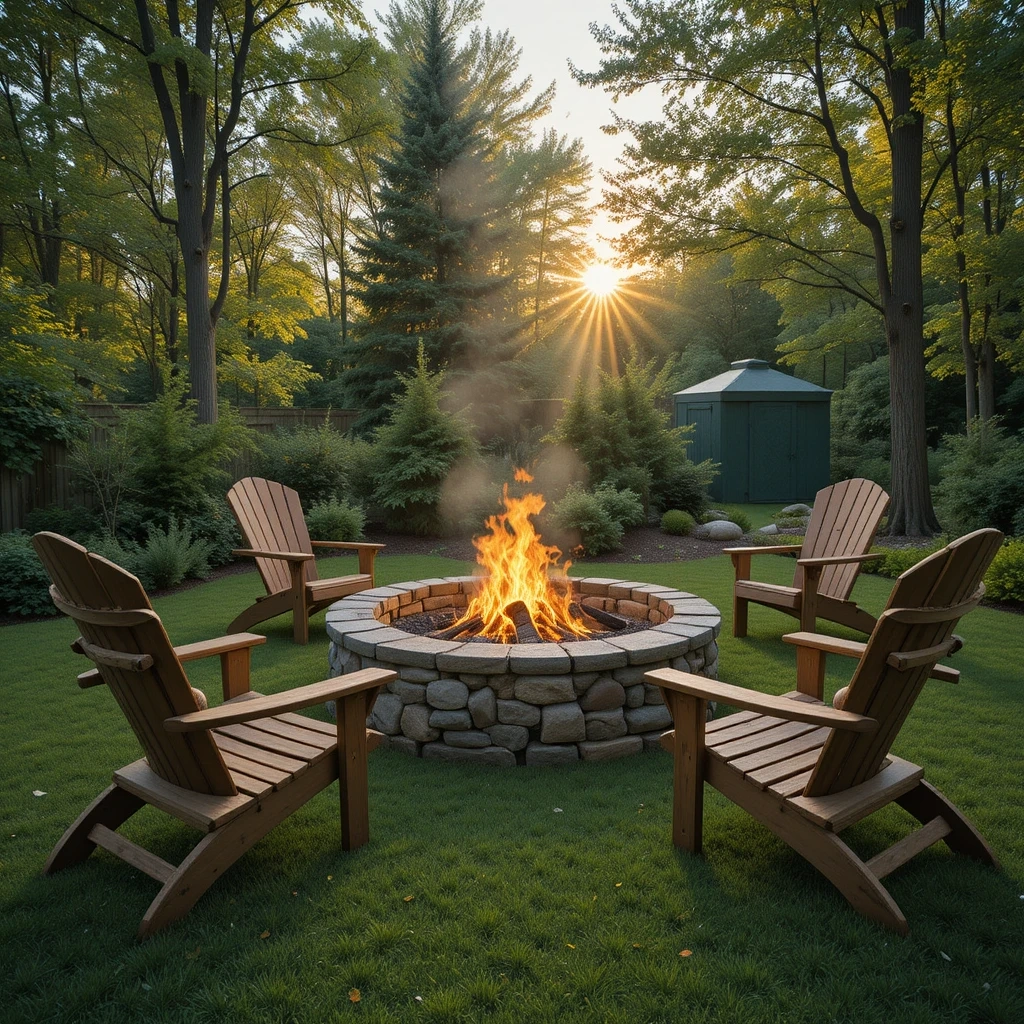
A timeless stacked stone fire pit brings rustic warmth and a sense of permanence to any backyard. Built from natural fieldstone or river rock, this style blends seamlessly into naturalistic landscapes. The irregular textures and earthy tones create a campfire-like ambiance that feels both ancient and welcoming — perfect for storytelling nights and s’more sessions. Shop on Amazon
How to Style It:
- Surround with wooden Adirondack chairs in natural or weathered gray finishes
- Add a woven outdoor rug beneath the seating arrangement
- Place a rustic wooden side table nearby to hold drinks and snacks
- Use river rock or pea gravel around the perimeter to define the fire zone
Where to Use It: Works best in naturalistic, cottage-style, or farmhouse backyards with plenty of greenery. Ideal for larger outdoor spaces with an open lawn.
Pro Tip: Use dry-stack construction without mortar for the top two rows — this allows for airflow and easier reconfiguration if you want to resize. Always cap the top ring with flat cap stones for a polished, finished look.
2. Brick Fire Pit with Built-In Seating Wall
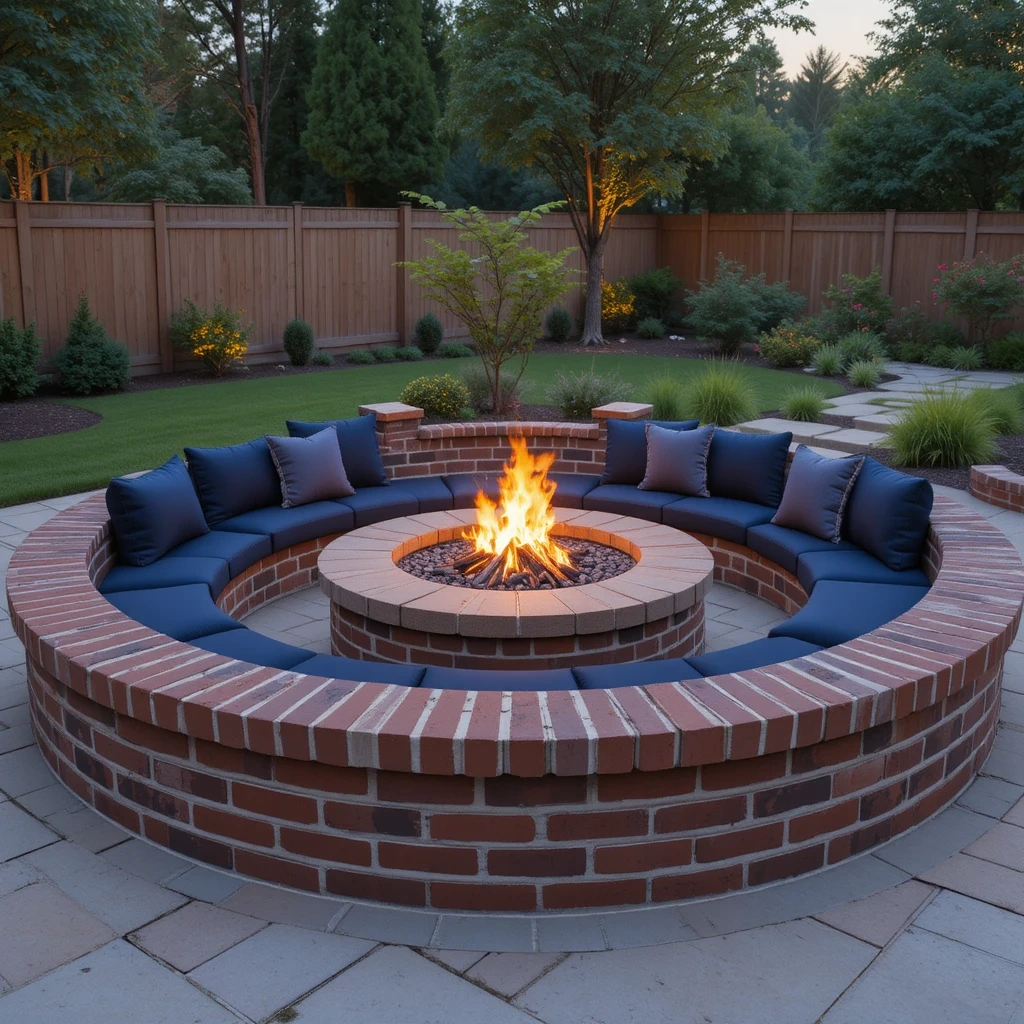
A brick fire pit paired with a low surrounding seating wall is the gold standard of outdoor entertaining. The built-in bench eliminates the need for moveable furniture and gives your backyard a permanent, architectural feel.
Classic red brick or modern charcoal-toned brick can dramatically change the aesthetic — from traditional to contemporary with just a material choice. Shop on Amazon
How to Style It:
- Add weather-resistant cushions in navy, charcoal, or terracotta on the seating wall
- Place potted evergreens or lavender around the seating perimeter
- Install recessed lighting in the seating wall for nighttime ambiance
- Use matching brick for the fire pit base and the surrounding patio if possible
Where to Use It: Perfect for medium to large backyards where you entertain regularly. Pairs beautifully with a brick home exterior or traditional garden design.
Pro Tip: Build the seating wall to exactly 18 inches high — the perfect comfortable seating height. Cap it with smooth bluestone or natural flagstone for a contrast that’s both beautiful and practical.
3. Modern Corten Steel Fire Pit Bowl
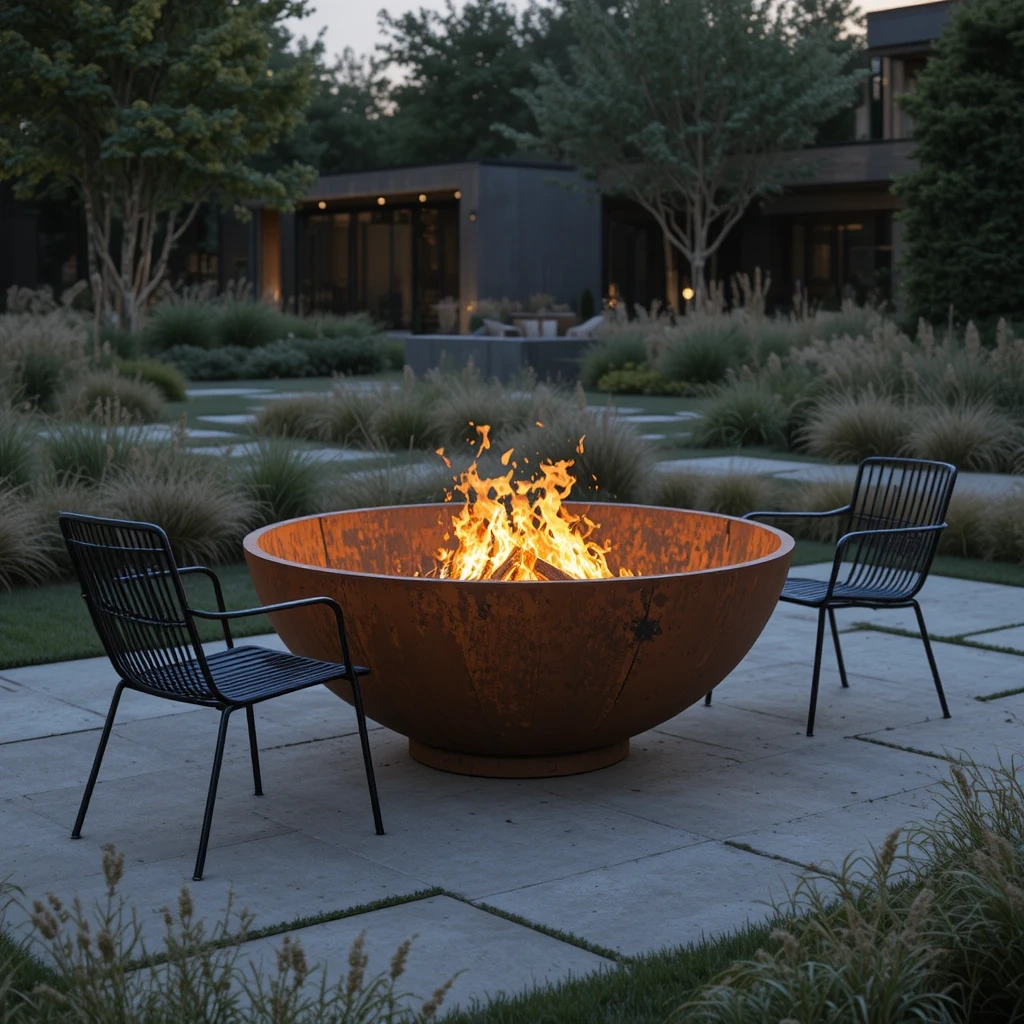
Corten steel (also known as weathering steel) develops a gorgeous rusted orange patina over time, making it one of the most visually striking fire pit materials available. A large steel bowl fire pit feels sculptural and contemporary, acting as a dramatic centerpiece even when it’s not lit. The industrial aesthetic pairs surprisingly well with lush garden plantings. Shop on Amazon
How to Style It:
- Pair with black powder-coated metal furniture for a cohesive industrial-modern aesthetic
- Plant ornamental grasses, black-eyed Susans, or agave nearby to soften the hard edges
- Use a simple gravel or concrete patio surface to let the fire pit be the star
- Keep accessories minimal — one or two side tables max
Where to Use It: Ideal for contemporary, minimalist, or industrial-style backyards. Works especially well on concrete or decomposed granite surfaces.
Pro Tip: Never seal corten steel — the patina is a protective coating. Over time, it actually becomes more durable as it oxidizes. If you want to speed up the patina process, apply a mixture of vinegar and hydrogen peroxide to the surface.
4. Sunken Fire Pit Lounge
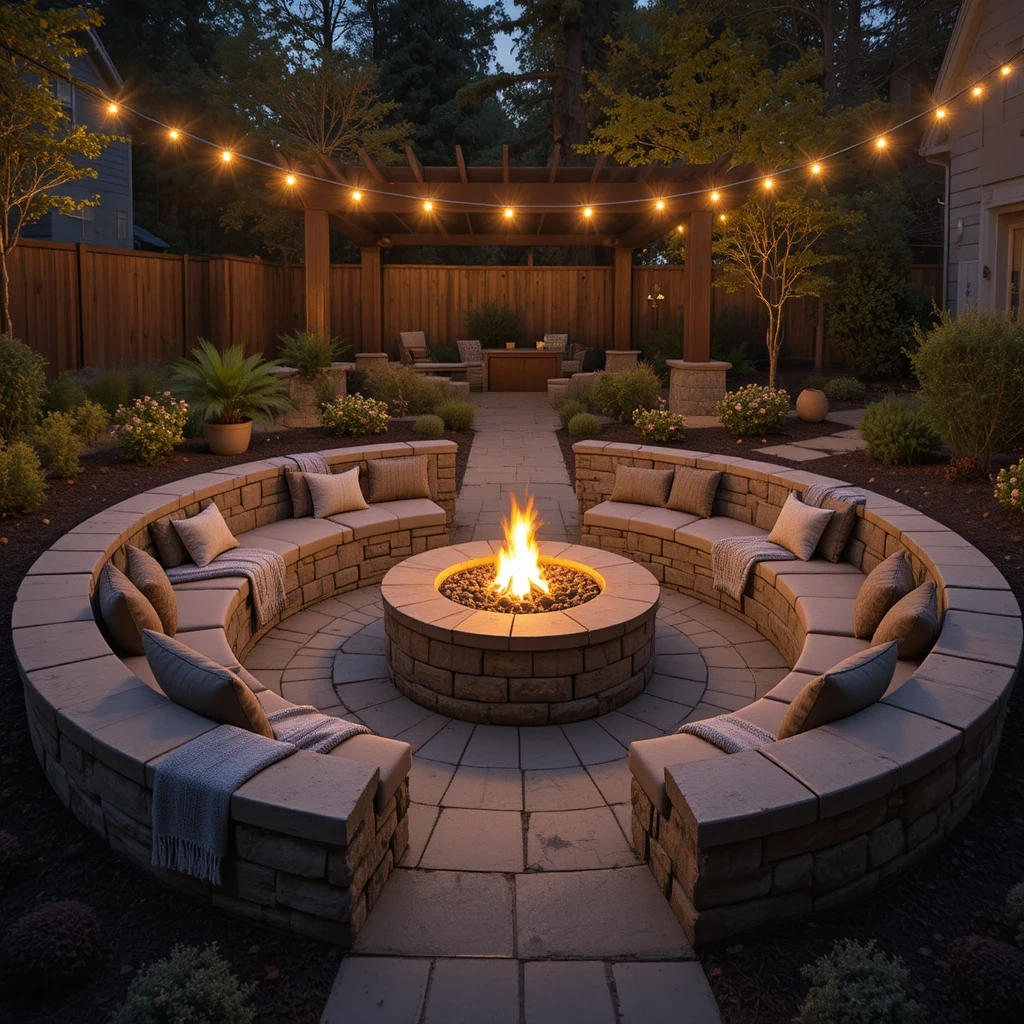
A sunken fire pit area creates an incredibly intimate, wind-protected gathering space that feels like stepping into a secret outdoor room. By recessing the seating area 18–24 inches below grade, you get a natural windbreak, a cozy enclosure effect, and a dramatic visual feature that makes your backyard look like a high-end resort. This is a showstopper project that pays off every single time you use it. Shop on Amazon
How to Style It:
- Line the steps leading down into the pit with warm-toned LED strip lighting
- Use built-in concrete or stone benches with plush waterproof cushions
- Hang string lights from poles positioned around the perimeter at grade level
- Add throw blankets in a basket nearby for chilly evenings
Where to Use It: Best for flat yards with good drainage. Requires planning around underground utilities — always call 811 before digging. Perfect for entertaining-focused homeowners who want a destination space.
Pro Tip: Add a French drain system beneath the seating area during construction. Sunken spaces can collect water, and proper drainage prevents flooding and extends the life of your investment dramatically.
5. Concrete Block DIY Fire Pit
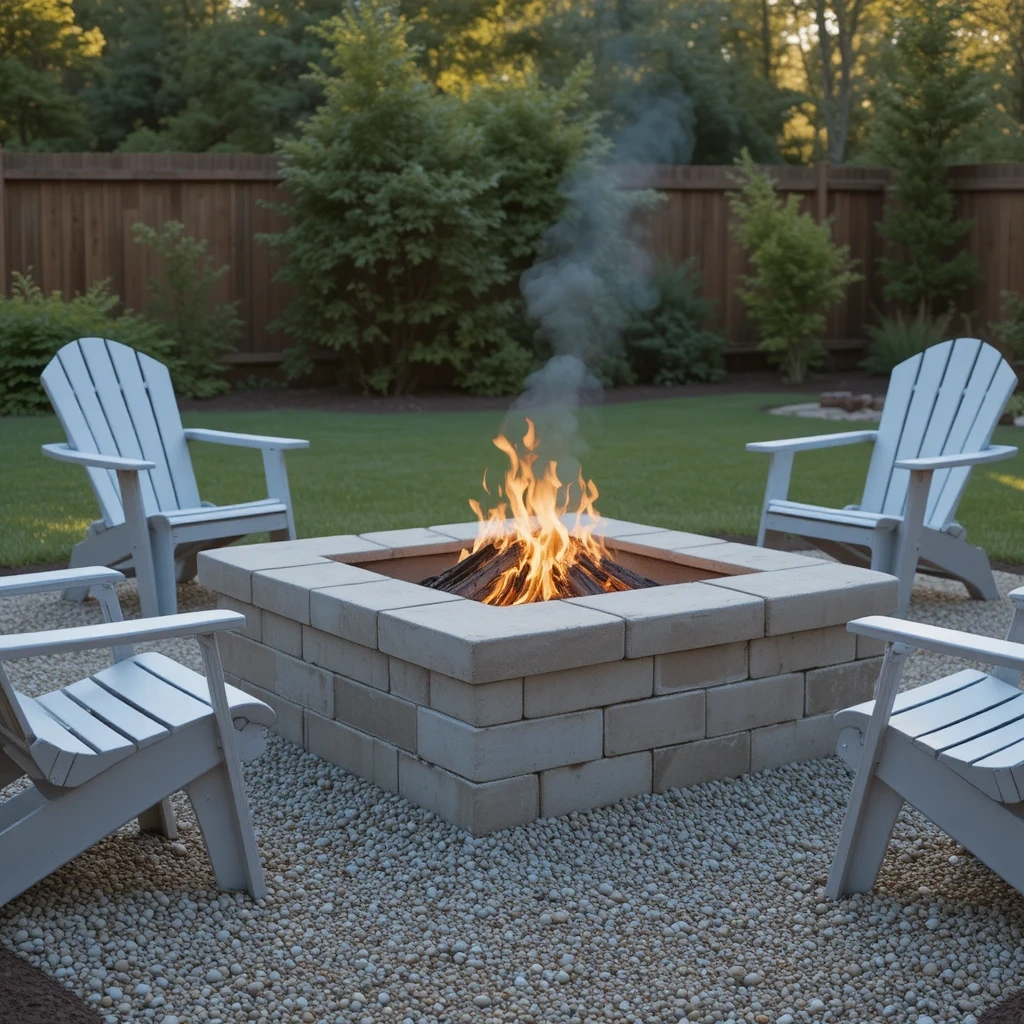
For the weekend warrior, a DIY concrete block fire pit offers a clean, modern look at a fraction of the cost. Simple cinder blocks or retaining wall blocks can be stacked without mortar to create a square or rectangular fire pit in an afternoon. The geometric shape looks surprisingly contemporary and can be taken apart and reconfigured whenever you like. Shop on Amazon
How to Style It:
- Use concrete retaining wall blocks (not standard cinder blocks) for a polished appearance
- Stack two or three layers high and leave the center open
- Pair with low-slung powder-coated steel or woven chairs
- Use gravel or pavers around the perimeter for a finished look
Where to Use It: Great for renters or homeowners who want flexibility, as it’s completely removable. Works in any size backyard.
Pro Tip: Use fire brick (also called refractory brick) on the interior lining only — not regular concrete blocks — as the interior blocks will need to withstand direct flame. Standard cinder blocks can crack or explode under extreme heat.
6. Natural Gas Fire Pit Table
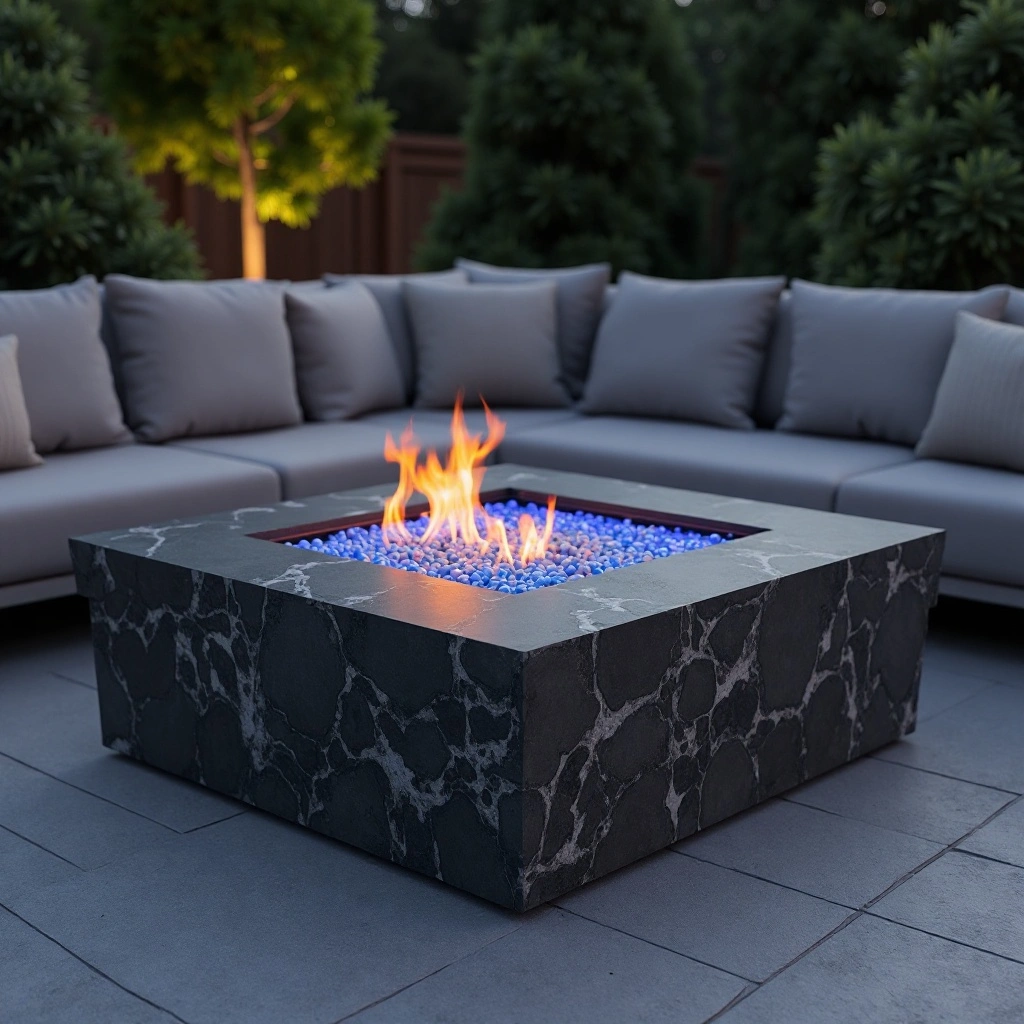
A gas fire pit table is the ultimate in outdoor fire pit convenience. No wood to chop, no ash to clean up, no smoke in your eyes — just a clean, adjustable flame at the turn of a dial. Many models feature a burner surrounded by a decorative tabletop, making them functionally both a fire pit and an outdoor coffee or dining table. Available in a huge range of styles from ultra-modern to rustic teak. Shop on Amazon
How to Style It:
- Choose a table height that matches your seating — coffee table height (18″) for lounge sofas, dining height (30″) for chairs
- Fill the burner area with white lava rocks or fire glass crystals for visual interest
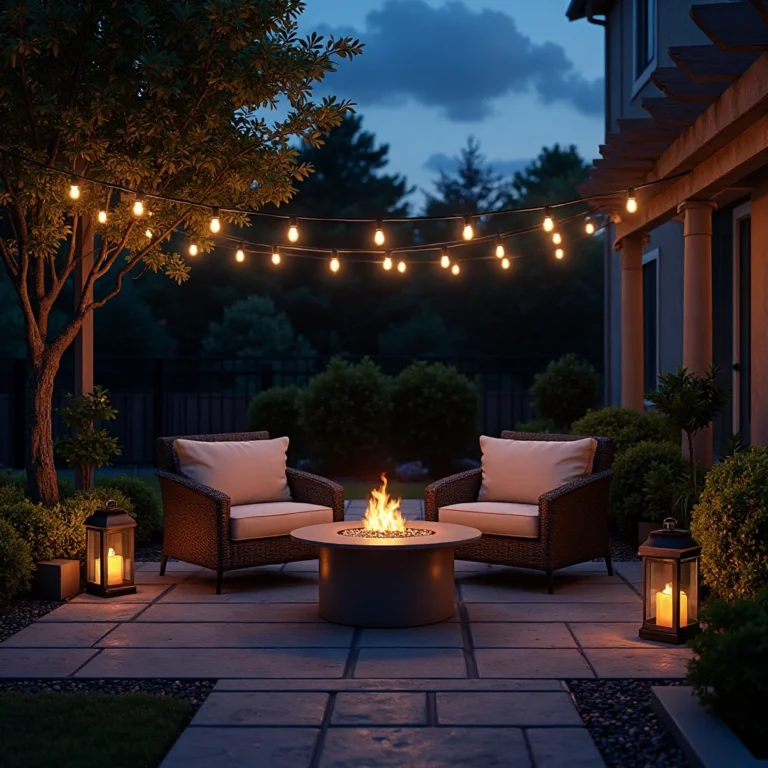
- Surround with a sectional sofa and matching ottomans for a complete outdoor living room
- Add a pergola overhead to frame the space
Where to Use It: Perfect for covered patios, pergola-covered spaces, or any backyard where convenience is a priority. Requires access to a natural gas line or propane tank.
Pro Tip: If connecting to a natural gas line, always hire a licensed gas plumber — do not DIY gas connections. Propane models give you more flexibility on placement since you don’t need a fixed gas line.
7. Mediterranean-Style Tile Fire Pit
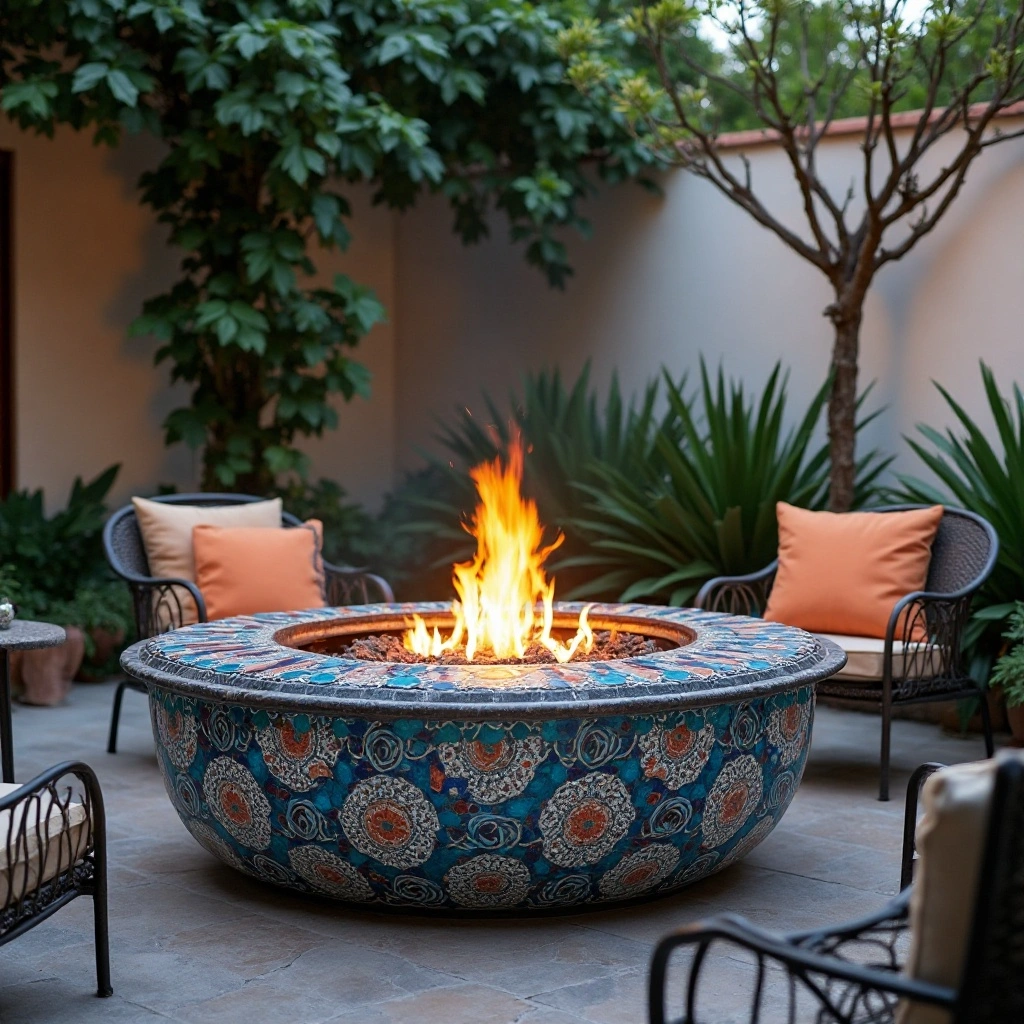
Inspired by the courtyards of Spain and Morocco, a mosaic or hand-painted tile fire pit brings rich color and artisan craftsmanship to your backyard. Decorative tiles in cobalt blue, terracotta, and turquoise create a one-of-a-kind statement piece that’s as beautiful unlit as it is glowing with flame. This style pairs effortlessly with lush plantings, fountains, and wrought iron furniture. Shop on Amazon
How to Style It:
- Choose outdoor furniture with wrought iron frames and colorful cushions
- Add terracotta planters with bougainvillea, jasmine, or citrus trees nearby
- Use lanterns with candles to complement the fire for additional light
- Tile the surrounding patio surface in coordinating tones
Where to Use It: Perfect for courtyards, enclosed garden spaces, or Spanish/Mediterranean-style homes. Works particularly well in warm climates like the Southwest, Florida, or California.
Pro Tip: Use only outdoor-rated ceramic or porcelain tile near a fire pit — standard glazed tile can crack under thermal stress. Apply a heat-resistant grout rated for outdoor use.
8. Smokeless Fire Pit (Breeo or Solo Stove Style)
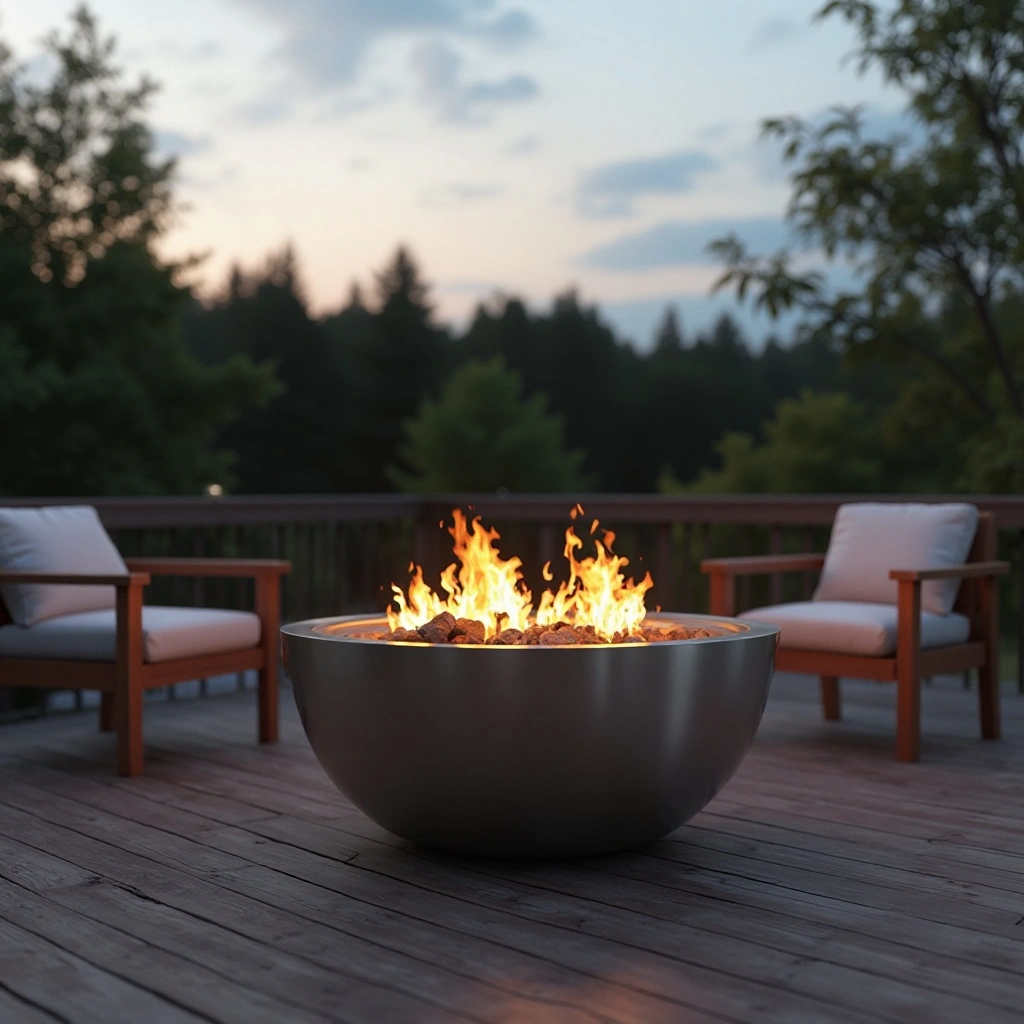
Smokeless fire pits use a secondary combustion system to burn off the gases that typically cause smoke, delivering a remarkably clean, nearly smokeless burn. Brands like Breeo and Solo Stove have popularized this sleek, cylindrical stainless steel design that looks as modern as it performs. You get all the ambiance of a real wood fire without the eye-watering smoke cloud. Shop on Amazon
How to Style It:
- Place on a heat-resistant pad if using on a wood deck
- Pair with modern, clean-lined furniture in teak, black steel, or concrete
- Keep the surrounding area minimal and uncluttered to match the sleek aesthetic
- A simple X-base stand elevates the pit for better airflow and aesthetics
Where to Use It: Perfect for decks, smaller patios, or any space where smoke could be problematic (near neighbors, covered areas, or HOA-restricted communities).
Pro Tip: Use only dry, seasoned hardwoods like oak or hickory in a smokeless fire pit — wet or green wood produces more tar and gas that can overwhelm the secondary combustion system and reduce its effectiveness.
9. Boulder and Flagstone Fire Pit
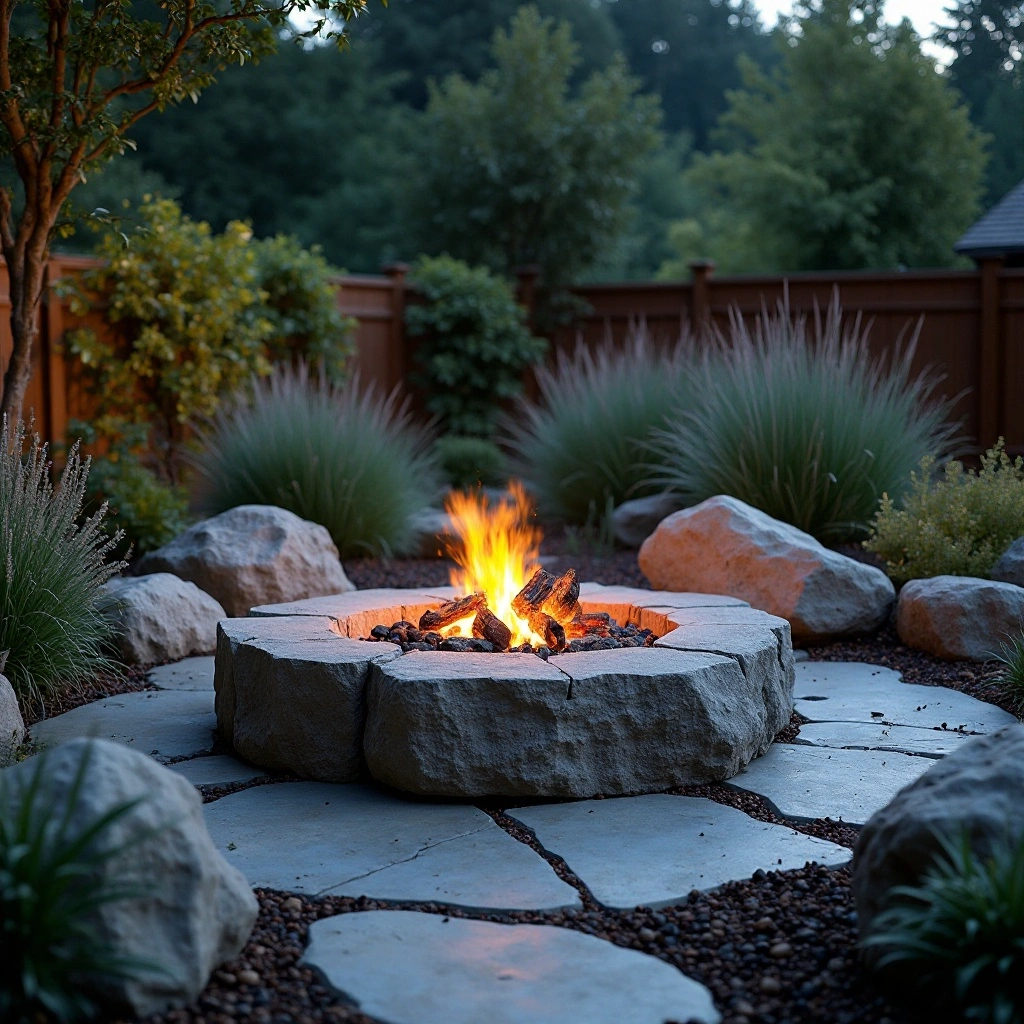
Description: Large natural boulders arranged around a fire pit create an organic, landscape-integrated look that feels like it’s always been there. Combined with irregular flagstone paving, this design blurs the line between your garden and the fire space in the most beautiful way. This is one of the most naturalistic, “found in nature” aesthetics available. Shop on Amazon
How to Style It:
- Let some boulders do double duty as informal seating
- Plant native grasses, ferns, or creeping thyme in the gaps between flagstones
- Use warm Edison bulb string lights strung between nearby trees
- Keep furniture rustic — log slices as side tables, hewn wood benches
Where to Use It: Ideal for rural or suburban properties with a naturalistic landscape design. Stunning in wooded settings or properties with natural rock features already present.
Pro Tip: Source boulders locally to match your region’s natural stone — this makes the design feel genuinely native to the landscape rather than imported. Local stone is also significantly cheaper than shipping.
10. Fire Pit with Pergola and String Lights
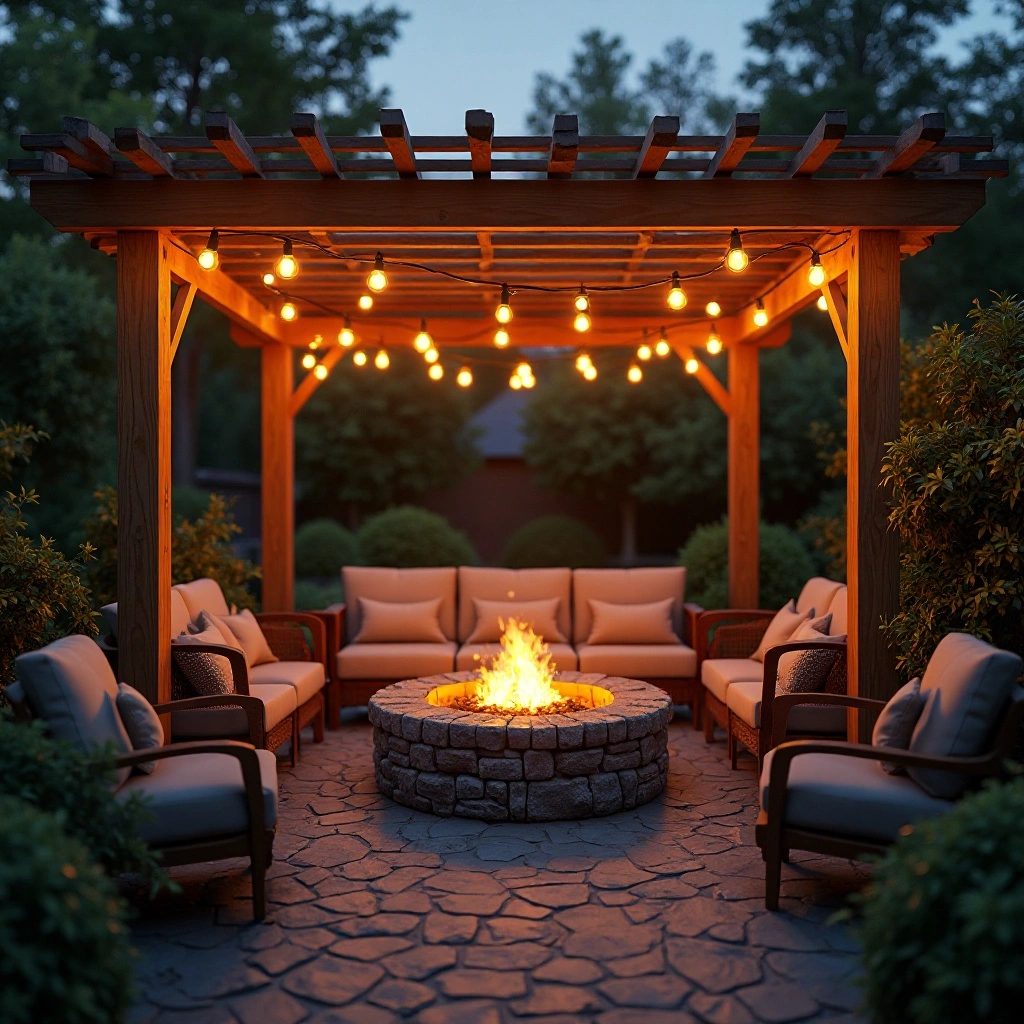
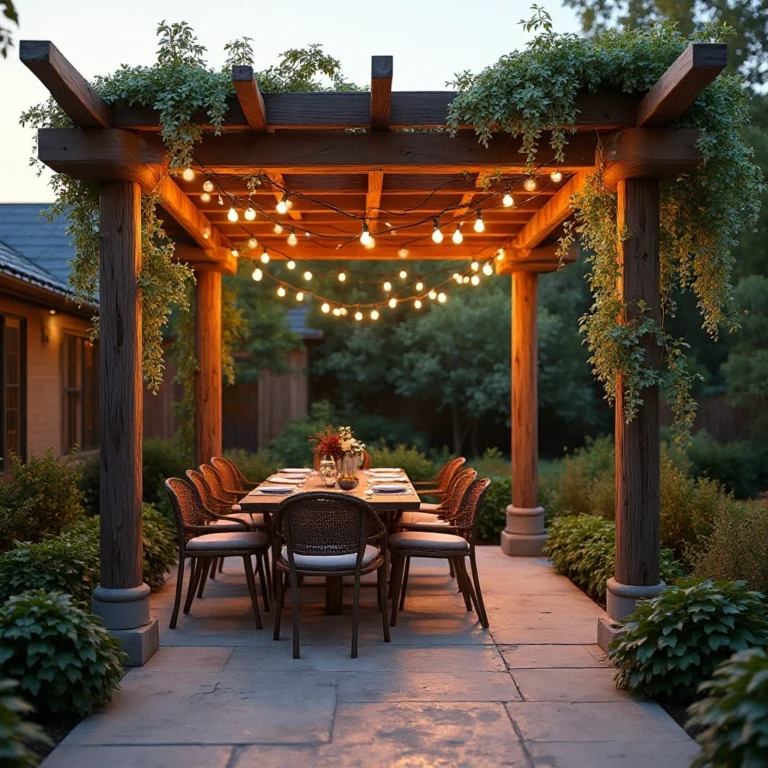
Pairing a fire pit with an overhead pergola and string lights creates a fully defined outdoor room that feels magical day and night. The pergola provides partial shade during the day and a framework for hanging lights at night, while the fire pit below becomes the warm anchor of the space.
This combination is arguably the most popular backyard project for a reason — it works beautifully in almost every style. Shop on Amazon
How to Style It:
- Hang Edison bulb string lights in a grid or zigzag pattern from the pergola rafters
- Add sheer outdoor curtains to the pergola sides for a soft, intimate feel
- Use an outdoor rug to define the seating zone beneath the pergola
- Consider a ceiling fan if your climate is warm — it keeps the space usable in summer
Where to Use It: Works in nearly any backyard. The pergola provides a sense of enclosure even in open spaces. Particularly effective as a transition zone between a house and the lawn.
Pro Tip: Orient the pergola so the fire pit opening faces away from prevailing winds in your area — this dramatically reduces smoke blowing toward your seating guests.
11. Fire Pit with Water Feature Combination
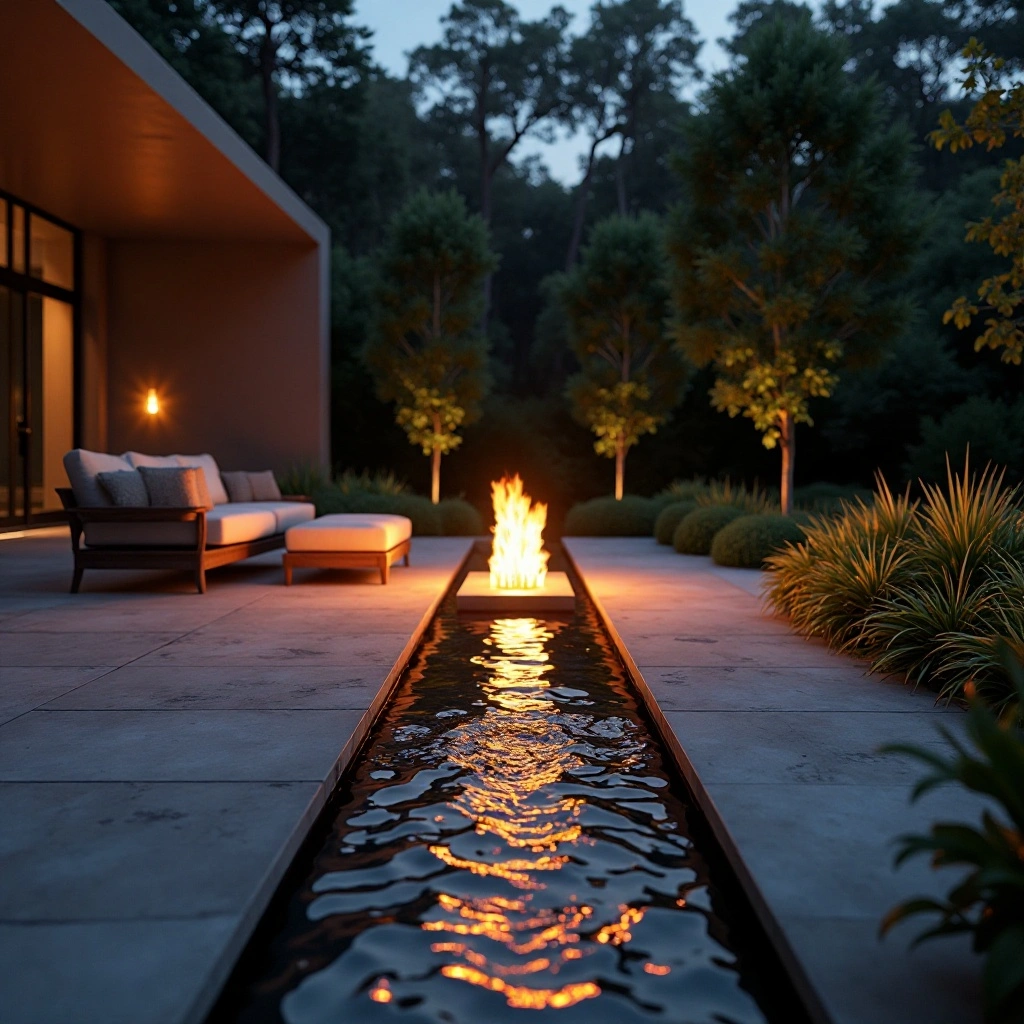
Combining fire and water in the same feature creates a Zen-like tension that’s captivating and completely unique. A fire pit with a surrounding water channel, or a fire-and-water bowl feature, produces the soothing sound of moving water alongside the crackle and warmth of flame. This high-end landscape feature elevates a backyard to resort or spa-level territory. Shop on Amazon
How to Style It:
- Keep the surrounding design clean and minimal — the feature itself is the statement
- Use concrete, black granite, or dark basalt for a dramatic contrast with the orange flame
- Light the water channel from beneath with submersible LED lights in warm white
- Place only two or three chairs nearby — this feature invites contemplation, not crowds
Where to Use It: Best suited for contemporary or Japanese-inspired garden designs. Requires both plumbing for the water feature and either gas or electricity for the fire element.
Pro Tip: Use a recirculating pump to keep water moving — stagnant water becomes a mosquito breeding ground and looks uninviting. Install a timer to automatically shut off both the water and fire at a set hour.
12. Backyard Fire Pit with a Covered Pavilion
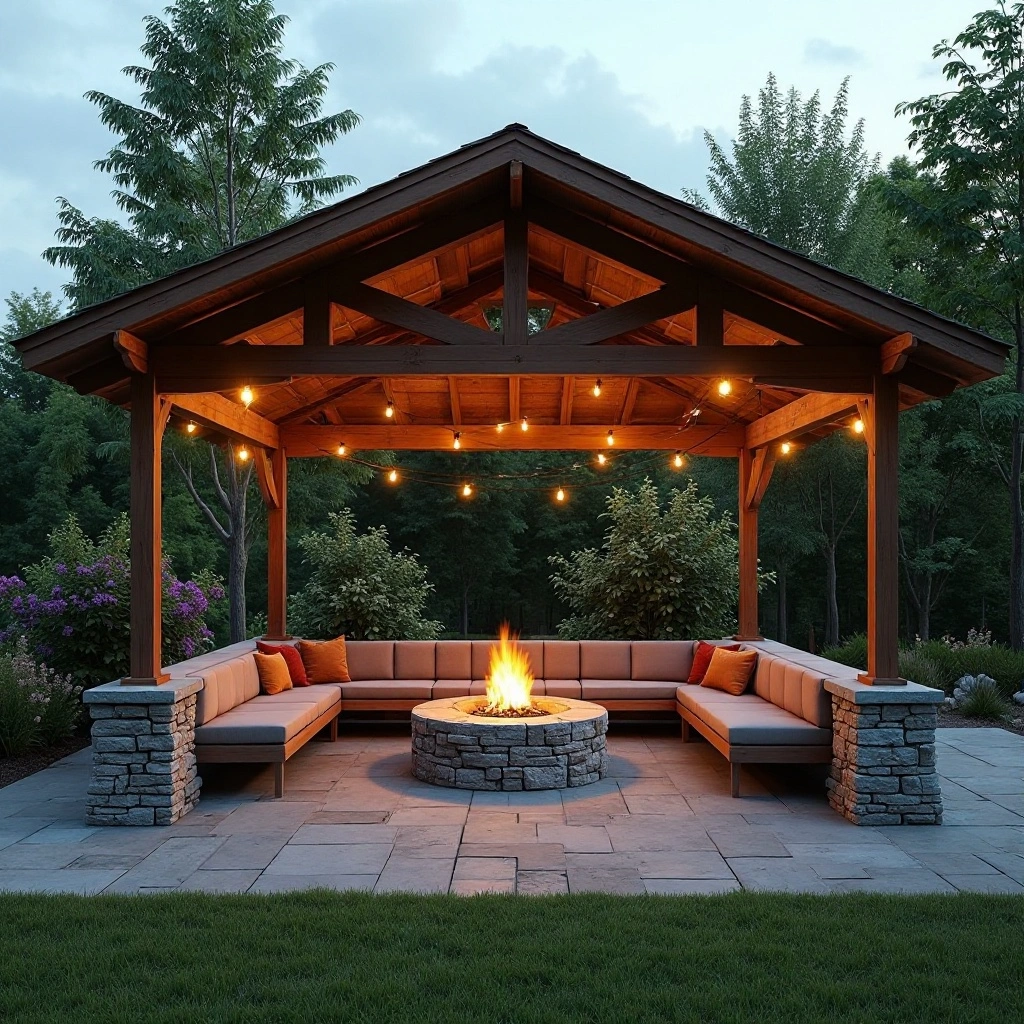
A permanent outdoor pavilion with a built-in fire pit takes your backyard entertaining to a completely new level. Unlike a pergola, a pavilion has a solid or semi-solid roof that protects from rain, allowing you to use the fire even during light rain. Many pavilions are designed with outdoor kitchens, built-in seating, and integrated lighting for a fully self-contained outdoor room experience. Shop on Amazon
How to Style It:
- Furnish like an indoor room — side tables, rugs, table lamps on side tables (weatherproof)
- Add a bar cart or built-in mini fridge for entertaining convenience
- Use tongue-and-groove wood on the ceiling for warmth and texture
- Install ceiling fans to circulate air and manage smoke
Where to Use It: Perfect for year-round climates and serious outdoor entertainers. Requires a solid foundation and may require a building permit depending on your municipality.
Pro Tip: If adding a fire pit inside a covered pavilion, ensure the structure is fully open on at least two sides and install a spark arrestor on any chimney or flue — enclosed fire pits require proper ventilation to prevent carbon monoxide buildup.
13. Painted Concrete Fire Pit Surround
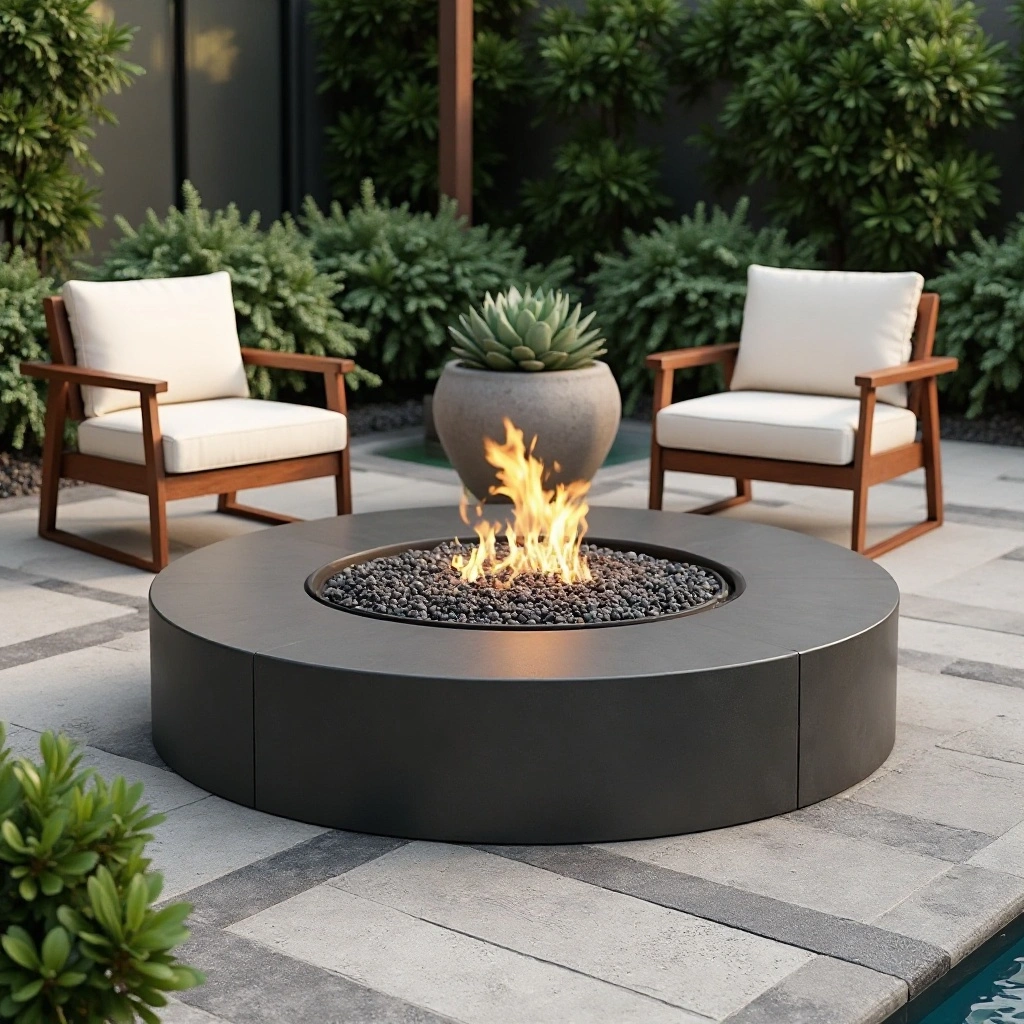
Description: A polished or acid-stained concrete fire pit surround brings industrial elegance to the backyard. Smooth concrete can be tinted in a surprising range of colors — charcoal, warm tan, terracotta, or even pale blue — and finished with a matte sealer for a sophisticated, understated look. This modern material pairs beautifully with mid-century or contemporary outdoor furniture. Shop on Amazon
How to Style It:
- Pair with teak, walnut, or black powder-coated metal furniture
- Use concrete planters with sculptural plants like agave, yucca, or snake plants
- Keep the palette neutral — let the material do the talking
- Add a concrete bench on one side for a cohesive monolithic look
Where to Use It: Ideal for modern, mid-century, or industrial-style backyards. Works on flat, level ground with an existing patio or as a standalone feature on a decomposed granite surface.
Pro Tip: Seal polished concrete with a penetrating silicone sealer annually — outdoor concrete is exposed to freeze-thaw cycles and UV that cause cracking if unsealed. Reapply every 1–2 years depending on your climate.
14. Japanese-Inspired Zen Fire Pit Garden
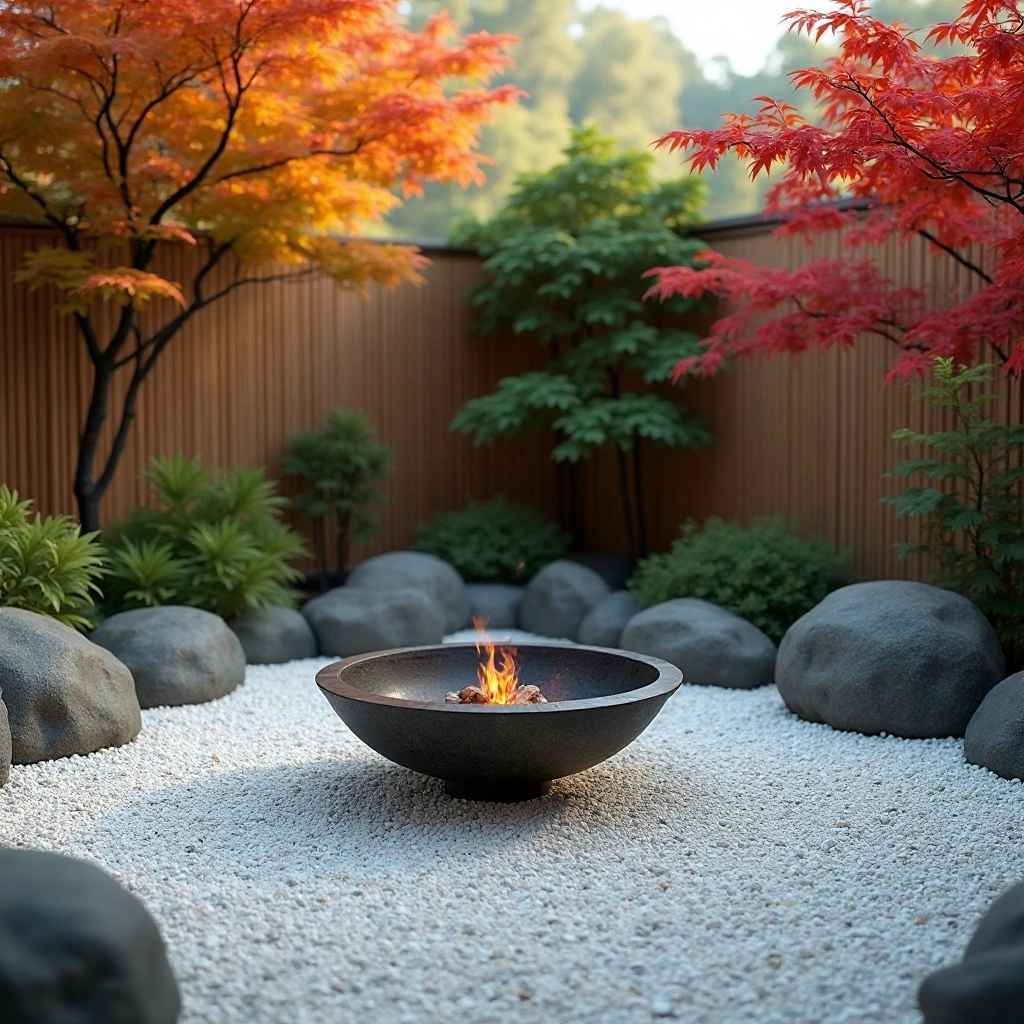
A Japanese-inspired fire pit garden emphasizes simplicity, natural materials, and mindful use of negative space. The fire pit — often a simple cast iron or ceramic vessel — sits within a carefully raked gravel garden, surrounded by bamboo, Japanese maples, and smooth river stones. The effect is meditative and serene, a true retreat from the noise of daily life. Shop on Amazon
How to Style It:
- Use raked gravel or decomposed granite as the ground surface
- Incorporate Japanese maples, bamboo screens, and moss-covered stones
- Choose a simple cast iron or ceramic fire bowl — no ornamentation
- Add a single stone lantern nearby for additional soft lighting
Where to Use It: Perfect for small to medium backyards seeking a calm, deliberate aesthetic. Works especially well in shaded gardens with existing mature trees.
Pro Tip: Use white or light gray granite gravel for the raked garden area — it photographs beautifully and reflects moonlight at night, adding to the meditative atmosphere even when the fire isn’t lit.
15. Desert Southwest Fire Pit with Adobe Finish
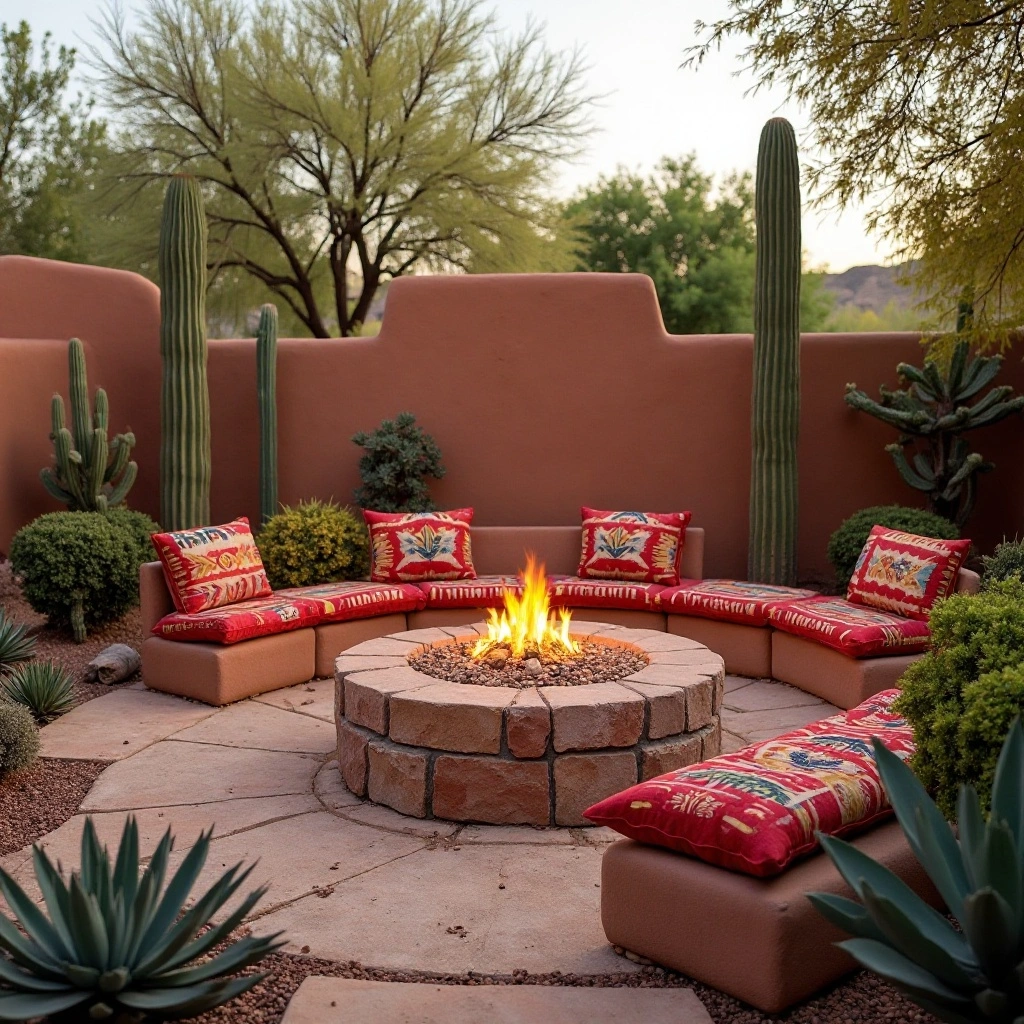
Inspired by New Mexico and Arizona architecture, an adobe-finished fire pit brings the warm, rounded forms of Pueblo design to your backyard. Stucco-covered fire pits in warm terracotta, cream, or clay tones feel like they emerged organically from the earth. Combine with desert plantings and Saltillo tile for a true Southwest sanctuary. Shop on Amazon
How to Style It:
- Use Saltillo tile or warm-toned flagstone for the surrounding patio
- Plant saguaro, prickly pear cactus, agave, and desert sage nearby
- Incorporate wrought iron candle holders and hand-thrown pottery
- Choose cushion fabrics in turquoise, rust, and golden yellow geometric patterns
Where to Use It: Perfect for homes in the Southwest US — Arizona, New Mexico, Nevada — or any home with a Spanish Colonial or Pueblo Revival architectural style.
Pro Tip: Apply two to three coats of tinted exterior stucco and finish with a silicone sealer — this protects the soft, rounded adobe finish from rain and moisture erosion while preserving the beautiful matte texture.
16. Reclaimed Wood and Steel Fire Pit Surround
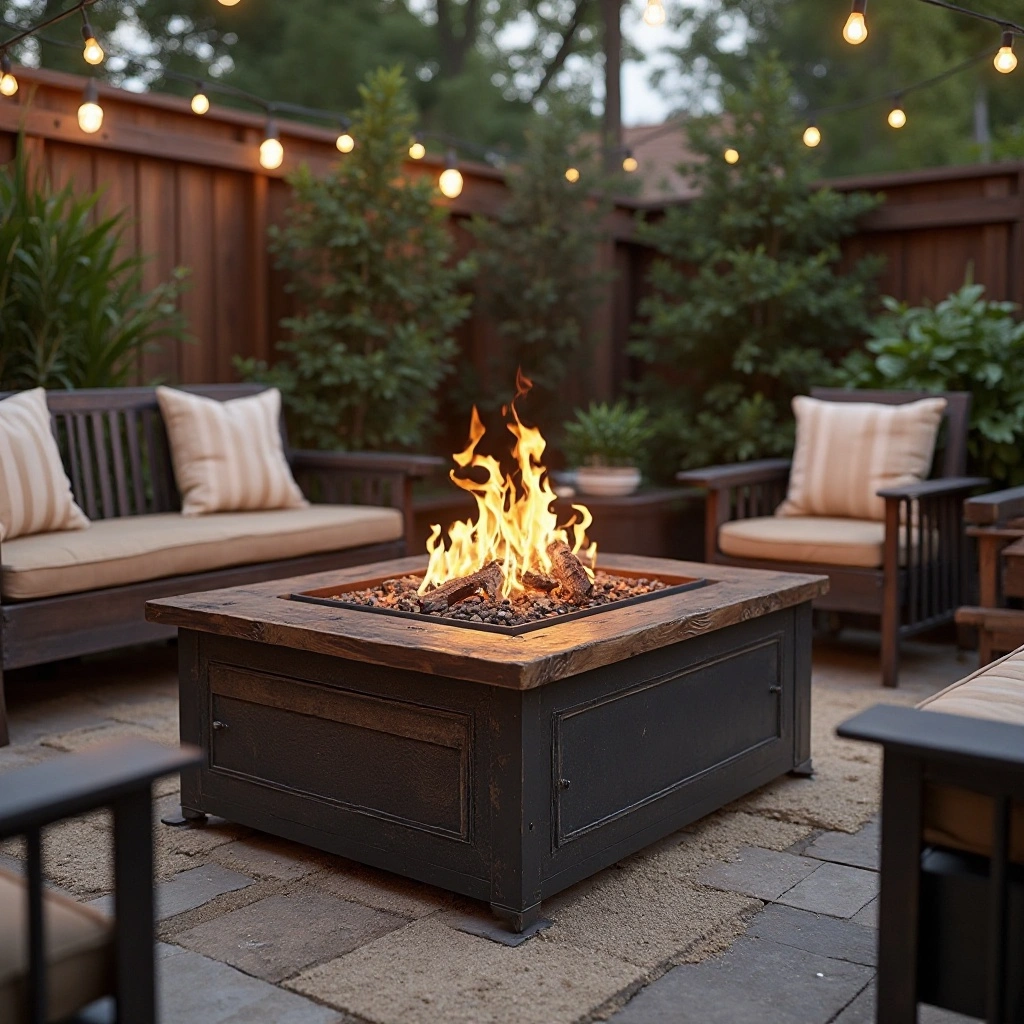
Combining reclaimed wood with raw or blackened steel creates a fire pit surround that’s deeply textural, rustic-industrial, and full of character. Old barn wood, railroad ties, or salvaged timber contrast beautifully with welded steel panels to create something that feels genuinely handmade and one-of-a-kind. Every knot and weathered plank tells a story. Shop on Amazon
How to Style It:
- Mix industrial metal furniture with leather or canvas cushion covers
- Use Edison bulb string lights or exposed bulb pendants from a nearby pergola
- Add galvanized metal planters with wildflowers or herbs
- A reclaimed wood coffee table nearby ties the design together
Where to Use It: Perfect for urban backyards, modern farmhouse properties, or any outdoor space going for an industrial-chic aesthetic.
Pro Tip: Treat all reclaimed wood used near a fire pit with a fire-retardant sealant — look for products specifically rated for exterior wood exposed to heat. Keep reclaimed wood at least 18 inches from the fire itself.
17. Raised Garden Bed Fire Pit Combo
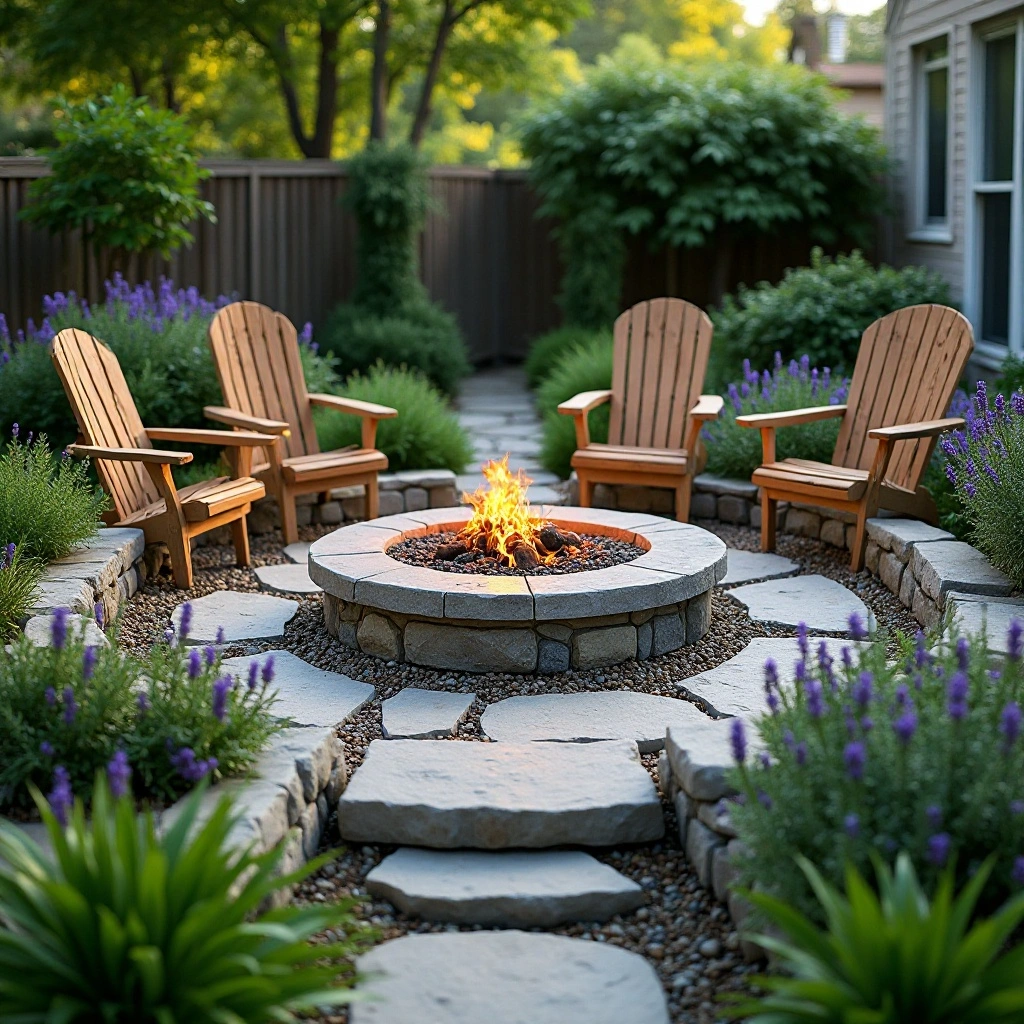
A raised garden bed fire pit combination is a brilliant space-saver for smaller backyards — the outer ring doubles as a planter for herbs, flowers, or vegetables while the inner chamber serves as the fire pit. This dual-purpose design makes your outdoor space work smarter, turning dead space into productive growing area while keeping the fire pit as the central feature. Shop on Amazon
How to Style It:
- Plant the outer ring with fragrant herbs (rosemary, lavender, mint) that benefit from the warmth
- Build from stone, brick, or concrete block for both the fire chamber and the planter
- Use a decorative gravel mulch on the planter surface for a tidy appearance
- Pair with a simple bistro table and two chairs for an intimate dual-purpose space
Where to Use It: Ideal for small to medium backyards where every square foot matters. A smart choice for homeowners who love both gardening and outdoor entertaining.
Pro Tip: Plant heat-tolerant herbs like rosemary and thyme in the sections closest to the fire, and more heat-sensitive plants like mint or parsley on the far side — the radiant heat actually extends your growing season for many herbs.
18. Gas Fire Pit with Fire Glass and LED Lighting
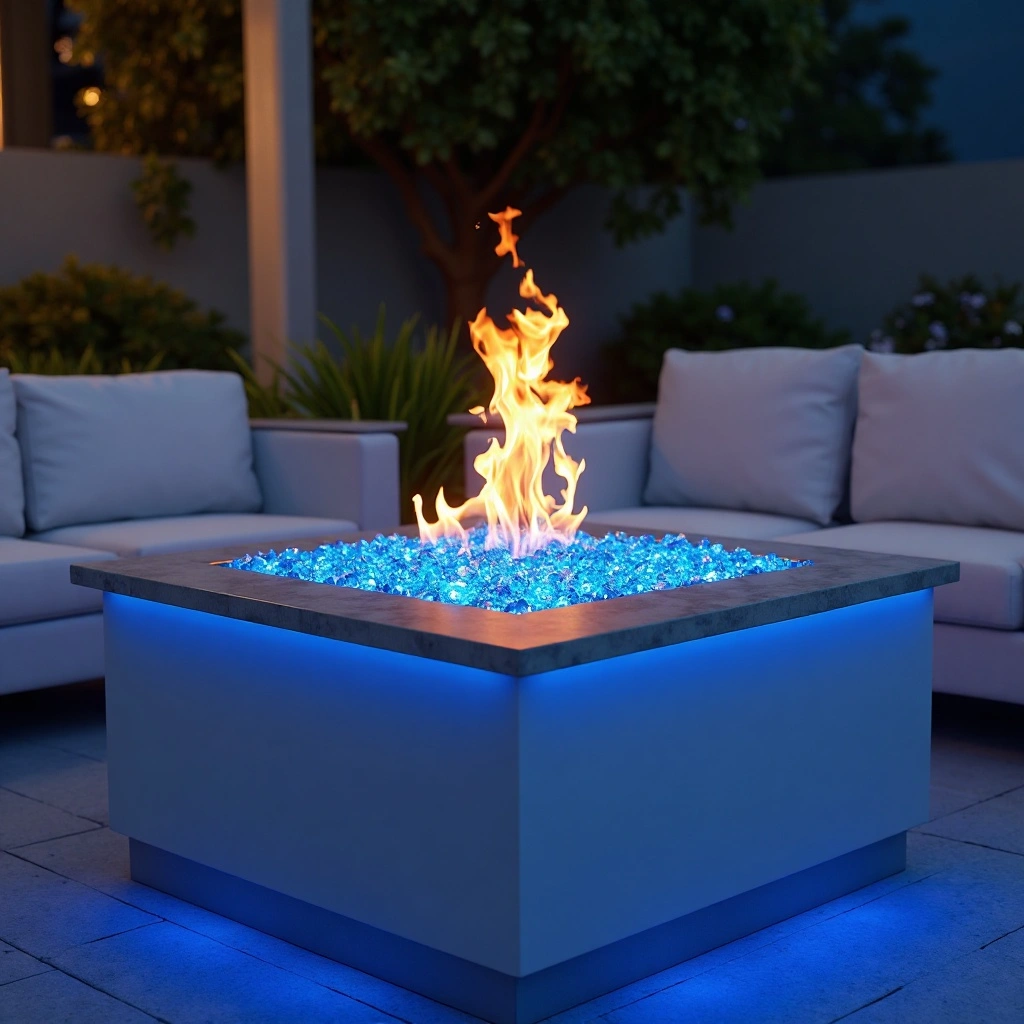
Fire glass — small pieces of tempered glass that refract and reflect firelight in every direction — transforms a simple gas burner into a dazzling jewel-like display. Available in a kaleidoscope of colors from cobalt blue and emerald green to copper and clear crystal, fire glass combined with color-changing LED base lighting creates a fire pit experience that’s as visually stunning as it is functional. Shop on Amazon
How to Style It:
- Choose fire glass color to coordinate with your cushion or furniture palette
- Set the LED base lighting to warm amber for a classic fire glow, or go bold with teal or purple
- Surround with contemporary white, gray, or charcoal furniture
- Use the fire pit table as the centerpiece of a full outdoor living room arrangement
Where to Use It: Perfect for modern and contemporary backyards, rooftop patios, and urban outdoor spaces where a traditional wood fire isn’t practical or permitted.
Pro Tip: Use only tempered fire glass — never regular glass, which can shatter explosively under heat. Buy fire glass from reputable landscape suppliers and check that it’s rated for propane or natural gas use, as some decorative glass is not heat-safe.
19. Cottage Garden Fire Pit with Flower Borders
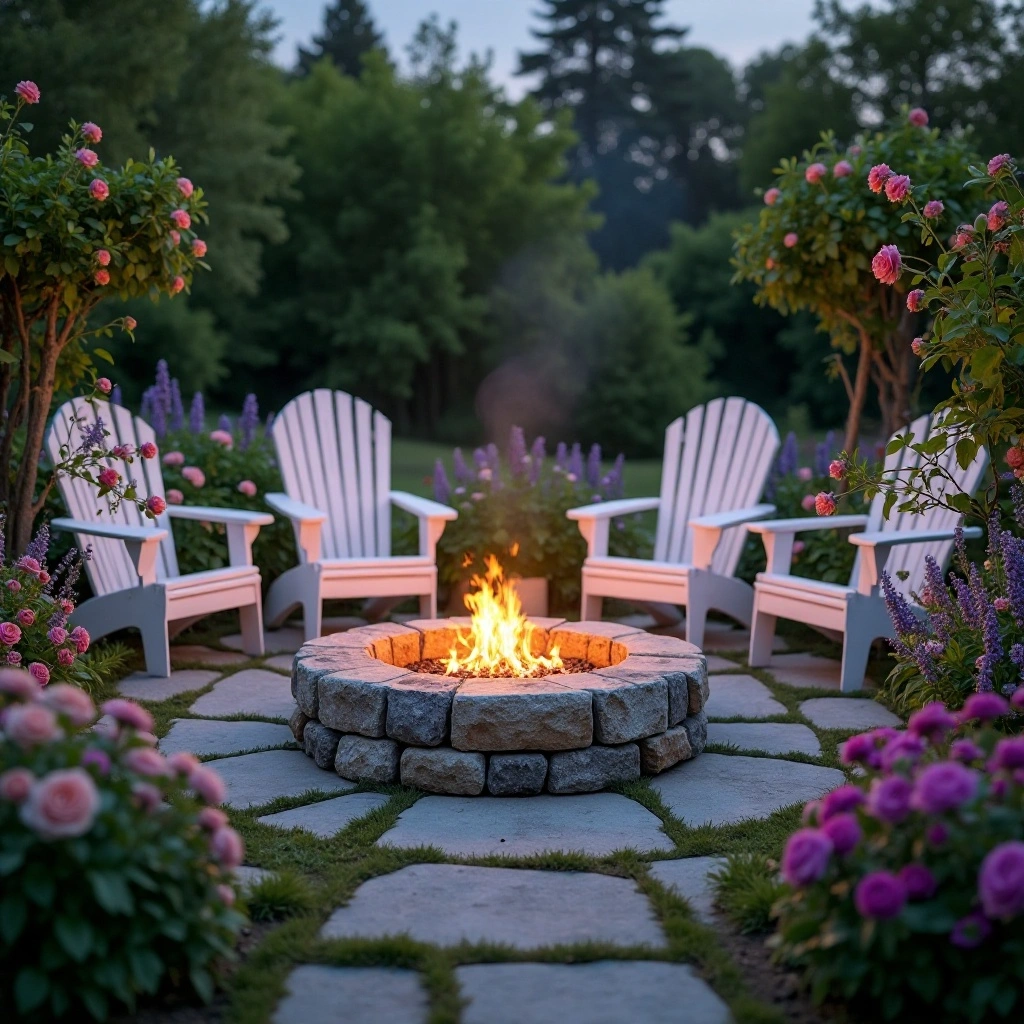
A cottage garden fire pit is framed by lush, abundant flower borders overflowing with roses, foxgloves, delphiniums, and cottage pinks. The fire pit itself is typically simple — a stone or brick circle — but the surrounding planting is the real showpiece. At dusk, with the fire lit and flowers glowing in the warm light, this is one of the most romantic backyard settings imaginable. Shop on Amazon
How to Style It:
- Plant perennial borders 3–4 feet deep around the fire pit area
- Choose fragrant flowers — roses, lavender, and sweet peas add scent to the warm evening air
- Use white-painted wooden furniture (Adirondack chairs, bistro sets) for a classic cottage look
- Add solar-powered lanterns or fairy lights woven through the plantings
Where to Use It: Ideal for traditional English or cottage-style gardens. Works in any temperate climate with a yard large enough to support generous planting borders.
Pro Tip: Ensure no overhanging branches or plants are within 10 feet of the active fire pit — cottage gardens can be lush to the point of creating fire hazards. Regularly trim plants nearest the fire zone.
20. Rooftop or Small-Space Tabletop Fire Pit
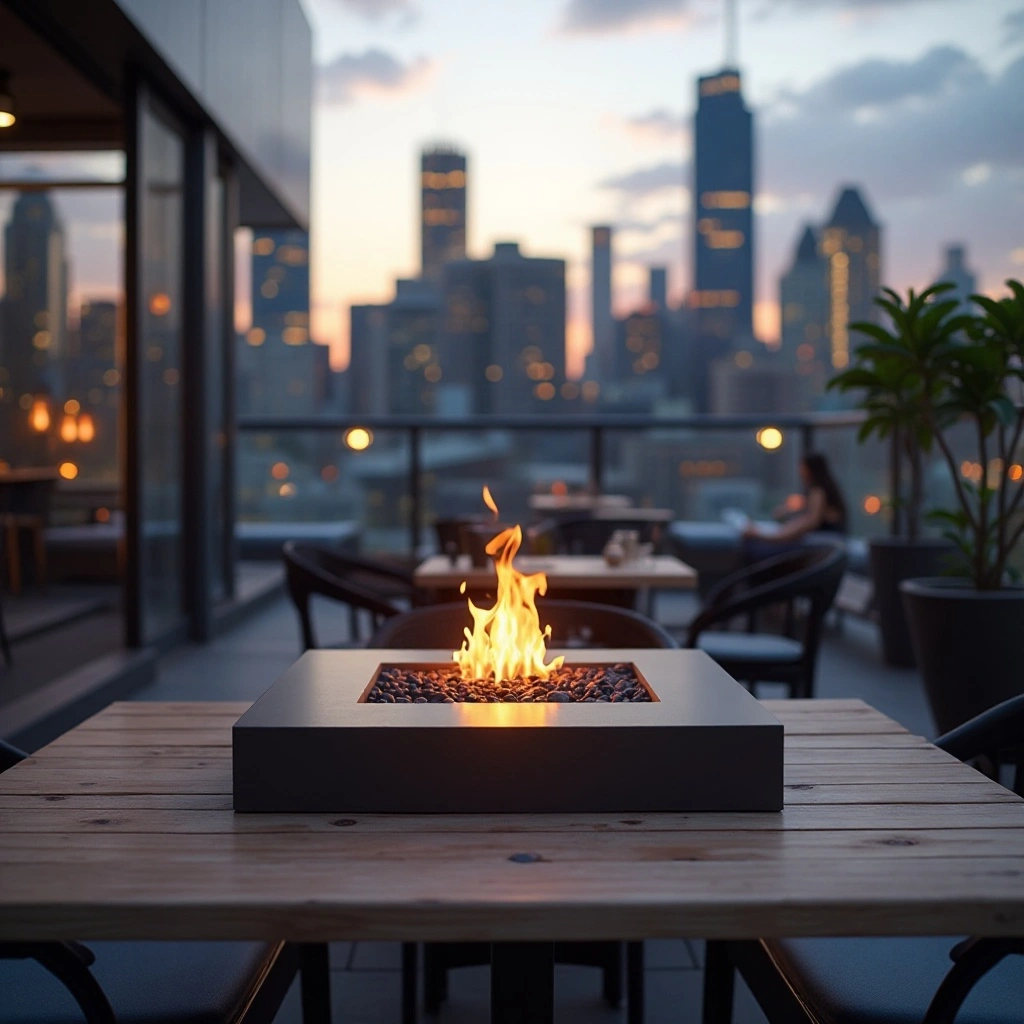
Who says you need a big backyard? Tabletop fire pits — small, portable gas or bioethanol burners that sit directly on a table — bring fire into any outdoor space, from a compact city balcony to a rooftop terrace. Modern tabletop fire pits are elegant, safe, and incredibly versatile. They’re the perfect solution for urban dwellers who still want the warmth and ambiance of an open flame. Shop on Amazon
How to Style It:
- Place the tabletop fire pit as a centerpiece at the center of a dining table
- Use votives and tea lights around the perimeter of the table to extend the glow
- Choose a fire pit that coordinates with your tableware — matte black, brushed gold, or concrete
- Layer with outdoor throw blankets draped over chairs for a complete cozy setup
Where to Use It: Perfect for balconies, rooftop terraces, small patios, and apartment outdoor spaces. Also ideal for renters who can’t make permanent modifications.
Pro Tip: Use bioethanol fuel in enclosed or semi-enclosed spaces — it burns clean without smoke or toxic fumes. Always have a snuffer tool or metal lid nearby to extinguish quickly, and never leave a tabletop flame unattended.
Fire Pit Style Selector: Which One Is Right for You?
| Your Vibe | Best Fire Pit Style |
|---|---|
| Rustic & Natural | Stacked Stone, Boulder & Flagstone, Cottage Garden |
| Modern & Sleek | Corten Steel, Concrete, Fire Glass |
| Space-Saver | Raised Bed Combo, Tabletop, Smokeless Bowl |
| Entertainer’s Dream | Brick with Seating Wall, Sunken Lounge, Pavilion |
| Romantic | Pergola + Lights, Cottage Garden, Mediterranean Tile |
| Zen & Peaceful | Japanese Garden, Fire + Water Combo |
| Southwest Flair | Adobe Finish, Desert Plantings |
| Urban Dweller | Tabletop, Smokeless Steel, Gas Table |
Common Mistakes to Avoid
1. Ignoring Local Fire Codes Before building anything, check your local municipality’s fire ordinances. Many cities and HOAs restrict open burning, require minimum clearances from structures, or prohibit wood-burning fires entirely. Violations can result in fines and mandatory removal of your fire pit.
2. Building Too Close to the House or Trees The minimum recommended clearance between a fire pit and any structure, fence, or overhead tree canopy is 10 feet. Many experts recommend 15–20 feet for peace of mind. A stray ember can catch on wood siding, dry grass, or dry branches with devastating results.
3. Using the Wrong Rocks or Concrete Not all stone is safe near fire. Porous rocks like limestone, sandstone, river pebbles, and regular concrete can trap moisture and explode when heated. Always use fire brick (refractory brick) for the fire chamber interior and heat-rated materials for surrounding surfaces.
4. Skipping the Drainage Plan A fire pit set in poorly draining soil will collect water, rust metal components, crack masonry, and create a generally miserable outdoor feature. Plan for drainage from day one — especially critical for sunken designs.
5. Forgetting Wind Direction The majority of annoying fire pit experiences come down to smoke. Study the prevailing wind direction in your backyard and orient your seating so the dominant wind blows the smoke away from guests — not toward them.
6. Neglecting Safety Supplies Always keep a fire extinguisher, a bucket of sand, and a garden hose within reach of your fire pit. Never leave a fire unattended, and have a clear plan for how to extinguish quickly in an emergency.
7. Overspending on Trends Before Testing Your Usage Start with a simpler, less expensive fire pit before committing to a $10,000 built-in design. Many homeowners discover they use their fire pit differently than they imagined — or more (or less) frequently. Test and refine before making it permanent.
Frequently Asked Questions
Q: What type of fire pit is the safest? Gas fire pits (natural gas or propane) are generally considered the safest option because they have no flying sparks or embers, produce controllable flame height, and can be extinguished instantly. Smokeless fire pits are the safest option for wood-burning styles.
Q: Can I put a fire pit on my wooden deck? Yes, but with precautions. You must use a heat-resistant fire pit pad or mat beneath the pit, and you should only use a gas fire pit or a smokeless fire pit designed for deck use. Never use a wood-burning fire pit directly on a wood deck surface without proper protection. Check your deck material’s manufacturer guidelines.
Q: How far should a fire pit be from my house? The minimum recommended clearance is 10 feet from any structure, fence, or overhead combustible surface. Many fire safety professionals recommend 15–20 feet as the comfortable standard, especially for wood-burning fire pits that produce sparks and embers.
Q: Do I need a permit to build a fire pit? In many municipalities, permanent built-in fire pits require a building permit, especially if they involve gas line connections or are part of a larger patio project. Freestanding, portable fire pits typically do not require a permit. Always check with your local building authority before beginning construction.
Q: What’s the best wood to burn in a fire pit? Seasoned hardwoods produce the best fire pit experience: oak, hickory, cherry, maple, and ash all burn hot, long, and produce minimal smoke when properly dried. Avoid softwoods like pine and cedar, which are resinous, produce excessive smoke and sparks, and leave heavy creosote deposits. Never burn treated lumber, plywood, or painted wood — these release toxic chemicals.
Q: How do I keep my fire pit from rusting? For metal fire pits, apply a high-heat paint or clear coat annually during the dry season. Store portable fire pits under a breathable cover when not in use. For corten steel, the patina IS the protection — don’t seal it. For cast iron, a light application of cooking oil (rubbed on and then burned off) helps prevent rust between uses.
Q: Can I have a fire pit in a small backyard? Absolutely. Tabletop fire pits, smokeless fire bowls, and small freestanding gas fire pits are all designed for compact spaces. The key considerations in a small space are clearance from fences and structures, and choosing a gas or smokeless option to keep neighbors happy.
Q: What’s the best size for a backyard fire pit? For most backyards and gathering groups, an interior fire diameter of 36–44 inches strikes the right balance between visual impact and practical safety. Larger pits (48–60 inches) work well for larger gathering groups and more open spaces. The fire pit should be sized proportionally to its seating area — a tiny pit in a vast seating circle feels underwhelming.
Final Thoughts
A backyard fire pit is one of those rare improvements that delivers an outsized return — not in home resale value (though it helps there too), but in the quality of daily life. It’s where your kids will tell you things they’d never say at the dinner table. It’s where friendships deepen over long evenings. It’s where you’ll discover that the best version of your home isn’t inside it.
Whether you build a simple stacked stone ring this weekend or commission a stunning sunken lounge next spring, the best fire pit is the one you actually use. Start with the style that calls to you, plan for safety from the beginning, and then light it up.
Your backyard is waiting.