25+ Floor Lamps Living Room inspiration
The right Floor Lamps Living Room doesn’t just illuminate a room—it defines the mood, anchors your design, and solves functional lighting challenges while adding sculptural beauty.
Whether you’re reading in a cozy corner, highlighting artwork, or creating ambient warmth for evening gatherings, these floor lamp ideas will help you discover how strategic lighting can completely transform your living room’s atmosphere and functionality.
This article includes affiliate links that may earn me a commission if you buy through them, without increasing your cost.
1. Arc Floor Lamp Over Sectional
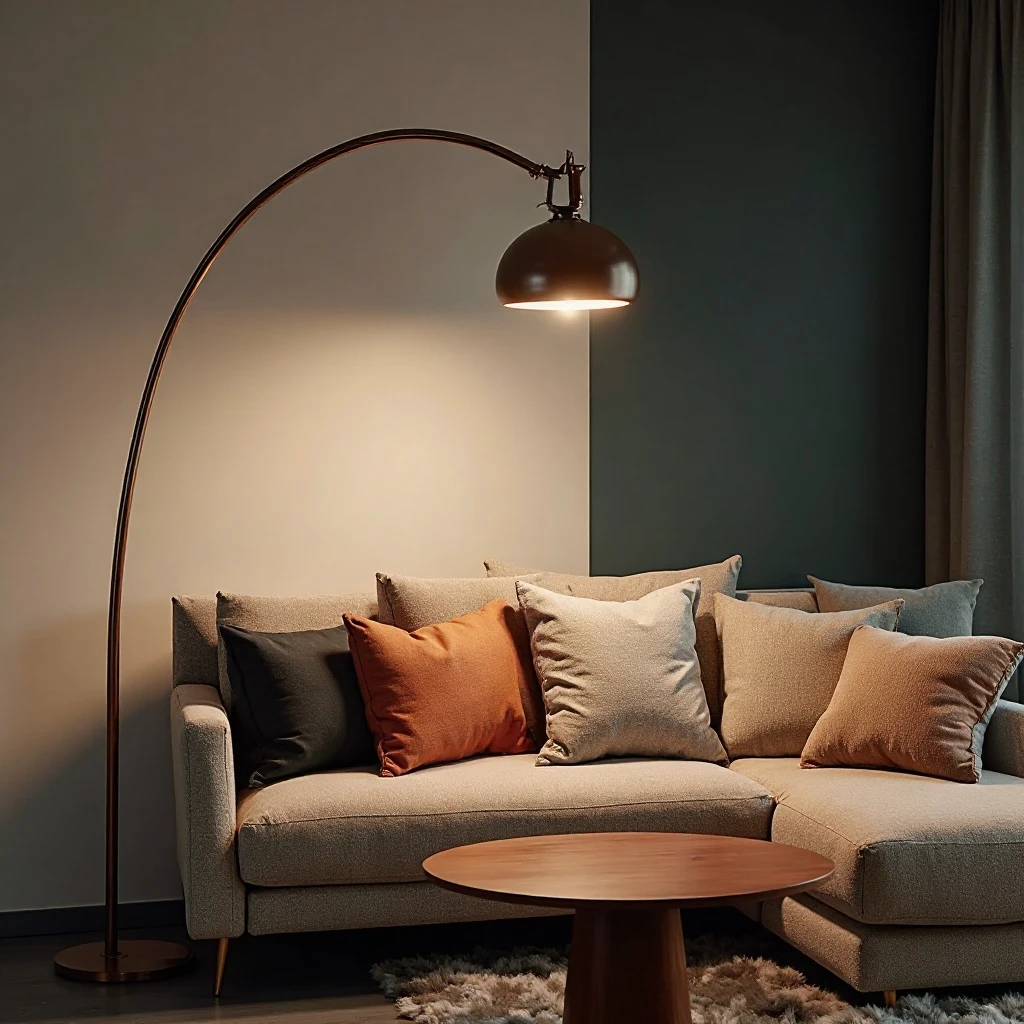
A dramatic arched floor lamp curves gracefully from behind a sectional sofa, its extended arm reaching over the seating area to deliver focused light exactly where needed. The sleek metal arc creates a striking silhouette against the wall while the adjustable shade hovers perfectly above the coffee table. Shop on Amazon
Why It Works: Arc lamps solve the overhead lighting problem without requiring ceiling installation, making them perfect for renters or rooms with limited electrical options. They create intimate lighting zones within larger spaces while their sculptural form adds instant sophistication and visual interest that draws the eye upward, making ceilings feel higher.
How to Style It:
- Position the base 12-18 inches behind the sofa with the shade extending 6-8 feet over the seating area
- Choose a marble or weighted base for stability with sectionals and high-traffic areas
- Pair with dimmer switches to transition from task lighting to ambient glow
- Select finishes that echo other metal accents in the room (brass, matte black, chrome, or brushed nickel)
Where to Use It: Open-concept living rooms, behind L-shaped sectionals, corner seating arrangements, or flanking a sofa in place of traditional end table lamps
Pro Tip: Measure your ceiling height before purchasing—you’ll need at least 8.5 feet of clearance for most arc lamps to avoid the shade hitting the ceiling when fully extended.
2. Tripod Floor Lamp in Reading Nook
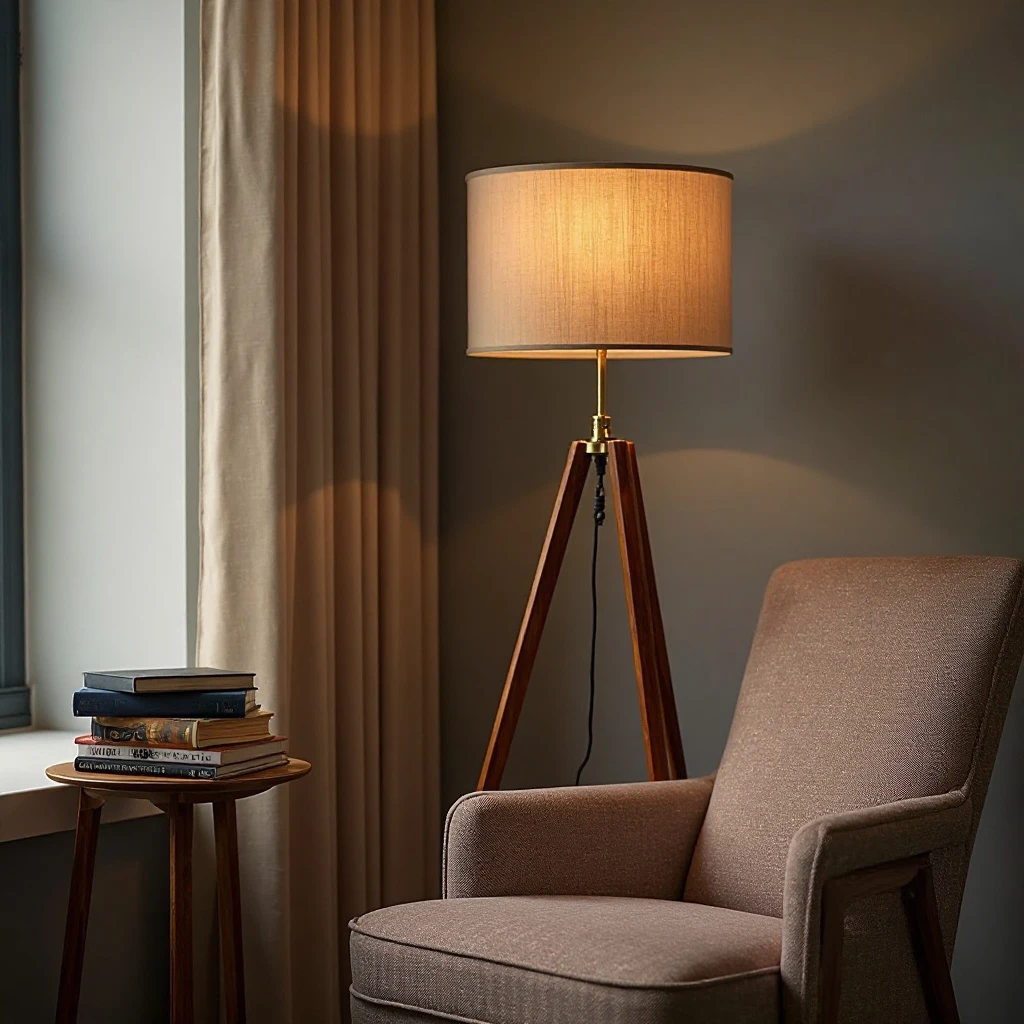
A mid-century inspired tripod lamp stands beside an upholstered reading chair, its three splayed wooden legs creating an airy, sculptural base while the fabric drum shade diffuses warm light over a small side table stacked with books. Shop on Amazon
Why It Works: Tripod lamps offer exceptional stability without visual bulk, their open leg design keeps floor space feeling uncluttered while providing substantial height. The angled legs naturally complement modern and Scandinavian interiors while working equally well with traditional spaces, making them remarkably versatile style chameleons.
How to Style It:
- Place 6-12 inches from the chair’s side to avoid leg interference while keeping controls within reach
- Choose light oak or walnut legs to warm up neutral schemes, or painted legs for bolder statements
- Position the shade height at 60-65 inches from the floor for optimal reading light without glare
- Layer with a lower task light for adjustable lighting levels throughout the day
Where to Use It: Reading corners, beside accent chairs, flanking console tables, empty corners that need definition, or in bedrooms as alternatives to table lamps
Pro Tip: Look for models with adjustable leg angles—you can widen the stance for better stability on carpet or narrow it for tight spaces between furniture pieces.
3. Tall Torchiere with Uplighting
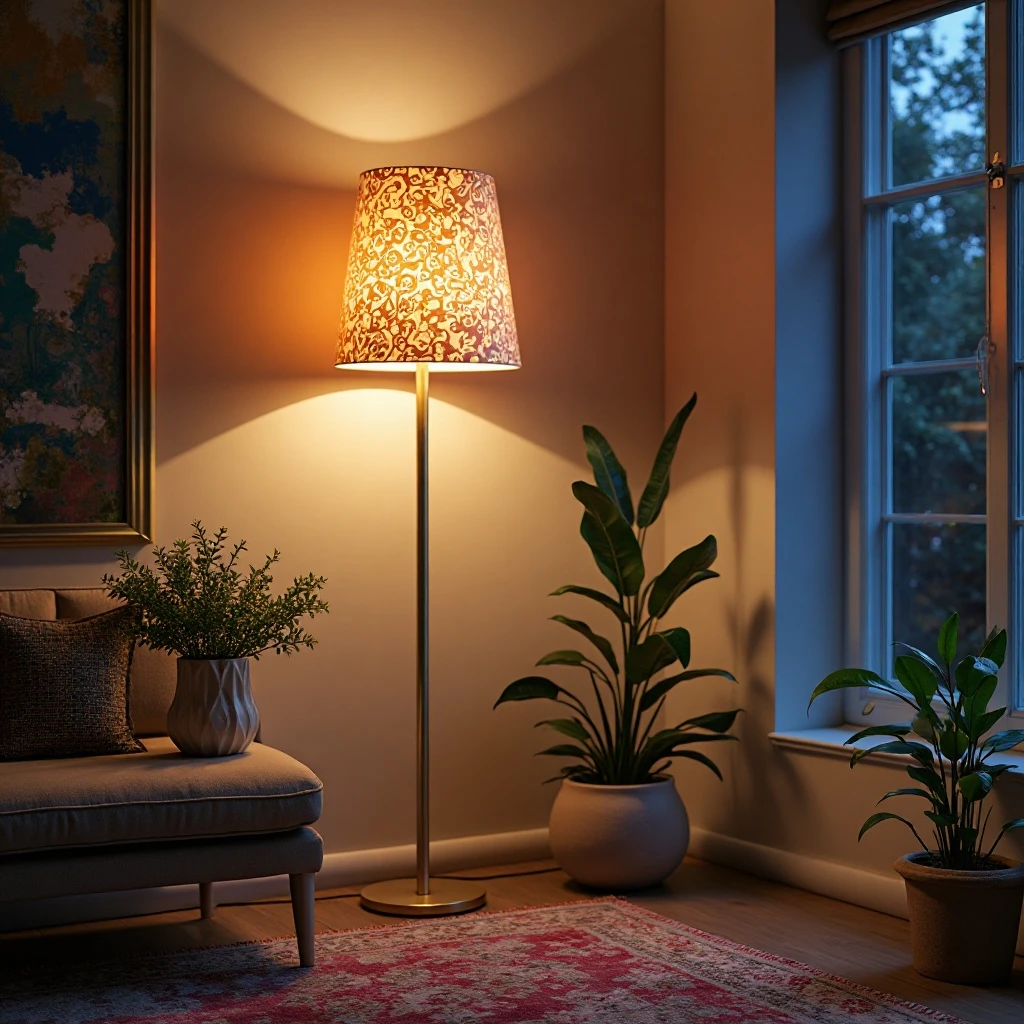
A slender torchiere lamp rises nearly to the ceiling, its upward-facing shade bouncing light off white ceilings to create soft, indirect ambient illumination that fills the entire room with a gentle glow, completely eliminating harsh shadows. Shop on Amazon
Why It Works: Uplighting creates the most flattering, natural-feeling illumination by mimicking daylight’s diffuse quality. This approach makes small living rooms feel dramatically larger and more open while reducing eye strain from direct light sources, perfect for creating relaxing evening atmospheres or complementing screen time.
How It Works:
- Position in corners 12-18 inches from walls to maximize light reflection and coverage
- Pair with LED bulbs rated 1500-2000 lumens for adequate room-filling brightness
- Choose models with dimmer compatibility to control intensity from bright task lighting to soft ambient glow
- Ensure your ceiling is light-colored (white or cream) for maximum light reflection efficiency
Where to Use It: Small living rooms needing space expansion, dark corners, home offices requiring glare-free illumination, or behind sofas to eliminate harsh shadows
Pro Tip: Install smart bulbs in torchieres to create automated lighting scenes—schedule them to gradually brighten in the morning and dim for evening relaxation without touching a switch.
4. Industrial Black Metal Task Lamp
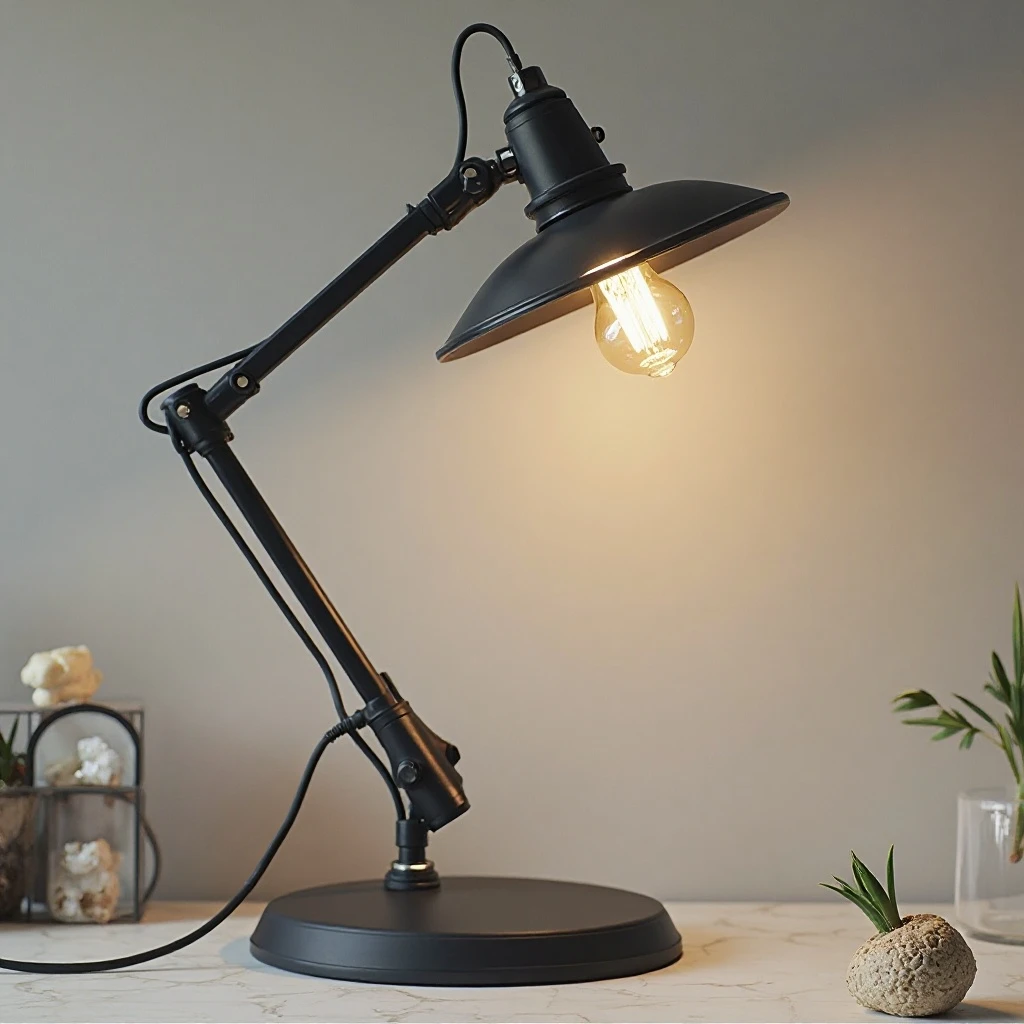
A matte black floor lamp with an adjustable gooseneck arm and exposed Edison bulb creates bold contrast against light walls, its minimal industrial aesthetic adding edge while the articulating head directs focused light precisely where needed. Shop on Amazon
Why It Works: Industrial lamps bring masculine sophistication and functional flexibility to modern living rooms. Their architectural presence works as both lighting and sculpture, while adjustable arms let you direct light for reading, highlighting artwork, or creating dramatic shadows that add depth and visual interest to flat walls.
How to Style It:
- Angle the lamp head to graze textured walls or brick, creating dramatic shadow play
- Position beside leather furniture or near exposed shelving to reinforce industrial themes
- Mix with warm wood tones and soft textiles to prevent the space from feeling cold
- Use vintage Edison bulbs for authentic character or LED Edison-style for energy efficiency
Where to Use It: Loft-style apartments, modern farmhouse living rooms, beside mid-century furniture, minimalist spaces, or masculine bachelor pad designs
Pro Tip: Black matte finishes show dust easily—choose powder-coated metal with slight texture rather than flat matte for easier maintenance and better fingerprint resistance.
5. Brass Pharmacy Lamp Next to Sofa
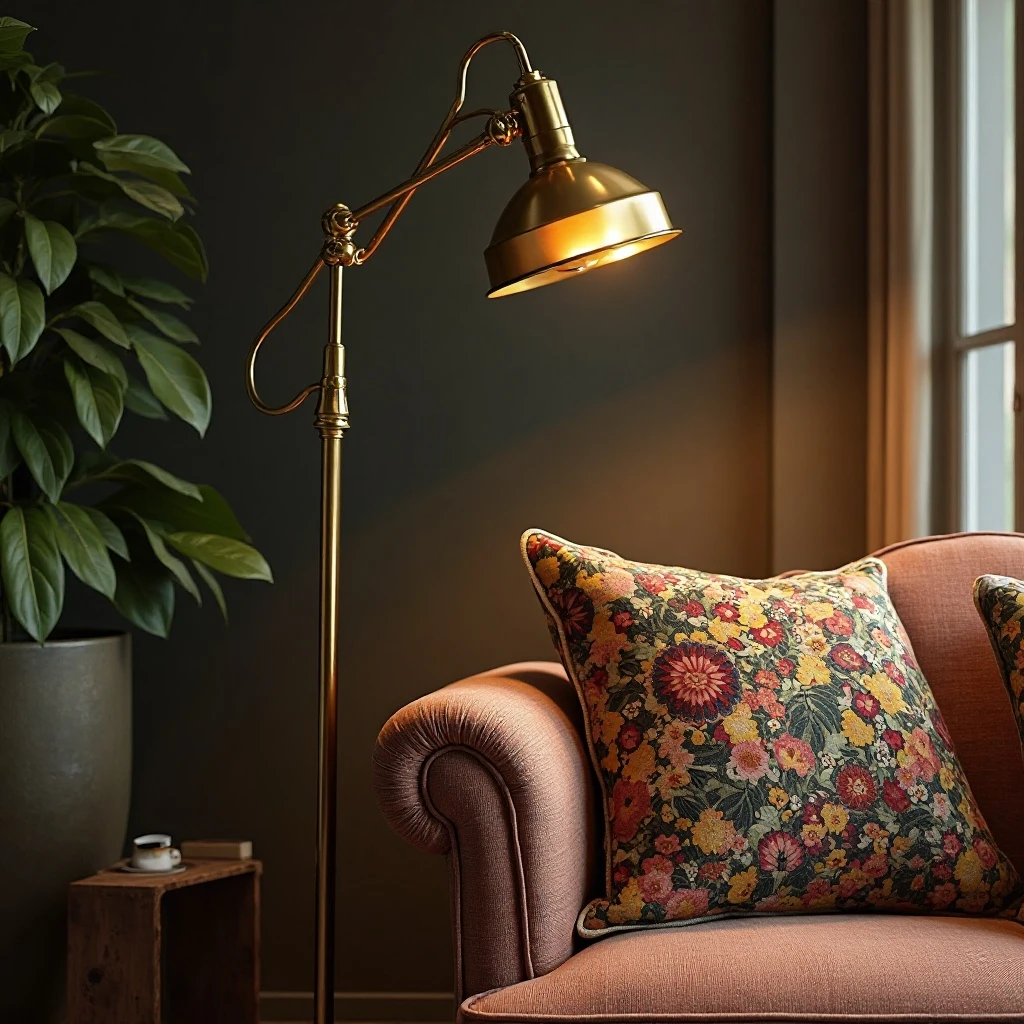
A classic swing-arm pharmacy lamp in warm brass stands beside a sofa’s end, its adjustable arm extending over the armrest to deliver direct reading light while the weighted base keeps it stable despite the cantilevered shade. Shop on Amazon
Why It Works: Pharmacy lamps offer unmatched adjustability and timeless elegance, their swing-arm design lets you position light exactly where needed without moving the entire fixture. The brass finish adds warmth and sophistication while complementing virtually any color palette, from navy blues to blush pinks to earth tones.
How to Style It:
- Position the base 3-4 inches from the sofa’s side with the arm fully retracted when not in use
- Choose antique brass for traditional spaces or polished brass for contemporary interiors
- Extend the arm over the seating area during reading sessions, swing it back for open floor space
- Install 40-60 watt equivalent LED bulbs for comfortable task lighting without heat generation
Where to Use It: Beside sofas replacing table lamps, next to recliners, flanking beds in bedrooms, or beside desks in home offices
Pro Tip: Pharmacy lamps work beautifully in pairs flanking a sofa, but stagger their heights by 2-3 inches or choose different finishes (one brass, one bronze) to avoid overly symmetrical, hotel-like appearances.
6. Sculptural Tree Branch Floor Lamp
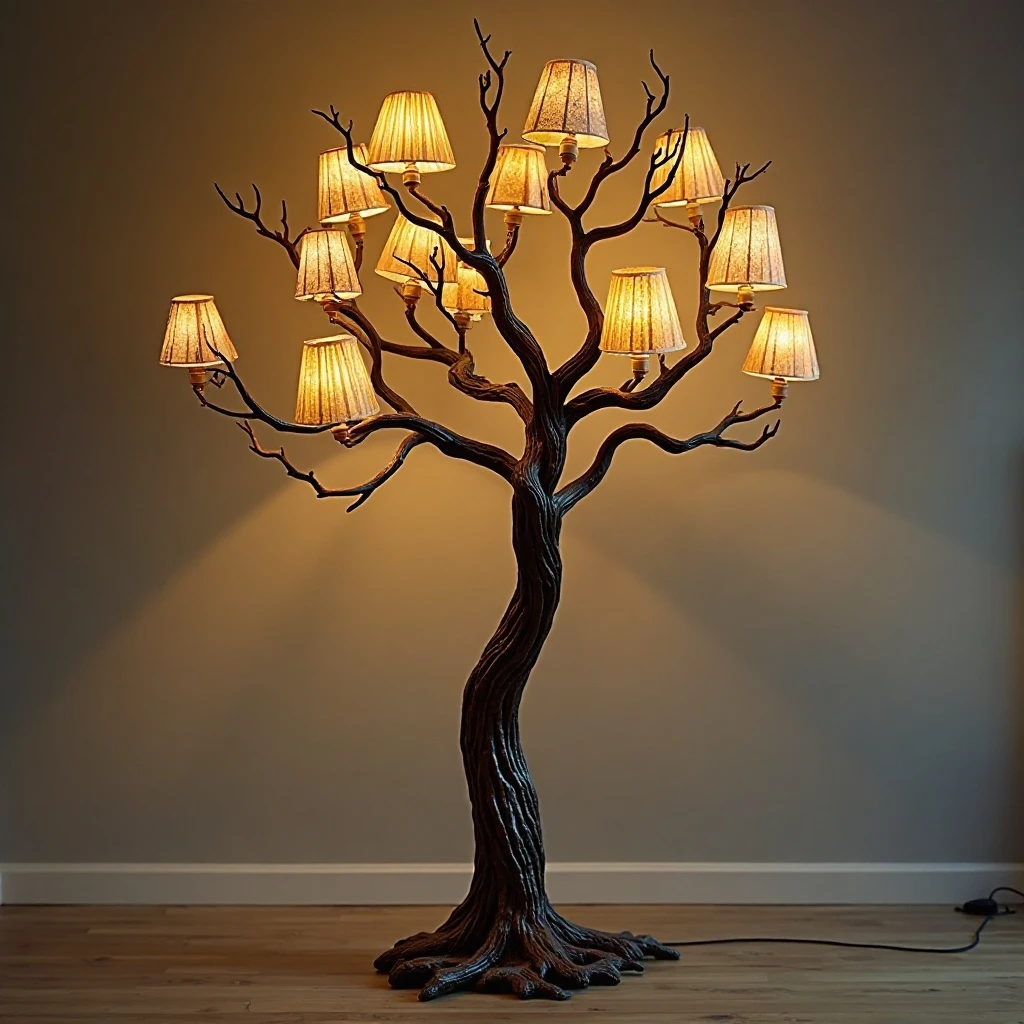
An organic floor lamp features multiple adjustable arms branching from a central trunk, each tipped with an individual shade that can be positioned independently, creating a tree-like silhouette that serves as functional art. Shop on Amazon
Why It Works: Multi-arm lamps provide lighting flexibility that single-source fixtures can’t match, directing light to multiple zones simultaneously. Their artistic presence makes a bold statement while serving practical purposes, and the adjustable arms let you customize the arrangement seasonally or as furniture moves.
How to Style It:
- Position as a room centerpiece where its sculptural form can be appreciated from multiple angles
- Aim different arms toward seating areas, artwork, plants, or architectural features
- Choose finishes in gold, black, or bronze to coordinate with existing hardware and fixtures
- Mix bulb temperatures slightly (2700K-3000K) across arms for dimensional lighting depth
Where to Use It: Open floor plans needing zone definition, behind sectionals, empty corners, transitional spaces between living and dining areas, or loft apartments
Pro Tip: Use this lamp style to “anchor” floating furniture arrangements that don’t touch walls—its substantial presence gives weight to seemingly disconnected seating groups.
7. Minimalist LED Column Lamp
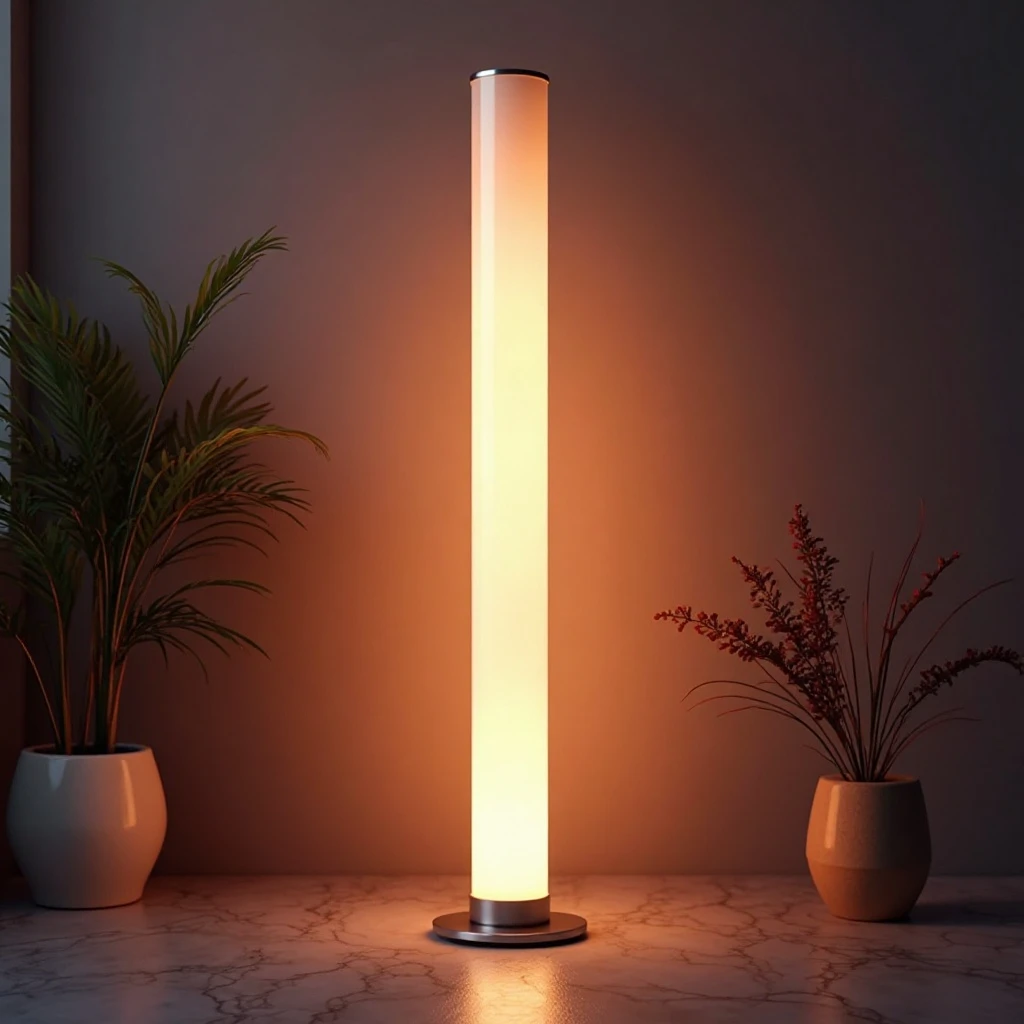
A sleek floor lamp consists of a simple LED column creating a continuous line of light from floor to ceiling, its minimal profile disappearing visually while providing substantial ambient illumination along its entire height. Shop on Amazon
Why It Works: Column lamps offer maximum light with minimum visual footprint, perfect for modern minimalist spaces where traditional shaded lamps feel too fussy. The linear LED design highlights vertical lines, making standard 8-foot ceilings appear taller while consuming minimal floor space—ideal for smaller living rooms.
How to Style It:
- Place in corners where traditional lamps would protrude too far into walking paths
- Use behind transparent furniture like acrylic chairs to maintain visual flow
- Pair with dimmer switches for mood control from bright white to warm amber glow
- Position near mirrors to double the light output through reflection
Where to Use It: Modern apartments, minimalist spaces, small living rooms, behind glass or acrylic furniture, or flanking TV units without adding clutter
Pro Tip: Look for models with color-tuning capabilities—you can shift from cool bright white for daytime tasks to warm amber for evening relaxation using a remote or smartphone app.
8. Woven Rattan Basket Floor Lamp
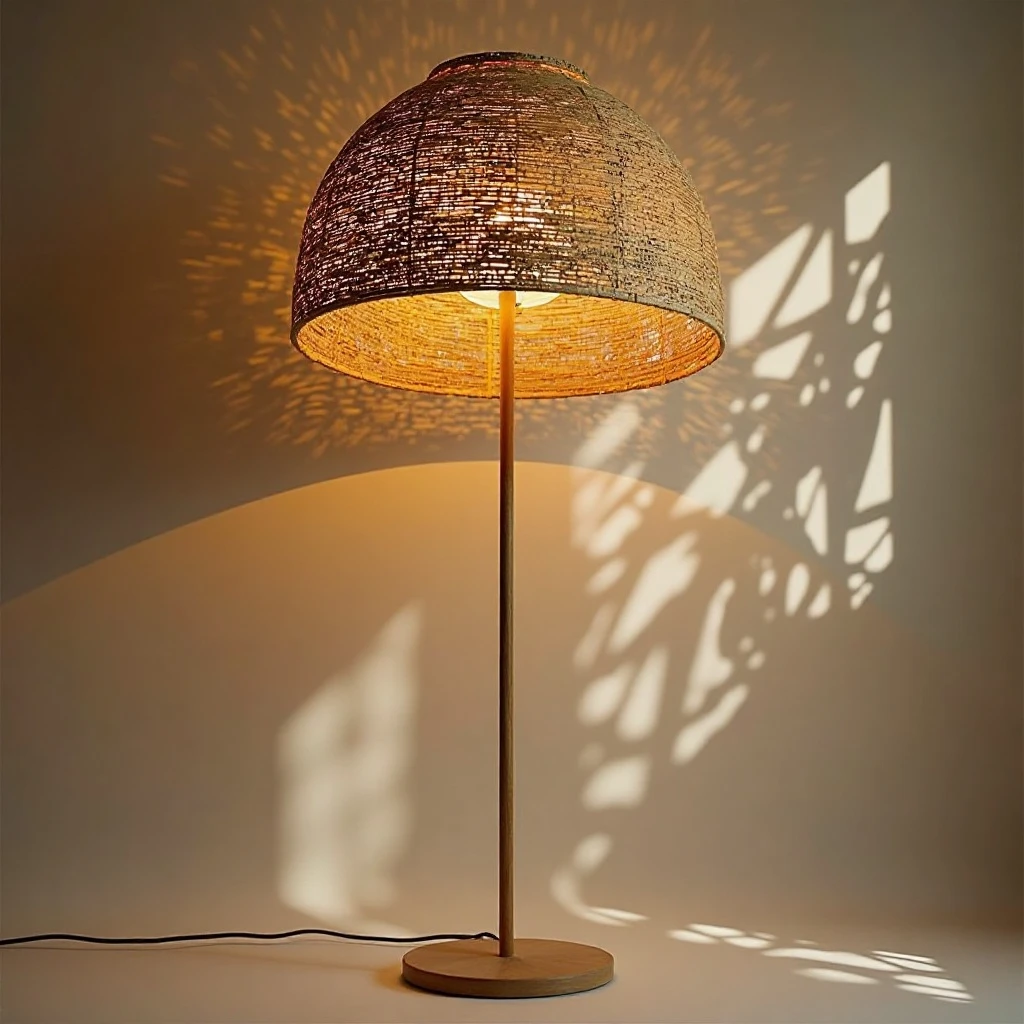
A bohemian-inspired floor lamp features a large woven rattan or seagrass shade that casts intricate shadow patterns across walls and ceilings, its natural texture and organic form bringing warmth and artisanal character to the space. Shop on Amazon
Why It Works: Natural fiber lamps instantly soften hard-edged modern interiors while adding textural richness that makes rooms feel layered and collected. The woven shade creates ambient lighting with character—delicate patterns dance across surfaces as light filters through, adding movement and visual interest that solid shades can’t provide.
How to Style It:
- Position 12-18 inches from walls to showcase the shadow patterns the woven shade creates
- Pair with other natural materials like jute rugs, wooden furniture, and linen textiles
- Use warm LED bulbs (2200K-2700K) to enhance the golden tones of natural fibers
- Balance the organic texture with clean-lined furniture to prevent overly cluttered bohemian aesthetics
Where to Use It: Boho living rooms, coastal interiors, Scandinavian-inspired spaces, beside natural fiber sofas, or in sunrooms and plant-filled corners
Pro Tip: Natural rattan darkens slightly over time from UV exposure—rotate the shade 180 degrees every few months to ensure even aging and prevent one side from becoming noticeably darker.
9. Marble Base Modern Floor Lamp
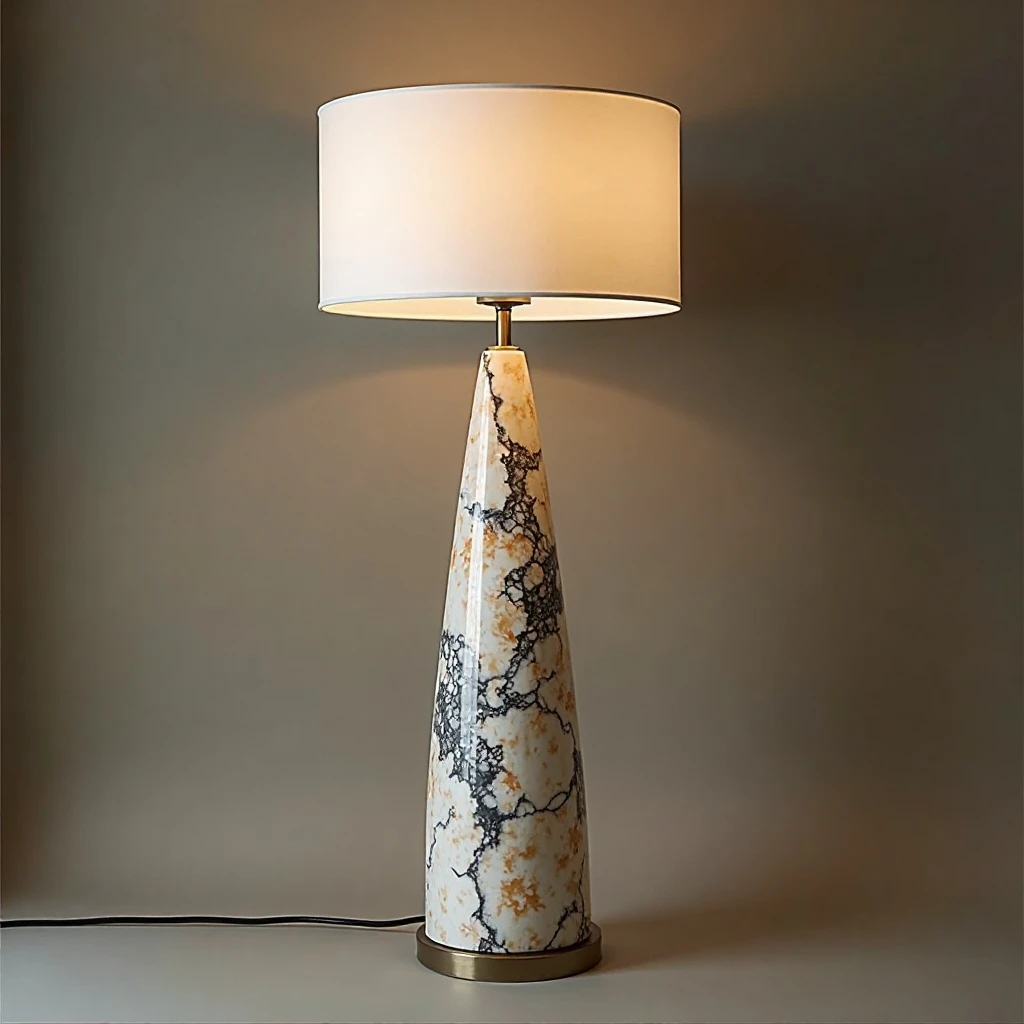
A contemporary floor lamp anchored by a substantial marble base supports a slim brass stem topped with a linen drum shade, the luxurious stone foundation providing both visual and physical weight while adding sophisticated materiality. Shop on Amazon
Why It Works: Marble bases immediately elevate perceived quality and add a touch of luxury to any space. The natural stone’s substantial weight ensures stability even with tall, slender stems, while the unique veining patterns make each lamp one-of-a-kind. Marble’s cool elegance balances warmer elements like wood and brass beautifully.
How to Style It:
- Choose white Carrara marble for classic elegance or black marble for dramatic modern statements
- Position on hardwood or tile floors where the marble can be appreciated (avoid hiding on thick rugs)
- Coordinate the metal finish with cabinet hardware, faucets, and other fixtures throughout the space
- Use as an anchor piece in transitional spaces bridging traditional and contemporary elements
Where to Use It: Beside velvet sofas, in formal living rooms, flanking fireplace mantels, near marble coffee tables, or in entryways that flow into living spaces
Pro Tip: Marble is porous—seal the base with a stone sealer immediately after purchase and annually thereafter to prevent staining from water rings, dust, or accidental spills.
10. Adjustable Cantilever Reading Lamp
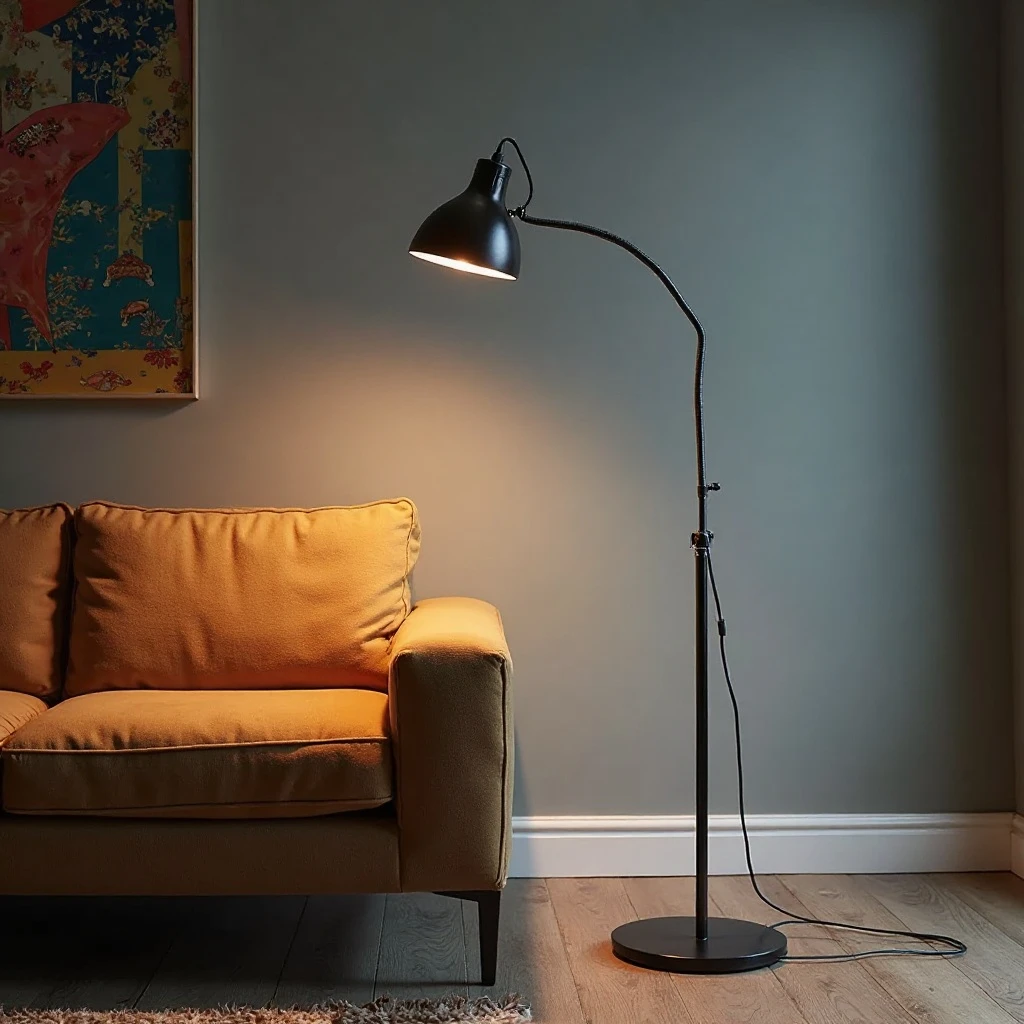
A modern floor lamp features a counterweighted cantilever arm that extends horizontally over seating, its adjustable shade rotating and tilting to direct focused light precisely where needed while the offset design keeps the base safely out of foot traffic. Shop on Amazon
Why It Works: Cantilever designs solve the “cord across the walkway” problem by positioning the base behind furniture while the arm reaches forward. The engineered balance allows substantial reach without tipping, and the precise adjustability means you can fine-tune lighting angles for reading, needlework, or laptop use without eye strain or screen glare.
How to Style It:
- Position the base 24-30 inches behind the chair back with the arm extending over the shoulder
- Adjust the shade to 15-18 inches above the reading material for optimal task lighting
- Choose models with built-in USB ports for charging devices without additional cords
- Pair with swivel chairs to maintain proper light positioning as seating angles change
Where to Use It: Reading nooks, home offices, beside recliners, in bedrooms as bedside reading lamps, or anywhere precision task lighting is essential
Pro Tip: Test the adjustment mechanism before purchasing—cheaper cantilever lamps lose tension over time, causing the arm to droop. Quality models use friction locks or counterweight systems that maintain position reliably for years.
11. Glass Globe Floor Lamp
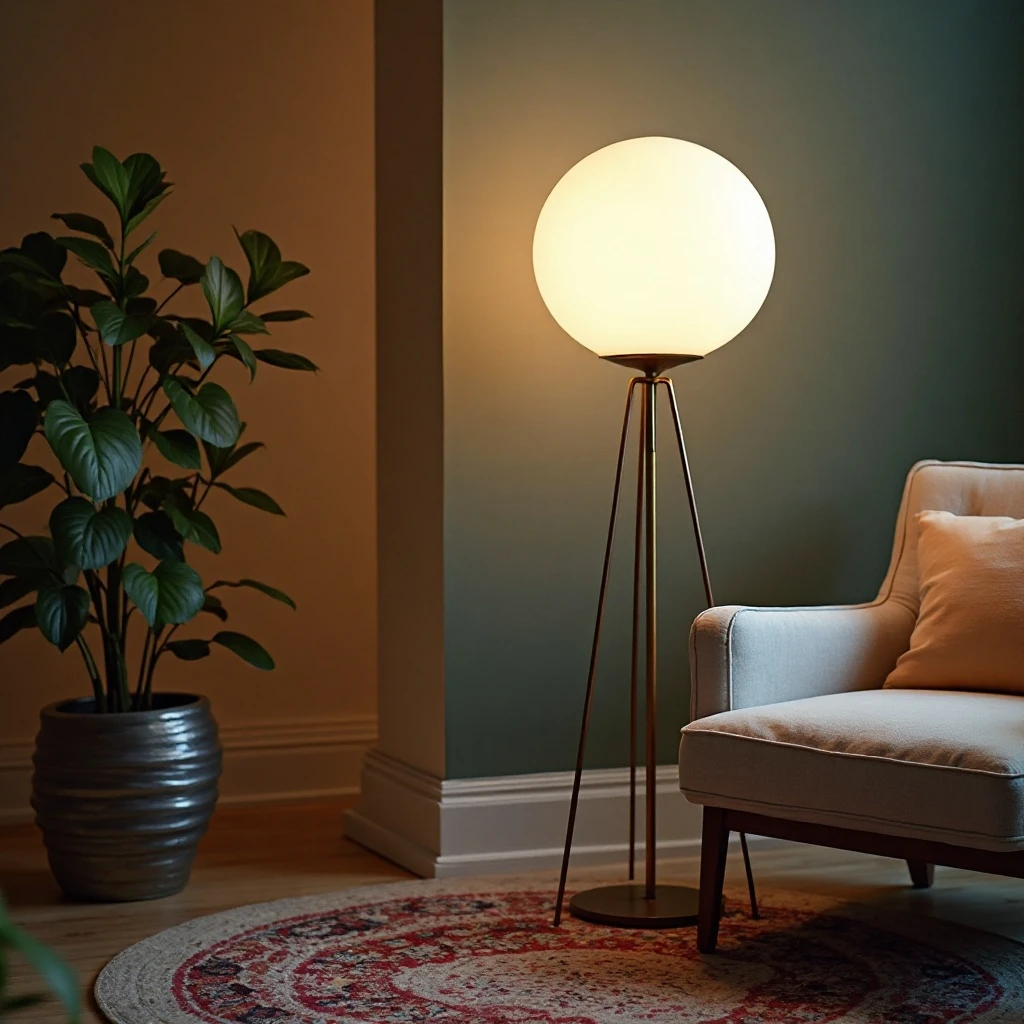
A mid-century inspired floor lamp topped with a large opal glass globe diffuses light in all directions, creating a soft ambient glow while the spherical form adds sculptural presence and the milk glass finish provides gentle illumination without harsh glare. Shop on Amazon
Why It Works: Globe lamps distribute light omnidirectionally, eliminating dark corners and shadows that single-direction lamps create. The spherical shape is inherently pleasing and works across design styles from mid-century modern to contemporary, while opal or frosted glass prevents visible bulbs from creating harsh spots.
How to Style It:
- Position between seating areas to provide ambient light for conversations rather than task-focused zones
- Choose 10-12 inch globes for intimate spaces or 14-16 inch for dramatic statements in larger rooms
- Place on brass or black stems depending on whether you want warm or cool undertones
- Use bright white LED bulbs for crisp modern light or warm LEDs for cozy traditional spaces
Where to Use It: Between facing sofas, beside dining areas, in entry halls, corners of open-concept spaces, or flanking console tables
Pro Tip: Clean frosted glass globes monthly with a microfiber cloth and glass cleaner—dust accumulation reduces light output by up to 30% and creates a dingy yellow appearance over time.
12. Rustic Wood Beam Floor Lamp
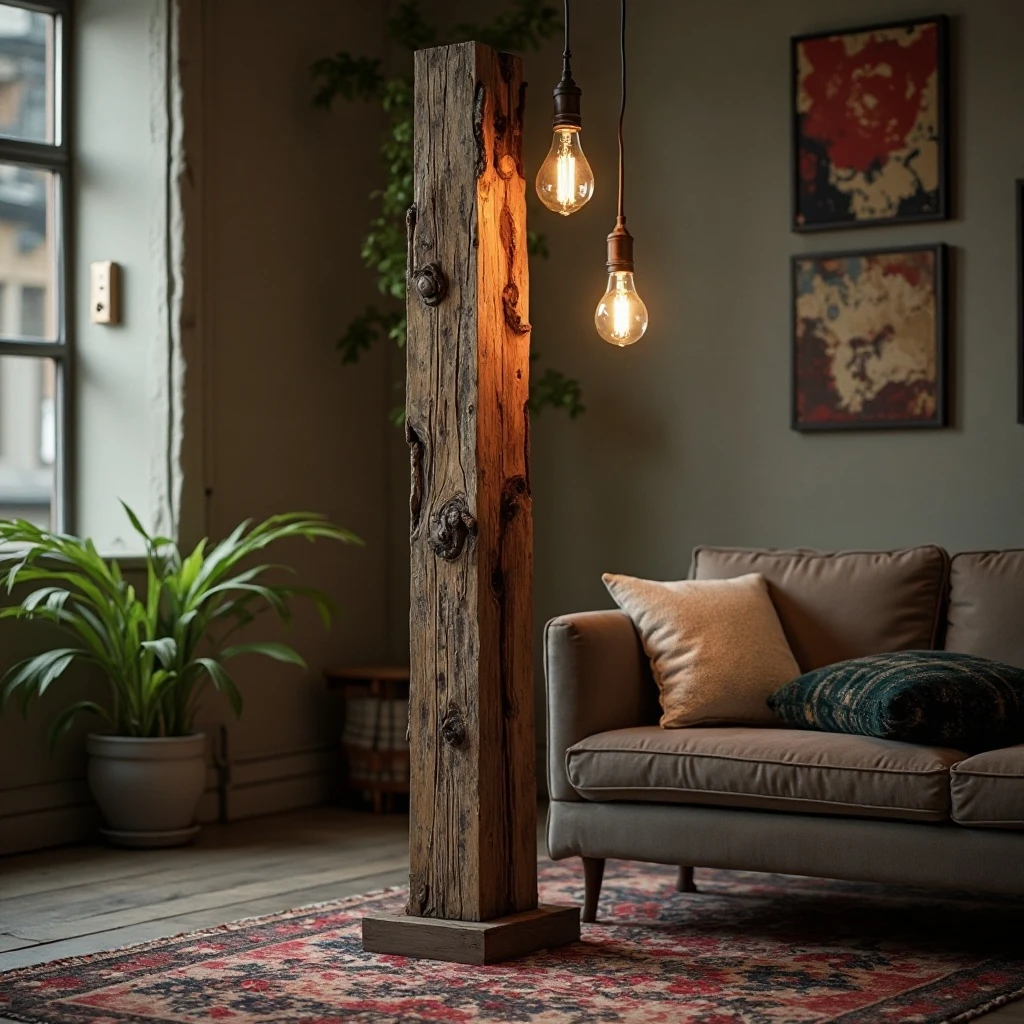
A substantial floor lamp constructed from reclaimed wood beams creates an aged, architectural presence, its chunky form and weathered finish bringing organic warmth while the exposed bulbs on metal sockets add industrial edge. Shop on Amazon
Why It Works: Reclaimed wood lamps introduce texture, history, and character that new materials can’t replicate. The substantial presence grounds furniture arrangements while the raw, unfinished aesthetic prevents spaces from feeling overly polished. These lamps work as conversation pieces while providing functional lighting—true multi-tasking design elements.
How to Style It:
- Position in spaces with exposed beams, brick walls, or shiplap to reinforce rustic architectural elements
- Balance the rough texture with refined elements like velvet upholstery or polished metals
- Use vintage Edison bulbs with visible filaments to enhance the industrial-rustic aesthetic
- Allow at least 12 inches of clearance around the lamp to appreciate its dimensional form
Where to Use It: Farmhouse living rooms, cabin interiors, industrial lofts, eclectic spaces mixing old and new, or beside leather furniture
Pro Tip: Reclaimed wood can harbor insects or continue drying—ask if the wood has been kiln-dried and treated. Quality pieces should be sealed to prevent splinters and stabilize the wood against humidity changes.
13. Sleek Chrome Arc with Dimmer
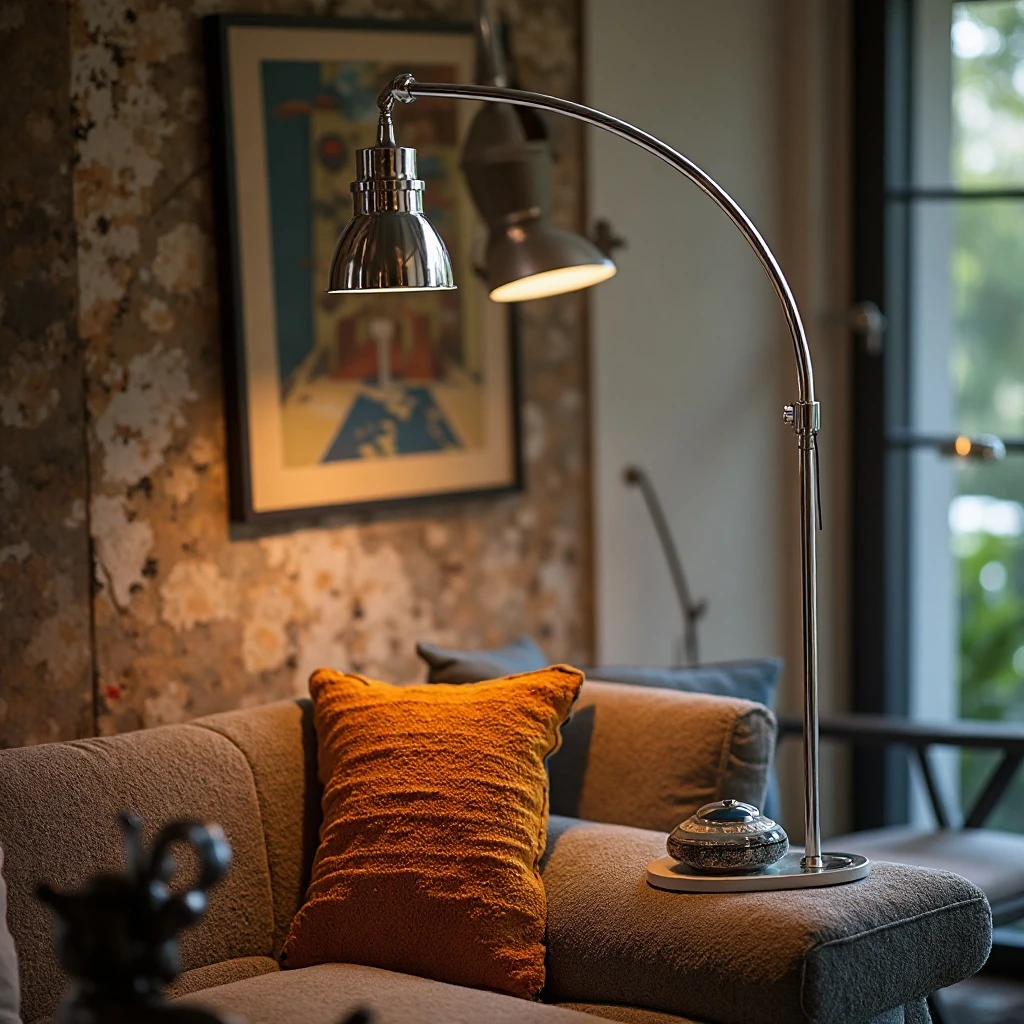
A polished chrome arc lamp with an integrated dimmer switch curves dramatically over a seating area, its mirror-finish metal reflecting light and surroundings while the rotary dimmer on the stem allows instant brightness control. Shop on Amazon
Why It Works: Chrome finishes maximize light reflection, effectively doubling the perceived brightness while adding glamorous, contemporary style. Built-in dimmers eliminate the need for smart bulbs or wall switches, giving you instant control over ambiance. The cool metallic finish pairs beautifully with gray, white, and jewel-tone color schemes.
How to Style It:
- Polish the chrome monthly to prevent water spots and maintain the mirror finish
- Position where the lamp can reflect interesting elements like artwork or windows
- Use frosted bulbs rather than clear to prevent blinding reflections off the polished surface
- Pair with other metallic accents in chrome, silver, or mercury glass for cohesive design
Where to Use It: Modern living rooms, glam interiors, beside gray or white sofas, in monochromatic spaces needing shine, or rooms with crystal or glass accents
Pro Tip: Chrome shows every fingerprint and water spot—keep a microfiber cloth and glass cleaner nearby for quick touch-ups, and avoid placing chrome lamps in humid rooms where tarnishing can occur.
14. Fabric Shade with Pattern
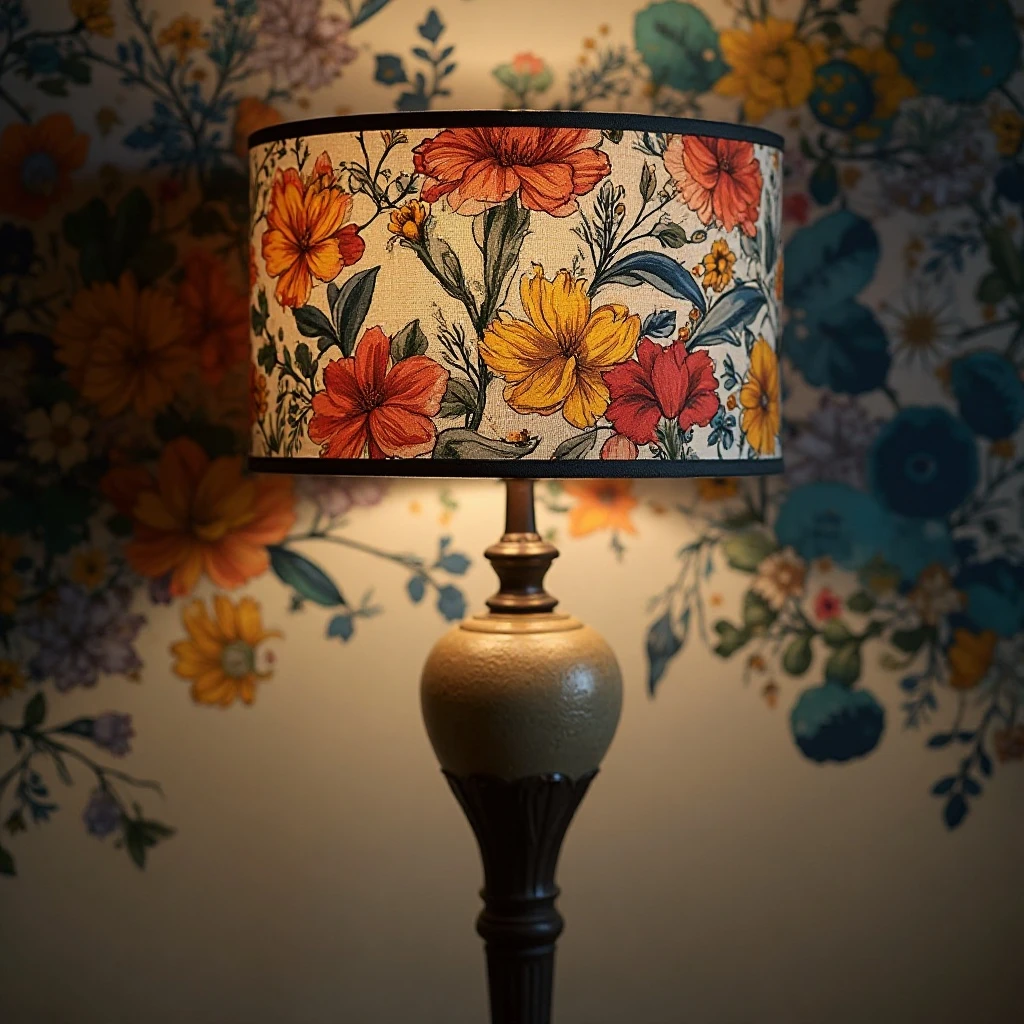
A traditional floor lamp features a tailored fabric shade in a bold geometric or botanical pattern, bringing color, personality, and softness to the space while the patterned diffusion creates interesting light play on surrounding surfaces. Shop on Amazon
Why It Works: Patterned shades transform lamps from functional necessities into decorative statements, tying together color schemes and adding visual interest at eye level. When lit, the pattern becomes translucent and glowing, creating a warm focal point. Fabric shades soften sound and light, making rooms feel more intimate and residential.
How to Style It:
- Choose patterns that pull colors from other textiles (pillows, rugs, curtains) for cohesive design
- Position where the lit shade can be appreciated—beside seating areas or in sight lines from entryways
- Use CFL or LED bulbs that generate minimal heat to prevent fabric discoloration or fire hazards
- Select patterns with white or cream backgrounds to maximize light transmission
Where to Use It: Traditional living rooms, eclectic spaces, beside patterned sofas or chairs, in rooms needing color injection, or grandmillennial-style interiors
Pro Tip: Fabric shades collect dust and can absorb odors—vacuum them monthly using the upholstery attachment and consider applying fabric protector spray to prevent staining from accidental spills.
15. Multi-Head Track Spotlight
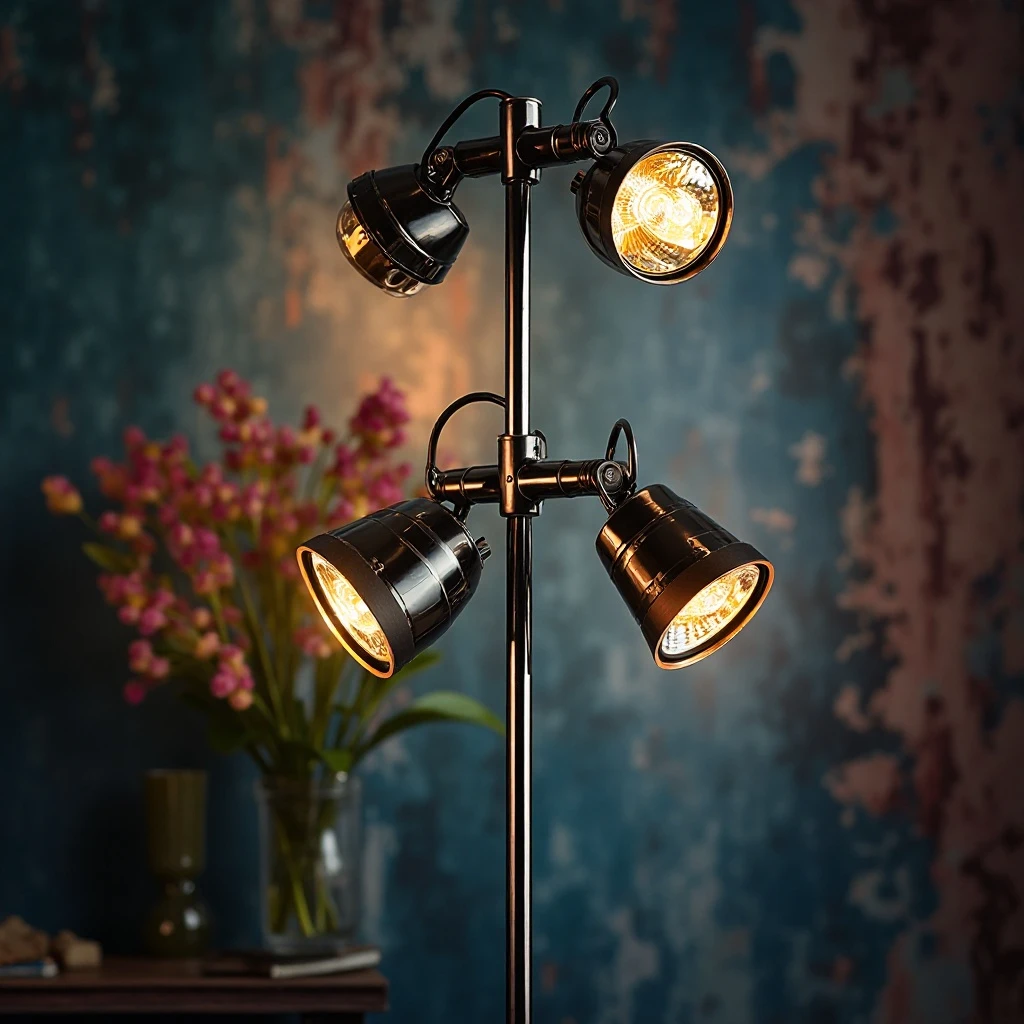
A contemporary floor lamp features an adjustable track with three or more individual spotlights that can be independently aimed, creating a gallery-like presentation for artwork, architectural features, or creating multiple lighting zones from a single fixture. Shop on Amazon
Why It Works: Multi-head designs provide unmatched flexibility, allowing you to highlight artwork, wash walls with light, and illuminate seating areas simultaneously. The adjustable heads let you change the lighting scheme as artwork or furniture moves, and the concentrated spots create dramatic pools of light that add depth and dimension.
How to Style It:
- Position 6-8 feet from the wall when highlighting artwork for optimal viewing angles without glare
- Aim one spotlight at artwork, one at a plant, and one toward seating for layered illumination
- Choose LED spotlights with narrow beam angles (15-30 degrees) for precise highlighting without spill light
- Install on dimmer circuits to adjust intensity based on time of day or activity
Where to Use It: Gallery walls, rooms with architectural features to highlight, corners with plant collections, or open-concept spaces needing defined lighting zones
Pro Tip: Use spotlights with 90+ CRI (Color Rendering Index) LED bulbs when highlighting artwork—lower CRI values distort colors and make paintings look dull or off-tone.
16. Bamboo Sustainable Design Lamp
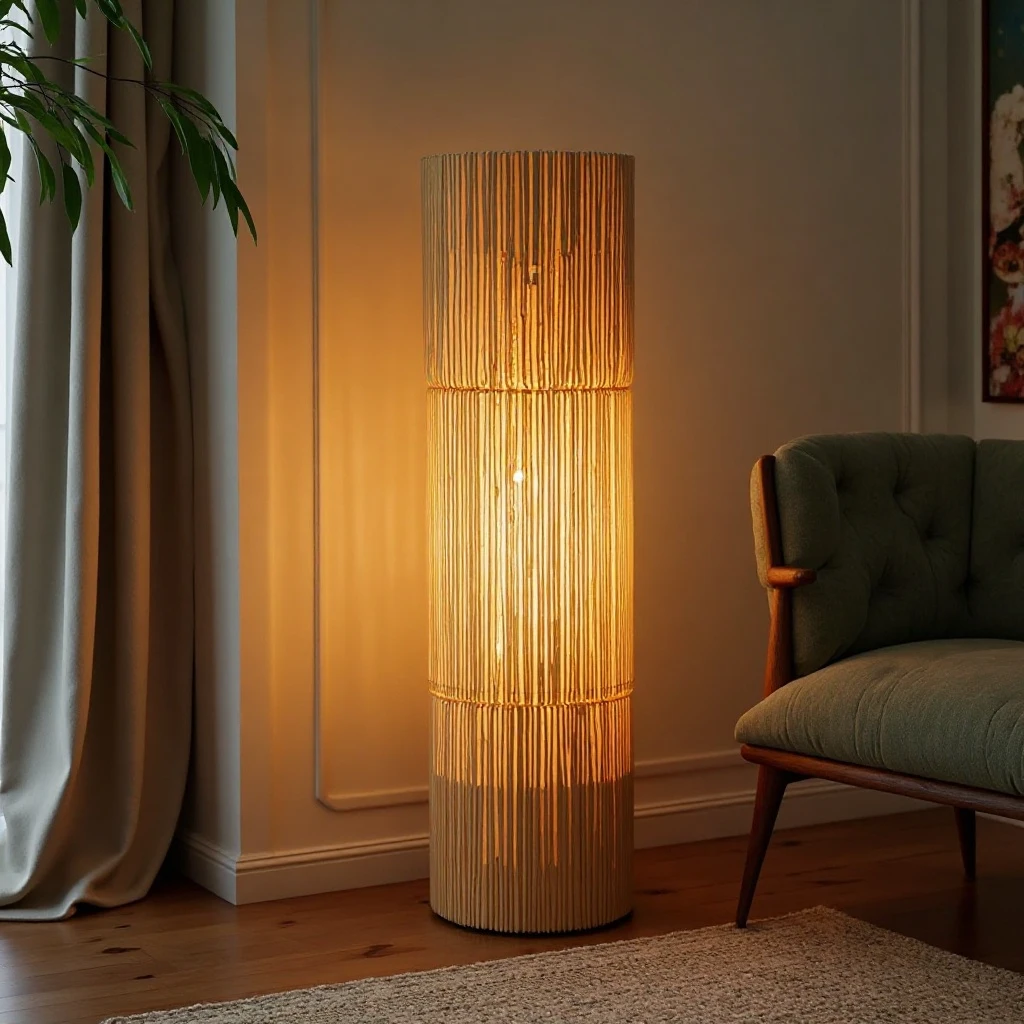
An eco-conscious floor lamp constructed from sustainably harvested bamboo showcases natural grain variations and a light honey tone, its renewable material and organic form bringing warmth while aligning with sustainable living values. Shop on Amazon
Why It Works: Bamboo grows rapidly and regenerates without replanting, making it the most sustainable hardwood alternative. The natural material adds organic warmth and works across design styles from Asian-inspired to Scandinavian to tropical. Bamboo’s inherent strength allows for slender, graceful forms that feel light and airy rather than heavy.
How to Style It:
- Pair with other sustainable materials like organic cotton, linen, jute, and reclaimed wood
- Position near plants and natural fiber rugs to create cohesive organic zones
- Choose natural finishes rather than stained to showcase bamboo’s distinctive grain and node patterns
- Layer with LED bulbs to maximize the eco-friendly profile throughout the lamp’s lifecycle
Where to Use It: Eco-conscious homes, tropical or coastal spaces, Japandi interiors, plant-filled rooms, or sunrooms and enclosed porches
Pro Tip: Bamboo can split in very dry environments—maintain 40-50% humidity in rooms with bamboo furniture and lamps, or lightly oil the bamboo annually with mineral oil to prevent drying and cracking.
17. Colorful Ceramic Base Statement
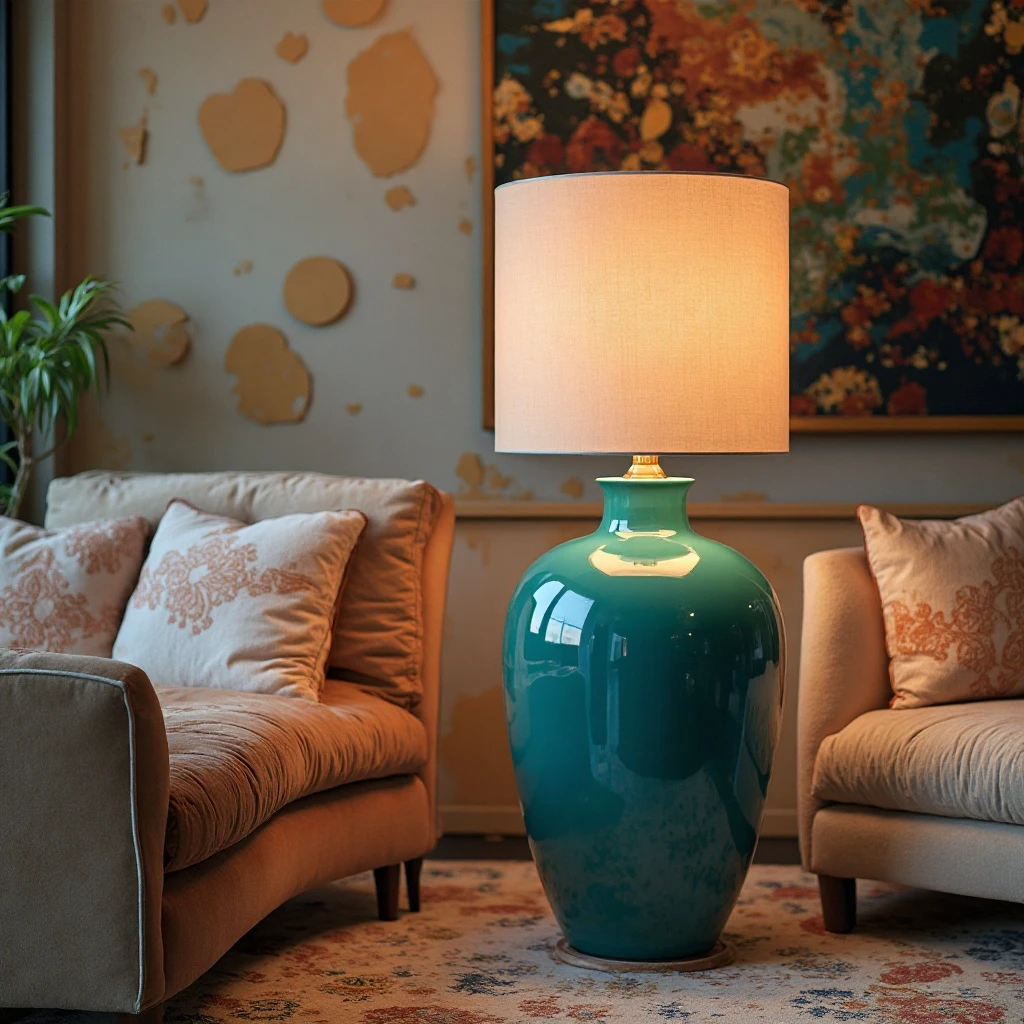
A bold floor lamp features an oversized ceramic base in saturated color—cobalt blue, emerald green, or coral—its glazed finish catching light while the sculptural form serves as both lighting and art, anchoring the room’s color story. Shop on Amazon
Why It Works: Colored ceramic bases inject personality and serve as commitment pieces that define a room’s palette. The glossy glaze reflects light beautifully, adding dimension and movement as you move through the space. Ceramic feels substantial and permanent while colored glass can feel fragile, making these bases both beautiful and practical.
How to Style It:
- Choose a base color that appears in artwork or a favorite textile to create color cohesion
- Balance bold bases with neutral shades to prevent overwhelming the space with color
- Position on light-colored floors or rugs where the colored base creates maximum contrast
- Use colored bases in pairs flanking neutral furniture for dramatic symmetry
Where to Use It: Neutral spaces needing color injection, beside white or gray sofas, in entryways making first impressions, or rooms with bold artwork to complement
Pro Tip: Ceramic bases can crack if knocked over—place them away from high-traffic areas and consider adding felt pads underneath to prevent sliding on hard floors.
18. Vintage-Style Edison Cage Lamp
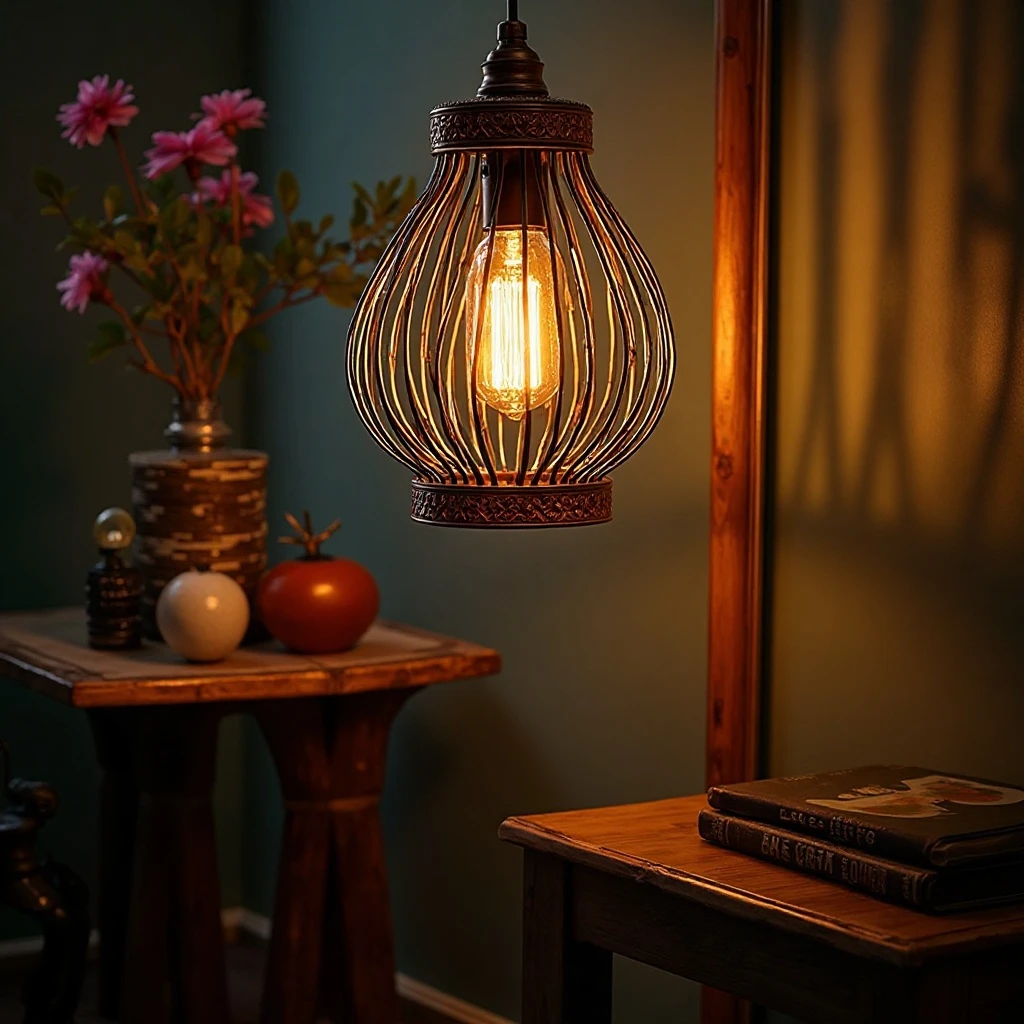
An industrial floor lamp features an exposed Edison bulb enclosed in a metal wire cage, the protective grid creating geometric shadow patterns while visible amber filaments provide nostalgic warmth and the minimal design showcases the bulb as the feature. Shop on Amazon
Why It Works: Cage lamps celebrate the beauty of the bulb itself rather than hiding it, turning functional components into decorative elements. The exposed design works beautifully in industrial, vintage, and eclectic spaces while the wire cage adds architectural interest and creates captivating shadow play across walls and ceilings.
How to Style It:
- Use oversized Edison bulbs (4-6 inches) to make a dramatic statement within the cage
- Position where shadows can play across textured walls like exposed brick or concrete
- Pair with vintage-inspired furniture, metal accents, and weathered wood for cohesive styling
- Choose matte black or rust finish cages for authentic vintage appeal
Where to Use It: Industrial lofts, man caves, basement lounges, beside leather furniture, or in spaces with exposed ductwork and concrete
Pro Tip: Standard Edison bulbs consume 60+ watts and generate significant heat—upgrade to LED Edison-style bulbs that provide the same vintage aesthetic with 90% less energy use and virtually no heat generation.
19. Sleek Shelf Floor Lamp Combo
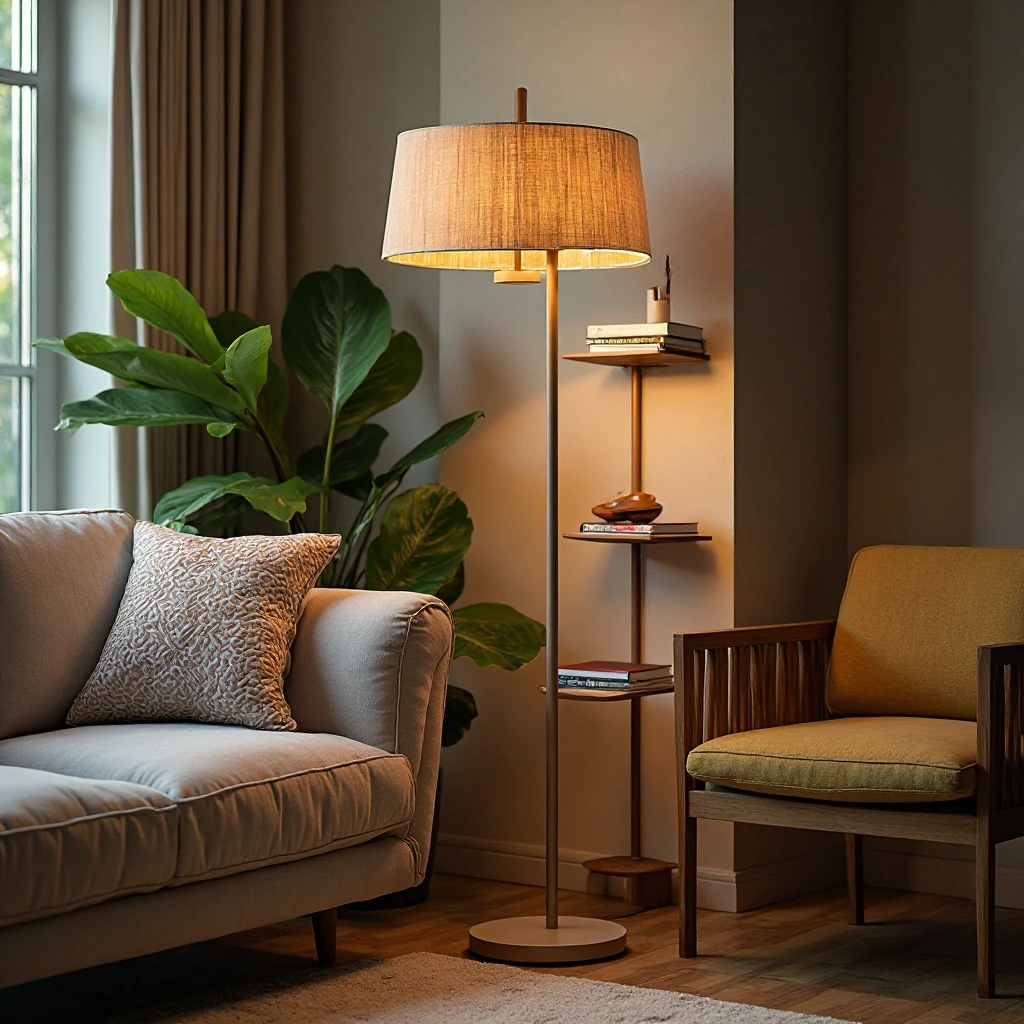
A multifunctional floor lamp integrates wooden shelves into its stem design, providing display space for books, plants, or decorative objects while illuminating both the shelving and surrounding area—furniture and lighting combined in one space-saving piece. Shop on Amazon
Why It Works: Combination pieces maximize functionality in small spaces where every square foot counts. The built-in shelves eliminate the need for separate side tables while creating styled vignettes at multiple heights. This design is perfect for minimalists who want to reduce furniture quantity without sacrificing function.
How to Style It:
- Style shelves with varying heights—books, small plants, and decorative objects in odd-numbered groupings
- Position beside chairs or sofas where the shelves provide accessible surfaces for drinks and remotes
- Use the top shelf for items you’ll access frequently and lower shelves for decorative displays
- Choose wood tones that match or complement other furniture for cohesive design
Where to Use It: Small apartments, studio living spaces, beside reading chairs, in home offices, or bedrooms with limited nightstand space
Pro Tip: Test the stability before fully loading shelves—cheaper models can become top-heavy and tip. Place heavier items on lower shelves and secure the lamp to the wall using furniture straps if you have children or pets.
20. Crystal Accented Glam Lamp
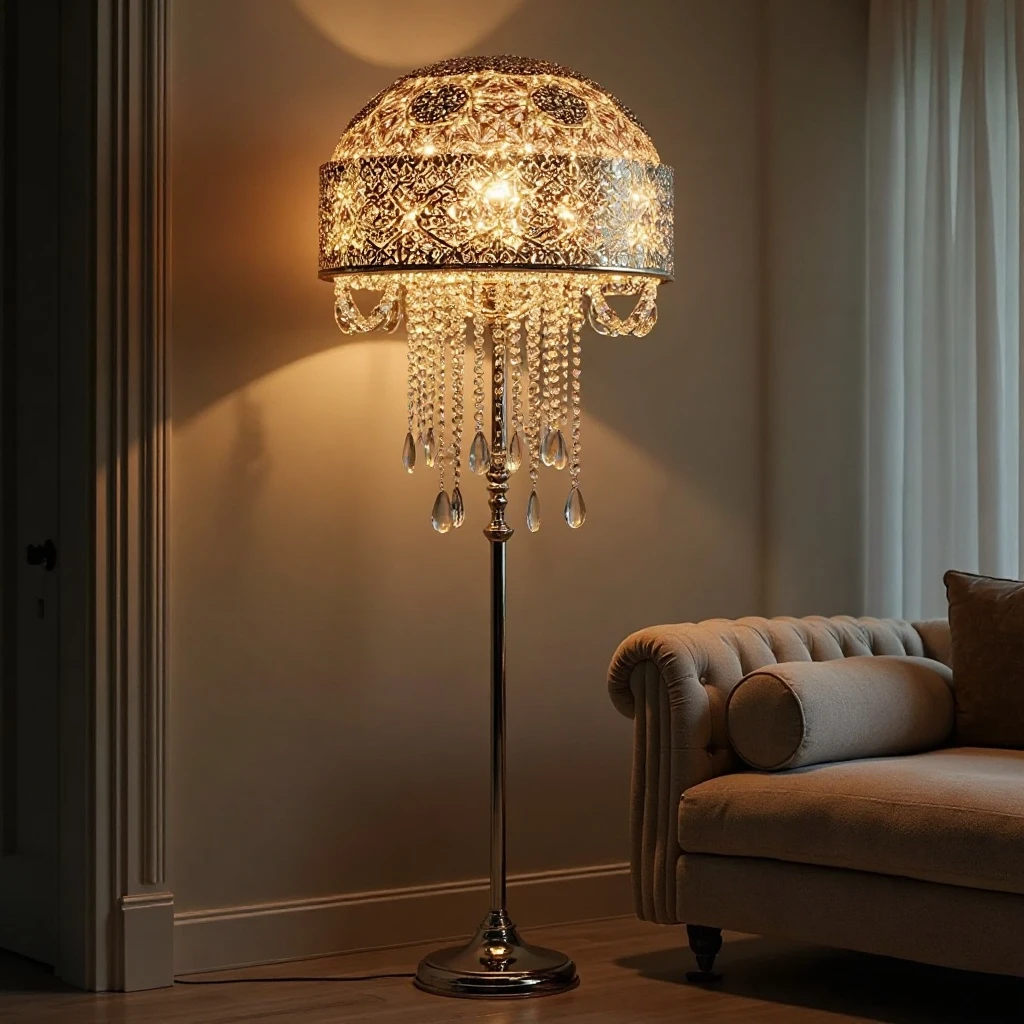
A glamorous floor lamp features crystal or glass accents—either cascading strands, geometric cutouts, or clustered jewels—that catch and refract light, creating sparkle and sophisticated luxury while the metallic base adds warmth and shine. Shop on Amazon
Why It Works: Crystal details elevate everyday lighting into jewelry for your room, transforming functional fixtures into sparkling focal points. The light refraction creates dancing rainbow effects across surfaces, adding movement and magic to static spaces. These lamps work beautifully in formal living rooms or spaces that embrace maximalist glamour.
How to Style It:
- Position near windows where natural light can activate the crystals during the day
- Pair with other luxe materials like velvet, silk, mirrors, and metallic finishes
- Clean crystals monthly with glass cleaner to maintain clarity and maximum sparkle
- Use bright white LED bulbs to maximize the prismatic effects through the crystal elements
Where to Use It: Formal living rooms, glam bedrooms, beside tufted velvet sofas, in dressing areas, or spaces with chandelier-style ceiling fixtures
Pro Tip: Dust accumulation on crystals kills the sparkle—remove crystal strands seasonally for deep cleaning in warm soapy water, then pat dry with lint-free cloths before reattaching.
21. Minimalist Paper Lantern Style
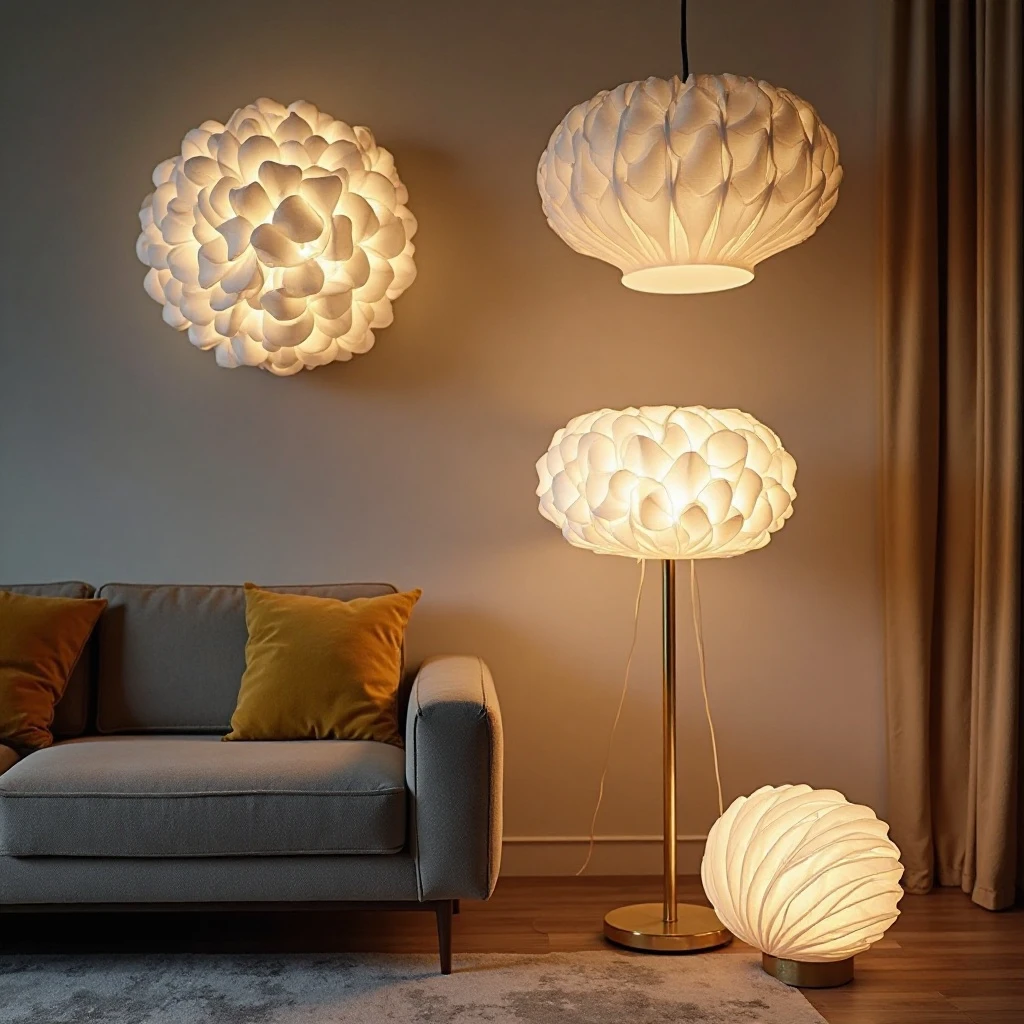
A contemporary interpretation of traditional paper lanterns features a sculptural shade in white or neutral tones, its soft material diffusing light gently in all directions while the organic form adds artistic presence without visual weight. Shop on Amazon
Why It Works: Paper or fabric lantern shades create the softest, most flattering ambient light by diffusing illumination through translucent material. The lightweight aesthetic prevents rooms from feeling cluttered while still providing substantial light output. These work across styles from Scandinavian to Japanese-inspired to modern minimalist.
How to Style It:
- Position where the sculptural shade can be appreciated from multiple angles
- Use low-wattage warm LED bulbs to create soft glowing ambiance without harsh brightness
- Pair with other minimalist elements and maintain negative space around the lamp
- Choose irregularly shaped shades rather than perfect spheres for more visual interest
Where to Use It: Meditation spaces, minimalist living rooms, beside low-profile furniture, in corners of open-concept rooms, or spaces embracing Japandi design
Pro Tip: Paper shades are delicate and can tear—keep them away from playful pets and active children, and consider models with internal wire frameworks that protect the paper from damage.
22. Adjustable Pharmacy-Style Bridge Lamp
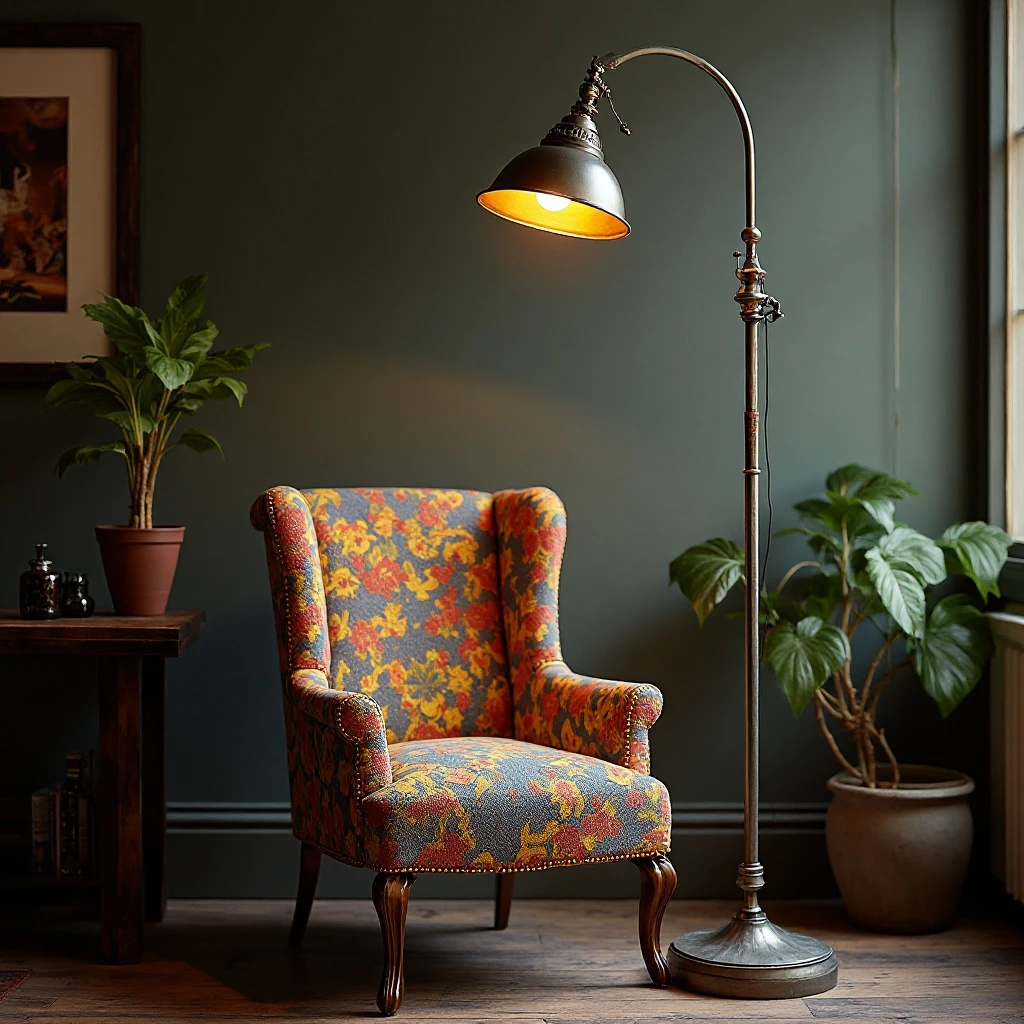
A classic bridge lamp features a weighted base positioned behind a chair with an arched stem that reaches over the back, its adjustable shade hovering directly over the reading area without requiring a side table—a traditional solution still perfect today. Shop on Amazon
Why It Works: Bridge lamps were invented specifically for reading, positioning light optimally over the reader’s shoulder to eliminate shadows without glare. No side table is required, making them perfect for small spaces or rooms with floating furniture arrangements. The traditional form adds classical elegance while solving practical lighting challenges.
How to Style It:
- Position the base 18-24 inches behind the chair back with the shade extending over the armrest
- Adjust the shade to 40-42 inches from the floor when seated for optimal reading light positioning
- Choose traditional brass or bronze finishes for classic interiors, or matte black for modern updates
- Pair with traditional wingback chairs or English roll-arm sofas for cohesive period styling
Where to Use It: Traditional living rooms, beside reading chairs without adjacent tables, in libraries or studies, or formal sitting areas
Pro Tip: Bridge lamps work best with armless chairs or chairs with low arms—high armrests can interfere with the arched stem’s positioning, forcing you to place the base too far back for stable balance.
23. Concrete Industrial Base Lamp
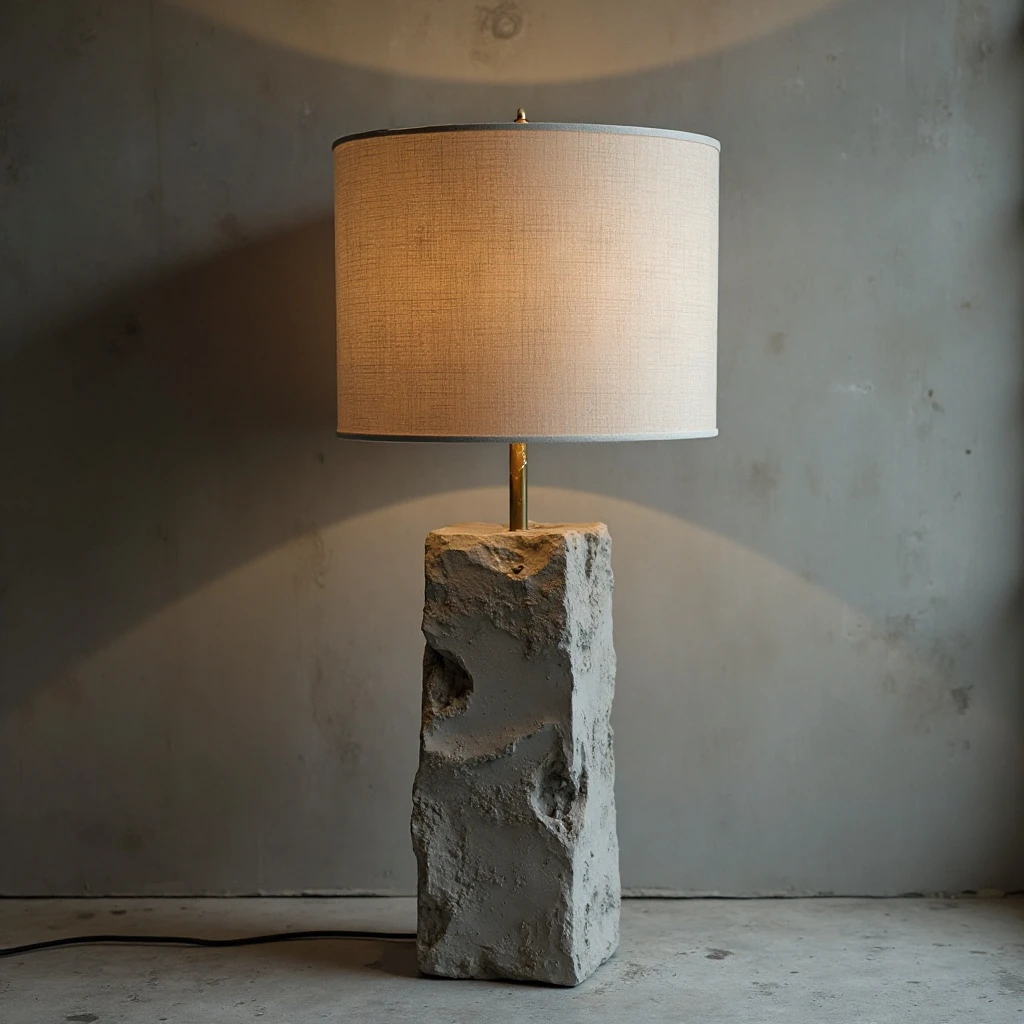
A modern floor lamp features an architectural concrete base—smooth and cylindrical or geometrically faceted—its industrial materiality and substantial weight providing stability while the raw gray finish adds urban edge and contemporary sophistication. Shop on Amazon
Why It Works: Concrete bases bring unexpected materiality that elevates ordinary lamps into design statements. The material’s heft ensures stability even with lightweight stem designs, and the neutral gray tone works with any color palette while adding textural interest. Concrete feels fresh and current while being timeless enough to avoid trend-driven obsolescence.
How to Style It:
- Pair with other industrial materials like metal, glass, and reclaimed wood for cohesive styling
- Position on hard floors rather than thick rugs to showcase the sculptural base form
- Balance the industrial edge with soft textiles and warm wood tones to prevent cold aesthetics
- Choose polished concrete for contemporary spaces or raw unfinished for more rustic industrial looks
Where to Use It: Modern lofts, industrial spaces, minimalist interiors, beside concrete coffee tables, or rooms with polished concrete floors
Pro Tip: Concrete is porous and can stain—seal the base with concrete sealer immediately after purchase and wipe spills quickly. Unsealed concrete will absorb water, oils, and can develop white efflorescence spots.
24. Twig and Branch Natural Organic Lamp
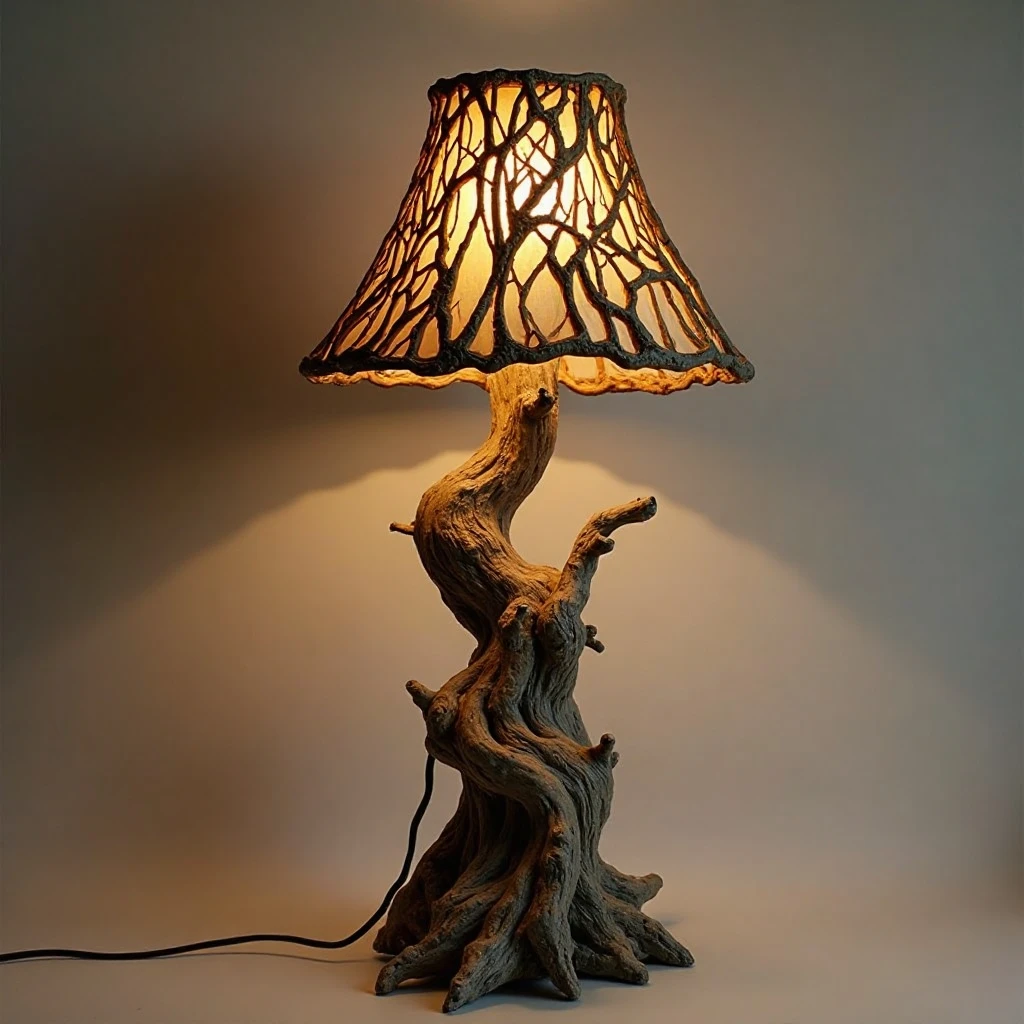
A rustic floor lamp constructed from actual tree branches creates organic, asymmetrical form, its natural curves and bark texture bringing the outdoors inside while the raw materials make each piece genuinely one-of-a-kind and artistic. Shop on Amazon
Why It Works: Natural branch lamps add authentic organic character that manufactured pieces can’t replicate. The irregular forms and varied textures create visual interest and conversation pieces while reinforcing biophilic design principles that connect indoor spaces with nature. These lamps feel collected and personal rather than store-bought.
How to Style It:
- Position near windows with nature views to blur indoor-outdoor boundaries
- Pair with live plants, natural fiber rugs, and organic materials like linen and cotton
- Use warm LED bulbs to enhance the golden tones in bark and natural wood
- Balance organic asymmetry with clean-lined furniture to prevent overly rustic aesthetics
Where to Use It: Mountain cabins, lakehouse living rooms, rooms with stone fireplaces, beside leather furniture, or spaces embracing organic modern design
Pro Tip: Ensure branches have been properly dried and treated to prevent insect infestation or continued cracking—ask sellers if wood has been kiln-dried and sealed before bringing it into your home.
25. Smart LED Color-Changing Lamp
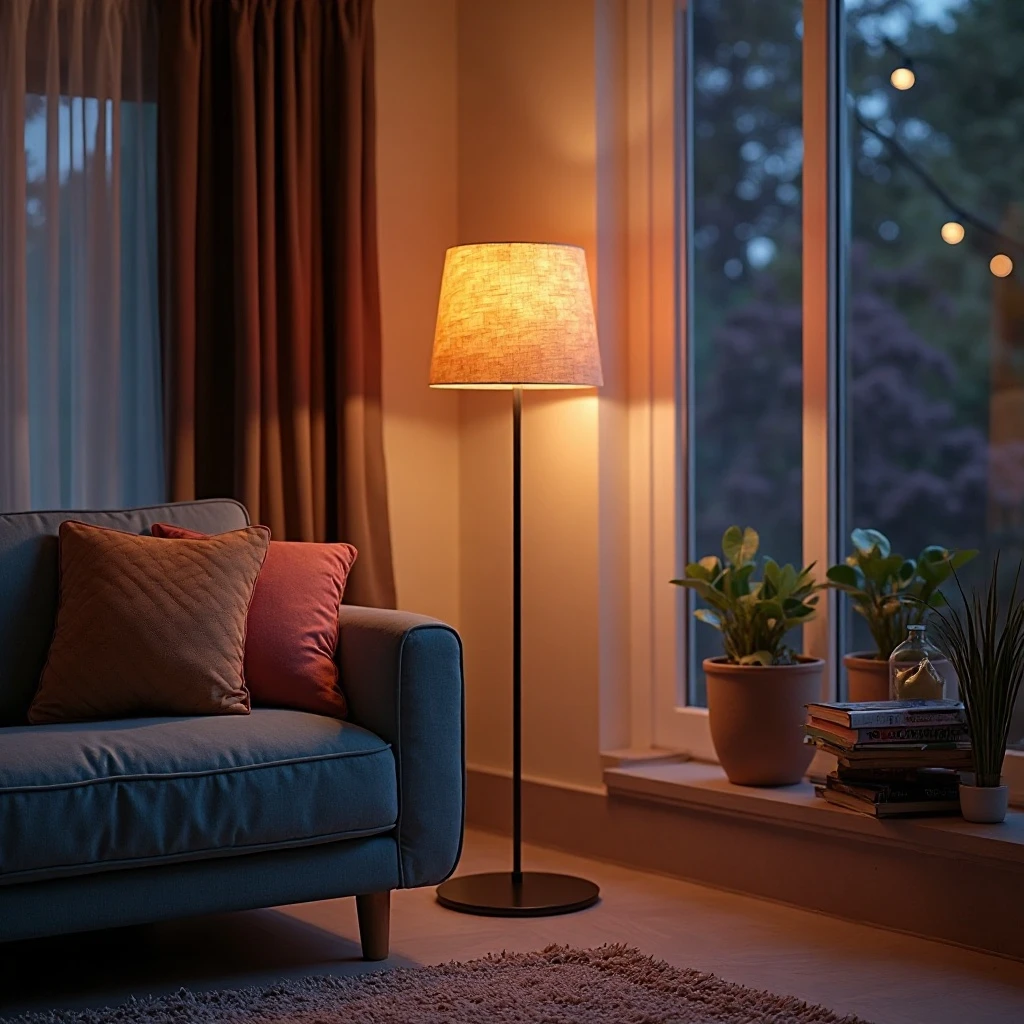
A contemporary floor lamp with smart LED technology allows you to change both color temperature and hue via smartphone app, transforming from bright cool white for reading to warm amber for evening relaxation to colored mood lighting for entertaining—all from one fixture. Shop on Amazon
Why It Works: Smart lamps eliminate the need for multiple fixtures by providing unlimited lighting scenarios from a single source. You can create automated schedules that adjust lighting throughout the day, control brightness and color from anywhere, and integrate with smart home systems for voice control. The technology future-proofs your lighting investment.
How to Style It:
- Choose lamps with minimal design so the technology, not the fixture, is the star
- Set up automated schedules that mimic natural light—bright cool white morning, warm amber evening
- Use colored lighting sparingly for entertaining or special occasions rather than daily use
- Position where you can appreciate color-changing effects—near white walls that act as projection surfaces
Where to Use It: Modern homes, tech-forward spaces, home theaters needing ambient lighting, rooms used for multiple purposes, or anywhere maximum flexibility is desired
Pro Tip: Not all smart bulbs work with all lamp bases—check if the lamp requires smart bulbs or has built-in smart technology, and verify compatibility with your existing smart home ecosystem (Alexa, Google Home, HomeKit) before purchasing.
Common Mistakes to Avoid
1. Choosing the Wrong Scale for Your Space
The most critical error is selecting a floor lamp that’s too small or too large for your room and furniture. A petite lamp beside an oversized sectional disappears visually, while an enormous lamp in a small room overwhelms the space. Measure your room dimensions and ceiling height before shopping, and ensure the lamp’s total height (including shade) is proportional—generally 58-64 inches for standard 8-foot ceilings. The shade should align visually with the top of nearby furniture backs or seat cushions.
2. Ignoring Bulb Temperature and Brightness
Many people focus solely on the lamp’s appearance while neglecting the light quality it produces. Using the wrong bulb temperature creates harsh, unflattering light or dingy yellow ambiance. Choose 2700K-3000K (warm white) for living rooms to create cozy, relaxing atmospheres, and select bulbs with appropriate lumens (800-1100 for ambient lighting, 1500+ for task lighting). Always check if your lamp is dimmable and install compatible bulbs to control intensity.
3. Poor Positioning That Creates Glare or Shadows
Placing floor lamps directly in sight lines creates blinding glare, while positioning them behind you when reading casts shadows over your work. Position reading lamps slightly to the side and behind your shoulder, aim shades away from eye level when seated, and ensure task lighting comes from over your non-dominant shoulder (right side for left-handed people, left side for right-handed). Walk around the room at night to identify glare spots before finalizing placement.
4. Creating Cord Trip Hazards
Letting cords trail across walking paths is both unsightly and dangerous. Use cord management solutions like cable raceways, run cords behind furniture legs, or position lamps near outlets to minimize visible wiring. Consider lamps with built-in USB ports to eliminate phone charger cords, and secure loose cords with cable clips along baseboards. Battery-powered or rechargeable lamps eliminate cords entirely in low-use areas.
5. Mismatching Metal Finishes Throughout the Room
Mixing too many metal finishes creates visual chaos rather than collected eclecticism. Limit yourself to two or three metal finishes maximum—for example, brass lamp with brass picture frames and hardware, or chrome lamp with chrome mirror frames. If you want variety, stick to warm metals together (brass, gold, bronze, copper) or cool metals together (chrome, nickel, silver). Matte black is neutral and pairs with everything.
6. Neglecting Lamp Height and Sight Lines
Floor Lamps Living Room that position shades directly at eye level when seated create uncomfortable glare and visual disruption. The bottom edge of the shade should sit 40-42 inches from the floor in reading areas (above eye level when seated) or 60-65 inches in standing conversation areas. Test sight lines by sitting in all positions where you’ll use the space—can you see the bulb directly? If yes, adjust the height or reposition the lamp.
Frequently Asked Questions
How tall should a floor lamp be in a living room?
For standard 8-foot ceilings, Floor Lamps Living Room should generally measure 58-64 inches tall including the shade, though this can vary based on purpose and furniture scale. Reading lamps need the shade bottom positioned 40-42 inches from the floor (typically requiring 58-60 inch total height) so light falls over your shoulder without glare when seated. Ambient floor lamps like torchieres can reach 65-72 inches to maximize ceiling light reflection.
Arc lamps may extend 80+ inches but curve overhead, so total height matters less than shade positioning. Match lamp height to nearby furniture—the shade should align roughly with the top of sofa backs or chair heads for visual proportion.
What wattage bulb should I use in a living room floor lamp?
For ambient lighting in living rooms, use 800-1100 lumen LED bulbs (equivalent to 60-75 watt incandescent) to create comfortable general illumination without harshness. Task-focused reading lamps need brighter 1500-2000 lumen bulbs (100-150 watt equivalent) for adequate illumination without eye strain.
Always check the lamp’s maximum wattage rating on the socket or UL label—never exceed this to prevent overheating and fire hazards. LED bulbs generate minimal heat and last 15-25 years, making them superior to incandescent or CFL bulbs for both safety and value. Choose 2700K-3000K color temperature for warm, cozy living room ambiance rather than cool daylight tones.
Should floor lamps be placed in corners or beside furniture?
This depends on the lamp’s purpose and your room’s layout. Corner placement works beautifully for torchiere uplighting lamps that bounce light off ceilings, tripod lamps adding architectural interest to empty spaces, or sculptural statement lamps serving as room anchors.
However, task-oriented reading lamps should sit beside seating—positioned 12-18 inches from a chair’s side with the shade extending over the armrest. Arc lamps work best behind sectionals with arms reaching over seating areas. Consider function first: if you need task lighting, prioritize proximity to seating over aesthetic corner placement, but if creating ambient illumination, corners maximize light distribution while keeping floor space clear.
How do I stop my floor lamp from tipping over?
Lamp stability depends on base weight distribution and stem height—taller lamps with lightweight bases are most prone to tipping. Choose lamps with weighted bases (marble, concrete, or metal rather than plastic) that extend at least 12-15 inches in diameter for tall models.
Tripod lamps naturally offer superior stability through their three-point contact. Position lamps against walls or behind furniture rather than in open floor space where they’re more likely to be bumped. For arc lamps or tall designs in homes with children or pets, secure the base to furniture or walls using furniture straps or museum putty.
Avoid placing lamps on thick, soft rugs where bases can become unstable—use hard floors or low-pile rugs for maximum stability.
Can I use a floor lamp as the only light source in my living room?
While possible, relying on a single floor lamp creates harsh contrasts between bright and dark zones, causing eye strain and uninviting atmosphere. Proper lighting design layers three types: ambient (overhead or torchiere lamps), task (reading lamps), and accent (highlighting artwork or architecture). At minimum, use two floor lamps positioned in opposite areas to eliminate dark corners and create balanced illumination. Ideally, combine one or two floor lamps with overhead ceiling fixtures on dimmer switches, allowing you to adjust overall brightness while floor lamps provide targeted task or ambient light. This layered approach creates depth, flexibility, and proper illumination levels (30-50 lumens per square foot for living rooms) that single sources can’t achieve.
What’s the best floor lamp position for reading without glare?
Position reading floor lamps 12-18 inches to the side of your chair with the shade bottom at 40-42 inches from the floor—this places light over your shoulder rather than in your eyes. The shade should extend slightly over the chair’s armrest, directing light downward onto your lap or reading material. For right-handed readers, place the lamp on the left side to prevent your writing hand from casting shadows; reverse for left-handed readers.
Choose lamps with opaque shades that direct light downward rather than translucent shades that scatter light in all directions. Adjustable pharmacy-style or cantilever lamps offer the best control, letting you fine-tune the exact angle and distance as needed. Use 1500-2000 lumen bulbs in 3000K-4000K temperature for optimal reading clarity without eye fatigue.
Final Thoughts: Illuminating Your Personal Style
The perfect floor lamp does more than light a room—it defines how you experience your space during the hours you’re actually living in it. Start with what you have: assess your current lighting gaps, identify which corners feel dark and unwelcoming, and consider which activities (reading, working, entertaining) need better illumination. Don’t feel pressured to achieve perfection immediately; lighting schemes evolve as you discover how you actually use your space throughout days and seasons.
Great lighting transforms not just aesthetics but daily life—the right floor lamp makes reading more comfortable, conversations more intimate, and evening relaxation more restorative. Thoughtful lighting affects your circadian rhythms, productivity, and even your perception of room size and warmth. This isn’t superficial decoration; it’s foundational to how your home functions and how you feel within it.
Trust your instincts about what feels right in your space. If a lamp makes you smile when you walk in the room or transforms your reading experience, it’s working regardless of whether it follows traditional design rules. Experiment with different positions before committing to final placement, and don’t hesitate to move lamps seasonally as natural light patterns change. Your home should adapt to you, not the other way around.
Your Next Step: Grab a tape measure right now and note the height from floor to the top of your sofa back or favorite reading chair’s headrest—this number guides nearly every floor lamp decision and ensures whatever you choose will be properly scaled.
Remember: The best floor lamp is the one that makes your daily rituals more comfortable and your evenings more inviting. Function and beauty aren’t opposites—when lighting truly works, it enhances both how your space looks and how your life feels.