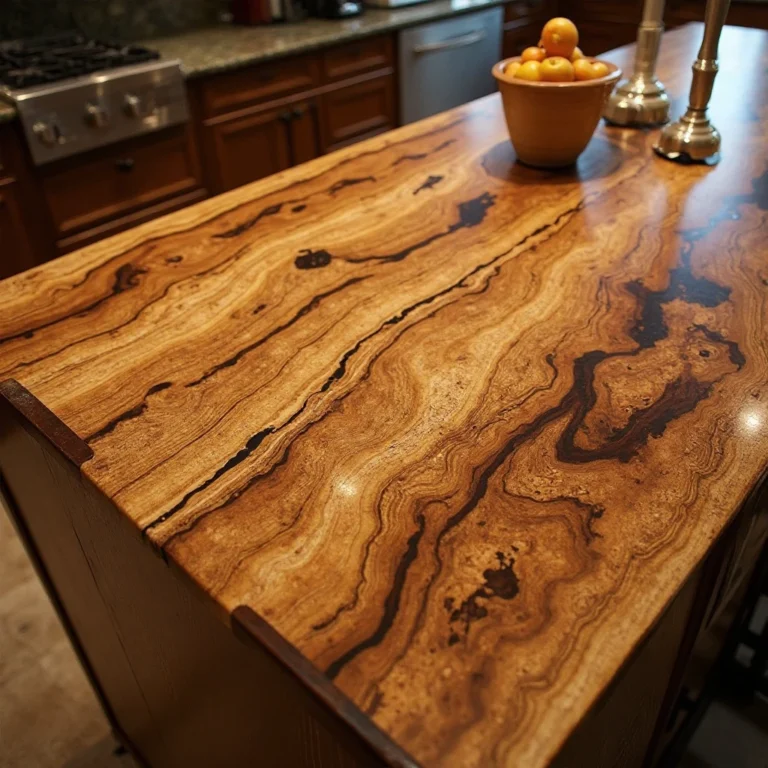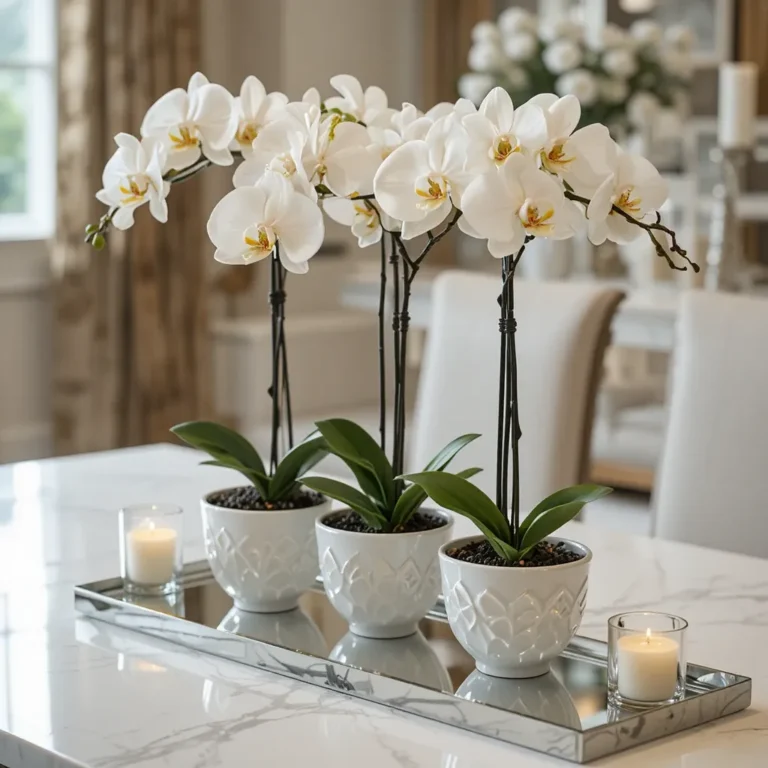
15+ French Country Kitchens You’ll Fall in Love With
French country kitchens blend Old World sophistication with warm, lived-in comfort—creating spaces that feel both refined and welcoming. Whether you’re drawn to sun-washed Provence pastels, rustic farmhouse textures, or elegant Parisian details, these designs prove that the most beautiful kitchens are those that invite you to linger over morning coffee and evening meals alike.
This guide reveals how to capture that effortless French aesthetic in your own home, no matter your budget or square footage.
Some links in this post are affiliate links, which means I may receive a small commission if you make a purchase—at no extra cost to you.
1. Weathered Wood Island with Marble Top
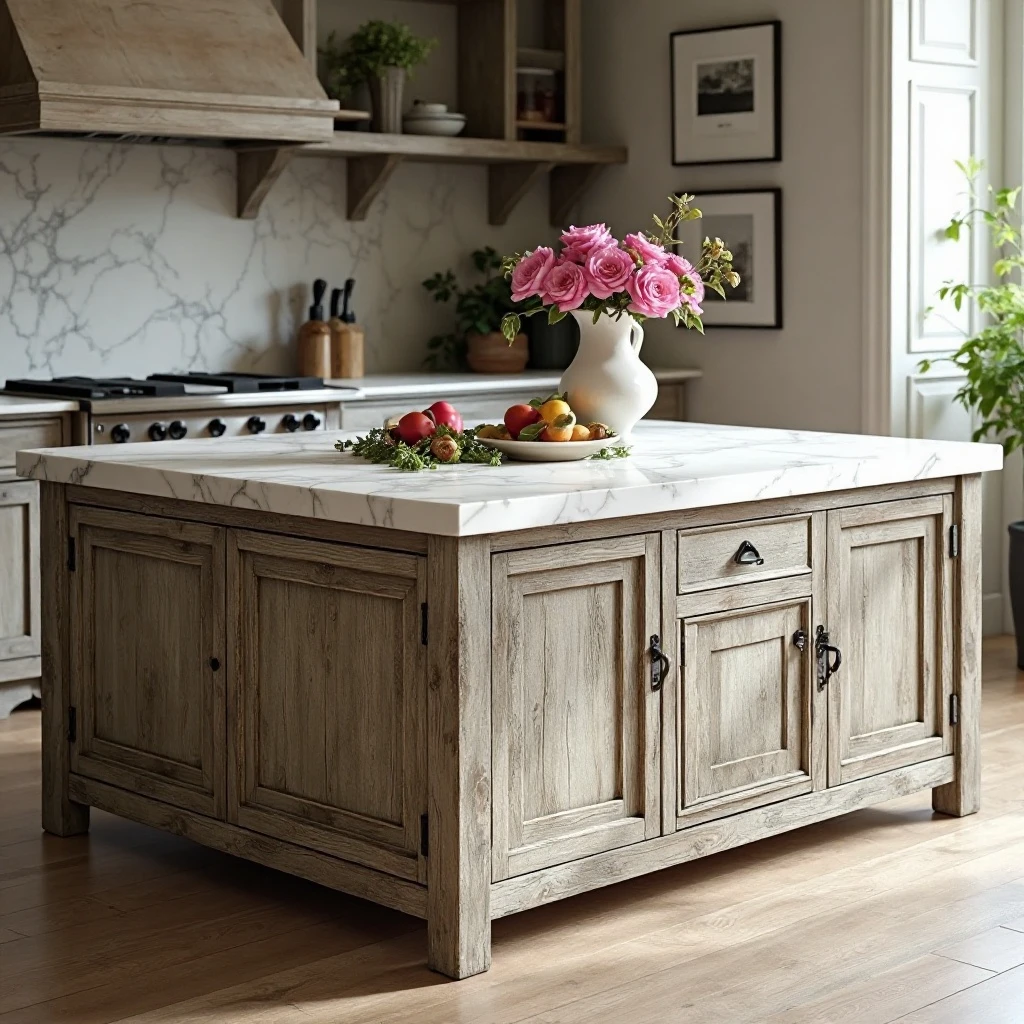
A substantial kitchen island crafted from reclaimed or distressed wood serves as the room’s anchor, topped with honed Carrara or Calacatta marble that shows the natural veining and subtle imperfections prized in French design.
The wood base features visible grain, slight variations in tone, and possibly original hardware or iron details that speak to its history. Shop on Amazon
Why It Works: This combination marries rustic authenticity with refined elegance—the worn wood grounds the space in country tradition while the marble elevation adds unmistakable sophistication. It creates a functional workspace that doubles as a gathering spot, embodying the French philosophy that kitchens should be both beautiful and lived-in. The contrast between rough and smooth textures adds visual and tactile interest that never feels forced.
How to Style It:
- Choose an island at least 4-5 feet long to create true presence; proportion matters more than perfection in French design
- Opt for honed rather than polished marble to achieve that softer, more authentic European aesthetic
- Add vintage-inspired brass or iron hardware, and consider open shelving on one side for displaying copper pots or ceramic bowls
- Layer in seating with rush-seat stools or upholstered chairs in linen or ticking stripe for that pulled-together-over-time look
Where to Use It: Open-concept kitchens, large country kitchens, kitchen-dining combinations, farmhouse-style homes
Pro Tip: Don’t match the island wood to your cabinetry—the French embrace intentional mismatch. A darker, more rustic island against lighter cabinets creates the collected-over-generations feel that defines authentic country French style.
2. Soft Blue-Gray Cabinetry with Brass Hardware
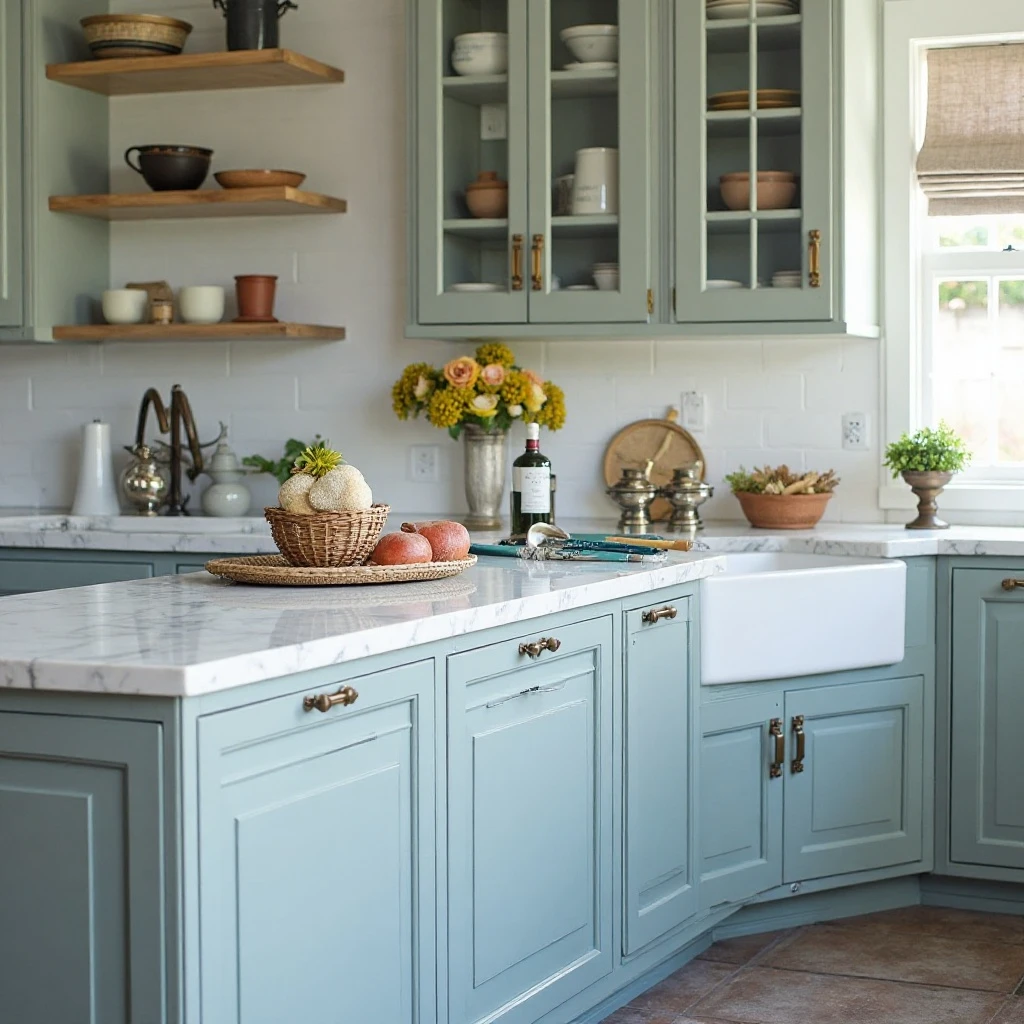
Kitchen cabinets painted in muted blue-gray tones—think dove gray with subtle blue undertones or weathered French blue—create a sophisticated alternative to stark white. The cabinets feature simple shaker or flat-panel doors, complemented by unlacquered brass or antique bronze hardware that will develop a natural patina over time. Shop on Amazon
Why It Works: These soft, complex colors evoke the chalky limewash finishes found in centuries-old French homes, bringing depth and warmth that pure white simply cannot achieve. The muted palette creates a serene backdrop that feels timeless rather than trendy, while the brass hardware adds jewelry-like details that catch and reflect light beautifully. This combination photographs as effortlessly elegant but feels genuinely livable.
How to Style It:
- Test paint colors in your actual lighting—French blues should feel soft and dusty, never bright or primary
- Mix cabinet depths and heights rather than keeping everything uniform; varying the visual weight creates European character
- Choose bin pulls and knobs in a living finish that will age gracefully rather than maintaining a constant shine
- Balance the cool-toned cabinets with warm wood countertops, terracotta accessories, or copper accents
Where to Use It: Traditional kitchens, coastal French kitchens, small kitchens needing sophistication, transitional spaces
Pro Tip: Paint just your lower cabinets in the blue-gray while keeping uppers white or cream—this grounding technique is quintessentially French and makes ceilings feel higher while adding sophisticated color without overwhelming the space.
3. Open Shelving with Displayed Ceramics
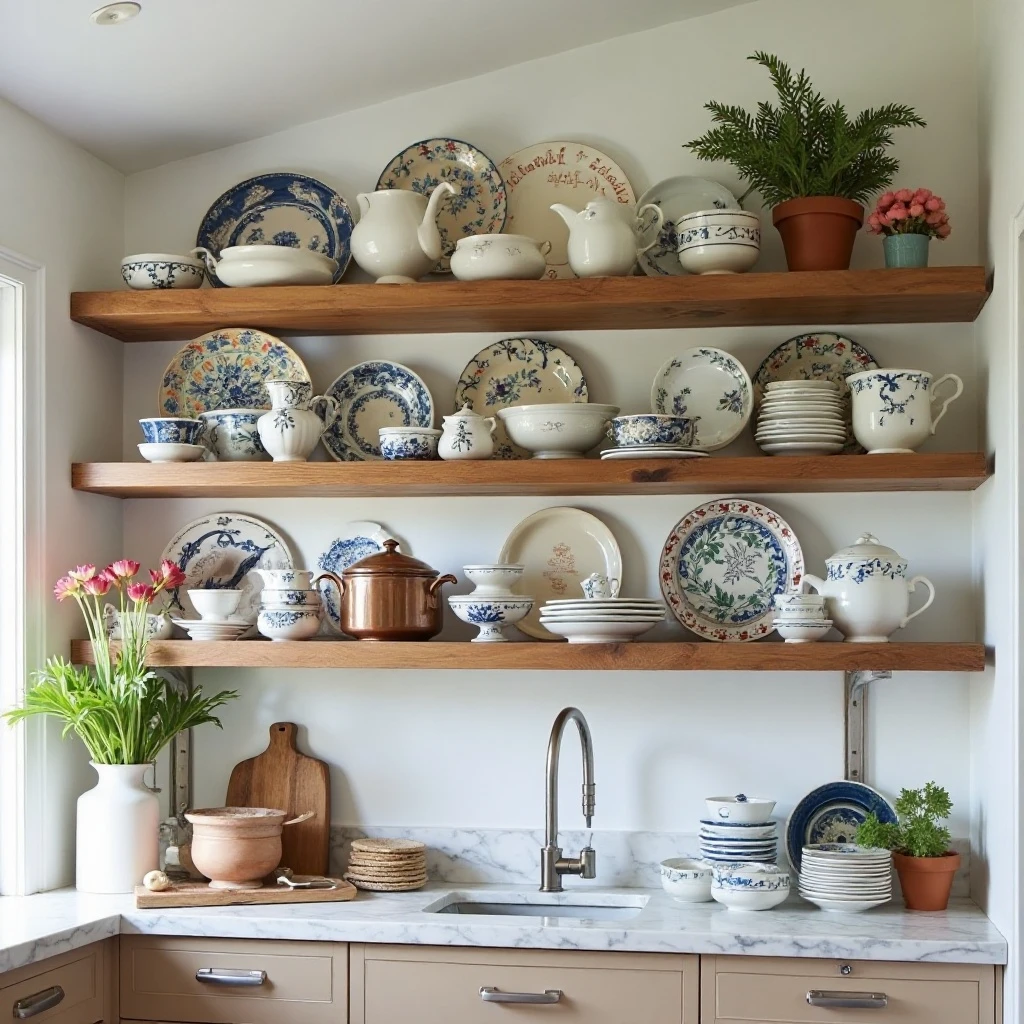
Floating wooden shelves or simple bracketed shelving replace some upper cabinets, showcasing collections of white ironstone, colorful French pottery, copper cookware, and everyday dishes that become part of the décor. The shelves themselves may be reclaimed wood, painted to match trim, or left natural to add warmth. Shop on Amazon
Why It Works: This approach embodies the French principle that beautiful, functional items deserve to be seen and used daily rather than hidden away. Open shelving forces intentional curation while making the kitchen feel more spacious and less institutional. The varied shapes, textures, and colors of displayed pieces add personality and visual rhythm that closed cabinets simply cannot provide, creating a kitchen that feels personally collected rather than catalog-ordered.
How to Style It:
- Install shelves 12-18 inches deep to accommodate dinner plates and mixing bowls, spacing them 15-18 inches apart vertically
- Arrange items by color family or material (all whites together, coppers grouped, ceramics clustered) rather than perfect symmetry
- Mix heights and shapes—tall pitchers next to stacked bowls next to a small cutting board leaning casually against the wall
- Keep everyday items on lower shelves and decorative pieces higher, ensuring your display is functional first and beautiful second
Where to Use It: Galley kitchens, above sinks, flanking range hoods, in breakfast nook areas
Pro Tip: Leave some breathing room on your shelves—the French never overcrowd. Aim for 60-70% full, with visible wall space between groupings. This restraint makes each piece stand out and prevents the cluttered look that undermines the elegance you’re after.
4. Limestone or Terracotta Floor Tiles
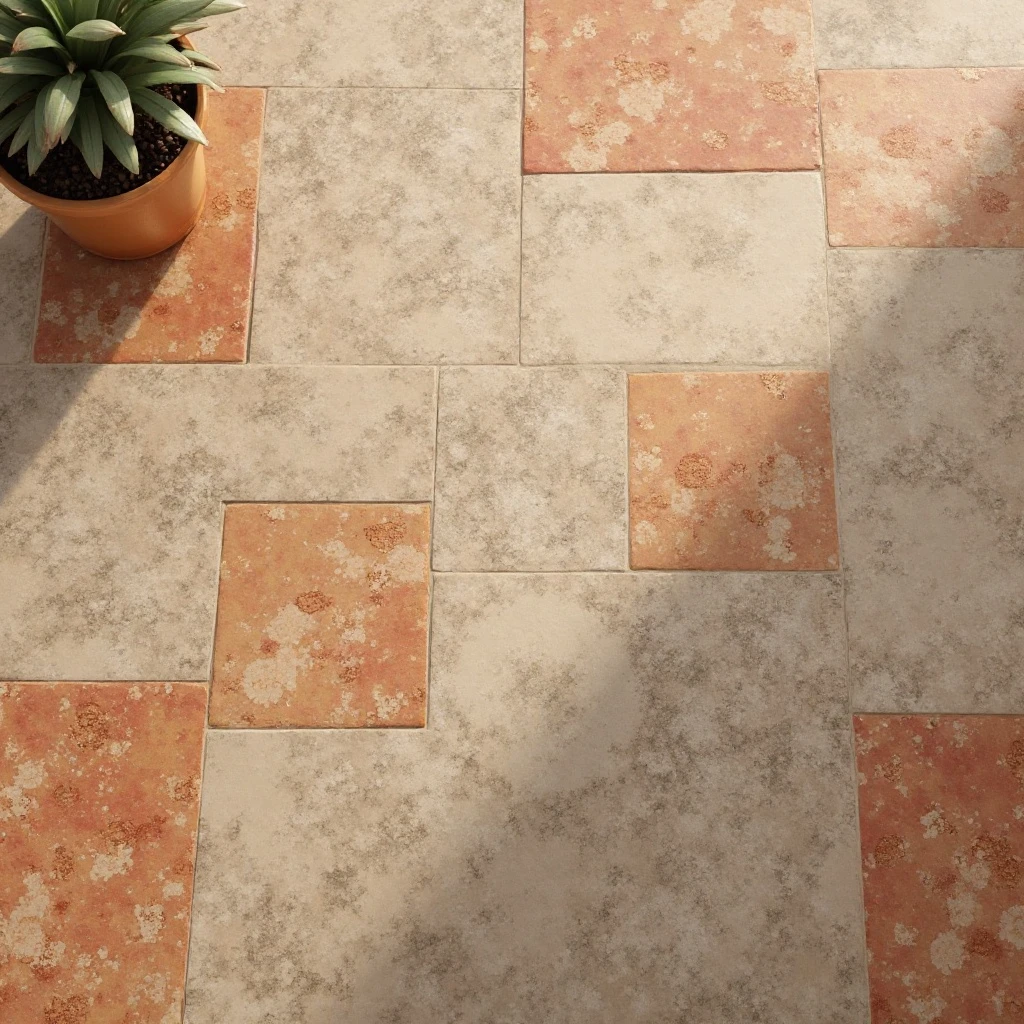
Large-format limestone tiles in warm beige and gray tones, or traditional terracotta tiles in earthy orange-red hues, cover the floor in an irregular or classic pattern. The stone shows natural variation in color and texture, with slightly worn edges that suggest generations of use. Shop on Amazon
Why It Works: These natural stone floors ground the kitchen in authentic French country materials while providing incredible durability and timeless beauty. Unlike trendy flooring that dates quickly, limestone and terracotta only grow more beautiful with age, developing a patina that adds character. The thermal mass of stone also helps regulate temperature, keeping spaces cooler in summer—a practical benefit in traditional French homes that translates beautifully to modern life.
How to Style It:
- Choose tiles at least 12×12 inches or larger; small tiles read more cottage than country French
- Opt for tumbled or honed finishes rather than polished—the matte surface is more authentic and less slippery
- Consider a diagonal or versailles pattern for visual interest, or keep it simple with straight lay for timeless elegance
- Seal properly but expect and embrace the natural patina—slight darkening around work areas adds authenticity
Where to Use It: Main kitchen floors, kitchen-to-dining transitions, mudroom entries, pantry spaces
Pro Tip: If genuine stone is beyond your budget, high-quality porcelain tiles that mimic limestone or terracotta have become remarkably convincing. Look for tiles with variation between pieces and slightly irregular edges—uniformity is the giveaway of imitation.
5. Farmhouse Apron-Front Sink
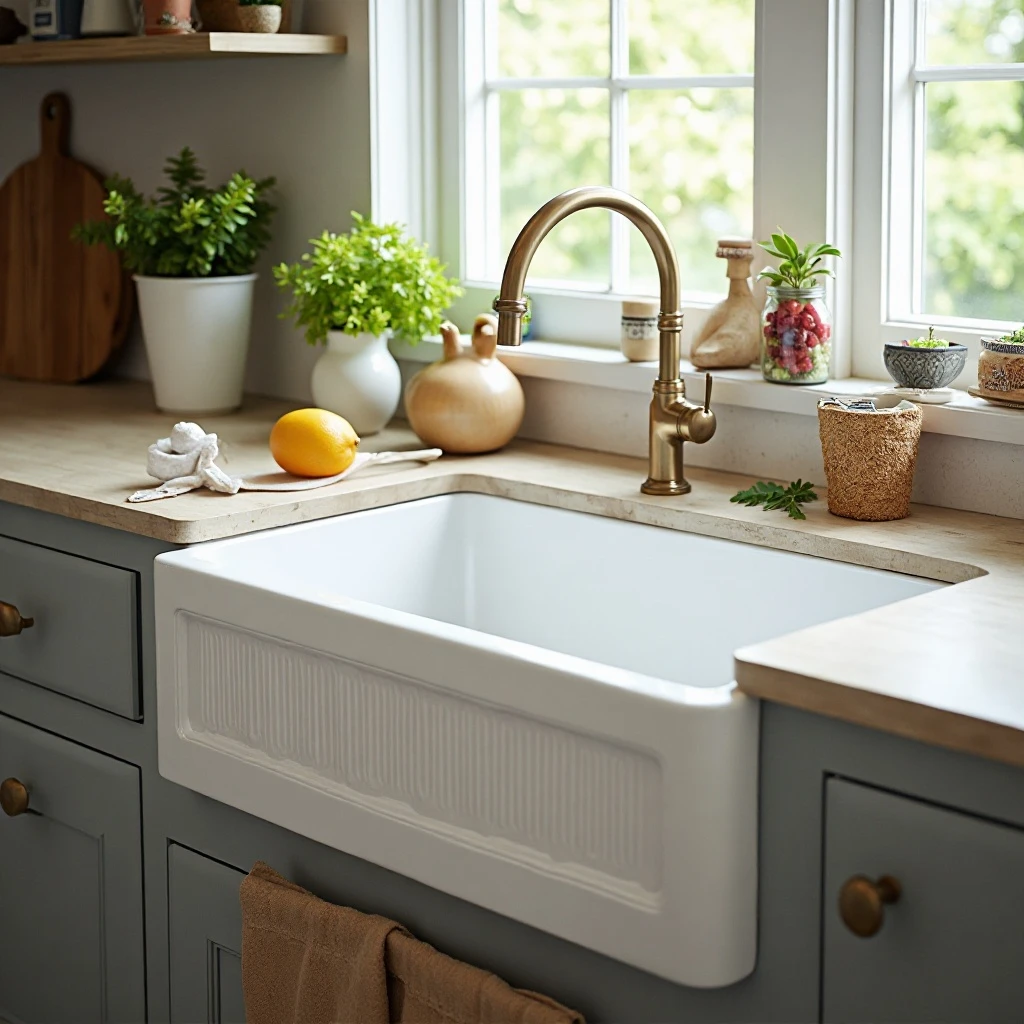
A deep, wide farmhouse sink in white fireclay or porcelain sits proudly at the front of the counter, its exposed apron becoming a focal point of the kitchen design. The sink basin is generous enough for large pots and baking sheets, with a subtle grid or fluted front panel adding textural detail. Shop on Amazon
Why It Works: This signature element instantly signals French country style while providing exceptional functionality that modern undermount sinks cannot match. The deep basin accommodates everything from flower arranging to bread making, while the forward position reduces back strain during food prep and cleanup. Aesthetically, it breaks up the visual monotony of continuous cabinetry, creating a jewelry-like moment that draws the eye and anchors the room’s design.
How to Style It:
- Install with the apron sitting flush with or slightly proud of your cabinet faces—never recessed
- Pair with a bridge faucet or wall-mount fixture in unlacquered brass, nickel, or bronze for authentic French styling
- Choose a sink at least 30 inches wide; undersized farmhouse sinks look apologetic rather than confident
- Add a vintage-inspired dish rack on the counter beside the sink, allowing beautiful dishes to air-dry as part of your décor
Where to Use It: In front of windows, centered on a main wall, on kitchen islands (if plumbing allows)
Pro Tip: Protect your investment by placing a sink grid in the bottom and avoiding impact with heavy pots. That said, don’t obsess over minor scratches and crazing—these “imperfections” add to the aged, authentic character that makes French country kitchens so appealing.
6. Exposed Ceiling Beams
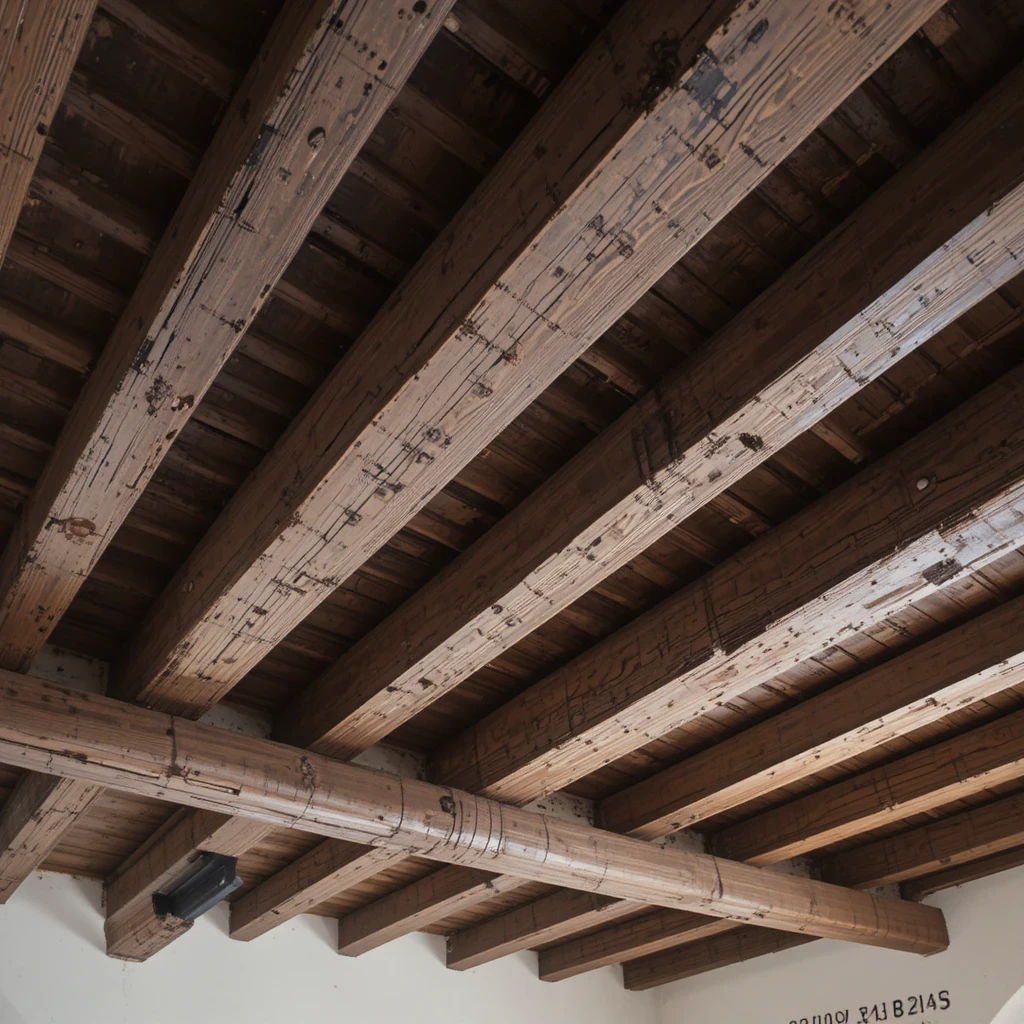
Substantial wooden beams—either original structural elements or decorative additions—span the ceiling, their rich brown tones or whitewashed finish adding architectural drama and Old World character. The beams may show saw marks, slight irregularities, or even original numbering from centuries past. Shop on Amazon
Why It Works: Exposed beams immediately age a space in the most desirable way, creating the impression of a kitchen with history and substance. They draw the eye upward, making standard-height ceilings feel more grand while adding warmth and texture to what’s often a blank expanse. The horizontal lines provide visual weight that balances the vertical elements of cabinetry and doorways, creating satisfying proportion.
How to Style It:
- Space beams 3-4 feet apart for authentic proportion; too many beams can feel heavy and oppressive
- Choose rough-hewn or hand-hewn beams rather than perfectly smooth lumber for genuine character
- Consider leaving beams natural wood if your palette is predominantly white or cream; whitewash them if you need to lighten an already dark space
- Add simple iron straps or brackets at connection points for architectural interest and period-appropriate detail
Where to Use It: Over kitchen islands, spanning main cooking areas, in kitchen-great room combinations, vaulted ceiling kitchens
Pro Tip: If adding faux beams, invest in high-quality hollow beams with authentic wood grain and visible knots rather than foam alternatives. The difference in authenticity is immediately apparent, and beams are at eye level enough that cheap materials undermine the entire aesthetic you’re trying to create.
7. Vintage-Style Range with Colored Enamel
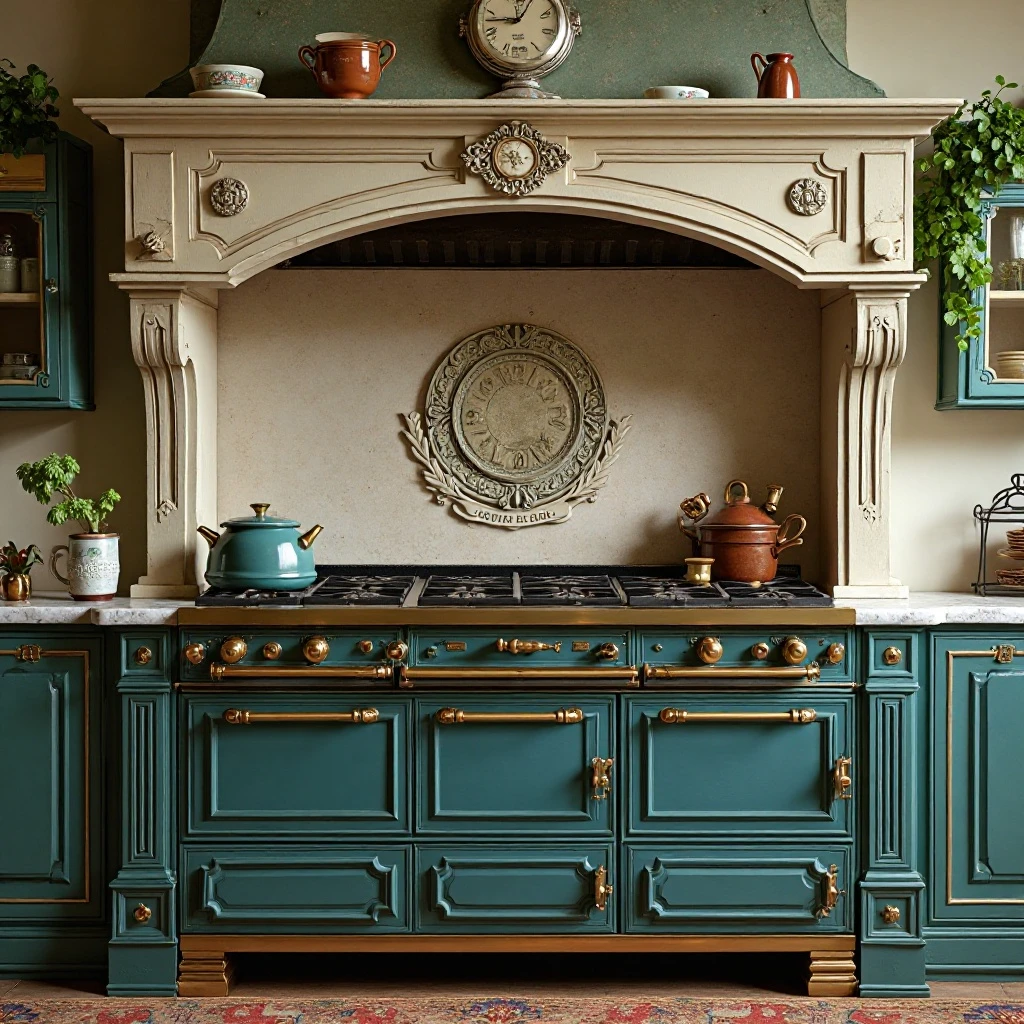
A professional-style range in classic French colors—deep blue, forest green, cream, or glossy black—serves as the kitchen’s showpiece, often with brass or bronze trim, multiple ovens, and a commanding presence that dominates the cooking wall. Shop on Amazon
Why It Works: This investment piece transforms a utilitarian appliance into a design statement that sets the tone for the entire kitchen. The colored enamel and traditional styling honor French culinary heritage while providing serious cooking capability, proving that beauty and function need never be mutually exclusive. It becomes the heart of the kitchen in both practical and visual terms, creating a focal point that grounds all other design decisions.
How to Style It:
- Flank the range with custom cabinetry, open shelving, or built-in spice storage to create a cohesive cooking zone
- Install a substantial range hood—either a plaster or stone surround, copper hood, or decorative wood mantel-style hood
- Choose a backsplash that complements but doesn’t compete: simple white subway tile, handmade ceramic, or natural stone
- Add a pot filler faucet at the wall behind the range for both convenience and authentic French detail
Where to Use It: Centered on main cooking walls, in alcoves, as island centerpieces (if venting allows)
Pro Tip: If a European-style range is beyond your budget, standard ranges now come in colors beyond stainless steel. Even better, consider having a quality used range professionally re-enameled in your chosen color—the result is often more authentic than new appliances trying to look vintage.
8. Butcher Block Countertops
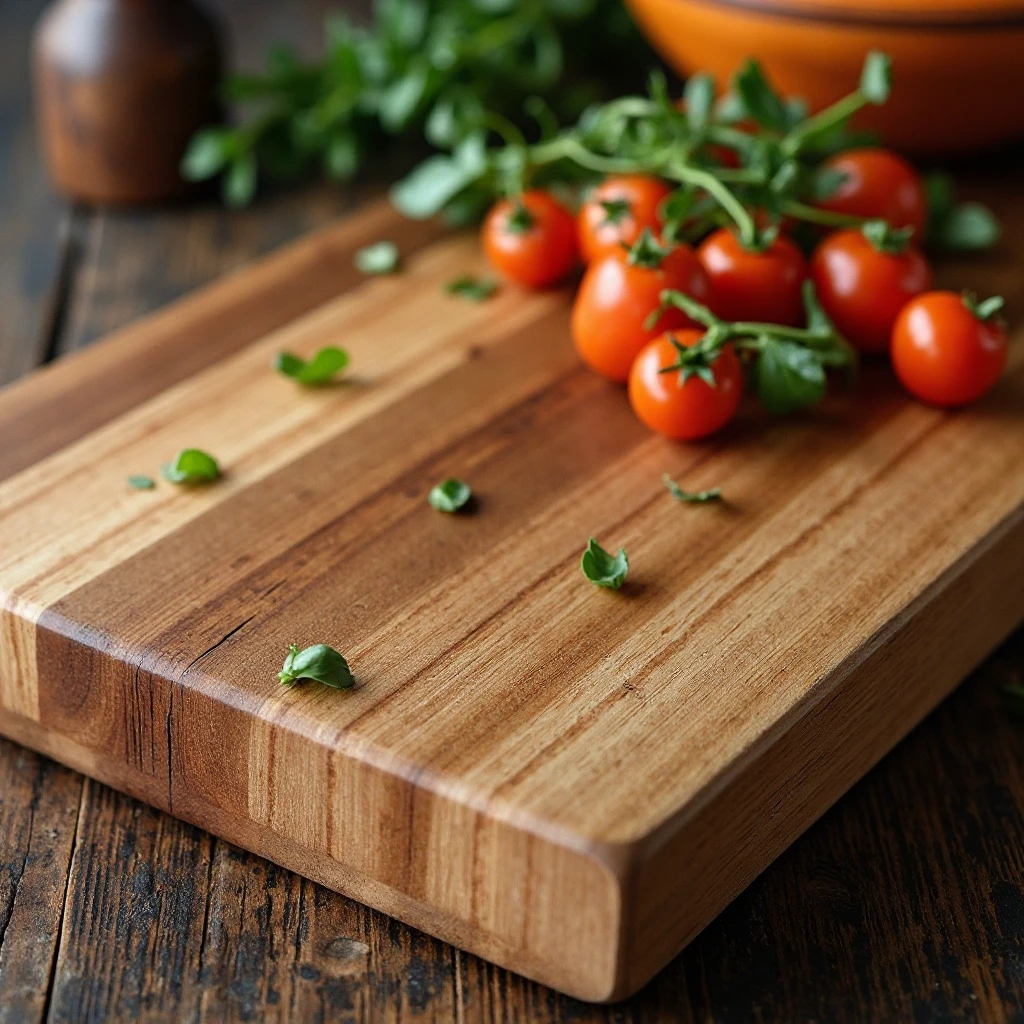
Thick wooden countertops crafted from maple, oak, or walnut provide warm, tactile work surfaces that develop character with use. The wood shows natural grain patterns and slight color variation, with either a smooth oiled finish or slightly worn patina that speaks to daily cooking. Shop on Amazon
Why It Works: Wood countertops bring organic warmth and natural beauty that cold stone simply cannot replicate, creating an immediately inviting atmosphere that encourages hands-on cooking and baking. The material is gentle on dishes and knife blades, naturally antimicrobial when properly maintained, and can be sanded and refinished if damaged—unlike stone that chips or stains permanently. This practical elegance perfectly embodies French country values of beautiful utility.
How to Style It:
- Use butcher block on islands, baking zones, or secondary prep areas rather than everywhere—strategic placement adds warmth without overwhelming
- Choose edge-grain construction for maximum durability; end-grain is beautiful but requires more maintenance
- Apply food-safe mineral oil monthly and occasionally treat with beeswax for a soft sheen and water resistance
- Embrace the patina—knife marks and slight darkening around the sink are badges of a well-loved, well-used kitchen
Where to Use It: Kitchen islands, breakfast bars, baking stations, perimeter sections away from main sink
Pro Tip: Create visual interest by using butcher block at a different thickness than your stone counters—a 3-inch thick island top against 2-inch perimeter counters adds dimension and signals that the island is special, built-to-last furniture rather than basic cabinetry.
9. Plate Rack Cabinet Inserts
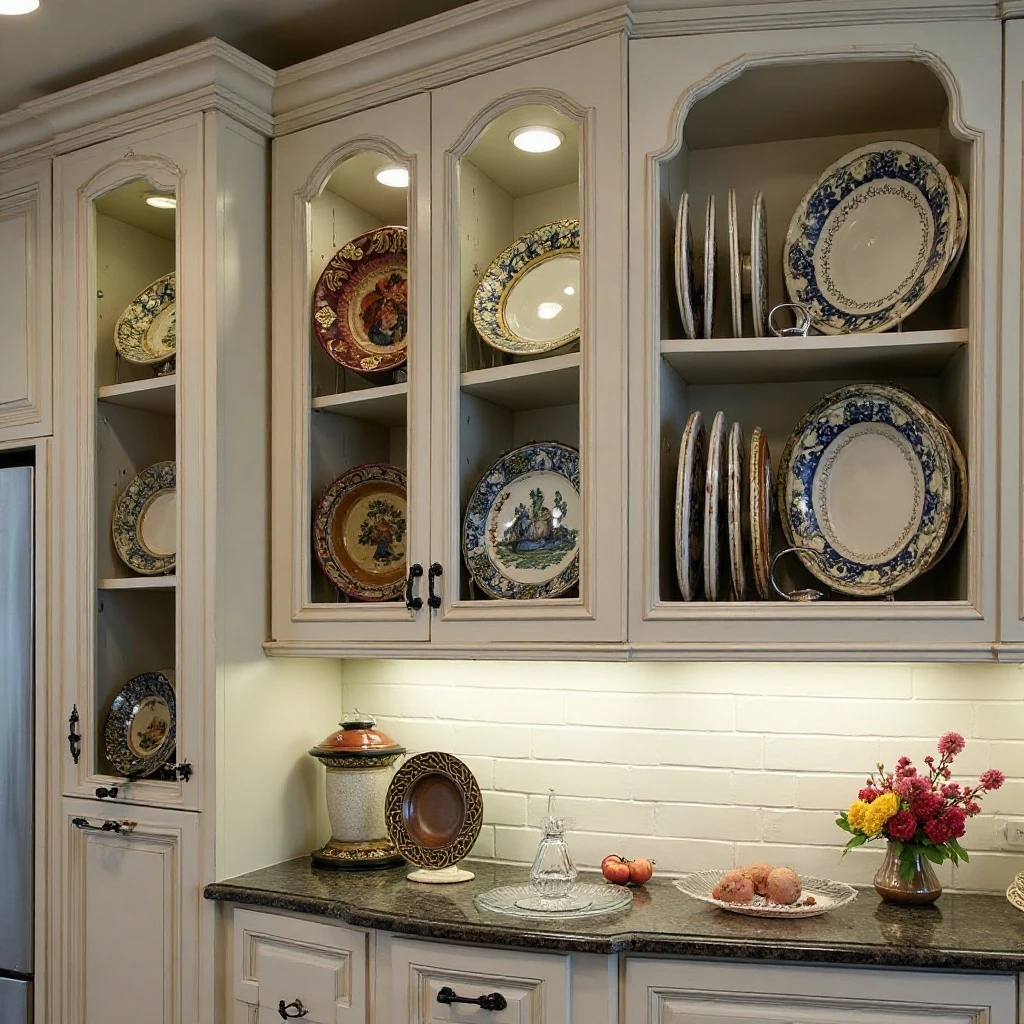
Custom cabinetry includes open slots or grooves specifically designed to display and store plates vertically, allowing beautiful dinnerware to become part of the kitchen’s visual appeal while remaining accessible for daily use. These racks may be built into upper cabinets with glass doors or left completely open. Shop on Amazon
Why It Works: Plate racks solve the storage challenge of bulky dishes while turning everyday items into décor, perfectly embodying the French philosophy that life’s beautiful objects deserve daily appreciation. The vertical storage makes selection easy and displays the full beauty of patterned plates, while the organized presentation prevents the cluttered feeling of open shelving. It’s practical storage that happens to be gorgeous.
How to Style It:
- Space grooves 1.5-2 inches apart to accommodate dinner plates without crowding; wider spacing for chargers and platters
- Install racks at eye level where the plates can be truly appreciated, typically in upper cabinets flanking windows or ranges
- Fill with a cohesive collection—all white ironstone, French country patterns, or coordinating blues and whites rather than random pieces
- Add small hooks below the rack for hanging cups or utensils, maximizing function in a small footprint
Where to Use It: Above counters, flanking windows, in butler’s pantries, inside glass-front upper cabinets
Pro Tip: If retrofitting existing cabinets, removable plate rack inserts are available that simply slide onto shelves. While not as elegant as custom built-ins, they provide the same functionality and French country charm at a fraction of the cost and commitment.
10. Painted Furniture-Style Cabinetry
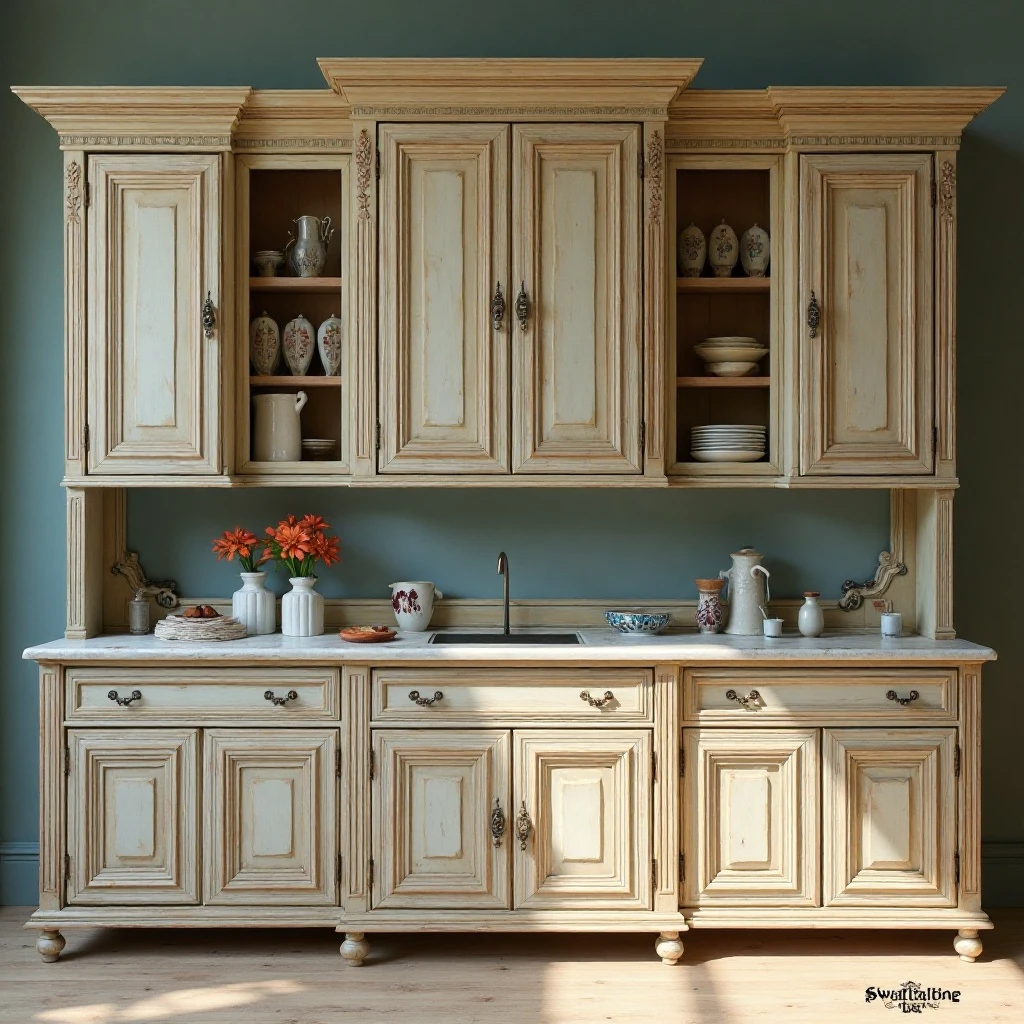
Kitchen cabinets designed to look like freestanding furniture pieces rather than built-in units, with varied heights, decorative feet, furniture-style bases, and crown molding that creates the appearance of individual hutches, sideboards, and armoires that have been collected over time. Shop on Amazon
Why It Works: This unfitted kitchen approach—the hallmark of authentic French country design—creates visual interest and breaks up the monotony of continuous cabinetry that can feel cold and commercial. Each “piece” can have its own character while still working as a cohesive whole, resulting in a kitchen that looks personally curated rather than catalog-ordered. The furniture styling also adds flexibility, making future updates easier since pieces can be moved or replaced individually.
How to Style It:
- Vary cabinet depths by 3-6 inches to create the shadow lines and dimension of genuine freestanding pieces
- Add decorative feet or legs to base cabinets, elevating them 4-6 inches off the floor as traditional furniture would be
- Incorporate glass-front uppers, open shelf sections, and closed storage in the same run to create visual rhythm
- Consider painting different sections in complementary colors—cream uppers with blue-gray lowers, or varied whites with one accent piece in deeper color
Where to Use It: Traditional kitchens, large kitchens with space for dimensional pieces, kitchens with architectural details
Pro Tip: The key to making furniture-style cabinetry look intentional rather than mismatched is maintaining consistent hardware, crown molding, and base details across all pieces. Unity in the details allows variety in the forms without creating visual chaos.
11. Subway Tile with Contrasting Grout
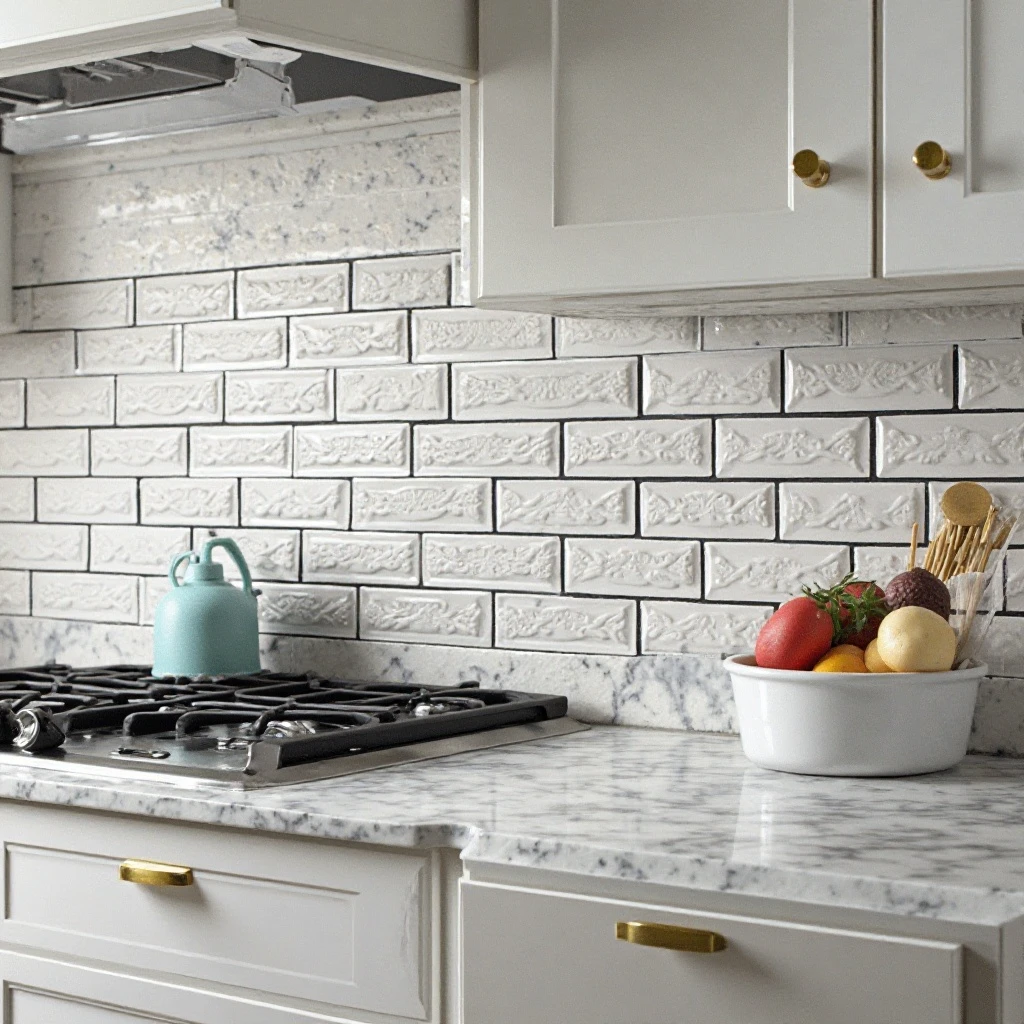
Classic white subway tiles laid in traditional running bond pattern create a crisp, clean backsplash, but instead of disappearing white grout, the installation uses gray, charcoal, or even black grout that emphasizes the tile pattern and adds subtle texture and interest. Shop on Amazon
Why It Works: This simple twist on a timeless material prevents subway tile from feeling generic or builder-grade, adding graphic interest and period-appropriate detail that references historic European tilework. The contrasting grout creates a subtle grid pattern that adds visual texture without overwhelming the space, while the darker lines hide staining and discoloration far better than white grout, keeping your backsplash looking fresher longer with less maintenance.
How to Style It:
- Choose beveled subway tiles over flat for added dimension and light play—the bevels create subtle shadows that add depth
- Use a grout color 2-3 shades darker than your tile rather than dramatic black (unless going for a truly bold bistro look)
- Install tiles vertically in select areas (behind the range, in a niche) to create focal points within the larger horizontal pattern
- Extend the backsplash to the ceiling in at least one area rather than stopping at standard height for modern-meets-traditional impact
Where to Use It: Full kitchen backsplashes, behind ranges, in butler’s pantries, surrounding windows
Pro Tip: Install your subway tile in a stacked grid pattern (tiles directly above each other) rather than traditional running bond for an unexpected, more contemporary French interpretation that still honors the classic material. This works especially well in modern farmhouse kitchens.
12. Iron Pot Rack with Hanging Cookware
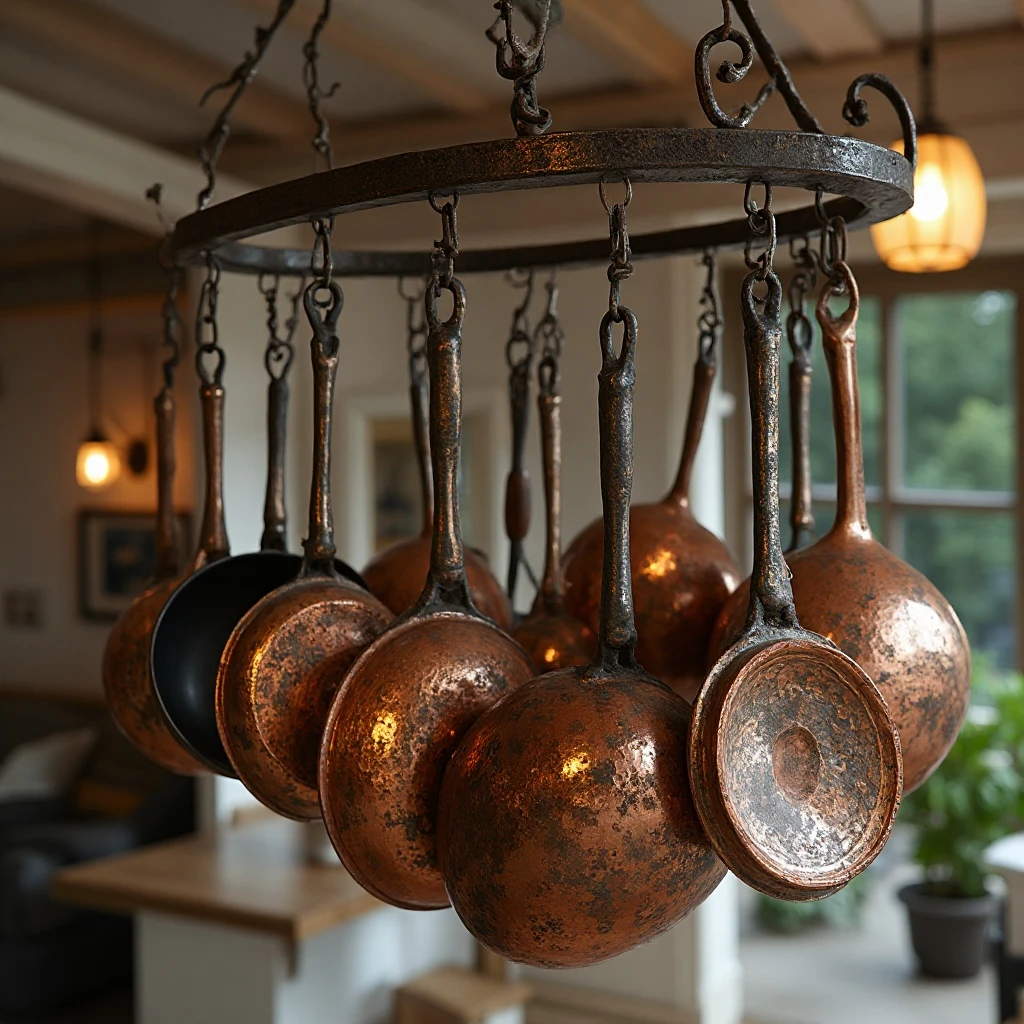
A wrought iron or hammered metal pot rack suspended from the ceiling displays copper pots, cast iron skillets, and everyday cookware, turning utilitarian items into sculptural elements that add warmth, texture, and visual interest while freeing up cabinet space. Shop on Amazon
Why It Works: Hanging cookware is quintessentially French—celebrating tools of the trade as worthy of display and keeping frequently used items within easy reach. The three-dimensional element adds architectural interest at an often-overlooked level, while the reflective quality of copper and the matte texture of iron create light and shadow play throughout the day. It’s functional art that makes cooking more efficient and the kitchen more dynamic.
How to Style It:
- Install the rack 36-40 inches above your island or counter to allow headroom while keeping pots accessible
- Hang your most beautiful pieces—gleaming copper, enameled cast iron in French colors, well-seasoned carbon steel
- Limit hanging storage to 60-70% of available hooks to avoid a cluttered appearance; empty hooks are part of the design
- Add pendant lighting near (not directly above) the rack so light catches and reflects off copper and metal surfaces
Where to Use It: Above kitchen islands, over peninsulas, in front of windows where pots silhouette beautifully
Pro Tip: If ceiling mounting isn’t possible, consider a wall-mounted iron bar system or a pot rack shelf unit that sits on the counter. While not as dramatic as hanging racks, these alternatives provide the same display-storage benefits and French country aesthetic.
13. Arched Range Hood Surround
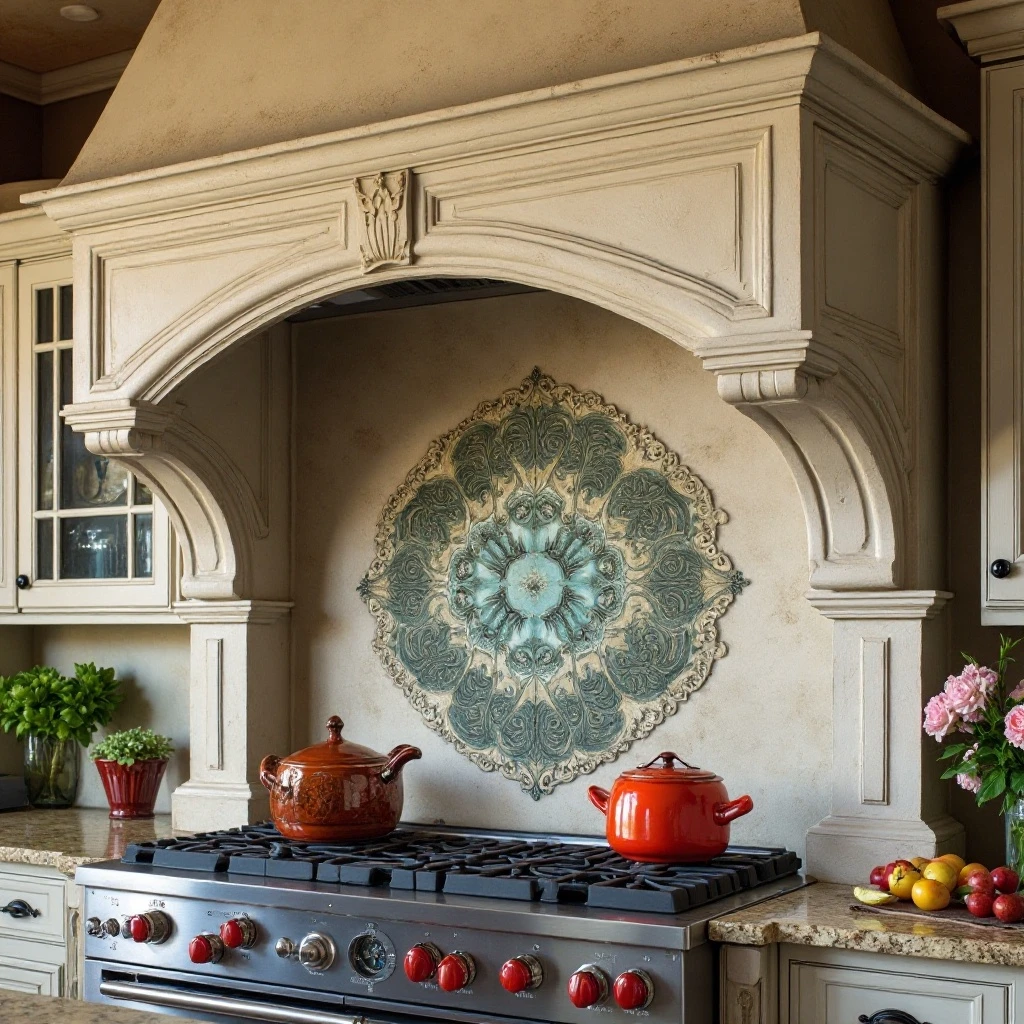
A custom plaster, stone, or painted wood hood surround features a graceful arch that frames the range, creating architectural drama and Old World elegance. The surround may be textured plaster in a neutral tone, carved limestone, or painted wood with corbels and decorative molding. Shop on Amazon
Why It Works: The arched hood transforms a purely functional ventilation necessity into the kitchen’s architectural focal point, drawing the eye and creating a sense of permanence and craftsmanship. The curves soften the angular lines of cabinetry and appliances, while the substantial scale commands attention and grounds the entire cooking zone. This single element can transform a standard kitchen into one with genuine French country character.
How to Style It:
- Size the hood surround at least 6-12 inches wider than your range on each side for proper proportion and visual weight
- Extend the hood to ceiling height rather than stopping short, which can look unfinished and tentative
- Add recessed shelving, a display niche, or small iron brackets within the hood surround for oils, spices, or decorative elements
- Consider lighting inside the arch—small strip lights or directional spots that highlight the range and add task lighting
Where to Use It: Above ranges, as cooking alcove centerpieces, in kitchens with higher ceilings that accommodate grand scale
Pro Tip: The most authentic French look uses textured white or cream plaster, but if that’s beyond your budget, a skilled carpenter can create a similar effect with built-up painted wood trim and medallions. The key is substantial scale and the arch detail—don’t compromise on either.
14. French Door Pantry with Glass Panes
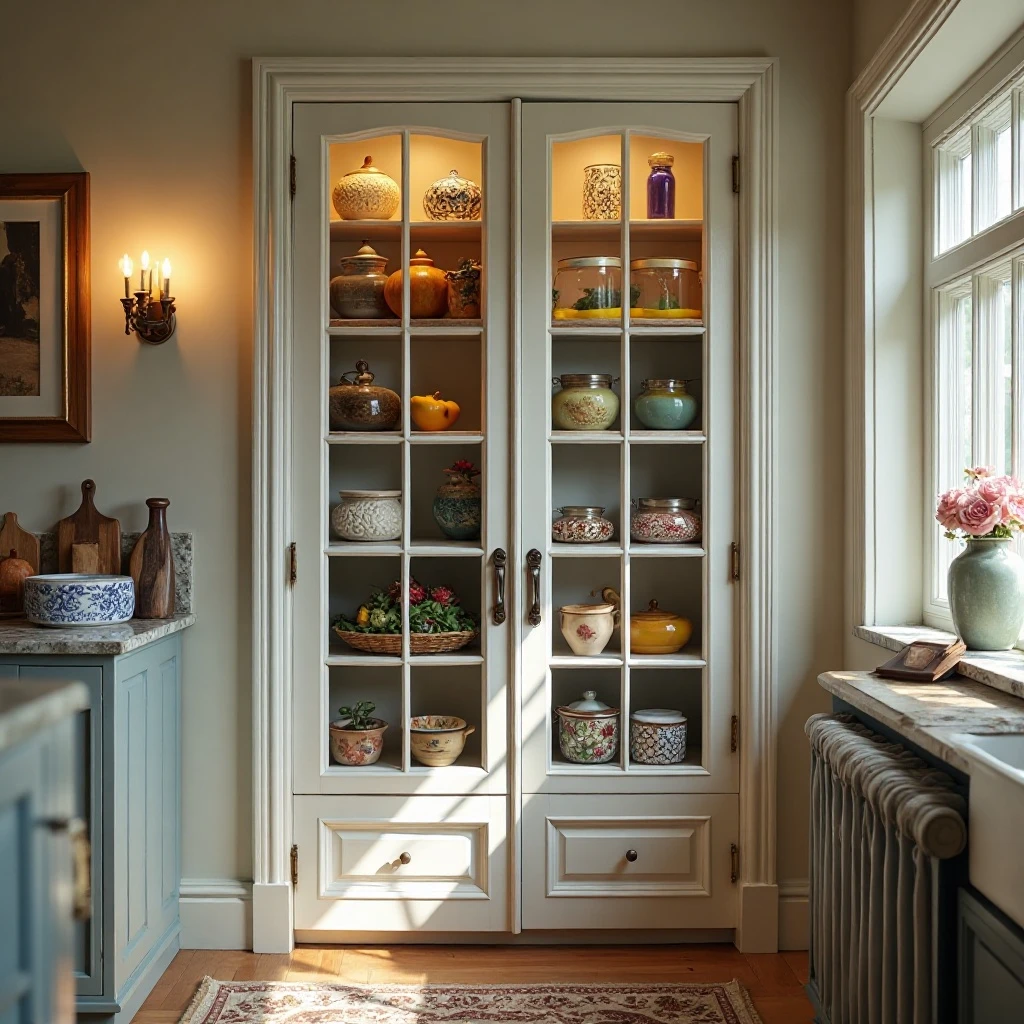
A traditional French door—either single or double—with multiple glass panes leads to a walk-in pantry or serves as a pantry cabinet front, allowing glimpses of organized shelving while maintaining the kitchen’s elegant aesthetic. The door may feature vintage-inspired hardware and frame molding that matches other woodwork. Shop on Amazon
Why It Works: Glass pantry doors create visual depth by offering sight lines beyond the main kitchen while encouraging organized storage since contents remain visible. The doors themselves become beautiful architectural elements, their divided lights and authentic proportions adding period detail that grounds the entire space. The transparency prevents the heavy, closed-off feeling of solid pantry doors while the frames add vertical interest and traditional craftsmanship.
How to Style It:
- Choose true divided lights (individual glass panes) rather than snap-in grilles for authentic appearance and shadow lines
- Install pantry doors that reach standard ceiling height (8 feet) or taller, making them architectural features rather than afterthoughts
- Keep pantry contents organized in matching baskets, glass jars, or wire containers—the display should enhance, not detract from the aesthetic
- Paint pantry interiors in a contrasting or complementary color so they read as distinct spaces when glimpsed through the glass
Where to Use It: Between kitchen and pantry rooms, as cabinet fronts on pantry units, leading to butler’s pantries
Pro Tip: Opt for seeded or slightly textured glass rather than clear—this provides the visual depth and light transmission of glass while obscuring minor pantry clutter and adding another layer of vintage authenticity.
15. Café-Style Bistro Table and Chairs
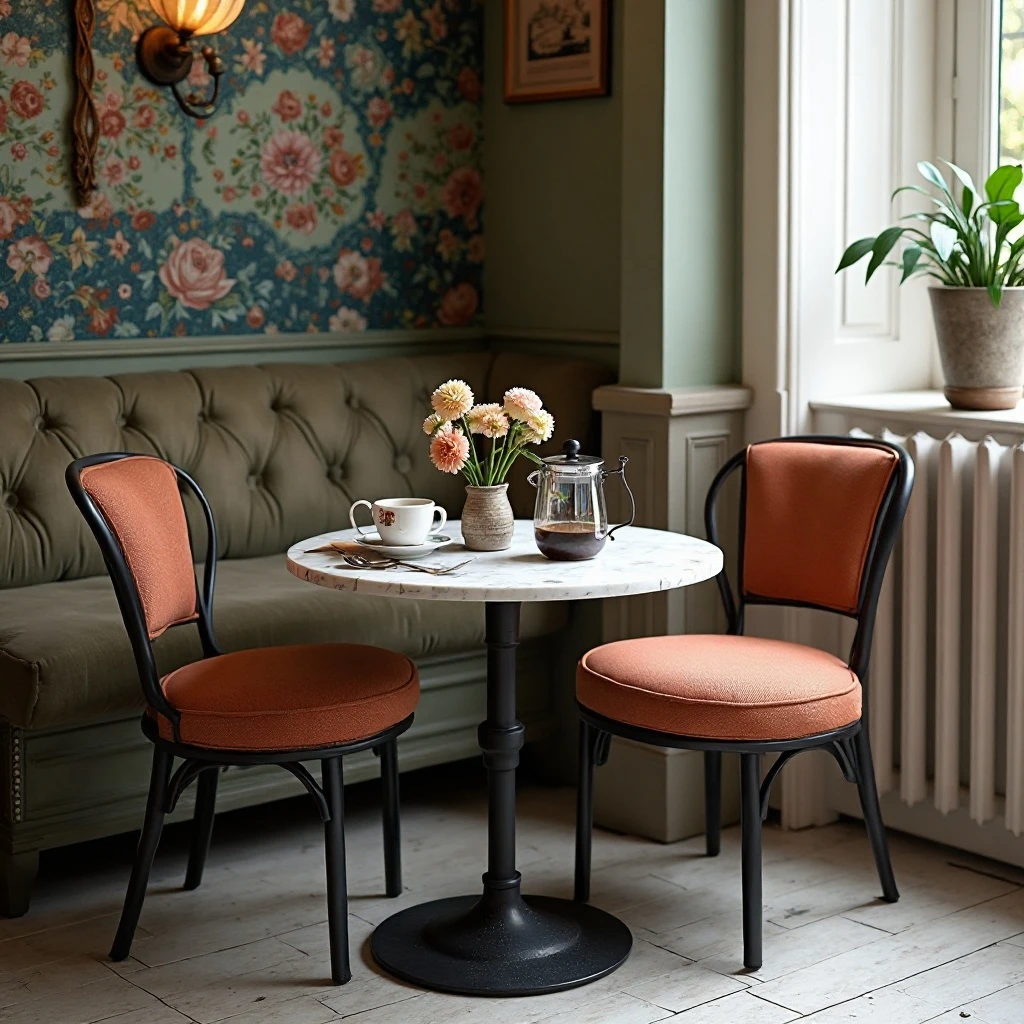
A small round or square marble-topped table with iron or bentwood café chairs creates an intimate eating nook within or adjacent to the kitchen, complete with simple place settings, a small vase of fresh flowers, and perhaps a French press and cups suggesting morning coffee rituals. Shop on Amazon
Why It Works: This quintessentially French element transforms the kitchen from purely functional workspace into a living space that invites lingering—over morning coffee, afternoon tea, or casual meals. The café furniture introduces curves and different scales that soften the linear nature of cabinetry, while the intimate seating arrangement encourages conversation and connection. It’s the ultimate expression of the French conviction that the kitchen should be the heart of daily life, not just a place to cook.
How to Style It:
- Choose a table 24-30 inches in diameter for two people, 36-42 inches for four—anything larger loses the intimate bistro feeling
- Opt for marble, zinc, or wood table tops rather than glass, which reads too contemporary for French country
- Select chairs with curved backs and either rush seats, metal with cushions, or bentwood for authentic café character
- Add a small pendant light directly above the table at 30-36 inches to create a defined dining zone within the larger kitchen
Where to Use It: Kitchen corners, bay window areas, between kitchen and family room, in large kitchens with space for zones
Pro Tip: Keep the table simply styled with just fresh flowers or fruit in a ceramic bowl—over-decorating undermines the casual, everyday elegance of café dining. The beauty is in the furniture and the ritual of gathering, not in elaborate tablescapes.
16. Painted Brick or Stone Accent Wall
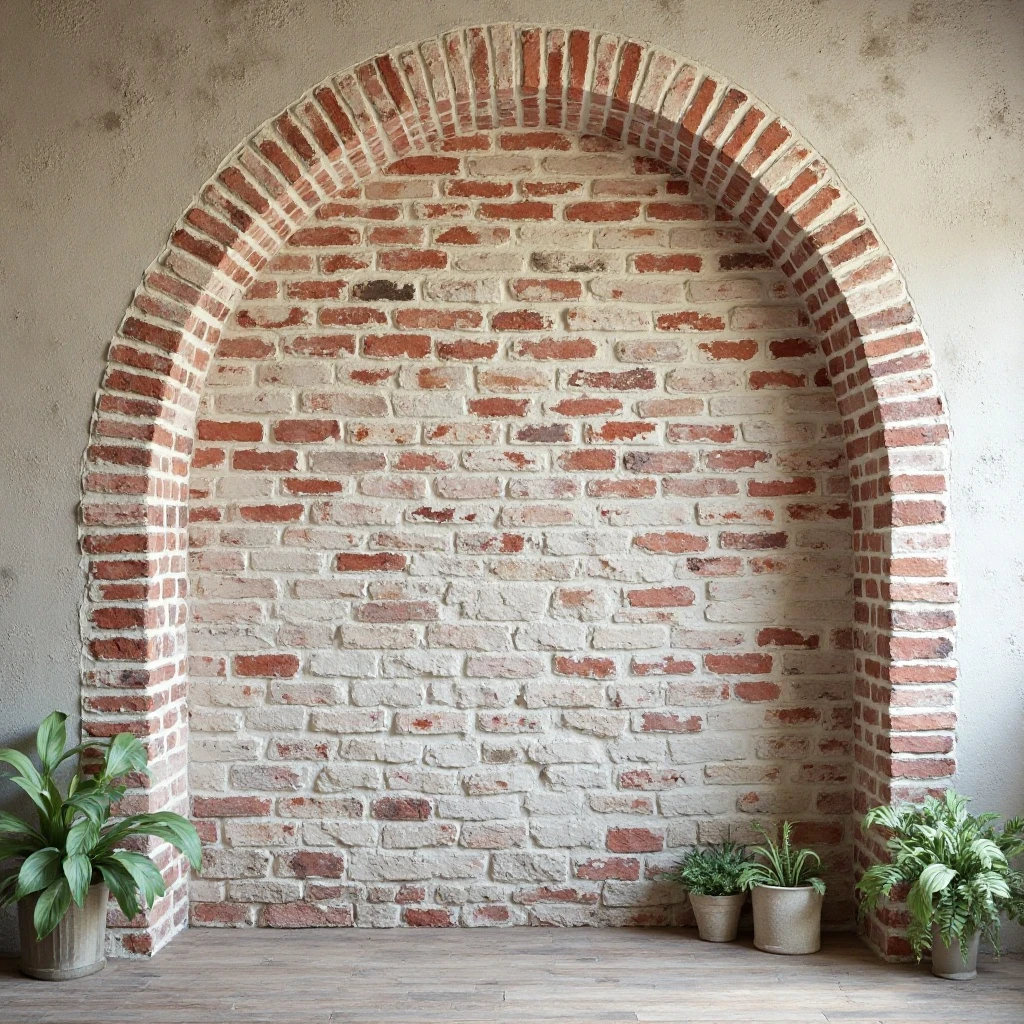
An exposed brick or stone wall—often original to the structure or added for texture—receives a coat of white or cream limewash paint that allows the texture and mortar lines to show through, creating a dimensional, organic backdrop with centuries-old European character. Shop on Amazon
Why It Works: Painted masonry provides instant architectural depth and the appearance of age without the sometimes-dark or rustic heaviness of raw brick or stone. The limewash technique allows the surface to breathe (literally, in the case of actual limewash) while softening the color palette and reflecting light beautifully. The visible texture prevents painted walls from feeling flat or builder-grade, adding visual interest that only increases as the finish naturally ages and develops subtle patina.
How to Style It:
- Use authentic limewash rather than regular paint if possible—it creates the characteristic translucent, textured finish that ages beautifully
- Leave some areas where brick or stone peeks through the paint, especially in mortar joints, for an authentic aged appearance
- Position open shelving, plate racks, or decorative hooks against the painted masonry to create beautiful layering and shadow play
- Balance the textured wall with smooth surfaces elsewhere—too much texture can feel chaotic rather than collected
Where to Use It: Behind ranges, as full accent walls, in dining areas adjacent to kitchens, in kitchen sitting areas
Pro Tip: If you don’t have existing masonry, thin brick veneer or stone veneer can be installed and then limewashed for a remarkably authentic look. The key is in the painting technique—apply limewash in thin, uneven coats with a brush, allowing texture to show through rather than covering it completely.
17. Antique or Reproduction French Lighting
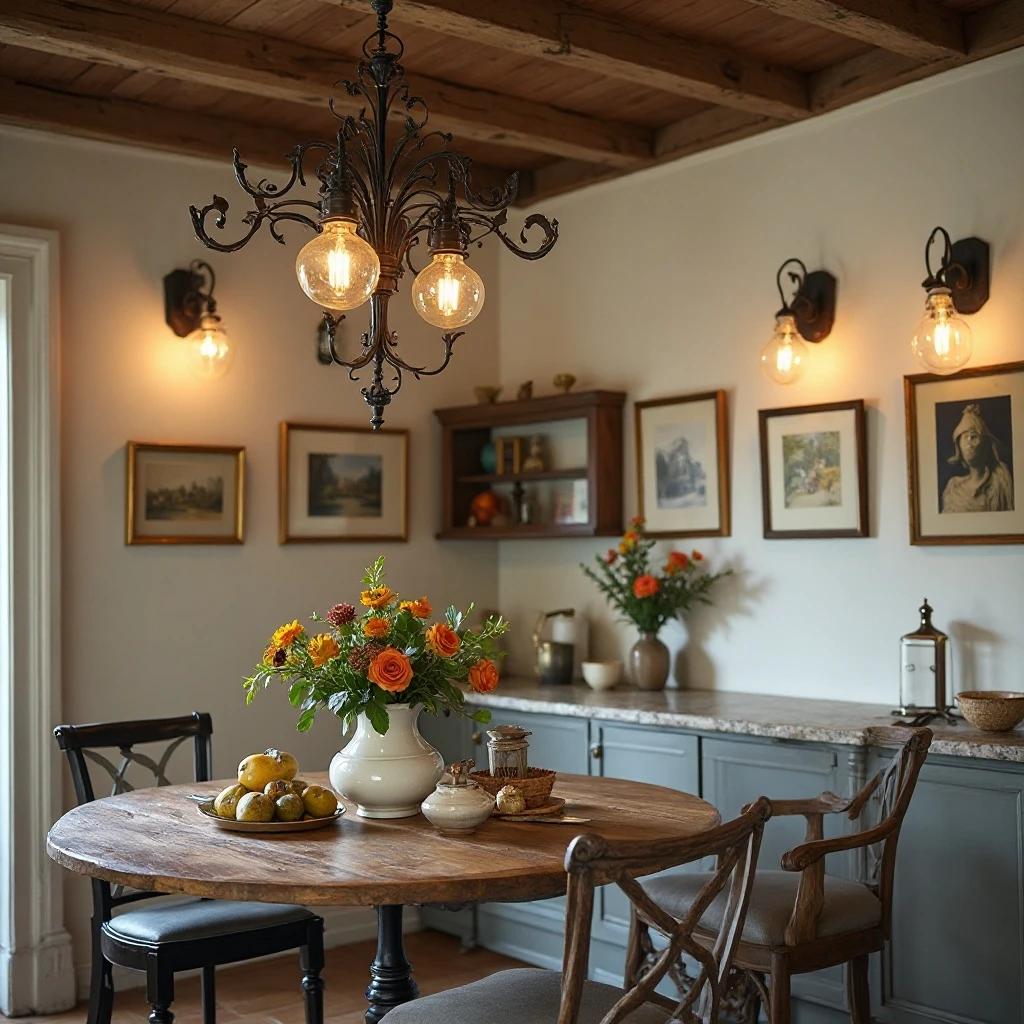
Vintage-inspired light fixtures including iron chandeliers, ceramic or pottery pendant lights, and aged metal sconces provide ambient and task lighting while adding layers of French country charm. Fixtures show authentic proportions and finishes—black iron, aged brass, white ceramic, or mercury glass—rather than shiny contemporary metals. Shop on Amazon
Why It Works: Lighting is jewelry for your kitchen, and French country fixtures bring Old World romance while providing essential illumination. These pieces add dimension at various heights, drawing eyes upward and making spaces feel more finished and layered. The aged metals and natural materials connect to French design traditions spanning centuries, while the variety of fixture types prevents the boring uniformity of cookie-cutter recessed lighting.
How to Style It:
- Layer lighting types: a central chandelier or multiple pendants over the island, sconces flanking windows or range hood, and undercabinet lighting for tasks
- Choose fixtures that scale appropriately—chandeliers at least 24-30 inches wide for islands, pendants 10-16 inches for adequate light and presence
- Install dimmer switches on all lighting circuits so you can adjust ambiance from bright task lighting to soft evening glow
- Mix metals if done intentionally—aged brass hardware with iron light fixtures works if other elements bridge the two finishes
Where to Use It: Above islands, over dining tables, flanking ranges or sinks, in breakfast nooks
Pro Tip: Authentic French fixtures often appear undersized by American standards—this is intentional, creating charm through smaller scale. Don’t go too small (which reads cheap), but resist the temptation to super-size fixtures beyond their traditional proportions.
Common Mistakes to Avoid
1. Over-Matching Everything
Creating a French country kitchen by ordering matching cabinet hardware, light fixtures, and faucets from a single collection results in a showroom look that lacks the authentic, collected-over-time quality that defines genuine French design. Real French country kitchens evolved as families added pieces when needed, resulting in intentional variety within a cohesive palette.
Mix your metals, vary your finishes, and embrace pieces from different eras. The goal is harmony, not uniformity—let a consistent color palette and shared sensibility tie disparate elements together rather than forcing everything to match.
2. Choosing Trendy Over Timeless
Installing open shelving everywhere, using all subway tile, or following current farmhouse trends rather than honoring authentic French design principles creates a kitchen that will date quickly. French country style has endured for centuries because it prioritizes quality materials, classic proportions, and time-tested design over passing fads.
Choose natural stone, quality wood, and traditional forms rather than what’s currently popular on social media. Your kitchen should look like it’s been there for decades, not like it was installed last season. When in doubt, ask yourself: “Would this have made sense in a French farmhouse in 1925?” If not, reconsider.
3. Neglecting Proper Scale and Proportion
Installing undersized range hoods, thin countertops, small farmhouse sinks, or dainty light fixtures undermines the substantial, built-to-last quality essential to French country design. These kitchens feel grounded and solid, with elements that have real presence and appropriate weight for their function.
A 24-inch range hood above a 36-inch range looks apologetic; a proper hood should be 42-48 inches wide minimum. Similarly, 2cm countertops feel cheap compared to substantial 3cm stone, and a delicate chandelier disappears in a large kitchen. Proper scale isn’t about grandness—it’s about appropriate proportion that creates visual satisfaction and suggests quality craftsmanship.
4. Using Too-Perfect Materials and Finishes
Selecting flawless marble without veining, perfectly uniform wood, or cabinets with factory-smooth paint finishes misses the soul of French country design, which celebrates natural variation and authentic age. Choose tumbled stone over polished, hand-scraped wood over machine-smooth, and finishes that show brush strokes rather than sprayed perfection.
The French understand that imperfection—slight color variation in tiles, knots in wood beams, patina on brass hardware—adds character and authenticity. Don’t artificially distress materials, but do choose those that show their natural qualities and will develop genuine patina with use rather than maintaining artificial perfection.
5. Creating Spaces That Feel More Museum Than Kitchen
Designing a kitchen so precious and perfect that you’re afraid to cook in it completely contradicts the French country philosophy that kitchens are for living, gathering, and creating meals that nourish body and soul. If you’re hesitating to use your butcher block for actual chopping or worrying about water spots on your farmhouse sink, you’ve missed the point.
These kitchens should invite use—vegetables spread across counters, copper pots simmering on the stove, flour dusting the island from bread-making. Choose durable materials that age gracefully, then actually use them. A well-loved kitchen with character earned through daily use is infinitely more appealing than a pristine showroom that no one dares disturb.
6. Ignoring Natural Light and Window Treatments
Installing heavy, elaborate curtains that block precious natural light, or leaving windows completely bare without softness, fails to capture the sun-filled, gently filtered quality of authentic French country kitchens. These spaces celebrate natural light while maintaining privacy and softness through simple linen curtains, café curtains covering just the lower half of windows, or shutters that can be adjusted throughout the day.
Maximize window size when possible, keep treatments simple and light-colored, and avoid heavy fabric that competes with rather than enhances your view. French country kitchens feel airy and connected to the outdoors, not closed off and dark.
Frequently Asked Questions
What’s the difference between French country and farmhouse style?
While both styles celebrate rustic materials and natural textures, French country brings significantly more refinement and Old World elegance to the equation. French country incorporates softer, more sophisticated color palettes (think dusty blues, sage greens, and warm grays rather than stark black and white), embraces curved lines and arched elements, and includes more ornate details like carved corbels, decorative molding, and antique-inspired hardware.
French country also emphasizes natural stone like limestone and marble rather than purely utilitarian materials, and the overall aesthetic leans more European-elegant than American-rustic. Think of farmhouse as casual and scrubbed-clean, while French country is lived-in yet refined, with layers of texture and subtle luxury alongside its rustic elements.
Can I create a French country kitchen in a small space?
Absolutely—in fact, many authentic French country kitchens in Europe are quite compact, designed for efficiency while maintaining beauty and charm. Focus on key signature elements that pack the most visual impact: a substantial farmhouse sink, open shelving instead of some upper cabinets to prevent a cramped feeling, one standout piece like a colorful vintage-style range or painted island, and thoughtful lighting including pendants or a small chandelier.
Use a soft color palette to make the space feel larger, incorporate natural materials through butcher block or stone in strategic locations, and embrace the furniture-style approach by varying cabinet depths and adding decorative feet even in a small footprint. The key is editing carefully—choose three or four authentic French country elements and execute them well rather than trying to incorporate everything.
What colors are most authentic for French country kitchens?
The most authentic palette centers on soft, muted tones that appear sun-bleached or aged rather than bright and fresh. Think dusty blues (like weathered shutters), soft grays with warm undertones (like limestone and concrete), creamy whites and warm ivories (like aged plaster), sage and olive greens (like Provençal landscapes), and warm terracotta (like traditional clay roof tiles).
These colors work beautifully with natural wood tones from honey to weathered gray, unlacquered brass that develops patina, and the cream-to-gray range of natural stone. Avoid stark white, which reads too modern and clinical, and steer clear of bright primary colors that lack the subtle complexity of authentic French country hues. The French embrace colors that feel like they’ve been there for generations, gently faded by sun and time.
How much does it cost to create an authentic French country kitchen?
Costs vary enormously based on whether you’re working with existing architecture or building from scratch, choosing luxury materials or budget-friendly alternatives, and tackling DIY projects versus hiring professionals. You can create the aesthetic for $15,000-30,000 with strategic choices: painting existing cabinets in French country colors, adding a porcelain farmhouse sink, installing affordable limestone-look tile flooring, using butcher block on an island, adding open shelving and faux beams, and incorporating vintage-inspired lighting and hardware.
A mid-range renovation runs $50,000-100,000 with quality custom cabinetry, stone countertops, authentic tiles, and professional-grade appliances. High-end kitchens with luxury European appliances, custom plaster hoods, reclaimed materials, and antique fixtures can easily exceed $150,000. The good news: French country style is forgiving and embraces collected-over-time pieces, so you can start with basics anadd layers gradually as budget allows.
Should I hire a designer for a French country kitchen renovation?
A designer experienced in French country or European-inspired interiors can be invaluable in getting proportions right, sourcing authentic materials, and avoiding the common pitfalls that make kitchens look more themed than timeless. Designers have access to specialty craftspeople who can create custom plaster hoods, authentic tile patterns, and furniture-style cabinetry that’s difficult to achieve through standard channels.
They’ll also prevent costly mistakes like undersized elements, wrong finishes, or layouts that don’t flow properly. That said, if you have strong design sense, willingness to research, and time to source materials yourself, you can certainly create a beautiful French country kitchen independently—especially if working with a quality custom cabinet maker who understands the furniture-style approach.
Consider at least a consultation with a designer to review your plans and catch any proportion or authenticity issues before you commit to expensive purchases.
How do I maintain the materials common in French country kitchens?
Natural materials require more care than synthetic alternatives but reward you with aging beauty rather than deterioration. Seal natural stone countertops and floors annually with quality penetrating sealer, clean with pH-neutral cleaner rather than acidic or harsh chemicals, and immediately blot spills on marble or limestone.
Oil butcher block monthly with food-safe mineral oil and treat with beeswax paste quarterly. Allow unlacquered brass hardware to develop natural patina, or polish occasionally with brass cleaner if you prefer more shine. Wash copper cookware with mild dish soap and dry immediately to prevent water spots, using copper polish sparingly when you want extra gleam.
Clean white farmhouse sinks with baking soda paste rather than harsh bleaches that can dull the finish. The key is embracing the philosophy that use creates character—scratches on wood, patina on brass, and slight darkening of stone around the sink are marks of a well-loved kitchen, not flaws to stress over. Regular basic maintenance prevents damage while allowing materials to age gracefully rather than deteriorate.
Final Thoughts: Bringing French Country Elegance Home
The beauty of French country kitchen design lies not in perfection but in the art of living well—creating a space that nourishes both body and soul through its combination of rustic warmth and refined elegance. Whether you incorporate every element in this guide or select just a few signature pieces that speak to you, remember that the most authentic French country kitchens feel collected over time rather than decorated overnight. Start with what you have, add quality pieces as your budget allows, and trust that the layering of materials, textures, and finishes creates depth that no single shopping trip can achieve.
These kitchens matter because they transform cooking and gathering from mundane tasks into daily rituals worth savoring—the morning light catching copper pots as coffee brews, flour dusting across marble as you knead bread, evening meals lingering at a café table long after plates are cleared. French country design insists that the room where you prepare food deserves the same care and beauty as the most formal spaces in your home, perhaps more so since you inhabit it daily.
Embrace the philosophy of beautiful utility, where every element serves a purpose while adding to the aesthetic whole. Trust your instincts about what draws you—perhaps it’s the soft blues of weathered shutters, the substantial presence of natural stone, or the collected charm of open shelving displaying beloved dishes. Your French country kitchen should reflect your life and your style, not replicate someone else’s vision.
Your Next Step: Choose one signature element from this guide—perhaps painting cabinets in a soft French blue, installing open shelving to display your favorite dishes, or simply adding unlacquered brass hardware to existing cabinets—and commit to implementing it within the next month. This single intentional change will begin your transformation toward the French country kitchen you’ve envisioned.
Remember: The most beautiful French country kitchens are those that look like they’ve been there forever while feeling utterly livable today—spaces where imperfection adds character, where materials develop patina through use, and where the most important ingredient is always the life that happens within their walls.