25 Mantle Decorating Ideas With TV: Complete Design Guide
Decorating a mantle with a TV above it presents unique challenges and opportunities. The key is creating balance between the screen and decorative elements while maintaining functionality and style.
This comprehensive guide provides 25 Mantle Decorating Ideas With TV with detailed descriptions perfect for visualization and implementation.
Certain links on this page are affiliate links. If you buy through them, I may receive a small commission at no extra cost to you.
Understanding the Basics
Before diving into specific ideas, consider these fundamental principles:
- Scale and proportion: Your decorations should complement, not compete with, the TV
- Visual weight: Balance the TV’s dark rectangular shape with thoughtful styling
- Functionality: Ensure decorations don’t interfere with viewing or ventilation
- Cohesion: Create a unified look that ties the mantle to your overall room design
The 25 Mantle Decorating Ideas
1. Symmetrical Minimalist Display
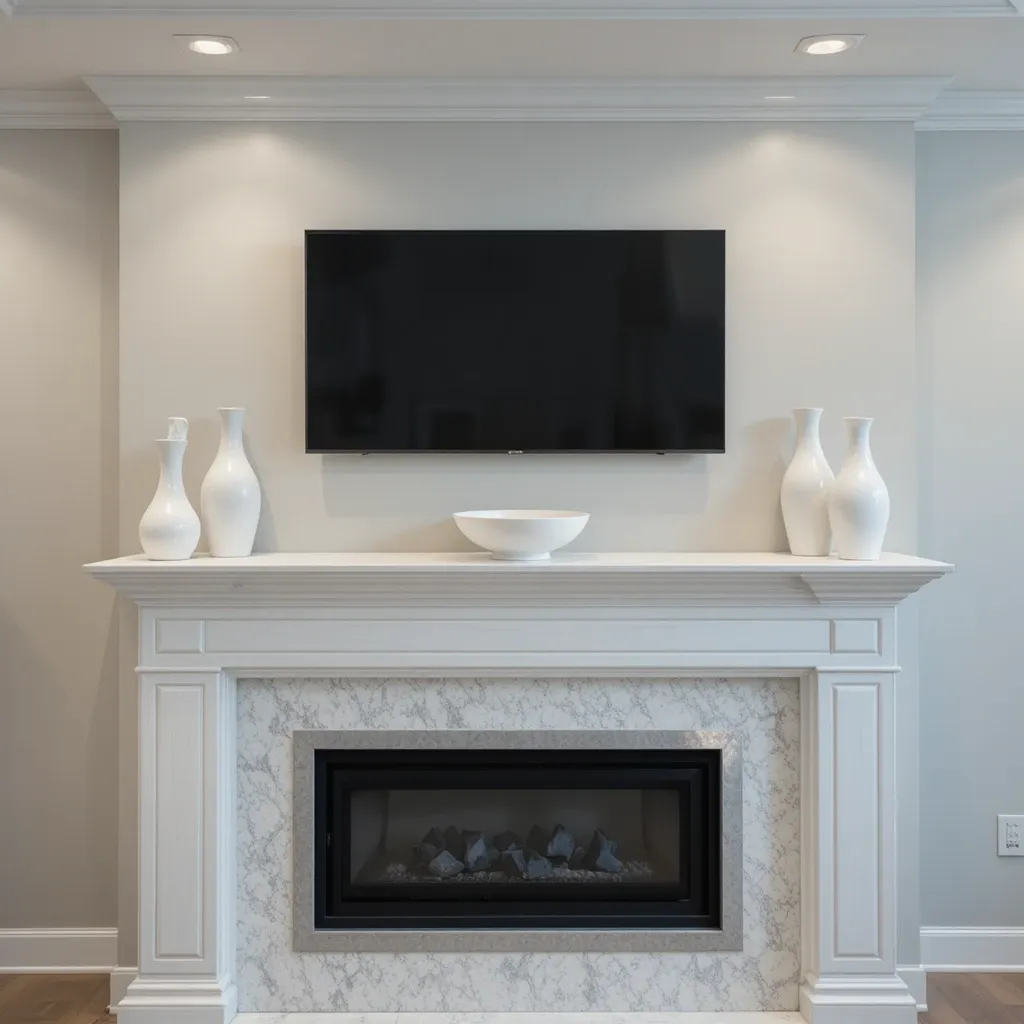
A clean white fireplace mantle beneath a mounted flat-screen TV, featuring two identical tall white ceramic vases on each end, with a single sculptural bowl in the center, all against a light gray wall with recessed lighting above. Shop on Amazon
Why It Works: This approach embraces simplicity and creates a sophisticated, uncluttered look. The symmetry provides visual stability that complements the TV’s geometric shape. The minimal pieces prevent the mantle from feeling overwhelming while maintaining elegance.
Styling Tips: Keep decorative items to odd numbers in the center and matching pairs on the sides. Use monochromatic color schemes to enhance the minimalist aesthetic. Ensure all pieces are substantial enough to hold their own beneath a TV without looking insignificant.
2. Layered Artwork Gallery
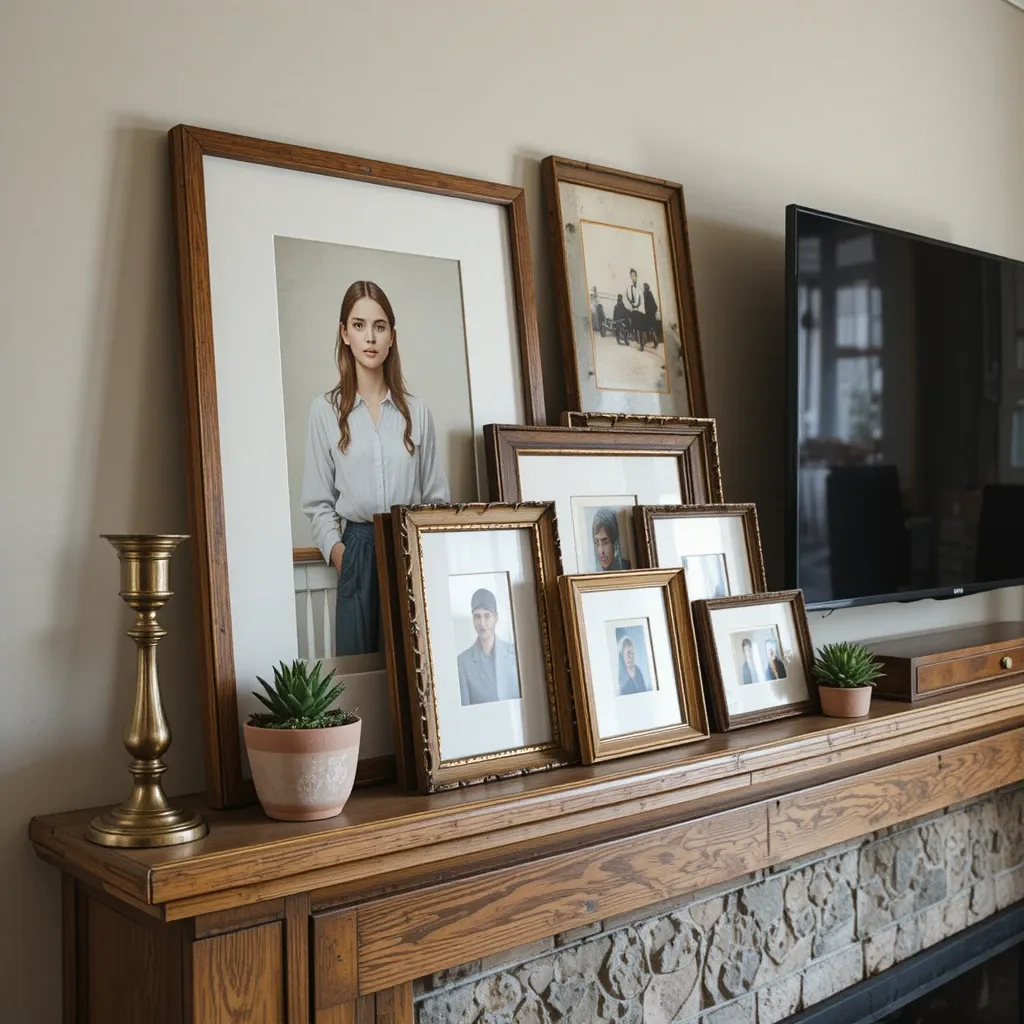
A wooden mantle displaying a collection of varying-sized picture frames and small artworks leaning against the wall beneath a TV, interspersed with small potted succulents and a vintage brass candlestick, creating depth through layering. Shop on Amazon
Why It Works: Layering creates visual interest and depth that draws the eye across the entire mantle rather than focusing solely on the TV. This technique makes the TV feel like part of a curated gallery wall rather than a dominant focal point.
Styling Tips: Mix frame sizes and finishes for an eclectic look. Overlap frames slightly and vary the heights by using small risers or stacked books behind some pieces. Include a mix of family photos, art prints, and meaningful objects for personality.
3. Natural Organic Elements
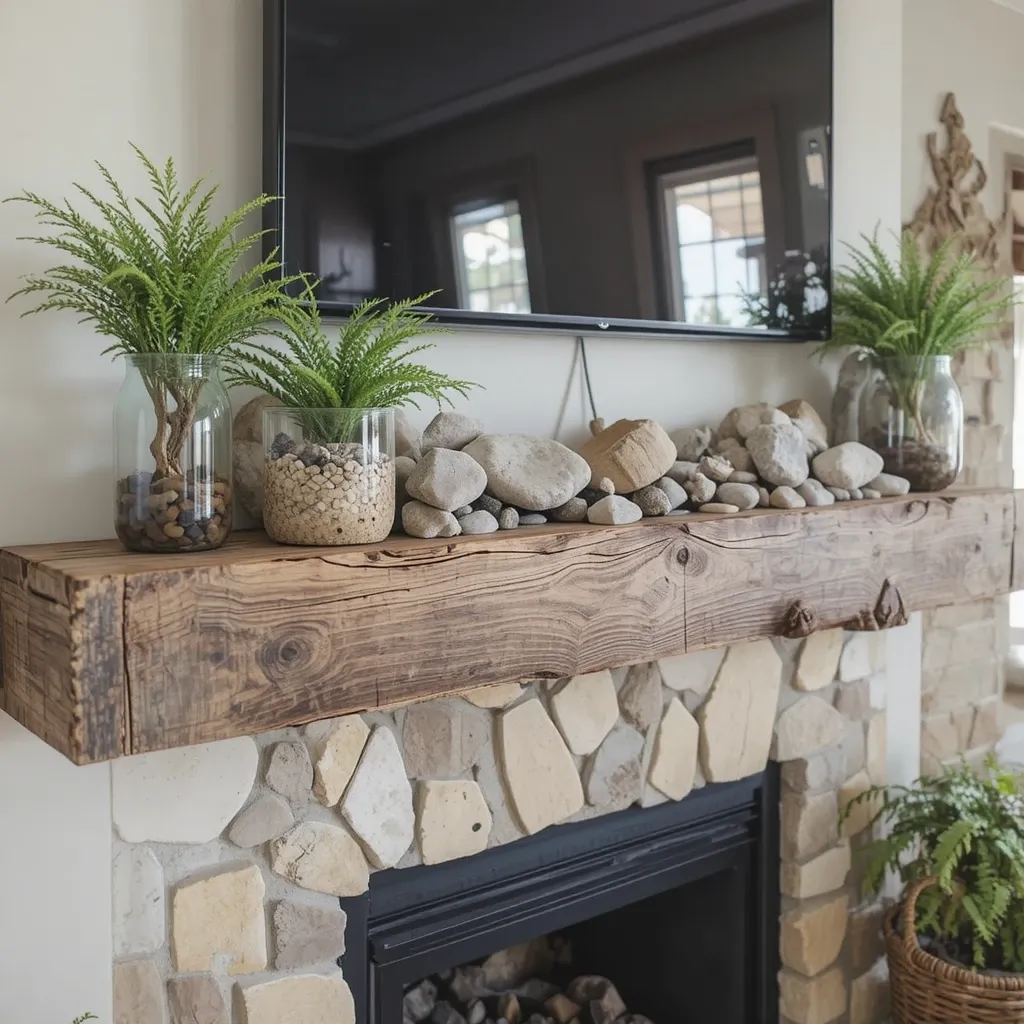
A rustic wooden mantle beneath a TV decorated with driftwood pieces, river rocks in glass vessels, potted ferns, and a woven basket, creating an earthy, nature-inspired vignette with varied textures and natural tones. Shop on Amazon
Why It Works: Natural elements soften the technological appearance of the TV and bring warmth to the space. The organic shapes and textures create visual contrast with the TV’s hard edges and smooth surface.
Styling Tips: Vary heights and textures by combining smooth stones with rough wood, delicate plants with chunky baskets. Keep the color palette neutral with greens, browns, and creams. Change elements seasonally to keep the display fresh.
4. Modern Floating Shelf Installation
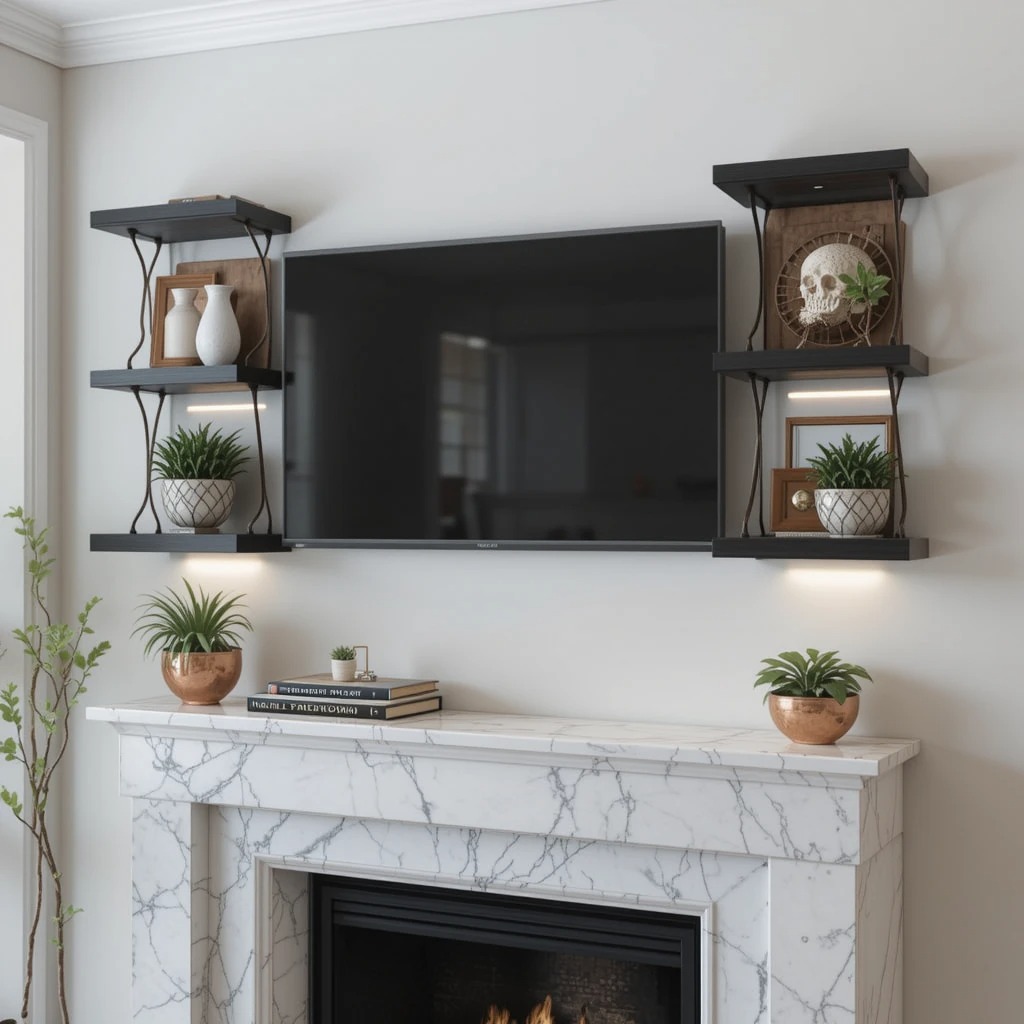
Two sleek black floating shelves flanking a wall-mounted TV above a white marble mantle, displaying contemporary ceramic sculptures, coffee table books, and small potted plants in copper pots, with integrated LED strip lighting underneath each shelf. Shop on Amazon
Why It Works: Floating shelves extend the display area vertically and create a custom entertainment center look. This approach balances the TV’s presence while adding functional storage and display space.
Styling Tips: Install shelves at eye level when seated for optimal balance. Use the shelves for frequently used items like remotes, speakers, or streaming devices alongside decorative pieces. Coordinate shelf finish with TV mount for a cohesive look.
5. Vintage Clock Centerpiece
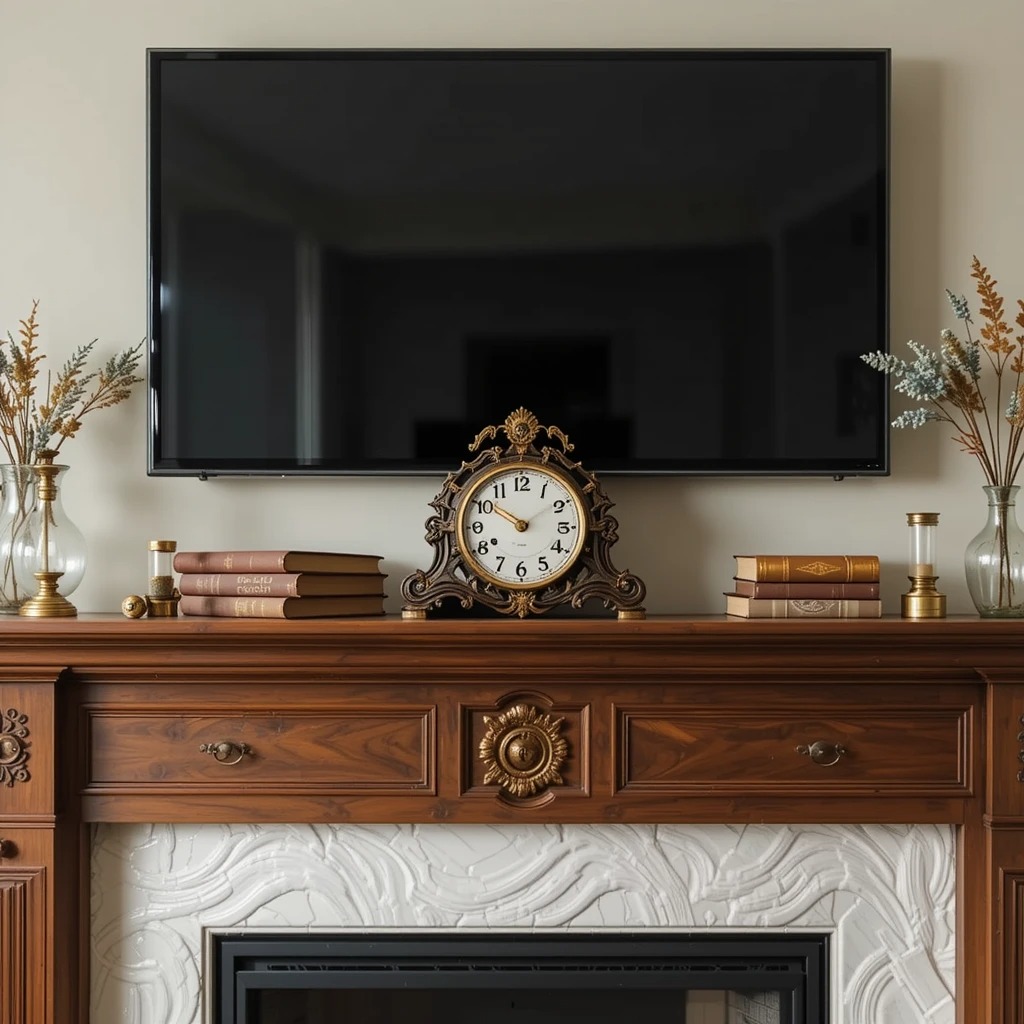
A traditional fireplace mantle featuring a large ornate vintage clock as the central focal point beneath a TV, flanked by brass candlesticks, antique books, and small mercury glass vases with dried flowers. Shop on Amazon
Why It Works: A substantial centerpiece anchors the display and provides a traditional focal point that competes gracefully with the TV. The clock adds functionality while serving as statement decor.
Styling Tips: Choose a clock large enough to make an impact but not so large it touches the TV. The clock face should be clearly visible when standing. Complement the clock’s finish with coordinating metallics in other decorative pieces.
6. Greenery Cascade
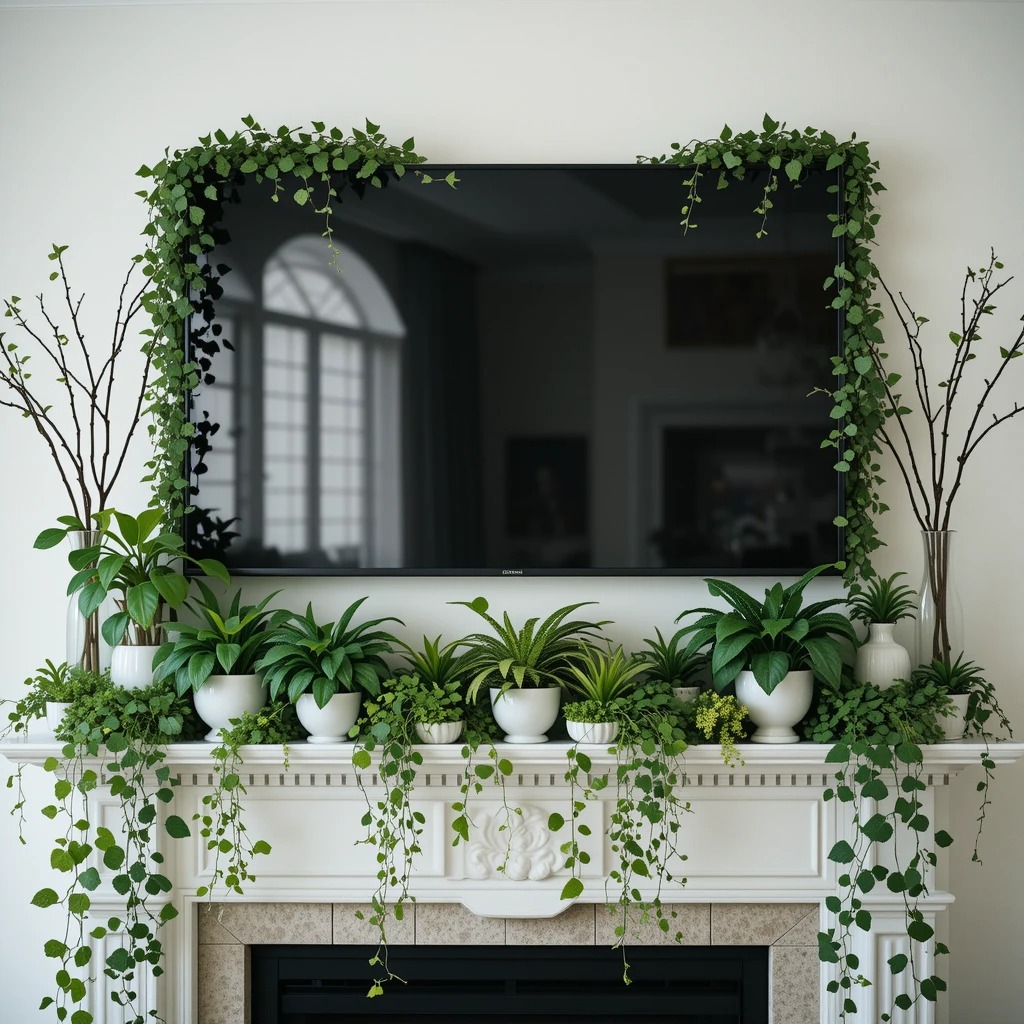
A white mantle beneath a TV overflowing with various trailing plants including pothos and string of pearls in white ceramic pots, interspersed with eucalyptus branches in tall glass vases, creating a lush, cascading green display. Shop on Amazon
Why It Works: Abundant greenery brings life and movement to the static TV area. Trailing plants soften the mantle’s edge and create visual flow downward, balancing the TV’s upward pull on the eye.
Styling Tips: Mix real and high-quality faux plants for easy maintenance. Vary pot heights to create depth and allow some plants to cascade over the mantle edge. Include aromatic herbs like eucalyptus for sensory appeal.
7. Coastal Casual Theme
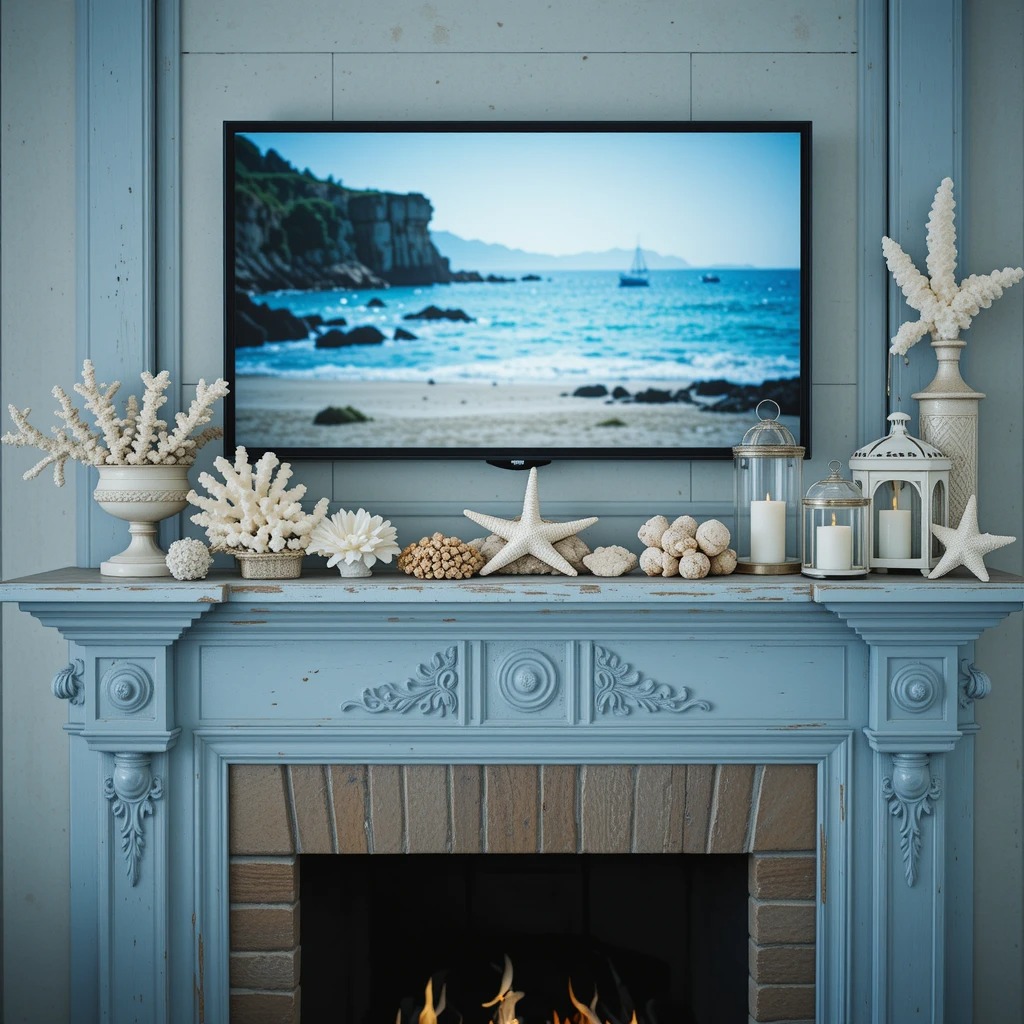
A weathered blue-gray mantle beneath a TV decorated with white coral specimens, striped nautical rope in a glass cloche, hurricane lanterns with candles, and a collection of starfish, creating a relaxed beach house atmosphere. Shop on Amazon
Why It Works: Themed styling creates a cohesive story that makes the TV feel integrated into a larger design narrative. Coastal elements provide natural textures that soften technological edges.
Styling Tips: Stick to a color palette of whites, blues, and sandy neutrals. Use natural materials like rope, coral, and driftwood. Avoid plastic or overly themed pieces that look costume-like. Keep it sophisticated rather than literal.
8. Industrial Chic Display
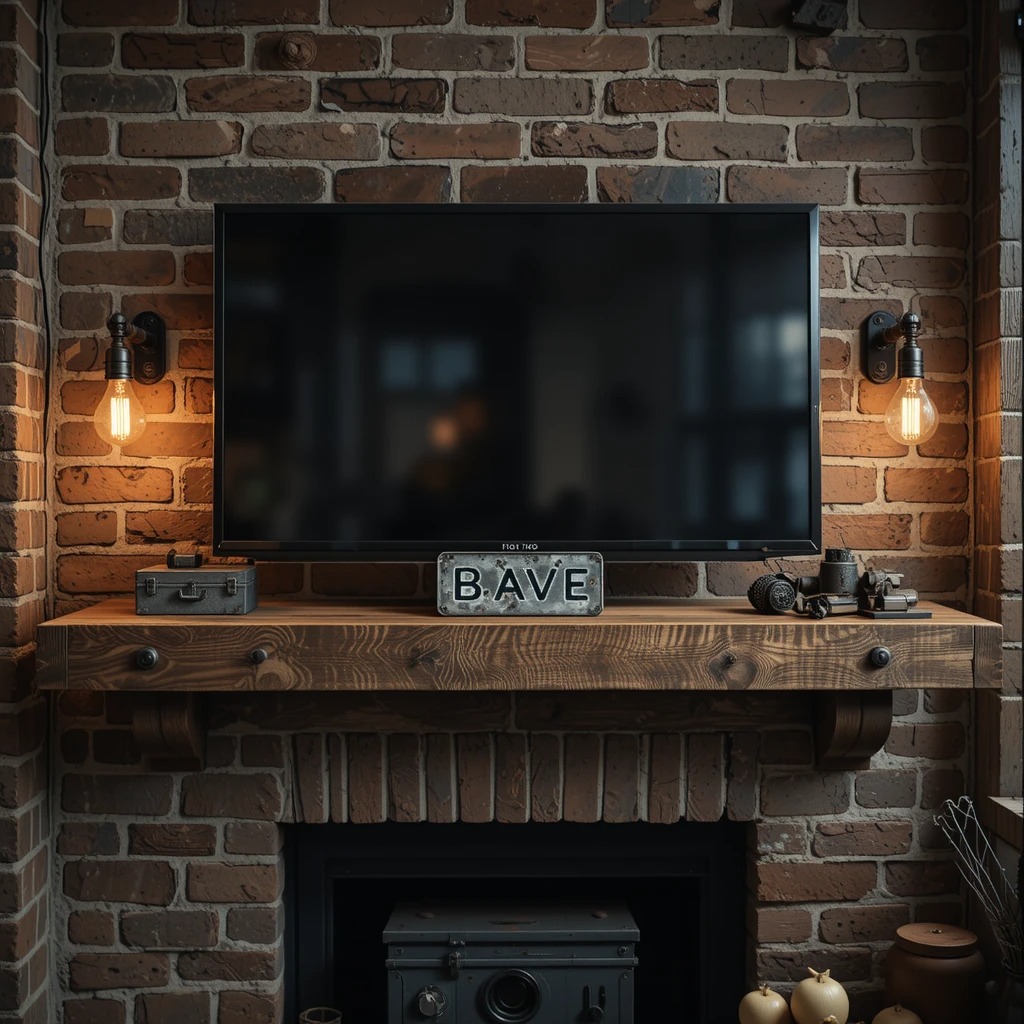
A reclaimed wood mantle beneath a TV featuring metal industrial pipe bookends, vintage Edison bulb lamps, exposed brick backdrop visible on sides, small metal storage boxes, and a distressed metal letter sign. Shop on Amazon
Why It Works: Industrial elements provide strong visual weight that can stand up to a TV’s presence. The raw materials and dark finishes create a masculine, intentional look that frames the screen effectively.
Styling Tips: Mix metal finishes like black iron, brushed steel, and aged copper for depth. Include functional industrial pieces like vintage cameras or binoculars. Keep lines clean and avoid clutter to maintain the industrial aesthetic.
9. Seasonal Rotation Display
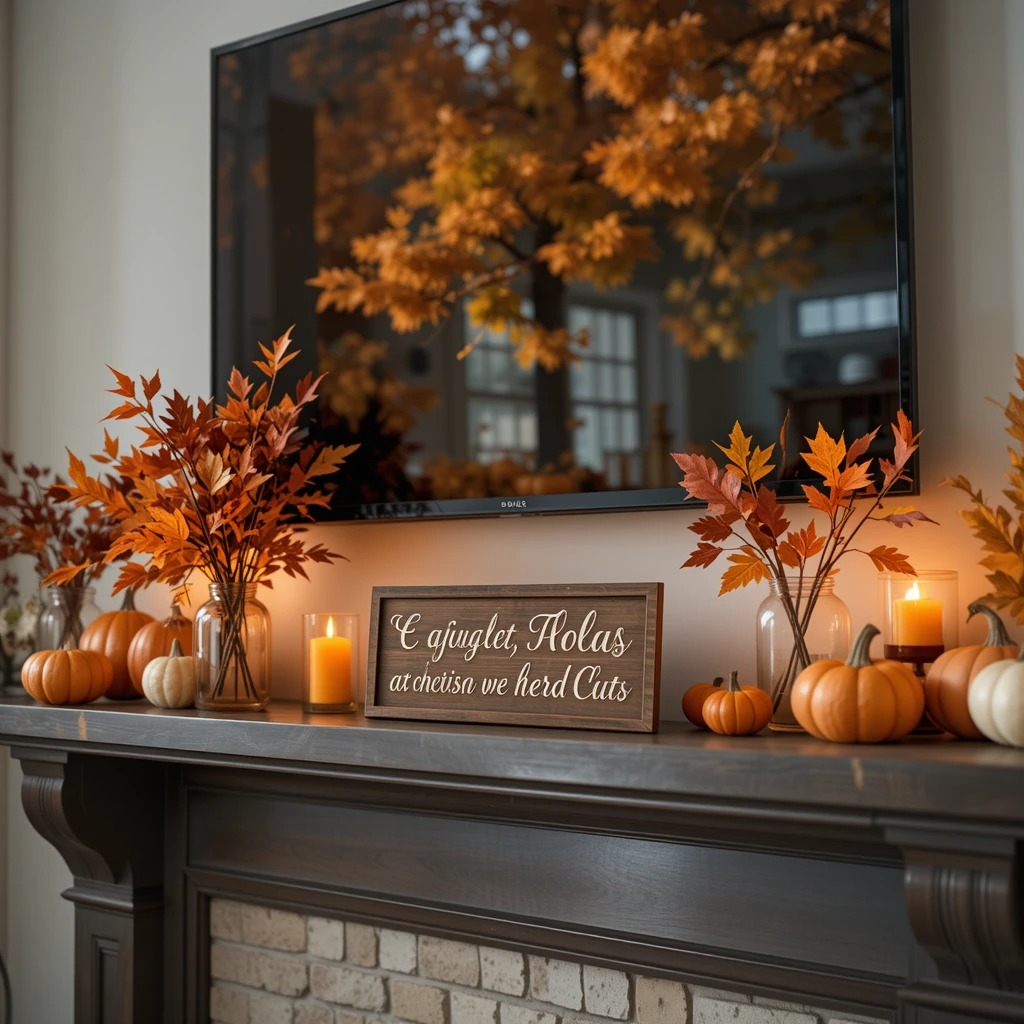
A neutral-toned mantle beneath a TV decorated for autumn with orange and burgundy maple leaves in clear vases, mini pumpkins, cinnamon-scented candles in amber glass holders, and a rustic wooden sign with seasonal messaging. Shop on Amazon
Why It Works: Changing decorations seasonally keeps the space feeling fresh and allows you to experiment with different styles without commitment. Seasonal decor creates timely relevance and celebration throughout the year.
Styling Tips: Create storage bins for each season to make rotation easy. Maintain a base layer of neutral permanent pieces and swap accent items seasonally. Plan transitions between seasons with transitional color palettes.
10. Monochromatic Black and White
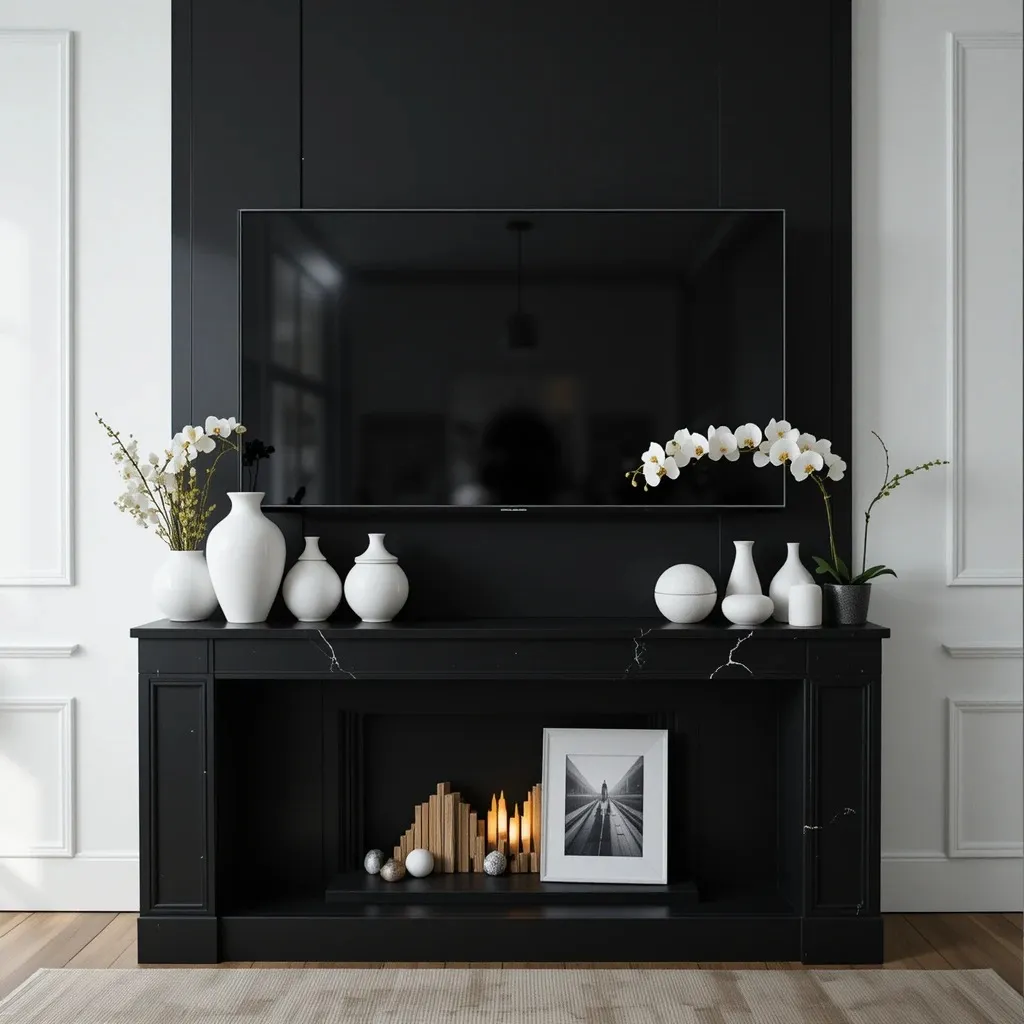
A black mantle beneath a TV showcasing all-white decorative elements including ceramic vases, marble spheres, white picture frames with black and white photography, and a white orchid in a matte white pot, creating stark dramatic contrast. Shop on Amazon
Why It Works: Monochromatic schemes create sophistication and make the TV blend seamlessly. Black and white provide crisp contrast that reads as intentional design rather than cluttered decoration.
Styling Tips: Vary textures to prevent flatness—mix matte and glossy finishes, smooth and rough surfaces. Include different white tones from bright white to cream for subtle depth. Use black sparingly as accent within frames or small objects.
11. Farmhouse Charm
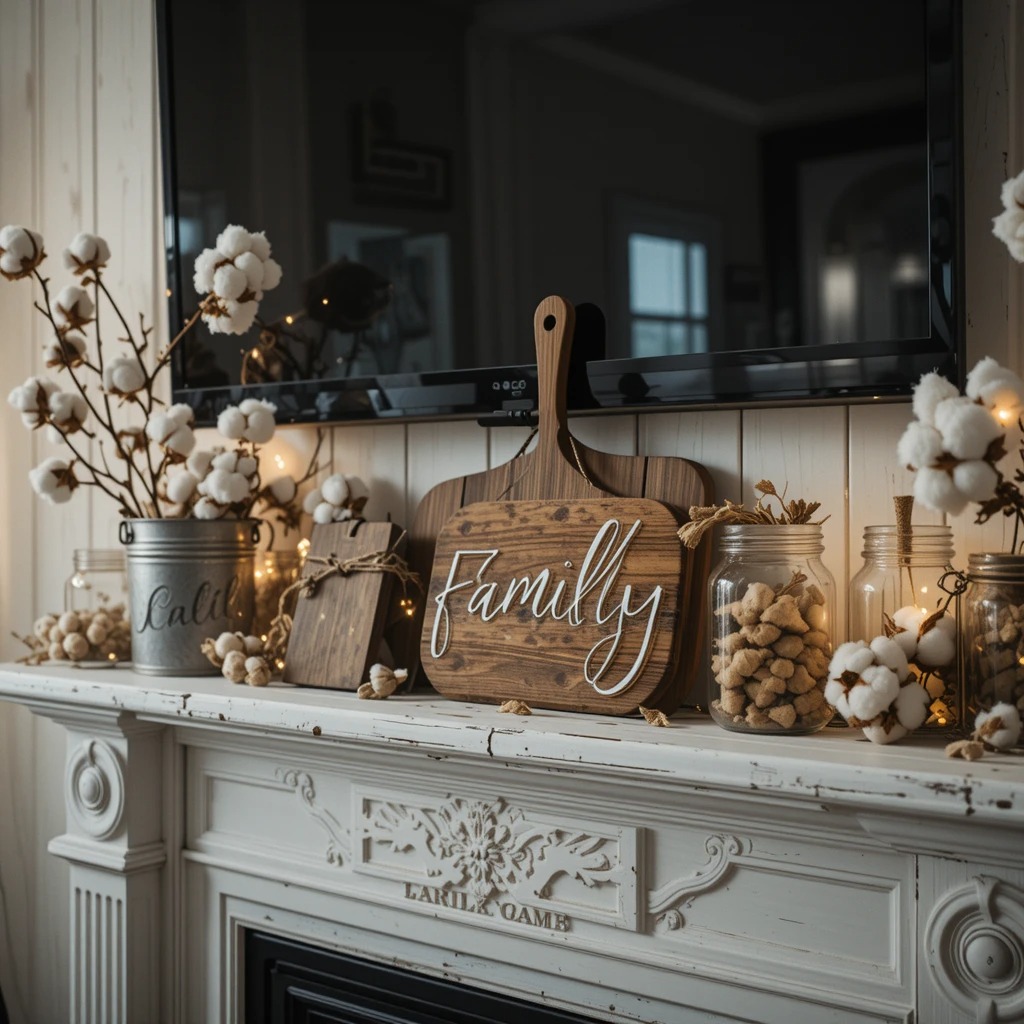
A distressed white wooden mantle beneath a TV decorated with galvanized metal buckets filled with cotton stems, a vintage wooden bread board leaning against the wall, mason jars with fairy lights, and a handwritten family name sign in farmhouse-style lettering. Shop on Amazon
Why It Works: Farmhouse style creates warmth and approachability that balances the TV’s modern technology. The combination of vintage and rustic elements adds character and personality.
Styling Tips: Layer textures like weathered wood, aged metal, and soft textiles. Incorporate functional vintage items like scales, cutting boards, or pottery. Add handwritten or hand-painted elements for authenticity. Keep the color palette neutral with whites, creams, and natural wood tones.
12. Luxe Metallic Glamour
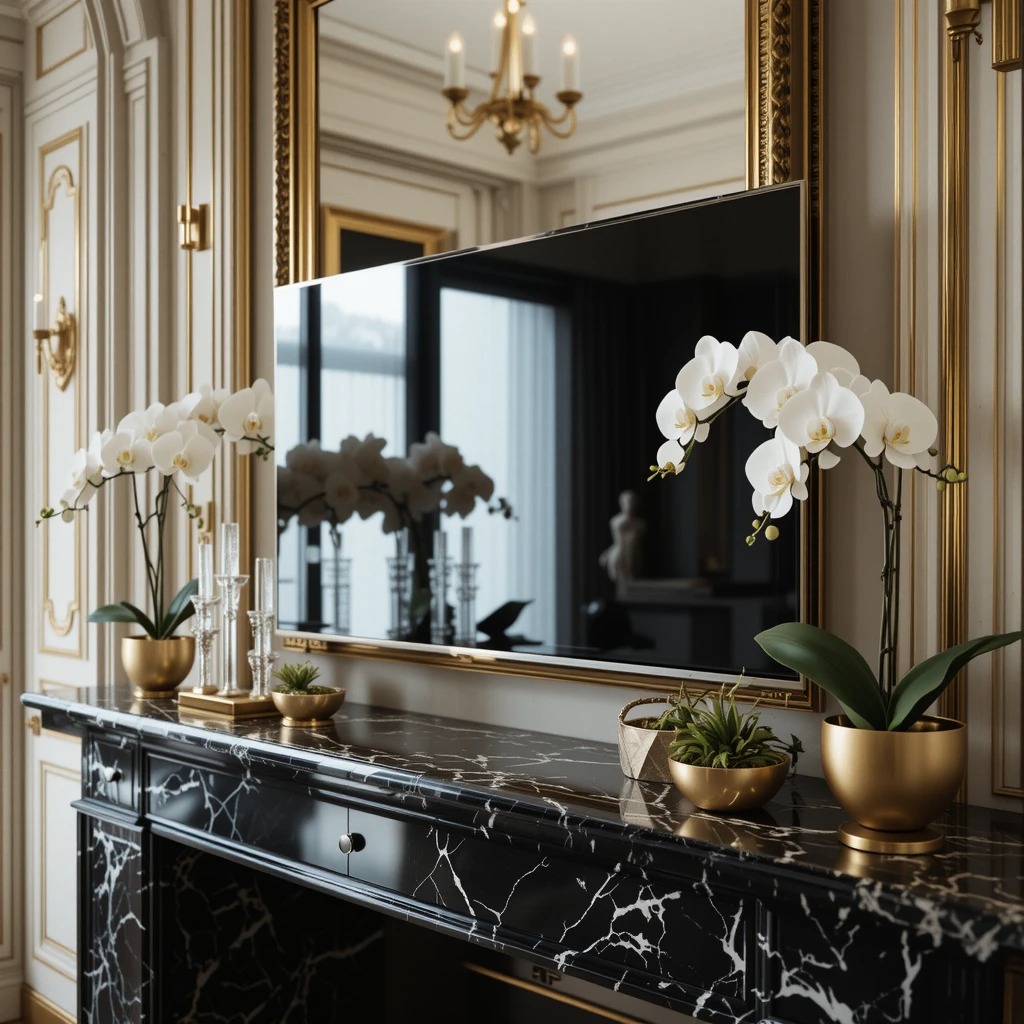
A glossy black marble mantle beneath a TV featuring gold geometric sculptures, crystal candlesticks, a large gold-framed mirror leaning against the wall, and metallic gold plant pots with white orchids, creating an opulent, sophisticated display. Shop on Amazon
Why It Works: Metallic finishes add luxury and light reflection that elevates the entire space. The glamorous approach makes the TV area feel intentional and high-end rather than merely functional.
Styling Tips: Mix warm metallics like gold and brass with one cool tone like silver for balance. Include reflective surfaces to bounce light. Keep the number of pieces limited but make each one substantial and high-quality. Polish metallics regularly to maintain shine.
13. Book Lover’s Haven
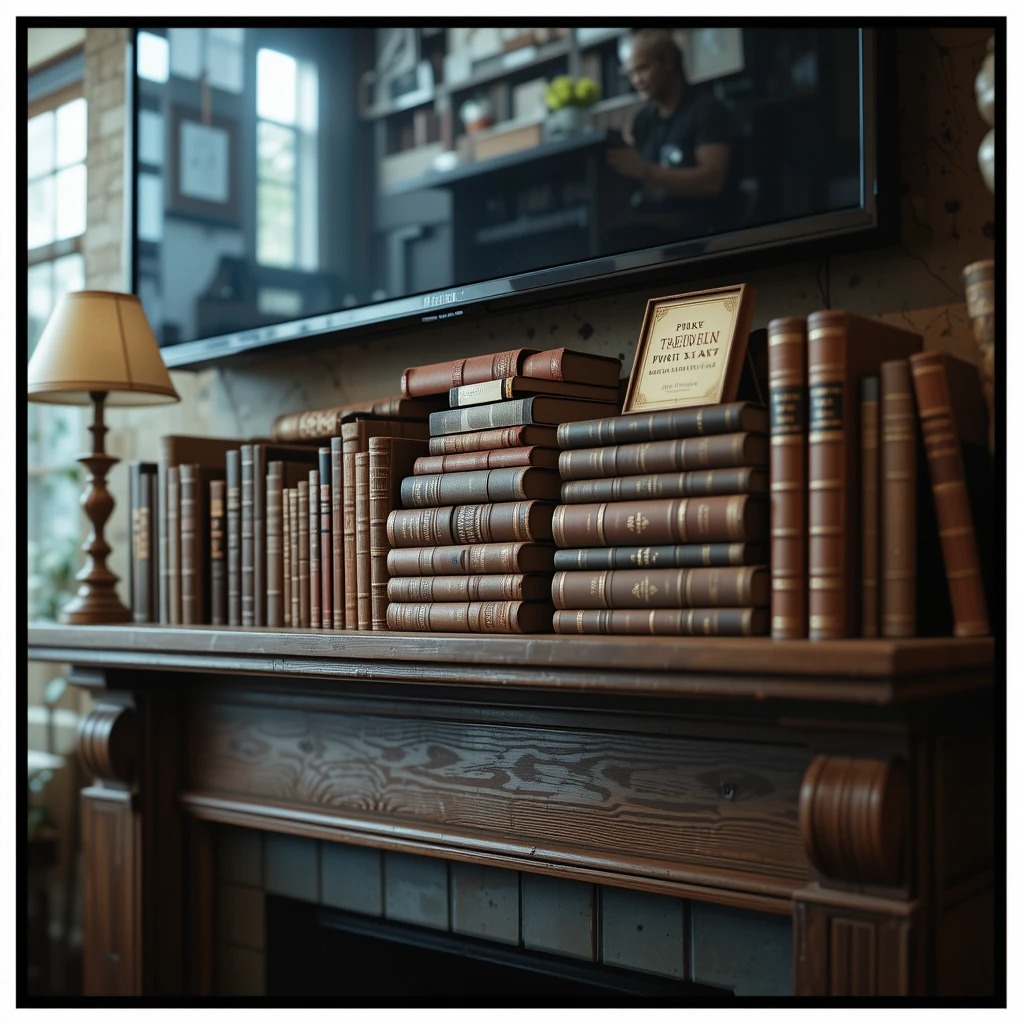
A wooden mantle beneath a TV stacked with vintage hardcover books in varying sizes arranged horizontally and vertically, topped with a reading lamp, small framed literary quotes, and antique bookends, creating a library-inspired display. Shop on Amazon
Why It Works: Books add intellectual warmth and can be easily rearranged to fill space effectively. The varied heights and colors of book spines create natural visual interest that complements without competing.
Styling Tips: Organize books by color for visual impact or by size for a more organic look. Mix in decorative objects every few books to break up the pattern. Use books as risers for smaller decorative items. Choose hardcovers for better visual weight.
14. Architectural Elements Focus
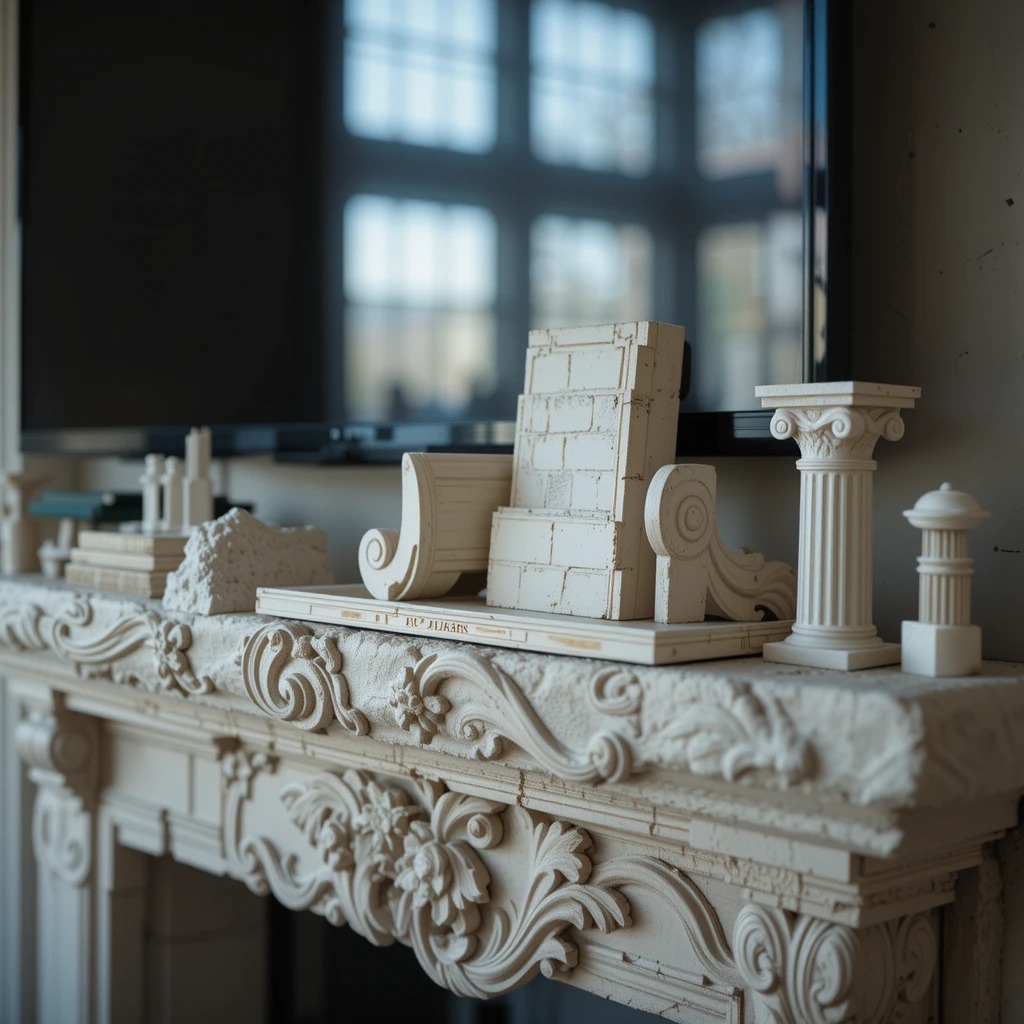
A stone mantle beneath a TV decorated with small architectural salvage pieces including corbels, a section of decorative molding used as a tray, miniature classical columns as bookends, and a small ornate pediment fragment, all in weathered white finishes. Shop on Amazon
Why It Works: Architectural elements add gravitas and historical depth that create an established, sophisticated feel. These substantial pieces provide visual weight that balances the TV effectively.
Styling Tips: Source authentic salvage pieces from architectural antique stores. Mix scales—from small fragments to medium-sized pieces. Keep finishes cohesive, either all natural wood or all painted. Use architectural pieces as functional holders for candles or small plants.
15. Contemporary Sculpture Garden
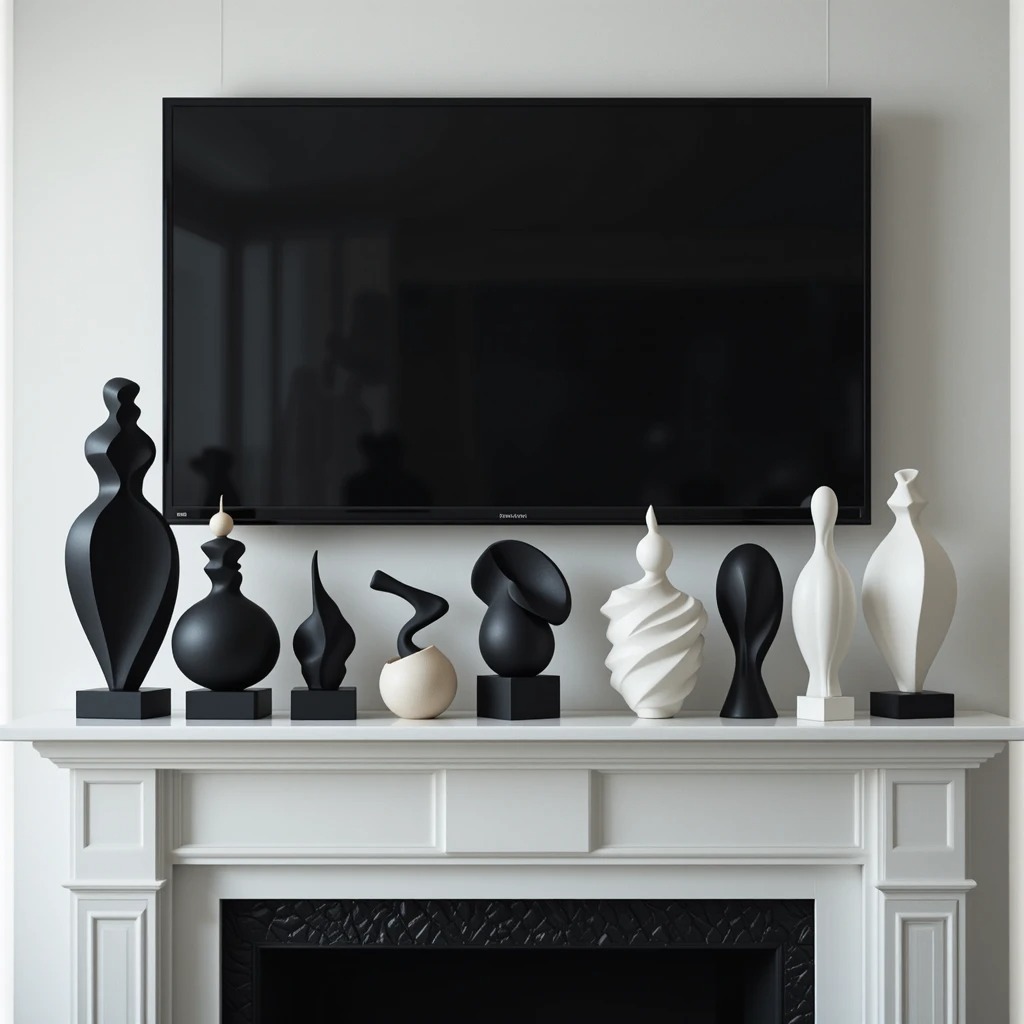
A white mantle beneath a TV displaying modern abstract sculptures in matte black and white finishes, including geometric shapes, twisted forms, and minimalist figures, arranged with generous spacing between each piece on the mantle surface. Shop on Amazon
Why It Works: Contemporary sculpture transforms the mantle into an art installation, making the TV feel like part of a gallery setting. The abstract forms provide visual interest without pattern or color distraction.
Styling Tips: Select sculptures with varying heights and shapes but unified finish. Allow negative space between pieces—less is more. Illuminate sculptures with directional lighting to create shadows and depth. Rotate pieces occasionally to refresh the display.
16. Candlelight Ambiance
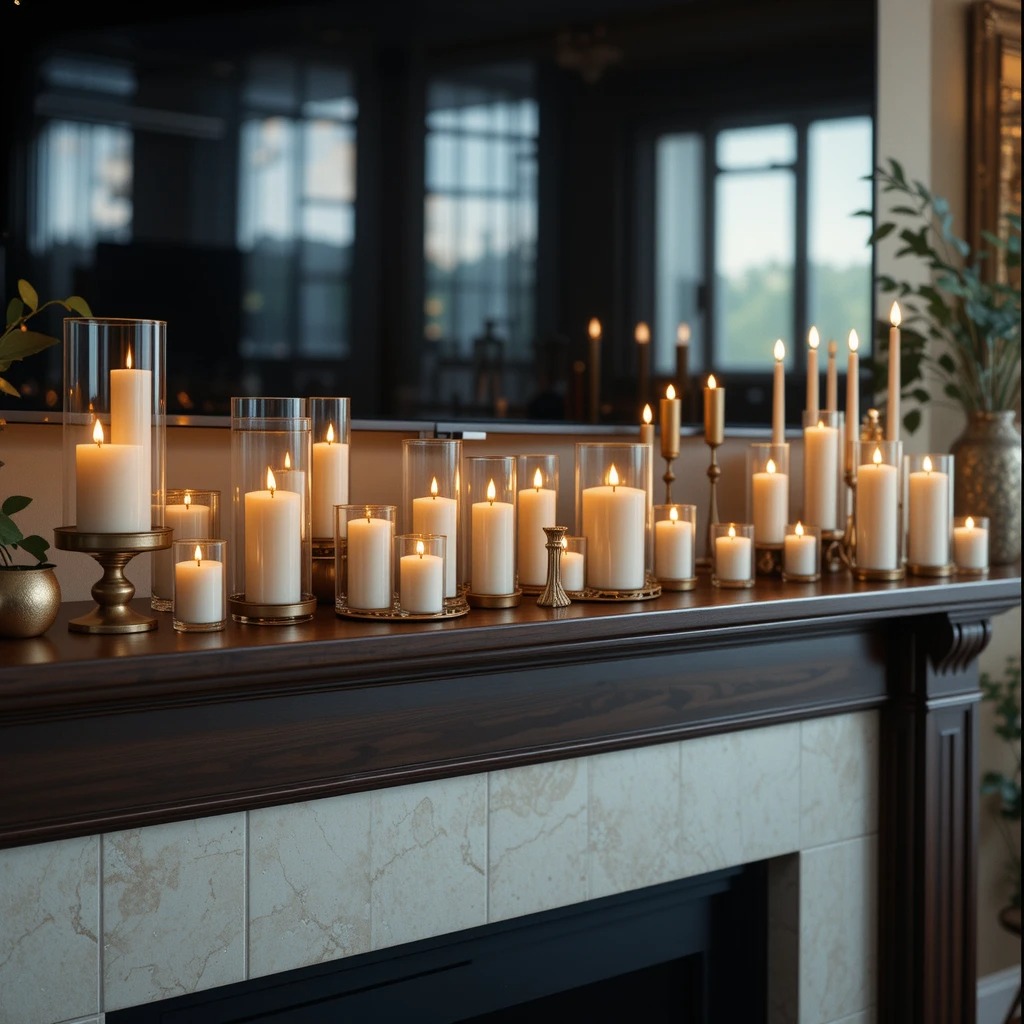
A dark wood mantle beneath a TV arranged with pillar candles of varying heights in glass hurricane cylinders, taper candles in vintage brass holders, and a collection of votive candles on a mirrored tray, creating a warm, ambient lighting display. Shop on Amazon
Why It Works: Candles provide ambient lighting that makes the TV area functional and atmospheric even when the screen is off. The vertical elements of candles draw the eye upward naturally.
Styling Tips: Group candles in odd numbers for visual balance. Use unscented candles near the TV to avoid heat damage. Mix candle heights dramatically—from votives to tall pillars. Place flameless LED candles in real wax holders for safety. Keep matches or a lighter in a decorative holder on the mantle.
17. Travel Memory Display
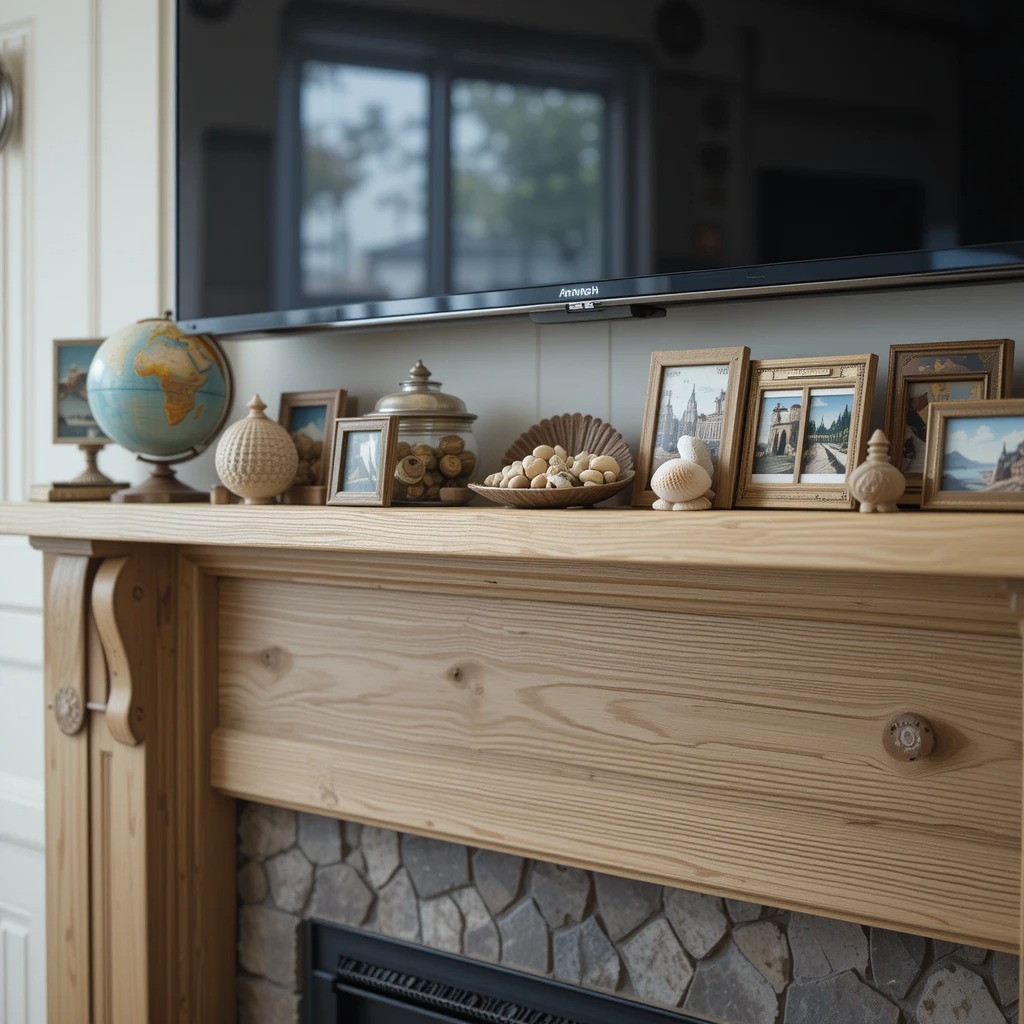
A light oak mantle beneath a TV showcasing travel souvenirs including small framed maps, a vintage globe, collected seashells in a glass jar, international coins in a decorative dish, and postcard-sized photos from various destinations in matching frames. Shop on Amazon
Why It Works: Personal collections tell your story and create conversation starters. Travel memorabilia adds worldly sophistication and makes the space uniquely yours while the curated display prevents clutter.
Styling Tips: Edit collections ruthlessly—display only the most meaningful or beautiful pieces. Unify disparate items with matching frames or containers. Arrange items by color or region for cohesion. Rotate items seasonally to showcase different trips.
18. Textured Neutrals
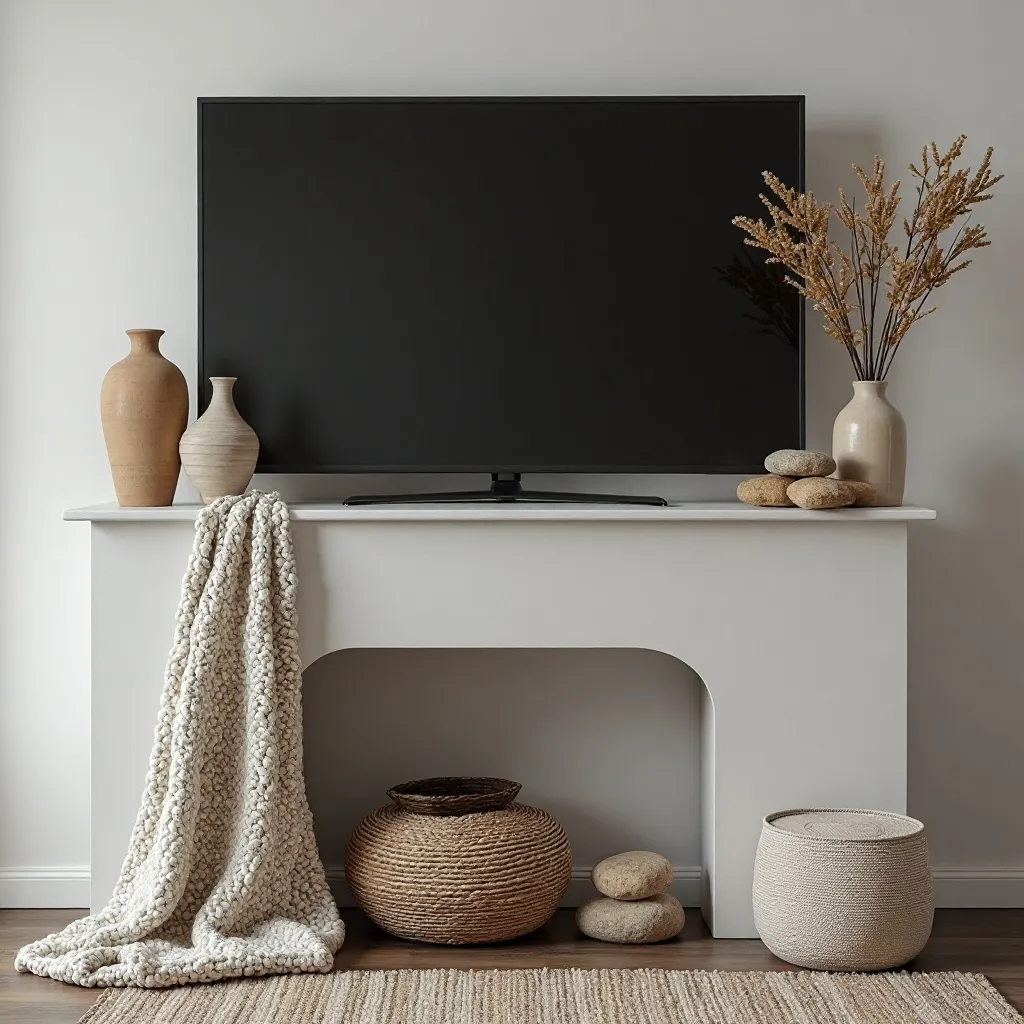
A light gray mantle beneath a TV decorated entirely in neutral tones, featuring a chunky knit throw draped casually, nubby ceramic vases, a woven basket, smooth river stones, and rough-hewn wooden pieces, creating rich textural variety in a monochromatic palette. Shop on Amazon
Why It Works: Texture creates visual interest without color distraction, keeping focus appropriate near a TV. The neutral palette creates serenity while varied textures prevent blandness.
Styling Tips: Combine at least five different textures—smooth, rough, woven, knitted, glazed. Use the rule of three: group textured items in threes. Include both matte and slight sheen finishes for subtle contrast. Touch each item to ensure true textural variety.
19. Geometric Pattern Play
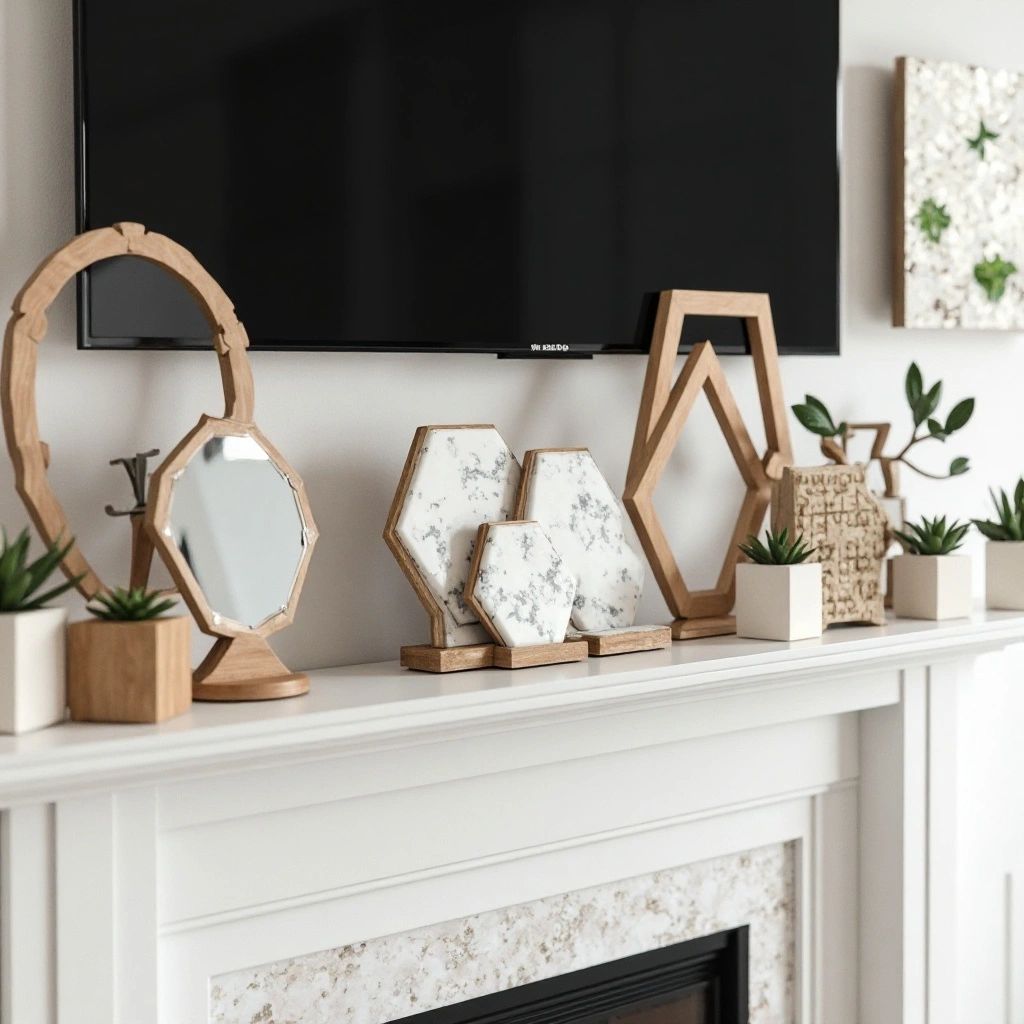
A white mantle beneath a TV featuring decorative items with strong geometric patterns including hexagonal marble coasters displayed on a stand, triangular wooden decorative pieces, a round mirror, rectangular frames, and cube-shaped planters with succulents. Shop on Amazon
Why It Works: Geometric shapes create modern visual rhythm that complements the TV’s rectangular form. The intentional repetition of shapes creates cohesion while varied sizes maintain interest.
Styling Tips: Limit yourself to three geometric shapes repeated throughout the display. Mix two-dimensional patterns with three-dimensional shapes. Balance geometric hardness with one organic element like plants. Keep colors minimal to let shapes be the focus.
20. Vintage Apothecary Style
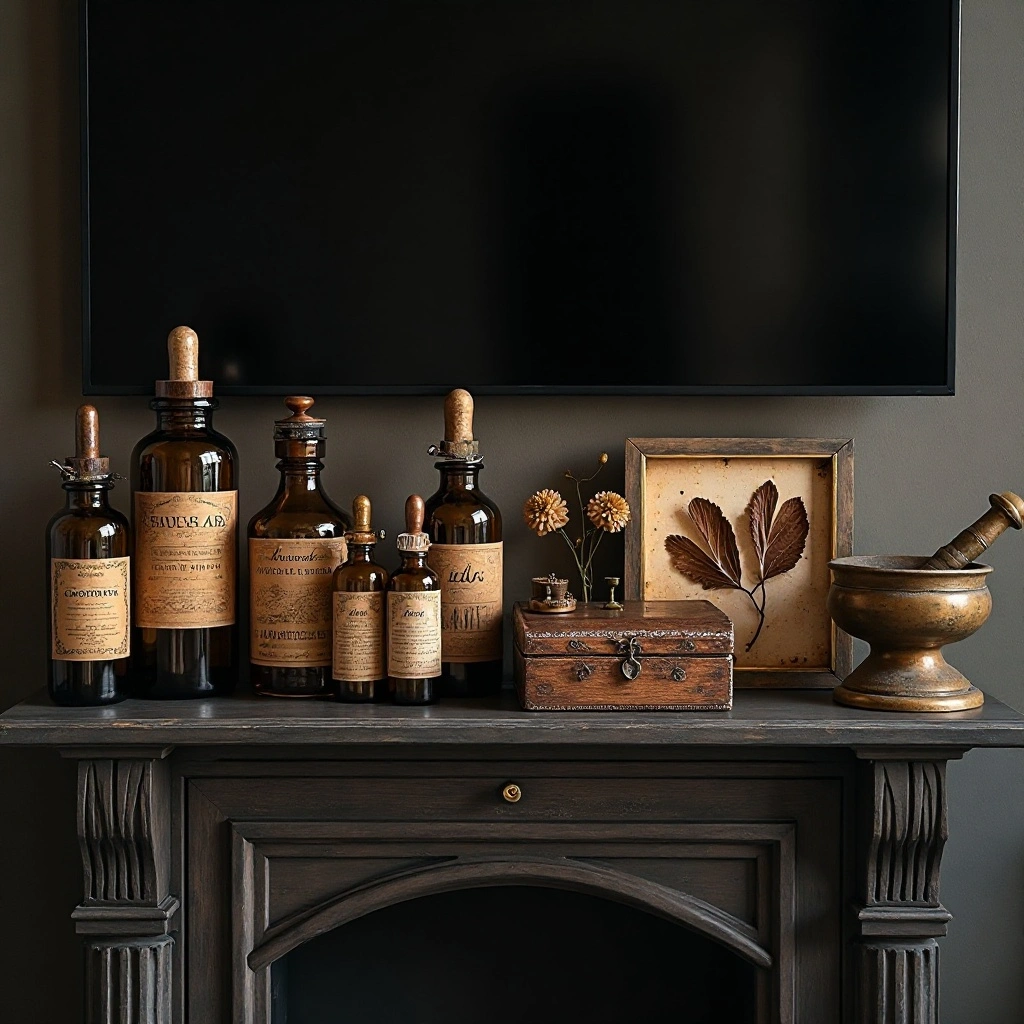
A dark wood mantle beneath a TV styled with amber glass apothecary bottles of various sizes, vintage medicine bottles with paper labels, a brass mortar and pestle, dried botanical specimens in frames, and an antique wooden box, creating a curiosity cabinet aesthetic. Shop on Amazon
Why It Works: Vintage apothecary styling creates an intellectual, collected-over-time look that adds depth and history. The glass containers reflect light beautifully while maintaining visual interest.
Styling Tips: Source authentic vintage bottles from antique stores or flea markets. Group similar items in odd numbers. Fill bottles with dried flowers, shells, or leave empty to show glass color. Use bottle brushes to clean narrow necks. Label bottles with calligraphy for authenticity.
21. Modern Minimalist Ledge
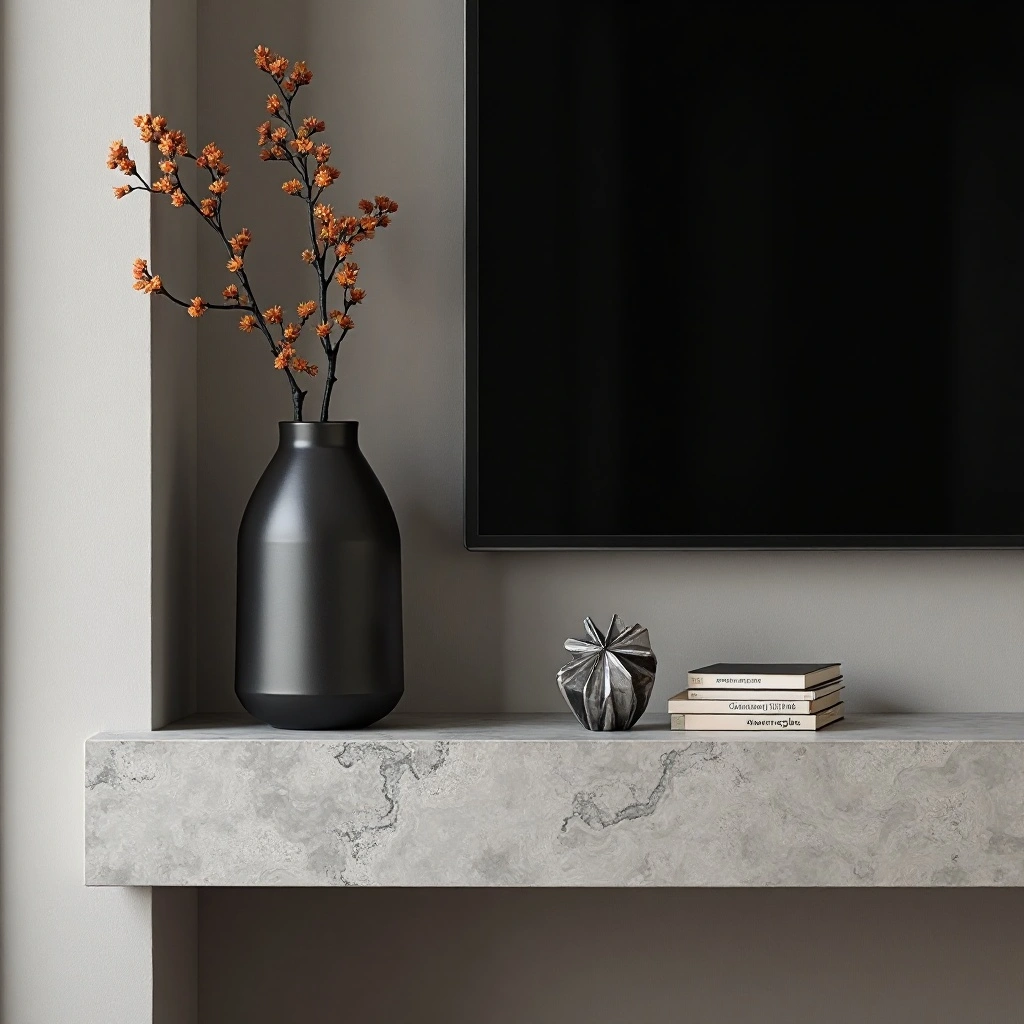
A floating concrete mantle shelf beneath a TV with just three carefully chosen items: a tall cylindrical matte black vase with a single branch, a small stack of design books, and one abstract ceramic sculpture, all with abundant empty space between them. Shop on Amazon
Why It Works: Strategic minimalism creates breathing room and sophistication. Each piece becomes important and intentional. The abundance of negative space makes even a small mantle feel expansive.
Styling Tips: Follow the “rule of three” strictly. Choose each piece for maximum impact—larger scale, interesting form, or striking finish. Space items with mathematical precision. Resist the urge to add more. Edit seasonally by swapping single items rather than adding.
22. Family Photo Timeline
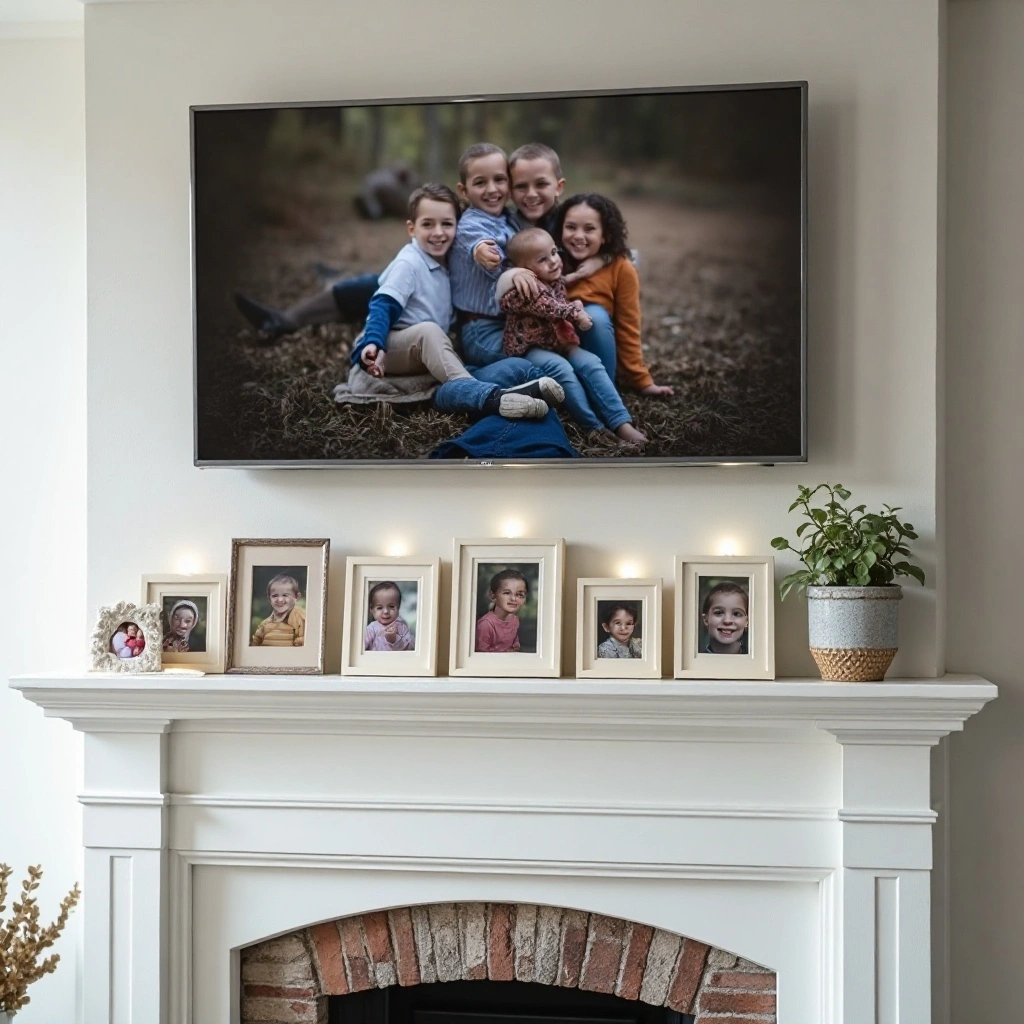
A white mantle beneath a TV displaying a curated selection of family photos in matching white frames of uniform size, arranged chronologically from left to right, with small LED picture lights illuminating each frame from above. Shop on Amazon
Why It Works: A photo timeline personalizes the space while maintaining order through uniformity. The repetitive frame style creates cohesion while the varied photo content provides interest.
Styling Tips: Use identical frames in one finish to unify different photo sizes and eras. Arrange chronologically to tell a story. Include photos from different life stages for variety. Update annually with new family milestones. Use photo-editing to give all images a similar tone for cohesion.
23. Botanical Prints Collection
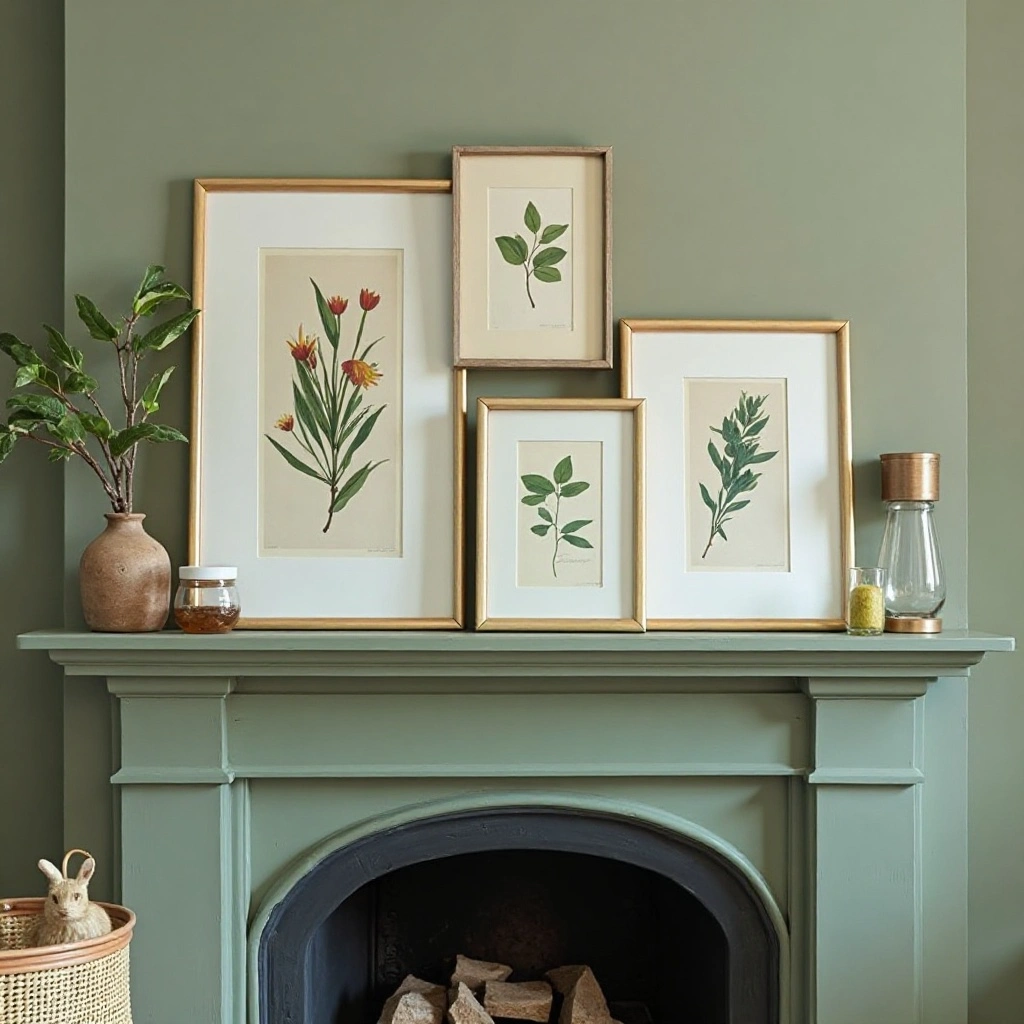
A sage green painted mantle beneath a TV showcasing vintage botanical illustration prints in matching slim gold frames of varying sizes, arranged in a salon-style grouping, with a few real pressed leaves in glass frames interspersed. Shop on Amazon
Why It Works: Botanical prints add natural elements without maintenance concerns. The scientific illustration style provides sophistication and the green tones create soothing ambiance near the TV viewing area.
Styling Tips: Source prints from museum collections or purchase reproduction botanical prints. Frame consistently with mat boards for a gallery look. Arrange frames so edges touch or nearly touch for a salon wall effect. Mix in a few real pressed botanical specimens for authenticity.
24. Scandinavian Hygge Warmth
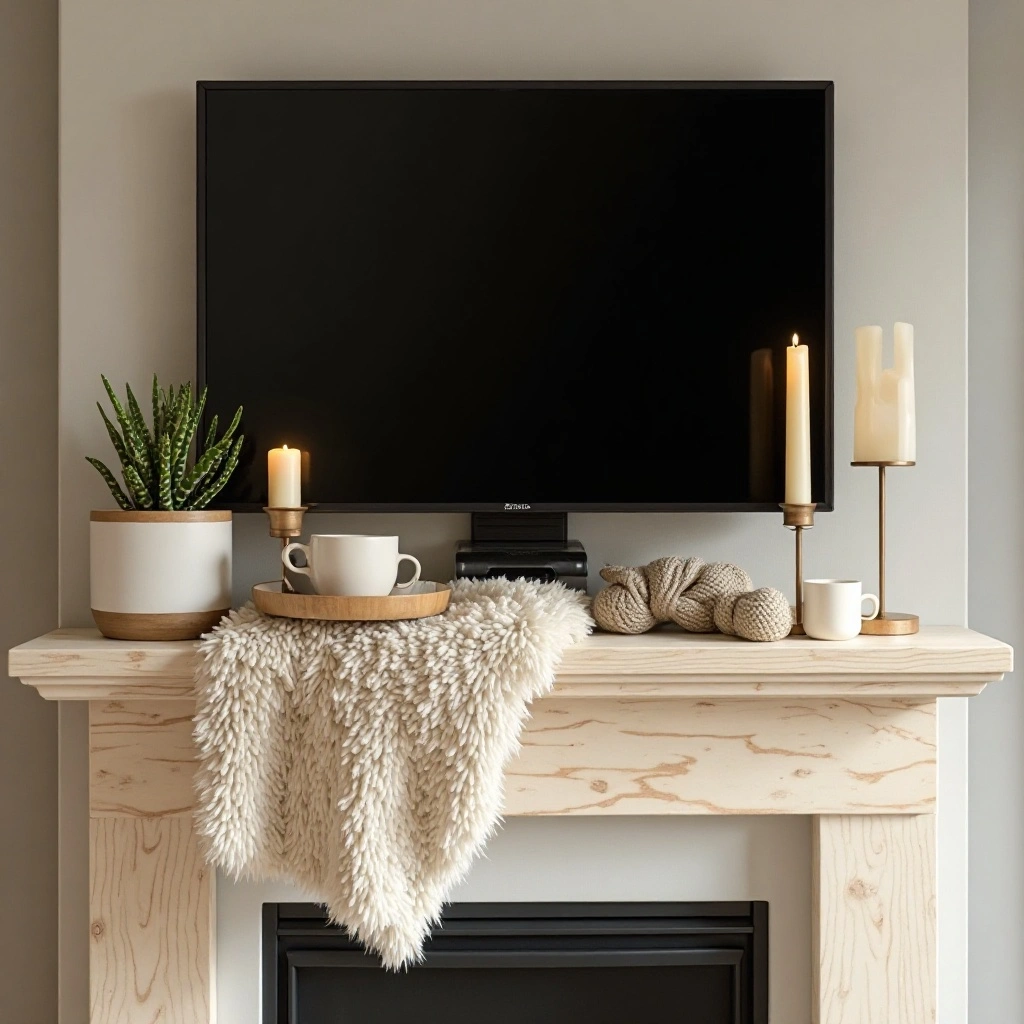
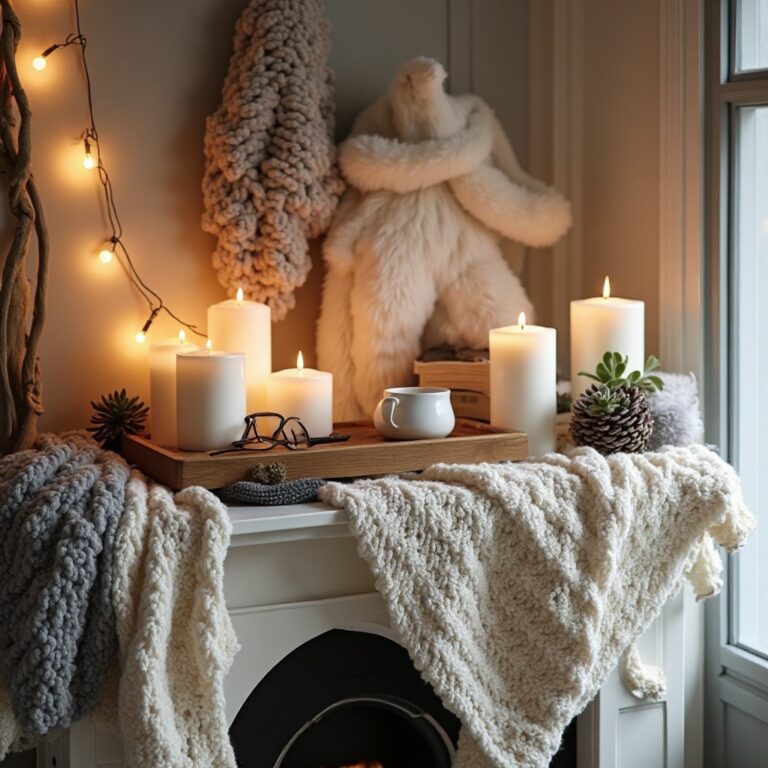
A light birch wood mantle beneath a TV decorated with cream-colored candles in simple holders, a small sheepskin throw casually draped, a wooden tray with white ceramic mugs, a small potted snake plant, and a cozy knit element, all in a neutral, warm color palette. Shop on Amazon
Why It Works: Scandinavian design emphasizes coziness and natural materials that create warmth near the TV area. The simple, functional pieces create livability while maintaining style.
Styling Tips: Embrace the concept of “lagom” (not too much, not too little). Use natural materials like wood, wool, and linen. Keep the color palette to whites, creams, grays, and natural wood. Include elements that invite touch and use. Light candles regularly to activate the cozy atmosphere.
25. Artistic Asymmetry
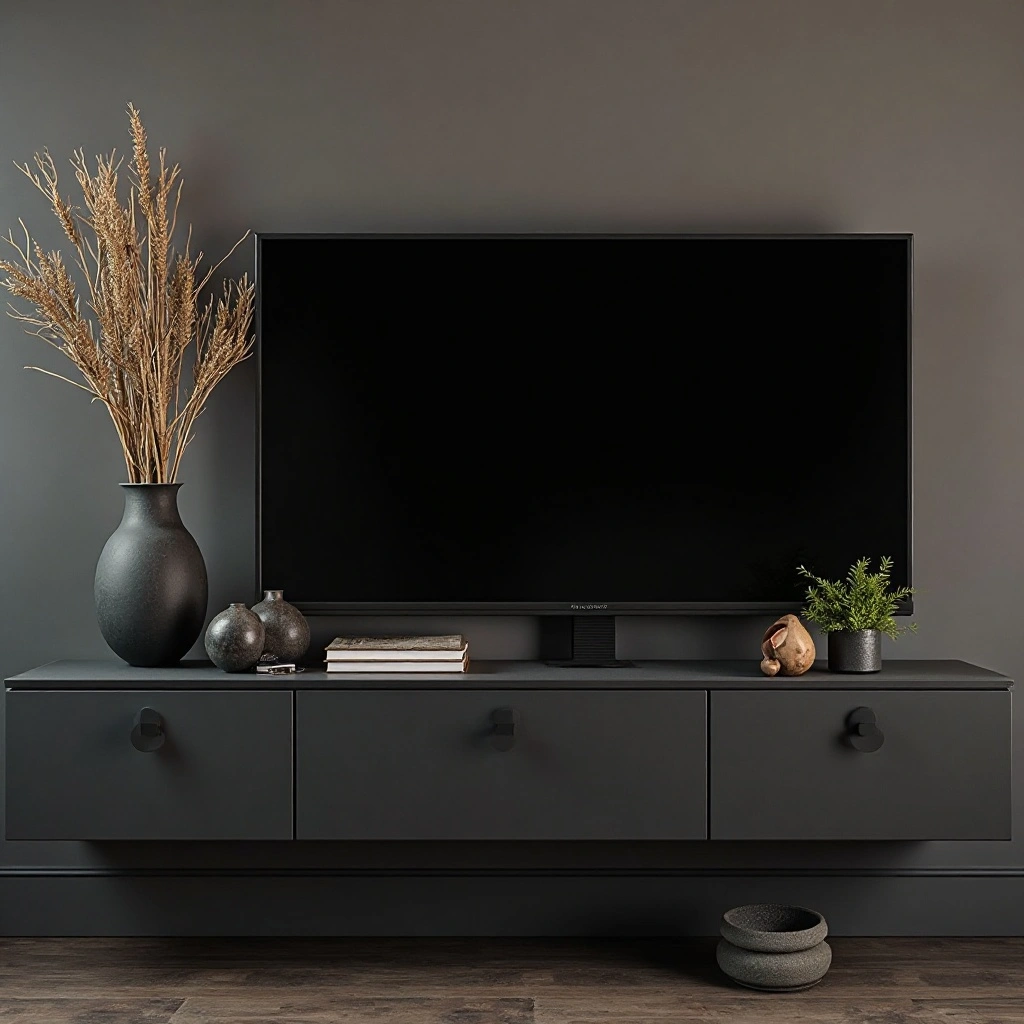
A black mantle beneath a TV deliberately styled with asymmetrical balance, featuring a tall sculptural vase with branches on the far left, a medium-sized art book and small plant in the center-right, and nothing on the far right, creating dynamic visual tension with intentional empty space. Shop on Amazon
Why It Works: Asymmetry creates modern sophistication and visual movement. The intentional imbalance feels curated and artistic rather than forgotten or incomplete, making the TV area feel gallery-like.
Styling Tips: Create asymmetrical balance by varying height and visual weight rather than mirroring. Use the rule of thirds to place key items. Ensure the overall composition still feels balanced even if not symmetrical. Change which side is “heavier” seasonally for variety.
Common Mistakes to Avoid
1. Overcrowding the Mantle
The mantle beneath a TV is not the place for maximum decoration. Too many items create visual chaos that competes with the screen and makes the space feel cluttered and stressful.
Solution: Edit ruthlessly. Remove half of what you initially place on the mantle. If you’re unsure whether something should stay, it should probably go. Allow for negative space—it’s as important as the objects themselves.
2. Ignoring Scale and Proportion
Tiny knick-knacks look lost beneath a large TV, while oversized items can make the TV appear to be floating awkwardly. Improper scale creates visual discomfort.
Solution: Choose items that are substantial enough to hold their own. A general rule: decorative items should be at least 1/3 the height of the TV screen. For a 55-inch TV, pieces should be at least 12-15 inches tall to make appropriate visual impact.
3. Blocking Ventilation
TVs generate heat and require airflow. Blocking vents with decorations can cause overheating, reduced TV lifespan, and potential fire hazards.
Solution: Consult your TV’s manual to identify vent locations. Keep a 3-4 inch clearance on all sides of the TV. Never place items directly on top of the TV or lean them against the screen. Ensure floating shelves don’t restrict airflow from below.
4. Creating Glare Issues
Reflective surfaces, glass, and mirrors can create distracting glare that makes TV viewing uncomfortable. Certain finishes catch light and reflect it onto the screen.
Solution: Test your setup during typical viewing times and lighting conditions. Replace highly reflective items with matte finishes. Position mirrors to angle away from the screen. Use indirect lighting rather than direct spotlights on the mantle.
5. Mismatched Style
Mixing too many design styles creates confusion rather than eclecticism. A mantle trying to be coastal, industrial, and traditional simultaneously lacks cohesion.
Solution: Choose one primary style and stick with it. If you love elements from multiple styles, select a bridging element like color palette or material (all white items, all natural materials) to unify the look.
6. Forgetting Functionality
Decorating without considering daily TV use creates frustration. Remote controls, gaming controllers, and streaming devices need accessible homes.
Solution: Include at least one container or tray for remote storage. Ensure frequently accessed items are easily reachable. Consider small baskets or decorative boxes that blend with your styling while providing practical storage.
7. Neglecting the Wall Above
Focusing solely on the mantle while leaving the wall around the TV bare creates an incomplete, bottom-heavy look that draws attention to awkward proportions.
Solution: Extend decoration upward with floating shelves, artwork, or wall sconces. Create a vertical gallery above the TV. Frame the TV with architectural elements. The goal is integrating the TV into the wall design rather than isolating it.
8. Using Temperature-Sensitive Items
Candles, chocolates, photographs, and certain plants can be damaged by TV heat. Melted candles and warped photos are common casualties.
Solution: Keep heat-sensitive items at least 12 inches from the TV edges. Use LED flameless candles near the TV. Opt for heat-tolerant plants like succulents and snake plants. Rotate photographs seasonally to prevent sun and heat damage.
9. Ignoring Cable Management
Visible cables and wires dangling down the wall destroy even the most beautiful mantle styling. Nothing says “unfinished” like a tangle of black cords.
Solution: Install an in-wall cable management system or use cable raceways painted to match your wall. Group and tie cables together. Consider a cable box with decorative cutouts. If mounting the TV yourself, plan cable routing before installation.
10. Static Year-Round Display
Keeping the exact same decorations year-round leads to “decoration blindness”—you stop seeing your own mantle and the space feels stale and neglected.
Solution: Plan quarterly refreshes even if subtle. Swap flowers for different varieties, change candle colors, rotate books and frames. Even small changes re-engage your attention and keep the space feeling current and cared for.
Frequently Asked Questions
How high should my TV be mounted above the mantle?
The center of your TV screen should be at eye level when seated, typically 42-48 inches from the floor. However, mantles often require mounting higher. Aim for the bottom of the TV to be no more than 6-8 inches above the mantle surface. If mounting higher is unavoidable, consider a tilting mount to angle the screen downward for comfortable viewing. Mounting too high creates neck strain and poor viewing angles.
Should decorations be symmetrical or asymmetrical?
This depends on your design style and personal preference. Symmetrical arrangements create formal, traditional elegance and work well in classic homes. Asymmetrical displays feel more casual, modern, and collected-over-time. Consider your room’s overall design—match the mantle styling to the space. When in doubt, start symmetrical as it’s more forgiving, then remove items from one side to create intentional asymmetry if desired.
How do I make my TV look less prominent?
Several strategies minimize TV dominance: paint the wall behind the TV a dark color so it recedes; frame the TV with substantial decorative elements of similar visual weight; add floating shelves on either side; incorporate the TV into a gallery wall; use a TV frame (like Samsung’s Frame TV or aftermarket frames); or install cabinet doors that close over the TV when not in use. The goal is integration rather than isolation.
What’s the best lighting for a TV mantle?
Layer your lighting with three types: ambient lighting (overhead fixtures or recessed lights on dimmers), task lighting (small lamps or picture lights for reading), and accent lighting (LED strips under floating shelves or spotlights on decorative items). Avoid placing lights directly above or beside the TV where they’ll cause glare. Control brightness with dimmers and use warm-toned bulbs (2700-3000K) for cozy ambiance.
How many items should I place on my mantle?
Follow the “rule of three to seven” guideline—an odd number of items or groupings creates visual balance. For minimalists, three substantial pieces suffice. For more abundant styles, up to seven items or groupings work without overcrowding. Consider your mantle length: 48-inch mantles accommodate 3-5 items, 60-inch mantles can hold 5-7 items, and mantles over 72 inches can support 7-9 items with proper spacing.
Can I use real candles near a TV?
While real candles create beautiful ambiance, they pose risks near electronics. TV heat can melt candles, and open flames risk fire if too close to the screen or if knocked over. If using real candles, maintain at least 12 inches clearance from the TV, never leave them burning unattended, and use stable, weighted holders. Consider high-quality flameless LED candles that create ambiance without risk—modern versions are remarkably realistic.
What plants work best on a TV mantle?
Choose low-maintenance, heat-tolerant plants that thrive in typical indoor lighting. Best options include: pothos (trailing, low-light tolerant), snake plants (upright, heat resistant), ZZ plants (sculptural, nearly indestructible), succulents (varied shapes, drought tolerant), and air plants (no soil, unique appearance). Avoid ferns and moisture-loving plants that suffer near TV heat. Position plants at mantle ends rather than directly below the TV where heat concentrates.
How do I transition my mantle decor seasonally?
Create a foundation of neutral, permanent pieces (vases, candlesticks, frames) that remain year-round, then swap 30-40% of items seasonally. For spring: add fresh flowers and pastels. For summer: incorporate whites, blues, and natural textures. For fall: introduce warm tones, pumpkins, and harvest elements. For winter: add metallics, evergreens, and cozy textures. Store seasonal items in labeled bins for easy rotation. This approach keeps decorating manageable while maintaining freshness.
Should my mantle decor match my TV stand?
Coordination matters more than matching. Your mantle and TV stand should share a common element—whether style, color palette, or material—but don’t need to match exactly. A black TV on a white mantle can be balanced with black accents in your decor. A wooden mantle pairs beautifully with a metal stand if you incorporate both materials in your decorative items. Aim for complementary rather than matchy-matchy.
How do I decorate around a wall-mounted TV with no mantle?
Create a “virtual mantle” using a floating shelf installed 4-6 inches below the TV, or install two floating shelves flanking the TV at equal heights. Another option: use a narrow console table below the TV to serve as a mantle surface. If installing shelves isn’t possible, style a console table below the TV and add artwork or floating shelves beside the TV to create a balanced, styled wall arrangement that frames the screen.
What colors work best for TV mantle decor?
Neutral colors (whites, creams, grays, blacks, natural wood tones) are safest and most versatile, allowing you to focus on TV content without color distraction. If you want color, choose muted tones from your room’s existing palette. Limit yourself to 2-3 colors maximum. Avoid highly saturated, bright colors that compete with screen content. Blues and greens create calm, warm tones feel cozy, and metallics add glamour. Test colors during actual TV viewing to ensure they don’t create distraction.
How do I childproof a TV mantle setup?
Safety is paramount with children in the home. Secure the TV with anti-tip straps or a properly installed mount rated for the TV’s weight. Avoid placing anything on the mantle that could be pulled down—skip trailing plants, tablecloths, or tempting items within reach. Use flameless candles only. Secure all decorative items with museum putty or remove them entirely while children are young. Keep remote controls and small items in closed containers rather than openly displayed. Consider postponing mantle decoration until children are older.
Additional Design Tips for Maximum Impact
Creating Visual Balance
Balance doesn’t always mean symmetry. Achieve balance through visual weight—a tall item on one side can be balanced by several smaller items grouped on the other side. Consider the TV as having significant visual weight due to its dark, rectangular form. Your decorations should create equilibrium without trying to outweigh the screen itself.
The Power of Negative Space
Empty space is not wasted space. Negative space allows the eye to rest and makes your chosen items feel more important and intentional. Aim for 30-40% of your mantle to remain empty. This breathing room prevents visual overwhelm and creates sophistication.
Layering for Depth
Create depth by layering items at different distances from the wall. Place some items directly against the wall, some in the middle of the mantle, and some at the edge. Overlap frames slightly, lean artwork behind objects, and vary heights. This three-dimensional approach makes your display more engaging from multiple viewing angles.
Incorporating Personal Meaning
While style matters, meaning matters more. Include items that tell your story—travel souvenirs, family heirlooms, handmade pottery, collections that spark joy. Personal items create authenticity that staged decor cannot replicate. The best-designed spaces reflect the people who live there.
Maintenance and Dusting
Plan for practical maintenance from the start. TVs and mantles accumulate dust quickly. Choose decorative items that are easy to move and clean. Avoid heavily carved items that trap dust, opt for smooth surfaces instead. Establish a weekly dusting routine to keep your display looking fresh. Remove items completely every month for thorough cleaning.
Budget-Friendly Styling
Beautiful mantle decor doesn’t require expensive purchases. Shop your home first—repurpose items from other rooms. Visit thrift stores for unique vases, frames, and vintage items. Collect natural elements like branches, stones, and pinecones for free. DIY projects like painted bottles, framed fabric, or hand-lettered signs add personality without cost. Invest in two to three quality statement pieces and fill in with budget items.
Working with Awkward Proportions
Not all mantles and TVs pair perfectly. For a TV that’s too wide: extend your styling beyond the mantle edges using floating shelves or wall decor. For a TV that’s too small: create a frame effect with artwork or shelving around it. For a too-shallow mantle: mount the TV higher and use the mantle for small, flat items only. For a too-deep mantle: layer items front-to-back to fill the depth.
Integrating Smart Home Technology
Modern TV setups include soundbars, voice assistants, and streaming devices. Integrate technology stylishly by concealing devices in decorative boxes, using cable management sleeves, positioning the soundbar on a lower shelf or console rather than the mantle, and choosing decorative items that can conceal smaller devices (hollow books, decorative boxes with accessible backs).
Creating Cohesion with Your Room
Your mantle shouldn’t exist in isolation. Pull colors from your room’s palette, echo shapes found in furniture (round mirrors if you have round tables), match materials (wood tones, metal finishes), and maintain consistent style. The mantle should feel like an intentional part of the room rather than a separate, styled vignette.
The Finishing Touch: Scent
Consider the sensory experience beyond visual appeal. Subtle scent creates atmosphere without overwhelming. Use candles when the TV is off, a small diffuser hidden among decor, fresh flowers or eucalyptus, or scented pinecones in decorative bowls. Keep scents subtle—overpowering fragrance detracts from relaxation and TV viewing.
Conclusion: Make It Your Own
These 25 ideas provide a starting point, but the best mantle decoration reflects your unique style, needs, and personality. Don’t be afraid to experiment, edit, and evolve your display over time. Take photos before making changes so you can compare options.
Ask for honest opinions from family members who use the space. Most importantly, create a mantle that makes you happy every time you see it—whether the TV is on or off.
Remember that decorating is never truly finished. Your mantle can evolve with seasons, life changes, new finds, and developing tastes. Embrace the journey of creating a space that’s both beautiful and livable, styled yet functional, personal yet polished. The perfect TV mantle balances all these elements while making your living space feel like home.