15+ Mobile Home Landscaping Ideas for a Beautiful Yard
Your mobile home’s exterior is the first thing the world sees, and landscaping is the single most powerful way to boost curb appeal, increase property value, and create a space you’re proud to call home. Whether you’re working with a tight budget or ready to invest in a full yard makeover, the right landscaping choices can completely change how your home looks and feels — and how your family lives in it.
The great news? You don’t need a massive lot or a professional crew. With smart plant choices, creative hardscaping, and a few strategic upgrades, even the smallest yard can become a stunning outdoor retreat where kids can play, families can gather, and memories can be made.
This guide walks you through 15+ Mobile Home Landscaping ideas — each with styling tips, placement advice, a pro tip, and a ready-to-use image generation prompt so you can visualize every idea before you dig a single hole.
The Two Golden Rules of Mobile Home Landscaping
Before you plant a single flower or lay a single stone, there are two things every mobile home landscaper needs to keep in mind. First, scale matters — plants and structures that are too large will overwhelm a smaller yard, while the right-sized elements create harmony and make the space feel intentional.
Second, low maintenance wins every time — the best mobile home landscapes are ones that look beautiful year-round without demanding constant attention, so choose plants and materials that work with your climate, lifestyle, and family.
Understanding these principles will save you time, money, and frustration as you build your dream yard. Use them as your filter for every decision in this guide, and you’ll end up with a landscape that not only looks great on day one but continues to impress for years to come — a yard that grows alongside your family.
The 15+ Best Mobile Home Landscaping Ideas
1. Foundation Flower Beds
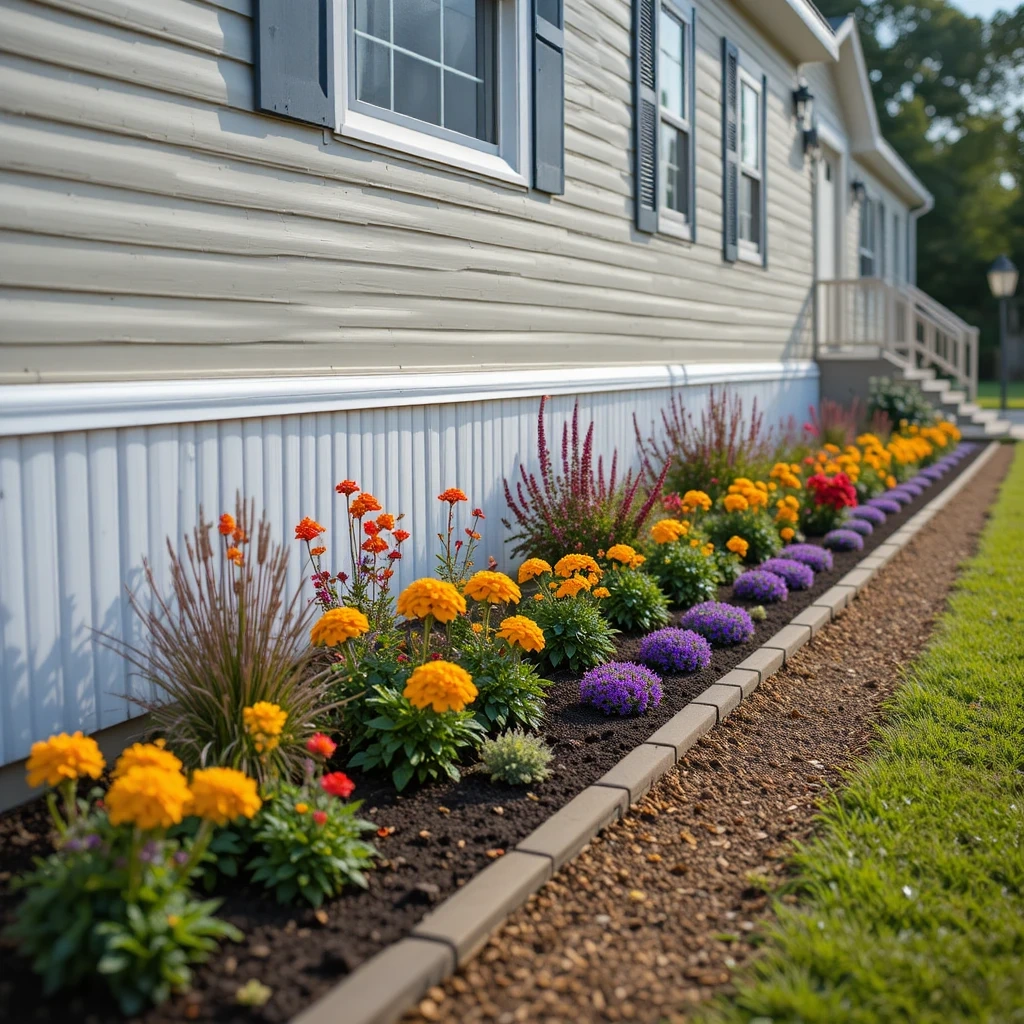
Foundation beds are planted directly along the base of your mobile home to visually anchor the structure to the ground. Without them, a mobile home can look like it’s “floating” or disconnected from the landscape. A well-designed flower bed softens the hard lines of the skirting and creates an inviting, polished look that signals care and intention. Shop on Amazon
How to Style It:
- Choose a mix of low-growing plants (under 24″) to avoid blocking windows
- Use a combination of flowering annuals for color and evergreen perennials for structure
- Edge the bed with metal or brick edging for a clean, finished look
- Layer plants by height: ground cover in front, medium plants in middle, taller accent plants at the back
Where to Use It: Along the entire front face of your mobile home, wrapping around corners for a cohesive look.
✅ Pro Tip: Add a 2–3 inch layer of dark mulch — it suppresses weeds, retains moisture, and makes your plants pop with contrast. Refresh it every spring for a fresh, “just landscaped” look all season.
👨👩👧 Family & Kids Note: Choose non-toxic, child-safe plants like marigolds, petunias, and zinnias for foundation beds. Avoid thorny plants or anything toxic if ingested (such as foxglove or oleander). Kids love being handed a small trowel and a packet of seeds — this is a great first gardening project for little ones!
2. Decorative Stone Skirting Border
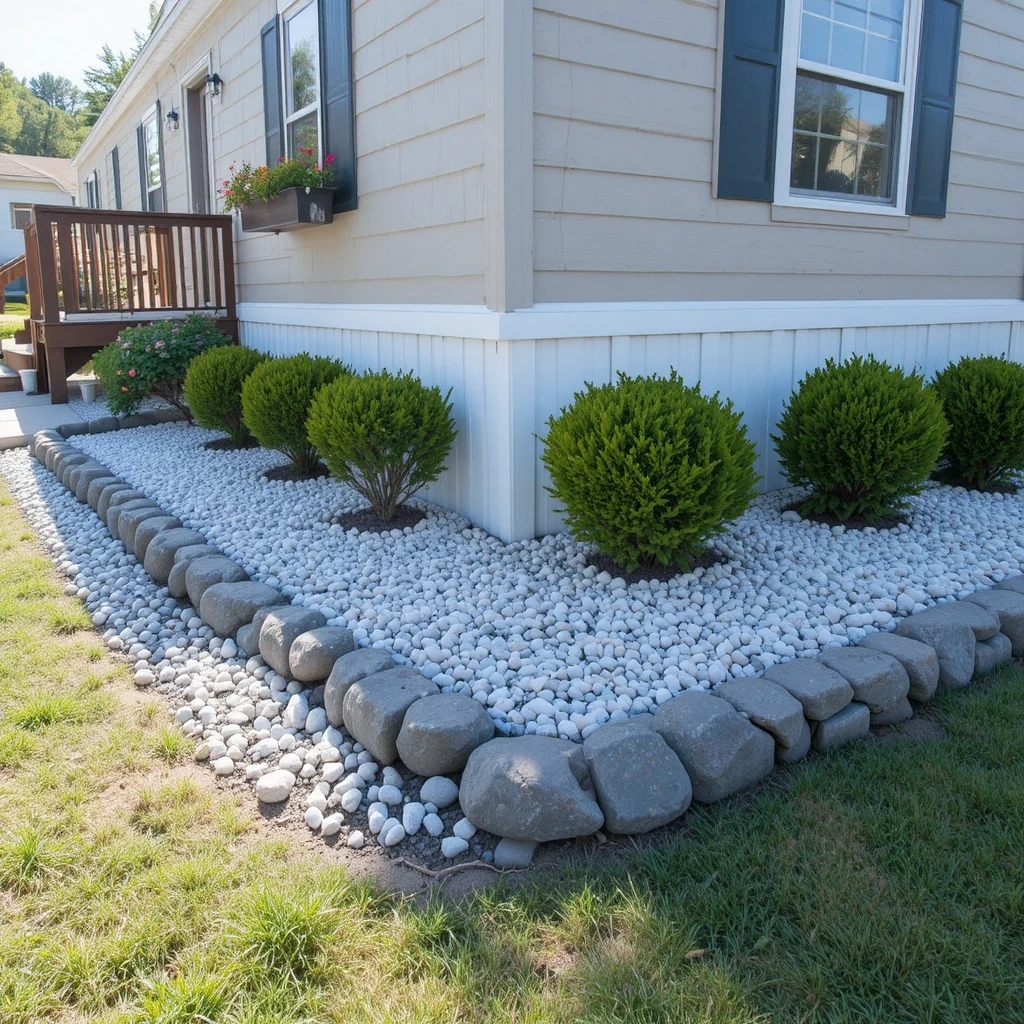
A decorative rock or gravel border placed around the perimeter of your mobile home skirting creates a clean, modern look while solving the practical problem of soil erosion and weed growth. River rock, lava rock, and crushed granite are all popular choices that come in a range of colors to complement your home’s exterior palette. Shop on Amazon
How to Style It:
- Use landscape fabric under the rocks to prevent weed growth
- Choose rock color that contrasts with your skirting (white rock with dark skirting, dark lava rock with light skirting)
- Keep the border 18–24 inches wide for visual impact
- Add a few larger accent boulders as focal points
Where to Use It: Around the full perimeter of the home, especially in areas where grass won’t grow well due to shade from the home.
✅ Pro Tip: Install a steel or aluminum edging strip between the rock border and your lawn to create a razor-sharp line that never needs re-edging and keeps rocks from migrating into the grass.
👨👩👧 Family & Kids Note: Smooth river rocks are safe and fun for kids to touch and arrange. Avoid very small pea gravel around toddlers (choking hazard) — opt for rocks that are at least 1.5–2 inches in diameter. Kids can help “paint” some of the larger accent rocks with outdoor acrylic paint for a personalized, colorful touch!
3. Strategic Shade Trees
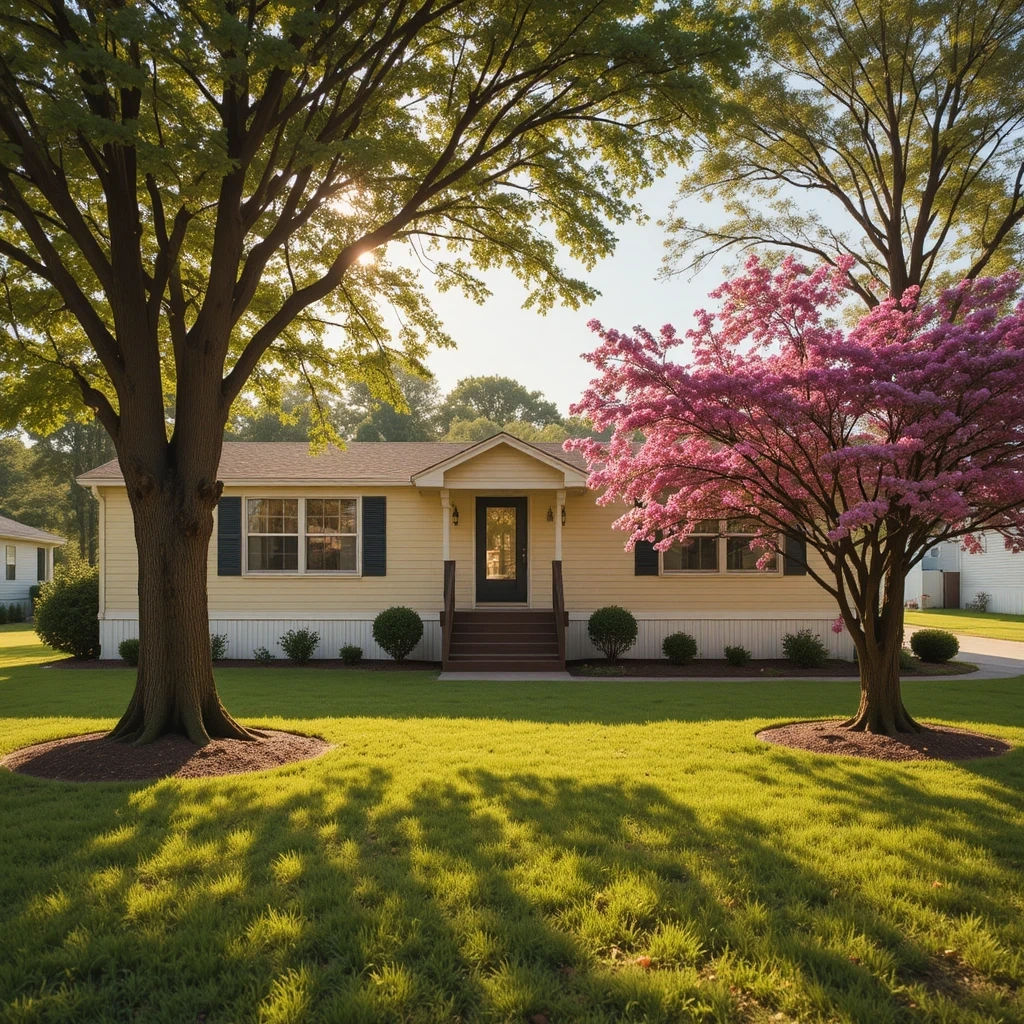
Planting trees on the west and south sides of your mobile home doesn’t just look beautiful — it can reduce your cooling costs by up to 25% by blocking afternoon sun. Choose medium-sized ornamental or shade trees that won’t grow so large they become a structural hazard, and you’ll gain privacy, beauty, and energy savings all at once. Shop on Amazon
How to Style It:
- Plant trees at least 10–15 feet from the home’s foundation
- Choose species with non-invasive root systems (crape myrtle, Japanese maple, serviceberry)
- Frame the front entrance symmetrically with matching trees for a classic look
- Use a ring of mulch around each tree base to protect roots and reduce mowing
Where to Use It: Front yard corners, side yards, or positioned to shade the west-facing wall of your home.
✅ Pro Tip: Avoid planting fast-growing species like silver maple or willow near a mobile home. Their aggressive root systems can damage your skirting, utility lines, and anchoring system over time.
👨👩👧 Family & Kids Note: Shade trees are a gift for kids — they create natural play zones, perfect spots for a hammock, or an anchor for a tree swing. Choose trees with low, sturdy branches like a dogwood or serviceberry that kids can safely climb as they grow.
4. Curved Pathway to the Front Door
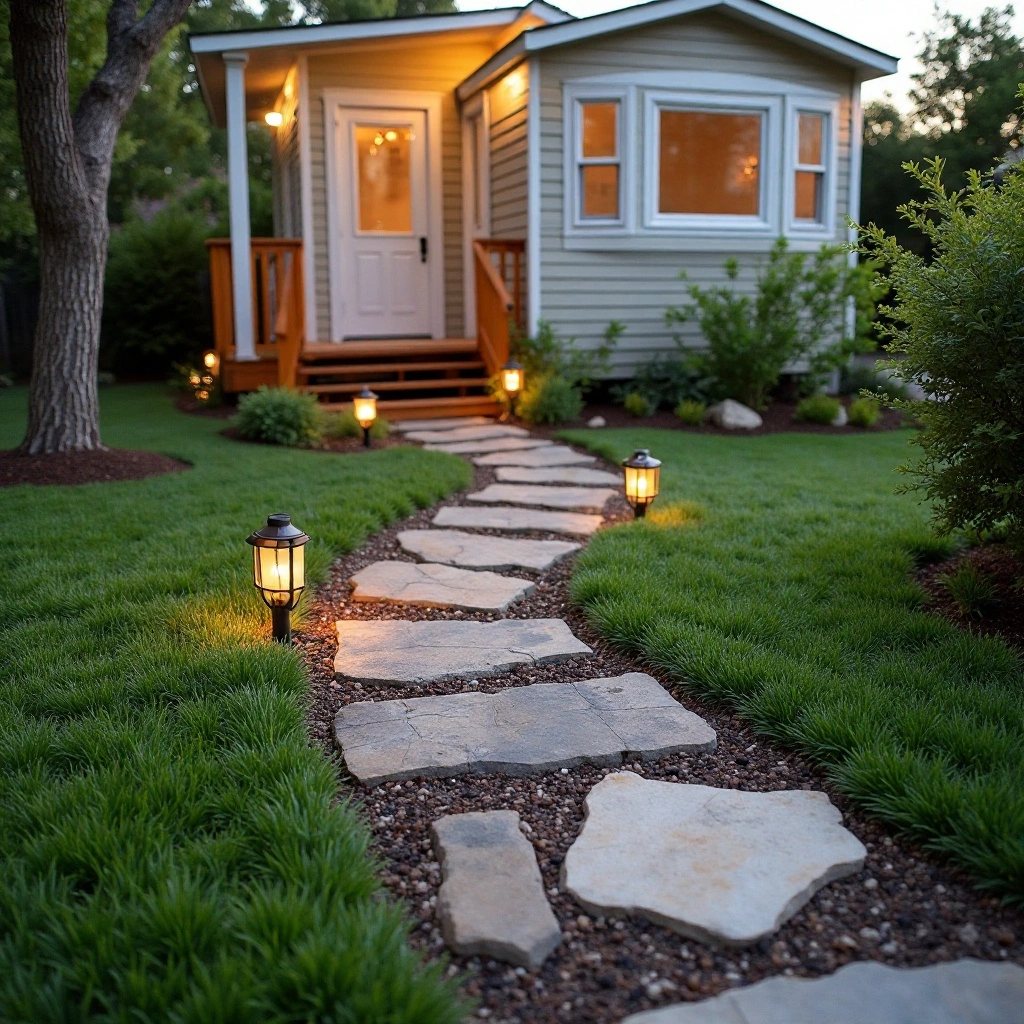
A well-designed pathway is the red carpet of your landscaping. A gently curving path made from pavers, flagstone, or stamped concrete creates a welcoming journey from the driveway or street to your front door.
Straight paths feel utilitarian; curved paths feel intentional, elegant, and make the walk feel longer — giving visitors more time to appreciate your landscaping. Shop on Amazon
How to Style It:
- Use 12″×12″ or 16″×16″ pavers for a proportionate scale
- Plant low-growing border plants (creeping thyme, mondo grass, sweet alyssum) along the path edges
- Add solar pathway lights every 4–6 feet for nighttime safety and ambiance
- Slightly offset each paver to create a natural, organic flow
Where to Use It: From the driveway or street directly to the front door, or from a parking pad to an entry porch.
✅ Pro Tip: Install the pathway with a slight crown (raised center) so water drains to the sides and never pools on the walking surface. This extends the life of your path and prevents slippery conditions.
👨👩👧 Family & Kids Note: A paver pathway is a wonderful “learning project” — kids can help lay stones, press them into place, and fill gaps with pea gravel. Choose pavers with a slightly textured surface (not smooth polished stone) so they stay non-slip even when wet, keeping little feet safe.
5. Container Garden Porch Display
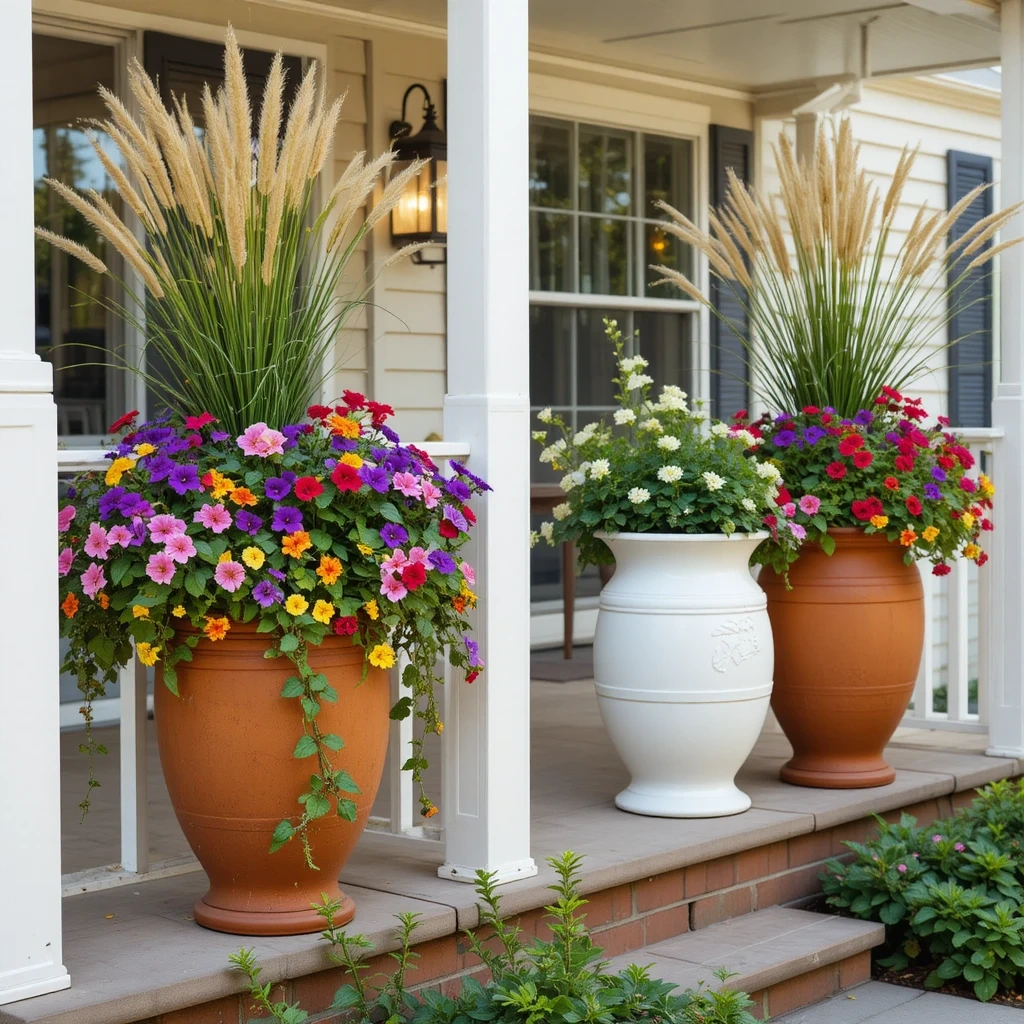
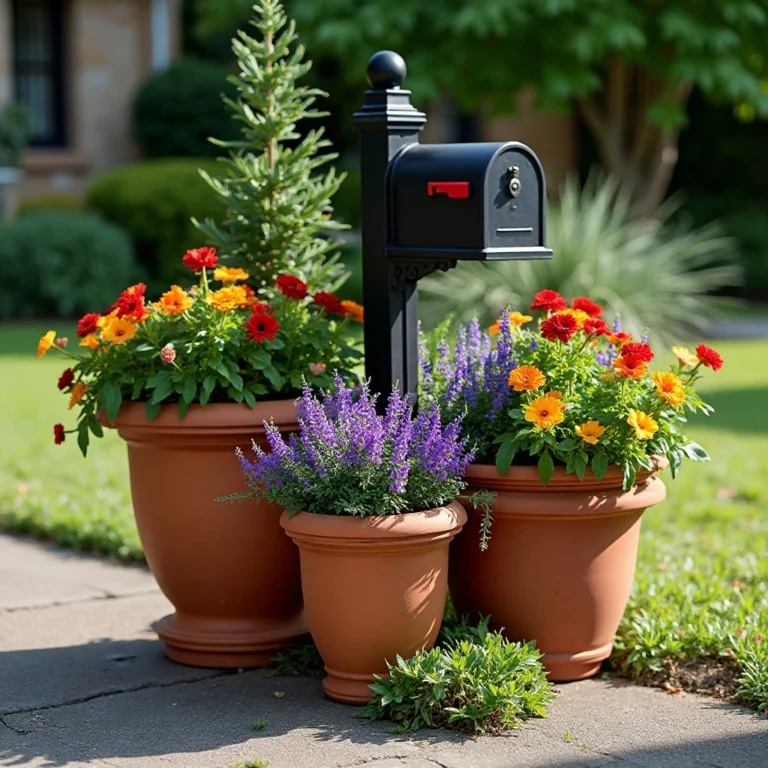
If your outdoor space is tight or you simply want flexible, moveable landscaping, a container garden is your best friend. Large decorative pots filled with seasonal flowers, ornamental grasses, or small shrubs transform a bare porch into a vibrant, welcoming entry.
The beauty of containers is that you can swap plants seasonally, rearrange them at will, and take them with you if you move. Shop on Amazon
How to Style It:
- Use the “thriller, filler, spiller” formula: one tall dramatic plant, medium bushy plants, and trailing plants that hang over the edge
- Vary container sizes — a mix of large (24″+), medium (16″), and small (10″) pots creates depth
- Match pot colors/materials to your home’s color palette
- Group odd numbers of pots (3 or 5) for the most visually appealing arrangements
Where to Use It: Front porch steps, flanking the front door, on a deck or patio, or at the end of a driveway.
✅ Pro Tip: Place a layer of coffee filters at the bottom of pots before adding soil — it keeps soil from washing out through drainage holes while still allowing water to escape freely.
👨👩👧 Family & Kids Note: Give each child their own small pot to plant and decorate! Let them choose their favorite flower from the garden center and paint their pot with outdoor paint. It builds responsibility, creativity, and a love of growing things — all at once.
6. Privacy Hedge Screen
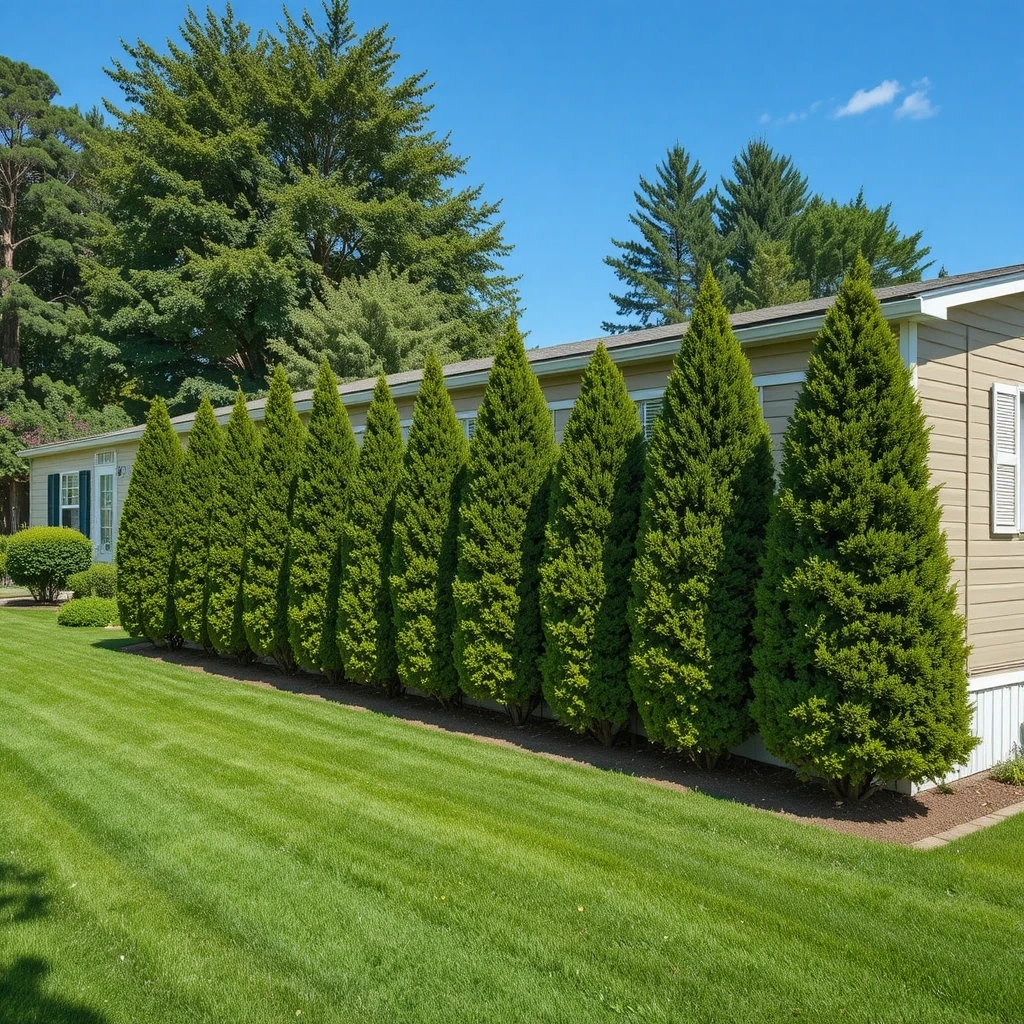
Mobile home communities can sometimes feel a little close for comfort. A living privacy hedge creates a natural, beautiful boundary between your space and your neighbors’ without the harsh look of a fence.
Evergreen shrubs like arborvitae, boxwood, or Leyland cypress grow into a dense, attractive screen that provides year-round privacy while adding significant green structure to your landscape. Shop on Amazon
How to Style It:
- Space plants according to their mature width — typically 3–5 feet apart for most privacy hedges
- Mix in flowering shrubs (viburnum, forsythia) for seasonal color within the hedge line
- Keep the front 12–18 inches trimmed flat for a formal look, or let them grow naturally for a relaxed style
- Add landscape lighting at the base to highlight the hedge at night
Where to Use It: Along property lines, behind a patio or outdoor living area, or around a utility area you want to conceal.
✅ Pro Tip: Plant hedges in spring or early fall — not summer. Heat stress during establishment is the #1 killer of new privacy hedges.
👨👩👧 Family & Kids Note: A privacy hedge creates a safe, enclosed outdoor “room” for kids to play freely out of view of the street. Once established, a thick hedge is also a natural sound barrier — great for backyard games, music, and outdoor movie nights without disturbing the neighborhood.
7. Pollinator Garden Corner
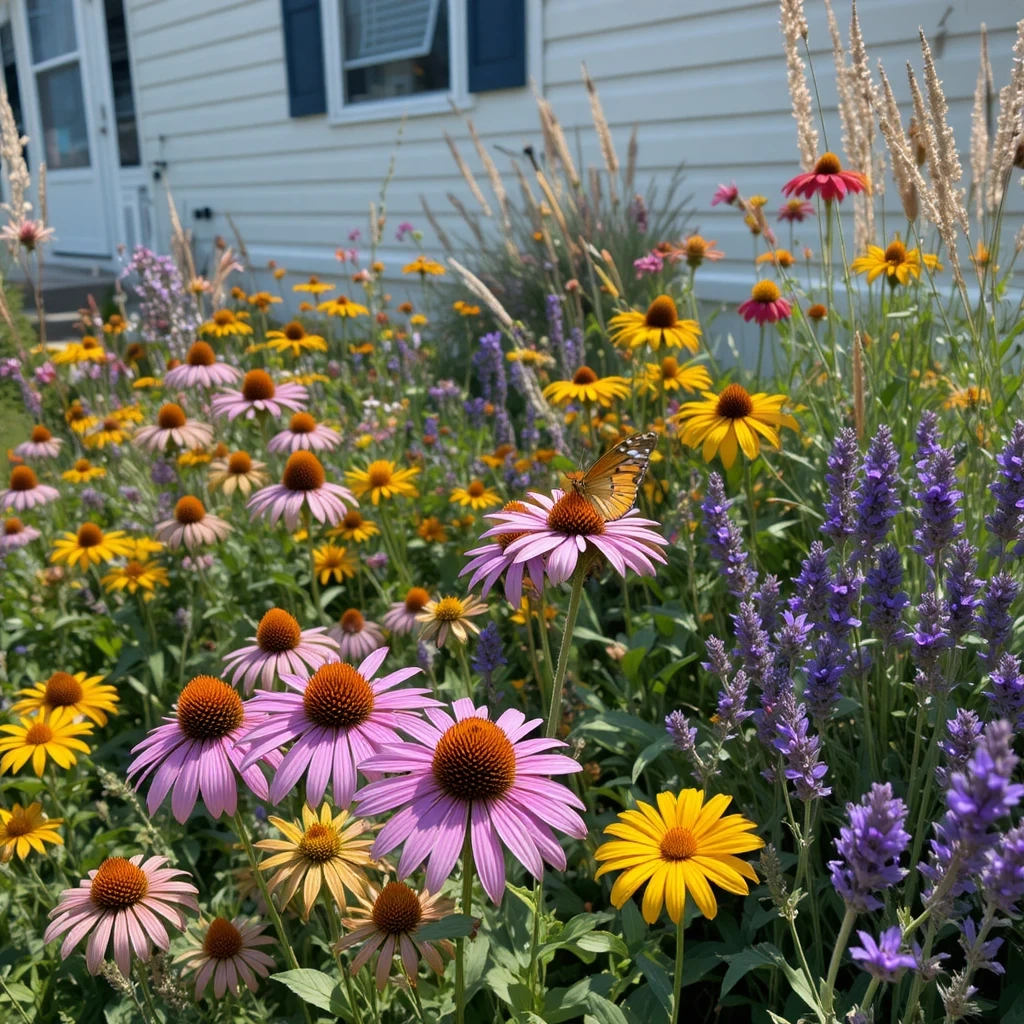
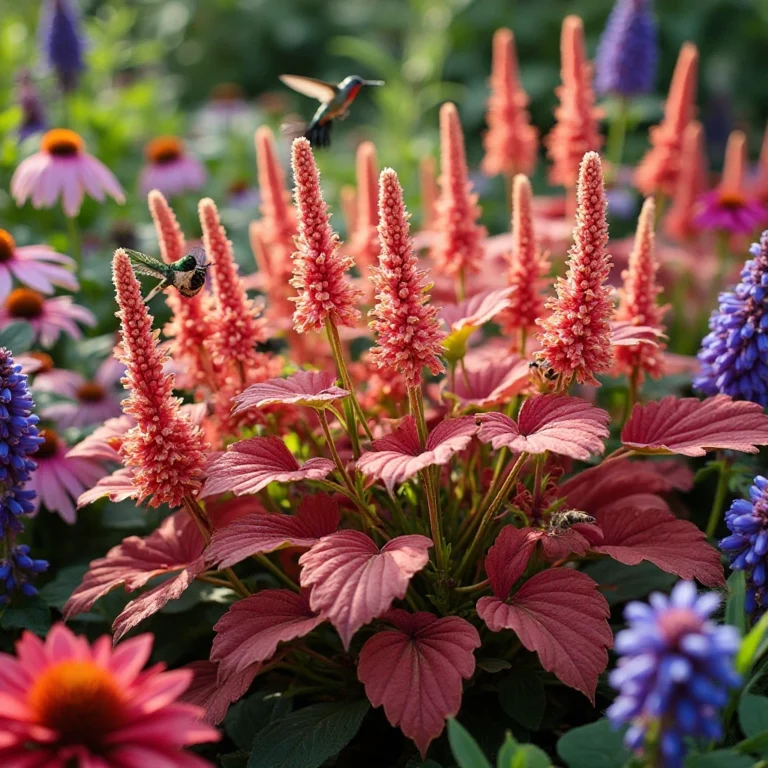
A pollinator garden packed with native wildflowers, lavender, coneflower, and black-eyed Susans is one of the most beautiful, low-maintenance, and eco-friendly landscaping choices you can make.
These gardens attract butterflies, hummingbirds, and bees while requiring very little watering or fertilizing once established — because they’re designed around plants that thrive naturally in your region. Shop on Amazon
How to Style It:
- Choose plants native to your region for the easiest care and best wildlife results
- Include plants with different bloom times so the garden has color from spring through fall
- Add a small decorative sign or garden marker identifying the garden as a pollinator habitat
- Border the garden with a clean edge or low decorative fence to keep it looking intentional
Where to Use It: Corner of the yard, along a fence line, or as a front yard focal point garden bed.
✅ Pro Tip: Leave a small section of bare soil in the garden — many native bees are ground-nesters and need exposed earth to create their homes.
👨👩👧 Family & Kids Note: Pollinator gardens are living science classrooms! Children are fascinated by butterflies, bumblebees, and hummingbirds. Add a small butterfly identification chart on a garden stake and let kids keep a nature journal of every visitor they spot. It’s educational, magical, and completely free.
8. Dry Creek Bed Drainage Solution
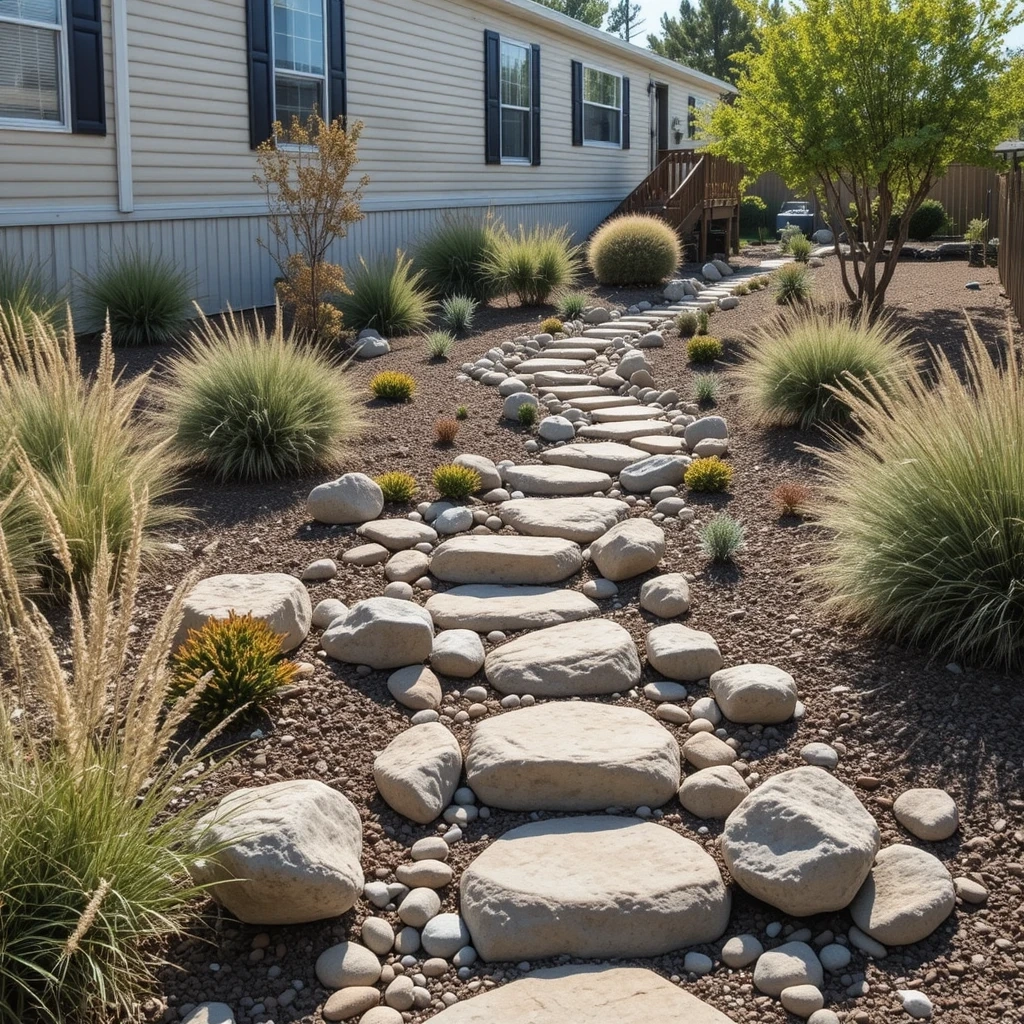
If your yard has areas that collect standing water after rain, a dry creek bed solves the drainage problem beautifully while becoming a landscape feature in its own right. A meandering channel of river rocks, boulders, and pebbles mimics a natural stream bed, directing water away from your home’s foundation while adding a dramatic, naturalistic design element to the yard. Shop on Amazon
How to Style It:
- Vary rock sizes from large (12–18″) anchor stones to small (2–4″) filler pebbles for a natural look
- Plant ornamental grasses, sedums, or creeping plants along the edges to soften the borders
- Make the creek bed at least 18–24 inches wide for visual impact
- Allow it to terminate in a decorative gravel basin where water can percolate
Where to Use It: In low-lying areas of the yard, along the side of the home where roof runoff collects, or as a transition between lawn and garden beds.
✅ Pro Tip: Before placing rocks, lay down landscape fabric and then a 2–3 inch layer of pea gravel — this prevents the rocks from sinking into the soil over time and keeps the creek bed looking pristine for years.
👨👩👧 Family & Kids Note: Kids absolutely love a dry creek bed — it becomes an imaginative play feature, a “river” for toy boats after rain, or a treasure hunt zone for interesting rocks. Use larger, smooth, rounded stones (3″+ diameter) near play areas so they’re safe to touch and explore.
9. Defined Outdoor Living Area
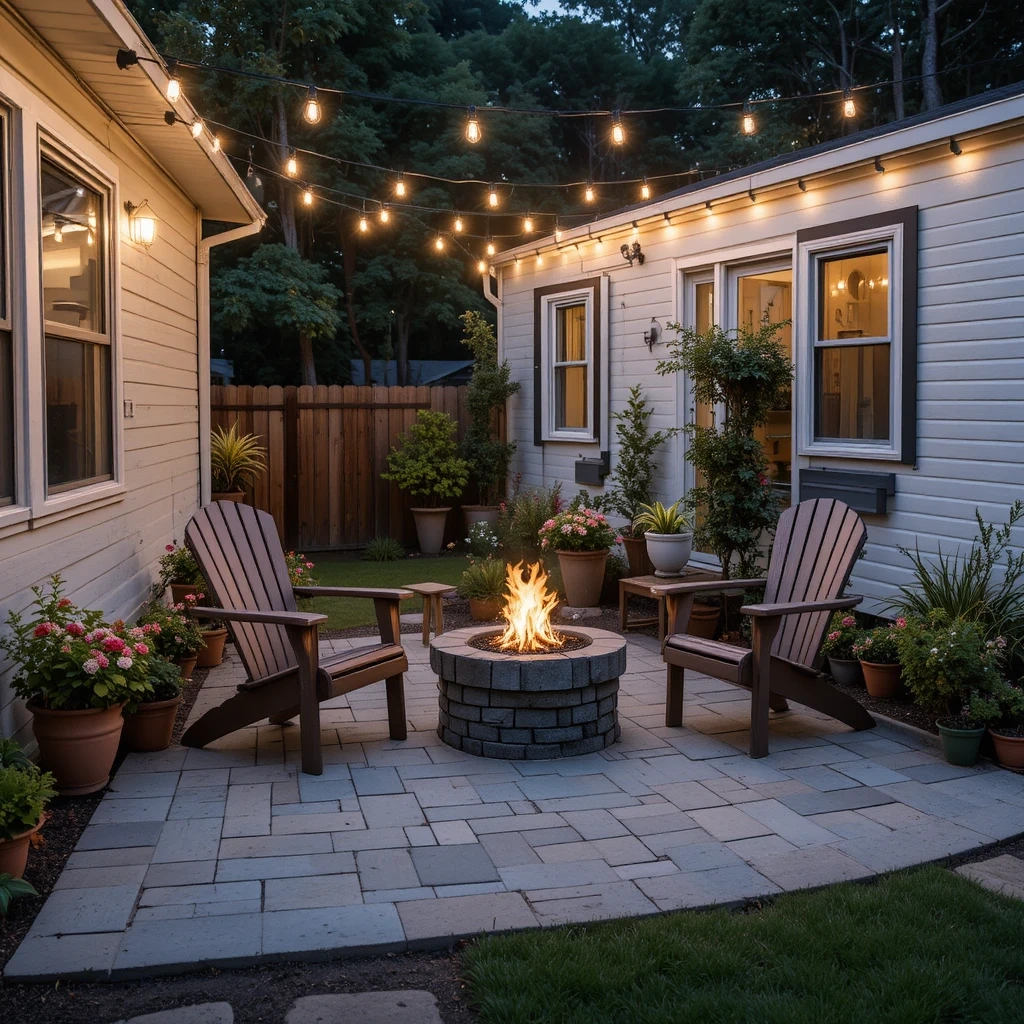
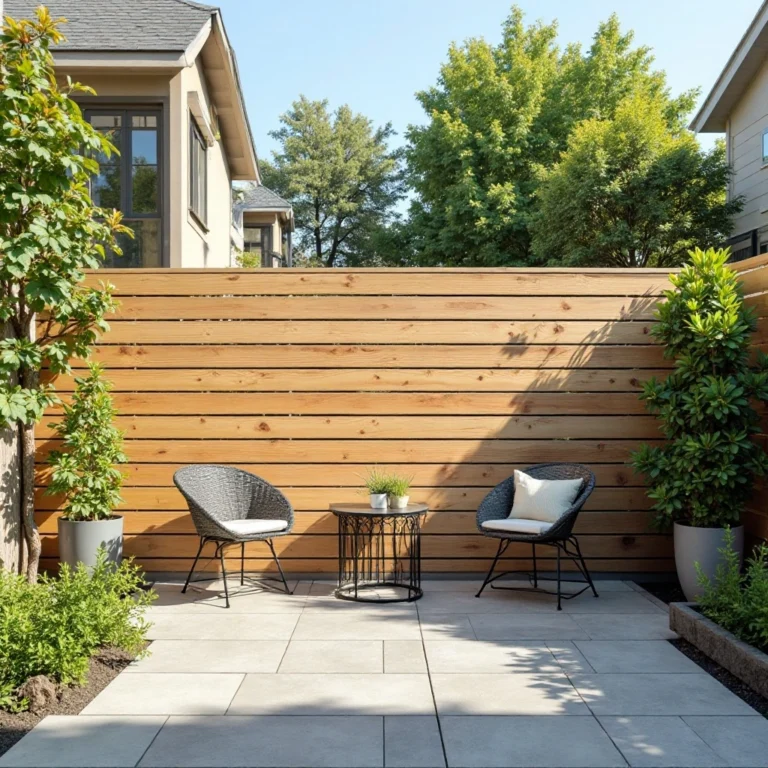
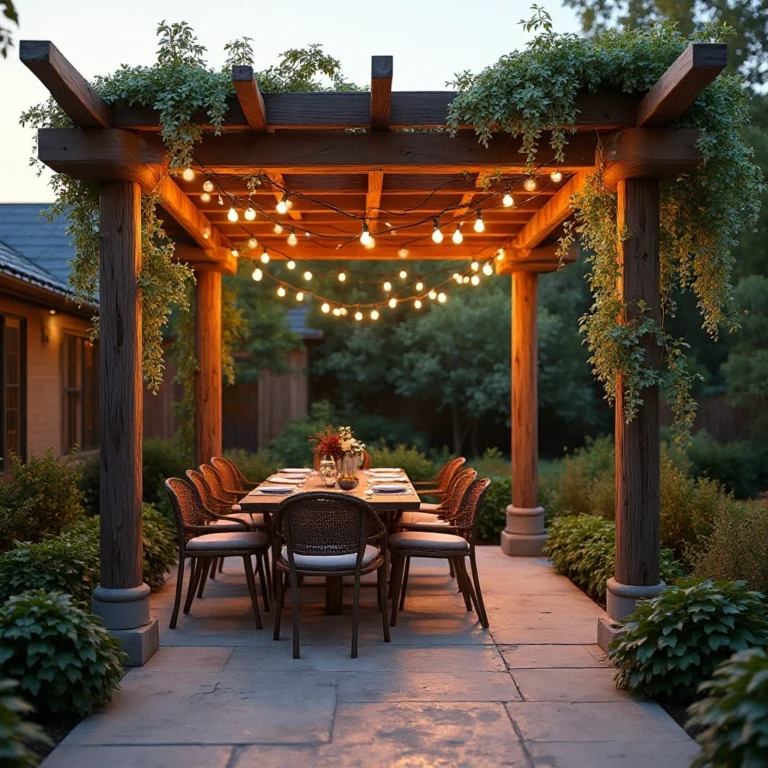
A defined patio or outdoor seating area transforms your yard from a patch of grass into a true extension of your living space. Using pavers, gravel, or composite decking to create a designated zone with outdoor furniture, string lights, and potted plants turns even a small side or back yard into a room without walls — one that becomes the favorite gathering spot for family and friends. Shop on Amazon
How to Style It:
- Use outdoor rugs to define the “room” and add color and texture
- Choose weather-resistant furniture in neutral tones that match your home’s exterior
- Add a pergola or shade sail above for sun protection and to create a ceiling effect
- Frame the patio with container plants or a low garden border to separate it from the lawn
Where to Use It: Adjacent to the back or side door, or as a standalone destination space in the backyard.
✅ Pro Tip: When laying pavers, set them on a 2–3 inch compacted gravel base, not directly on soil. This prevents settling, heaving, and weed growth through the joints.
👨👩👧 Family & Kids Note: Design your outdoor living area with kids in mind from the start — include a low coffee table kids can reach, space for a sandbox or small playset nearby, and a flat open lawn section for running and games. String lights add a magical glow for family evenings outside long after the sun sets.
10. Drought-Tolerant Xeriscape Design
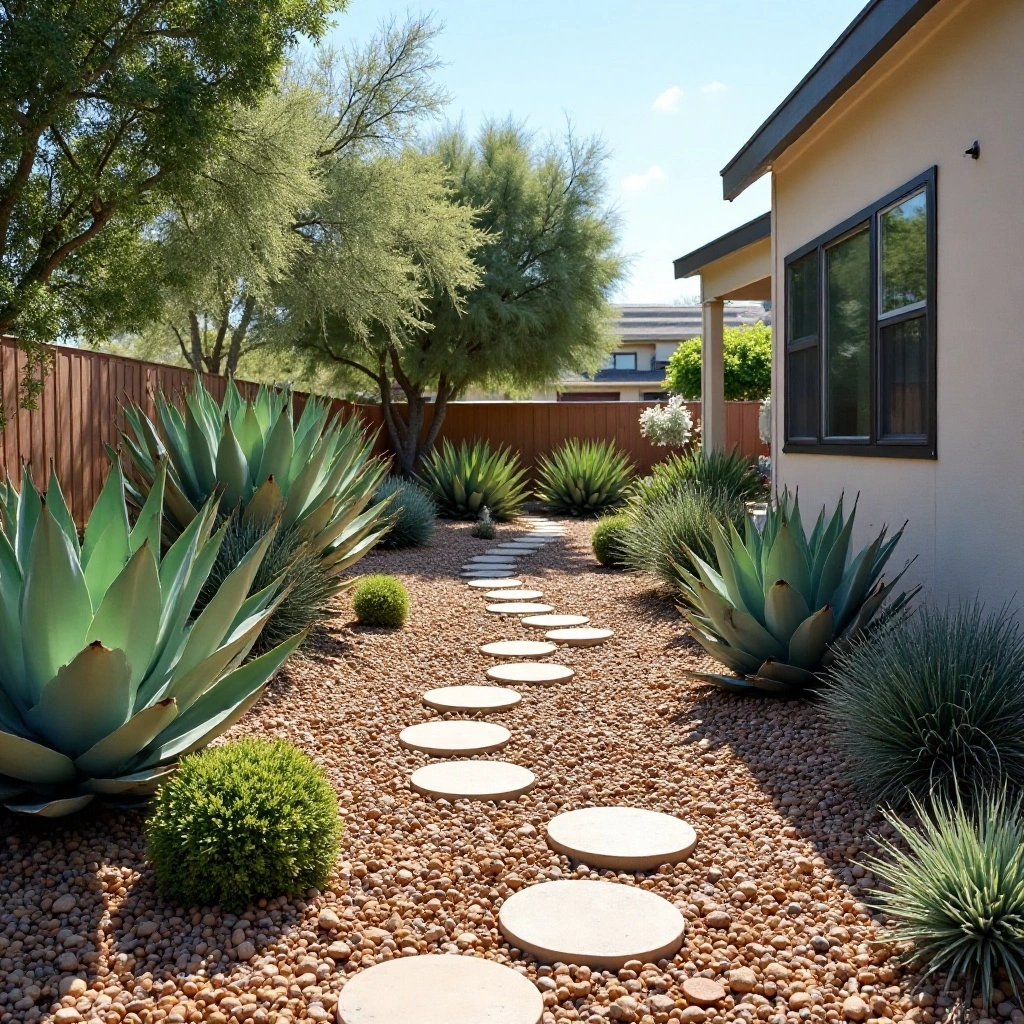
A xeriscape (zero-scape) landscape uses drought-tolerant plants, gravel mulch, and smart design to create a beautiful yard that requires minimal to no irrigation.
This style is especially popular in arid regions but works anywhere you want to reduce water use and maintenance time. The result is a striking, modern landscape with a sculptural, desert-inspired aesthetic that looks great year-round. Shop on Amazon
How to Style It:
- Use decomposed granite, pea gravel, or crushed rock in warm earth tones as your ground cover
- Choose a mix of succulents, ornamental grasses, lavender, Russian sage, and native shrubs
- Group plants in natural clusters rather than rows for an organic, designed-by-nature look
- Incorporate large landscape boulders as dramatic focal points
Where to Use It: Front yards, slopes, or any area that’s difficult to water consistently.
✅ Pro Tip: Even xeriscape plants need regular watering for the first full season while establishing their root systems. After that first year, you can significantly reduce or eliminate supplemental irrigation.
👨👩👧 Family & Kids Note: If using cacti or spiky succulents in a xeriscape design, keep them in clearly defined beds away from play areas and walking paths. Child-safe xeriscape alternatives include lavender, ornamental grasses, lantana, and sedums — all beautiful, low-water, and completely safe for curious little hands.
11. Bamboo Screen Privacy Wall
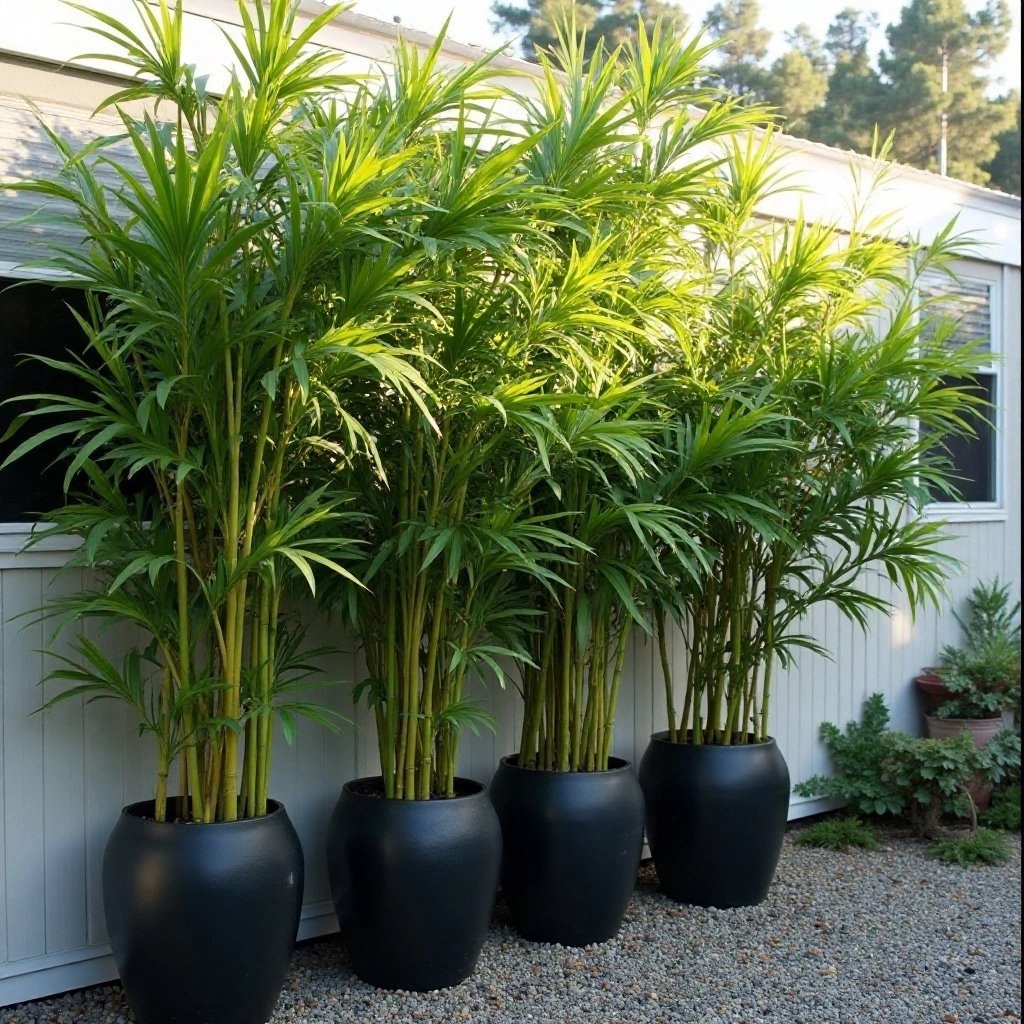
Clumping bamboo varieties grown in large containers or planted in-ground with a root barrier create a fast-growing, exotic-looking privacy screen that is both tropical and functional. Unlike running bamboo (which can become invasive), clumping varieties stay contained and grow into dense, feathery columns of green that sway elegantly in the breeze. Shop on Amazon
Change block type or style
Move Paragraph block from position 97 up to position 96
Move Paragraph block from position 97 down to position 98
Change text alignment
Displays more block tools
How to Style It:
- Use clumping bamboo only — never running bamboo near a foundation
- Plant in large 25–30 gallon containers if you want to keep it truly contained and moveable
- Space plants 3–4 feet apart for a dense, continuous screen effect
- Underplant with low ferns or mondo grass to fill gaps at the base
Where to Use It: Along a fence line, against the side of the home, or surrounding a private patio space.
✅ Pro Tip: If planting bamboo in-ground, install a 24–30 inch deep bamboo root barrier completely around the planting area. This is non-negotiable — it’s the only way to reliably prevent spreading.
👨👩👧 Family & Kids Note: Bamboo groves are irresistible to kids — they love hiding, playing, and exploring between the stalks. Just make sure fallen stalks are cleaned up promptly, as split bamboo can have sharp edges. Bamboo is non-toxic, so it’s completely safe for curious children and pets.
12. Climbing Trellis and Vine Wall
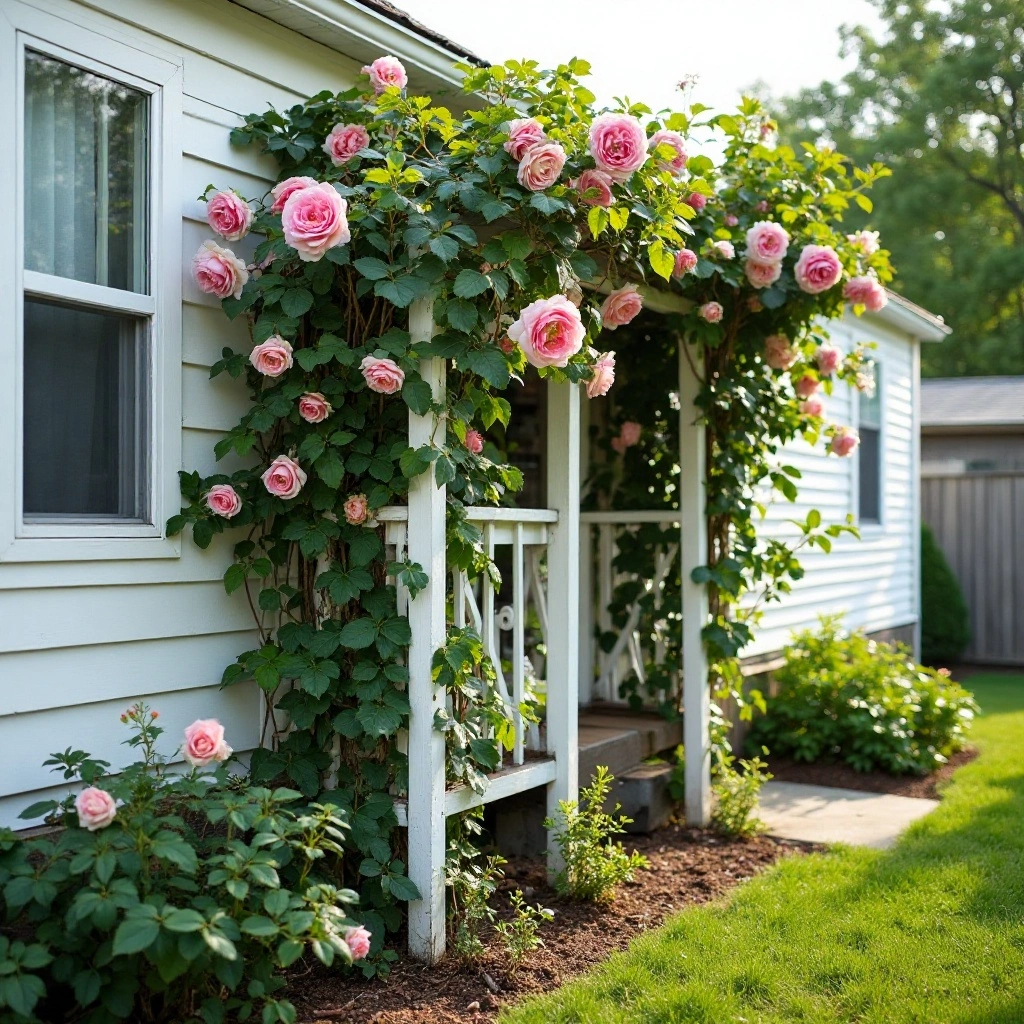
A simple wooden or metal trellis mounted against the exterior wall of your mobile home, covered with a flowering vine like clematis, climbing roses, or trumpet vine, creates a cottage-garden charm that dramatically elevates the look of any exterior. Vines add texture, color, fragrance, and wildlife value — turning a plain wall into a living tapestry. Shop on Amazon
How to Style It:
- Mount the trellis 2–3 inches away from the wall to allow airflow and prevent moisture damage
- Choose non-invasive vines appropriate for your climate
- Install the trellis at a height that allows the vine to eventually reach the roofline or a second story if applicable
- Train young vines by gently tying them to the trellis with soft garden ties as they grow
Where to Use It: On blank exterior walls, flanking a garage door, or over an archway entry to the yard.
✅ Pro Tip: Avoid letting vines grow directly on the siding — always use a trellis as an intermediary. Vines growing on siding can trap moisture and accelerate deterioration of exterior materials.
👨👩👧 Family & Kids Note: Choose child-safe, non-toxic vines like clematis, morning glory, or sweet peas. Avoid trumpet vine around young children (its sap can irritate skin) and wisteria (mildly toxic if ingested). Sweet peas are a wonderful choice — kids love picking the flowers and they’re completely safe.
13. Landscape Lighting Design
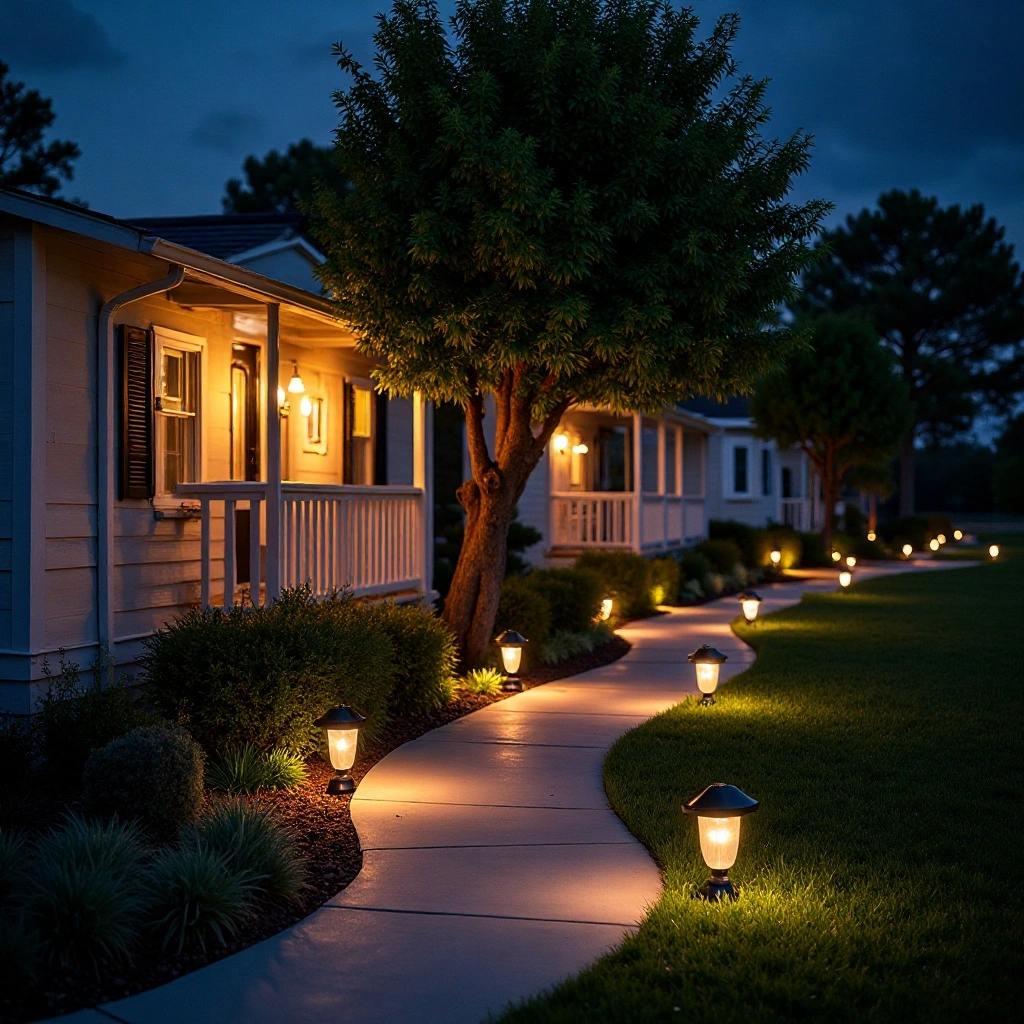
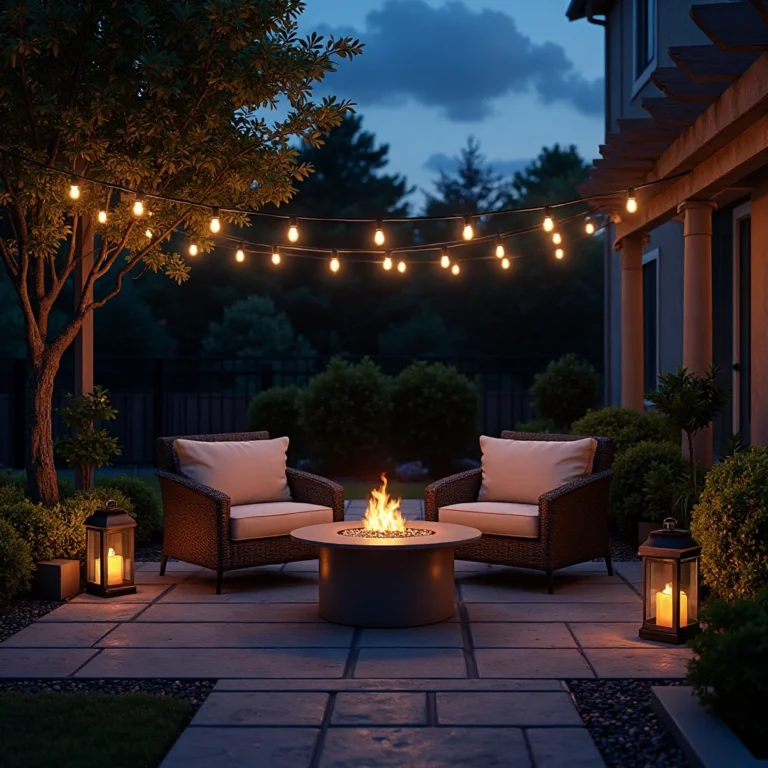
Landscape lighting is the secret weapon of professional designers — it takes a yard that looks good during the day and makes it magical at night. A well-lit landscape using solar or low-voltage LED fixtures highlights your best plants, illuminates pathways, creates safety, and adds incredible curb appeal during evening hours when many neighbors and visitors will see your home. Shop on Amazon
How to Style It:
- Use uplighting to highlight trees and tall shrubs — place the fixture at the base pointing up
- Line pathways with small ground-level stake lights every 4–6 feet
- Add string lights or café lights to the porch ceiling or pergola for ambiance
- Use a combination of warm white (2700K–3000K) bulbs for a welcoming, cozy glow
Where to Use It: Along all pathways, at the base of trees and large shrubs, under porch eaves, and at the entry to the property.
✅ Pro Tip: Go solar wherever possible for easy installation and zero operating costs. For areas that need reliable consistent illumination, use low-voltage hardwired LED systems connected to a timer.
👨👩👧 Family & Kids Note: Good lighting keeps kids safe when playing outside in the evening. Illuminate all steps, pathway edges, and transition points where kids could trip. Solar-powered stake lights are a great project to do together — kids love pressing them into the ground and watching them light up at dusk!
14. Raised Garden Bed Vegetable Garden
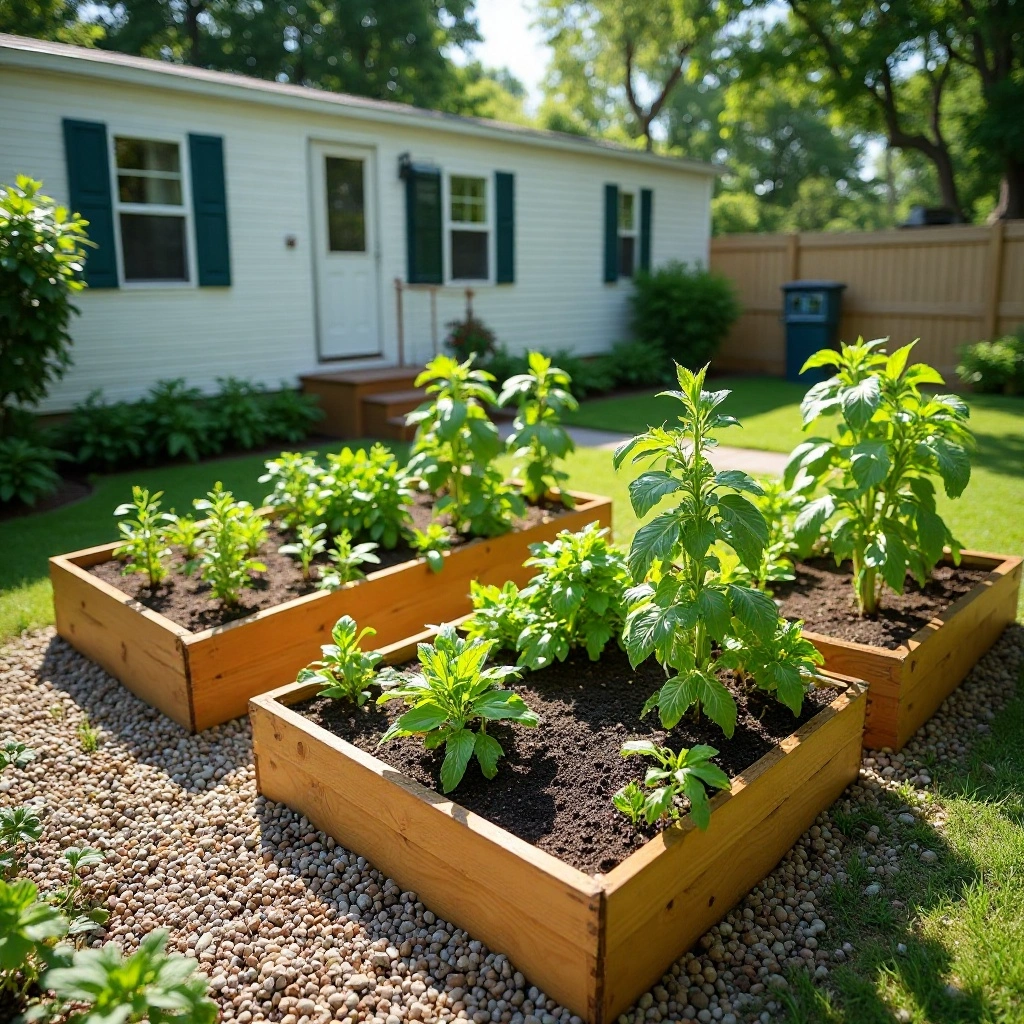
A set of well-built raised garden beds adds incredible functionality and visual interest to your yard. Raised beds look neat and intentional, they keep your vegetable or herb garden contained and organized, and they allow you to grow food in even poor native soil conditions by filling them with premium garden mix.
Cedar or composite material beds with a painted or stained finish become genuine landscape features rather than afterthoughts. Shop on Amazon
How to Style It:
- Arrange beds in groups of 2–3 for visual organization — avoid scattering them randomly
- Use a consistent material and stain/paint color for a cohesive, designed look
- Place a gravel or mulch path between beds for clean access and weed control
- Add a small trellis at the back of each bed for climbing plants like cucumbers or beans
Where to Use It: Back yard or side yard in a location that receives at least 6 hours of direct sunlight per day.
✅ Pro Tip: Build beds to a maximum width of 4 feet — this allows you to reach the center of the bed from either side without stepping in the soil, which would compact your beautifully aerated garden mix.
👨👩👧 Family & Kids Note: A raised vegetable garden is one of the best family activities you can build into your yard. Assign each child their own section or even their own mini bed. Growing, harvesting, and eating food they planted themselves is a powerful experience that builds confidence, teaches patience, and encourages healthy eating — it’s a win every single way.
15. Color-Coordinated Seasonal Planting Plan
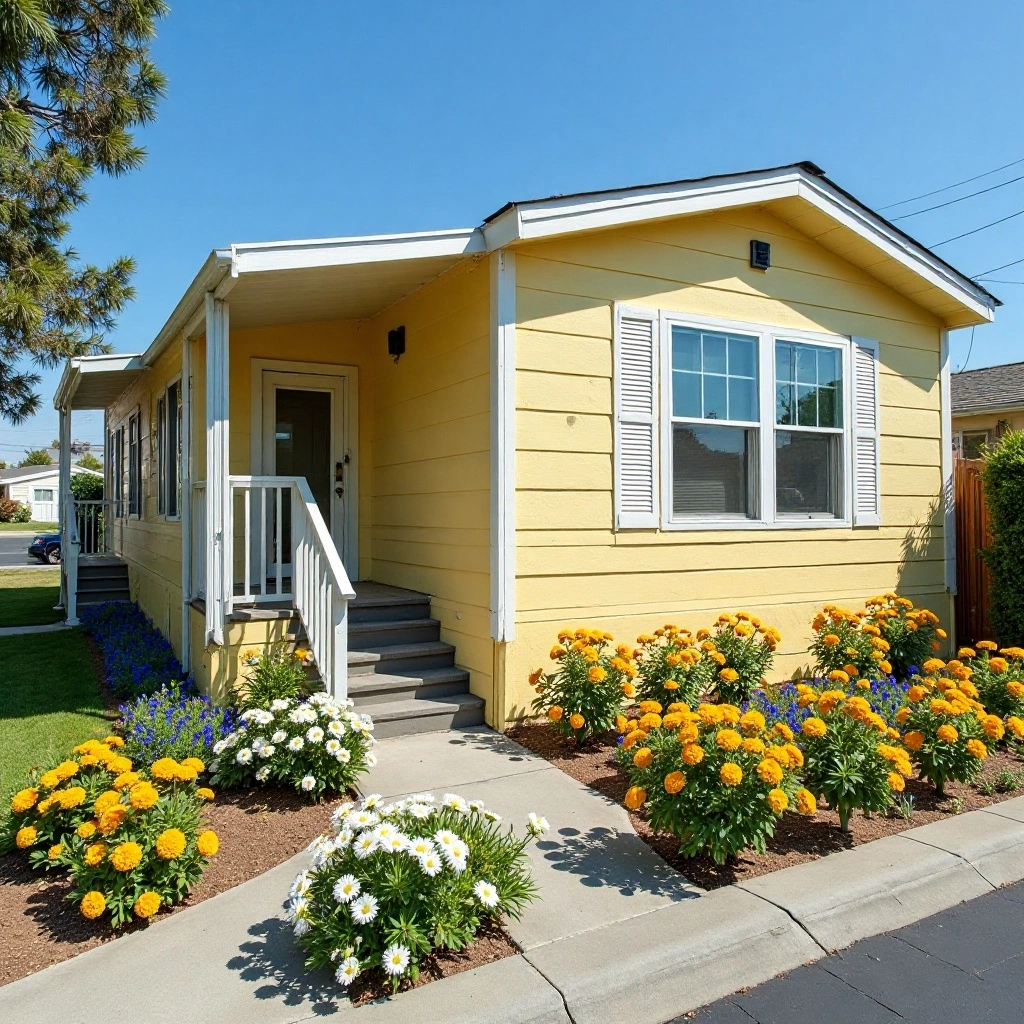
One of the most impactful — and often overlooked — strategies in landscaping is designing your planting plan around a deliberate color palette that also coordinates with your home’s exterior color. A landscape that feels cohesive, where the plant colors complement the home’s trim, siding, and hardscape materials, looks professionally designed and creates an undeniably polished overall impression. Shop on Amazon
How to Style It:
- Start with your home’s exterior colors and choose plants that complement (not match exactly) those tones
- Use the 60-30-10 rule: 60% dominant plant color, 30% secondary color, 10% accent color
- Plan for succession planting so something is always blooming from spring through fall
- Repeat color groupings throughout the yard for visual rhythm and cohesion
Where to Use It: Throughout all visible planting areas — front yard beds, porch containers, and lawn borders.
✅ Pro Tip: Take a photo of your home’s exterior and bring it to your local garden center. Lay real plant samples and small pots against the photo to see how colors will interact before you buy anything.
👨👩👧 Family & Kids Note: Turn seasonal planting into a family tradition — plant spring bulbs together in fall, choose summer annuals together at the garden center, and let kids pick one “wild card” plant each season that’s their personal choice. Over years, this ritual becomes one of those cherished family memories nobody forgets.
16. Gravel Driveway Edge Landscaping
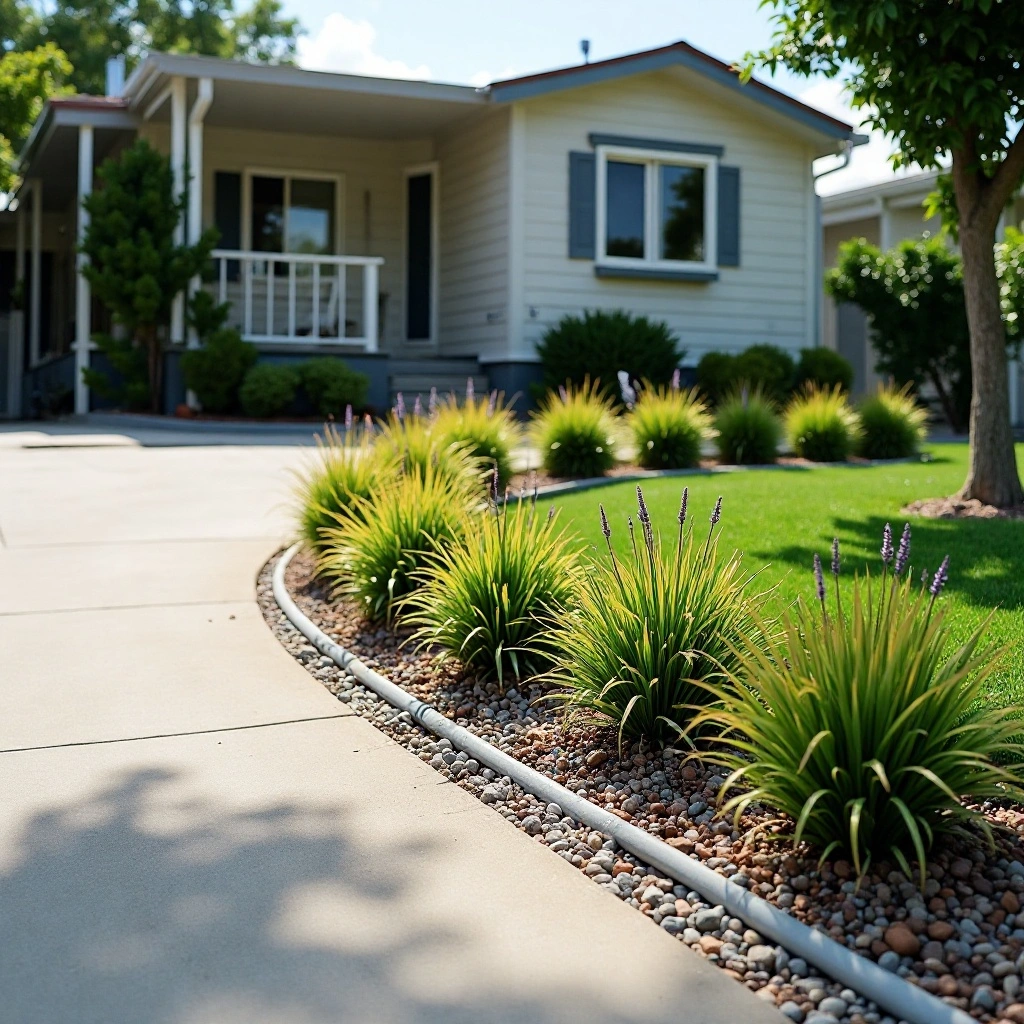
The strip of land between your driveway and your property line — often called the “hell strip” or driveway edge — is one of the most neglected yet highly visible areas of any mobile home property.
Transforming this narrow band with low ornamental grasses, drought-tolerant ground covers, or a clean rock border instantly upgrades the approach to your home and makes the entire property look more intentional and well-maintained. Shop on Amazon
How to Style It:
- Use low-growing plants (under 18″) that won’t obstruct sightlines when backing out of the driveway
- Install metal or stone edging to create a clean separation between the driveway surface and the planting area
- Choose drought-tolerant, tough plants that can handle road salt, compaction, and reflected heat
- Keep it symmetrical — mirror the planting on both sides of the driveway for a formal, polished look
Where to Use It: Along both sides of the driveway from street to home, and around any parking pad area.
✅ Pro Tip: Avoid planting anything that produces berries, fruit, or drops leaves directly next to the driveway — these create staining and slipping hazards on paved surfaces.
👨👩👧 Family & Kids Note: A clearly landscaped driveway edge acts as a natural visual boundary that helps young children understand where the safe play area ends and the driveway (vehicle zone) begins. Reinforce this boundary with consistent, visible edging and a simple rule: “no playing past the plants.”
17. Front Yard Focal Point Feature
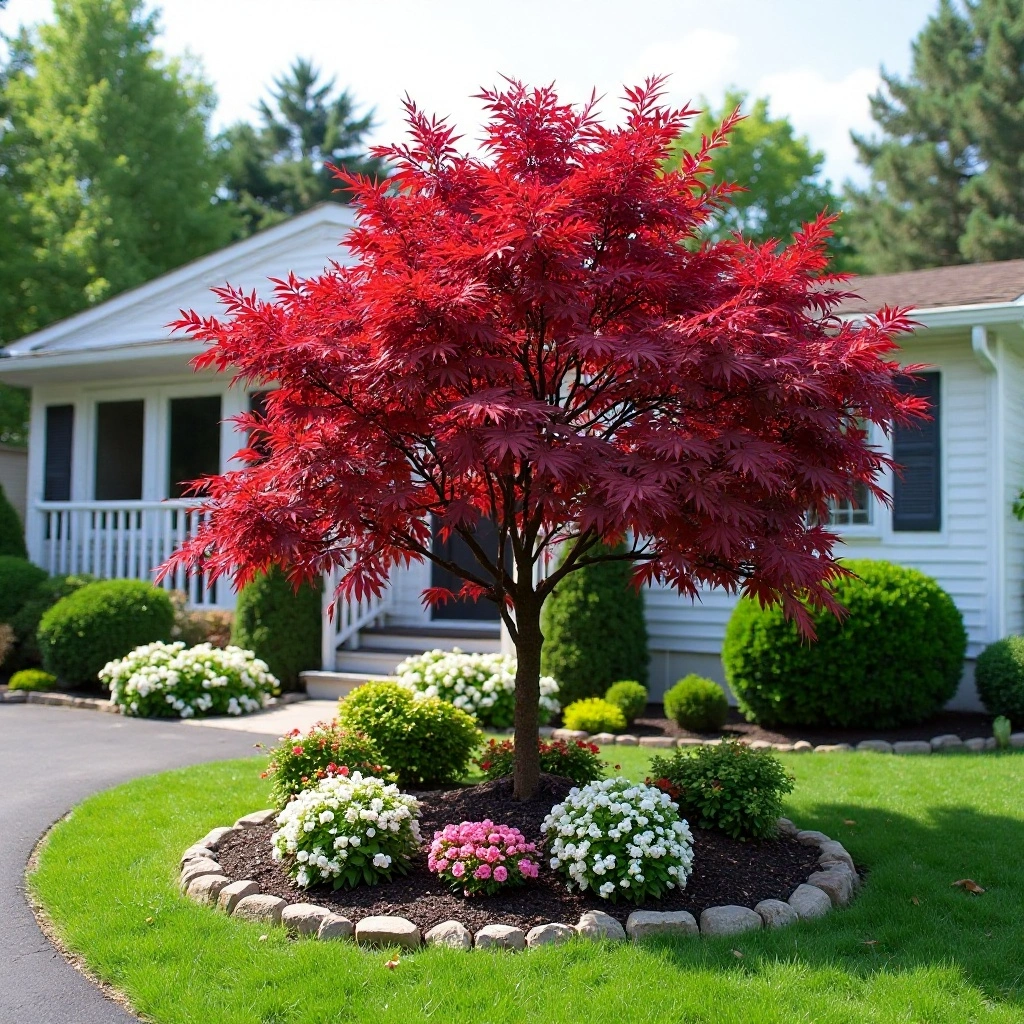
Every great landscape has a hero element — a single eye-catching focal point that draws the eye and anchors the design. For a mobile home front yard, this might be a beautiful specimen tree, a decorative boulder grouping, an ornamental fountain, or a dramatic urn planter.
The focal point gives the landscape a center of gravity and makes the whole yard feel more designed and purposeful. Shop on Amazon
How to Style It:
- Position the focal point slightly off-center in the front yard, not dead center — this creates a more dynamic composition
- Frame the focal point with flanking lower plants or garden beds to draw the eye toward it
- Use color contrast to make it stand out — a red-leafed tree in a sea of green lawn, for example
- Illuminate the focal point at night with an uplight for maximum impact
Where to Use It: In the front yard visible from the street, or at the end of a garden path as a destination element.
✅ Pro Tip: Less is more. One strong focal point beats three competing elements. If you find yourself wanting to add “just one more thing,” step back and let the hero element breathe.
👨👩👧 Family & Kids Note: Make the focal point something the whole family can enjoy — a bird bath that kids can watch and refill, a decorative fountain with the soothing sound of water, or a beautiful tree with enough space beneath it for a blanket and a picnic. The best focal point is one that pulls the whole family outside.
Common Mistakes to Avoid
1. Planting Trees Too Close to the Foundation Trees with aggressive root systems planted within 10 feet of your mobile home can damage skirting, utility hookups, and anchoring systems. Always research mature root spread before planting.
2. Skipping the Edging Without clean edging between lawns and garden beds, grass will invade your beds within a single season, making everything look messy and unkempt.
3. Overwatering New Plants More plants die from overwatering than underwatering. Check soil moisture before watering — if the top 2 inches of soil are moist, skip the watering that day.
4. Choosing Plants Based Only on Photos A plant that looks beautiful in a magazine may be completely wrong for your climate, soil, or sun conditions. Always research plants for your USDA hardiness zone before buying.
5. Ignoring the Skirting Area The transition between your home’s skirting and the ground is one of the most visible areas of a mobile home — neglecting it with bare dirt or overgrown weeds undermines every other landscaping effort you make.
6. Overdoing It Cramming too many plants, too many colors, and too many features into a small yard creates visual chaos. Focus on a few elements done really well rather than ten elements done poorly.
7. No Maintenance Plan The most beautiful landscape will deteriorate within a season without a simple maintenance routine. Before you plant, commit to a basic schedule for mowing, edging, deadheading, and mulching.
8. Planting Toxic Plants Near Play Areas Many popular ornamental plants — including foxglove, oleander, lantana berries, and wisteria pods — are toxic if ingested. Always check toxicity before planting anything in areas where children or pets spend time. When in doubt, choose known child-safe varieties like marigolds, sunflowers, snapdragons, or zinnias.
Frequently Asked Questions
Q: How much does mobile home landscaping typically cost? A: Basic curb appeal improvements like foundation beds, mulching, and pathway lighting can be done for $200–$500 DIY. Full front yard transformations with trees, pavers, and irrigation typically run $1,500–$5,000+ depending on your region and plant choices.
Q: What are the best low-maintenance plants for mobile home landscaping? A: Ornamental grasses, black-eyed Susans, daylilies, lavender, hostas (for shade), creeping juniper, and sedum are all excellent choices that look great with minimal care.
Q: Can I landscape a mobile home if I’m in a manufactured home community? A: Most parks allow landscaping within your lot, but some have restrictions on fences, structures, or certain plant types. Always review your lease or community rules before starting any major project.
Q: Will landscaping increase my mobile home’s value? A: Yes — studies consistently show that strong curb appeal can increase perceived property value by 5–15%. Even modest landscaping improvements dramatically change how a home is perceived by visitors and potential buyers.
Q: How do I prevent weeds in my garden beds? A: The most effective approach combines landscape fabric, a 2–3 inch layer of mulch, and consistent hand-weeding of any plants that break through. Pre-emergent herbicide applied in early spring also significantly reduces weed pressure.
Q: What’s the best time of year to start landscaping? A: Spring (after the last frost) and early fall (6 weeks before the first frost) are the two ideal planting windows for most of the US. Both allow plants to establish roots in mild temperatures before facing the stress of summer heat or winter cold.
Q: How do I deal with poor soil around my mobile home? A: Rather than fighting native soil, work around it. Use raised beds for vegetable gardens, choose plants that thrive in your specific soil type (sandy, clay, etc.), and amend existing beds with 3–4 inches of compost worked into the top 6–8 inches of soil.
Q: How do I make my yard safe for young children and toddlers? A: Start by auditing every existing and planned plant for toxicity using the ASPCA plant database or a quick search. Remove or relocate any toxic plants away from play zones. Use rounded, smooth edging materials (no sharp metal corners at child height), choose soft play surfaces like mulch or rubber under play equipment, and create a clearly defined play area separate from garden beds.
Q: Can kids really help with landscaping projects? A: Absolutely — and it’s one of the best things you can do together. Kids as young as 3 can water plants, press seeds into soil, and help carry small rocks. By age 6–8, children can help lay pavers, plant seedlings, and operate a watering hose. Giving children their own plant or garden section builds responsibility and a genuine love of nature that lasts a lifetime.
Final Thoughts: Start Small, Dream Big
The most beautiful mobile home landscapes weren’t built in a weekend — they were grown, season by season, with intentional choices, consistent care, and often a little help from small hands covered in dirt. Pick two or three ideas from this list that excite you the most and start there. Master those before adding more. Build a landscape you love, one bed at a time.
Your yard isn’t just curb appeal — it’s where your kids take their first steps on grass, where family dinners spill outside on warm evenings, where butterflies are spotted for the first time and vegetables are tasted straight from the vine. That’s worth every hour you invest in it.
Your home is worth it. Your family is worth it. And with the right landscaping, the world will see it too.