19 Stunning Outdoor Rugs Patio Ideas for a Cozy Outdoor Space
Your patio is more than just a slab of concrete or a stretch of wood decking — it’s an extension of your home, a place to breathe, gather, and unwind. Yet so many outdoor spaces feel incomplete, lacking that final layer of warmth and personality that pulls everything together. That’s where the right outdoor rug comes in.
An outdoor rugs patio ideas is one of the highest-impact, lowest-effort upgrades you can make to any patio, balcony, or garden space. It defines zones, softens hard surfaces, adds color and texture, and — when chosen thoughtfully — tells a story about who you are and how you love to live outdoors.
How to Use This Guide
Whether you have a sun-drenched Mediterranean terrace, a compact urban balcony, or a sprawling backyard with multiple entertaining zones, this guide has something for you. Each of the 20 ideas below comes with everything you need: a detailed description you can use to generate a matching AI image, styling tips, placement advice, and pro secrets from interior designers who work with outdoor spaces every day.
Browse all 20 ideas or jump straight to the style that speaks to you. Either way, by the end you’ll know exactly what rug to choose — and how to use it.
20 Outdoor Rugs Patio Ideas
1. Boho Layered Jute & Kilim Look
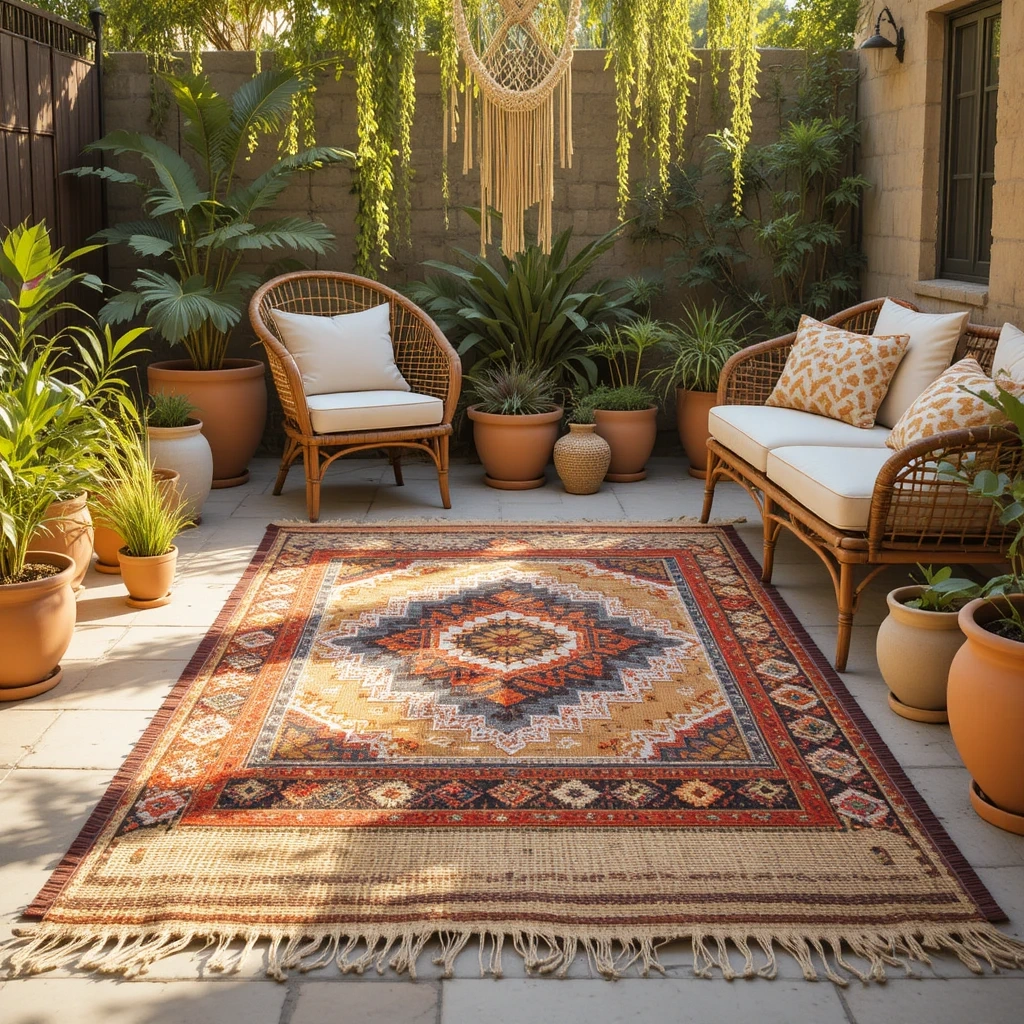
Bohemian style thrives on mixing textures, patterns, and eras — and layering rugs is one of the easiest ways to achieve that look outdoors. Start with a large neutral jute-look outdoor rug as the base (synthetic versions handle moisture far better than real jute), then layer a smaller kilim-inspired flatweave on top for a burst of pattern and color. The combination reads as collected and intentional rather than chaotic. Shop on Amazon
How to Style It:
- Anchor the bottom rug at least 12 inches beyond your furniture on all sides
- Choose a kilim topper in warm terracotta, rust, saffron, or indigo tones
- Mix in macramé wall hangings, woven lanterns, and mismatched cushion covers
- Add trailing pothos or string-of-pearls in hanging planters for softness
Where to Use It: Covered patios, pergola dining areas, boho garden nooks, rooftop terraces
Pro Tip: Use rug grippers between both layers so the top rug doesn’t slide. Choose a top rug that is no more than 60% the size of the base for the most balanced look.
2. Coastal Stripe in Navy & White
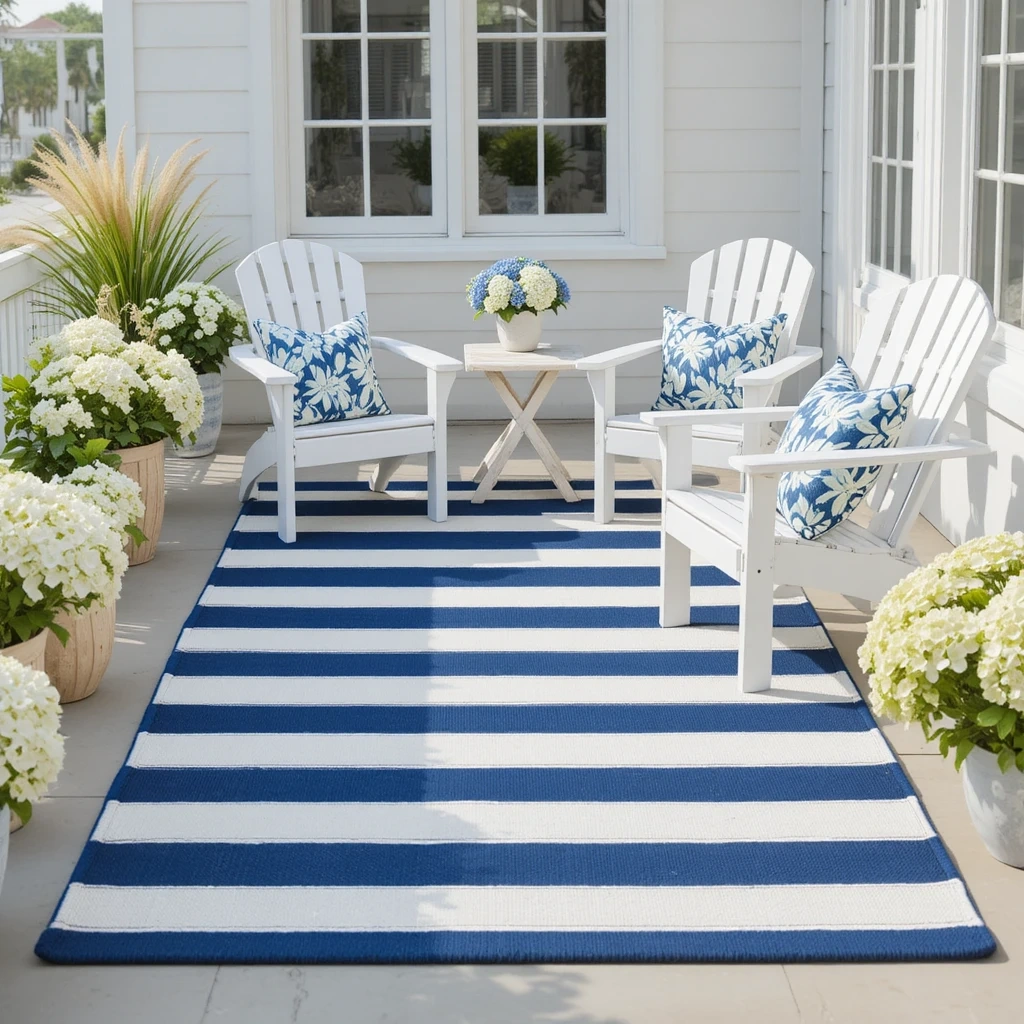
Nothing evokes the feeling of a seaside retreat quite like classic navy and white stripes underfoot. Bold horizontal stripes make a narrow patio or balcony feel wider, while vertical stripes elongate a small square space. The graphic quality of stripes means you don’t need much else — keep furniture white or natural wood and let the rug do the talking. Shop on Amazon
How to Style It:
- Pair with crisp white furniture and natural rope or rattan accents
- Add blue and white throw pillows with anchors, waves, or simple solids
- Keep plants simple — ornamental grasses, white flowers, or succulents
- Use navy umbrella or sun shade to echo the rug’s color
Where to Use It: Beachfront patios, lakehouse decks, pool surrounds, coastal porches
Pro Tip: For a polished look, orient the stripes perpendicular to your longest wall — it creates an optical illusion that widens the space dramatically.
3. Modern Geometric Black & White
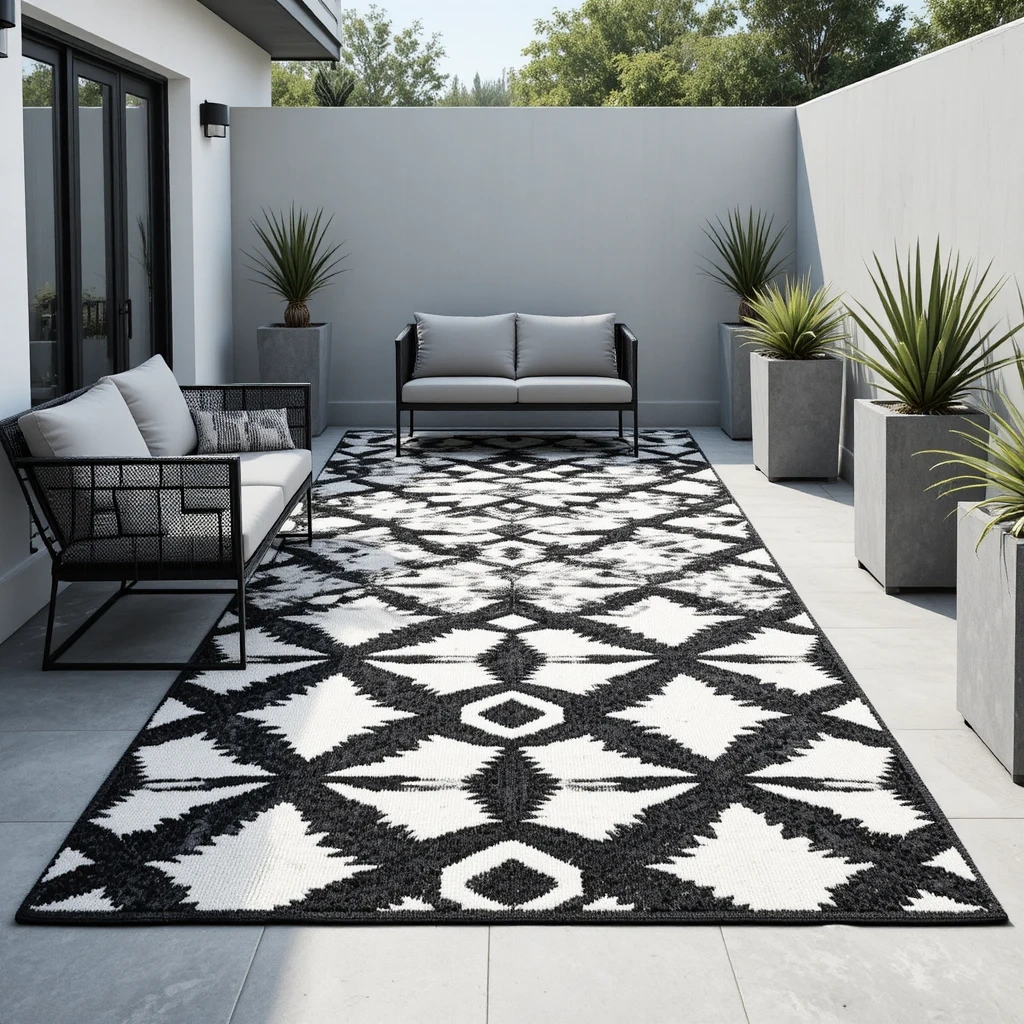
Geometric patterns in monochrome are having a major moment in outdoor design — and for good reason. A bold black-and-white rug grounds any furniture arrangement with authority, creates a visual focal point, and works with almost every color of cushion or furniture you might already own. It’s the high-contrast choice for patios that mean business. Shop on Amazon
How to Style It:
- Keep furniture lines clean and angular — avoid overly ornate pieces
- Use concrete or dark stone planters with architectural plants (agave, snake plant, black bamboo)
- Add one accent color — terracotta, sage, or mustard — through cushions or a single planter
- Complement with outdoor pendant lighting in matte black
Where to Use It: Modern urban patios, rooftop terraces, contemporary garden rooms, minimalist courtyards
Pro Tip: Because the rug is visually loud, keep everything else quieter. Two bold elements will fight each other — let the rug be the star.
4. Soft Blush & Sage Floral Garden Patio
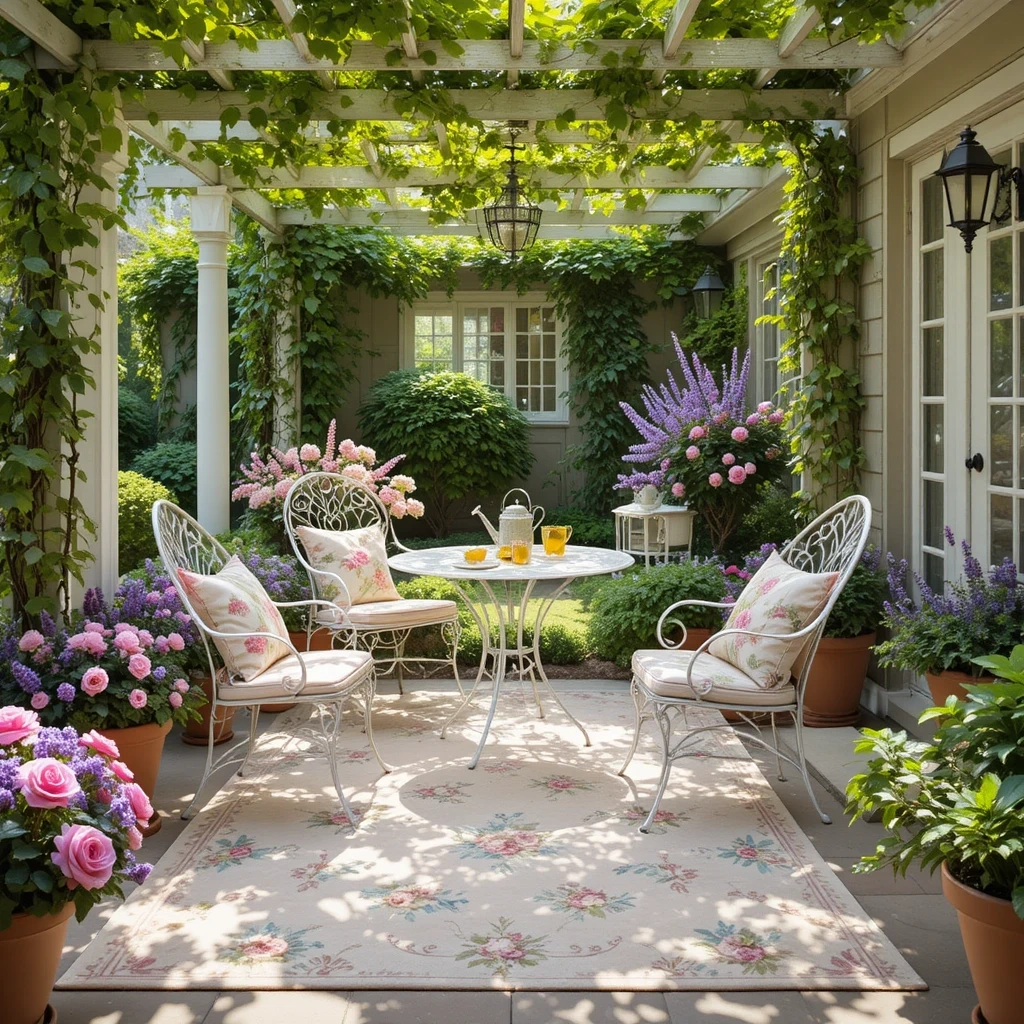
For those who want their patio to feel like stepping into a watercolor painting, a blush and sage floral rug is the answer. Soft florals work beautifully in cottage, French country, and romantic garden settings, blurring the line between the rug and the surrounding planting. This is an especially powerful choice when your garden is lush and flower-filled. Shop on Amazon
How to Style It:
- Choose wrought iron or vintage-inspired furniture in white or cream
- Layer with floral or toile cushions in coordinating blush, sage, and ivory
- Surround with potted roses, lavender, and peonies for a seamless garden-to-patio transition
- Add antique-style lanterns or string lights for evening ambience
Where to Use It: Cottage gardens, French country patios, secret garden seating areas, romantic dining terraces
Pro Tip: Don’t match the rug’s flowers exactly to your garden plants — instead, pick up just one color from the rug in a nearby pot. This creates harmony without looking staged.
5. Desert Southwest Terracotta & Rust
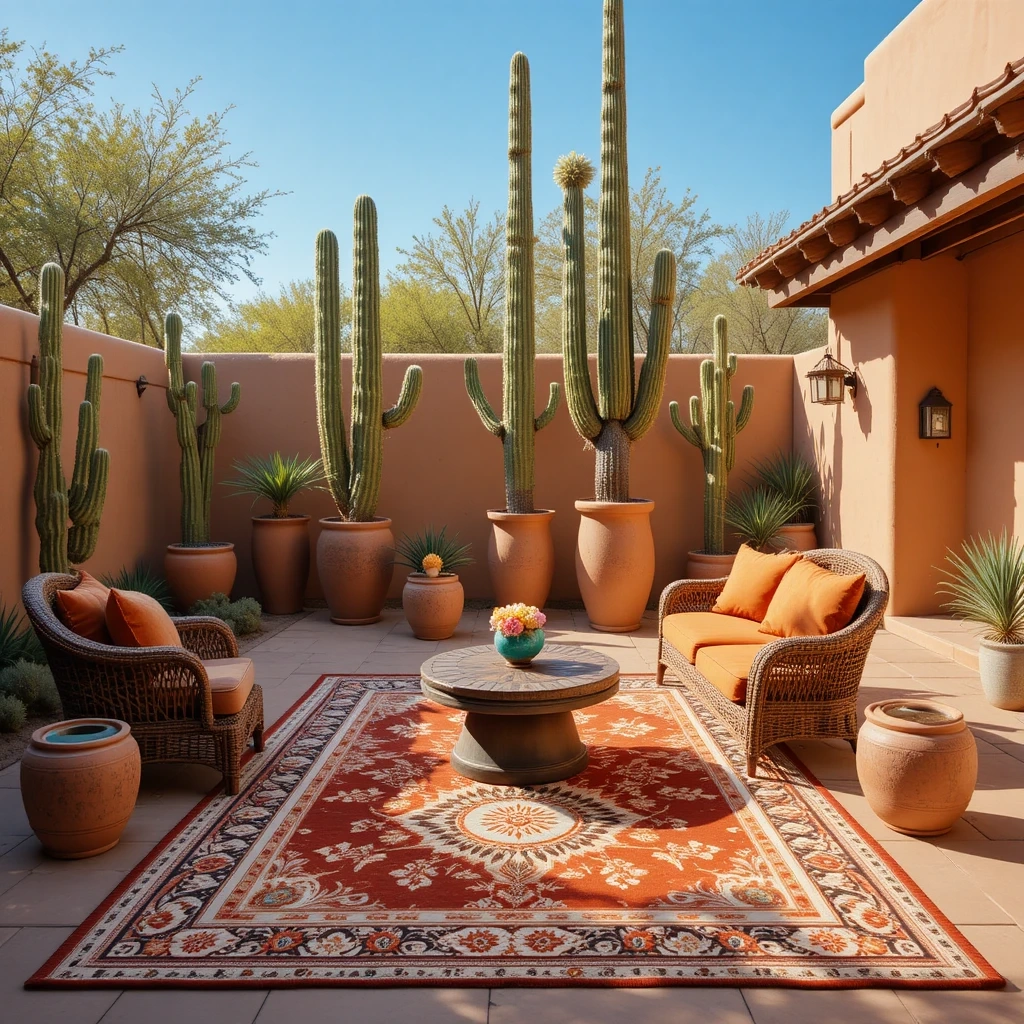
Channel the sun-baked warmth of the American Southwest or Morocco with a rug rooted in terracotta, rust, and desert clay tones. These warm earth shades are incredibly forgiving in outdoor settings — they don’t show dirt easily, they age gracefully, and they look spectacular in both morning golden light and at dusk. Tribal or Navajo-inspired geometric patterns add an authentic, artisanal quality. Shop on Amazon
How to Style It:
- Use large terracotta or clay pots with drought-tolerant plants — agave, prickly pear, aloe
- Incorporate turquoise or cobalt blue as an accent — in ceramics, cushions, or glassware
- Choose natural wood furniture or wicker with rust or saddle-leather toned cushions
- Add a low fire bowl or chiminea for evening warmth
Where to Use It: Desert garden patios, Southwestern-style homes, courtyard entertaining areas, dry climate gardens
Pro Tip: Terracotta rugs fade gracefully in direct sun — choose UV-resistant polypropylene with high terracotta pigmentation for the truest color longevity.
6. Tropical Leaf Print Statement Rug
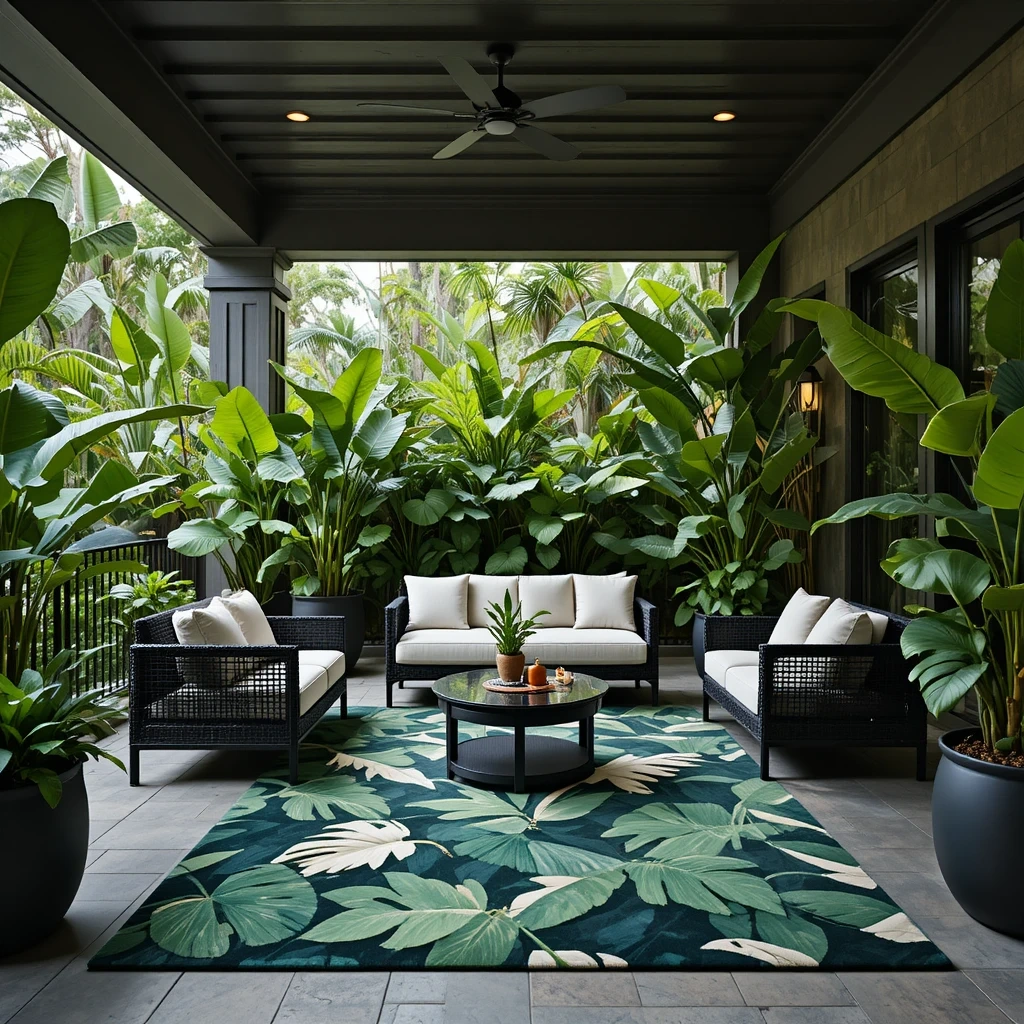
Go bold, go tropical. A monstera or palm leaf print rug instantly transforms any patio into a private resort — no plane ticket required. Deep greens with white or cream backgrounds feel fresh and sophisticated rather than kitschy when paired with modern furniture and genuinely lush plants. This is the rug for those who want maximum impact with a single purchase. Shop on Amazon
How to Style It:
- Go monochromatic with your furniture — all-black or all-white works best
- Invest in real tropical statement plants (bird of paradise, banana tree, giant bird fern)
- Add a ceiling fan or umbrella to enhance the resort hotel vibe
- Use amber or warm-toned Edison bulb string lights for evening
Where to Use It: Covered lanai spaces, tropical climate patios, resort-style pool decks, jungle-garden settings
Pro Tip: The rug already has strong pattern — keep every other element solid-colored. One patterned cushion alongside this rug is one too many.
7. Mediterranean Tile Effect Blue & White
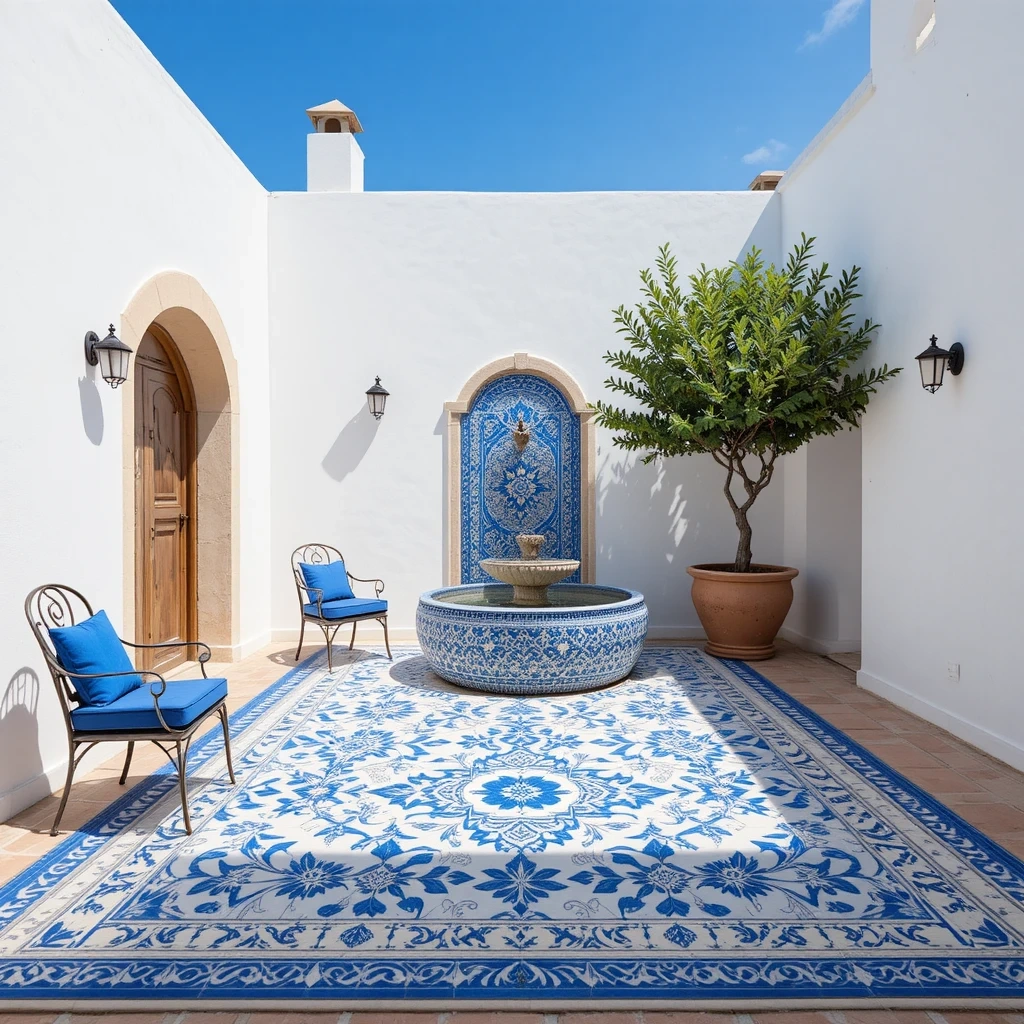
Inspired by the hand-painted azulejo tiles of Portugal and the geometric zellige of Morocco, tile-effect rugs deliver that sun-drenched Mediterranean courtyard feeling at a fraction of the cost — and without the permanence. The intricate repeat patterns look stunning underfoot while nodding to centuries of artisanal craft. Ideal for anyone who dreams of Lisbon, Seville, or Santorini. Shop on Amazon
How to Style It:
- Keep surrounding surfaces white or pale limestone-toned
- Add a small bubbling water feature to enhance the courtyard feel
- Choose simple wrought iron or rattan furniture — nothing too bulky
- Incorporate an olive tree, lavender, or potted rosemary for Mediterranean authenticity
Where to Use It: Courtyards, Mediterranean-style homes, enclosed garden patios, Spanish colonial architecture
Pro Tip: Because these rugs have a fine, complex pattern, they photograph best from above. Place a hanging light or a camera point that allows for the overhead view — it’s endlessly Instagrammable.
8. Natural Woven Rattan-Effect Neutral
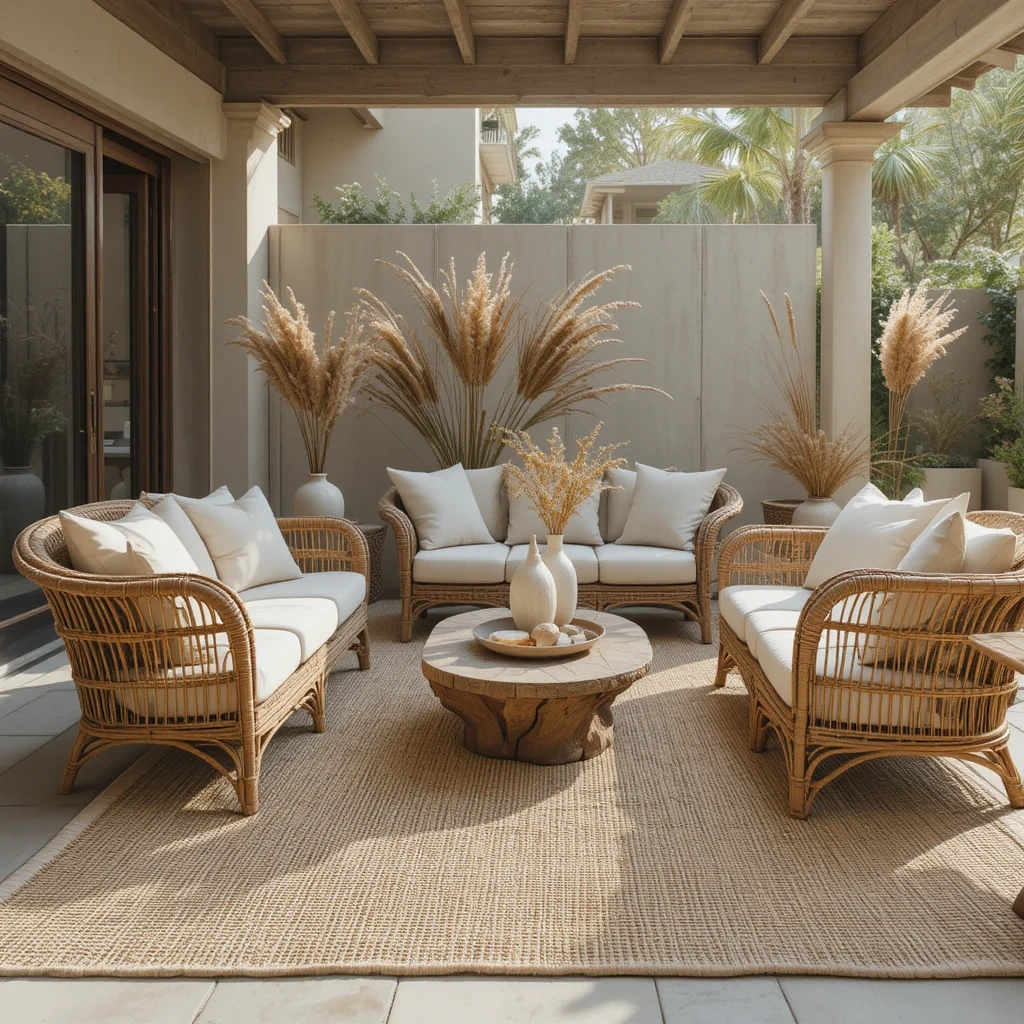
Sometimes the most powerful design choice is restraint. A natural woven-effect rug in warm sand, tan, or cream creates a sophisticated base that elevates every element around it without competing with anything. This is the go-to for those who favor quiet luxury — the Japandi approach applied to outdoor living. It makes every other element look more intentional. Shop on Amazon
How to Style It:
- Layer with textured throws in ivory, oatmeal, or warm white
- Use ceramic or stoneware planters in muted earthy tones
- Choose furniture in natural teak, rattan, or bleached wood
- Add dried botanicals — pampas grass, bunny tail grass, cotton stems — in simple vases
Where to Use It: Zen gardens, Japandi-style patios, organic modern settings, mindful retreat spaces
Pro Tip: Choose a rug with tighter weave for higher-traffic areas — looser weaves trap more debris and can snag furniture legs.
9. Bold Multicolor Moroccan Boucherouite Style
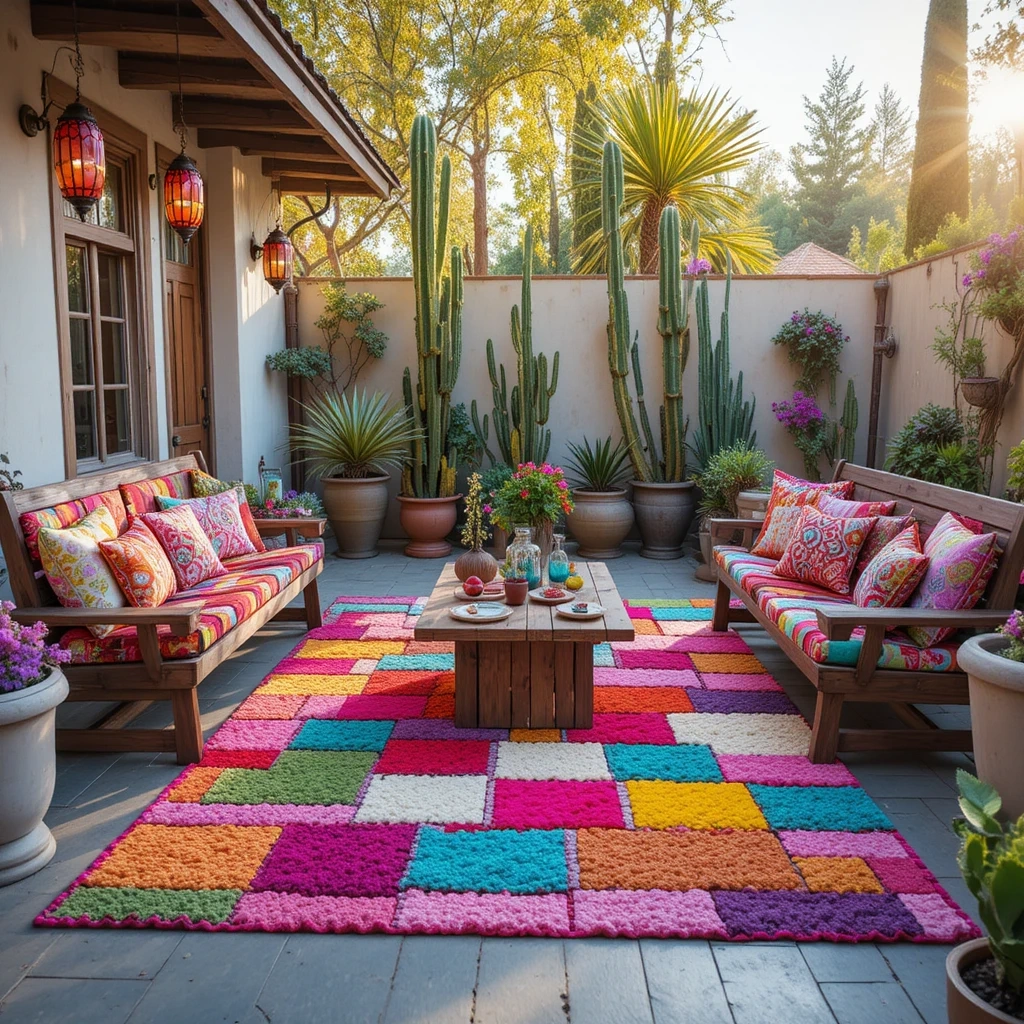
For the maximalists and color lovers, a Boucherouite-inspired rug is pure joy underfoot. Rooted in Moroccan rag-rug tradition, these visually explosive pieces work precisely because they contain every color — which paradoxically makes them easy to style, since anything goes. This is the outdoor rug for people who believe more is more and life is too short for beige. Shop on Amazon
How to Style It:
- Allow the rug to inspire your cushion palette — pull just two or three of its colors
- Mix and match seating — wooden benches, wicker chairs, floor cushions all work
- Hang colored glass lanterns or jewel-toned string lights
- Keep plants bold — bright bougainvillea, bird of paradise, or mixed succulents
Where to Use It: Festive entertaining patios, Mediterranean rooftop terraces, maximalist garden spaces, Moroccan-inspired riad courtyards
Pro Tip: Photograph this rug in golden hour light — the warm tones make the jewel colors absolutely glow.
10. Moody Dark Blue & Gold Celestial
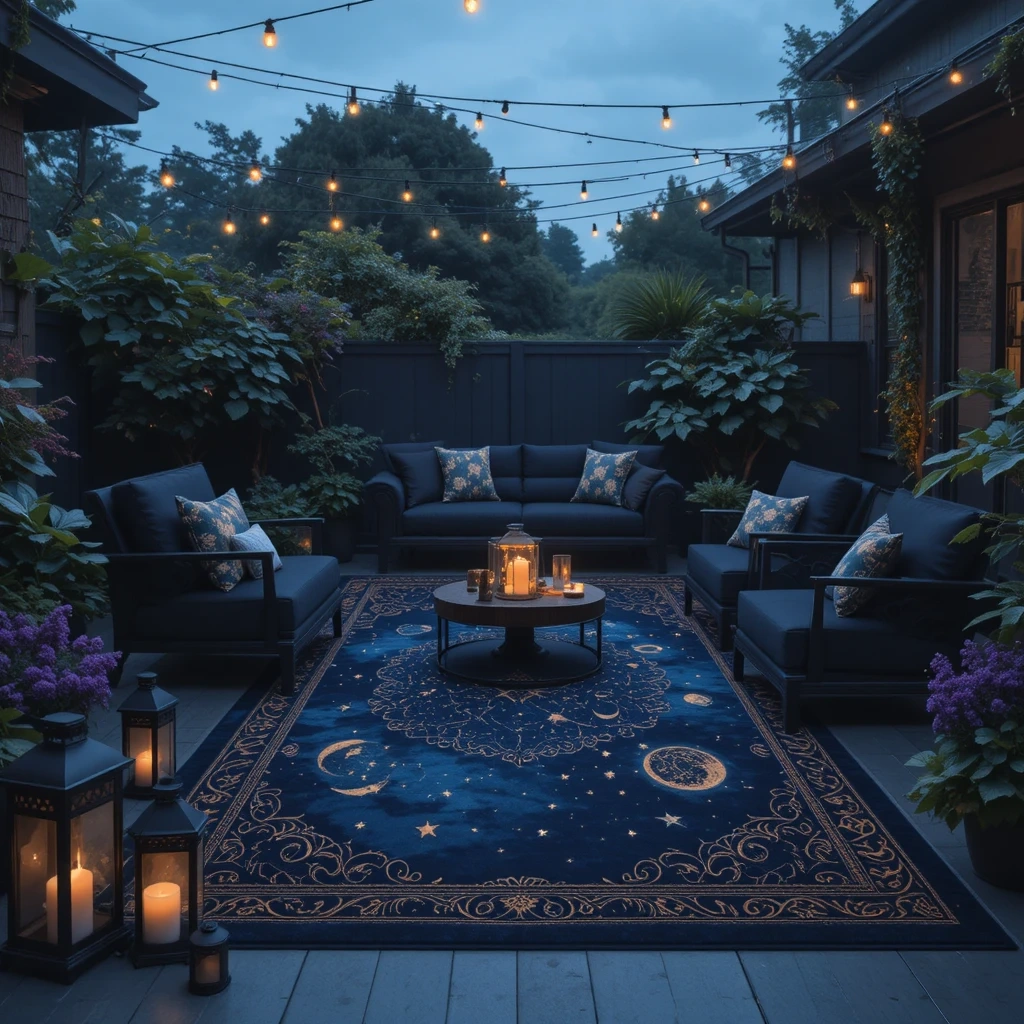
Bring the night sky to your feet. Dark navy or midnight blue rugs with celestial detailing — stars, moons, constellation patterns in metallic gold — create an unmistakably moody and magical outdoor setting perfect for evening entertaining. These rugs read as sophisticated rather than themed when paired with equally refined furniture and lighting. Shop on Amazon
How to Style It:
- Use exclusively candlelight or warm amber string lights — no cool-toned LEDs
- Choose furniture in charcoal, black, or deep navy with gold or brass hardware
- Add deep purple, black, or midnight blue plants — dark salvia, black mondo grass, deep purple petunias
- Create a designated stargazing spot with low cushioned seating
Where to Use It: Evening entertaining terraces, rooftop stargazing spots, intimate garden dining areas
Pro Tip: Dark rugs absorb more heat in direct sun — place in shaded or north-facing spots, or use exclusively for evening entertaining setups.
11. Eucalyptus Green Outdoor Dining Zone
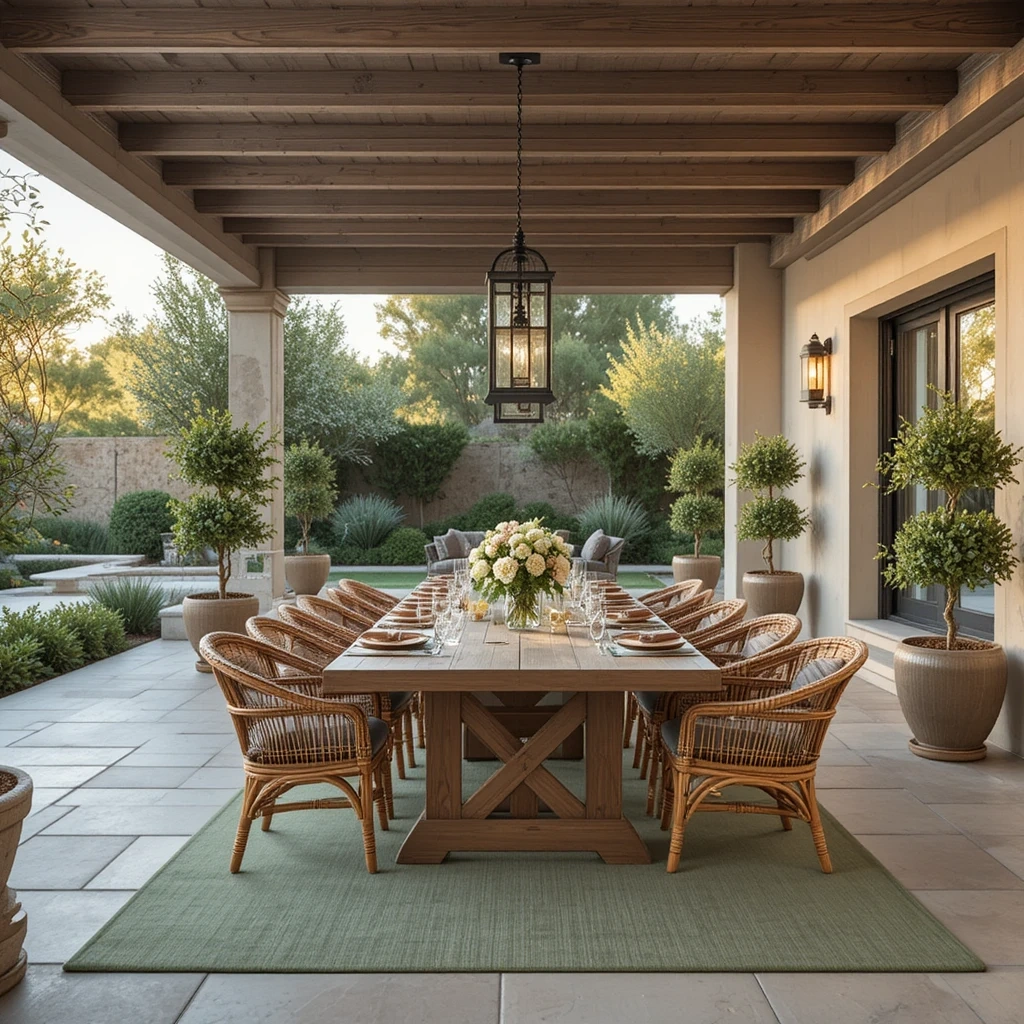
A solid sage or eucalyptus green rug is one of the most versatile and enduring choices for an outdoor dining space. Green grounds the space into the landscape, making everything around it feel more organic and intentional. It’s sophisticated enough for grown-up dinner parties yet relaxed enough for weekend brunch. It also hides spills and garden debris remarkably well. Shop on Amazon
How to Style It:
- Anchor a large rectangular dining table — rug should extend 24″ beyond all table edges
- Use natural linen, cotton, or wicker dining chairs
- Add terracotta plates and earthy ceramics on the table for layered texture
- Frame with olive trees or rosemary standards in terracotta pots
Where to Use It: Al fresco dining zones, garden party setups, farmhouse patio dining, olive grove-inspired settings
Pro Tip: For dining rugs, always go bigger than you think you need. Chairs pulled out at the table should never leave the rug — a 9’x12′ is the minimum for a 6-seat table.
12. Vintage Persian-Inspired Garden Rug
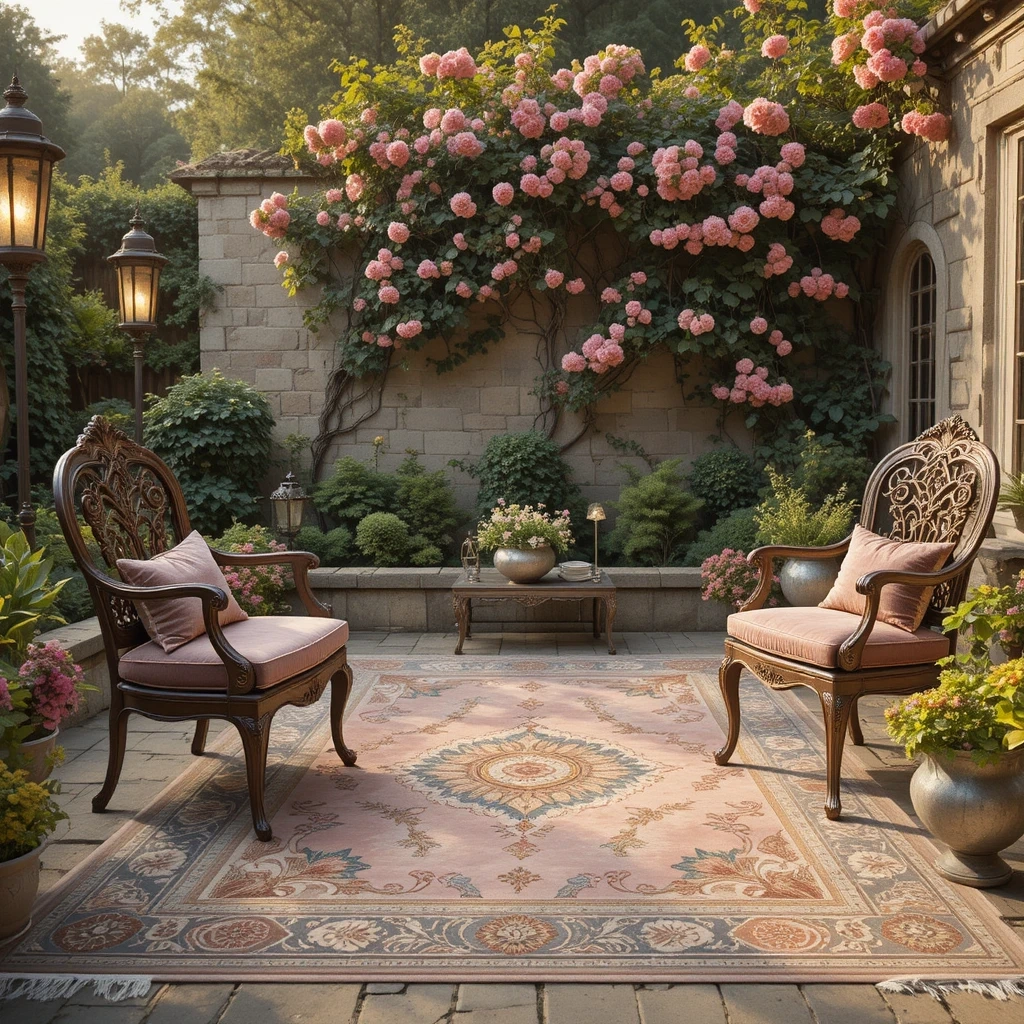
The timeless beauty of Persian carpet design translated into weather-resistant outdoor form. A vintage or distressed Persian-style rug in muted rose, blue, and gold brings centuries of decorative history to your patio — and the deliberately faded, aged quality means it looks even better as it weathers outdoors. Perfect for those who want their outdoor space to feel as layered and rich as their interior. Shop on Amazon
How to Style It:
- Choose furniture that has some age or patina — antique wooden chairs, iron bistro sets
- Use soft, muted cushion colors pulled directly from the rug’s palette
- Add candlelight — brass lanterns, taper candles in glass holders, or a crystal chandelier for covered spaces
- Border with climbing roses, wisteria, or heritage hydrangeas
Where to Use It: Heritage home gardens, English country garden patios, romantic dining terraces, walled courtyard spaces
Pro Tip: Persian-style rugs look most authentic when they appear slightly too large for the space — let them extend under furniture and run to the wall edge for a truly layered-interior feel.
13. Black & Natural Minimalist Abstract
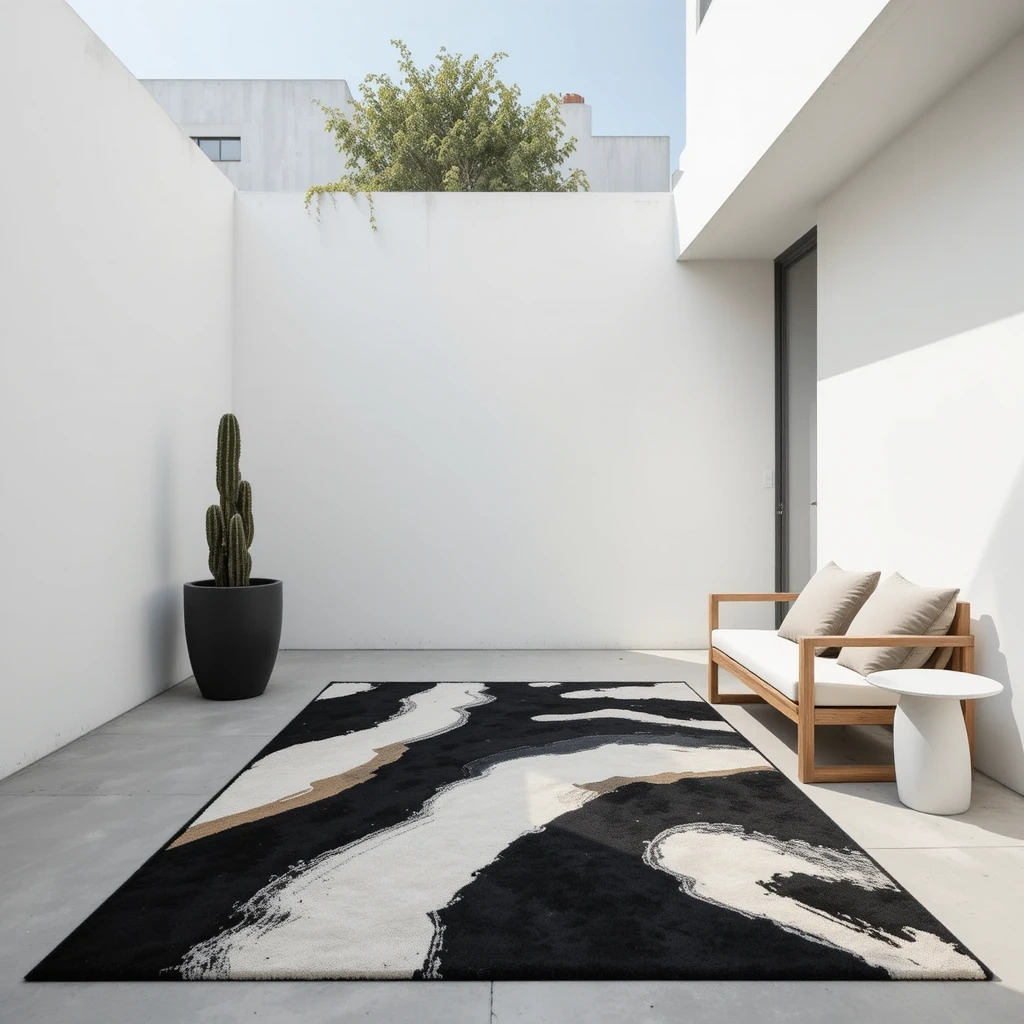
Abstract pattern done right is simultaneously timeless and modern. A black-on-natural abstract rug — brushstroke patterns, imperfect geometrics, or organic line work — gives a patio the feel of an art gallery installation. It’s the ideal choice for those who want visual interest without committing to a traditional pattern vocabulary, and it pairs beautifully with sculptural plants. Shop on Amazon
How to Style It:
- Treat the patio like an outdoor gallery — one or two sculptural focal points, nothing more
- Choose furniture in concrete, steel, or natural teak — no bright colors
- Use a single dramatic plant as living sculpture — large cactus, sculptural agave, architectural bamboo
- Keep the color palette to three: black, natural/cream, and one warm wood tone
Where to Use It: Contemporary architecture patios, design-forward urban outdoor spaces, gallery-style garden rooms
Pro Tip: Abstract rugs are less forgiving of crooked placement — use a chalk line to ensure perfect parallel alignment with your home’s exterior walls before placing furniture.
14. Warm Terracotta Solid with Fringe Detail
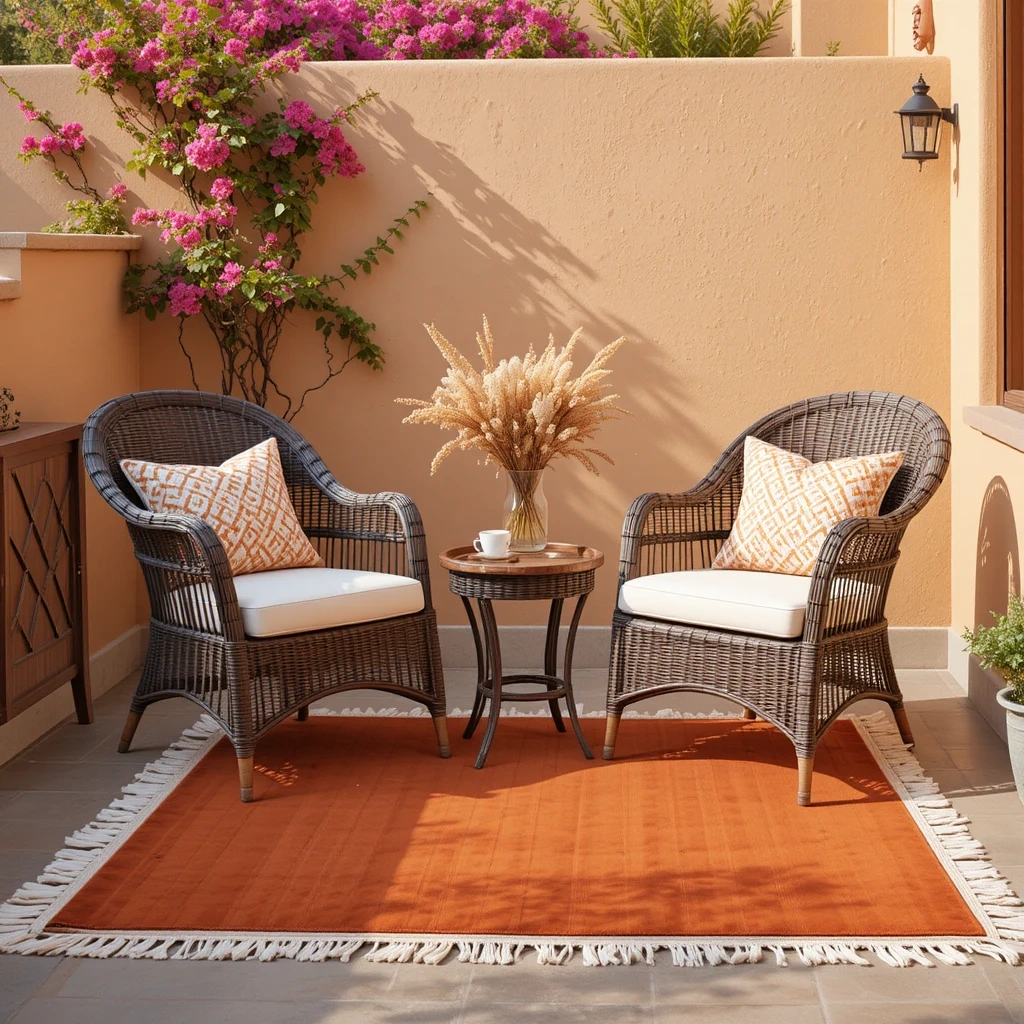
Sometimes the most powerful design move is a single, deeply saturated solid color. A burnt terracotta rug with fringe detail is simultaneously earthy, joyful, and sophisticated — evoking Mediterranean mornings, Moroccan courtyards, and slow clay-colored summers all at once. The fringe adds that artisanal, handmade quality that elevates it beyond a plain flat rug. Shop on Amazon
How to Style It:
- Pair with white, cream, or natural linen for maximum contrast and freshness
- Add dried or neutral-toned botanical arrangements in simple ceramic vases
- Echo the terracotta in clay pots of varying sizes grouped nearby
- Keep patterns elsewhere to a minimum — let the color be the star
Where to Use It: Small balconies, bistro patio corners, Mediterranean courtyard seating nooks, morning coffee spaces
Pro Tip: Solid rugs in warm tones are the easiest to style because they act like a neutral — everything coordinates. Choose the deepest, richest terracotta you can find; faded versions lose their impact quickly in UV exposure.
15. Fade-Out Watercolor Ombre Rug
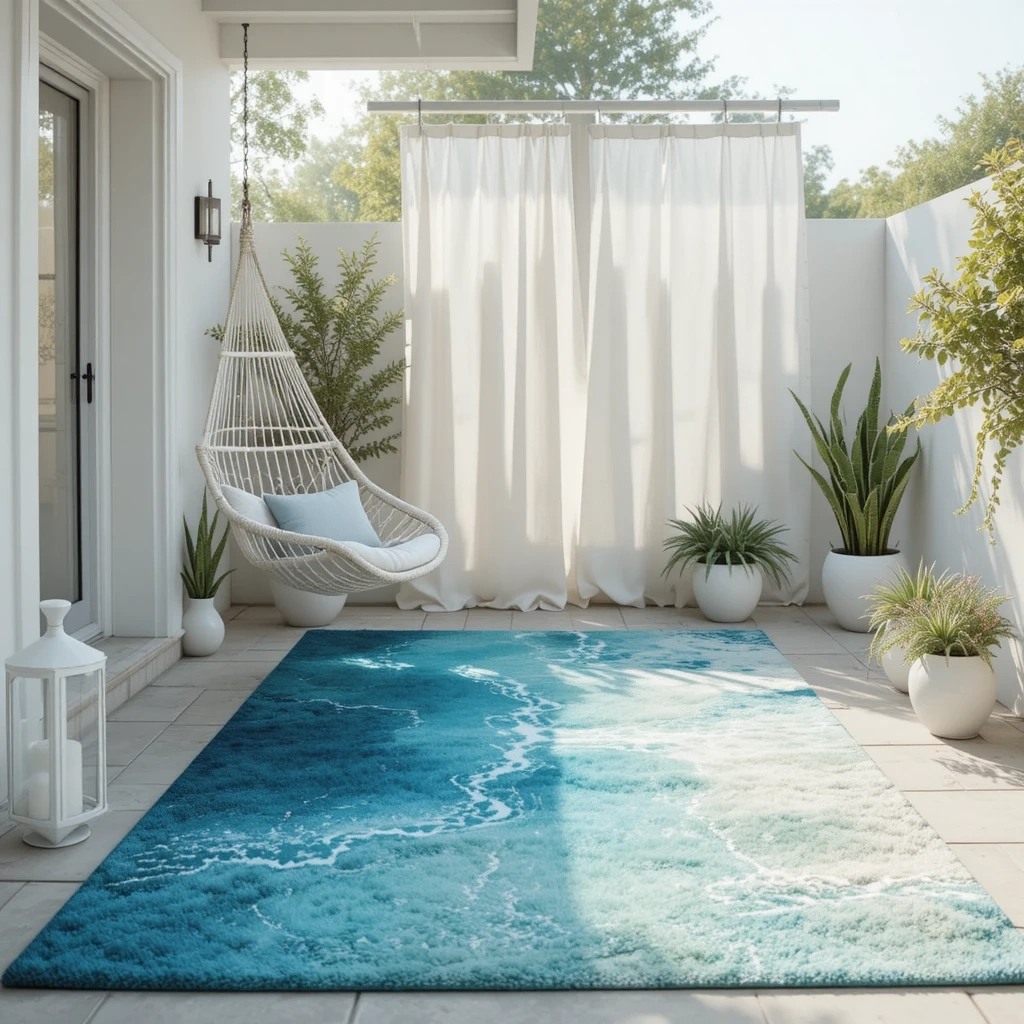
An ombre rug that fades from deep to light — ocean blue to aqua to white, or forest green to sage to cream — creates a sense of movement and tranquility that’s almost hypnotic.
These rugs work beautifully in spaces where you want to encourage slowness: a meditation nook, a hammock corner, a quiet reading spot. The gradient draws the eye gently without demanding attention. Shop on Amazon
How to Style It:
- Orient the dark end toward the house and the light end toward the garden for a natural fade effect
- Use a hanging chair or hammock alongside for a cocooning, restful vibe
- Keep textiles white, linen, and natural — the rug provides all the color you need
- Use sound — a small water feature or wind chimes — to complete the sensory experience
Where to Use It: Meditation garden spaces, hammock nooks, spa-style patio retreats, zen outdoor rooms
Pro Tip: For the most dramatic ombre effect, photograph the rug from a standing height looking along its length — the gradient reads strongest from this angle.
16. Sunflower Yellow Statement Rug
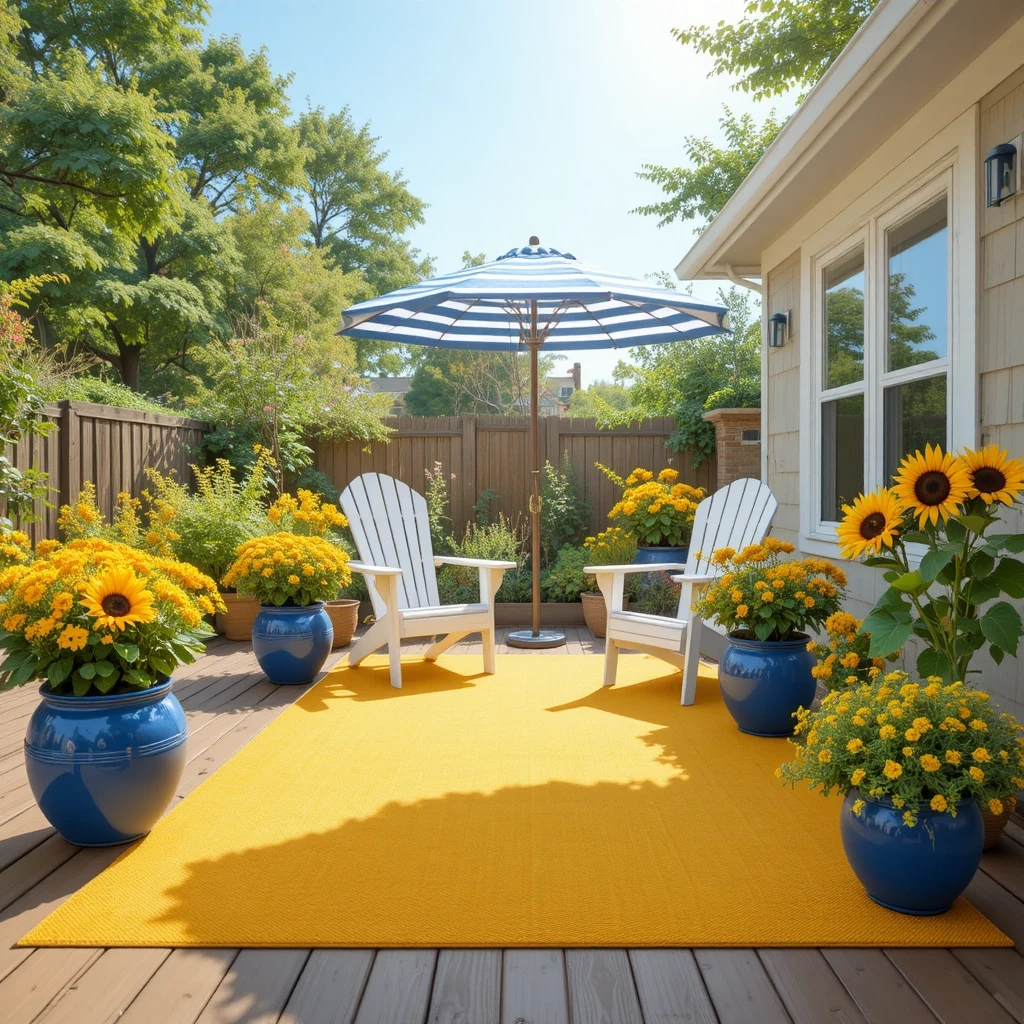
Yellow is the most underused color in outdoor rugs — and that’s a mistake. A confident sunflower or golden yellow rug is pure happiness underfoot, making any space feel instantly warmer, more welcoming, and more alive — even on overcast days.
When paired with cobalt blue, it channels the classic Mediterranean color pairing that has delighted designers for centuries. Shop on Amazon
How to Style It:
- Pair with cobalt blue ceramics, pots, and accessories for Mediterranean contrast
- Choose white furniture to keep things fresh rather than overpowering
- Plant sunflowers, marigolds, or yellow lantana in surrounding pots to extend the palette into the garden
- Use a blue and white umbrella overhead for color-blocking perfection
Where to Use It: Summer entertaining patios, Mediterranean-style gardens, family-friendly outdoor spaces, sunny south-facing terraces
Pro Tip: Yellow rugs can fade more aggressively than other colors in intense direct sunlight. Rotate the rug 180° every season to ensure even wear and fading.
17. Herringbone Natural Fiber Look
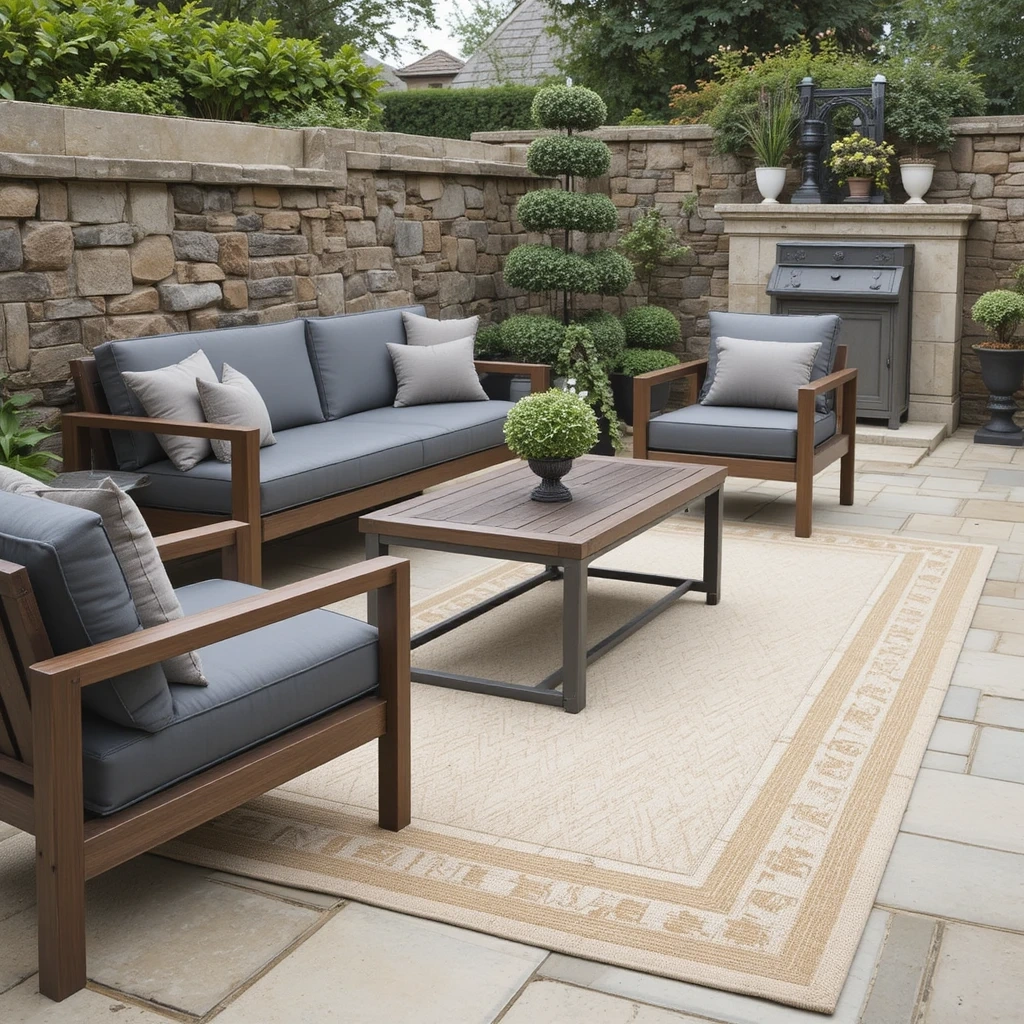
Herringbone is one of the great timeless patterns — equally at home in a Georgian townhouse and a contemporary garden. A herringbone outdoor rug in natural linen tones bridges old and new with effortless grace.
The directional weave creates subtle visual movement without introducing overt pattern, making it the ideal sophisticated base for serious entertaining spaces. Shop on Amazon
How to Style It:
- Choose furniture with clear, dark lines — teak, walnut, or dark iron
- Use clipped formal topiary — boxwood balls, cone spirals — for an estate-garden feel
- Add an outdoor console or sideboard against the wall for entertaining functionality
- Keep cushions in slate, charcoal, or forest green for a tailored finish
Where to Use It: Formal garden entertaining terraces, classic English garden patios, traditional estate-style homes, structured garden rooms
Pro Tip: Orient the herringbone chevrons so they point toward the entrance of the patio space — this creates an invisible welcome mat effect that draws guests in.
18. Tonal Indigo Block Print Pattern
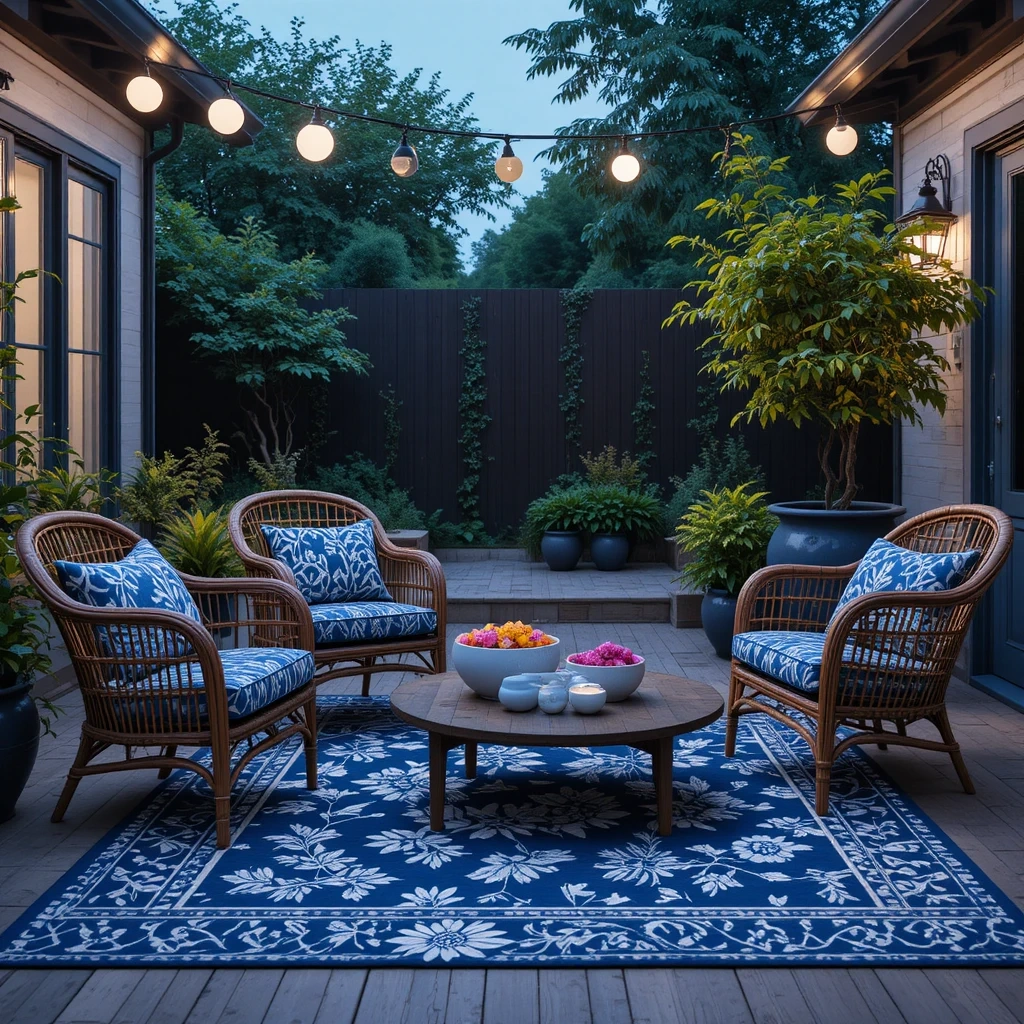
Indigo — that deep, complex blue born from centuries of hand-dyeing tradition — has never looked more at home outdoors. A tonal indigo rug with block-print patterning in varying shades of the same hue creates depth and artistry without color clash. It reads as globally inspired and carefully collected, the choice of someone who has an eye and knows it. Shop on Amazon
How to Style It:
- Stay within the blue-indigo-navy family for your textiles to create tonal harmony
- Add white ceramic or earthenware accents for contrast and breathing room
- Use a Japanese maple, dark-leafed plants, or ornamental grasses for living color accents
- Illuminate with warm globe lights or indigo-tinted lanterns at night
Where to Use It: Artisan-inspired outdoor rooms, globally-collected patios, Japanese garden-influenced spaces, evening entertaining areas
Pro Tip: Block-print rugs have slightly imperfect, hand-stamped qualities. Lean into this — imperfect placement and relaxed furniture arrangement complement rather than fight this aesthetic.
19. Dusty Rose & Cream Romantic Balcony
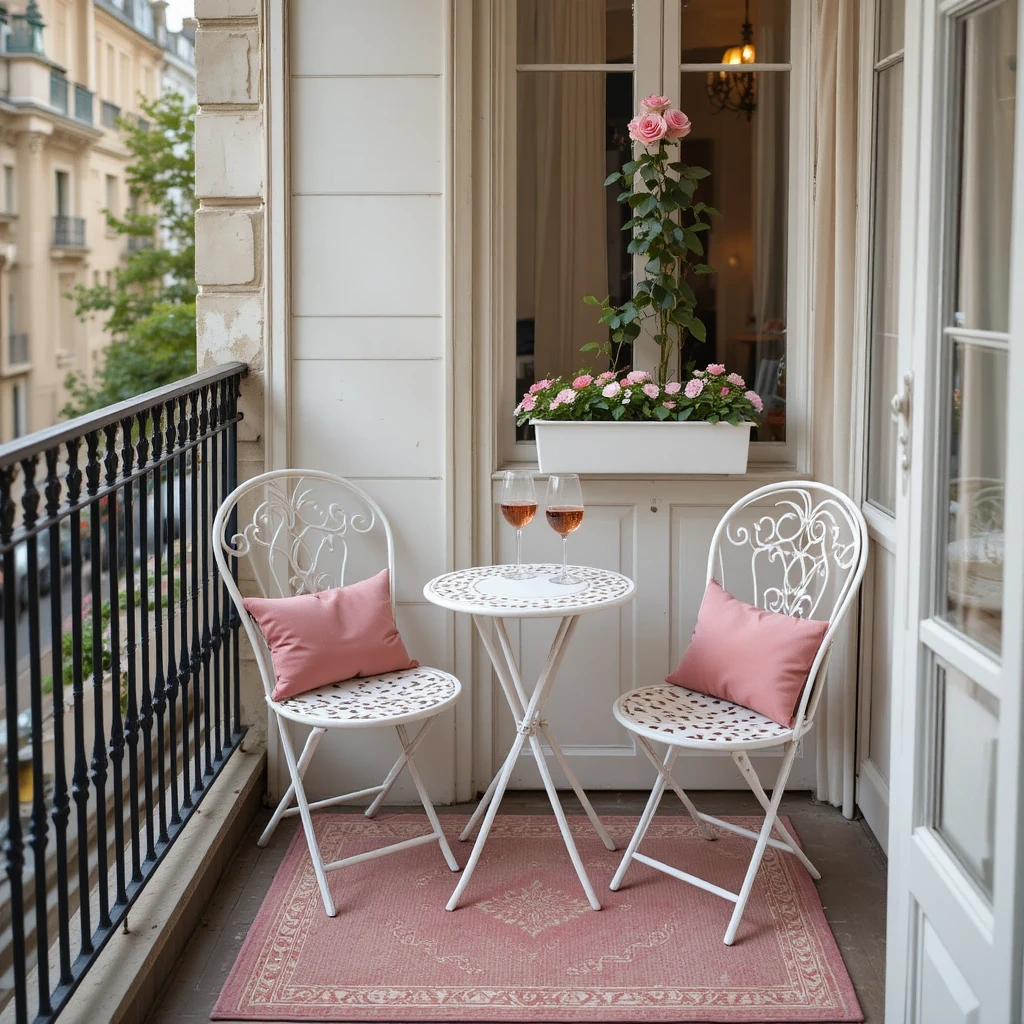
Not every patio needs a statement — sometimes the most beautiful spaces are the quietest. A dusty rose and cream flatweave for a small balcony or apartment patio creates a Parisian romanticism that is almost cinematic. Small-scale, intimate, and unabashedly pretty, this is the rug for one person or two who want their outdoor space to feel like a private escape from the world. Shop on Amazon
How to Style It:
- Scale everything down — bistro chairs and a small round table only
- Add a climbing or rambling rose in a white or terracotta pot beside the rail
- Use a linen curtain panel on one side for privacy and softness
- Set the scene with a glass of rosé and a single cut flower in a bud vase
Where to Use It: Small apartment balconies, Juliet balconies, intimate terrace corners, romantic garden nooks
Pro Tip: On very small balconies (under 6’x8′), a 4’x6′ rug can feel too small and a 6’x9′ too large. A 5’x7′ or a custom-cut 5’x8′ is often the sweet spot.
How to Choose the Right Outdoor Rug: A Quick-Reference Guide
| Your Priority | Best Choice |
|---|---|
| Maximum durability | Polypropylene flatweave |
| Most natural look | Synthetic sisal or jute-look |
| Easiest to clean | Low-pile polypropylene |
| Pool or water-adjacent | Marine-grade polyester |
| Largest pattern impact | Geometric or tribal print |
| Best for shaded areas | Any color — light or dark |
| Best for full sun | UV-resistant, lighter tones |
| Family with kids & pets | Flatweave, stain-treated |
Common Mistakes to Avoid
Going too small. The single most common patio rug mistake. A rug that only sits under the coffee table makes a space feel smaller, not larger. As a rule: all furniture legs should sit on the rug with the rug extending at least 12–18 inches beyond the outer edge of your seating group.
Choosing real natural fiber. Real jute, sisal, and sea grass look beautiful but deteriorate rapidly when wet, harbor mold, and can’t withstand rain. Always choose synthetic versions engineered to mimic these looks.
Neglecting rug pads. Outdoor rugs on smooth decking or tile can shift, curl at corners, and become a trip hazard. Always use an outdoor-rated non-slip rug pad underneath.
Forgetting about drainage. A rug placed directly against a wall or fence with no clearance for air circulation will develop mildew underneath. Leave at least 2–3 inches of clearance on all sides.
Choosing fashion over function in high-traffic zones. A delicate pattern or shag texture in a high-footfall area will look tired within one season. Reserve your most beautiful rugs for low-traffic, sheltered areas.
Letting it stay wet. After heavy rain, stand your outdoor rug on its side to drain and dry — don’t leave it lying flat on a wet surface. Five minutes of effort prevents months of mildew damage.
Ignoring the scale of pattern to space. A tiny pattern on a large terrace disappears entirely. A huge geometric on a small balcony overwhelms. Match the scale of the pattern to the scale of the space.
Frequently Asked Questions
What is the best material for an outdoor rug? Polypropylene (also called olefin) is the gold standard for outdoor rugs. It’s UV-resistant, water-resistant, mold-resistant, easy to clean with a hose, and available in virtually every pattern and color. For pool decks and truly wet environments, look for marine-grade polyester which dries even faster.
Can outdoor rugs be left out in rain? Most modern polypropylene outdoor rugs can handle rain — they’re designed to get wet. However, prolonged submersion or being left wet on non-draining surfaces encourages mildew underneath. Elevating the rug or bringing it in during extended rainy periods significantly extends its life.
How do I clean an outdoor rug? For routine cleaning: shake, sweep, or vacuum to remove debris, then hose down with water. For deeper cleans: mix mild dish soap with warm water, scrub with a soft brush, rinse thoroughly, and stand on its side to dry fully. Never use bleach on colored rugs — it causes fading.
How big should my patio rug be? For seating areas: the rug should be large enough that all front legs of your furniture sit on it — ideally all legs. For dining areas: the rug should extend 24 inches beyond the table edge on all sides, so chairs remain on the rug when pulled out. When in doubt, go one size larger than your instinct.
Do I need a rug pad for outdoor rugs? Yes — especially on smooth surfaces like decking, tile, or concrete. An outdoor-rated rug gripper or pad prevents slipping, protects the underside of the rug, improves airflow to reduce mildew, and adds a small amount of cushioning. They’re inexpensive and significantly extend rug life.
How long do outdoor rugs last? A quality polypropylene outdoor rug in a semi-shaded location with regular cleaning can last 5–8 years. In full direct sun with no maintenance, expect 2–3 years before significant fading. Storing rugs during harsh winters dramatically extends lifespan.
Can I use an indoor rug outside? Briefly and in a covered, very dry setting — yes. Outdoors without shelter — no. Indoor rugs aren’t treated for moisture, UV, or mold and will degrade rapidly and potentially permanently stain your deck. The investment in a true outdoor rug is always worth it.
What’s the best way to anchor an outdoor rug on a windy balcony? A quality non-slip rug pad is the first line of defense. For very windy locations, use heavy furniture on the edges of the rug, outdoor rug tape on the underside perimeter, or purpose-made rug anchors that clip to deck boards. Some people also use velcro strips along the edges for balconies with consistent wind.
Final Thoughts: Your Patio, Your Story
An outdoor rug isn’t just a floor covering — it’s the foundation of an experience. It’s the first thing guests feel underfoot, the element that tells them this space was thought about, cared for, and designed with intention.
Whether you go bold with a geometric statement, romantic with a faded Persian pattern, or serene with a natural woven texture, the right rug transforms your patio from a space you pass through into a place you choose to stay.
Pick the one that makes you feel something — and then go outside and enjoy it.