15+ Stunning Raised Flower Beds in Front of House
Transform your curb appeal from ordinary to extraordinary. Whether you have a tiny porch strip or a sweeping front yard, a raised flower bed is one of the smartest, most beautiful investments you can make in your home’s exterior. This complete guide covers 15+ creative ideas.
Why Raised Flower Beds in Front of House?
Raised flower beds aren’t just decorative — they’re strategic. They improve drainage, reduce weeds, warm soil faster in spring, and create defined structure that makes your entire landscape look intentional and polished. In the front of a house, they serve as the first impression — a living welcome sign that tells guests everything about the care and personality of the people who live there.
1. Classic Brick Border Raised Bed
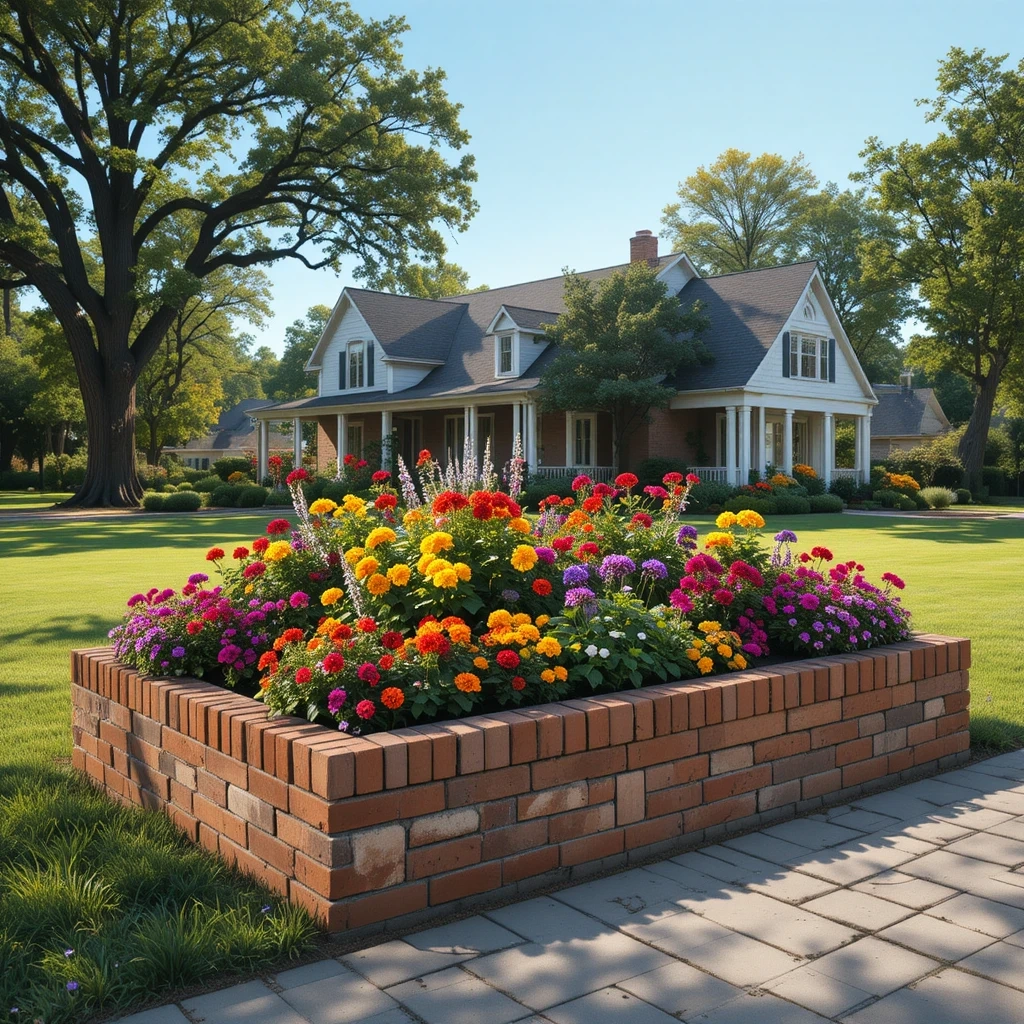
A timeless raised flower bed framed with traditional red or tan clay bricks, stacked two to three courses high. Filled with a mix of colorful annuals — petunias, marigolds, and salvias — in vibrant reds, yellows, and purples.
The bed sits along the front walkway of a charming suburban home with a lush green lawn, mature oak trees in the background, and a clear blue sky. Warm afternoon sunlight casts soft shadows across the brick surface. Photorealistic style, wide-angle view. Shop on Amazon
How to Style It:
- Use reclaimed or tumbled bricks for a vintage, lived-in feel
- Stack bricks in a running bond pattern (offset by half) for strength and visual appeal
- Fill the interior with rich, dark compost-blended soil for deep contrast against the brick
- Plant in odd-numbered clusters: groups of 3 or 5 per flower type
- Add a low border of sweet alyssum at the front edge to soften the brick line
- Use red and yellow flowers to complement warm-toned brick; use white and lavender for tan brick
Where to Use It: Along a straight front walkway, bordering a driveway edge, or as a foundation planting beneath the front windows of a traditional or colonial-style home.
Pro Tip: Seal your bricks with a masonry sealer before planting season — it prevents moisture absorption, reduces moss buildup, and keeps the bricks looking fresh for years. Reapply every 3–5 years.
2. Rustic Railroad Tie Bed
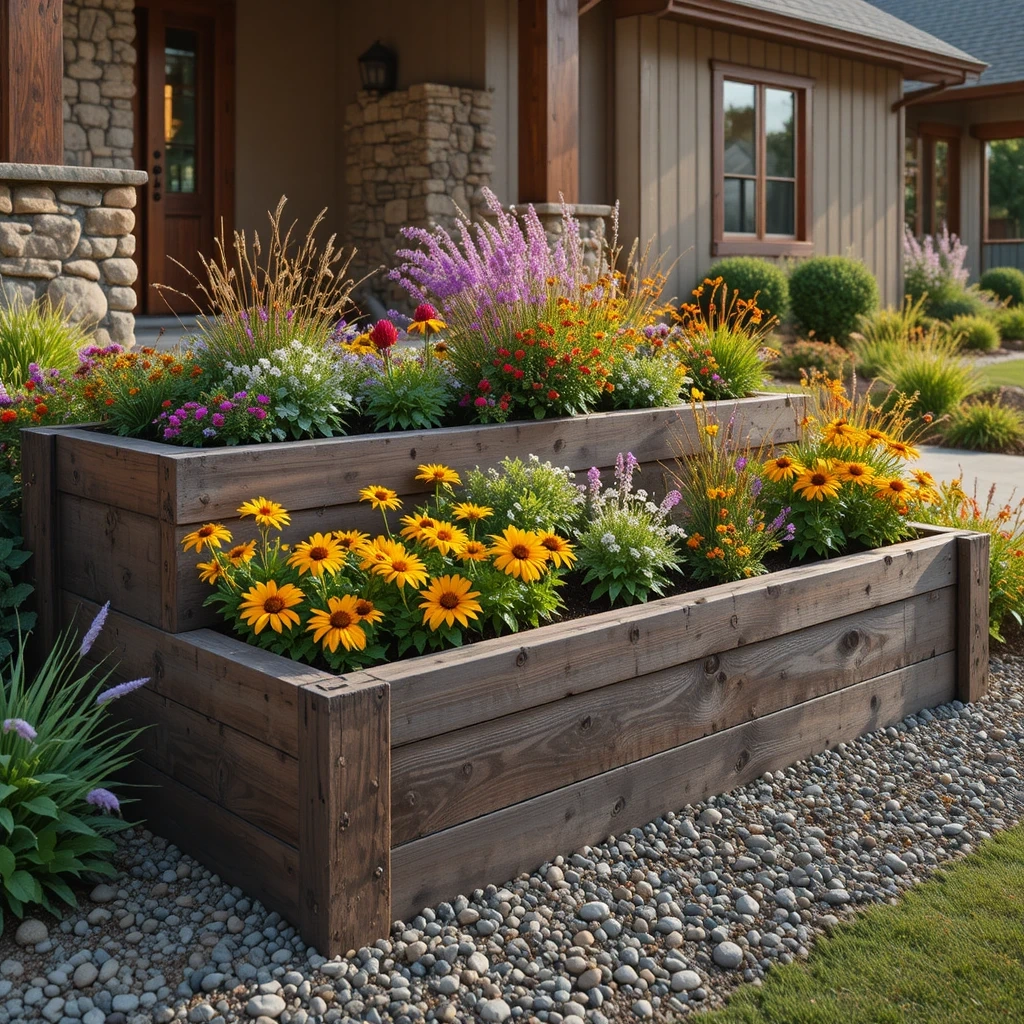
A bold, rugged raised flower bed constructed from reclaimed dark brown wooden railroad ties (landscape timbers), stacked two layers high. Planted with cheerful black-eyed Susans, coneflowers (echinacea), and ornamental grasses.
The bed is set against the front of a ranch-style house with a wooden front door and stone accents. Golden late-afternoon light warms the scene. Gravel mulch covers the soil surface. Photorealistic, natural country aesthetic. Shop on Amazon
How to Style It:
- Use landscape timbers or new cedar sleepers if railroad ties are unavailable or treated with harmful preservatives
- Stagger the corner joints like Lincoln Logs for maximum stability — no hardware required for two-layer beds
- Fill with a mix of topsoil, compost, and a handful of coarse sand for drainage
- Choose wildflower-inspired plants: coneflowers, rudbeckia, salvia, ornamental grasses
- Top-dress with pea gravel or bark mulch for a clean, natural finish
- Leave a small gap between timbers at ground level to allow drainage
Where to Use It: Ideal for ranch homes, farmhouses, log cabins, or any property with a rustic or natural aesthetic. Works beautifully along a long driveway approach or open front garden.
Pro Tip: Drill holes through stacked timbers and drive rebar down through them into the ground for rock-solid stability — especially important if you live in an area with freeze-thaw cycles that shift the soil.
3. White Picket Planter Box
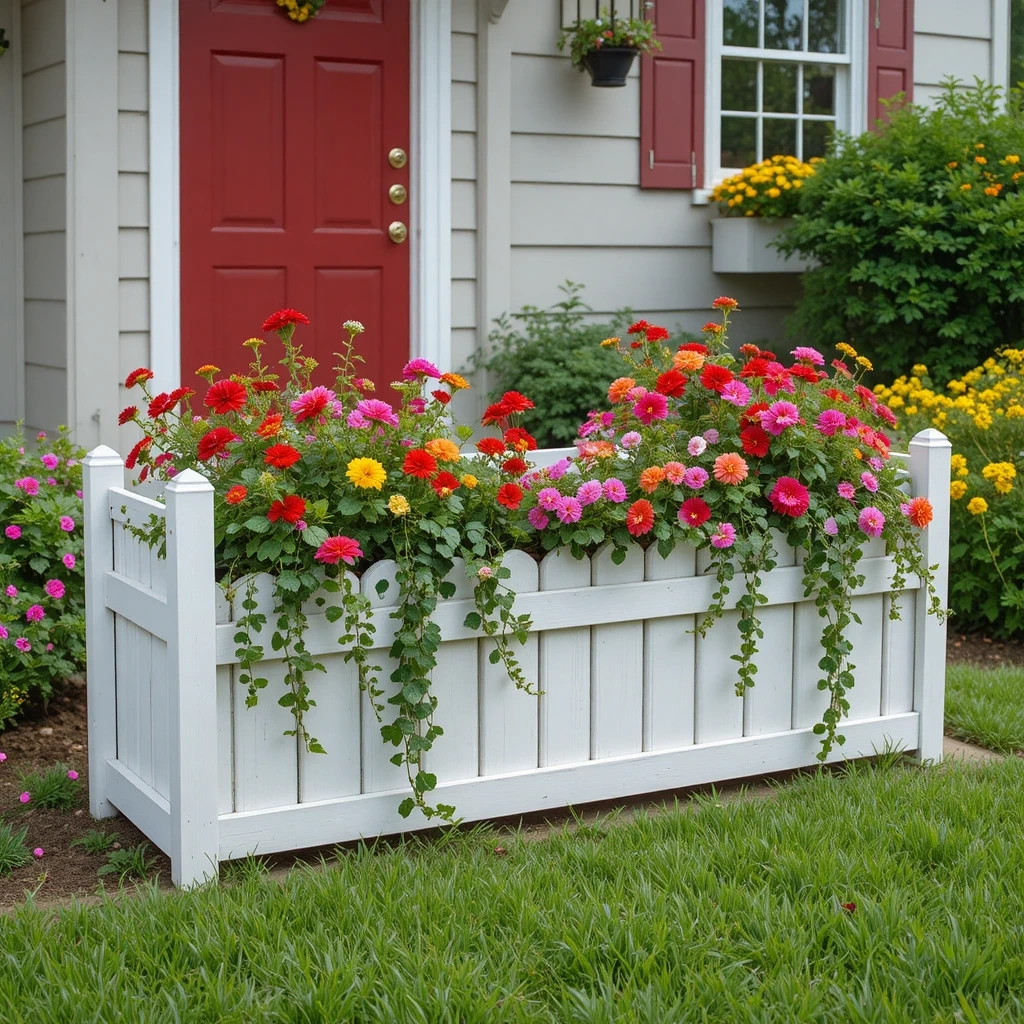
A charming white-painted wooden raised planter box designed to look like a miniature white picket fence, filled with cascading red and pink petunias, trailing ivy, and cheerful yellow marigolds.
The planter sits on either side of a red-painted front door of a cottage-style home with window boxes above. The yard is bright green and the sky is a soft summer blue. Soft, warm, inviting aesthetic — like a greeting card. Photorealistic. Shop on Amazon
How to Style It:
- Build or buy cedar or pine planter boxes and paint them crisp white (semi-gloss or exterior enamel)
- Add the picket fence detail along the front face using thin slat boards — purely decorative, no function needed
- Use a liner inside to protect the wood from moisture
- Plant upright flowers in the center (snapdragons, zinnias) and trailing plants along the edges (petunias, bacopa, ivy)
- Refresh the paint each spring before planting season begins
- Add small finials or decorative caps on each post for extra charm
Where to Use It: Perfect flanking a front door, lining a porch edge, or placed beneath front windows on a cottage, Victorian, or Cape Cod-style home. Excellent for renters who want beauty without permanent changes.
Pro Tip: Elevate the planter box on small rubber feet or casters — this prevents the wood bottom from sitting in standing water, dramatically extending the life of the box by 3–5 years.
4. Stacked Stone Terraced Bed
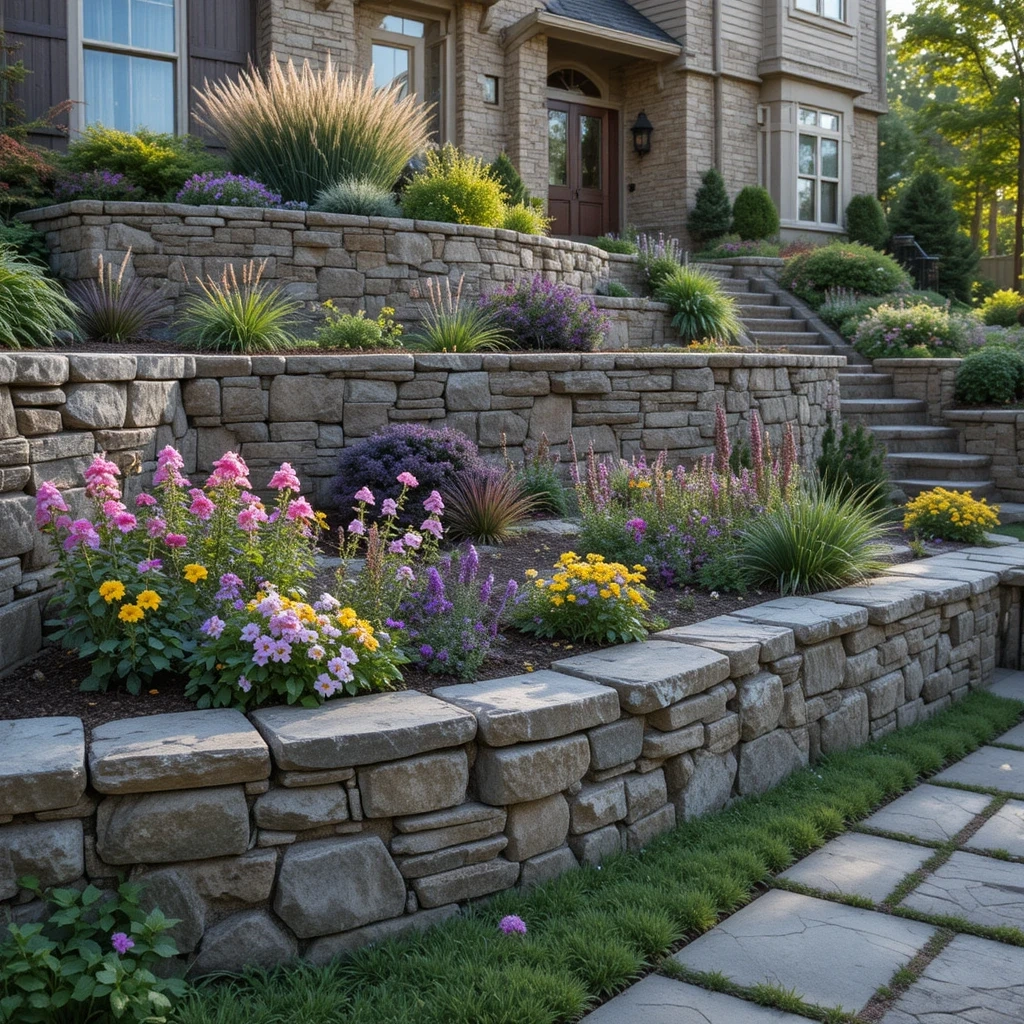
A dramatic multi-level terraced raised flower bed built from irregularly shaped natural fieldstone or limestone, creating two or three descending tiers on a gently sloping front yard. Upper tiers feature ornamental grasses and lavender; lower tiers overflow with colorful daylilies and creeping phlox.
A stone pathway leads to the front door. Late afternoon golden-hour light. Photorealistic, magazine-quality garden photography style. Shop on Amazon
How to Style It:
- Use dry-stacked stone (no mortar) for a natural look — stones lock together by weight and gravity
- Each tier should be 8–12 inches tall; lean stones slightly inward for stability
- Plant drought-tolerant species in upper tiers (lavender, sedum, ornamental grass) and moisture-loving plants in lower tiers
- Tuck creeping thyme or sedum between stone joints — they’ll spread naturally and look intentional
- Add boulders of varying sizes to the ends of each tier to ground the design
- Use plants with different bloom times so something is always in color from spring through fall
Where to Use It: Essential for front yards with a natural slope. Terracing replaces the need for retaining walls while adding incredible visual dimension. Works beautifully with craftsman, Tudor, or rustic-modern home styles.
Pro Tip: Bury the first course of stones at least 2 inches underground. This anchors the wall, prevents forward sliding, and creates a clean visual base line that makes the whole structure look professionally built.
5. Modern Concrete Block Bed
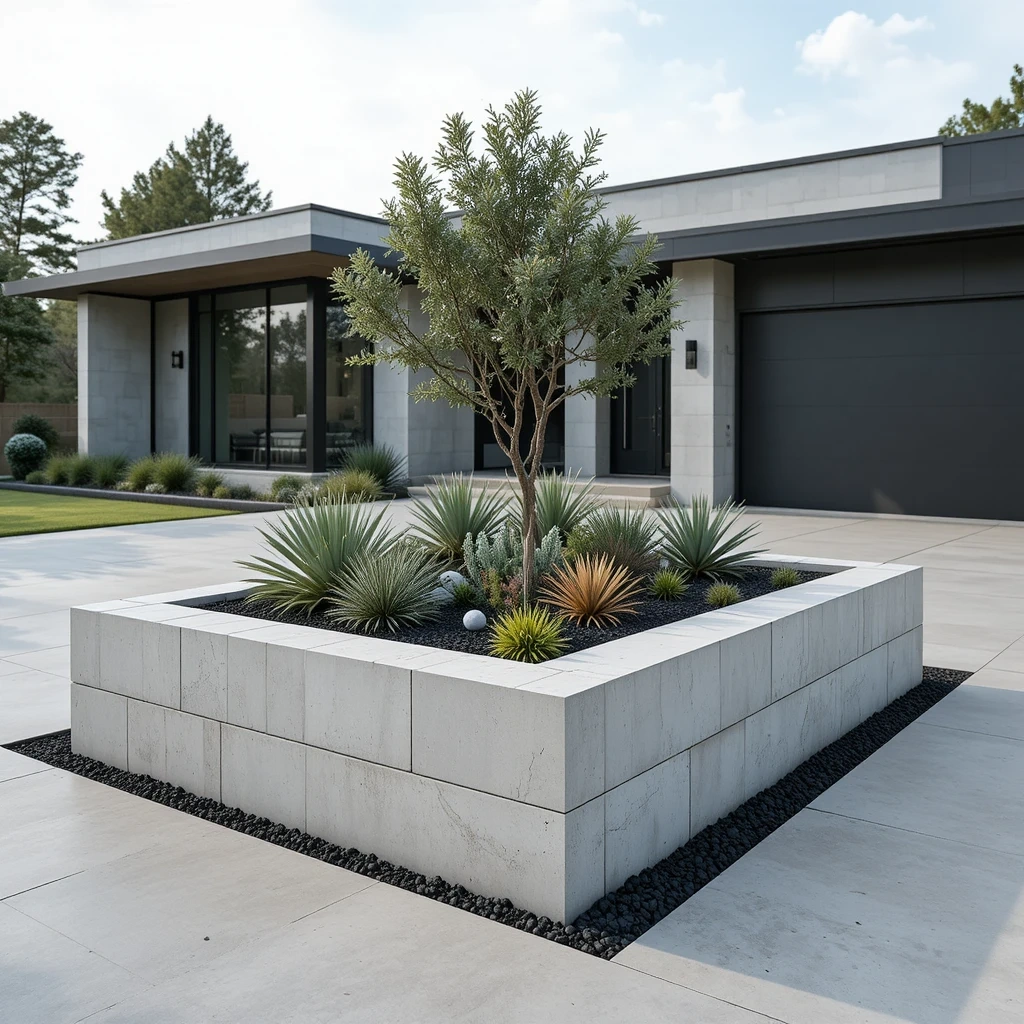
A sleek, minimalist raised flower bed built from smooth light grey concrete cinder blocks arranged in a clean rectangular shape, one block high. Planted with architectural ornamental grasses, agave, succulents, and a single ornamental olive tree as a focal point. Black lava rock mulch covers the soil.
The home behind it is a flat-roofed modern house with large glass windows and a black front door. The driveway is polished concrete. Photorealistic, architectural photography style. Shop on Amazon
How to Style It:
- Use standard CMU blocks or decorative architectural blocks in charcoal, white, or tan
- Arrange in a clean rectangle or L-shape — avoid curves with block materials
- Paint blocks with masonry paint for a custom color or seal them for a natural industrial look
- Plant only architectural, structural species: ornamental grass, agave, phormium, lavender, rosemary
- Use dark-colored mulch (lava rock, black bark) for maximum contrast
- Keep planting sparse and deliberate — this style celebrates negative space
Where to Use It: Designed for contemporary, mid-century modern, or industrial-style homes. Works well in drought-prone climates. Excellent along a straight driveway, near a garage door, or as a bold statement at the property edge.
Pro Tip: Fill the hollow cores of CMU blocks with soil and plant small succulents or sedums inside each one. It turns the blocks themselves into planters, adding texture and life to the walls without extra work.
6. Curved Garden Bed with Ornamental Grass
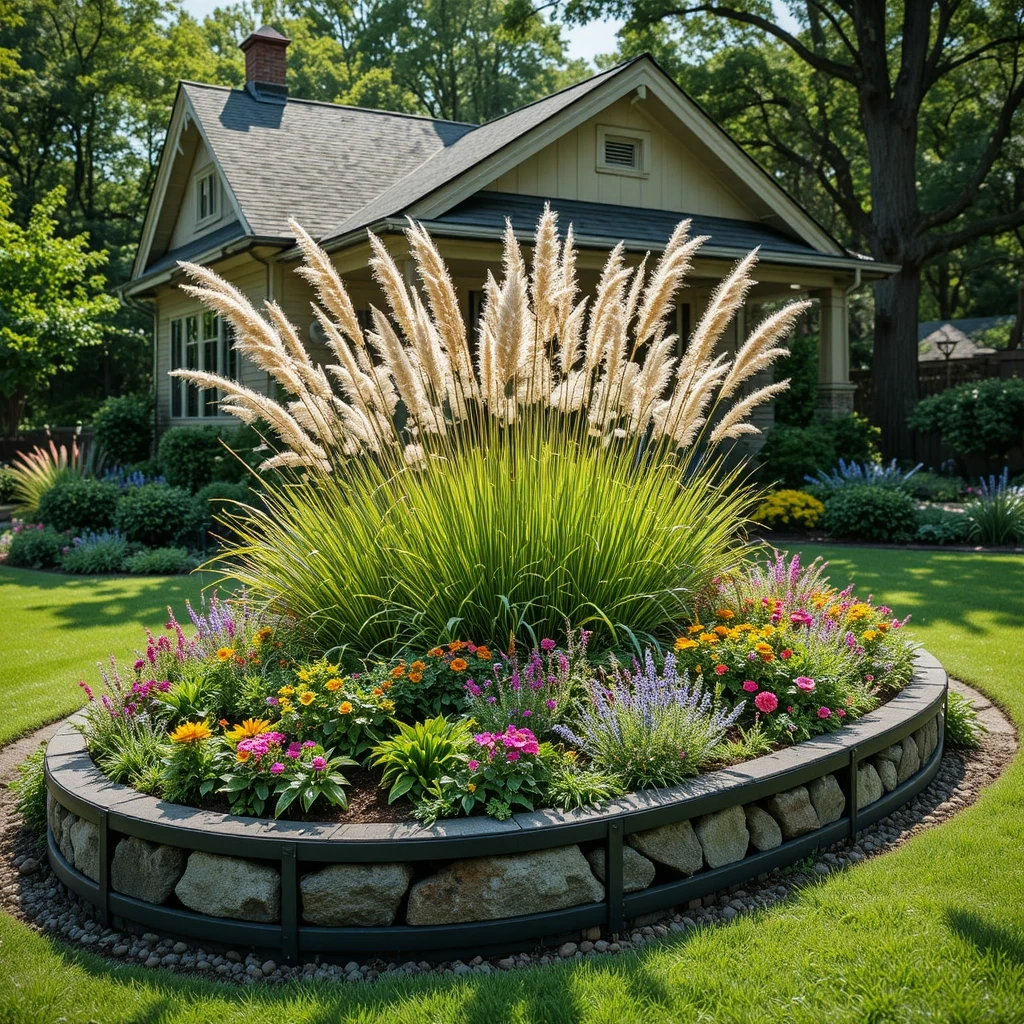
A sweeping, elegantly curved raised flower bed edged with smooth black metal garden edging, creating a flowing organic shape across the front yard of a cream-colored craftsman bungalow. Tall ornamental grasses (miscanthus,
feather reed grass) sway in the center; shorter black-eyed Susans, coneflowers, and salvia fill the mid-layer; creeping sedum runs along the curved front edge. Dappled light through trees overhead. Photorealistic, lifestyle garden style. Shop on Amazon
How to Style It:
- Use flexible steel or aluminum garden edging to create smooth, gradual curves — never sharp angles
- Install edging first, then build up the soil inside to the desired height (4–8 inches is ideal for a “soft” raised effect)
- Achieve a layered look: tallest plants at back, medium in middle, shortest at front
- Choose grasses with seasonal interest: green in summer, gold/amber in fall and winter
- Let ornamental grasses self-seed slightly for a natural, wild effect
- Divide and replant ornamental grasses every 3 years to keep them vigorous
Where to Use It: Beautiful in open front yards where a curved path naturally flows toward the door. Softens the edges of formal rectangular lawns and pairs wonderfully with craftsman, cottage, or transitional home styles.
Pro Tip: When installing metal edging, bury it at least 4 inches deep with only 1–2 inches showing above grade. This prevents grass runners from jumping over the edge and eliminates the need for constant re-edging.
7. Cottage-Style Mixed Perennial Bed
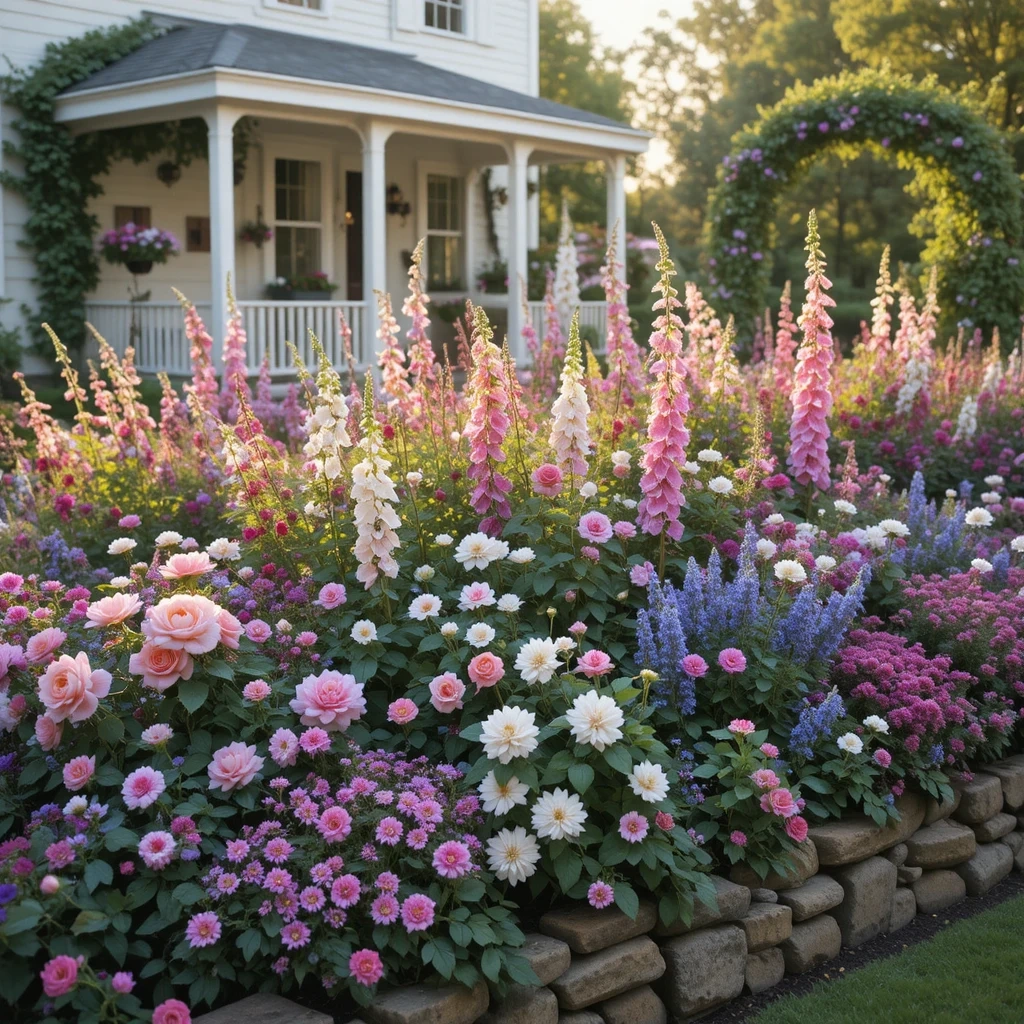
A lush, overflowing cottage garden raised bed packed with an abundant mix of perennial flowers in soft pinks, purples, whites, and blues. Roses, peonies, foxglove, catmint, hollyhocks, and delphiniums create a romantic, slightly wild abundance.
The bed is bordered by a low stacked stone edge in front of a white clapboard cottage home with a covered porch and climbing roses on the arbor. Morning light with a soft golden haze. Photorealistic, romantic English garden style. Shop on Amazon
How to Style It:
- Embrace controlled chaos: plant densely so weeds have no room to grow
- Choose plants with overlapping bloom times to ensure something is always flowering April–October
- Add height variation: tall foxglove and hollyhocks at back, medium roses and peonies in mid, catmint and alyssum at front
- Include fragrant plants near the path: lavender, roses, sweet peas, stock
- Allow plants to slightly spill over the edging — it softens the formality and looks romantic
- Divide perennials every 2–3 years and share extras with neighbors
Where to Use It: A natural match for Victorian, colonial, Cape Cod, or English cottage-style homes. Works in any front yard where you want a warm, welcoming, deeply personal feeling.
Pro Tip: Deadhead spent blooms religiously from June through August to keep the bed reblooming. Spend 10 minutes every weekend snipping faded flowers and you’ll extend the display by 4–6 additional weeks.
8. Symmetrical Twin Beds Flanking Entry
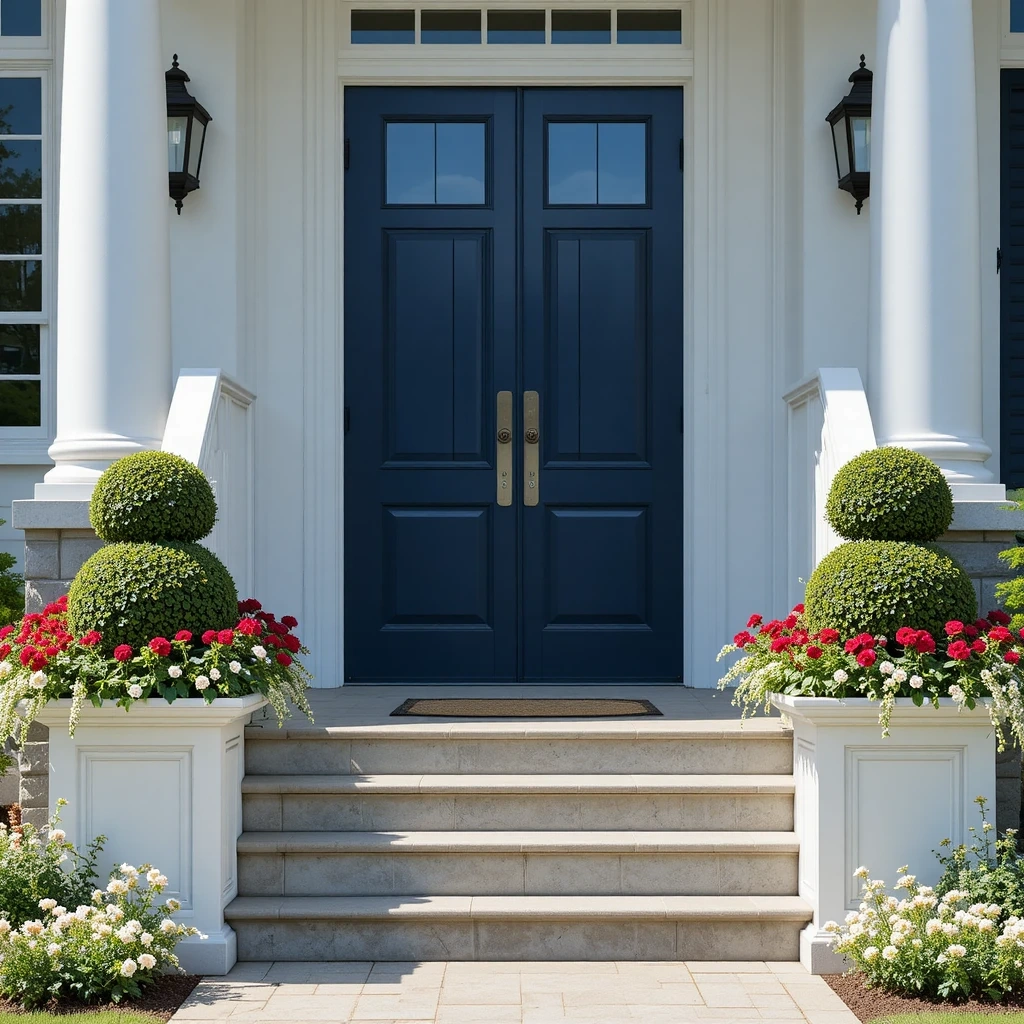
Two perfectly matching raised planter beds, one on each side of a grand front entry staircase, built from white-painted wood or smooth limestone. Each bed is planted identically with a centered boxwood topiary ball, surrounded by red geraniums, trailing white alyssum, and silvery dusty miller.
The front door behind is painted a deep navy blue. Formal, symmetrical composition. Bright midday light. Photorealistic, luxury real estate photography style. Shop on Amazon
How to Style It:
- Measure precisely — both beds must be identical in size, shape, and planting
- Use the front door color as the accent color guide for flower selection
- Anchor each bed with an identical central focal plant (boxwood, rosemary standard, dwarf conifer)
- Repeat the exact same plant palette in each bed — no variation
- Use an even number of accent plants for perfect symmetry
- Keep trimming focal plants into matching shapes throughout the season
Where to Use It: Perfect for formal, colonial, Georgian, Federal, or neoclassical homes with centered front doors. Especially effective when flanking a staircase, pillared entry, or grand walkway.
Pro Tip: Photograph your entry from the street before planting. Symmetry that looks perfect up close often looks slightly off from a distance. The curb view is the only one that matters — adjust placement based on that angle.
9. Corner Raised Bed with Climbing Roses
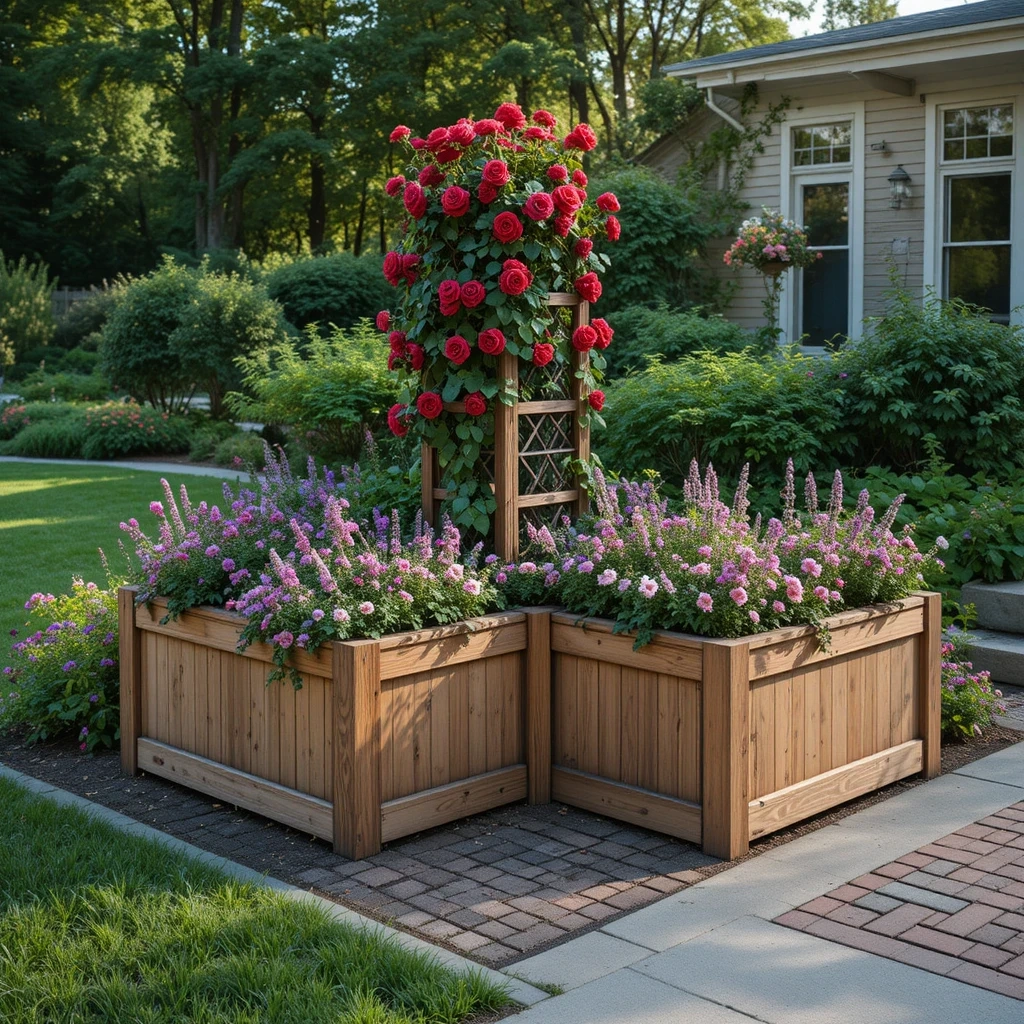
A large L-shaped raised flower bed filling the corner of a front yard where the garden meets the sidewalk. A tall wooden or metal obelisk trellis anchors the corner, draped with a climbing rose in deep red bloom. Below it, a mix of salvia, lavender, and hardy geraniums fills the base.
The raised bed is built from weathered cedar planks. A brick front walkway is visible in the foreground. Late afternoon romantic light. Photorealistic, editorial garden style. Shop on Amazon
How to Style It:
- Build the L-shape to exactly mirror the property corner for a seamless, intentional look
- Install a substantial obelisk or trellis (at least 5 feet tall) at the corner apex as the anchor point
- Train the climbing rose early — tie new canes horizontally to encourage more blooms
- Plant supporting flowers that complement the rose color: deep reds pair with silvers and purples; pinks pair with blues and whites
- Edge the bed with a low boxwood hedge for year-round structure even when flowers fade
- Add rose-specific fertilizer in early spring and mid-summer for maximum bloom
Where to Use It: Ideal for corner lots, properties with L-shaped lawns, or any front yard where the corner of the garden is currently wasted space. Creates a dramatic visual anchor visible from the street.
Pro Tip: Choose climbing roses labeled “disease-resistant” (varieties like Knock Out Climbing, New Dawn, or Zephirine Drouhin). Front yard roses get full scrutiny from passersby — disease-resistant varieties stay beautiful with half the maintenance.
10. Layered Slope Retaining Bed
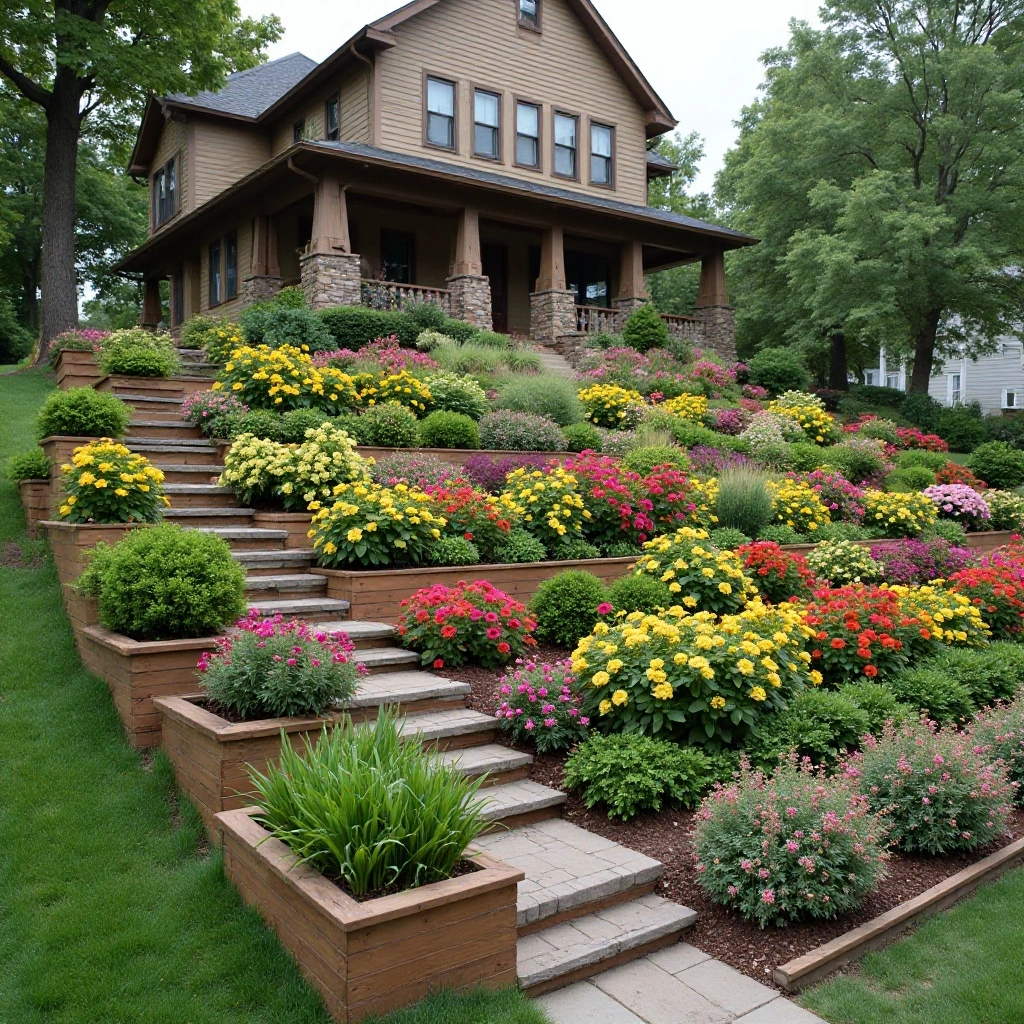
A functional and beautiful raised garden bed system built into a steep sloping front yard, using multiple tiers of pressure-treated wood retaining walls. Each level overflows with cascading flowers: wave petunias, trailing lantana, and golden creeping Jenny flow down the slope edges. Shop on Amazon
Upright plants like Russian sage and ornamental grasses fill the upper portions. The home is a craftsman-style house with a stone foundation. Overcast bright light showing all the color detail. Photorealistic, landscape design portfolio style.
How to Style It:
- Tier height should not exceed 24 inches per level without professional engineering review
- Use cascading plants specifically at the front edge of each tier so they soften the wall faces
- Install landscape fabric behind each wall to prevent soil erosion
- Choose plants appropriate for the sun exposure — south-facing slopes need drought-tolerant species
- Include a clear stepped pathway through or alongside the tiers for garden access and maintenance
- Use identical edging material across all tiers for a unified look
Where to Use It: Essential for front yards with natural slope where mowing is difficult, erosion is a problem, or the lawn simply doesn’t grow well. Converts a liability into a stunning landscape feature.
Pro Tip: Install drip irrigation in each tier before planting. Watering terraced beds by hand is inefficient and the tiers dry out at different rates. A simple drip system on a timer costs under $80 and eliminates the problem entirely.
11. Mediterranean Herb & Flower Bed
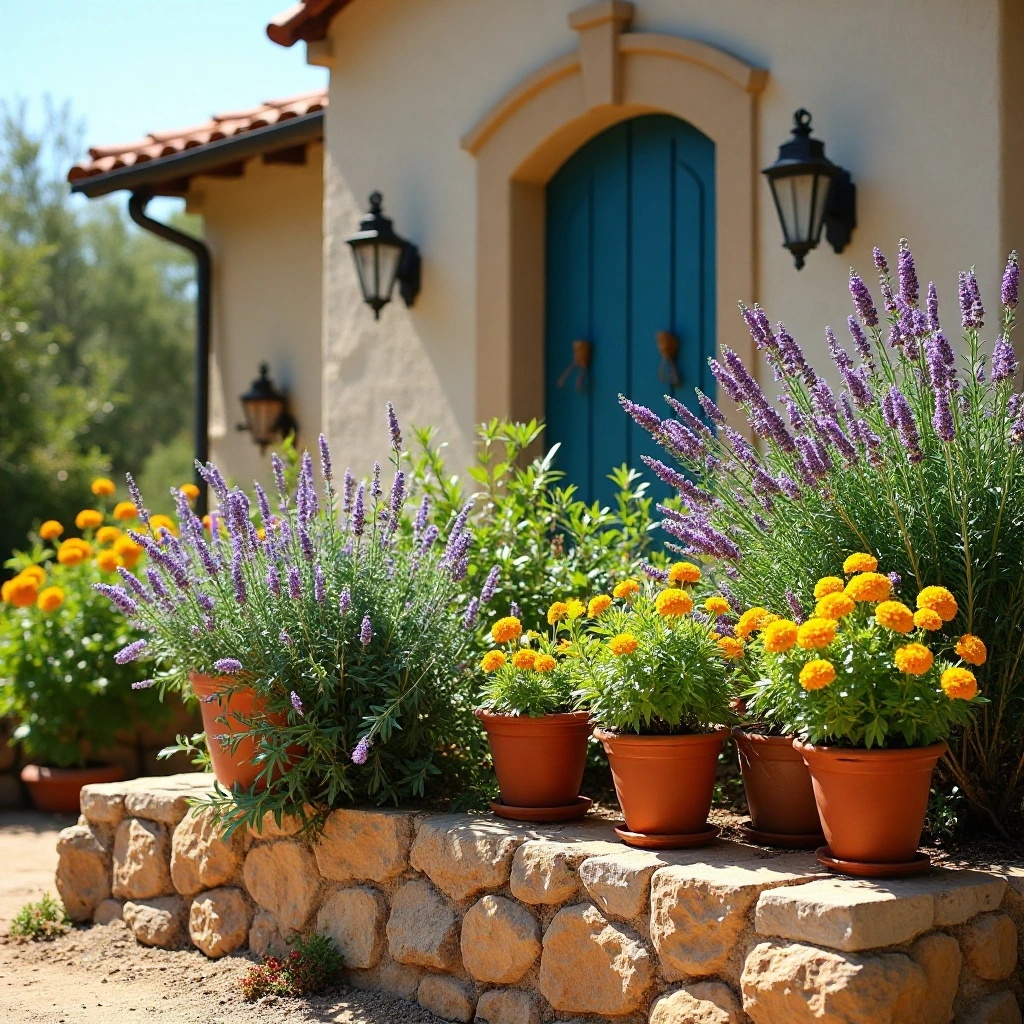
A sun-drenched raised garden bed with a terracotta-colored clay or stucco exterior wall, overflowing with Mediterranean herbs and flowers: lavender, rosemary, sage, thyme, oregano, and bright yellow-orange calendula. Terracotta pots of varying heights are nestled within and around the bed. Shop on Amazon
The background shows a stucco or white-rendered home with a blue painted front door and iron lanterns on the wall. Warm midday sunlight, blue sky. Photorealistic, Tuscan villa aesthetic.
How to Style It:
- Build or clad the bed walls in terracotta-colored render or stack terracotta-colored clay pavers
- Prioritize plants with silver-green foliage and purple or yellow blooms for a true Mediterranean palette
- Cluster terracotta pots of different heights inside and around the bed for layering
- Use gravel mulch (tan or terracotta-toned) instead of bark for authentic Mediterranean drainage look
- Include an olive tree or bay laurel as a permanent structural anchor if climate allows
- Add a small mosaic tile panel on the front face of the bed as a decorative detail
Where to Use It: Best for homes in warm, dry climates (zones 7–10) or with Mediterranean, Spanish Colonial, Tuscan, or stucco-finish architectural styles. The combination of edible herbs and beautiful flowers makes this bed both aesthetic and functional.
Pro Tip: Mediterranean herbs need exceptionally well-drained soil — they’ll rot in heavy clay. Mix at least 30% coarse sand or perlite into your raised bed soil. Drought stress actually intensifies the flavor and fragrance of herbs like lavender, thyme, and rosemary.
12. Tropical Statement Bed
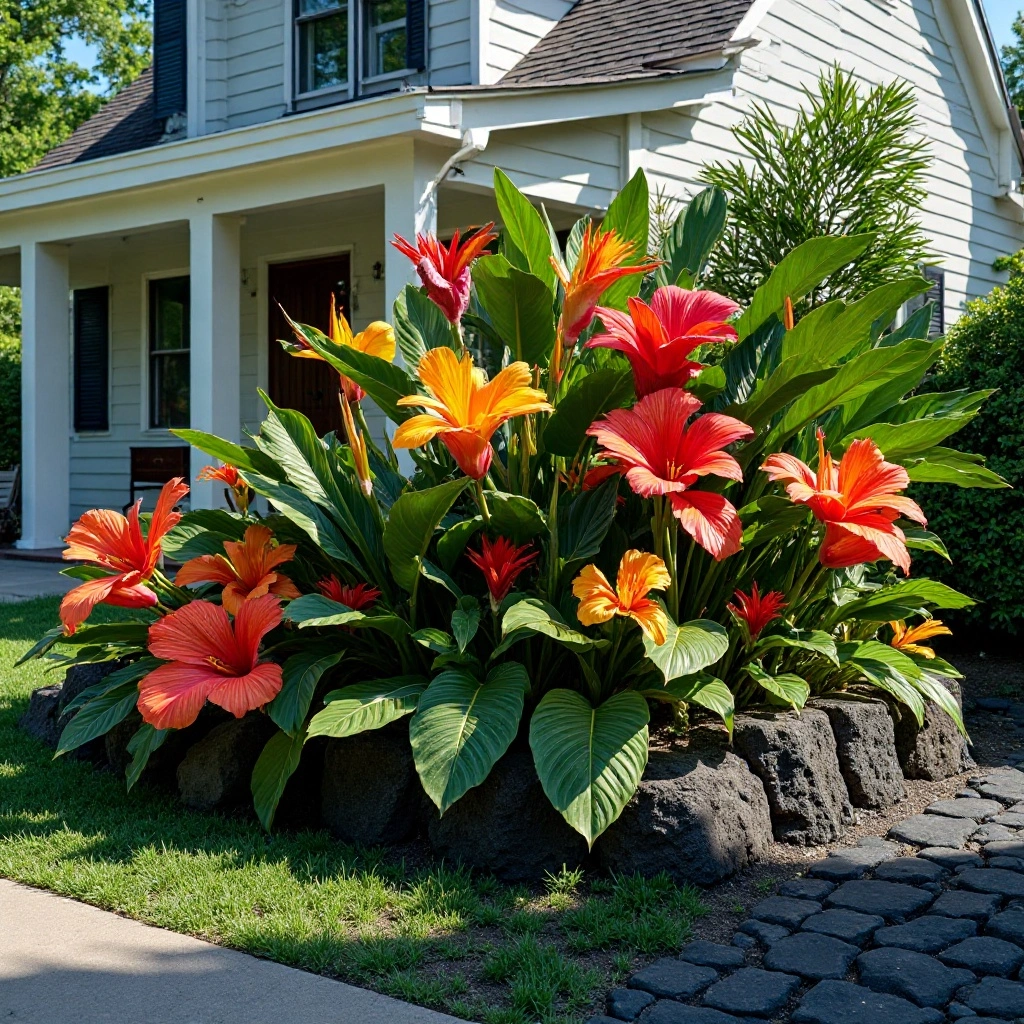
A bold, lush raised flower bed overflowing with dramatic tropical foliage: elephant ears (colocasia) with huge dark leaves, red and yellow cannas, orange bird of paradise, tropical hibiscus, and bold croton plants in orange and red. The bed is bordered with smooth polished black granite pavers.
The home behind is a pale grey modern house with a wide front porch. Bright summer light, deep blue sky. Photorealistic, bold and saturated color style. Shop on Amazon
How to Style It:
- Use large-leaved architectural plants as the focal points (elephant ear, canna, bird of paradise)
- Layer from tallest (center-back) to shortest (front edge) for depth
- Choose a warm color palette: oranges, reds, yellows, and hot pinks for maximum impact
- Use a dark polished stone border — it makes the tropical colors pop dramatically
- In colder zones, treat tropical plants as annuals or dig and store rhizomes each fall
- Water deeply but infrequently once established — tropicals love deep moisture
Where to Use It: Makes a stunning impact on contemporary, coastal, Floridian, or Caribbean-inspired homes. Works beautifully in warm climates (zones 9–11) and as a bold annual display in cooler zones.
Pro Tip: Start tropical plants indoors 6–8 weeks before the last frost date. Getting a head start indoors means you’ll have impressive, full-sized plants ready to drop in the moment warm weather arrives — not tiny starts that take all summer to fill in.
13. All-White Moon Garden Bed
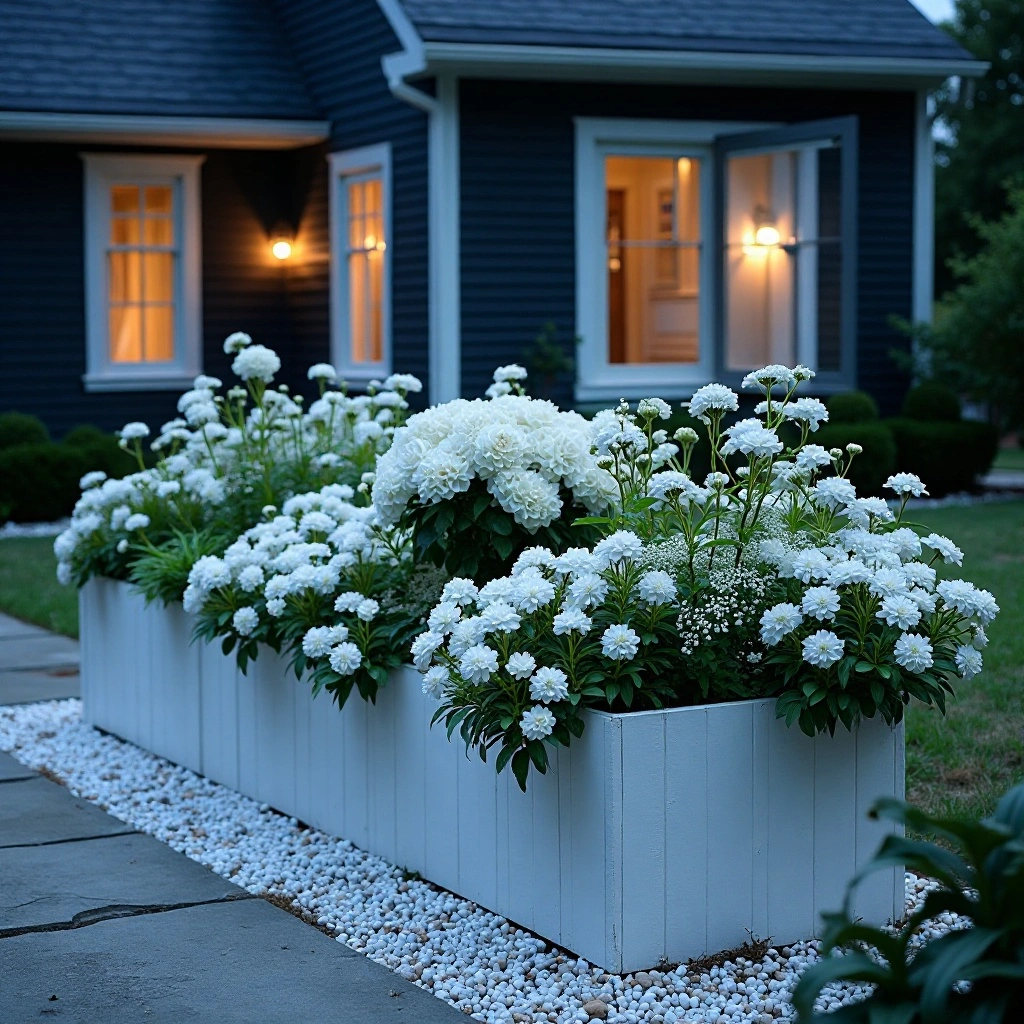
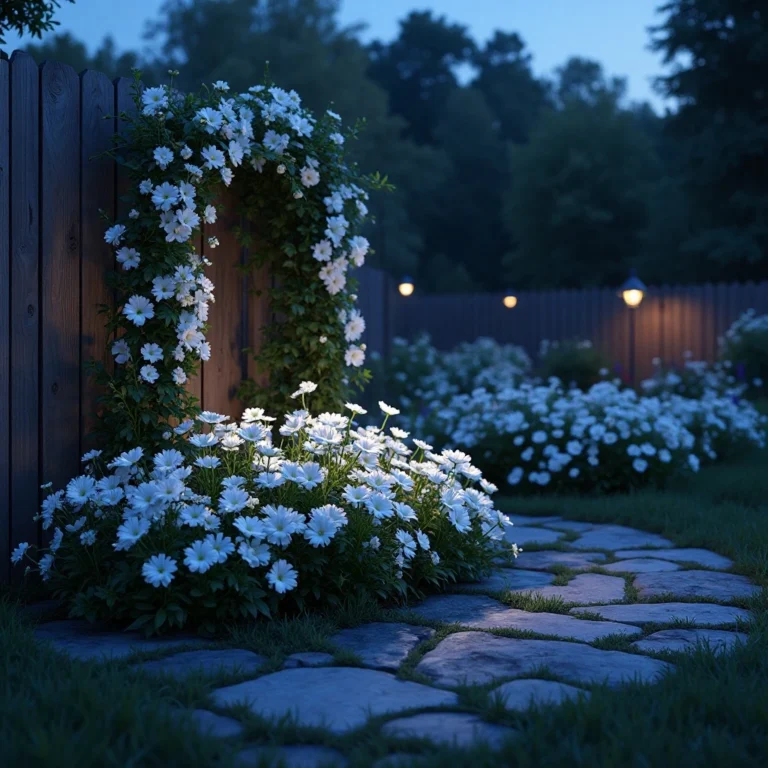
A serene and ethereal raised garden bed planted exclusively in white and silver-white flowering plants: white roses, white phlox, white dahlias, white impatiens, dusty miller, and silvery lamb’s ear. The bed is bordered with white-painted wood or white marble chips at the edge.
The background is a dark charcoal or navy blue home exterior, making the white flowers glow brilliantly against it. Photographed in the soft twilight blue hour with landscape lighting illuminating the bed from below. Photorealistic, dreamy aesthetic. Shop on Amazon
How to Style It:
- Commit fully to the all-white palette — even one rogue color breaks the spell
- Use silver and grey foliage plants (dusty miller, lamb’s ear, artemisia) to add texture within the monochrome scheme
- Choose flowers with different textures: spiky (agapanthus), rounded (roses), airy (gaura), bold (dahlias)
- Install low-voltage landscape uplights inside the bed to illuminate blooms at night
- Use white or pale grey painted bed walls to reinforce the luminous theme
- Include fragrant whites (gardenias, white roses, stock) since this bed shines at twilight and evenings
Where to Use It: Magical on dark-painted homes (navy, charcoal, forest green, black). Perfect for evening entertainers who want curb appeal after dark. Elegant and timeless alongside Georgian, modern farmhouse, or contemporary architecture.
Pro Tip: White flowers show dirt splashes from rain. Apply a 3-inch layer of white marble chip mulch or white pea gravel as a surface dressing — it reflects light upward, prevents soil splash on petals, and extends the clean white theme from soil to sky.
14. Pollinator Paradise Wildflower Bed
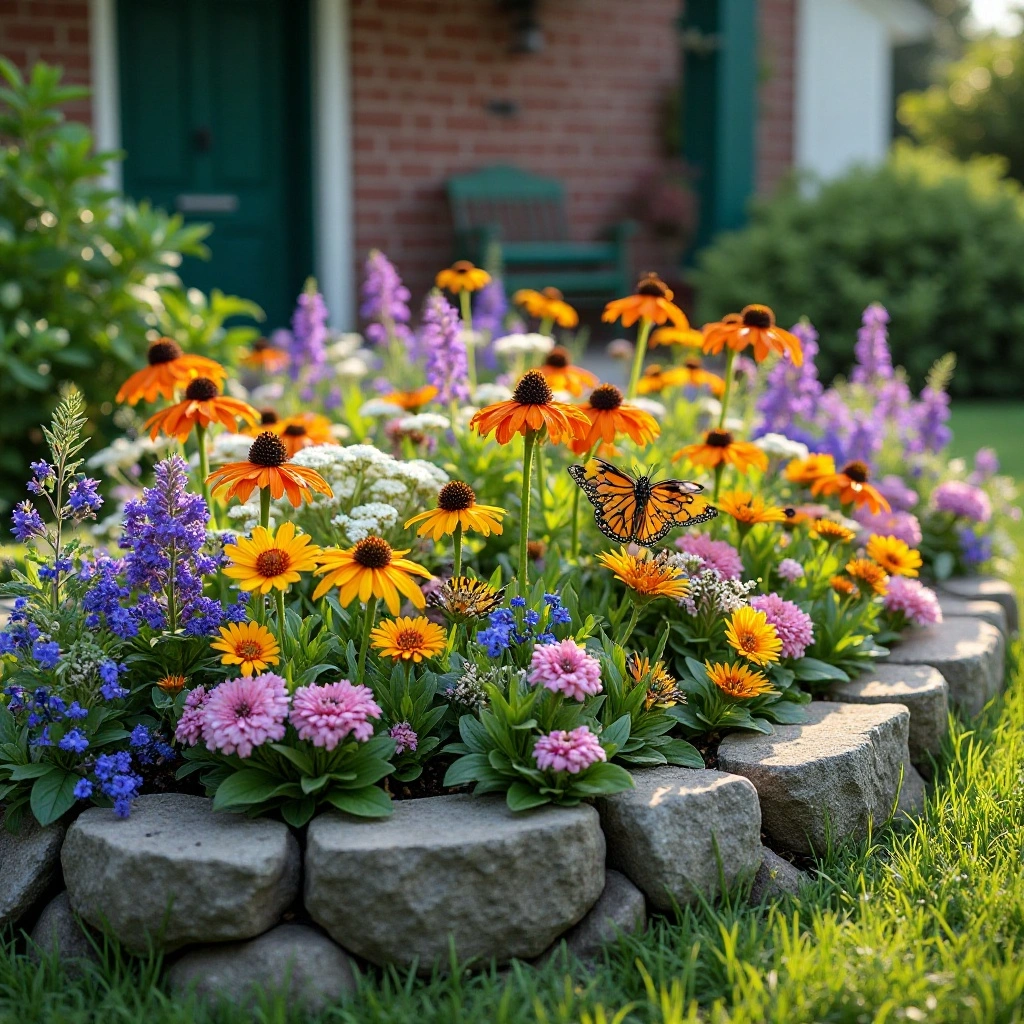
A vibrant, naturalistic raised flower bed bursting with native wildflowers in a rich tapestry of colors: purple coneflowers, orange butterfly weed, yellow rudbeckia, blue salvia, pink phlox, and white Queen Anne’s lace. Butterflies and bees are visibly active in the scene.
The bed is edged with rough natural fieldstone in an informal, organic arrangement. The home behind is a friendly brick colonial with a green front door. Soft morning light with dewdrops on petals. Photorealistic, nature photography style. Shop on Amazon
How to Style It:
- Choose at least 70% native plants for your region — they’re most valuable to local pollinators
- Include bloom time diversity: spring natives, summer natives, and fall natives for a continuous buffet
- Avoid deadheading seed heads in fall — birds and beneficial insects rely on them
- Keep the edging informal: fieldstone, wooden edging, or simple metal — no formal clipping here
- Add a small water dish or shallow birdbath near the bed to attract butterflies and bees
- Let some plants self-seed: the “wild” look is the goal and reduces work year after year
Where to Use It: Beautiful in any front yard where you want to make an ecological statement. Perfect for families, schools, or anyone who wants to actively contribute to local biodiversity. Pairs well with craftsman, farmhouse, or cottage-style homes.
Pro Tip: Apply for your local “Certified Wildlife Habitat” designation through the National Wildlife Federation after establishing this bed. It comes with a sign you can display in the garden — a wonderful conversation starter and a mark of genuine commitment to your community.
15. Seasonal Color Rotation Bed
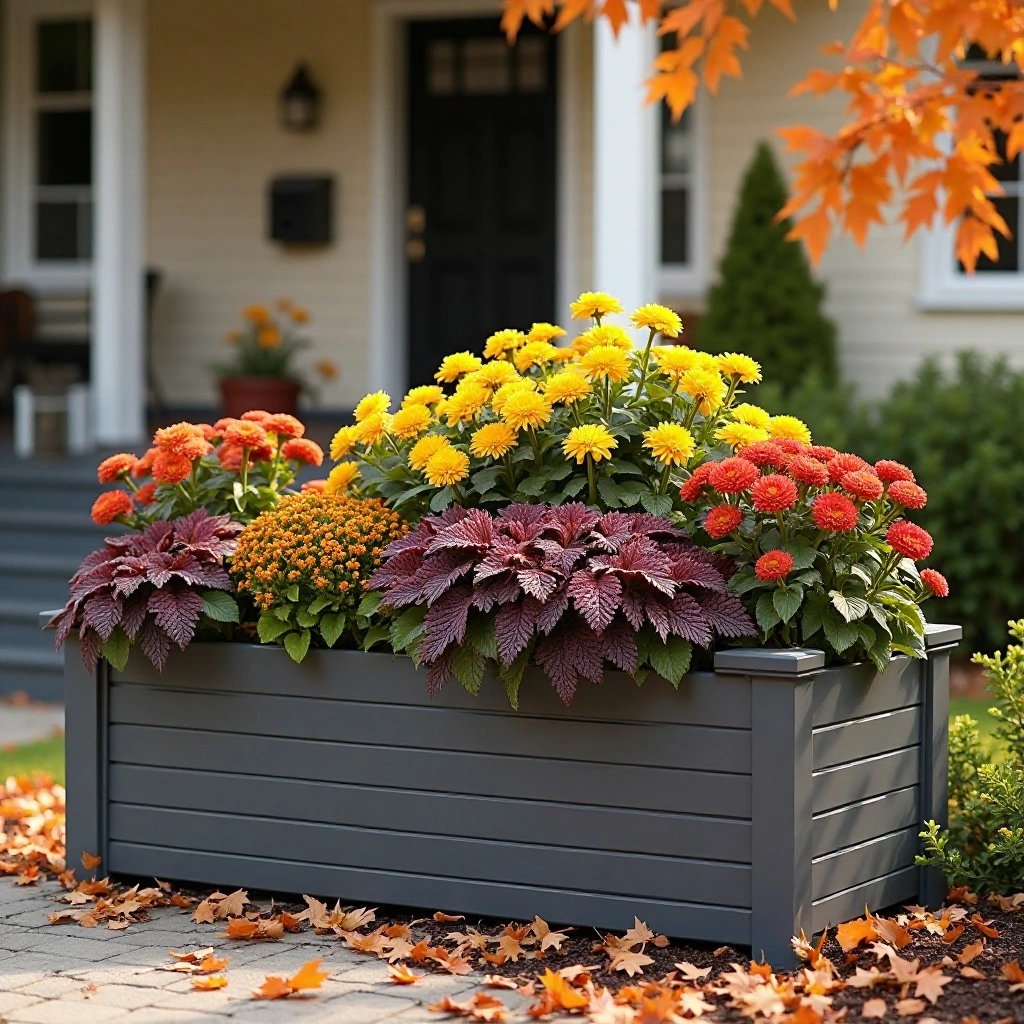
A perfectly maintained raised planter bed with smooth painted wooden sides in a warm charcoal grey, filled with the current season’s peak display: in this scene, a rich autumn arrangement of orange and yellow chrysanthemums, purple ornamental kale, red autumn sedums, and dark bronze heuchera.
The bed sits at the front of a cream-painted traditional home with a black front door. Warm October light with falling maple leaves in the background. Photorealistic, autumn lifestyle style. Shop on Amazon
How to Style It:
- Design the bed structure for easy plant swap-outs: loose, amended soil that accepts new plugs easily
- Plan four distinct plant palettes: spring (tulips, pansies), summer (zinnias, geraniums), fall (mums, kale, sedums), winter (evergreen boughs, red twig dogwood, holly)
- Buy seasonal plants in 4″ pots — they’re cheaper than 1-gallon and fill in quickly
- Keep a core of permanent structural plants (small evergreen shrub, ornamental grasses) so the bed never looks bare between rotations
- Compost the removed plants after each season — don’t waste them
- Take photos at each rotation to refine color combinations year after year
Where to Use It: Perfect for homeowners who love variety and want their front garden to always reflect the current season. Excellent for homes in all-four-season climates. Works with virtually any architectural style.
Pro Tip: Buy fall and spring rotational plants (mums, pansies, tulip bulbs) in bulk at the end of each season when they go on clearance for 50–70% off. Store bulbs in a cool dry place and overwinter hardy pansies in a cold frame for next spring use.
16. BONUS: Raised Bed with Integrated Lighting
A sophisticated raised flower bed constructed from smooth dark charcoal concrete pavers with warm amber low-voltage LED landscape lights recessed into the front wall face, casting a warm glow upward through white roses, blue agapanthus, and silver ornamental grasses.
The scene is photographed at dusk, with the home’s interior lights glowing softly through the windows in the background. The pathway is illuminated by matching path lights. Photorealistic, luxury landscape architecture style, warm cinematic lighting.
How to Style It:
- Plan lighting during construction — it’s far easier to run conduit before the bed is filled with soil
- Use low-voltage LED bricks or well lights recessed into the bed walls facing upward
- Choose cool-toned plants for upward-lit beds: white flowers, silver foliage, and lime green plants glow beautifully at night
- Supplement with path lights along the walkway leading to the bed
- Use a timer or smart plug so lights activate automatically at dusk
- Match the metal finish of lighting fixtures to other hardware on your home (door handles, house numbers)
Where to Use It: Any front-facing raised bed on a home where curb appeal at night matters. Ideal for homeowners who return after dark, host evening guests, or live on streets where evening ambiance is valued.
Pro Tip: Use RGBW smart landscape lighting that can change color via an app. During the holidays you can shift to red and green; for a party, blue and white. One system does the work of many seasonal decorations — and it looks infinitely more elegant.
Common Mistakes to Avoid
1. Planting too close to the foundation. Always leave at least 18–24 inches of clearance between your raised bed and the home’s foundation. Moisture-retaining soil pressed against a foundation invites water damage, mold, and pest entry. Give the house room to breathe.
2. Using the wrong soil. Never fill a raised bed with 100% topsoil from the ground — it compacts over time and kills roots. Always use a blend of 60% quality topsoil, 30% compost, and 10% perlite or coarse sand for ideal drainage and nutrition.
3. Building beds too wide to maintain. A bed you can’t reach the center of is a bed that will become weedy and neglected. The maximum width for a bed accessible from one side is 2.5 feet; from both sides, 4–5 feet. If your bed is wider, install stepping stones inside it.
4. Ignoring drainage. Raised beds that hold water will rot roots and rot the bed structure itself. Ensure the bed has drainage holes if it has a solid base, and never place a raised bed directly on impermeable surfaces like asphalt without adding a drainage layer of gravel at the bottom.
5. Choosing plants for looks alone. Always match plants to your actual sun exposure, soil, and climate zone — not just the picture on the tag. Shade-loving plants in full sun will scorch; sun-lovers in shade will go leggy. Know your zone and honor it.
6. Neglecting scale. A tiny planter box in front of a large two-story home will look insignificant and accidental. Scale your beds to the home: larger homes need bolder, bigger beds. As a rule, the bed width should be at least 1/4 the width of the facade it fronts.
7. Forgetting the winter view. Many gardeners plant for summer and leave bare soil and dead stalks all winter. Include at least one year-round structural element per bed: an evergreen shrub, ornamental grasses that hold their shape, or a decorative trellis that looks intentional in any season.
Frequently Asked Questions
Q: How deep should a raised flower bed for the front of a house be? A: For most annuals and perennials, 8–12 inches of soil depth is sufficient. For shrubs, roses, or ornamental grasses with deeper roots, aim for 18–24 inches. If you’re building over clay or compacted ground, the extra depth is especially valuable because roots will explore downward once they exhaust the raised bed’s soil.
Q: What is the best material for raised flower bed walls? A: It depends on your home’s style. Cedar wood is the most versatile (natural look, rot-resistant, easy to build), brick and stone offer permanence and classic appeal, concrete blocks suit modern homes, and galvanized steel is trending for contemporary and industrial looks. Avoid pressure-treated wood within 12 inches of edible plants, though it’s fine for purely ornamental beds.
Q: How do I keep weeds out of a raised flower bed? A: Three strategies work best together: (1) line the bottom with landscape fabric or cardboard before filling with soil, (2) apply a 3-inch layer of mulch on the soil surface each spring, and (3) plant densely enough that weeds have no light or space to germinate. A well-planted raised bed is 90% self-weeding.
Q: How often should I water a raised flower bed? A: Raised beds dry out faster than in-ground beds because they drain more freely and their soil warms up more. In summer, most raised beds need watering every 1–2 days in hot weather. The best test: push a finger 2 inches into the soil — if it feels dry, water deeply. Drip irrigation on a timer is the gold-standard solution for consistent results.
Q: Can I build a raised flower bed directly against my house? A: It’s strongly advised against. Even moisture-resistant materials will eventually lead to problems if saturated soil sits against a wood, stucco, or brick foundation. Leave a minimum 18-inch gap and fill it with gravel or pea stone for drainage and air circulation.
Q: How do I choose the right flowers for my raised bed? A: Start with your USDA hardiness zone (find it at planthardiness.ars.usda.gov), then factor in your actual sun exposure (full sun = 6+ hours, partial sun = 3–6, shade = under 3). Then consider your maintenance appetite: perennials come back yearly with less work; annuals require replanting but offer more flexibility and often bloom longer. A mix of both is usually the ideal approach.
Q: Are Raised Flower Beds in Front of House expensive to build? A: They range from very affordable to premium. A simple cedar raised bed kit can cost $40–$100 and take a weekend afternoon. A custom brick or stone bed professionally installed might cost $500–$2,000+ depending on size. DIY stacked stone or railroad tie beds fall in the $100–$300 range for materials. The payoff in curb appeal and property value typically far exceeds the investment.
Final Thought
A raised flower bed in the front of your house is more than a garden project — it’s an expression of who you are. It’s the first thing your guests see, the last thing neighbors notice as they walk by, and the feature that makes your home instantly more memorable and welcoming. Pick the idea that speaks to your home’s personality, start with good soil, choose plants matched to your light and climate, and the rest will take care of itself season after season.
Now go build something beautiful.