10+ Shrubs In Front of House to Elevate Your Home Exterior
Your front yard is the first thing the world sees. Whether you’re selling your home or simply want to feel proud every time you pull into the driveway, the right shrubs can make an enormous difference. Shrubs are low-maintenance, long-lasting, and they do the heavy lifting that flowers and grass simply can’t.
Not sure where to begin? You’re not alone. Most homeowners pick shrubs based on what’s available at the garden center — and end up with a front yard that looks like every other house on the street. This guide is different. We’ve curated 10+ designer-approved shrubs in front of house that offer year-round beauty, structure, and personality.
Each idea comes with styling tips, placement advice, and a ready-to-use image description so you can visualize (or generate) exactly what it looks like.
The 10+ Best Shrubs In Front of House
1. Boxwood (Buxus sempervirens)
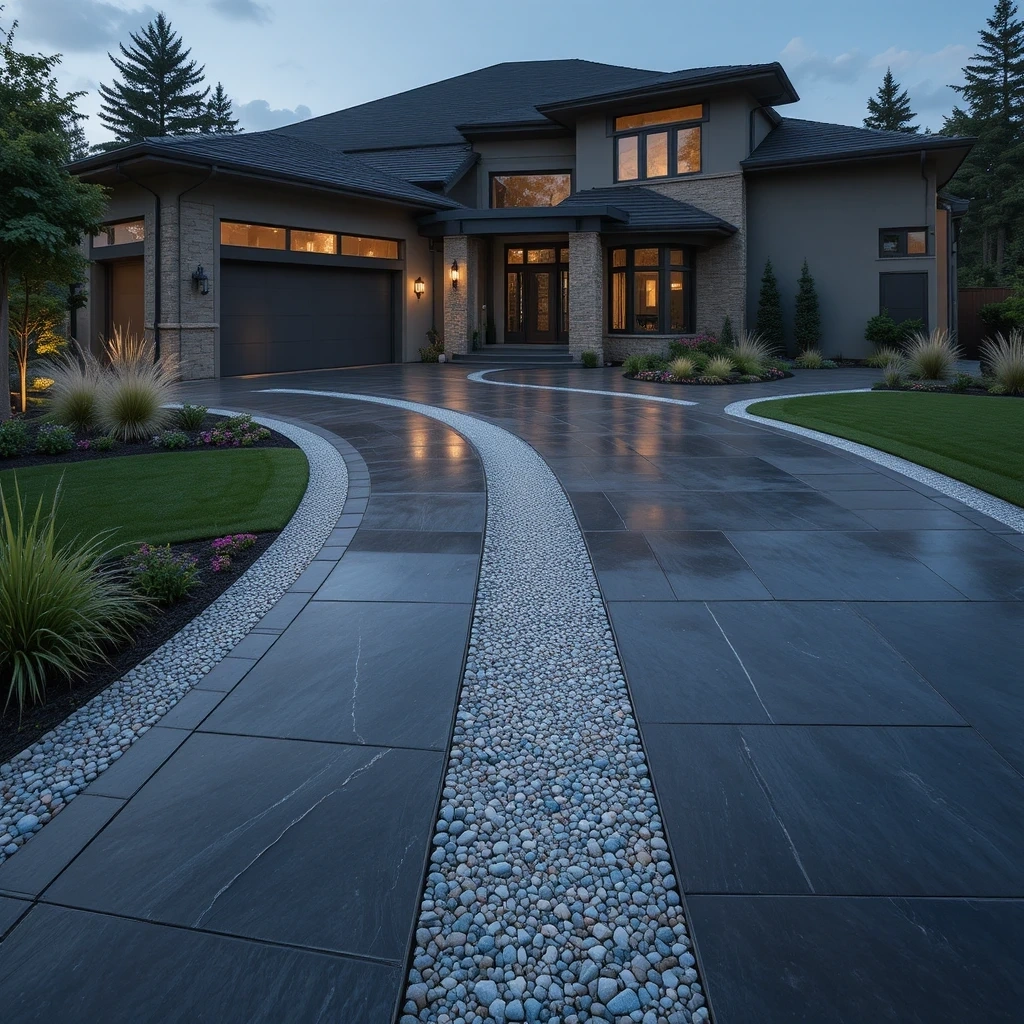
The timeless classic that works with every home style.
Boxwood is the backbone of traditional and contemporary landscapes alike. Its dense, evergreen foliage holds shape beautifully year-round, making it one of the most versatile shrubs for front yards. Whether trimmed into perfect spheres, low hedges, or natural mounds, boxwood gives your entrance a polished, intentional look without demanding constant attention. Shop on Amazon
How to Style It:
- Plant in matched pairs on either side of your front door for a formal, welcoming look
- Use as a low border hedge along the front walkway
- Combine with flowering perennials behind for a layered effect
- Trim into geometric shapes (spheres, cubes, cones) for a modern twist
Where to Use It: Entryway flanking, pathway borders, foundation planting, corner anchors
Pro Tip: Choose “Winter Gem” or “Green Velvet” varieties for cold climates — they’re more frost-resistant than standard boxwood and resist blight better
2. Knockout Rose (Rosa ‘Knockout’)
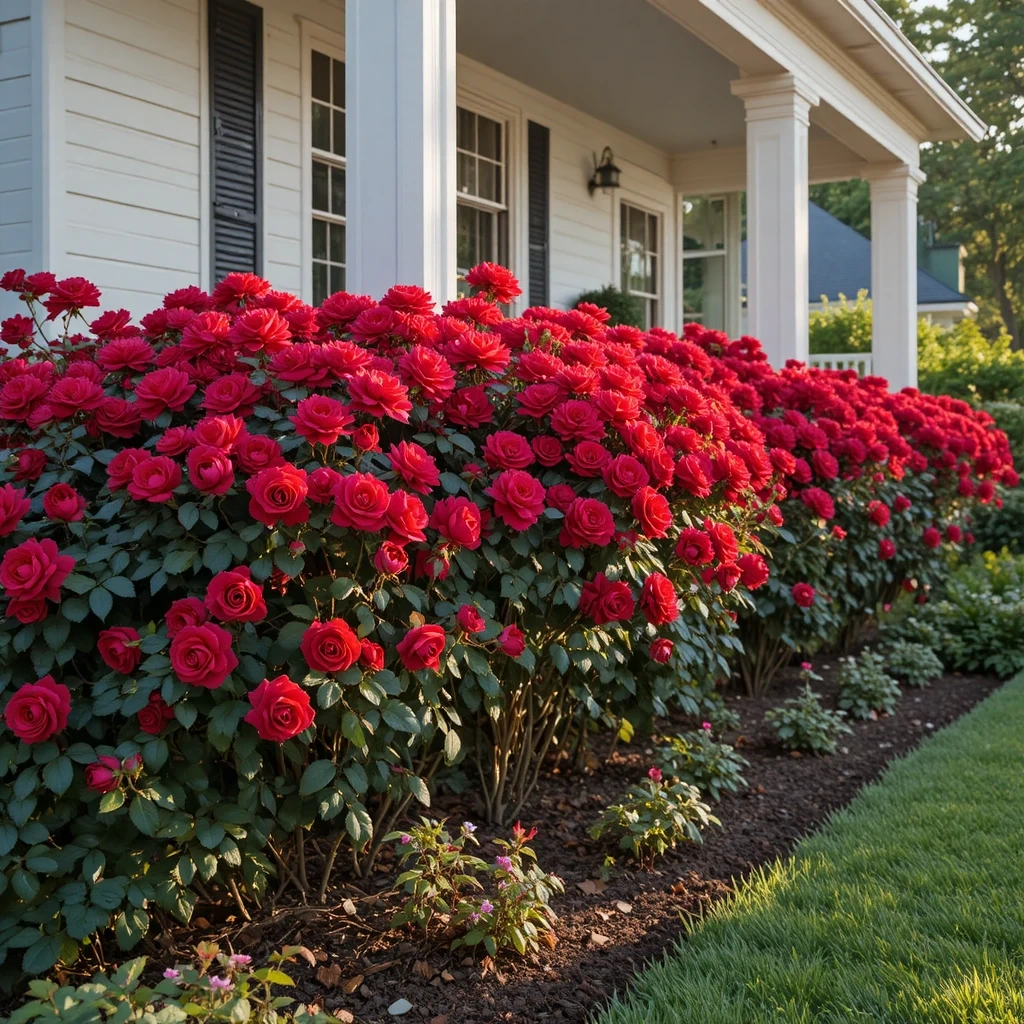
Big color, zero fuss — the rose that actually survives real life.
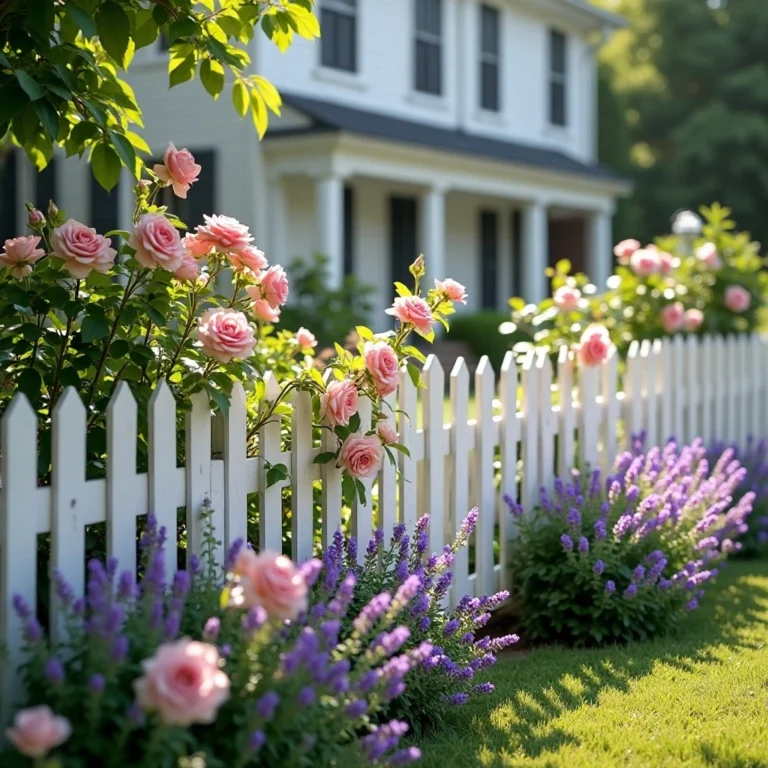
Knockout Roses changed the game when they arrived on the market. Unlike traditional roses that demand spraying, deadheading, and coddling, Knockout Roses bloom from late spring all the way through the first frost — with almost no maintenance. They come in red, pink, coral, yellow, and white, making them one of the most colorful front yard shrubs available. Shop on Amazon
How to Style It:
- Plant in a sweeping row along the foundation for bold seasonal color
- Mix pink and red varieties together for a cottage garden feel
- Pair with dark evergreens behind them to make the blooms pop
- Use in raised beds or planters near the entrance
Where to Use It: Foundation beds, front borders, entrance features, mailbox landscaping
Pro Tip: Cut them back by one-third in early spring and they’ll reward you with an explosion of blooms. No gloves, no sprays — just shears and patience.
3. Blue Star Juniper (Juniperus squamata ‘Blue Star’)
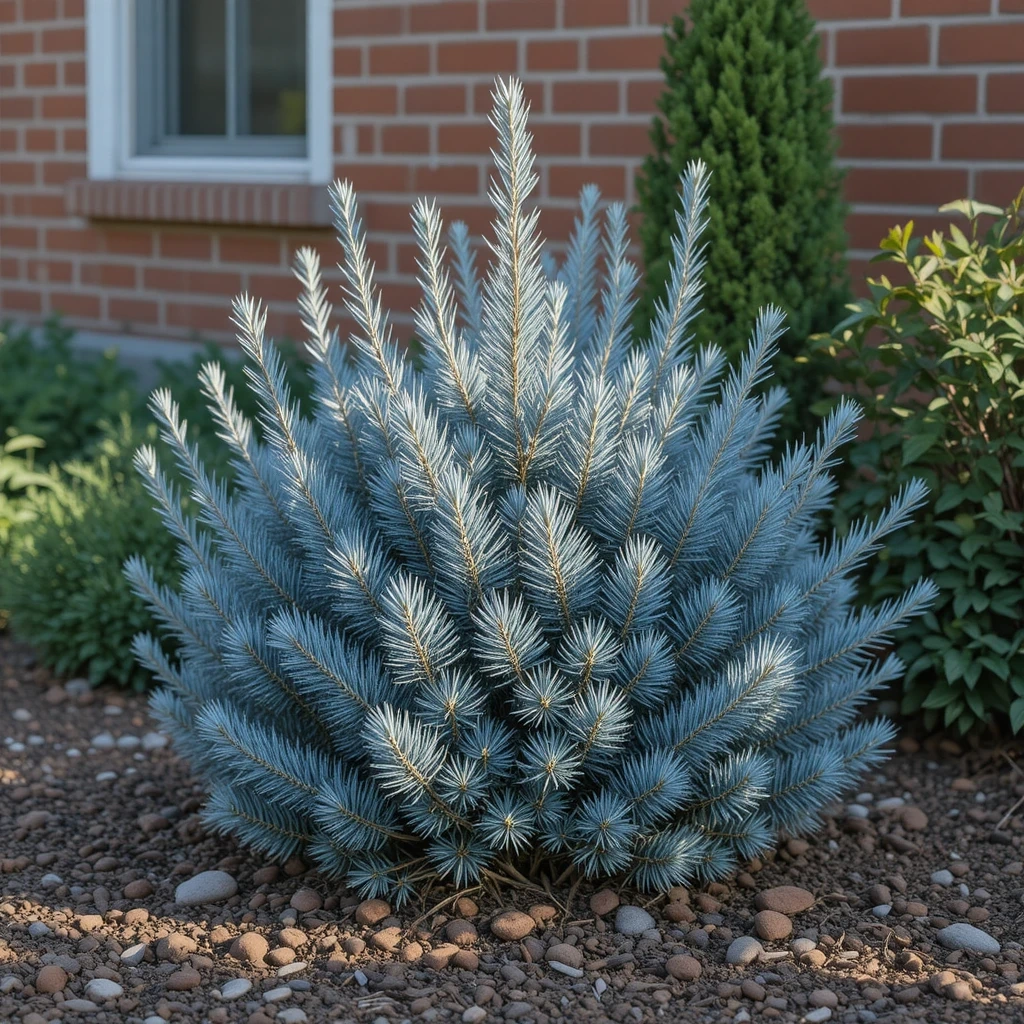
A steel-blue evergreen that adds year-round texture and color.
Blue Star Juniper is a slow-growing, mounding evergreen that earns its name from its striking blue-silver foliage. It stays compact (usually 2–3 feet wide and tall), making it perfect for tight foundation spaces. Unlike many evergreens, it doesn’t fade into the background — that silvery-blue color is a genuine eye-catcher, especially against brick or light-colored siding. Shop on Amazon
How to Style It:
- Group three together in a triangular arrangement for a natural cluster look
- Use as a contrast plant next to deep green or gold-toned shrubs
- Place at the corners of a foundation bed as an anchor point
- Pair with ornamental grasses for a modern, low-water design
Where to Use It: Foundation corners, rock gardens, mixed shrub beds, front slope planting
Pro Tip: Blue Star Juniper thrives in full sun and well-drained soil — avoid clay-heavy beds or spots that stay wet, which can cause root rot
4. Hydrangea (Hydrangea macrophylla or paniculata)
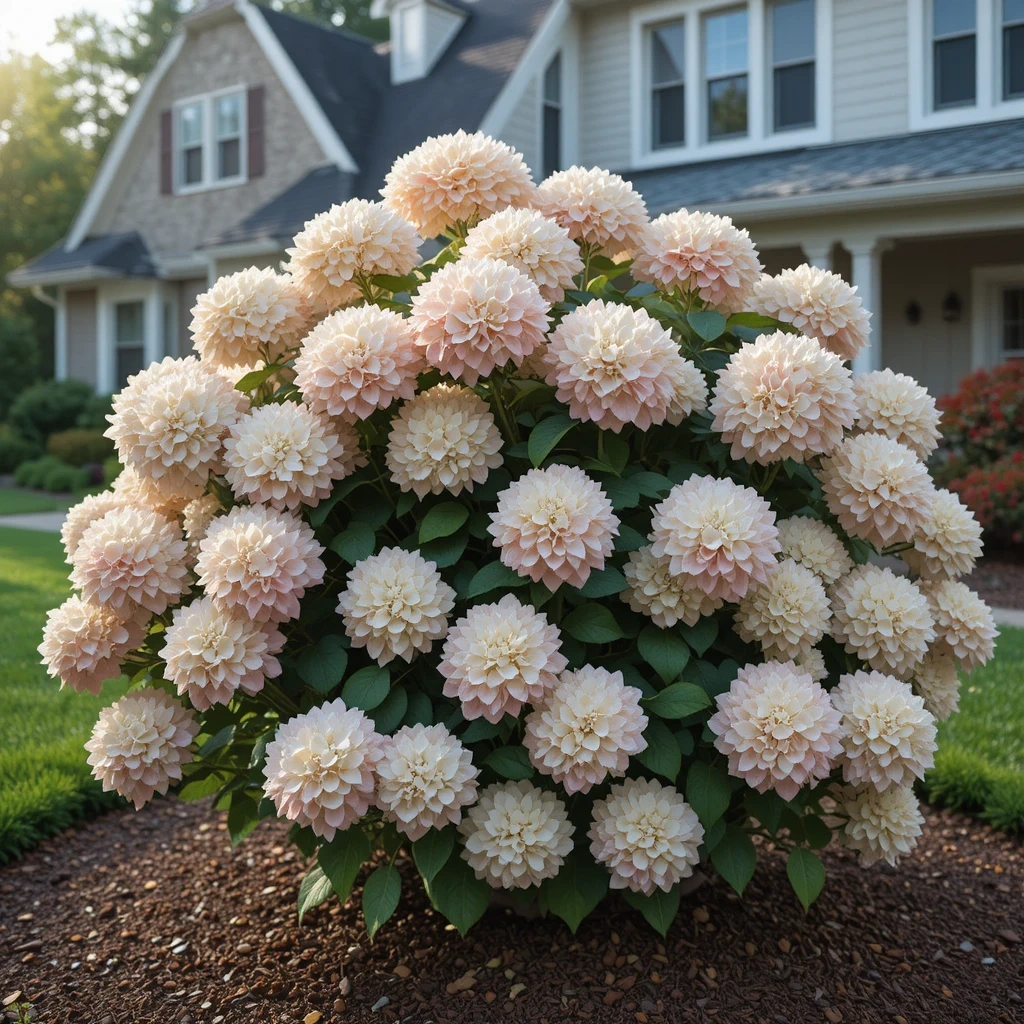
Show-stopping blooms that make neighbors stop and stare.
Few shrubs deliver the drama that hydrangeas do. Their massive flower heads — in shades of white, blue, pink, and purple — can last weeks and even dry beautifully into the fall season. Panicle hydrangeas like ‘Limelight’ are especially versatile, tolerating more sun and growing in tighter spaces than bigleaf varieties. For front yards, they’re among the highest-impact shrubs you can plant. Shop on Amazon
How to Style It:
- Use as a single statement plant flanking the entrance or mailbox
- Plant a trio in a sweeping curved bed for a cottage garden aesthetic
- Let them grow naturally for a soft, romantic look — no formal trimming needed
- Combine with black-eyed Susans and ornamental grasses for a mixed border
Where to Use It: Entry focal points, mailbox feature, foundation mid-layer, corner beds
Pro Tip: For blue blooms on bigleaf hydrangeas, acidify your soil with aluminum sulfate. For reliable blooms every year with less fuss, go with a panicle type like ‘Little Lime’ or ‘Bobo.’
5. Spirea (Spiraea japonica)
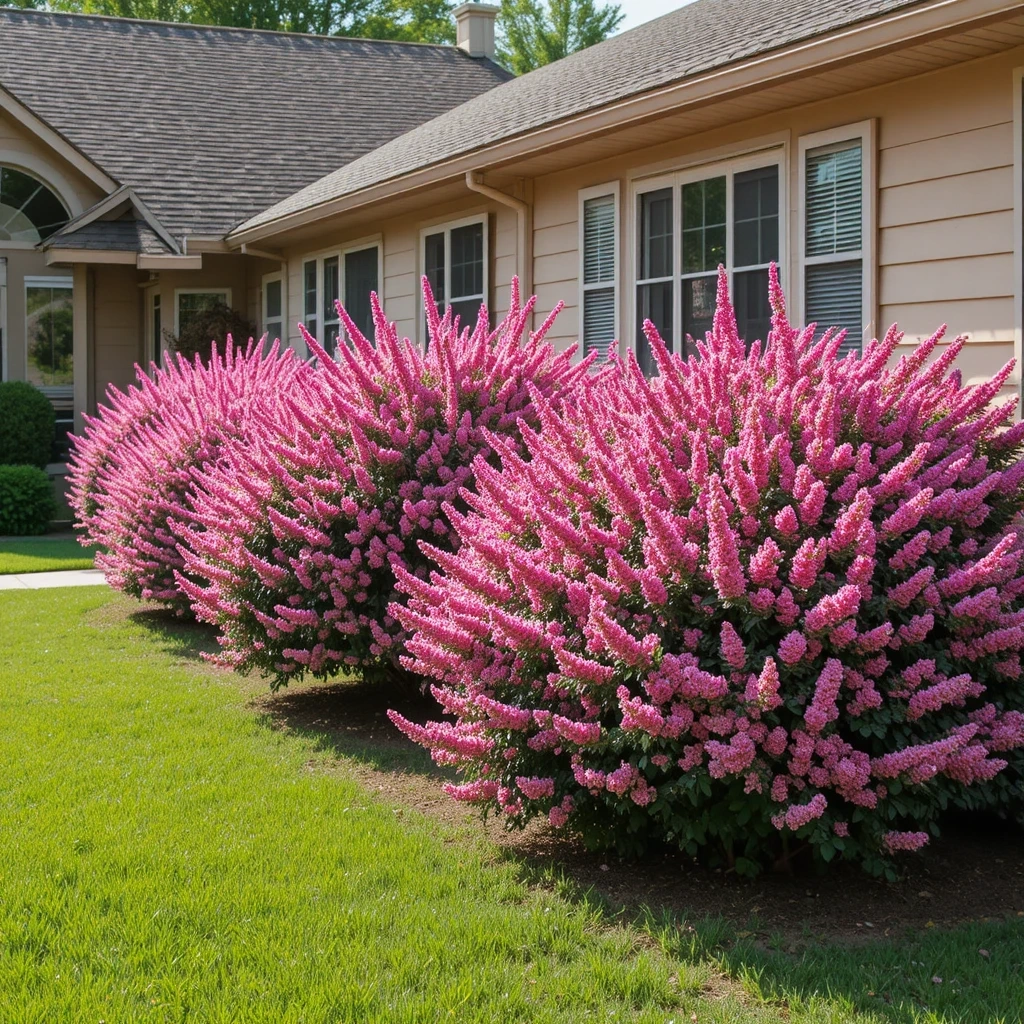
A flowering powerhouse that blooms its heart out with almost no care.
Spirea is one of the most underrated front yard shrubs. It produces dense clusters of tiny flowers (typically white, pink, or red depending on the variety) in late spring, then many varieties offer a second flush in summer. The foliage itself is attractive — golden on ‘Gold Flame,’ burgundy on ‘Anthony Waterer’ — adding color even when it’s not blooming. Fast-growing and drought-tolerant once established, it’s a gift to busy homeowners. Shop on Amazon
How to Style It:
- Plant in a sweeping row along the foundation for a ribbon of spring color
- Mix yellow-foliage ‘Gold Mound’ variety with deep green shrubs for contrast
- Use to fill large areas quickly — spirea grows fast without becoming unruly
- Cut back hard after the first bloom for a fresh flush in late summer
Where to Use It: Foundation borders, long driveway edges, mass planting, slope coverage
Pro Tip: ‘Double Play’ Spireas are compact, repeat-blooming, and come in red, pink, and gold. They stay under 3 feet — perfect if you don’t want shrubs blocking windows.
6. Mugo Pine (Pinus mugo)
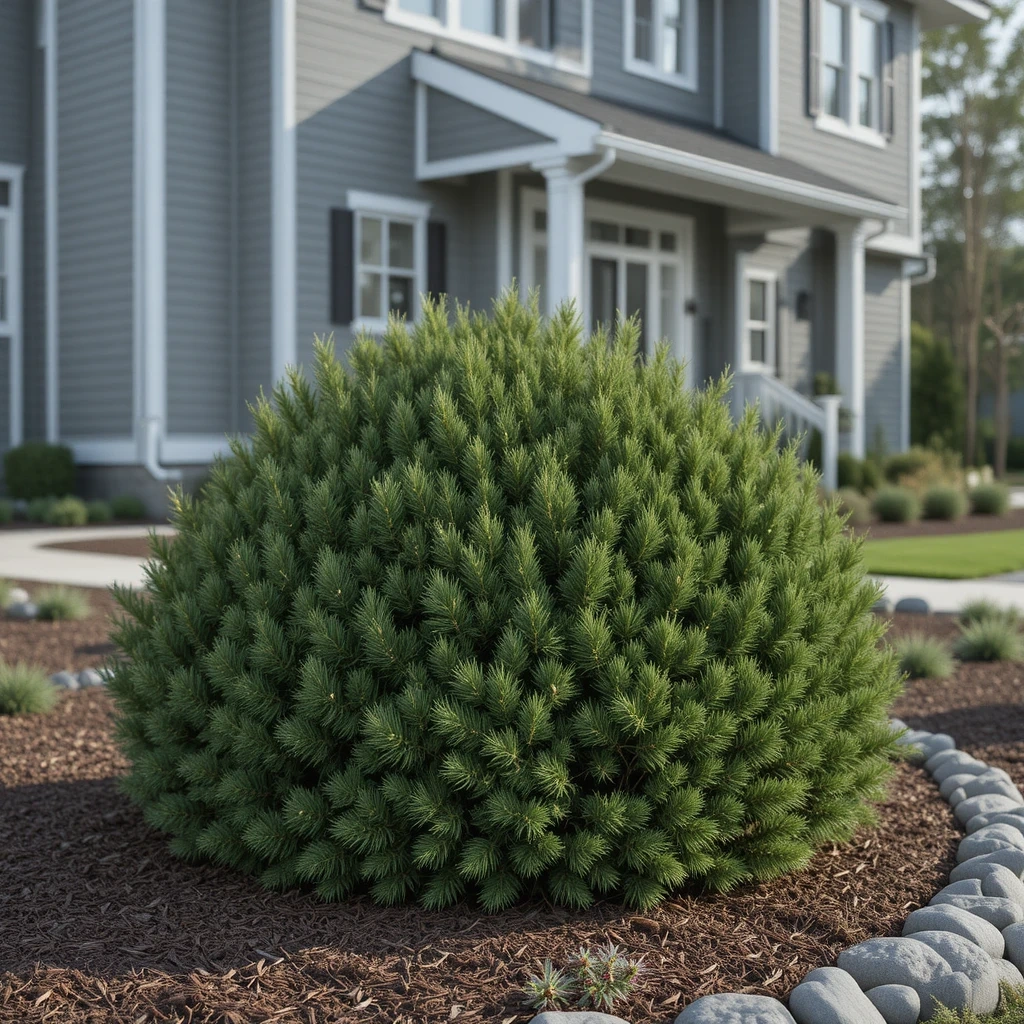
A bold, architectural evergreen that demands zero pruning.
Mugo Pines are the unsung heroes of front yard landscaping. These compact, mounding evergreens grow slowly into dense, dark green mounds that look great in every season.
They never need trimming (unless you want to pinch candles to slow growth), they’re deer-resistant, drought-tolerant once established, and they thrive in nearly any climate. If you want something that looks sharp without any effort, this is it. Shop on Amazon
How to Style It:
- Use as a low-maintenance anchor in a mixed foundation bed
- Pair with ornamental grasses or blue junipers for textural contrast
- Plant in front of a fence or wall where other shrubs struggle
- Combine with boulders and gravel for a drought-tolerant xeriscape design
Where to Use It: Foundation corners, rock gardens, hillside planting, utility area screening
Pro Tip: Look for the ‘Mops’ variety — it stays naturally round and stays small (2–3 feet), making it ideal for tight urban front yards where space is limited.
7. Forsythia (Forsythia × intermedia)
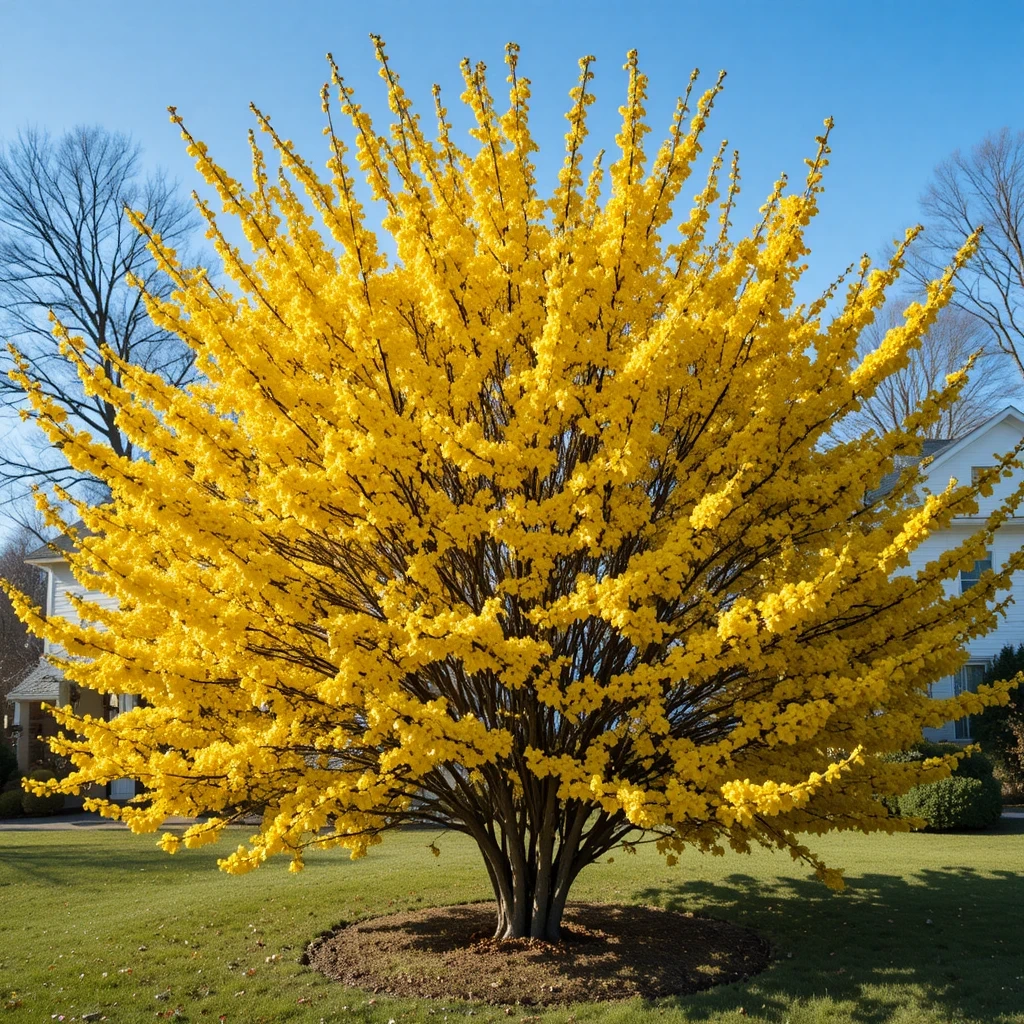
The first burst of color in spring — a bright yellow explosion.
Forsythia is one of the earliest bloomers of the year, erupting in vivid yellow flowers before the leaves even emerge. That means when every other plant in the neighborhood still looks dormant and gray, your front yard is already alive with color. It grows quickly, tolerates a wide range of conditions, and provides attractive green foliage through summer and fall. Shop on Amazon
How to Style It:
- Use as a seasonal focal point along a fence line or at a front corner
- Plant with spring bulbs (daffodils, tulips) nearby for a coordinated spring display
- Allow to grow as a loose, arching natural form rather than a clipped hedge
- Use as a privacy screen between properties in a side yard visible from the street
Where to Use It: Corner feature planting, fence lines, slope coverage, privacy screening
Pro Tip: Forsythia blooms on old wood — so prune immediately after flowering (not in fall or winter) or you’ll cut off next year’s blooms entirely.
8. Dwarf Japanese Holly (Ilex crenata)
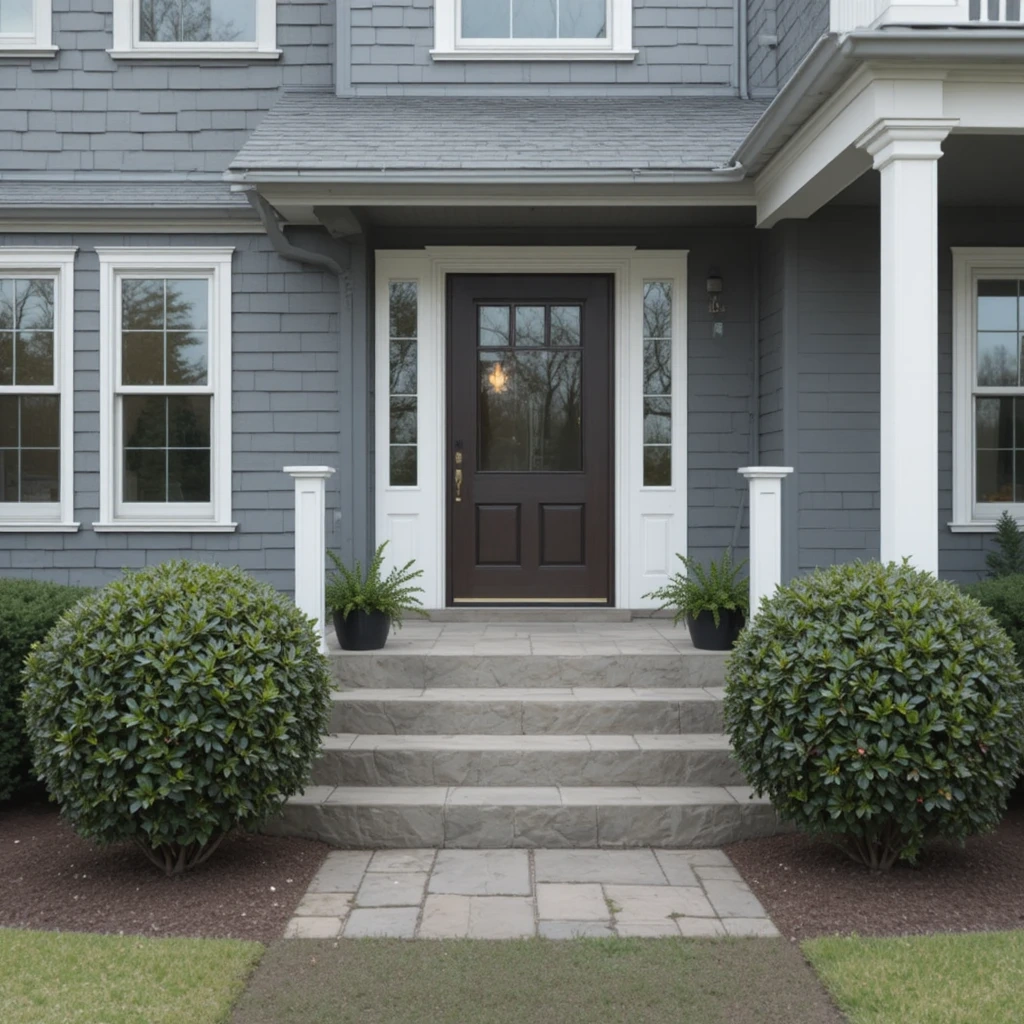
The elegant evergreen with effortless shape and four-season interest.
Japanese Holly is the refined cousin of the boxwood — similarly dense and evergreen, but with smaller, rounder leaves and a naturally compact form that requires almost no trimming. It holds its deep green color beautifully through winter and looks equally at home in formal and contemporary front yard designs. Unlike American holly, it stays manageable and doesn’t produce the large berries that can litter pathways. Shop on Amazon
How to Style It:
- Plant in pairs flanking your front steps or entryway for a formal welcome
- Use as a low-maintenance hedge along a front walkway
- Combine with flowering shrubs behind for layered depth
- Mix with ornamental grasses for a contemporary, textural border
Where to Use It: Entry flanking, pathway edging, foundation front layer, formal hedges
Pro Tip: Japanese Holly prefers slightly acidic soil. If your leaves look yellowing (chlorotic), apply an acidifying fertilizer or soil sulfur in spring.
9. Ornamental Grasses — Maiden Grass (Miscanthus sinensis)
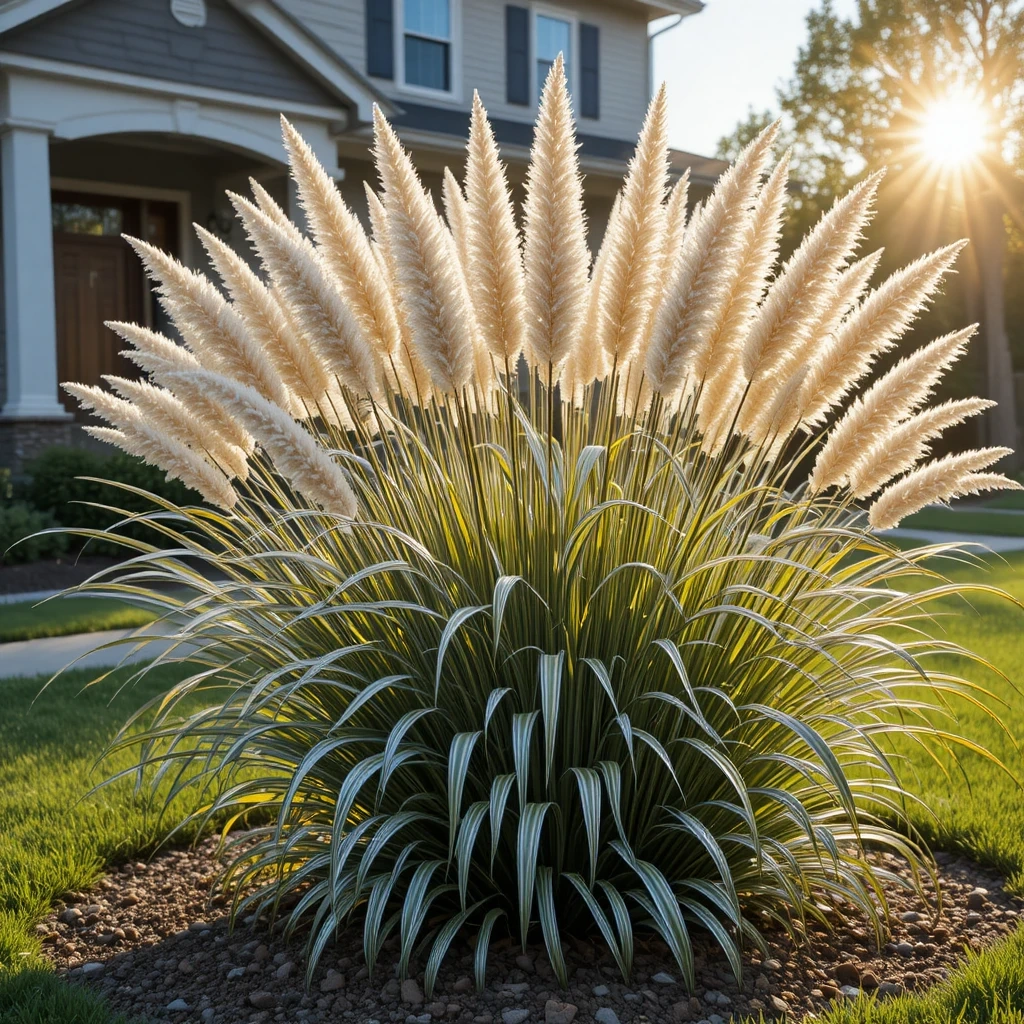
Movement, texture, and drama — a landscaping secret weapon.
Ornamental grasses aren’t traditional shrubs, but in front yard design they fill the same role — providing structure, volume, and year-round interest. Maiden Grass grows into graceful, arching fountains of fine-textured foliage, topped with feathery plumes in late summer that persist through winter. They sway elegantly in the breeze and look stunning backlit by morning or evening sun. Shop on Amazon
How to Style It:
- Use as a bold, standalone specimen in a prominent corner bed
- Plant in clusters of three at varied sizes for a naturalistic meadow look
- Pair with coneflowers (Echinacea) and black-eyed Susans for a pollinator garden
- Use as a tall screen to soften or obscure utility boxes and AC units
Where to Use It: Corner specimens, screening, pollinator beds, contemporary landscape borders
Pro Tip: Cut maiden grass down to 4–6 inches in late winter before new growth emerges. Use zip ties to bundle the clump first — it makes cutting far cleaner and easier.
10. Viburnum (Viburnum spp.)
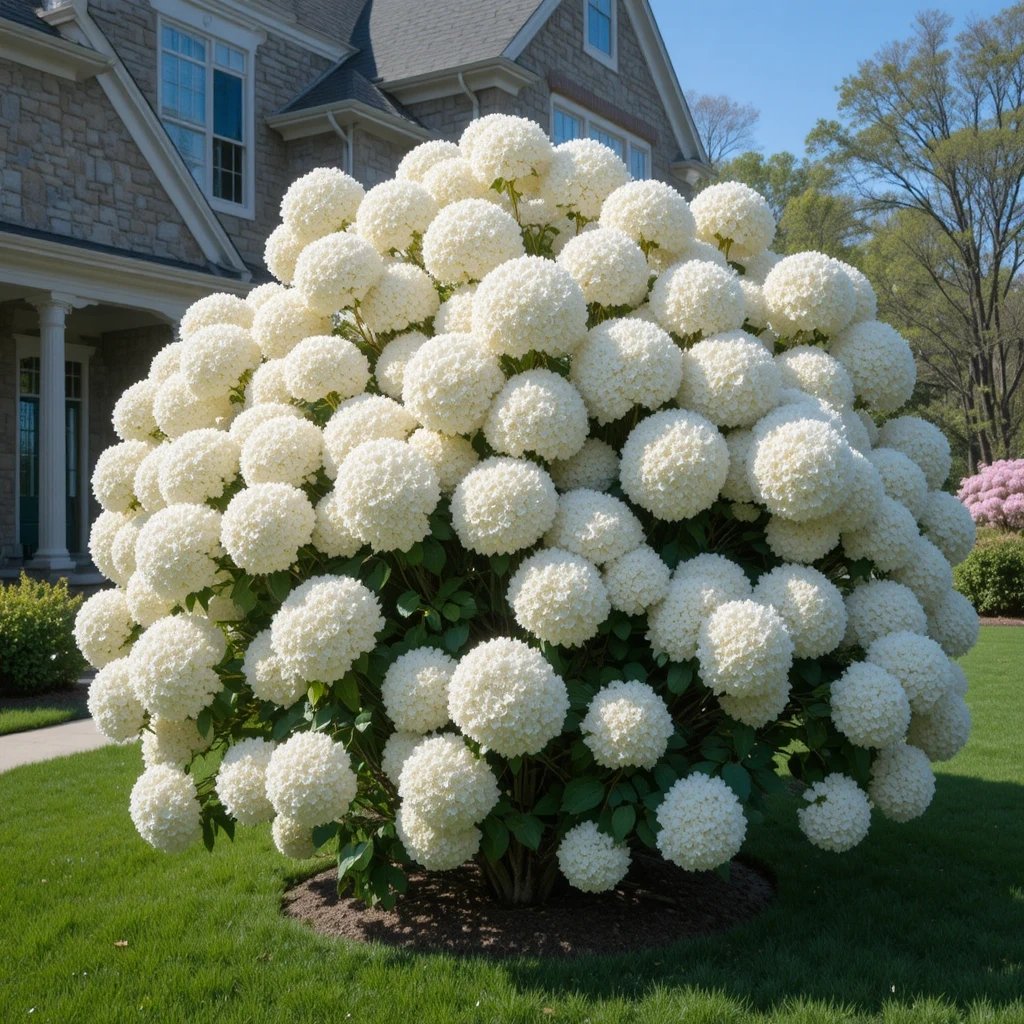
Four-season interest: spring flowers, summer berries, fall color, winter structure.
Viburnum is one of the most complete landscape shrubs available — and criminally underused in front yards. Depending on the variety, you get fragrant white or pink spring flowers, attractive berries that birds love, brilliant fall foliage in red and orange, and interesting branching structure through winter.
‘Koreanspice’ has an intoxicating clove-like fragrance. ‘Snowball’ produces giant round white flower clusters. There’s a viburnum for every front yard style. Shop on Amazon
How to Style It:
- Feature a large specimen as a standalone focal point in a prominent bed
- Plant in a mixed border alongside spirea and knockout roses for a multi-season display
- Use fragrant ‘Koreanspice’ near the front door or windows so the scent drifts indoors
- Allow to naturalize in a larger corner bed for a wildlife-friendly design
Where to Use It: Focal point planting, large corner beds, fragrance gardens, wildlife landscapes
Pro Tip: Most viburnums need a second plant of a different variety nearby for cross-pollination if you want berries. Check the variety’s pollination needs before you buy.
11. Azalea (Rhododendron spp.)
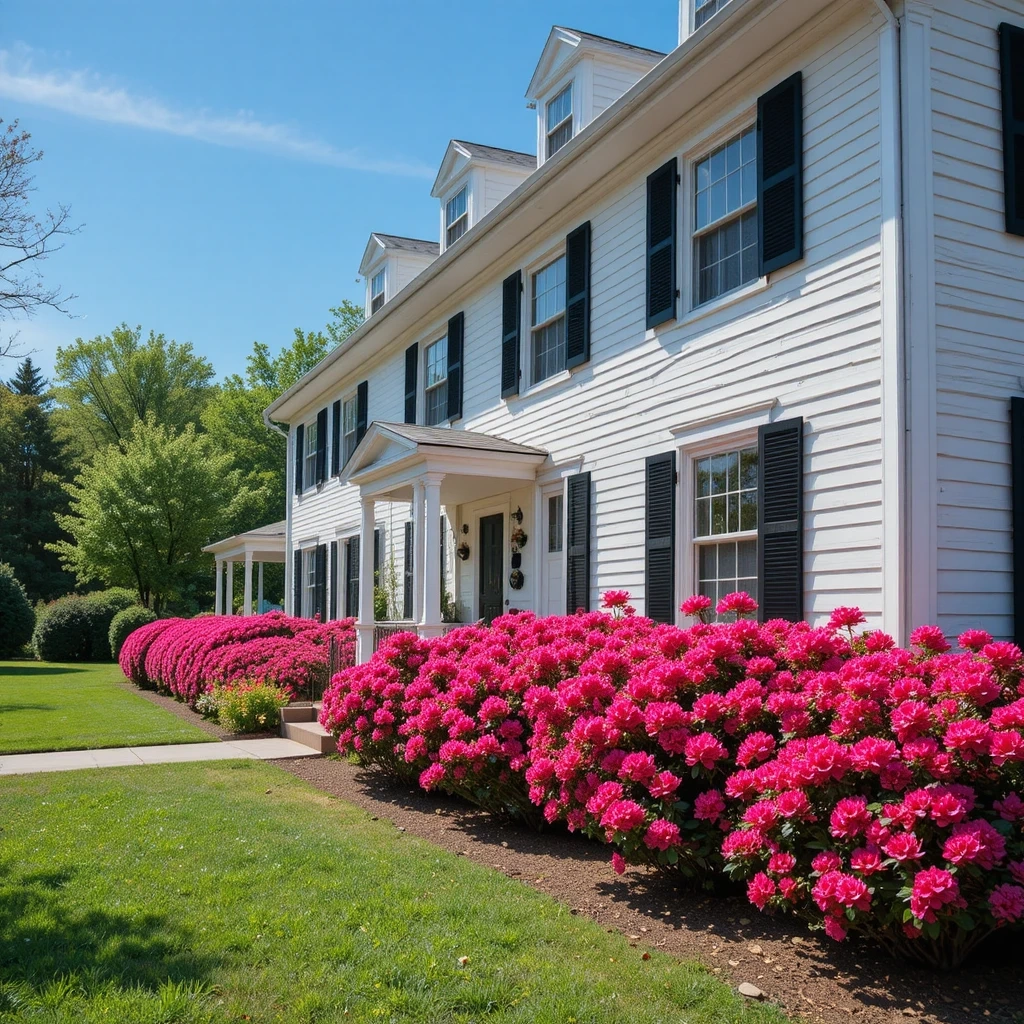
An explosion of spring color that turns heads from down the street.
Azaleas are among the most beloved flowering shrubs in America — and for good reason. When they bloom in spring, the display is extraordinary: entire plants covered in vibrant blooms in shades of pink, red, purple, white, and coral.
They’re particularly beloved in Southern landscapes but hardy varieties like ‘Northern Lights’ perform well in colder climates too. With attractive dark green foliage the rest of the year, they earn their space all season long. Shop on Amazon
How to Style It:
- Plant in a single bold color for a dramatic, unified look
- Mix colors for a cottage-style, informal front yard display
- Pair with hostas and ferns in shadier spots beneath trees
- Use as a foundation anchor flanking steps or entryways
Where to Use It: Foundation planting, shaded beds, entryway flanking, mass color planting
Pro Tip: Azaleas are acid-lovers. Plant them in well-amended, acidic soil (pH 4.5–6.0) and never lime their beds. Avoid planting near concrete foundations which can leach lime into the soil.
12. Drift Rose (Rosa ‘Meimirrote’)
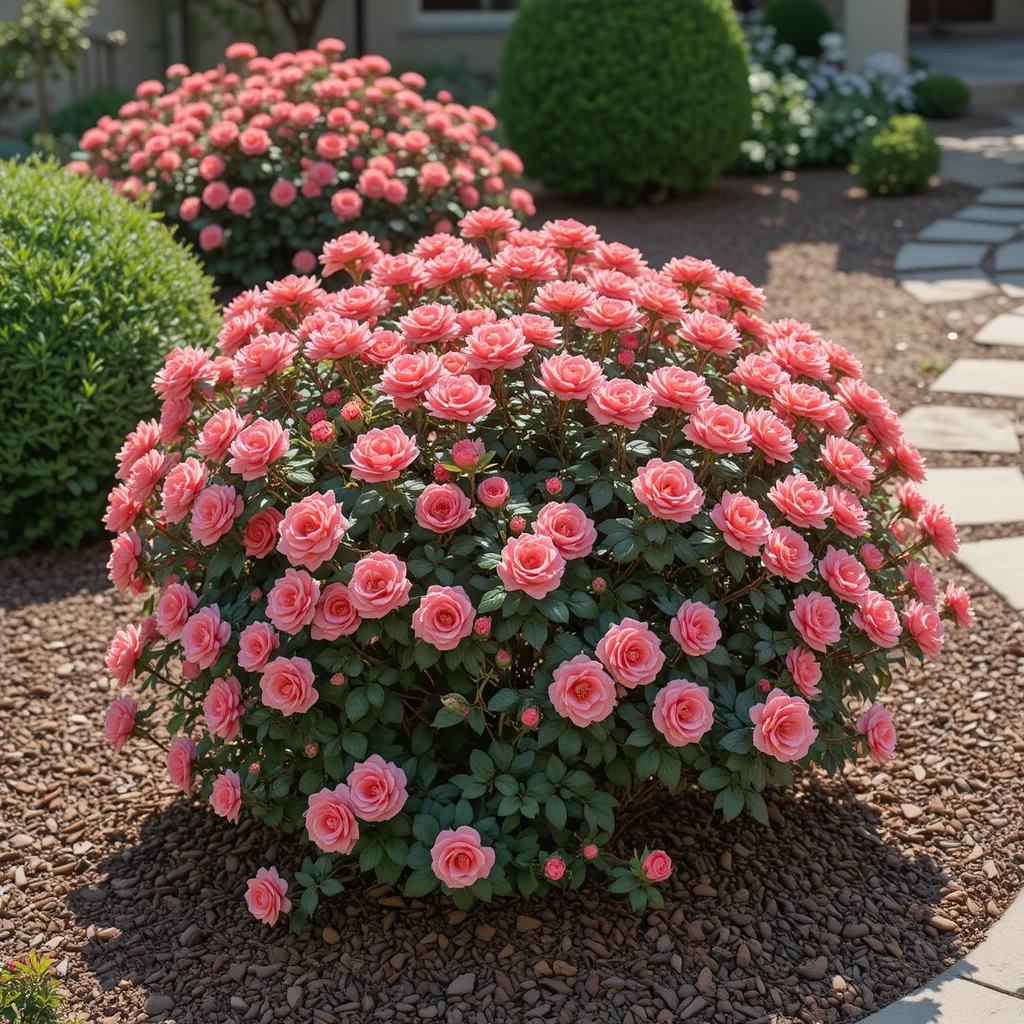
The ground-hugging rose that blooms non-stop and stays tidy.
Drift Roses are the compact cousin of Knockout Roses — spreading wide and low (2 feet tall, 3–4 feet wide) rather than growing upright. They’re ideal for sloped front yards, rock gardens, or as low front-row plants in a layered border.
They bloom continuously from spring through fall and come in a range of warm colors — red, peach, coral, pink, and white. Near-zero maintenance makes them ideal for time-pressed homeowners. Shop on Amazon
How to Style It:
- Use as a colorful ground cover on a sloped front yard
- Plant at the very front edge of a border bed as a low flowering anchor
- Pair with taller Knockout Roses behind for a layered rose display
- Use to soften the base of a mailbox post or light pole
Where to Use It: Sloped yards, front border edges, mailbox areas, ground cover
Pro Tip: Unlike traditional ground cover roses, Drift Roses stay dense enough to suppress weeds when planted 3 feet apart. A 3-inch layer of mulch between them until they fill in does the rest.
Bonus: Mixing Shrubs Like a Designer
The secret to a front yard that looks professionally designed isn’t one perfect shrub — it’s how you layer and combine them.
The Designer’s Formula:
- Back Layer: Tall, structural shrubs (Viburnum, Forsythia, large Hydrangea)
- Middle Layer: Medium flowering shrubs (Knockout Roses, Spirea, Azalea)
- Front Layer: Low, edging shrubs or ground covers (Drift Roses, Dwarf Holly, Blue Star Juniper)
Add texture contrast (fine vs. bold foliage), color contrast (dark green vs. silver-blue vs. burgundy), and seasonal overlap (spring bloomers + summer bloomers + evergreens) and you’ll have a front yard that looks great 12 months a year.
Common Mistakes to Avoid
1. Planting too close to the house. Most homeowners plant shrubs 1–2 feet from the foundation. The right distance is 3–5 feet (or more) to allow for mature spread and airflow. Crowded shrubs against the house trap moisture and invite disease.
2. Ignoring mature size. A shrub that looks perfect at 2 feet will block your windows at 8 feet five years from now. Always look up the mature height AND width before buying — not just the tag on the pot.
3. Planting all one type. Monoculture plantings look repetitive and are vulnerable to disease. Mix textures, colors, and bloom times for a dynamic, resilient front yard.
4. Skipping soil prep. Most front yard soil near foundations is poor, compacted, and lacking organic matter. Amending with compost before planting dramatically improves establishment and long-term health.
5. Overwatering vs. underwatering. New shrubs need consistent moisture the first season to establish roots — but many homeowners either water daily (too much) or assume rain is enough (often too little). Aim for deep, infrequent watering: 1 inch per week, deep enough to reach the root zone.
6. Pruning at the wrong time. Pruning spring-blooming shrubs in fall removes the buds set for next year’s display. Know your shrub’s bloom time before you trim. When in doubt, prune immediately after it blooms.
7. Neglecting mulch. A 3-inch layer of shredded bark mulch does three things at once: conserves moisture, suppresses weeds, and regulates soil temperature. It’s the single most impactful low-effort upgrade you can make to any shrub bed.
Frequently Asked Questions
Q: What shrubs are best for the front of a house in full sun? Knockout Roses, Spirea, Drift Roses, Mugo Pine, Blue Star Juniper, and Forsythia all thrive in full sun (6+ hours daily). For a hot, south-facing front yard, drought-tolerant options like Mugo Pine and ornamental grasses are especially reliable once established.
Q: What shrubs are best for shade or partial shade at the front of a house? Azaleas, Viburnum, and Boxwood all handle partial shade well. Japanese Holly and some Hydrangea varieties (like ‘Incrediball’ or ‘Annabelle’) also perform well with 3–4 hours of sun and afternoon shade.
Q: How far apart should I plant shrubs in front of my house? Space shrubs at roughly half the sum of their mature widths. For example, two shrubs each maturing to 4 feet wide should be planted 4 feet apart (center to center). For a solid hedge effect, reduce spacing by 20%. For a naturalistic look, give them full spacing or more.
Q: What are the best low-maintenance shrubs for the front of a house? Mugo Pine, Boxwood (disease-resistant varieties), Blue Star Juniper, Knockout Roses, and Drift Roses are among the lowest-maintenance options. Once established, they need minimal water, no deadheading, and infrequent pruning.
Q: What shrubs stay small and won’t block my windows? ‘Mops’ Mugo Pine, ‘Dwarf’ Boxwood varieties, Blue Star Juniper, Drift Roses, and compact Spirea cultivars like ‘Double Play’ all stay under 3 feet tall. Look for the word “dwarf” or “compact” on the label.
Q: When is the best time to plant shrubs in front of the house? Spring (after last frost) and fall (4–6 weeks before first frost) are ideal planting windows. Fall planting is often underrated — shrubs establish roots over winter and come out of the gate strong in spring. Avoid planting in peak summer heat, which stresses new transplants.
Q: Do I need to fertilize front yard shrubs? Most established shrubs in reasonably fertile soil need little fertilization. A slow-release granular fertilizer in early spring is usually sufficient. Over-fertilizing (especially with nitrogen) produces lush soft growth that’s more susceptible to disease and pests.
Q: How do I choose shrubs that look good year-round? Focus on: (1) evergreens for winter structure, (2) multi-season plants like Viburnum (flowers + berries + fall color), and (3) layering spring, summer, and fall bloomers so something is always happening. Never plan your front yard based on one season alone.
Final Thoughts
The right shrubs can transform your front yard from a patch of grass with some plants in it into a cohesive, beautiful landscape that reflects your home’s character and your personal style. The key is choosing plants that suit your climate, your home’s architecture, and your lifestyle — and then giving them the right start with good soil, proper spacing, and consistent moisture through that critical first season.
Whether you go bold with knockout roses and hydrangeas or refined with boxwood and Japanese holly, there’s a combination on this list that’s perfect for your home. Start with one bed, get it right, then expand — your curb appeal will thank you.
Looking for more landscaping inspiration? Explore our guides on front yard privacy trees, low-maintenance perennials, and drought-tolerant landscaping.