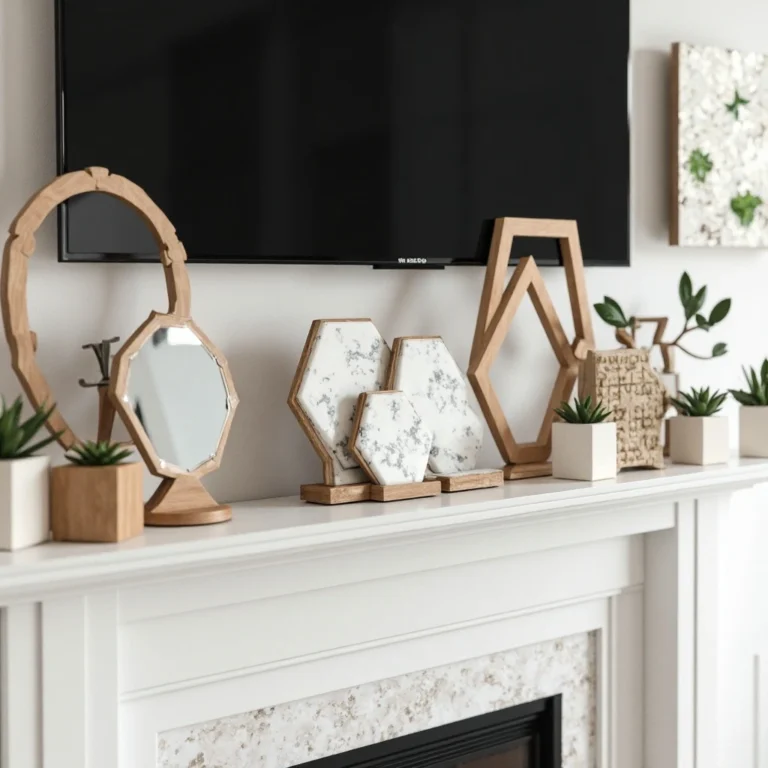
5 Spring Mantel Decorating Ideas – Fresh Styles
Spring is the perfect time to refresh your mantel with lighter colors, natural textures, and vibrant blooms that celebrate the season’s renewal. Whether you prefer minimalist elegance, cottage charm, or bold modern statements, your mantel offers prime real estate to showcase your personal style and welcome the warmer months ahead.
This comprehensive guide will walk you through 25+ Spring Mantel Decorating Ideas complete with styling secrets, practical tips, and expert advice to help you create a display that feels both effortlessly beautiful and uniquely yours.
This article includes affiliate links. If you choose to buy through them, I may earn a small commission at no additional cost to you.
1. Fresh Floral Abundance
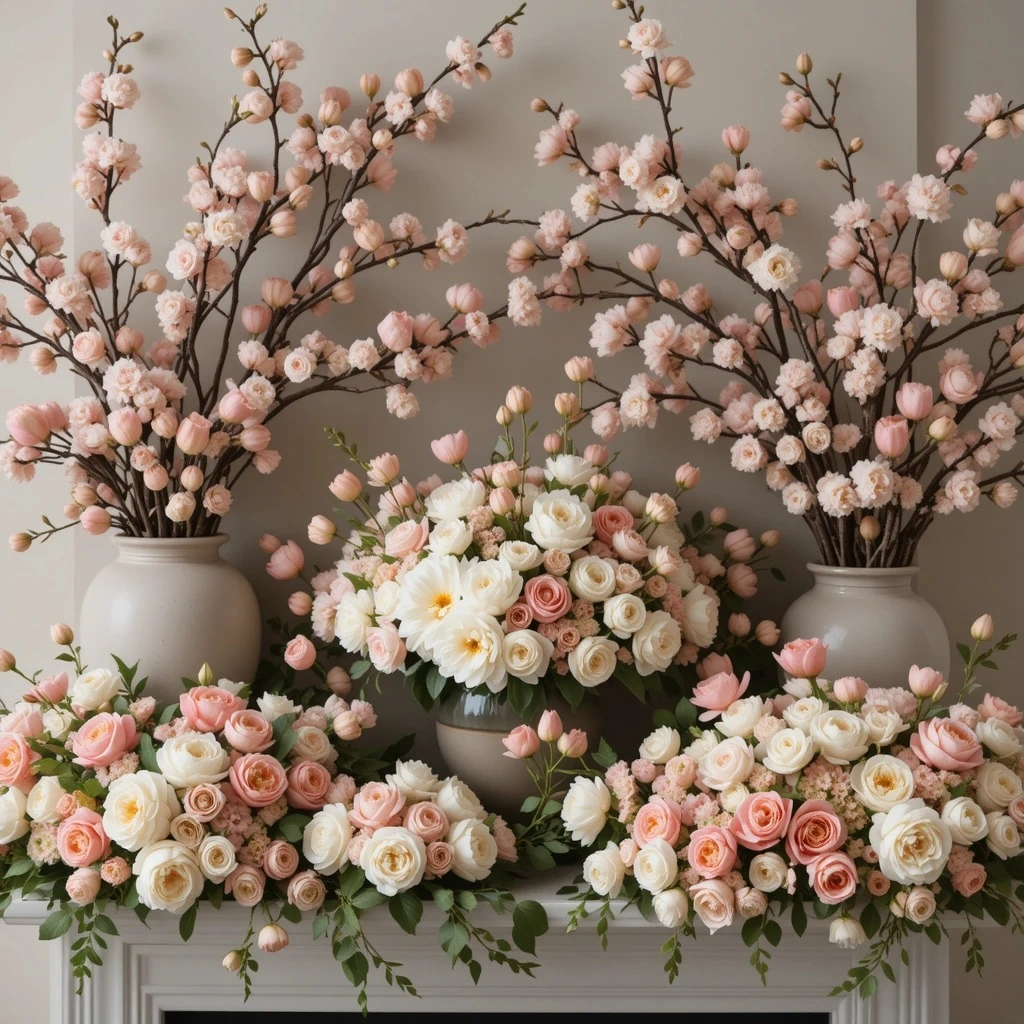
Imagine a mantel overflowing with lush seasonal blooms in varying heights and textures. Combine tall cherry blossom branches arching gracefully from oversized ceramic vases with clusters of tulips, ranunculus, and peonies in shorter vessels. Shop on Amazon
Layer in touches of greenery like eucalyptus or lamb’s ear for softness, and scatter bud vases with single stems throughout the arrangement. The color palette flows from soft blush pinks to creamy whites with pops of coral and pale yellow, creating a garden-fresh aesthetic that feels alive and romantic.
Why It Works: Fresh flowers instantly transform any space with natural beauty and fragrance while signaling the arrival of spring more effectively than any other decor element. This approach creates a focal point that draws the eye and conversation, making your mantel the star of the room.
How to Style It:
- Use odd-numbered groupings of vases (3, 5, or 7) in varying heights from 8 to 24 inches for visual interest and professional balance
- Change water every 2-3 days and trim stems at an angle to extend flower life to 7-10 days
- Mix matte and glazed ceramic finishes in complementary neutral tones to add depth without competing with the blooms
- Position the tallest arrangements slightly off-center rather than dead-center to create a more organic, asymmetrical composition
Where to Use It: Living room mantels, dining room fireplace surrounds, bedroom focal walls, entry console areas
Pro Tip: Shop your local farmer’s market early Saturday morning for the freshest blooms at half the price of florists, and don’t shy away from grocery store flowers—they’re often just as beautiful when styled thoughtfully with varying heights and textures.
2. Layered Botanical Prints
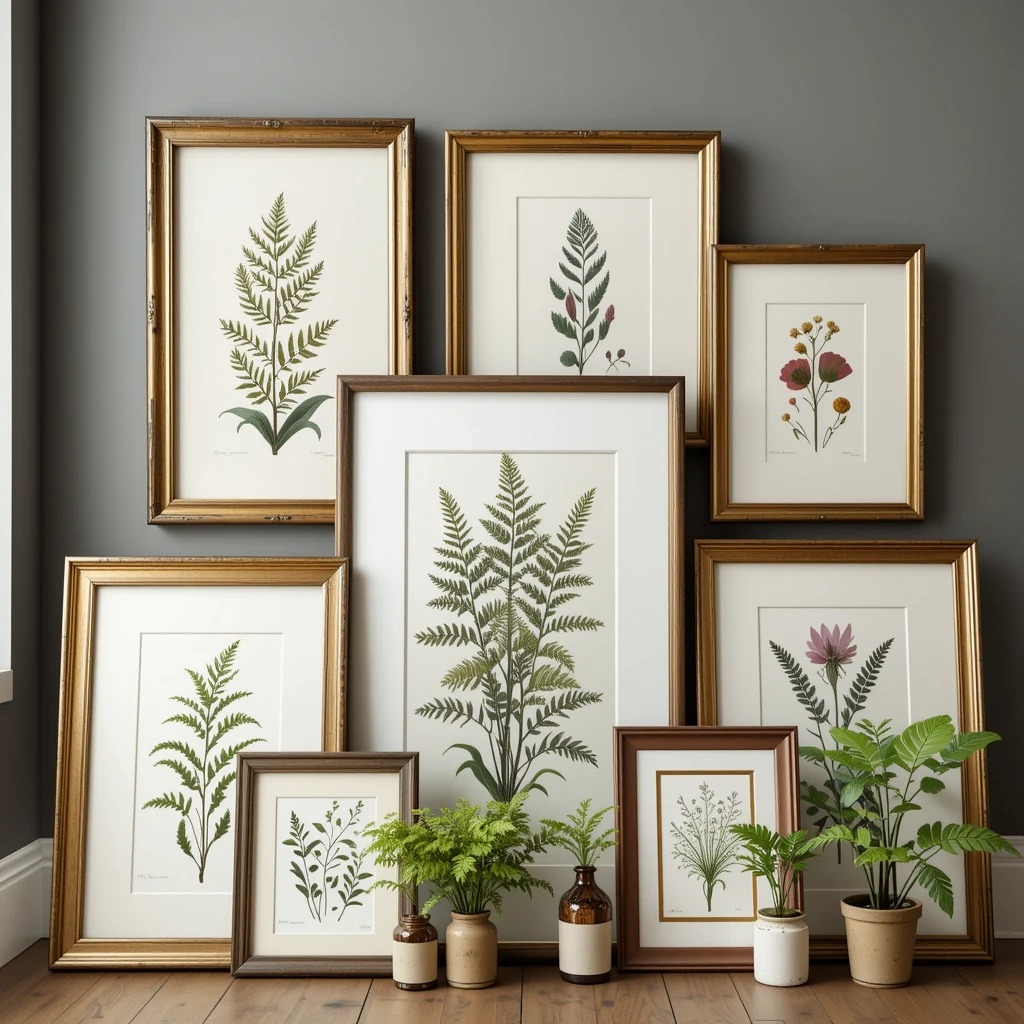
Create a gallery-style arrangement featuring vintage botanical prints, pressed flower frames, and nature-inspired artwork in a mix of frame styles and sizes. Picture weathered gold frames beside sleek white matted prints and natural wood frames, all featuring delicate illustrations of spring botanicals like ferns, wildflowers, and herbs. Shop on Amazon
Lean the largest pieces against the wall rather than hanging them, layer smaller frames in front at varying angles, and intersperse the collection with small potted plants or specimen jars. The overall effect is reminiscent of a European apothecary or naturalist’s study, sophisticated yet approachable.
Why It Works: Botanical prints bring the beauty of spring indoors year-round without the maintenance of fresh flowers, while the layered presentation adds architectural depth and curated personality. This style works beautifully in both traditional and modern spaces, making it incredibly versatile.
How to Style It:
- Start with your largest frame (16×20 or larger) leaning at a slight angle, then build forward and outward with smaller pieces
- Maintain 2-3 inches of space between frames to prevent a cluttered appearance and allow each piece to breathe
- Include at least one frame with a pop of unexpected color or gold accent to break up too much neutrality
- Place small decorative objects like antique keys, specimen boxes, or river rocks between frames to add three-dimensional interest
Where to Use It: Home offices, reading nooks, bedroom mantels, traditional living rooms
Pro Tip: Print free vintage botanical illustrations from museum archives like the New York Public Library Digital Collections, then frame them in thrifted frames spray-painted in coordinating colors for a high-end look at a fraction of the cost.
3. Pastel Pottery Display
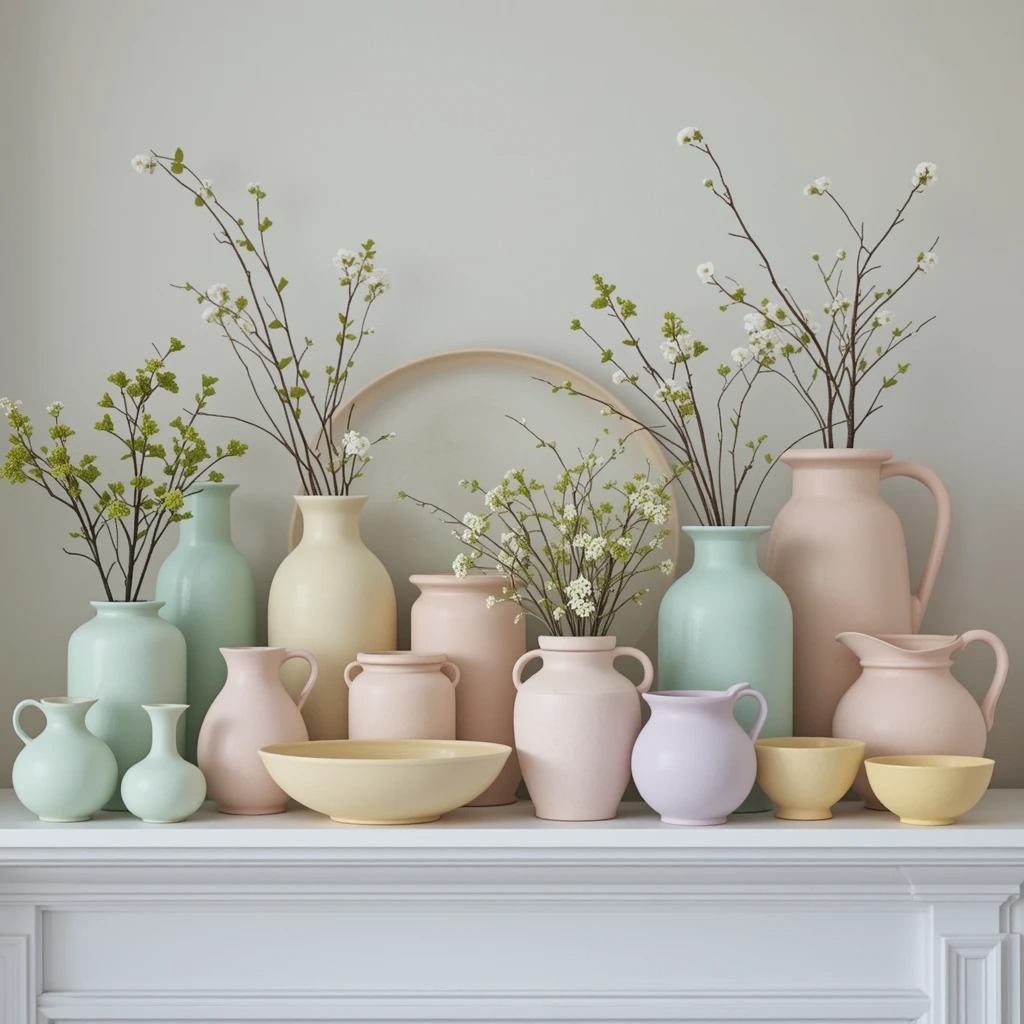
Transform your mantel into a serene showcase of pastel-hued ceramics and pottery in soft spring shades. Envision a collection of mint green vases, blush pink planters, butter yellow bowls, and lavender pitchers arranged in an artful still life.
The pieces vary in size from petite bud vases just 4 inches tall to substantial stoneware crocks reaching 12-14 inches, creating rhythm through repetition of color rather than exact matching. Shop on Amazon
Some vessels hold simple greenery or single flower stems, while others stand empty as sculptural objects. The matte and satin finishes catch light differently throughout the day, adding subtle visual movement to the display.
Why It Works: The soft, harmonious color palette creates an instantly calming atmosphere while the varied shapes and textures keep the eye moving across the mantel. This approach is forgiving and easy to build over time as you collect pieces, making it ideal for those who love evolving their decor seasonally.
How to Style It:
- Anchor each end with your largest pottery pieces, then fill the middle with varied heights to create a visual mountain range effect
- Limit your palette to 3-4 pastel shades that share similar saturation levels to maintain cohesion
- Mix in one or two white or cream pieces to give the eye a resting place and prevent color overload
- Position pieces at different depths from the wall’s edge—some touching the back, others pulled forward—to create shadows and dimension
Where to Use It: Kitchens, breakfast nooks, sunrooms, feminine bedroom spaces
Pro Tip: Visit local pottery studios during their spring sales or “seconds” events to find handmade pieces with minor imperfections at 40-60% off retail, giving you the character of artisan work without the premium price tag.
4. Minimalist Branch Statement
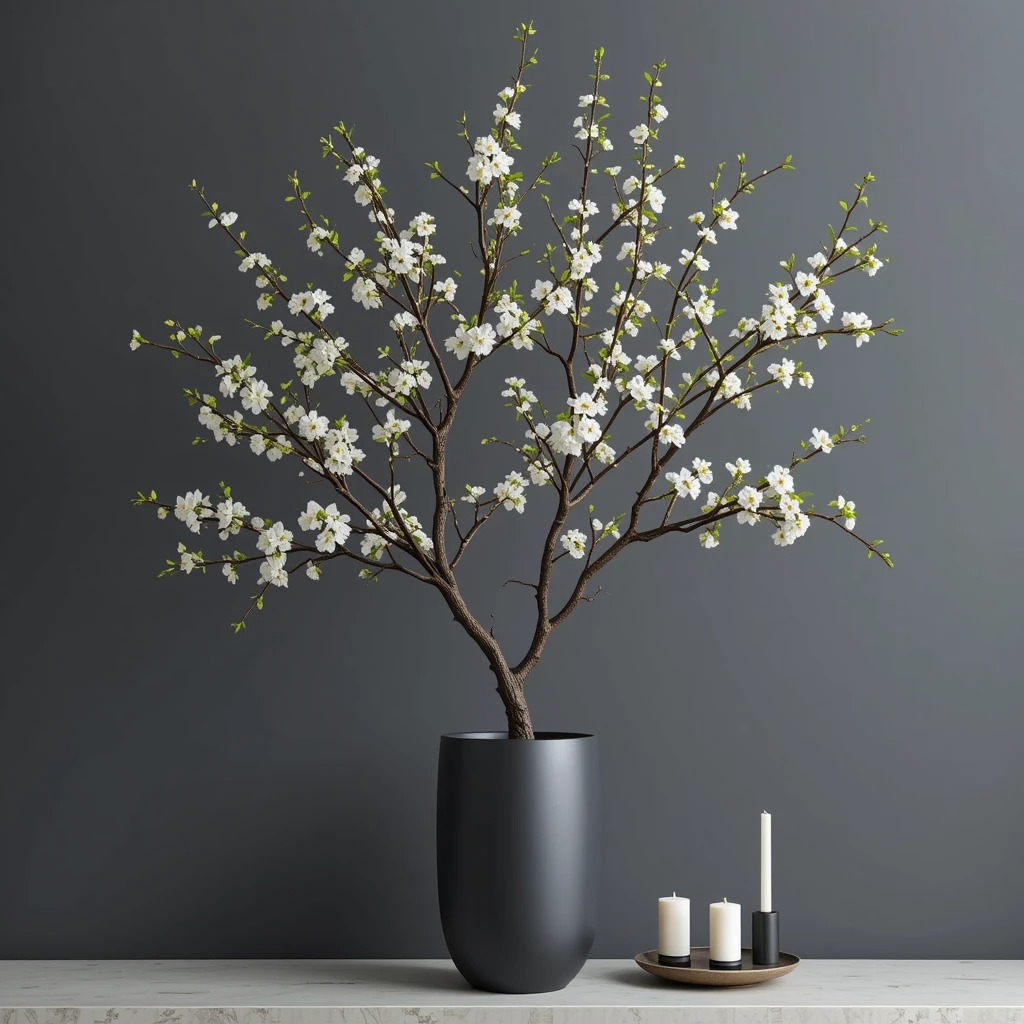
Embrace the Japanese principle of ma (negative space) with a strikingly simple arrangement featuring one or two substantial branches in a large-scale vessel. Imagine a single dramatic cherry blossom branch or curly willow stem reaching 4-5 feet tall, emerging from a modern cylindrical vase in concrete, matte black ceramic, or raw earthenware. Shop on Amazon
The branch creates an architectural statement with its natural curves and delicate blooms or fresh green leaves, while the surrounding mantel remains nearly empty save for perhaps one small sculptural object or a single pillar candle placed asymmetrically. The beauty lies in the breathing room—allowing the eye to fully appreciate the branch’s organic form and the interplay of positive and negative space.
Why It Works: This approach delivers maximum visual impact with minimal effort and expense, proving that less truly can be more when executed with intention. The simplicity creates a serene, meditative quality while the dramatic scale of the branch ensures the mantel doesn’t read as bare or forgotten.
How to Style It:
- Choose a vessel that’s at least 8-10 inches tall and heavy enough (4-5 pounds when filled) to support the branch without tipping
- Position the branch slightly off-center and allow it to lean at a natural angle rather than standing perfectly upright
- Keep the mantel surface 75-80% clear to honor the minimalist aesthetic and prevent diluting the impact
- If your branch comes without blooms, consider spray-painting it in a soft blush or sage green for subtle spring color
Where to Use It: Modern lofts, Scandinavian-inspired spaces, small apartments, minimalist bedrooms
Pro Tip: Cut branches from your own yard or ask neighbors with flowering trees if you can prune a few stems in early spring—forsythia, quince, and fruit tree branches force beautifully indoors when cut and placed in water 2-3 weeks before they’d naturally bloom.
5. Vintage Garden Tool Display
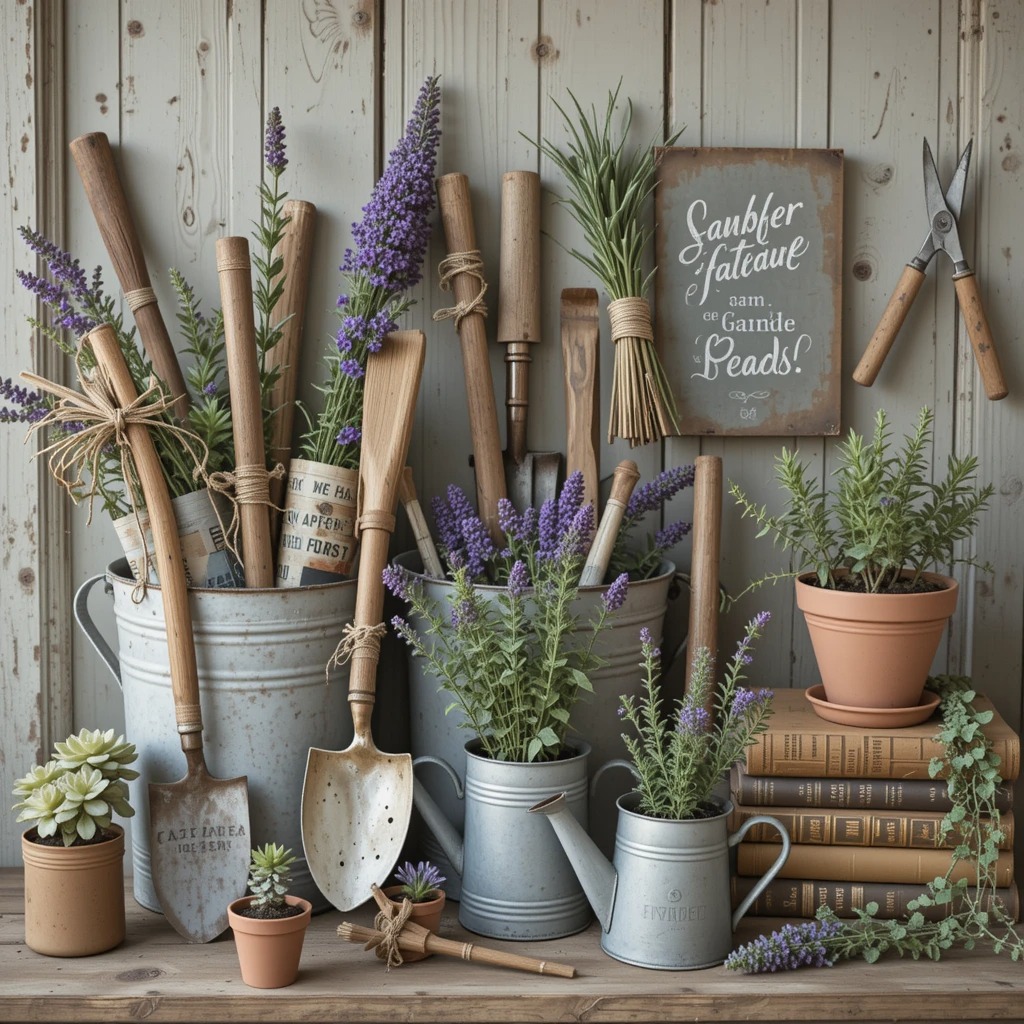
Celebrate the gardening season by transforming weathered tools into charming decorative elements with rustic farmhouse appeal. Visualize a collection of vintage hand trowels, small rakes, and pruning shears with worn wooden handles arranged in galvanized metal buckets or antique clay pots. Tie bundles of seed packets together with twine and lean them against terracotta pots filled with fresh herbs like lavender or rosemary. Shop on Amazon
Add dimension with small watering cans in zinc or copper patina, their spouts filled with wildflowers or trailing ivy. Stack vintage gardening books and place small potted succulents on top, and consider incorporating a weathered wooden sign with hand-lettered gardening quotes or botanical names. The color palette stays earthy with rust, sage green, weathered wood tones, and pops of terra cotta.
Why It Works: This styling tells a story about spring’s practical side—the joy of getting hands in soil and growing things—while celebrating the beauty in well-used, functional objects. The vintage elements add character and nostalgia, creating warmth and authenticity that new items simply can’t replicate.
How to Style It:
- Clean vintage tools thoroughly but preserve their patina and wear marks, which add authenticity and character
- Create height variation by leaning longer-handled tools diagonally against the wall behind smaller potted elements
- Use odd-numbered groupings of pots (3 or 5) in graduating sizes from 4 to 8 inches for the most ple
Common Mistakes to Avoid
1. Overcrowding the Space
The most common mantel styling mistake is trying to fit too many elements into the available space, creating visual chaos rather than curated beauty. When every inch is filled, the eye has nowhere to rest and individual pieces lose their impact. Leave at least 20-30% of your mantel surface empty, and resist the urge to add “just one more thing.” Remember that negative space is as important as the objects themselves in creating a balanced, sophisticated display.
2. Ignoring Scale and Proportion
Using objects that are all the same height or size creates a flat, uninspiring display that lacks visual interest and dimension. Your tallest elements should be at least twice the height of your shortest ones, and you need variation in width and depth as well. A common rule: your tallest piece should be roughly two-thirds the height of the wall space above your mantel for proper proportion. Items that are too small get lost, while oversized pieces can overwhelm the space.
3. Forgetting the Triangle Rule
Professional designers use an invisible triangle principle when arranging mantels—your eye should travel in a triangular pattern across the display. This means placing your tallest or most eye-catching element slightly off-center, with medium-height items on one side and lower elements balancing the other side. Symmetrical arrangements can work beautifully, but most mantels benefit from this asymmetrical triangle approach that feels more organic and collected over time.
4. Neglecting Proper Lighting
Even the most beautifully styled mantel falls flat without proper lighting to highlight the display and create ambiance. Overhead lighting alone often creates harsh shadows and fails to illuminate your carefully curated pieces. Add table lamps on either end of the mantel, use picture lights above artwork, incorporate candles at varying heights, or install LED strip lighting along the mantel’s underside for a subtle glow that showcases your spring display from evening into night.
5. Using Only New, Matchy-Matchy Pieces
When everything looks like it came from the same store on the same shopping trip, your mantel lacks the soul and character that comes from mixing old and new, high and low, found and gifted items. The most interesting mantels tell a story through diverse pieces collected over time. Break up sets, mix metals and finishes, combine vintage finds with modern elements, and include at least one or two items with personal meaning or history rather than purely decorative store-bought accessories.
6. Forgetting Seasonal Rotation
Leaving the same mantel display up for months or years makes your space feel stale and neglected, even if the original styling was beautiful. Spring is the perfect time to refresh, but your mantel should evolve at least four times per year with the seasons. This doesn’t mean completely starting over—simply swapping out 40-50% of elements keeps things feeling fresh while maintaining your foundational pieces. Store seasonal decor in labeled bins for easy rotation, and photograph your favorite arrangements to recreate or refine them next year.
Frequently Asked Questions
How do I style a mantel without a fireplace?
Console tables, credenzas, floating shelves, or even a long dresser can serve as a “mantel” and be styled using all the same principles covered in this guide. The key is ensuring your furniture piece is sturdy, level, and positioned against a wall with adequate vertical space above it—ideally 3-4 feet of wall height for proper proportion.
Treat the wall space above exactly as you would the area above a traditional mantel, hanging mirrors, artwork, or wreaths to create that vertical focal point. Many non-fireplace “mantels” actually offer more flexibility since you don’t need to work around a firebox opening or mantel depth limitations.
What’s the ideal height for mantel decorations?
Your tallest decorative element should reach approximately two-thirds the distance between your mantel surface and the ceiling (or bottom of any artwork/mirror hung above). For standard 8-foot ceilings with a mantel at 4 feet high, this means your tallest vase or branch should be around 24-30 inches tall.
However, this is a guideline rather than a hard rule—rooms with very high ceilings can accommodate even taller statements pieces of 4-5 feet, while low ceilings may require keeping everything under 18 inches. The goal is visual balance where decorations feel substantial without overwhelming the space or touching the ceiling.
How can I make my spring mantel look expensive on a budget?
Focus on three key strategies: edit ruthlessly to fewer, better pieces rather than cluttering with many cheap items; invest your budget in one or two high-impact elements like a large mirror or substantial vase, then fill in with DIY and natural materials; and shop secondhand for vintage items that add character and quality at thrift store prices.
Free elements like branches from your yard, flowers from your garden, and books you already own often look more expensive than mass-produced decor. Finally, spray paint is your friend—it unifies mismatched thrifted finds into a cohesive collection that appears intentionally curated for $5-10 total.
Should mantel decor be symmetrical or asymmetrical?
Both approaches can be beautiful, and your choice depends on your room’s architecture, personal style, and the formality level you want to achieve. Symmetrical arrangements (matching elements on either side of a central focal point) work beautifully in traditional, formal spaces and create a sense of calm, order, and classic elegance. Asymmetrical arrangements feel more casual, collected, and modern, working well in eclectic or contemporary spaces.
Many designers use a hybrid approach—symmetrical foundation (matching candlesticks or lamps on each end) with asymmetrical styling in the middle section. Trust your eye: step back frequently while styling and adjust until the arrangement feels balanced, whether technically symmetrical or not.
How do I keep fresh flowers alive longer on my mantel?
Start with the freshest possible flowers—farmer’s markets and local growers offer blooms that last significantly longer than grocery store flowers that may have traveled for days. Cut stems at a 45-degree angle with sharp shears (not scissors) and remove any leaves that would sit below the waterline to prevent bacterial growth.
Change water every 2-3 days, re-cutting stems each time, and add flower food to the water following package directions. Keep arrangements away from direct sunlight, heating vents, and fresh fruit (which releases ethylene gas that ages flowers faster). Choose naturally long-lasting varieties like alstroemeria, carnations, chrysanthemums, and orchids, which can last 2-3 weeks with proper care.
What if my mantel is very narrow or shallow?
Shallow mantels (4-6 inches deep) require thoughtful styling that emphasizes vertical rather than horizontal space. Focus on flat-backed items like artwork and mirrors leaning against the wall, tall slender vases with minimal footprints, and wall-mounted elements like wreaths or garlands that hang above rather than sitting on the mantel surface. Use the wall space generously—hanging elements can extend well beyond the mantel edges to create visual width.
Avoid deep bowls, chunky candlesticks, or anything that extends more than 3-4 inches from the wall, as these risk being knocked off. Consider installing a narrow floating shelf 8-12 inches above your mantel to create a second styling surface for lightweight items like small frames or plants.
Final Thoughts: Creating Your Perfect Spring Sanctuary
Your spring mantel is more than just a decorative display—it’s a daily reminder that warmer, brighter days are here, a reflection of your personal style, and an opportunity to bring the season’s renewal energy into your home. Don’t feel pressured to copy any of these ideas exactly; instead, use them as inspiration to create something that feels authentically you, whether that means embracing bold rainbow colors, serene minimalism, or charming vintage cottage style.
The most beautiful mantels aren’t necessarily the most expensive or professionally styled—they’re the ones that make you smile every time you walk past them. They might include flowers from your garden, a vase inherited from your grandmother, books you actually read, or artwork your child created. These personal touches transform a pretty arrangement into a meaningful focal point that tells your family’s story.
Remember that mantel styling is never truly “finished”—it’s a living, evolving expression that can and should change as you find new treasures, as flowers bloom and fade, and as your own tastes develop. Give yourself permission to experiment, move things around, swap elements in and out, and trust your instincts about what looks and feels right in your space.
Your Next Step: Choose just one idea from this guide that resonates with you, then gather what you already have at home that could work with that style. You don’t need to buy anything new to get started—simply editing what’s currently on your mantel, adding fresh flowers from your grocery trip, or rearranging books and objects you already own can create dramatic improvement.
Remember: The best spring mantel is the one that makes your house feel more like home, brings you joy every time you see it, and celebrates this beautiful season of growth, renewal, and fresh beginnings in a way that’s meaningful to you.