17 Unique Window Boxes Ideas for a Fresh and Cozy Look
Window boxes are one of the easiest and most affordable ways to add personality, color, and life to the exterior — or interior — of any home. Whether you live in a modern apartment, a rustic farmhouse, or a classic colonial, the right window box can instantly elevate your space from ordinary to extraordinary, creating a setting the whole family can enjoy every day.
In this guide, we’ve curated 17 window boxes ideas that cater to every style, climate, and skill level. From lush cottage gardens overflowing with blooms to sleek minimalist designs that suit contemporary homes, there’s something here for every plant lover and home decorator — including ideas that bring a touch of nature closer to home for both adults and kids to appreciate.
Why Window Boxes ideas Are Worth It
Window boxes do more than look pretty — they’re a statement. A well-styled window box signals care, creativity, and warmth to anyone who passes by. They add vertical interest, soften hard architectural lines, and give you a chance to garden even if you don’t have a yard.
Beyond aesthetics, window boxes can attract pollinators, provide fresh herbs at arm’s reach, and even improve air quality near your windows. With the right plant selection and a little maintenance, they reward you all season long with color, texture, and fragrance.
1. Classic Cottage Flower Window Box
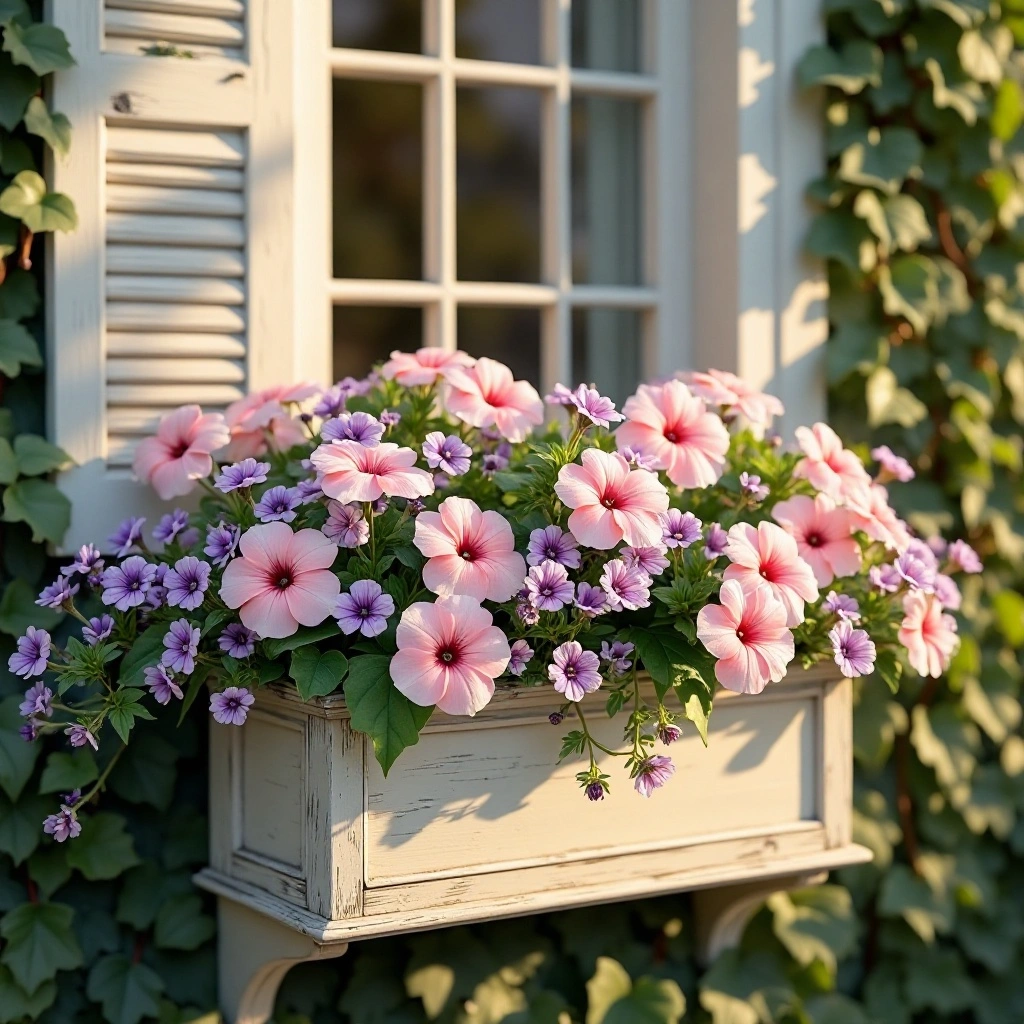
A timeless window box overflowing with a mix of pastel pink petunias, trailing white lobelia, and soft lavender sweet alyssum. The wooden box is painted in a weathered cream finish, slightly distressed at the edges, mounted below a white-framed cottage window with climbing ivy on the wall. Early morning light filters through, casting soft golden shadows on the blooms Shop on Amazon
How to Style It:
- Mix upright bloomers (petunias, snapdragons) with trailers (lobelia, bacopa) for a lush, layered look
- Stick to a 2–3 color palette so the arrangement doesn’t look chaotic
- Add a small sprig of dusty miller for silver contrast
- Use loose, asymmetric planting rather than perfectly even rows
Where to Use It: Best suited for traditional, farmhouse, or Victorian-style homes. Works beautifully on front-facing windows visible from the street.
Pro Tip: Deadhead spent blooms weekly to keep the box looking full and encourage continuous flowering all summer long.
2. Herb Garden Window Box
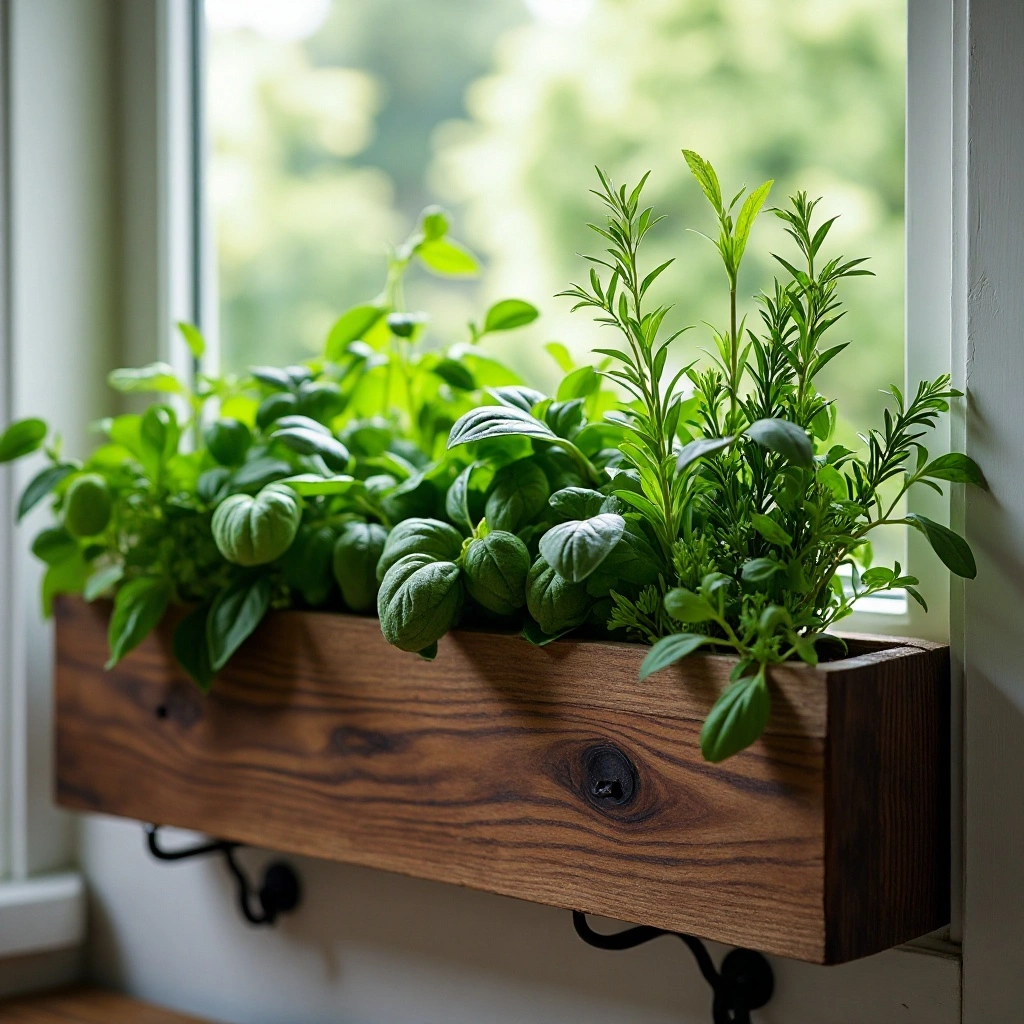
A functional yet beautiful window box planted with a lush mix of culinary herbs including bushy basil, trailing rosemary, upright sage, and feathery dill. The planter is made from reclaimed dark walnut wood with a matte black metal bracket. Positioned just outside a kitchen window, sunlight illuminates the vibrant green leaves, giving off a fresh, aromatic garden feel. Shop on Amazon
How to Style It:
- Group herbs by water needs — drought-tolerant ones (rosemary, thyme) together, moisture-loving ones (basil, parsley) together
- Use terracotta-colored pots inside the box for a layered look
- Label each herb with small chalkboard sticks for a market-garden aesthetic
- Add edible flowers like nasturtiums to bridge function and beauty
Where to Use It: Perfect for kitchen windows, apartment balconies, or any window that gets 6+ hours of direct sunlight.
Pro Tip: Harvest regularly — the more you cut herbs, the bushier and more productive they grow. Never let basil flower or it turns bitter.
3. Succulent & Cactus Window Box
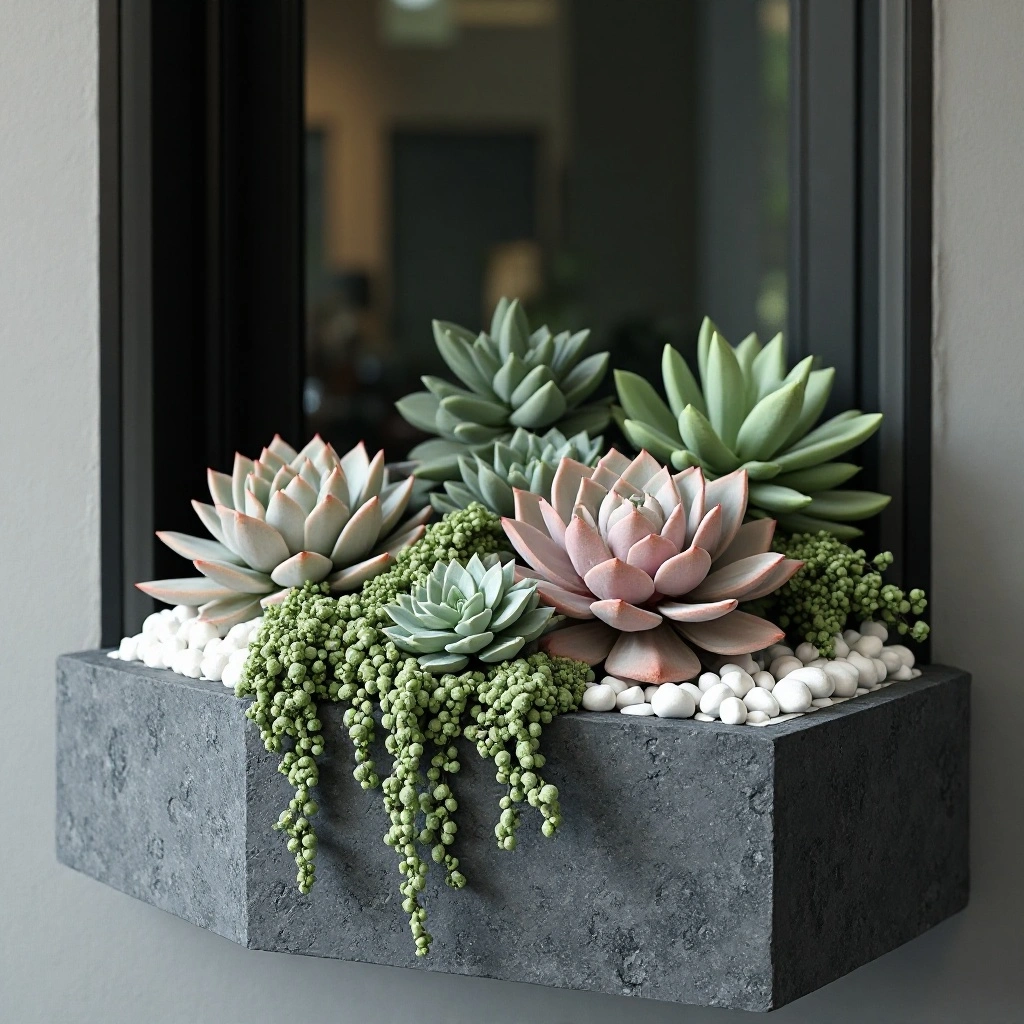
A sleek, modern window box in charcoal grey concrete filled with an artful arrangement of various succulents — rosette-shaped echeverias in dusty pink and sage green, spiky aloe, and trailing string-of-pearls cascading over the front.
Small smooth pebbles top the soil in a clean geometric arrangement. The box is mounted below a minimalist black-framed window. Shop on Amazon
How to Style It:
- Mix rosette shapes (echeveria, sempervivum) with spiky forms (aloe, haworthia) for textural contrast
- Use a well-draining cactus mix to prevent root rot
- Place taller varieties at the back, trailers at the front
- Stick to a monochromatic or analogous color palette for a curated look
Where to Use It: Ideal for contemporary, desert modern, or Scandinavian-style homes. Excellent for hot, dry climates or south-facing windows with intense sun.
Pro Tip: Water deeply but infrequently — once every 10–14 days in summer, once a month in winter. Overwatering kills more succulents than anything else.
4. Fall Harvest Window Box
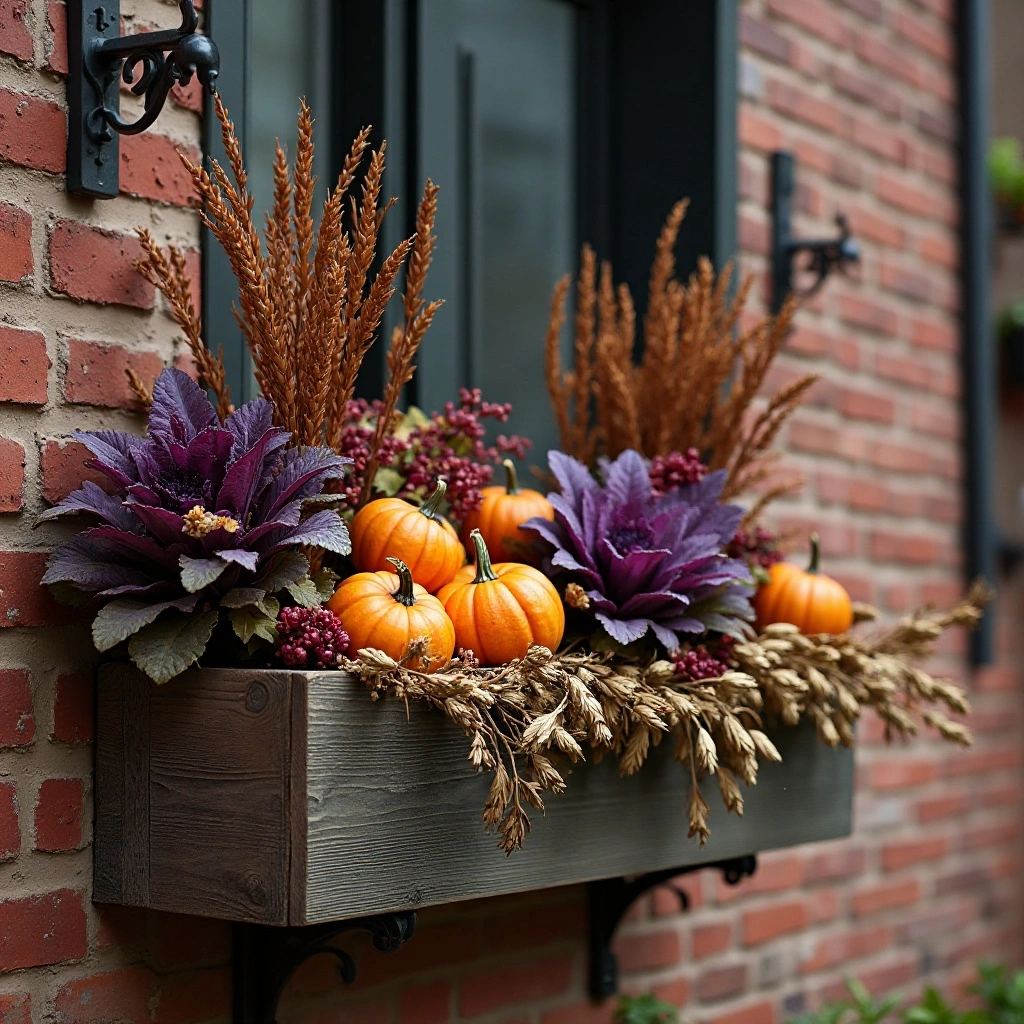
A rustic autumn-themed window box bursting with warm seasonal colors — ornamental kale in deep purple, miniature orange pumpkins, trailing copper-toned ivy, and dried wheat stalks tucked into the back. The planter is a distressed barn-wood style box with wrought iron brackets. Set against a red-brick wall under a grey autumn sky. Shop on Amazon
How to Style It:
- Use odd numbers of accent pieces (3 mini pumpkins, 5 gourds) for a natural, balanced look
- Add dried elements like cotton stems, pinecones, or seed pods for texture
- Layer heights — tall grasses or dried stalks at back, mid-height plants in center, trailing at front
- Stick to a warm palette: burnt orange, burgundy, deep gold, and forest green
Where to Use It: Best for front-facing windows, porches, and entryways. Works with craftsman, colonial, and farmhouse exteriors.
Pro Tip: Swap out perishables mid-season. Ornamental kale actually gets more vibrant after the first frost — leave it in as long as possible.
5. Winter Evergreen Window Box
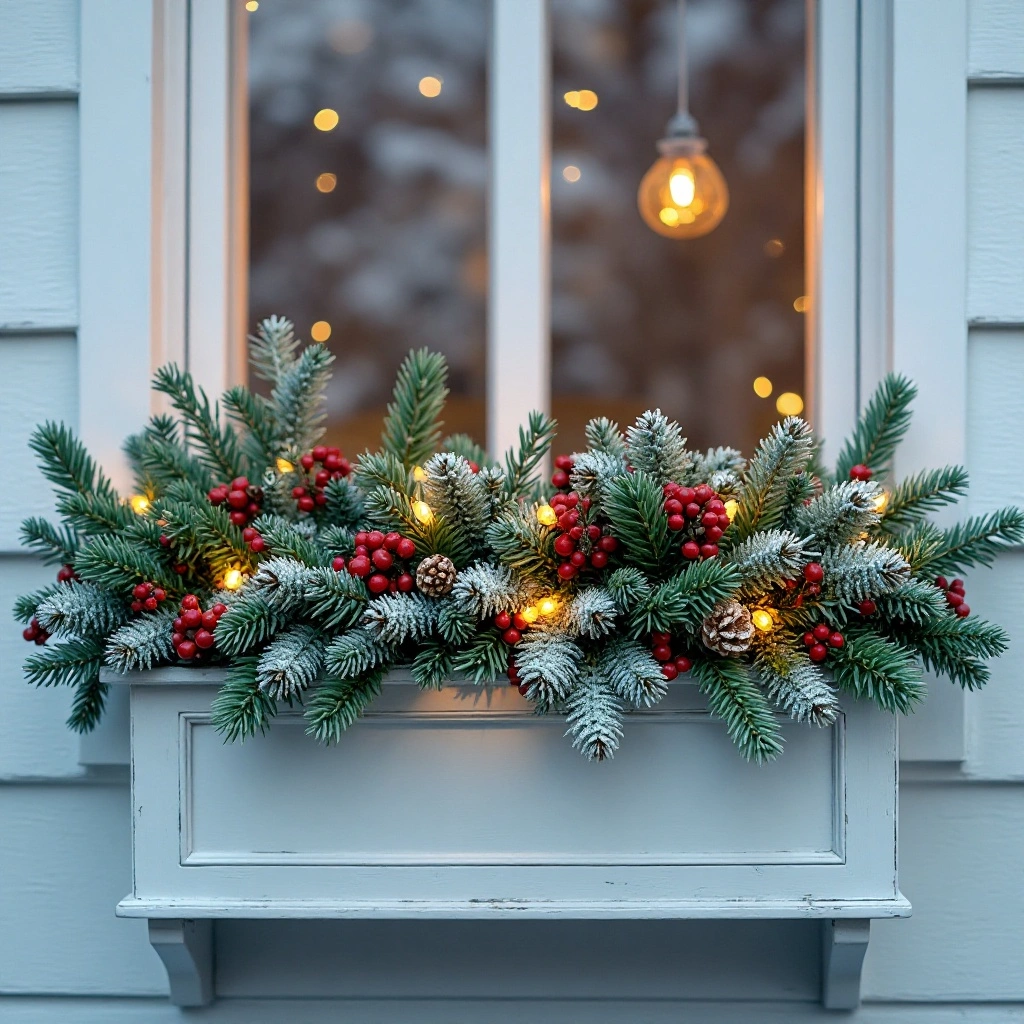
An elegant winter window box filled with lush sprigs of blue spruce, cedar, and holly with bright red berries. Pinecones and twinkling fairy lights are nestled between the greenery. The planter is a classic white-painted wood box dusted with a light faux-frost finish. Mounted below a frosted glass window on a crisp winter day. Shop on Amazon
How to Style It:
- Use a mix of textures: soft pine needles, waxy holly leaves, rough pinecone scales
- Add elements with white or silver for a snowy, wintry feel (cotton stems, silver baubles)
- String warm-white LED fairy lights through the arrangement for evening ambiance
- Include red berries (holly, winterberry) or small ornaments for a festive pop of color
Where to Use It: Perfect for the holiday season on any style of home. Especially impactful near the front door or on street-facing windows.
Pro Tip: Cut evergreen branches from your yard or a local tree farm for free filler material. They’ll stay fresh for 4–6 weeks in winter cold.
6. Monochromatic Yellow Sunshine Box
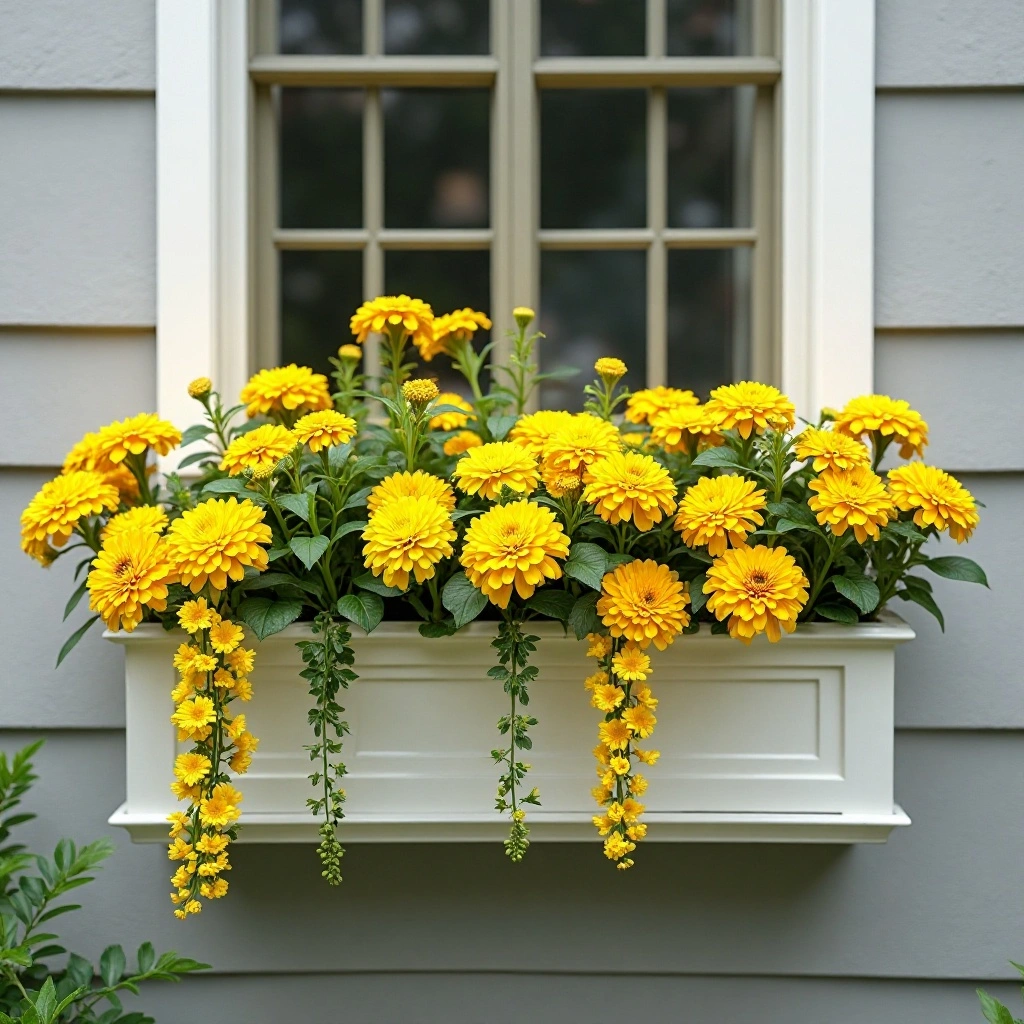
A vibrant, cheerful window box planted entirely in shades of yellow and gold — marigolds, yellow calibrachoa, golden creeping Jenny trailing over the edges, and a few spikes of yellow snapdragons at the back.
The planter is a clean white-painted wood box with simple black bracket hardware. Sunlight makes the blooms almost glow against a pale grey house exterior. Shop on Amazon
How to Style It:
- Choose 3–5 plants in varying shades of the same color for depth without chaos
- Use trailers to soften the box edge and add movement
- Include one textural element — like chartreuse sweet potato vine — to add contrast without breaking the palette
- Mix bloom sizes: tiny calibrachoa + large marigolds = visual interest
Where to Use It: Works on almost any home style. Especially striking on grey, white, navy, or dark green exteriors.
Pro Tip: Yellow flowers tend to fade quickly in intense heat. Choose heat-tolerant varieties like marigolds and calibrachoa, and provide afternoon shade in hot climates.
7. Tropical Bold Foliage Window Box
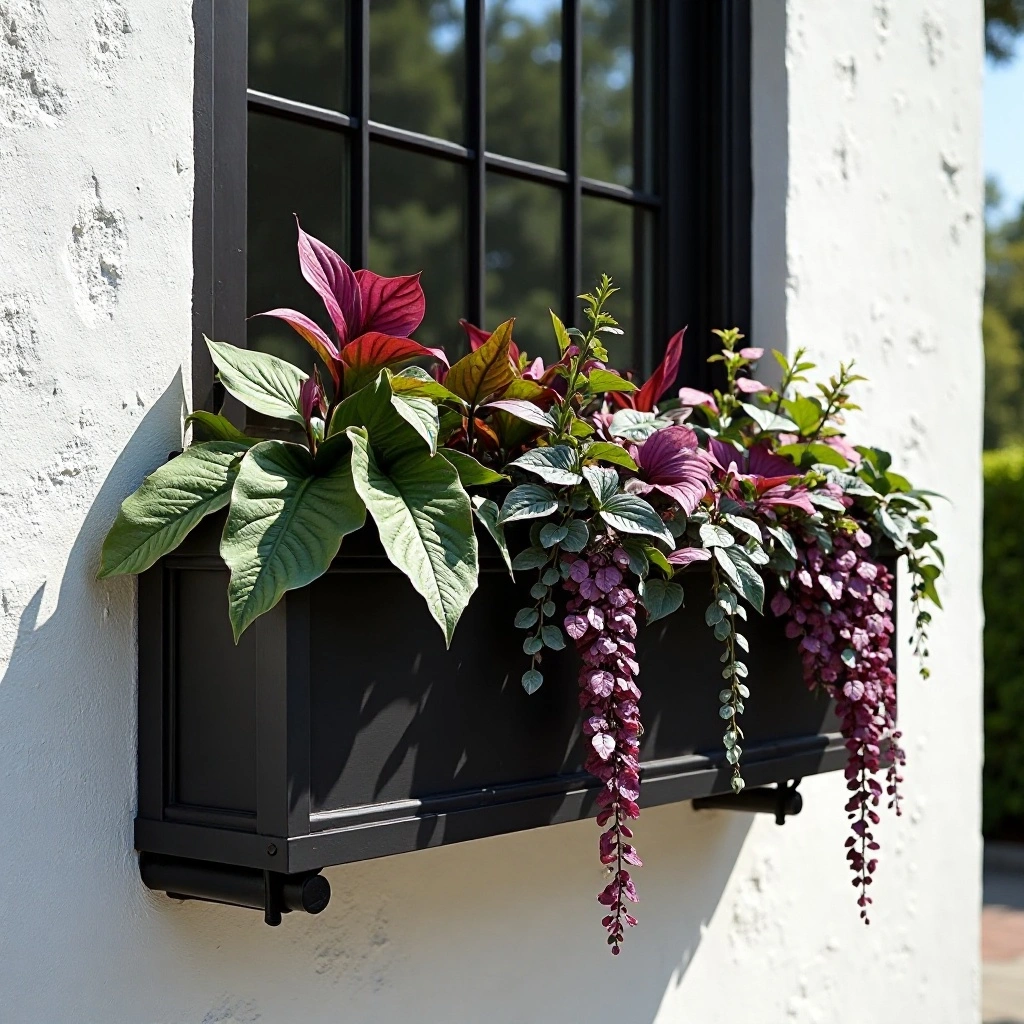
A dramatic, lush window box filled with oversized tropical foliage — deep burgundy elephant ear, bright green caladium with pink veins, and trailing tradescantia in purple and silver.
The planter is a sleek dark espresso-stained cedar box with modern matte black brackets. Set against a white stucco wall under bright summer sun. Shop on Amazon
How to Style It:
- Go bold with leaf size and color contrast — the bigger and more dramatic the better
- Combine plants with different leaf shapes: broad, lance-shaped, and trailing
- Use one large focal plant (elephant ear, canna) anchored in the center
- Water frequently — tropical plants are thirsty in heat
Where to Use It: Ideal for contemporary, Mediterranean, or Spanish-style homes with bold architectural features. Great for shaded windows that receive filtered light.
Pro Tip: Tropical plants are heavy feeders. Use a slow-release fertilizer at planting and liquid feed every two weeks for lush, full growth.
8. Cottage Garden Wildflower Mix
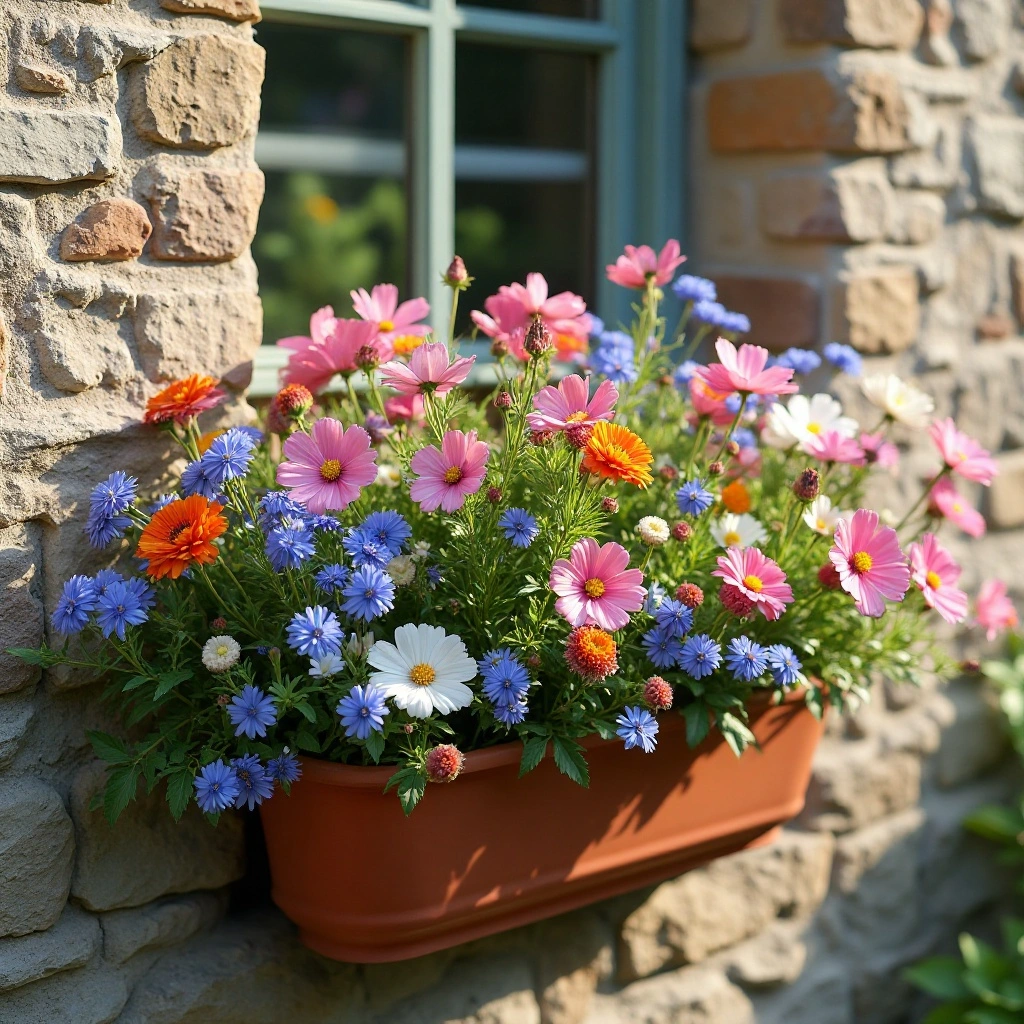
A loose, naturalistic window box bursting with wildflower charm — cosmos in pale pink and white, cornflower blue, zinnia orange, and wispy nigella. The arrangement looks effortlessly random, as if seeds were simply scattered. The planter is a rustic terracotta-style trough. Set against an old stone cottage wall with soft morning light. Shop on Amazon
How to Style It:
- Resist the urge to arrange too neatly — the beauty is in the randomness
- Sow seeds directly into the box for a true wildflower feel
- Include grasses or seed heads for a meadow aesthetic
- Let a few plants go to seed for a self-sowing box next year
Where to Use It: Perfect for cottage, English garden, or country farmhouse style homes. Also works in rural or semi-rural settings.
Pro Tip: Mix fast-blooming annuals (zinnias, cosmos) with slower-growing varieties so you have continuous bloom from early summer to first frost.
9. Dark & Dramatic Gothic Window Box
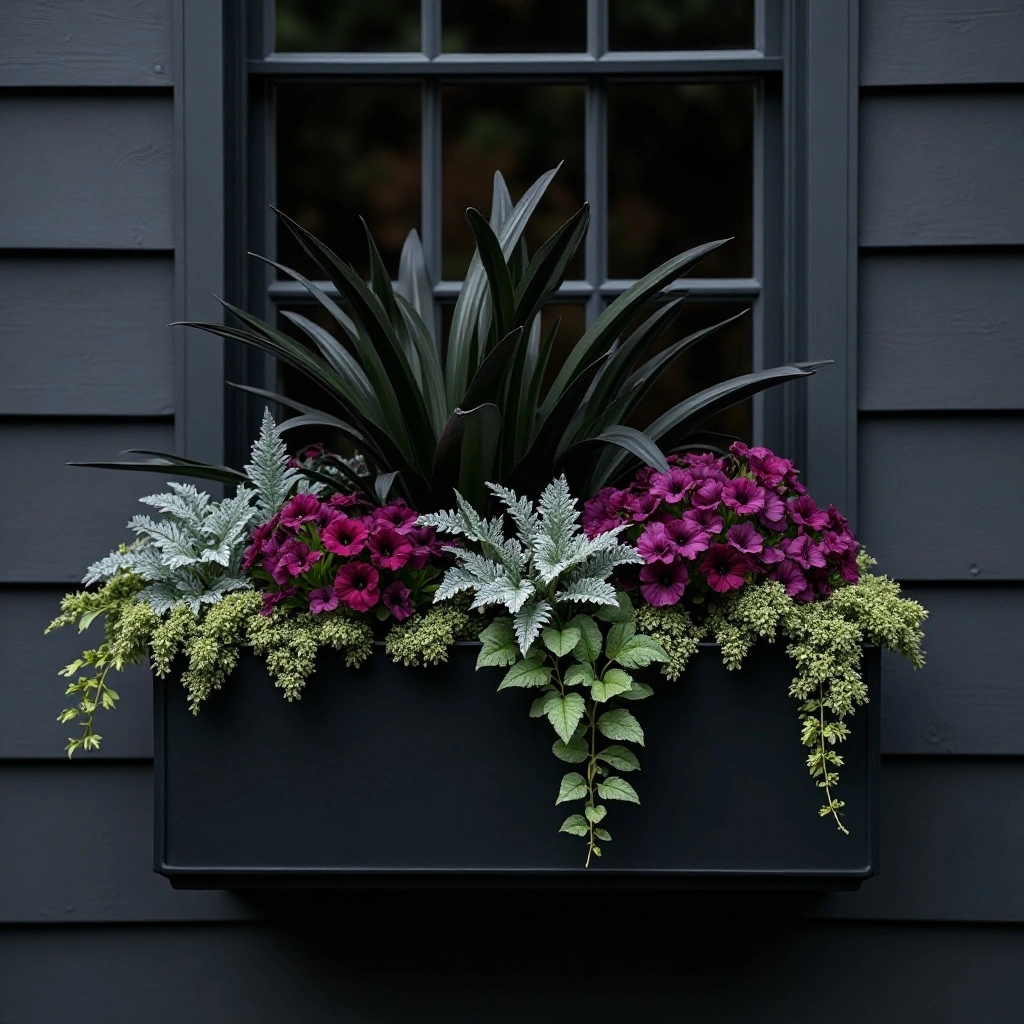
A moody, sophisticated window box featuring deep black-leaved plants — black mondo grass, near-black sweet potato vine, deep burgundy oxalis, and smoky purple heuchera. Accented with silvery dusty miller and a few dark plum-colored petunias.
The box is a matte black powder-coated metal planter with minimalist bracket design. Set against a dark charcoal house exterior. Shop on Amazon
How to Style It:
- Layer dark, medium, and light tones within the same dark palette to avoid a muddy look
- Use silver or white accents (dusty miller, white alyssum) to make dark foliage pop
- Choose plants with varying leaf textures: glossy, matte, feathery, and bold
- Keep the box and bracket hardware matching and minimal
Where to Use It: Ideal for modern, gothic, or industrial-style homes. Striking on charcoal, black, deep navy, or dark green exteriors.
Pro Tip: Dark-leaved plants can absorb more heat — water more frequently and check soil moisture every 1–2 days in summer.
10. Rustic Farmhouse Window Box
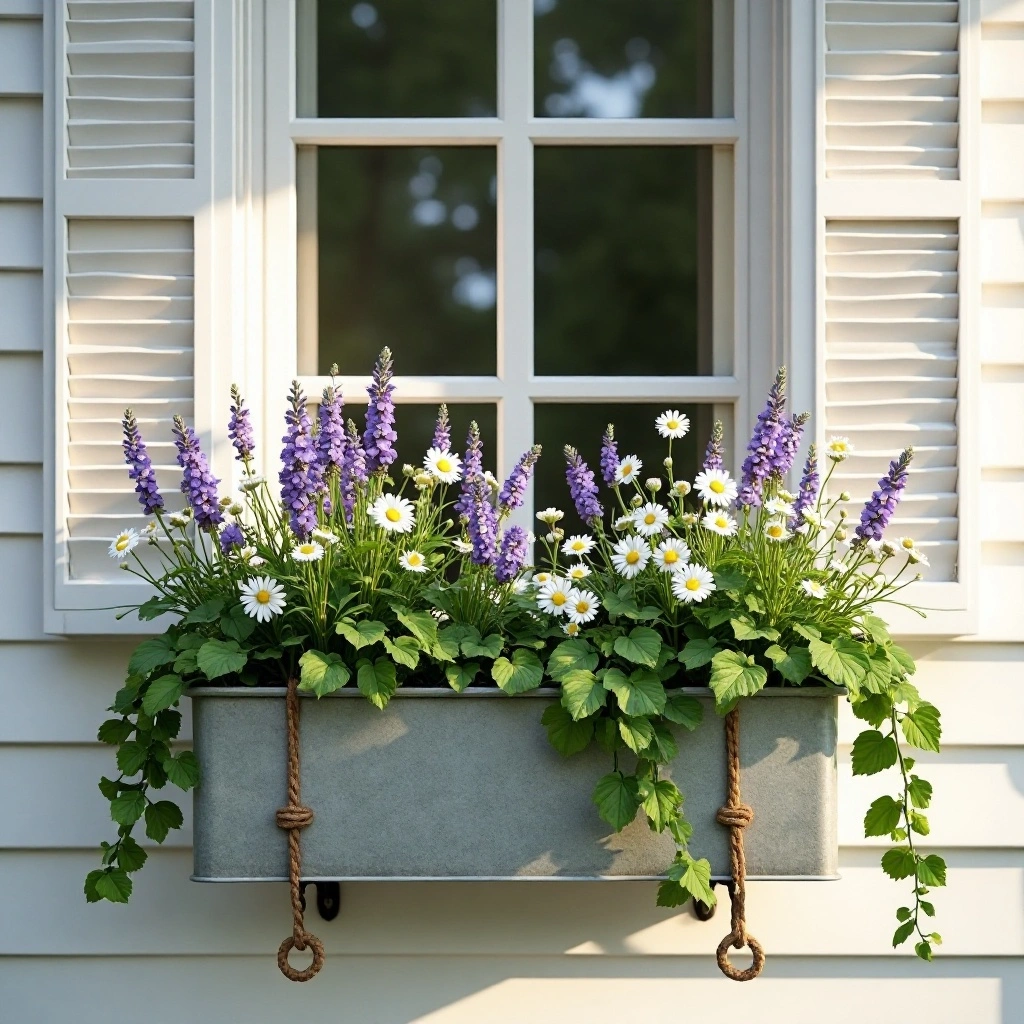
A warm, inviting farmhouse-style window box planted with lavender, white shasta daisies, dusty miller, and trailing ivy. The planter is a classic galvanized metal trough with a slightly aged patina, hung with simple rope brackets below a white-shuttered window. Set against a white shiplap exterior wall, surrounded by a simple garden picket fence. Shop on Amazon
How to Style It:
- Pair soft, airy plants (lavender, daisies) with structured trailing greenery (ivy, creeping jenny)
- Use galvanized or aged metal containers for an authentic farmhouse feel
- Include natural materials: rope hangers, wooden stakes, dried lavender bunches
- Keep the palette in whites, greens, and soft purple-blues
Where to Use It: Perfect for farmhouse, craftsman, or country cottage style homes. Works especially well with shutters, white siding, or wood-paneled exteriors.
Pro Tip: Lavender thrives in well-drained soil and full sun. Avoid the temptation to overwater — it prefers dry conditions and will rot in soggy soil.
11. All-Foliage No-Flower Window Box
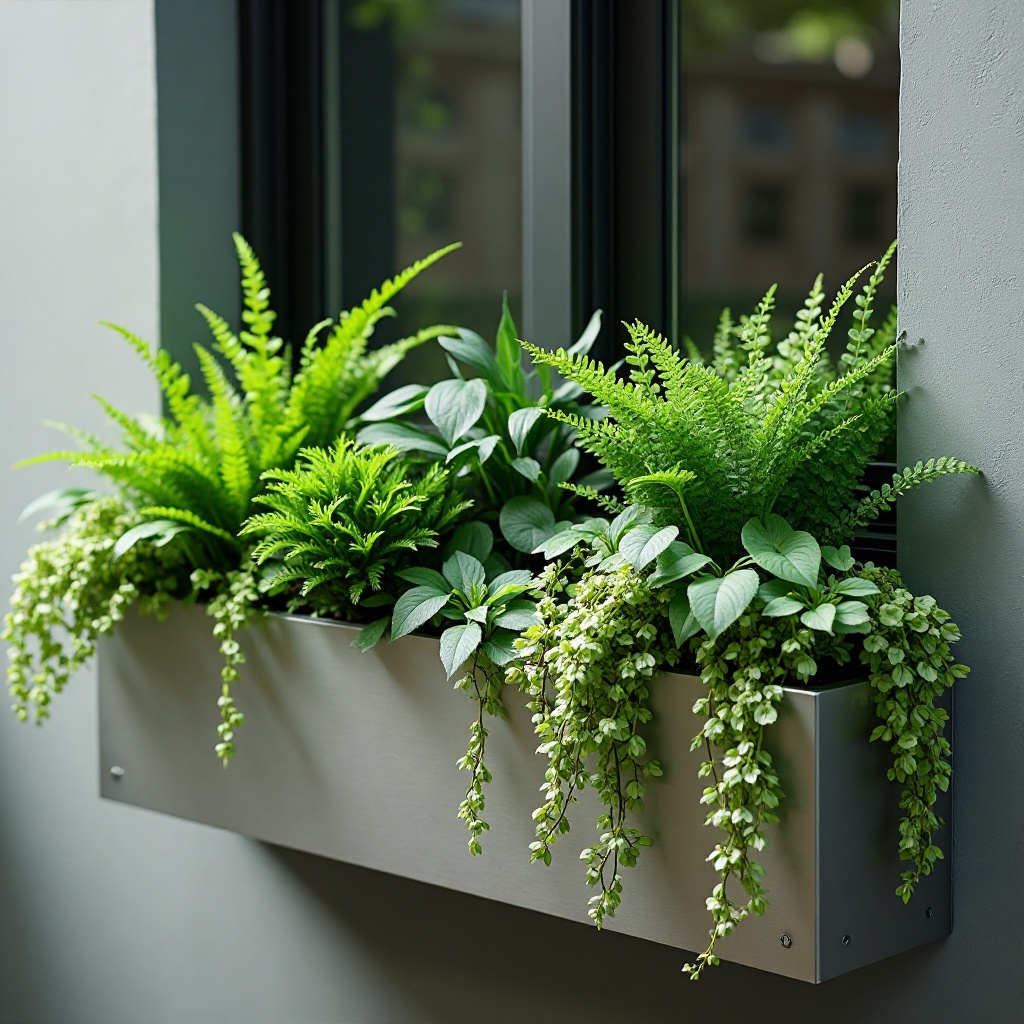
A sophisticated, texture-forward window box using only foliage — no flowers. Features feathery asparagus fern, bold hosta leaves, variegated fittonia, and cascading golden creeping jenny. The palette is entirely green with variations in shade, texture, and pattern.
The planter is a sleek, low-profile brushed aluminum box with hidden wall-mount brackets. Shop on Amazon
How to Style It:
- Use at least 4–5 different foliage textures: fine, bold, variegated, trailing, and upright
- Play with shades of green: lime, forest, blue-green, and chartreuse
- Include one plant with unusual leaf shape or pattern as a focal point
- Balance airy plants (ferns) with structural ones (hostas) for visual stability
Where to Use It: Works on any style home but particularly shines on contemporary, Scandinavian, and Japanese-inspired aesthetics. Excellent for shaded or north-facing windows.
Pro Tip: Foliage boxes require less deadheading than flower boxes but still need regular grooming. Remove yellowing leaves promptly to keep the look clean.
12. Urban Minimalist Window Box
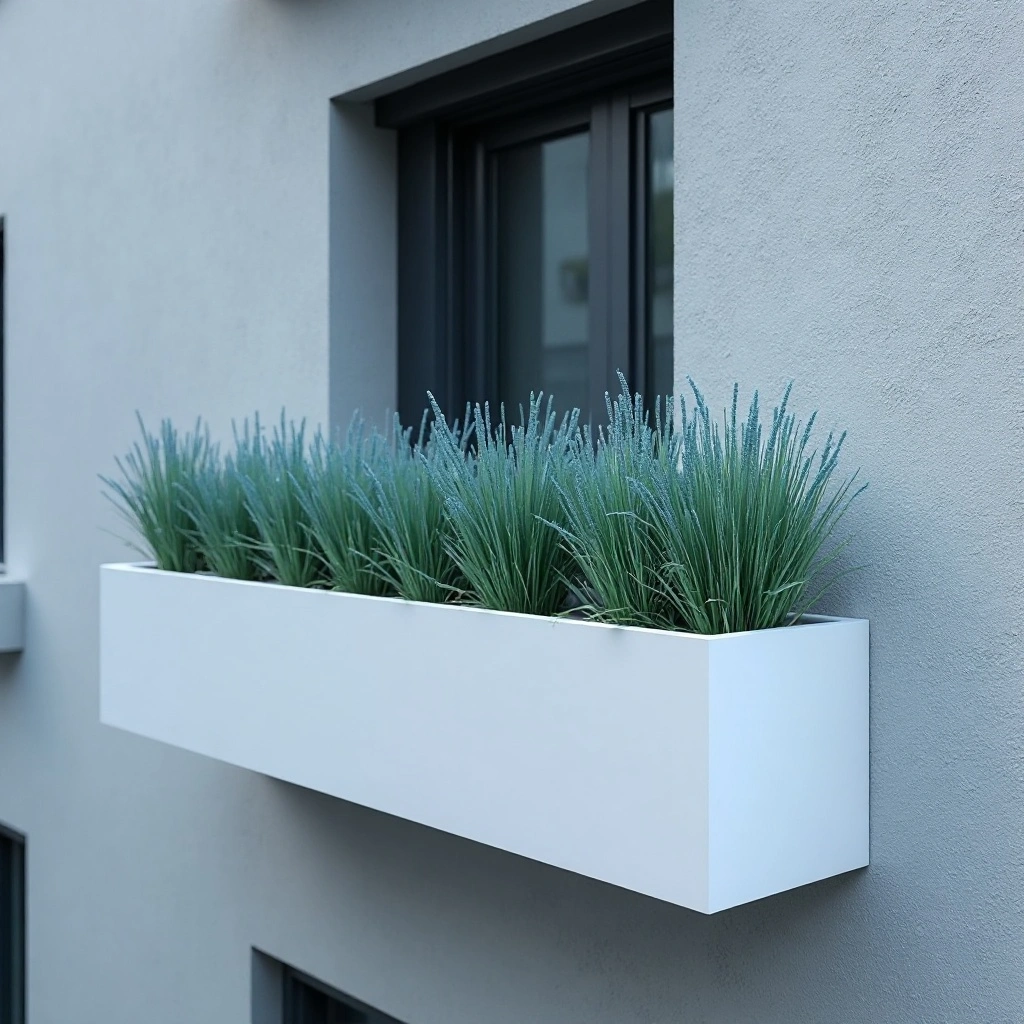
A sleek, ultra-minimalist window box designed for urban apartments. A single species — ornamental grass (blue fescue) — is planted in clean, even rows inside a narrow matte white rectangular planter.
The composition is architectural and refined, with the sharp blue-grey grass blades contrasting against a concrete urban building wall. The box is mounted flush with concealed hardware. Shop on Amazon
How to Style It:
- Commit to one plant species for maximum visual impact
- Choose plants with strong architectural form: grasses, lavender, boxwood, or succulents
- Keep the planter color neutral — white, black, or concrete grey
- Avoid clutter — negative space is part of the design
Where to Use It: Ideal for modern apartments, lofts, condos, and urban homes with minimalist or industrial design language.
Pro Tip: In small urban boxes with limited soil volume, top-dress with pea gravel or dark mulch to retain moisture and add a finished, clean look.
13. Pollinator-Friendly Window Box
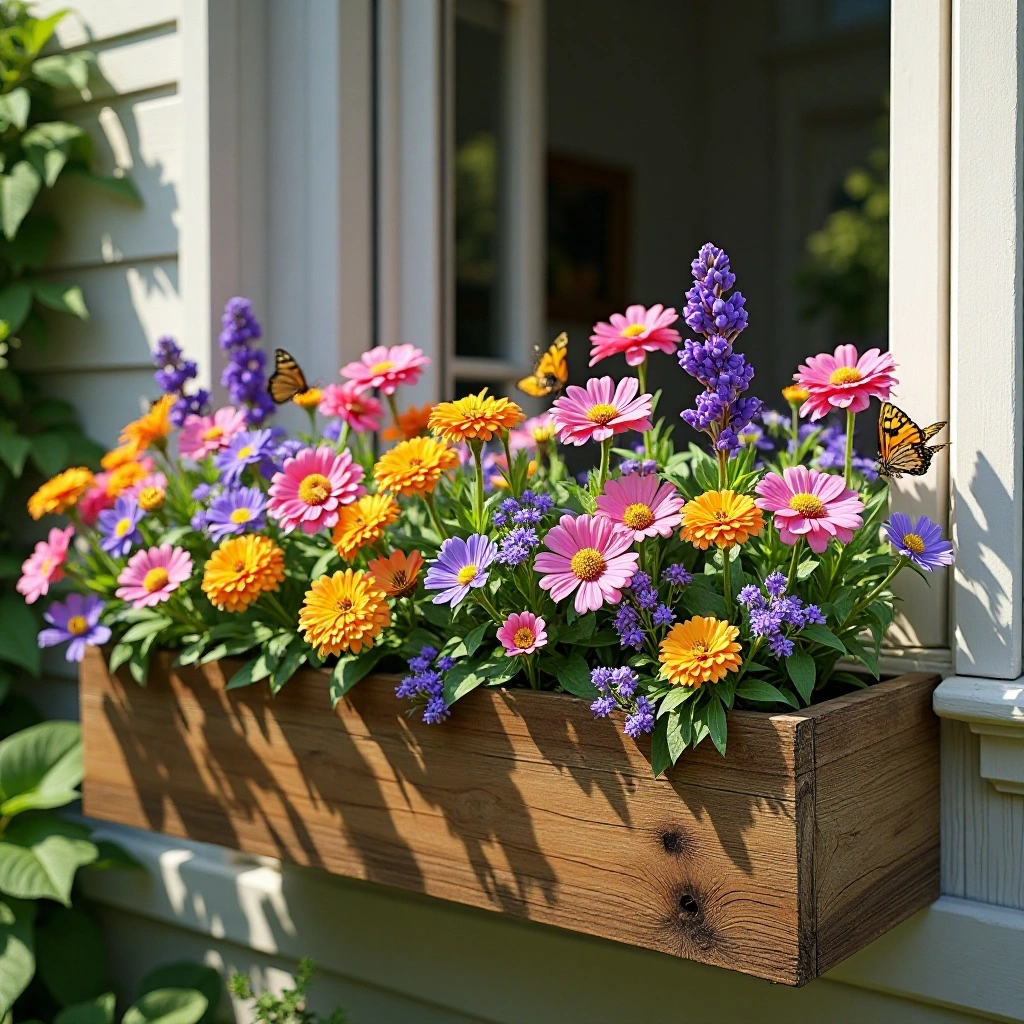
A cheerful, wildlife-friendly window box brimming with nectar-rich flowers — purple coneflower, bright orange lantana, deep blue salvia, and pink cosmos. Butterflies and bees visibly hover around the blooms. The planter is a natural cedar wood box with a simple wax finish. Positioned below an open cottage-style window in a sunny garden setting. Shop on Amazon
How to Style It:
- Choose single (non-double) flower varieties — bees can access pollen more easily
- Include a sequence of bloom times so pollinators have food from spring to fall
- Avoid pesticides entirely in and around pollinator boxes
- Add a small water dish nearby to attract even more wildlife
Where to Use It: Works on any home style. Particularly valuable in suburban and semi-urban settings where green spaces are limited.
Pro Tip: Native plants attract native pollinators most effectively. Research native wildflowers specific to your region for best results.
14. Romantic Red Rose & Trailing Ivy Box
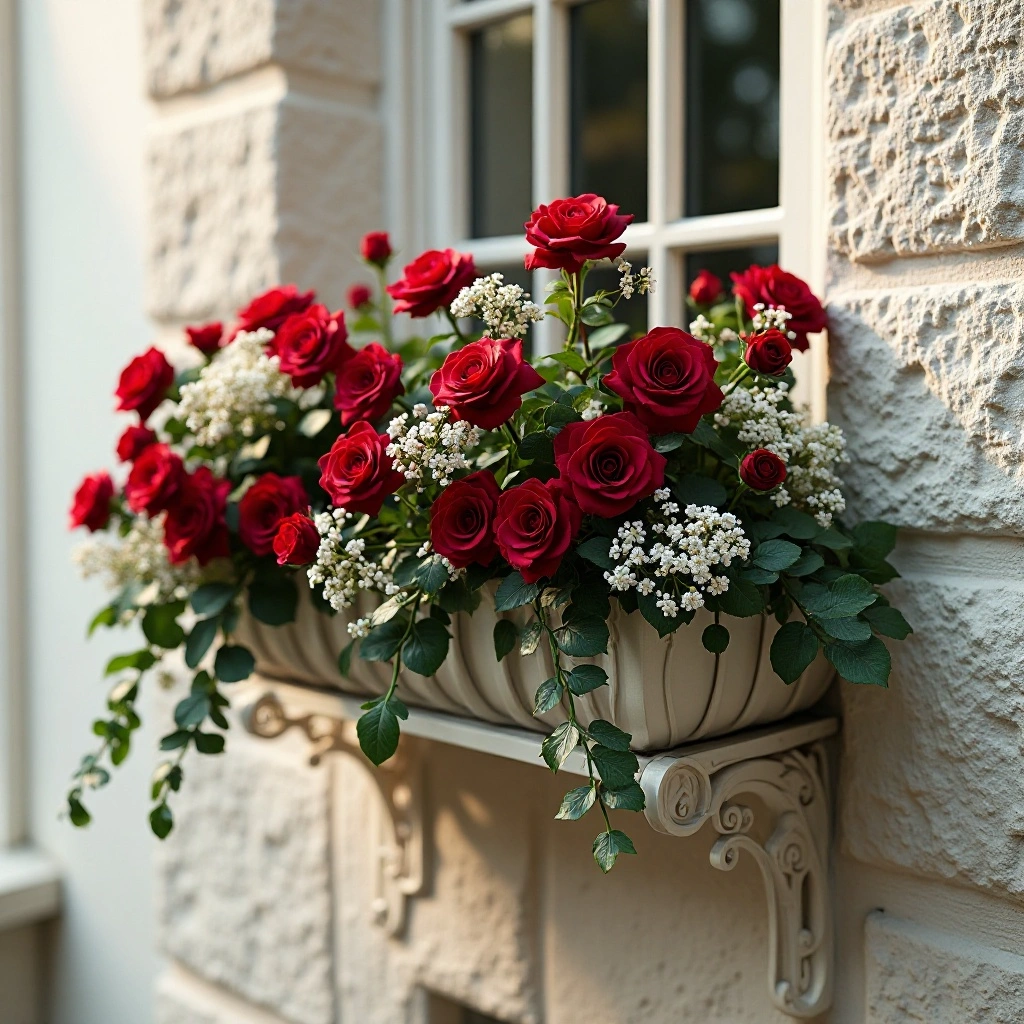
A deeply romantic window box featuring compact climbing roses in deep crimson red paired with lush trailing English ivy and wispy white baby’s breath. The planter is a painted antique white wrought-iron style box with ornate scroll brackets. Set against a pale stone or rendered grey wall of a classic European-style home. Shop on Amazon
How to Style It:
- Choose compact or miniature rose varieties bred for containers (e.g., ‘Cupcake’, ‘Cinderella’)
- Underplant roses with low-growing companions like sweet alyssum or lobularia
- Train trailing ivy over the front of the box for a romantic, draping effect
- Use ornate, decorative brackets that match the romantic aesthetic
Where to Use It: Best for European, French, or classic colonial-style homes. Stunning on homes with stone, brick, or rendered walls.
Pro Tip: Roses in window boxes need more water and fertilizer than in-ground roses. Feed with a rose-specific fertilizer every 2 weeks during blooming season.
15. Coastal & Nautical Window Box
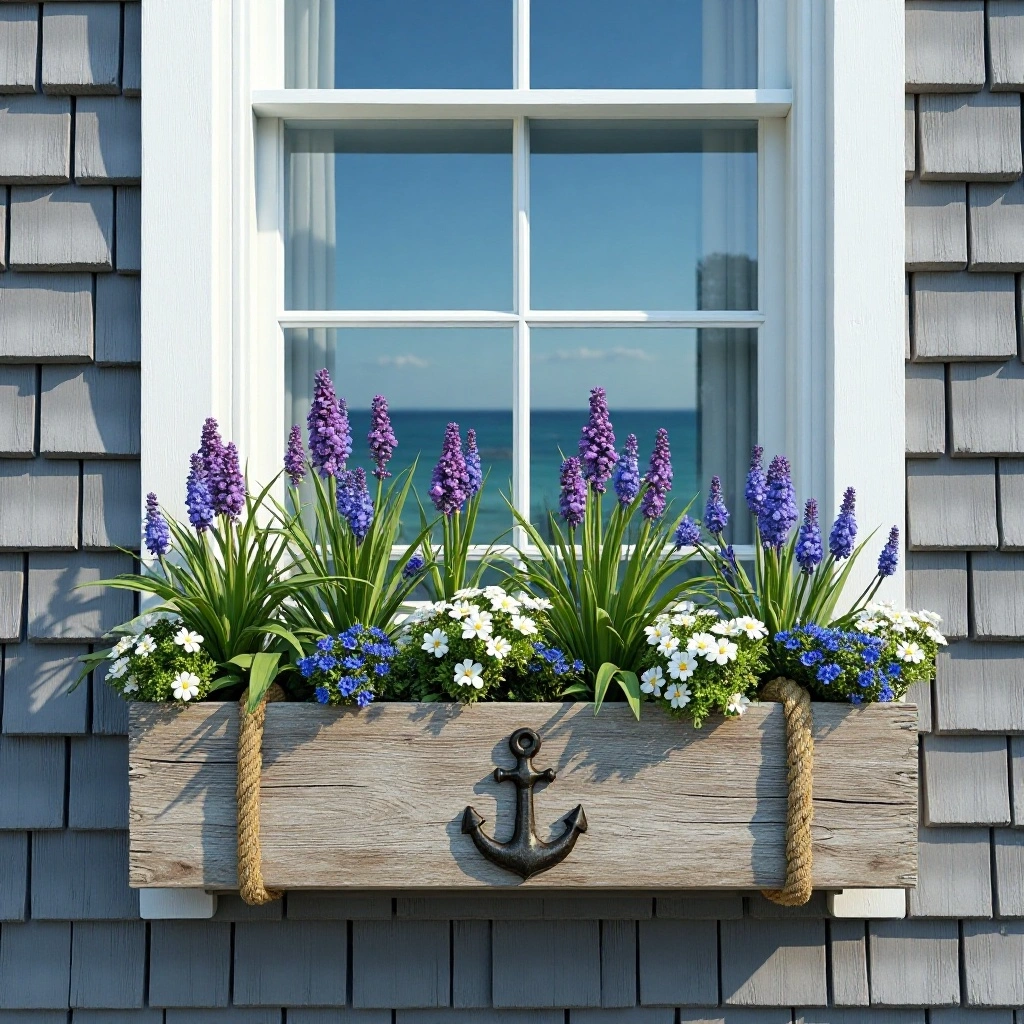
A breezy, coastal-themed window box planted with sea lavender, ornamental grasses, white alyssum, and blue-hued agapanthus. The box is a weathered driftwood-finish planter with rope detail along the edges and rustic anchor hardware.
Positioned below a weathered shingle-sided beach house window with a glimpse of blue sky and ocean in the background. Shop on Amazon
How to Style It:
- Use a palette of blue, white, sand, and soft grey — ocean-inspired tones
- Choose plants that are wind and salt-spray tolerant if near the coast
- Add nautical decorative elements: rope, driftwood stakes, small shells tucked in soil
- Keep the look breezy and loose rather than tightly planted
Where to Use It: Perfect for beach houses, coastal cottages, or any home with a nautical aesthetic, even inland.
Pro Tip: If you’re actually near the ocean, choose salt-tolerant plants: sea lavender, ornamental grasses, portulaca, and ice plant all thrive in coastal conditions.
16. Evening Glow / White & Silver Night Box
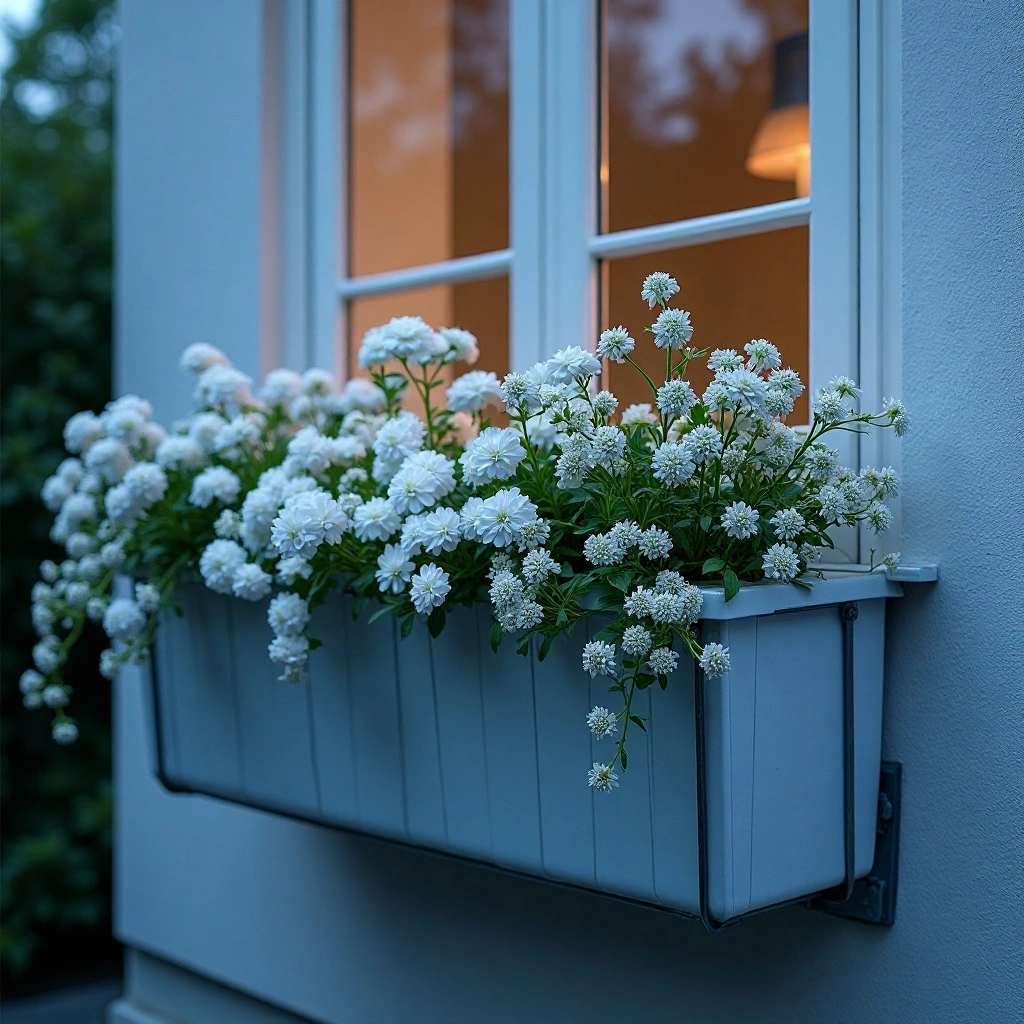
A luminous, ethereal window box designed to glow in the evening — filled with white nicotiana (which glows under moonlight), silver artemisia, white petunias, and pale moon flowers. The planter is a pale silver-grey fiberglass box with chrome brackets.
Photographed at dusk with blue-hour light washing over the plants, creating a magical, iridescent effect. Shop on Amazon
How to Style It:
- Focus on white flowers and silver/grey foliage exclusively
- Include fragrant plants (nicotiana, white jasmine, moonflower) for an evening sensory experience
- Choose plants that open at dusk (moonflower, evening primrose) for a magical touch
- Pair with soft outdoor lighting to enhance the glow effect
Where to Use It: Ideal for dining patios, bedroom windows, or any outdoor entertaining area used in the evening. Works on any architectural style.
Pro Tip: White flowers reflect even the faintest light, making them visible and stunning in low-light conditions when colored flowers disappear.
17. Eclectic Boho Window Box
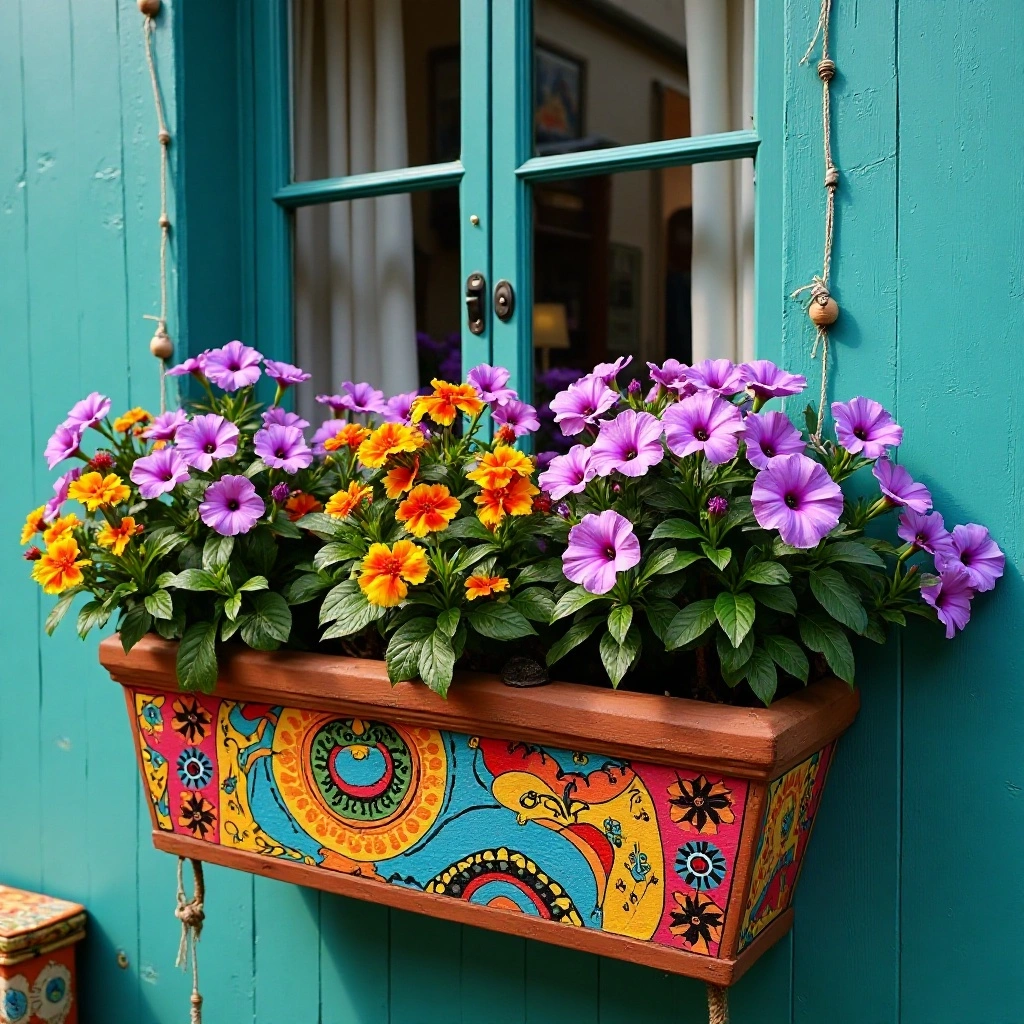
A maximalist, free-spirited window box with a mix of everything — trailing purple wave petunias, bright magenta bougainvillea, peachy calibrachoa, and golden nasturtiums tumbling over the edge. Small decorative trinkets, a ceramic face planter, and macramé rope accents are woven into the arrangement.
The planter is a hand-painted terracotta pot with vibrant folk-art patterns. Set against a colorfully painted teal house exterior. Shop on Amazon
How to Style It:
- Break all the rules — mix colors, textures, heights, and decorative objects freely
- Personalize with quirky objects that reflect your personality
- Use mismatched containers for an intentionally eclectic look
- Let plants spill, trail, and ramble without too much pruning
Where to Use It: Perfect for colorful cottages, boho bungalows, artist studios, or any home with a maximalist, creative personality.
Pro Tip: Even in eclectic designs, anchor the arrangement with one or two dominant colors that appear in multiple plants — this creates cohesion within the chaos.
Common Mistakes to Avoid
❌ Using the Wrong Soil
Regular garden soil is too heavy for window boxes. It compacts, restricts drainage, and leads to root rot. Always use a high-quality potting mix designed for containers.
❌ Choosing the Wrong Size Box
A box that’s too small won’t hold enough soil to support healthy roots or retain adequate moisture. Aim for at least 8 inches deep and 8 inches wide — 10–12 inches is even better.
❌ Ignoring Drainage
Window boxes without drainage holes are a recipe for dead plants. Always ensure your box has multiple drainage holes, and use a layer of gravel or broken terracotta at the base to prevent holes from clogging.
❌ Overplanting or Underplanting
Stuffing too many plants in creates competition and disease. Too few plants looks sparse. A general rule: one thriller (focal plant), two fillers, and one spiller per 12 inches of box length.
❌ Planting for the Wrong Light Conditions
Always check your window’s sun exposure before choosing plants. A north-facing window needs shade-tolerant plants; a south-facing window needs sun-lovers. Planting incorrectly guarantees failure regardless of how well you care for them.
❌ Skipping Fertilizer
Unlike garden beds, window box soil gets depleted quickly because the limited volume is used by roots intensively. Feed with a balanced liquid fertilizer every 2 weeks, or use a slow-release granular at planting time.
❌ Watering Inconsistently
Window boxes dry out faster than garden beds because they’re exposed on all sides. In hot weather, you may need to water daily. Inconsistent watering leads to wilting, blossom drop, and stressed plants. Touch the soil — if the top inch is dry, it’s time to water.
Frequently Asked Questions
Q: How often should I water my window box? A: In warm summer weather, most window boxes need watering every 1–2 days. In spring and fall, every 2–3 days is usually sufficient. Always check the soil rather than following a fixed schedule — stick your finger an inch into the soil and water if it feels dry.
Q: What plants are best for window boxes in full shade? A: Impatiens, begonias, fuchsia, caladium, ferns, and hostas all thrive in shaded window boxes. For a foliage-focused look, try coleus or ivy.
Q: How long do window box plants last? A: Most window box annuals (petunias, marigolds, calibrachoa) last one season — spring through first frost. Perennial options like sedums, lavender, and ornamental grasses can last multiple years with proper winter care.
Q: What’s the best material for a window box? A: Each material has pros and cons. Wood looks classic but requires sealing to prevent rot. Fiberglass is lightweight and durable. Terracotta is beautiful but heavy and prone to cracking in frost. Metal adds an urban edge but can heat up in direct sun. Choose based on your aesthetic, climate, and how much weight your mount can support.
Q: How do I keep my window box from rotting the window frame? A: Always install your box with brackets that hold it slightly away from the wall, allowing airflow behind the planter. Use a saucer or drip tray, and regularly check behind the box for moisture buildup.
Q: Can I grow vegetables in a window box? A: Absolutely. Lettuce, radishes, spinach, cherry tomatoes, chili peppers, and herbs all grow well in window boxes. Choose compact varieties and ensure at least 6 hours of direct sunlight daily.
Q: How do I winterize my window box? A: Remove dead annuals after frost, cut back any perennials, and either store the box indoors or plant it with evergreen cuttings, ornamental kale, or winter herbs. Line with burlap in very cold climates to protect roots from freeze-thaw cycles.
Final Thoughts
Window boxes are one of the most rewarding small-scale garden projects you can take on. With just a bit of planning, the right plant selection, and consistent care, they can completely transform the look and feel of your home — from the street view to the view from inside looking out.
Whether you gravitate toward a lush cottage flower box, a sleek minimalist design, or a bold tropical statement, there’s no wrong way to do it. The best window box is the one that makes you smile every time you walk past it.
Now pick your favorite idea from this list, grab your planter, and get growing. Your home — and your neighbors — will thank you.