10 Stylish Green Living Room Ideas for Fresh Home Decor
Meta Description: Discover 10 stunning green living room ideas that are family and kids-friendly. From sage to emerald, find the perfect green for your home — with styling tips, pro advice, and expert answers to your top questions.
Your living room is the heartbeat of your home — the place where family movie nights happen, where kids build blanket forts, and where memories are made. Choosing the right color for this space is one of the most important design decisions you’ll ever make, and green might just be the most versatile, calming, and beautiful choice of all.
Green is having a major moment in interior design, and for good reason. From soft sage to deep forest tones, green brings the outdoors in, creates a sense of calm, and works beautifully with almost every other color in the palette.
Why Green is the Perfect Color for a Family Living Room
Green is more than just a trend — it’s a timeless, nature-inspired hue that brings real benefits to your family’s everyday life. Studies show that green tones reduce stress, improve focus, and create a sense of balance and harmony in any room. For families with kids, that built-in calming effect is practically a superpower.
Whether you’re decorating a small apartment living room or a large open-plan family space, there’s a shade of green that fits your lifestyle perfectly. The 10 ideas below are designed to inspire every type of family, every budget, and every style preference — from playful and colorful to elegant and refined.
10 Green Living Room Ideas for Every Family
1. Sage Green Walls with Warm Wood Accents
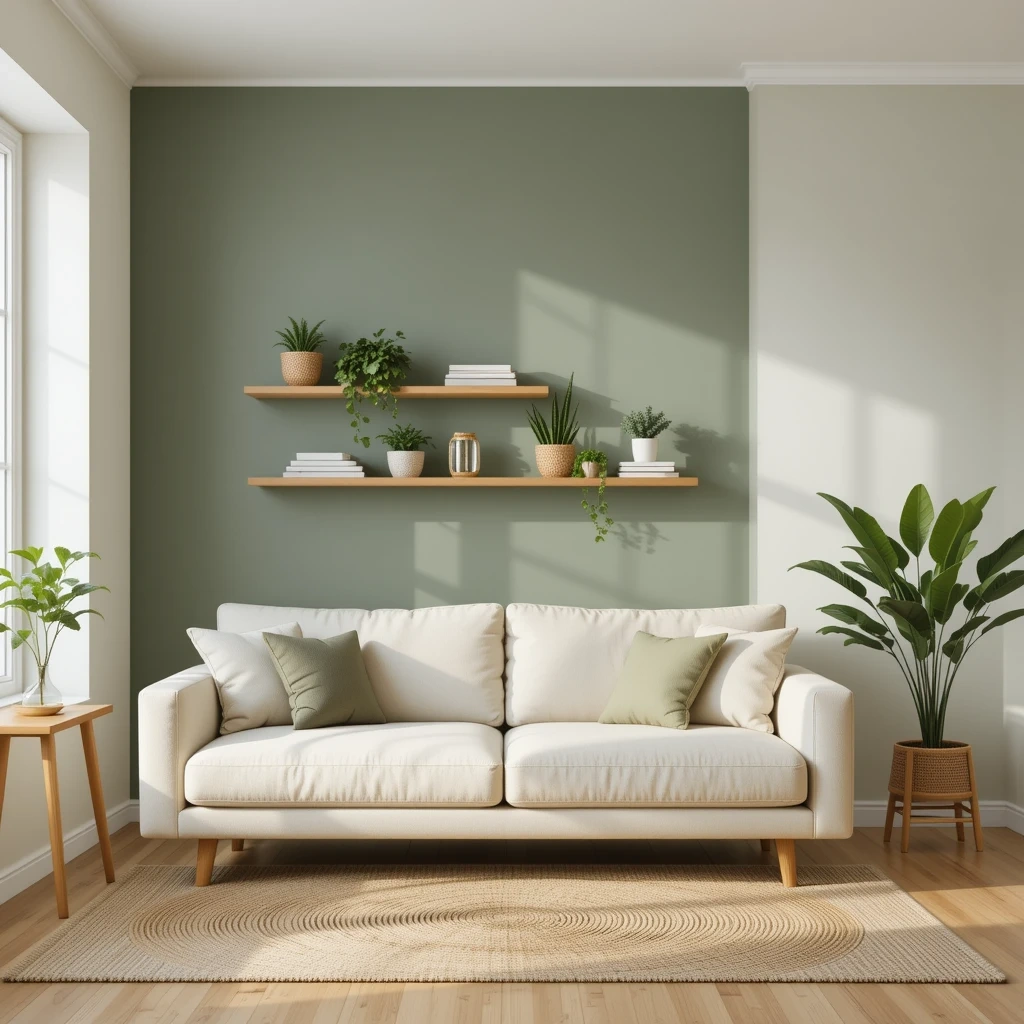
Sage green is one of the most popular interior colors right now — and it’s easy to see why. This muted, gray-toned green feels sophisticated yet completely approachable. Paired with warm wood furniture (think oak shelves,
walnut coffee tables, or pine flooring), sage green creates a living room that feels like a gentle hug. It’s the kind of color that works morning, noon, and night, and looks just as beautiful under sunlight as it does under the warm glow of evening lamps. Shop on Amazon
This combination is incredibly family-friendly because it’s forgiving — small scuffs and everyday wear tend to blend into the organic, earthy feel of the palette. It’s also timeless, meaning you won’t feel the urge to redecorate every two years.
How to Style It:
- Paint all four walls in sage green (try Farrow & Ball “Mizzle” or Benjamin Moore “Pale Eucalyptus”)
- Choose a light beige or cream sofa to balance the color
- Add oak or walnut coffee tables and side tables
- Layer with a jute or sisal rug for texture
- Bring in terracotta or mustard yellow cushions as accent colors
Where to Use It: Works beautifully in medium to large living rooms. Especially effective in rooms with natural light from south- or west-facing windows.
Pro Tip: If you’re nervous about painting all four walls, start with just one accent wall behind the sofa. You’ll love it so much, you’ll want to paint the rest!
2. Emerald Green Velvet Sofa
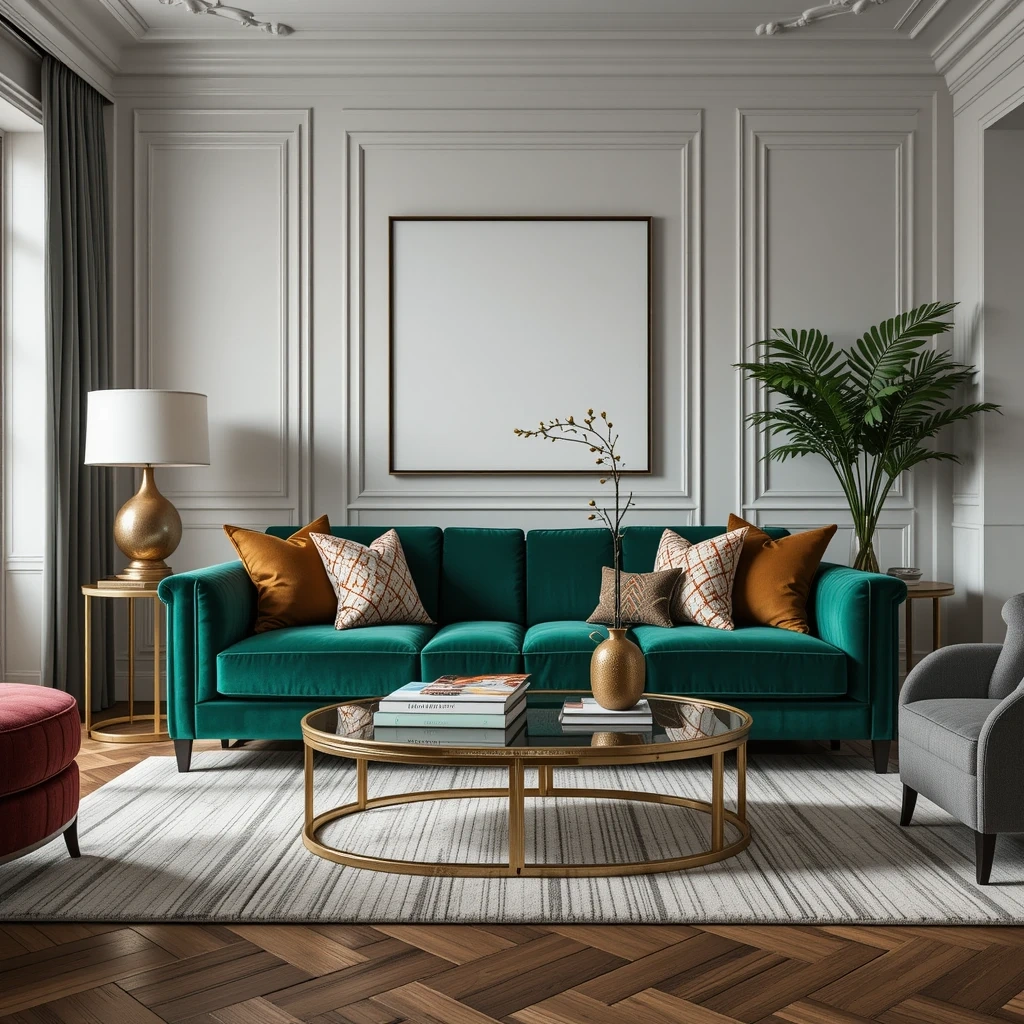
If you want to make a statement without changing your wall color, an emerald green velvet sofa is your answer. Rich, jewel-toned emerald brings instant drama and luxury to any living room. Velvet as a fabric has a wonderful quality — it catches light differently from every angle, making the sofa look almost alive throughout the day.
Despite its glamorous appearance, emerald velvet sofas are surprisingly practical for families. Modern velvet is treated to resist stains and is easy to spot-clean, making it a smart choice even in homes with young children. Shop on Amazon
An emerald green sofa becomes the anchor of your entire room, making every other decorating decision easier — just let the sofa be the star.
How to Style It:
- Keep walls neutral — white, cream, or warm gray let the sofa shine
- Add gold or brass hardware and light fixtures for an elegant contrast
- Layer with jewel-toned throw pillows in sapphire, amber, and blush
- Place a large, plush area rug underneath in cream or charcoal
- Add a mix of textures: a knit throw, a ceramic vase, a linen curtain
Where to Use It: Perfect as the main sofa in any living room size. Works especially well in rooms with high ceilings or tall windows.
Pro Tip: Clean velvet sofas with a soft-bristled brush regularly to keep the pile looking fresh. For spills, blot immediately — never rub.
3. Biophilic Living Room with Indoor Plants
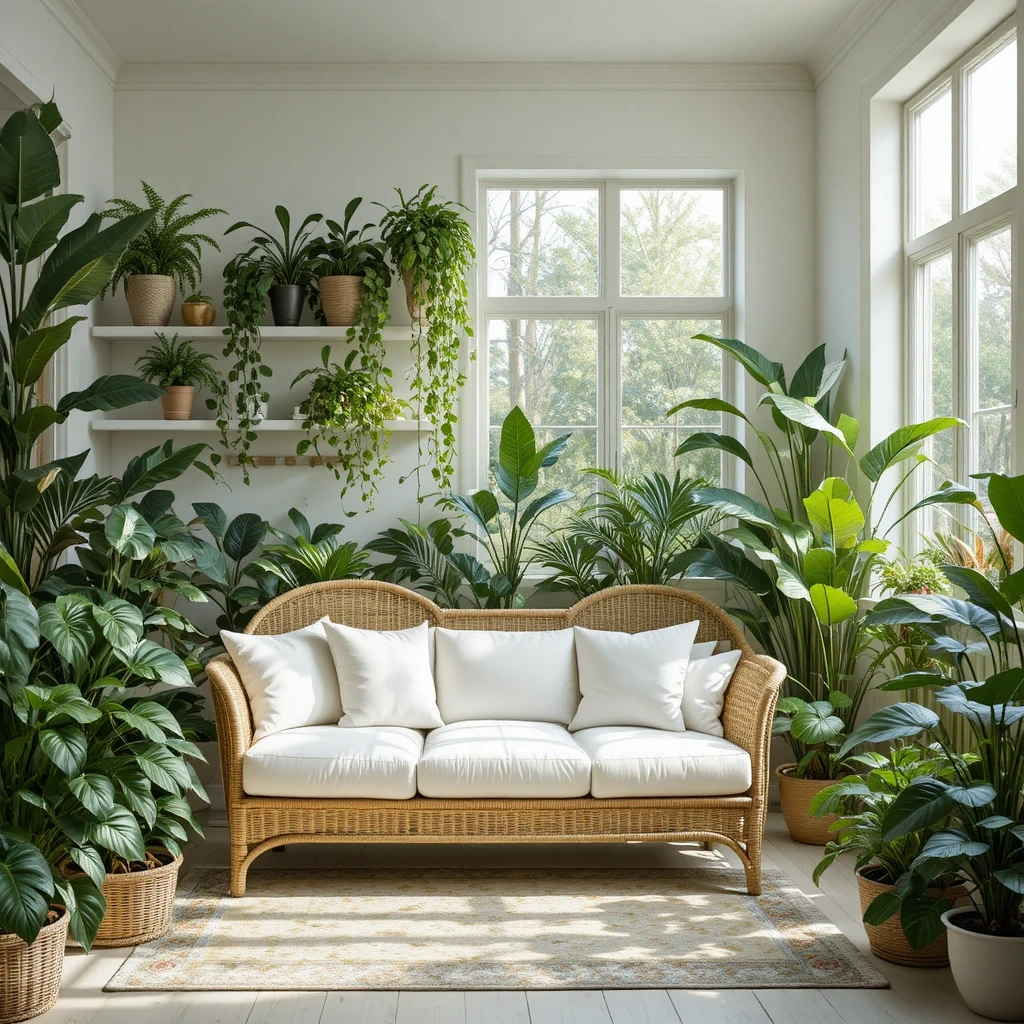
Biophilic design is the art of bringing the natural world inside your home — and green plants are its most powerful tool. A biophilic green living room doesn’t necessarily mean painting your walls green. Instead, it means layering your space with lush houseplants of varying heights and textures to create a mini indoor jungle that feels alive and refreshing.
This approach is wonderful for families because it teaches children to connect with nature, care for living things, and appreciate the beauty of the natural world — all from the comfort of your living room. Shop on Amazon
From small succulent clusters on a coffee table to a dramatic monstera in the corner, plants add color, oxygen, and personality in a way no piece of furniture ever could.
How to Style It:
- Combine large floor plants (fiddle leaf fig, monstera, bird of paradise) with smaller tabletop plants (succulents, pothos, peace lily)
- Use baskets, ceramic pots, and terracotta planters as decorative containers
- Let trailing plants (pothos, string of pearls) cascade from shelves or hang from the ceiling
- Group plants in odd numbers (3 or 5) for a natural, curated look
- Mix different leaf shapes and shades of green for visual interest
Where to Use It: Works in any living room, but especially stunning in rooms with large windows or skylights. North-facing rooms can use low-light plants like snake plants and ZZ plants.
Pro Tip: Choose a few child-safe, pet-safe plants like spider plants, Boston ferns, and areca palms if you have little ones or furry friends at home.
4. Forest Green Accent Wall
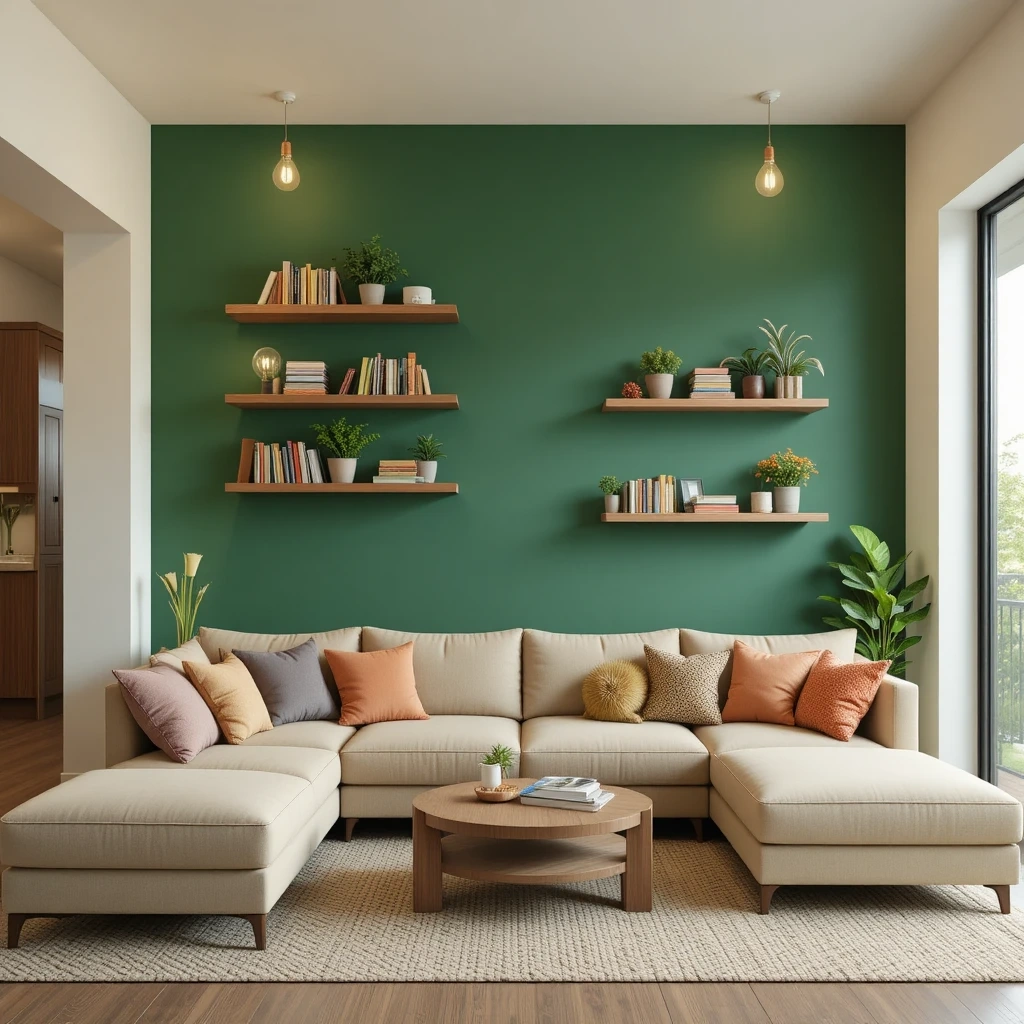
Not ready to commit to a full green room? A forest green accent wall is the perfect gateway. Deep, rich forest green — think the color of pine trees after rain — adds depth and sophistication to a living room without overwhelming the space. It creates a cozy, cave-like backdrop that makes your sofa and coffee table area feel intentional and designed, like a scene from an interior design magazine. Shop on Amazon
This idea works brilliantly in family homes because the wall becomes a beautiful backdrop for family photos, kids’ artwork displays, and built-in shelving that holds books, games, and treasured objects.
Forest green also works with almost every other color: white, cream, blush pink, burnt orange, navy, and even mustard all look fantastic against it.
How to Style It:
- Choose the wall behind your sofa or the one facing the main entrance for maximum impact
- Hang framed family photos or a large art print directly on the accent wall
- Install floating shelves in wood or white for a functional display area
- Keep the other three walls in a crisp white or very light neutral
- Add warm lighting (floor lamps, wall sconces) to prevent the dark color from feeling cold
Where to Use It: Ideal for smaller living rooms where full green walls might feel too intense. Also great for rental spaces — one accent wall is quick to paint back when you move.
Pro Tip: Use a matte or eggshell finish for accent walls — it hides any imperfections and gives a sophisticated, velvety appearance.
5. Mint Green and White: Fresh & Playful
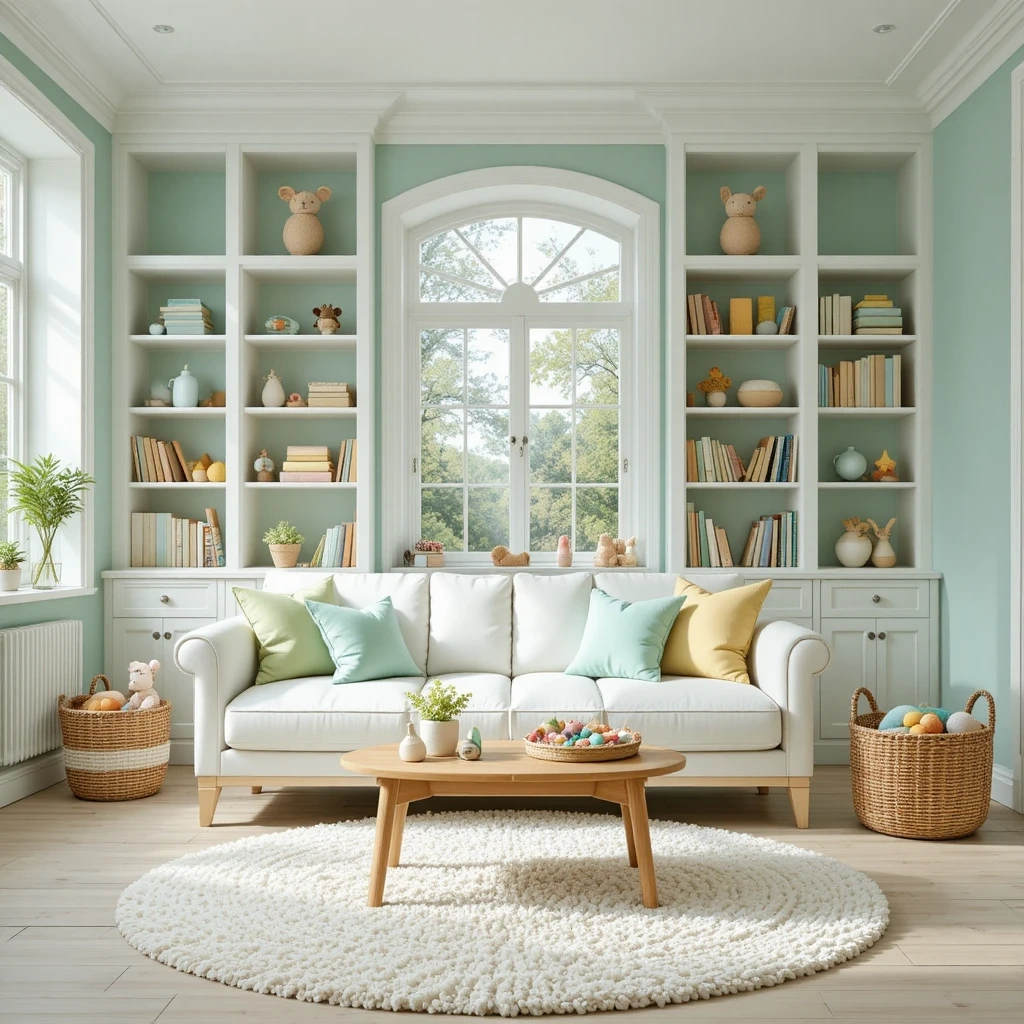
Mint green is the cheerful, energetic younger sibling of sage. Lighter and brighter, mint green brings a sense of freshness, playfulness, and optimism to a living room. Combined with crisp white, it creates a space that feels clean, airy, and endlessly happy — perfect for families with young children who want a room that’s fun but not chaotic. Shop on Amazon
Mint is a color that genuinely delights children and adults alike. It’s reminiscent of ice cream, summer mornings, and vintage coastal cottages. In a living room, it feels like perpetual springtime.
This palette also has a wonderful quality: it makes small rooms feel significantly larger and brighter than they are.
How to Style It:
- Paint walls mint green and keep all trim, ceilings, and built-ins white
- Choose a white sofa or sectional as the main seating piece
- Add pops of yellow, coral, or sky blue in cushions and decor
- Use a large, plush white rug to anchor the seating area
- Include fun, practical storage — wicker baskets, colorful cube organizers — to keep kids’ toys organized in style
Where to Use It: Best suited for smaller living rooms, apartments, or rooms where you want to maximize the sense of space and light. Also wonderful in children-adjacent spaces like playrooms or family rooms.
Pro Tip: Choose a washable paint finish (satin or semi-gloss) in mint green — it makes wiping off little fingerprints completely effortless!
6. Dark Green & Gold: Sophisticated Family Glamour
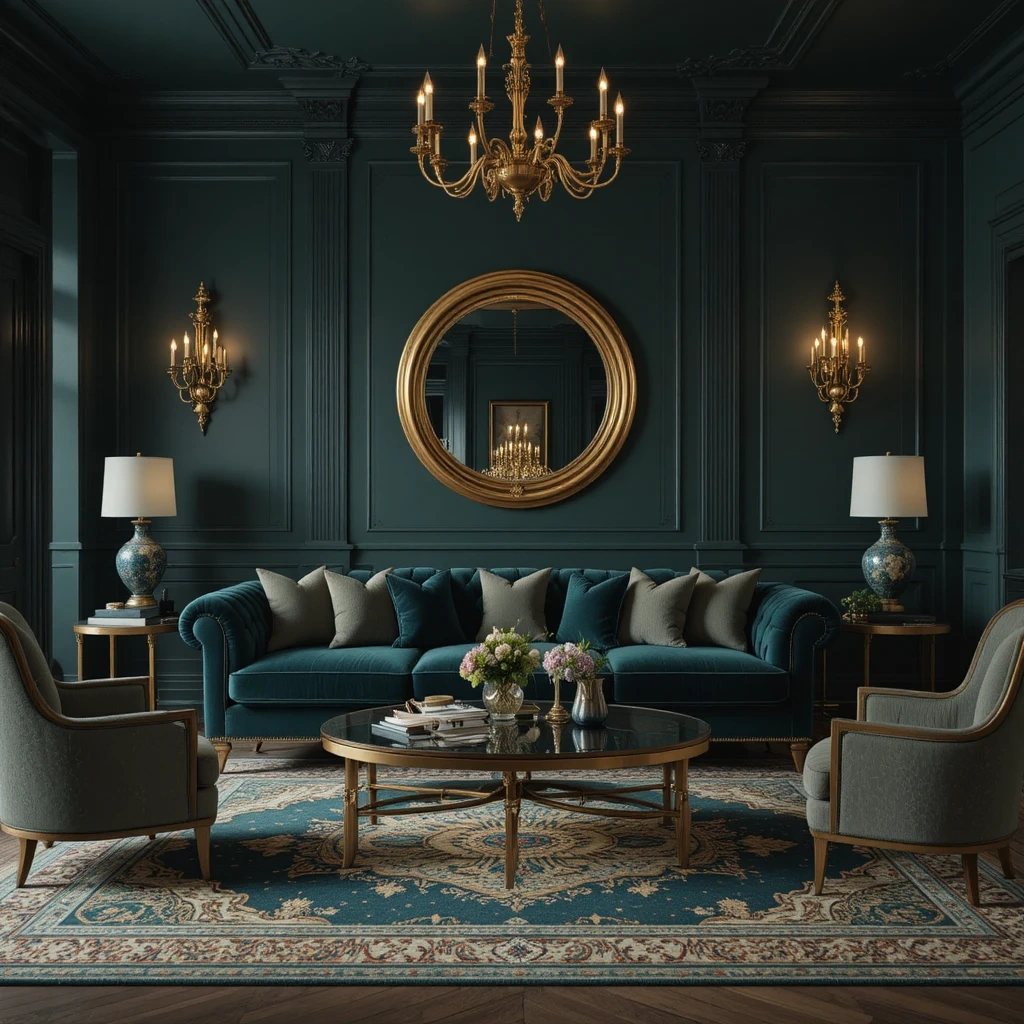
Who says family-friendly can’t be glamorous? Dark green paired with gold accents is one of the most luxurious and timeless color combinations in interior design. Think of the deep, moody greens of a private members’ club — bottle green, hunter green, or deep teal-green — softened with warm brass and gold hardware, Shop on Amazon
lighting, and decorative accents. The result is a living room that feels elevated and intentional, a space where adults can entertain and children can play without the room ever feeling less than beautiful.
This look is all about quality over quantity — a few carefully chosen pieces in rich materials make a far bigger impact than a room full of ordinary furniture.
How to Style It:
- Paint walls in a deep bottle green or hunter green
- Choose furniture with gold, brass, or warm metallic legs and hardware
- Hang a large round brass or gold-framed mirror to reflect light and add glamour
- Add a richly patterned area rug that incorporates green, navy, and gold tones
- Use table lamps with warm-toned bulbs (2700K) to create an intimate, golden glow
Where to Use It: Works best in larger living rooms with good artificial lighting. North-facing rooms with less natural light can absolutely pull this off — the darkness becomes an asset, creating a beautifully moody atmosphere.
Pro Tip: Balance dark green walls with lighter furniture upholstery. A cream, caramel, or light gray sofa keeps the space from feeling too heavy.
7. Sage Green & Blush Pink: Soft & Serene
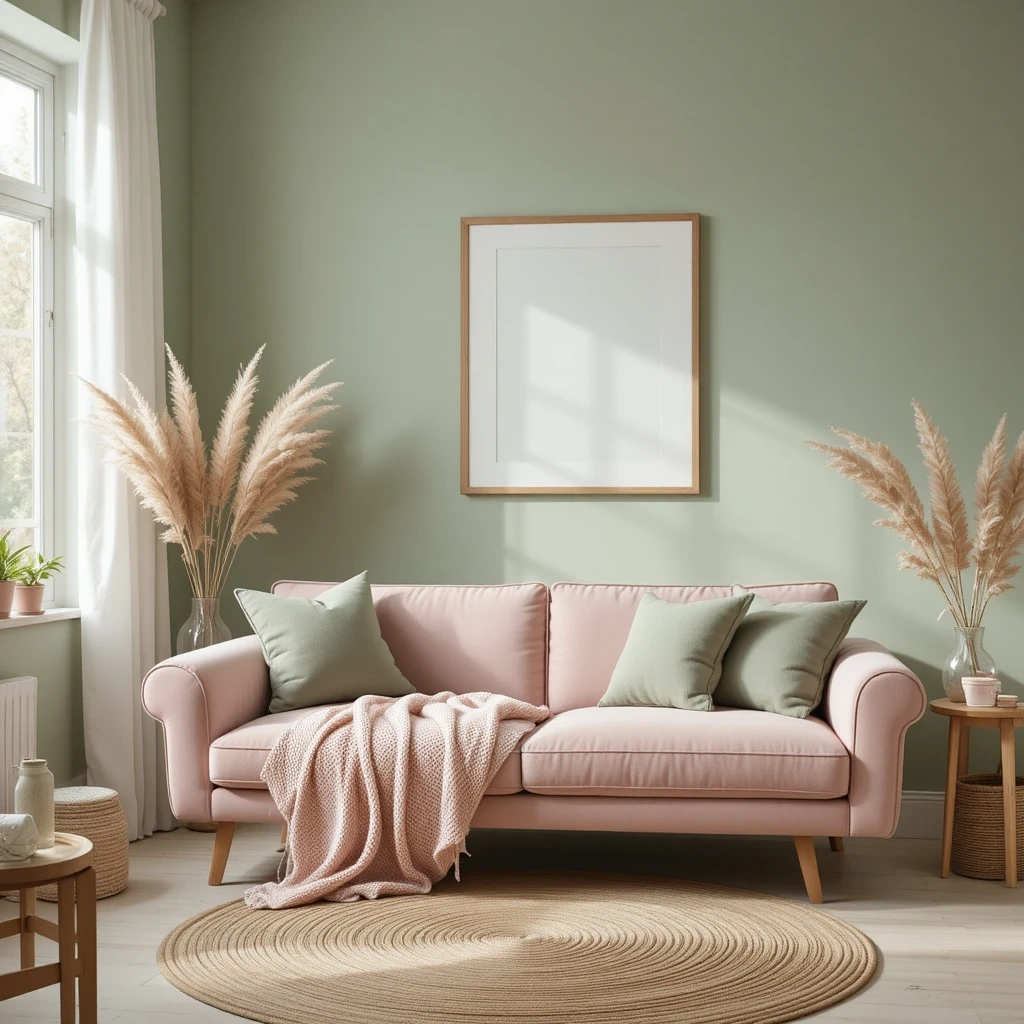
The combination of sage green and blush pink is one of the most universally beloved interior palettes right now. These two colors seem made for each other — both are muted, soft, and rooted in nature (the green of leaves, the pink of peonies and sunsets). Together, they create a living room that feels genuinely serene: calm enough for adults to decompress after a long day, and soft and gentle enough to feel perfectly suited for children. Shop on Amazon
This palette avoids the trap of feeling too feminine or too juvenile by keeping both tones muted and sophisticated — it’s not bubblegum pink and grass green, but rather dusty rose and gray-green, a combination that feels grown-up and timeless.
How to Style It:
- Use sage green on walls and blush pink as the dominant upholstery color (or vice versa)
- Add dried pampas grass, eucalyptus stems, or soft floral arrangements as natural accents
- Choose light wood furniture — pine, oak, or bleached wood — to keep things airy
- Layer with linen and cotton textiles in cream, white, and warm ivory
- Introduce a round jute rug to add natural texture underfoot
Where to Use It: Beautiful in any room size. Particularly lovely in living rooms that open onto a garden or have views of nature outside the windows.
Pro Tip: Stick to muted, dusty tones for both colors — avoid anything too bright or saturated, or the look becomes childlike rather than sophisticated.
8. Green Painted Furniture: Low Commitment, High Impact
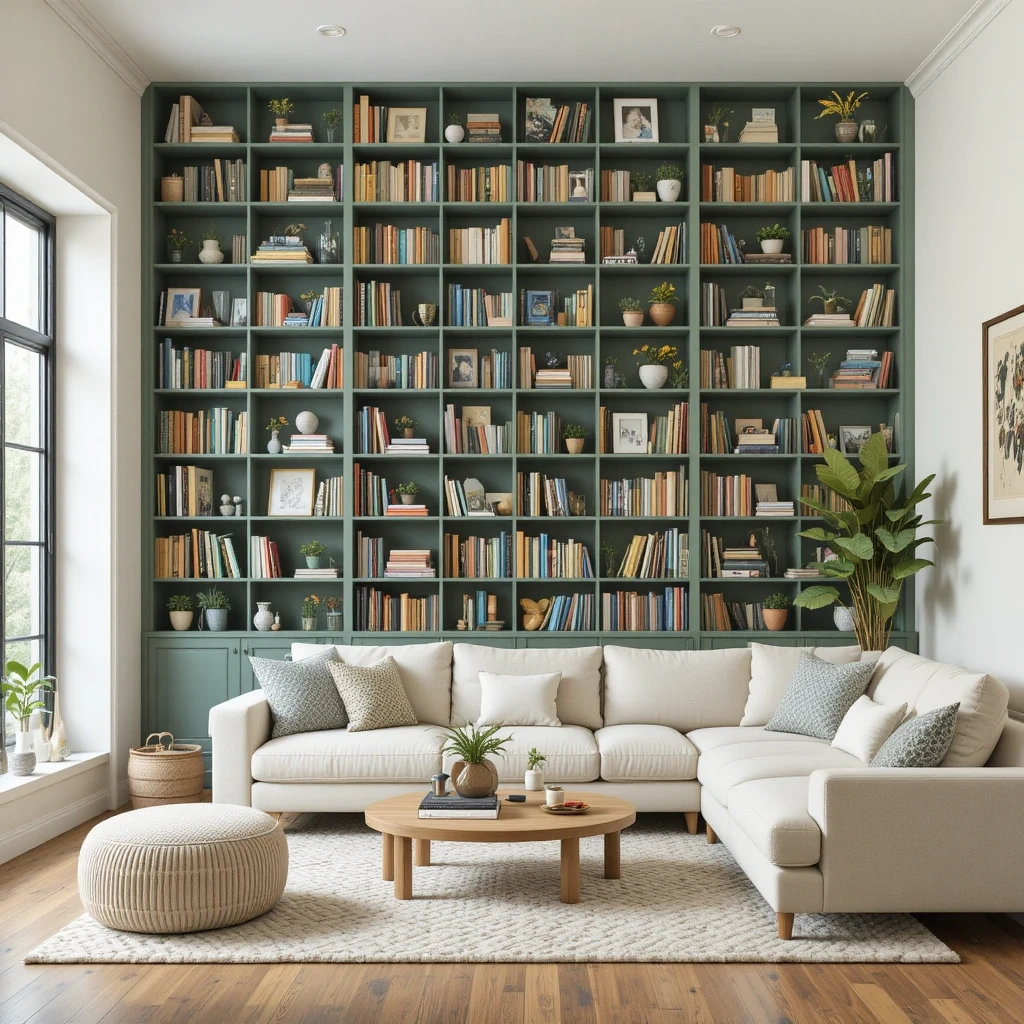
Not everyone is ready to paint their walls or invest in a new sofa — and that’s completely fine! Painting existing furniture in a beautiful shade of green is one of the most budget-friendly, creative, and reversible ways to bring green into your living room. Shop on Amazon
A bookshelf, a coffee table, a side table, or even a fireplace surround painted in a gorgeous green instantly becomes a focal point. This approach is also a fantastic weekend project to do with older kids, turning home decorating into a family activity and giving children a sense of pride and ownership in their home environment.
Green painted furniture works against neutral walls and allows you to change your mind (and your color) easily — just repaint when you’re ready for something new.
How to Style It:
- Choose a bookshelf, console table, or coffee table as your painting project
- Sand, prime, and paint with a chalk paint or furniture paint in your chosen green shade
- Seal with a matte wax or varnish for durability (essential in high-traffic family homes)
- Style the piece with plants, books, and personal objects to complete the look
- Mix painted green furniture with natural wood pieces for balance
Where to Use It: Works in any living room. Especially great for renters who can’t paint walls, or anyone wanting to refresh a space without a full renovation.
Pro Tip: Chalk paint requires no sanding or priming in most cases and gives a beautiful, velvety matte finish. Brands like Annie Sloan and Rust-Oleum have gorgeous greens.
9. Tropical Green: Bold, Lush & Adventurous
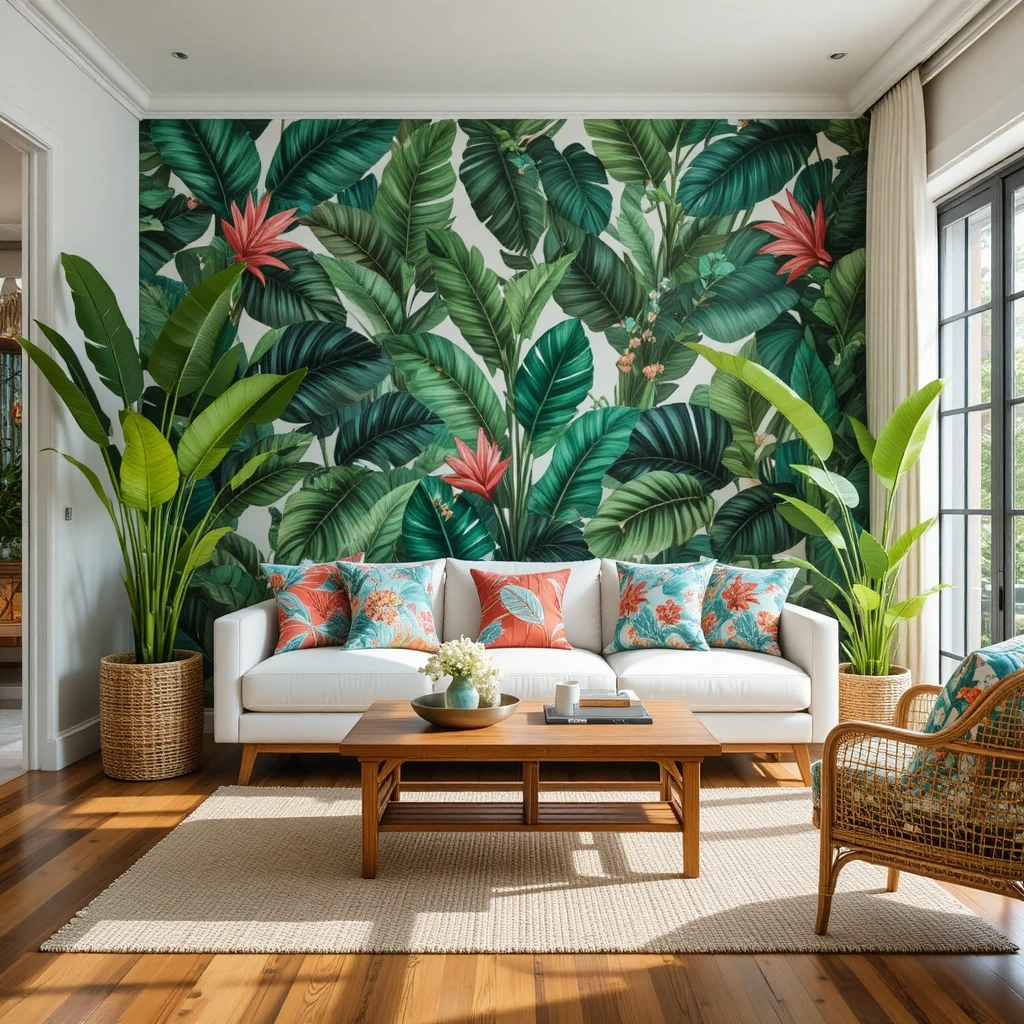
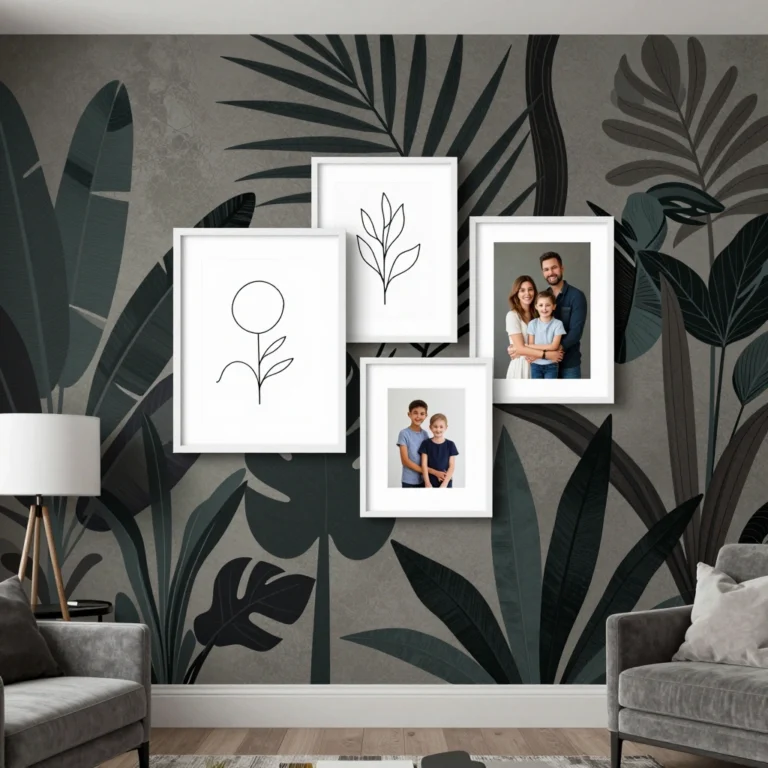
For families who love color, pattern, and a sense of adventure, a tropical green living room is pure joy. This look is inspired by lush tropical botanicals — banana leaves, palm fronds, monstera leaves — and brings the energy and vibrancy of a tropical paradise right into your home. Shop on Amazon
It combines deep, saturated greens with warm tropical tones like coral, turquoise, sunny yellow, and sandy beige. The result is a living room that feels like a permanent vacation: energetic, joyful, and completely unique. Children especially adore this style because it’s playful and immersive — like living inside a beautiful jungle storybook.
How to Style It:
- Use tropical botanical wallpaper on one or all walls (large leaf prints are the most impactful)
- Alternatively, paint walls in a deep, saturated tropical green and add botanical art prints
- Choose rattan, bamboo, or teak furniture to reinforce the tropical theme
- Add coral, turquoise, and sunny yellow accent colors in cushions and accessories
- Layer with large tropical plants — monstera, bird of paradise, banana plant — for authenticity
Where to Use It: Makes the strongest impact in larger living rooms. In a smaller space, use tropical wallpaper on a single accent wall and keep the rest neutral.
Pro Tip: Balance bold tropical prints with solid-color furniture. If your wallpaper is patterned, keep your sofa and rug in solid, complementary colors to avoid visual overwhelm.
10. Green Through Textiles: Cushions, Rugs & Curtains
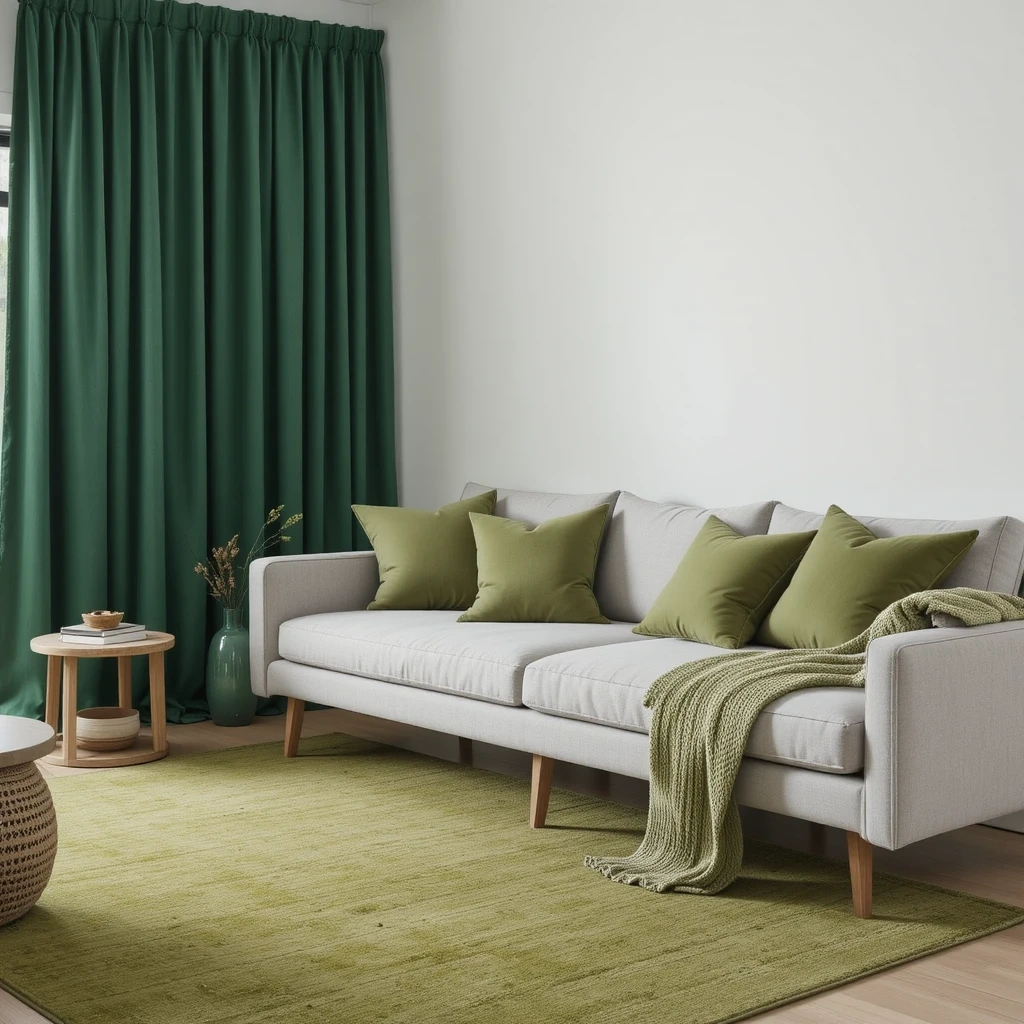
The most flexible — and most beginner-friendly — way to bring green into your living room is through textiles: cushions, throws, rugs, and curtains. This approach requires zero commitment to paint or furniture investment, making it ideal for families who love to refresh their decor seasonally, renters who can’t make permanent changes, or anyone who wants to test a green color scheme before going all in. Shop on Amazon
The beauty of using green textiles is that you can layer multiple shades — sage cushions, an olive rug, emerald curtains — and create a rich, cohesive green palette without a single drop of paint.
Textiles also add the warmth, softness, and coziness that families with children crave — soft rugs for playing on the floor, plush cushions for movie night, and billowing curtains that make a room feel like a cozy cocoon.
How to Style It:
- Start with a large green area rug — it sets the tone for the entire room
- Add 3–5 cushions in varying shades of green (sage, olive, emerald) for depth
- Hang floor-length green linen or velvet curtains for dramatic impact
- Layer a green knit or woven throw over the sofa or armchair
- Tie it all together with small green accessories: vases, candles, plant pots
Where to Use It: Works in every single living room, regardless of size, style, or existing furniture. The most universally applicable idea on this list.
Pro Tip: When mixing different shades of green in textiles, vary the texture as well as the shade — a velvet cushion, a woven rug, and a linen curtain all in different greens will look intentionally layered rather than mismatched.
Green Color Pairing Cheat Sheet
| Green Shade | Best Paired With | Mood Created |
|---|---|---|
| Sage Green | Warm wood, cream, terracotta | Calm, earthy, Scandinavian |
| Emerald Green | Gold, white, navy | Luxurious, dramatic |
| Mint Green | White, yellow, coral | Fresh, playful, airy |
| Forest Green | Burnt orange, brass, cream | Cozy, moody, sophisticated |
| Olive Green | Tan, brown, rust | Earthy, organic, vintage |
| Bottle Green | Black, gold, blush | Glamorous, editorial |
Common Mistakes to Avoid
1. Choosing a shade without testing it first. Green looks dramatically different depending on the light in your room. Always test paint samples on your actual wall and observe them at different times of day before committing.
2. Using only one shade of green. Layering 2–3 complementary green tones (e.g., sage walls + olive rug + emerald cushions) creates depth and sophistication. A single, flat shade can look flat and underwhelming.
3. Ignoring the undertones. Some greens have yellow undertones, others lean blue or gray. Make sure the undertones in your chosen green harmonize with the undertones in your floors, furniture, and natural light.
4. Overdoing it with plants. Yes, plants are wonderful — but 30 plants in a small room just looks cluttered. Choose a few statement plants and display them well, rather than filling every surface.
5. Choosing fashion over function in a family home. That gorgeous sage green velvet sofa might need to be performance fabric if you have young children. Always prioritize durability and washability in rooms that get heavy family use.
6. Forgetting about lighting. Dark green rooms need warm, layered lighting to feel cozy rather than gloomy. Invest in floor lamps, table lamps, and dimmer switches, not just overhead lighting.
7. Painting without proper preparation. Skipping primer, especially when painting over dark colors or raw walls, will lead to uneven coverage and a disappointing result. Always prep properly for a professional finish.
Frequently Asked Questions
Q: Is green a good color for a small living room? Yes! Lighter shades like mint, sage, and soft pistachio actually make small rooms feel more open and airy. Avoid very dark greens (like forest or bottle green) in tiny spaces unless you want a deliberately cozy, cave-like effect.
Q: What furniture colors go best with green walls? Natural wood tones, cream, white, warm beige, and charcoal all work beautifully with green walls. For a bolder look, navy blue furniture against green walls creates a striking, complementary contrast.
Q: Is green a good color for family homes with young children? Absolutely. Green is one of the most psychologically beneficial colors for children — it promotes calm, focus, and a connection to nature. It’s also a forgiving color that hides everyday marks better than white or very light neutrals.
Q: How do I make a green living room feel cozy? Layer warm-toned textiles (amber, terracotta, cream), use warm-bulb lighting (2700K), add plenty of plush rugs and cushions, and introduce natural materials like wood, rattan, and linen.
Q: Can I mix different shades of green in one room? Yes — and it often looks better than using just one shade! The key is to vary the textures as well as the tones, and to keep a consistent overall temperature (all warm greens, or all cool greens) so the palette feels cohesive.
Q: What is the most popular green shade for living rooms right now? Sage green has been the dominant trend for the past few years and shows no sign of slowing down. Its muted, gray-green quality makes it incredibly versatile and enduringly stylish.
Q: Do green walls make a room feel darker? Medium and dark greens can absorb more light than pale neutrals, which can make rooms feel slightly smaller and moodier. Counteract this with large mirrors, light-colored furniture, and layered warm lighting. Lighter greens like sage and mint generally won’t darken a room at all.
Q: Is green easy to redecorate around in the future? Yes! Green is one of the most versatile anchor colors in interior design. As trends change, you can update your cushions, rugs, and accessories around green walls without ever repainting — simply swap coral accents for navy, or trade rattan furniture for something more contemporary.
Final Thoughts
Green is more than a color trend — it’s a design philosophy rooted in nature, calm, and beauty. Whether you go all-in with emerald velvet sofas and forest green walls, or simply introduce the color through a few carefully chosen cushions and plants, green has the power to transform your living room into a space your whole family will love.
The best green living room is one that reflects your family’s personality, supports the way you actually live, and makes everyone who walks through the door feel instantly at home. Start small, experiment with confidence, and remember: there is no wrong shade of green.
Ready to transform your living room? Save this article, share it with your family, and start exploring the beautiful world of green interiors today!