12 Creative Clematis Trellis Ideas for Vertical Garden Inspiration
If you’ve ever dreamed of a garden straight out of a storybook — covered in cascading blooms, climbing towers of color, and romantic floral arches — then clematis is your best friend. This beloved climbing vine is one of the most versatile and jaw-dropping plants you can grow, and with the right trellis, it becomes pure garden magic.
Whether you’re a first-time gardener or a seasoned green thumb, this guide will walk you through 12 beautiful clematis trellis ideas that work for every yard, balcony, fence, or front porch. Get ready to be inspired!
Why a Trellis Makes All the Difference
Clematis doesn’t just grow — it performs. But to truly shine, it needs a stage. The right trellis doesn’t only support the vine; it shapes the entire look and feel of your outdoor space. A well-chosen trellis turns a simple plant into a living sculpture, a privacy screen, a welcoming arch, or a focal point that stops visitors in their tracks.
The good news? There’s a perfect clematis trellis idea for every budget, garden size, and personal style. From DIY wooden frames to elegant ironwork, from cozy cottage walls to modern minimalist fences — you’ll find your match right here.
The 12 Best Clematis Trellis Ideas
1. Classic Wooden Lattice Trellis
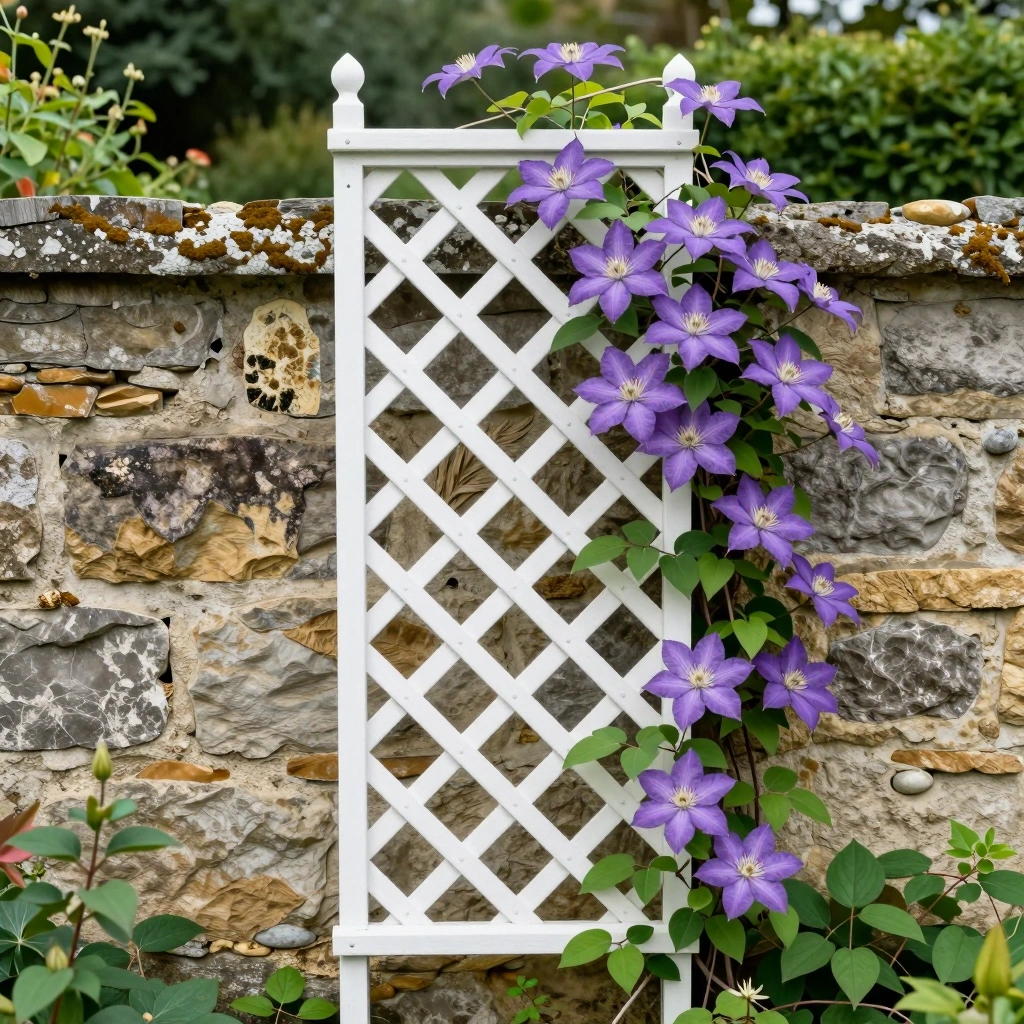
The wooden lattice trellis is the timeless choice — a criss-cross grid of natural wood panels that gives clematis the perfect framework to weave through. It has a warm, cottage-garden feel that suits almost any home style. As the vine fills in, the lattice practically disappears beneath a glorious wall of blooms. Shop on Amazon
How to Style It:
- Paint the lattice white or sage green to contrast beautifully with deep purple or pink clematis varieties
- Mount it flat against a fence or wall, or angle it slightly for a 3D garden room effect
- Mix clematis with climbing roses weaving through the same lattice for a layered, romantic look
- Add a wooden planter box at the base for a polished, magazine-worthy finish
Where to Use It: Along fences, against house walls, or as a patio divider to add privacy and color at the same time.
Pro Tip: 🌟 Treat wooden lattices with weather-resistant paint or sealant every 2–3 years to prevent rot. Cedar or redwood naturally resists moisture and lasts the longest without much maintenance.
2. Wrought Iron Obelisk Trellis
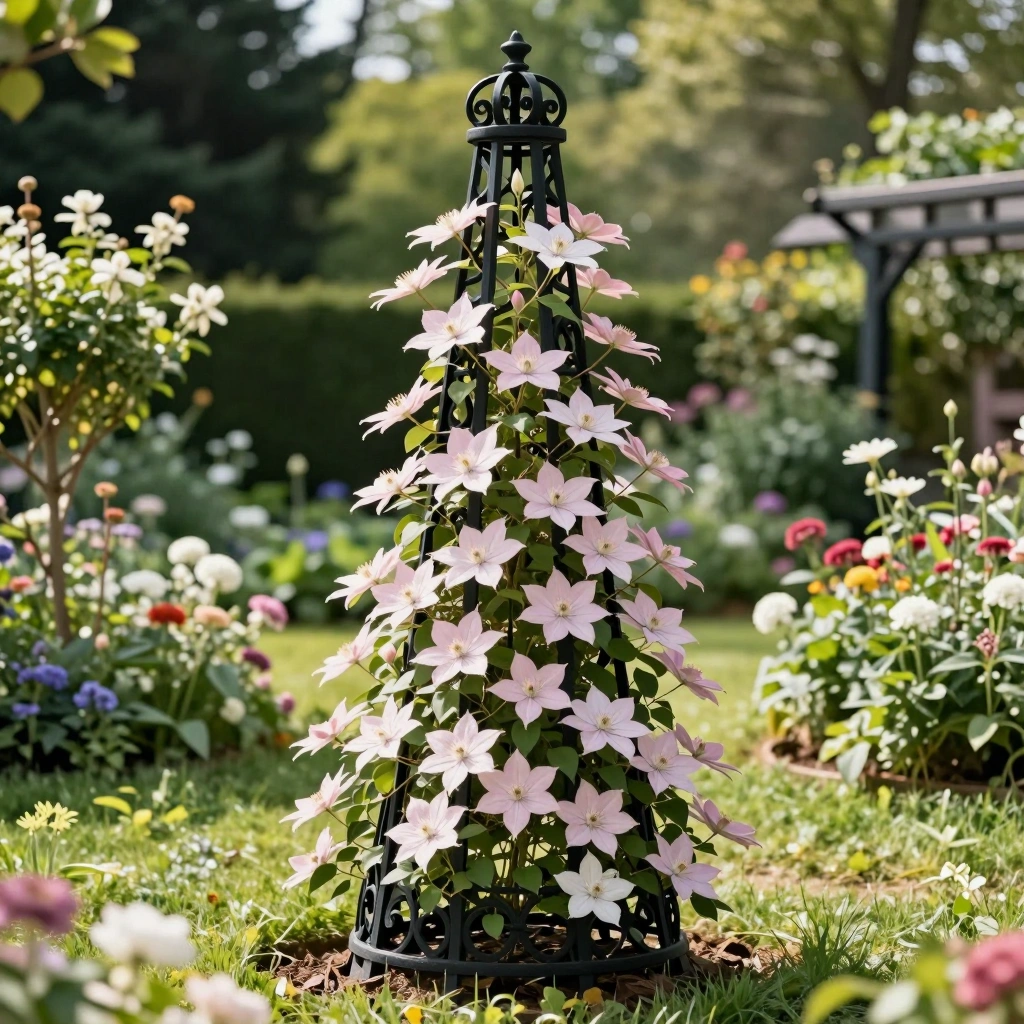
Tall, elegant, and utterly eye-catching — the wrought iron obelisk is a garden statement piece. This freestanding tower of metal gives clematis something to spiral around, creating a living column of color. It works equally well as a centerpiece in a flower bed or as an accent in a container on your patio. Shop on Amazon
How to Style It:
- Choose a black or bronze obelisk for a sophisticated, formal garden look
- Plant two or three different clematis varieties that bloom in sequence around the same obelisk for months of color
- Surround the base with lavender or salvia for a full, layered planting
- Use multiple obelisks in a row to create a dramatic garden avenue
Where to Use It: In garden beds as a vertical focal point, in large containers on patios or decks, or lining a garden path.
Pro Tip: 🌟 Anchor your obelisk at least 12 inches into the ground or into a heavy container. Clematis in full bloom can get surprisingly heavy and top-heavy in wind!
3. Rustic Bamboo Pole Trellis
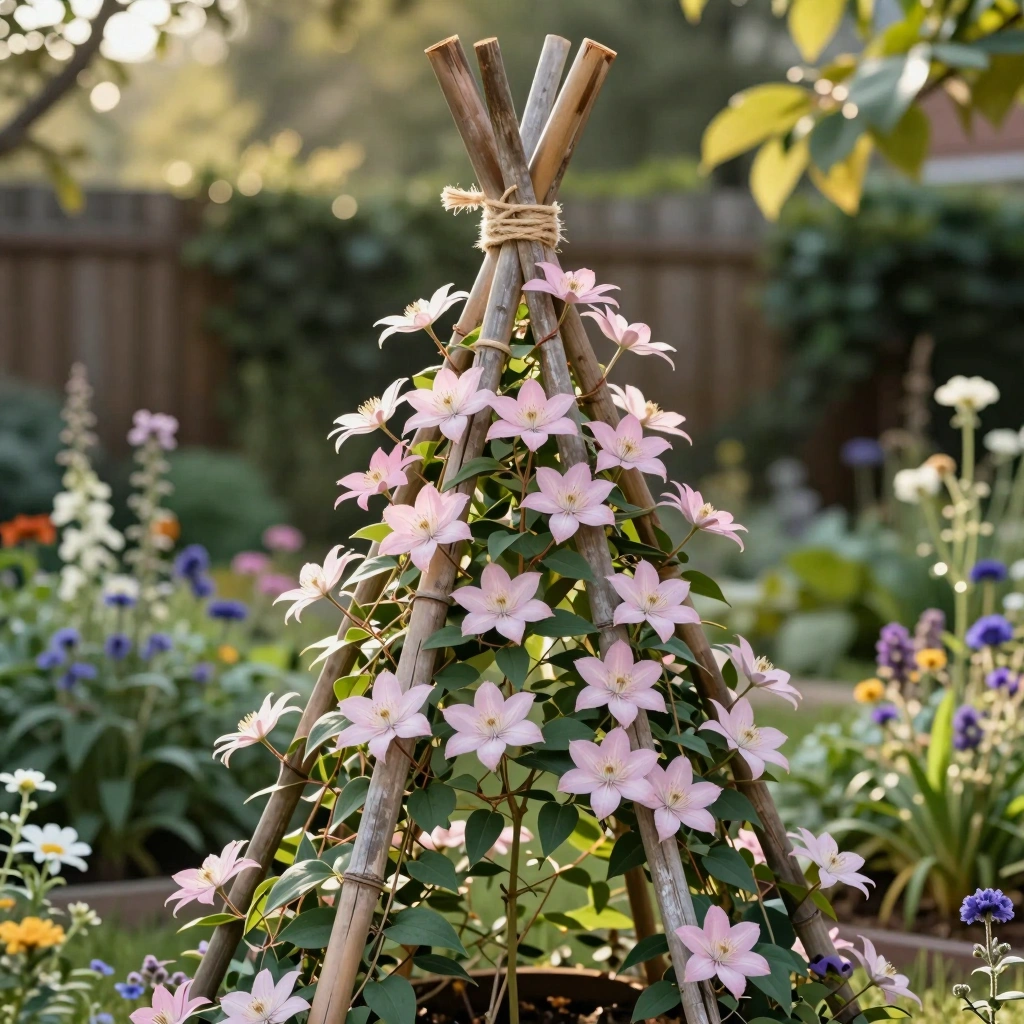
Simple, budget-friendly, and surprisingly beautiful — a bamboo pole trellis brings an organic, natural charm that fits right into cottage gardens, wildflower patches, or even a zen-inspired space. You can build this yourself with a bundle of bamboo canes and some twine, making it a perfect weekend project for the whole family. Shop on Amazon
How to Style It:
- Tie 5–7 bamboo poles together at the top in a teepee shape for a whimsical, fairytale structure
- Create a flat grid trellis by lashing horizontal poles across vertical ones
- Mix with sweet peas or morning glory for a cheerful, multi-species climbing wall
- Leave the bamboo natural for a boho look, or paint it dark for a more structured style
Where to Use It: In vegetable and cottage gardens, along fences in informal spaces, or as a temporary trellis solution that’s easy to move each season.
Pro Tip: 🌟 Replace bamboo trellises every 2–3 years, as even treated bamboo breaks down outdoors. Store them indoors over winter to double their lifespan.
4. Romantic Garden Arch / Pergola
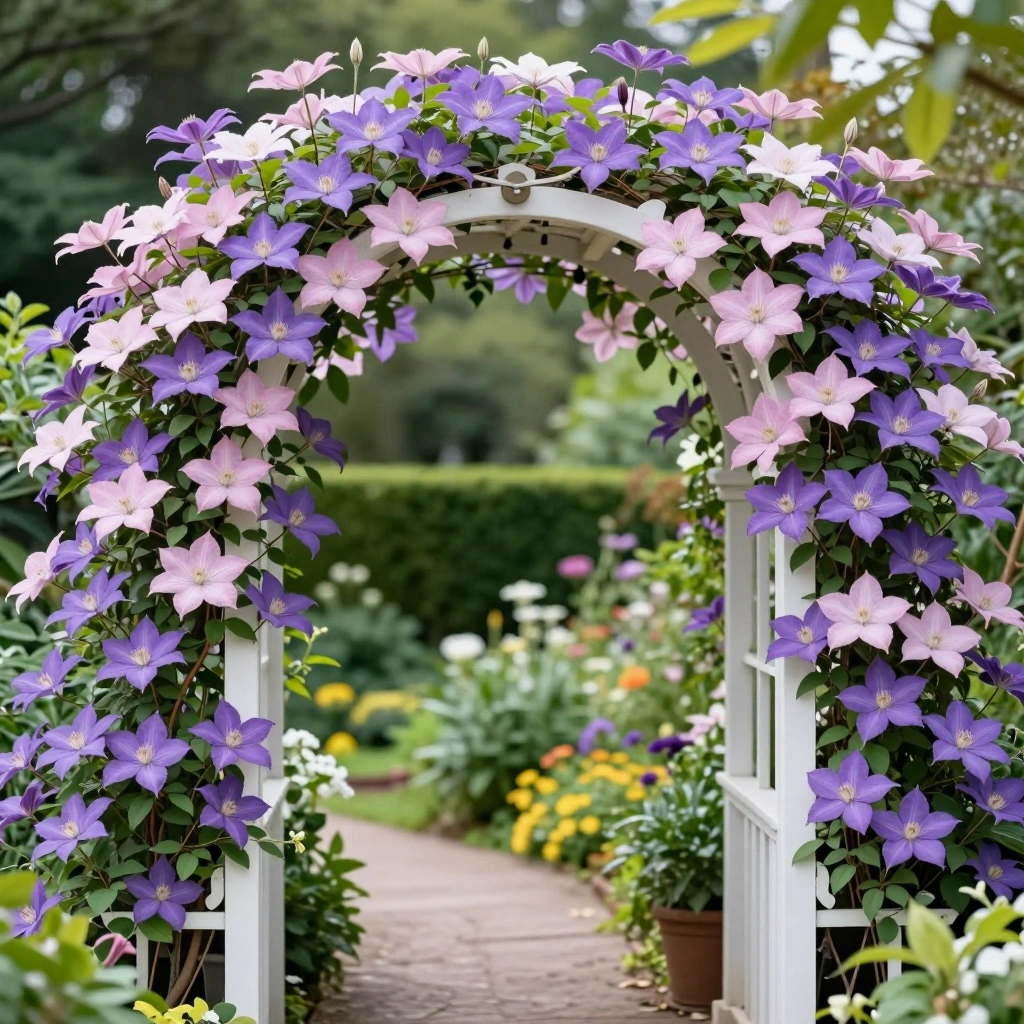
Walk through a tunnel of blooming clematis every single day — yes, please! A garden arch or pergola draped in clematis creates one of the most dramatic, enchanting garden features you can have. It transforms a simple pathway into a living, flowering passageway that your kids and guests will love walking through. Shop on Amazon
How to Style It:
- Plant two clematis (one on each side of the arch) and let them meet dramatically at the top
- Pair purple clematis with a climbing white rose for a classic, romantic combination
- Hang lanterns or fairy lights through the arch for magical evening ambiance
- Use large-flowered varieties like ‘Nelly Moser’ or ‘The President’ for showstopping color
Where to Use It: Over garden gates, along pathways, at patio entrances, or as a stunning wedding photo backdrop.
Pro Tip: 🌟 Make sure your arch is at least 7 feet tall and 4 feet wide so you can walk through comfortably once the clematis fills in — they grow thicker than you’d expect!
5. Reclaimed Wood Panel Trellis
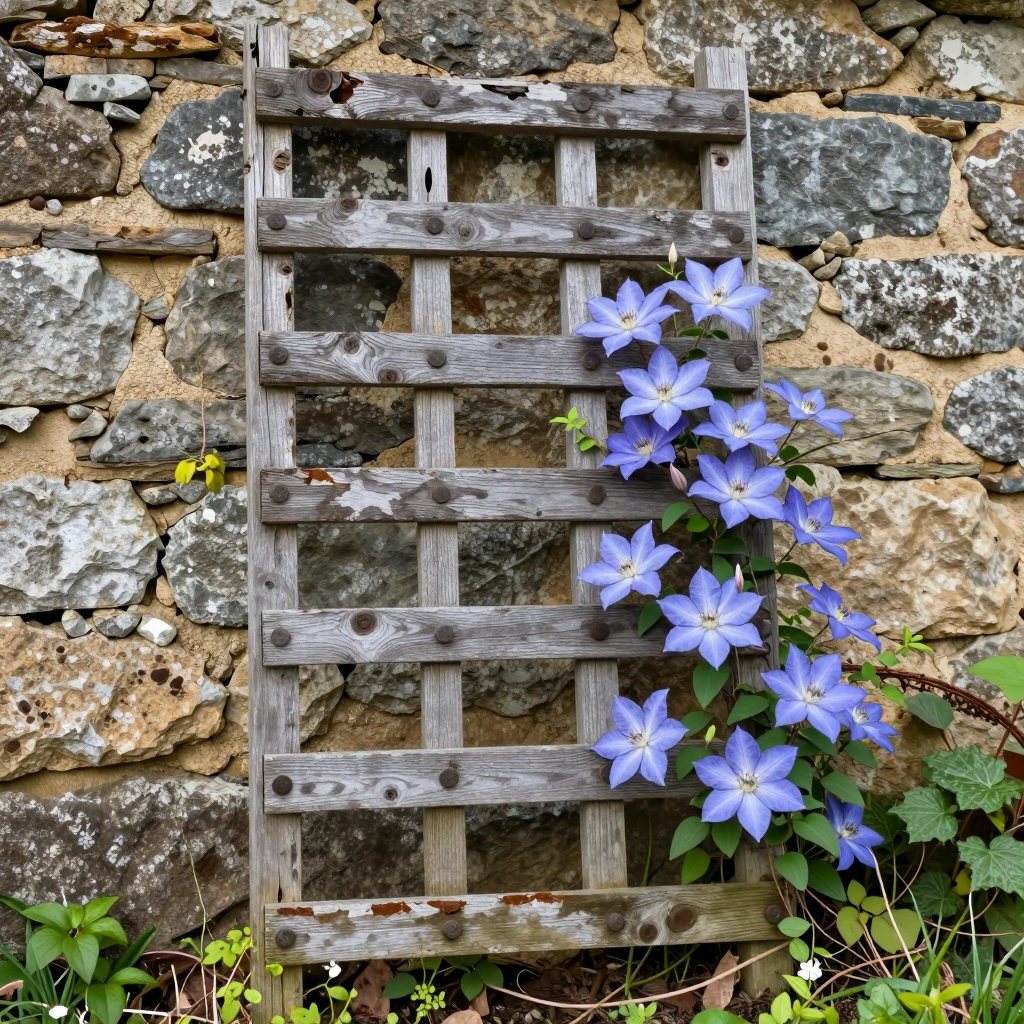
Give old wood a new life! Reclaimed wood panels — from old pallets, fence boards, or salvaged timber — make wonderfully characterful trellises that look like they’ve been part of the garden for generations. This eco-friendly approach adds warmth, texture, and an authentic, lived-in charm that you simply can’t buy new. Shop on Amazon
How to Style It:
- Arrange reclaimed boards in a vertical panel with intentional gaps for the clematis to grow through
- Lean the panel against a wall rather than mounting it for an easy, damage-free setup
- Mix with trailing nasturtiums or ivy for extra textural interest
- Keep the wood untreated for an authentic aged look, or apply linseed oil to protect it naturally
Where to Use It: Against garden walls, barn walls, or shed exteriors — anywhere you want a touch of rustic character.
Pro Tip: 🌟 Before using reclaimed wood, check that it hasn’t been treated with old chemical preservatives. Look for untreated, naturally weathered wood whenever possible, especially if children play nearby.
6. Fan-Shaped Wall Trellis
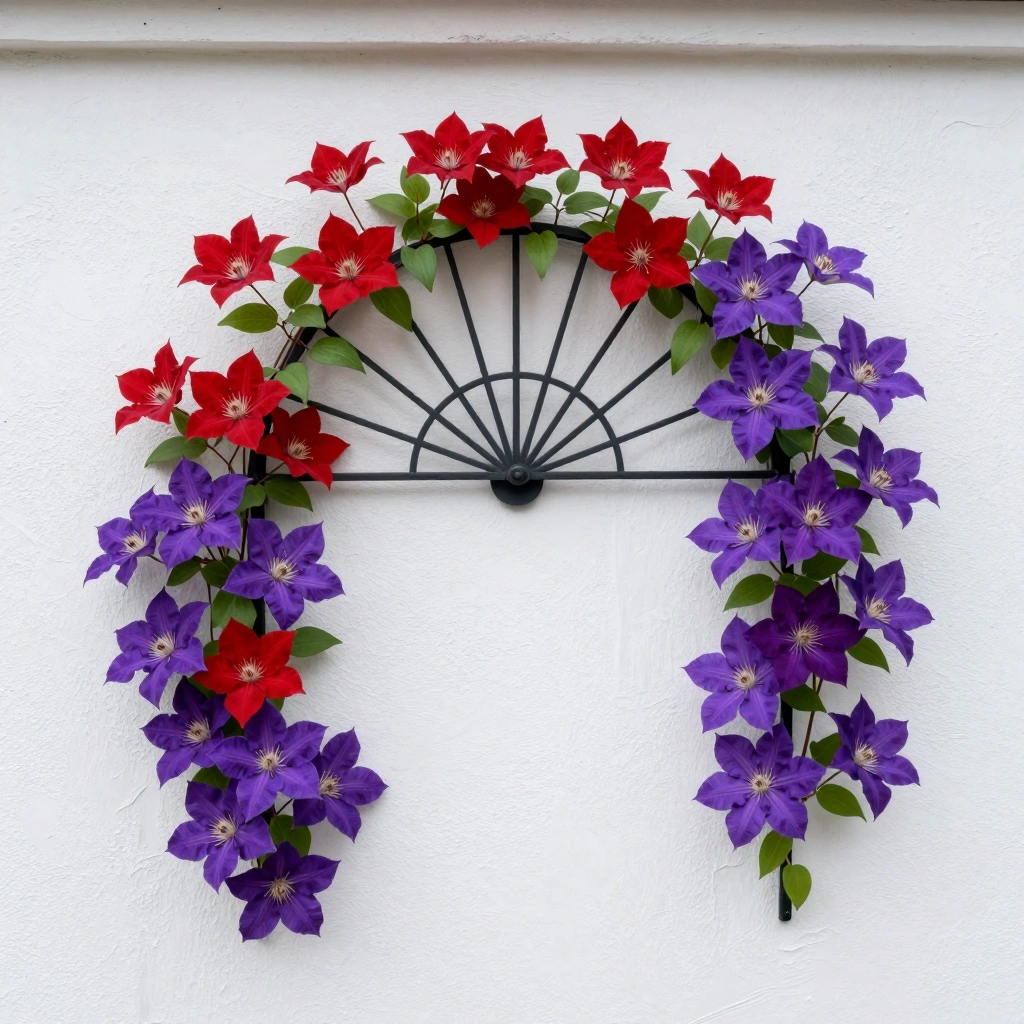
The fan trellis is a chic, space-saving option that spreads gracefully outward from a central point like an elegant sunburst. It guides clematis into a beautiful, symmetrical display that looks intentional and artistic — like a living piece of wall art. Fan trellises are ideal for smaller spaces where you want maximum visual impact. Shop on Amazon
How to Style It:
- Mount a single fan trellis as a central feature between two windows for a symmetrical, polished look
- Paint it matte black or copper for a modern garden twist
- Guide new clematis shoots outward along each spoke of the fan to encourage even coverage
- Pair with a contrasting wall color — deep charcoal, terracotta, or pale blue — to make blooms pop
Where to Use It: On house walls, courtyard walls, or fences where you want a tidy, decorative display rather than full coverage.
Pro Tip: 🌟 Secure fan trellises with proper wall plugs and screws, not just adhesive strips. Mature clematis is heavier than it looks, and wind can cause real damage if the trellis isn’t properly anchored.
7. Fence Panel Espaliered Trellis
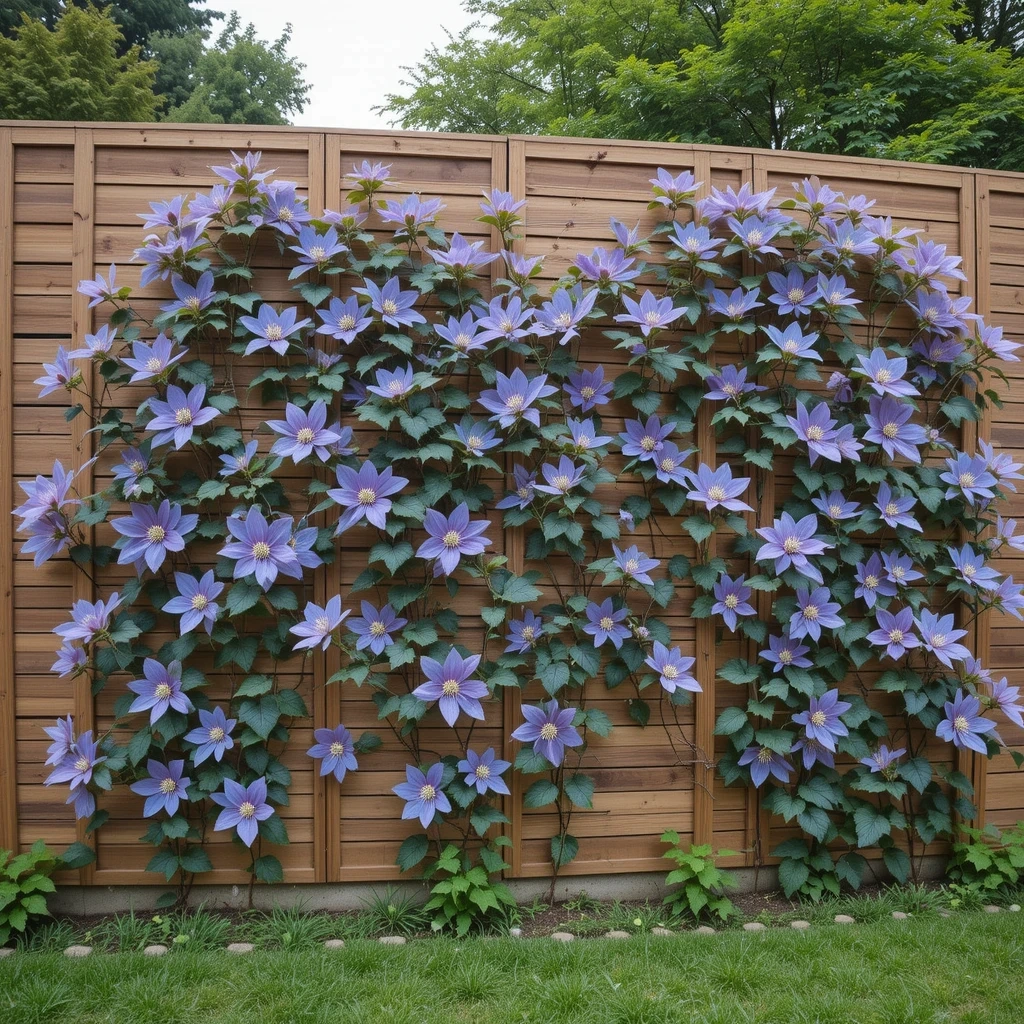
Espalier is the art of training plants to grow flat against a surface in a precise, geometric pattern — and it works brilliantly with clematis. By threading the vine along horizontal wires or fence rails, you create a neat, orderly curtain of flowers that maximizes blooms while keeping everything tidy and manageable. It’s like giving your clematis its very own grid to paint on. Shop on Amazon
How to Style It:
- Attach horizontal training wires every 12–18 inches up the fence using vine eyes and tensioned wire
- Gently tie new shoots horizontally rather than letting them scramble upward
- Use large-flowered clematis varieties for the most striking visual impact when trained flat
- Combine two colors in alternating sections for a bold, stripe-effect display
Where to Use It: Along garden boundaries, on estate fences, or anywhere you want a disciplined, well-kept appearance rather than a wild, natural look.
Pro Tip: 🌟 Use soft garden twine or flexible plant ties to attach shoots — never wire directly around the stem, as it can cut into the vine as it grows and thickens.
8. Tree Trunk & Branch Trellis
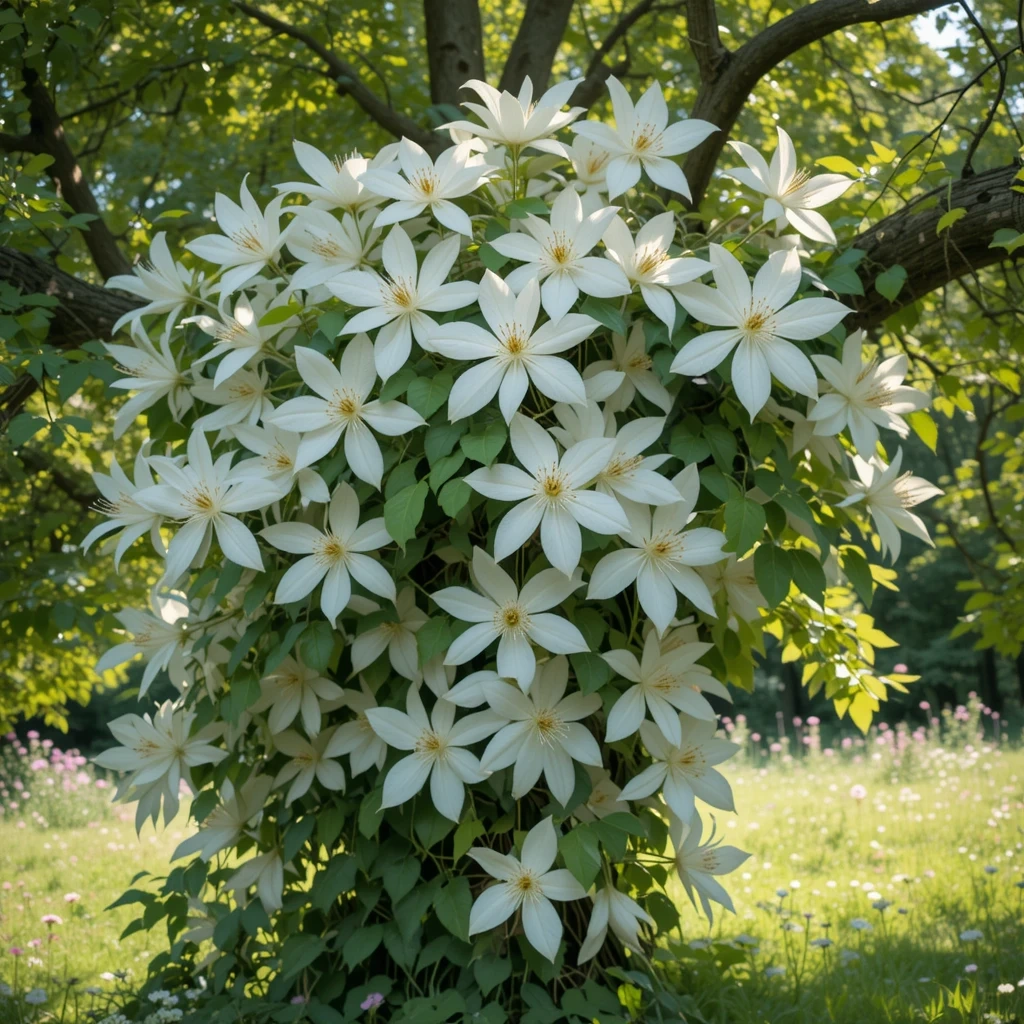
Nature provides the perfect trellis — and sometimes all you need to do is point your clematis toward it! Growing clematis up and through an old tree or over a large shrub creates an incredibly natural, woodland-garden effect. The rough bark of a tree trunk gives tendrils perfect purchase, and watching the clematis weave through the branches is genuinely magical, especially in late spring. Shop on Amazon
How to Style It:
- Plant clematis at the outer edge of the tree’s root zone (about 2–3 feet from the base) and lead it toward the trunk with a bamboo stake
- Choose vigorous varieties like ‘Montana’ or ‘Bill MacKenzie’ that can handle competition from tree roots
- Let it grow naturally through the canopy without heavy pruning for a loose, romantic effect
- Underplant with spring bulbs that will bloom before the clematis takes over
Where to Use It: In naturalistic or wildlife gardens, cottage gardens, and orchard areas — anywhere a relaxed, informal look is the goal.
Pro Tip: 🌟 Avoid planting clematis at the base of a tree where root competition is fiercest. Give it a head start by enriching the planting hole generously with compost and watering deeply through its first full growing season.
9. Decorative Garden Ladder Trellis
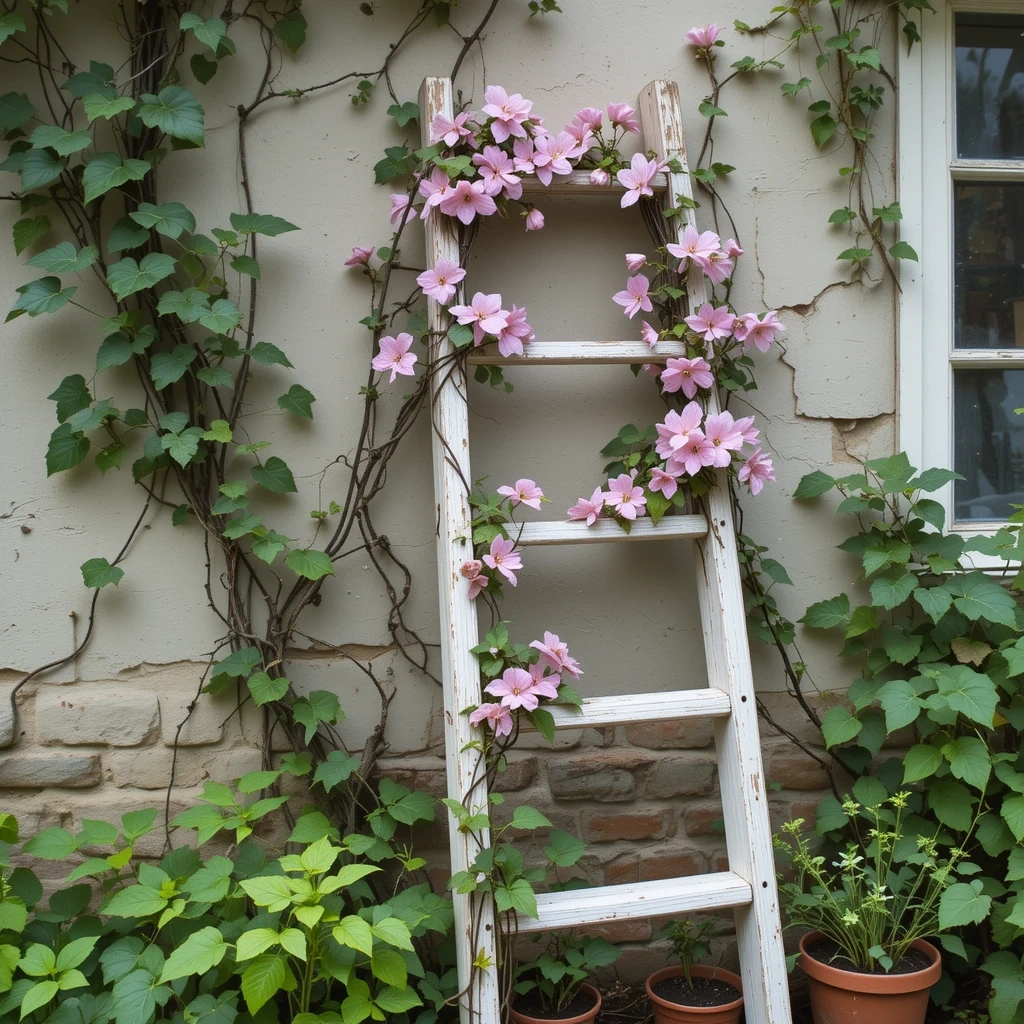
A leaning garden ladder is one of the most charming and photogenic trellis solutions you’ll ever find — and it could be made from almost anything! Old wooden stepladders, decorative metal ladders, or even handcrafted driftwood ladders make adorable, freestanding structures that clematis can spiral up with ease. They’re also completely movable, which is a huge bonus for renters or those who like to switch things up seasonally. Shop on Amazon
How to Style It:
- Lean the ladder against a wall at a 70-degree angle so it’s stable and clematis can reach the wall too
- Weave the vine in and out of each rung as it grows upward for a full, even coverage
- Hang terracotta pots or small lanterns from the rungs for added charm
- Place in a container to make it fully freestanding and portable
Where to Use It: On patios, balconies, in small gardens, or beside a garden shed — perfect for renters and those who want flexibility.
Pro Tip: 🌟 A ladder trellis leans — which means it needs a wall or fence for support. If you want it completely freestanding, brace it with two stakes driven into the ground at the back feet.
10. Modern Metal Grid / Steel Frame Trellis
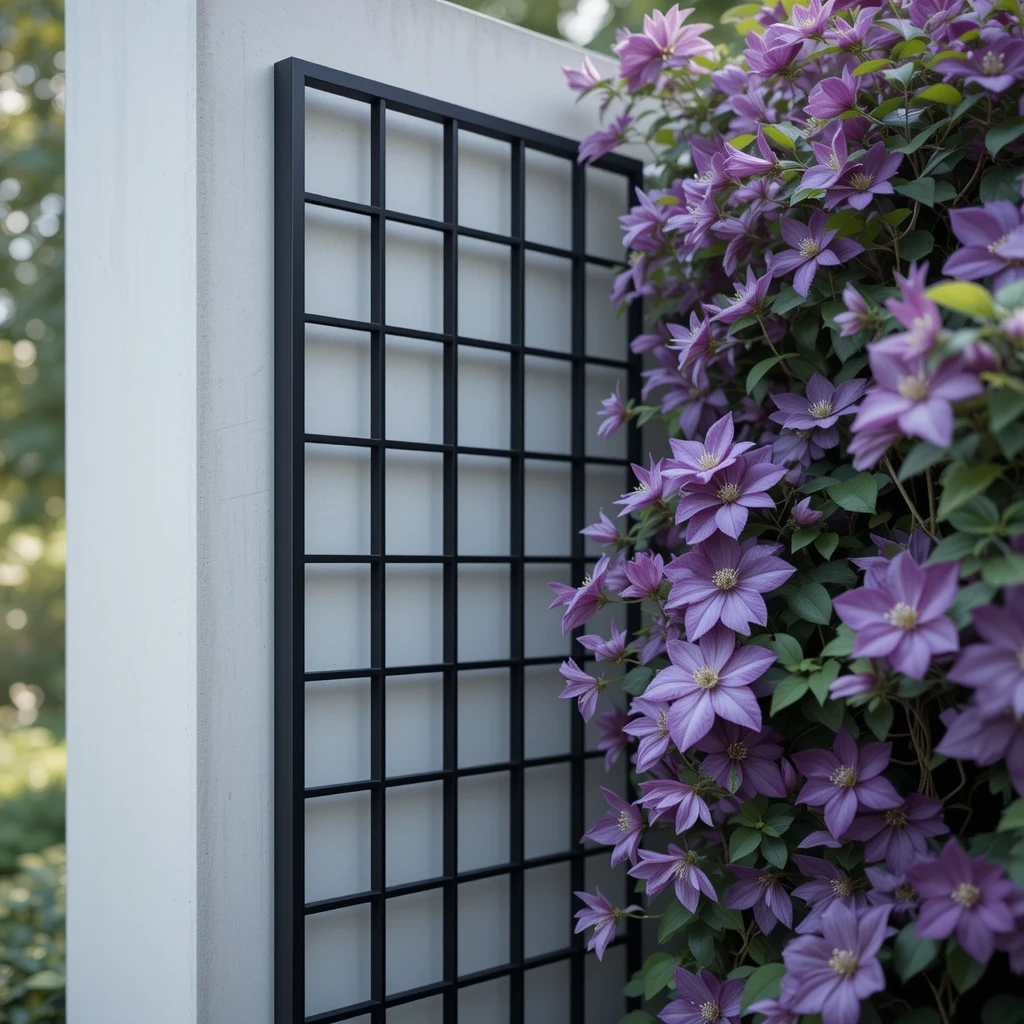
For gardens with a contemporary, architectural vibe, a sleek metal grid or steel frame trellis is the perfect match. Think clean lines, geometric precision, and bold industrial materials softened by the explosion of organic color that clematis provides. The contrast between hard steel and soft blooms is genuinely striking — and endlessly photogenic. Shop on Amazon
How to Style It:
- Choose a powder-coated steel grid for durability and a consistent, professional look
- Pair with contemporary varieties like dark-purple ‘Jackmanii’ or the velvety ‘Warsaw Nike’
- Keep surrounding planting simple — ornamental grasses, boxwood balls, or architectural ferns
- Use as a privacy screen between two zones of a modern outdoor living area
Where to Use It: In contemporary, minimalist, or urban gardens, on modern house exteriors, and in courtyard gardens.
Pro Tip: 🌟 Ensure metal grid trellises are fixed at least 2–3 inches away from the wall surface. Clematis tendrils need air circulation and a small gap to grip — flat against a wall means nowhere for them to hold.
11. Wicker & Willow Trellis Weave
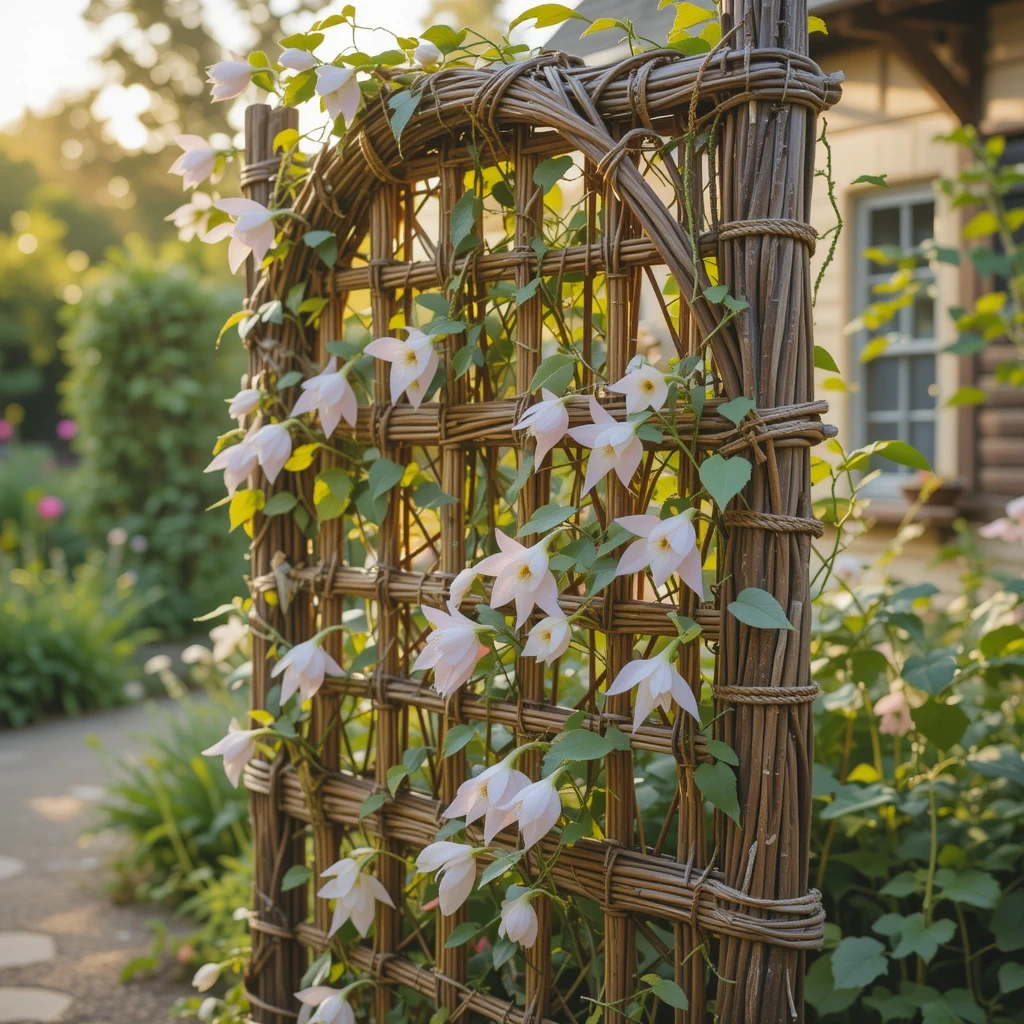
For a gentle, handcrafted look that feels like it belongs in a fairy tale, wicker and willow trellises are absolutely irresistible. Woven from flexible willow branches or rattan, these organic structures add incredible texture to the garden. Clematis growing through a willow weave looks like something from a children’s picture book — soft, whimsical, and wonderfully natural. Shop on Amazon
How to Style It:
- Use willow hurdles as garden room dividers or backdrop panels for a raised bed
- Combine with sweet clematis varieties like ‘Fragrant Oberon’ or ‘Arabella’ for a scented, sensory garden
- Add solar fairy lights threaded through the weave for an enchanting evening display
- Frame the trellis with cottage-garden perennials like foxgloves and delphiniums
Where to Use It: In cottage, children’s, sensory, and wildlife gardens — anywhere warmth and whimsy are welcome.
Pro Tip: 🌟 Willow trellises are best used as a backdrop rather than a load-bearing structure. For heavier clematis varieties, support the panel with additional stakes at the back.
12. Pergola with Overhead Wires — The Full Canopy
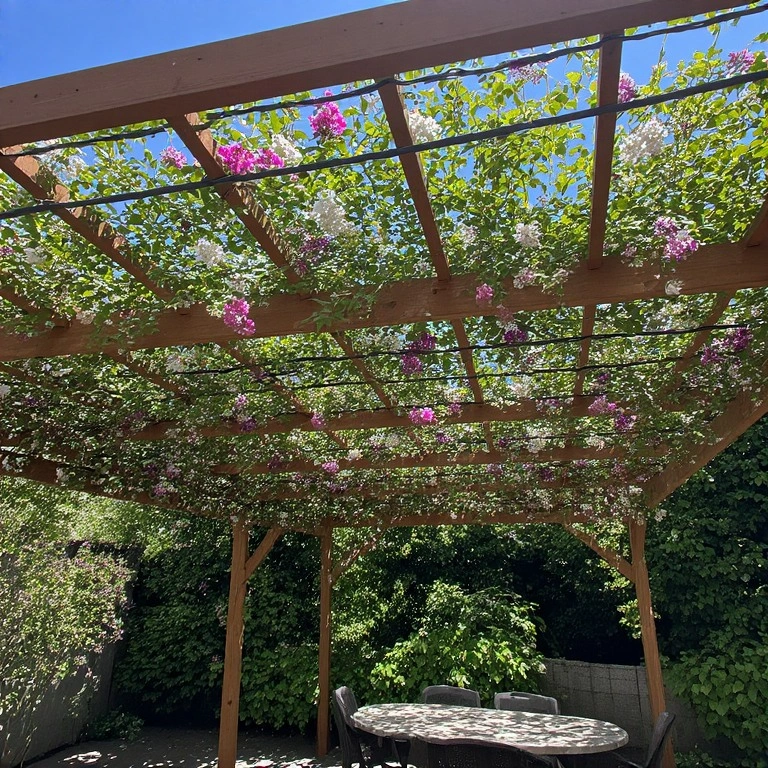
For the ultimate clematis experience, nothing beats training a vigorous variety across a full pergola with overhead tension wires — creating a complete flowering ceiling above your outdoor living area. Sitting under a canopy of blooming clematis on a summer’s evening, the light filtering through petals of pink, purple, and white, is genuinely one of life’s great pleasures. It’s the crown jewel of clematis trellis ideas. Shop on Amazon
How to Style It:
- Run stainless steel tension wires at 12-inch intervals across the top of the pergola using eye bolts
- Plant a vigorous clematis at each corner post and guide each one toward the center
- Combine ‘Montana Rubens’ (pink, early) with ‘Jackmanii’ (purple, late) for maximum season coverage
- Hang outdoor pendants or Edison bulbs from the wire system for evening ambiance
Where to Use It: Over outdoor dining areas, entertainment patios, garden rooms, and alfresco kitchen spaces.
Pro Tip: 🌟 A full pergola canopy needs at least 3–4 years to fill in completely. Be patient — and in the meantime, enjoy watching it grow!
Common Mistakes to Avoid When Growing Clematis on a Trellis
Even experienced gardeners can fall into these traps. Here’s what to watch out for:
1. Planting Too Close to the Base of the Trellis Clematis roots need cool, moist conditions, but the vine itself loves sunshine. Plant 6–12 inches away from the base of a wall or fence so roots aren’t in a hot, dry zone.
2. Forgetting to Leave a Gap Between Trellis and Wall The vine must have something to wrap its tendrils around. A trellis pressed flat against a wall gives it nothing to grab. Always leave 2–4 inches of space.
3. Pruning the Wrong Clematis Group at the Wrong Time Clematis fall into three pruning groups, and getting it wrong can mean no flowers for a whole year. Always check which group your variety belongs to before picking up the secateurs.
4. Skimping on Initial Support Young clematis look small and light — but within a few seasons, a vigorous variety can weigh down a flimsy trellis dramatically. Invest in solid supports from the start.
5. Underwatering in the First Season The old saying “water, water, water” really applies to new clematis. Water deeply at least twice a week in dry spells throughout the first growing season.
6. Ignoring Soil Preparation Clematis are hungry feeders. Before planting, dig in plenty of well-rotted compost and a slow-release fertilizer. Skimping on this step shows in the growth and flowering.
7. Training Only Upward, Never Outward Encourage horizontal stems as well as vertical ones — more horizontal growth leads to exponentially more flowers along the length of the cane.
Frequently Asked Questions About Clematis Trellises
Q: How quickly does clematis grow on a trellis? Most clematis varieties grow 2–5 feet per season under good conditions. Vigorous types like Clematis montana can put on 6–10 feet in a single season once established. Expect 2–3 years to achieve full coverage on a large trellis.
Q: What is the best trellis material for clematis? Clematis works beautifully with almost any trellis material — wood, metal, bamboo, or wire. The key is that the trellis elements are thin enough (ideally under ½ inch diameter) for the clematis tendrils to wrap around effectively.
Q: Do I need to tie clematis to its trellis? Yes, especially in the early stages! Clematis climbs with leaf stalk tendrils, but it needs help getting started. Use soft plant ties or garden twine to guide new shoots toward the trellis and tie loosely — never tightly — around the stem.
Q: How do I attach a trellis to a fence without damaging it? Use vine eyes (small screws with a loop) inserted into the fence to run horizontal training wires, or attach a freestanding trellis panel using bracket mounts. This keeps the trellis slightly away from the fence, giving the vine room to grip.
Q: Can clematis damage my fence or wall? Clematis itself is not damaging — its tendrils don’t penetrate surfaces like ivy does. However, if a heavy vine is allowed to grow unchecked on a weak structure, the weight can cause damage over time. Prune regularly and use sturdy supports.
Q: Is clematis safe for children and pets? All parts of the clematis plant contain compounds that can cause mild irritation if chewed or handled and then rubbed on skin or eyes. While it’s not considered highly toxic, it’s wise to discourage young children and pets from nibbling on the leaves. Always wash hands after handling clematis.
Q: When is the best time to plant clematis for a trellis? Spring and autumn are ideal — when the ground is warm enough to work but not baking hot. Autumn planting gives roots a full season to establish before the plant has to put energy into growth.
Q: How do I stop my clematis trellis from falling over? For freestanding structures, always bury the feet at least 12–18 inches into the ground, or secure into a heavy container. For wall-mounted trellises, use appropriate wall anchors and screws rated for the expected weight. Don’t rely on light-duty fixings for anything more than a very small planting.
Final Thoughts
A clematis trellis isn’t just a garden accessory — it’s a decision to bring joy, color, and life to your outdoor space for years to come. Whether you choose a grand flowering arch that frames your front door, a simple bamboo teepee in the vegetable patch that your kids helped build, or a sleek metal grid that turns your modern courtyard into a showpiece, there is a perfect clematis trellis idea here for you.
The most important thing? Just start. Pick one idea, plant your clematis, give it love and a little patience — and prepare to be absolutely amazed at what grows.
Happy gardening!
Did you find this guide helpful? Share/Save it with a fellow garden lover, and leave a comment below with which clematis trellis idea you’re planning to try first!