10 Best Cucumber Trellis Ideas to Transform Your Garden
Growing cucumbers is one of the most rewarding things you can do in a family garden — and adding a trellis takes it to the next level! When your cucumbers have something to climb, they grow straighter, stay healthier, and are way easier for kids and grown-ups alike to pick. Plus, a trellis adds a beautiful vertical element to any backyard, porch, or community garden plot.
Whether you have a huge backyard or a tiny balcony, there’s a cucumber trellis idea on this list that’s just right for you. From simple DIY builds with the kids on a Saturday afternoon to elegant garden structures that become the centerpiece of your outdoor space, we’ve rounded up the 10 best cucumber trellis ideas so you can grow up, not out!
The 10 Best Cucumber Trellis Ideas
1. Classic Wooden A-Frame Trellis
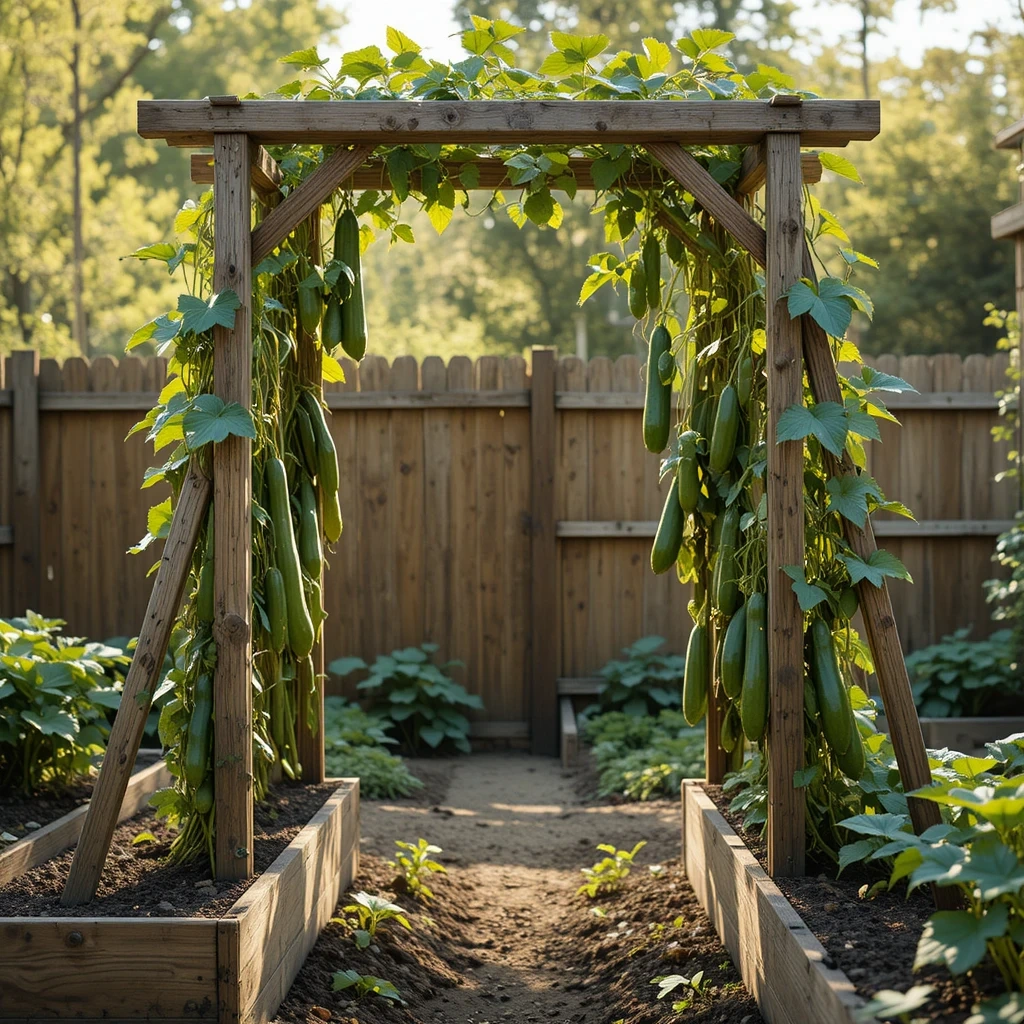
A timeless garden structure that looks like a little wooden tent, the A-frame trellis is one of the most popular supports for cucumber vines — and for good reason. It’s sturdy, easy to build with basic tools, and the triangular shape gives plants room to climb on both sides, doubling your growing space without doubling your footprint.
This is a great project to tackle with older kids. A few wooden boards, some garden twine or wire mesh, and a weekend afternoon is all you need. Once it’s up, watch the cucumber vines do the rest of the work! Shop on Amazon
How to Style It:
- Paint or stain the wood in a color that matches your garden fence or raised beds
- Weave jute twine horizontally between the two sides for a farmhouse-chic look
- Add small name tags for each plant variety to make it educational for kids
Where to Use It: Raised garden beds, in-ground rows, community gardens, or large backyard plots.
Pro Tip: Build your A-frame at least 5–6 feet tall. Cucumber vines can grow very quickly and will love every inch of vertical space you give them!
2. Cattle Panel Arch Trellis

If you want something that looks absolutely magical in the garden — this is it. A cattle panel arch is made by bending a large, sturdy wire panel (the kind used for farm fencing) into a beautiful rounded tunnel or archway. Cucumber vines grow up and over it, and soon you have a green living tunnel your kids can walk through while picking cucumbers right above their heads!
Cattle panels are strong, long-lasting, and don’t require painting or staining. Once the arch is set up with stakes on both sides, it needs almost zero maintenance. Shop on Amazon
How to Style It:
- Plant cucumbers on both sides of the arch so it fills in from all angles
- Add flowering plants like nasturtiums at the base for a pop of color
- Place stepping stones or a simple wooden plank path underneath for a whimsical walkway
Where to Use It: Large garden beds, backyard garden paths, school gardens, or community garden centerpieces.
Pro Tip: Use zip ties or garden clips to help young cucumber vines find the wire and start climbing. Once they grab on, they take off on their own!
3. Simple Wire Fence Trellis
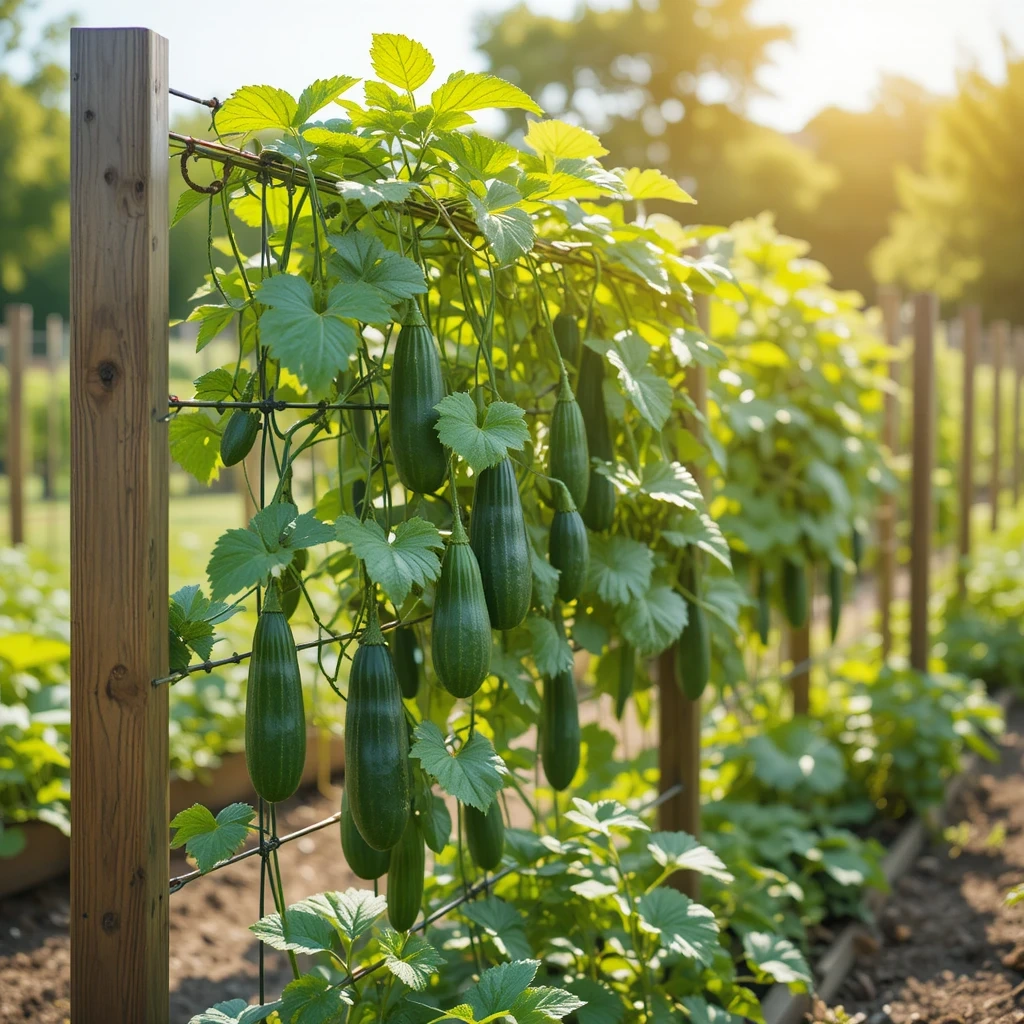
Sometimes the simplest solution is the best one! A wire fence trellis is exactly what it sounds like — a length of sturdy wire fencing stretched between two or more posts driven into the ground. Cucumber vines grab onto the wire naturally with their little curly tendrils and climb right up.
This is one of the most budget-friendly cucumber trellis options out there, and it works incredibly well. It’s also easy to move or extend if you expand your garden next season. Shop on Amazon
How to Style It:
- Use green-coated wire for a look that blends naturally into the garden
- Attach wooden posts for a warm, farmhouse aesthetic
- String fairy lights along the top wire for evening garden ambiance (especially fun for family dinners outdoors!)
Where to Use It: In-ground garden rows, along fences, edges of raised beds, or as a divider between garden sections.
Pro Tip: Drive your posts at least 18 inches deep so the fence stays taut and upright even when heavy with vines and cucumbers.
4. DIY PVC Pipe Trellis
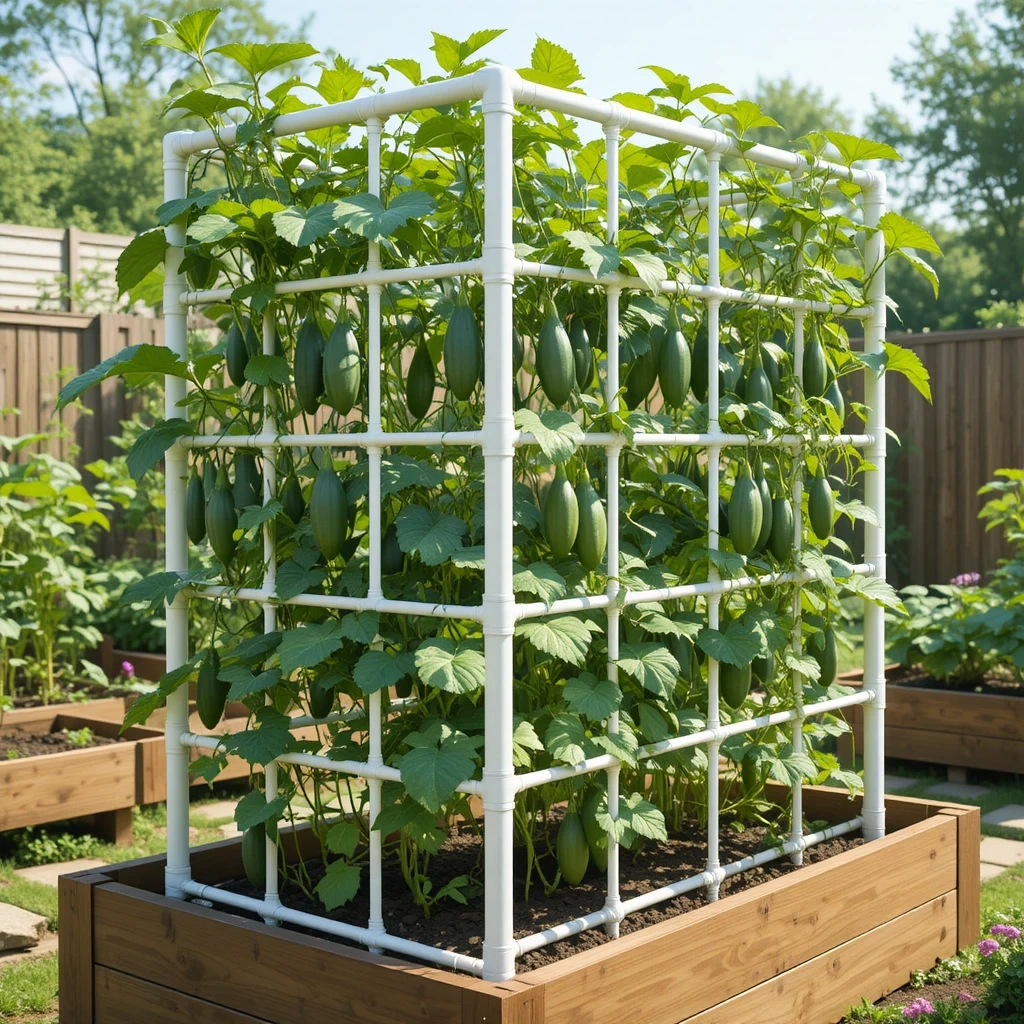
PVC pipe trellises are lightweight, weather-resistant, and incredibly easy to build — making them a fantastic family DIY project. PVC pipes connect with easy snap-together fittings so no special tools or skills are needed. You can design the trellis in almost any shape: rectangular panels, square grids, or even fun zigzag patterns.
Because PVC doesn’t rot, rust, or warp in rain, this is a trellis that can serve your garden for many seasons. And if you want to get creative, you can even spray-paint the pipes in fun colors! Shop on Amazon
How to Style It:
- Paint the pipes in white or soft green to blend with the garden
- Create a grid pattern by connecting horizontal and vertical pipes for a modern look
- Let kids spray-paint sections in their favorite colors for a personalized garden feature
Where to Use It: Raised beds, container gardens, patios, small yards, or indoor greenhouse setups.
Pro Tip: Add a “T” connector or “elbow” fitting at each corner junction for extra stability. This prevents the trellis from leaning or bowing under the weight of mature vines.
5. Bamboo Tepee Trellis
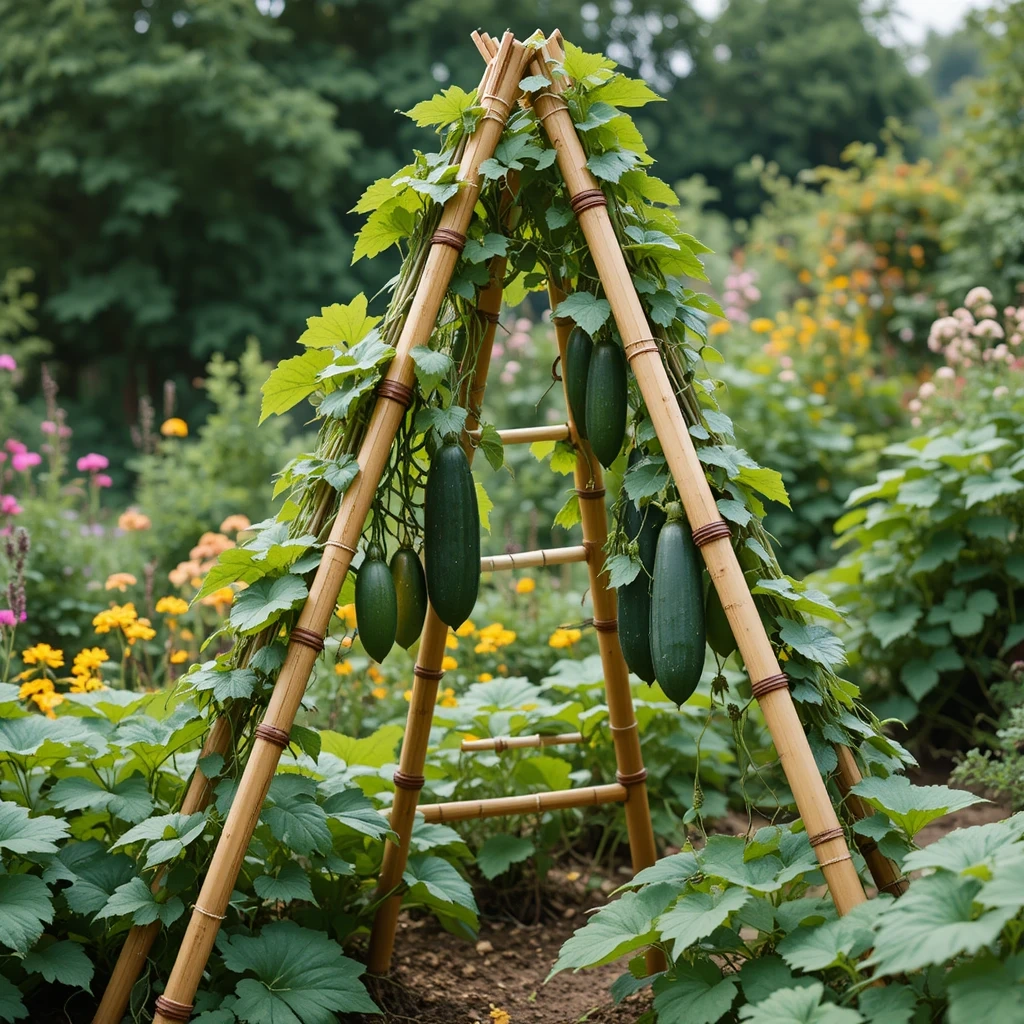
Fun, eco-friendly, and absolutely charming — the bamboo tepee trellis is a garden favorite for families! Gather 5–8 bamboo poles, push the bottoms into the soil in a circle, then tie all the tops together with twine. It looks like a little garden tent, and cucumber vines will swirl up the poles beautifully.
Kids especially love tepee trellises because they can peek inside and find hidden cucumbers growing in the center. It feels like a secret garden hideout! Shop on Amazon
How to Style It:
- Tie colorful ribbons or strips of cloth at the top for a festive, playful touch
- Interplant with pole beans for a multi-vegetable garden tower
- Wrap twine in a spiral pattern around the poles to give vines more places to grab
Where to Use It: Garden beds, lawn gardens, container clusters, or children’s garden sections.
Pro Tip: Soak bamboo poles in water for 24 hours before use to reduce splitting and make them more flexible when you tie the tops together.
6. Repurposed Ladder Trellis
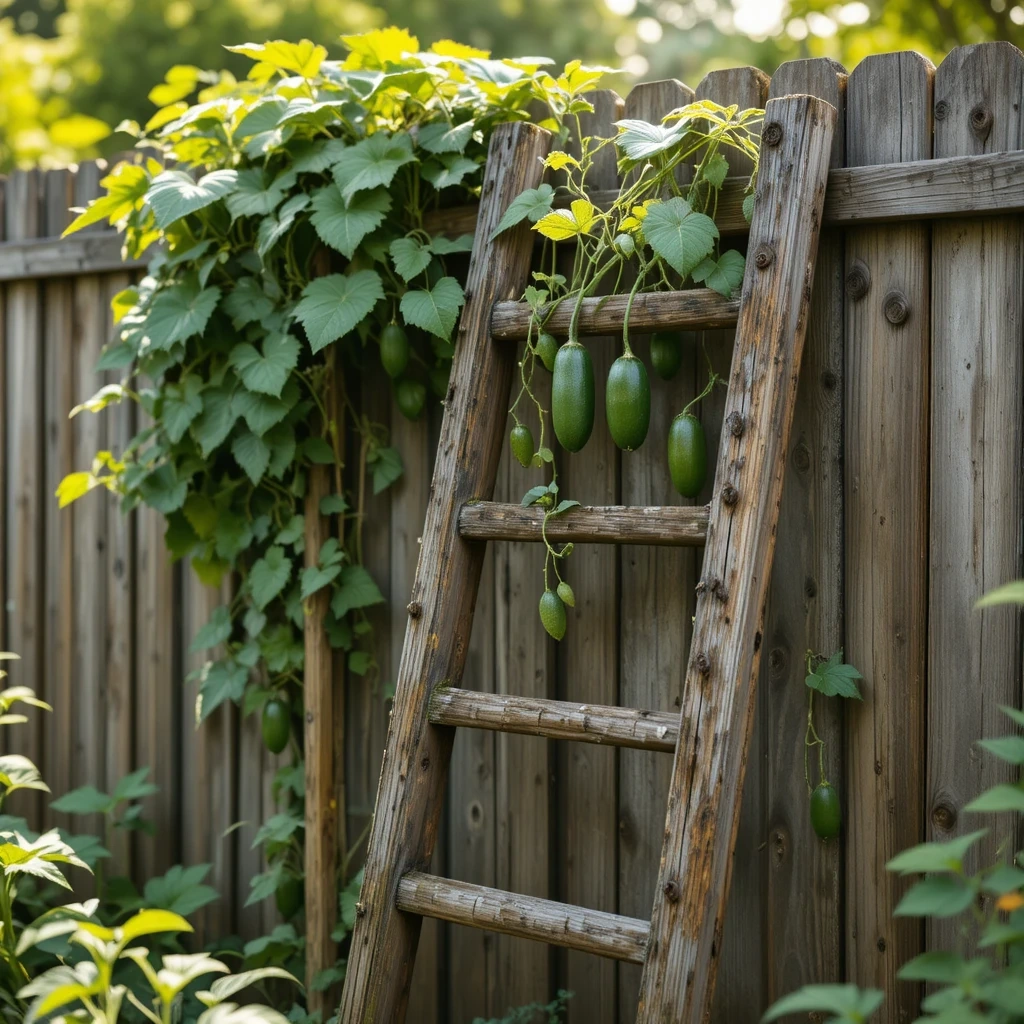
Why buy something new when you can upcycle something old? An old wooden ladder — the kind you might find at a thrift store, garage sale, or in your own garage — makes a wonderfully rustic and charming cucumber trellis. Lean it against a wall, fence, or post, and let the vines climb right up the rungs.
This is one of those garden ideas that looks like it belongs on a magazine cover, but costs almost nothing. It’s also a brilliant way to teach kids about repurposing and reducing waste. Shop on Amazon
How to Style It:
- Distress the ladder with sandpaper and add a light whitewash for a cottage-garden feel
- Hang small chalkboard plant tags from each rung
- Weave colorful fabric or jute twine between the rungs for extra climbing support
Where to Use It: Against exterior walls, fences, garden sheds, or as a standalone feature in a garden corner.
Pro Tip: Secure the top of the ladder to the wall or fence with a hook or zip tie so it doesn’t tip over as vines grow heavy. Safety first — especially if little ones are nearby!
7. String or Twine Vertical Trellis
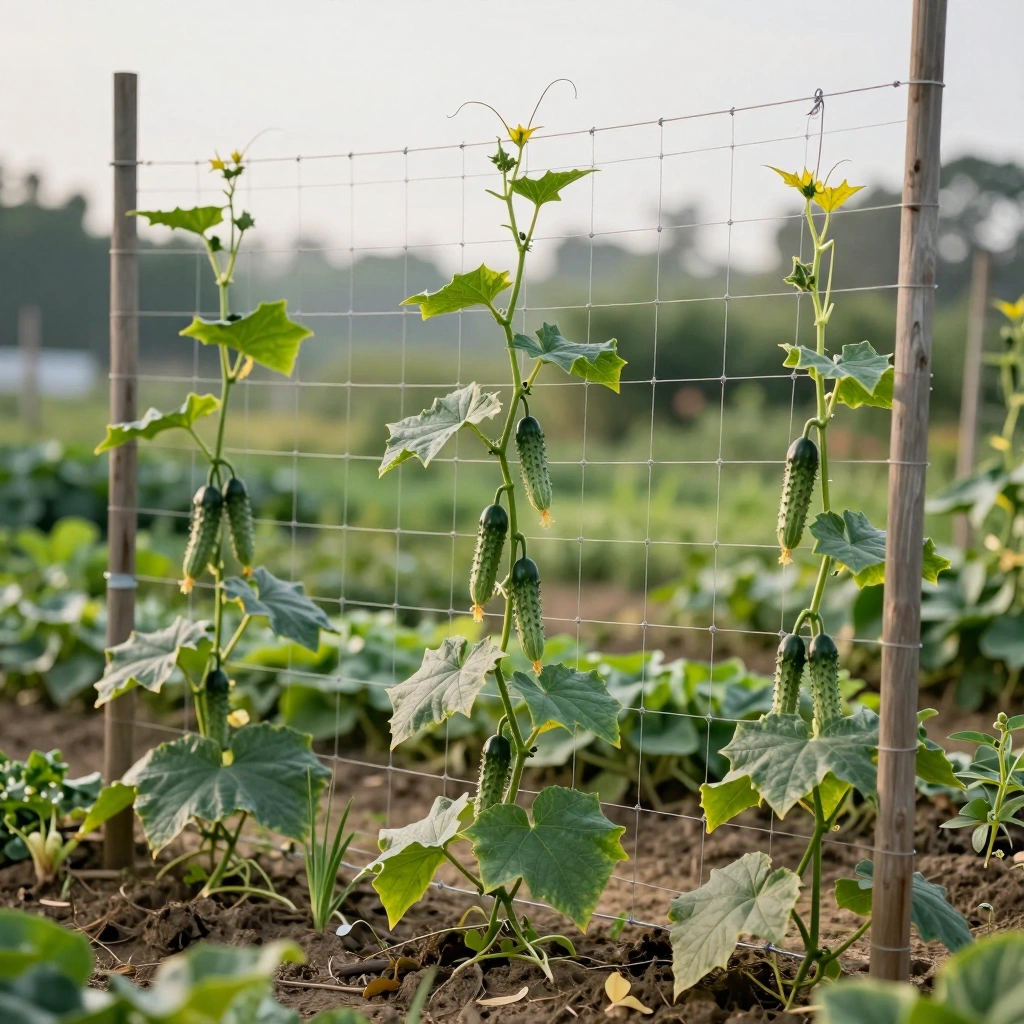
This is one of the most elegant and low-cost cucumber trellis methods around. Simply attach horizontal lengths of twine or garden string between two upright posts, spaced about 8–10 inches apart, creating a series of “floors” for the vines to climb. Or run individual vertical strings from a top rail down to the base of each plant.
String trellises are popular in market gardens and community plots because they’re incredibly productive, easy to set up, and simple to take down at the end of the season. Shop on Amazon
How to Style It:
- Use natural jute twine for a warm, earthy look
- Attach the top rail to a cedar fence or wooden pergola for a seamless look
- Mix vertical and horizontal strings in a grid pattern for added structure and visual interest
Where to Use It: Raised beds, market garden rows, along fences, under pergolas, or on balconies with a top rail mounted above.
Pro Tip: Use biodegradable jute twine so at the end of the season you can pull everything — vines and twine together — and add it directly to the compost pile. Zero waste, maximum efficiency!
8. Pallet Trellis
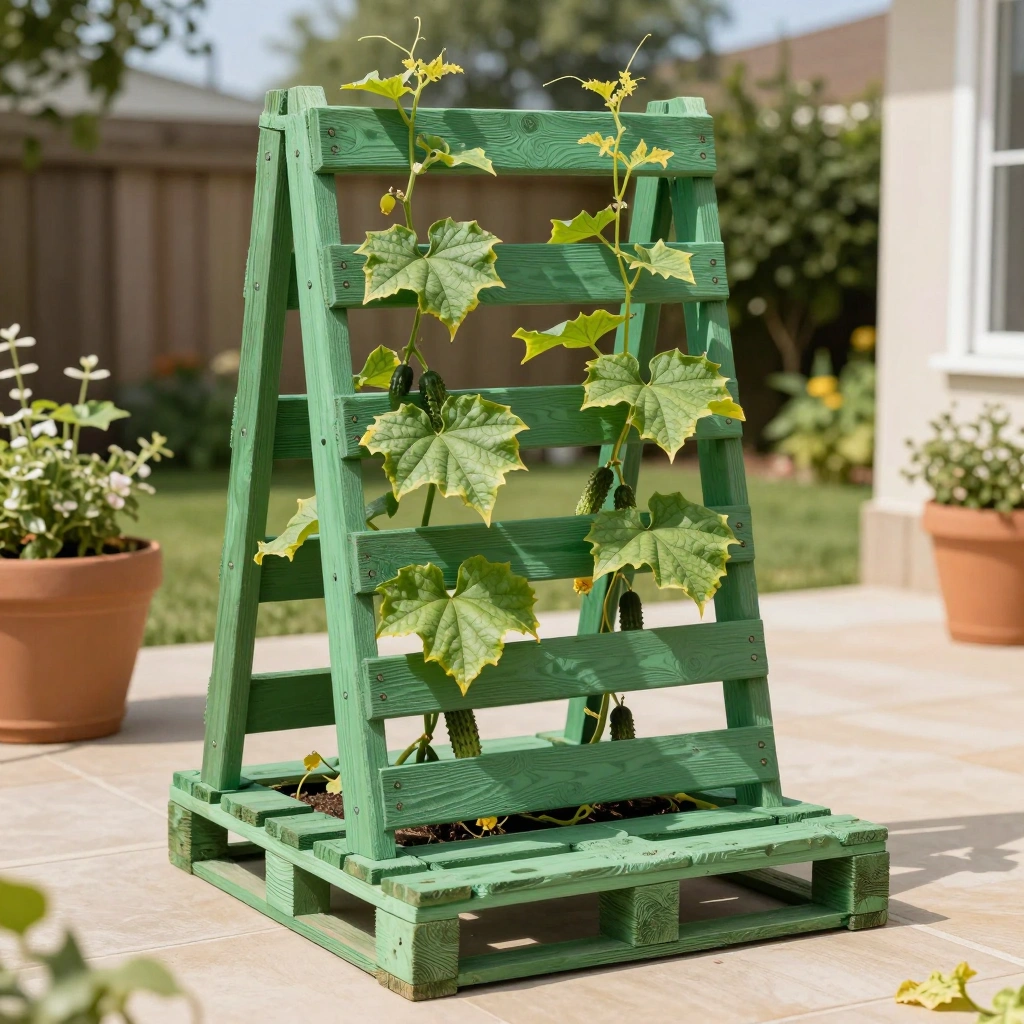
Wooden pallets are free (or nearly free) and make surprisingly excellent cucumber trellises! Stand a pallet upright and secure it with stakes, and you instantly have a slatted frame with built-in gaps for vines to weave through. You can stand one pallet up solo or connect two at an angle for an A-frame shape.
This is a brilliantly practical upcycle idea, and it’s a great conversation piece. Guests will always ask, “Wait — is that a pallet?!” Shop on Amazon
How to Style It:
- Sand the pallet smooth and paint it in a bold color like deep green, terracotta, or navy
- Add small potted herbs to the slats for a vertical herb-and-cucumber combo wall
- Stencil words like “GROW” or “GARDEN” on the wood for a decorative touch kids can help paint
Where to Use It: Patios, small yards, against walls or fences, rooftop gardens, or community plots.
Pro Tip: Make sure to use heat-treated (HT) pallets rather than chemically treated ones — look for the “HT” stamp on the pallet’s side. This ensures no harmful chemicals come into contact with your food plants.
9. Cattle Panel Flat Panel Trellis
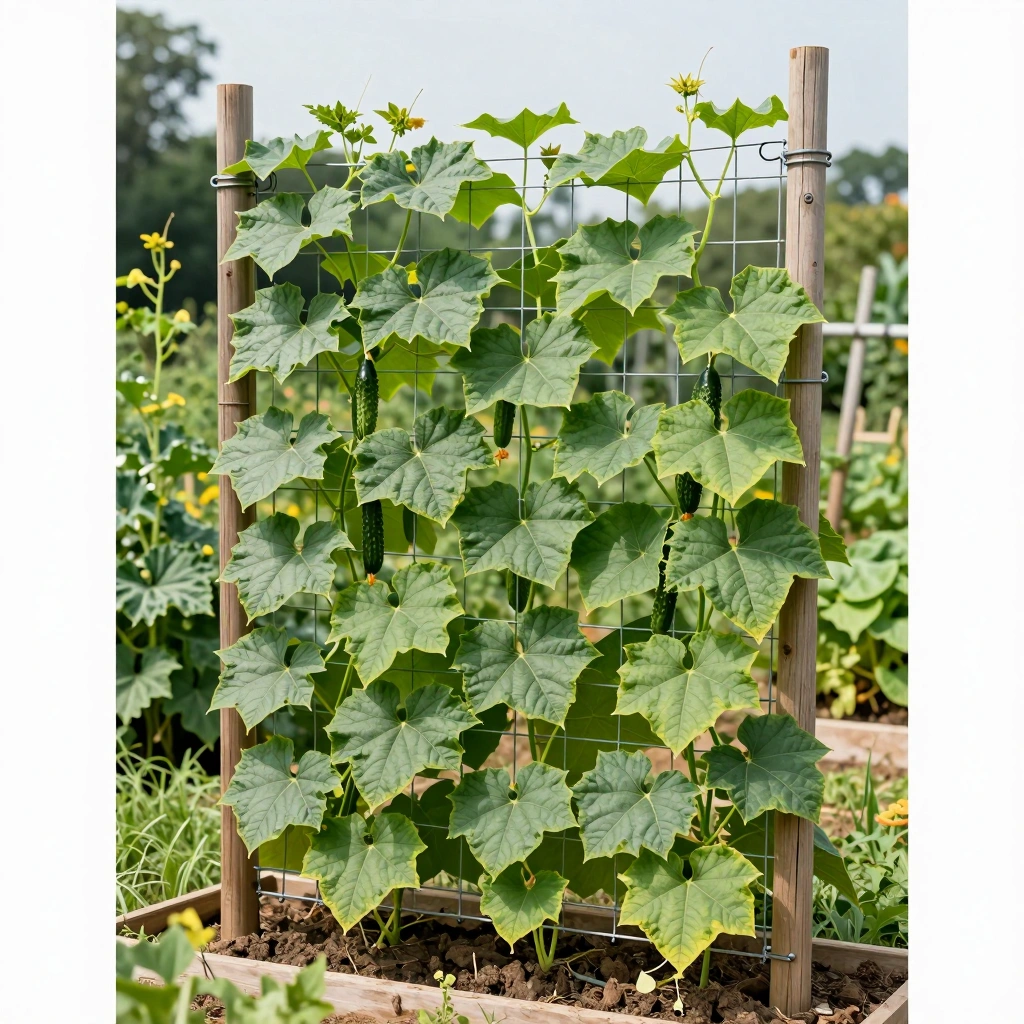
Different from the arch version, a flat cattle panel trellis is installed vertically — like a tall, sturdy wall of wire grid. Because cattle panels are extra-rigid (they don’t sag or bow), they hold up beautifully under even the heaviest cucumber vines. The wide openings of the grid make it easy to reach through and harvest cucumbers without wrestling with the fence.
This is one of the longest-lasting trellis options available. A properly anchored cattle panel can be used for 10–20+ years with no maintenance beyond an occasional rinse. Shop on Amazon
How to Style It:
- Frame the panel with wooden 4×4 posts for a polished, finished look
- Paint the panel black for a sleek, modern farmhouse aesthetic
- Use garden clips in a contrasting color to train vines and add a pop of fun
Where to Use It: In-ground rows, raised beds, along garden borders, or as a decorative garden wall divider.
Pro Tip: When buying cattle panels, look for ones that are at least 16 feet long — you can cut them to size with bolt cutters, and a single panel can support an entire 8-foot raised bed trellis with room to spare.
10. Cage or Tower Trellis for Containers
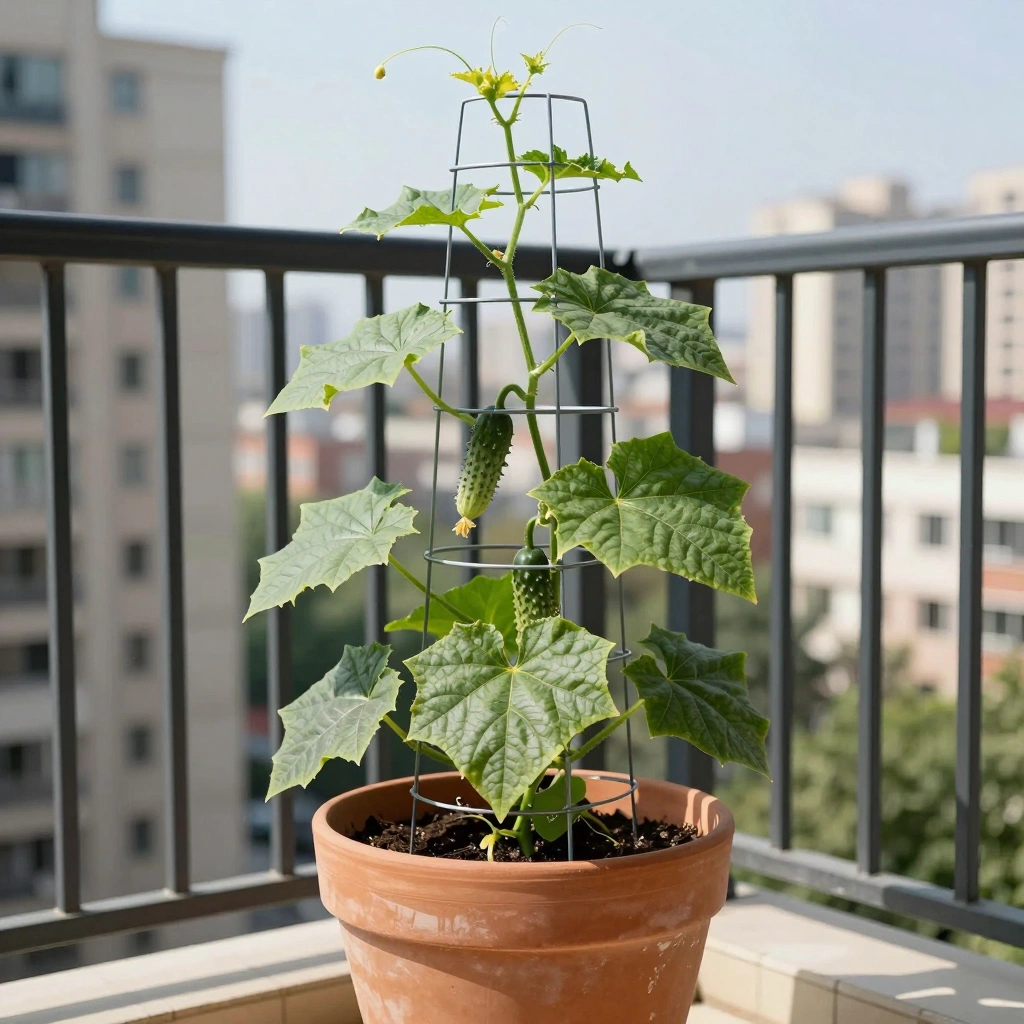
Just because you don’t have a yard doesn’t mean you can’t grow cucumbers! Cage or tower trellises are perfect for patio pots, balcony containers, and small-space gardens. Think of a tomato cage — but taller and designed for vigorous climbing vines. These structures sit inside the pot and give vines a tight spiral of wire to climb as they grow.
This is the #1 cucumber trellis idea for apartment dwellers, condo gardeners, and anyone with a sunny balcony and a big pot. Kids love watching a vine fill up an entire cage from a single seed! Shop on Amazon
How to Style It:
- Choose a cage made from black powder-coated steel for a stylish, modern balcony look
- Place pots in clusters of 2–3 for a lush container garden display
- Wrap the lower section of the cage in burlap for a cozy, rustic touch
Where to Use It: Balconies, patios, rooftop gardens, apartment terraces, indoor sunrooms, or any small-space garden.
Pro Tip: Choose a “bush” or “compact” cucumber variety like Spacemaster or Patio Snacker for container growing. These varieties are bred for small spaces and will thrive in a pot trellis setup without getting out of control!
Common Mistakes to Avoid When Using Cucumber Trellises
Even experienced gardeners make a few slip-ups! Here’s what to watch out for so your cucumber trellis season goes as smoothly as possible:
1. Building the trellis too short. Cucumbers are enthusiastic climbers. A trellis under 5 feet will quickly be outgrown. Build up, and when in doubt — go taller!
2. Waiting too long to install the trellis. Set up your trellis before or the same day you plant your cucumbers. Installing it after the plant is established can damage roots and disturb young vines.
3. Using materials that rot or rust quickly. Untreated wood, thin wire, and non-weather-rated materials won’t hold up to rain and humidity. Choose rot-resistant wood (cedar, pine), coated wire, or PVC for long-lasting structures.
4. Not tying or clipping vines as they grow. Cucumber vines have tendrils that grab on their own, but young plants sometimes need a little help getting started. Check weekly and gently guide new growth toward the trellis.
5. Overcrowding plants at the base. More plants does NOT always mean more cucumbers. Give each plant at least 12–18 inches of space at the base so the roots have room to breathe and the trellis doesn’t become an impenetrable jungle.
6. Forgetting to water more when growing vertically. Vertical growing is fantastic, but plants in vertical positions can dry out faster than sprawling ones. Check soil moisture regularly — especially in hot summer months.
Frequently Asked Questions About Cucumber Trellises
Q: Do cucumbers need a trellis? Cucumbers don’t need one — but they absolutely love one! Without a trellis, vines sprawl across the ground where they’re more prone to disease, pest damage, and misshapen fruit. Trellised cucumbers grow straighter, healthier, and are much easier to harvest.
Q: What is the best height for a cucumber trellis? Aim for at least 5–6 feet tall. Many gardeners find that 6 feet is the sweet spot — tall enough for vigorous varieties to flourish, while still being reachable for harvesting without a ladder.
Q: Can I use a cucumber trellis in a raised bed? Absolutely! Most of the ideas on this list work beautifully in raised beds. Just make sure to anchor your trellis posts firmly into the ground below the raised bed for maximum stability.
Q: Is growing cucumbers on a trellis good for kids? Yes! It’s one of the best gardening activities for families. Children can see the progress of the vine every single day, help train it onto the trellis, and experience the joy of harvesting cucumbers they grew themselves.
Q: What’s the easiest cucumber trellis to build for beginners? The string/twine trellis and the bamboo tepee are both beginner-friendly and require no power tools. Both can be built in under an hour and cost very little.
Q: How do I keep cucumbers from getting too heavy and pulling the trellis down? Use sturdy posts, anchor them deeply, and choose a trellis material with a good weight rating (cattle panels and PVC are especially strong). Harvest cucumbers regularly — this keeps the weight manageable and encourages the plant to keep producing!
Q: Can I grow cucumbers on a trellis in a container? Yes! See Idea #10 — a cage or tower trellis inside a large pot works great on balconies and patios. Just choose a compact cucumber variety suited for container growing.
Final Thoughts: Growing Up Is Always a Good Idea
Whether you’re a seasoned gardener or planting your very first vegetable patch with your family, a cucumber trellis is one of the best investments you can make for your garden. It saves space, improves harvests, and turns a simple vegetable bed into something truly beautiful.
From the charming bamboo tepee that kids will call their secret hideout, to the elegant cattle panel arch that becomes the centerpiece of your entire outdoor space — there’s a perfect cucumber trellis here for every family, every yard, and every level of gardening experience.
Now go grab your seeds, pick your favorite trellis style, and let’s grow something amazing together! 🥒🌿
Happy Growing! Don’t forget to share your cucumber trellis photos with friends and family — your garden might just inspire someone else to start growing too!
Tags: cucumber trellis ideas, cucumber trellis DIY, best cucumber trellis, vertical cucumber garden, family vegetable garden, cucumber trellis for raised beds, small space garden, kids gardening, how to trellis cucumbers, cucumber growing tips