10 Unique Pumpkin Trellis Ideas – Transform Your Garden
Growing pumpkins is one of the most rewarding gardening adventures you can share with your family. Whether you have a spacious backyard or a cozy raised bed, a well-designed pumpkin trellis gives your vines a place to climb, saves precious ground space, and turns your garden into a stunning visual display that kids absolutely love watching grow.
The best part? You don’t need to be a master gardener or spend a fortune to build a beautiful pumpkin trellis. From rustic wooden A-frames to whimsical tunnel arches, there are so many creative ways to support your pumpkin vines while adding serious curb appeal to your outdoor space. Let’s dive into ten ideas that work for every style, skill level, and garden size.
1. Classic A-Frame Wooden Trellis
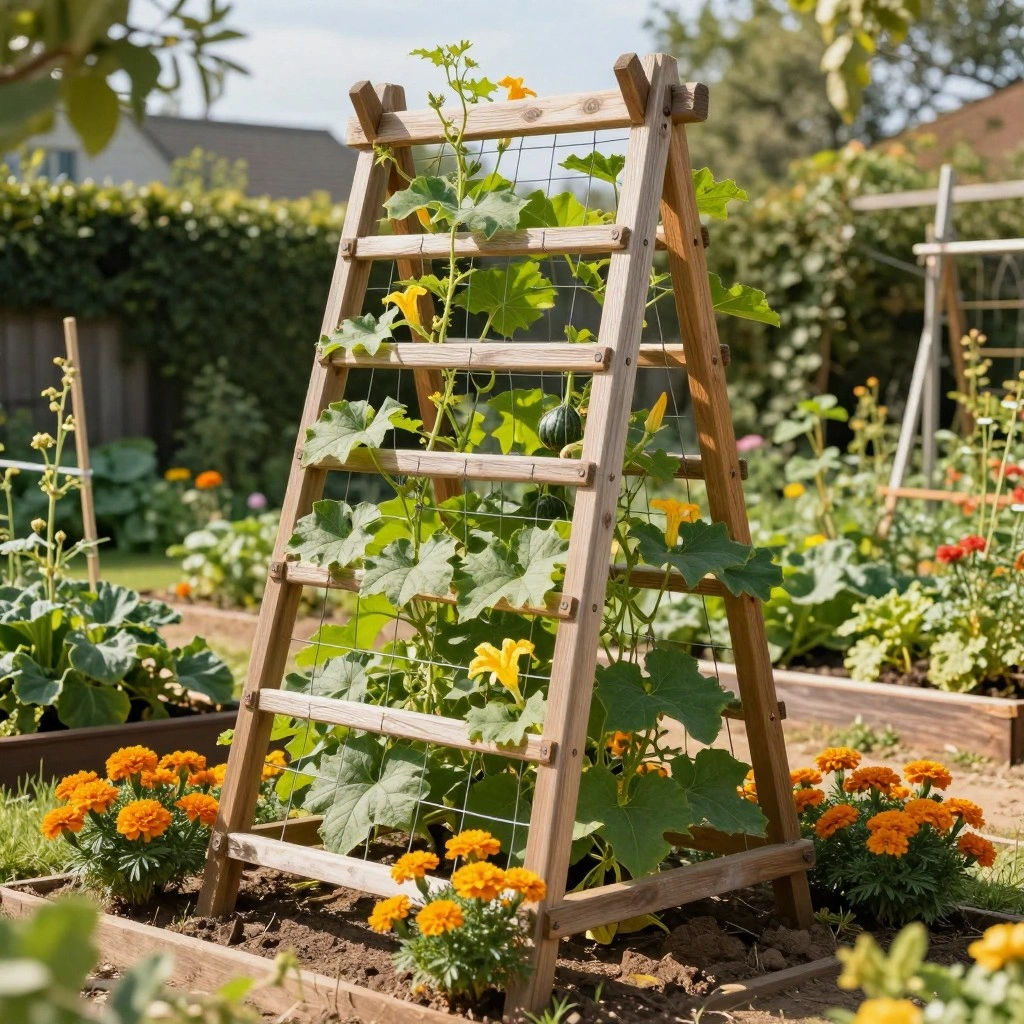
The A-frame wooden trellis is the timeless go-to for pumpkin growers of all experience levels. Its triangular shape provides excellent structural stability, and the open lattice design gives vines plenty of anchor points to grab as they climb. It’s a fantastic weekend project to build with kids using basic lumber and zip ties or twine. Shop on Amazon
How to Style It:
- Use cedar or pine 2x4s for the frame and stretch wire mesh or wooden dowels horizontally across the rungs
- Paint or stain it in forest green, barn red, or natural wood tones to blend with the garden
- Add decorative rope knots at the joints for a charming rustic touch
- Plant marigolds or sunflowers at the base to frame the structure beautifully
Where to Use It: Works perfectly in raised beds, traditional in-ground vegetable gardens, or as a freestanding feature along a fence line. Ideal for small to medium pumpkin varieties like Sugar Pie or Baby Boo.
Pro Tip: Angle the legs slightly outward at the base for extra stability in windy conditions. Secure the bottom with garden stakes hammered 6 inches into the ground.
2. Cattle Panel Arch Tunnel
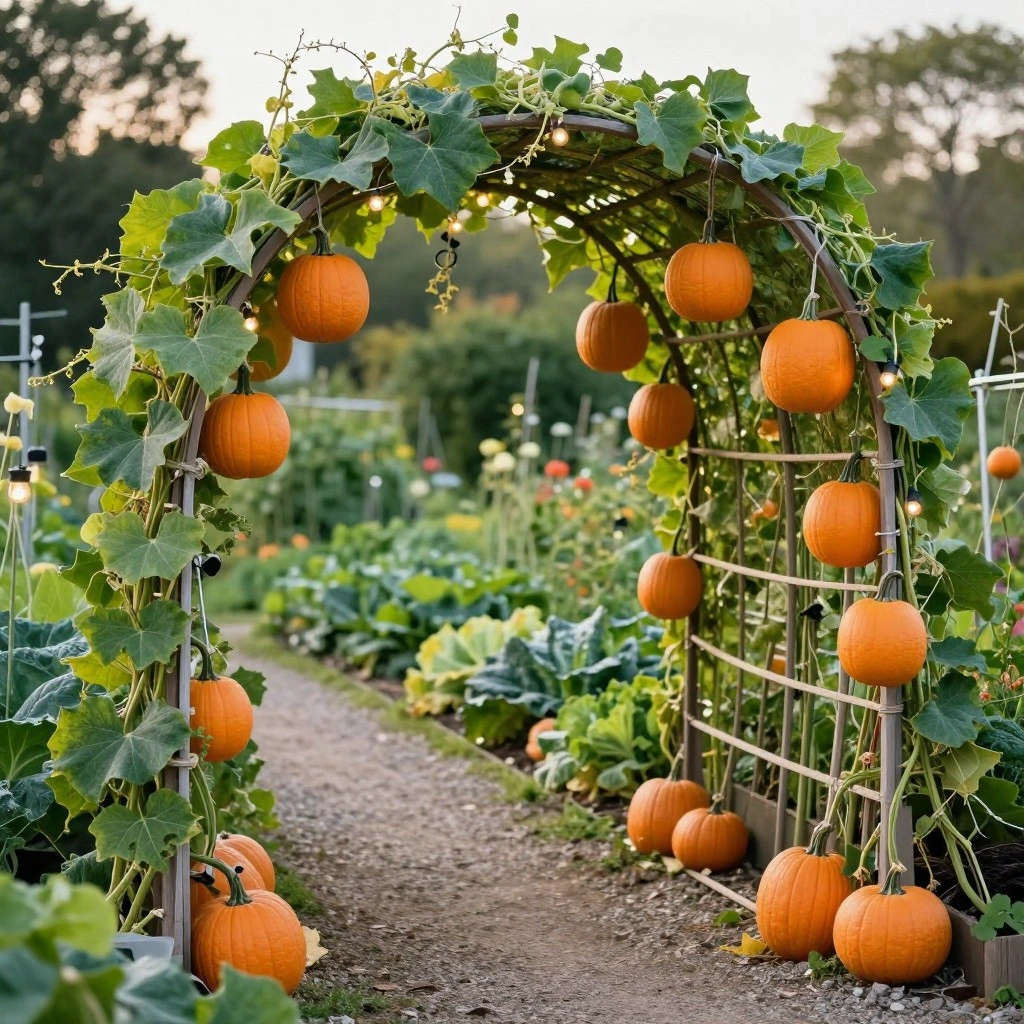
Imagine walking through a magical green tunnel as pumpkins hang overhead like lanterns — that’s exactly what a cattle panel arch delivers. Bent into a half-circle arch and anchored into the ground, these rigid wire panels are incredibly strong and create one of the most dramatic and photogenic garden structures you’ll ever build. Shop on Amazon
How to Style It:
- Bend a 16-foot cattle panel into an arch and secure both ends with T-posts or wooden stakes driven 12 inches deep
- Weave climbing nasturtiums or morning glories alongside the pumpkin vines for added color
- String solar fairy lights along the arch for a magical evening garden glow
- Use two arches side by side to create a longer tunnel walkway
Where to Use It: Perfect for garden pathways, the entrance to a vegetable patch, or as a statement centerpiece in a large backyard. Best suited for smaller pumpkin varieties (under 10 lbs) that can be sling-supported.
Pro Tip: Make fabric sling hammocks from old t-shirts or pantyhose to cradle each pumpkin as it grows heavier — this keeps the stem from snapping under the fruit’s weight.
3. Bamboo Teepee Trellis
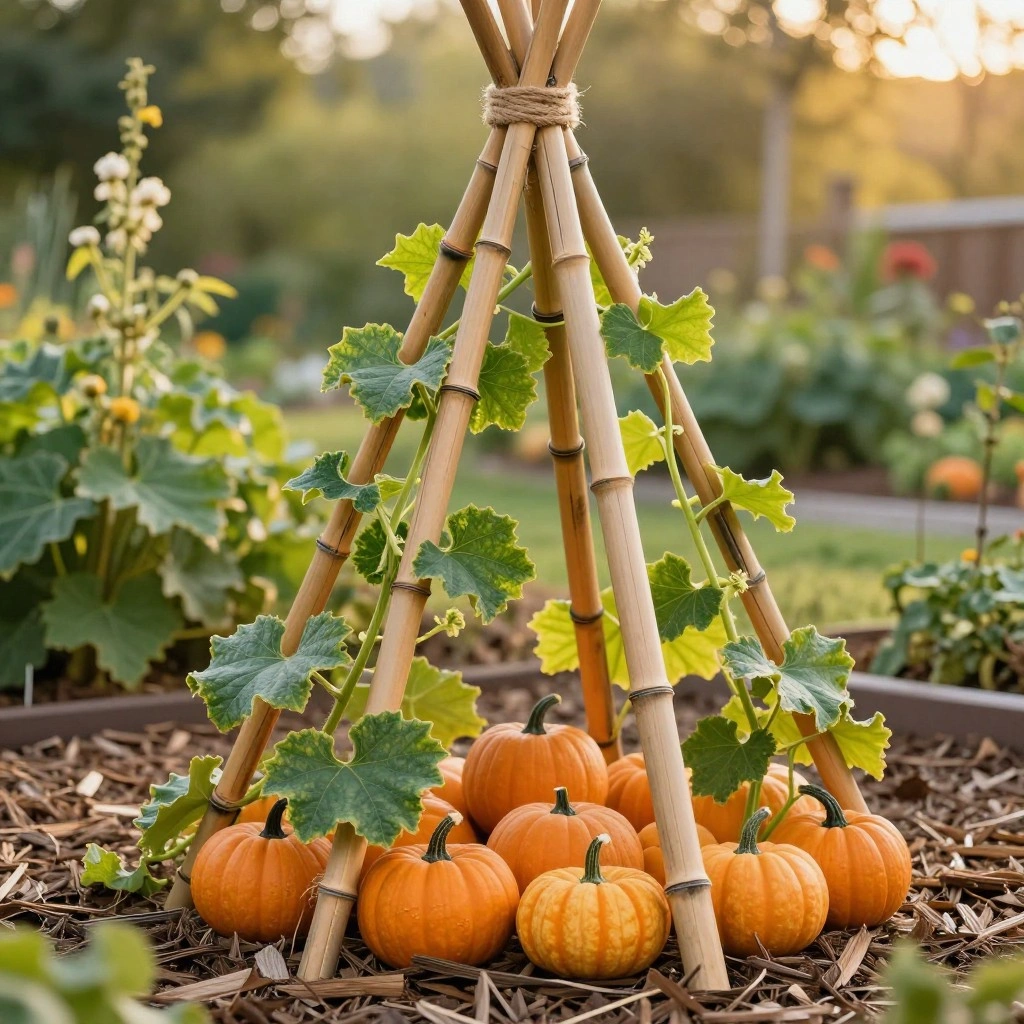
Bamboo teepee trellises bring a natural, bohemian charm to any garden and are one of the easiest and most affordable structures you can build. A bundle of bamboo poles lashed together at the top creates a cone-shaped support that pumpkin vines wrap around beautifully — and it doubles as a fun little hideout for kids once the vines fill in. Shop on Amazon
How to Style It:
- Use 6 to 8 bamboo poles (6–8 feet tall) and tie them together at the top with jute twine
- Wrap additional twine in spiral rows around the poles to create extra anchor points for tendrils
- Paint the bamboo tips gold or white for a decorative garden accent
- Surround the base with pebbles or wood chips for a tidy, polished look
Where to Use It: Great for container gardens, small patios, or corner garden beds. Works well with compact pumpkin varieties like Jack Be Little or Munchkin. Also beautiful as a twin set — two teepees flanking a garden path.
Pro Tip: Push each bamboo pole at least 8 inches into the soil before lashing the top together. The deeper the anchor, the more weight the structure can handle as vines and fruit develop.
4. Repurposed Wooden Ladder Trellis
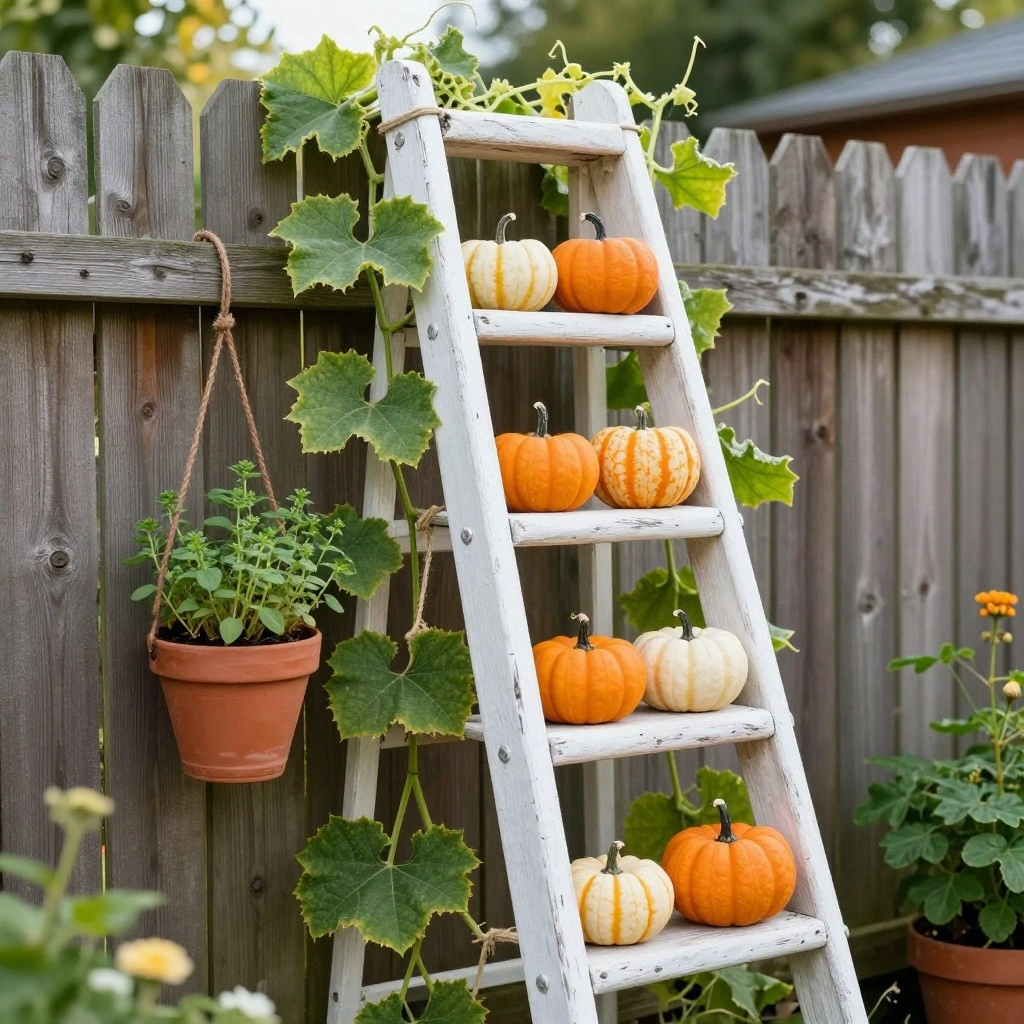
Give a worn-out old ladder a second life by leaning it against a fence or wall and letting pumpkin vines transform it into a living work of art. This ultra-budget-friendly idea requires zero building skills — just a ladder, some twine, and a little creativity. It’s a brilliant upcycling project that kids can help decorate. Shop on Amazon
How to Style It:
- Lean an old wooden or metal ladder against a sturdy fence or wall at a slight angle
- Weave jute twine between the rungs in a grid pattern to give tendrils more to grip
- Hang small terracotta pots from the rungs for herbs or flowers at the sides
- Paint the ladder white, teal, or mustard yellow to make it a decorative focal point
Where to Use It: Best against a south-facing fence, garden wall, or the side of a shed where sunlight is strong and consistent. Works with miniature and small pumpkin varieties. A natural fit for cottage-style and boho garden designs.
Pro Tip: Secure the base of the ladder with two garden stakes pushed into the soil on either side to prevent any sideways shifting as vines add weight to the rungs.
5. Cattle Wire Obelisk Trellis
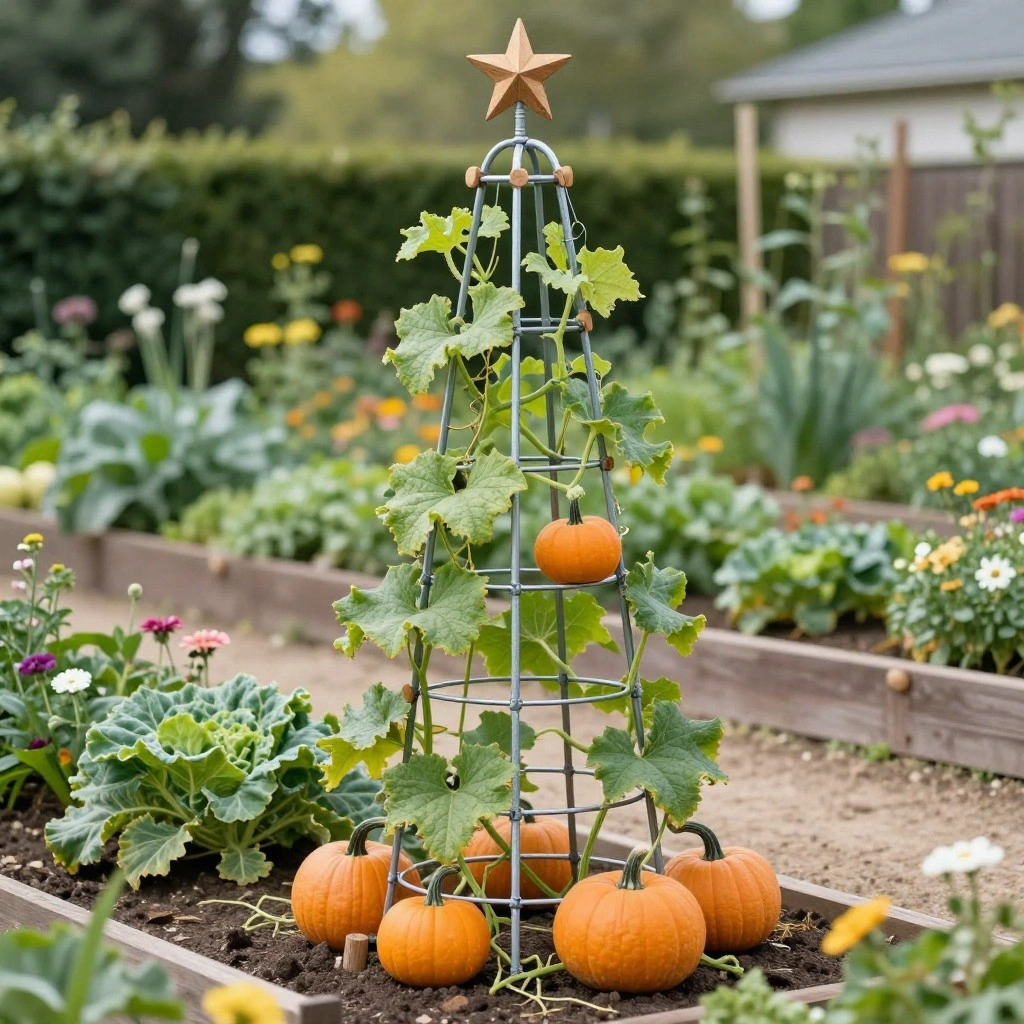
An obelisk trellis — that tall, tapered tower shape — adds architectural elegance to a vegetable garden and is surprisingly easy to make from a roll of cattle wire or concrete reinforcing mesh. Its four-sided structure allows vines to climb from every direction, and it looks stunning as a standalone garden feature even before the pumpkins arrive. Shop on Amazon
How to Style It:
- Roll wire mesh into a tapered cylinder or shape it into a four-sided obelisk using wooden corner posts
- Drive the four corner posts 10–12 inches into the ground for a solid foundation
- Tie the wire panels to the posts with zip ties or wire clips at every 6 inches
- Top the obelisk with a decorative finial, a small birdhouse, or a painted wooden star
Where to Use It: Ideal as a statement piece in the center of a circular garden bed or at the end of a garden row. Excellent for sugar pumpkins and other small-fruited varieties. Pairs beautifully with formal or cottage garden layouts.
Pro Tip: Plant two or three pumpkin seedlings around the base so vines cover all sides of the obelisk evenly. Guide the earliest tendrils by hand for the first week or two.
6. Pallet Wood Flat Trellis
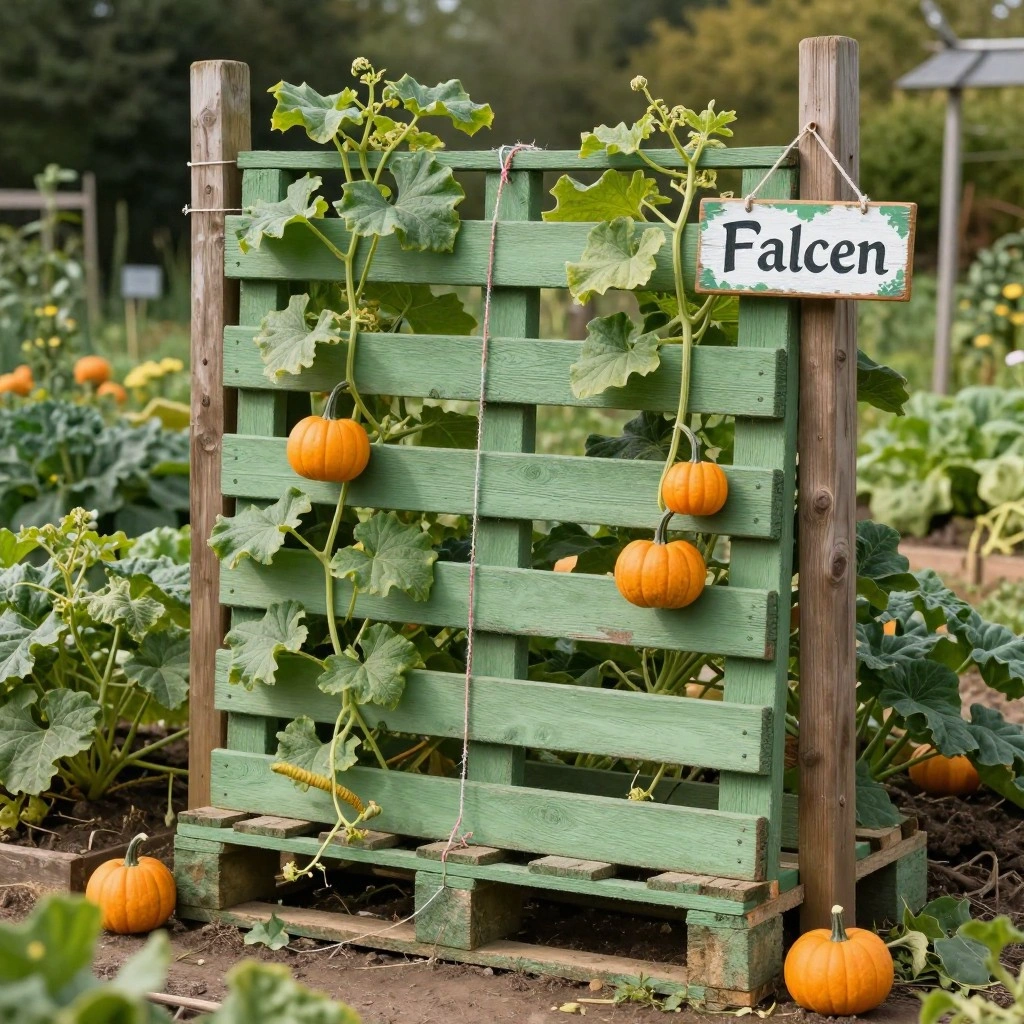
Wooden pallets are one of the most versatile and budget-conscious materials in the DIY garden world. Standing a pallet upright and securing it as a flat trellis gives pumpkin vines an instant grid of horizontal and vertical bars to climb — no building required. With a fresh coat of paint and some decorative touches, it becomes a beautiful garden backdrop. Shop on Amazon
How to Style It:
- Sand the pallet smooth and apply an outdoor-safe paint or sealant in your favorite color
- Secure it upright by attaching it to two fence posts or a wooden frame with screws
- Weave colorful twine or wire through the pallet slats to create a denser climbing grid
- Hang painted garden signs, small chalkboards, or lanterns from the pallet edges
Where to Use It: Works great along garden borders, as a privacy screen divider, or against a bare wall or fence. Suited for small and medium pumpkins. Also effective as a decorative photo backdrop for fall harvest photos with kids.
Pro Tip: Choose heat-treated pallets (marked HT) rather than chemically treated ones (marked MB) for food-growing areas. HT pallets are safe for vegetable gardens.
7. Cattle Panel Lean-To Trellis
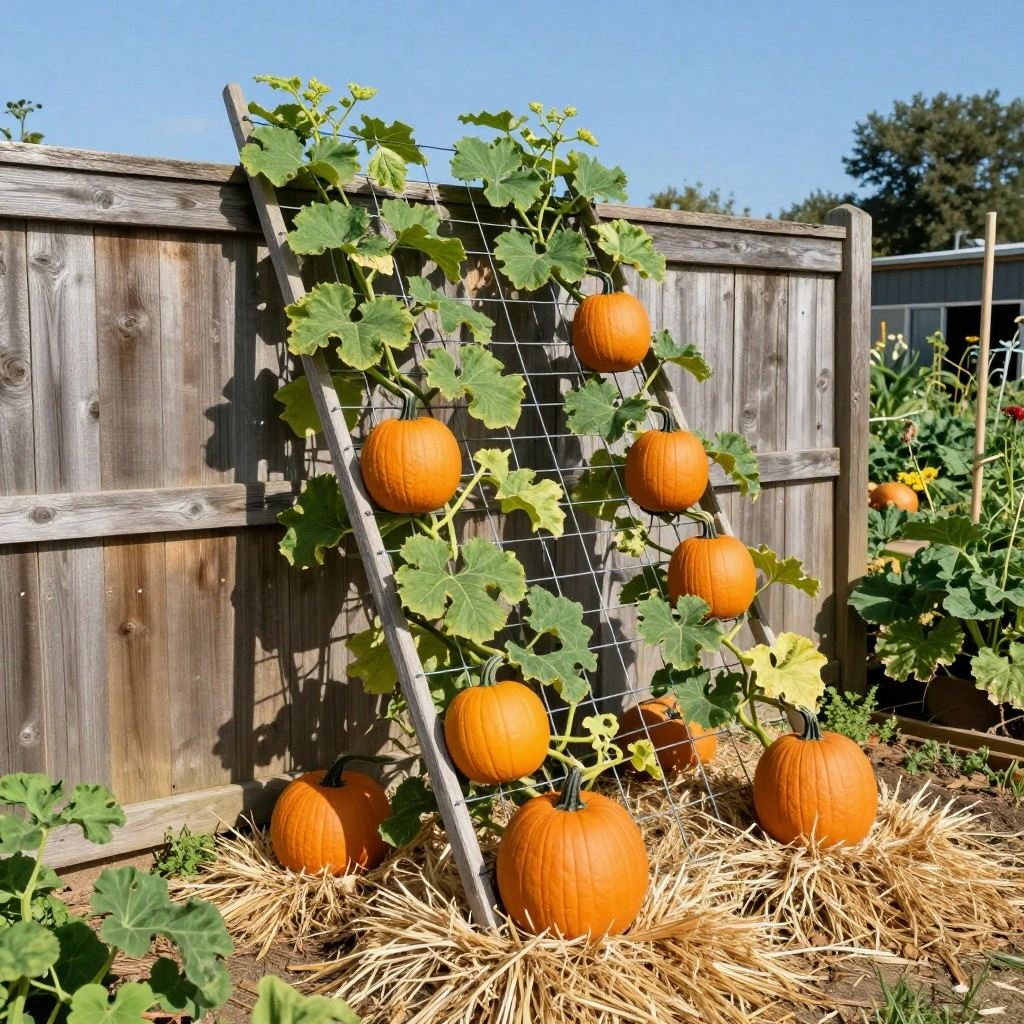
A lean-to trellis is one of the most space-efficient designs for growing pumpkins vertically along a fence or wall. A single cattle panel or section of wire fencing is propped at a 45–70 degree angle, creating a slanted climbing surface that’s easy for vines to ascend and simple to harvest from. It makes excellent use of otherwise wasted vertical wall space. Shop on Amazon
How to Style It:
- Lean a cattle panel against a fence, shed wall, or two T-post supports at about a 60-degree angle
- Secure the top edge to the fence or posts with wire ties for safety
- Plant pumpkins 12 inches from the base so vines grow naturally up the slope
- Train early tendrils by gently looping them around the wire squares
Where to Use It: Perfect for side gardens, narrow spaces beside fences, garage walls, or along the perimeter of raised beds. Works well with medium-sized varieties. An excellent choice when you want to maximize growing area in a slim garden strip.
Pro Tip: Mulch heavily beneath the lean-to to retain moisture, reduce weeds, and protect any pumpkins that rest on the ground near the base while still being cradled by the trellis above.
8. Hanging Rope Net Trellis
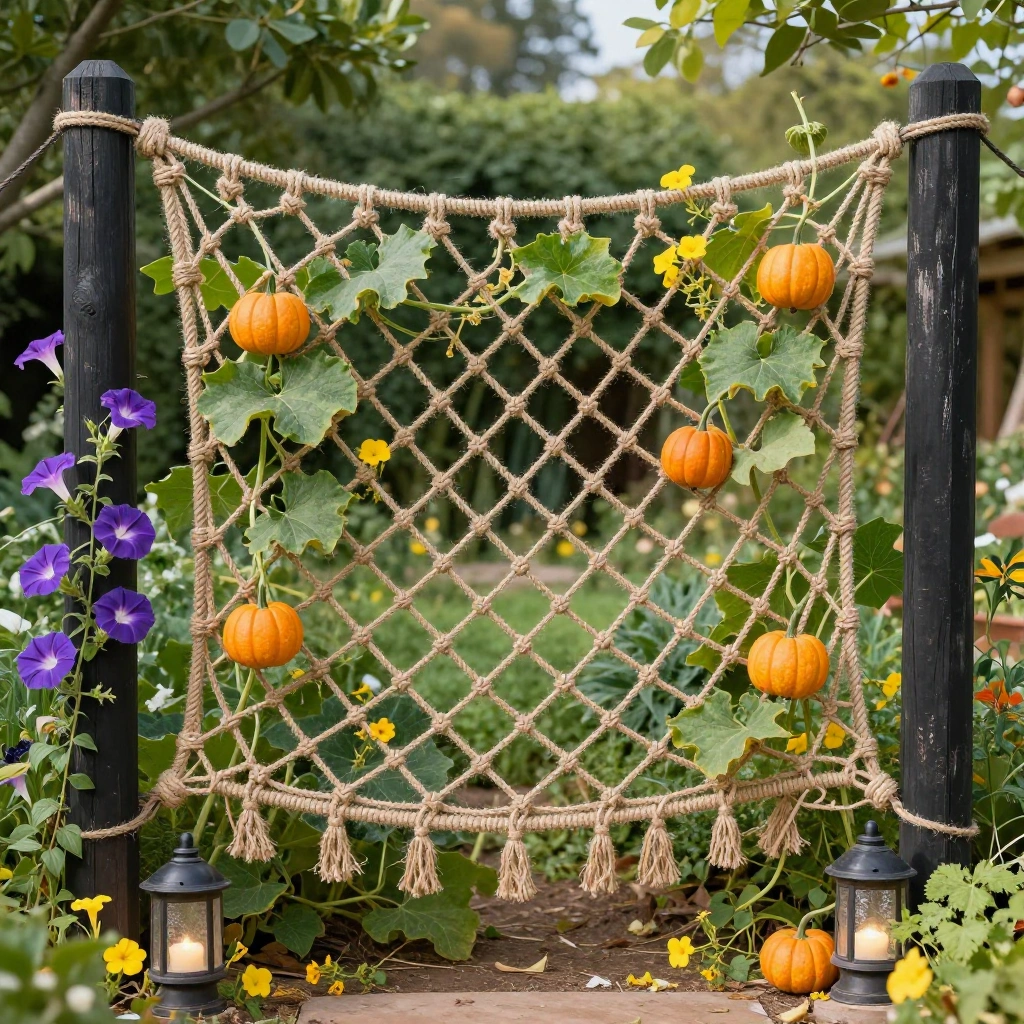
For a truly eye-catching, bohemian garden feature, a hanging rope net trellis is hard to beat. Thick natural rope or macramé-style cord is knotted into a large diamond or square net pattern and stretched between two sturdy posts or a wooden frame.
The result is a stunning living wall of vines, flowers, and pumpkins that becomes the crown jewel of any garden. Shop on Amazon
How to Style It:
- Use thick jute or sisal rope to hand-knot a net with 6-inch diamond openings between two posts
- Frame the rope net with painted 4×4 wooden posts stained in black, white, or natural wood
- Layer climbing nasturtiums, sweet peas, or morning glories alongside the pumpkin vines for a cascading floral display
- Illuminate the base with solar lanterns or stake lights for a magical evening look
Where to Use It: Ideal as a garden focal point, a privacy screen between yard zones, or a backdrop for a children’s garden. Works with lighter pumpkin varieties. A natural fit for bohemian, cottage, or wildflower garden aesthetics.
Pro Tip: Soak the rope in linseed oil before knotting to make it more weather-resistant and extend the life of the net trellis through multiple growing seasons.
9. Metal Hoop House Frame Trellis
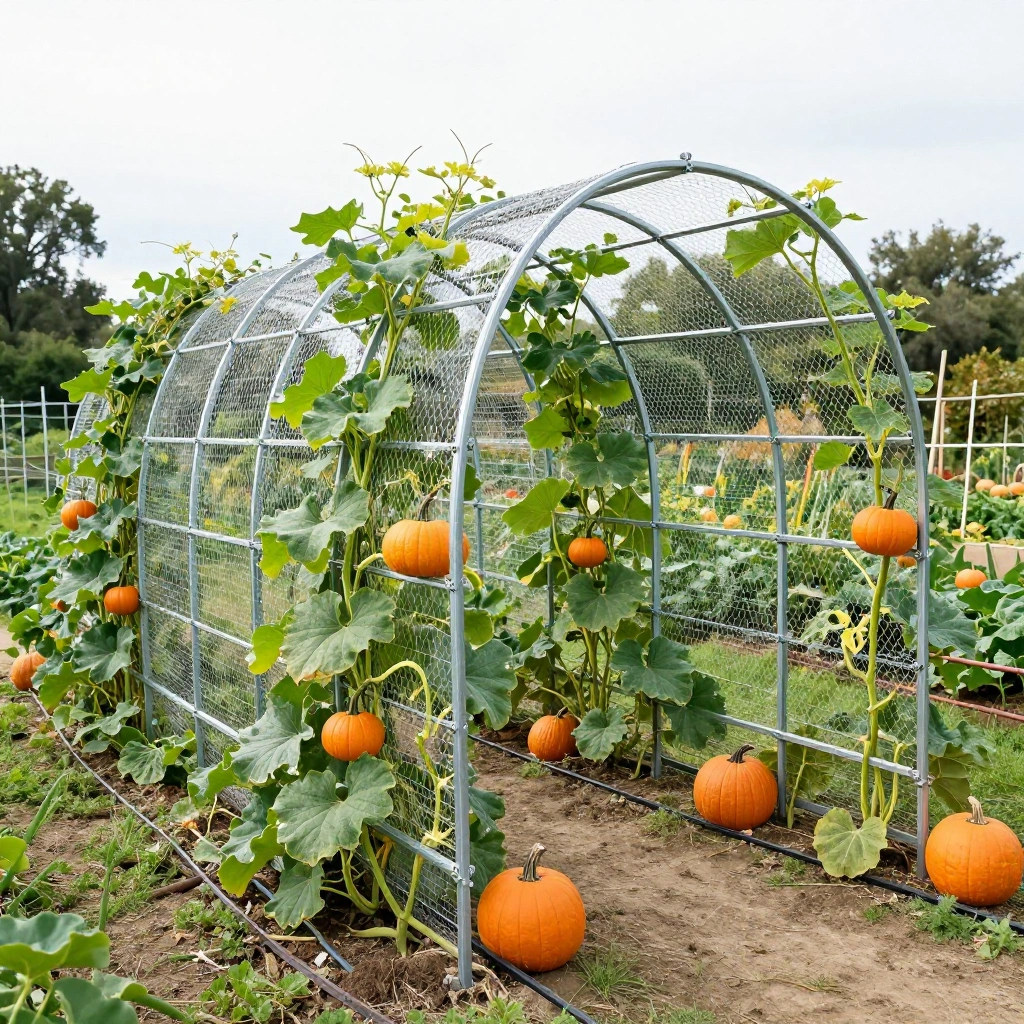
A metal hoop house frame — the kind typically used to support row cover fabric — makes an incredibly sturdy and elegant trellis when used purely for climbing plants. The graceful arching shape is visually appealing, the galvanized steel is rust-resistant and long-lasting, and the smooth rounded surface allows vines to spread naturally without sharp edges that could damage stems. Shop on Amazon
How to Style It:
- Set metal conduit hoops at 2-foot intervals along a garden row, connected at the top with a horizontal ridge pole
- Stretch chicken wire or plastic mesh between the hoops to create a climbing surface
- Allow pumpkin vines to naturally cascade over and through the curved frame
- Pair with low-growing companion plants like bush beans or herbs planted at the base
Where to Use It: Excellent in long vegetable garden rows, community garden plots, or large raised beds. The tunnel shape works beautifully with vining pumpkin varieties and can double as a frost protection frame when covered with row fabric in early spring or late fall.
Pro Tip: Install a drip irrigation line along the base of the hoop row before planting — the arching frame makes it easy to manage the hose line and ensures consistent watering underneath the canopy of leaves.
10. Cinder Block and Post Tower Trellis
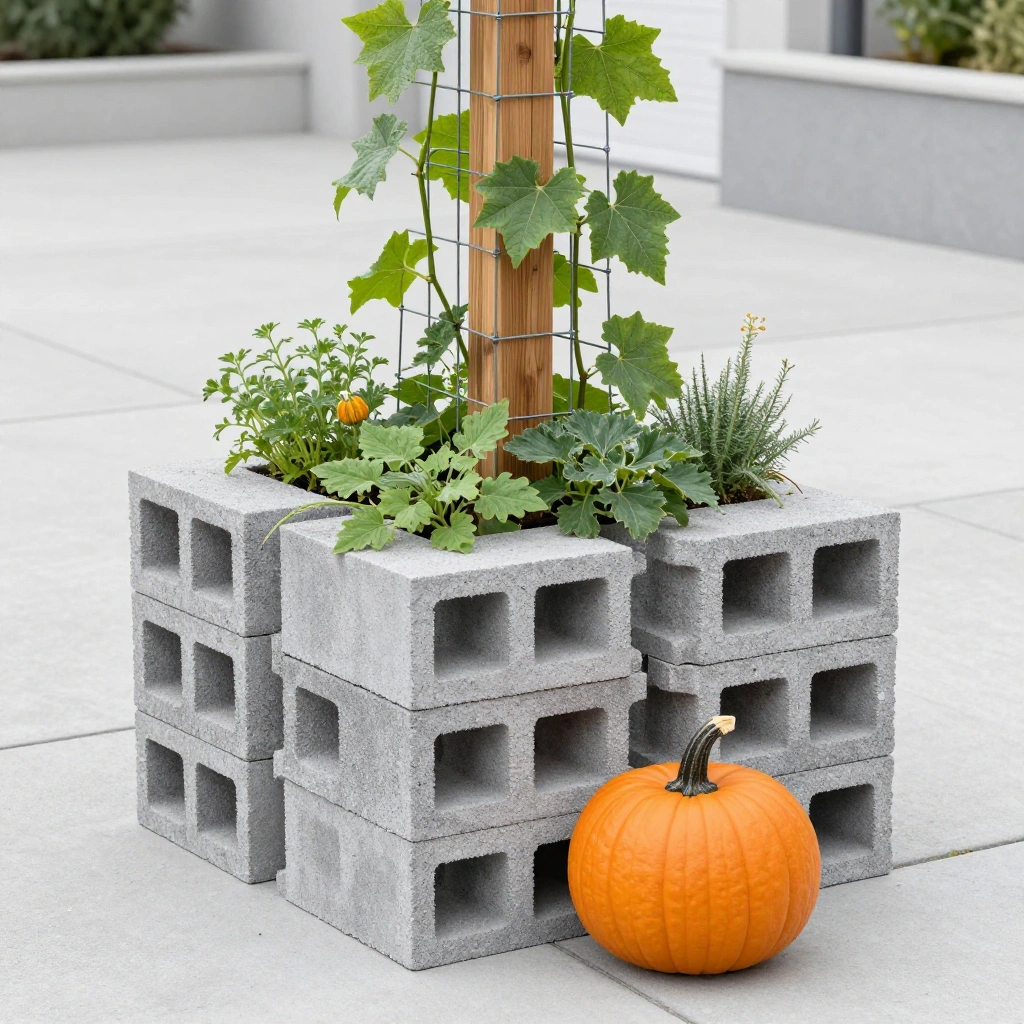
For the gardener who loves a modern, industrial-meets-garden aesthetic, a cinder block and post tower trellis is as bold and sturdy as it gets.
Stacked cinder blocks form a solid pillar base while rebar or wooden posts rise from the center, supporting a wire or rope grid for vines to climb. It’s practically indestructible and adds a strong architectural statement to the garden. Shop on Amazon
How to Style It:
- Stack cinder blocks in a square tower formation around a central rebar or 4×4 post
- Thread wire or metal cable in a grid between hooks attached to the post at regular intervals
- Paint the cinder blocks in earthy tones — terracotta, charcoal, or sage green — to soften the industrial look
- Plant herbs or succulents in the cinder block holes for a dual-purpose living wall element
Where to Use It: Great as a permanent garden structure that doubles as a decorative focal point year-round. Works for large heritage or Atlantic Giant pumpkin varieties with strong stem support. An excellent addition to modern, minimalist, or urban garden designs.
Pro Tip: Fill the cinder block holes with potting mix and plant compact herbs like thyme, basil, or chives. This turns the trellis base into a productive mini herb garden while the pumpkin vines climb above.
Quick Comparison: Which Trellis Is Right for You?
| Trellis Idea | Budget | Skill Level | Best Pumpkin Size | Garden Style |
|---|---|---|---|---|
| A-Frame Wooden | Low–Med | Beginner | Small–Medium | Rustic / Traditional |
| Cattle Panel Arch | Medium | Beginner | Small | Whimsical / Cottage |
| Bamboo Teepee | Very Low | Beginner | Mini | Boho / Natural |
| Repurposed Ladder | Free | Zero | Mini–Small | Cottage / Eclectic |
| Wire Obelisk | Low–Med | Intermediate | Small | Formal / Elegant |
| Pallet Wood Flat | Free–Low | Beginner | Small–Medium | Rustic / Country |
| Cattle Panel Lean-To | Medium | Beginner | Medium | Practical / Farmhouse |
| Hanging Rope Net | Low | Intermediate | Small | Boho / Artistic |
| Metal Hoop Frame | Medium | Intermediate | Medium–Large | Modern / Functional |
| Cinder Block Tower | Med–High | Intermediate | Large | Modern / Urban |
Common Mistakes to Avoid about Pumpkin Trellis
Choosing a trellis that’s too flimsy. Pumpkin vines are powerful climbers and their fruit can get surprisingly heavy. Always build sturdier than you think you need — use proper ground anchors, and reinforce joints before the season starts rather than trying to fix a collapsing trellis mid-summer.
Forgetting to support the fruit. Getting the vine up the trellis is only half the job. Unsupported pumpkins hanging from their stems will eventually snap off prematurely. Always use fabric slings (repurposed t-shirts, pantyhose, or mesh bags) to cradle each pumpkin as it grows.
Planting too close to the trellis base. Pumpkin roots need room to breathe. Plant seedlings 12–18 inches away from the base of the trellis and let the vine naturally travel toward it. Planting directly beneath can cause root crowding and moisture problems.
Using chemically treated wood near edibles. Avoid pressure-treated lumber labeled CCA or MB near food gardens. Stick to untreated cedar, pine, or heat-treated materials. Always check pallet markings before using them in vegetable growing areas.
Not training vines early. During the first two to three weeks of growth, gently guide your pumpkin vines toward the trellis and loosely tie them with soft garden twine. Left completely on their own, vines will sprawl sideways across the ground rather than climbing upward.
Frequently Asked Questions
Can all pumpkin varieties grow on a trellis? Most pumpkin varieties can be trellised, but size matters. Miniature varieties (Jack Be Little, Baby Boo) and small varieties (Sugar Pie, Cinderella) are the easiest to trellis. Medium varieties can work with strong structures and good fruit sling support. Very large varieties like Atlantic Giant are generally better grown on the ground, though a cinder block tower or cattle panel arch can support them with careful sling management.
How do I keep pumpkins from falling off the trellis? As soon as pumpkins reach the size of a tennis ball, create a soft fabric sling underneath each fruit and attach it to the trellis. Old t-shirts, pantyhose, or mesh laundry bags all work perfectly. Check the slings every few days and adjust as the pumpkin grows.
How tall should a pumpkin trellis be? Aim for at least 5 to 6 feet of climbing height. Pumpkin vines can easily grow 10–20 feet long in a season, so the taller and wider your trellis, the more growing room you provide. For arches and tunnels, 6 to 7 feet of clearance creates a comfortable and visually impressive structure.
When should I set up my pumpkin trellis? Build or install your trellis before you plant your seeds or transplant your seedlings. Trying to erect a trellis around established vines risks damaging stems and roots. Having the structure ready from day one makes training the vines much easier and less stressful for the plant.
Can I grow pumpkins vertically in a small garden? Absolutely! Vertical growing is one of the best solutions for small gardens. A single cattle panel arch or bamboo teepee can support two or three miniature pumpkin plants while occupying minimal ground footprint. Pair vertical pumpkins with companion plants like lettuce, radishes, or herbs that thrive in the partial shade below the vine canopy.
What’s the best material for pumpkin trellis slings? Old pantyhose and nylon stockings are the classic choice because they’re stretchy, soft, and expand as the pumpkin grows. Old cotton t-shirt strips, mesh produce bags, and macramé cotton cord also work well. Avoid anything with sharp edges or rigid materials that could bruise the skin of the developing pumpkin.
Happy growing — and don’t forget to take photos as your pumpkin trellis transforms through the season! It makes the most wonderful fall harvest memory to share with family and friends.