12 Beautiful Rose Garden Ideas for a Romantic Outdoor Retreat
If you have ever dreamed of stepping outside into a garden filled with the soft fragrance and vibrant colors of blooming roses, you are not alone. Rose gardens have been loved for centuries, and today they are more creative and accessible than ever before. Whether you have a sprawling backyard or a cozy balcony, there is a rose garden style that is perfect for you and your family.
From classic English cottage layouts to playful children-friendly garden paths, rose gardens offer something magical for every age. In this guide, we will walk you through 12 beautiful rose garden ideas, complete with styling tips, placement advice, and pro tips to help you grow a garden your whole family will enjoy for years to come.
Quick Comparison: Rose Garden Ideas at a Glance
| Idea | Best For | Difficulty | Kid-Friendly |
|---|---|---|---|
| Classic English Rose Garden | Large yards | Moderate | ✅ |
| Cottage Rose Border | Garden edges | Easy | ✅ |
| Rose Arch Entrance | Pathways | Easy | ✅ |
| Raised Rose Beds | Small spaces | Easy | ✅ |
| Rose & Herb Companion Garden | Edible gardens | Moderate | ✅ |
| Climbing Rose Wall | Fences & walls | Moderate | ✅ |
| Rainbow Rose Color Garden | Color lovers | Moderate | ✅ |
| Rose Water Feature Garden | Patios | Moderate | ✅ |
| Miniature Rose Container Garden | Balconies | Easy | ✅ |
| Wildflower & Rose Meadow | Natural spaces | Easy | ✅ |
| Family Rose Pathway | Walkways | Easy | ✅ |
| Moonlight White Rose Garden | Evening gardens | Moderate | ✅ |
1. Classic English Rose Garden
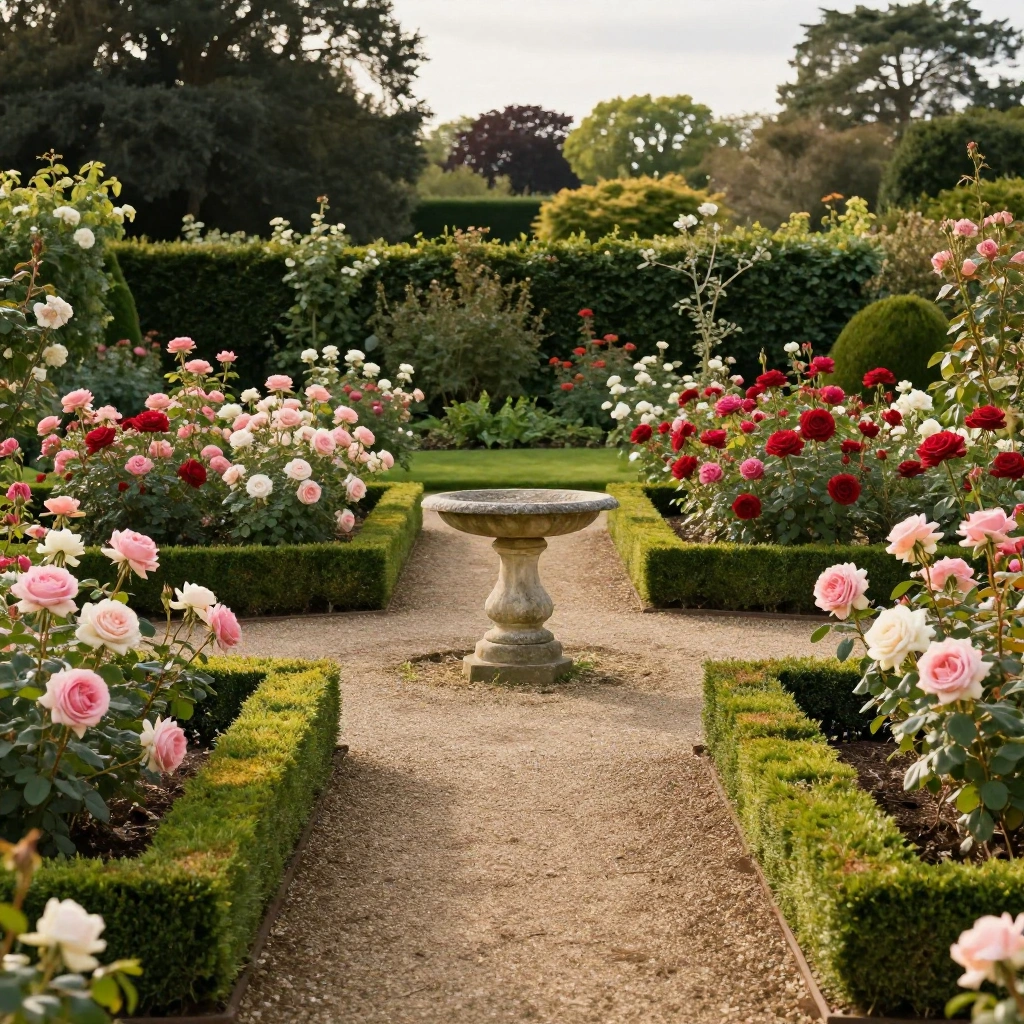
There is nothing quite as timeless as a classic English rose garden. This style celebrates lush, full-bloom roses arranged in formal or semi-formal beds, often surrounded by neatly trimmed hedges or low stone borders. The result is a garden that feels both grand and deeply welcoming, like something from a beloved storybook. Shop on Amazon
How to Style It:
- Plant roses in symmetrical beds divided by gravel or stone pathways
- Mix deep reds, soft pinks, and creamy whites for a traditional color palette
- Add a central focal point such as a sundial, birdbath, or small fountain
- Edge beds with lavender or boxwood for a structured, polished look
- Use climbing roses on a central pergola or gazebo to add vertical drama
Where to Use It: Large backyards, formal garden spaces, front yards with generous width, or estate-style properties.
Pro Tip: Choose repeat-blooming English rose varieties like David Austin roses — they flower multiple times a season, keeping your garden colorful from late spring all the way through autumn.
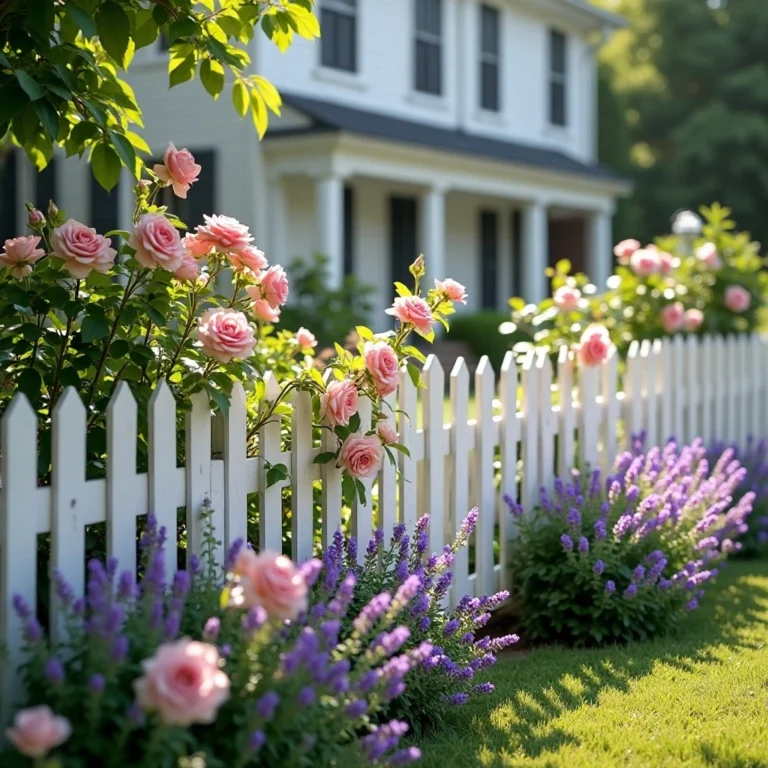
2. Cottage Rose Border
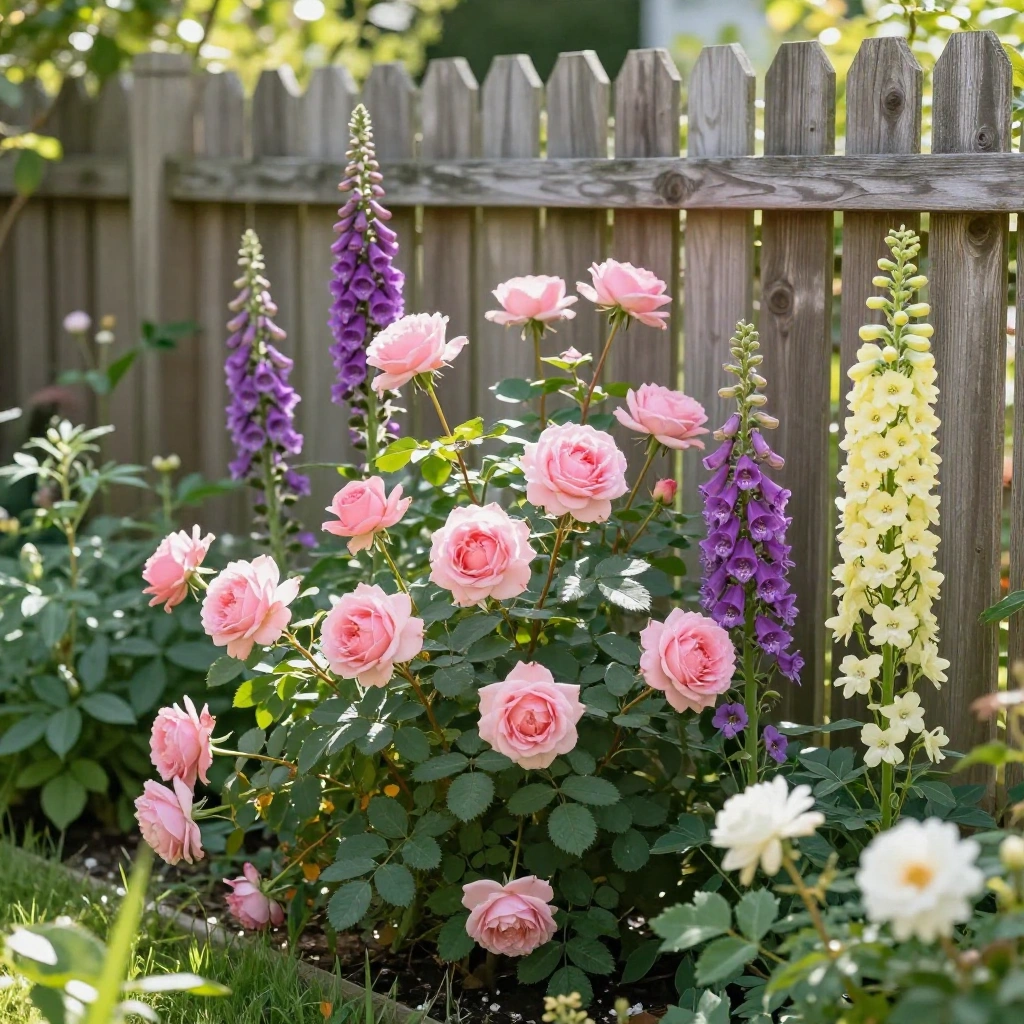
Cottage-style rose borders bring a relaxed, cheerful energy to any garden. Rather than strict formal layouts, this idea layers roses alongside other cottage flowers like foxgloves, delphiniums, and peonies for a look that feels naturally beautiful and effortlessly charming. It is one of the most family-friendly styles because it feels lived-in and joyful. Shop on Amazon
How to Style It:
- Plant roses at the back of a border with shorter flowers in front
- Mix climbing and shrub roses for varying heights and textures
- Include pastel colors — blush, lavender, peach, and pale yellow — for a soft, dreamy look
- Allow some natural sprawl for an authentic cottage feel
- Add vintage-style garden ornaments like rustic signs or painted pots
Where to Use It: Along garden fences, the edges of lawns, beside garden sheds, or lining the front of a home.
Pro Tip: Plant roses close to a seating area so your family can enjoy the fragrance while relaxing outdoors on warm evenings.
3. Rose Arch Entrance
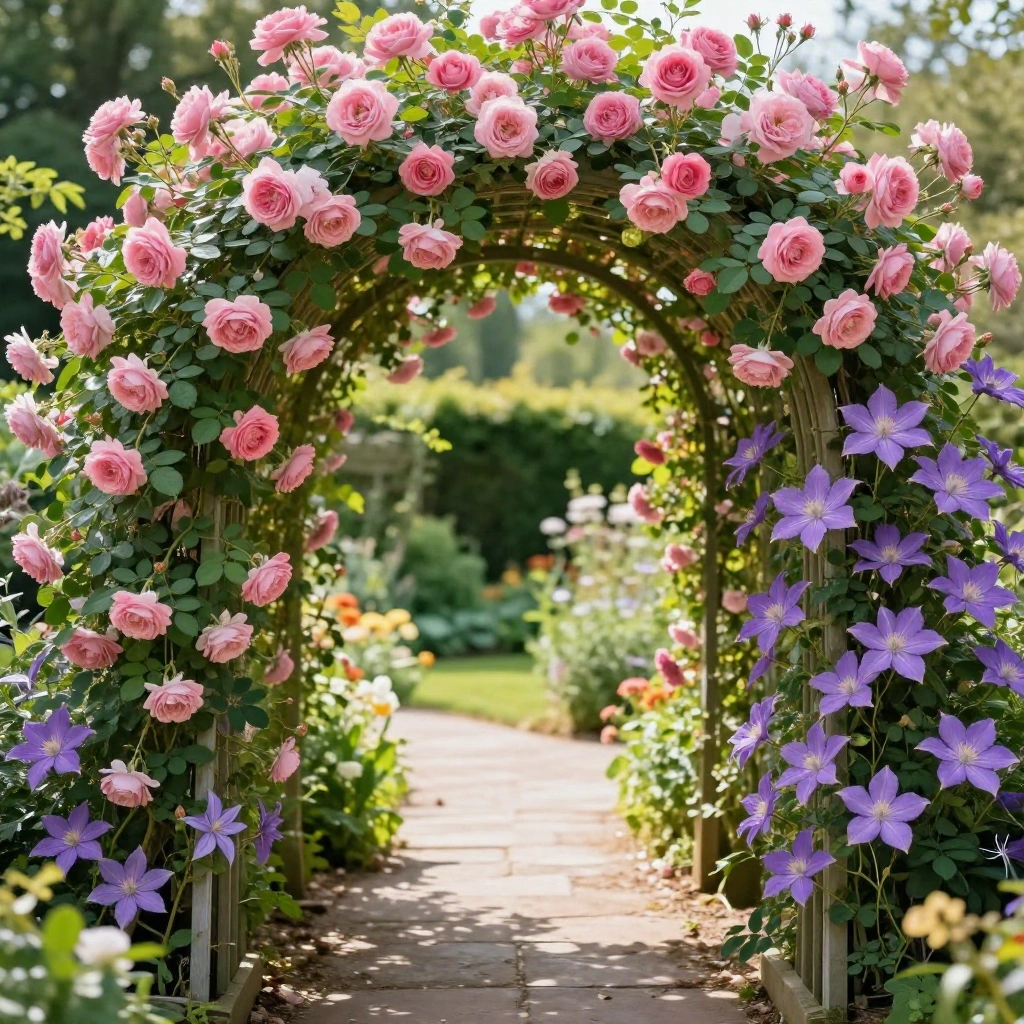
A rose-covered arch is one of the most magical things you can add to a garden. It creates a sense of wonder and invitation — a doorway draped in blooms that signals something beautiful lies ahead. Children especially love walking through a flowering arch, making this idea perfect for family gardens. Shop on Amazon
How to Style It:
- Install a sturdy metal or wooden arch at a garden entrance or along a pathway
- Train climbing roses such as “New Dawn,” “Cecile Brunner,” or “Zephirine Drouhin” up both sides
- Combine roses with clematis for extended bloom time and added color contrast
- Keep the path beneath the arch clear and well-paved for safe and easy walking
- Hang a small lantern or wind chime from the top for added charm
Where to Use It: Garden gates, pathway entrances, transitions between garden zones, or at the entrance to a children’s play area.
Pro Tip: Choose a thornless climbing rose variety for arches near play areas so children can walk through safely without any worries.
4. Raised Rose Beds
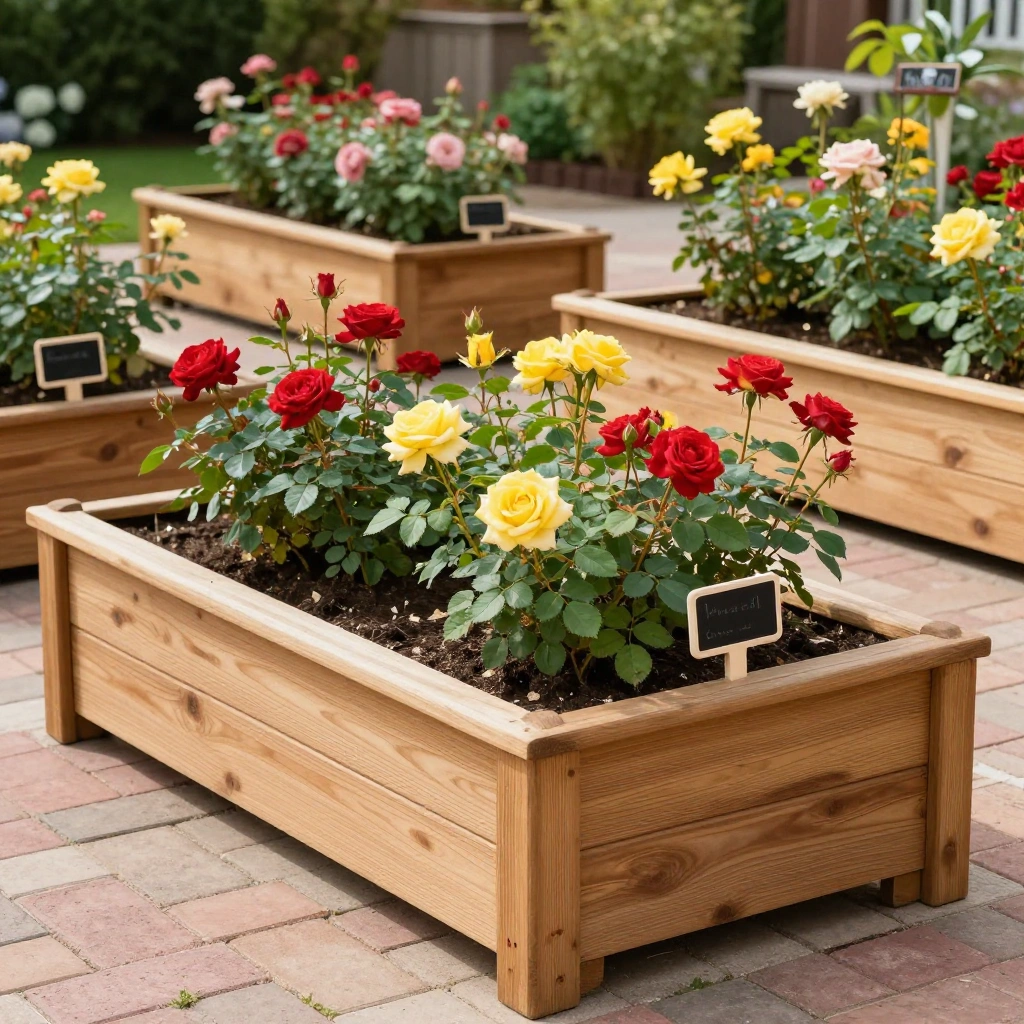
Raised beds are one of the smartest and most practical ways to grow roses, especially if your garden soil is poor or you are working with a smaller space. They give your roses excellent drainage, better soil quality, and a tidy, organized look that suits almost any garden style. Shop on Amazon
How to Style It:
- Build beds from natural wood, brick, or stone for a warm, organic look
- Fill with a rich mix of loam, compost, and rose-specific fertilizer
- Plant a single rose variety per bed for a bold, impactful display, or mix harmonious colors
- Line the edges with trailing plants like alyssum or lobelia for softness
- Add a small label or chalkboard sign to each bed for a fun, educational touch for kids
Where to Use It: Small gardens, patios, side passages, school gardens, or anywhere with limited ground space.
Pro Tip: Raised beds warm up faster in spring, which means your roses will start blooming earlier than ground-level plantings — giving you more weeks of color.
5. Rose & Herb Companion Garden
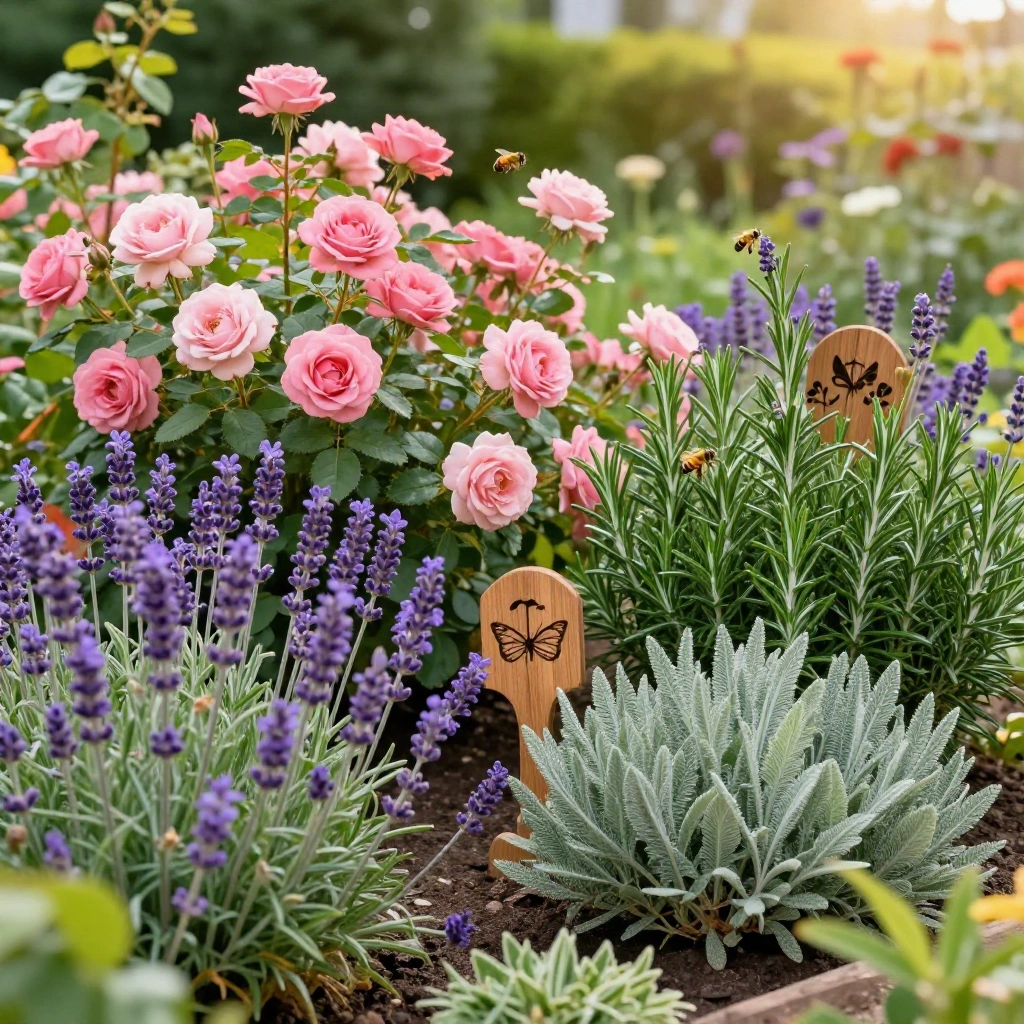
Pairing roses with herbs is a time-honored gardening tradition that is as practical as it is beautiful. Many herbs — including lavender, rosemary, sage, and thyme — repel pests naturally, which means fewer chemicals and a healthier garden. This is a wonderful choice for families who want a garden that is both lovely and useful. Shop on Amazon
How to Style It:
- Alternate rose bushes with clumps of lavender for a classic, fragrant combination
- Plant rosemary and sage near roses to deter aphids and other common pests
- Use ornamental thyme or chamomile as low ground cover between plants
- Add a small harvest basket and trowels nearby to encourage children to get involved
- Label herbs with decorative garden stakes for a fun learning element
Where to Use It: Kitchen gardens, side gardens near cooking spaces, therapeutic gardens, or school and family garden projects.
Pro Tip: Lavender is the ultimate rose companion — it attracts pollinators like bees and butterflies, which also help your roses thrive while adding a wonderful show of movement and color.
6. Climbing Rose Wall
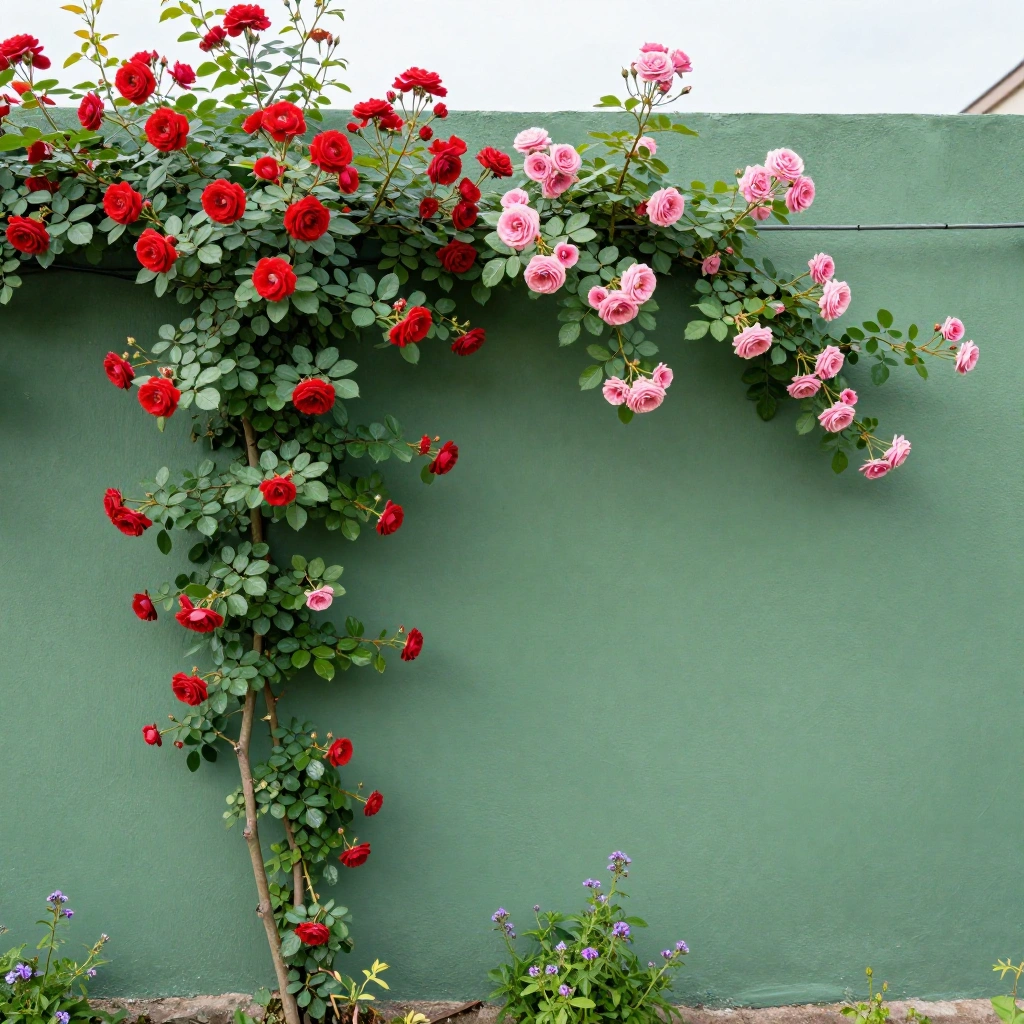
A climbing rose wall transforms a plain fence, garden wall, or trellis into a breathtaking living tapestry. This idea is perfect for adding vertical color and interest to gardens where horizontal space is limited, and it creates a stunning backdrop for family photos and outdoor gatherings. Shop on Amazon
How to Style It:
- Install horizontal wires or a wooden trellis on the wall as a support structure
- Choose vigorous climbers such as “Climbing Iceberg,” “American Pillar,” or “Compassion”
- Train canes horizontally along wires to encourage more blooms — horizontal training produces far more flowers than vertical growth
- Underplant with shade-tolerant flowers like impatiens or hostas
- Paint the wall or fence a deep color (navy, sage green, charcoal) to make rose blooms pop beautifully
Where to Use It: Garden walls, wooden privacy fences, garage walls, courtyard boundaries, or the sides of a garden shed.
Pro Tip: Tying rose canes horizontally rather than allowing them to grow straight up is one of the most effective tricks professional rose gardeners use — it can double or even triple the number of flowers your plant produces.
7. Rainbow Rose Color Garden
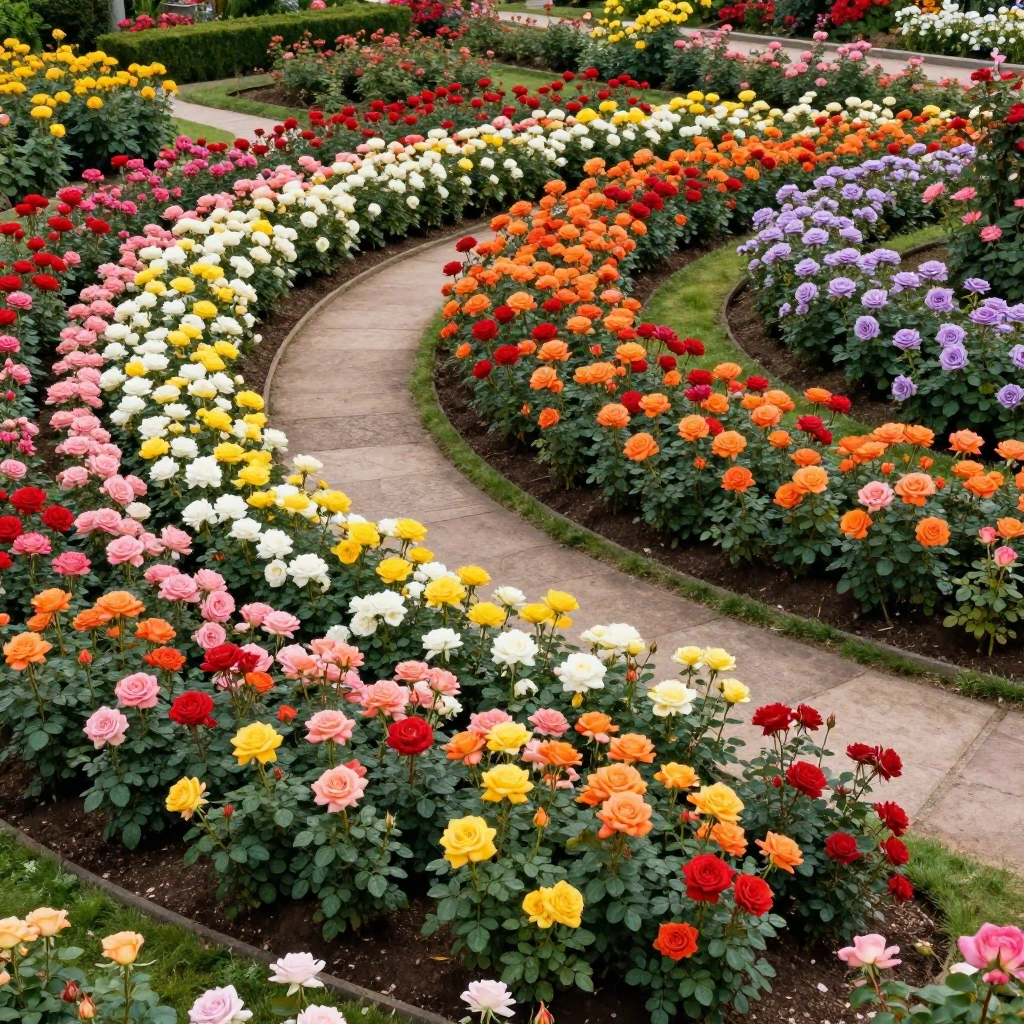
Why settle for one color when you can have them all? A rainbow rose garden arranges different rose varieties by color in sweeping bands or concentric circles, creating a joyful, eye-catching display that children absolutely love. This idea is bold, playful, and utterly unforgettable. Shop on Amazon
How to Style It:
- Plan color bands moving from one end of the bed to the other: red → orange → yellow → white → pink → lavender
- Choose roses of similar heights within each color section for a clean, organized look
- Add a central path or stepping stones so the whole family can walk through and explore the colors
- Use large, clear signage or painted stones to label each color zone for a fun learning experience
- Photograph the garden from a slight elevation for the most stunning visual impact
Where to Use It: Large open garden beds, community or school gardens, children’s garden areas, or as a focal point in a family backyard.
Pro Tip: Plant the lightest colors (white, pale yellow) toward the center or at the back so they act as a natural highlight that makes the deeper colors around them appear even richer and more vivid.
8. Rose Water Feature Garden
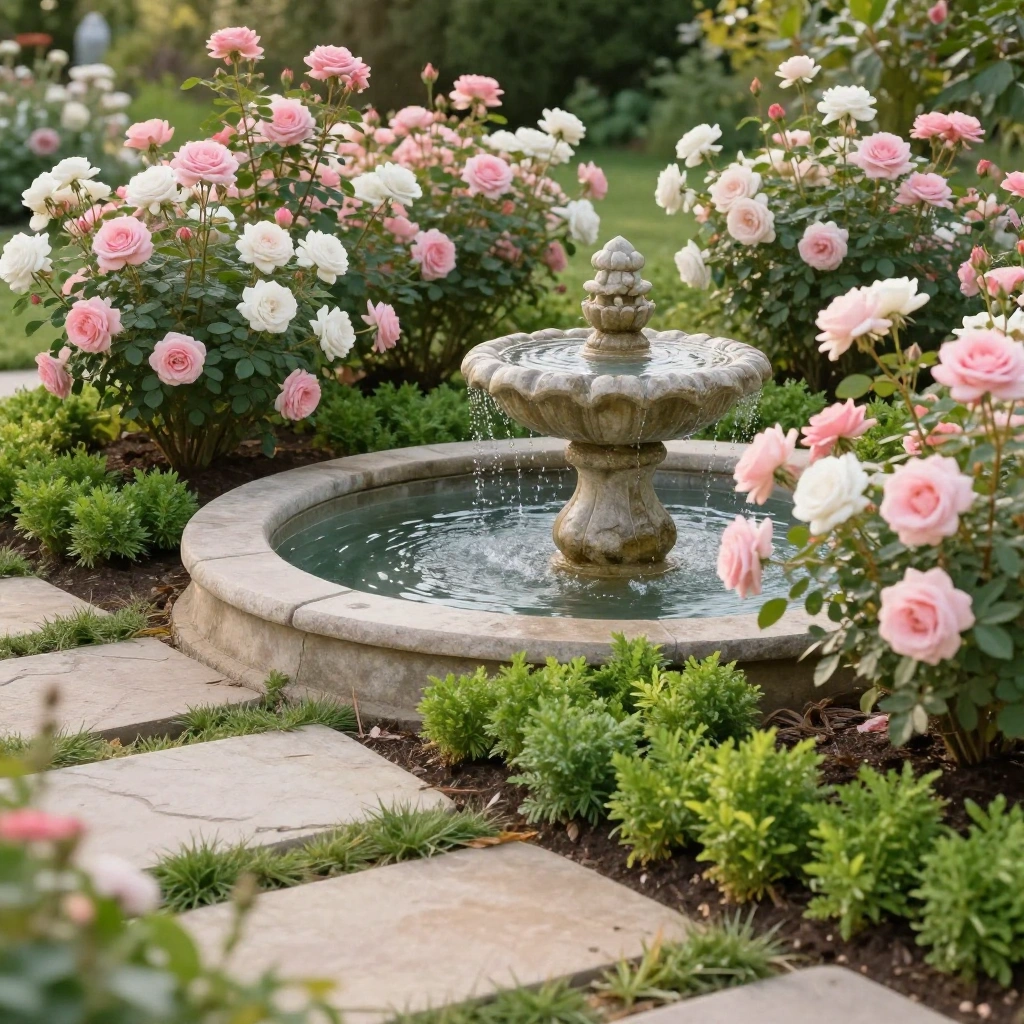
Combining roses with a water feature creates one of the most peaceful and sensory-rich garden experiences possible. The sound of gentle water paired with the fragrance of roses is deeply calming, making this an ideal garden idea for families who want an outdoor space that truly feels like a retreat. Shop on Amazon
How to Style It:
- Place a small fountain, birdbath, or pond at the center of a rose planting scheme
- Choose soft, fragrant rose varieties like “Gertrude Jekyll” or “Olivia Rose” for the strongest sensory effect
- Line the water feature edges with low-growing roses or rose-friendly companions like catmint
- Add flat stepping stones around the water feature for safe access, especially for children
- Include solar-powered lighting to make the space magical in the evenings
Where to Use It: Patio gardens, courtyard spaces, therapy or sensory gardens, or as a peaceful corner of a larger family garden.
Pro Tip: A small solar fountain requires no wiring or plumbing and creates a gentle trickling sound that benefits wildlife and creates a wonderfully calming garden atmosphere — without any complicated installation.
9. Miniature Rose Container Garden
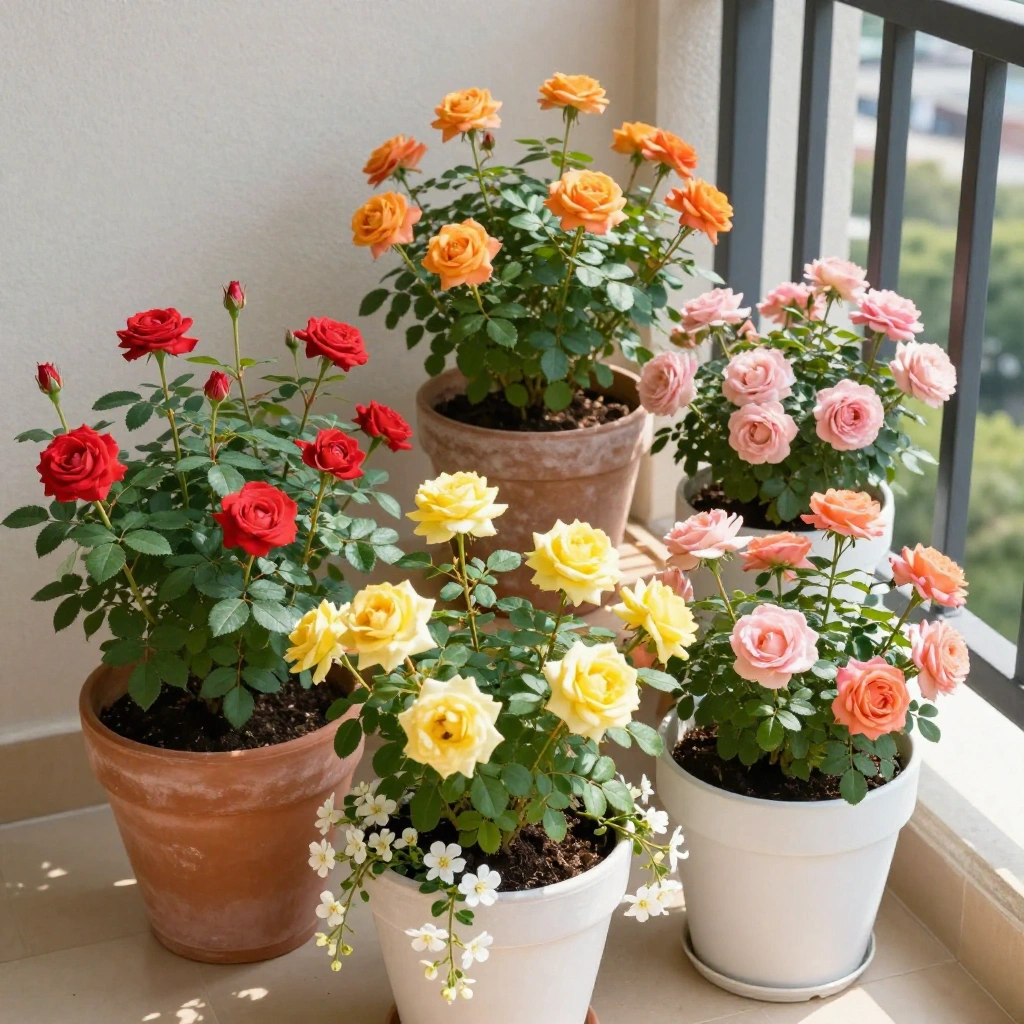
Miniature roses are one of the best-kept secrets in gardening. These compact varieties produce perfectly formed blooms on small bushes that are ideal for containers, making them perfect for balconies, patios, windowsills, and even indoor spaces. They are also a wonderful way to involve children in gardening since they are easy to manage and fast to reward. Shop on Amazon
How to Style It:
- Group containers of different heights for a layered, dynamic display
- Mix miniature roses with trailing plants like bacopa or million bells in the same pot
- Choose containers in coordinating colors — terracotta, white ceramic, or painted tin all work beautifully
- Place in the sunniest spot available, as roses need at least six hours of sunlight daily
- Let children choose their own pot and rose color for a fun personalized gardening project
Where to Use It: Balconies, apartment patios, window boxes, front doorsteps, or as centerpieces for outdoor dining tables.
Pro Tip: Water miniature roses in containers more frequently than ground roses since pots dry out much faster — checking the soil every day during summer heat will keep your blooms looking their best.
10. Wildflower & Rose Meadow
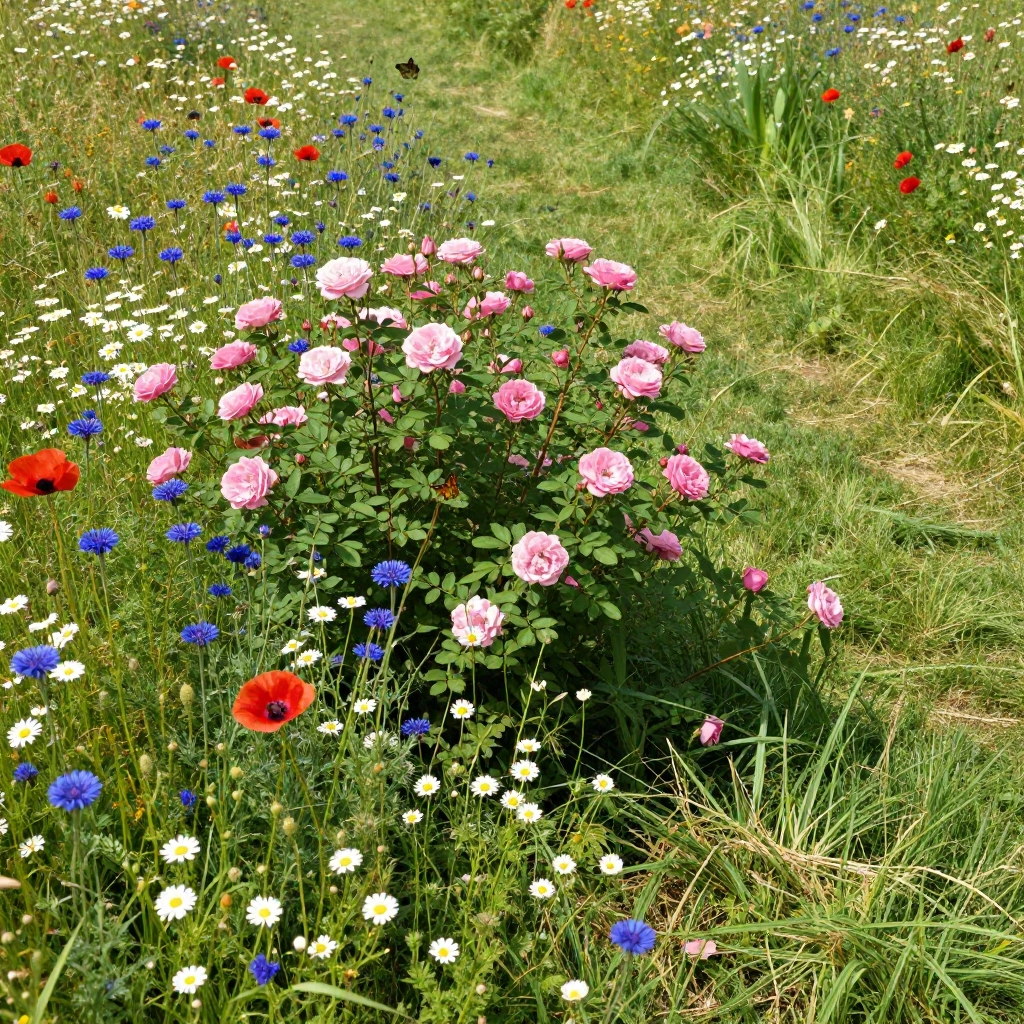
For families who love a more natural, free-spirited garden look, a wildflower and rose meadow is an inspired choice. This style blends hardy shrub roses with native wildflowers to create a garden that buzzes with bees, butterflies, and birdsong — a living, moving ecosystem that children find endlessly fascinating. Shop on Amazon
How to Style It:
- Choose hardy, disease-resistant shrub roses such as “Knock Out” or “Carefree Wonder” as the rose anchors
- Sow wildflower seeds including cornflowers, poppies, ox-eye daisies, and foxgloves throughout
- Allow the planting to grow naturally with minimal intervention for an authentic meadow feel
- Create one or two mown paths through the meadow so the family can walk through safely
- Add a simple wooden bench or picnic blanket spot within the meadow for quiet enjoyment
Where to Use It: Large lawns, the backs of gardens, sloped or difficult-to-mow areas, or any space you would like to rewild beautifully.
Pro Tip: A wildflower and rose meadow requires significantly less watering, feeding, and pruning than a traditional rose bed — making it one of the most low-maintenance and eco-friendly rose garden ideas on this list.
11. Family Rose Pathway
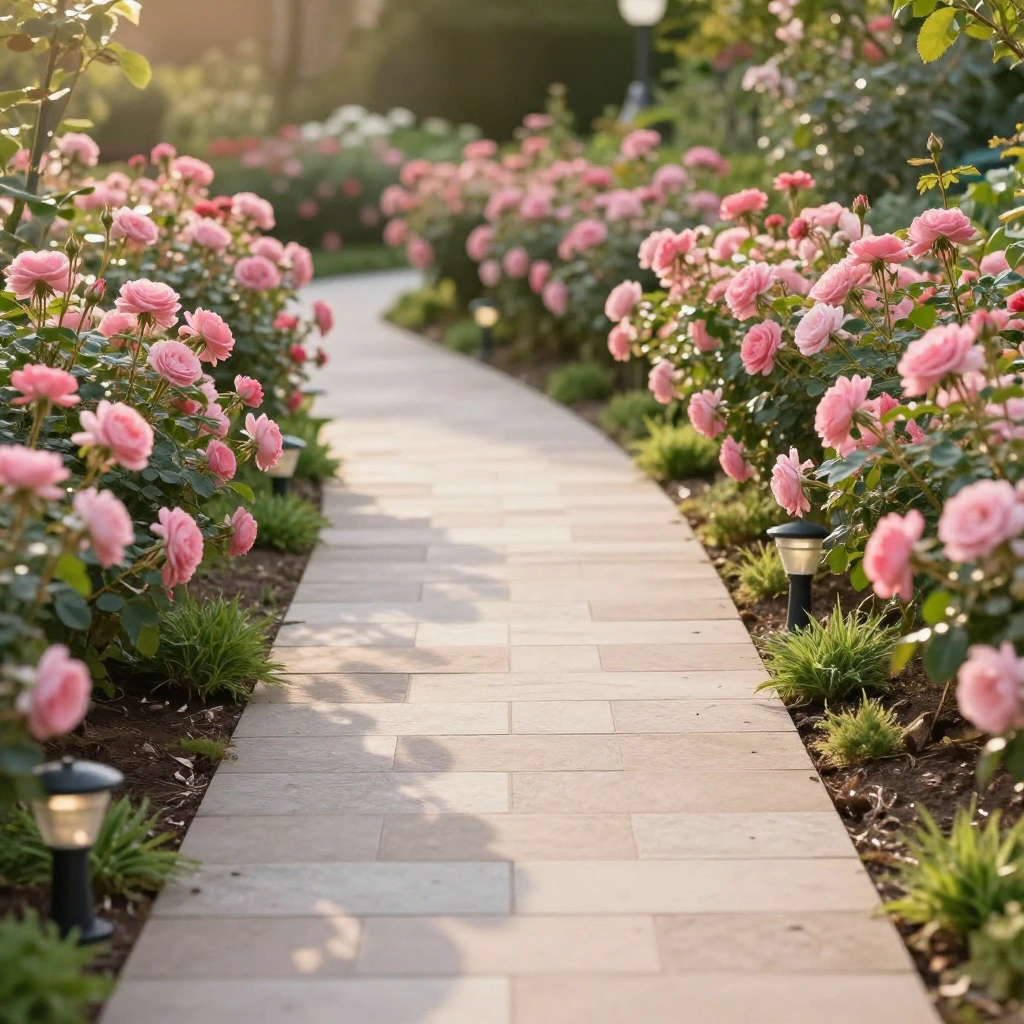
A rose-lined pathway turns a simple walkway into an experience. This idea frames a garden path on both sides with matching or complementary rose plantings, creating a beautiful corridor of color and fragrance that the whole family enjoys every single time they walk through the garden. It is one of the most welcoming and practical rose garden ideas of all. Shop on Amazon
How to Style It:
- Plant matching rose varieties on both sides of the path in mirror symmetry for an elegant look
- Choose shorter bush roses (60–90cm tall) so the path remains open and accessible
- Mix roses with low edging plants like catmint, salvia, or alyssum for a layered border effect
- Use a smooth, even paving material — stone slabs, brick, or compacted gravel — for safe family walking
- Add solar pathway lights for safe and beautiful evening use
Where to Use It: Garden entry paths, walkways between the home and a seating area, paths through a kitchen garden, or connecting areas of a larger garden.
Pro Tip: Plant scented rose varieties specifically along pathways — when family members brush past the foliage, the natural fragrance is released, making every walk through the garden a genuinely sensory experience.
12. Moonlight White Rose Garden
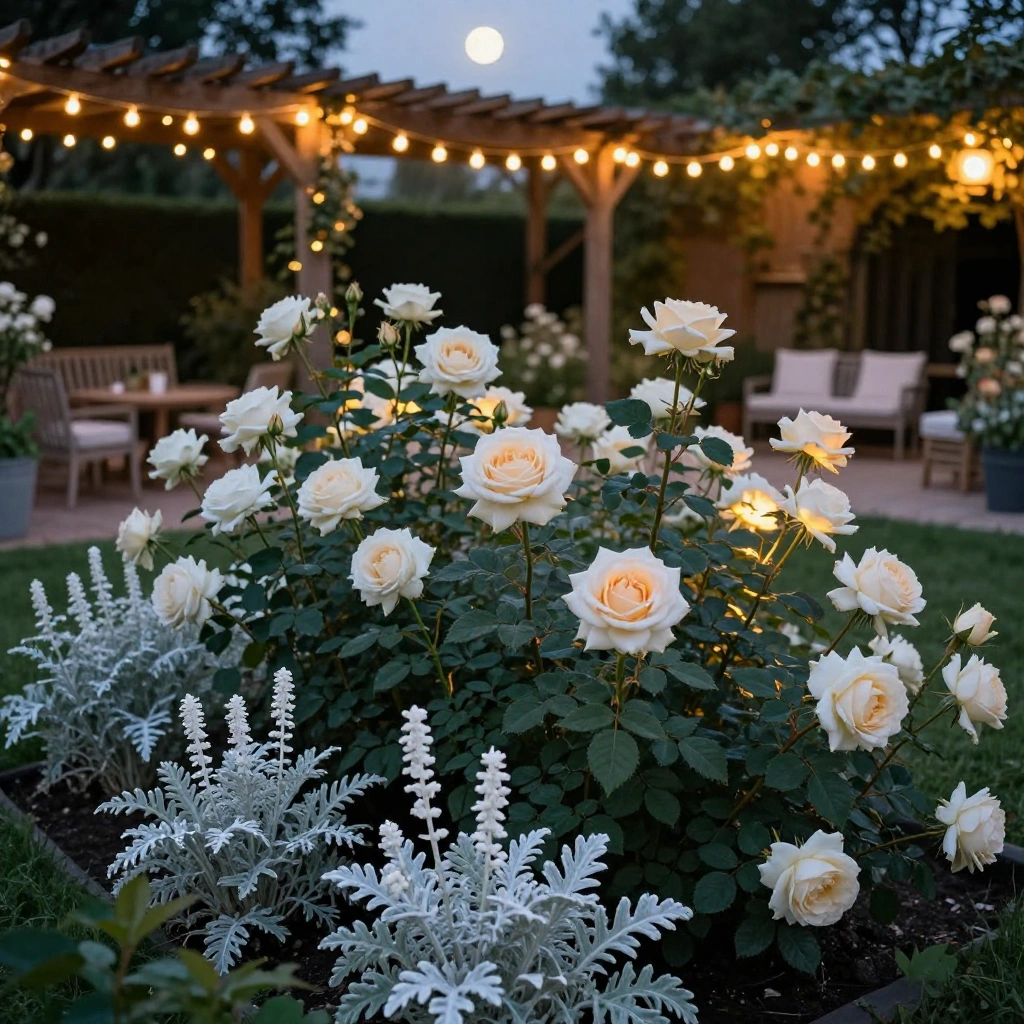
A white rose garden designed for evening enjoyment is one of the most romantic and enchanting ideas in this entire list. White and cream roses glow softly in the fading light of dusk and reflect moonlight beautifully, creating a garden space that comes alive in the evenings when the whole family is at home together. Shop on Amazon
How to Style It:
- Select all-white and cream rose varieties such as “Iceberg,” “White Meidiland,” or “Glamis Castle”
- Add white or silver companion plants — lamb’s ear, white salvia, and silvery artemisia all work wonderfully
- Incorporate soft outdoor lighting: fairy lights, lanterns, or solar stake lights among the planting
- Place comfortable seating nearby so the family can gather and enjoy the evening garden together
- Add white-flowering jasmine or white wisteria nearby for additional evening fragrance
Where to Use It: Patios and seating areas, garden rooms, courtyards, or any outdoor space primarily used in the evenings.
Pro Tip: White roses are particularly effective at reflecting ambient light, so even on cloudy evenings they create a beautiful, glowing garden atmosphere — perfect for family evenings outdoors in the warmer months.
Common Mistakes to Avoid
Even experienced gardeners make these common rose mistakes. Here is what to watch out for so your garden thrives from the very start:
Planting in Too Much Shade — Roses need a minimum of six hours of direct sunlight per day. Planting in a shaded spot is the single most common reason roses underperform. Always observe how sunlight moves across your garden before choosing a planting spot.
Overwatering or Underwatering — Roses prefer deep, infrequent watering rather than light daily sprinkles. Water at the base of the plant, not on the leaves, to prevent fungal diseases. A good rule is to water deeply once or twice per week rather than a little every day.
Forgetting to Deadhead — Removing spent blooms (deadheading) encourages your rose to produce more flowers throughout the season. Neglecting this simple task is one of the main reasons rose gardens look tired by midsummer.
Planting Too Close Together — Crowded roses have poor air circulation, which leads to fungal problems like black spot and mildew. Always follow the spacing guidance on your plant label and resist the temptation to overcrowd.
Skipping Mulch — A good layer of organic mulch around your roses retains moisture, regulates soil temperature, suppresses weeds, and feeds the soil as it breaks down. It is one of the best and easiest things you can do for your rose garden.
Choosing the Wrong Variety for Your Climate — Not all roses are suited to all climates. Always choose varieties rated for your hardiness zone and check whether they are disease-resistant, especially if you prefer to garden without chemical sprays.
Frequently Asked Questions
What is the easiest rose to grow for beginners? Knock Out roses and David Austin shrub roses are consistently recommended for beginners. They are disease-resistant, repeat-blooming, and require far less specialist care than traditional hybrid tea roses. Miniature roses in containers are also an excellent starting point for new gardeners.
How do I make my rose garden safe for young children? Choose thornless or low-thorn rose varieties for areas near play zones. Ensure all pathways are smooth, even, and clearly defined. Raised beds with rounded wooden edges are safer than exposed brick corners. Avoid sharp garden ornaments at child height, and always supervise young children around water features, however small.
When is the best time to plant roses? Bare-root roses are best planted in late winter or early spring while the plant is dormant. Container-grown roses can be planted almost any time the ground is workable, but spring and early autumn are ideal. Avoid planting during the hottest weeks of summer as heat stress can hinder establishment.
How often should I feed my roses? Feed roses with a specialist rose fertilizer once in early spring when new growth begins, and again after the first flush of blooms in early summer. Avoid feeding after late summer as this encourages soft new growth that can be damaged by early frosts.
Can roses grow in containers long-term? Yes, absolutely. Miniature and patio roses are particularly well-suited to long-term container growing. Choose a pot that is at least 40cm in diameter, use a good quality rose compost, water consistently, and feed regularly. Repot every two to three years to refresh the soil and give roots more room.
What companion plants work best with roses? Lavender, catmint, salvia, geraniums, and alliums are all excellent rose companions. They attract beneficial insects, deter common pests, and create a beautiful layered planting effect. Avoid planting roses near fennel or large ornamental grasses which can compete for nutrients and space.
How do I keep my rose garden looking good all summer? Regular deadheading is the most important task for continuous blooms. Water deeply and consistently, apply mulch in spring, and feed after each flowering flush. Remove any yellowed or diseased leaves promptly and check plants weekly for signs of pests. A little regular attention produces dramatically better results than occasional intensive care.
Whether you choose the grandeur of a classic English layout or the joyful simplicity of a rainbow color bed, a rose garden is one of the most rewarding projects you can bring to life in your outdoor space. Start with one idea that excites you, involve the whole family in the planting, and enjoy watching your garden bloom season after season.