10 Magical Fairy Garden Ideas for Whimsical Outdoor Spaces
Fairy gardens are one of the most enchanting and creative ways to bring a touch of magic to any outdoor space. Whether you have a sprawling backyard, a cozy balcony, or just a quiet corner by a windowsill, a fairy garden transforms ordinary spots into whimsical little worlds full of wonder. The best part? They are incredibly fun to make with kids and can reflect your own unique personality and style.
From mossy woodland scenes to flower-filled cottage nooks, fairy gardens come in endless varieties that suit every taste and budget. In this guide, you will find 10 beautiful fairy garden ideas complete with styling tips, placement inspiration, and pro advice to help you create a miniature magical world that visitors — big and small — will absolutely love.
1. Enchanted Mushroom Village
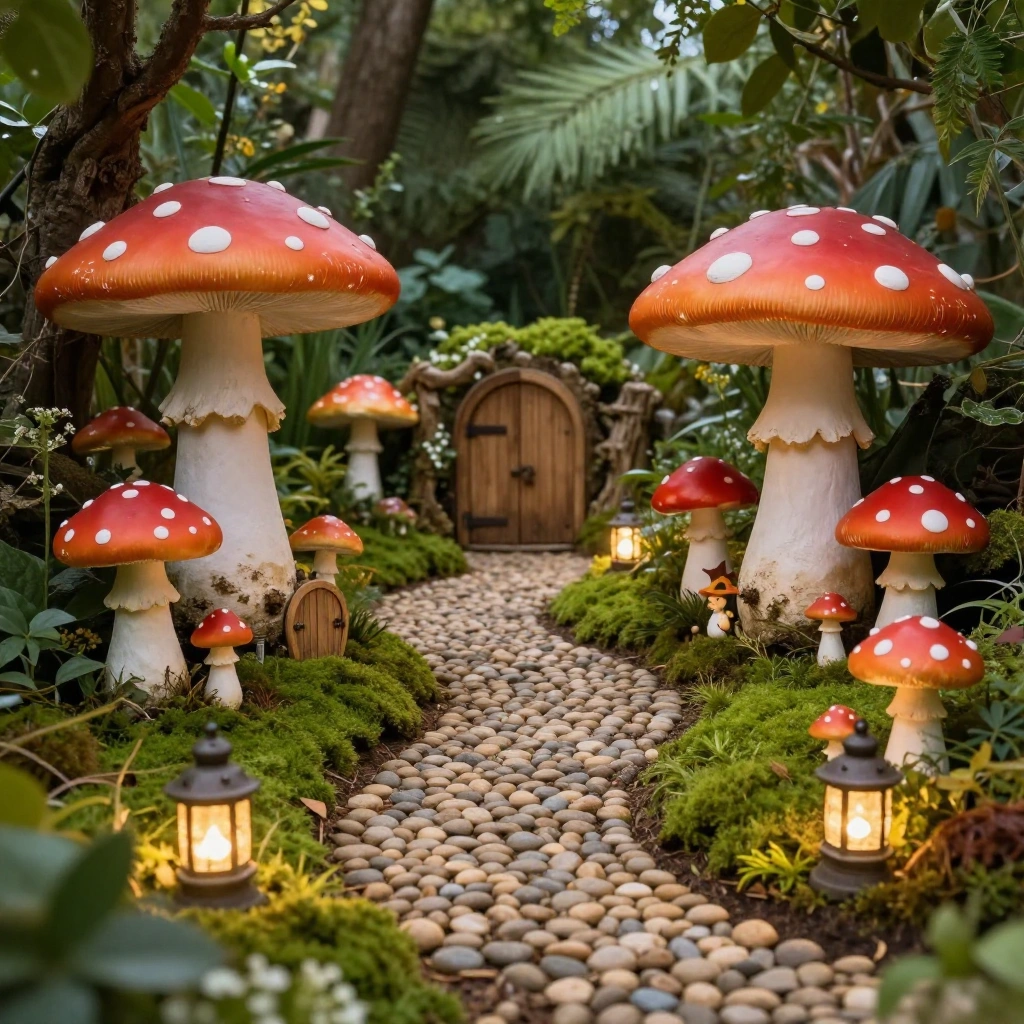
Turn a corner of your garden into a cozy mushroom village where tiny fairies might just call home. Use large decorative mushroom figurines in red, white, and earthy tones to anchor the scene, and surround them with soft ground covers like Irish moss or creeping thyme. Add miniature wooden doors, tiny lanterns, and pebble pathways to complete the storybook feel. Shop on Amazon
How to Style It:
- Place tall mushroom figurines at the back and smaller ones at the front for depth
- Tuck tiny fairy figurines peeking out from behind mushroom caps
- Use river pebbles or fine gravel to create winding pathways between the mushrooms
- Add tiny potted flowers made from polymer clay or real miniature plants
- Surround the base with real moss for a lush, living carpet feel
Where to Use It: A shaded corner of the garden, under a large tree, or inside a wide terracotta pot works beautifully for this theme.
Pro Tip: Use real dried or preserved mushrooms alongside the figurines for a natural, layered look that feels truly magical.
2. Miniature Cottage Garden
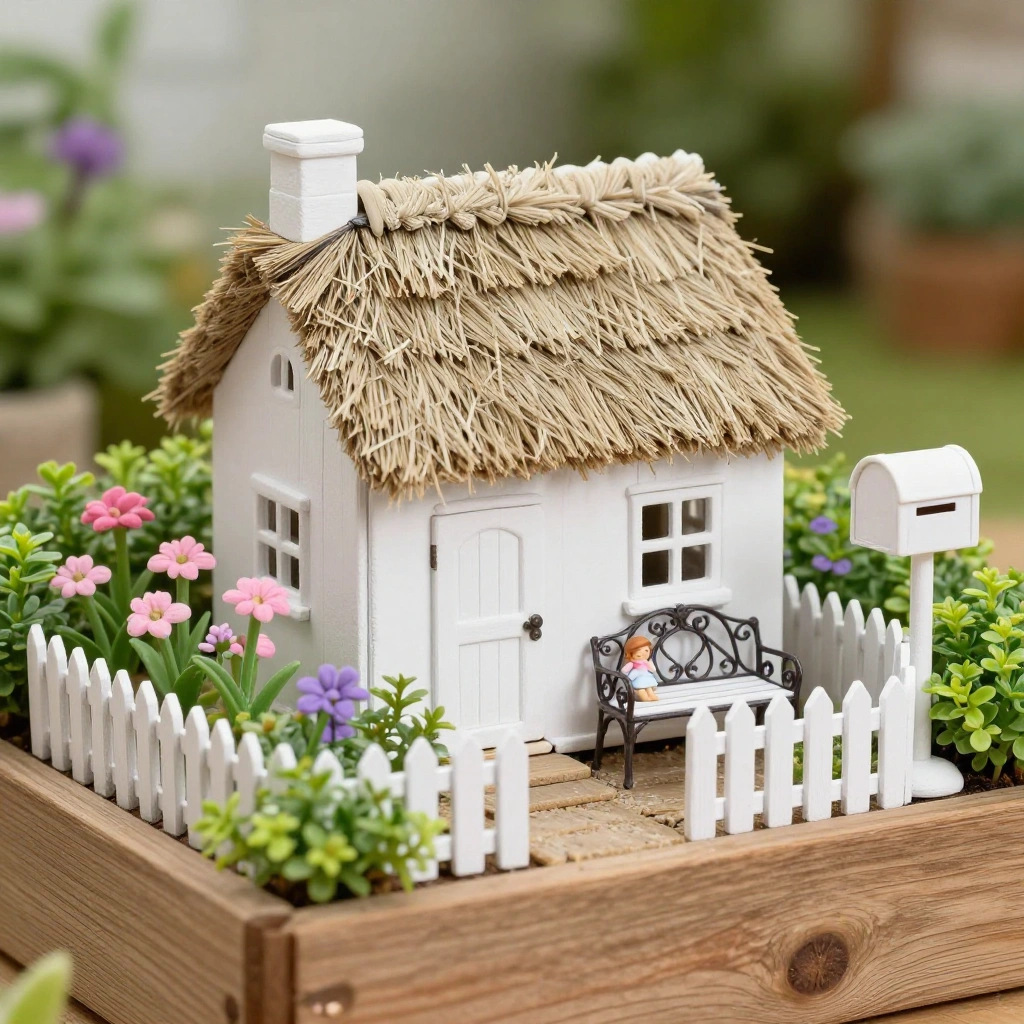
A miniature cottage garden idea brings the charm of an English countryside garden into a tiny, manageable space. Think picket fences, climbing roses on teeny trellises, a tiny wrought-iron bench, and window boxes bursting with color. This idea is perfect for gardeners who love the cozy, lived-in feeling of a classic cottage aesthetic. Shop on Amazon
How to Style It:
- Use a white or cream-painted miniature picket fence as a border
- Add a tiny thatched-roof cottage as the focal centerpiece
- Plant real miniature flowers such as thyme, alyssum, or baby’s breath around the cottage
- Include a mini garden bench with a tiny fairy sitting on it
- Hang a teeny mailbox or birdhouse from a small decorative post
Where to Use It: Works wonderfully in a raised planter box, a window box, or along the edge of a garden bed.
Pro Tip: Choose real plants with tiny leaves and flowers, like elfin thyme or mind-your-own-business, to keep the scale looking realistic and proportional.
3. Woodland Fairy Forest
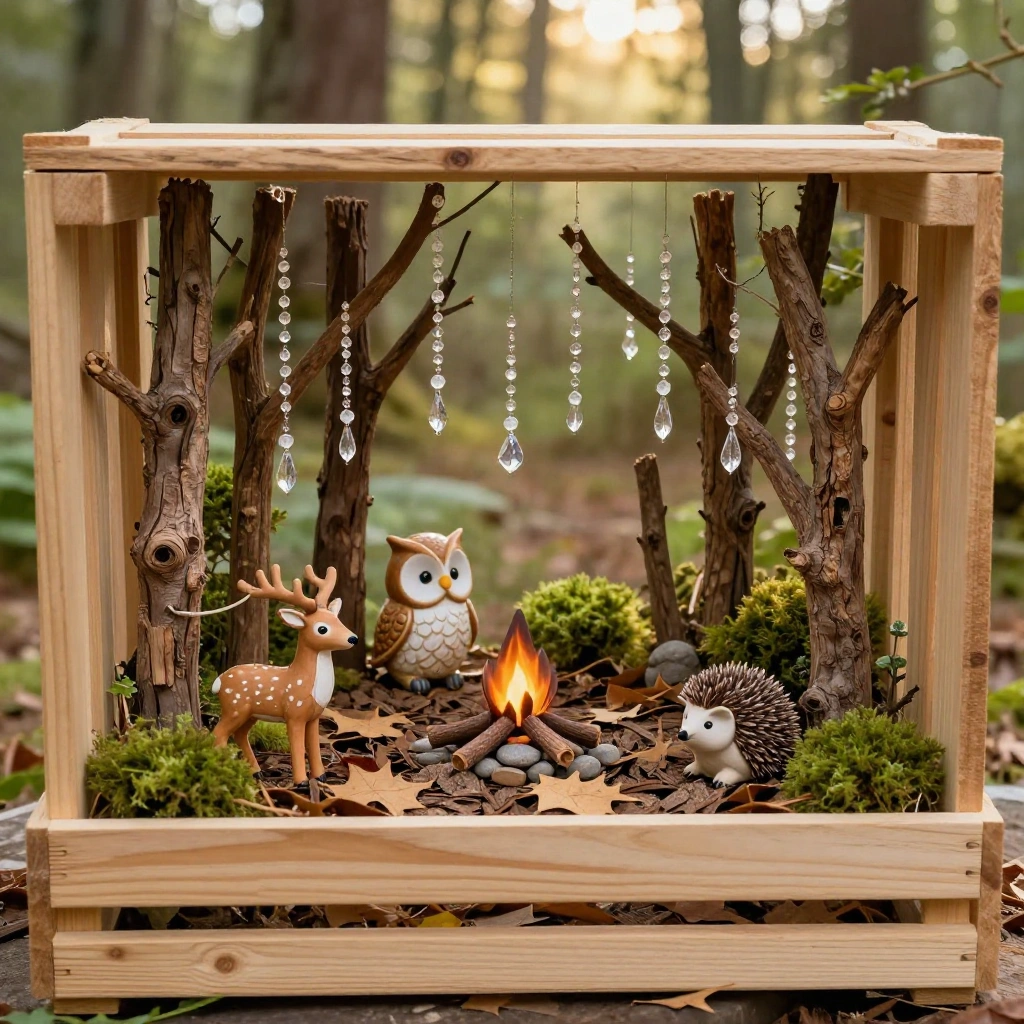
Transport your outdoor space into a deep woodland fairy forest, complete with tall twigs acting as trees, leaf litter, and tiny woodland creatures like deer, owls, and hedgehogs. This idea leans into earthy, natural materials and is perfect for those who love a more organic and nature-inspired aesthetic. Shop on Amazon
How to Style It:
- Use tall thin twigs or driftwood pieces to act as fairy-sized trees
- Layer the base with real bark chips, dried leaves, and small stones
- Add miniature woodland animal figurines nestled among the “trees”
- Hang tiny crystal or bead drops from the branches for a magical sparkle
- Place a tiny campfire scene using orange pebbles and crossed twigs
Where to Use It: An ideal centerpiece for a large shallow tray or wooden crate, or designed into a corner of a naturalistic garden.
Pro Tip: Collect real acorns, pinecones, and dried seed pods from nature walks to use as free, perfectly scaled décor pieces throughout your woodland scene.
4. Fairy Tea Party Garden
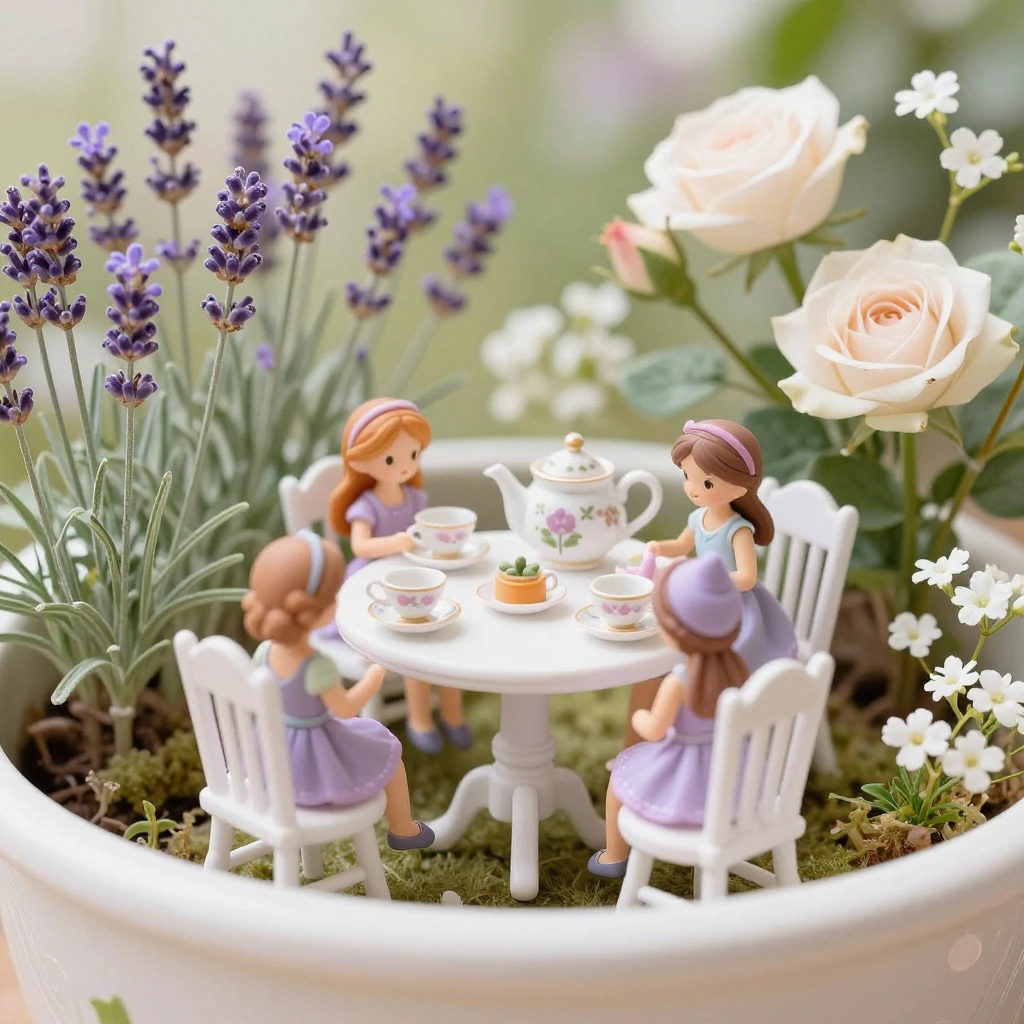
Who says fairies do not enjoy a good afternoon tea? Set up a tiny outdoor tea party scene with a miniature table, mismatched teacups, a teapot, and sweet little fairy guests seated around it. Surround the scene with lush pastel flowers and soft greenery for a dreamy, light-hearted vibe. Shop on Amazon
How to Style It:
- Use a miniature bistro table and chairs as the centerpiece
- Arrange tiny teacups, a teapot, and saucers on the table
- Seat multiple fairy figurines around the table as guests
- Surround with real or faux pastel flowers in lavender, blush, and cream
- Add a miniature cake stand with tiny decorative “treats”
Where to Use It: Perfect for a container garden on a patio table, a kitchen windowsill, or a children’s bedroom corner garden.
Pro Tip: Use polymer clay to craft your own tiny teacups and cakes — it is a wonderful rainy-day craft activity to do together with kids before placing them in the garden.
5. Fairy Pond and Bridge Garden
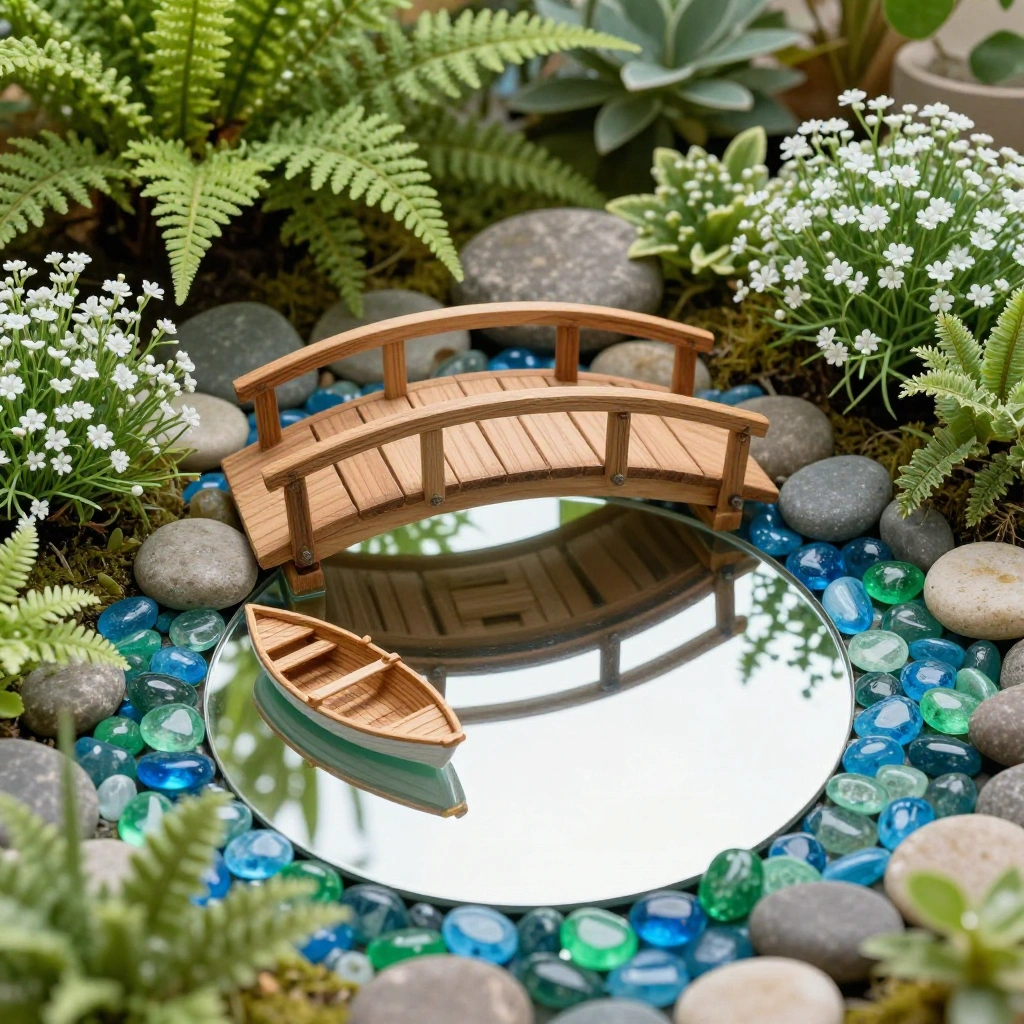
Water features feel extra magical at a miniature scale. Create the illusion of a sparkling fairy pond using a small mirror tile or glass dish filled with water, crossed by a tiny arched wooden or stone bridge. Surround it with pebbles, ferns, and miniature water-loving plants for a serene, nature-inspired fairy scene. Shop on Amazon
How to Style It:
- Use a round mirror tile or a shallow glass bowl as your “fairy pond”
- Position a small arched bridge across or beside it
- Add blue and green glass pebbles around the water’s edge
- Plant real ferns, mind-your-own-business, or baby tears nearby
- Include a tiny rowboat or a duck figurine on or near the “water”
Where to Use It: Ideal in a large container, a garden bed feature, or as a standalone centerpiece for a patio corner.
Pro Tip: Stick small craft gems or glass beads at the bottom of the glass dish to simulate a shimmering, colorful pond floor that catches the light beautifully.
6. Fairy Door Tree Garden
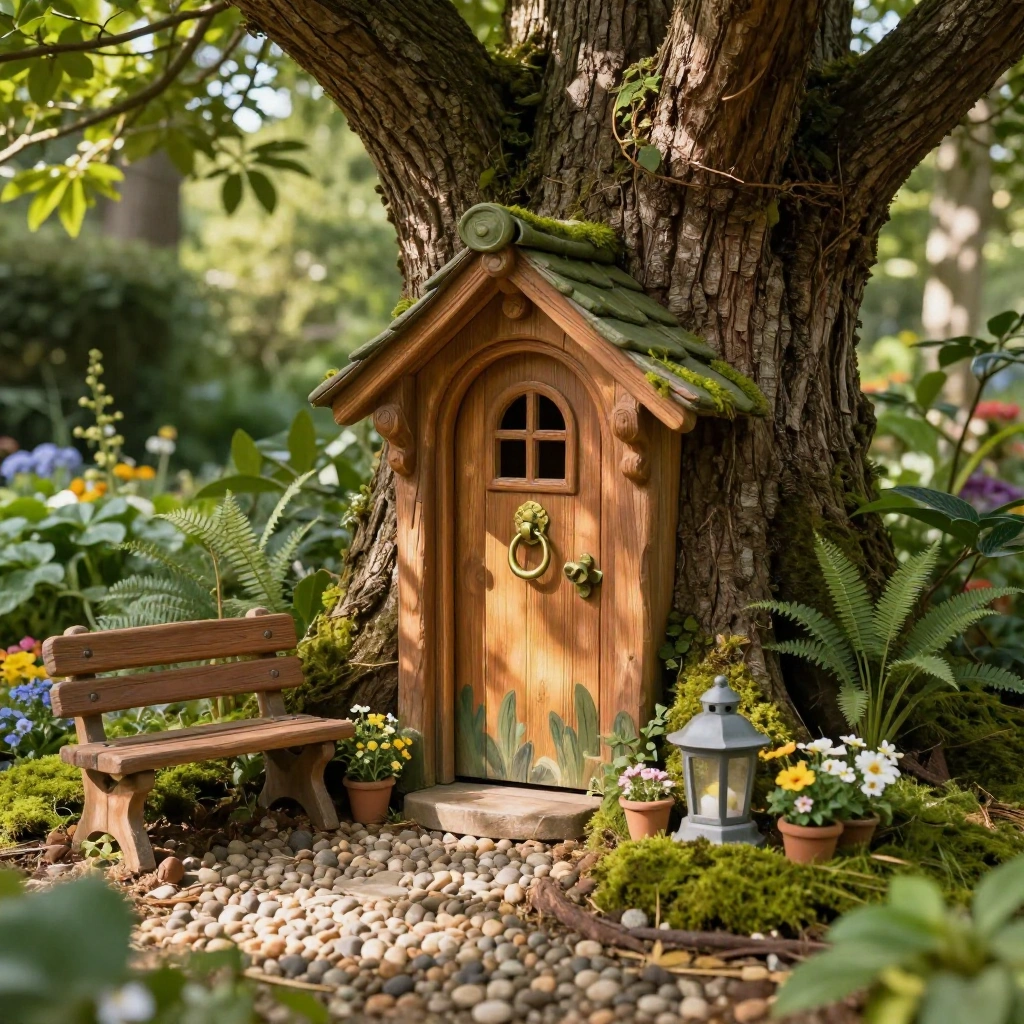
One of the most iconic and beloved fairy garden ideas is attaching a tiny fairy door to the base of a real tree trunk, suggesting that the fairies live inside the tree itself. Pair it with a tiny front garden scene — a path, a letterbox, a lantern, and maybe even a mini clothes line. Shop on Amazon
How to Style It:
- Attach a decorative fairy door (wood, resin, or hand-painted stone) to a tree base
- Create a tiny stone or pebble path leading to the door
- Add a miniature letterbox, flowerpot, and garden bench outside the door
- Place a tiny lantern beside the entrance for a warm welcoming glow
- Surround with real moss and tiny groundcover plants
Where to Use It: Works beautifully on any garden tree, a fence post, the side of a raised planter, or even a large houseplant pot indoors.
Pro Tip: Paint your own fairy door on a flat stone using acrylic paints — each family member can make their own unique door and add it to different spots around the garden for a scattered “fairy neighborhood” effect.
7. Succulent Fairy Desert Garden
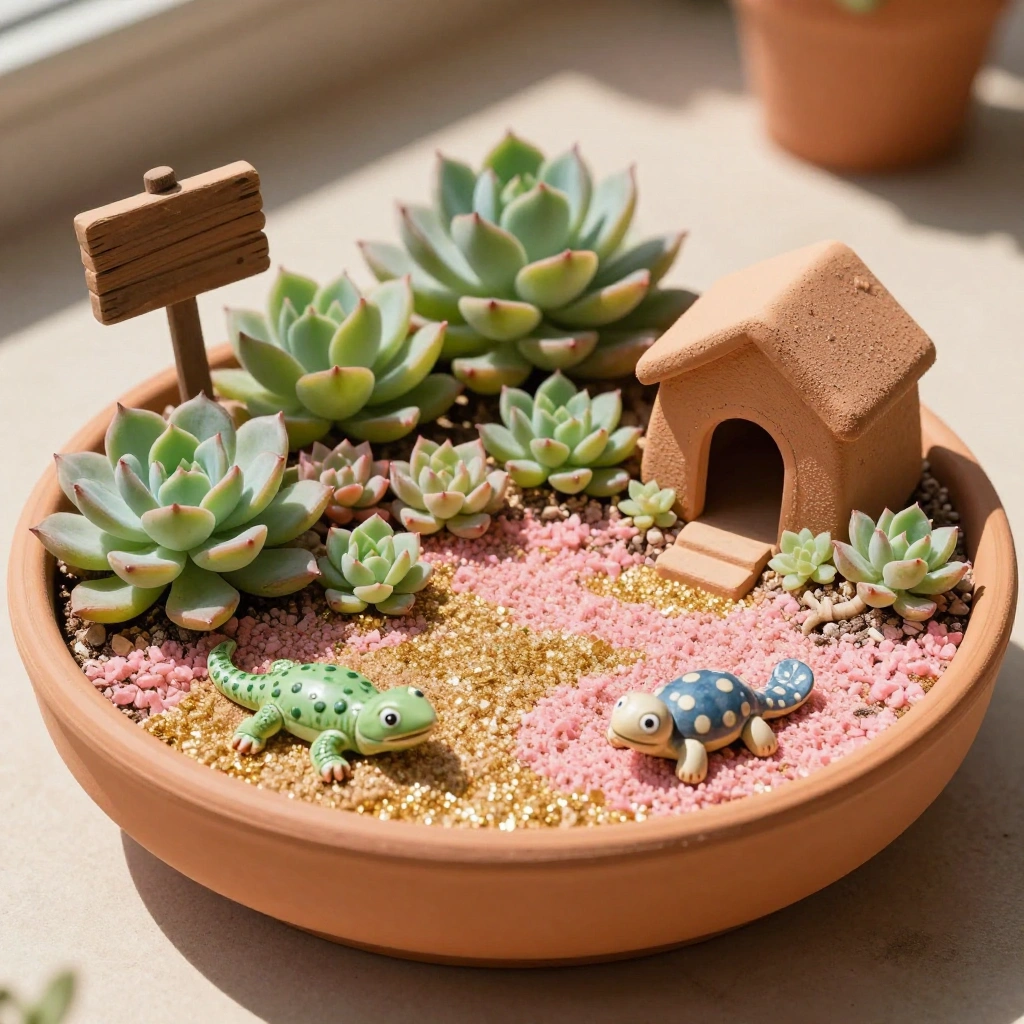
For those in warmer climates or who want a low-maintenance option, a succulent fairy desert garden is both stunning and incredibly easy to care for. Mix sculptural succulents, colored sand, tiny cactus figurines, and miniature desert animals for a unique take on the classic fairy garden. Shop on Amazon
How to Style It:
- Use a wide shallow tray or terracotta dish as your base
- Fill with well-draining cactus mix and layer colored sand on top
- Plant a variety of small succulents in different shapes and colors
- Add tiny desert animal figurines such as roadrunners, lizards, or camels
- Place a miniature signpost, wagon wheel, or tiny adobe-style cottage
Where to Use It: Perfect for sunny patios, apartment balconies, or any warm, bright outdoor space. Also great as an indoor garden on a sunny shelf.
Pro Tip: Choose succulents with unusual textures — haworthia, echeveria, and aloe vera juveniles all stay small and add fascinating shapes that look like magical alien plants in a fairy world.
8. Fairy Butterfly and Flower Meadow
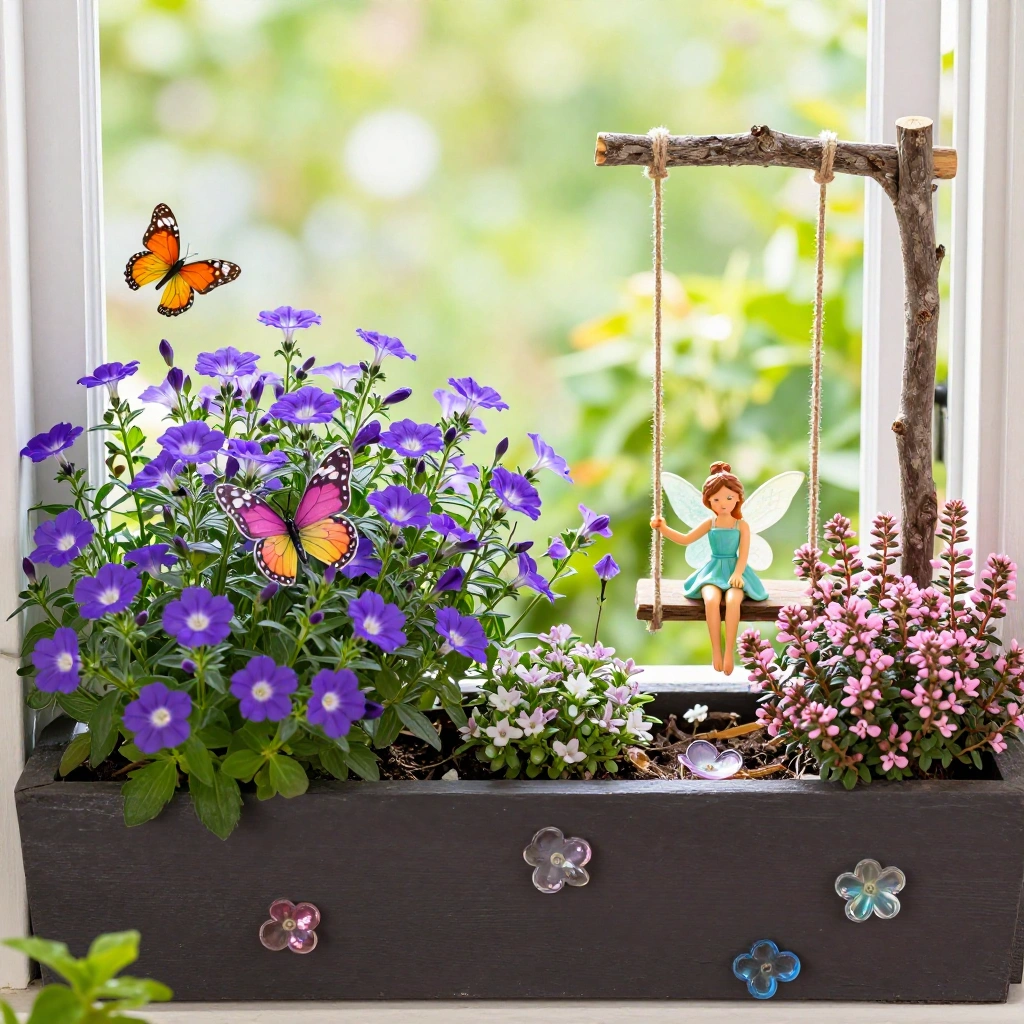
Celebrate the beauty of nature by creating a fairy meadow bursting with wildflowers, butterflies, and bees. This garden idea uses real flowering plants alongside miniature butterfly figurines and floral décor to create a cheerful, colorful scene that also supports real pollinators. Shop on Amazon
How to Style It:
- Plant real flowering groundcovers such as thyme, sedum, or lobelia
- Add miniature butterfly and bumblebee figurines throughout
- Include a tiny fairy figurine with wings to match the butterfly theme
- Use colorful glass pebbles or mosaic tiles as decorative “flower petals”
- Add a small fairy swing made from twigs and twine hung from a branch
Where to Use It: Beautiful in an open garden bed, a hanging basket, or a deep window box where plants can spill over the edges.
Pro Tip: Plant real lavender or sweet alyssum nearby — their scent and flowers will attract real butterflies and bees, making your fairy meadow garden truly come to life.
9. Fairy Treehouse Village
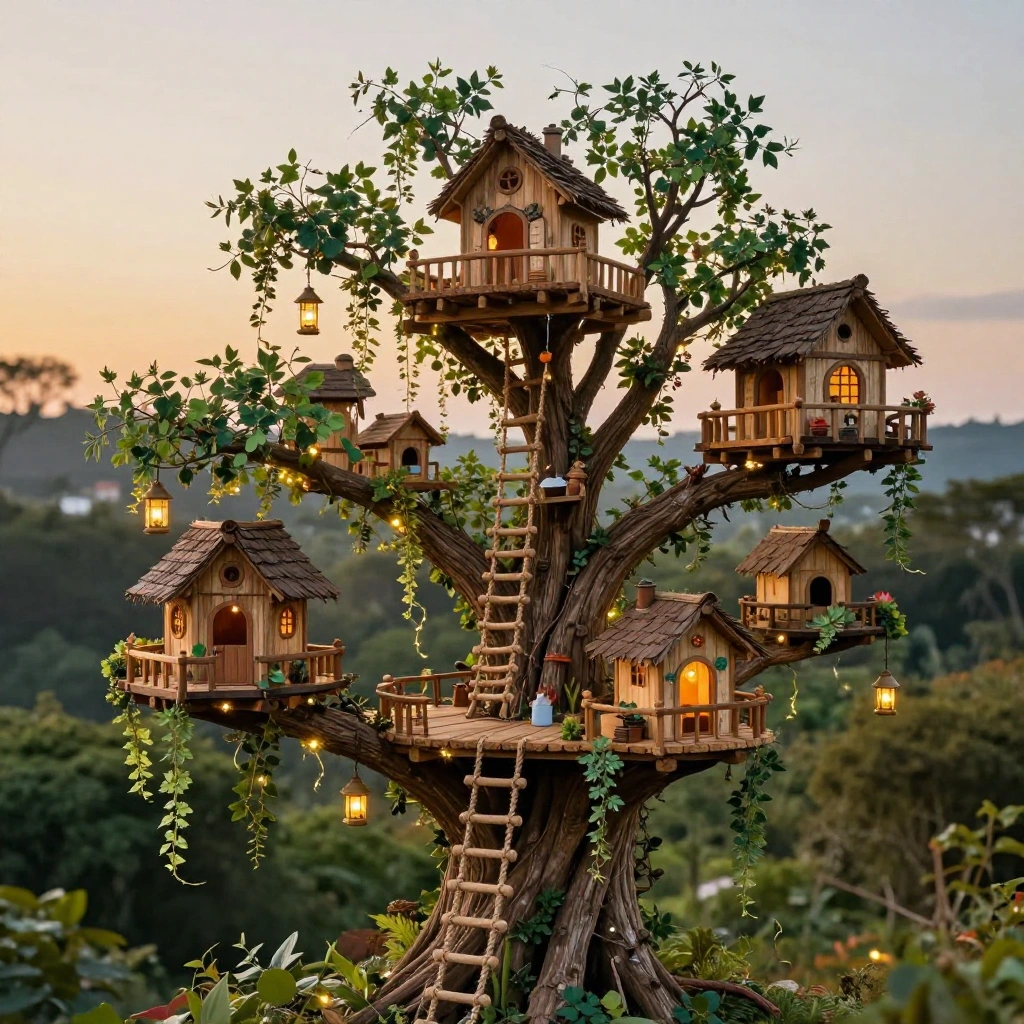
Take your fairy garden vertical with a multi-level treehouse village. Build or buy small wooden platforms, rope ladders, and tiny bridges to connect different levels of an existing shrub, small tree, or a purpose-built wooden frame. This three-dimensional design makes for a truly impressive and conversation-starting garden feature. Shop on Amazon
How to Style It:
- Create or purchase 2–3 tiered wooden platforms to serve as “floors”
- Connect levels with tiny rope or twig ladders and miniature bridges
- Add a tiny house or shelter on each level with fairy figurines inside
- Hang fairy lights or tiny lanterns between the levels
- Drape faux ivy or real climbing plants around the structure
Where to Use It: Designed around a small shrub, a multi-stemmed bamboo cluster, or a purpose-built wooden twig frame in a pot or garden bed.
Pro Tip: Use battery-operated micro fairy lights woven through the treehouse structure — seeing them glow at dusk makes this fairy garden idea feel absolutely breathtaking for kids and adults alike.
10. Seasonal Holiday Fairy Garden ideas

Celebrate the seasons and holidays with a themed fairy garden that changes throughout the year. Swap out accessories and decorations to reflect each season — spring florals, summer beach vibes, autumn harvest scenes, and a cozy winter wonderland — keeping your garden feeling fresh and exciting all year round. Shop on Amazon
How to Style It:
- Choose a permanent base container and core elements like paths and a fairy house
- Rotate seasonal accessories: spring flowers, summer parasols, autumn leaves, winter snowflakes
- Add holiday-specific miniatures for special occasions
- Use seasonal real plants that thrive in each time of year
- Let kids help select and arrange the seasonal swap-outs
Where to Use It: Works beautifully in any permanent outdoor container, raised garden bed feature, or a large indoor display near a window.
Pro Tip: Store your off-season fairy garden accessories in a labeled box so they stay safe and ready to rotate back in — this also builds excitement for kids who look forward to each seasonal “garden refresh.”
Bonus: Quick Fairy Garden Comparison Table
| Idea | Difficulty | Best For | Maintenance |
|---|---|---|---|
| Enchanted Mushroom Village | Easy | Beginners & Kids | Low |
| Miniature Cottage Garden | Medium | Garden Lovers | Medium |
| Woodland Fairy Forest | Easy | Nature Fans | Low |
| Fairy Tea Party Garden | Easy | Kids & Craft Lovers | Low |
| Fairy Pond and Bridge | Medium | Water Feature Fans | Medium |
| Fairy Door Tree Garden | Easy | All Ages | Low |
| Succulent Desert Garden | Easy | Busy Gardeners | Very Low |
| Butterfly and Flower Meadow | Medium | Pollinator Lovers | Medium |
| Fairy Treehouse Village | Hard | Creative Builders | Medium |
| Seasonal Holiday Garden | Easy–Medium | Families | Low (rotational) |
Common Mistakes to Avoid
Using oversized plants or décor. Scale is everything in a fairy garden. Always check that plants, figurines, and accessories are proportional to each other — mixing a tiny fairy with a full-sized garden gnome breaks the magic immediately.
Choosing the wrong plants. Many plants grow much larger than expected. Research mature plant sizes before planting — opt for slow-growing miniature varieties, groundcovers, or succulents that stay small and manageable.
Forgetting about drainage. Waterlogged soil will kill your plants and cause figurines to deteriorate. Always use well-draining soil mix and ensure your container has drainage holes at the bottom.
Placing it in the wrong light. Most fairy garden plants need adequate sunlight. Check each plant’s requirements and position your garden accordingly — not all shade-looking spots actually receive enough light for healthy plants.
Skipping a theme. The most visually stunning fairy gardens follow a clear, consistent theme. Mixing too many unrelated styles and colors can make the garden look cluttered rather than magical.
Using non-weatherproof materials. Figurines and accessories left outdoors can fade, crack, or rust. Choose resin, sealed ceramic, or weatherproof materials, and bring delicate pieces indoors during harsh weather.
Frequently Asked Questions
What is the best container for a fairy garden? Almost any container works — terracotta pots, wooden crates, galvanized metal tubs, old wheelbarrows, and even hollowed tree stumps all make wonderful fairy garden bases. Just make sure it has drainage holes and is large enough for your design.
What plants are best for a fairy garden? Look for miniature or slow-growing varieties that stay small. Great options include Irish moss, thyme, sedum, baby tears, mini hostas, elfin thyme, and dwarf conifers. For indoor gardens, succulents and small ferns work perfectly.
How do I keep my fairy garden looking tidy? Trim plants regularly to prevent overgrowth, remove fallen leaves and debris, and check figurines for weather damage seasonally. Refreshing the top layer of soil or mulch once a year also keeps things looking fresh.
Can fairy gardens be made indoors? Absolutely! Indoor fairy gardens are a wonderful option. Use a shallow tray or large pot near a bright window, choose low-light-tolerant plants like moss and ferns, and opt for battery-operated fairy lights to add sparkle without any electrical concerns.
Are fairy gardens safe for young children? Yes, fairy gardens are a fantastic and safe activity for children of all ages. Just ensure that very small figurines or sharp accessories are kept away from toddlers. Involve kids in the design and planting process — it is a wonderful way to encourage creativity and a love of nature.
How much does a fairy garden cost to make? Fairy gardens can be made on almost any budget. A simple starter garden can cost as little as a few dollars using natural materials and one or two accessories, while more elaborate setups with quality figurines and plants can range upward. The beauty of fairy gardens is that they grow and evolve over time as you add pieces.
Can I use artificial plants in a fairy garden? Yes! High-quality artificial moss, ferns, and flowers can look beautiful and are an excellent low-maintenance option, especially for indoor gardens or for gardeners who struggle with plant care. Mix real and artificial elements freely to get the best of both worlds.