12 Backyard Play Area for Kids Ideas They’ll Absolutely Love
Creating a backyard play area for kids is one of the best investments you can make in your home and family life. Whether you have a large yard or a cozy outdoor space, there are so many creative ways to turn it into a place where children can run, imagine, build, and grow. The right play setup keeps kids active, sparks creativity, and gives parents peace of mind knowing the little ones are safe and entertained right outside.
From classic swing sets to sensory gardens and mud kitchens, backyard play spaces have come a long way. Today’s outdoor play areas can be beautifully designed, age-appropriate, and even educational — all while blending naturally into your backyard landscape. In this guide, we’ve rounded up 12 inspiring Backyard Play Area for Kids to help you build the ultimate outdoor haven for your kids.
1. Classic Wooden Swing Set with Slide
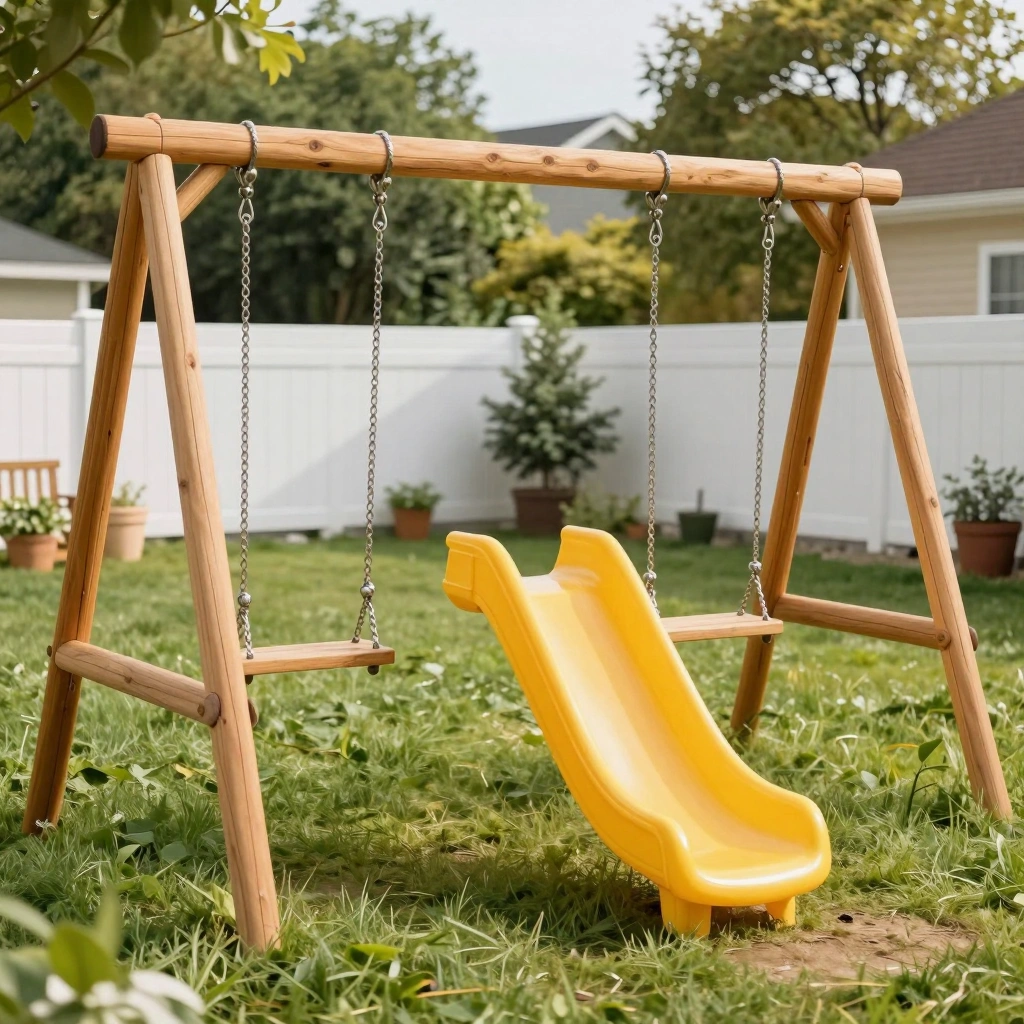
Nothing says childhood like a wooden swing set. This timeless play structure combines swings, a slide, and often a climbing ladder into one sturdy centerpiece that keeps kids of all ages entertained for hours. Shop on Amazon
How to Style It:
- Choose natural cedar or redwood for a warm, organic look that blends into the landscape
- Add soft rubber mulch or artificial turf beneath the structure for safety and cushioning
- Surround with low shrubs or flower borders to frame the play zone beautifully
- Hang fairy lights along the top beam for a magical evening look
Where to Use It: A flat, open area of the backyard away from fences and garden beds. Ensure at least 6 feet of clearance on all sides. Ideal for medium to large yards.
Pro Tip: Anchor the swing set legs in concrete or use ground anchor kits to prevent tipping. Inspect bolts and connections every season and sand down any rough spots to keep splinters at bay.
2. Outdoor Sandbox & Water Play Table
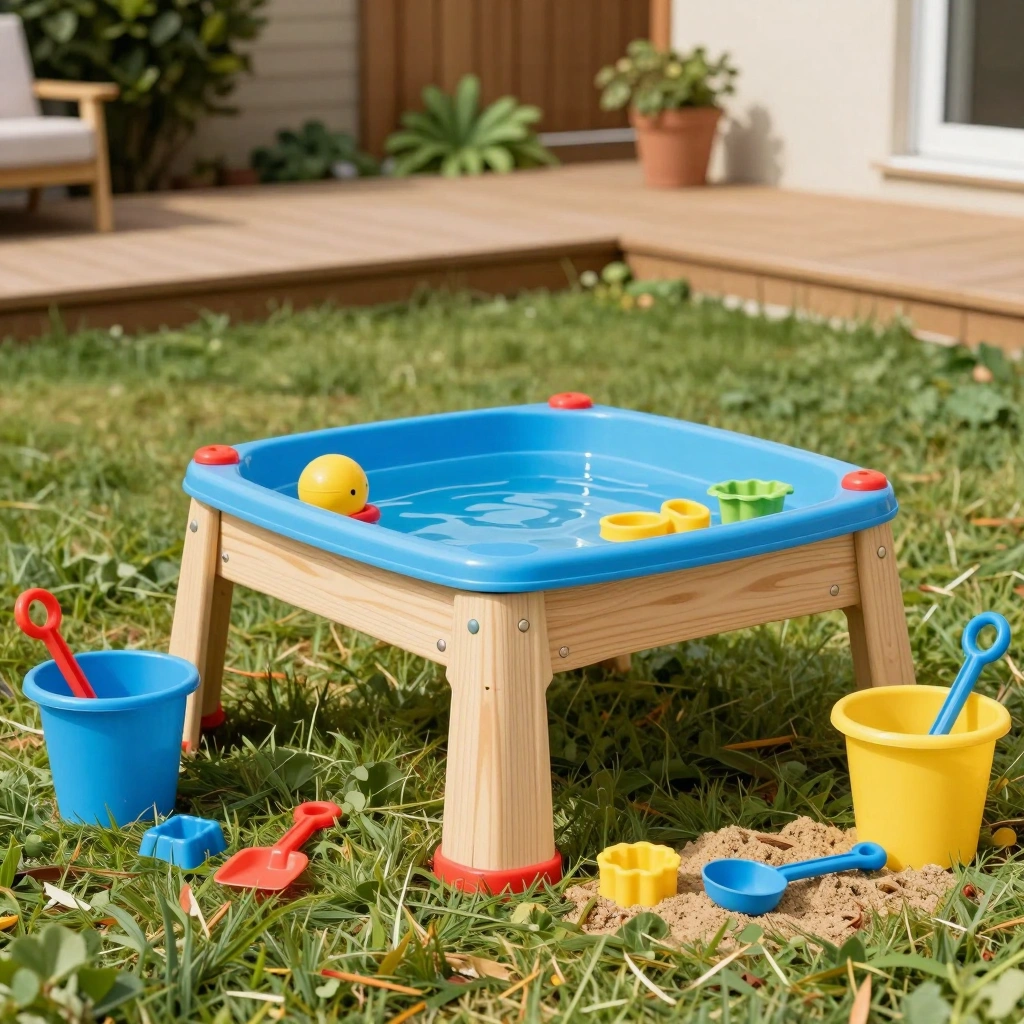
A sand and water play station is a dream combo for toddlers and young children. It engages their senses, encourages imaginative play, and develops fine motor skills — all while keeping them happily occupied outdoors. Shop on Amazon
How to Style It:
- Use a cedar sandbox with a built-in lid to keep the sand clean and dry when not in use
- Place the water table on a stone patio or rubber mat to manage splashing mess
- Add themed accessories like dinosaur figurines, plastic sea creatures, or building molds
- Use a canopy or umbrella above the play area for shade during hot days
Where to Use It: Near the back porch or patio for easy supervision. Place on level ground with good drainage nearby.
Pro Tip: Cover the sandbox when not in use to prevent cats or insects from turning it into a litter box. Refresh the sand once a year and rinse the water table regularly to prevent algae buildup.
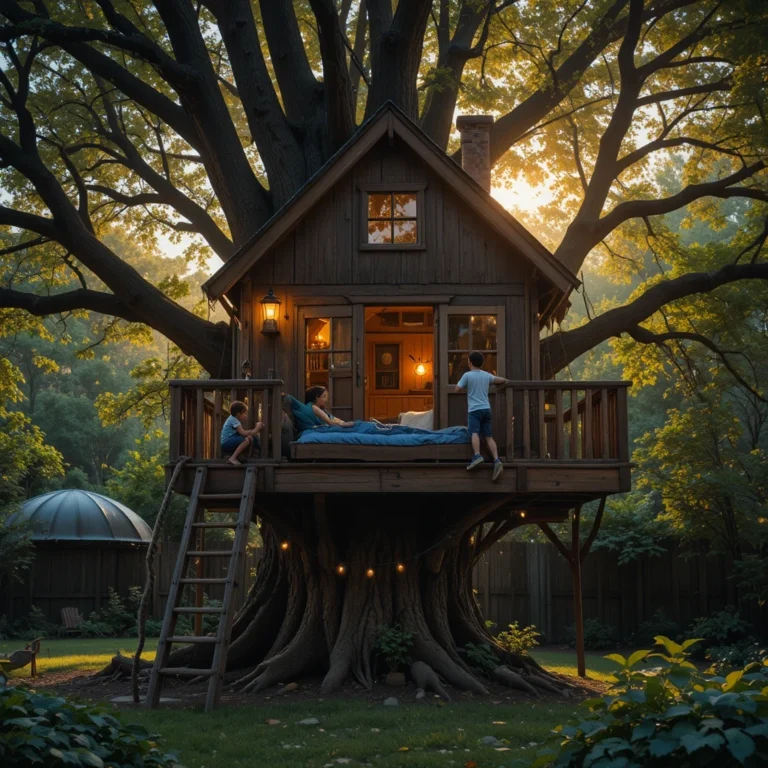
3. Backyard Playhouse (Cottage Style)
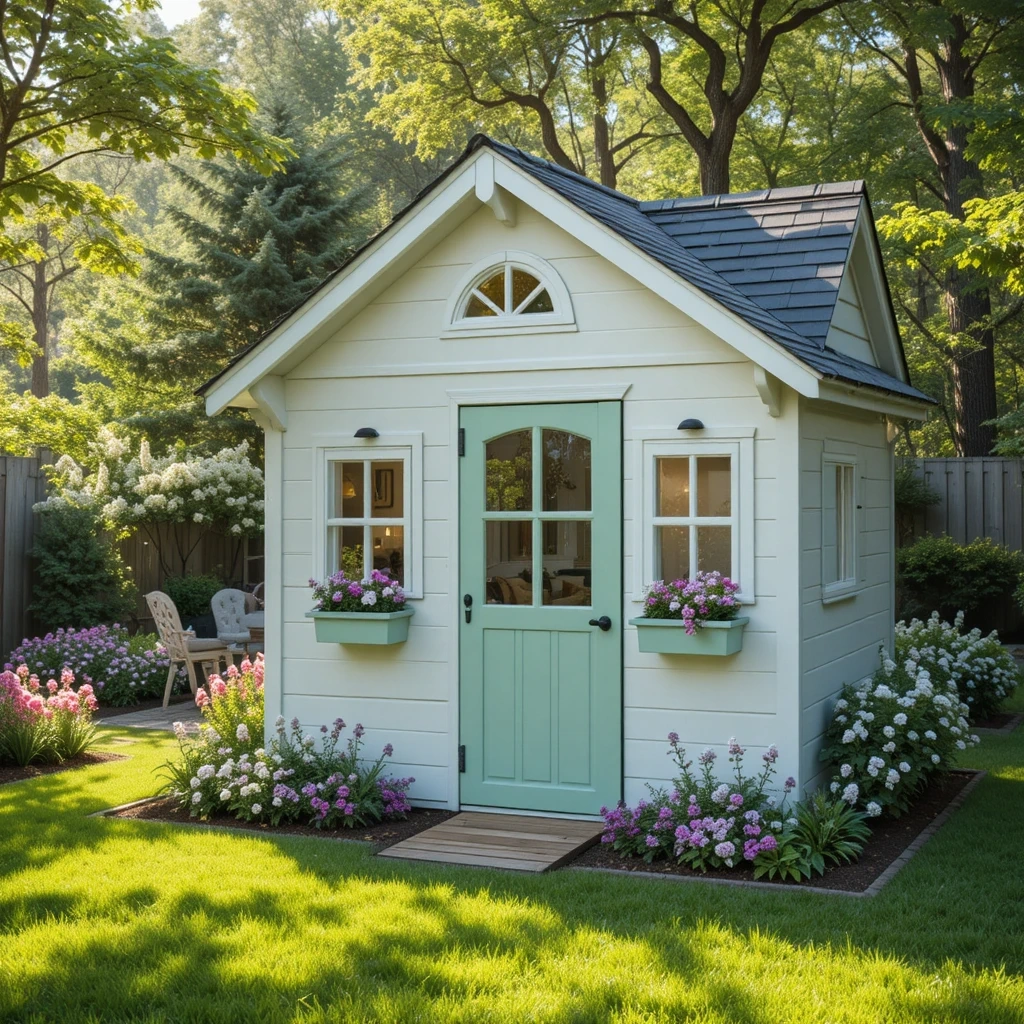
A charming playhouse gives children their own private little world — a space to role-play, read, host “tea parties,” or simply escape into imagination. Cottage-style playhouses with windows, doors, and even little porches are especially magical. Shop on Amazon
How to Style It:
- Paint it in soft pastels or earth tones to make it look like a fairy-tale cottage
- Add window boxes filled with fake or real flowers for a whimsical touch
- Include a small chalkboard panel on the outside wall for drawing
- Lay a stepping stone path leading up to the door
Where to Use It: A corner of the backyard with good shade works perfectly. Place it against a fence or under a tree for a built-in cozy feel.
Pro Tip: Make sure the playhouse interior is well-ventilated and treated for weather resistance. Avoid carpeting inside as it can trap moisture — opt for easy-clean rubber or wood flooring.
4. Climbing Wall & Ninja Warrior Course
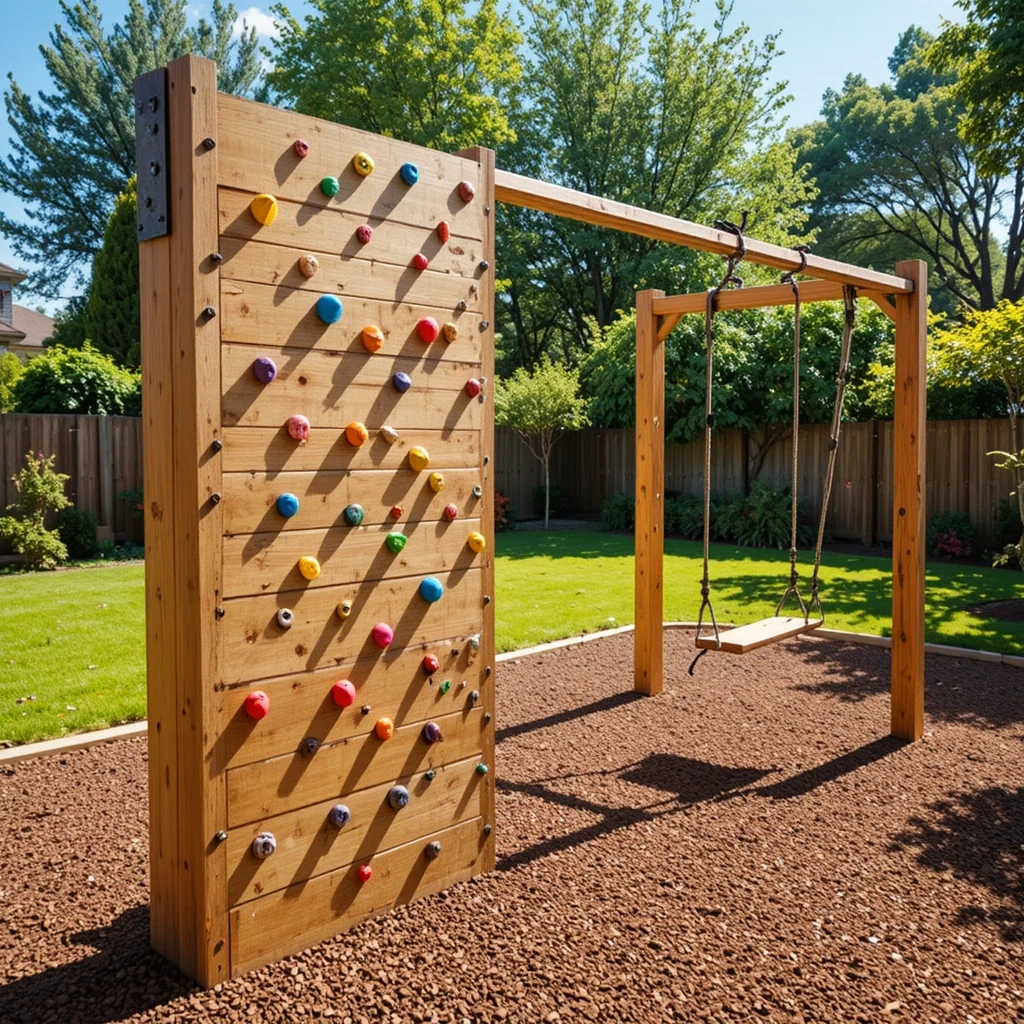
For active, adventurous kids, a backyard ninja warrior or climbing wall setup is pure excitement. This type of play structure builds strength, coordination, balance, and confidence — all while making kids feel like superheroes. Shop on Amazon
How to Style It:
- Combine a climbing wall with monkey bars, balance beams, and a rope ladder for a full course
- Use colorful climbing holds to make the wall visually exciting
- Line the course with rubber mulch or foam padding beneath all climbing sections
- Add a timer station or challenge board to gamify the experience
Where to Use It: Works best along a fence line or open side yard. Needs clear open ground below each section. Ideal for ages 5 and up.
Pro Tip: Set age-appropriate challenges and start with lower heights for younger kids. Check all hardware connections before each play session and replace worn ropes or frayed straps immediately.
5. Trampoline with Safety Enclosure
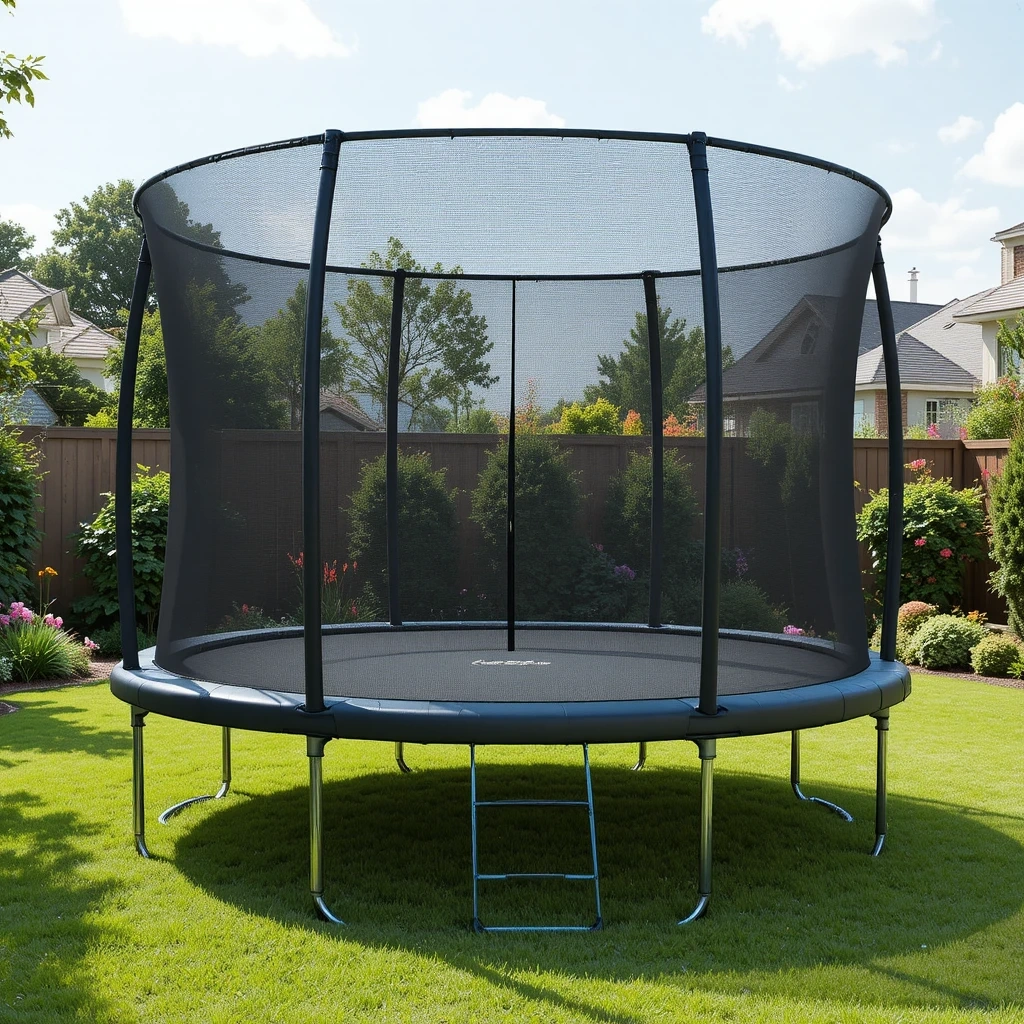
A trampoline is a perennial kid favorite — and with today’s safety enclosures, spring-free designs, and padded frames, it’s also more family-friendly than ever. It’s fantastic for energy release, balance training, and pure fun. Shop on Amazon
How to Style It:
- Choose a springfree trampoline model for maximum safety with no exposed springs
- Surround the base of the trampoline with decorative edging or low plants to soften its look
- Add a ladder for easy access for younger children
- Place it away from trees to avoid falling leaves and branches landing on the mat
Where to Use It: Flat, open ground at least 8–10 feet from any fence, wall, or structure. Avoid placing it under power lines or low-hanging branches.
Pro Tip: Set a “one at a time” rule for children under 6 to avoid collision injuries. Regularly check the net poles and padding after storms or strong winds.
6. Outdoor Art & Craft Station
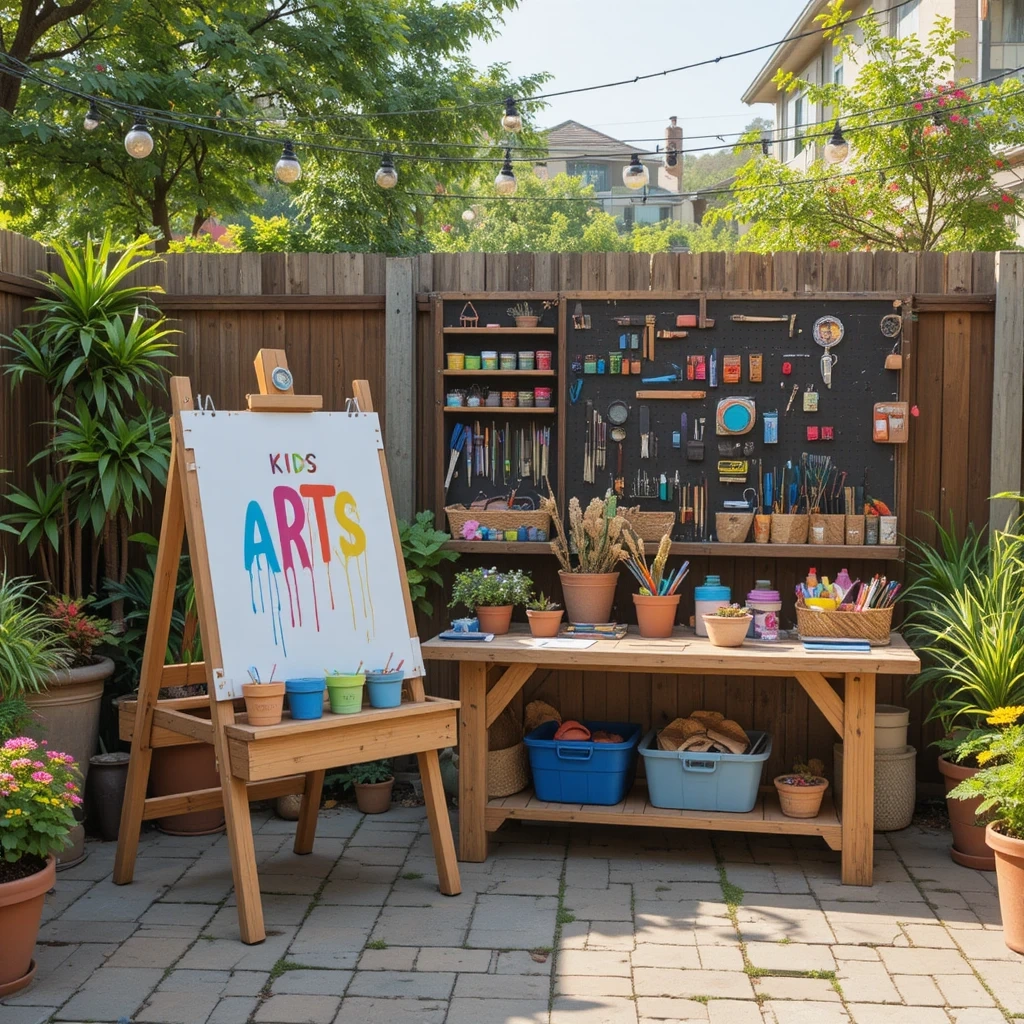
For creative kids who love to draw, paint, and build things, an outdoor art station is a wonderful addition to any backyard. It keeps messy projects outside and lets kids express themselves freely without worrying about ruining indoor furniture. Shop on Amazon
How to Style It:
- Set up a double-sided easel with a chalkboard on one side and a whiteboard on the other
- Hang a pegboard on a fence to store brushes, rolls of paper, and supply jars
- Use weatherproof bins and caddies to organize supplies by type
- Lay down a washable outdoor rug or rubber mat under the work area
Where to Use It: Best placed on a covered patio or under a pergola to protect from sun and rain. Easy access to a garden hose for cleanup is a bonus.
Pro Tip: Use only non-toxic, washable paints and craft supplies. Keep a bucket of soapy water nearby for quick handwashing and spillage control.
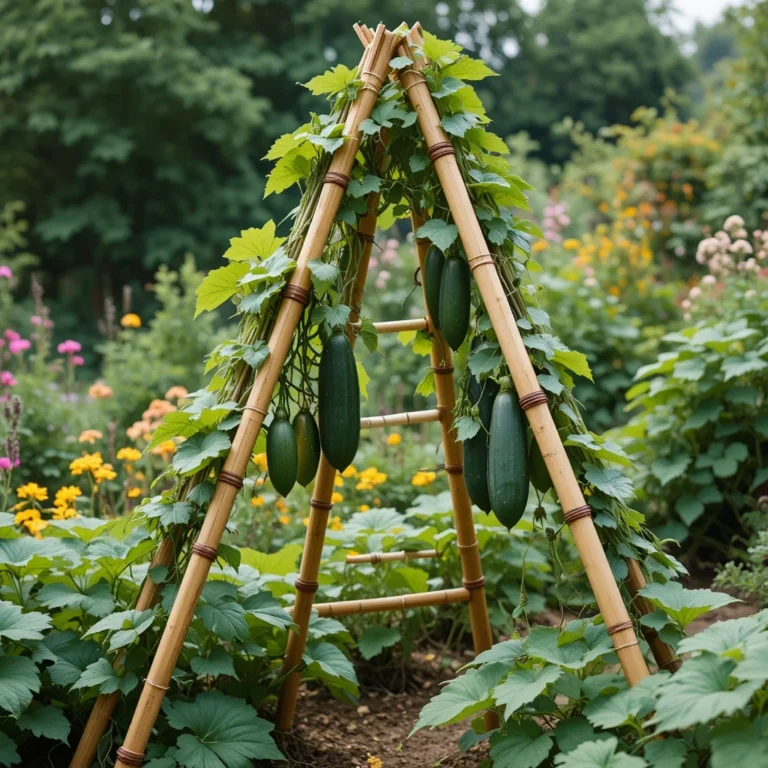
7. Kids’ Vegetable & Sensory Garden
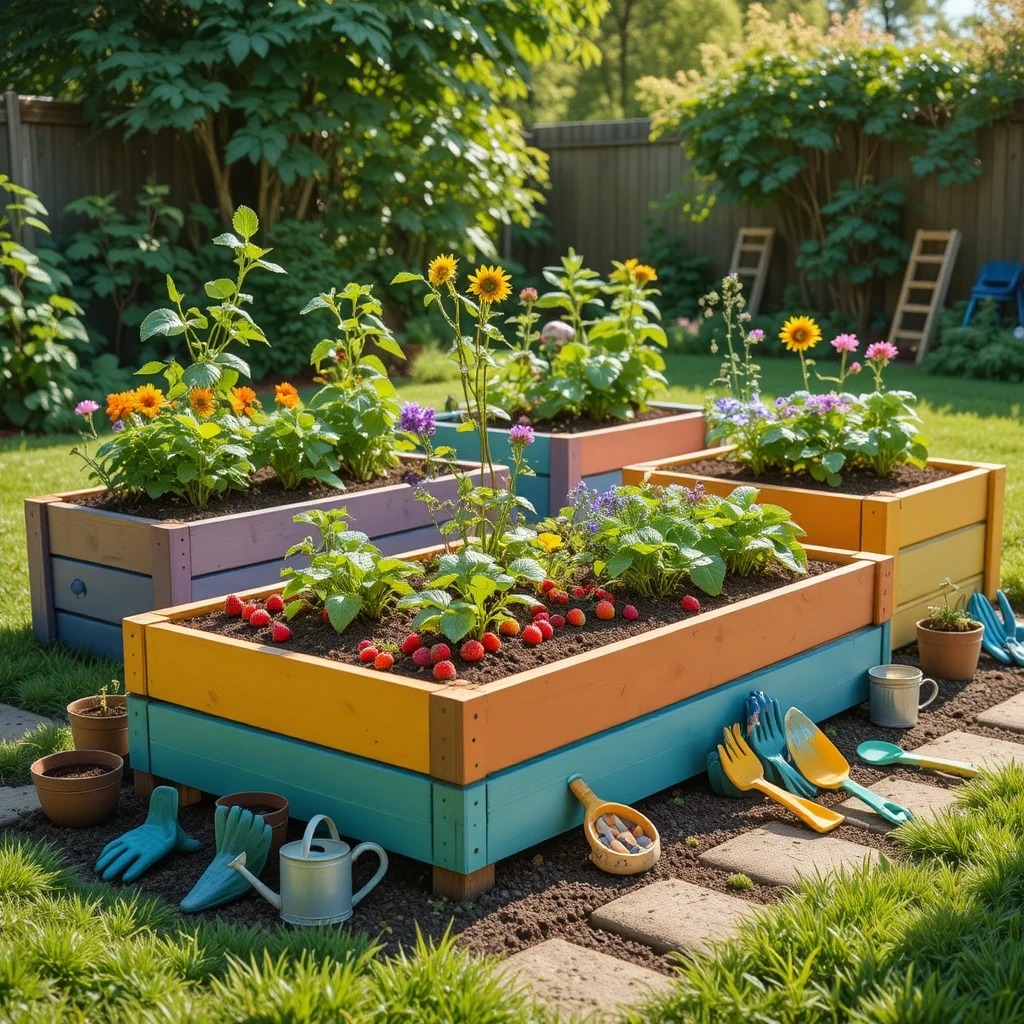
A dedicated garden patch for kids is both educational and deeply rewarding. Children love growing their own strawberries, sunflowers, or cherry tomatoes — and a sensory garden with varied textures, scents, and colors engages all five senses beautifully. Shop on Amazon
How to Style It:
- Build child-height raised beds (about 18 inches tall) so kids can reach without bending over awkwardly
- Plant fast-growing, rewarding crops: radishes, cherry tomatoes, strawberries, and sunflowers
- Add sensory plants like lamb’s ear (soft), lavender (fragrant), and ornamental grasses (rustling)
- Label each plant with a hand-painted wooden stake
Where to Use It: A sunny corner of the yard with at least 6 hours of direct sunlight per day. Keep it close to a water source for easy irrigation.
Pro Tip: Give each child their own small garden plot to take ownership of. This responsibility builds patience, care, and excitement about nature — and they’ll be far more likely to eat what they grew themselves!
8. Mud Kitchen & Outdoor Pretend Play Area
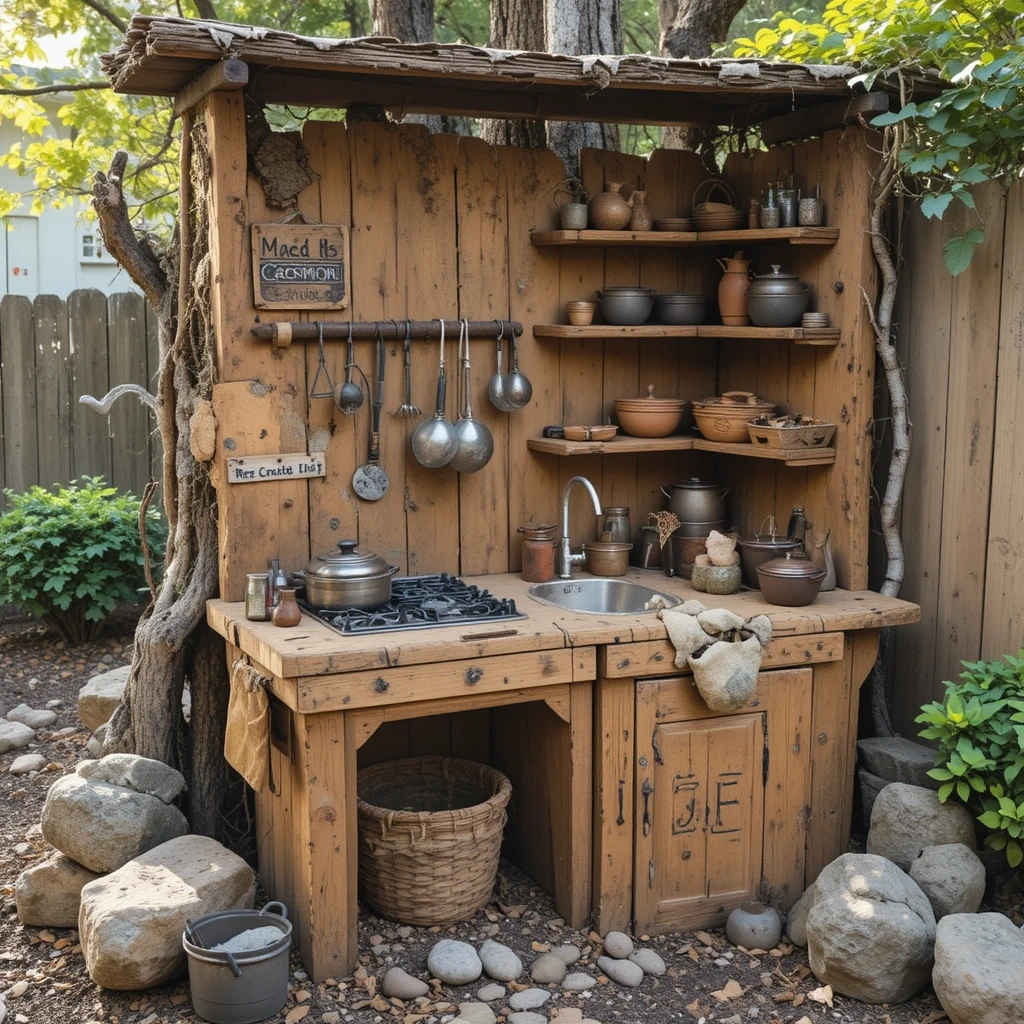
A mud kitchen is one of the most underrated backyard additions for young children. It encourages open-ended creative play, sensory exploration, and imaginative role-playing — and kids absolutely adore it. Shop on Amazon
How to Style It:
- Build or buy a small wooden kitchen unit with a “sink” (just a plastic tub), shelves, and hooks for tools
- Stock it with old pots, pans, wooden spoons, and measuring cups
- Add natural loose parts: pebbles, pinecones, dried flowers, sticks, and seed pods
- Place it near the garden so kids can gather their own “ingredients”
Where to Use It: A shaded corner near the garden or fence. Place on bare earth or gravel — this area is meant to get messy!
Pro Tip: Embrace the mess! Mud play is incredibly beneficial for children’s immune systems and sensory development. Set up a rinse station (a bucket with water and a brush) nearby for a clean-up routine kids will actually enjoy.
9. Backyard Movie Night Setup
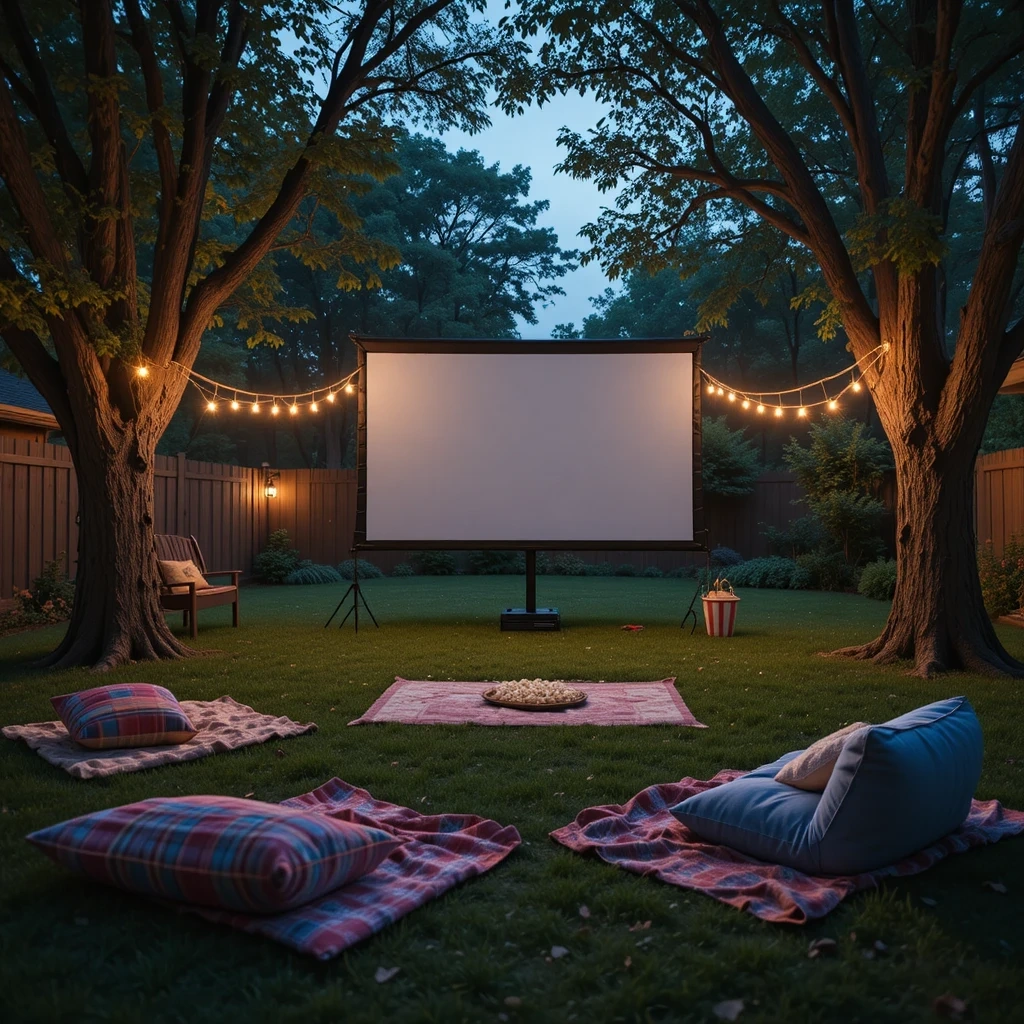
Turn your backyard into a family cinema with a simple outdoor movie setup. Movie nights under the stars are unforgettable family experiences that kids look forward to all week — and they’re easier to put together than you’d think. Shop on Amazon
How to Style It:
- Hang a white projector screen between two trees or mount it on a fence or stand
- Arrange floor cushions, bean bags, and blankets in front for maximum comfort
- String warm fairy lights overhead to set the mood
- Set up a popcorn and snack station to one side
Where to Use It: Any flat area of the backyard with enough darkness in the evenings. Works best in a yard with natural privacy from tall fences or hedging.
Pro Tip: Invest in a quality portable projector with good brightness (at least 3000 lumens) so the picture is clear even before it’s fully dark. Pair it with a Bluetooth speaker for great sound without disturbing neighbors.
10. Raised Deck with Play Space Below
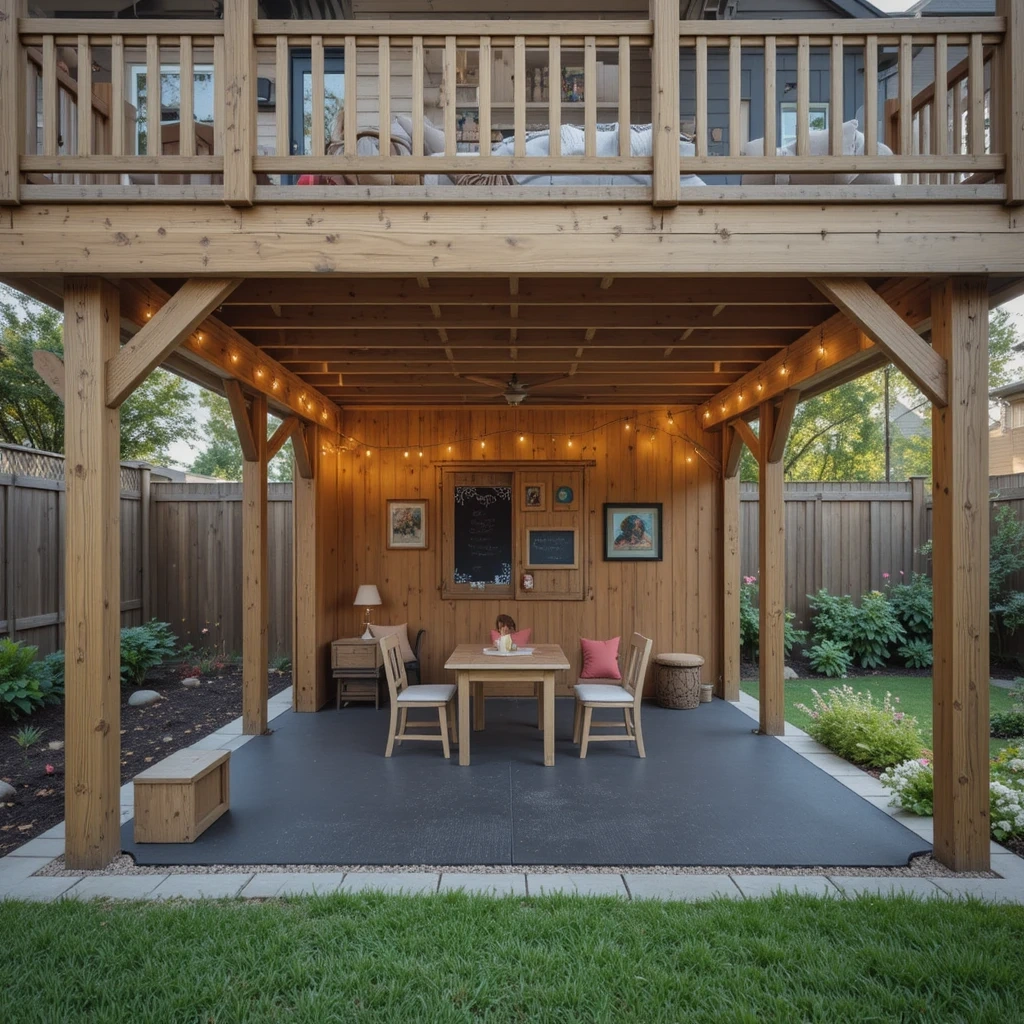
If your backyard features a raised deck, the space underneath is a treasure waiting to be unlocked. With a bit of creativity, under-deck space becomes a cozy den, a rainy-day hangout, or a shaded play area that kids can escape to in all weather. Shop on Amazon
How to Style It:
- Lay rubber or artificial turf flooring under the deck to create a clean, safe surface
- Hang fairy lights along the joists above for warm, cozy lighting
- Add a small table and two chairs for reading, drawing, or playing board games
- Paint one support beam with chalkboard paint for extra fun
Where to Use It: The underside of any raised deck with at least 4 feet of clearance. Add lattice panels on the open sides to create a sense of enclosure while allowing airflow.
Pro Tip: Install proper drainage to prevent water pooling under the deck during rain. Use weather-resistant furniture and supplies so the space stays usable year-round.
11. Backyard Camping Zone
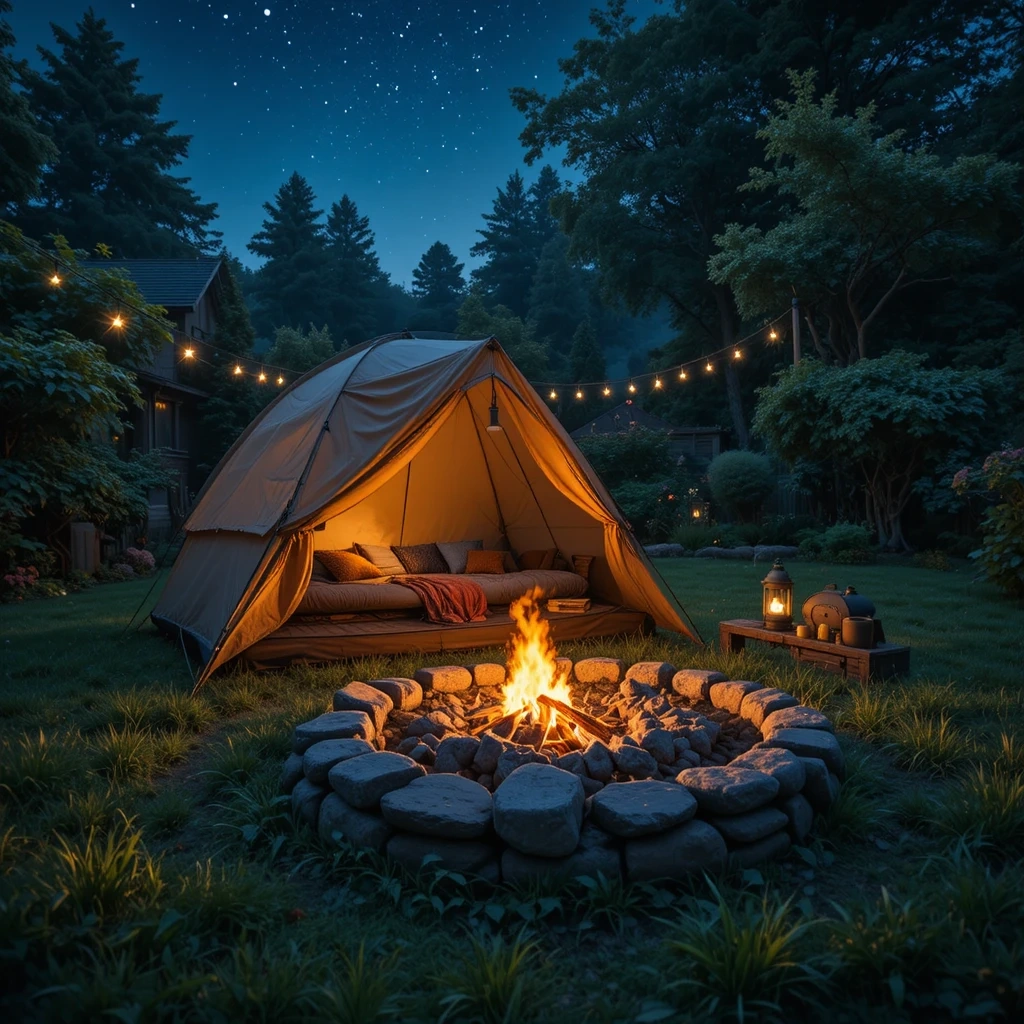
Inspire a love of adventure and the outdoors with a dedicated backyard camping area. From stargazing nights to nature scavenger hunts, a camping zone gives children an authentic outdoor experience just steps from home. Shop on Amazon
How to Style It:
- Designate a flat, grassy area as the “campsite” and mark it with a ring of decorative rocks
- Use a child-sized tent or teepee for overnights or daytime play
- Create a faux campfire ring using stones with battery-operated LED “flames” in the center
- Hang lanterns from nearby trees for a true camping atmosphere
Where to Use It: An open, flat area of the lawn away from the main walking path. Ensure it’s far enough from fences for tent pegs and ground sheets.
Pro Tip: Turn camping nights into learning adventures: print out a star map, set up a bug-catching kit, or do a nature journaling activity. These moments become treasured childhood memories.
12. Colorful Backyard Obstacle Course
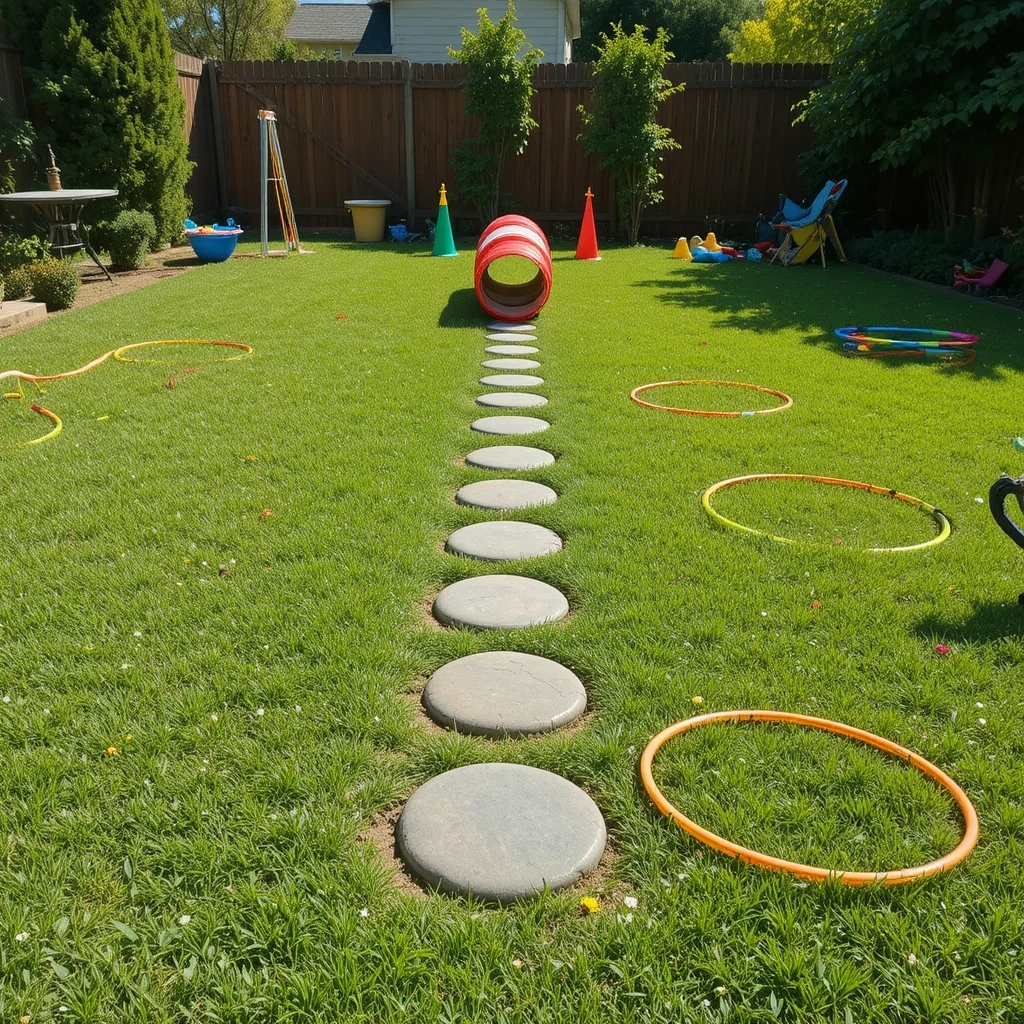
A DIY obstacle course is one of the most versatile and affordable backyard play ideas. You can set it up differently each time using cones, hoops, stepping stones, tunnels, and balance boards — keeping it fresh and exciting all season long. Shop on Amazon
How to Style It:
- Use flat stepping stone circles (foam or plastic) in a rainbow pattern across the grass
- Add a pop-up crawl tunnel as the course centerpiece
- Include hula hoops flat on the ground for a “lily pad” jumping station
- Set up traffic cones for a zig-zag running section
Where to Use It: Any open lawn area. The beauty of a DIY course is that it’s completely portable and can be rearranged in minutes. Works in small and large yards alike.
Pro Tip: Time the kids on a stopwatch and let them try to beat their own records — this makes the obstacle course self-motivating and competitive in a healthy, fun way. Rotate elements weekly to keep interest high.
Bonus: Quick Comparison — Best Play Ideas by Age Group
| Play Area | Best Age Group | Indoor/Outdoor | Budget Level |
|---|---|---|---|
| Sandbox & Water Table | 1–5 years | Outdoor | $ Low |
| Mud Kitchen | 2–7 years | Outdoor | $ Low |
| Kids’ Vegetable Garden | 3–10 years | Outdoor | $$ Medium |
| Playhouse (Cottage Style) | 3–9 years | Outdoor | $$$ High |
| Outdoor Art Station | 3–12 years | Outdoor | $$ Medium |
| Swing Set with Slide | 3–12 years | Outdoor | $$$ High |
| Trampoline | 5–14 years | Outdoor | $$$ High |
| Climbing Wall / Ninja Course | 5–14 years | Outdoor | $$$ High |
| Backyard Camping Zone | 4–14 years | Outdoor | $$ Medium |
| Obstacle Course | 3–12 years | Outdoor | $ Low |
| Under-Deck Play Den | 3–10 years | Semi-Outdoor | $$ Medium |
| Outdoor Movie Night | All ages | Outdoor | $$ Medium |
Common Mistakes to Avoid
1. Ignoring Safety Surfaces Hard ground under swings, slides, and climbing structures is a major hazard. Always use rubber mulch, engineered wood fiber, or artificial turf with a padded base beneath all elevated equipment.
2. Buying Too Young or Too Old Choose equipment appropriate for your child’s current age — not where you hope they’ll be in 3 years. A play structure that’s too advanced can be dangerous, while one that’s too simple will be abandoned quickly.
3. Placing Structures Too Close Together Each play structure needs its own clearance zone. Crowding them together creates collision risks during peak play sessions.
4. Skipping Shade Planning Direct afternoon sun turns metal slides and plastic equipment dangerously hot. Always plan for shade using a pergola, shade sail, or tree canopy over high-use areas.
5. Neglecting Regular Maintenance Wood splinters, loose bolts, cracked plastic, and worn ropes are common but entirely avoidable with seasonal checkups. Set a spring and autumn maintenance date on your calendar.
6. Overlooking Drainage Play areas with standing water become muddy, slippery, and unusable. Ensure your play zones have proper ground drainage or a gravel base layer.
Frequently Asked Questions
Q: What is the safest ground cover for a kids’ play area? A: Engineered wood fiber (EWF), rubber mulch, and pour-in-place rubber are among the top-rated safe surfacing options. They provide excellent shock absorption for falls and are durable year-round.
Q: How much space do I need for a backyard play area? A: A basic play area can work in as little as 200 square feet. For a full swing set with clearance zones, aim for at least 400–600 square feet. Multi-feature setups benefit from 800+ square feet.
Q: At what age can kids use a trampoline safely? A: Most pediatric guidelines recommend trampolines for children 6 years and older, with adult supervision. For younger children, look for mini-trampolines designed specifically for toddlers.
Q: How do I make a play area that grows with my child? A: Choose modular play systems that allow you to add or swap components over time. A simple swing can be replaced with a trapeze bar; a baby slide can be upgraded to a taller one. Sandbox play naturally evolves into gardening or mud kitchen play as children age.
Q: Can I build a backyard play area on a budget? A: Absolutely. An obstacle course, mud kitchen, sandbox, and outdoor art station can all be built or sourced second-hand for under $200 total. Focus on open-ended, versatile equipment rather than large single-use structures.
Q: How do I make the play area look nice while still being functional? A: Use natural materials like cedar wood and stone, keep a consistent color palette, frame the area with garden beds or low shrubs, and choose equipment in complementary colors. The most beautiful play areas are those where nature and play design work together seamlessly.