10 Fun Water Table Ideas for Kids Outdoor Play Activities
Water tables are one of the best investments you can make for your little ones during warm-weather months. They combine sensory play, motor skill development, and pure joy — all in one splashy spot. Whether you have a tiny balcony or a sprawling backyard, there’s a water table setup that fits your space, your budget, and your child’s imagination.
From simple bubble stations to full-on mini ecosystems, water table ideas grow with your kids. The setup options are nearly endless, which means you’ll never run out of fresh ways to keep the fun going — and keep young minds engaged and learning while they play.
The 10 Best Water Table Ideas for Families and Kids
1. Bubble Science Station
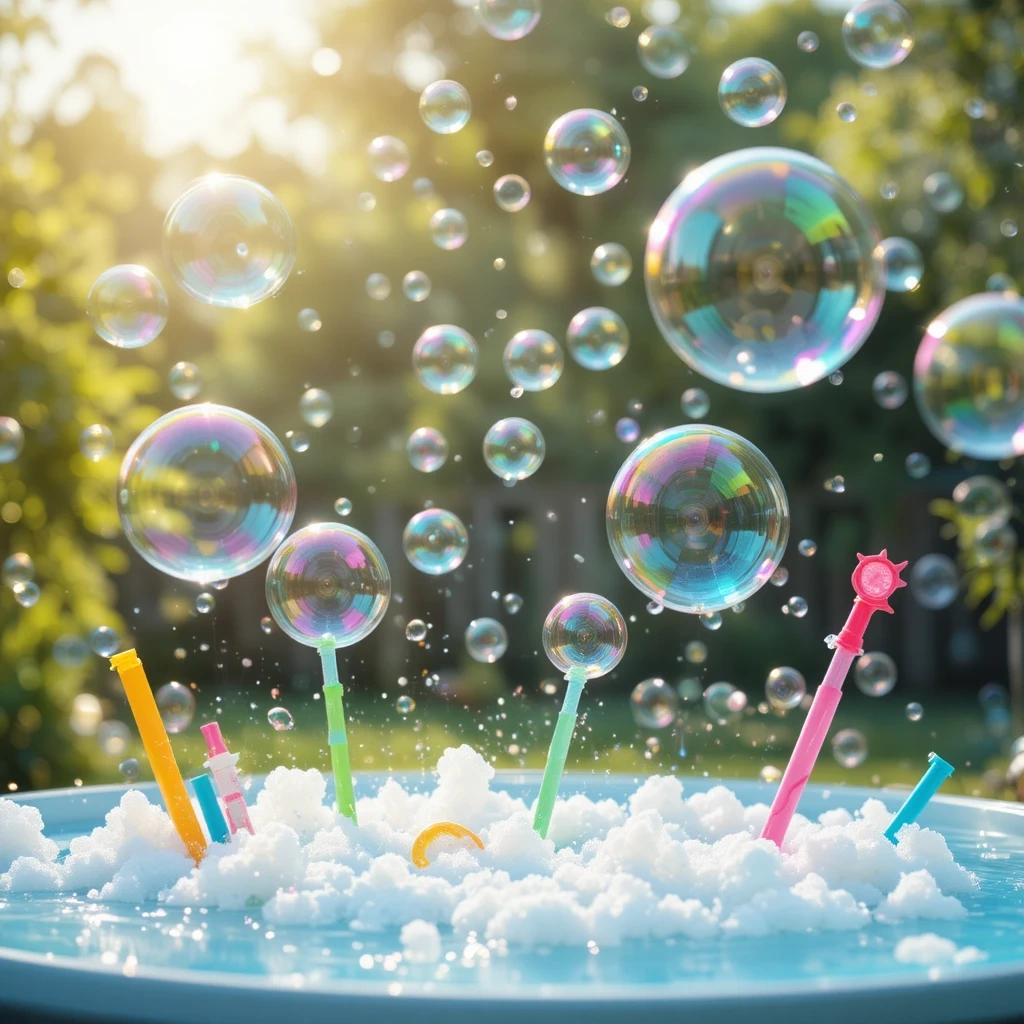
Turn your water table ideas into a fizzing, bubbling wonderland! Fill it with soapy water and give kids a variety of wands, straws, and bubble tools to experiment with. It’s messy, magical, and surprisingly educational. Shop on Amazon
How to Style It:
- Use a wide, shallow table so bubbles have room to float
- Add a few drops of food coloring to the water for “rainbow bubbles”
- Mix dish soap with a small amount of glycerin for stronger, longer-lasting bubbles
- Provide different-shaped wands: star, circle, square
Where to Use It: Best used outdoors on a grassy area or patio. Avoid windy days for best bubble results.
✨ Pro Tip: Add a little corn syrup to your bubble mix — it makes bubbles thicker and way more satisfying to pop!
2. Mini Ocean World
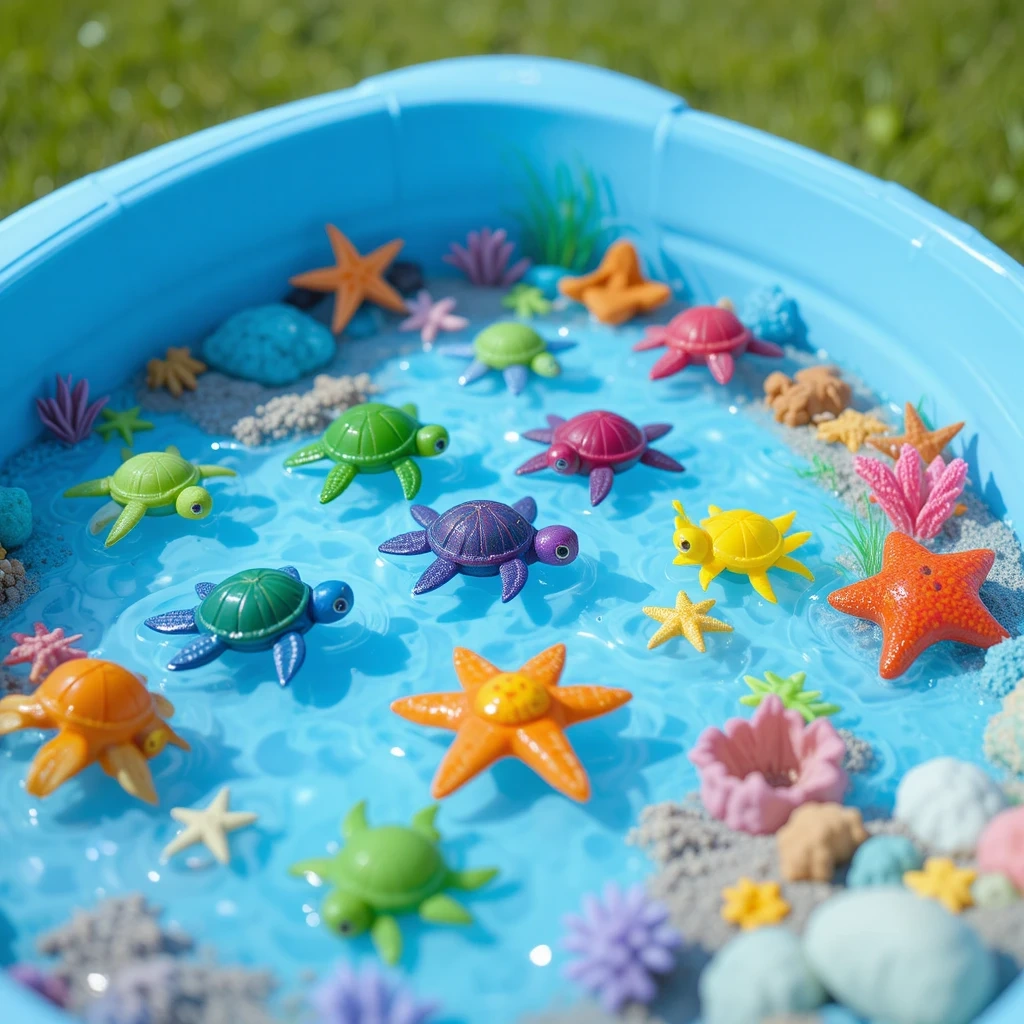
Bring the beach to your backyard! Fill the table with blue-tinted water, plastic sea creatures, shells, and a little kinetic sand on one side to create a mini coastal world kids can play in for hours. Shop on Amazon
How to Style It:
- Add a few drops of blue food coloring to the water
- Include plastic sea animals, toy boats, and real shells
- Add a section of kinetic sand or play sand for the “shore”
- Use blue and white striped towels nearby to enhance the beach vibe
Where to Use It: Perfect for backyard use. Can also work on a covered porch or deck.
✨ Pro Tip: Freeze small sea creatures inside ice cubes the night before — kids will love “rescuing” them as the ice melts!
3. Sensory Mud Kitchen Splash Zone
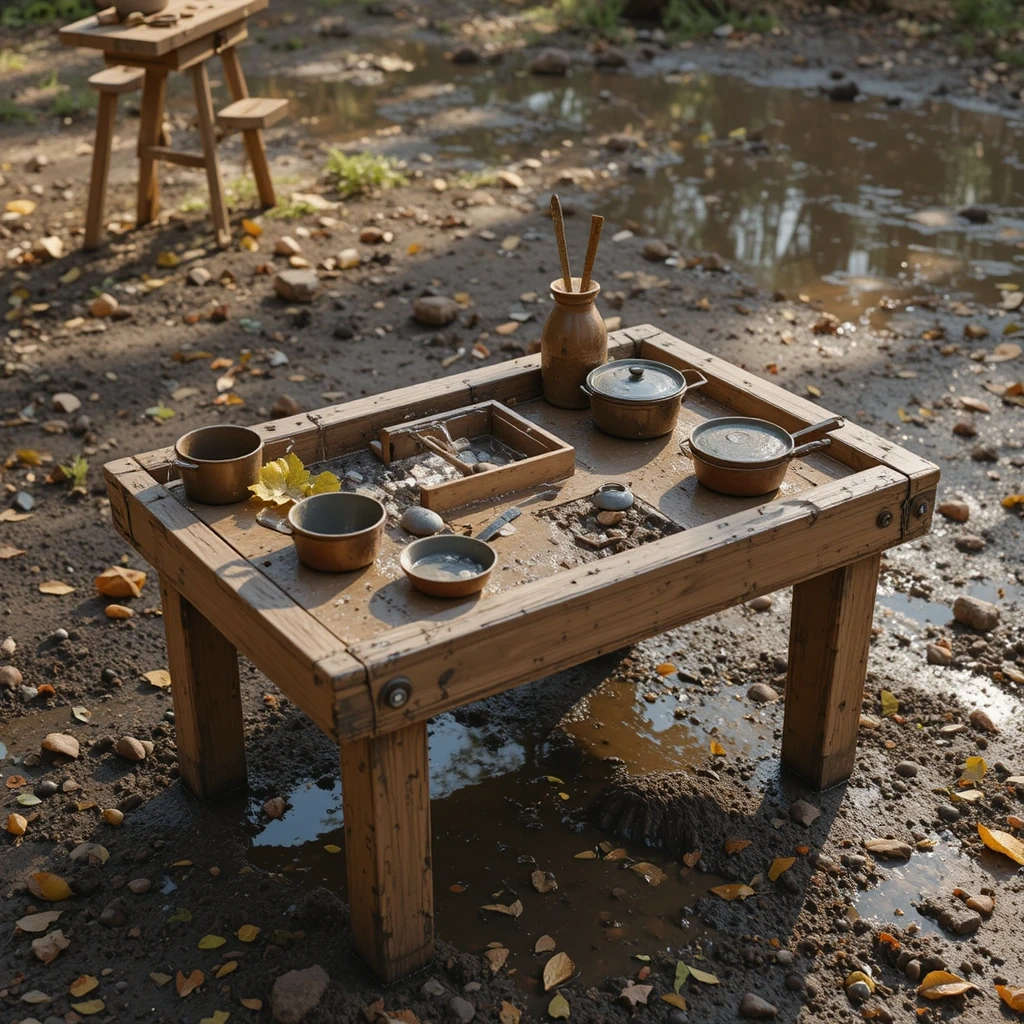
Combine water with nature for a sensory-rich experience! Set up a water table ideas next to a small mud patch, and let kids mix, pour, and “cook” with natural materials like leaves, sticks, pebbles, and mud. It’s wonderfully messy and developmentally brilliant. Shop on Amazon
How to Style It:
- Use old pots, pans, and spoons from your kitchen
- Collect natural items: pine cones, acorns, flowers, leaves
- Lay a tarp or old shower curtain underneath to contain the mess
- Provide small pitchers and cups for pouring play
Where to Use It: Best in a garden or grassy yard. Keep a hose nearby for easy cleanup.
✨ Pro Tip: Add dried herbs like lavender or mint to the water — it creates a calming scent and adds a sensory layer kids love.
4. Dinosaur Dig & Splash
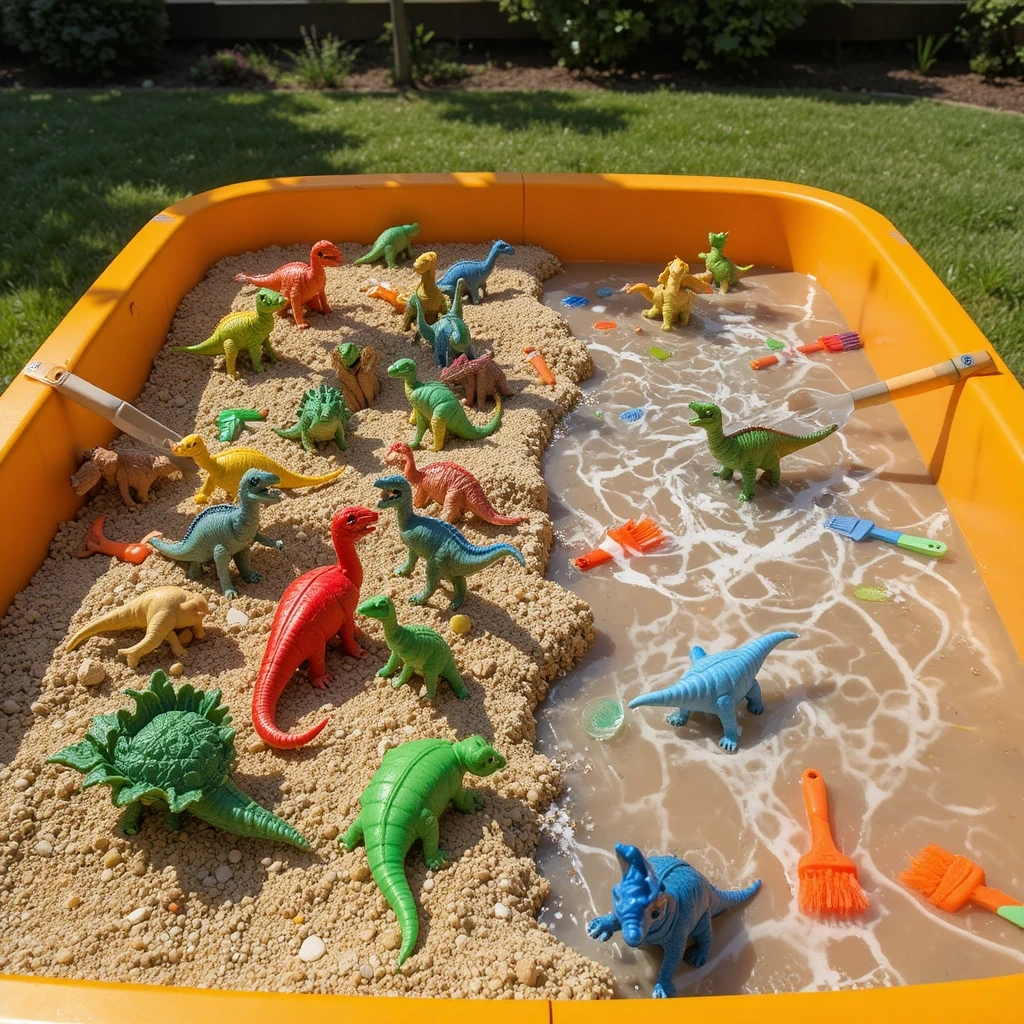
Dino-mad kids will absolutely love this one! Combine a water table with a mini archaeological dig experience — bury plastic dinosaurs in kinetic sand on one side and use water tools on the other to “excavate” and clean them off Shop on Amazon
How to Style It:
- Use a two-section water table or place a small bin with sand beside the main table
- Partially bury toy dinosaurs in kinetic or play sand
- Provide small brushes, squirt bottles, and tweezers for excavation
- Add green-tinted water for a “swamp” effect
Where to Use It: Works great outdoors. Can be adapted for a covered patio if weather is unpredictable.
✨ Pro Tip: Print out a simple “dino identification sheet” so kids can match each dinosaur they find — it adds a literacy and science element!
5. Color Mixing Lab
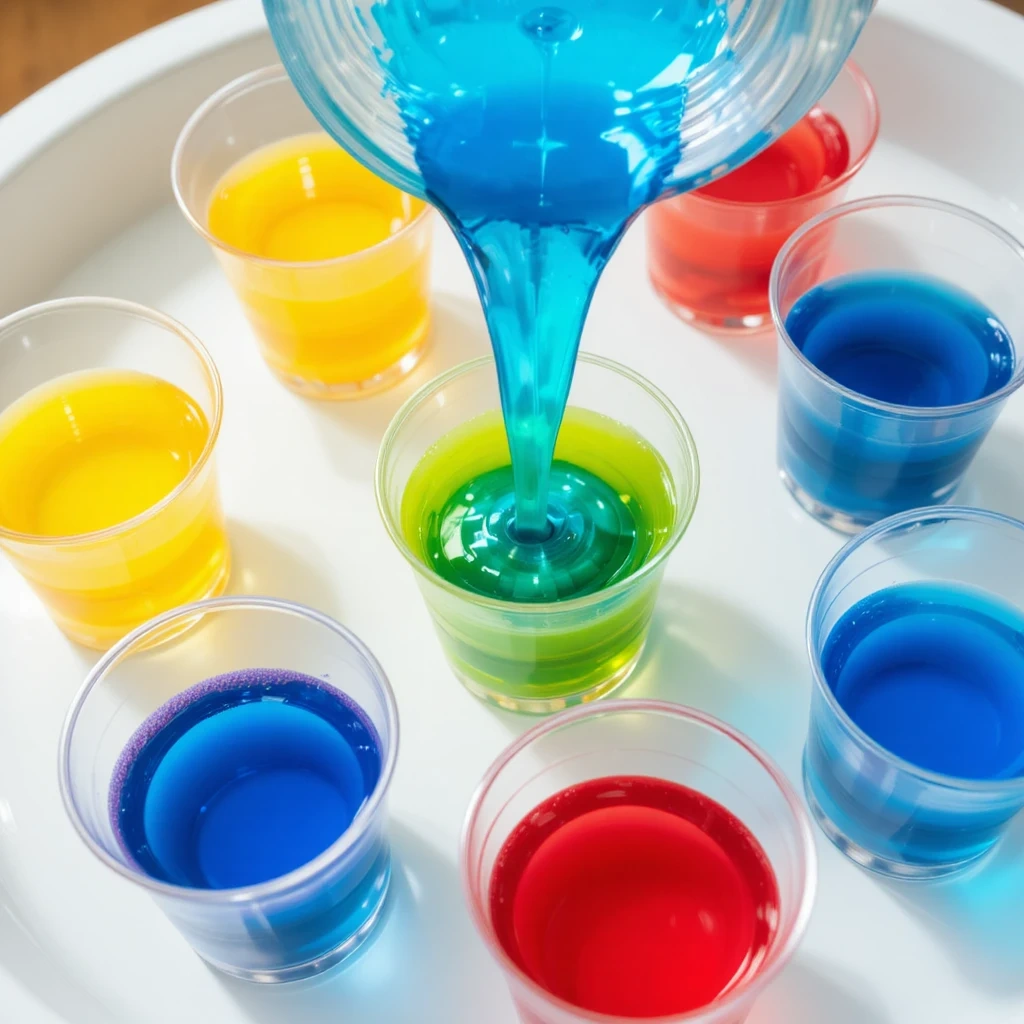
This idea turns your water table into a hands-on science experiment! Set up cups of food-colored water in primary colors and let kids discover what happens when they mix them. It’s one of the most “wow” moments in early childhood science play. Shop on Amazon
How to Style It:
- Use a clear or white water table so color mixing is visible
- Set out red, yellow, and blue dyed water in small pitchers or squeeze bottles
- Provide syringes, droppers, and clear cups for mixing
- Tape a color wheel to the side of the table for reference
Where to Use It: Best outdoors — food coloring can stain. Dress kids in old clothes or use a smock.
✨ Pro Tip: Use a white plastic cutting board inside the table base — it makes color mixing much more visible and vibrant for little learners!
6. Construction Zone Splash Site
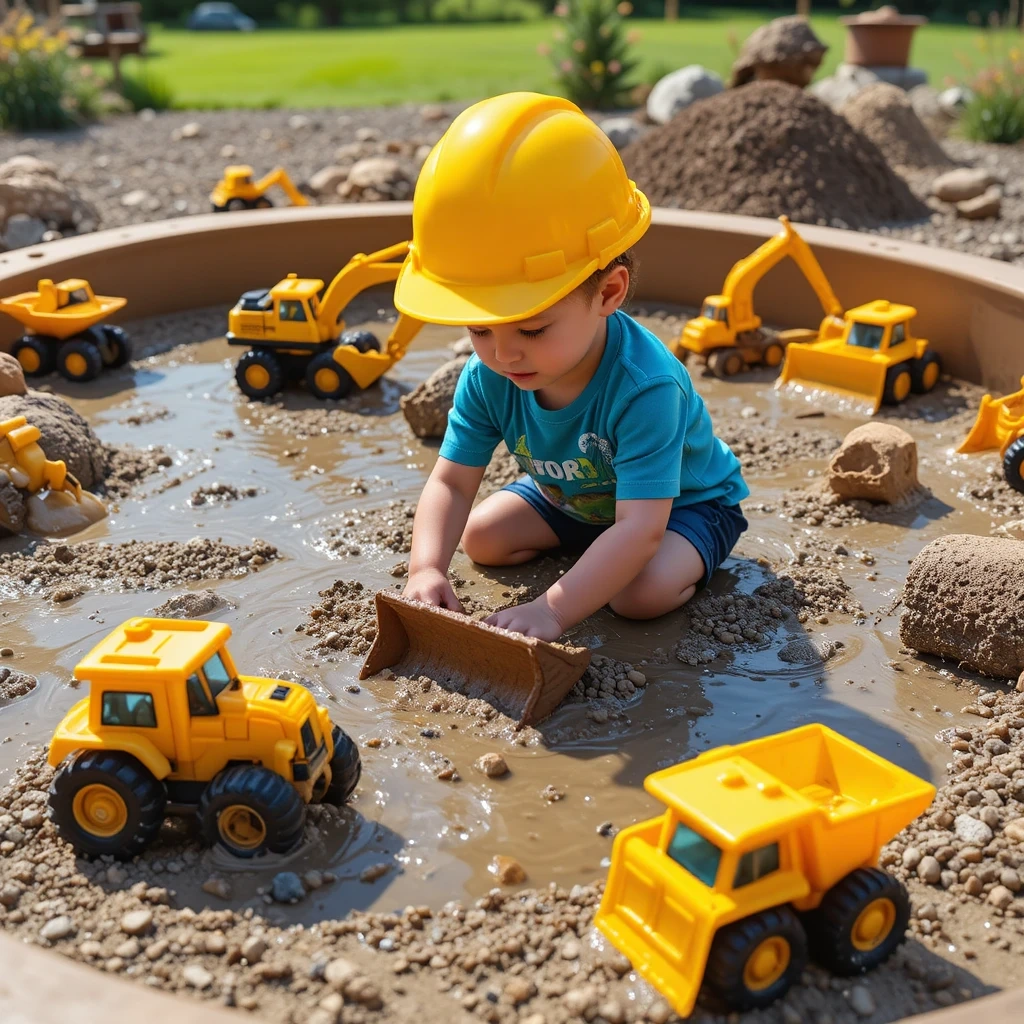
For kids who love trucks, digging, and building — this one’s pure gold. Set up the water table with construction-themed toys, gravel, sand, and water to create a mini worksite where they can operate dump trucks, load diggers, and pour “cement.” Shop on Amazon
How to Style It:
- Fill one section with wet sand and another with water
- Add toy trucks, diggers, cranes, and cones
- Use small rocks or gravel as “building materials”
- Include cups and funnels for hauling and pouring
Where to Use It: Ideal for patios, driveways, or backyards. Place on a tarp for easy cleanup.
✨ Pro Tip: Use cornstarch mixed with water to create “oobleck” — a non-Newtonian fluid that acts like both liquid and solid, making it the most fascinating “cement” your little builders have ever seen!
7. Fairy Garden Water World
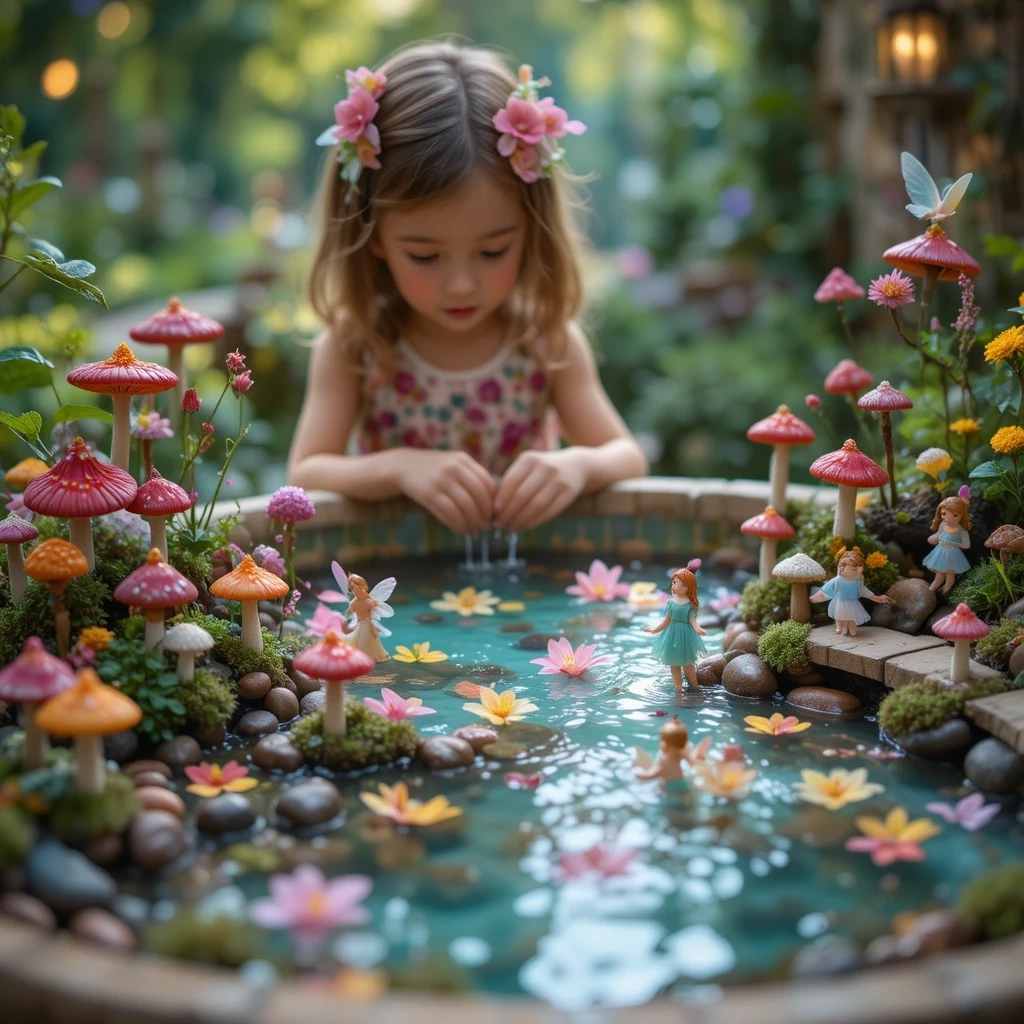
Create an enchanted mini world that blends fairy tale imagination with hands-on nature play. Decorate the water table with mini flowers, pebbles, tiny figures, and floating petals to spark creative and imaginative storytelling. Shop on Amazon
How to Style It:
- Float real flower petals and leaves in the water
- Add mini fairy figurines, gnomes, or woodland creatures
- Use small stones, moss, and twigs to create a landscape around the edges
- Provide small cups, spoons, and watering cans as “fairy tools”
Where to Use It: Wonderful for covered patios or calm garden spaces. Best for ages 3 and up.
✨ Pro Tip: Let your child pick fresh flowers or herbs from the garden to float in the table — the ownership of gathering materials makes the play even more meaningful!
8. Boat Racing Track
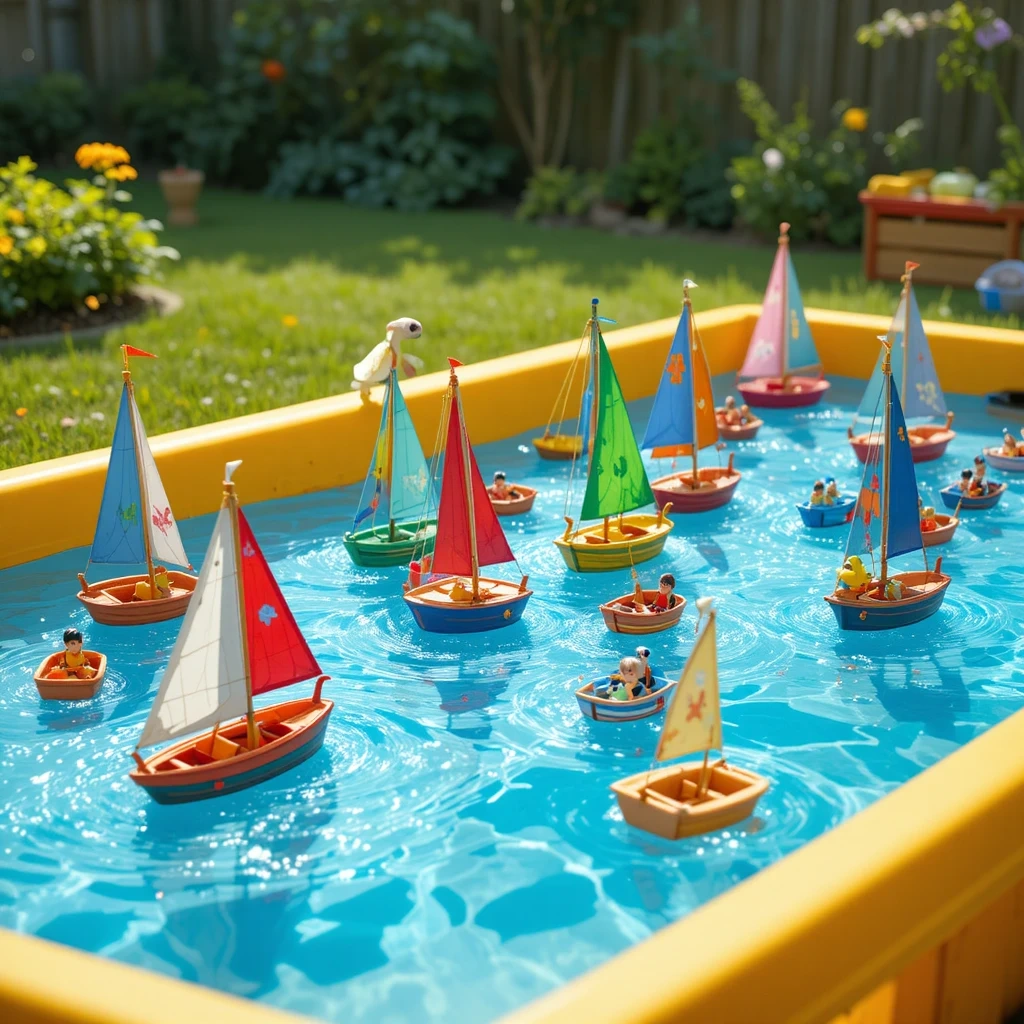
Ready, set, splash! Set up the water table as a boat racing lane and let kids race their boats using blowing, hand-powered waves, or small fans. It teaches cause and effect, speed, and friendly competition in the most delightful way. Shop on Amazon
How to Style It:
- Use a rectangular table for a natural “lane” design
- Mark start and finish lines with tape or floating foam pieces
- Provide a variety of boats: sail, wooden, foam, and DIY walnut shell boats
- Use small hand fans or straws for blowing propulsion
Where to Use It: Perfect on any flat outdoor surface. Works on a patio, deck, or lawn.
✨ Pro Tip: Make DIY boats from walnut shells, cork pieces, or milk carton lids — the crafting process is half the fun, and kids race what they build!
9. Frozen Treasure Hunt
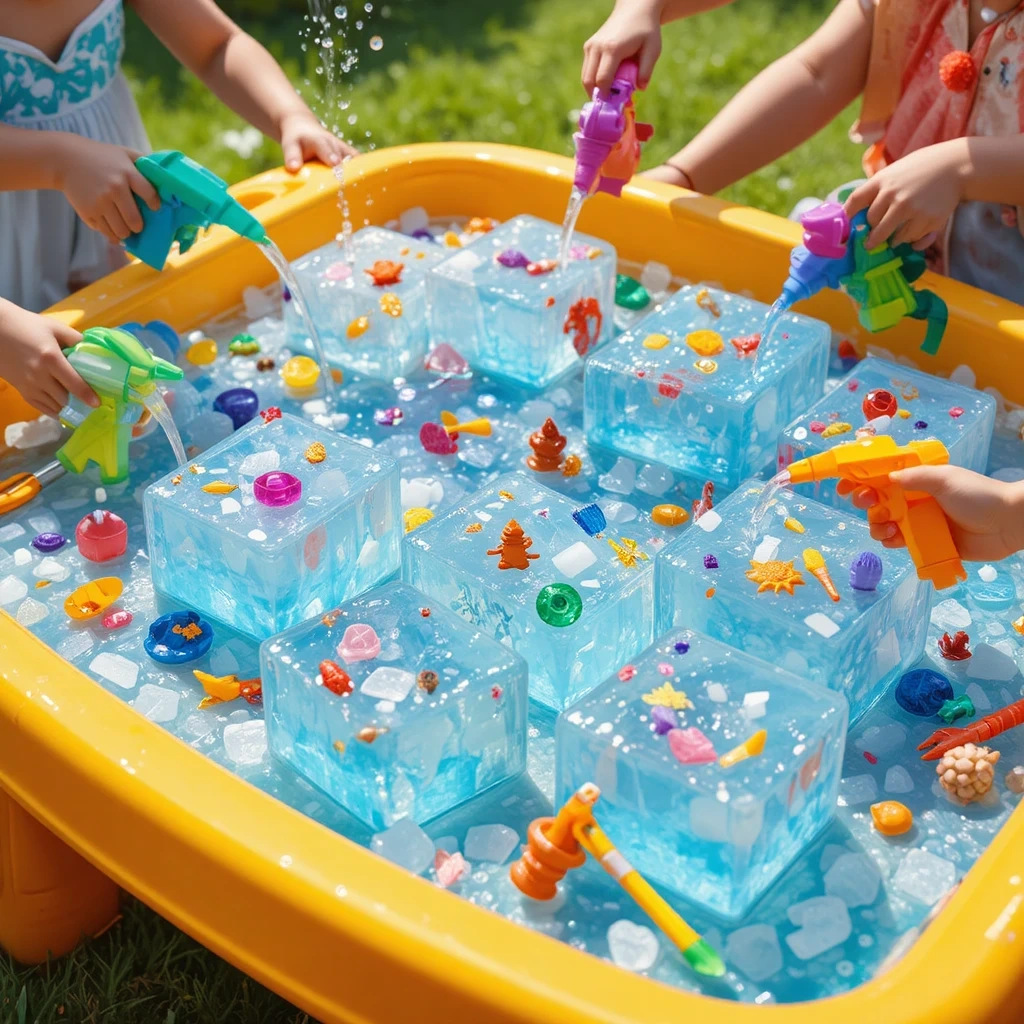
Freeze small toys, gems, and figures inside large blocks of ice and let kids use warm water, salt, and tools to excavate their treasures. It’s a multi-sensory, patience-building experience that kids talk about for days afterward. Shop on Amazon
How to Style It:
- Freeze toys, gems, or small figures in large containers or balloons 24–48 hours ahead
- Place the ice blocks in the water table
- Provide tools: squirt bottles with warm water, salt shakers, small hammers, and brushes
- Add blue food coloring to the water for a glacial effect
Where to Use It: Best in warm weather so the ice melts at a satisfying rate. Works in sun or shade.
✨ Pro Tip: Freeze items in layers over 2–3 days so different treasures appear as kids dig deeper — it keeps the excitement building the whole time!
10. Garden Science Exploration Table
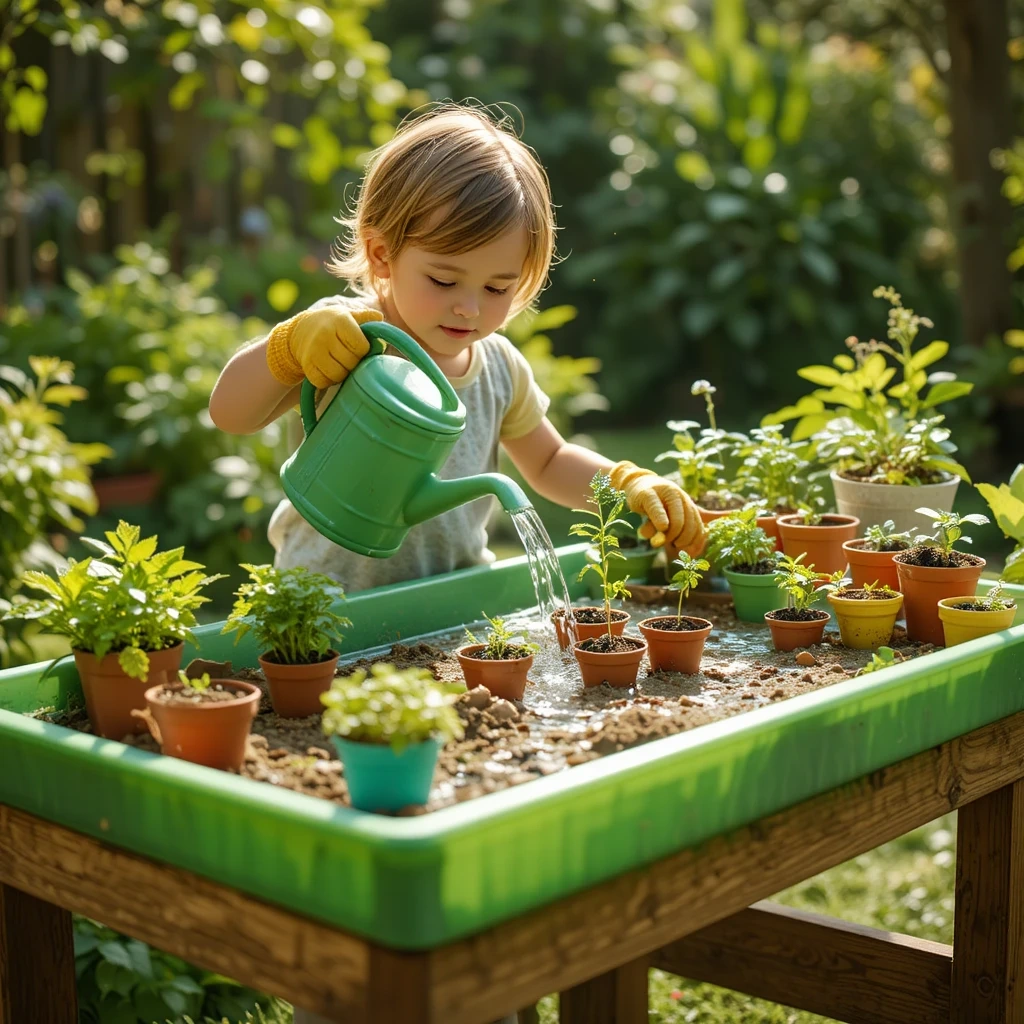
Turn water table play into a nature classroom! Add herbs, seeds, small plants, and soil-filled containers alongside the water so kids can learn about plant care, water cycles, and growth in a hands-on way that’s genuinely fascinating. Shop on Amazon
How to Style It:
- Place small potted herbs or seedlings around the table
- Fill the main table with water for watering practice
- Add magnifying glasses, journals, and seed packets
- Label each plant with a simple card kids can read
Where to Use It: Ideal for garden spaces or near a garden bed. Works beautifully as a homeschool or summer learning activity.
✨ Pro Tip: Pair this with a simple observation journal — even pre-readers can draw what they see. It builds a love of science and the natural world that lasts well beyond the water table years!
Safety Tips for Water Table Play
Before the splashing starts, keep these quick safety rules in mind:
- Always supervise — Never leave children unattended near water, even shallow water tables
- Drain when not in use — Standing water can become a breeding ground for mosquitoes and bacteria within 24–48 hours
- Check for sharp edges — Inspect tables and accessories before play, especially older or second-hand equipment
- Sun protection — Apply sunscreen and provide shade, especially during peak sun hours (10am–2pm)
- Non-slip surfaces — Place the table on grass or use a non-slip mat underneath to prevent slipping
- Age-appropriate toys — Avoid small pieces around children under 3 due to choking hazards
Common Mistakes to Avoid
1. Filling the table too high Overfilling leads to constant spillage and mess. Fill to about two-thirds capacity for the sweet spot of play without overflow.
2. Leaving water sitting overnight Stagnant water becomes a bacteria and algae problem fast — especially in warm weather. Empty, rinse, and allow the table to dry after every use.
3. Using real glass or ceramic items Stick with plastic and silicone tools. Drops happen, and broken pieces near wet, barefoot children is a recipe for injury.
4. Setting up on uneven ground An uneven table tips easily. Always set up on a flat, stable surface and check all legs or stands are secure before adding water.
5. Ignoring the cleanup setup No towel station = soggy children running inside. Set up a designated drying area with towels, a change of clothes, and a hose or outdoor shower nearby before you begin.
6. Buying overly complicated setups for toddlers Simple is better for the youngest kids. A basic table with cups, funnels, and plain water will keep a 2-year-old busier than the most elaborate themed setup.
7. Not rotating the ideas Bringing out the same setup every day leads to boredom. Rotate through different themes weekly to keep the excitement and engagement level high all summer long.
Frequently Asked Questions
Q: What age is a water table appropriate for? Most water tables are designed for children aged 18 months and up. Always check the manufacturer’s recommended age range and supervise all children, especially those under 3.
Q: How often should I change the water? Ideally, change the water daily or after every session. Bacteria can grow rapidly in standing water, particularly in warm outdoor temperatures.
Q: Can I use a water table indoors? Yes! Place a large waterproof mat or old shower curtain beneath the table, work over a tiled or hardwood floor (not carpet), and keep the water level lower than usual to minimize splashing.
Q: What can I add to water table water to make it safer? A small splash of baby-safe water play tablets or a tiny drop of bleach (just a few drops per gallon, like pool water) can help keep the water cleaner for longer. Always rinse the table thoroughly after.
Q: How do I store a water table through winter? Drain and dry thoroughly, clean with a mild bleach solution, let it dry completely, and store it upside down or in a covered shed or garage. This prevents mold, discoloration, and damage from freezing temperatures.
Q: Are food colorings safe for kids in water play? Standard food-grade food colorings are non-toxic but can stain skin and clothing temporarily. For kids with sensitive skin, use water-soluble paint tablets designed specifically for water tables instead.
Q: How do I keep bugs out of the water table? Drain it when not in use, add a few drops of essential oil (like lavender or peppermint) to the water, and keep it covered with a fitted lid or large towel between play sessions.
Wrapping Up: Make Every Splash Count
Water table ideas are so much more than just a fun outdoor toy — they’re a space where science, creativity, sensory development, and imagination all come together in the most natural way. Whether you go full dinosaur excavation or keep it beautifully simple with a bubble station, the real magic is in the memories being made alongside the mess.
Pick one or two ideas from this list to start, rotate through the seasons, and watch how water play evolves as your children grow. The best part? You don’t need to spend a fortune to create something truly extraordinary — just a little water, a little imagination, and a whole lot of willingness to get splashed.