10 Beautiful Green Kitchen Ideas for a Fresh and Stylish Home
Your kitchen is the heart of your home — the place where lunches get packed, birthday cakes are baked, and family stories are shared over a warm stove. Going green in the kitchen doesn’t mean giving up style or comfort. In fact, a Green Kitchen Ideas can be the most vibrant, welcoming, and joyful space in your entire house.
Whether you’re starting from scratch or just looking to refresh what you already have, these ideas will help you create a kitchen that feels good, looks stunning, and is safe and fun for every member of the family — kids included.
Why a Green Kitchen ideas? A Quick Word Before We Dive In
Green kitchens have exploded in popularity — and for good reason. From soft sage to bold forest green, this color family brings nature indoors in the most beautiful way. Studies show that green tones reduce stress, improve focus, and even make food look more appetizing. Plus, when paired with natural materials like wood and stone, a green kitchen feels timeless — not trendy.
And the best part? You don’t need a full renovation to bring this look to life. Many of these ideas are easy weekend projects, renter-friendly, or surprisingly affordable. Ready? Let’s explore!
Idea #1 — Sage Green Cabinets: The Timeless Classic
What It Is
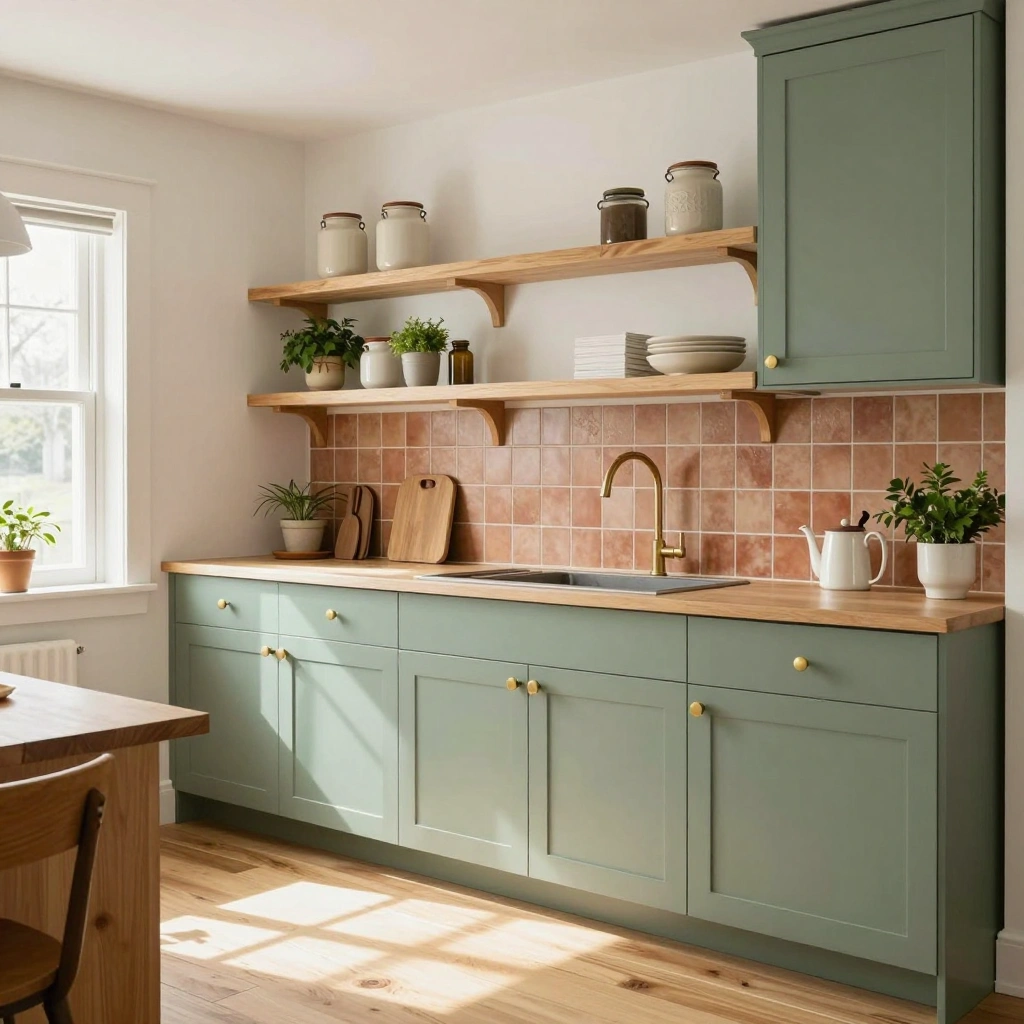
Sage green cabinets are the undisputed star of the green kitchen world. This soft, muted, grey-green tone works in almost any kitchen — from modern to farmhouse to transitional — and never goes out of style. Shop on Amazon
Why Families Love It
Sage is calming without being dull. It hides everyday smudges better than white, pairs beautifully with both wood and stainless steel, and gives your kitchen a pulled-together, designer look that kids and adults both feel comfortable in.
How to Style It:
- Pair with warm white or cream walls to keep the space bright and open
- Add brass or matte black hardware for an elevated, intentional look
- Use open wooden shelves above the counter to display jars, plants, and cookbooks
- Lay a terracotta or cream tile backsplash for warmth and contrast
- Bring in woven basket storage for a cozy, natural feel
Where to Use It:
Upper cabinets, lower cabinets, a kitchen island, or a standalone pantry cabinet — all work beautifully in sage green.
Pro Tip:
If you’re renting or on a tight budget, try sage green cabinet paint (brands like Annie Sloan or Frenchic are family favorites) instead of replacing cabinets entirely. A single weekend project can completely transform your kitchen!
Idea #2 — Emerald Green Kitchen Island: A Bold Statement Piece
What It Is
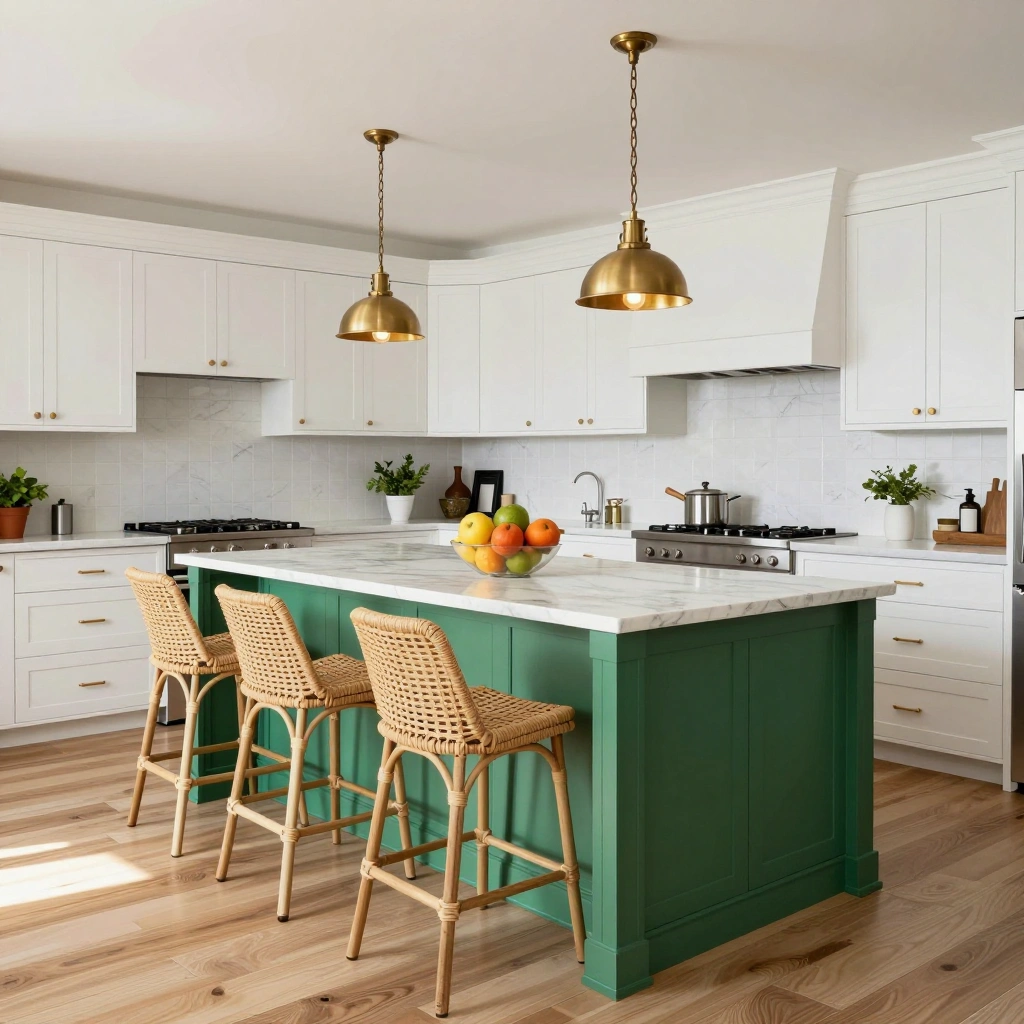
While keeping the rest of your kitchen neutral, paint or install a deep emerald green kitchen island as your showstopping focal point. This single move adds luxury and personality without overwhelming the space. Shop on Amazon
Why Families Love It
The island is where kids do homework, guests gather for drinks, and you roll out cookie dough. Making it the star of the room in a bold, rich green turns an everyday surface into something special — and kids absolutely love having a “fun” kitchen.
How to Style It:
- Keep surrounding cabinets white or light grey to let the island breathe
- Choose marble or light quartz countertops on the island for elegant contrast
- Add rattan or wooden stools for a relaxed, family-friendly seating area
- Hang statement pendant lights in black or brass directly over the island
- Place a small herb planter or fruit bowl on top for everyday charm
Where to Use It:
Best suited for kitchens with an existing island or a large peninsula. Also works beautifully on a standalone butcher block island on wheels.
Pro Tip:
Use chalk paint on a pre-existing island for a budget-friendly transformation. Chalk paint requires minimal prep, dries quickly, and gives a gorgeous matte finish that’s easy to touch up when kids inevitably make their mark!
Idea #3 — Green Subway Tile Backsplash: Classic With a Twist
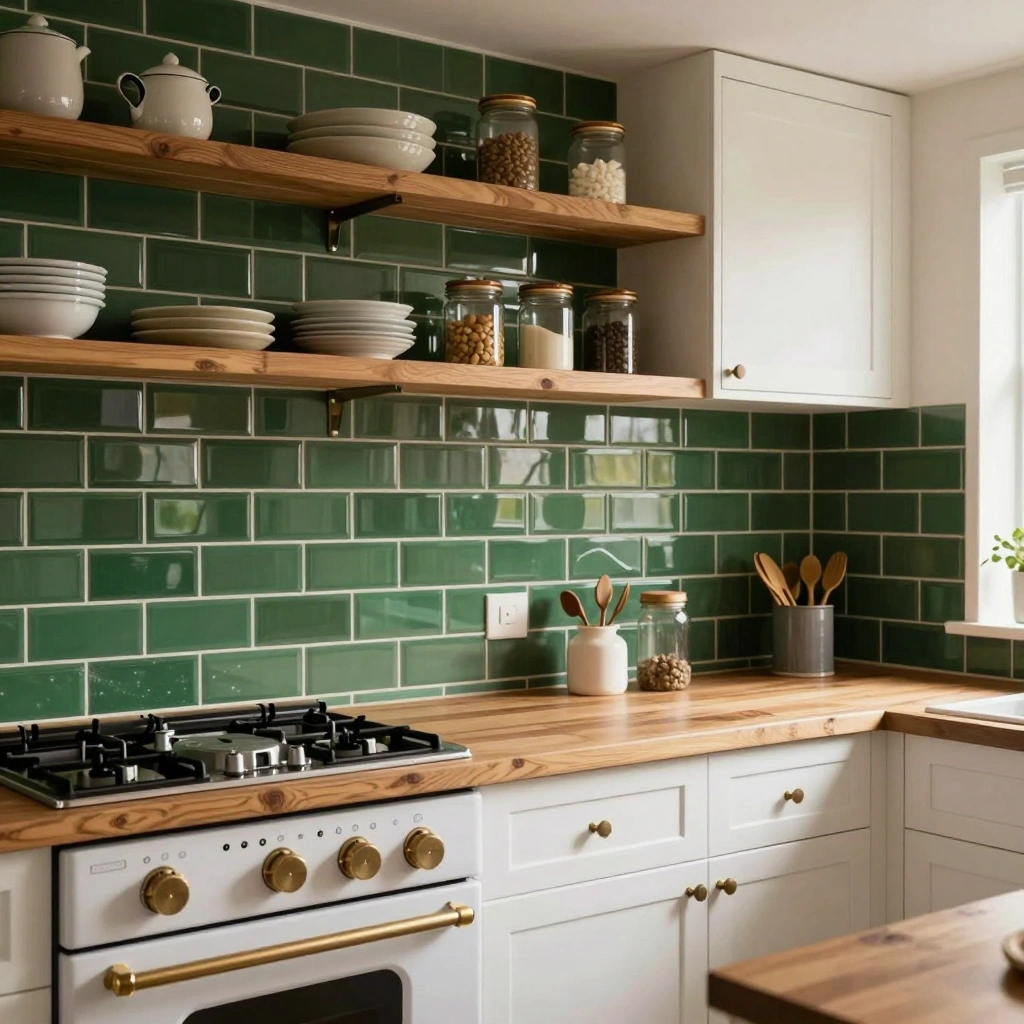
What It Is
Replace a plain or outdated backsplash with green subway tiles — whether in glossy forest green, sage, or soft mint. It’s one of the most impactful and affordable kitchen upgrades you can make. Shop on Amazon
Why Families Love It
Tiles are easy to wipe clean (hello, tomato sauce splashes!), durable for busy kitchens, and timeless in design. A green tile backsplash adds color and personality without committing to a full paint job or cabinet replacement.
How to Style It:
- Go glossy for a bright, light-reflecting finish or matte for a more earthy, grounded look
- Use white grout for a crisp contrast or grey grout for a more sophisticated tone
- Lay tiles in a classic horizontal stack, a herringbone pattern, or a vertical stack for something unexpected
- Combine with white cabinets and butcher block counters for a fresh farmhouse look
- Frame the backsplash with simple wooden shelves on either side
Where to Use It:
Behind the stove, from counter to ceiling on a feature wall, or as a full kitchen backsplash wrap-around.
Pro Tip:
Dark grout stains less visibly over time in a busy family kitchen — consider charcoal or dark grey grout with your green tiles for a more practical, low-maintenance choice.
Idea #4 — Indoor Herb Garden Wall: Green You Can Actually Eat
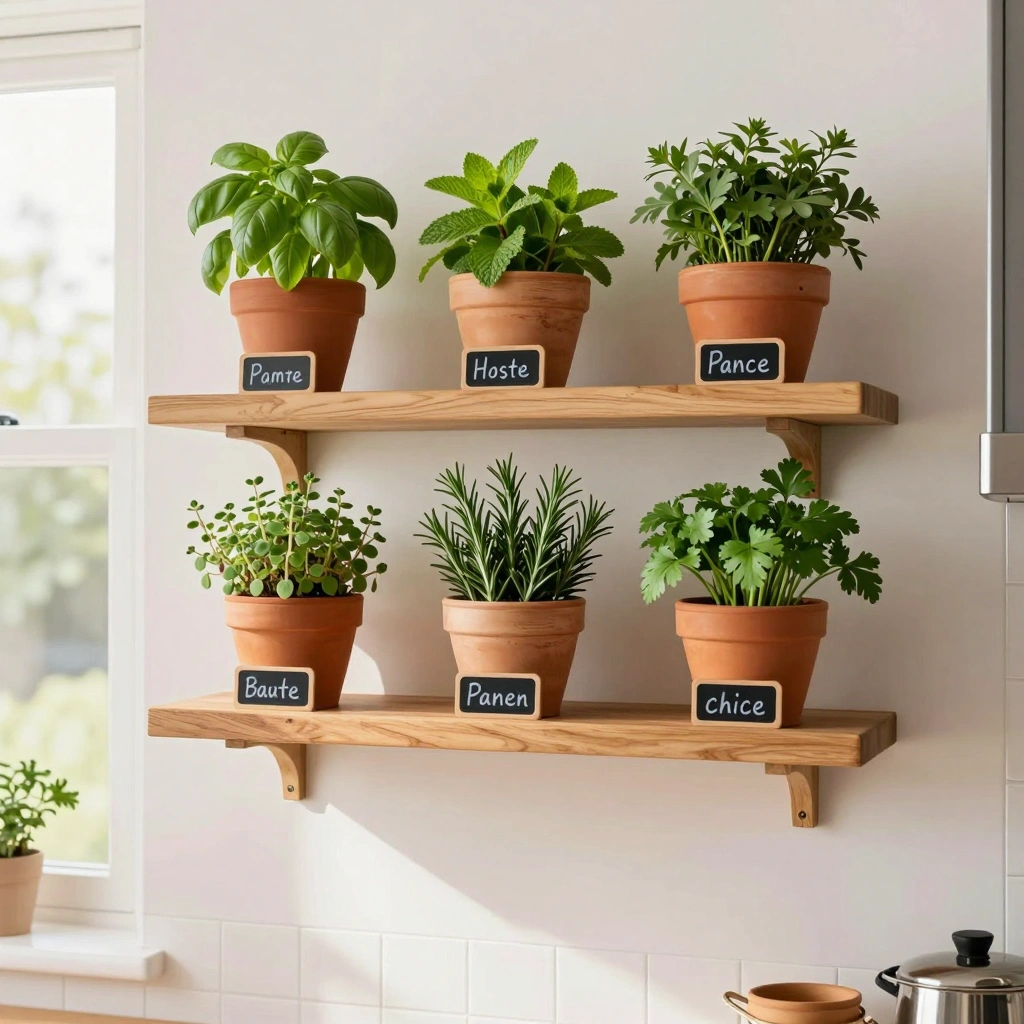
What It Is
Transform one kitchen wall or windowsill into a lush, living herb garden. Think basil, mint, rosemary, parsley, and thyme — all within arm’s reach while you cook. Shop on Amazon
Why Families Love It
This is the green kitchen idea that keeps on giving. Kids love watering and watching things grow, and having fresh herbs at home saves money and reduces plastic packaging. It also makes your kitchen smell incredible all year long.
How to Style It:
- Use matching terracotta pots on a wooden wall-mounted shelf for a cohesive, curated look
- Try magnetic jars on a metal backsplash strip for a modern, minimal herb display
- Create a vertical hanging planter with macramé holders for a bohemian touch
- Label each pot with small chalkboard tags for a charming, functional detail
- Keep herbs near a south-facing window for maximum natural light
Where to Use It:
Windowsills, open shelving, a dedicated wall strip above the counter, or even on top of the refrigerator if natural light reaches it.
Pro Tip:
Start with basil, mint, and chives — they’re the easiest to grow indoors, grow quickly enough to excite kids, and are the most used herbs in everyday family cooking. Mint especially thrives indoors and keeps pests away naturally!
Idea #5 — Forest Green Feature Wall: Drama Without the Full Commitment
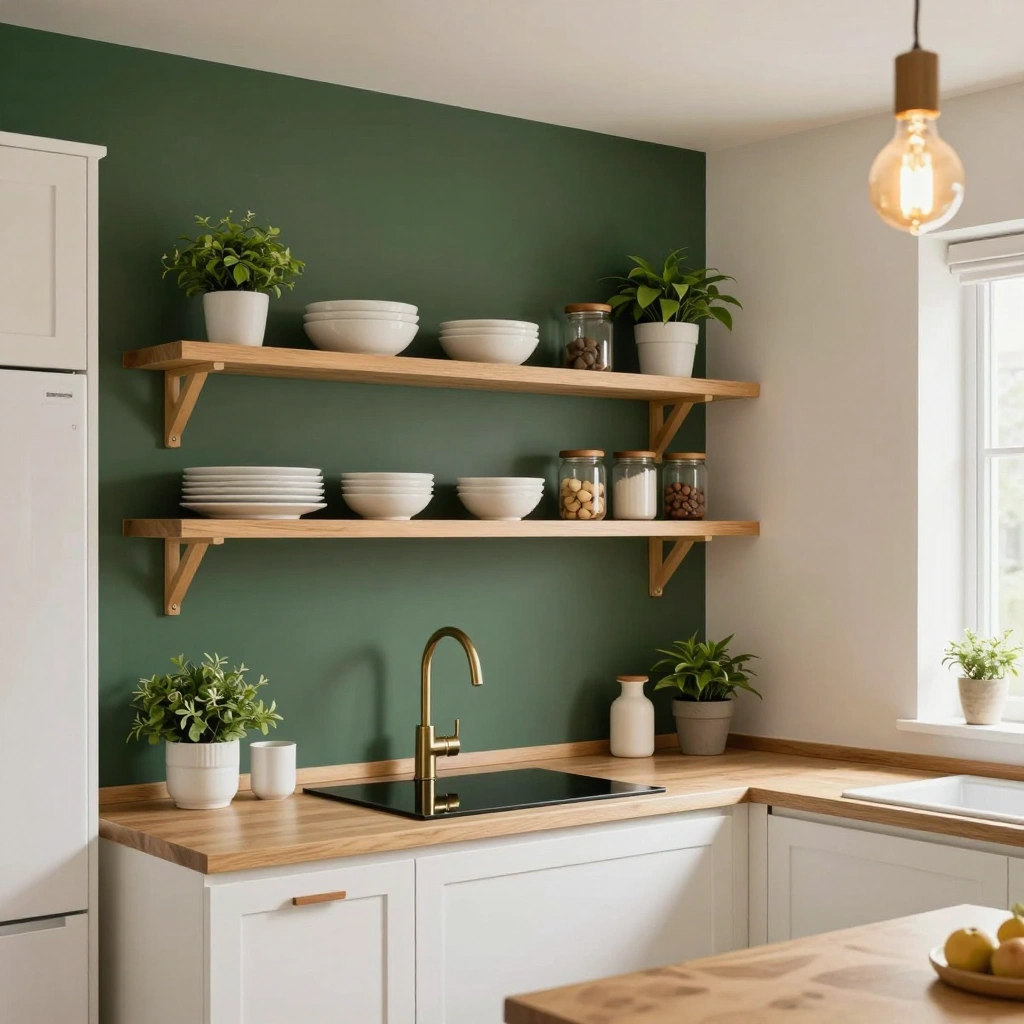
What It Is
Paint just one wall — typically behind open shelving, the stove, or a breakfast nook — in a deep, dramatic forest or hunter green. This is your accent wall, your kitchen’s personality wall. Shop on Amazon
Why Families Love It
It’s bold without being overwhelming. A single painted wall takes a few hours, costs under $50, and can be repainted if you change your mind. It’s one of the most reversible ways to make a big visual impact.
How to Style It:
- Layer floating wooden shelves in front of the green wall stacked with white dishes, books, and plants
- Add warm Edison bulb lighting or wall sconces on either side to make the wall glow in the evening
- Hang a statement mirror with a brass or black frame against the green for depth and light
- Use cream or white accessories (bowls, mugs, cutting boards) on the wall shelves for contrast
- Place a small dining table and chairs in front for a cozy breakfast nook effect
Where to Use It:
Behind the stove and hood, on the wall opposite the main window, or in a dining area connected to an open-plan kitchen.
Pro Tip:
Use eggshell or satin finish paint rather than matte for kitchen walls — it’s much easier to wipe down after cooking splashes while still looking refined and not overly shiny.
Idea #6 — Green Kitchen Curtains & Textiles: Soft and Switchable
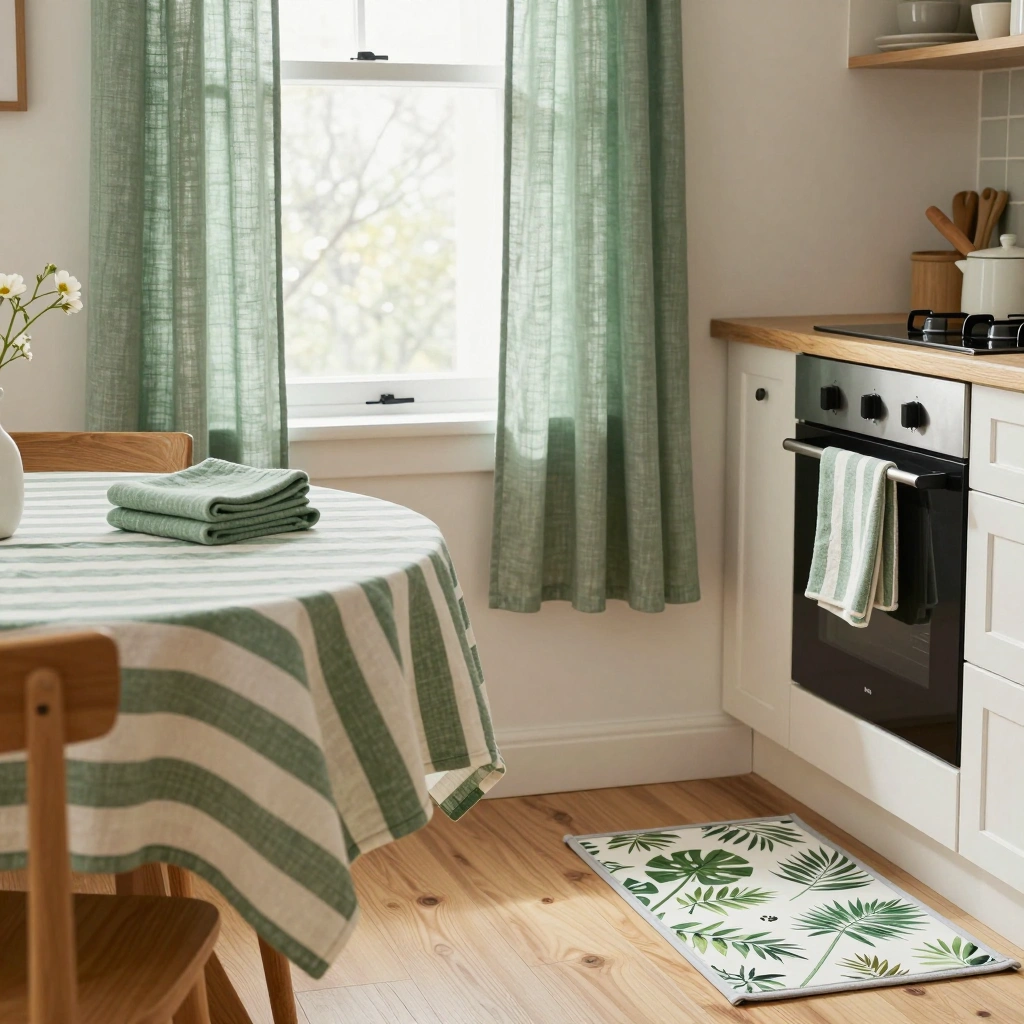
What It Is
Introduce green through soft furnishings — curtains, tea towels, a table runner, seat cushions, or a kitchen rug. This is the gentlest, most flexible way to add green to your kitchen. Shop on Amazon
Why Families Love It
Textiles can be swapped out seasonally, washed easily, and changed as your taste evolves. They’re also a perfect starting point if you’re not ready to commit to paint or new cabinets. And with kids around, having machine-washable green pieces is a practical dream.
How to Style It:
- Hang linen curtains in sage or olive at the kitchen window for soft, natural movement
- Layer a green-and-white striped or checkered tablecloth on a kitchen table for a French country feel
- Display folded green tea towels on an oven rail hook for a styled, practical touch
- Add a washable kitchen runner rug in green or botanical print to anchor the space
- Use green cushion covers on breakfast nook bench seating
Where to Use It:
Windows, table surfaces, countertop accessories, and floor areas throughout the kitchen.
Pro Tip:
Mix two or three shades of green in your textiles (for example, sage curtains + olive cushions + forest green tea towels) rather than matching exactly. This layered approach looks far more intentional and designer than a single-shade match.
Idea #7 — Olive Green Lower Cabinets With White Uppers: Two-Tone Perfection
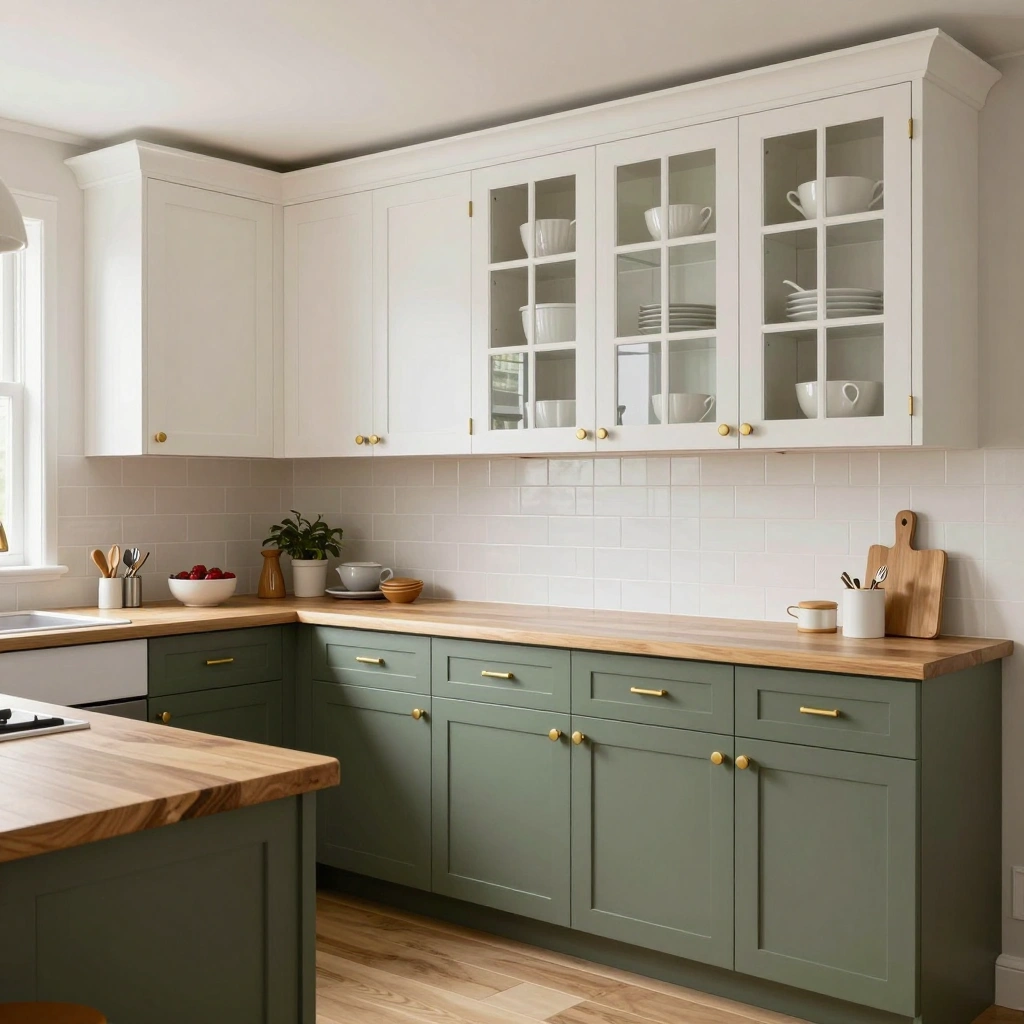
What It Is
The two-tone cabinet trend is one of the most popular in kitchen design — and pairing olive or dark green lower cabinets with crisp white upper cabinets is one of its most beautiful expressions. Shop on Amazon
Why Families Love It
Upper cabinets stay bright and airy (making the kitchen feel bigger), while lower cabinets anchor the room with depth and color. It’s sophisticated but not intimidating — and surprisingly great at hiding the bumps and scuffs that come with a family kitchen life.
How to Style It:
- Choose olive, avocado, or hunter green for the lower cabinets depending on your existing light levels
- Keep upper cabinets crisp white or very light cream for maximum contrast
- Use the same hardware finish (brass or matte black) on both upper and lower for visual unity
- Add a butcher block or light quartz countertop to bridge the two tones naturally
- Include glass-front upper cabinet doors for added airiness
Where to Use It:
Works in almost any kitchen layout — galley, L-shaped, U-shaped, or open plan. Especially beautiful in kitchens with good natural light.
Pro Tip:
If you’re painting yourself, use a foam roller (not a brush) on flat cabinet doors for the smoothest, most professional finish — no brush marks, no streaks. Apply three thin coats rather than one thick one for best results.
Idea #8 — Botanical and Green Wallpaper: Pattern With Purpose
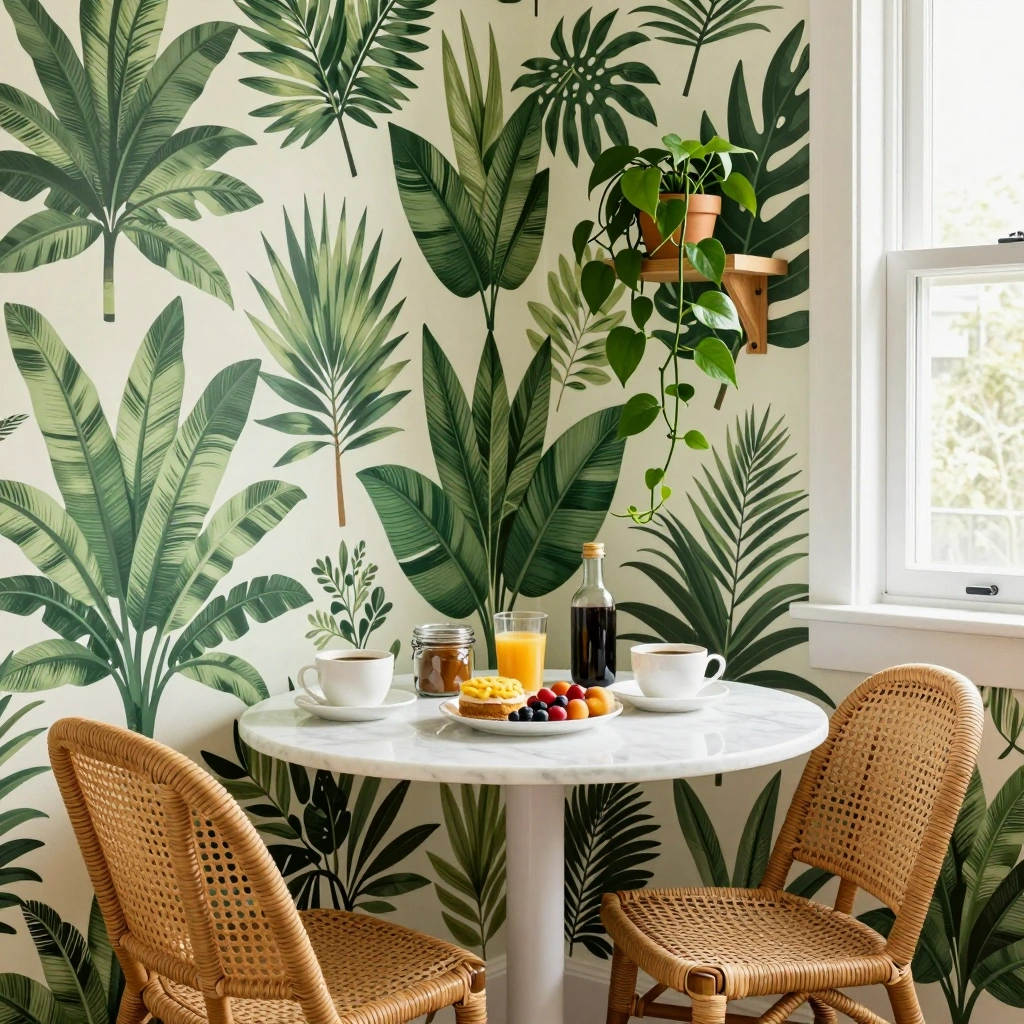
What It Is
Use a botanical, leaf print, or tropical-patterned wallpaper in your kitchen — either on all four walls or as a single feature wall. This instantly brings the garden indoors in the most dramatic and joyful way. Shop on Amazon
Why Families Love It
Botanical wallpaper is a visual adventure — kids love spotting the leaves, birds, and flowers within the pattern. It’s also surprisingly versatile: a small kitchen with bold wallpaper feels intentional and curated, not overwhelming.
How to Style It:
- Choose vinyl or washable wallpaper specifically designed for kitchens — splashes and steam are no match for it
- Pair bold botanical walls with simple, unfussy white cabinets and minimal countertop clutter
- Use natural rattan or wicker accessories to complement the botanical theme
- Add real trailing plants (like pothos or ivy) on shelves to blur the line between art and nature
- Frame the wallpaper area with simple white picture rail molding for a polished, intentional look
Where to Use It:
A breakfast nook, a pantry interior, a small galley kitchen end wall, or behind open shelving.
Pro Tip:
Even the inside of a pantry or larder door painted or wallpapered in a beautiful botanical print creates a gorgeous surprise moment every time you open it — a lovely, low-commitment way to enjoy the trend.
Idea #9 — Green Kitchen Appliances & Accessories: Easy, Affordable, Impactful
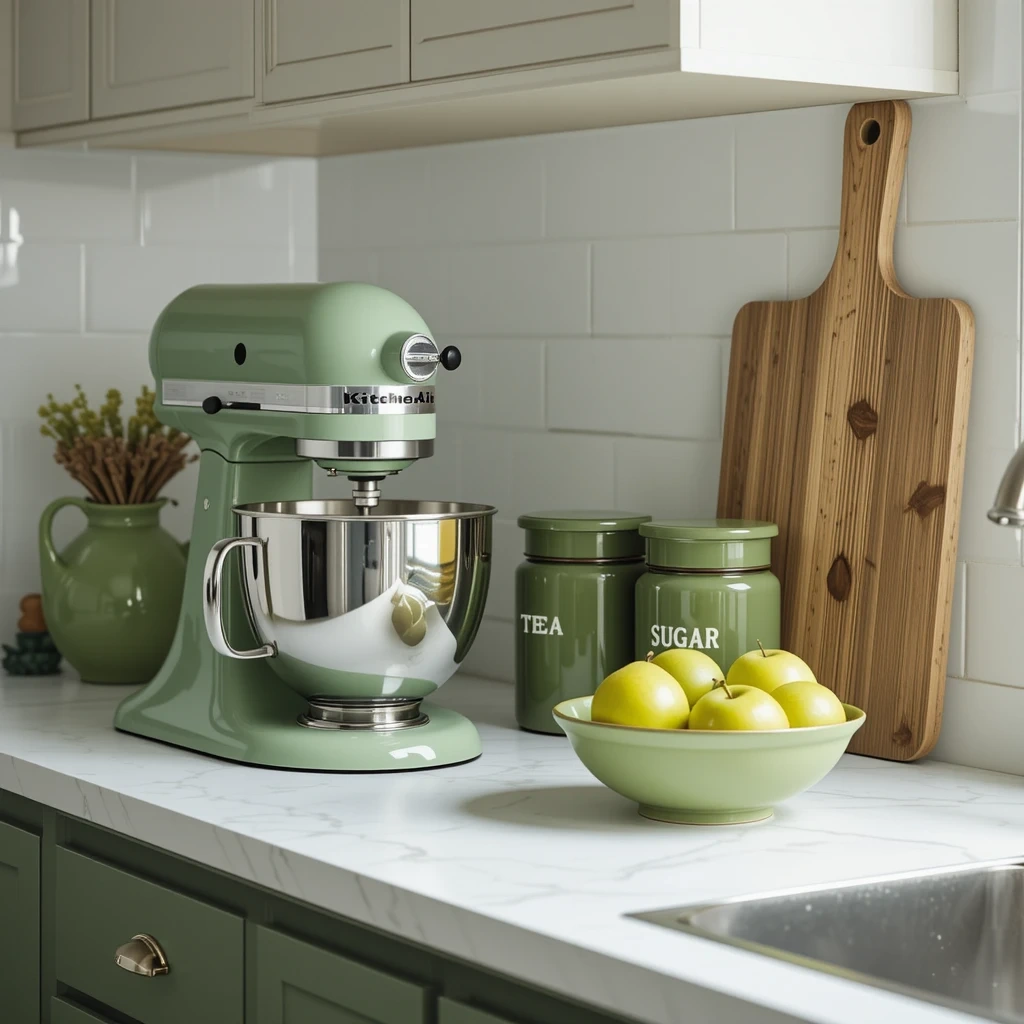
What It Is
Introduce green through your countertop appliances and kitchen accessories — a sage green stand mixer, a forest green kettle, olive green canisters, or a mint green toaster. This is green kitchen decorating at its most accessible. Shop on Amazon
Why Families Love It
No paint, no tiles, no renovation needed. Coloured appliances and accessories can be swapped in gradually, gifted, or replaced if your style changes. They also make wonderful conversation starters and add genuine joy to everyday tasks like making morning coffee.
How to Style It:
- Group your green appliances together on one counter section for a styled, intentional vignette
- Mix textures: a matte green kettle next to a glossy green KitchenAid looks intentionally curated
- Use green ceramic canisters for tea, coffee, sugar, and flour on open shelving
- Display green cutting boards (bamboo naturally has green tones) propped upright as decor
- Add a green fruit bowl or serving dish as an everyday centerpiece on the kitchen table
Where to Use It:
Countertops, open shelving, kitchen tables — anywhere accessories naturally live.
Pro Tip:
When building a collection of green accessories, stick to two or three shades maximum and choose pieces with similar finishes (all matte or all glossy). This prevents the look from becoming chaotic and keeps it feeling like a deliberate design choice.
Idea #10 — Biophilic Green Kitchen: Bringing Nature Fully Indoors
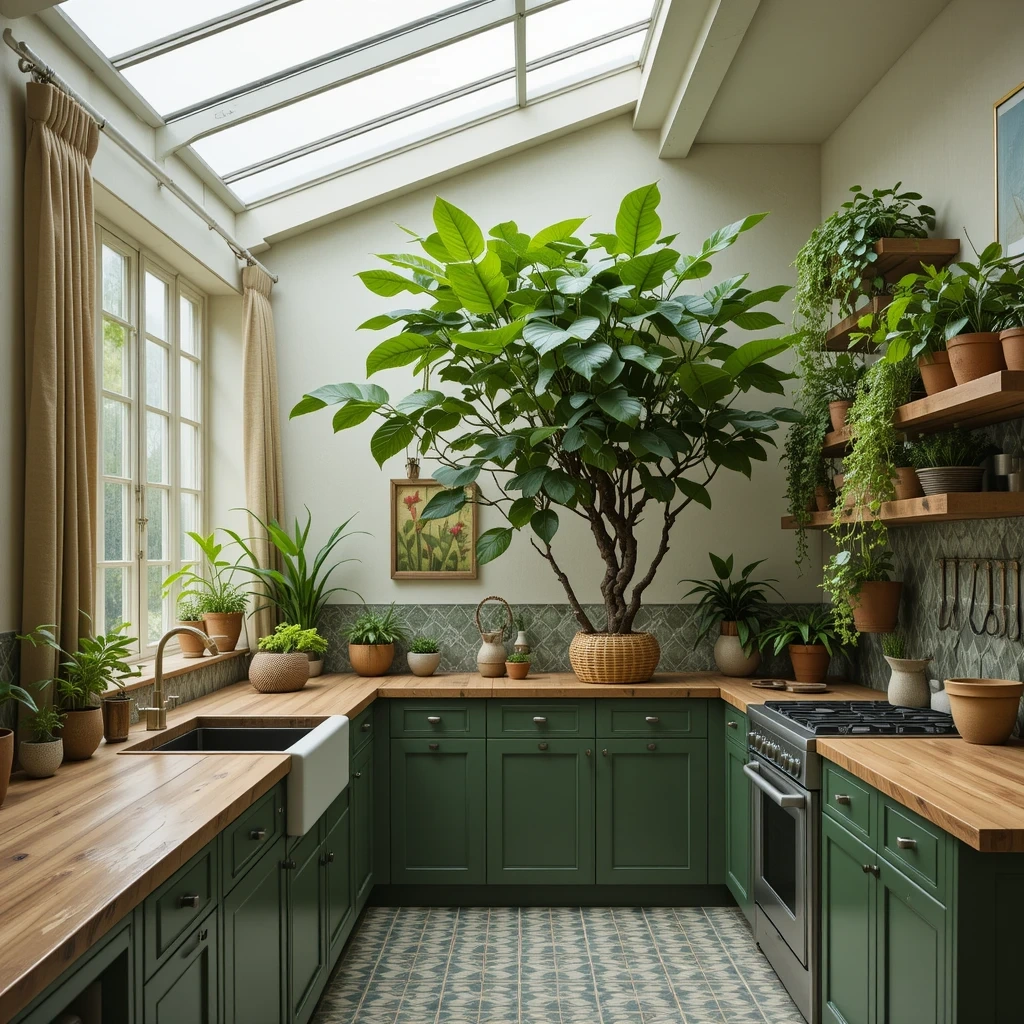
What It Is
Go beyond a single green element and embrace the full biophilic design philosophy — using plants, natural materials, earthy green tones, and organic shapes to make your kitchen feel like an extension of the natural world. Shop on Amazon
Why Families Love It
Biophilic design is proven to reduce anxiety, improve air quality, and make spaces feel calming and restorative. For a family kitchen — one of the busiest, most stressful rooms in the house — designing it to feel genuinely natural and grounding is a beautiful gift to everyone who uses it.
How to Style It:
- Combine green painted cabinetry with live-edge wooden countertops and stone or zellige tile
- Fill every available surface and shelf with a mix of large and small plants (fiddle-leaf fig, pothos, snake plant, monstera)
- Use natural baskets, wooden utensils, stone mortars, and linen textiles throughout
- Install a large window or skylight if possible, or maximise existing natural light with mirrors
- Choose earthy, muted green tones (moss, fern, clay green) rather than artificial-looking brights
- Include a small indoor water feature or fountain in an adjacent dining area for sound as well as sight
Where to Use It:
This is a whole-kitchen approach — but even applying 3 or 4 of these elements together creates the biophilic effect beautifully.
Pro Tip:
The easiest biophilic upgrade is simply adding more plants. A large monstera in the corner, trailing pothos on a high shelf, and a herb collection on the windowsill costs under $50 and immediately transforms the feel of any kitchen into something greener, calmer, and more alive.
Common Mistakes to Avoid in Your Green Kitchen
Even the most beautiful green kitchen can go wrong. Here’s what to watch out for:
1. Choosing paint colours from a screen. Green is one of the most light-sensitive colours — it shifts dramatically under different lighting conditions. Always order physical paint samples and live with them on your wall for 48 hours before committing.
2. Going green on every single surface. Green walls + green cabinets + green tiles + green accessories can quickly feel oppressive. Balance green with plenty of white, wood, and neutral tones to let the colour breathe.
3. Ignoring your existing light levels. Dark forest green in a north-facing kitchen with small windows will feel very dark and cave-like. Choose lighter sage or mint greens for lower-light kitchens and save the deep tones for well-lit spaces.
4. Mixing too many competing shades. Sage, emerald, lime, and hunter green together can feel chaotic. Pick one dominant green and one accent green at most, and ensure they share similar undertones (all warm or all cool).
5. Forgetting about maintenance. Matte paint looks gorgeous but marks easily in a busy family kitchen. Always use eggshell or satin finish on cabinets and walls for a surface that’s easy to wipe clean.
6. Skipping the hardware. Cabinet hardware is the jewellery of your kitchen. Choosing the wrong finish — or mismatching it — can undermine an otherwise perfect green kitchen. Commit to one metal tone (brass, matte black, or brushed nickel) and use it consistently throughout.
7. Rushing the paint job. Painting cabinets yourself can look incredible — if done properly. Rushing leads to brush marks, uneven coverage, and peeling. Always sand, prime, and apply multiple thin coats for a professional result.
Frequently Asked Questions
Q: Is green a good colour for a small kitchen? Yes! Lighter greens like sage, mint, and soft olive can actually make a small kitchen feel larger and more open — especially when paired with white uppers, mirrors, and good lighting. Avoid very dark greens in compact spaces without strong natural light.
Q: Will green go out of fashion quickly? Muted, earthy greens like sage, olive, and moss are considered classic, nature-inspired tones that have been used in interiors for decades. Unlike trendy colours, they don’t date quickly. Bold emerald or lime might be more trend-dependent, but used thoughtfully, they can still feel timeless.
Q: What colours go best with green in a kitchen? Green pairs beautifully with: white and cream (fresh and classic), warm wood tones (natural and grounding), brass and gold (warm and luxurious), terracotta (earthy and Mediterranean), black (modern and dramatic), and blush pink (soft and romantic). Avoid pairing green with cool blues unless you’re very confident with colour theory.
Q: Is a green kitchen safe and appropriate for children? Absolutely! Green is one of the most child-friendly colours in interior design — it’s associated with nature, growth, and calm. It’s also versatile enough to feel fun and playful (mint, lime accents) or calm and sophisticated (sage, forest) depending on your family’s needs.
Q: How do I add green to my kitchen without painting or renovating? Start with: plants and herbs, green textiles (curtains, rugs, tea towels), coloured appliances (kettle, toaster, mixer), green ceramic or enamelware accessories, a botanical art print in a green frame, or a green-painted freestanding shelf or trolley. Any of these changes can be made in a single afternoon with zero tools required.
Q: What’s the easiest green kitchen upgrade for renters? Plants, textiles, and accessories are your best friends — all completely removable when you move out. If your landlord allows it, removable peel-and-stick wallpaper in a botanical print is another brilliant renter-friendly option that causes zero damage and makes a huge impact.
Final Thoughts: Your Green Kitchen Adventure Awaits
Whether you go all-in with a full biophilic kitchen design or simply swap your kettle for a sage green one, any green element you bring into your kitchen brings a little more of the natural world into your daily family life.
Start small if you’re unsure. Build gradually. Trust your instincts. And above all, remember that the best kitchen is one that your family genuinely loves spending time in — whatever shade of green (or not!) that turns out to be.
Now go make something beautiful — and while you’re at it, make something delicious too.