10 Unique Mosaic Garden Art Ideas That Transform Your Garden
There is something truly magical about a garden that tells a story. Mosaic art has been used for thousands of years to bring color, texture, and meaning to spaces — and today, it is making a major comeback in outdoor design. Whether you have a large backyard or a tiny balcony, mosaic garden art can turn any corner into a living gallery that your whole family will love.
The best part? You do not need to be a professional artist. Mosaic projects are wonderfully forgiving, endlessly customizable, and perfect for getting kids involved. From cracked tiles saved from a renovation to sea glass found on a beach trip, almost any material can become a piece of art when you think in color and pattern.
What Makes a Great Mosaic Garden Piece?
Before diving into the ideas, it helps to understand what separates a beautiful mosaic from one that fades and chips within a season. The right materials, sealant, and placement make all the difference. Outdoor mosaics need to be weather-resistant — that means frost-proof tiles, waterproof grout, and a solid base.
But beyond the practical side, the best garden mosaics have one thing in common: they feel personal. They reflect the people who made them, the stories of a family, or the spirit of a place. Keep that in mind as you explore the ten ideas below.
10 Mosaic Garden Art Ideas
1. Mosaic Flower Pot Covers
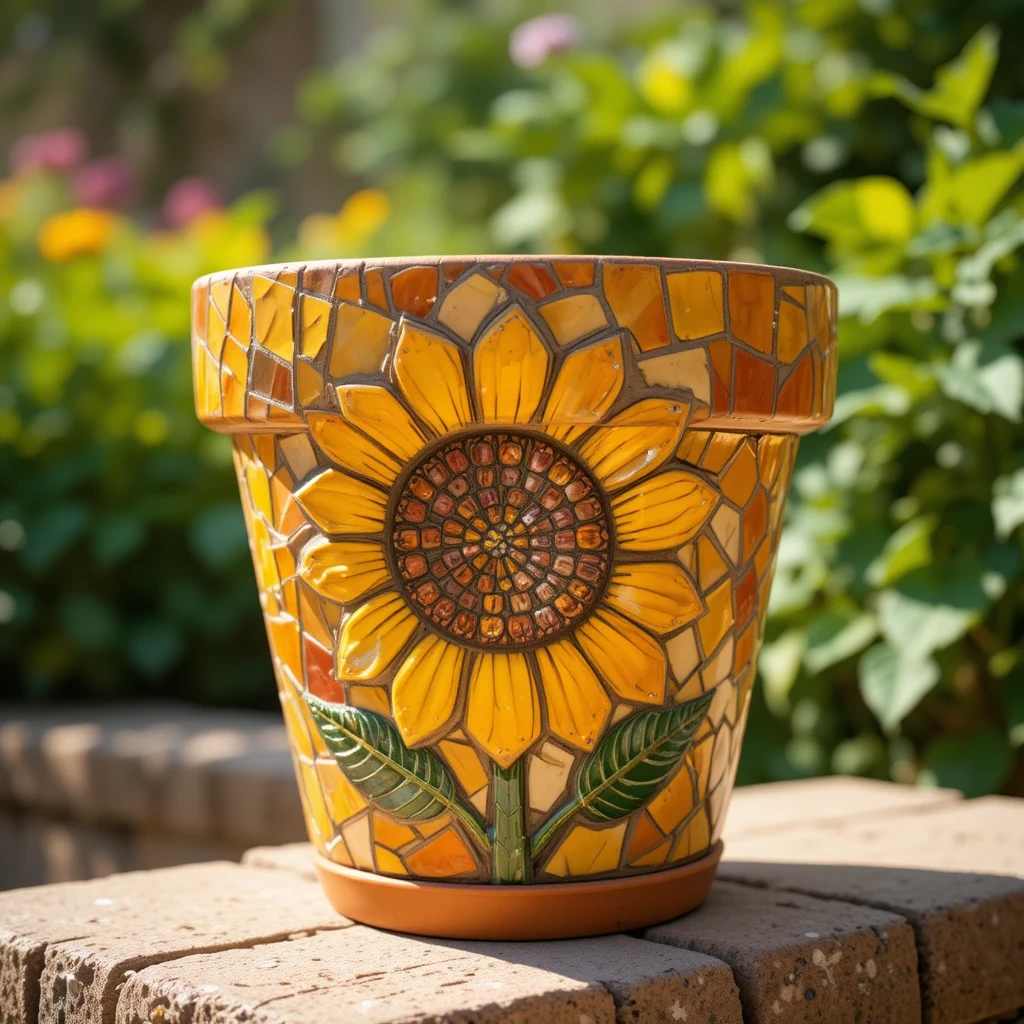
There is no easier way to start your mosaic journey than with a humble flower pot. Plain terracotta pots are the perfect canvas — they are cheap, widely available, and absolutely transformed by a coat of colorful tile or glass mosaic. A single afternoon project, mosaic pot covers make a dramatic statement on a patio, porch step, or garden path entrance. Shop on Amazon
How to Style It:
- Stick to 2–3 main colors for a clean, bold look
- Try geometric patterns like diamonds or zigzags for a modern feel
- Use mirror tiles for a glamorous, light-catching effect
- Seal thoroughly to protect from rain and frost
Where to Use It: Entryway steps, patio corners, balcony railings, window ledges, or clustered together as a gallery of pots near a garden bench.
Pro Tip: Use outdoor tile adhesive, not regular craft glue. Apply a quality outdoor grout sealant after grouting and let it cure for 48 hours before exposing to rain.
2. Stepping Stone Path
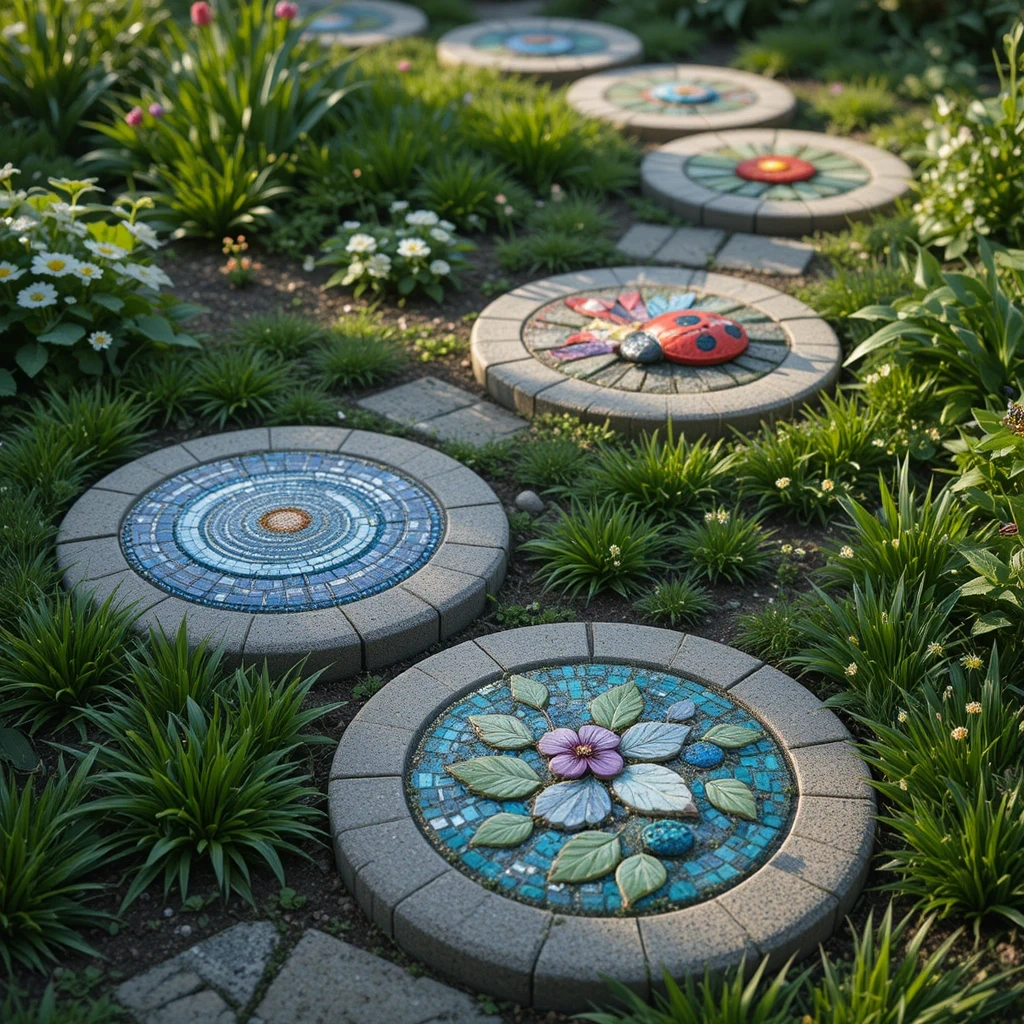
A mosaic stepping stone path is one of the most beloved garden art projects for families with children. Kids can each design their own stone — a personalized footprint, a favorite animal, their name spelled out in glass tiles — creating a path that grows more meaningful every year. Shop on Amazon
How to Style It:
- Mix shapes: round, square, and irregular stones add visual interest
- Give each stone a theme (seasons, animals, planets, family members)
- Use non-slip tiles or add texture with pebbles for safety
- Space stones 18–24 inches apart for comfortable walking
Where to Use It: Through a flower bed, leading to a garden shed, across a lawn to a play area, or creating a winding “treasure trail” for kids.
Pro Tip: Pour your own stepping stones using a concrete mold kit — it is much cheaper than buying pre-made ones, and kids love helping mix and pour.
3. Mosaic Garden Mirror
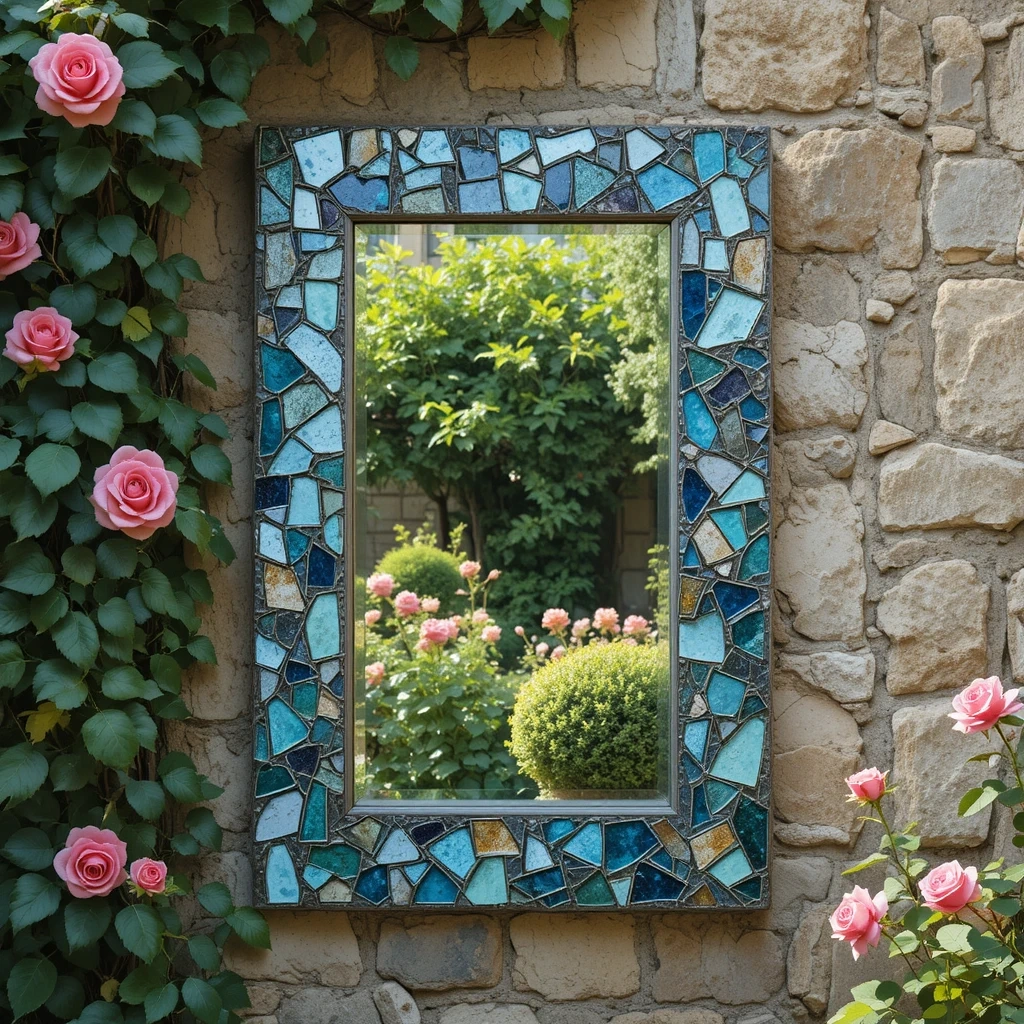
Mirrors in the garden create an incredible illusion of space and depth — and when surrounded by a mosaic frame, they become a true focal point. A mosaic garden mirror bounces light around the space, making even a small garden feel open and luminous. Shop on Amazon
How to Style It:
- Frame with ocean-themed tiles (blue, green, sandy tones) for a coastal look
- Use gold or copper glass tiles for a warm, sunset feel
- Surround with climbing plants to blend the mirror into the garden wall
- Choose a mirror with a weatherproof backing rated for outdoor use
Where to Use It: Garden walls, fence panels, the side of a shed, or as the centerpiece of a shaded seating area.
Pro Tip: Position the mirror so it reflects your most beautiful plant display or a water feature — not the fence or a dull wall. Angle matters enormously.
4. Mosaic Bird Bath
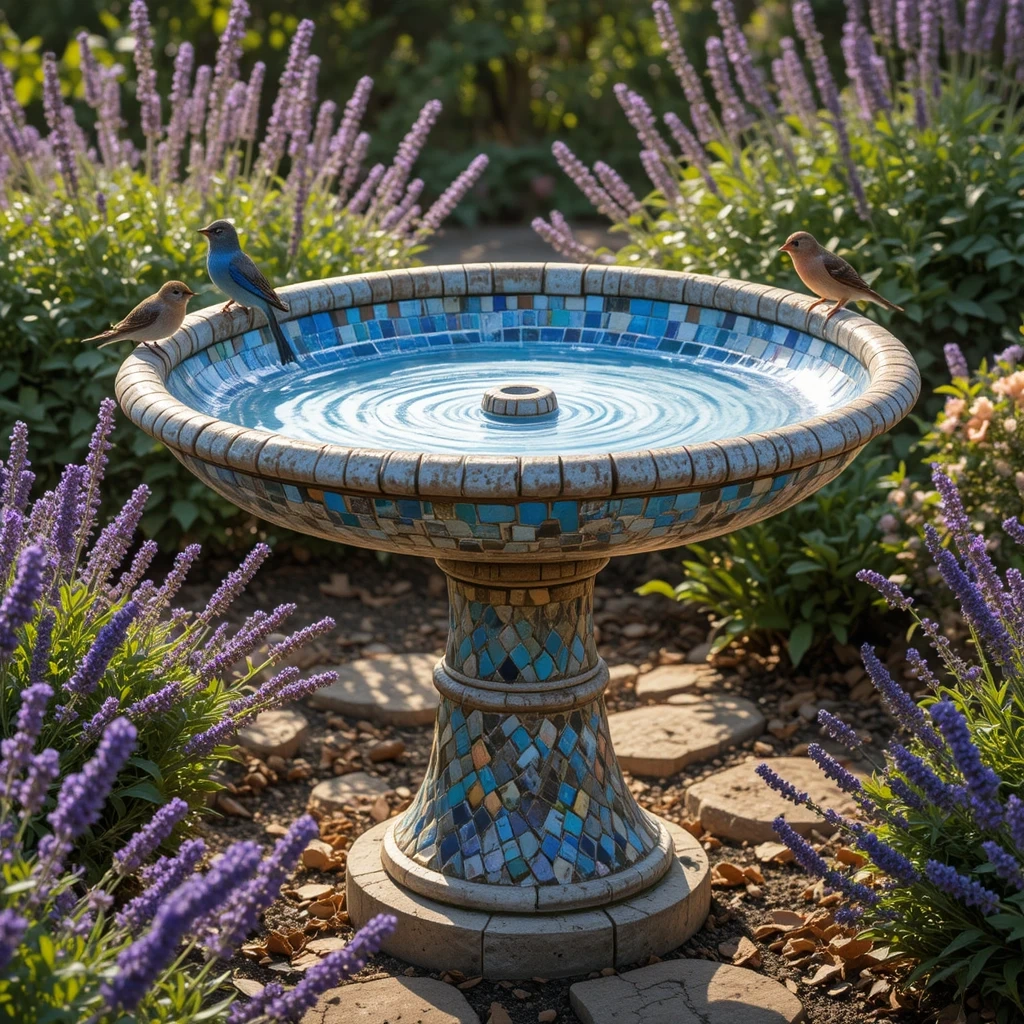
A mosaic bird bath is the crown jewel of the garden mosaic world. It serves a functional purpose — attracting birds and benefiting local wildlife — while doubling as a spectacular decorative centerpiece. The reflective surface of water makes any mosaic shimmer and dance with light. Shop on Amazon
How to Style It:
- Use ocean blue, white, and aquamarine tones to suggest water
- Add small glass jewels or mirror pieces for extra sparkle
- Keep the interior basin simple with smaller tiles for easy cleaning
- Consider a matching mosaic pedestal for a fully custom look
Where to Use It: Center of a flower bed, beneath a tree, on a patio near a seating area, or as the anchor piece in a wildlife-friendly corner.
Pro Tip: Use non-porous, pool-safe grout for the interior of the basin. Avoid using sanded grout in the water area — it can harbor algae more easily.
5. Mosaic Garden Wall Mural

If you have a blank garden wall, fence, or the side of a shed, you have the canvas for the most dramatic of all mosaic projects: a full wall mural. This is a project the whole family can work on together over several weekends, with each person contributing a section. Shop on Amazon
How to Style It:
- Sketch the design on paper first, then transfer to the wall with chalk
- Divide the mural into sections so multiple people can work simultaneously
- Choose a theme that means something to your family — a nature scene, a map of places you’ve been, or a family tree
- Use large bold shapes for sections children will complete
Where to Use It: Garden feature wall, the back fence, the side of a garage, or a boundary wall that currently looks dull or bare.
Pro Tip: Start from the bottom of the mural and work upward. This prevents grout and adhesive from dripping onto finished sections below.
6. Mosaic Outdoor Tabletop
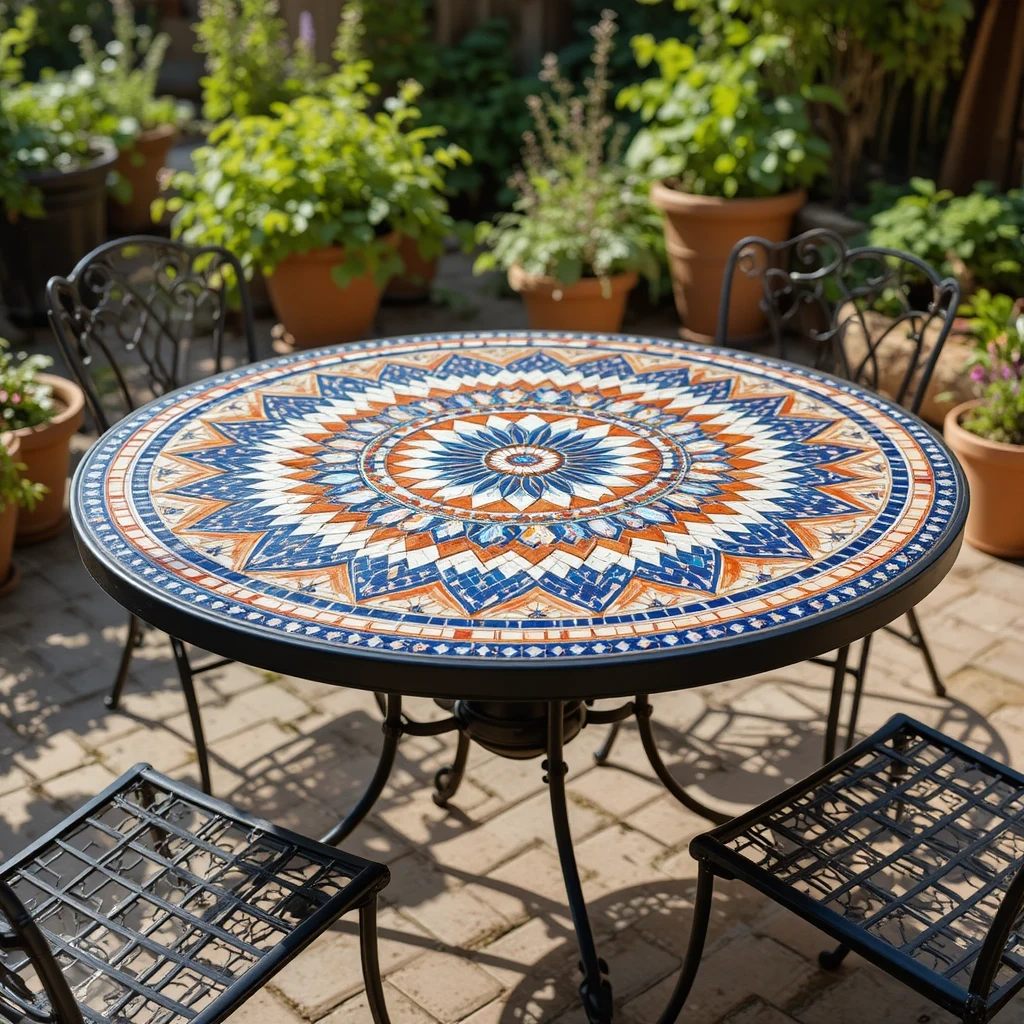
Transform a tired garden table into a stunning showpiece with a mosaic surface. Mosaic tabletops are incredibly practical — they are easy to wipe clean, resistant to weather, and virtually impossible to damage further. They also become the natural gathering point of any garden. Shop on Amazon
How to Style It:
- Moroccan-inspired geometric patterns look stunning on round tables
- Use consistent grout line widths for a professional finish
- Choose frost-proof porcelain tiles for durability in all climates
- A border pattern frames the design and gives it a finished look
Where to Use It: Outdoor dining area, patio seating, beside a fire pit, or as a drinks table on a deck or balcony.
Pro Tip: Build up the mosaic on a cement board slightly smaller than the tabletop, then attach it permanently. This way you can work on the mosaic indoors in comfort before mounting it.
7. Mosaic Garden Sculptures
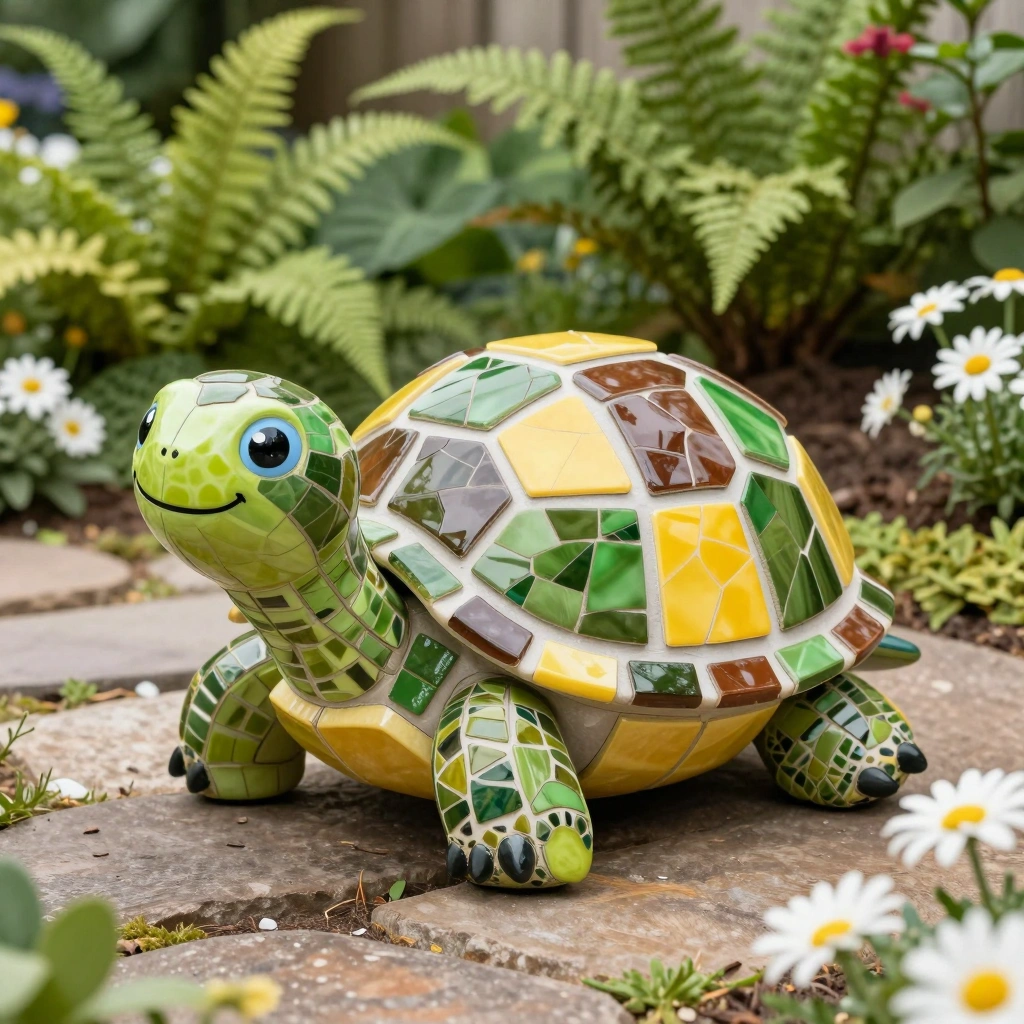
Three-dimensional mosaic garden sculptures bring a sense of playfulness and wonder to outdoor spaces that flat surfaces simply cannot match. Turtles, frogs, fish, snails, and mushrooms are among the most popular forms — and they are especially beloved by children who enjoy finding them nestled in the garden. Shop on Amazon
How to Style It:
- Use concrete garden ornament forms as the base (widely available at garden centers)
- Apply mosaic tiles in organic, nature-inspired patterns
- Tuck sculptures at ground level among plants for a “discovery” effect
- Use weather-resistant sealant generously on all surfaces
Where to Use It: Tucked among flower beds, beside a garden pond, on top of a low wall, or lining a garden path as a series.
Pro Tip: Kids can adopt a sculpture as their own project — let them choose the colors, design the shell pattern, and name the finished piece. It becomes a treasured part of the garden for years.
8. Mosaic Garden Lantern or Light Cover
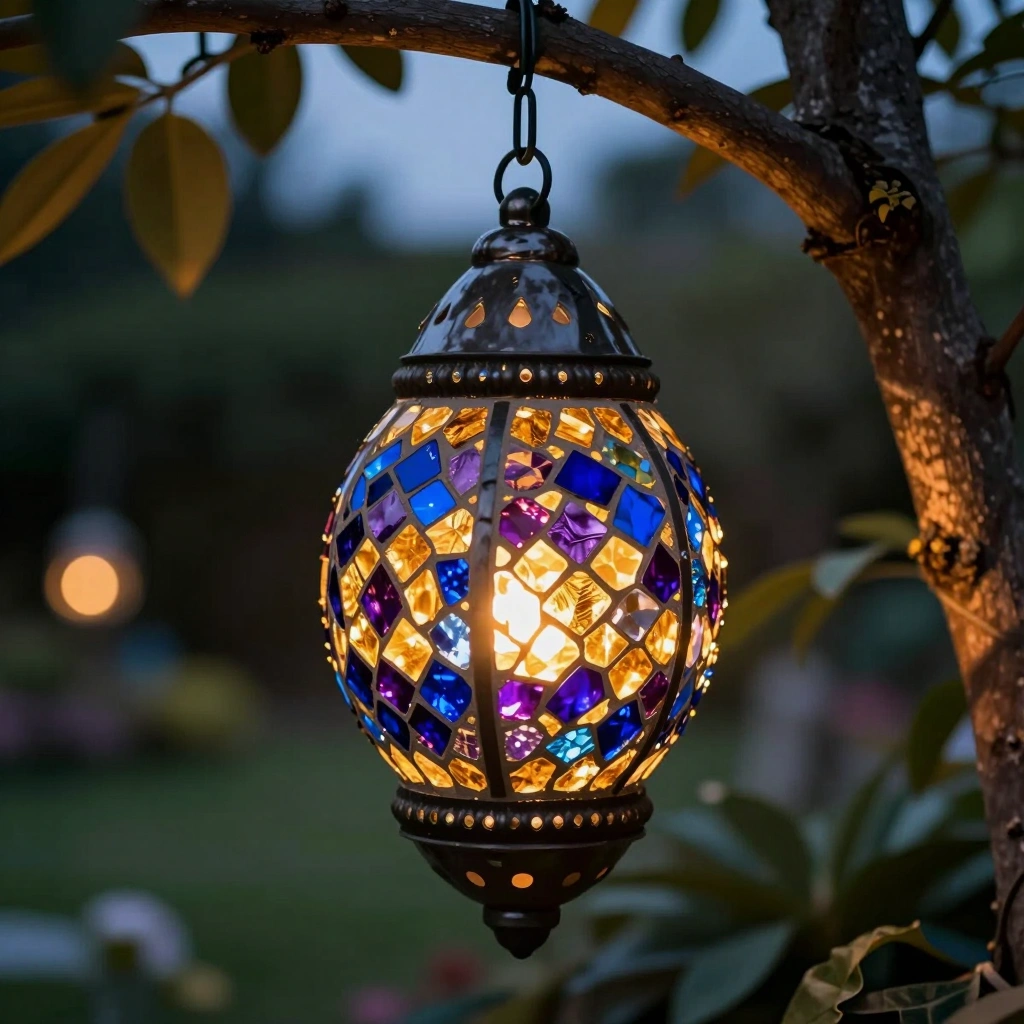
When the sun goes down, a mosaic lantern transforms your garden into something truly magical. Light passing through colored glass tesserae creates a warm, jewel-toned glow that no standard light fixture can replicate. These make incredible handmade gifts, too. Shop on Amazon
How to Style It:
- Use transparent stained glass pieces rather than solid tiles — light needs to pass through
- Amber, deep red, and cobalt blue create a rich, atmospheric glow
- Leave intentional gaps between tiles to let more light escape
- Use solar-powered LED inserts for a fully weatherproof setup
Where to Use It: Hanging from trees, placed on tabletops, lining a garden path, grouped together on patio steps, or decorating a pergola or gazebo.
Pro Tip: Use a metal mesh or chicken wire frame as your base for hanging lanterns — it is lightweight, flexible to shape, and takes adhesive beautifully.
9. Mosaic Raised Garden Bed Border
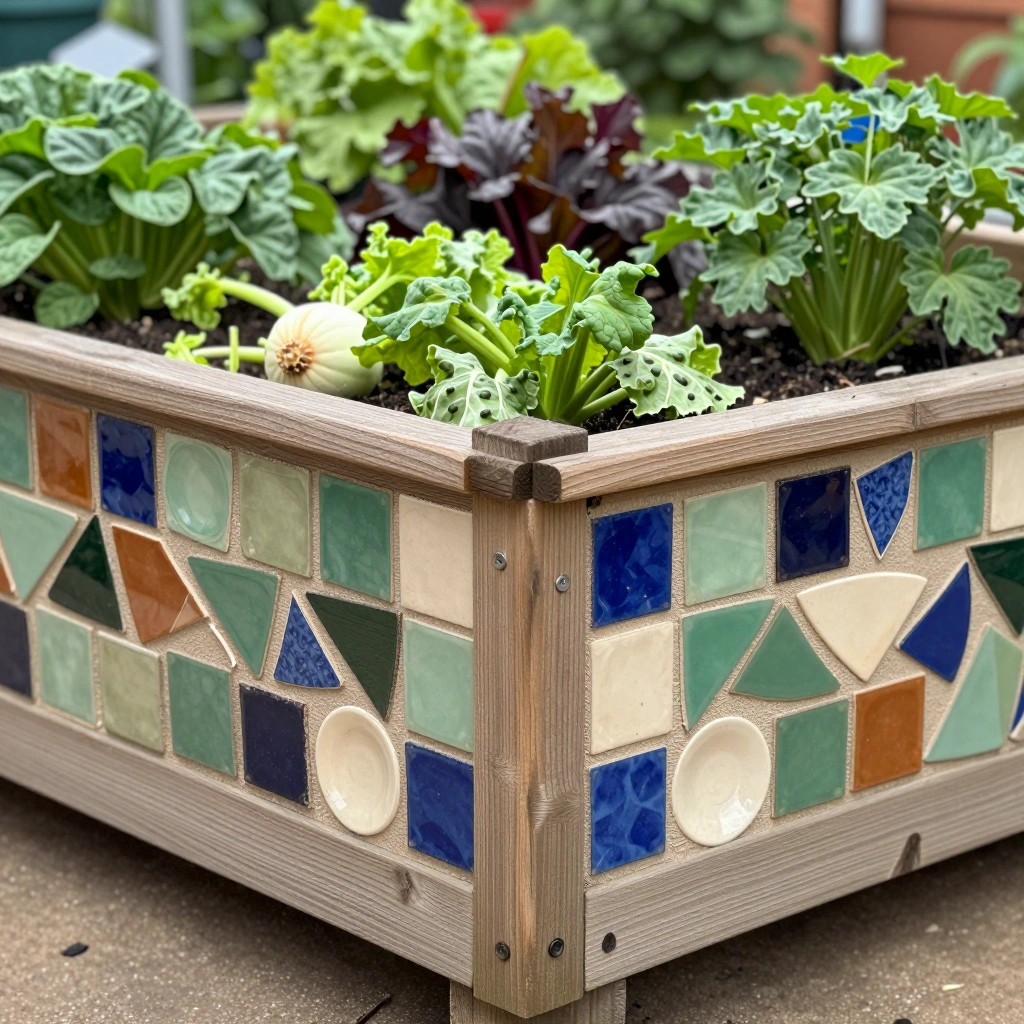
Raised garden beds are a staple of the productive garden — but they rarely win any beauty contests. A mosaic border transforms the outer panels of a raised bed into a decorative feature while keeping the growing area entirely functional. This idea pairs art and utility in the most satisfying way. Shop on Amazon
How to Style It:
- Use broken crockery (cups, plates, tiles) for a “cottage garden” look with character
- Match the mosaic color palette to the flowers or produce you grow inside
- A horizontal wave or vine pattern running around all four sides looks cohesive
- Seal wood surfaces first before applying adhesive
Where to Use It: Vegetable gardens, herb gardens, children’s growing patches, or any raised bed you want to elevate from functional to beautiful.
Pro Tip: Broken crockery with a personal story — a grandmother’s teacups, mismatched plates from travels — adds incredible meaning to a kitchen garden and makes a wonderful family heirloom project.
10. Mosaic House Number Sign
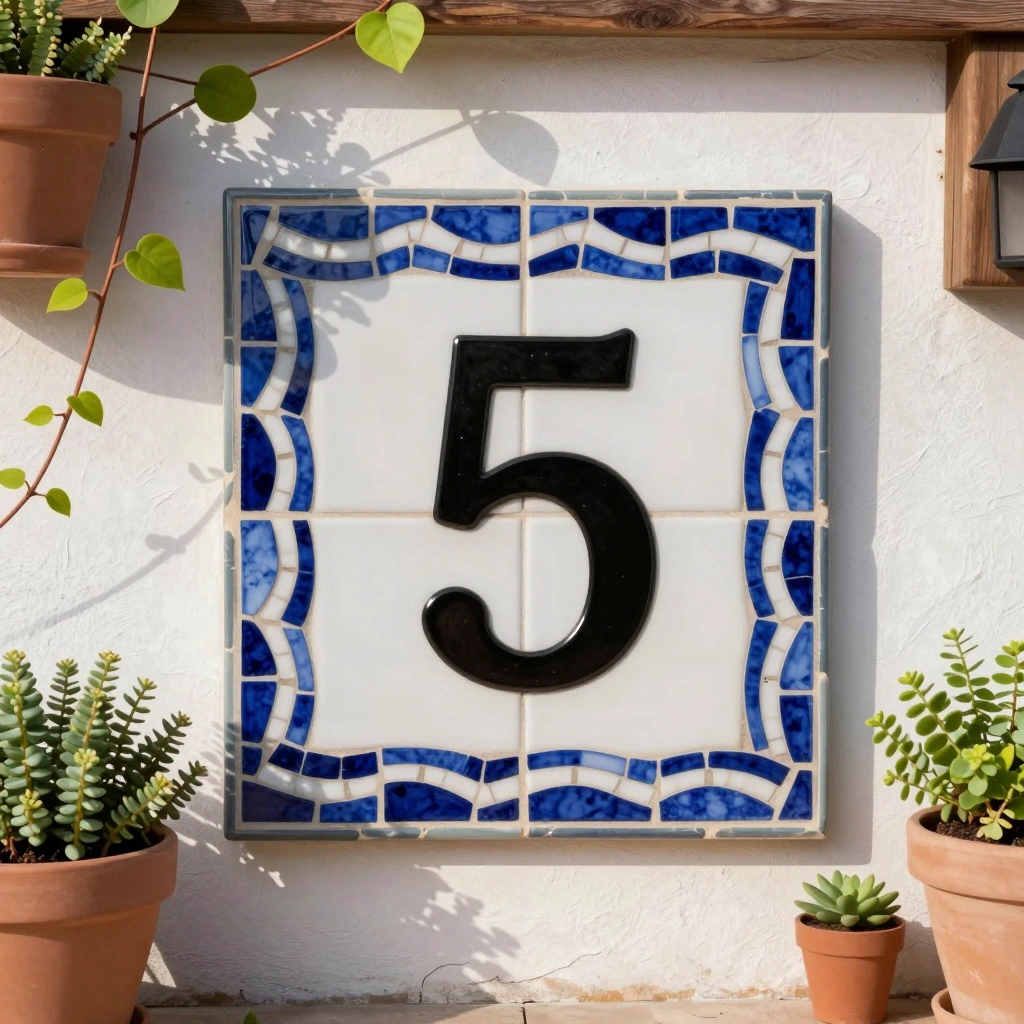
Practical, beautiful, and deeply personal — a mosaic house number sign is perhaps the most elegant way to introduce mosaic art to your outdoor space. Every visitor sees it, and it sets the entire tone for your home the moment they arrive. This project is also wonderfully compact, making it perfect for beginners. Shop on Amazon
How to Style It:
- Keep numbers bold and high-contrast for readability (dark on light or light on dark)
- The background pattern can be as intricate or as simple as you like
- A border frame elevates the design from craft project to polished art
- Use glass number tiles or hand-cut porcelain letters for the numerals
Where to Use It: Beside the front door, mounted on a garden gatepost, on a front fence panel, or as part of a decorative entrance porch design.
Pro Tip: Make the sign on a piece of marine-grade plywood or cement board, sealed on all sides. Mount it with stainless steel fixings to prevent rust streaks on your wall over time.
Common Mistakes to Avoid
Using indoor adhesive outdoors. Regular craft PVA glue and even standard tile adhesive will fail outdoors within weeks. Always use a waterproof, outdoor-rated tile adhesive — preferably one labeled for use in wet areas or pools.
Skipping the sealant. Grout is porous. Unsealed grout soaks up moisture, leading to cracking, staining, and mold. Apply two coats of outdoor grout sealant after grouting and reapply every year or two.
Choosing the wrong tiles. Not all tiles are created equal outdoors. Avoid glazed ceramic tiles that are not frost-rated — they can crack and pop off the surface when temperatures drop below freezing. Look for tiles rated for outdoor or floor use.
Making the grout lines too thin. Very narrow grout lines look beautiful indoors but are fragile outside. Aim for grout lines of at least 3–4mm outdoors to allow for thermal expansion and contraction.
Rushing the cure time. Adhesive needs 24 hours to cure before grouting. Grout needs 48–72 hours before the piece is exposed to rain or moisture. Patience makes the difference between a mosaic that lasts a decade and one that falls apart in a season.
Overlooking safety. When cutting tiles, always wear safety goggles and thick gloves. Tile edges are razor sharp. Supervise children carefully and have them work only with pre-cut pieces or smooth sea glass.
Frequently Asked Questions
What is the best base material for an outdoor mosaic? Cement board (such as HardieBacker) is the gold standard for outdoor mosaics. It does not warp, swell, or rot when wet. Marine-grade plywood sealed on all sides also works well. Avoid untreated MDF or regular plywood — both will absorb moisture and eventually fail.
Can kids really help with mosaic projects? Absolutely — mosaic art is one of the most kid-friendly art forms there is. Children aged 6 and up can safely arrange and press pre-cut tiles into adhesive. Younger children can help with layout planning, color sorting, and grouting (with supervision). Save any tile cutting for adults only, and always have protective eyewear available.
How long does an outdoor mosaic last? A well-made outdoor mosaic using quality materials — proper adhesive, frost-proof tiles, sealed grout — can last 20 to 30 years or more. Many ancient mosaics have survived thousands of years. The key variables are material quality and how well the piece is sealed and maintained.
Do I need any special skills to start? No formal skills are required. If you can spread glue and press tiles into place, you can make a mosaic. Starting with a simple design on a small pot or stepping stone will give you confidence to take on larger projects over time. There are many excellent beginner kits available that include everything you need.
What materials can I use for tesserae (the tile pieces)? The options are wonderfully varied: broken ceramic tiles and crockery, glass tiles, stained glass, mirror pieces, river pebbles, sea glass, china plates, glass beads, coins, buttons, and even shells. Outdoor projects should prioritize materials that are frost-resistant and weatherproof — glass and porcelain tiles are the most durable choices.
How do I clean an outdoor mosaic? A gentle wipe with a soft cloth and warm soapy water is all most outdoor mosaics need. Avoid harsh chemical cleaners or abrasive scrubbing pads, which can damage grout and tile glaze. For stubborn algae or mildew, a diluted white vinegar solution works well without harming the surface.
What is the best season to start an outdoor mosaic project? Spring and early autumn are ideal — mild temperatures allow adhesive and grout to cure properly. Avoid working in direct hot sunlight (adhesive can skin over too fast) or near-freezing temperatures (adhesive will not bond properly). Aim for working conditions between 10°C and 25°C (50°F–77°F).
Final Thoughts
Mosaic garden art is one of those rare creative pursuits where the process is just as rewarding as the result. Every broken piece of tile, every shard of sea glass, and every carefully placed tesserae is a small act of transformation — turning something discarded into something beautiful.
Whether you dedicate a whole weekend to a garden wall mural or spend a quiet afternoon with your kids decorating a single flower pot, mosaic art connects you to your garden in a way that is genuinely lasting.
Start small, have fun, and let your garden become the gallery it deserves to be.
Happy making!